Canadian period care and sexual wellness company nixit is accelerating its retail expansion across North America as growing consumer demand for reusable and ingredient-conscious products fuels the brand’s next stage of growth.
Founder Rachael Newton said the company, launched after she sought to reduce household waste while living in the Caribbean with two young children, was created to offer sustainable products designed specifically with vaginal health in mind. She said the experience of seeing landfill waste firsthand prompted her to rethink disposable menstrual products after realizing the lifetime environmental impact of tampon use.
Newton said Nixit’s first product was a reusable menstrual disc, introduced as Canada’s first reusable menstrual disc. She said the product was designed as a one-size-fits-all, suction-free alternative intended to simplify the transition to reusable period care. Since then, the company has expanded into wash products and sexual wellness with water-based lubricant and condoms.
Initially launched as an online-only business, Newton said customer demand led the company into retail, beginning with natural food and wellness chains before expanding this year into nearly 400 Loblaw stores across Canada. She added that nixit’s condoms have also launched in nearly 2,000 Walmart locations in the United States.
Newton said the Loblaw rollout increased the company’s Canadian retail footprint by more than 50 per cent while reflecting broader consumer interest in products featuring organic ingredients and formulations designed to minimize irritation.
She said building the company has presented challenges, including navigating the regulatory requirements associated with medical devices, such as Health Canada authorization, FDA registration and certification standards.
Looking ahead, Newton said nixit plans to expand into additional retail locations across North America while continuing to develop new products. As a self-funded business, she said growth decisions are carefully balanced against available resources.
Newton also encouraged aspiring entrepreneurs to invest in building strong professional networks, saying those connections can provide valuable support throughout the often-isolated journey of entrepreneurship.
In Canada, home design is evolving dramatically. The business maintained a strict route for a long time, emphasizing simple forms, neutral colours, and predictable patterns. With matching furniture sets that lacked any true personality, many houses ended up resembling product showrooms. That strategy is dwindling now. Today, personal style is more essential than ever, and people prefer living in locations that represent their hobbies and life experiences to ones that look like books. The idea is to make houses appear more authentic, warm, and helpful for daily living.
Creating a setting that reflects you is extremely crucial. People are increasingly assembling new and secondhand items instead of buying everything at once. They are displaying family treasures, travel mementos, and bespoke art to personalize each space. This design style fosters creativity rather than following rules. Adding sentimental artifacts and decorations may make a regular home seem like a private haven for you and your family.
1. Using Gallery Walls to Display Personal Items
Creating a powerful focal point on your walls is one of the most useful and efficient methods to add individuality. You may arrange a variety of objects that have particular personal significance on gallery walls. You don’t have to use matched frames or stick to a strict, uniform style. It looks better to mix and match different frame sizes, wood tones, and painting styles to give the impression of a natural, well-traveled style.
You can use canvas prints to display your own digital photography or custom artwork. This particular product gives the wall a polished, professional, and clean appearance that is not possible with regular poster material. Place your components on the ground before mounting any hardware. This enables you to make sure the arrangement is balanced in terms of size and colour before making holes in the wall. You may prevent seeming disorganized or cluttered by doing this preparatory step. Choose pieces that show off your interests, like beautiful family photos or scenery from your travels, to make the room look unique and appealing to the eye.
2. Adding Vintage and Heirloom Furniture
Brand-new furniture that is mass-produced often doesn’t have any style. In order to protect themselves, many Canadians are already putting old, used items in their homes. One piece with a clear past, like a well-made coffee table from the middle of the 20th century or a repaired wood trunk that was passed down from a previous family, adds a level of complexity that new items just can’t match.
In this case, the main goal is balance. To get the benefits, you don’t need to fill your house with old things. Just pick one or two strong things to be the room’s main draws. If the fabric on an old piece is worn out or out of style, you can easily restore it to make it fit in with your modern home. Putting old and new together keeps the house from looking like a stuffy antique shop while keeping the original’s spirit. The difference between your home and the other houses makes it seem like a permanent place to live instead of a temporary one.
3. Using Different Textures for Comfort
The arrangement of your furniture is not the only factor that affects how comfortable your home is. A space may seem chilly or sterile if there are too many smooth, uniform surfaces. This is a typical design problem. By purposefully adding layers of various textures, you may improve the atmosphere of any space. Try incorporating fabrics such as leather, wool, velvet, and linen into your primary living spaces.
The way you decorate flat surfaces, such as tables and shelves, is also influenced by layering. Don’t leave these surfaces barren or vacant. Stack things like books, ornamental bowls, or tiny, low-maintenance plants in them. A lived-in, human-centered appearance is produced by arranging objects at various heights. Instead of seeming like a staged snapshot in a magazine, these minute, tangible elements give a space the sensation of a true home. You are more likely to spend time in a room when it is physically pleasant, which is the main goal of a customized living space.
4. Setting Up Zones for Hobbies and Interests
Establishing designated “interest zones” has been a popular practice in recent years. This is designating a special space in a room to highlight a certain pastime or interest. If you read a lot, set aside a space with a complete bookcase, a comfortable chair, and enough lighting. Make a little garden with plants of different heights in a corner of the space if you like indoor plants.
Instead of keeping your hobby supplies hidden in a closet, these zones allow you to keep them out in the open, ready for use. Additionally, it makes it very evident to visitors what you value. For example, a musician may decide to store a carefully chosen collection of albums on a modest stand or hang their instrument on the wall. These objects cease to seem like clutter and begin to blend into your formal home design when you give them a permanent, purposeful place. With this method, your house becomes a true mirror of your everyday existence.
5. Using Raw Materials and Accepting Imperfection
The embrace of raw materials and natural wear is the last feature of this design movement. In the past, structural components like brick or raw wood were often covered with plasterboard or painted over. There is now a noticeable trend toward displaying raw materials. The distinctive patterns and natural texture of exposed brick, natural stone surfaces, and visible wood grains are being praised.
This also has to do with how you handle the upkeep of your house. A rug that has some wear and tear or a strong wood table with a minor blemish conveys a tale of everyday living and frequent usage. To have a lovely house, you don’t have to maintain everything in flawless, brand-new condition. This way of thinking makes a house much simpler for visitors to utilize and far less difficult for you to maintain. You can create a room that seems honest, long-lasting, and inviting by selecting materials that age well and embracing the little wear of everyday living.
Conclusion
Making your home truly show your style is a process that takes time and can’t be done right away. Do not worry about the newest dress trends in stores. Instead, focus on what makes you feel good. You can get away from general design by using custom prints as a focal point in your room, adding old things with history, using different textures, and leaving room for your own interests.
You should feel free to be yourself in this space. That is the goal. Whether you start with a single wall or by moving your furniture around, the update should show your past. People are more likely to use and like a house that looks like their own. Put your own hobbies ahead of what’s popular on social media at the moment. Not a camera, but your life should be on your mind when you build your house.
Value retail has moved well beyond serving budget-conscious shoppers. Retail Insider’s latest quarterly report finds that discount, value and off-price retail have become central to Canadian retail strategy, influencing consumer expectations, commercial real estate and retailer expansion decisions across the country.
The report examines Canada’s discount, value and off-price retail segments. Coverage includes retailers built around explicit low-price positioning, everyday affordability, efficient operations, private label, opportunistic merchandising and branded merchandise sold below traditional retail pricing, while exploring the consumer and commercial forces driving continued growth in these segments.
General Themes
Value Shopping Goes Mainstream — Shopping for value has expanded across income groups and become a lasting consumer behaviour rather than a temporary response to inflation.
Dollarama’s Growing Influence — The country’s largest dollar store chain continues to shape supplier relationships, consumer expectations and retail expansion strategies.
Discount Grocery Intensifies Competition — Grocery retailers are investing in discount banners, private label and regional expansion as affordability remains a competitive priority.
Real Estate Follows Value Retail — Landlords are increasingly looking to value-oriented retailers to fill large-format vacancies and generate consistent customer traffic.
Off-Price Retail Maintains Momentum — Treasure-hunt merchandising and branded merchandise at reduced prices continue attracting shoppers across demographics.
Affordable Discovery Creates New Demand — Retailers such as MINISO and Flying Tiger demonstrate that low prices combined with novelty and experience remain highly appealing.
Private Label Continues to Grow — Consumers remain comfortable trading down while expecting quality and stronger brand identity from store-owned products.
International and Regional Players Expand Opportunities — International entrants and established regional operators continue strengthening Canada’s diverse value retail landscape.
Retail Insider Coverage
Retail Insider’s reporting throughout the quarter documented many of the developments that underpin the report’s conclusions. Coverage included Dollarama surpassing 1,700 Canadian stores, its growing household penetration and supplier influence, Empire’s acquisition of Mayrand, FreshCo’s Atlantic Canada expansion, and Loblaw’s continued observations around consumer trading-down behaviour. The publication also followed Zellers’ new Toronto location, Flying Tiger’s Canadian launch, MINISO’s continued expansion, Peavey Mart’s relaunch strategy and Giant Tiger’s ongoing market presence.
The report also highlights commercial real estate developments involving Winners, JUMBO and other value-oriented retailers, illustrating how Retail Insider’s ongoing coverage extends beyond store openings to examine leasing strategies, adaptive reuse of large retail spaces and broader investment trends shaping Canada’s retail landscape.
Broader Industry Coverage
The report suggests that Canada’s value segment has entered a structural growth phase rather than a cyclical one. Consumers increasingly expect affordability alongside convenience, assortment, branded merchandise and enjoyable shopping experiences, changing how retailers compete across multiple categories.
These shifts also carry important implications for commercial real estate. As landlords reconsider tenant mixes and redevelopment strategies, discount, value and off-price retailers are increasingly viewed as reliable traffic generators capable of repurposing large-format vacancies. At the same time, continued investment by both domestic and international operators indicates confidence that Canada’s value-oriented retail market will remain attractive despite growing competition.
Editor’s Take
The strongest conclusion from this quarter’s report is that value has become a strategic position rather than simply a pricing strategy. Retailers succeeding in today’s market are not necessarily those offering the lowest prices, but those combining affordability with convenience, discovery, strong merchandising and operational efficiency. As consumer expectations continue to evolve, value-oriented retail is influencing everything from supplier relationships and expansion strategies to leasing decisions, making it one of the defining forces shaping the next phase of Canadian retail.
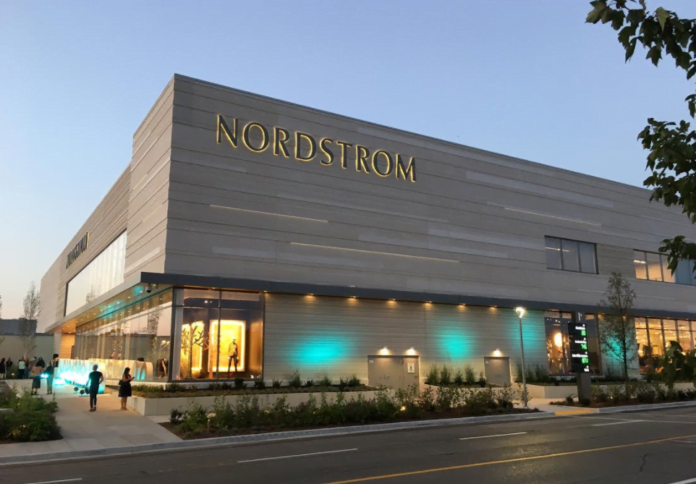
Former CF Sherway Gardens Nordstrom (Image: Nordstrom)
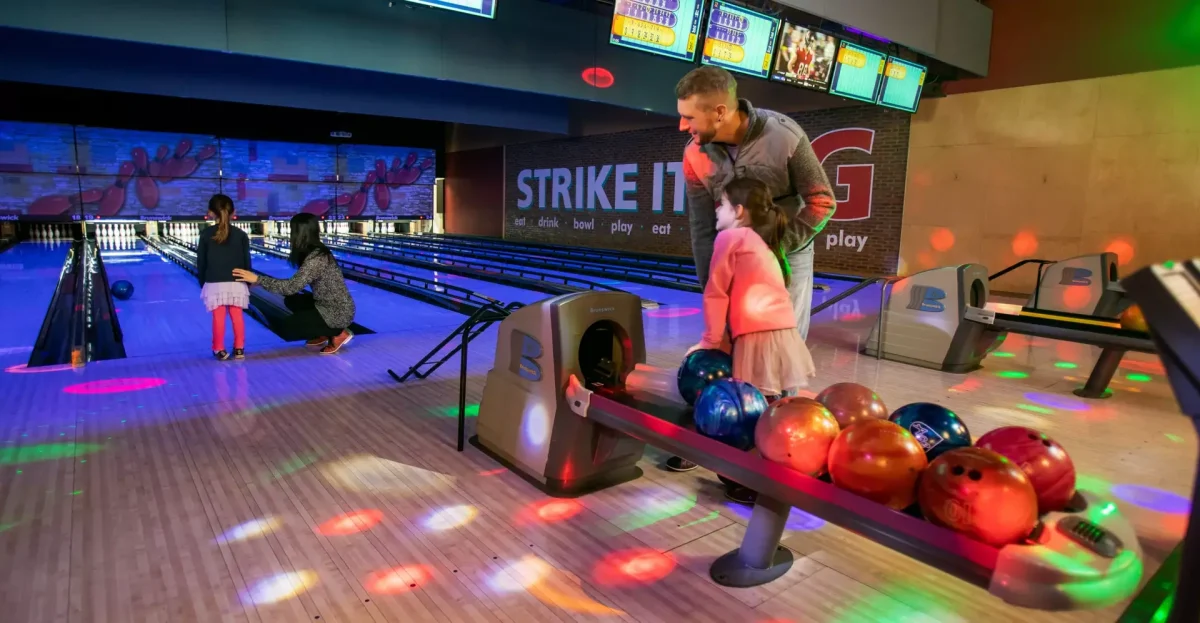
One of the largest vacant retail spaces at CF Sherway Gardens has found a major new tenant, with Splitsville Bowl planning a 34,000-square-foot flagship entertainment venue inside part of the former Nordstrom store.
Scheduled to open in fall 2027, the venue will feature 22 lanes of 10-pin bowling, an interactive arcade, food and beverage offerings, and event spaces for social gatherings, celebrations and corporate functions. Cadillac Fairview announced the project through its social media channels, describing it as a flagship location for the entertainment operator.
The lease represents one of the first major permanent redevelopments announced for the former Nordstrom premises since the department store closed in 2023, beginning a new chapter for one of the shopping centre’s most prominent anchor spaces.
Splitsville to Occupy Part of Former Nordstrom Store
The new venue will occupy approximately 34,000 square feet within the former Nordstrom store, which spanned about 140,000 square feet before the retailer exited Canada.
Nordstrom opened at CF Sherway Gardens in September 2017 as the anchor of Cadillac Fairview’s major south-wing expansion. The store formed part of a significant redevelopment that strengthened the shopping centre’s position within the Greater Toronto Area’s retail market.
That chapter ended in June 2023 when Nordstrom closed all of its Canadian locations.
Cadillac Fairview has not publicly outlined plans for the balance of the former Nordstrom premises, leaving a substantial amount of space available for future redevelopment.
The property did not sit entirely dormant following Nordstrom’s departure. Portions of the former store later housed temporary Ontario Science Centre exhibitions after the closure of the institution’s Don Mills facility. Interactive experiences, including Towers of Tomorrow with LEGO Bricks, brought families into the space before the temporary attraction concluded earlier this year.
Splitsville Bowl, Source: splitsvillebowl.ca
CF Sherway Gardens Continues to Reshape Its Anchor Lineup
Nordstrom’s departure was followed by the loss of two more department store anchors.
Hudson’s Bay and Saks Fifth Avenue both closed at CF Sherway Gardens on June 1, 2025, as Hudson’s Bay Company completed the liquidation of its remaining Canadian stores. Within roughly two years, the shopping centre lost three department store anchors that had helped define the property for much of the past decade.
Those departures created an unusually large redevelopment opportunity at one of Canada’s leading regional shopping centres.
CF Sherway Gardens has continued to maintain a strong mix of fashion retailers, restaurants, luxury brands and services while Cadillac Fairview works to reposition the former anchor spaces.
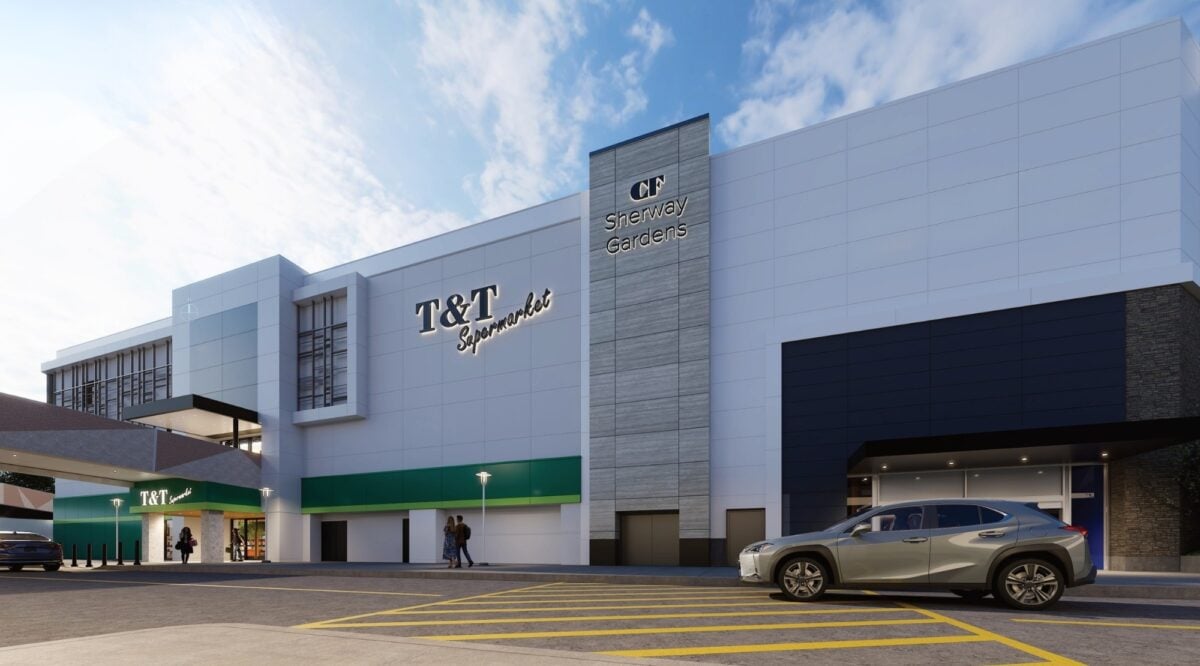
Another significant redevelopment is already underway. T&T Supermarket is scheduled to open a roughly 40,000-square-foot store in 2027, occupying former Saks-related space on the lower level, including the area previously home to the Saks Food Hall by Pusateri’s.
Together, the T&T and Splitsville announcements begin to show how portions of the former department store footprint are being re-leased for new uses.
Large Retail Spaces Find New Uses
The arrival of Splitsville reflects a broader trend in Canadian shopping centres, where former department store premises are increasingly being adapted for multiple tenants.
Entertainment venues, grocery stores, restaurants, fitness operators and other large-format businesses have become practical successors to traditional department stores, particularly in prominent regional malls where expansive floorplates can accommodate a variety of concepts.
Splitsville’s flagship will introduce a new entertainment destination to CF Sherway Gardens while occupying only about one-quarter of the former Nordstrom store. T&T Supermarket will bring a grocery anchor to part of the former Saks premises.
Additional redevelopment plans for the remaining former department store space have yet to be announced.
Splitsville is also continuing to expand elsewhere in Canada. The company recently announced plans for a third Edmonton location at Manning Town Centre, adding to its growing network of entertainment venues.
Future T&T Supermarket at CF Sherway Gardens in Toronto. Image: T&T Supermarkets
Looking Ahead
The arrival of Splitsville and T&T will make 2027 an important year for CF Sherway Gardens as new tenants begin opening in spaces once occupied by some of Canada’s best-known department stores.
For Splitsville, the project establishes a flagship location within one of the country’s leading shopping centres. For Cadillac Fairview, it represents another step in the long-term repositioning of a property whose anchor lineup has changed dramatically over the past two years.
As additional redevelopment plans emerge, the transformation of the former department store spaces at CF Sherway Gardens is likely to remain closely watched across Canada’s retail real estate industry.
Foxy Box Laser & Wax Bar is preparing for its next stage of expansion after growing from a home-based startup into a national franchise with 25 locations across four Canadian provinces, according to founder Kyla Dufresne.
Dufresne said the company, which specializes in hair removal services with a focus on Brazilian waxing, began 14 years ago in the dining room of her home after she identified a gap in the market for a convenient, affordable and approachable waxing experience. At the time, consumers were largely limited to expensive spas or salon back rooms, while online booking and dedicated waxing concepts were virtually nonexistent.
The company began franchising about six years ago and now operates 24 locations, with its 25th opening next month.
Dufresne said entrepreneurship came naturally, citing parents who both owned businesses and influenced her willingness to take risks. She said Foxy Box was conceived from the outset as a franchisable brand with national ambitions.
The company has built its identity around creating an upbeat customer experience designed to leave clients feeling confident and energized. Dufresne said humour is a core value that helps reduce the anxiety many first-time customers feel during hair removal treatments while also strengthening company culture across the franchise network.
She said Foxy Box takes a deliberate approach to franchising, emphasizing long-term partnerships over rapid expansion. The company carefully selects franchisees and prioritizes ongoing support, collaboration and shared learning through advisory committees and regular meetings.
Location selection also plays a key role in the company’s strategy. Dufresne said Foxy Box targets markets with sufficient population density and complementary neighbouring businesses, such as fitness centres, while avoiding oversaturated trade areas.
Looking ahead, Dufresne said the company’s long-term goal is to reach 150 locations. While expansion in Canada will continue, future growth is expected to include international markets, with the United Kingdom emerging as a priority due to favourable regulations and market opportunities. She added that the company is also investing in a brand refresh, new product offerings, expanded infrastructure and experienced leadership to support its next phase of growth.
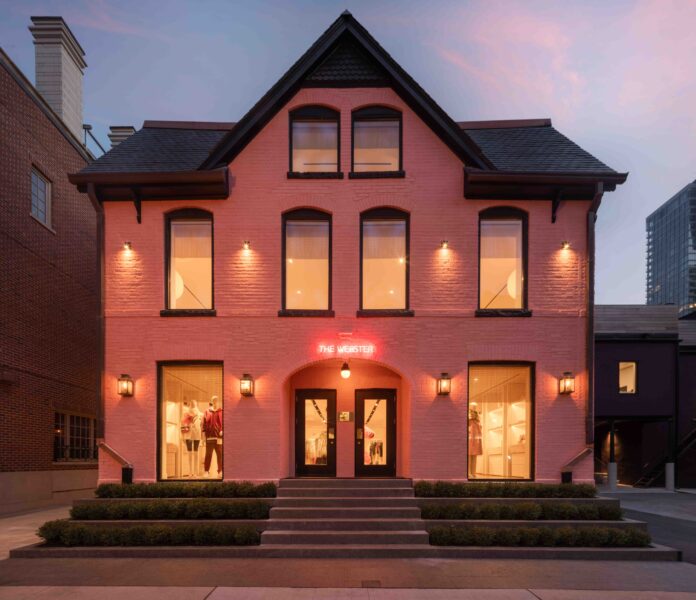
Former location of The Webster Yorkville at 121 Scollard Street in Toronto (Image: Adrian Ozimek)
Chrome Hearts has purchased the former Webster building at 121 Scollard Street in Toronto’s Yorkville neighbourhood for $12.65 million, securing a new location for its first standalone Canadian store.
Commercial real estate news publication CoStar first reported the acquisition on Wednesday. Retail Insider has confirmed additional details about the transaction and the brand’s Canadian expansion plans.
The three-storey, freestanding building at 121 Scollard Street spans approximately 7,076 square feet and had been listed for $13.25 million by the CBRE Toronto Urban Retail Team under the guidance of Arlin Markowitz and Jackson Turner. First Capital REIT sold the property to Chrome Hearts in an owner-user transaction.
The building has been vacant since luxury multi-brand retailer The Webster closed its only Canadian store late last year.
Chrome Hearts’ acquisition also represents a change from the company’s original plans for Toronto.
Chrome Hearts Changes Locations in Yorkville
Chrome Hearts acquired nearby 97 Scollard Street about two years ago with plans to renovate the property for a Canadian boutique. The location had been identified within the real estate industry as the future home of the brand’s first store in the country.
A major fire broke out across the street in March 2025, damaging several properties in the surrounding area, including the building Chrome Hearts had intended to occupy.
The store is no longer expected to open at 97 Scollard. The building is currently covered with plywood over its windows and has been painted black.
Chrome Hearts has now shifted its plans to 121 Scollard, acquiring the larger building that was extensively restored and converted for luxury retail before The Webster opened there in 2021.
Buying the property gives Chrome Hearts direct control over its Canadian flagship building. That is a considerable commitment for an international retailer entering the country with its first dedicated store, particularly in a neighbourhood where luxury brands commonly lease their premises. No opening date has been announced.
The Webster’s Former Canadian Flagship
The Webster opened at 121 Scollard Street on October 30, 2021, establishing its first Canadian store and its first location outside the United States.
The Miami-based retailer occupied a restored Victorian building dating to the 1880s. The property became recognizable for its pink-toned brick exterior, neon Webster sign and flamingo weather vane, while the store carried a curated assortment of international luxury fashion brands.
The Webster closed the Toronto location in late 2025 after four years in Canada, leaving behind a building that had been comprehensively adapted for high-end retail.
Its departure created a rare opportunity to acquire a vacant, freestanding luxury property in the centre of Yorkville. Chrome Hearts has now purchased the building as the permanent home of its Canadian store.
The sale also took place as First Capital REIT moves through its pending acquisition by KingSett Capital and Choice Properties REIT. The $9.4-billion arrangement was approved by First Capital unitholders on June 23 and received court approval two days later.
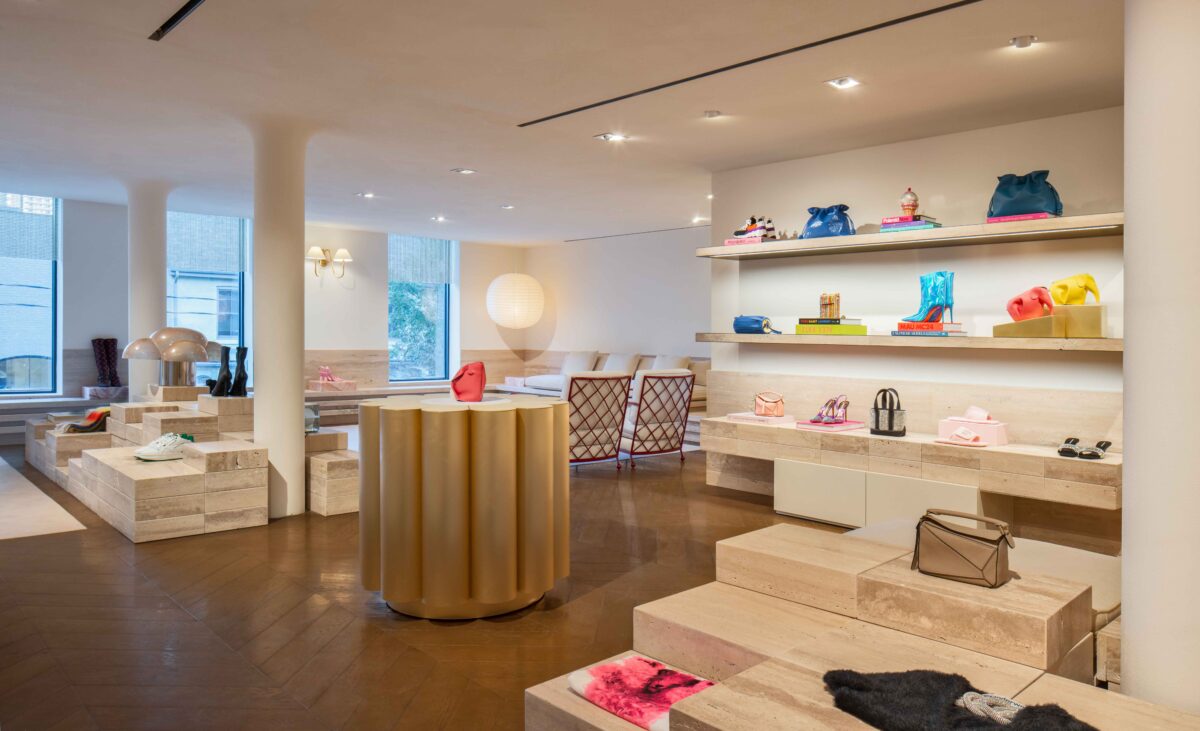
Interior of the former location of The Webster at 121 Scollard Street in Toronto’s Yorkville. Image: The Webster
A Growing Luxury Cluster
The new Chrome Hearts store will sit near several of Yorkville’s most established and recently expanded luxury shopping streets.
Hazelton Avenue is steps away and includes retailers such as Hästens, Le Labo and Caudalie. Italian luxury linens and home furnishings brand Frette also recently opened on the street.
One block south, Yorkville Avenue has undergone a major retail transformation through the arrival of international luxury brands. Chanel, Brunello Cucinelli, Stone Island, Balenciaga and Christian Louboutin are among the retailers operating along the street.
Bloor Street West, two blocks south, remains Canada’s best-known luxury shopping corridor.
The concentration of fashion, beauty, jewellery, home furnishings and lifestyle retailers surrounding 121 Scollard has made the area increasingly interconnected as a shopping district. Luxury activity in Yorkville is no longer confined to Bloor Street, with international brands spreading north through Yorkville Avenue, Hazelton Avenue and nearby side streets.
The Webster previously operated on Scollard as a multi-brand luxury retailer. Chrome Hearts will become the first individual international luxury brand to operate a dedicated standalone boutique on the street.
Its new building is also closer to the luxury clusters on Hazelton and Yorkville avenues than the company’s original property at 97 Scollard.
Inside the World of Chrome Hearts
Chrome Hearts has built its following without adopting the traditional expansion model used by many global luxury companies.
Richard Stark co-founded the Los Angeles business in 1988, initially producing leather clothing and sterling silver accessories influenced by motorcycle culture. Chrome Hearts subsequently expanded into jewellery, eyewear, apparel, handbags, footwear, furniture and home accessories.
The privately held company remains closely associated with the Stark family and maintains tight control over its production, distribution and store network. Its boutiques are often highly customized, with interiors designed specifically for their locations.
Chrome Hearts has historically placed little emphasis on conventional advertising and broad e-commerce distribution. Scarcity, craftsmanship and its links to music and popular culture have helped the company develop a devoted international clientele.
Its products are known for Gothic crosses, daggers, fleur-de-lis motifs, sterling silver hardware and handcrafted details. Depending on the category and materials, prices can extend well into the thousands of dollars.
Cher was among Chrome Hearts’ earliest and most prominent supporters. The singer and actress developed a close friendship with Stark and helped introduce the brand to the entertainment industry during its formative years. When Stark received the CFDA Accessory Designer of the Year award in 1992, Cher accepted the award on his behalf.
Her longstanding association with Chrome Hearts predates its rise as a sought-after label among musicians, actors, athletes and fashion collectors.
Limited Distribution in Canada
Chrome Hearts products have had only a limited presence in Canada.
A small number of optical retailers carry selected eyewear, although those assortments represent a narrow portion of what the company produces. At Squint Eyewear on Yonge Street in Toronto, a limited selection of Chrome Hearts frames is displayed in a locked showcase.
There has been no comparable Canadian access to the company’s broader selection of jewellery, apparel, leather goods, accessories, furniture and home products.
The Yorkville location will give Chrome Hearts direct control over how its products and store environment are presented in Canada. It will also provide Canadian clients with their first substantial local access to the brand.
Chrome Hearts has not disclosed the planned merchandise mix, design of the store or scale of the renovations at 121 Scollard.
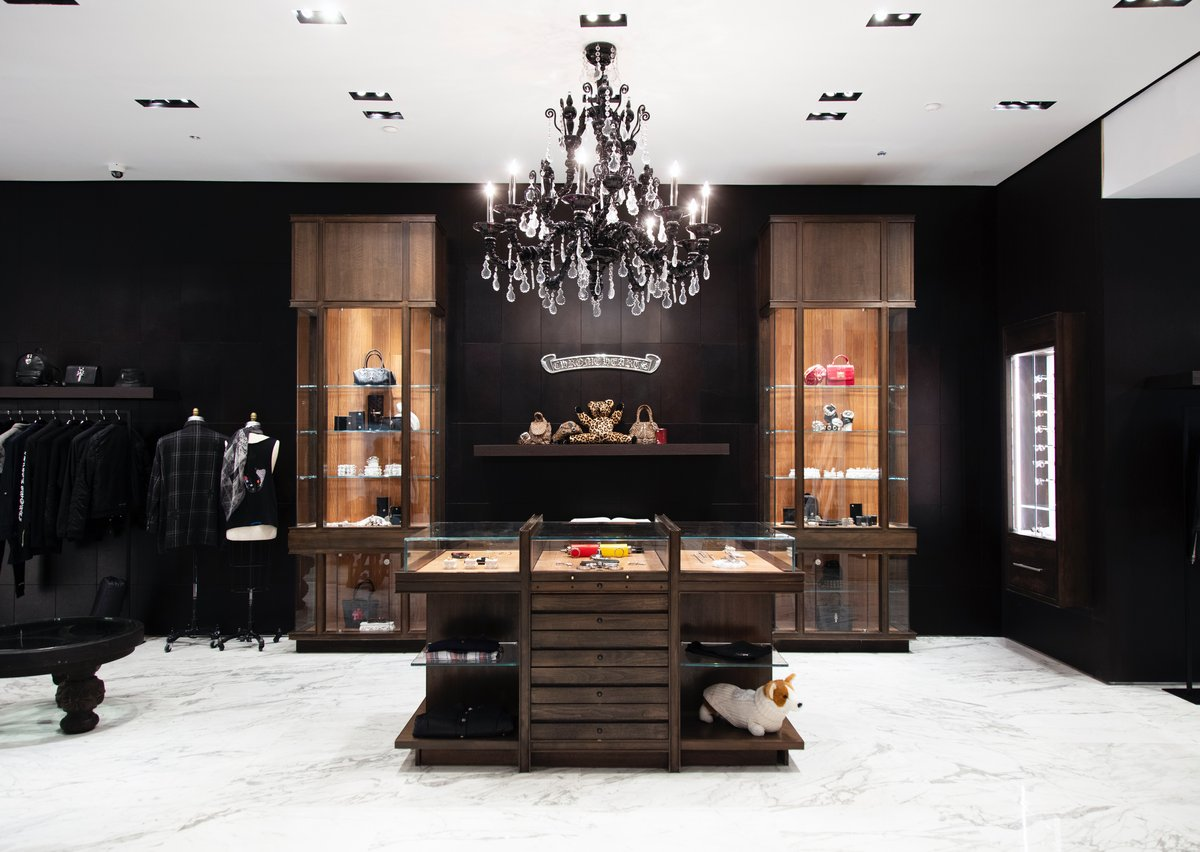
Inside the Chrome Hearts store at Hirshleifers at the Americana Manhasset. Image: Americana Manhasset
A Permanent Investment in Toronto
Chrome Hearts’ Canadian expansion has taken an unusual route.
The company acquired one Yorkville property and began planning a store there before moving its boutique to another building nearby. Its $12.65-million purchase of 121 Scollard now gives it a larger property with a recent history as a luxury destination and a stronger connection to Yorkville’s surrounding retail corridors.
The deal also returns the former Webster building to luxury use within months of that retailer’s Canadian departure.
For Chrome Hearts, the purchase establishes a permanent base in a market where its products have long been difficult to find. For Scollard Street, it introduces the first standalone boutique operated by an individual international luxury brand.
Lululemon warehouse in Brampton ON. Image: City of Brampton
Lululemon has opened a distribution centre spanning more than one million square feet in Brampton, Ontario, creating a major new fulfillment hub for the Vancouver-founded retailer’s e-commerce operations across Eastern Canada and the eastern United States.
The facility became fully operational in June and was formally unveiled at a July 8 opening ceremony attended by company executives, government representatives and members of Brampton City Council.
It contains one of the largest AutoStore-enabled operations in North America, bringing together 525 robots, 292,000 storage bins and eight kilometres of conveyors. The investment places Brampton at the centre of a large cross-border fulfillment territory while significantly expanding Lululemon’s Canadian supply-chain infrastructure.
“Since breaking ground in 2023, our new Brampton DC marks a significant milestone in the continued evolution of Lululemon’s global supply chain,” said Ted Dagnese, chief supply chain officer at Lululemon.
“This facility expands our fulfillment capabilities in Canada and the U.S., enabling us to better serve our guests and operate with greater speed and agility. The opening represents collaboration across our operations, engineering, technology, facilities, and supply chain teams and reflects our commitment to innovation, operational excellence, and creating new opportunities for our people as we build the future of our distribution network.”
Hundreds of Robots Power the Brampton Facility
Developed in partnership with warehouse-automation company Element Logic, the Brampton distribution centre features an AutoStore system containing 292,000 storage bins and 525 R5 Pro robots.
The robots move across the top of a tightly configured storage grid, retrieving bins of merchandise and delivering them to workstations for order processing. The system allows a large volume of inventory to be stored vertically within a dense footprint while reducing the time employees spend travelling through conventional warehouse aisles to locate products.
Lululemon said the integrated automation system is designed to improve fulfillment speed, flexibility and scalability while supporting a seamless customer experience. Approximately eight kilometres of conveyors move products through different stages of the operation.
The scale of the building is considerable. Lululemon said approximately 57 NHL hockey rinks could fit within its footprint, while the mezzanine alone covers an area comparable to two European football pitches.
The City of Brampton described the AutoStore system as the largest installation of its kind in Canada. The municipality also said the one-million-square-foot campus is one of the largest distribution facilities in North America.
Those descriptions refer to separate measures of the operation. Lululemon identifies the Brampton site as one of North America’s largest AutoStore-enabled facilities, while the city describes its AutoStore installation as the largest in Canada.
Supporting Fulfillment Across Eastern North America
The distribution centre will support Lululemon’s growing online business across Eastern Canada and the eastern United States, giving the Brampton operation a role extending beyond the Greater Toronto Area.
The site is located in northeast Brampton, a city with a significant concentration of logistics, distribution and advanced-manufacturing activity. Its position within the Greater Toronto and Hamilton Area gives Lululemon access to one of Canada’s largest consumer and labour markets, along with transportation connections serving Ontario and neighbouring regions.
For Lululemon, the facility provides additional capacity close to major population centres while expanding the company’s ability to move inventory and fulfill online orders across two countries.
“The development of the Brampton Distribution Centre is a testament to the partnership we built with the City of Brampton,” Dagnese said in a statement issued by the municipality. “We are proud of our Canadian roots and with this facility, our capabilities are reaching new heights and further enhancing our distribution network in Canada and the U.S.”
The investment also reinforces the Canadian foundation of a company that has grown from Vancouver into a global athleticwear retailer. While Lululemon now operates an international network of stores and digital platforms, Canada remains home to important corporate, retail and supply-chain operations.
Lululemon Brampton warehouse opening with dignitaries. Photo: City of Brampton
Project Began Several Years Ago
The opening follows several years of planning, construction and systems integration. Lululemon disclosed in its 2022 annual report that it had entered into a lease for an approximately 980,000-square-foot distribution centre in Brampton. The company broke ground on the project in 2023, with the completed facility becoming fully operational in June 2026.
The approximately 980,000 square feet cited in the earlier lease disclosure is lower than the more than one million square feet of operational space announced at opening. The larger figure may include the mezzanine and other internal operational areas, although Lululemon has not publicly explained the difference.
The development timeline reflects the complexity of establishing a distribution centre built around extensive robotics and automation. Along with preparing the building, the project involved installing hundreds of robots, nearly 300,000 storage bins, conveyor infrastructure and the technology required to coordinate inventory movement throughout the operation.
Lululemon said the facility represents collaboration across its operations, engineering, technology, facilities and supply-chain teams.
The Brampton centre was planned several years before its opening and represents a long-term infrastructure investment designed to support the company’s future digital and North American fulfillment requirements.
Automation Reshapes Distribution Work
The Brampton facility also illustrates how employment inside large retail distribution centres is becoming increasingly technical.
Employees interact with inventory delivered through automated systems, while operational and technical teams oversee equipment, software and product flows. Lululemon said the facility is creating opportunities for employees to develop specialized operational and technical skills as new systems are introduced.
The company did not disclose a current workforce total for the centre in its opening announcement. Earlier public estimates for the project varied, making it difficult to establish a reliable employment figure without confirmation from Lululemon.
The company has emphasized training, employee development and new career pathways within its distribution network.
Brampton Mayor Patrick Brown said the investment reflects the city’s ability to support major global operations.
“Lululemon’s continued investment in Brampton is a strong endorsement of our city’s economic strength, skilled workforce and ability to support major global operations,” Brown said. “This transformed facility supports the current workforce, drives innovation and reinforces Brampton’s position as a leader in logistics and advanced manufacturing.”
The City of Brampton said its economic development and planning teams worked with Lululemon during the site application and review process. Municipal staff also connected the company with transit services, community partnerships and other local resources as it established the operation.
Expanding Lululemon’s Fulfillment Capacity
The centre opens as large retailers continue to invest in distribution technology capable of moving inventory efficiently between suppliers, warehouses, stores and online customers.
For Lululemon, the Brampton operation provides additional capacity to manage seasonal demand, product launches, returns and changing order volumes across a large geographic area. Its dense storage grid allows substantial quantities of merchandise to be held within the facility, while the robotic system retrieves and directs products as orders are received.
The automated configuration also provides room for the operation to handle greater volumes within its existing footprint. Lululemon said the system was designed to offer the speed, flexibility and scalability required as its e-commerce business develops.
The official opening was attended by Dagnese, Brown and the Honourable Maninder Sidhu, Minister of International Trade and Member of Parliament for Brampton East. Other attendees included municipal councillors and senior members of Lululemon’s global fulfillment and distribution teams.
With the operation now fully active, Brampton has become an important link between Lululemon’s inventory, digital customers and distribution network across Eastern North America.
“Given higher oil and gas prices and Canada’s position as a major producer and exporter of energy, GDP is expected to post stronger growth in Q2 and Q3. However, while rising energy prices are lifting GDP, they’re also driving up costs on Main Street. There’s a need for greater cost-of-doing-business relief and measures to help small business owners manage the ongoing challenges,” said CFIB’s chief economist and vice-president of research, Simon Gaudreault.
“Economic uncertainty is weighing on business plans, leading small firms to scale back or postpone investment, hiring, and expansion plans.”
The CFIB is Canada’s largest association of small and medium-sized businesses with 103,000 members across every industry and region.
Key highlights of the Q2 2026 edition of the Main Street Quarterly report
CFIB’s estimates and forecasts, developed in partnership with AppEco, suggest Canada’s GDP is expected to grow by 2.7% and 1.6% in Q2 and Q3, respectively. Consumer Price Index (CPI) inflation rose to 3.1% year over year in Q2 and is forecasted to edge up to 3.4% in Q3.
Private investment plans remain weak and are expected to drop sharply by 6.3% in Q2.
The In Focus section this quarter shows that 38% of SMEs now report capital equipment and technology costs as a challenge, up sharply since the pandemic. Rising machinery, equipment and technology prices, compounded by tariffs, a weaker Canadian dollar and economic uncertainty, are placing additional pressure on businesses seeking to replace and upgrade their assets.
With the U.S. deciding not to renew CUSMA, about 35% of Canadian SMEs surveyed in early July report it’s too soon to determine the impact on their business plans, highlighting the uncertainty surrounding the review process. Most small firms (64%) say Ottawa should take the time needed to secure a stronger deal rather than rush an agreement. More Canadian SMEs are also diversifying their trade beyond the U.S., but interprovincial trade barriers remain a major hurdle for firms expanding into domestic markets.
A new section on business entries and exits shows that, following Statistics Canada’s recent data revisions, business exits have now outpaced entries for three quarters in a row. This marks the first sustained period of net business losses since the pandemic. Saskatchewan and Quebec are the only provinces with a hint of positive net new entries, with the health and education sectors adding the lion’s share of new businesses.
The Q2 2026 private sector job vacancy rate remained stable at 2.8%, representing 393,000 unfilled positions.
Green Street reported that RioCan received $188 million for its interest. The buyer and purchase price had not been disclosed when RioCan announced in May that it had reached a firm agreement to sell the property.
Woodbourne already owned the other 50% of FourFifty and now holds full ownership of the rental building. Based on the reported consideration, the transaction implies a value of approximately $310 million for the entire property, or about $524,000 per apartment.
The sale does not include RioCan’s interest in The Well’s retail component or the development’s other residential buildings.
FourFifty The Well is a 46-storey tower containing 592 rental apartments at 450 Front Street West. Completed in 2024, it is the only purpose-built rental building within The Well’s residential collection.
The tower was developed by RioCan Living and Woodbourne as part of the 7.7-acre mixed-use development, which includes retail, restaurants, offices, rental apartments and condominiums.
RioCan, Allied Properties REIT and DiamondCorp agreed in 2016 to sell most of The Well’s residential development rights to Tridel and Woodbourne. RioCan retained a 50% interest in the rental tower through its development and initial leasing period.
The Well in Toronto. Photo: The Well
RioCan Monetizes Rental Portfolio
The FourFifty transaction forms part of RioCan’s wider strategy to monetize its RioCan Living residential rental portfolio and concentrate capital on its core retail business.
RioCan has sold or agreed to sell interests in several residential properties over the past year, including Frontier, Latitude and Luma in Ottawa, Brio and Underwood in Calgary, Litho in Toronto and Market in Montreal.
In May, the REIT said the FourFifty agreement was included in a group of completed and pending residential transactions expected to generate approximately $379 million in gross proceeds.
“The ongoing monetization of RioCan Living continues to unlock value from the residential rental portfolio, providing additional flexibility to redeploy capital in line with the Trust’s long-term strategy,” RioCan said previously.
The company has characterized its current direction as a retail-focused strategy centred on necessity-based properties in Canada’s most densely populated and high-demand markets.
RioCan is not withdrawing from mixed-use development or residential intensification entirely. Residential density can increase the value of existing retail land, support redevelopment and create additional customers for stores and restaurants.
The REIT is, however, reducing the amount of capital tied up in completed rental buildings after construction and leasing risks have largely passed.
RioCan Remains at The Well
RioCan continues to have exposure to The Well through the development’s retail component, which has evolved since beginning to open in late 2023.
Recent additions have included MUJI, Tilley and Kit and Ace, while Mine & Yours has operated temporary retail concepts at the property. Gotstyle, which previously operated a flagship location at The Well, has closed the store.
The tenant changes reflect the continued evolution of The Well as its retail component matures. RioCan’s sale of FourFifty is separate from that commercial portfolio and gives Woodbourne full control of the completed rental tower.
Retailers have never had more information at their fingertips. Sales data, trend reports, social media and digital marketplaces provide a constant stream of insights into what consumers are buying and what may come next.
Yet identifying the next successful product or emerging consumer trend has arguably never been more challenging.
Consumer preferences are shifting quickly, particularly in the wellness space. Functional foods and beverages, supplements, clean beauty, natural health products and sustainable lifestyle goods are moving further into the mainstream, creating opportunities for retailers across grocery, pharmacy, specialty retail and beyond.
For many retailers, wellness has evolved from a niche category into a broader merchandising strategy that now influences everything from food and beauty to personal care and household purchasing decisions.
For buyers and merchants, the challenge is not simply finding new products. It is determining which trends have staying power, which brands are ready for retail and which products will resonate with increasingly health-conscious consumers.
That is one reason trade shows continue to play an important role in the retail landscape.
Why Face-to-Face Discovery Still Matters
Digital tools have transformed how retailers research products and connect with suppliers, but they have not replaced the value of seeing products firsthand.
A buyer can taste a new functional beverage, compare products across an entire category, ask detailed questions about ingredients or formulations and meet the entrepreneur behind an emerging brand. Those experiences often provide insights that are difficult to gain through a website or virtual presentation.
Relationships are also built differently in person. A conversation on a trade show floor can become the start of a long-term supplier partnership, helping retailers discover products and brands that may eventually become important additions to their assortments.
“At CHFA NOW, I can have 100 conversations in two days. Where else can you do that?” said Gary Huges, Local Development Manager at Sobeys.
The ability to have those conversations efficiently has become increasingly valuable as wellness grows into one of retail’s most dynamic sectors.
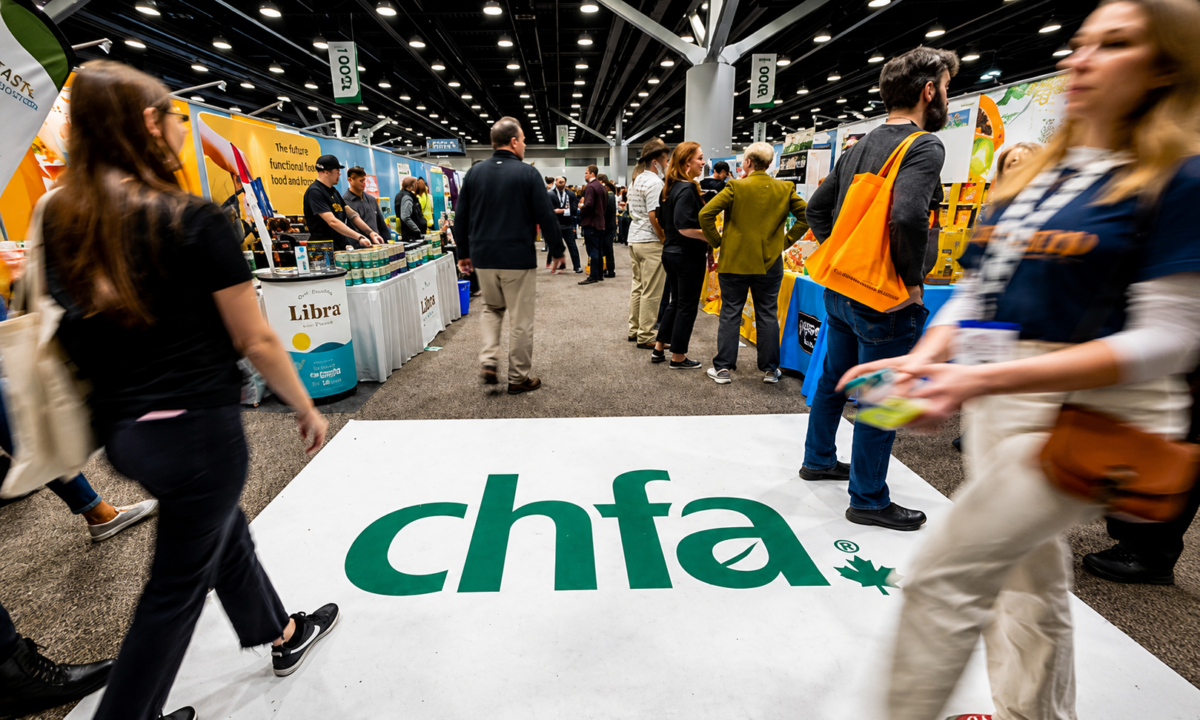
Photo: CHFA NOW
Wellness Continues to Reshape Retail
The wellness economy has become a significant force in Canada and continues to influence consumer purchasing decisions across multiple categories.
Consumers are increasingly seeking products that support healthier lifestyles, from protein-forward snacks and functional beverages to cleaner-label beauty products, supplements and environmentally conscious household goods. At the same time, retailers are looking for ways to keep assortments fresh, differentiated and aligned with changing customer expectations.
Wellness is no longer confined to one section of the store.
Grocery retailers are expanding their better-for-you offerings. Pharmacies continue to emphasize preventative health and supplements. Beauty retailers are embracing products positioned around clean ingredients and wellness benefits. Independent retailers are seeking unique brands that help distinguish them from larger competitors.
Keeping pace with that evolution requires constant discovery.
A Gathering Place for Canada’s Wellness Industry
That is where CHFA NOW Toronto has carved out an important role within the industry.
Presented by the Canadian Health Food Association, CHFA NOW brings together retailers, distributors, manufacturers, suppliers and industry leaders from across the country to explore the latest developments in natural, organic and wellness products. The event has become one of Canada’s most important marketplaces for product discovery and relationship building within the sector.
Its continued growth underscores the strength of the category.
Due to strong exhibitor demand, CHFA NOW Toronto has expanded its show floor for 2026 after selling out early. The 2025 event attracted more than 1,200 exhibitors, approximately 3,400 attendees, representatives from 750 retail locations and more than 8,400 industry professionals.
For retailers, the scale of the event offers a unique opportunity to evaluate hundreds of brands and products in one place while gaining insight into the trends shaping wellness retail.
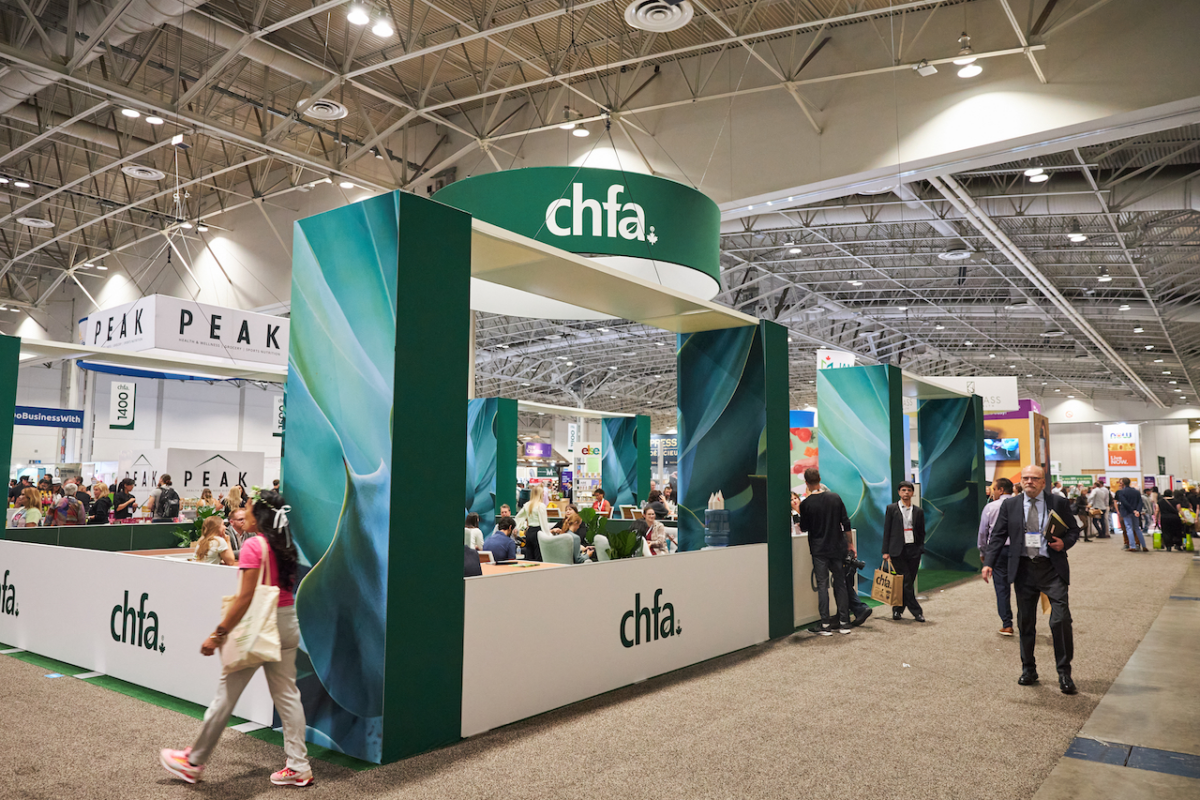
Photo: CHFA NOW
Discovering Emerging Brands Before They Reach the Mainstream
One of the most anticipated destinations at this year’s event is The Greenhouse, CHFA NOW‘s curated showcase with 70+ emerging Canadian natural, organic and wellness brands.
Located in the 2600 aisle, The Greenhouse is designed to give retailers early access to the products, founders and ideas that may define the next generation of wellness retail.
For buyers, discovering a promising new brand before it gains broader recognition can provide an important competitive advantage. Emerging brands often bring innovation, authenticity and differentiation—qualities that many retailers are seeking as consumers become more discerning in their purchasing decisions.
“Wellness continues to be one of the fastest-moving areas of retail, and staying ahead means discovering new products before they become mainstream,” said Aaron Skelton, President and CEO of CHFA.
“CHFA NOW gives retailers direct access to the brands, founders and innovations shaping the future of wellness. Through The Greenhouse, we’re creating opportunities for retailers to discover emerging Canadian brands early, build meaningful relationships and bring differentiated products to their customers.”
The opportunity to meet founders directly is part of what makes the experience valuable. Understanding a brand’s story, its mission and its plans for growth can help retailers make more informed buying and merchandising decisions and build relationships that extend well beyond the show floor.
Making the Most of the Experience
To help retailers maximize their visit, CHFA offers a complimentary Retailer VIP program for eligible retailers who register early by August 28.
The program includes savings on food and travel, priority access, exclusive networking opportunities and curated trend sessions designed to help buyers make the most of their time at the show.
For retailers managing busy schedules and rapidly evolving categories, the ability to discover products, reconnect with suppliers and gain new insights over the course of a few days can deliver significant value.
Looking Ahead
Retail continues to become more digital, more data-driven and more complex. Yet some aspects of the business remain fundamentally human.
Product discovery is one of them.
Retailers still benefit from tasting, touching, comparing and speaking directly with the people behind the brands they may one day place on their shelves. Suppliers still benefit from hearing firsthand what retailers are seeing in stores and what consumers are asking for.
In an environment where consumer preferences can shift quickly and new brands emerge almost overnight, the ability to discover products early and build relationships directly with suppliers may be more valuable than ever.
For retailers navigating the rapidly evolving wellness landscape, that is precisely the role CHFA NOW Toronto continues to play.
CHFA NOW Toronto 2026 takes place at Exhibition Place in Toronto, with the conference scheduled for Friday, September 25, and the trade show running Saturday, September 26, to Sunday, September 27. Retailer registration for the trade show is complimentary, with eligible retailers also able to participate in the Retailer VIP program.