The founder of an Ontario lingerie retail chain has launched a new concept store targeted towards a younger demographic, and more locations are likely to follow.
Liliana Mann, founder of Linea Intima, opened a new lingerie store called rêve rouge at Toronto’s Bayview Village in late June. The store offers high-end lingerie, sleepwear and yoga-wear, geared towards female customers between the ages of 15 and 50.
Mann says she launched the store in response to the changing tastes of customers with respect to lingerie.
“The customer base, I find, is changing,” she says. “It’s a totally different attitude.”
(CLICK FOR INTERACTIVE BAYVIEW VILLAGE MALL MAP)
Specifically, Mann says younger customers are less focused on fit and support when shopping for bras, and more focused on feeling comfortable and sexy. rêve rouge strives to reflect that attitude in the merchandise, the design of the store, and the shopping experience.
“We opened the new store for the different customer – the customer who is more in tune with her body, and wants to please herself first, and wants to be comfortable,” says Mann.
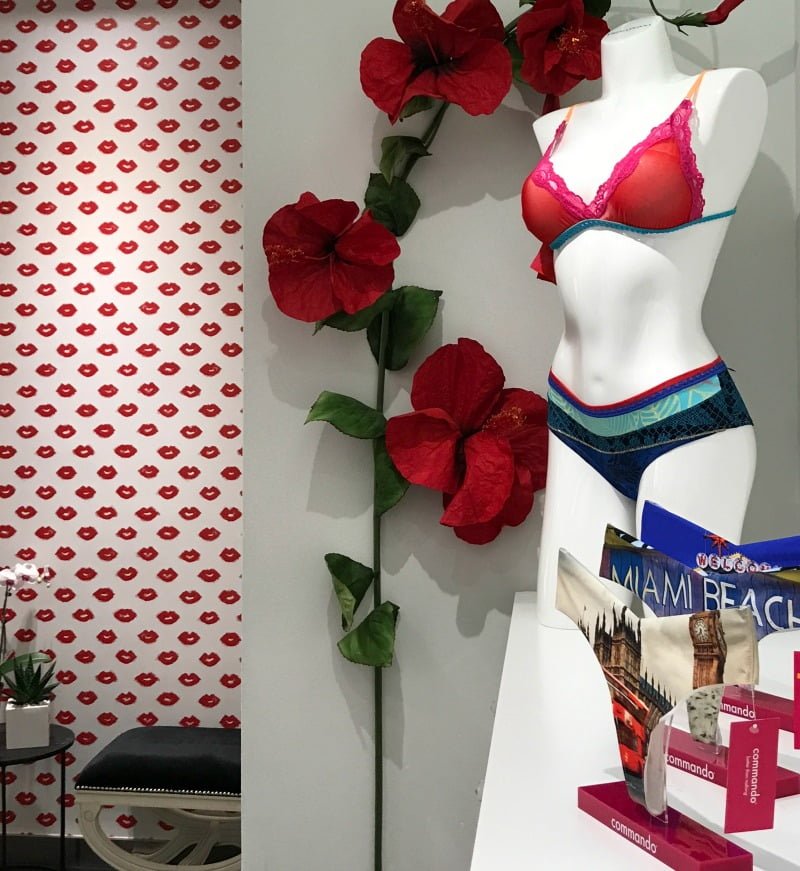
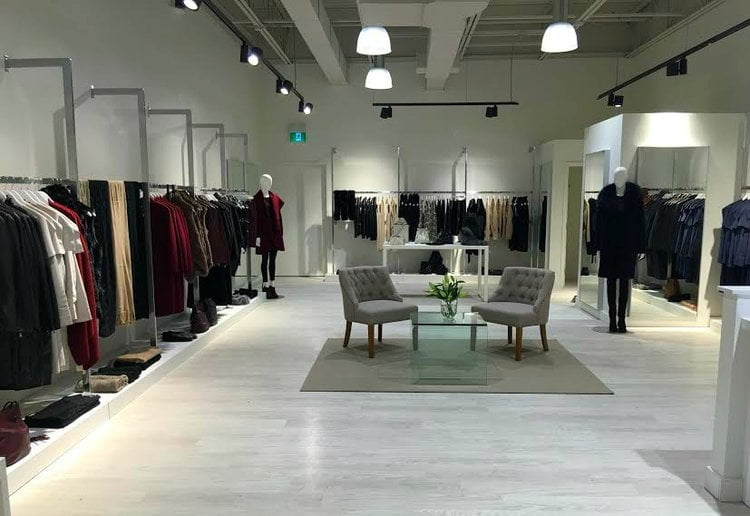
The 821-square-foot store was designed with the help of Toronto-based designer Divia La Penna. The colour red is prominently showcased throughout the store, along with youthful accents such as white furry chairs and wallpaper decorated with lips and hearts.
“The store is very clean and modern, but romantic and sexy,” says Mann. “It’s airy and dreamy. Every single detail was thought of.”
rêve rouge aims to create a relaxed shopping experience, with stylists in store who focus on helping customers choose styles they like.
Image: rêve rouge
The new concept contrasts with Linea Intima, which launched 20 years ago and now operates five locations in Ontario. That chain caters to a more mature customer base, and focuses primarily on bra fittings. Although many consumers continue to seek out that type of service, Mann says she has found that a growing number of younger consumers were looking for a different type of lingerie shopping experience.
“Daughters who came with their mothers to Linea did not enjoy the experience,” Mann says. “So, that’s why I created a store for the daughters.”
Bayview Village was a good fit for the new store, Mann says, since the North York mall is attracting a growing number of younger shoppers. The upscale shopping centre also has a Linea Intima location.
Image: rêve rouge
Both retail chains also sell products online.
Although Mann hasn’t yet made definitive plans for future rêve rouge locations, the expansion of the new concept appears imminent. Within days of opening the store, Mann says she received calls from other malls inquiring about adding more locations.
“There is a much larger demand for a store like this,” she says.
With retail stores closing down at an alarming rate, retailers must focus on putting customers first and adapting to the digital transformation of the industry in order to survive, suggests a new white paper from digital marketing agency DAC Group.
The new research paper, called Customer-First Retail, explores the factors contributing to the recent wave of retail store closures, and some of the strategies retailers need to implement to remain relevant in today’s marketplace. It features insights from a variety of retail industry executives, such as Diane J. Brisebois, president and CEO at Retail Council of Canada.
The paper suggests that the most critical step for retailers to take in the current environment is to make the customer experience their top priority.
“You must be completely obsessed with your customers and with their specific needs and wants so that you can communicate and serve them in an authentic way,” says Brisebois in the paper.
A key component of customer centricity is personalization. Specifically, customers today want to feel important, special, and valued, according to DAC Group. To personalize the customer experience, retailers must get to know their market extremely well—partly by tapping into data.
Taking that approach can pay off, the white paper suggests. It points to recent research from The Boston Consulting Group showing retailers that use digital technologies and proprietary data to create personalized experiences are seeing their revenues increase by 6% to 10%—two to three times faster than companies that aren’t using this kind of strategy.
Another element of customer-centricity is engaging customers at the local level, by customizing marketing and communications towards consumers within specific regions.
The Body Shop is one retailer that has embraced this strategy by using tools such as personalized emails and geo-targeted Facebook ads, according to Jennifer Spencer, VP marketing and corporate responsibility at The Body Shop, who participated in DAC Group’s research.
“It’s important that the customer experience is consistent across the entire brand, but it also needs to be personalized for the local markets as well to ensure that we connect with the communities where our stores are located,” Spencer says in the white paper.
One of the key reasons that many retailers are struggling in the current environment, Brisebois says, is their failure to create engaging and inspiring experiences for customers.
With disrupters such as Amazon changing customer expectations, retailers need to adapt their offerings more quickly than ever.
“The future belongs to those retailers who constantly test, innovate and really take chances,” says Brisebois.
Catering to the expectations of today’s customer means providing a seamless omnichannel experience, according to DAC Group. Digital and mobile channels are becoming an increasingly important part of that experience, and having a strategy around those channels is vital, the paper says.
However, the retail experts interviewed for the research paper agreed that a physical presence will also continue to be important for retailers.
“I think it would be foolish for people to dismiss the brick-and-mortar experience,” says Brisebois.
The challenge for retailers will be remaining agile enough to maintain the right balance of in-store and online operations as customer buying habits continue to evolve.
“I think the successful retail companies are going to have a store footprint,” says Johnny Russo, associate vice president, e-commerce and digital marketing at Mark’s. “They’re going to have a solid digital platform, but they’re going to have a store foundation, and I think the ones that get that combination right are going to win.”
Canmore, Alberta-based Rocky Mountain Soap Company is about to launch a retail expansion, after evaluating its overall business strategy for the past couple of years.
According to CEO and co-owner Karina Birch, the company paused its retail store expansion in 2015 in order to perfect its product and customer service experience, as well as upgrade various systems and processes.
It’s paid off — Ms. Birch says that last quarter, the company saw almost 20% growth in year-over-year same-store growth, as opposed to about 10% growth in years prior. What’s remarkable is that seven of its 10 stores are in Alberta — a province experiencing a temporary economic slump that’s been attributed to low oil prices.
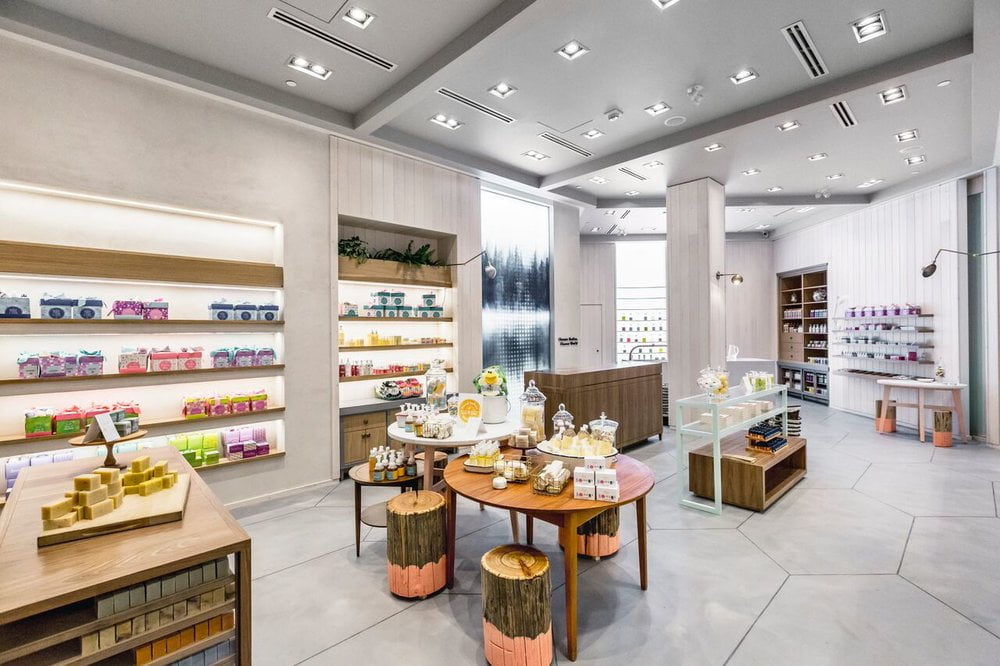
The product speaks for itself, noted Ms. Birch — founded in 1995, Rocky Mountain Soap Company offers a wide variety of 100% natural and toxin-free personal care products, using high-quality essential oils, pure natural beeswax, food-grade vegetable oils, real grains, fresh herbs and fruits and vegetables in its products. Customers are loyal, and the retailer’s customer base is growing rapidly.
Ms. Birch and her husband, Cam, grew the company from a single 300 square foot location in Canmore, to a chain of 10 retail locations in Western Canada, as well as boasting more than 700 wholesale accounts. Rocky Mountain Soap Company has stores in Canmore, Banff, Calgary (three stores) Edmonton (two stores), Vancouver (two stores) and one in Winnipeg. It also currently operates a pop-up location at Calgary’s CF Chinook Centre.
Natural beauty products is the fastest-growing segment in the beauty industry, and Rocky Mountain Soap Company is fortunate enough to have benefited from this trend.
The company stands out for how much effort and investment it puts into its ingredients and overall product development. Research is done in-house, as is manufacturing — the company has a 16,000 square foot worship in Canmore. Ms. Birch described how the company uses local products wherever possible, and how it focuses on using 10 ingredients or less in each of its products. “With less ingredients, you obtain higher quality,” noted Ms. Birch. Canadian ingredients are preferred as well and while that might cost more, Ms. Birch says that the resultant higher quality makes it all worth it.
The next 12 to 18 months will be a time of retail growth for the company, with Toronto being a key entry point for an anticipated three new store locations. The Greater Toronto Area is Rocky Mountain Soap Company’s biggest online market outside of Alberta, and stores are expected to further build relationships with clients. Rocky Mountain’s stores are interactive and educational spaces, and many retailers are increasingly seeing benefit to operating both physical and online retail channels.
Ms. Birch says that the company is looking primarily within high-traffic shopping malls for retail space, though it is also considering street-front locations in selected areas. Rocky Mountain Soap Company stores are ideally in the 700 square foot to 800 square foot range, and she says that she expects to open another nine or so stores over the next four-to-five years. While it represents a doubling of its existing store count. Ms. Birch says that growth will be calculated, and organic.
*Oberfeld Snowcap represents Rocky Mountain Soap as brokerage in Canada.
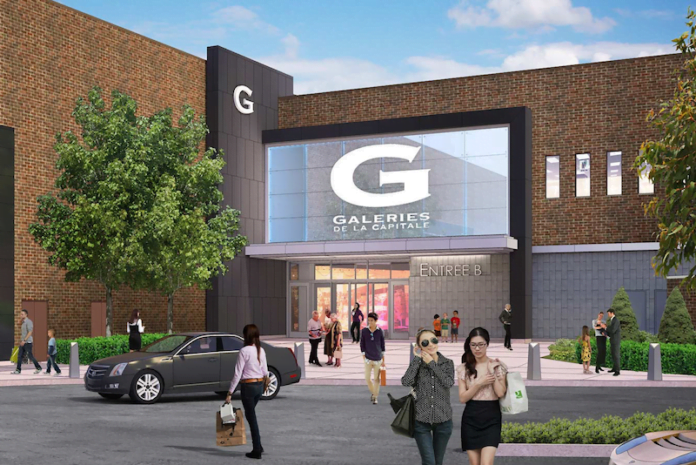
The largest enclosed shopping centre in the province of Quebec, Les Galeries de la Capitale is seeing substantial investments that are expected to further attract customers. Included will be an innovative, overhauled amusement park, as well as a zero-carbon La Maison Simons store.
This week, landlords Oxford Properties and CPPIB announced the $52 million construction of a new Méga Parc amusement park at the Quebec City mall. Méga Parc has been part of Les Galeries de la Capitale for over 30 years, and it will be fully revamped and transformed into a Steampunk themed “entertainment zone inspired by the Industrial Era.” Construction is set to begin on September 5 of this year, and it’s expected to be completed in about 18 months.
The Méga Parc overhaul will allow patrons to “travel back in time to the turn of the 19th century in an alternate age where technology has evolved in a completely different way. Steam-powered machines, factories, and steel are omnipresent in this retro-futuristic industrial environment.” Further details are available on a french-language website: nouveaumegaparc.com
Most of the existing rides and attractions will be replaced, and the new Méga Parc will feature more than 18 attractions. The existing rollercoaster and merry-go-round will be kept, though they’ll be given a facelift in line with the new theme.
Méga Parc manager Jean Pelletier noted that changes to the amusement centre were based on other amusement parks around the world. “In addition to boasting the first spokeless Ferris wheel in North America and a freefall ride twice as high as before, Méga Parc will proudly offer the longest indoor skating trail in Canada. The ice skating oval, complete with LED lights and effects, will fit perfectly with the new Méga Parc concept and will maximize space.”
Other features will include an interactive floor, light and sound effects, and a giant screen. In the middle of the park, there will be a stage for shows and an interactive fountain with water jets and sound and light features. There will be three new rooms set up for kids’ birthdays, and the recreational space can be rented out for corporate events.
Méga Parc addresses the trend of adding entertainment components to shopping centres. It’s something that’s more common in major shopping centres in Asia and the Middle East, and North American landlords are now recognizing the trend by adding non-retail uses, which also include expanded food and beverage offerings.
Méga Parc is already known as being one of the biggest tourist attractions in the Quebec City area, and its overhaul is expected to further add to the mall’s already heavy foot traffic. Les Galeries de la Capitale also includes the region’s only IMAX cinema. According to Retail Council of Canada’s Shopping Centre Study, Les Galeries de La Capitale is the region’s busiest mall with about 10 million annual visitors, and it’s also one of the most productive in the province in terms of sales per square foot.
In a recent interview, Michael Turner, Executive Vice President for Canada at Oxford Properties, noted that percentage of space devoted to food and beverage in major malls in Asia is between 35% and 40%, and that Oxford Properties will look to eventually dedicate about 20% of its mall space in a similar fashion — about double what it is today. Adding attractions and food/beverage offerings are helping turn malls into community-centres, where patrons will gladly spend part of their day — and shop.
The new Méga Parc will also be energy efficient, according to Oxford Properties. In keeping with the trend of energy efficiency, large-format fashion retailer La Maison Simons is building a $50 million, 80,000 square foot replacement store in the mall that President/CEO Peter Simons says will be the company’s first zero-carbon location. Simons will replace the mall’s Target box which was vacated with Target’s Canadian exit in 2015.
The new Simons store, as well as the overhauled Méga Parc, are part of a bigger investment that has included the renovation of the mall’s common areas, modernization of the Espace Gourmet dining area, a major facelift of the mall’s Hudson’s Bay/La Baie department store, and the addition of a number of high-profile tenants. Over the past year, new retailers to open at Les Galeries de la Capitale include Sephora, MEC, Urban Planet, Rinascimento, Soft Moc, and Bijouterie Monaco, and in the coming months the mall will welcome new tenants such as MAC Cosmetics, Clarks, Jean-Paul Fortin shoes, Michael Kors, and L’Occitane en Provence.
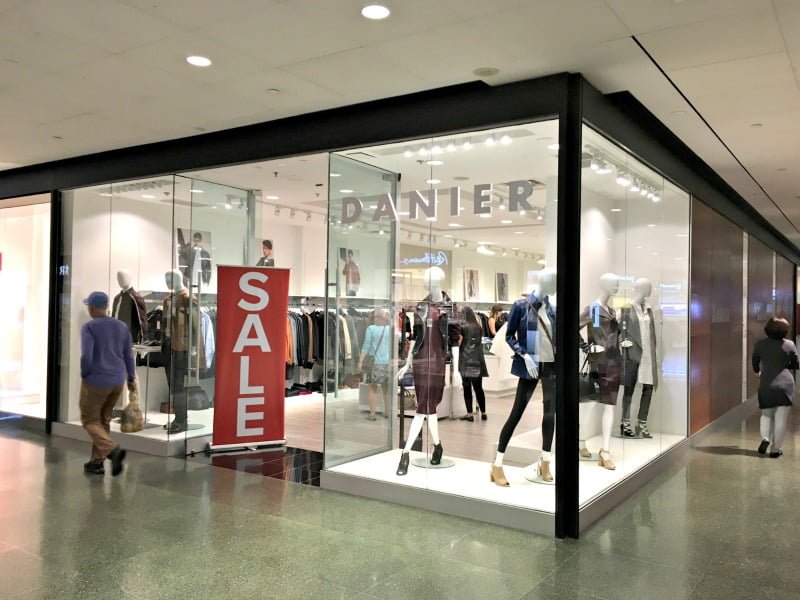
Canadian fashion brand Danier is in the midst of a Canadian store expansion that is expected to see the company open stores in a number of Canadian provinces. Danier relaunched its operations in the fall of 2016, and it has already opened seven stores, with more on the way.
The previous Danier Leather brand sought creditor protection in February of 2016, and all of its stores were closed. The company’s intellectual property was purchased in July of 2016, and the new owners re-established the continuance of the Canadian company. The new Danier’s focus is now on a broader range of fashions for both men and women. Product includes ready-to-wear, outerwear (including some leather styles), bags and accessories — designs are modern, fashion-forward and of a high quality (including luxurious fabrics and lambskin), and prices are kept reasonable in order to attract a broader demographic. Store interiors are bright and modern, reflecting the brand’s positioning of being ‘accessible luxury’.
In December of 2016, as well, Danier launched its new ecommerce site, profiling the brand’s fashions for both men and women.
The Toronto Dominion Centre location marks the brand’s first foray into a major Canadian downtown, and on a weekday afternoon there were several customers browsing — and buying. Sales staff noted that the store opens earlier than others in order to capture the early commuter crowd, and that the store is already a hit with many who work in Canada’s Financial District.
In order to showcase Danier’s fashions as well as to engage face-to-face with consumers, the company is continuing to open new store locations. The Vancouver market is a target for the brand, recognizing Canada’s West Coast’s strong retail sales. Calgary is also a target, and the company will continue to explore new markets as it grows.
Danier continues to partner with David George of brokerage NorthWest Atlantic to secure new locations. Danier stores are ideally sized in the 1,500 square foot to 2,000 square foot range, located in major shopping centres and outlet centres.
New Look Vision Group Inc. has entered into a definitive agreement to acquire all of the issued and outstanding shares of Iris, le groupe visuel (1990) Inc. The deal reinforces New Look Vision Group’s position as the largest Canadian retail optical company, and the 8th largest in North America.
The purchase price for the shares of Iris is $120 million on a cash-free and debt-free basis, subject to customary price adjustments. New Look Vision has entered into several financing agreements to finance the acquisition, including the following:
(i) a $38.75 million increase of its senior secured term facility with its bank to $95 million;
(ii) an arrangement for a $35 million junior unsecured debt facility and a $20 million equity private placement of 646,400 subscription receipts at a price of $30.94 per subscription receipt with a Quebec-based fund; and
(iii) a $30 million concurrent equity private placement of 969,600 subscription receipts at a price of $30.94 per subscription receipt.
The combined entity will have estimated annual revenues exceeding $315 million, as well as estimated consolidated annual revenues exceeding $265 million, and a store network in excess of 375 locations.
“We will be the dominant player in Quebec, the Atlantic Provinces and British Columbia. This should lead to greater efficiencies and lower operating costs in many areas of operations,” said Antoine Amiel, President and Director of New Look Vision.
The acquisition of Iris is expected to close on (or about) October 1, 2017, subject to customary closing conditions.
Iris was founded 1990 by Dr. Francis Jean in Baie-Comeau, Quebec and based in Laval, Quebec. The retailer boasts 150 locations comprising of 53 corporate, 77 jointly owned and 20 franchise locations. In Canada Iris has 82 stores in Quebec, 36 in British Columbia, 16 in Alberta, 15 in Ontario and one in New Brunswick. For the 12 months ended September 30, 2016, Iris’ adjusted pro forma system-wide revenues were approximately $110 million, while adjusted pro forma consolidated revenues for the same period amounted to approximately $60 million.
Lipault Paris, the upscale French luggage company, recently opened its first freestanding North American location at the McArthurGlen Designer Outlets in Vancouver. It’s the first phase of an eventual retail expansion into the North American market.
The new 1,245-square-foot store is an intuitive and logical choice, as its proximity to Vancouver International Airport (YVR) configures it at one of the major gateways into Asia. Its location along the Canada Line metro line close to YVR makes it especially compelling for international travelers.
The brand’s Marketing Communications Specialist, Erin Reynolds, explained that the free-standing location is an intuitive decision, as “it’s a type of brand that’s suited to its own stores, and the store complements the brand’s extensive wholesale business in Canada”. The brand currently has a number of shop-in-shop boutiques within stores in the United States, in addition to the Vancouver stand-alone location.
(CLICK FOR INTERACTIVE GOOGLE MAP)
(CLICK IMAGE FOR INTERACTIVE MCARTHURGLEN SHOPPING CENTRE FLOOR PLAN)
Photos: Lipault
1 of 2
Photos: Lipault
Lipault is distinctive for its monochromatic yet vivid colour scheme, designed as a lightweight alternative to more conventional luggage sets. Each line contains the complete set of travel accessories, from large suitcases and carry-ons to laptop cases and toiletries kits. The monochrome look and minimalist design adheres to the aesthetics of Parisian chic, while emphasizing efficiency and utilitarianism. According to Reynolds, “The brand is for the fashion-sensitive, and for someone looking for an affordable brand, targeted towards women 25-60, active urban and well-traveled.” Lipault is priced such that “the product is affordable enough so that a person can match a bag to their outfit”. This also explains why the Vancouver location has a minimalist white aesthetic, so that the colours of the bags “pop” upon display.
Lipault was founded by Francois and Karine Lipovetsky as a small leather goods company in Paris in 2005, and has since become one of the more well-known names in luxury travel goods. In 2014, Samsonite acquired the fledgling company as part of its expansions in the luxury travel market, and the brand was slowly introduced into its stores worldwide. It is now part of the Samsonite group of companies.
At this time, Lipault will be concentrating on the Vancouver location before a decision will be made to open additional free-standing locations on the continent. As McArthurGlen YVR was voted the world’s top outlet centre at the 2015 MAPIC conference, Lipault has the advantage of testing a highly-motivated retail clientele in a prime location.
*Photos were supplied by Lipault, except for the top photo, which was taken by Ritchie Po on July 1, 2017.
A high-end children’s retailer from Dubai, DBbabies, has made its debut in the Canadian market with a new boutique near Montreal, marking the beginning of a cross-country expansion for the brand.
DBbabies specializes in essentials for children ranging in age from newborns to eight years old. Co-founded by Montreal native Danny B. Haddad in 2007, the chain operates seven boutiques throughout the UAE and Oman, as well as an online store serving those regions.
Haddad saw an opportunity to expand the concept to Canada, after determining that there was a lack of similar retailers operating within Canadian shopping centres.
“Most baby shops are destination shops,” Haddad says. “We had gone to a few malls and asked the information desks where we could buy a pushchair or other baby related items. Unfortunately, they could not direct us to any stores within the shopping mall. Unless you are looking for kids’ clothes or toys, you were very limited in the quality and selection of gifts and essentials.”
DBbabies at CF Promenades St-Bruno
DBbabies stores are geared specifically to shopping malls, ranging in size from 1,200 square feet to 2,000 square feet. The retailer carries a wide range of essentials for babies and toddlers, such as strollers, high chairs, kitchenware, sleeping and feeding accessories, blankets and bedding, bath products and towels.
The stores also carry a variety of gift items and customizable gift baskets, with a unique in-store embroidery service that allows customers to personalize their gifts.
“We cater to everyone,” Haddad says, “whether you are buying something for your own baby or child, or whether you are shopping for a special personalised gift.”
DANNY B. HADDAD
The retailer’s first Canadian boutique, spanning 1,800-square-feet is located at CF Promenades St-Bruno. The company plans to open a second store in the coming months at CF Carrefour Laval.
DBbabies will also be launching an online store for the Canadian market in the months to come.
Longer term, the company is planning much more expansion in Canada.
“As we explore the market and its opportunities, our strategy is to cater to the many communities across Canada,” says Haddad. “Coast to coast, we are interested in cities such as Toronto, Ottawa, Vancouver and Calgary, as well as other smaller cities.”
DBbabies at CF Promenades St-Bruno
The retailer’s stores are designed in-house, with a focus on simplicity and adaptability.
“It all starts with a white canvas, and we accessorise,” says Haddad. “Our furniture changes based on the products and brands we carry, which are constantly changing and evolving.”
The stores are designed to create a friendly and approachable environment for all shoppers, he adds.
“The simplicity and structure creates an emotionally pleasant experience,” Haddad says.
Also contributing to the shopping experience at DBbabies, he adds, is a high level of customer service.
“Our services and our offering is based on a journey,” Haddad says. “Our team, environment and simple service structure is made to help families and make the entire shopping experience easy for anyone walking into our stores.”
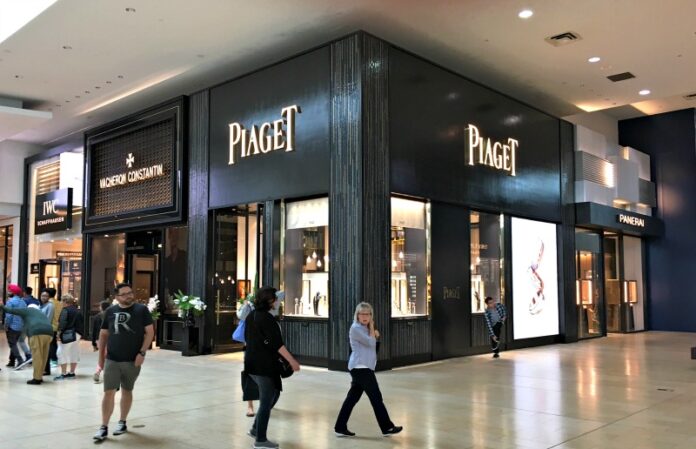
(RICHEMONT GROUP OPENED 4 BOUTIQUES AT TORONTO'S YORKDALE SHOPPING CENTRE LAST WEEK -- PIAGET, VACHERON CONSTNTIN, IWC AND PANERAI)
Wealthy Canadians must love their bling — the country is seeing an unprecedented number of luxury jewelry and watch brands opening freestanding stores, and more are on the way. This month alone, Richemont has opened five luxury boutiques at Toronto’s Yorkdale Shopping Centre, and Vancouver is about to see a number of store openings in its burgeoning ‘Luxury Zone’.
Richemont management in Toronto says that they expect Vancouver to see most, if not all of the Yorkdale boutiques open in the city’s downtown ‘Luxury Zone’ and unlike Yorkdale, these would be street-front retail spaces. Already confirmed are Van Cleef & Arpels and IWC Schaffhausen, which will both open towards the end of the year in a building that is currently under construction at 1069 Alberni Street. An Officine Panerai announcement is also expected to be made shortly.
(AT YORKDALE. PHOTO: CRAIG PATTERS0N)
(INSIDE VACHERON CONSTANTIN AT YORKDALE. PHOTO: VACHERON CONSTANTIN)
(YORKDALE, PHOTO: VAN CLEEF & ARPELS)
Vancouver continues to see luxury jewellers open freestanding boutiques. Next up this fall is Chopard, which will open in the current GWC retail space at 925 West Georgia Street, next to Black Goat Cashmere and across the street from the Fairmont Hotel Vancouver. The hotel’s retail podium, which boasts locations for luxury brands Gucci, Dior, Louis Vuitton and St. John, is highly coveted, and Chopard’s debut indicates that Vancouver’s Luxury Zone is expanding eastward and onto West Georgia Street.
The luxury jewellery and watch retail expansion in Canada might just make sense — according to Euromonitor International, sales growth for both luxury jewellery and luxury watches is growing substantially. In 2016, Canadians spent almost $2.1 billion on luxury jewellery, up from $1.28 billion in 2011 — that’s more than 60% growth in just five years. Last year as well, Canadians spent $214.1 million on luxury watches, up from $166.3 million in 2011 (that’s 28.7% growth over five years). Demographics show that Canada’s wealthiest continue to get wealthier — a trend similar to that in the United States.
(1069 ALBERNI STREET IN VANCOUVER — SIGNAGE IS ALREADY UP FOR VAN CLEEF & ARPELS, AS OF JUNE 27, 2017)
(IN VANCOUVER THIS FALL, CHOPARD WILL FIND A NEW HOME AT THE NORTHWEST CORNER OF HORNBY AND W. GEORGIA STREETS, IN CATHEDRAL PLACE. PHOTO: GOOGLE STREET VIEW SCREEN CAPTURE)
(JAEGER-LECOULTRE AND LAO FENG XIANG ON ALBERNI STREET IN VANCOUVER. MEPHISTO TO THE LEFT HAS CLOSED, AND A LUXURY WATCH BRAND WILL SOON BE ANNOUNCED FOR THE SPACE. PHOTO: KARIM RASHWAN)
It’s becoming apparent that Canada’s two primary luxury watch and jewellery nodes are Toronto’s Yorkdale Shopping Centre, and downtown Vancouver’s expanding ‘Luxury Zone’ (centred on the 1000 block of Alberni Street as well as adjacent Burrard and Thurlow Streets). This summer, Yorkdale will debut Canada’s first Breitling watch boutique with an Omega boutique next to it, and Links of London will open nearby. Vancouver’s Luxury Zone, which has seen the addition of luxury jewellery and watch brands such as Lao Feng Xiang and Jaeger Le-Coultre, also recently saw Tiffany & Co. triple in size. Luxury watch brand Hublot is putting the finishing touches on its already opened boutique at 1080 Alberni Street — it’s the first in Canada for Hublot, and is located next to the Canadian retail headquarters of De Beers.
Toronto’s downtown core, particularly the Bloor-Yorkville area, is expected to see a number of luxury jewellers open over the next several years. Birks will temporarily relocate its Manulife Centre flagship to space formerly occupied by William Ashley, while a new one-level Birks flagship is created in Birks’ existing retail space. The new Birks, which will reflect the design of a Yorkdale prototype that opened last winter, will feature street-front entrances for Van Cleef & Arpels and Breitling boutiques, and possibly others.
Multi-brand jeweller Louis Black, on Toronto’s Yorkville Avenue, recently converted its space into a Richard Mille watch boutique — the Mille brand features styles with some prices exceeding $2-million. Brands and potential franchisees are watching closely, and are considering opening nearby.
While Montreal is no longer considered to be a major luxury market in terms of freestanding boutiques, the city’s Birks flagship is about to see an overhaul, including a redesigned retail space and the addition of a boutique hotel. Montreal’s Chateau d’Ivoire jewellery store, considered to be one of the top luxury jewellery stores in the country, will also see a renovation — there will be stiff competition for luxury dollars in Montreal.
(BIG CHANGES ARE IN STORE FOR BIRKS AT TORONTO’S MANULIFE CENTRE. RENDERING: MANULIFE)
(BIRKS IN MONTREAL. PHOTO: GOOGLE STREET VIEW)
Luxury jewellery is also becoming a key component to Canada’s luxury department stores. In Saks Fifth Avenue’s downtown Toronto flagship, which opened in February of 2016, shop-in-stores for Piaget, Chopard, Boucheron and De Grisogono anchor the store’s glittering ground floor jewellery hall — a De Grisogono watch in the boutique, with diamonds and a stingray band, is priced at just under $100,000. Saks will be opening in Calgary next year and reportedly in Montreal at some point, and both are expected to see jewellery offerings that will compete with existing city retailers. Holt Renfrew has been upping its jewellery offerings over the past several years, housing brands such as David Yurman, which opened its largest concession in the world inside of Vancouver’s Holt Renfrew in the fall of 2016. Nordstrom, as well, carries an expansive assortment of luxury jewellery and watch brands at its Canadian flagships in Vancouver and Toronto, competing with some of the offerings at Saks and Holt’s.
French luxury brand Chanel, which opened a 5,000 square foot ground floor concession at Holt Renfrew in Vancouver last summer, features a fine jewellery and watch boutique — a first for the brand in Canada. A ‘pigeon blood’ ‘Camellia’ broach shocked the media when it was revealed that its retail price was $3 million. Chanel will also open an 8,700 square foot freestanding Toronto flagship at some point in the fall and while it will carry jewellery, sources say that it won’t carry the priciest pieces found in the Vancouver shop-in-store.
It remains to be seen if Canada will continue to see such rapid growth in luxury jewellery and watch brand stores into 2018 and beyond. It will be dependent on a number of factors, including the economy, travel patterns, and even immigration. This summer, we’ll feature a piece on why luxury retail is on the rise in Canada, and we’ll be interviewing some of the country’s leading experts to gain more insight into why the country is becoming a land of bling.
Alberta-based men’s luxury brand retailer Henry Singer is relocating its Calgary store. After almost 30 years on the 3rd floor of Bankers Hall, Henry Singer is locating to a slightly smaller retail space in a building nearby. The move is all about exposure and accessibility, according to the company’s president, Jordan Singer.
The new 6,006 square foot replacement store will open this fall on the ground floor of Calgary’s Eighth Avenue Place (545 8 Avenue S.W.). The store will be ‘highly-experiential’ according to Mr. Singer, and will be designed by award-winning architecture and interior design firm McKinley Burkart.
The store’s design will be simple and with luxurious details, allowing the clothing to be the focal point. Rather than operate shop-in-stores as it currently does, the new Calgary Henry Singer will feature one unified space, carrying luxury brands such as Kiton (with suits costing more than $8,000) Jacob Cohen (pricey denim) and Scarpe di Bianco (luxury footwear).
‘VIP’ change rooms will be among the luxury offerings, as well as a made-to-measure suite and an open-concept tailor shop, where intricate hand-finishing and pressing will be done in-house by master tailors. The new store will also feature an on-site barbershop and an apothecary featuring a curated selection of men’s skin care products and fragrances. Henry Singer’s shoe offerings will also be expanded — men’s footwear is one of fashion’s fastest-growing segments at the moment.
In an interview, Jordan Singer explained that he wanted the Calgary store to have greater visibility, and he jumped at the opportunity to locate on 8th Avenue. The store will feature a street-front entrance as well as easy access to adjacent office towers via the city’s above-ground +15 walkway system. Parking is also nearby, adding to the convenience factor.
HENRY SINGER ENTRANCE. RENDERING: MCKINLEY BURKART HENRY SINGER RENDERING: MCKINLEY BURKART
While it will be a bit smaller than Singer’s current Banker’s Hall store (at almost 7,500 square feet), the new 6,000 square foot store will feel just as large, with its open concept design.
Singer’s move comes at a time when the Calgary economy is struggling, while at the same time competitors are expanding. Downtown Calgary is home to a massive Holt Renfrew flagship, which features an impressive 20,000 square foot men’s floor with a vast array of designers. Luxury menswear retailer Harry Rosen operates a 30,000 square foot store nearby at The CORE shopping centre, as does Brooks Brothers, with its dapper menswear offerings. Further out in the suburbs is CF Chinook Centre, which features Calgary’s other Harry Rosen store as well as Nordstrom and, early next year, Saks Fifth Avenue will enter the market with a 115,000 square foot store. When asked if he’s concerned, Mr. Singer said he’s ready to take on the competition with a differentiated store format, noting that the retailer already has a loyal following.
Henry Singer Fashion Group was founded in Edmonton in 1938 by Henry Singer (Jordan’s grandfather), and the retailer has a storied history in Alberta. Besides the current Banker’s Hall location in Calgary, Henry Singer also has two Edmonton stores — at Manulife Place in the downtown core, as well as at West Edmonton Mall (housing ‘HS by Henry Singer‘).