Construction signage has gone up for Canada’s first Woolrich store — America’s oldest outdoor clothing company will open at Canada’s most productive shopping centre, Toronto’s Yorkdale Shopping Centre, this winter.
Aurora Realty Consultants is acting on behalf of Woolrich for its Canadian expansion, and Jeff Berkowitz and Ashley Lebofsky acted on behalf of the retailer in the Yorkdale deal. According to Aurora Realty Consultants’ website, Woolrich stores ideally occupy retail spaces in the 2,500 square foot range, either in enclosed malls or on urban high streets.
Woolrich was founded in Pennsylvania in 1830 for the purpose of manufacturing fabric for the wives of hunters, loggers and trappers. Later, the company also outfitted clothing supplies for the American Civil War. It includes two labels: Woolrich Outdoor, distributed in North America, and Woolrich John Rich & Bros., the contemporary high-end outerwear line that is distributed worldwide. Woolrich also collaborates with brands on unique product launches, which in the past have ranged from Converse x Woolrich footwear to Goal Zero x Woolrich wireless speakers, not to mention a blanket collaboration with the Hudson’s Bay Company.
Woolrich Inc. and Woolrich Europe announced a merger in November of 2016, creating a company called Woolrich International. Longtime Italian partner W.P. Lavori in Corso now controls the new company, with Woolrich International’s head office to be located in London UK. Annual sales in 2016 were US $190 million, and the company is projecting annual growth of 12% between 2017 and 2020, where it anticipates revenues of US $300 million while employing 500 people. The new company has earmarked about US $50 million to open more than 60 stores globally — including in Canada, where Woolrich is expected to also target Vancouver for at least one store.
Woolrich currently operates 25 stores, globally, including two full-priced stores in the Unites States (Boston at 299 Newbury Street and in New York City at 125 Wooster Street) as well as an outlet in Woolrich, Pennsylvania.
Vancouver-based Saje Natural Wellness is marking 25 years in business, as well as the opening of its 50th store location. The company continues to see rapid growth both in Canada and abroad, after launching an expansion into the United States last year.
Saje Natural Wellness was founded 1992 by husband-wife team Jean-Pierre LeBlanc and Kate Ross LeBlanc, with the opening of a small shop at North Vancouver’s Lonsdale Quay. Saje Natural Wellness has since grown to retail hundreds of different natural wellness products, accessories and gift ideas. Products contain 100% natural ingredients, including plant-derived essential oils and base ingredients.
Its expansion didn’t really start to take off until relatively recently. When we first reported on Saje Natural Wellness in September of 2014, it had just 14 locations in Canada. The company has grown quickly — the summer 2017 opening of a West Edmonton Mall store marks its 50th in Canada, as well as its second within North America’s largest shopping centre. While 50 was the initial target number of stores anticipated for the Canadian market, the number is now higher, and based on opportunity.
Jean-Pierre LeBlanc and Kate Ross LeBlanc
Image: Saje Natural Wellness
In fact, Saje has grown its bricks & mortar store count by more than 316% in the last three years and embarked on two major expansions – to Eastern Canada in 2014 and the United States in the fall of 2016. It already has 11 stores south of the border and most recently, the retailer opened its first store in New York City at 120 Prince Street in Soho, and it’s already been a hit among locals. The company also has 10 stores in California.
If you can make it in New York City, you can make it anywhere, they say. If true, Saje Natural Wellness will ‘make it’ with the opening of its second store in Manhattan in August, when it unveils a new location at 158 Columbus Avenue in the city’s famed Upper West Side.
According to Kate Ross LeBlanc, Saje Natural Wellness will continue to expand in the United States, with a continued focus on both the west and east coasts. After that, the company will look inward to markets such as Chicago for stores. At some point, the company could expand beyond North America, potentially targeting markets such as Australia and the United Kingdom.
Image: PRINCE STREET SAJE NATURAL WELLNESS STORE IN NYC
In Canada, store number 52 will be opening at Vancouver’s CF Pacific Centre this year — the downtown mall ranked as one of Canada’s top malls by Retail Council of Canada’s Shopping Centre Study. CF Champlain in Moncton will also open soon, and will be store 51 for Saje Natural Wellness. There will also be some store renovations and even a relocation — the company’s CF Sherway Gardens unit is expanding to a space almost twice the size within the mall, in a new Nordstrom-anchored expansion wing set to debut in August. Saje also has a store in another Nordstrom-anchored wing — at Toronto’s Yorkdale Shopping Centre — in a dramatic retail space with soaring high ceilings.
The company’s growth means that it’s time to move into a bigger office. In about 18 months, it will relocate its Chinatown office in Vancouver to a space about twice the size on East 5th Avenue, in the city’s Mount Pleasant area.
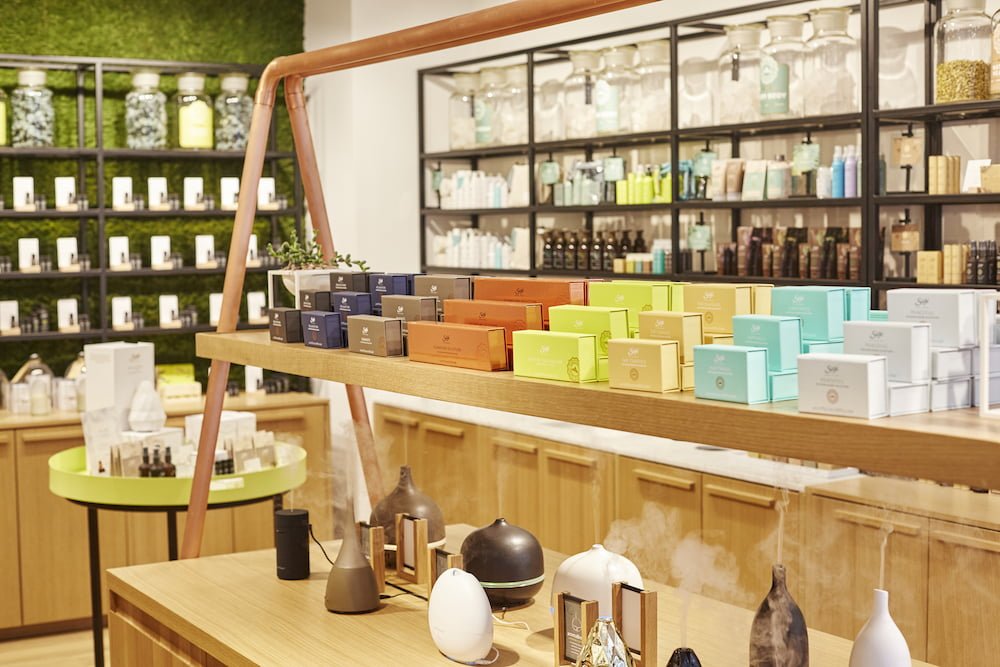
SAJE NATURAL WELLNESS AT YORKDALE (PHOTO: CRAIG PATTERSON)
Saje Natural Wellness stores are often unique, both inside and out, with differentiated facades as well as nature-inspired interiors. It’s “an elegant mixture of old-world apothecary and new-world modern”, according to the store design team, and Saje describes its style as ‘West Coast – Modern Apothecary’. The company recognizes that most of the time, the consumer’s first experience with Saje is through one of its stores. As a result, its design team endeavours to create environments that allow people to understand what the Saje brand is about almost instantly, through the visual elements of the spaces and sensory experiences of its products.
“Our focus has always been on a continual and steady evolution of store design that celebrates our commitment to 100% natural by using plants, fixtures, finishes, furniture, materials, and textures that have that same integrity and are inspired by nature,” notes the company when describing its in-store environments. Stores are a positive space, with bright lighting, friendly staff and music. Retail Insider partner Peregrine has built fixtures for a number of Saje Natural Wellness stores, and we recently toured a location with Peregrine’s President, Brian French, who pointed out how the natural looking fixturing is also functional for smaller retail spaces such as Saje Natural Wellness.
To commemorate Canada’s 150th Birthday as well as to mark Saje Natural Wellness’ quarter century milestone, the company recently launched a 25th anniversary pocket pharmacy, which it says is selling rapidly at its various locations.
Upscale Quebec City-based multi-brand footwear retailer Jean-Paul Fortin is launching a Canadian store expansion this year, that will see it open its first location outside of Quebec. More locations are expected to follow as the retailer seeks to gain an expanded national presence.
Founded in 1964 in Quebec City, the Jean-Paul Fortin name is notable — it’s a combination of its founder’s name (Paul Fortin), and the street on where its first store was located (St-Jean Street in Quebec City). The company currently has 11 locations, including seven Jean-Paul Fortin stores, three Les Pieds sur Terre (comfort-focused fashionable footwear) locations, and one Le Placard store. Of these, six are in the metro Quebec City area, and five are in/near Montreal. Jean-Paul Fortin also operates the footwear concession at the upscale Ogilvy department store in downtown Montreal.
Jean-Paul Fortin’s first location outside of Quebec will open late summer of this year at Toronto’s Yorkville Village shopping centre. According to its President, Francois Monat, the Yorkville Village Jean-Paul Fortin store will feature a product offering tailored to the area, with upscale brands such as Stuart Weitzman, Aquatalia, Kate Spade, Peter Kaiser, AGL, Brunate, DVF, Ted Baker, Vince and the more upscale Michael Kors collection, among others. Both men’s and women’s collections will be carried in the new Toronto store.
The Yorkville Village store’s interior will feature a new look for Jean-Paul Fortin — leading design firm GH+A is creating a new signature look that will include marble walls and gold accents, in a 2,400 square foot retail space that will become the company’s Ontario flagship. Luxury brands Belstaff and Eleventy will be opening freestanding boutiques in close proximity (Beltaff’s first in Canada, and Eleventy’s first for North America) and spin cycle concept Soul Cycle is about to open its second Toronto location behind the new Yorkville Jean-Paul Fortin.
Jean-Paul Fortin is working with Aurora Realty Consultants for its Canadian store expansion, under the direction of Jeff Berkowitz.
Mr. Monat said that a national expansion is in the works for Jean-Paul Fortin, and that the company is examining opportunities in various markets. Ontario will be the initial focus for the next couple of years, prior to expanding westward. The Vancouver market is a target for at least one store, and Calgary could see a Jean-Paul Fortin location as well. Mr. Monat noted that the Greater Toronto Area could easily support multiple locations, given its size.
We’ll update this article with photos of the new Yorkville Village store when it opens, and will be following the company as it embarks on its expansion beyond Quebec.
Coinciding with CF Toronto Eaton Centre’s 40th anniversary, the campaign is geared towards showcasing the style elements of Torontonians. General Manager Shelia Jennings stated, “CF Toronto Eaton Centre is the downtown style destination for Toronto. At CF TEC, we’re focused on providing an elevated shopping experience for all our customers.”
Consistently ranking amongst Canada’s top five most productive malls according to the Retail Council of Canada, CF Eaton Centre’s geographic position makes it one of the few top-performing malls in North America in a prominent downtown location. As such, the “Reflections of Toronto Style” campaign will spotlight the vibrant cross-section of street style, business attire, and evening wear expected of the country’s largest city. The campaign is intended as “a living testament to our commitment to building vibrant communities, enabling consumers to make positive style choices that build confidence, while encouraging shoppers to remain true to themselves,” according to Jennings.
To reach a younger demographic, the campaign commenced on Thursday, June 22, with a three-day pop-up “Selfie Mirror” display located in the mall, allowing viewers to take selfies with digital backgrounds of iconic Toronto landmarks. The images taken simulate the effect of the viewer taking a selfie against the actual landmarks themselves. Those who participated in the mirror challenge on June 24 were able to see their images displayed on rotation at the 90-foot LED screen on the corner of Yonge and Dundas, allowing for a truly interactive experience. Guests tagged themselves on social media using the hashtag #TorontoStyle, which forms part of the official campaign branding.
Image: CF Toronto Eaton Centre
To drive awareness of the experience CF Toronto Eaton Centre has also partnered with Toronto-based influencers Zeba (@ellaprettyblog), Kaylee Giffin (@theblondielocks) and Dani Goddard (@girlsofto).
Fronting the campaign is Toronto native Elaine “Lainey” Lui, co-host of CTV’s popular The Social, gossip correspondent on eTalk Daily, and owner of the eponymous Laineygossip.com, the much-vaunted celebrity gossip site that attracts over one million unique viewers every month.
“Style isn’t just what you wear – style is attitude, it’s curiosity, it’s imagination, it’s expression,” said Lui. “This is why Toronto is a global style destination – our style reflects our city’s diverse perspective and personality. I am thrilled to collaborate with CF Toronto Eaton Centre to celebrate Torontonians and all the ways this amazing city inspires our city’s style.”
Elaine Lui poses in front of the ‘selfie mirror’.
One of Toronto’s most eminent public figures, and known for her own effortlessly chic and esoteric fashion choices, Lui will be the official Toronto Style Ambassador for the length of the campaign. Her fashion credentials have been recognized by WXN (Women’s Executive Network), who named Lui to WXN’s 2016 list of Canada’s Most Powerful Women, and on both the Toronto Life and HELLO! Canada best dressed lists for 2016.
Home to several of the country’s first stores for brands such as Saks Fifth Avenue, Uniqlo, Babaton and Links of London, CF Eaton Centre’s “Reflections of Toronto Style” campaign is designed to capture the cross-section of fashion aesthetics, fronted by one of the country’s most celebrated personalities.
“The #TorontoStyle campaign is set to bring a continued conversation with our shoppers around what influences their style”, said Cadillac Fairview’s VP of Marketing Craig Flannagan, “these are the freshly curated content and social engagement opportunities we’re looking to build on.”
By Shelly Lowe, Vice President, Enterprise & Commercial, IBM Canada Ltd.
Twenty-four percent of Canadian businesses currently engage with their customers daily through social networks; with that in mind, many Canadian companies across various industries are launching digital initiatives with the goal of improving customers’ experiences.
According to a new study, however, not all consumers are enthusiastic about those digital transformations. Simply creating new digital ways to engage with consumers and expecting them to embrace them can put companies’ investments at risk.
A new study from the IBM Institute for Business Value (IBV), “The Experience Revolution – Digital Disappointment: Why Some Consumers Aren’t Fans,” surveyed more than 600 executives across Canada and worldwide from a variety of industries that are currently introducing new digital customer tools and services. The IBV also surveyed more than 6,000 consumers whose answers were compared with the executives’ responses to gauge their alignment.
The study found that while executives believe customers want to try new digital customer experience initiatives, consumers are more concerned with getting quick, convenient, and affordable results. In other words, there’s a disconnect between what executives think consumers want and what consumers actually want.
Of those survey respondents who said they tried to explore products by using virtual reality, using interactive digital displays in a company’s physical store, or interacting with a device or computer via voice command, about 70 percent said they were disappointed. As a result, they decided not to use these digital initiatives regularly.
The IBV also found that executives are severely underestimating the role generational differences play in consumer adoption of new digital experiences.
When asked if customers’ age would determine how quickly they’d adopt digital new customer experiences, only 38 percent of executives said they thought age would make a difference. The IBV then asked consumers a series of questions about specific types of digital customer experience initiatives being implemented by companies and found there were numerous instances when Millennials, Generation X, and Baby Boomers responded differently.
For example, while 24 percent of Millennials regularly locate products with a company’s mobile app when shopping, only 8 percent of Baby Boomers do so. And among the group of consumers who said they were familiar with companies’ digital customer experience initiatives, but hadn’t tried them, as many as 70 to 80 percent of Baby Boomers said it was because they weren’t interested.
As a result of the study’s findings, the IBV recommends four steps for companies to take when designing a new digital customer experience. They are:
1) Design digital experiences to meet customer expectations: Use a digital transformation as an opportunity to eliminate difficulties that customers have with the existing systems and reinvent the customer experience from the customers’ points of view. In other words, enable consumers to engage with the brand in ways that are faster, easier, or more convenient than traditional channels.
2) Analyze customers’ motivations: While it is important to recognize generational differences among consumers, companies should not stereotype individuals simply based on their age. By applying advanced analytics and cognitive technologies to comprehend both structured and unstructured customer data from a variety of sources, companies can build detailed customer profiles that will help determine the most successful customer experience initiatives.
3) Make it easier for customers to interact with your brand: One of the core values of any digital customer experience transformation should be ease of use and simplicity. Customers have already formed ideas about how easy it is to engage with and conduct transactions with individual businesses. Executives should conduct thorough research to understand what these expectations are and then test their new digital experience with customers to make sure it is simple to use and gives customers the flexibility they want.
4) Design marketing strategies to address specific needs of your customers: When launching a digital customer experience initiative, it is vital to clearly promote the benefits that customers value, such as time savings, convenience, and faster results. Segmentation and personalization can also be used to attract those customers who aren’t especially motivated to try a new digital customer experience by giving them additional incentives to try it out.
Re-imagining the experience, however, is only part of the solution. Companies also need to bring their innovations to market by clearly highlighting benefits that resonate with customers, which may require a roll-out strategy that includes plans for different customer segments. Otherwise, they risk putting into jeopardy not only their investment in a new digital customer experience, but also their brand’s image in the marketplace.
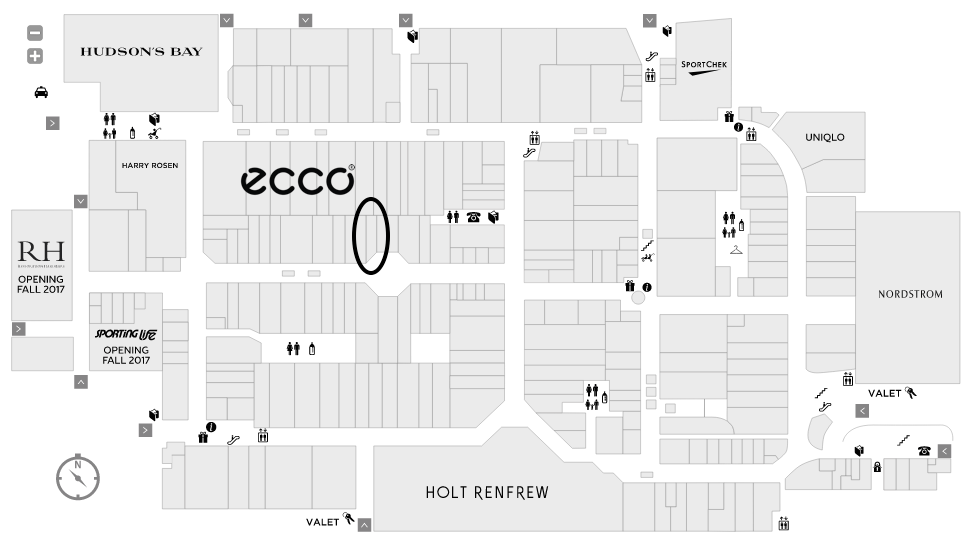
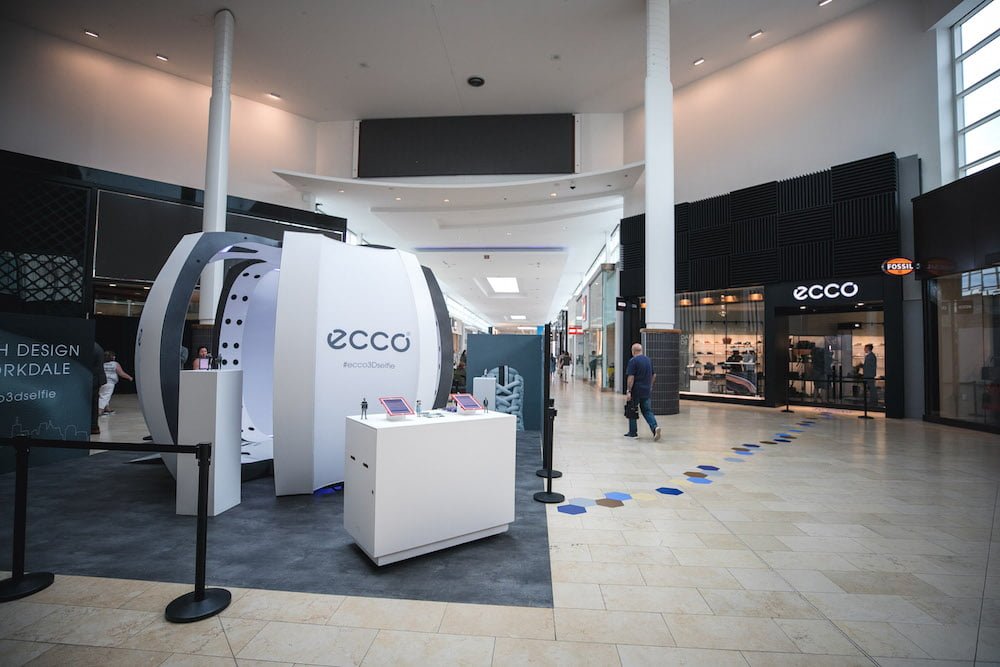
Popular Danish footwear and accessory brand ECCO has opened its first ‘Prime’ concept store in North America, in a retail space at Toronto’s Yorkdale Shopping Centre. Yorkdale joins ECCO Prime locations in three German cities — Hamburg, Berlin, and Flensburg, as well as in Amsterdam.
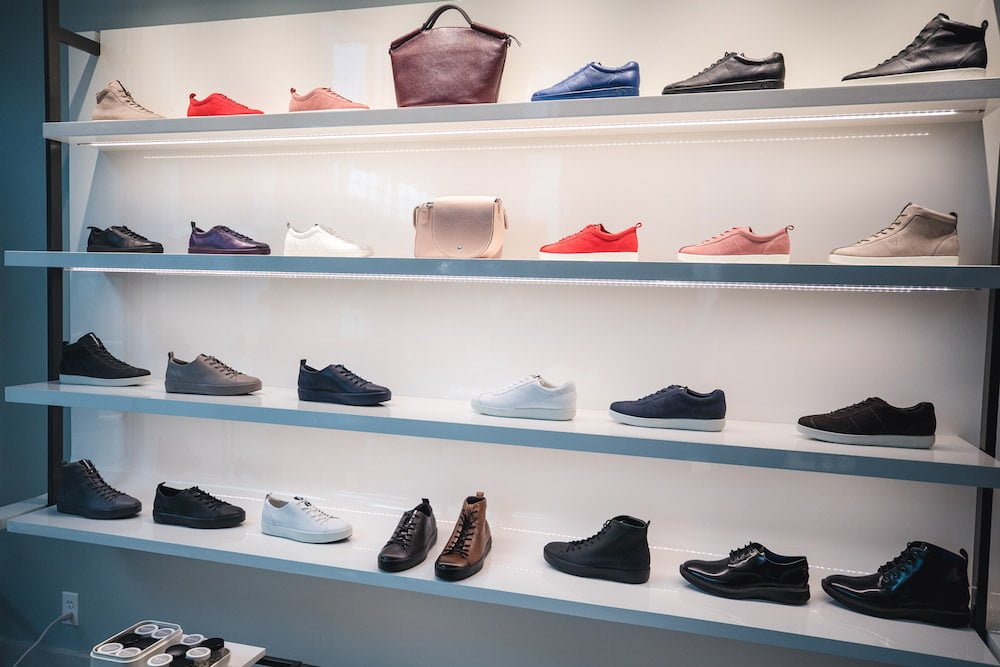
ECCO’s Prime concept is the company’s new flagship model, offering an expanded product assortment in an elevated retail environment. Yorkdale’s 1,550 square foot Prime location features a design that feels “distinctly Scandinavian,” according to the company, with design influenced by the brand’s roots in Tønder, Denmark, circa 1963.
The store’s bold, black facade features a unique patchwork installation over the display windows, made possible by Yorkdale’s soaring ceilings in that part of the mall. ECCO’s interior features a unique leather installation on the back wall that showcases the Toronto skyline. There are two seating areas in the store, and specially-designed modular wall fixtures allow for product display flexibility. Danish design house Louis Poulsen coordinated the store’s display lighting — an important component to optimally display the brand’s products.
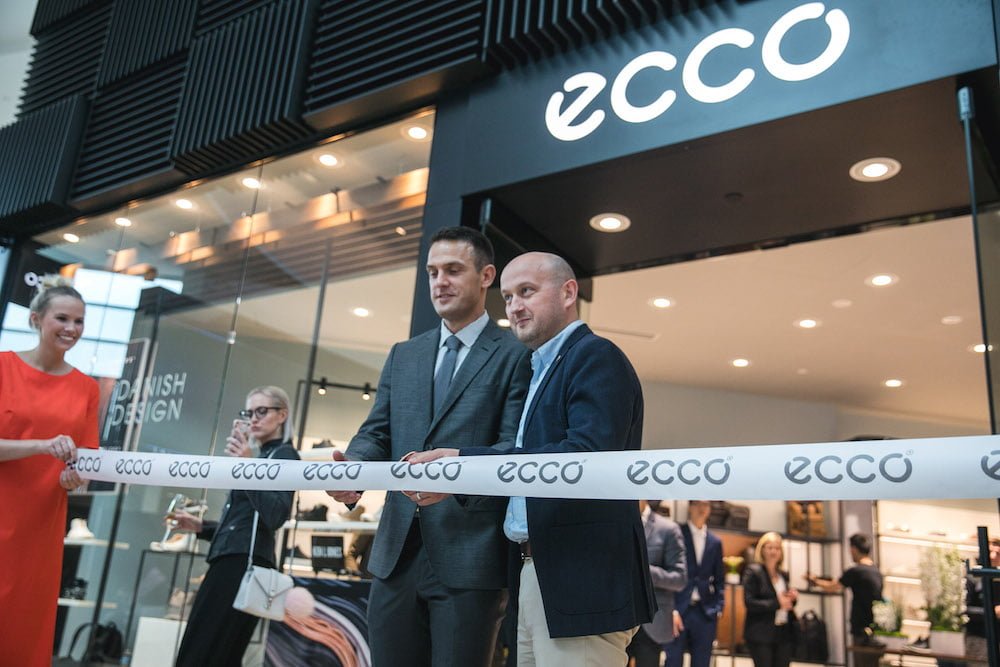
JORDAN SEARLE, PRESIDENT OF ECCO SHOES CANADA, OPENS THE NEW YORKDALE STOREECCO Yorkdale (THE TORONTO SKYLINE ON A LEATHER INSTALLATION BEHIND THE STORE’S CASH DESK. SEATING IS ELEVATED AND COMFORTABLE) ECCO Yorkdale ECCO Yorkdale
Besides carrying ECCO’s typical offerings, the Yorkdale store also features footwear styles for children, golf and other sports styles. It also features a leather goods and accessories area — the second of its kind in Canada, following the opening of an ECCO accessory store in Vancouver last year.
Jordan Searle, President of ECCO Shoes Canada, noted that over the past year, ECCO’s Canadian operations have grown by 12%, and that there are plans for further expansion. ECCO is relocating its downtown Montreal store into a new location that will measure about 1,700 square feet, making it the company’s largest unit in Canada when it opens. The new Montreal flagship will also feature a dedicated leather goods and accessory shop-in-store.
ECCO currently operates 31 stores in Canada, and in a recent interview, Mr. Searle revealed that the company plans to eventually operate about 45 Canadian stores as it continues to open a handful of locations each year in this country.
(PROMOTIONAL INSTALLATION IN FRONT OF THE NEW YORKDALE STORE. UNTIL JUNE 30, SHOPPERS CAN HAVE MINIATURE VERSIONS OF THEMSELVES CREATED, VIA TORONTO-BASED SELFTRAITS)
In May of this year, ECCO announced the appointment of a new global CEO, Steen Borgholm. Founded in Denmark in 1963, ECCO is unique in how it manages every aspect of the value chain from tanneries and shoe manufacturing to wholesale and retail activities. ECCO’s products are sold in 88 countries from over 2,000 ECCO shops and more than 14,000 sales points. The company is doing exceptionally well — in 2016, it saw the number of shoes sold increase by 5% over the year prior, while currency-adjusted sales through brick-and-mortar boutiques increased 10%, and online sales growth increased by 46%. ECCO opened about 100 new concept shops (including partner stores) last year.
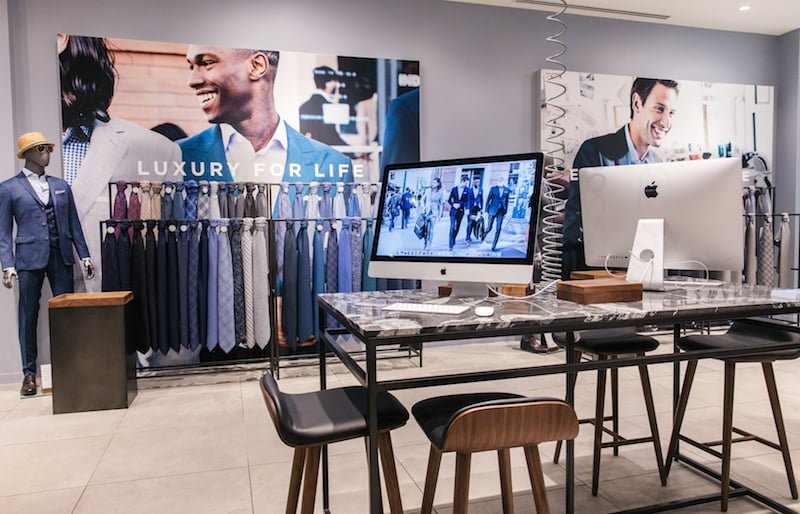
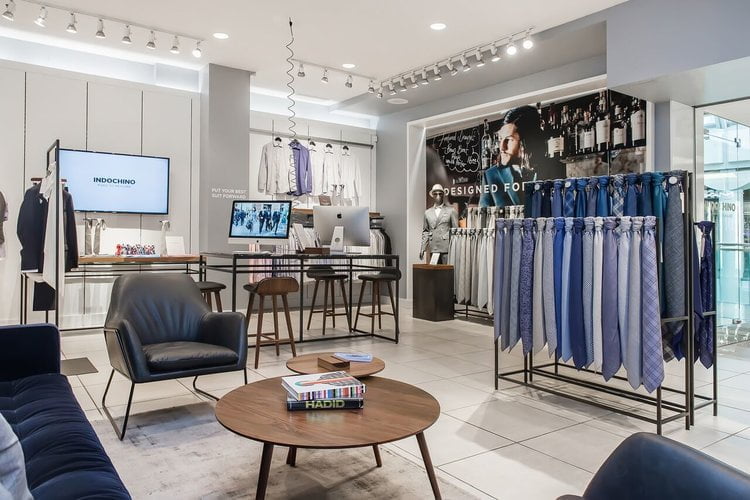
The world’s largest made-to-measure menswear company, Vancouver-based INDOCHINO, continues to see exceptional growth as it opens new stores (aka ‘showrooms’), and gains consumer loyalty in the form of repeat online sales. The company’s CEO, Drew Green, says that he expected the company to finish the year with over 60% year-over-year net revenue growth over the past six months, after finishing 2016 with 54% year-over-year growth. INDOCHINO’s expansion is driven by being profitable, he noted, and the company has also just announced four more US showrooms, in some important retail locations in some of the country’s largest cities.
In an interview, Mr. Green explained the importance of the ‘lifetime value of a customer’ to INDOCHINO, and how a visit to a showroom can turn a customer into a repeat online purchaser. The in-store fitting experience is an initial relationship building tool that can then translate into further online sales, with customer measurements on file easily translating into a new suit or tailored shirt purchase. “Stores are an introductory channel for the brand,” explained Mr. Green, and that about 70% of customers in its showrooms are first-time visitors — and hopefully repeat customers.
The showroom lifts the online business, he explained, and until relatively recently, INDOCHINO was primarily an online business augmented with pop-up fittings. It was only in 2015 that INDOCHINO launched its first permanent retail space in Vancouver, and the company has now grown to boast eight showrooms in Canada and five in the United States.
(WEST EDMONTON MALL SHOWROOM. FIXTURES IN THE STORE WERE CREATED BY RETAIL INSIDER PARTNER, VANCOUVER-BASED PEREGRINE, WHICH WORKS WITH SOME OF THE COUNTRY’S LEADING RETAILERS AND THEIR INTERIORS.
The Greater Toronto Area was something of a test market for INDOCHINO, in terms of number of showroom locations in one region. There are now three INDOCHINO locations in the GTA (Downtown Toronto, Yorkdale and Square One in Mississauga), and Vancouver recently saw the opening of its second showroom at Metropolis at Metrotown in Burnaby. Mr. Green revealed that each Toronto showroom is profitable, and that opening costs for each were recovered in under a year. Having multiple locations better serves the region, and each showroom is often at capacity with client appointments. Over the weekend, for example, Mr. Green said that the Yorkdale and Square One showrooms were fully booked.
INDOCHINO’s American business is booming, and Mr. Green explained that between 65% and 70% of the company’s sales come from south of the border. INDOCHINO relies heavily on data, and uses it to determine in which markets to open retail spaces. New York City was an obvious choice and in the summer of 2016, the company opened a Manhattan showroom — joining showrooms in central Philadelphia, Boston, Beverly Hills and San Francisco.
New York City and Philadelphia have been such strong markets, that INDOCHINO has decided to open second locations in each region. Opening on July 7 is a showroom on Broad Street across from the New York Stock Exchange, which will no doubt be a hit for the men who work in one of the world’s most important financial districts. The second Philadelphia-area showroom (opening on August 11) will be in the suburban King of Prussia shopping centre, which is not only one of the country’s largest malls, but also boasts a significant clustering of luxury brand boutiques catering to wealthy nearby Main Line residents.
(CALGARY CF CHINOOK CENTRE SHOWROOM)
(CALGARY CF CHINOOK CENTRE SHOWROOM)
A Chicago INDOCHINO showroom will also make its debut on July 14, and will be located in The Shops at North Bridge — a downtown retail centre anchored by Nordstrom’s second-highest volume unit, and located just to the north of The Loop (central business district), on North Michigan Avenue, aka ‘The Magnificent Mile’. At 1,600 square feet, the Chicago space will be the company’s smallest to date.
Suburban Washington DC is also about to see its first permanent INDOCHINO showroom, opening on July 21. It will be located at the prestigious Tyson’s Galleria, which is anchored by Neiman Marcus and Saks Fifth Avenue, as well as housing a number of notable luxury retailers. It’s clear that INDOCHINO is taking its real estate choices seriously by locating in some of America’s most important retail locations.
“It’s been a stellar year of profitable growth and we’re committed to keep growing the business in a strategic and sustainable way as we offer men around the world personalized clothing at unprecedented value,” Mr. Green said. “We’ve inspired a new way for men to shop by providing a realistic and affordable alternative to ready to wear. I’m inspired every single day by my colleagues in North America and China who have worked tirelessly to build this incredible movement.”
INDOCHINO at Metrotown (Image: INDOCHINO)
The US store announcement comes as the company posted outstanding growth and profitable results for the previous six-month period between Dec 1, 2016 and May 28, 2017, compared with the same period last year.
Highlights for the year-over-year period, being Dec 1, 2016 and May 28, 2017, include:
Net revenue increase of 57%+
Gross Margin improvement of 1100 basis points
INDOCHINO’s customer base grew 43%
Ad spend increased by 18% and non-showroom global headcount grew by 13%
Both EBITDA and Net Income is on pace to improve by over $11m USD in 2017
Mr. Green said that INDOCHINO will continue to examine consumer data to determine where to open brick-and-mortar locations. Data and analytics are key to the company, and were instrumental in INDOCHINO deciding to open in Calgary, for example, recognizing that the Alberta city was INDOCHINO’s top Canadian online market. While there are no confirmed locations at the moment, Mr. Green said that Winnipeg could eventually see a showroom, as could the province of Quebec — Mr. Green figures that INDOCHINO could open three or four showrooms there at some point, though it would be important to “serve the province in the right way”, including “creating a bilingual experience”.
INDOCHINO at Metrotown (Image: INDOCHINO)
(Editor’s note: Oberfeld Snowcap represents INDOCHINO as brokerage in Canada)
Vancouver, not typically known for men wearing suits, is changing. Mr. Green said that men are dressing up more in the city than in the past, and that the Lower Mainland could even support another INDOCHINO showroom. The Vancouver Yaletown showroom is the company’s largest at an impressive 4,500 square feet, and it does the second-highest sales volume (it competes with the current Manhattan location for the top position).
INDOCHINO is a private company, at least for now. In February 2016, the company announced a US $30 million strategic investment by Dayang Group — the world’s largest suit manufacturer — which has helped accelerate the company’s expansion plans, significantly enhanced the product offering to its customers, and generated additional operating efficiencies. INDOCHINO announced a major international expansion last year, with the goal to open about 150 retail stores globally while selling a million suits annually by the year 2020. The company was founded in Vancouver in 2007 as an online custom suit retailer and in late 2015, co-founder Kyle Vucko was replaced as CEO by Shop.ca founder Drew Green.
Quebec City-based large format fashion retailer La Maison Simons is preparing to open its 15th location this summer. The two-level, 90,000 square foot store will open its doors late August at Edmonton’s Londonderry Shopping Centre — Simons’ second in the Edmonton Market. The store will feature new initiatives in environmental sustainability, and it will also be the company’s first to feature dedicated shoe departments.
Simons will anchor the north end of the overhauled Londonderry, which has been undergoing a $130 million transformation that commenced in late 2014. When the mall is completed in a few months, it will be almost unrecognizable, according to landlord 20 VIC Management Inc.
The Londonderry Simons will feature the company’s first dedicated shoe department. According to President and CEO, Peter Simons, a shoe department rollout is in the works company-wide, and is a response to requests both from consumers seeking a broader assortment, as well as existing suppliers seeking to expand their product offerings. Londonderry will feature separate men’s and women’s shoe departments, noted Mr. Simons, each exceeding 1,000 square feet.
Environmental sustainability is key to the new Londonderry Simons, and over 50% of the store’s electricity usage will come from on-site renewable energy sources. The north parking lot beside Simons will include approximately 80 car parking spots that will be covered with canopies featuring 720 bifacial solar modules (the latest in solar technology), with glass on both surfaces to capture both direct and reflected sunlight. There will also be 950 high efficiency solar modules on Simons’ roof, and the entire solar-electric system is expected to generate over 550,000 kWh per year (the equivalent of 80 homes) in energy, while reducing greenhouse gas emissions by more than 350 tonnes per year.
Inside the store, LED lamps and fixtures throughout will reduce electricity devoted to lighting by more than 40%, when compared to traditional halogen light fixtures.
Electric car charging stations will be installed in the parking lot adjacent to the store. Included will be two ‘level 2’ chargers and one ‘level 3’ fast charger, which will charge most electric vehicles to 80% in about 30 minutes.
Local artwork will be an important component to the Londonderry store, as with all Simons locations. Alberta artist and activist Peter von Tiesenhausen agreed to his first ever corporate commission for the Londonderry store. His installation, which will be suspended from the second floor, will be called ‘Drawn by Desire’ and will include a 50-foot-long art installation that will appear to be an abstract grouping of human figures cut out of aluminum plates. When viewed head on from Simons’ first level mall entrance, however, the 500 carefully positioned plates come together to form a large, single human silhouette that will mirror the individual aluminum figures.
As well, local artist Hayley Wright (a former employee from the West Edmonton Mall Simons location) will supply illustration and skateboard designs that will appear in the store’s young women’s department ‘Twik’, with a large-scale watercolour portrait in the fitting room entrance and a custom set of skate boards mounted in the denim area featuring fun, inspiring messages, colours and patterns.
Quebec-based LEMAYMICHAUD is leading both the architecture and design of the Londonderry Simons. The design firm is using contrasting colours and materials to define each department, as per renderings supplied for this article.
The Londonderry store will be configured with the following departments:
Level 1: Djab (cutting edge, urban streetwear for young men) Le31 (classic and avant-garde fashions for men of all ages) iFive (stylish activewear for men) Men’s Accessories Men’s Shoes Customer Service
Level 2 Twik (dynamic fresh looks for young women) Icône (cosmopolitan styles for the modern woman) Contemporaine (elegant women’s career and casual wear) iFive (stylish activewear for women) Miiyu (feminine lingerie and loungewear for women) Women’s Accessories Women’s Shoes Maison (modern décor elements for the home)
Londonderry’s Simons location will carry fewer pricy designers than the West Edmonton Mall location, which opened in August of 2012 (West Edmonton Mall was Simons’ first foray outside of the province of Quebec). In March of this year, Simons opened a unique five-level Calgary store — its second in Alberta. In total, the company has 15 stores across the country in major markets including Vancouver, Edmonton, Calgary, Mississauga (GTA), Ottawa/Gatineau, Montreal, Sherbrooke and Quebec City. Simons was founded in 1840 by John Simons as a dry goods store in Quebec City, and is now led by brothers Peter and Richard Simons.
The area around Toronto’s Yonge and Bloor intersection is in the process of a substantial transformation, with a number of major projects in the works, and a number of new retailers on the way. Thousands of new residential units will eventually house upscale residents, and retailers securing space in order to serve them. The latest major announcement for the area is a Mark McEwan grocery store, which will open towards the end of 2018 in the commercial podium of One Bloor East. By the end of the decade, Toronto’s Bloor-Yorkville will arguably be home to the city’s highest concentration of grocery retailers in one geographic area.
mark mcewan
Mark McEwan’s new Bloor Street grocery store will be the third for the McEwan Group — in the summer of 2009, McEwan opened a 21,740 square foot grocery store at CF Shops at Don Mills in Toronto, followed by a 5,500 square foot grab-and-go focused location at Toronto’s TD Centre, located in the heart of Canada’s Financial District.
Bloor-Yorkville’s McEwan will be located within the commercial podium of the new One Bloor East tower, currently under construction. McEwan will span two levels — a ground floor level with an entrance near the corner of Hayden Street and Yonge Street will measure 872 square feet, featuring access to a lower-level 17,228 square foot grocery retail space. As with McEwan’s other two locations, the new One Bloor East McEwan is expected to offer an array of gourmet food and services, catering to discerning foodies in the immediate area, as well as commuters — the Yonge-Bloor subway station is the busiest in the country.
Construction on the new McEwan grocery store is expected to begin in March of 2018, and the company anticipates the store being finished towards the end of 2018.
Two of the country’s leading brokers were involved with the deal — David Wedemire and Stan Vyriotes of DWSV Remax Ultimate Realty Inc. acted on behalf of McEwan Group in the lease deal with landlord First Capital Realty.
First Capital recently acquired the One Bloor East retail podium, which will also become home to Canada’s first Nordstrom Rack location in early 2018. Nordstrom Rack will occupy two levels, including about 8,870 square feet on the podium’s ground level at the corner of Yonge and Bloor Streets, and an upstairs level of retail space spanning about 29,675 square feet. Other tenant announcements are expected to be made as the complex is finished.
First Capital Realty’s Chief Operating Officer, Jordan Robins, said in a statement:
“We are thrilled to welcome a flagship 18,000 square foot McEwan’s that will occupy the entire concourse level of our newly constructed flagship retail property located at One Bloor Street East in Toronto. McEwan’s is one of the most distinct and sought-after food retailers in the Country, and their brand is consistent with our vision and our desire to offer our customers an unparalleled retail experience. McEwan’s commitment to our centre reaffirms One Bloor East as the shopping and dining destination of choice in the City”. Mr. Robins noted that McEwan is planning to open in the fourth quarter of 2018.
Mr. Robins provided insight into the area, as well as expressing confidence that the new stores will be a success. “We have no doubt that McEwan’s at One Bloor East will be embraced by a customer base which includes; the residents who live in the 789 condominium units above the Centre, the 400,000 daily transit users who access the adjacent Bloor/Yonge subway station and the employees who work in the over 8-million square feet of office space in the surrounding Bloor Street market.”
Toronto’s Yonge and Bloor Intersection, as well as areas around it, are seeing a substantial transformation. Across Yonge Street from First Capital Realty’s property is Sam Mizrahi’s THE ONE at 1 Bloor Street West, which will house a number of retailers at the commercial base of a residential tower that will soar more than a thousand feet above. A number of other condominium towers are under construction in the immediate area and when they’re finished, thousands more people will be within walking distance of the Yonge and Bloor Intersection. A number of other potential infill projects have yet to be formally announced, including the redevelopment of the block directly south of One Bloor Street East.
By 2019, the Yonge-Bloor area will arguably have the city’s highest concentration of grocery retailers — including some of its most interesting. Scheduled to open in early 2019 is ‘grocerant’ concept Eataly, which will open a three-level, 50,000 square foot location at Manulife Centre, a block west of the Yonge and Bloor Intersection. Loblaw-franchised Bloor Street Market operates a 21,000 square foot store in the basement of Manulife Centre, serving locals in a typical format. Upscale grocery retailer Pusateri’s Fine Foods operates a 5,500 square foot marble-clad location at the southwest corner of Bay Street and Yorkville Avenue, and Whole Foods operates a 50,000 square foot location at the nearby Yorkville Village shopping centre. Longo’s operates a grocery store location at the corner of Bloor Street East and Park Road at the base of the Hudson’s Bay Centre complex, and the immediate area is also home to a number of smaller 24-hour Rabba Fine Foods locations. Not to mention, American-Asian grocery chain H-Mart recently opened a small but convenient location on Yonge Street, just off the corner of Yonge and Hayden Streets.
The Yonge-Bloor area is seeing a substantial transformation as mentioned, and we’ll be doing a separate feature article in July providing an update of the area, including insights from a number of key brokers doing deals in the area.
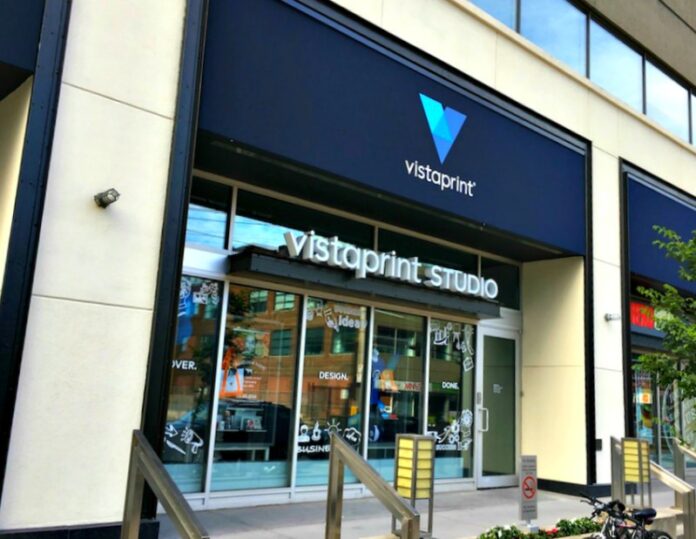
Dutch ecommerce brand Vistaprint has opened its first ever brick and mortar retail space, and it chose Canada, specifically Toronto, as the launch city. The new Vistaprint Studio is targeting small businesses in the area with Vistaprint services, and it will also offer workshops throughout the year. Vistaprint says that the initiative is a “truly seamless experience between the online shop and retail space.”
Vistaprint produces physical and digital marketing products for small and micro businesses, and has 17 million micro business owners as customers. Vistaprint is a whole owned subsidiary of Cimpress N.V., a publicly traded company based in the Netherlands.
Located at 720 King Street West, the new 1,700 square foot Vistaprint Studio is contained in a bright, south-facing retail space just west of Toronto’s downtown core. Consumers can touch and feel products, and get face-to-face assistance from ‘VP Coaches’. Vistaprint recognized that in a recent survey of the company’s North American customer base, 64% of business owners want more one-on-one in-person support when designing their new marketing materials.
Vistaprint Studio, the company’s first ever brick and mortar, is now open in Toronto at 720 King Street West. (CNW Group/Vistaprint Studio)
“At Vistaprint Studio we are offering exclusive services you can’t find anywhere else, including free graphic design — services we heard our customers want and which solidify our investment in the success of their businesses, now and in the future,” said Vistaprint’s CEO, Trynka Shineman.
Vistaprint says that its new retail space is designed as “a flexible environment to continuously tailor the experience to the needs of the local business owners,” featuring complimentary real-time one-on-one design services — services business owners would have to pay upwards of $100 per hour elsewhere. Vistaprint Studio offers free shipping to the store, and new technologies to assist in creating enhanced marketing materials, such as an interactive touchscreen logo maker.
The King Street West Vistaprint Studio is open six days a week, excluding Sundays.
Sara Nash, public relations manager at Vistaprint, explained that Toronto was chosen for Vistaprint’s first foray into brick and mortar retailing for a number of reasons. More than half of the company’s Canadian online customer base is in the Greater Toronto Area and furthermore, “it’s booming, and very supportive of small business,” she said. “Canada is our strongest growth market globally, and is a market where we also have very high customer satisfaction rates. So, we wanted to open the Vistaprint Studio in a well-known market to us and a place where we are excelling.”
The new retail space will be a test for the company, and it might tweak a few things here and there based on customer feedback. “What we’ve created is a seamless experience between our online and offline offerings,” she said, noting that Vistaprint “purposely built a flexible environment where we will have the ability to iterate and optimize rapidly as customers give us feedback on the in-store experience, to ultimately create the best experience for our customers.”
(LOOKING EASTWARD TOWARDS THE CN TOWER)
When asked if more locations would follow, Ms. Nash said that the company doesn’t currently have plans “beyond making this first store the best experience for the customers,” and that “the way success will be measured is really through customer satisfaction. We believe that if we can create a store that really delights the customer and meets their needs, then the business model will follow and we will see where it goes from there.”
Vistaprint was one of the first businesses to offer customers desktop publishing capabilities through the internet, when it was founded in 1999. The company’s history extends back to 1995, when Robert Keane founded the company in Paris, under the name Bonne Impression (at the time, it was a direct marketer of desktop publishing software and pre-printed laser-printer-compatible specialty papers to help small businesses produce brochures/stationary/business cards). Bonne Impression became Vistaprint in 1999 when it adopted an internet-based business model. The company has grown to become a significant international company with over 2,500 employees, regional headquarters in Boston, Barcelona and Sydney, and boasts 24 localized websites that deliver product to over 130 countries.