Advertisement
Advertisement
Home Blog Page 1153

Study Reveals Canada’s Top Retail Street Rents

PHOTO: WWW.THECOLONNADE.CA

Cushman & Wakefield has just released its 2015/2016 ‘Main Streets Across the World‘ study. It’s the 27th edition of the study which tracks over 500 of the world’s top retail streets, ranking the most expensive locations by their prime rental value. The study ranks six Canadian cities, and also mentions how some luxury brands are choosing malls over streetfront retail spaces. 

Overall, the report showed that rents have risen 35% since the last study, despite increasing global uncertainty. New York’s 5th Avenue (between 49 Street and 60 Street) is the most expensive retail street in the world, with per square foot annual rents rising to U.S. $3,500 in 2015. That’s nearly 50% pricier than second place Causeway Bay in Hong Kong. Below is the study’s top 10 ranked most expensive retail locations in each country: 

Canada’s top retail rents are lower and in the study, measured in both Canadian and American dollars. Below is a screen shot of the Canadian numbers on page 18 of the study. 

Toronto’s Bloor Street West ranked first with rents of $325 per square foot, annually. The street features a mix of luxury retailers and mid-priced chain retailers, ranging from Chanel, Prada and Gucci to H&M, Winners and The Gap. Holt Renfrew‘s Canadian flagship occupies prime frontage at 50 Bloor Street West and Manulife Centre, directly across the street, is set to expand its retail component which is expected to include a 40,000 square foot second level to house an innovative international retail concept. Plenty of movement is at play as developer Sam Mizrahi plans to build ‘The One‘ at One Bloor Street West, featuring a multi-level retail podium topped by a luxury residential tower. Although Chanel will be leaving Bloor Street for nearby Yorkville Avenue in 2017, Prada will more than double its current Bloor Street location and as well, we’ll soon be announcing a new luxury retail tenant confirmed for 100 Bloor Street West.

Vancouver’s Robson Street came in at second place with rents of $210 per square foot, annually. The street is a mixture of mid-priced chain retailers typically found in malls, as well as luxury retailer Salvatore Ferragamo and soon, Paris-based confectionery Ladurée. Nordstrom opened a 230,000 square foot store at the eastern end of the Robson Street strip in September, and Sport Chek will replace a recently shuttered Chapters bookstore across from Nordstrom. Soon, Aritizia will debut an expansion that will see its current location expanded all the way to the Robson and Thurlow Street intersections, also making it Canada’s largest Aritzia store. 

Montreal’s Sainte Catherine Street West ranked third at $180 per square foot annually. The street is a mixture of mid-priced retailers and department stores, with its primary retail strip anchored by Ogilvy at the west end and Hudson’s Bay and Maison Birks to the east. Aritzia recently opened one of its largest locations on the street, and H&M’s COS concept opened its second Canadian location in a former Le Chateau space across from Ogilvy. More movement is expected on the street in the coming months, according to sources, and many are waiting in anticipation as Ogilvy is set to expand and merge with Holt Renfrew into a 220,000 mega-store, set to open in 2017. 

SAINT CATHERINE STREET WEST, MONTREAL. PHOTO: GOOGLE STREET VIEW SCREEN CAPTURE

Toronto’s Queen Street West ranked fourth with rents of $110 per square foot annually. The street features a mixture of trendy and chain retailers, in a mix of heritage and contemporary buildings. Vancouver-based MEC plans to relocate its downtown Toronto store to Queen Street West and Soho, and retailers continue to show interest in the busy shopping street. 

Calgary’s 17th Avenue ranked fifth, with rents of about $50 per square foot annually. The street is a mixture of mid-priced independent and chain retailers and restaurants. Anchoring the centre of the strip is Mount Royal Village, which recently opened West Elm and will soon feature Calgary’s first Urban Fare grocery store. As well, Edmonton-based retailer gravitypope just opened a magnificent flagship on the Calgary street, and we’ll be profiling the store in a separate article. 

Edmonton’s Whyte Avenue (82 Avenue) ranked sixth in the study, with rents of $43 per square foot annually. The street features some popular chain retailers (Lululemon, Roots, David’s Tea) and many independent retailers, as well as some popular local restaurants. A new mixed-use development will soon add more retail space on the site of a former gas station, which sat vacant for almost 18 years. 

WHYTE AVENUE, EDMONTON. PHOTO: WWW.FLICKR.COM

The Cushman and Wakefield study notes that in Canada, prime streetfront rents were generally unchanged over the year; however, as vacancy rates gradually tighten across most markets, a return to growth is anticipated in the medium term. The study also noted an increasing trend of high-end retailers targeting shopping centres rather than the more traditional high streets, partly facilitated by recent mall renovations that have added new stores, restaurants and other amenities to attract high-end tenants. The study doesn’t mention specific shopping centres, though luxury retailers continue to target malls such as Yorkdale Shopping Centre and CF Sherway Gardens in Toronto, CF Pacific Centre and Oakridge Centre in Vancouver, and CF Chinook Centre in Calgary

The study also ranked American retail streets, as outlined above. Several U.S. cities boast streets with higher retail rents than Toronto’s Bloor Street West, including Chicago’s North Michigan Avenue (U.S. $525) and East Oak Street (U.S. $340), Beverly Hills’ Rodeo Drive (U.S. $800), Miami’s Lincoln Road (U.S. $325), San Francisco’s Union Square (U.S. $650) and Post Street (U.S. $495), and New York City’s ‘Upper’ Fifth Avenue (U.S. $3,500), ‘Lower’ Fifth Avenue (U.S. $1,000), Madison Avenue (U.S. $1,500) and Soho (U.S. $795). 

You may view the entire PDF study at the following link: [Download Main Streets Across the World study PDF]
Saks Canada Update: Piaget, Louis Vuitton, New Renderings and Floor Plans

New details have emerged regarding Saks Fifth Avenue‘s first Canadian locations. Two new luxury boutiques have been revealed, both to be located in what Hudson’s Bay Company CEO Richard Baker recently described as being “the single most luxurious department store in Canada”. Saks’ first Canadian locations are scheduled to open in February, though there will be a delay in opening its food halls. 

A recent City of Toronto application, brought by parent company Hudson’s Bay Company on behalf of Saks, indicates that a Louis Vuitton shop-in-store will locate within the new Queen Street Saks at CF Toronto Eaton Centre. This will be Louis Vuitton’s third downtown Toronto location and the fourth for the city. Vuitton’s Toronto stores include a freestanding flagship ‘Maison’ at 150 Bloor Street West, as well as concessions within Holt Renfrew locations at 50 Bloor Street West and at Yorkdale Shopping Centre. It will also be the ninth Vuitton store for all of Canada, joining a freestanding unit in Vancouver and Holt Renfrew-housed Vuitton shop-in-store concessions in Vancouver, Calgary, Edmonton, and at Ogilvy in Montreal. 

Recently, Urban Toronto‘s ACT7 found a job posting indicating that pricey timepiece and jewellery brand Piaget is opening a boutique at Saks in Toronto. This will be the first Piaget boutique for Saks Fifth Avenue as well as Piaget’s first Canadian boutique. Priced into the thousands, Piaget watches and jewellery can be found at top Canadian jewellers including Chateau D’Ivoire in Montreal, Royal de Versailles and Raffi Jewellers in Toronto, and at Siba Jewellers in Vancouver. Piaget has five freestanding U.S. locations in Beverly Hills, Costa Mesa CA, Las Vegas, Miami and New York City. It also retails in selected stores and according to Piaget’s website, several Neiman Marcus stores carry the brand, but not Saks. 

Piaget has since confirmed intentions to open in Saks, as well as possibly a freestanding Canadian store. 

Saks Fifth Avenue President Marc Metrick visited Toronto this week, and spoke to journalists about Saks opening in Canada. He confirmed designers Saint Laurent Paris, Stella McCartney and Givenchy would be carried, and other sources indicate that Saks will feature a roster of designers that will include women’s ready-to-wear by Oscar de la Renta, Lanvin, Emporio Armani, Valentino Carolina Herrara, and others. Most designers are also carried at Holt Renfrew on Bloor Street West in Toronto, while Nordstrom is expected to carry several when it opens at CF Toronto Eaton Centre next September. 

Saks Fifth Avenue’s Canadian flagship is scheduled to open on February 18, 2016. The 163,000 square foot store will span four floors in the eastern portion of CF Toronto Eaton Centre’s massive Hudson’s Bay building. The new Saks will feature personal shopping suites in its Fifth Avenue Club on the third floor, as well as a 21,000 square foot basement food hall operated by Pusateri’s Fine Foods. Connected to Pusateri’s will be a three-level, 11,000 square foot food experience operated by Oliver and Bonacini. Pusateri’s opening will be delayed by up to two months, according to sources, as structural issues with the building were recently discovered during construction. We were recently provided plans and renderings, posted below. 

Saks Fifth Avenue’s second Canadian location will open on February 25 of 2016 at Toronto’s CF Sherway Gardens. The 150,000 square foot three-level store will also feature an 18,500 square foot Pusateri’s-operated food hall. Sherway’s Saks will locate in part of the mall’s former 225,000 square foot Sears space, with most of the remaining space going to a multi-level flagship Sport Chek store. Below is a floor plan of the food hall and renderings. 

Ultimately, Saks Fifth Avenue is expected to open seven or eight Canadian Locations. Mr. Metrick told the Toronto Star that another Saks location is close to a deal and is expected to open in 2017. The company has indicated that Montreal and Vancouver are both target cities for the retailer, and that a Calgary store could also be in the works. Some are already speculating that Mr. Metrick’s comments about a 2017 store opening were referring to a Saks location at Calgary’s CF Chinook Centre, replacing a former 115,000 square foot Target location. 

As well, Saks’ discount Saks OFF 5TH will open approximately 25 Canadian locations over the next several years, with its first scheduled to open in the spring of 2016. So far Saks has confirmed OFF 5TH locations in Ottawa, Niagara-on-the-Lake, Vaughan ON and Calgary, and sources say that more locations have been secured, with announcements expected to be made shortly for British Columbia as well as a second Alberta location. 


School of Retailing Releases Urban Grocery Store Study

A recent study conducted by the University of Alberta School of Retailing‘s Applied Research department is now available free of charge. The Applied Research group is also available to do customized research, tailored to individual client needs. 

The study examined current and proposed grocery store locations in seven Canadian urban centres, as well as mapped out potentially underserved areas which may benefit from new grocery stores. The study specifically analysed high-density inner-city areas in Vancouver, Calgary, Edmonton, Winnipeg, Toronto, Ottawa and Montreal. Existing and proposed grocery stores are mapped with a 500 metre radius trade area, and opportunities for new grocery stores were examined based on a lack of nearby grocery stores, taking into account current and projected populations. 

The study found exceptional inner-city grocery store availability in Vancouver, Toronto and Montreal, with less in the other four cities studied. New grocery stores are proposed in all cities’ urban cores, particularly in Calgary, Edmonton and Toronto. All seven Canadian cities have opportunities for new grocery stores, as revealed in the study.

You may download the entire PDF study here

For more information on the University of Alberta School of Retailing Applied Research and to inquire about retaining services, contact Craig Patterson at: clpatter@ualberta.ca or visit its website, www.sorappliedresearch.com


Loding Plans Canadian Store Expansion After Considerable Success

Upscale French menswear brand Loding plans to open locations Canada-wide over the next several years. Its fourth location is set to open early next year, and strong sales will see the brand expand into new markets. 

Loding’s first Canadian location opened in February of 2014 at 133 Avenue Road in Toronto’s Yorkville area. Success at the 1,100 square foot boutique led to a second location opening that October at Toronto’s First Canadian Place. Loding’s third Toronto store opened in late September of this year at CF Sherway Gardens, measuring 665 square feet. Toronto remains Loding’s only North American market for now, though that is expected to change when North American franchisee Yannick Bigourdan (who also owns The Carbon Bar) locates retail space in new markets. 

Loding’s fourth Toronto location, measuring about 400 square feet, will open in early 2016 at Toronto’s commuter hub, Union Station. More Canadian locations are expected to follow, according to operations manager Zofia Koch. Ms. Koch explained that Montreal could be next for the brand, particularly given the city’s connection to France. She said that the brand would look to expand into Eastern Canada before expanding westward, as well as into the United States. Ms. Koch also said that Toronto could see one more Loding location, given success at current stores. 

Ms. Koch described how Loding’s patina artist, Emmanuel Farre (originally from Toulous, France), has been a popular addition to the Yorkville store. Loding shoes typically cost $330 and for an additional fee, Mr. Farre will customize a patina at the owner’s request. 

Founded in Paris in 1998, Loding now boasts over 70 stores worldwide. The brand features men’s shoes, shirts, ties, belts and other accessories, as well as shoe care. The store is unique in how it prices its products: the company doesn’t participate in promotions or sales/discounts, so prices in the store will be the same year-round. The company also practices the idea of ‘one price by type of article’ with all shoes costing $330, shirts $95 and ties for $70, for example. 

3 Tips for Retailers on How to Engage Millennials Online

In Canada and the United States, millennials now make up the largest proportion of the workforce. Their spending power is huge and will continue to grow over the years, as this generation matures. This is exactly why several retailers have made significant investments in tailoring their assortments and marketing to millennials. Here are 3 tips on how to engage millennials online.

#1 FOCUS SOCIAL MEDIA MARKETING ON USER-GENERATED CONTENT (UGC)

Millennials have incorporated social media into their daily lives, spending on average 5.4 hours per day on social networks. In terms of the type of content which engages them, studies have shown that millennials have a stronger preference for user-generated content (UGC)—any form of content created by consumers or end-users—over branded messages. From product reviews to selfies, millennials are posting all kinds of UGC on social media. They want their voices to be heard and look to their peers and other influencers for suggestions on products, brands, lifestyle, and entertainment.

UGC Campaigns

Retailers are finding creative ways to engage consumers with UGC campaigns. Two notable examples include Coca-Cola’s “Share a Coke” and T-Mobile’s “Break-up Letter.” These campaigns encourage “real people” to participate and share content on social media, and have proven to be very effective. Coca-Cola saw a 2% increase in U.S. sales after launching the #shareacoke campaign. T-Mobile reported an addition of 1.3 million monthly subscribers for its first quarter in 2014 after launching the #breakupletter campaign in January. The “social” nature of social networks—and the fact that millennials tend to be heavy social media users—makes these channels the ideal place to launch and promote UGC campaigns.

#2 OPTIMIZE FOR MOBILE AND MAKE PURCHASING EASY

Social media marketing is great for generating awareness and promoting products, but retailers want consumers to come back to their websites where they can further interact with the brand, browse products, and make purchases. So, even if your banner ad or social media update generates a click-through to your website, there is a high chance that your webpage will be abandoned if it is not mobile-friendly.

This is of particular importance when targeting millennials since this group far exceeds its generational counterparts with mobile usage. According toComScore, 21% of U.S. millennials no longer use desktop computers to go online!

Spending Shifts to Mobile

A study by MocoSpace and Social Lens Research found that 35% of millennials surveyed currently purchase products on their mobile devices, and 91% of that group make monthly purchases. The study also revealed that 35% of millennials “would like to buy more on their phone, but it’s too hard to do so.”

As mobile commerce continues to grow, so too does the need for retailers to have mobile-optimized sites and/or apps that are easy to navigate and have a simple check-out procedure. This is especially important for retailers that sell toys and hobby-related products; video games, consoles and accessories; and jewellery and watches. For example, comScore found that 37% of digital purchases in the Toys and Hobbies category were made via mobile devices in Q1 2015.

As a final note, the chart above does not include mobile-influenced in-store purchases, which according to Deloitte Digital, reflected $0.97 trillion in U.S. retail sales in 2014. It is important for retailers to keep in mind that the benefits of mobile optimization go way beyond the idea of just “selling” on mobile. Shoppers are using their mobile devices to research products, search for coupons, and compare prices before, after, and during their in-store shopping trips.

#3 INCORPORATE VIDEO INTO YOUR CONTENT MIX

It’s no secret that video dominates all other content online. According to Cisco, video will account for 80% of all global consumer internet traffic by the year 2019. Research from Animoto confirms that millennials have a strong preference for video content. They find videos helpful for initial research and comparison shopping, and are likely to watch company videos when shopping online.

Based on these findings, a suitable content mix to reach millennials must include video! Retailers Apple and Nike, two of the more popular brands among millennials, use video to engage consumers online.

Facebook 360-degree Video

Facebook recently launched 360-degree videos, which provides an interactive experience by enabling users to view all angles of a scene within a video. While the cost of producing one of these videos is likely to be steep, this type of content could be helpful for marketing experiential store concepts, from pop-up shops to five star tourist destinations.

In summary, retailers of all sizes have found creative ways to reach and engage millennials online. Although opportunities continue to persist across all generations, retailers can’t ignore the growing buying-power of the millennial group. When it comes to reaching millennials online, the key is to know who they are and what they really need and want from retailers, and be forewarned: this generation is not easily fooled by marketing!

Written by: Naomi Turner, Analyst and Marketing Administrative Assistant at J.C. Williams GroupJ.C. Williams Group is a well-known, full-service retail and marketing consulting firm. It offers clients practical, creative, and in-depth knowledge of retailing and marketing, including up-to-date know-how and techniques to make retail operations better and more profitable. You can also read their informative blog, Retaileye, here: retaileye.wordpress.com

Why Canadian Department Stores are Increasingly Adding Food and Beverage Components

Canadian department store retailers are increasingly adding restaurants, coffee shops and other food and beverage/alcohol spaces to their stores. The trend can be good for business, according to one retail expert.

Although restaurants were once common in downtown Canadian department stores, the flight to the suburbs resulted in fewer in-store restaurants in newer mall-based locations. Many of Hudson’s Bay‘s current locations, for example, lack fine dining options, resulting in these stores becoming pure shopping destinations. Although Hudson’s Bay recently introduced some exceptional food options to its downtown flagships, most suburban locations continue to lack prepared food and drink options. Sears Canada is another example of a department store chain without restaurant and café options, instead focusing on selling merchandise and services.

Although Target‘s recently-shuttered Canadian operations featured licensed Starbucks shops-in-stores, many loyal Zellers shoppers lamented at the loss of Zellers’ in-store restaurants. Although lacking glamour, Zellers’ restaurants acted as destination gathering places, particularly for seniors, adding an element of convenience and socialization to Zellers’ stores.

More recently, Canadian department stores are featuring food options. Nordstrom‘s three Canadian stores, for example, all feature excellent dining options as well as in-store coffee shops. Holt Renfrew is adding restaurants to its stores that currently lack such amenities. Quebec City-based La Maison Simons saw the opening of its first restaurant, SoupeSoup at its new CF Galeries d’Anjou store in the summer of 2013, and a second restaurant opened last month in Simons’ new Park Royal store in West Vancouver. Other new Simons stores will feature similar food experiences.

Saks Fifth Avenue is taking the food trend further. In addition to their planned stores incorporating Oliver and Bonacini-operated restaurants, Saks has partnered with Toronto-based Pusateri’s Fine Foods to operate Harrod’s-like food halls in Saks’ Canadian stores. Saks’ first two Canadian stores open in February of 2016 in Toronto.

It’s not just department stores that are adding restaurants in Canada. Vancouver-based fashion brand Kit and Ace, for example, recently opened a 3,300 square foot location at 102 Bloor Street West in Toronto, featuring a coffee concept called Sorry Coffee.

Restaurants keep shoppers in stores longer and can even become destinations, according to Antony Karabus, CEO of leading retail consultancy HRC Advisory. He noted that the department store restaurant phenomenon, particularly popular in European department stores, also has roots in North American retailing. Montreal’s flagship Maison Birks, for example, features Birks Café which Mr. Karabus notes has become a popular destination unto itself. Neiman Marcus‘ downtown Dallas flagship also features a popular restaurant, Zodiac, which is often packed during the lunch hour. The introduction of in-store dining experiences is strategic, Mr. Karabus said, as they keep shoppers in stores longer and more often. He described how shoppers linger in Vancouver’s new flagship Nordstrom store, particularly given the popularity of its Bistro Verde fine dining restaurant and Habitant casual lounge. Mr. Karabus described how in-store restaurants can become destinations unto themselves, and that this additional in-store time will often translate into browsing before or after the meal, likely generating increased retail merchandise sales during that or a later visit.

Another Yoga Apparel Brand to Enter Canadian Market

New York City-based athletic wear brand YogaSmoga is looking to enter the Canadian market as it grows rapidly in the United States. The company was founded in 2013 and anticipates sales of $1 billion over the next five to 10 years. 

Founded by brother-sister team Rishi and Tapasya Bali, YogaSmoga stocks its own branded products sporting its own fabrics, fabric colours and features, including pill-resistance, shrink- and fade-proof qualities, and the use of eco-friendly procedures. Products are direct–to-consumer, technology-driven, and are designed and manufactured in the United States. It shares the same vertical integration model as companies such as Warby Parker and Everlane. The company focuses equally on men’s and women’s apparel, with pricepoints about $10 per unit higher, on average, than competitor Lululemon. 

Co-founder Rishi Bali, a former Goldman Sachs banker, told Women’s Wear Daily that he has sights on Canada as part of YogaSmoga’s rapid worldwide expansion. The company’s first two stores opened last year and it’s on track to have as many as 12 U.S. locations by the end of this year, with sales in excess of U.S. $10 million. Stores are in the 1,200 to 3,000+ square foot range and are located in upscale shopping areas such as Beverly Hills, Fashion Island in Newport Beach, CA and The Mall at Short Hills, NJ. The company features a mix of streetfront and shopping centre units. 

Remarkably, the company plans to open 25 locations in 2016 with plans to operate approximately 100 stores by the year 2018. As well, its e-commerce business is booming, having doubled since last year, and now accounts for 25% to 30% of sales. 

Besides Vancouver-based Lululemon, YogaSmoga will compete with Montreal-based athletic wear brand Lolë, which is continuing its aggressive international store expansion with an anticipated 75 new stores set to open over the next three years. As well, Australian athletic wear brand Lorna Jane plans to enter the Canadian market early next year with flagships in Vancouver and Toronto. Canadian retailer Reitmans recently launched it’s women’s brand Hyba which includes yogawear, though at a considerably lower pricepoint than YogaSmoga. 

Farla Efros, President of leading retail consultancy HRC Advisory, said that YogaSmoga’s expansion isn’t surprising, considering how in the United States, sales of women’s activewear soared 21% to $18.5 billion in the year ending June 2015. She said that the athleisure trend doesn’t seem to be showing signs of slowing, and that the yoga pant as taken the market by storm and is now the ‘new black pant’ acceptable for wearing outside of the gym. Ms. Efros noted that the market could become saturated quite quickly as Canada’s population growth slows and new competitors continue to enter the market. 

Zara Opens 2nd Largest Canadian Location [Photos]

Zara CF Toronto Eaton Centre (PHOTO: JENNYMARTELEIRA VIA INSTAGRAM)

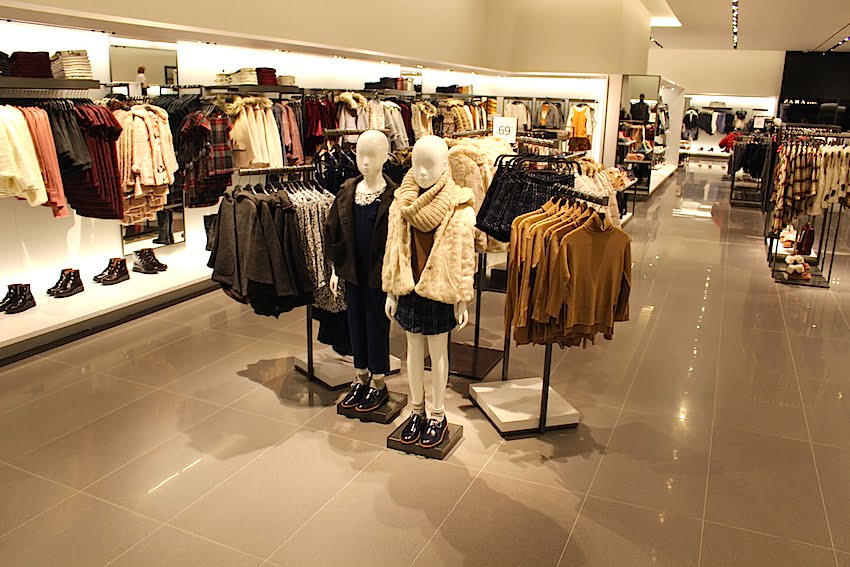
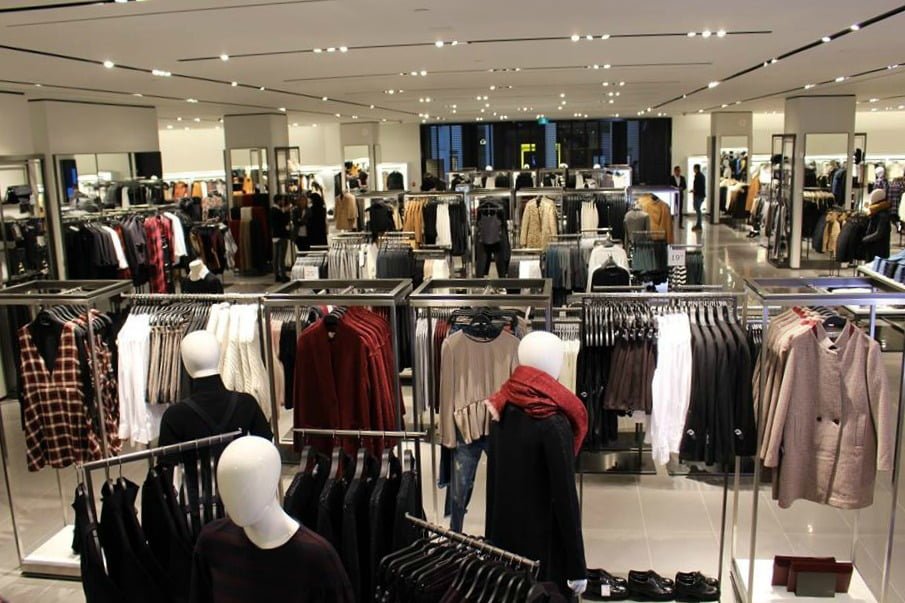
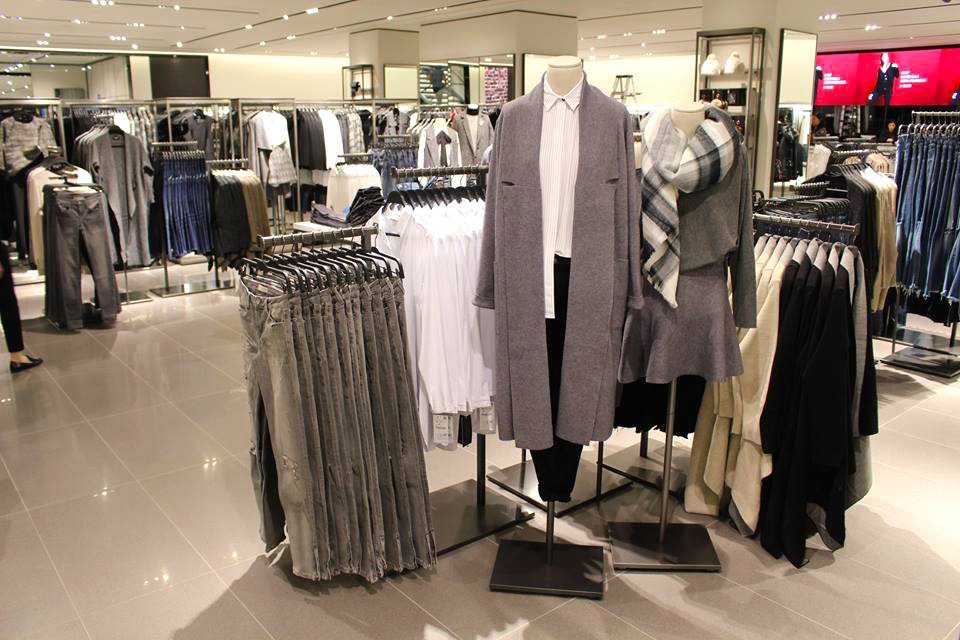
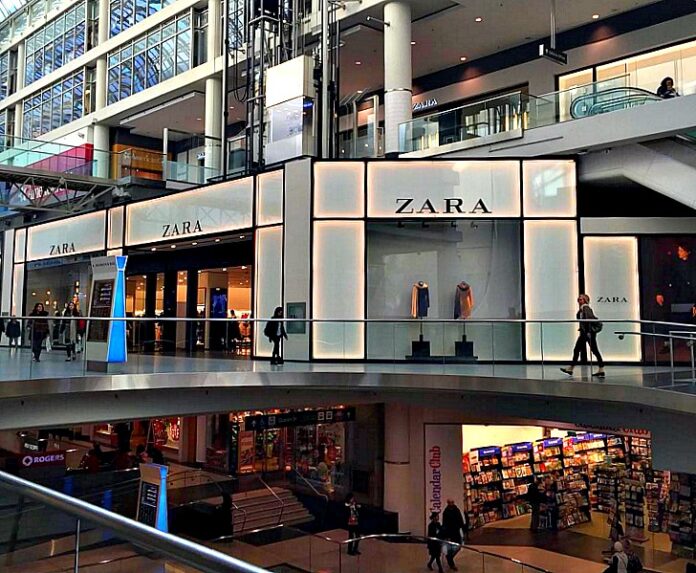
Spanish fast-fashion retailer Zara has re-opened its CF Toronto Eaton Centre store, which is now larger than all but one Canadian Zara location. It is also now one of Zara’s largest North American stores. We spoke with CF Toronto Eaton Centre General Manager Sheila Jennings for details. 

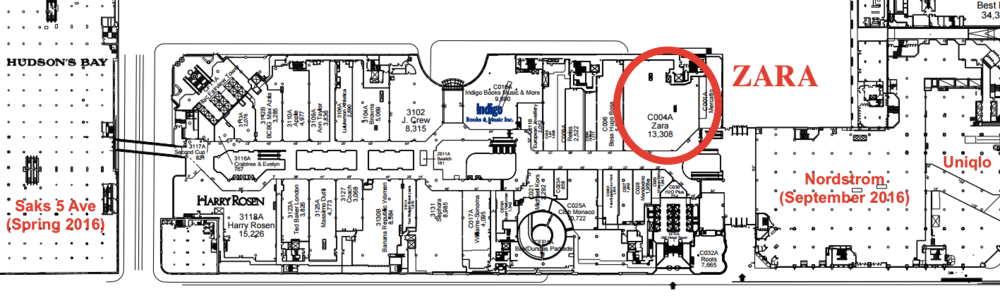
The Toronto Zara store recently expanded from 13,308 square feet to 27,695 by annexing a second level, formerly occupied by a bar/restaurant. The new store features a Zara Kids department upstairs (the only one in downtown Toronto), as well as an expanded assortment of fashions for men and women.

Ms. Jennings described the expanded store as being ‘beautifully designed’, featuring a wider assortment of product than most Zara locations. 

CLICK IMAGE FOR FULL CF TORONTO EATON CENTRE PDF LEASE PLAN
ZARA KIDS. PHOTO SUPPLIED.

Zara CF Toronto Eaton Centre is accessed from the mall’s third level, close to the mall entrance of Nordstrom, which is scheduled to open on September 16, 2016. Saks Fifth Avenue is scheduled to open in February of 2016 with pedway access from the same mall level.

Ms. Jennings discussed how landlord Cadillac Fairview is adding best-in-class retailers to the centre, including a recently opened 71,000 square foot expansion housing 23 retailers. In the fall of 2016, around the time Nordstrom opens, Japanese fast-fashion retailer Uniqlo will open a 28,000 square foot store nearby and as well, another retailer is finalizing a lease for adjacent two-level space with high-profile Yonge Street frontage. 

ZARA’S MONTREAL FLAGSHIP REMAINS CANADA’S LARGEST. PHOTO: IVANHOÉ CAMBRIDGE

Zara’s Montreal flagship continues to remain Canada’s largest, with 13,281 square feet at street level and 17,523 square feet downstairs, giving the store a total of 30,800 square feet of total space. The store is located at Place Montreal Trust, with retail frontage on busy Saint Catherine Street West. 

Zara’s largest North American location is at 700 North Michigan Avenue in Chicago, measuring an impressive 33,840 square feet over three floors. 

Below are photos of of the new store, some via CF Toronto Eaton Centre’s Facebook page

via CF Toronto Eaton Centre’s Facebook page.

Inside Longo’s Impressive New Imperial Plaza Location [Photos]

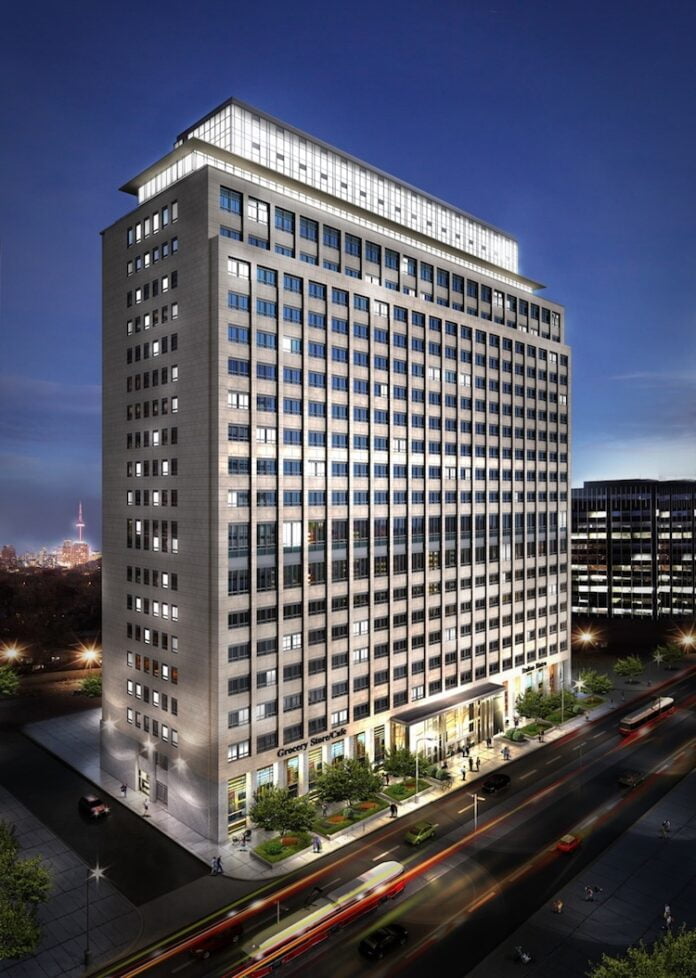
IMPERIAL PLAZA. PHOTO CAMROST-FELCORP

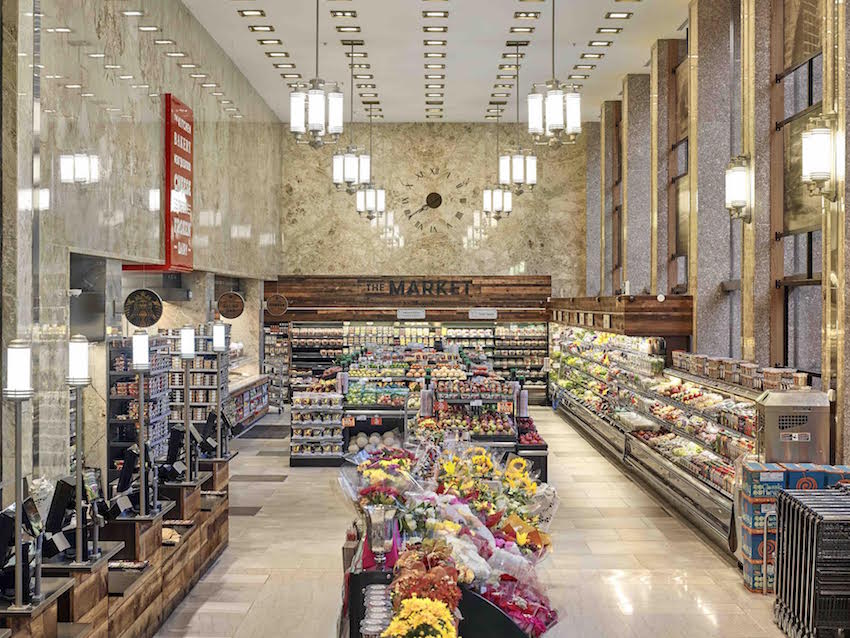
Toronto-based grocery retailer Longo’s has opened an impressive 8,500 square foot ‘Market by Longo’s’ store at Imperial Plaza on St. Clair Avenue, between Yonge Street and Avenue Road. The beautiful store features 24-foot ceilings and is located at the base of an iconic former office building that was recently repurposed for upscale condominium residences. 

Toronto-based retail strategy and design firm Ampersand Studio Inc. helped create the new store, as well as helped develop an overall branding strategy for Longo’s ‘Market’ concept which includes a refreshed logo incorporating capital letters and a modern font. 

‘The Market by Longo’s’ was founded in 2006, with its stores featuring smaller footprints than the company’s full-sized Longo’s stores. Longo’s was founded in 1956 and operates 24 full-sized and five smaller ‘Market’ locations, all located in and around the Toronto area. 

Imperial Plaza tower was built in the mid 1950s, and is considered to be a masterpiece of mid-century International Style modernism. Originally the headquarters for Imperial Oil, the tower was recently repurposed into a 400-unit condominium building with retail at its base. A mural called “The Story of Oil” by R. York Wilson is located at Longo’s checkouts — a nod to the building’s heritage. The store also incorporates marble and granite from the original office building. 

All photos by Michael Mahovlich. 

ENTRY – THE 24 FOOT CEILING HEIGHTS GRAND ENTRY IS SURROUNDED BY MARBLE WALLS AND FULL HEIGHT WINDOWS. CUSTOM MADE CHANDELIERS AND WALL SCONCES WAS INSPIRED BY THE HERITAGE ARCHITECTURE OF THE BUILDING ALSO CREATES AN INVITING ENTRY EXPERIENCE WHILE CELEBRATING THE GRANDEUR OF THE SPACE.
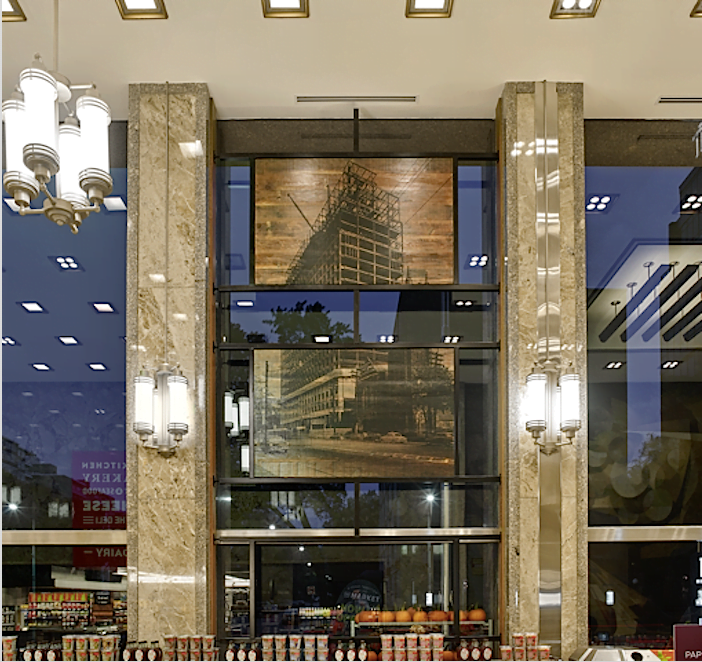
WINDOW DISPLAY – THE ORIGINAL FLOOR PATTERN WAS USED TO INSPIRE A FRAMED WINDOW FEATURE WITH HISTORICAL IMAGES OF THE NEIGHBOURHOOD ON THE INSIDE AND BRANDING OF THE STORE OFFERING ON THE OUTSIDE.
DELI – INSPIRED BY OLD DELICATESSEN SIGNAGE, THE INTERNALLY ILLUMINATED “DELI” SIGNAGE CALLS OUT THE FULL SERVICE DELI COUNTER AT THE BACK OF THE STORE.
BAKERY – RECLAIMED WOOD USED AS THE BAKERY SIGNAGE PROVIDES DEPTH AND TEXTURE AS WELL AS THE SUSPENDED TRELLIS ABOVE CREATES A MORE INTIMATE SERVICE POINT.
RED ARROW – OVER SIZED ARROW TAKES A PLAYFUL/LITERAL APPROACH TO LET CUSTOMERS KNOW THE MARKET BY LONGO’S OFFERS A FULL SHOP TO ITS CUSTOMERS.
MEAT & SEAFOOD – ORIGINAL HAND DRAWN ILLUSTRATIONS APPLIED TO THE WALLS AT MEAT & THE MEAT & SEAFOOD DEPARTMENT CREATES THE OLD SCHOOL EUROPEAN BUTCHER SHOP AT THIS SERVICE POINT AND PLAYS HOMAGE TO THE “THE MARKET” TYPE SHOPPING EXPERIENCE OF THE PAST WHILE THE COLOUR PALETTE AND SUSPENDED TRELLIS BRINGS AN URBAN FEEL TO THIS SERVICE POINT.

Why IKEA Should Locate in Canadian Downtowns

All of Canada’s large-format IKEA stores are currently located in the suburbs. Although the Swedish retailer will be testing small-format pick-up and order stores in several new Canadian markets, none are planned for downtowns, according to the company’s Canadian president Stefan Sjöstrand. This is a missed opportunity, according to one retail expert, as Canadian downtowns continue to thrive with the addition of thousands of new residents annually. 

Mr. Sjöstrand spoke at the Toronto Board of Trade last week, where he discussed the company’s plans for Canada. Included will be a doubling of its Canadian store count over the next 10 years, primarily through smaller-format pickup and order locations. IKEA is already seeing tremendous success in Canada, with annual sales of $1.795 billion at its 12 existing stores, plus an additional $103 million in e-commerce. 

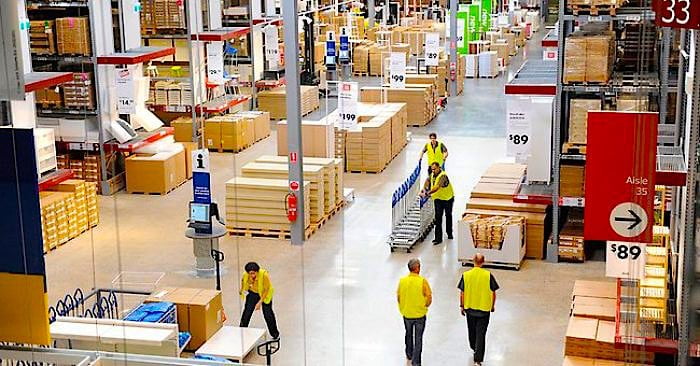
IKEA’s full-sized Canadian stores average a whopping 323,000 square feet, with new pick-up stores to be in the 20,000 to 40,000 square foot range. All stores, including recently announced pick-up locations, will be in automobile-dependant suburbs. 

Paul Amato, a retail industry expert with a specialty in Geographic Information Systems  (GIS) attended the Board of Trade breakfast and asked Mr. Sjöstrand about his plans to open in urban cores. Mr. Sjöstrand explained that the company will monitor urban store initiatives in Hamburg, Germany and in Copenhagen, Denmark, and that it has no immediate plans for more downtown locations. 

Mr. Amato says that this is a missed opportunity for IKEA, especially given the retailer’s product offerings. Much of IKEA’s furniture caters to small-space living, and the retailer’s innovative storage solutions are geared towards small space efficiency. Canadian downtowns are seeing a residential renaissance with Toronto and Vancouver, especially, seeing substantial condominium and rental tower construction. Many of the new units are small, requiring efficient space utilization. 

Mr. Amato thinks there is definitely an opportunity for IKEA to open smaller downtown ‘Citystores’, adapted to reflect the needs and requirements of Canadian urban dwellers. These would operate primarily as showrooms and design innovation centres and would feature edited selections of furniture and housewares, complemented with speedy home delivery. Downtown IKEA stores would also be frequented by office workers, and some downtown businesses clients may also utilize the new urban stores out of convenience.

Mr. Sjöstrand told Mr. Amato that about 80% of shoppers arrive at IKEA’s new downtown Hamburg store by transit, bicycle and on foot, with substantial increases in services such as home delivery and and product setup and installations. The 194,000 square foot three-level Hamburg Citystore also offers vending machines selling spare parts, and customers can borrow bicycles with large integrated carrying platforms to bring purchases home — reinforcing IKEA’s commitment to service and accessibility. 

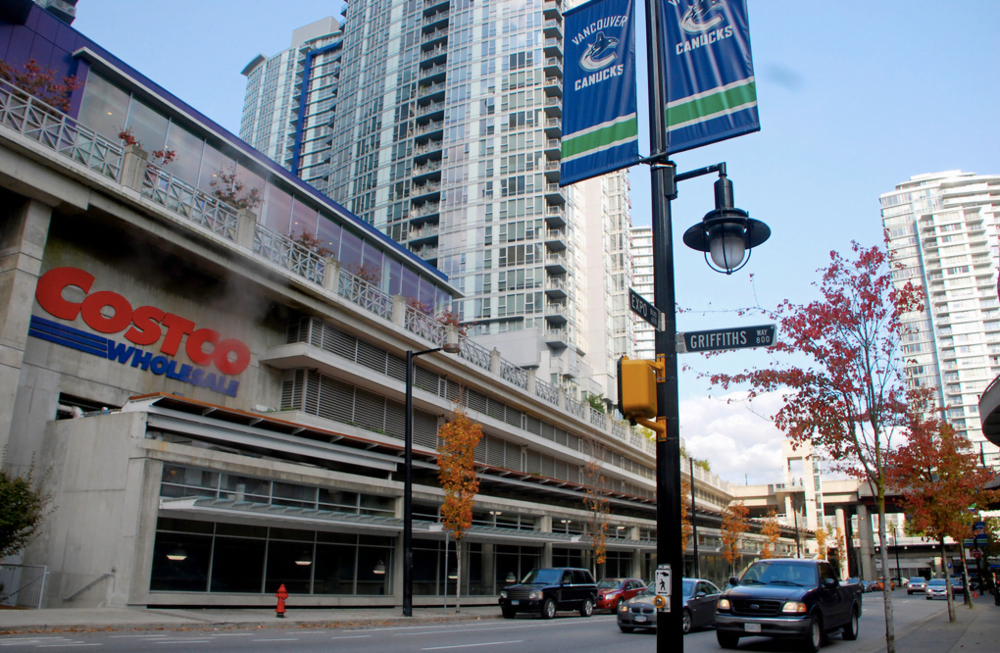
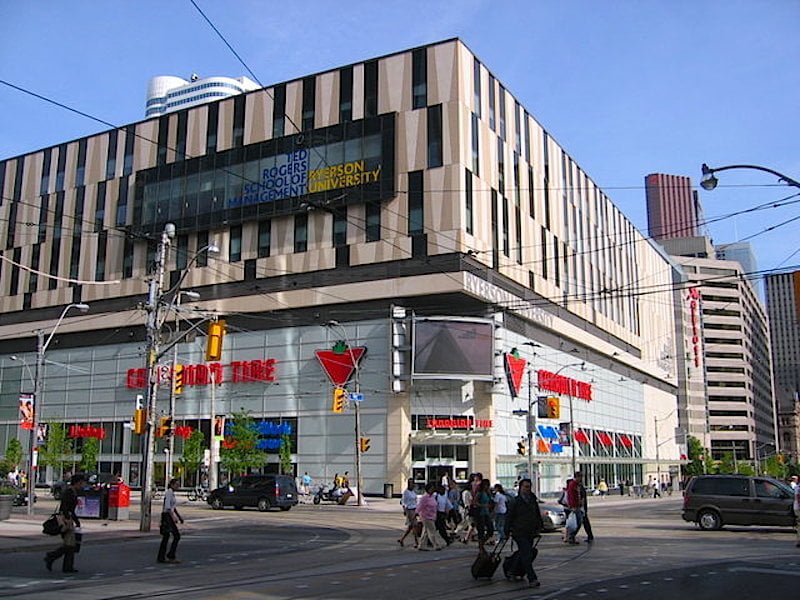
Similar retailers to IKEA are succeeding in Canada’s urban cores, with some operating substantially-sized stores. Costco, for example, opened its wildly successful 127,000 square foot store in downtown Vancouver in the fall of 2006, boasting covered vehicle parking in a city known for rain. Canadian Tire opened a large location at CF Toronto Eaton Centre the same year, along with Best Buy, at the base of an expansion that included Ryerson University above. Home Depot also recently opened a multi-level store in Chicago’s Lincoln Park area, featuring two levels and 91,000 square feet of retail with 10,000 square feet of offices and and 102,000 square feet of parking above. 

If IKEA were to operate smaller urban locations, Mr. Amato explained that it would be possible to find stacked retail space up to 150,000 square feet. Downtown Vancouver, for example, has several development proposals that could see IKEA as an anchor, and downtown Toronto has numerous opportunities for an IKEA Citystore. Mr. Amato noted that IKEA could locate in one of the new developments in Toronto’s expanding eastern waterfront, for example. 

IKEA isn’t the only retailer that could see profits from opening in Canadian downtowns. Several months ago, we consulted with Mr. Amato on a study about urban grocery store expansions for the University of Alberta School of Retailing Department of Applied Research. Mr. Amato noted that national grocery chains are seeing increased sales from locals who shop on foot, and how more retailers should be addressing the urban dweller as Canadian demographics shift and cities change.