Australian luxury furniture brand King Living has opened its first showroom in Toronto at 1400 Castlefield Avenue, adding a prominent international name to the Castlefield Design District’s growing roster of high-end home and interior retailers. The 12,000-square-foot space is conceived as a destination for design-minded shoppers, interior designers, and renovators, bringing the brand’s modern sofas, modular furniture systems, lighting, and accessories to Canada’s largest market. With a focus on in-person consultations and product customization, the store positions itself as both an inspiration gallery and a working studio where clients can plan entire rooms around the brand’s Australian-designed collections.
The opening marks the next chapter in King Living’s Canadian expansion. The brand entered the country in 2019 with a two-level store on Granville Street in Vancouver, followed by a 2024 opening at Southcentre Mall in Calgary. Toronto, which opened in mid-2025, extends the brand’s footprint across three of Canada’s most design-aware cities. For Ontario, the Castlefield address becomes the only retail location operated by King Living in the province as of 2025, aligning the company with a cluster of suppliers, showrooms, and trades that attract architects, designers, and homeowners from across the Greater Toronto Area.
Ali Baker of Avison Young is the master broker across Canada and the US for King Living, and negotiated the Toronto lease deal.
Modular design, Australian attitude
King Living is recognized for its modular design language and engineering-led approach, especially in sofas built on steel frames with removable covers and components that can be reconfigured over time. Collections such as the Aura Sofa embody the brand’s philosophy of long-life furniture that adapts to evolving spaces. The Toronto showroom presents these systems in generous vignettes that emphasize flexibility across living, dining, and bedroom, with an expanded selection of lighting and accessories that complete the home.
The brand’s service model features private consultations that begin with space planning and fabric selection, then extend to finish choices and accessory curation. In an area where many purchases are highly considered, the store functions as both a product library and a problem-solving studio. The result, especially for customers investing in premium furnishings, is a guided process that moves from inspiration to installation through a single touchpoint.
A gallery-like build, tailored to the brand
The Toronto store was delivered by BUILD IT, a construction firm specialized in high-end retail build-outs. The project transformed two former adjacent units into a single, corner-anchored retail presence with an entirely refreshed exterior and a sculpted interior designed to frame, rather than compete with, the product offering.
“What really sets this store apart are the custom details tailored specifically for the King Living brand,” said Reuben Barkin, VP of Operations at BUILD IT. “We designed integrated millwork and display units that feel more like sculptural extensions of the architecture than typical retail fixtures. The precision of the finishes, from flush reveals to hidden fasteners and seamless transitions, reflects the same craftsmanship as the furniture itself.”
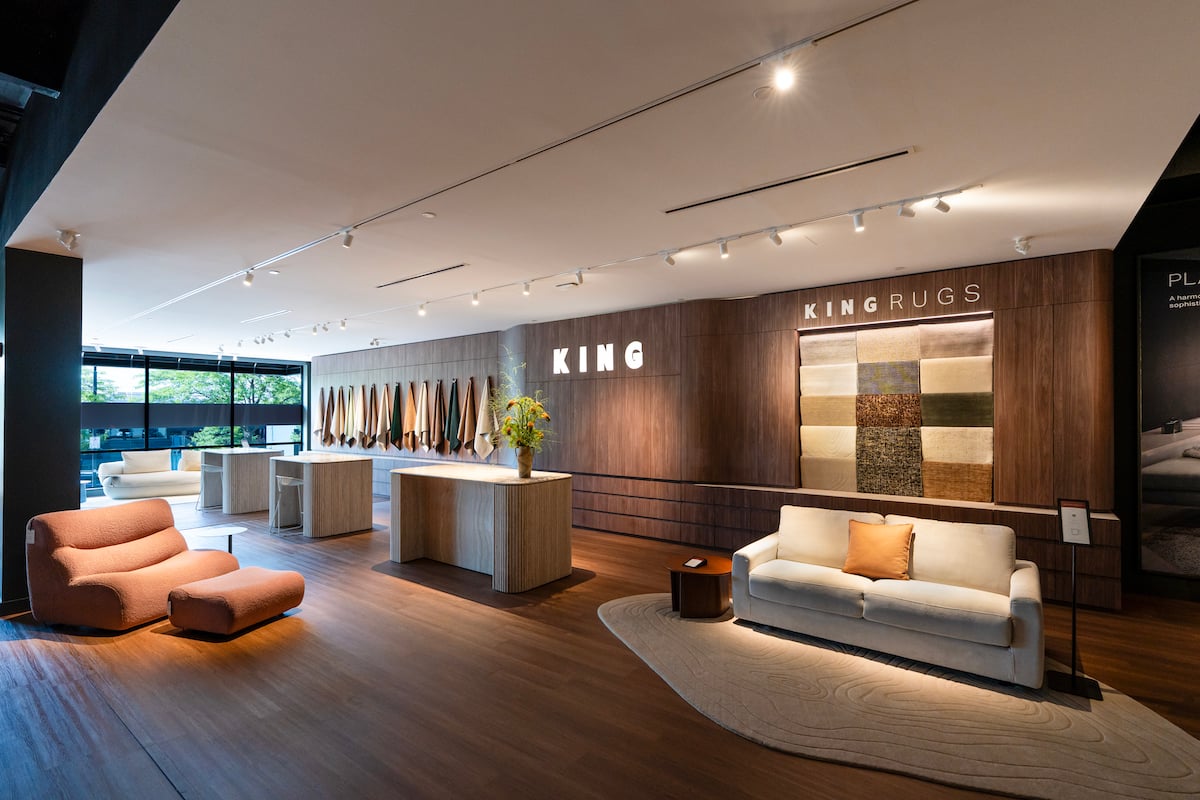
Inside, the build emphasizes clean geometry, streamlined transitions, and a restrained palette that keeps the furniture as the focal point. Surfaces in off-whites, warm greys, and charcoal establish a calm base, while selective dark tones and refined metallics create contrast. The approach resists ornamentation in favour of material honesty and fine detailing, a choice that supports King Living’s modernist ethos.
“We anchored the palette in neutrals so the furniture remains the hero,” Barkin explained. “Lighting was a key tool to dramatize clean forms and premium finishes. We used crisp, directional accent lighting to highlight key pieces and architectural elements, while ambient lighting preserves a calm, even base level.”
Lighting for consistency, day and night
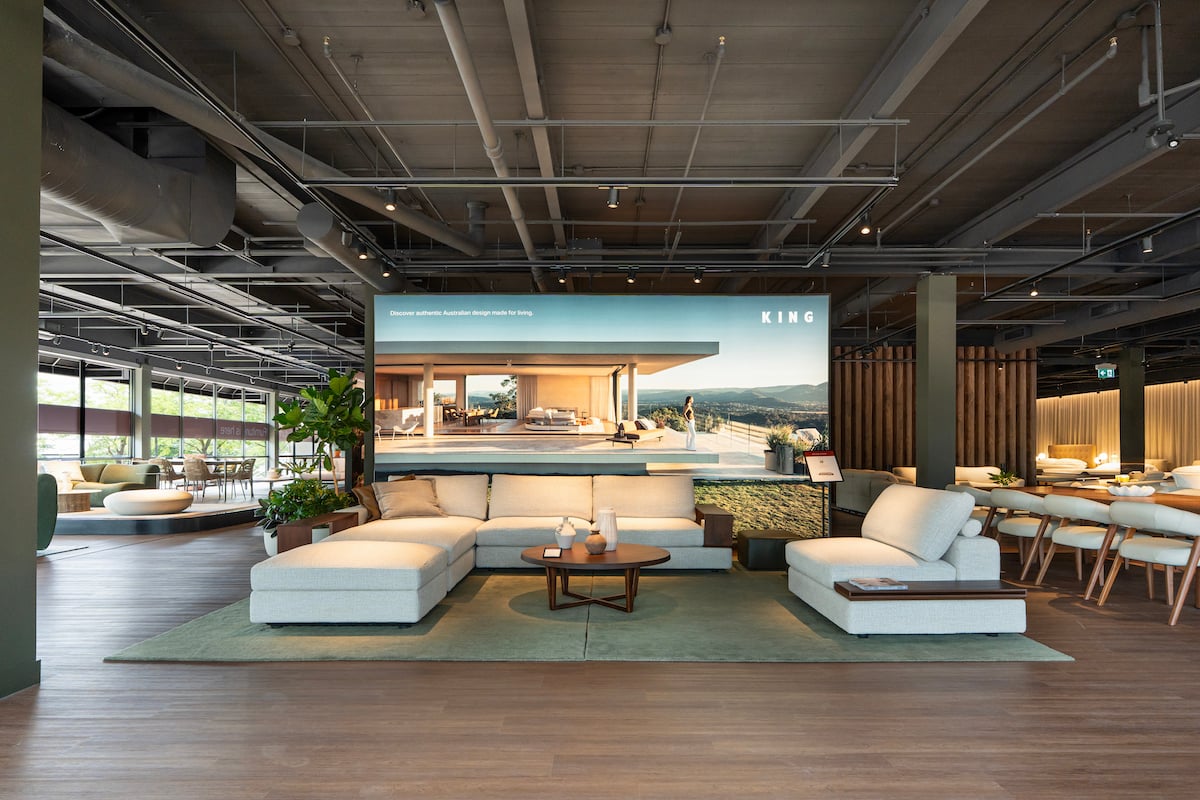
One of the store’s defining characteristics is its controlled lighting environment. Rather than relying on the abundant daylight that many furniture galleries favour, the space uses a subdued interior lit with concealed strips and targeted accents. The result is a consistent viewing experience across day and night, with light directed to sculpt forms and textures in a way that remains true to the brand’s gallery-like presentation.
“The space is very dark and very subdued inside, and then there is careful spotlighting,” noted Barkin. “They wanted to control the lighting elements to create a consistent environment. That way the furniture reads the same, whether you visit during the day or in the evening.”
This decision is as much technical as it is aesthetic. By standardizing light levels and colour temperature, the team ensures fabrics, leathers, and finishes present accurately for customers making high-value decisions that often hinge on nuance.
The blade wall, engineered as sculpture
A recurring brand element across King Living showrooms is a vertical “blade” wall that serves both as a visual signature and as an architectural device to shape circulation and sightlines. In Toronto, the build introduces two sections of blades, each approximately 11.5 feet high and 16 feet wide. The components are engineered for consistency, using solid-core wood precisely shaped by a multi-axis CNC process, then veneered in oak and pressed with custom forms to achieve uniform curvature.
“The blade walls are a consistent feature in King Living showrooms,” said Barkin. “Each blade’s core is shaped for perfect uniformity, then veneered with oak and pressed to match the curve. They perform like sculpture, but they are also part of the store’s architecture.”
These elements do double duty. Visually, they create rhythm and depth. Functionally, they segment the large floorplate into distinct room settings without closing off space, preserving a sense of openness that suits the brand’s modular storytelling.
Exterior transformation and a bold corner identity
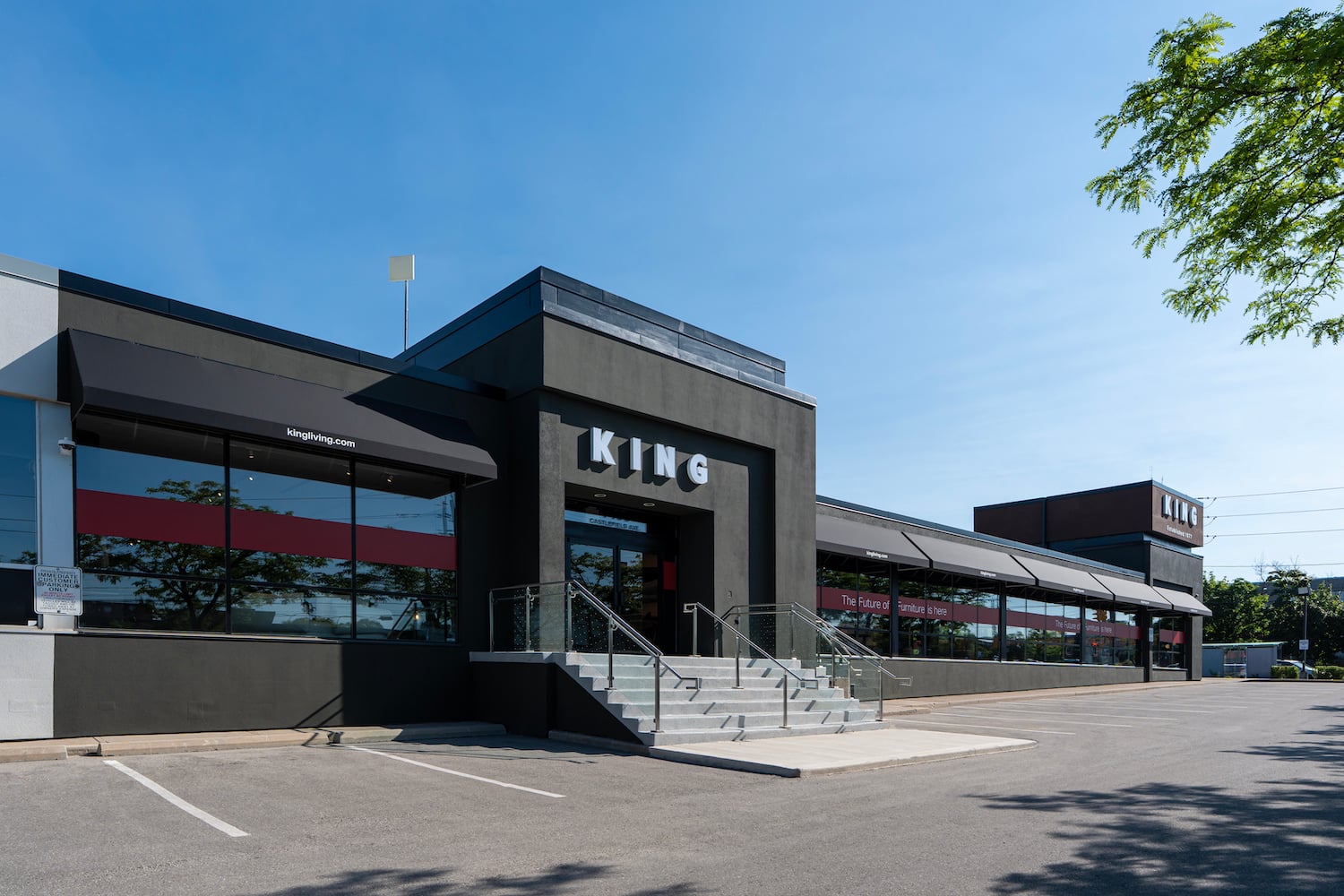
The most visible change to the property lies on the outside. A previously light-coloured stucco façade has been re-imagined with darker, more saturated cladding and strong signage that establishes the brand’s presence from the street and parking lot. The entrance was relocated to create a clearer arrival sequence, and a new signage tower anchors the corner with bold, simple branding that reads “KING” in large, luminous letters.
“The reface of the tired exterior breathed new life into this corner-anchored unit,” Barkin said. “Before you even step inside, the store creates a striking first impression. The branding starts right from the parking lot to pull you in.”
This exterior work required careful planning and sequencing, including surface preparation, cladding installation, and coordination of structural supports for awnings and signage. According to BUILD IT, the overhaul was the project’s most challenging component, made more complex by the need to remove prior branding while preserving the integrity of the base building.
Collaboration across time zones
King Living’s internal property team, led by Michael O’Connor, engaged Studio Presber Architecture + Design to lead the design. Principal Lara Presber, AAA, AIA, CPHD, WELL AP, provided the architectural direction and detailing. Although the design studio is based in Calgary and the client team operates from Australia, the project maintained strong momentum through weekly Owner-Architect-Contractor meetings and daily progress tracking.
“Communication flowed even with teams in Calgary and Australia,” Barkin said. “Through the technology we use, it felt like they were boots on the ground every day. It was a very smooth project.”
BUILD IT first became involved in May 2024 after a referral through the brand’s real estate broker, who required a full as-built survey to support space planning and permitting. Six months later, with construction documents finalized, BUILD IT won the competitive bid and began work on demolition, re-demising, interior partitions, custom millwork, decorative lighting, and the façade refresh. The total schedule ran roughly four months, with key exterior sequences timed to avoid winter conditions and align with the brand’s opening plan.
A space that lets the product breathe
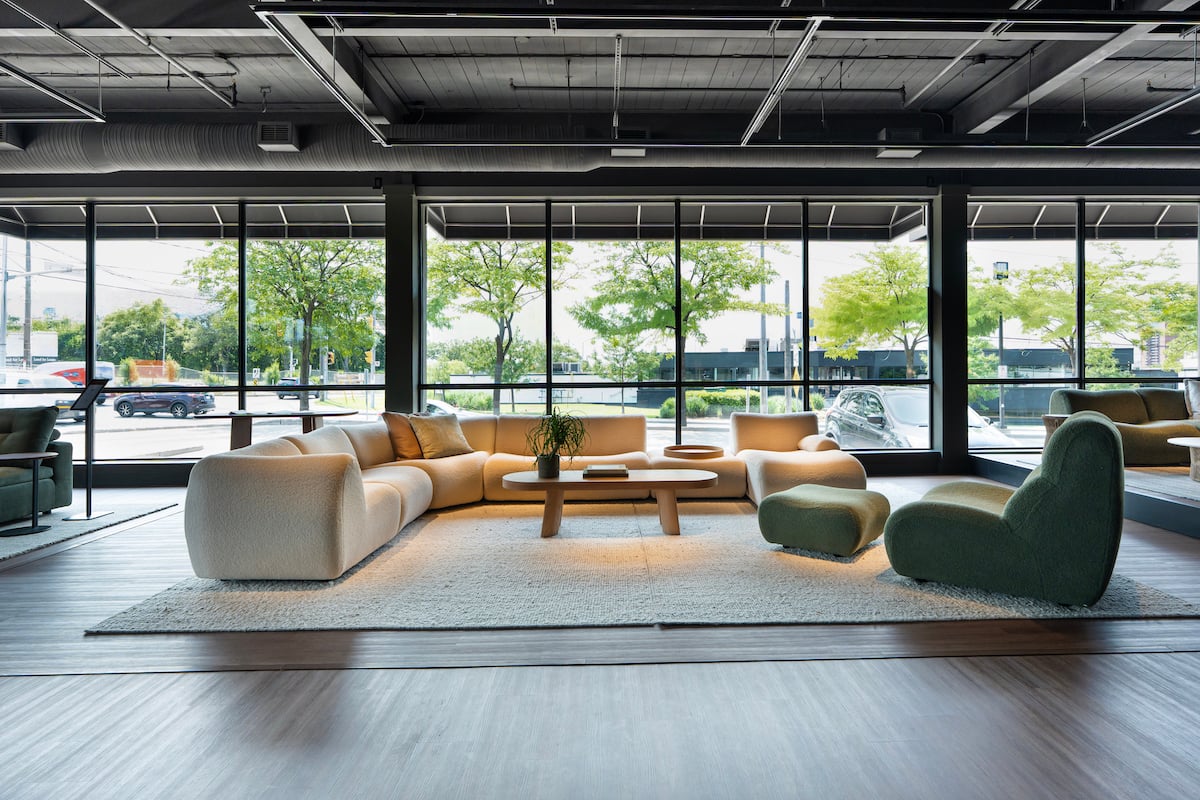
The interior layout privileges circulation and negative space. Furniture groupings are framed across long sightlines, allowing customers to understand the proportions and possibilities of each modular system. This spacing strategy serves both function and brand: it slows the pace of the visit, encourages conversation, and invites clients to imagine how components can evolve with their homes.
“King Living’s pieces tend to have breathing room around them,” Barkin said. “In the layout, we allowed generous aisles and sightlines, letting each piece command its own space. The store reads like a gallery, and the furniture is the hero.”
To support the display strategy, the construction relies on tight tolerances and fine joinery. Seams, reveals, and fasteners disappear into the background. The effect is understated and exacting, which complements the sculptural lines of the product.