Advertisement
Advertisement
Home Blog Page 1167

The Vicious Cycle of Brand Erosion (and How Your Employees Are Involved)

Today, nearly a third of consumers learn about new products and services via social media and branded websites. This reality only bolsters the importance of establishing your brand to ensure success.

Not only does an established brand enhance your professionalism, but it also ensures brand continuity. Competing on the grounds of quality alone won’t cut it in the digital age. Now, consumers crave — and even expect — an enjoyable brand experience. The age-old “bang for your buck” mentality is falling by the wayside.

Regardless of your company’s size, it’s imperative to establish and maintain a positive brand image, letting it evolve with your business. It’s an ongoing process that requires attention, especially from your customer service and marketing departments, but it’s a worthwhile endeavor. Today is the day to start building a better brand. Today is the day to build a brand that won’t succumb to a threatening tide.

As a result, many companies are now suffering from brand erosion, one of the first signs a business is headed toward extinction. Even established companies aren’t safe. Consider Sears, a department store heavyweight that’s been around for more than a century. Sears Holdings has been closing stores as its brand and sales decline. Last year, another 200 of the 1,900 remaining Sears and Kmart stores closed — the company’s future remains bleak.

If it can happen to a household name like Sears, it can happen to any brand. Don’t let it happen to yours. Here are the top warning signs to watch for:

1. Your Customer Loyalty Starts to Decline

As a company’s brand starts to wear away, customer loyalty will, too. When your customers begin taking their business elsewhere, this is a clear indication that your brand is eroding. While several factors can cause brand erosion, the loss of existing customers is a sure sign your brand is not performing at the level it should be.

2. You’re Selling Too Many Products

Focusing on too many products can lead to brand erosion. Focus on the products and services your company specializes in. You might find that a wide product line increases your profit levels for a short period of time, but with each new product comes added customer support, which can actually hinder overall support. If you’re going to introduce a product to your line, first make sure the proper backing is in place.

3. Your Employees Are Unhappy

Keeping your customers happy should be your No. 1 goal. To achieve it, you must keep your employees happy. After all, they’re your front line of defense when it comes to establishing customer rapport. To keep your employees satisfied and productive, build a culture of support. Reward them for their hard efforts and train them in relation to customer service.

4. You Don’t Have Proper Resources

As business leaders, we hope our product lines expand, but improper resources may be hindering further growth. As a result, brand erosion occurs. If it seems your resources are insufficient, consider cutting back your product line. Or, if possible, reorganize your budget to ensure appropriate resources are facilitating larger operations. Resources to consider for maximized growth include employee management software and heat map and video surveillance technology.

Proactive Ways to Stop Brand Erosion

At the first signs of brand erosion, it’s critical to implement a variety of methods to stop the cycle from continuing. If you don’t, it will spread throughout your organization like a virus, infecting everything from customer service to marketing agendas. Fortunately, methods exist for preventing, halting, and even reversing brand erosion:


  • Restructure your employees. Preventing erosion can be as easy as restructuring employees and placing them in positions that complement their strengths. If your staff isn’t cranking out first-rate performances (simply because they weren’t in the most appropriate positions), wear is possible.
  • Brand your employees. If your employees aren’t donning your branded apparel, start rewarding them with company swag. Something as simple as poor brand marketing can lead to erosion. With branded clothing, your employees will serve as walking marketing tools for your brand. Also, launching promotional campaigns and doling out promotional items are ways to further brand your company.
  • Always right your wrongs. No company is perfect, but some fail to show how much they care about their customers. These are companies that suffer from brand erosion. To keep your brand in a positive light, right all of your wrongs. If a customer isn’t satisfied with the product or service you provided, offer a refund or some type of compensation.

Regardless of your company’s size, it’s imperative to establish and maintain a positive brand image, letting it evolve with your business. It’s an ongoing process that requires attention, especially from your customer service and marketing departments, but it’s a worthwhile endeavor. Today is the day to start building a better brand. Today is the day to build a brand that won’t succumb to a threatening tide.

How the Label Makes the Brand

One wouldn’t think something as small as a clothing label or hang tag could be so important. And yet it is — labels and hang tags reflect the quality of a product, which can make-or-break a brand. We spoke with an executive at leading label manufacturer Accent Labels to learn more, and we also spoke with a retail branding expert to gain insight into how labels and hang tags reflect a brand’s image. 

Rob Cannon, Vice President at Montreal-based Accent Labels, explained the importance of ‘getting it right’, whether it be a clothing label in the collar, or a hang tag providing pricing and other information. He said that a number of brands his company works with demand that a label be consistent no matter where in the world the product is manufactured or sold. Consistency is key — some brands source their labels in the same towns as their factories and as a result, differences become noticeable in quality, colour and execution.  To maintain quality and sameness, Mr. Cannon noted that his company designs all labels and hang tags in Montreal, with rigorous quality control when manufactured internationally. 

Mr. Cannon explained how important a label is in the shirt-making process, for example. A men’s shirt neck panel is made first, with the second step being to sew in the label. The rest of the shirt is then finished, and the hang tag (with pricing/branding/other messages) is placed on the garment last. An uncomfortable label can be a nuisance, and some consumers may remove these. Accent’s labels are ultrasonic slit to prevent that ‘itching’ feeling that one might get from a lower-quality garment label. Interestingly, he explained how Accent Labels processes its woven labels allowing them to be more easily and properly sewn into garments. This provides for a “crisper” hanger appeal long after the sale is made.

As retail continues to globalize, labels are becoming more multilingual — especially hangtags and care labels. Mr. Cannon noted that multi-language labels must translate perfectly to provide a consistent message, and that translation errors can be detrimental to a brand’s image. Washing instructions and other messages must transcribe perfectly and if they don’t, a brand’s image could become tarnished as the brand may be seen as ‘ineffectual’.  In addition, there are great benefits to having multilingual labels as excess inventory can be seamlessly transferred from one country to the next.

Discussing the topic of brand consistency and label quality, we spoke with expert Farla Efros, President of leading retail consultancy HRC Advisory. Ms. Efros explained the importance of consistent branding across all channels, and how unique garment labels are of utmost importance to a brand’s image — not to mention, some shoppers buy clothing because of the brand name itself. She explained how a lower-quality label, even in a higher-quality garment, can negatively affect the overall perception of the garment and brand, potentially diminishing its value. A badly-done label is noticeable, she said, while a high-quality, unique and identifiable label will only act to enhance. A high-quality hang tag is also of utmost importance as well, according to Ms. Efros, as consumers often finger through hang tags when checking for their favourite brands as well as to determine sizing and prices. She said that sometimes it’s the ‘little things’ which can make all the difference when consumers are making choices among competing brands, and that brands must recognize this in light of ever-increasing competition. 

Mr. Cannon tells us that Accent Labels is expanding, as it continues to secure new clients. This fall, the company, which already operates out of Hong Kong, will increase its presence in Asia by opening an office in Mainland China. It will continue to endeavour to provide the highest-quality labels, designed exclusively in Montreal with its team of graphic artists and product development specialists. The company boasts some major clients, and makes labels for brands such as Mark’s, Aldo, Canada Goose, Reitman’s, Urban Barn, Laura, and several major domestic apparel producers such as Codet, Jack Victor and The Government of Canada. Accent Labels is a refreshingly positive Canadian success story, in an age of globalization. 

Simon Carter Relocates North American Flagship

Playful British-based menswear brand Simon Carter has relocated its only free-standing North American location. We spoke with its North American representative, Cedric St. Louis, to discuss why he moved his store to one of Toronto’s hottest up-and-coming retail areas.

Founded in London in 1985, the Simon Carter brand features a full range of formal and casual clothing, as well as accessories such as cufflinks, watches, jewellery and luggage. Known for its ‘wit and whimsy’, the brand features unexpected fabric combinations, splashes of colour, luxurious linings and winsome motifs. Simon Carter has only seven free-standing stores in the world, with six locations in the U.K. and one in Canada.

Many were surprised when Canada became home to the brand’s first store outside of Great Britain. Simon Carter’s initial Toronto location opened in August of 2007 at 754 Queen Street West, in Toronto’s trendy ‘West Queen West’ area.

Last month, Mr. St. Louis relocated his store to an intimate space at 1493 Dundas Street West. Measuring only 500 square feet, the new store is smaller than the former Queen Street location. The new store lacks suits and tailored goods carried at the previous store, though selections are available for weddings and other formal occasions. Mr. St. Louis explained how during his search for a new location, Dundas Street West had “something about it”, prompting him to sign a lease for a retail space under signage reading ‘Dufferin Smoke Shop’. Though the historical signage remains, the original smoke shop shuttered long ago. Locals asked the building’s landlord to keep the iconic smoke shop signage, creating a landmark while retaining some of the area’s history.

We asked Mr. St. Louis if any more Canadian Simon Carter locations are in the works. He explained how he’s carefully watching the Canadian retail market before making any decisions. He recognizes that there is considerable competition in the market, including new mono-brand entrants as well as expanding larger retailers such as Nordstrom, Holt Renfrew, Harry Rosen and Saks Fifth Avenue. Mr. St. Louis mentioned how Simon Carter has seen success with concessions within the U.K. and although he’s receptive to the idea, there are no immediate plans to open Simon Carter shops-in-stores within any North American department stores.

Nordstrom to Bring New Restaurant Concepts to Canada

Upscale Seattle-based Nordstrom has revealed that it will open two new restaurant concepts in Canada. Nordstrom’s next Canadian location opens on September 18 in Vancouver, and three Toronto locations will follow in 2016 and 2017. 

Nordstrom’s first two Canadian locations each feature two food concepts: eBar and Bazille. Coffee concept eBar features coffee, fruit smoothies, pastries, sandwiches and salads, while full-service restaurant Bazille features bistro cuisine, fresh salads, desserts, and a full bar. Calgary’s 140,000 square foot Nordstrom opened at Chinook Centre in September of 2014, and Ottawa’s 157,000 square foot Nordstrom opened at Rideau Centre in March of this year. 

According to Nordstrom’s Canadian website, the new Vancouver flagship will feature three restaurant concepts, two of them new to Canada. Bistro Verde and Habitant will open in the new store, along with the ubiquitous eBar. Bistro Verde is a full-service restaurant and bar which features “seasonal starters, salads, entrees and desserts made with fresh local ingredients, plus specialty cocktails, wine and beer”, according to Nordstrom. Habitant is a ‘casual lounge’ where “you can enjoy a snack, glass of wine or handcrafted cocktail” and “features salads, sandwiches and sides perfect as a light meal or shareable appetizer”. 

Links to all restaurants mentioned above include full menus, priced in U.S. Dollars. 

Although not opening until the fall of 2016, Nordstrom’s Yorkdale Shopping Centre location will also feature three food concepts. According to City of Toronto Applications, Bazille and Habitant will join eBar in the new Yorkdale space. Curiously, a separate building application indicates Nordstrom’s Yorkdale size to be 18,820 square metres or 202,500 square feet — although officially it will measure 188,000 square feet.  

Nordstrom’s 213,000 square foot Toronto Eaton Centre flagship also opens in the fall of 2016 and in early 2017, Nordstrom’s 138,000 square foot Sherway Gardens location opens to the public. The Vancouver and Toronto Eaton Centre locations will be two among the chain’s six global flagship stores.

Thank you Ritchie Po for being the source of this tip.

Substantial Retail Proposed in One of Canada’s Wealthiest Regions

exc-5593667de4b048823937ded1

Lots of affluence, not a lot of retail. The unusual situation characterizes one of Canada’s wealthiest regions, as the County of Grande Prairie creates a master-planned community to facilitate its explosive growth. The region’s prosperity makes it unique, and retailers are already clamouring to get in after the County recently hosted an economic summit to promote its various exceptional opportunities. We attended the summit to learn more about the County’s vast investment potential, as it looks to add thousands of new residents over the next several years.

We can’t think of a municipality which has gone to such lengths to attract retail investment. During the second week of June, the County of Grande Prairie’s economic summit showcased the area to potential investors, retailers, landlords, and other interested parties. We learned how a recent market gap analysis (PDF) recognized immediate retail opportunities for grocers, liquor stores, banks, coffee shops, as well as a variety of other categories. A survey determined that residents want retailers such as Ikea, Indigo Books, Shoppers Drug Mart, and Toys ‘R’ Us, and Starubucks and Tim Hortons were also high on respondents’ lists.

Image: County of Grande Prairie

Already, a number of retailers are showing interest in the area. Convenience store retailer 7-Eleven, for example, told us that they see multiple possibilities in the area. Exceptional opportunities exist for a grocery retailer, based both on current numbers as well as projected population growth. The Grande Prairie area is home to a number of large retailers typically not found in similar-sized cities. Costco, Best Buy, and Walmart do gangbuster sales in the area, and locals desire more ‘big city’ shopping opportunities at a variety of pricepoints, according to the survey.

The region’s economy is exceptional, and its unusually high incomes must be considered when examining potential retail opportunities. With a mixture of commerce, forestry, agriculture, and energy (exploration, services and production), the prosperous County of Grande Prairie’s average household income is estimated to be $109,000 annually. The region’s cost of living is lower than in many parts of Canada, resulting in exceptionally high discretionary incomes. The county boasts in excess of 85,000 residents, with a trade area in excess of 260,000 within a 200 kilometre radius. Remarkably, in 2013, the trade area’s retail spending was estimated to be an astounding $3.5 billion. Although the immediate trade area is less than 100,000 people, its high incomes warrant more retail than in similarly-sized communities.

Impressively, the relatively small County of Grande Prairie is fifth in the province for new housing starts. Economic Development Manager Christopher King said “These stats are showing we are growing strongly through what is expected to be a recession for Alberta.  During the last recession the County of Grande Prairie saw an increase in assessment of 46.8% from Dec 2007 to December of 2013.  With our diversified economy the region appears to be much more resilient to the drop in oil prices.”

County of Grande Prairie

Clairmont Heights

A proposed master-planned community provides various exceptional retail opportunities. Called Clairmont Heights, the area will feature a high-density village centre with retail and residential, surrounded by lower-density residential. All are located on a gradual-slope hillside leading towards Clairmont Lake, providing water views as well as vistas towards the City of Grande Prairie and the Rocky Mountains beyond. If plans proceed as indicated, the town centre will feature a high street for local stores, with larger retail opportunities available along busy nearby Highway 2.

The planned community could eventually include an additional 6,000 residences, housing an anticipated population increase of about 15,000 people.  Surrounding the village centre will be single-detached homes, with a limited selection of estate-sized view lots at the top of Clairmont Heights. We’re told that various investment opportunities in the area are still available for those looking to develop retail, residential, restaurants and hotels.

County of Grande Prairie

The County of Grande Prairie created a website to help market its various growth opportunities. To learn more about retail and opportunities in Clairmont Heights and the County of Grande Prairie, contact Chris King, Economic Development Manager, at 780-513-3956 or by email: cking@countygp.ab.ca 

Coach Renovates ‘Mink Mile’ Flagship

Upscale New York City-based fashion brand Coach has renovated its Toronto Bloor Street flagship. Located at The Colonnade at 131 Bloor Street West, Coach neighbours some of Canada’s most exclusive retailers. Coach is looking to upgrade its image and increase profitability, as it addresses competition from several strong American brands. 

The 2,900 square foot Coach store is wedged between Chanel and Mulberry and is two doors from Prada, which will substantially expand its Colonnade location in the coming months. The renovated Coach space reflects a more modern aesthetic than the previous interior, as Coach looks to regain market share potentially lost to competitors Michael Kors and Kate Spade. Coach will upgrade a number of Canadian stores, we’re told, with plans for at least one new prototype location set to be announced shortly. 

Coach recently made headlines when it laid off its part-time Canadian workers, though the move was strategic. The brand is reportedly looking to build customer relationships with full-time staff as it looks to enhance the in-store retail experience. 

Rumours that neighbouring Chanel would take Coach’s Colonnade space were quashed with the renovation, and sources say that Chanel continues to be interested in expanding its Bloor Street operations. Chanel currently occupies about 7,900 square feet in The Colonnade, with a ground floor of 3,120 square feet. In the United States, several new and expanded Chanel stores now surpass 10,000 square feet. 

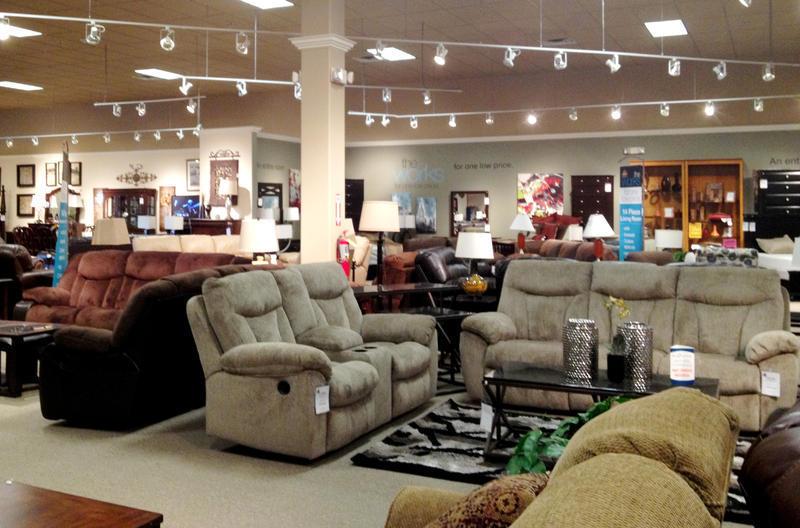
Ashley Furniture HomeStore to Open Multiple Canadian Locations

PHOTO: WWW.ASHLEYFURNITUREHOMESTORE.COM

Canada could soon see substantially more Ashley Furniture HomeStores. Winnipeg-based Dufresne Group plans to open as many as 16 Ashley locations in Ontario and Alberta over the next few years. We spoke with its Canadian broker to learn more about Ashley’s real estate requirements.

Founded in 1945 and headquartered in Wisconsin, Ashley Furniture HomeStore has 551 U.S. locations and retails lines including bedroom, dining room, casual dining, upholstery, motion upholstery, leather, leather match, occasional tables, entertainment centres, home office, youth bedroom, recliners, curios, mattresses and accessories. Remarkably, Furniture Today named Ashley Furniture HomeStore as the number one conventional furniture store in 2015 in the United States, with sales in excess of $3.27 billion. Sales increased 5.1% between 2013 and 2014. Ashley’s Canadian stores are located in the provinces of Manitoba, Saskatchewan, Quebec, New Brunswick, Nova Scotia, Alberta and Ontario, as well as in the Yukon. 

The Dufresne Group is North America’s largest operator of Ashley Furniture HomeStores, with 17 Canadian locations as well as 33 in the United States. Dufresne is a private company with over 1,100 employees in Canada and over 1,400 in the United States. In Canada, Dufresne also operates 11 Dufresne Furniture & Appliance stores in Manitoba and Ontario. The company manages a buying group for over 110 independent retailers across Canada, called Dufresne Retail Solutions Group. Dufresne is one of the largest Canadian-based furniture retailers, and the 34th largest furniture retailer in the United States.

PHOTO: WWW.VICTORIAADVOCATE.COM

We spoke with Winnipeg-based IC&I Properties/Shindico Realty‘s John Pearson, who is representing Dufresne in its search for Canadian Ashley store real estate. Mr. Pearson explained that he’s looking for retail space in the 25,000 square foot to 28,000 square foot range, ideally in retail power centres with a home improvement and/or fashion co-tenancy. Although his focus is primarily in Southwestern Ontario, Mr. Pearson said that he’s also looking for retail space in Edmonton’s northeast, as well as in the southwest part of Calgary. Interested parties can email Mr. Pearson or call: (204)928-8229.

Antony Karabus, CEO of leading retail consultancy HRC Advisory, said: “Ashley Furniture is anticipated to be pursuing an ambitious expansion in Canada, which could see the retailer take advantage of the increased availability of retail real estate created by the closures of Target and Future Shop, among others”. Mr. Karabus noted that retail expansion shouldn’t be based on available real estate and lower occupancy costs, alone. “Given the significant market share enjoyed by large incumbents such as The Brick, Leon’s and Sears, it would seem that Ashley Furniture’s expansion would be predicated more on winning market share from the strong incumbents, with a secondary focus on meaningfully increasing the size of the market”, he said. Mr. Karabus noted the opportunity to open urban locations to address the ‘micro-sized’ condominium trend in growing areas such as Liberty Village and Concord CityPlace in downtown Toronto, as well as mid-to-higher priced condominiums in increasingly-densely populated areas such as downtown Toronto and Yorkville, as well as downtown Vancouver. 
 
Mr. Karabus also noted that “the growth of the furniture and appliances market is typically correlated to new home starts and renovations, so the performance of the economy will be a key macro-economic indicator to the health of this key retail sector.”

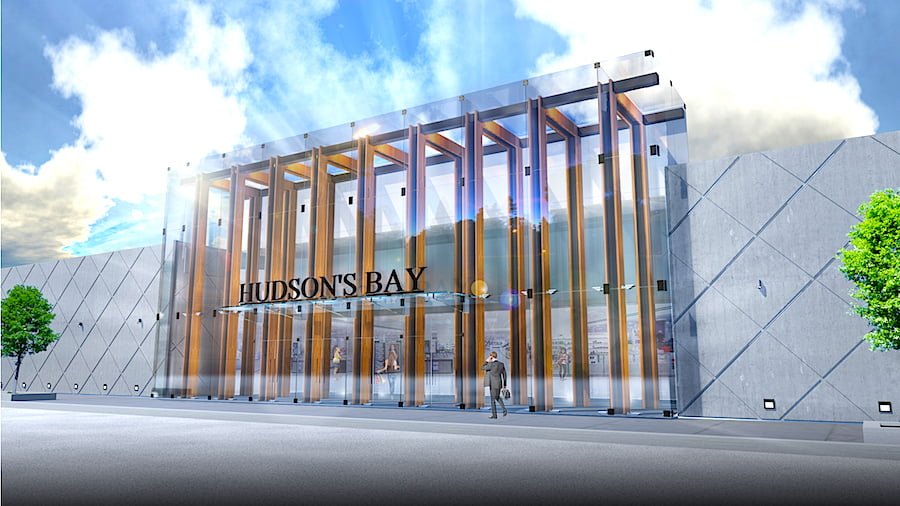
Hudson’s Bay Initiates Unprecedented Store Renovations

Hudson’s Bay has embarked on several ambitious store renovations, reflecting the retailer’s new aesthetic standards. The Toronto flagship will act as a prototype of sorts, with recently completed interiors setting the standard for future store upgrades. We spoke with a retail expert to discuss Hudson’s Bay’s continued efforts to modernize the company’s fleet of stores, addressing unprecedented competition from a variety of retailers. 

MaryAnne Morin, chief merchant officer of Hudson’s Bay Company, recently told Women’s Wear Daily that changes in the Toronto Queen Street flagship will be reflected in other units across the chain. In addition to partially renovated flagships in Vancouver, Montreal and Yorkdale (Toronto), elements of the Queen Street renovation will be reflected in “other doors where men’s is highly penetrated,” she said, with the aesthetic showcased at Queen Street serving as “the new standard”. 

Hudson’s Bay locations to see renovations will include flagships in Toronto, Vancouver, Ottawa and Montreal. Suburban locations including Toronto’s Scarborough Town Centre and Calgary’s Southcentre will see substantial overhauls, adding to the company’s substantially completed units at Sherway Gardens in and Yorkdale Toronto, Square One in Mississauga, and Hillcrest Mall in Richmond Hill, Ontario.  

A number of landlords across the country have told us that Hudson’s Bay intends to renovate other locations over the next couple of years, including adding more licensed TopShop/Top Man shops-in-stores. 

The Toronto Eaton Centre flagship continues to see renovations, as it makes room for a four-level Saks Fifth Avenue on the Hudson’s Bay building’s east side. Hudson’s Bay operations have shifted westward as cosmetics, accessories and jewellery move into space formerly occupied by women’s shoes — which has expanded and moved upstairs to the store’s second-level. Luxury womenswear department The Room has also moved westward on the store’s third floor, making room for Saks Fifth Avenue’s new women’s floor. ‘Beauty bar’ The Ten Spot debuted on the building’s concourse earlier this month, and a bright 100,000 square foot fifth-floor men’s store opened earlier this year. 

The massive downtown Montreal Hudson’s Bay flagship will see renovations commencing in 2016, according to Hudson’s Bay president, Liz Rodbell. Some speculate that a large Saks Fifth Avenue store could also be carved out of the 655,000 square foot Bay space, though nothing is confirmed.

Downtown Vancouver’s Hudson’s Bay, which has seen substantial renovations over the past several years, will see renovations to its third and fourth levels, according to sources at the store. Currently occupied by women’s and children’s departments, renovations to these floors will see new interiors, as well as exposed windows allowing for increased natural light.

Scarborough Town Centre’s 252,600 square foot Hudson’s Bay renovations will commence in 2016, and they will be timely – the mall will eventually be home to one of three Toronto La Maison Simons stores, and sources say that the mall will see other improvements to be revealed at a later date. Scarborough Town Centre hopes to draw more local shoppers, as well as patrons from an expanded trade area extending into the Toronto region’s north and east suburbs. 

The 335,000 square foot downtown Ottawa Hudson’s Bay flagship will see a complete overhaul. A fully-renovated ground floor will see an expanded cosmetics floor, a new women’s shoe department, and an expanded handbags department with updated shops-in-stores for Kate Spade and Coach. The second-level men’s store will be overhauled and new designers added, as will the third-floor women’s fashion floor. The fourth level, devoted primarily to homewares, will see natural light from ample windows once renovations are complete. Hudson’s Bay is addressing competition from retailers at adjacent Rideau Centre, which itself is seeing unprecedented changes. Nordstrom opened its 153,700 square foot Rideau Centre location in March, featuring bright, modern interiors and some brands also carried at Hudson’s Bay. Menswear retailer Harry Rosen‘s Rideau Centre unit was replaced with a 17,000 square foot store in the fall of 2014. Featuring stunning interiors, the Rideau Centre Rosen’s also features a shoe department with its own mall entrance. Quebec-based retailer La Maison Simons will open a 100,000 square foot Rideau Centre store in August of 2016 with bright, modern interiors as well as an art installation. 

Hudson’s Bay’s Calgary Southcentre location will see substantial renovations and according to sources in Calgary, preparation is well underway. The 164,500 square foot Bay’s interiors were in need of an update, lagging behind updates at the company’s Chinook Centre, Market Mall and downtown Calgary locations. Southcentre will see several large new tenants over the next several years, including a 46,000 square foot Sporting Life in 2016, as well as possibly La Maison Simons’ second Calgary location. 

We spoke with retail industry expert Farla Efros, President of leading retail consulting firm HRC Advisory, to gain her perspective on Hudson’s Bay’s substantial investment. Ms. Efros explained that these store overhauls were a ‘long time coming’, and how Hudson’s Bay is renovating partly to address competition. Holt Renfrew and Harry Rosen are both updating and expanding stores nationwide, and Nordstrom’s Canadian expansion could see as many as 10 stores by the year 2020. Ms. Efros noted that Nordstrom’s Canadian stores are “clean, light, and refreshing”, putting pressure on Hudson’s Bay stores, which have become dated. She also noted that there will be crossover between shoppers at Nordstrom and Hudson’s Bay, requiring the latter to modernize to avoid potentially losing market share. 

Ms. Efros also described how Hudson’s Bay may have been ‘testing the waters’ with its gradual store renovations, and how things may speed up now that it has a clearer vision. Adding Saks Fifth Avenue to the mix would also require store renovations, as evidenced with the shared Saks/Bay space in downtown Toronto. Ms. Efros noted that the new concept will require very clear delineation between each banner so as to not cannibalize and confuse the customer, especially as there will be some brand overlap between Saks and Hudson’s Bay. 

Italian Centre Shop Sets Sights on Expansion

Edmonton-based grocer Italian Centre Shop is growing beyond its Edmonton home base. Early next month, it will open its first Calgary location, and it’s looking to a number of Canadian markets for potential expansion. We spoke with the company’s President, Teresa Spinelli, to learn more on her plans to grow the popular retailer.

Italian Centre Shop was founded by Ms. Spinelli’s father, Frank, in Edmonton in 1959. The small store initially carried Italian magazines, pop and chocolate and due to shopper requests, it expanded to become a grocery store. It became more than just a grocery store, however, as locals came to view it as a place to gather and socialize. The single, successful location eventually grew to three Edmonton stores, and the company is now a major retailer, wholesaler and distributor of specialty imports, grocery and fresh produce to stores and restaurants throughout Western Canada. Each store features a café as well as grocery, deli and bakery departments. 

On July 2, Italian Centre Shop’s first Calgary store will open to the public. Located in the city’s southeast suburbs, the 18,000 square foot store could be the first of two Calgary locations, according to Ms. Spinelli. Italian Centre stores are generally in the 12,000 square foot to 18,000 square foot range and Ms. Spinelli says that the company has its sights on a number of places, provided that the “right opportunities” become available. Ms. Spinelli mentioned that longer-term, she is considering opening locations Alberta cities such as Red Deer and Grande Prairie, as well as in Saskatoon, Saskatchewan. Further into the future, Ms. Spinelli indicated that a national expansion is a possibility for the retailer, though because it doesn’t franchise, growth will be limited and dictated by opportunity. 

Last fall, rumour had it that Italian Centre Shop would replace the downtown Edmonton Sobeys grocery store, which had closed its location at 104 Street and Jasper Avenue. Ms. Spinelli said that although her company examined the retail space, the “the numbers didn’t work” and she decided against opening there. The 18,900 square foot retail space continues to be available for sublease.

Neal’s Yard Remedies Plans Canadian Expansion

British organic natural health and beauty products retailer Neal’s Yard Remedies plans to open stores across Canada over the next several years. Its first North American location opened in Canada last year, and a second store has just been announced. We spoke with Lisa Costello, CEO of Neal’s Yard Remedies Canada, to learn more. 

Founded in 1981 in Covent Garden, London, Neal’s Yard Remedies has more than 80 stores in 21 countries across five continents. It has grown to become a global leader in ethical, organic beauty and health, and its award-winning products are manufactured by hand in England using sustainably sourced, certified organic ingredients.

Neal’s Yard Remedies’ first North American location opened in June of 2014 in Calgary. The 1,000 square foot free-standing store is located in the city’s Mission district, on 4 Avenue SW. Neal’s just announced a second Calgary location, set to open in November, at Southcentre in the city’s southern suburbs. Neal’s plans to open about 10 Canadian locations over the next five years through its Calgary based Canadian ‘development agent’, headed by Ms. Costello. 

Ms. Costello explained her company’s strategy for a cross-Canada expansion, as well as how some locations may differ. Neal’s will consider retail spaces both within busy shopping centres, as well as streetfront locations similar to its first Calgary store. The chain’s streetfront stores will typically include treatment rooms, allowing for a blend of ‘inner health’ and ‘outer beauty’. The current Calgary location, for example, includes an acupuncturist providing facial treatments. Shopping mall locations, however, will lack treatment rooms, though they may be roughly the same square footage as Neal’s streetfront stores. Its Southcentre location, for example, will measure almost 1,000 square feet and will focus primarily on the brand’s products.

Although no immediate plans were revealed, Ms. Costello said that Neal’s Yard Remedies may look to open in a variety of Canadian cities, provided that the ‘right’ retail locations become available. She mentioned that a third Calgary store could be a possibility, and that markets such as Toronto and Vancouver could prove to be prime markets for future Neal’s locations.

Ms . Costello also mentioned that there could be a possibility that Neal’s Yard Remedies could partner with a larger retailer by opening shop-in-store concessions. Although no plans are in place, Ms. Costello noted that concessions within department stores are a trend internationally, including in Great Britain where Neal’s Yard Remedies was founded.