Advertisement
Home Blog Page 1185

Parcel Pick-Up Lockers Look to Take Canada by Storm

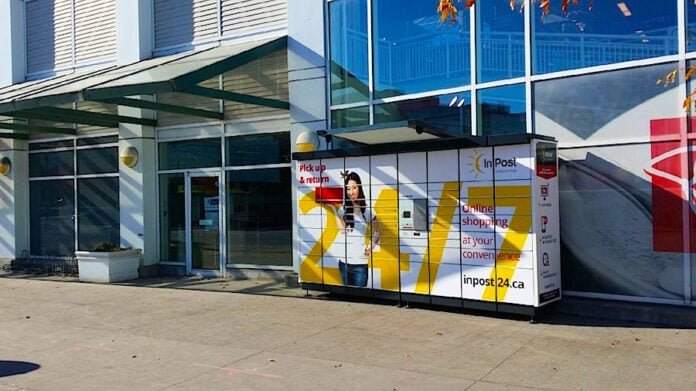
INPOST AT LOBLAWS

InPost is rolling-out its 24/7 automated-parcel locker machines throughout Canada in an effort to make e-commerce shopping and returns more convenient. The concept launched in Canada earlier this year, and it expects to soon have locations near most Canadians. InPost is seeking landlords and retailers to partner as it expands into Canada. 

The service provides e-commerce shoppers the option to ship online purchases directly to one of InPost’s convenient pick-up locations. Lockers are accessible 24/7 and the self-serve pick-up process takes under 10 seconds to complete. InPost’s parcel-locker network is the largest of its kind in the world, and it continues to grow quickly. E-commerce shoppers can have their packages delivered to InPost, with the convenience of picking up the package when desired. Security cameras guard the locker units, and e-commerce purchase returns can be coordinated quickly and easily through the same InPost lockers. 

INPOST AT PETRO CANADA

So far, 60 InPost locations have opened in the Greater Toronto Area (GTA) with plans to expand to 200 GTA locations by year end and 1,000 locations across Canada in 2016.

InPost at St Clair West TTC Subway Station
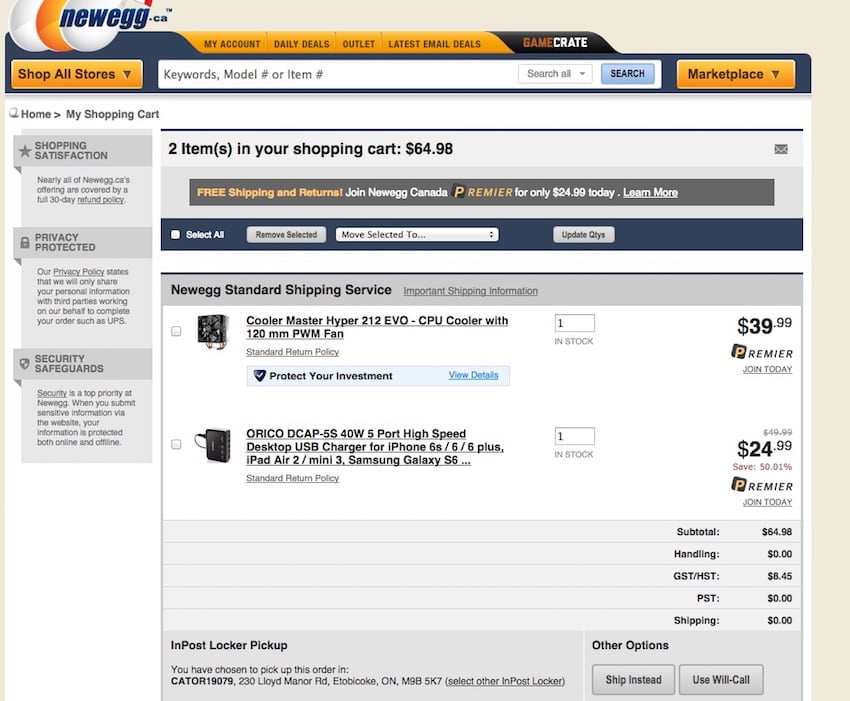
INPOST PARTNER NEWEGG.CA OFFERS LOCKER PICK-UP OPTION

InPost is looking to partner with major retailers, grocery outlets and gas stations for new parcel pick-up locations, and it’s offering discounts to potential partners through Retail Insider. For landlords interested in hosting InPost lockers, email sales@inpost24.ca (or use the contact page on the inpost24.ca website) and in the subject line, use promo-code WEW@NTINPOST. For retailers (both brick-and-mortar and e-commerce) interested in partnering with InPost, use promo-code WE$ENDINPOST in the email subject line. 

As well, for further information on InPost, contact Tony Jasinski CEO, InPost Canada Inc. (55 Browns Line, Toronto, ON M8W 3S2) at tony@inpost24.ca

Canadian Retail News From Around The Web: November 4, 2015

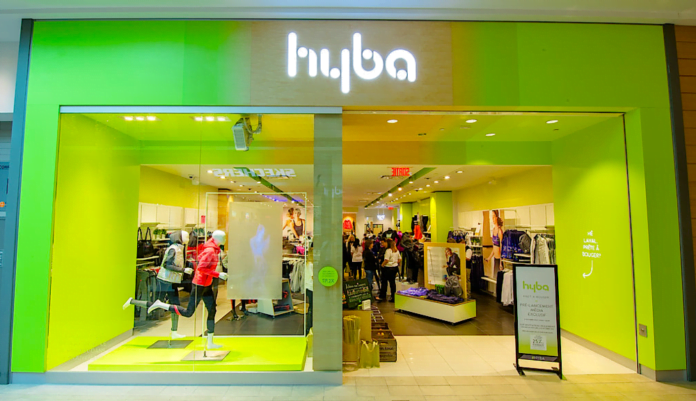
Reitmans Launches HYBA in Former Smart Set Locations [With Photos]

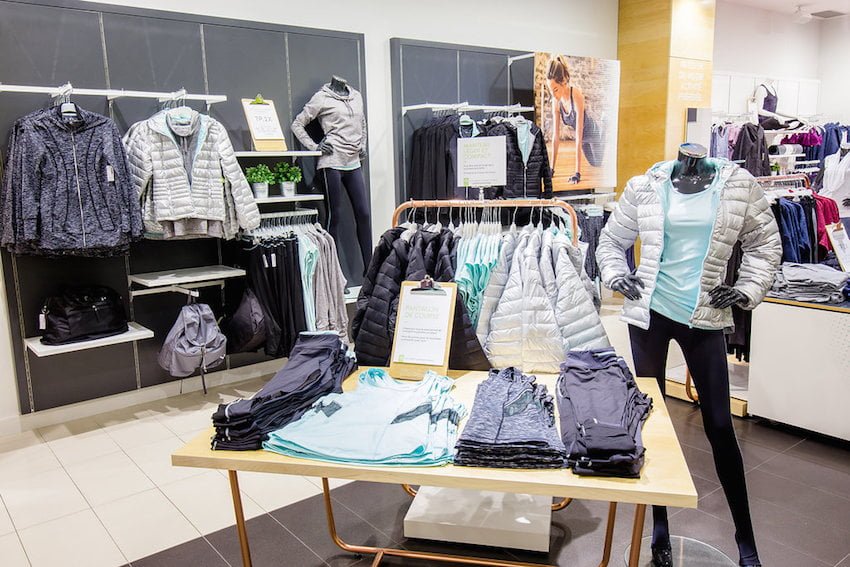
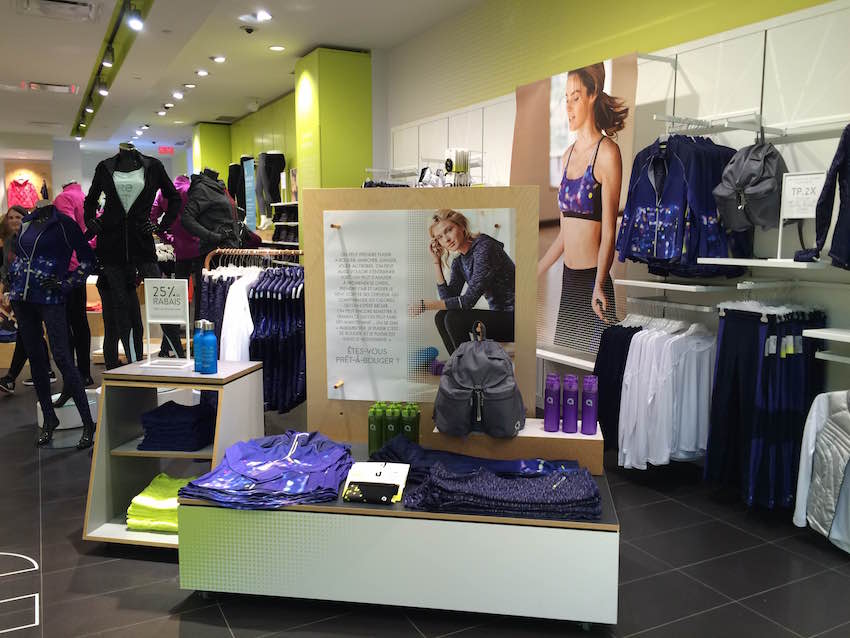
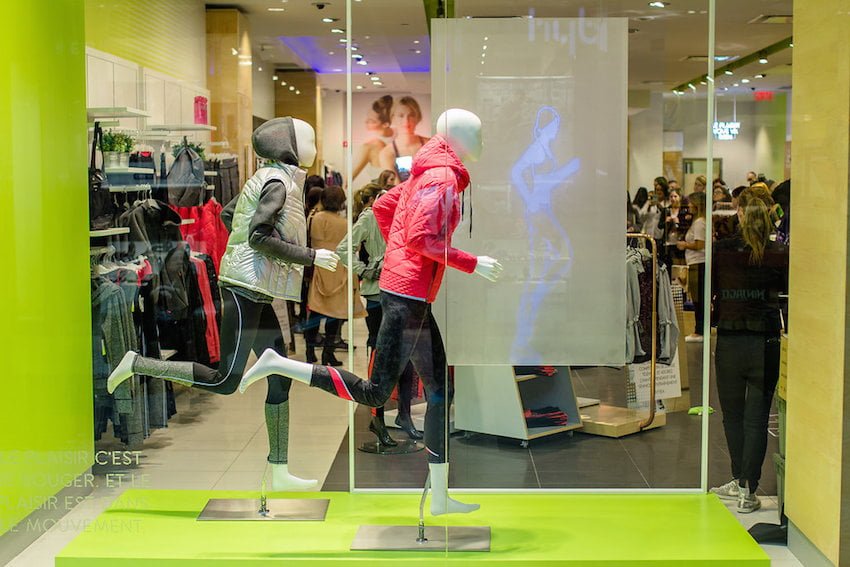
Montreal-based women’s fashion retailer Reitmans launched freestanding locations for its Hyba activewear line last month, conveniently placing them in former Smart Set locations. We interviewed a company representative to learn more about plans for the brand’s expansion, as well as how Hyba addresses a ‘white space’ in Canada’s activewear market. 

Jeannie Vondjidis-Miller, VP of marketing and visual presentation for Reitmans and Hyba, explained the concept as a well-priced, high-quality line of women’s activewear that saw initial success within Reitmans’ stores. The line, which launched in Reitmans stores about two years ago, responds to a need in the marketplace for style-focused yet affordable activewear that fits women in a wide range of sizes. Hyba speaks to women who are seeking to become more active without the pressure of becoming a ‘top athlete’, and is meant to encourage movement, fun and health. It offers a range of activewear apparel and accessories, including dry wicking performance gear, yoga attire, and style-focused athleisure looks. Sizes range from 2 to 20 — broader than competitors, and prices are mid-range with tops priced between $28 and $34, and bottoms priced $38 to $44. 

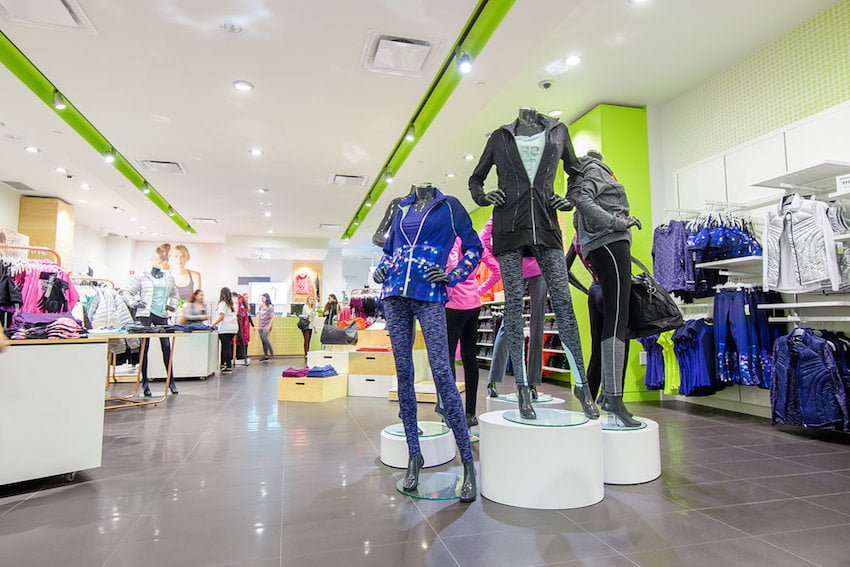
Hyba store interiors feature a combination of bright colours and soft wood, creating positive space that encourages activity. 

Last year Reitmans announced that it was shuttering its Smart Set banner of stores. A total of 17 former Smart Set locations were selected to be converted to the Hyba banner, and these locations have been opening over the past several weeks. Stores are located coast-to-coast, from Nova Scotia to British Columbia. Hyba Flagships are at CF Carrefour Laval and CF Galieries d’Anjou in suburban Montreal, and at CF Markville in Markham, Ontario. 

Ms. Vondjidis-Miller explained that Hyba plans to open more Canadian locations, and that it will do so carefully as the right real estate becomes available. Enclosed shopping centres are currently the brand’s target, though that could change as Hyba expands.


Activewear is the fastest-growing category in apparel today, according to Farla Efros, President of leading retail consultancy HRC Advisory. She explained how the yoga pant has ‘taken the market by storm’, and how they have replaced jeans in many respects as the ‘new black pant’. She noted how higher-end yoga pants average about $100 a pair, and that Reitmans could see tremendous success from the value-priced concept. Ms. Efros went on to say that Hyba could invigorate Reitman’s operations as a whole, leading the company to stronger sales and increased profitability. 

Brunello Cucinelli Opens 1st Freestanding Canadian Location [Photos]

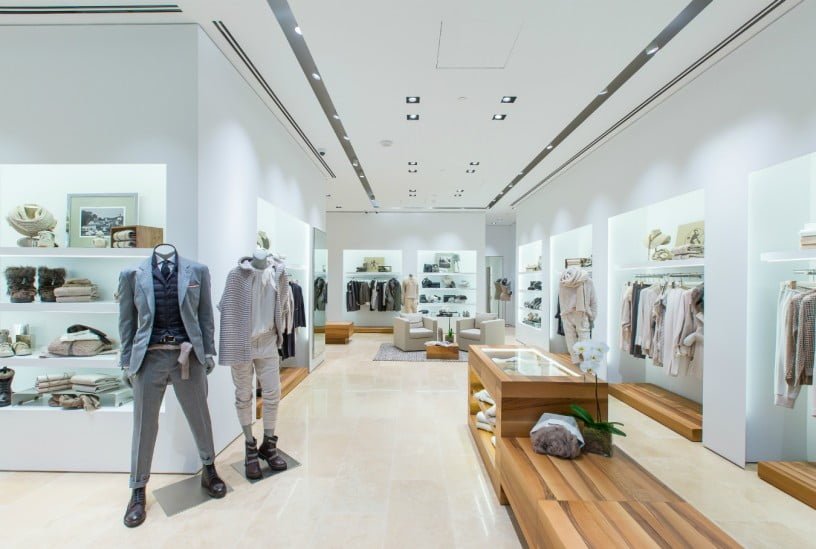
Brunello Cucinelli Vancouver - Photo by Helen Siwak

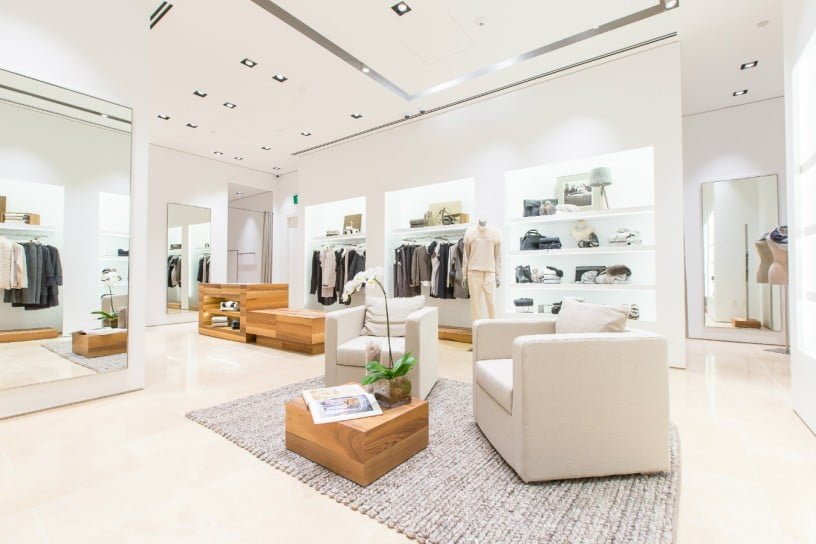
Referred to as the “King of Cashmere”, Italian luxury fashion brand Brunello Cucinelli has opened its first Canadian location in Vancouver. It joins a number of other premium brands in Vancouver’s ‘Luxury Zone’. Sources say that Cucinelli also continues to seek retail space in Toronto’s Yorkville area, ideally on or close to Bloor Street West. 

The 2,700 square foot Vancouver boutique opened last week at the retail base of the 745 Thurlow Street office building at the southwest corner of Thurlow and Alberni Streets. Cucinelli has a municipal address of 765 Thurlow Street, and it will soon be joined by Versace and Swiss menswear brand Strellson in the same complex. 

Brunello Cucinelli was represented by Stan Vyriotes and David Wedemire of DWSV Remax Ultimate Realty Incorporated. Larissa Jacobson (604-661-5066) at Bentall Kennedy (Canada) LP handled the retail leasing for the landlord for all three retail tenants at 745 Thurlow.

Image: Brunello Cucinelli

Founded in 1978, Brunello Cucinelli sells womenswear, menswear and accessories. Although known for its luxurious cashmere apparel, the brand has expanded to include non-cashmere fashions including leathergoods, bags, shoes, and sportswear. The company is headquartered in a 14th century castle on the top of a hill in the middle of Italy’s Umbria region, and it donates 20% of profits to its charitable foundation, and pays workers wages that are 20% higher than the industry average. According to its website, the brand is “firmly rooted in quality excellence, Italian craftsmanship and creativity”.

The company currently operates 16 U.S. locations in Aspen CO, Atlanta, Bal Harbour FL, Beverly Hills, Chicago, Costa Mesa CA, Dallas, East Hampton NY, Honolulu, Las Vegas, Manhasset NY, New York City, and San Francisco. All cities have one free-standing Brunello Cucinelli location except for New York City, which has three. 

In Vancouver, Brunello Cucinelli joins other luxury retailers in Vancouver’s Luxury Zone such as DiorDe BeersBurberryEscadaHermesTiffany & Co., Jaeger-LeCoultreLouis Vuitton and others. Canada’s second Moncler location will open in December across from Cucinelli on Thurlow Street, and a massive three-level flagship Prada is under construction at the southeast corner of Thurlow and Alberni Streets. Sources say that a number of premium international brands continue to negotiate for retail space in the immediate area.

Image: Brunello Cucinelli

Sources also say that Brunello Cucinelli is seeking retail space in Toronto and that last year, it passed up the opportunity to lease Benetton‘s former space at 102 Bloor Street West. Vancouver-based fashion brand Kit and Ace has since secured that space.

Top photo by Helen Siwak, other photos provided by Brunello Cucinelli. 

Image: Brunello Cucinelli

Harry Rosen Opens Impressive Sherway Flagship [With Photos]

Upscale Toronto-based multi-brand menswear retailer Harry Rosen has opened an impressive flagship at Toronto’s CF Sherway Gardens. Although the store opened in late September, its Giorgio Armani shop-in-store didn’t open until last week. 
 
The new store measures about 25,000 square feet and features the retailer’s full flagship offerings, including shops-in-stores and premium services. Designer ‘hard-shops’ include brands Brunello Cucinelli, Giorgio Armani, Canali and Ermenegildo Zegna, as well as soft shops for brands Paul & Shark, John Varvatos, and Munroe Tailoring from Amsterdam – which is a new addition to Harry Rosen. The store also features custom installations for popular jeweller/cufflink brand Tateossian, as well as Eton of Sweden, in the store’s dress furnishings section. 

Other in-store brands include Versace, Belstaff, Polo Ralph Lauren, BOSS, Benson, Parajumpers, and Canada Goose.
 
Harry Rosen CEO Larry Rosen said: “We’re bringing the best of Bloor Street to Toronto’s west-end with the opening of this new flagship store.”

The store also features one of Harry Rosen’s largest footwear sections, featuring brands such as Prada, Salvatore Ferragamo, To Boot New York, Tod’s, and Hogan. The store also features two private made-to-measure rooms and a fragrance bar featuring top brands such as Tom Ford and Creed

At 25,000 square feet, CF Sherway Gardens’ Harry Rosen is one of the company’s largest. Rosens’ largest locations include its flagships on Bloor Street West in Toronto (over 50,000 square feet), Yorkdale Shopping Centre in Toronto (almost 32,000 square feet), Les Cours Mont-Royal in Montreal (33,000 square feet), The CORE in Calgary (almost 28,000 square feet), and CF Pacific Centre in Vancouver (just under 27,000 square feet+4,000 square feet of storage). Next spring, Harry Rosen will open an 18,000 square foot unit at Mississauga’s Square One.

All photos were supplied by Harry Rosen.  

Peregrine Becomes Western Canada’s Largest Retail Fabricator After Acquisition

Peregrine, a designer and manufacturer of high-end retail environments for some of the world’s best known brands, is now the largest company of its kind in Western Canada. Peregrine recently acquired the majority of assets and key staff from Stelmark Products, one of Canada’s largest retail fixture and millwork manufacturers.

It’s a Canadian success story, especially in the age of outsourcing. The acquisition is consistent with Peregrine’s strategy to invest in top talent and technology, creating the premier ‘design-build’ house for retail environments across North America. A custom fabricator of displays, fixtures, furniture and architectural features, Peregrine has worked with top international brands, including LululemonArtizia and MEC.

On August 1 of 2015, Peregrine moved into the former Stelmark facility at 3131 Production Way in Burnaby, tripling its staff and workspace in the process. The 30,000 square foot facility features state-of-the-art equipment complete with custom millwork, full-scale plastics fabrication and thermoforming, and large format environmental graphics.

“This acquisition allows us to offer our customers turn-key ‘design+build’ solutions, handling everything from store fixtures to full store environments. We believe this addition will notably differentiate us in the market, bringing significant value to our clients,” says Brian French, President of Peregrine.


CHANEL to Relocate Mink Mile Flagship

exc-562affbee4b079eaf38602a0

French luxury brand Chanel will vacate its current Toronto Bloor Street location for a larger space about two blocks north. Chanel’s new Canadian flagship is scheduled to open in January of 2017. 

Chanel’s current Toronto flagship store opened in April of 1989 in The Colonnade at 131 Bloor Street West. Strong sales saw the 3,100 square foot store eventually annex a second level, growing to 7,300 square feet. Prior to opening at The Colonnade, a Chanel shop-in-store operated within storied multi-brand luxury store Creeds at nearby Manulife Centre

Chanel’s new Toronto flagship will replace upscale retailer Teatro Verde at 98 Yorkville Avenue. The new store will span an impressive 8,700 square feet, making it one of North America’s largest Chanel locations. The Teatro Verde building features the facade of a former Mount Sinai Hospital, and is at the base of the luxurious 100 Yorkville Avenue residential condominium complex.  

Stephanie Hannon represented the landlord in the deal, while Stan Vyriotes and David Wedemire of DWSV Remax Ultimate Realty Inc. acted on behalf of Chanel. 

Yorkville Avenue’s aging streetscape was recently replaced with grey paving stones, giving the area a more upscale feel. A number of brands have been looking for retail space along Yorkville Avenue, with sources saying that a deal is expected to be finalized for another top French luxury brand directly across the street from Chanel. 

Farla Efros, President of leading retail consultancy HRC Advisory, noted that Yorkville Avenue could become Toronto’s newest luxury retail strip, complimenting the mix of mid and high-end retailers operating on nearby Bloor Street West. She noted that Yorkville’s affluence is growing with new condominiums and as a result, some luxury brands may look to locate off Bloor Street. We’ll be following up with more of her comments in a separate article on the future of Yorkville. 

Toronto is currently the only Canadian city to feature a freestanding Chanel store. The brand closed its 5,000 square foot freestanding Vancouver store in the summer of 2010, moving ready-to-wear to an expanded Chanel concession at Holt Renfrew in CF Pacific Centre. Sources say that next year, Chanel’s second-level Holt Renfrew Vancouver store will move downstairs to a retail space with frontage on Dunsmuir Street, with Fendi replacing Chanel on the store’s second level. Chanel first entered the Vancouver market in 1991 with a 1,300 square foot unit at 103-755 Burrard Street (now occupied by Coach), prior to moving to the now-shuttered 5,000 square foot 900 West Hastings Street location. 

Chanel also operates shop-in-store concessions at Holt Renfrew in Calgary, Toronto (50 Bloor Street West), Toronto (Yorkdale Shopping Centre), and in Montreal. Sources say that Chanel’s Holt Renfrew Bloor Street concession may relocate to the store’s ground floor, and that the Montreal Chanel will move into an expanded Ogilvy store when Ogilvy and Holt Renfrew merge into one 220,000 square foot location in 2017, resulting in the closure of Holt Renfrew’s 1300 Sherbrooke Street West unit. 

JACK & JONES Opens Impressive Flagship at Vancouver’s Pacific Centre [With Photos]

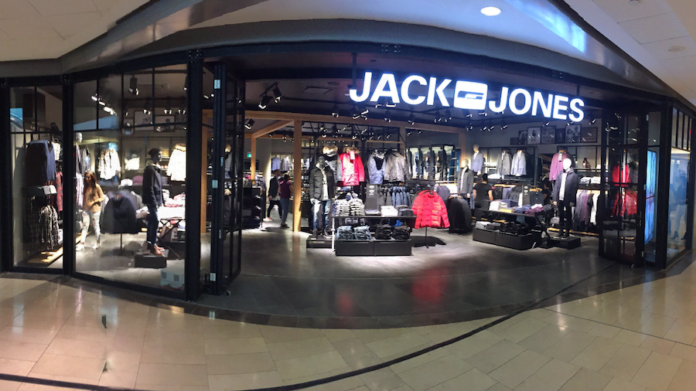
Popular European casual menswear brand JACK & JONES has opened a flagship location in Vancouver’s CF Pacific Centre. It is the fourth location in the Lower Mainland for the retailer, and its first in downtown Vancouver. 

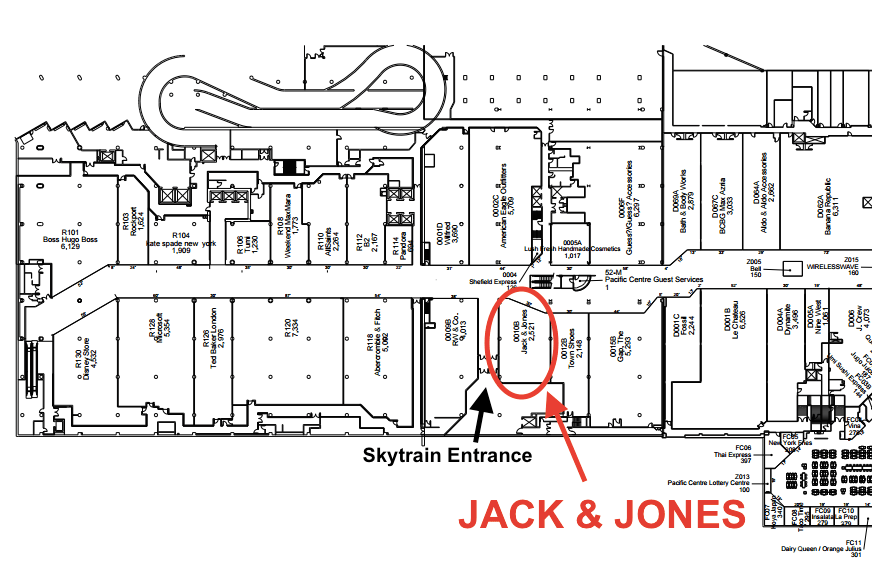
The new store is located on the mall’s lower level adjacent to the recently opened expansion below Nordstrom. Prior to JACK & JONES, a Sony Store occupied the 2,521 square foot space. The location is strategic, being adjacent to CF Pacific Centre’s Canada Line Skytrain entrance, as per the mall map below. 

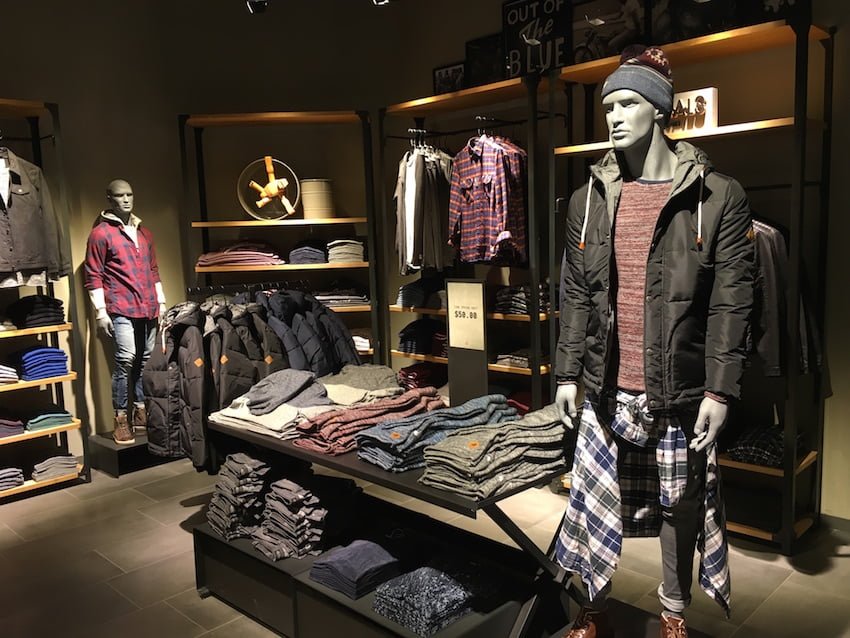
The CF Pacific Centre JACK & JONES flagship features the brand’s five sub-brands: JACK & JONES VINTAGE CLOTHING, PREMIUM by JACK & JONES, ORIGINALS by JACK & JONES, CORE by JACK & JONES and JACK & JONES TECH. All lines reflect current trends and are designed by independent design teams, featuring a full range of clothing, accessories and footwear. 

The location also sells some styles that are exclusive to JACK & JONES flagships such as those at CF Carrefour Laval in suburban Montreal, as well as at West Edmonton Mall

The store’s interiors feature grey stone flooring, rugged wood trim, and overhead lights that contrast with the store’s dark ceilings. The overall feel is subdued and masculine, with each of the JACK & JONES lines featured in their own dedicated sections. 

JACK & JONES’ other Lower Mainland locations include CF Richmond Centre in Richmond, Metropolis at Metrotown in Burnaby, and Guildford Town Centre in Surrey.

Founded in 1990 by family-owned Danish multi-brand company BESTSELLER, JACK & JONES is one of Europe’s leading menswear producers. It has more than one thousand stores in 38 countries, and JACK & JONES clothes are sold by thousands of wholesale partners all over the world.

International Art Gallery Retail Concept Expands into Canada

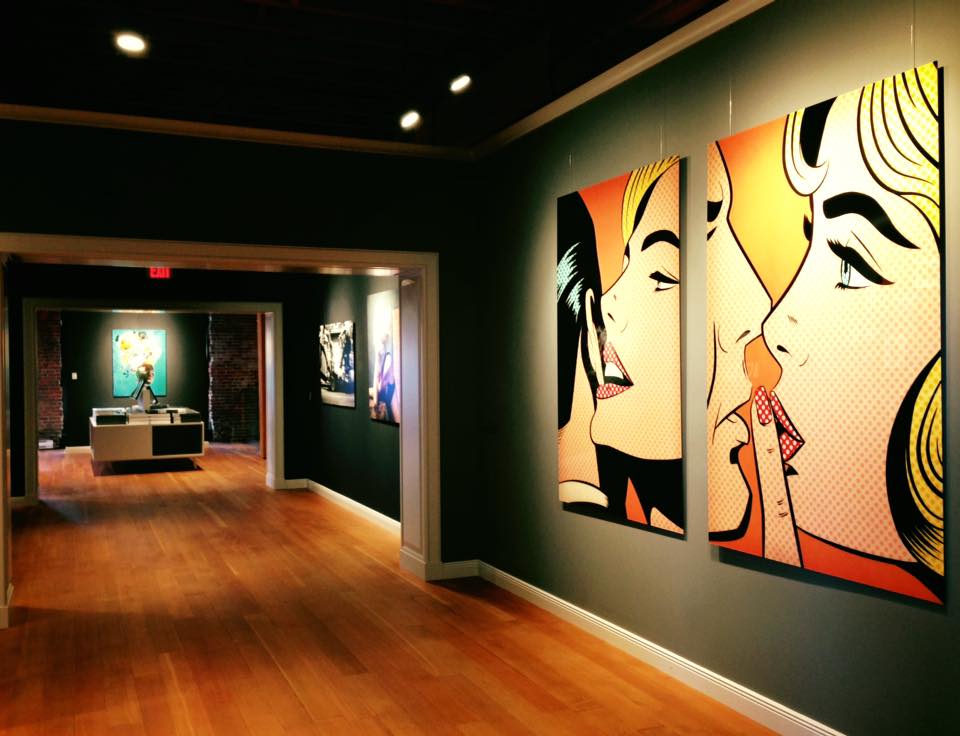
NEW TORONTO GALLERY. PHOTO SUPPLIED

German-based photo art gallery concept LUMAS has expanded into Canada, and its Canadian franchise partner says she has plans to open more locations. LUMAS’ first location opened in Vancouver last March, and a Toronto location opened late last month in Toronto’s Yorkville area. We interviewed LUMAS’ Canadian franchise partner, Erin Lang, for insight into the gallery concept’s Canadian expansion. 

Erin Lang

LUMAS was founded in Berlin in 2004, with the intention of bringing art photography to the public at accessible prices. It sells signed works by both up-and-coming and established artists, with over 1,800 works available with editions normally ranging between 75 and 150 prints. Various sizes of artwork are available, from small to full-wall sizes, with prices starting at as little as $100. The company has galleries across Europe, in Asia, in the Middle East and Canada, with plans to expand into Australia.

We spoke with Canadian franchise partner Erin Lang, who explained how LUMAS isn’t a competitor to pricier galleries and if anything, it helps promote art collecting to the general public. After discovering the LUMAS concept while visiting New York City in early 2014, Ms. Lang decided to bring the concept to Canada, seeing a market for accessible artwork from top international artists. 

INSIDE THE VANCOUVER GALLERY. PHOTO: LUMAS, VIA FACEBOOK

LUMAS’ first Canadian location opened at 305 Water Street in Vancouver’s Gastown area last spring. At 3,400 square feet, the Vancouver store is one of the company’s largest, located on the ground floor of a heritage building on the same corner as Gastown’s iconic steam clock. The Toronto location, at 159 Yorkville Avenue in the former Four Seasons Hotel on Avenue Road, spans approximately 1,800 square feet. Although less than a month old, Ms. Lang says sales at the Toronto store are stellar and that pieces featured in its windows sell very quickly. 

We asked Ms. Lang about her plans for more Canadian LUMAS locations, and she explained that her goal is to operate six Canadian galleries within the next five years. She has her sights set on opening in Montreal and Calgary, provided that retail space becomes available. Ms. Lang explained how rather than locating in a typical ‘gallery row’, LUMAS seeks retail space in high-traffic areas — a strategic idea, considering that an estimated 50% to 60% of sales come from walk-in visitors. Ms. Lang worked with Colliers as the brokerage for her first two Canadian deals, and LUMAS galleries are generally sized in the 1,800 square foot to 2,200 square foot range. 

Cybersecurity, Privacy and the ‘Connected Store’ in Canada

As e-commerce changes our shopping habits, the way we interact with retail changes in both virtual and brick-and-mortar shops. Big box retailers such as Best Buy are evolving to fit their customers’ needs, while media and entertainment outlets such as Indigo and HMV have also re-branded and changed strategy. Recently, Canadian Tire unveiled their plans to become “the most innovative retailer on the planet”, when CEO Michael Medline unveiled their plan to create digitally enhanced experiences at Sport Chek stores in the future. It makes business sense to engage the customer in person to ensure repeat business, beyond simply undercutting pricing until the profit margin vanishes. The increasing integration of digital commerce into the in-store experience naturally gives rise to the concept of the “connected store”, a topic on which Microsoft Retail Industry Leader Dave Rodgerson recently delivered at the Retail Council of Canada’s annual Retail West 2015 Conference in Vancouver.

“In the future, the traditional, stationary POS with a cash drawer will be less common, being replaced with mobile technologies that allow the associate to serve the customer out on the selling floor, away from a cash wrap counter”, Rodgerson told Retail Insider. “All of this suggests wireless connectivity, not just to the retailer’s proprietary systems, but also to the payment processors. Likewise, consumers will be moving more to digital wallets. Each of these changes demand that a higher degree of security be in place to protect the integrity of the data that is being exchanged.”
Here’s how the connected store works. Imagine going into a women’s wear retailer where you bought a skirt a few weeks ago. You’ve returned looking for a top to go with that skirt. The connected store’s online database will be able to retrieve suggestions from their internal inventory and add them to your customer profile. This will be done by accessing your in-store profile, which would include your age range, purchase history, measurements, preferences and payment information. You can then decide if you want to try the item and, if you like it, there may be an opportunity for up-sell and cross-promotion on a matching blazer, belt or shoes. If the retailer has upcoming sales or other shopping, they can invite you to these events, creating an incentive to return and generate repeat business. Luxury retailer Rebecca Minkoff already has this in place in their Soho location, and it has met with great success. The connected store allows you to get a complete look without going to another retailer, making the transaction convenient and seamless. It also builds brand loyalty, as the customer will be made to feel she is given service equal to the white-glove VIP service typically reserved for luxury boutiques.

All of this means that you as the customer must opt into the retailer’s database and freely consent to give your information to the retailer to store for future purchases. With the amount of personal information stored in the database, the retailer must ensure that they diligently and consistently safeguard their clientele’s privacy.

Depending on where you live in Canada, there is a difference in the kind of sensitive data you give to your favourite store. For instance, “personal identification information” is defined in the Digital Privacy Act and public-sector privacy laws as any information that identifies you, such as your name, date of birth, social insurance number, credit card information, or other unique identifier. “Personal information” can be differentiated, as that includes other personal data that is not an identifier but may be considered private, such as your credit history, religion, marital status, sexual orientation and health information. In the retail world, this would include details in the connected store that helps a retailer obtain merchandise for you, such as your size, buying habits, the amount you’ve spent before, and other things you may not want others to know. The prudent retailer would understand that the information entrusted to them should enhance a customer’s shopping experience, and not be used as a “hard-sell” technique or for marketing purposes. Nothing turns off a consumer more than a pushy telemarketer or canvasser from a “partner” company targeting you off the customer list.

All this personal information in the retailer’s hands means that they must retain and maintain robust IT security practices to safeguard customer information. After the sale is made, the retailer often stores the information to complete the transaction with the credit card company, and the ease of “one-click” shopping means that customers choose to keep credit card information in the database until he or she deletes the information.

“The payment process is just one element of a digital landscape that exists within a store system”, says Rodgerson. “As the store of the future becomes more interactive, the line between the in-store and on-line experience will become less distinct. It could well be that the communication between in-store signage and the consumers’ smart phones could be leveraged by criminal elements as a point of attack.”

“In recent years, the retail industry has seen some significant breaches, where the consumers’ data has been stolen, most notably, the attacks on Home Depot and TJ Maxx. In each of those instances, the attack was made possible through weaknesses that were found in the retailer’s POS system.”

Whatever the reason for privacy breach, the result to a retailer can include, depending on the size and nature of the breach, millions in dollars lost to crisis management, breach notification to privacy law regulators, and defending and settling class-action lawsuits that arise. It also leads to a loss in productivity, as retailers dedicate resources away from sales and product development towards risk mitigation and salvaging the brand name. Stock prices often drop as a result, and the public embarrassment would mean millions, particularly when a brand’s index falls and the court of public opinion weighs in mercilessly on social media. According to the 2015 World Economic Forum, both data fraud / theft and cyberattacks are listed in the top 10 risks of likelihood, right next to earthquakes, war and water crises. It’s no wonder that Cyberinsurance is forecast to triple in size into a $7.5 billion industry by the year 2020 according to Reuters.

There are numerous ways to mitigate risk in the connected store. “What we’re seeing in the way of CHIP/PIN encryption is a great start, but I can also imagine a time in the not too distant future that additional safeguards will need to be in place”, Rodgerson tells us. A retailer must put robust IT security practices into place, complete with a data recovery plan in the event of a data breach. Security architecture and risk assessments are also key factors in ensuring that the environment is assessed at a high level, with up-to-date standard operating procedures. Additionally, retailers must understand their regulatory and legal requirements, and implement continuing privacy education and audits into place. All software must be subject to a privacy impact assessment prior to being launched, and prepared with external audits in mind. Most retailers appoint both a Chief Information Officer as well as a Chief Privacy Officer, with the two roles collaborating frequently to ensure ongoing due diligence. Most CPOs also report to their in-house legal departments, and leverage training through human resources. Marketing creates brand awareness, but privacy education and cybersecurity awareness training are the cornerstones of keeping a customer’s trust.

The connected store is not a concept. It is in fact already in place at many retailers in a more nascent form, but will continue to grow. The key is to safeguard customer information and earn their enduring trust. A credit card breach is not only embarrassing, but would also lead to a drop in customer confidence and lower sales as a result. As the connected store enhances the shopping experience, the retailer’s IT security network and privacy protection programs must continually mature and grow in sophistication, as with their customer’s tastes.

Ritchie Po is a cybersecurity and data privacy lawyer in Vancouver, B.C. He received his J.D. from the University of Alberta in 2003, and was Called to the B.C. Bar in 2005. Ritchie is the co-chair of the Canadian Bar Association’s Freedom of Information & Privacy Law subsection, the course chair for the CBA’s 2015 Privacy Law Conference, and head of the CBA’s Special Committee to Review the Freedom of Information & Protection of Privacy Act. He is also a style columnist whose column “Knotwerk” features regularly on The Closet YVR, and is a Contributing Editor for Retail Insider

Browns Shoes Reveals Substantial Multi-Year Store Expansion Plans

SQUARE ONE MISSISSAUGA. PHOTO: BROWNS SHOES

Montreal-based multi-brand footwear retailer Browns Shoes will continue to expand throughout Canada over the next several years. It’s a remarkable Canadian success story, with the brand now operating stores coast-to-coast from Vancouver to Halifax. Browns is seeking management and other staff as part of its expansion which, according to a company representative, could see more than 25 stores open between now and the year 2020. 

Browns Shoes already operates 55 stores in Canada, including 43 Browns stores, seven B2 by Browns stores, and five Browns Outlets. According to Vice President of Sales David Brownstein, the company will open between eight and 10 Canadian locations in 2016 in Quebec City, Montreal, Ottawa, Toronto, Edmonton, and Vancouver. Mr. Brownstein declined to reveal exact locations, as a number of sites are still under negotiation. 

SQUARE ONE MISSISSAUGA. PHOTO: BROWNS SHOES

Mr. Brownstein further revealed that the company will open between four and six new Canadian locations each year in the years 2017 to 2020. Browns Shoes is represented in Canada by brokerage Oberfeld Snowcap

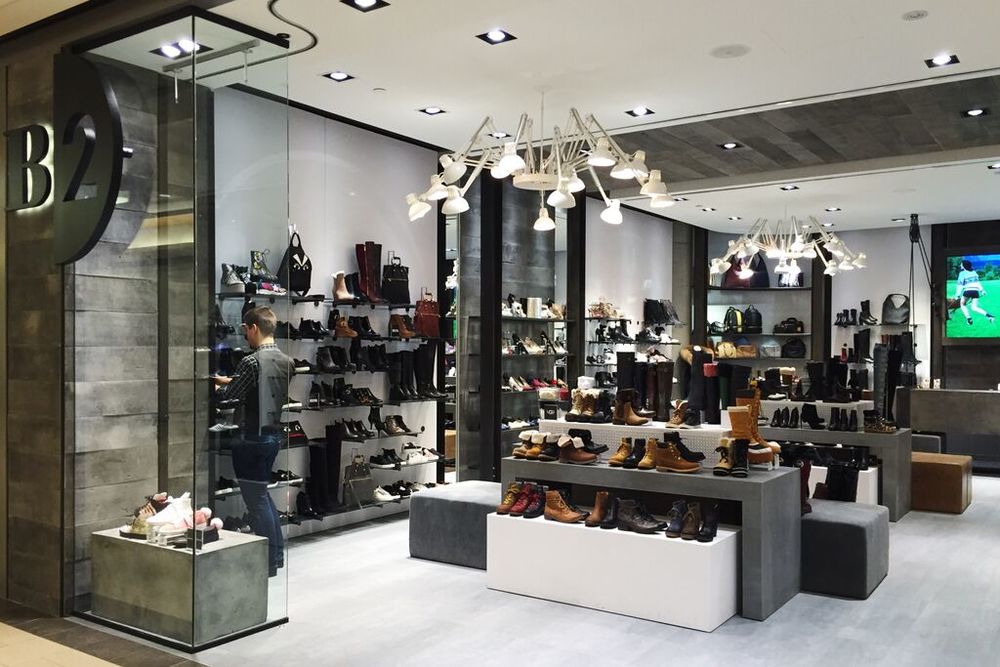
B2 AT PACIFIC CENTRE, VANCOUVER. PHOTO: BROWNS SHOES

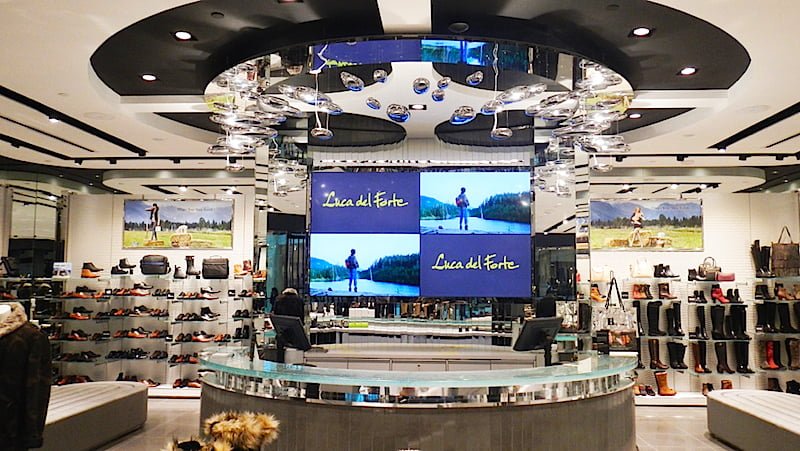
Browns Shoes is a family-owned business, founded in 1940 in Montreal by Benjamin Brownstein. The company is now third-generation run. Stores feature designer brands as well as in-house brands including Mimosa, Browns Couture, The Wishbone Collection, Luca Del Forte, Intensi and B2. The B2 brand became so successful in its own right that it now boasts its own freestanding stores, which also carry various other designer brands. 

We recently met with Edmonton District Manager Annik Garceau, who revealed that Browns Shoes is currently seeking to hire talented individuals for management, sales and other positions in Edmonton — both at Browns’ current locations as well as at a new store set to open next year. Ms. Garceau explained the benefits of working at Browns Shoes, including a generous compensation plan and an overall positive working environment. You may reach Ms. Garceau directly at annik.garceau@brownsshoes.com.