Popular American candy retailer Dylan’s Candy Bar is reportedly looking for Canadian retail space. Founded by Ralph Lauren‘s daughter, Dylan Lauren, the candy company has partnered with Claire’s as part of its North American expansion. Dylan’s recently expanded beyond just candy, becoming a lifestyle brand with various products.
Photo: Dylan’s Candy Bar
Dylan’s Candy Bar seeks retail space in the 5,000 to 15,000 square foot range, setting its sights on Toronto for its first Canadian store. Working with accessory retailer Claire’s, Dylan’s has created lines of candy-inspired jewelry (including jellybean-covered bracelets), nail polish, Whirly Pop-scented press-on nails, lip product and tech accessories (including iPhone cases with an ice cream cone design). All of these products retail for less than US$16 and are available at Dylan’s Candy Bar stores, Dylan’s website, as well as at Claire’s.
Founded in 2001, Dylan’s stores are located in New York City, Miami, Los Angeles and East Hampton, New York. The brand is expanding with smaller stores (within airports, casinos and at New York’s Empire State Building) as well as with concept shops at selected Neiman Marcus stores.
Besides a Toronto store, Ms. Lauren is reportedly seeking retail space in San Francisco and Chicago, as well as international locations in Japan and London, England. her company is also considering licensing its brand for sunglasses, handbags, flip-flops, rain boots, umbrellas, and possibly even dog-related merchandise. A clothing line is unlikely, according to Ms. Lauren, though her stores do sell signature T-shirts and pyjamas.
For the first time in Canada, May has been declared as ‘National Deals & Coupons Month‘. Both retail and deal/coupon industries have joined to offer Canadians savings, as well as raise awareness to the availability of deals and coupons for Canadians. The Deals & Coupons Month is an initiative of the Canadian Deals & Coupons Association and the Affiliate Marketing Association of Canada.
Over 60% of Canadians regularly use deals, coupons and offers and the demand continues to grow. The month-long shopping event recognizes both consumers who enjoy and benefit from the savings, and brands/retailers who understand that special promotions drive value and attention. Besides shopping in-store, consumers can also click over to the Deals & Coupons Month website where certain retailers will also be highlighted. Helping consumers know where they can save is the primary goal of the Deals & Coupons Month.
“Establishing a Deals & Coupons Month is a way to bring awareness to the shear amount of potential savings consumers can obtain in Canada”, said Albert S. Bitton, President of the Canadian Deals & Coupons Association and creator of Canada’s National Deals & Coupons Month. “We are very proud of the caliber of brands taking part in this initiative as their involvement creates a shopping event that we foresee will continue for years to come and that truly benefits everyone involved, especially consumers.”
With providers including Save.ca, one of the country’s leading coupon sites; Airmilesshops, the country’s Air Miles shopping mall; TravelAlerts – one of the country’s foremost travel promotion services; and WagJag, one of the leading deals sites in Canada, there is a steady stream of offers from quality companies available for consumers to choose from for the rest of this month.
As a former Sears senior executive I’ve followed the once mighty brand’s journey from mediocrity to bad to just plain sad. What a long strange trip it’s been.
When I left in late 2003 we were gaining traction in our core full-line department store business and piloting several important growth initiatives. To be fair, whether we could pull off the necessary transformation was highly questionable. But one thing is now certain. The subsequent actions taken under a decade of Eddie Lampert’s leadership have assured the retailer’s demise.
For some time now, I’ve been referring to Sears as the world’s slowest liquidation sale. After yesterday’s earnings announcement, it is time to stop the charade and embrace the inevitable. Here are the 5 reasons Sears needs to throw in the towel:
No value proposition. No reason for being. After all this time Lampert has still failed to articulate a vision of why and how Sears will fight and win in the intensively competitive mid-market sector. In fact, just about every action that has been taken over the last 10 years has weakened Sears competitive position. And the horrific results make this plain for all to see. The world does not need a place to buy a wrench and a blouse and a toaster oven.
The competitive gap continues to widen. In every major product category Sears has lost relevance (and market share) while key competitors continue to improve. In hard goods, Sears is fundamentally disadvantaged by their real estate and as a practical matter there is not enough time nor capital to fix this core issue. In soft lines, they have been given a great gift by the recent foibles of JC Penney and Kohl’s and yet still woefully under-performed. Both competitors have key advantages relative to Sears. As they start to execute better they will win back the share they lost.
Digging a deeper hole. For Sears to be a successful omni-channel retailer their core physical stores have to be compelling. Sears has under-invested in their brick and mortar stores for years, so not only do they have a lot of catching up to do, they have to develop and roll-out a new store design and related technology support. One need only to look at the capital that successful retailers like Nordstrom and Macy’s are investing to get a sense for the magnitude of what will be required. There is simply no way for Sears to earn an adequate return on this level of investment. More practically, Sears can’t possibly fund this.
A leader who is either a liar or delusional. The results speak for themselves: Lampert doesn’t know what he is doing. After 28 straight quarters of declining sales–let THAT sink in for a minute–he has the chutzpah to assert, among other things, that Sears is investing in where retail will be in the future (huh?), that the “Shop My Way” member program is some huge differentiator, that having fewer, less convenient locations than the competition is a good thing and that Sears can compete effectively with Amazon. All of these hypotheses would be laughable if the implications were not so tragic. Whether he really believes any of this is, or is merely spinning the story to buy time, remains an open question. But regardless of whether he is being disingenuous or whether he is nuts, you’d be crazy to give him your money.
Valuable assets get less valuable every day. There are pockets of meaningful value within Sears Holdings. But proprietary brands like Craftsman, Kenmore and Diehard are not sold where the majority of customers wish to buy them. Ultimately the brands are only as good as their distribution channels. Simply stated, as Sears and Kmart continue to weaken, so do the value of these brands. Side deals with hardware stores and Costco barely move the dial. Sears real estate is also cited as a major source of value, yet the real estate portfolio is a very mixed bag: some great properties in A malls, but lots of locations that are mostly liabilities. Regardless of how this all nets out, it is becoming increasingly clear that, on balance, mall-based commercial real estate has lots of supply, but relatively little demand for new tenancy. As retailers continue to prune and down-size their locations it is difficult, if not impossible, to make a case for Sears real estate value increasing over time.
The uncomfortable and sad reality is this: Sears has zero chance of transforming itself into a viable retail entity. Any further investment in this sinking ship is throwing good money after bad. Stripping out the idiosyncratic technical reasons for gyrations in the Sears stock, the underlying true company economic value declines each and every day. There is no plausible scenario where this trajectory will change.
Frankly, it’s been game over for some time now. It’s only Sears legacy equity and Lampert’s ability to pick at the carcass that has propped up the corpse.
Published with permission. This post originally appeared at Steven P. Dennis’ Blog on May 8, 2014. Copyright 2014. Follow Steven P. Dennis’ Blog on Twitter.
“[American Girl] is not something we will put in every store, but we definitely plan to put it in every province and then we will have to figure out by province what we can absorb. We will do it carefully. I think we could see 10 to 15 in total.”
Started 25 years ago as a line of dolls and books depicting pre-teen girls in historical times, American Girl is now a wholly-owned subsidiary of Mattel. Contemporary dolls have since been added. Its dolls retail at $125 for its standard 18 inch (45 centimetre) models and $90 for its ‘Bitty Baby’ line, marketed to younger children. Doll clothing, children’s apparel, books and movies are also available, as well as an in-store doll hair salon. Costs quickly escalate beyond the price of the doll itself: doll hairstyling costs between $5 and $25 (ponytails are $20), doll ear piercing costs $14, a horse costs $88, snow shoes are $34, and a wheelchair costs $45.
Image: American Girl
Retail analyst Robert Gibson got it right when he told the Financial Post last year that he expects Indigo to open as many as 15 American Girl boutiques in Canada by the end of fiscal 2015. He estimated that Chapers/Indigo could add $20-30-million in incremental revenue in fiscal 2016 if it replaces low-volume book space with American Girl shops, providing between $2 and $3 million in net income.
American Girl’s US locations are substantially larger than in Canada, with its Chicago flagship spanning 52,300 square feet over three floors. Its Chicago store includes a photo studio and a restaurant serving brunch, lunch, afternoon tea, dinner, with the potential to host private parties. American Girl flagships are also in New York City and Los Angeles, and its other locations bring its total US store count to 16.
Montreal-based luxury outerwear brand Mackage will open stores in selected Canadian cities. The company has retained a real estate company to establish its brand across Canada. Despite being Canadian, its first and only free-standing store is in New York City.
Designers Eran Elfassy and Elisa Dahan Mackage founded Mackage in 1999. The brand focuses on creating detailed, tailored outerwear in leather, down and wool. It retails collections for men and women, as well as its recently-launched handbag and accessory lines. The company is part of fashion conglomerate APP Group, which also includes upscale clothing brand SOIA & KYO.
Mackage is working with real estate company Oberfeld Snowcap in its search for cross-Canada space. We don’t know what Canadian cities are targeted, though we expect Toronto, Montreal and Vancouver to be the brand’s top choices.
This week, Nordstrom Rack simultaneously launched its new e-commerce website and mobile app. They are on a shared platform with HauteLook, Nordstrom’s flash sale business. Both website and app facilitate Nordstrom Rack shopping, as well as participation in HauteLook flash sale events. A similar site could be launched in Canada, though likely not until Nordstrom Rack’s Canadian debut in 2017.
Nordstrom Rack’s website allows customers to browse and purchase merchandise discounted at 30-70% off regular prices, or through its limited-time, limited-inventory flash sale events powered by HauteLook. Customers can shop both sites through a single log-in, and can combine items into one checkout.
Additional features include:
Two unique iTunes storefront and app icons that allow for a seamless mobile shopping experience for customers, who can browse and shop both sites within a shared app,
Easy Returns: 90-day return policy to any Nordstrom Rack store or return by mail,
Free shipping for orders over $100
Enrolled customers earn points in the Nordstrom Rewards Program
Integrated iOS experience for the iPhone and iPad
The company will introduce additional features and improve functionality with subsequent updates to the site.
Nordstrom acquired HauteLook in March of 2011. Every day at 8:00 am PST, selected Nordstrom items discount at up to 75% off. Membership is free.
Nordstrom’s off-price Nordstrom Rack has about 150 locations in the United States, and plans to open its first Canadian stores in 2017. Nordstrom Rack generated about $2.7 billion in sales in 2013, which represents about 22 percent of the company’s overall revenues. Nordstrom Rack will open between 15 and 20 Canadian locations and it’s growing quickly: according to company spokesperson Dan Evans, it will boast about 230 American locations by 2016.
“Our customers have been telling us for some time they want to shop the Rack online and with the launch of nordstromrack.com they can now shop the Rack whenever they’d like,” said Jamie Nordstrom, president of Nordstrom Direct. “We were able to leverage the talent of our HauteLook team to build a fast, seamless online and mobile experience – an important milestone in supporting our priorities to meet our customers’ expectation of how they like to shop today.”
“By bridging together Nordstrom Rack and HauteLook, we’re giving our customers one of the largest selections of online, off-price merchandise available today,” said Terry Boyle, president of Nordstromrack.com and HauteLook. “We’re committed to expanding and deepening our offering as we continue to learn more about how our customers want to shop nordstromrack.com. We believe that ultimately this robust offering will empower our customers to shop online, off-price with confidence.”
American footwear retailer Vince Camuto will open store locations across Canada. The company has teamed up with a real estate firm to spearhead its Canadian expansion, focussing on major enclosed shopping malls. Construction has already begun on its first boutique at Toronto’s Yorkdale Shopping Centre, scheduled to open this summer.
Vince Camuto is a fashion designer who co-founded popular women’s shoe retailer, Nine West. In 2005, he launched his namesake footwear line. The brand has since expanded into accessories as well as women’s and men’s clothing.
In the fall of 2013, Vince Camuto teamed up with real estate firm Oberfeld Snowcap in its search for Canadian real estate. According to Oberfeld, the Vince Camuto collection fills a void in the Canadian market, positioned between lower-priced ‘fast-fashion’ labels and more expensive designer and contemporary brands.
Vince Camuto’s Yorkdale store will replace another retailer, Icon Shoes. According to Yorkdale’s lease plan, Icon Shoes occupies about 1,365 square feet. The shop will be designed and executed by Toronto-based dkstudio inc., which has created some of Canada’s most prestigious stores including Prada at Yorkdale’s Holt Renfrew, De Beers in Vancouver, and several Louis Vuitton locations.
A Vince Camuto outlet store is also located at the Toronto Premium Outlets, its only retail outlet location in Canada.
Armani Collezioni is a sub-label of Milan-based designer Giorgio Armani. Although less expensive than its Giorgio Armani Black Label and Armani Privé labels, Armani Collezioni prices can still reach into the thousands.
The current 160,000 square foot Ogilvy will expand by 60,000 square feet, creating a store of about 220,000 square feet. The new store, called ‘Ogilvy, part of the Holt Renfrew & Co. collection’, opens in 2017. The 83,000 square foot Holt Renfrew on Sherbrooke Street West will subsequently close. Construction on the new Ogilvy/Holt’s begins this fall.
Incredibly, insiders (including sources at Women’s Wear Daily) speculate that sales in the new Ogilvy/Holt’s store could be as high as $250 million annually. If so, these could be the highest department store sales in Canada, surpassing those of Hudson’s Bay‘s Toronto flagship.
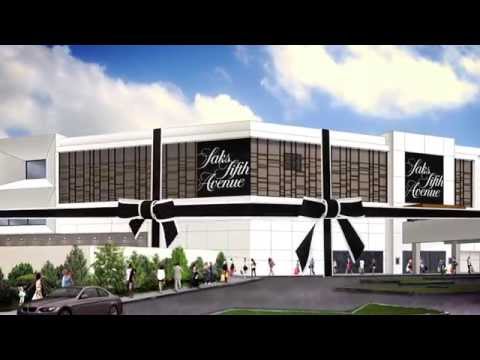
Although Montreal will lose its dedicated Holt Renfrew store on Sherbrooke Street West, it will gain an even larger luxury department store that can compete head-to-head with Saks Fifth Avenue. Saks will open within Hudson’s Bay’s Ste Catherine Street West store in downtown Montreal and when finished, Saks will be a mere 800 metres east of the new Ogilvy/Holt’s.
We expect that the new retailer will be similar to the company’s Selfridge’s store in London. Selfridge’s is one of the world’s most innovative retailers, offering a wide variety of merchandise and pricing. We think that the new Ogilvy/Holt’s will likely include the following similar improvements:
1. New luxury hall for designer boutiques: We expect the new retailer to feature multiple luxury designer boutiques in a sort of ‘luxury street’ similar to what Selfridge’s group has created for its London store as well as for its de Bijenkorf store in Amsterdam. Luxury boutiques could include Hermès, Dior, Chanel, Gucci, Fendi, Miu Miu, Mulberry and others. Apart from a few luxury boutiques on Sherbrooke Street West, Montreal generally lacks luxury ‘high streets’ like Toronto’s Bloor Street or Vancouver’s Burrard/Alberni Streets. We expect Ogilvy/Holt’s to capitalize on its large ground-floor space by featuring multiple luxury boutiques to compliment existing Ogilvy retailers such as Louis Vuitton.
3. A substantial men’s store: We expect to see a large and luxurious men’s store within the new Ogilvy/Holt’s, offering such amenities as shaving services, shoe shines, personal shopping and a relaxation lounge, among others. We’re not sure where it would go, yet, though we think it will be over 30,000 square feet as it attempts to compete with rivals Harry Rosen, L’Uomo and Saks Fifth Avenue.
4. A top-notch women’s designer floor: We expect the women’s luxury clothing offerings at Holt’s to expand, featuring larger boutiques for Chanel, Gucci, Prada, Akris, Giorgio Armani and others. We also think Holt’s will bring its couture salon concept over from its current store.
5. More fine jewellery: We think an expanded jewellery selection will build on Ogilvy’s current Tous and Christofle boutiques to include many of the world’s finest jewellers, such as Graff, De Beers, Bulgari and others.
6. Restaurants: We expect to see at least one restaurant offering, if not several, in the new store. Restaurants aren’t our specialty so we’ll leave it at that.
Toronto’s Yorkdale Shopping Centre has done what many thought was impossible, by adding world-class luxury stores to a suburban Canadian mall. Traditionally the domain of Canadian downtowns, Yorkdale has changed Canada’s luxury game with an unprecedented number of new boutique announcements. Canada’s first free-standing Bulgari, Moncler and Jimmy Choo stores will join other Canadian firsts, including David Yurman, Mulberry, John Varvatos and others. Adding to this is a Holt Renfrew store with several large luxury shops-in-store, creating an upscale shopping destination unrivalled in Canada.
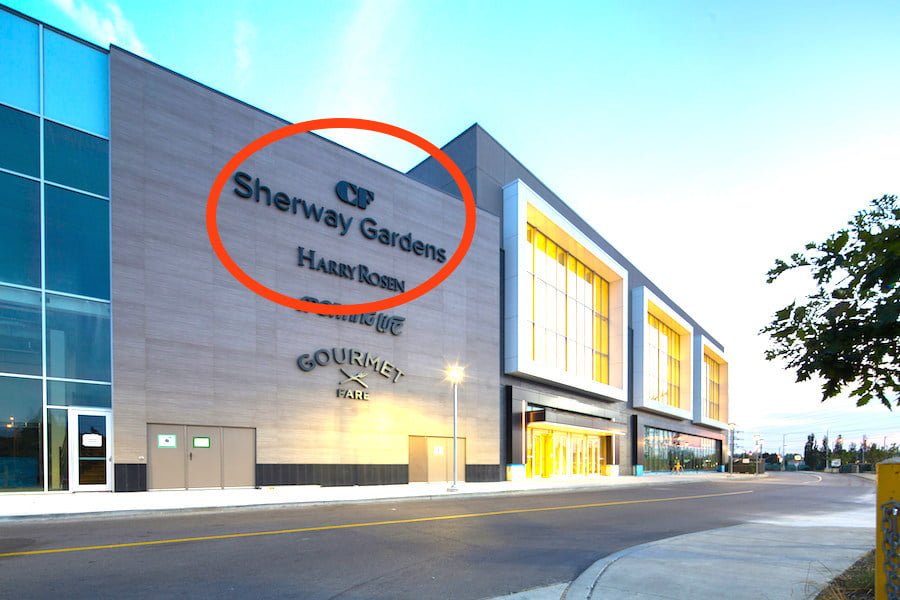
Canadian luxury retail has customarily been located in Toronto’s Yorkville area, and to a lesser extent, in Downtown Vancouver’s ‘luxury zone’ around Burrard and Alberni Streets. As recently as the late 1990’s, Montreal had a luxury zone on Sherbrooke Street that has since disappeared. Large Canadian shopping centres are generally mid-priced, save for a few upscale stores at Vancouver’s Oakridge Centre, Toronto’s Bayview Village and Sherway Gardens, and a handful of other regional malls including Calgary’s Chinook Centre. Some American malls, on the other hand, feature rows of luxury stores. The most comprehensive of these is southern California’s South Coast Plaza, featuring dozens of the world’s top designer names. The Bal Harbour Shops (Florida), Houston Galleria (Texas), The Mall at Short Hills (New Jersey) and others offer luxury shopping unheard of in Canadian malls, until the rise of Yorkdale.
Only a few years ago, Toronto’s Yorkdale was an upper-middle class mall anchored by a 68,000 square foot Holt Renfrew store. That has since changed, thanks to hordes of increasingly affluent shoppers and tourists, as well as a proactive management team at landlord Oxford Properties. The mall’s interior has helped as well: it boasts a primarily one-level floor plan with high ceilings, natural light, and the potential for dramatic store facades that are lacking in many malls.
YORKDALE’S MALL-FRONTING CHANEL STORE IS ACTUALLY A HOLT RENFREW CONCESSION. PHOTO CREDIT: HOLT RENFREW.
Holt Renfrew facilitated the new luxury retail, especially when it announced that it would double the size of its Yorkdale store. The retail wing directly north of Holt’s, called ‘Holt Renfrew Court’, saw a Tiffany & Co. store open in April of 2009. At the time, Tiffany’s immediate neighbours were fairly mainstream: Mexx, La Senza and Eddie Bauer otherwise characterized the wing. Burberry‘s subsequent opening near Tiffany provided further foundation for the luxury wing, growing additionally with the opening of Cartier, Mulberry and Tory Burch. Yorkdale has since secured several more top-tiered luxury stores, and we’ll describe them briefly below:
Bulgari: This Italian jeweller’s first Canadian location will open in August next to Mulberry, across from Holt Renfrew. Occupying over 1,800 square feet, Bulgari will feature some of Yorkdale’s most expensive accessories.
Moncler: This French-Italian clothing and sportswear retailer will open its first Canadian store in a 2,540 square foot space, replacing half of the 4,660 square foot, mid-priced fashion retailer, Mexx. Moncler opens in September.
DAVID YURMAN’S FIRST CANADIAN STORE OPENED AT YORKDALE IN DECEMBER OF 2013. THE COMPANY IS SCOUTING FOR CANADIAN RETAIL SPACE, INCLUDING ON TORONTO’S BLOOR STREET WEST. PHOTO: DAVID YURMAN.
Montblanc: Yorkdale’s Montblanc will be the second for Toronto. The 1,220 square foot boutique joins its flagship Bloor Street location in Toronto’s tony Yorkville area. Montblanc replaces Marex Jewellery, and will to open in August.
Versace: Canada’s only free-standing Versace store will occupy 2,820 square feet, opening in August. A Versace shop-in-store is also located in Vancouver.
YORKDALE’S 4,000 SQUARE FOOT LOUIS VUITTON STORE IS ALSO A SHOP-IN-STORE AT HOLT RENFREW, WITH A SEPARATE MALL ENTRANCE. IMPRESSIVELY, THIS IS CANADA’S THIRD-LARGEST VUITTON LOCATION. PHOTO: DKSTUDIO
Michael Kors: Canada’s top-selling Michael Kors store will also become its largest: the retailer is relocating from its 3,080 square foot space to one of over 5,700 square feet, replacing Eddie Bauer. The replacement Kors store opens in September.
Holt Renfrew boasts a number of luxury concessions with mall-facing entrances. Chanel, Prada, Gucci and Louis Vuitton all have branded facades, with the appearance of being free-standing stores. Holt’s also features in-store shops for Miu Miu accessories and, soon, Dior and De Beers.
PHOTO CREDIT: STYLE EMPIRE
It will be interesting to watch other Canadian malls as they become luxury centres, not unlike those in America. Vancouver’s Oakridge Centre is a luxury contender, featuring Tiffany & Co., Max Mara, and a host of other upscale stores. Calgary’s Chinook Centre also continues to move upscale, opening stores such as Burberry, Tiffany & Co., Max Mara and others. Yorkdale beats them all and given its proactive management team, it’s unlikely that another Canadian mall will rival Yorkdale’s luxury offerings.
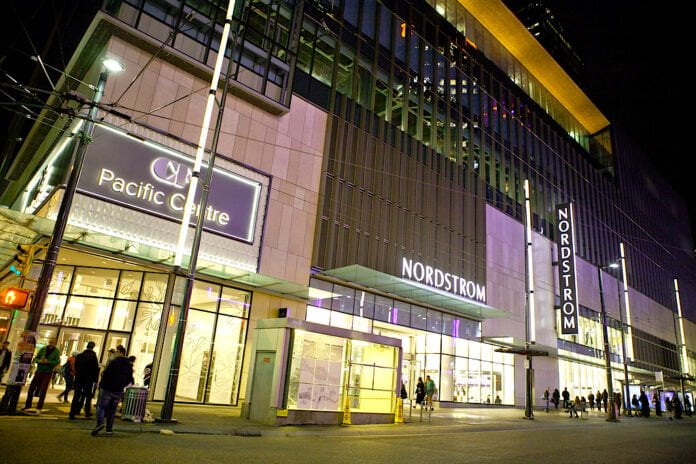
Yorkdale is expected to become North America’s highest-selling mall by 2018, with annual sales estimates of $2 billion. With Nordstrom’s new 191,000 square foot store and a new 110,000 square foot retail wing, Yorkdale’s $1 billion annual sales will increase substantially. Its Nordstrom expansion won’t be the last for Yorkdale, however: plans are in place to replace its former Sears store with more retail and as many as two new anchor stores.
The Award recognizes retail leaders who lead their companies to outstanding business success and innovation, while consistently demonstrating community commitment and support. Recipients are role models because of their exceptional leadership within the corporation, in the Canadian retail industry and in the community at large, through personal and/or corporate philanthropic activities.
“The Canadian Retail Industry is thrilled to recognize Larry Rosen for his passion and contributions to the men’s apparel business,” says Diane J. Brisebois, President and CEO, Retail Council of Canada. “Like the fashion industry, Larry and the Harry Rosen brand are constantly evolving to upgrade and expand the in-store experience and fuse their bricks-and-mortar and online businesses, all while maintaining the legendary service culture their customers have come to rely on. “
Celebrating 60 years in operation, Harry Rosen grew from a single Toronto location to 16 stores across the country, with 40% of Canada’s high-end menswear market. “The continued growth of Harry Rosen year over year is a testament to his strong leadership, entrepreneurial spirit and ingenuity,” notes Ms. Brisebois.