Advertisement
Advertisement
Home Blog Page 1225

Sears Canada executive salaries doubled last year, while thousands lost jobs

The top five executives at Sears Canada earned about $4.8-million in 2013, compared with about $2.4-million in 2012. During the same period, the company laid off over 2,200 workers. 

CEO Douglas Campbell got a 47% pay increase when he was promoted from COO to CEO in September of 2013. His base salary is now $654,000 plus a $238,000 annual bonus. If his employment was to be terminated without just cause, he would get a $3-million ‘golden handshake’, including a $2.2-million bonus.

VP Klaudio Leshnjani got an 85% raise, earning $775,000 in 2013. VP Salim Maherali got an 86%, earning $581,000 in 2013.

Sears Canada’s five-year share price increased 30% while the S&P/TSX index grew by 82% over the same period. At the same time, Sears Canada’s revenues fell 8.2% to about $4 billion during fiscal 2013, while store sales fell about 6.4%. Profits increased more than fourfold, however, to $447 million, mainly due to the company selling-off store leases. 

The above information is from a circular released prior to the company’s upcoming April 24th shareholder’s meeting. We’ll report more on this closer to that meeting. 

[Source]

Harry Rosen: 60th anniversary to be marked with new stores, store expansions and renovations


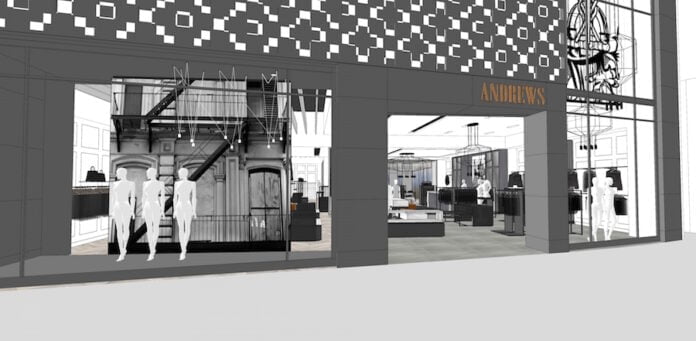
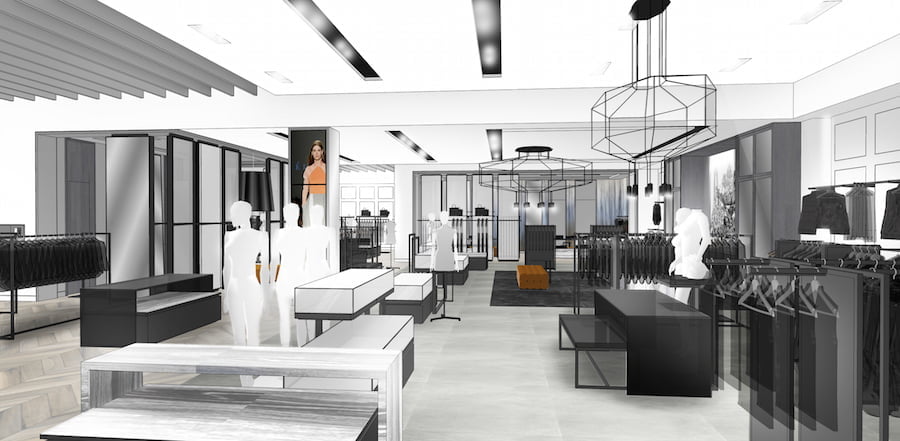
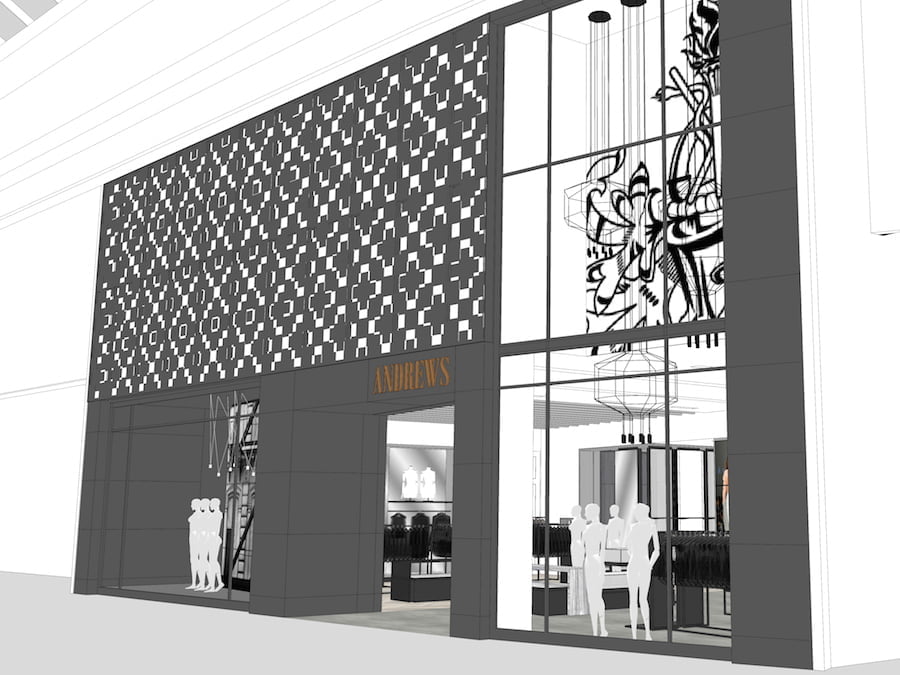
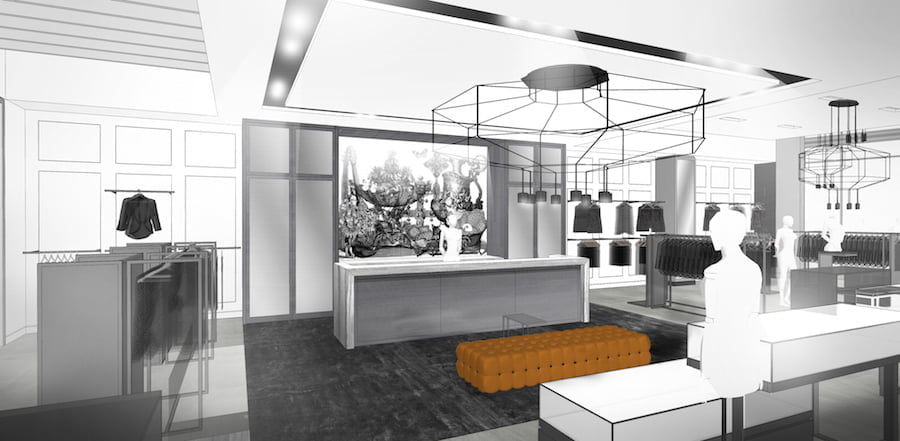
Photo: Harry Rosen Photo: Harry Rosen 

Photo: Harry Rosen 

Upscale menswear retailer Harry Rosen will renovate and expand several of its stores as it celebrates its 60th anniversary. These renovations and expansions will take place over the next three years. We’ll soon provide specific details from an interview with Harry Rosen CEO Larry Rosen. 

In the next three years, two new Harry Rosen stores will open: at Ottawa’s Rideau Centre and at Toronto’s Sherway Gardens. Several existing Harry Rosen stores will be expanded, including its Montreal and Calgary (Chinook Centre) locations. The company will renovate stores at West Edmonton Mall, on Toronto’s Bloor Street and at Vancouver’s Pacific Centre. Its recently renovated and expanded Yorkdale Shopping Centre store is currently being unveiled.  

We interviewed CEO Larry Rosen on the company’s specific plans surrounding its store expansions and renovations. We’ll reveal further details in the coming days. From what Mr. Rosen has told us, these store improvements will solidify Harry Rosen’s position as one of the world’s top menswear retailers.

[Harry Rosen website]


Canada’s 3rd Kate Spade store to open at West Edmonton Mall

Image: Kate Spade

A Kate Spade Store will be opening soon at West Edmonton Mall. The store will be Canada’s third Kate Spade store location, and the first to be located outside of Toronto. 

West Edmonton Mall’s Kate Spade will be located on the mall’s second level in its ‘Phase II’ as per the mall map below. It joins an increasingly upscale set of tenants that will include DKNY, Tumi, Tiffany & Co., Michael Kors, Stuart Weitzman and others. Kate Spade will replace part of the retail space formerly occupied by clothing retailer Bluenotes

Kate Spade’s first Canadian store opened in November of 2012 at Toronto’s Yorkdale Shopping Centre. A second, 4,000 square foot flagship location opened in May of 2013 at 138 Cumberland Street in Toronto’s upscale Yorkville area. A Kate Spade outlet store is also located at the Toronto Premium Outlets

For those unfamiliar, New York City-based Kate Spade is a popular mid-priced designer label that features handbags and accessories, women’s ready-to-wear, footwear, stationery and address books, fragrances, eyewear and a home collection. Given the company’s variety of offerings, it has become referred to as a ‘lifestyle accessories and fashion brand’. 

We’ll update you on further Kate Spade store openings in Canada. 

Walmart marks 20 years in Canada with a summit devoted to frugal living

Walmart Canada (Image: edmontonrealestate.com)

Walmart opened in Canada for 20 years, and this fall it will host something called ‘The Lowering the Cost of Living Summit’. According to Walmart, the summit will “generate new thinking and solutions and bring new attention to improving the financial health of Canadians.”

Walmart entered the Canadian marketplace on March 17, 1994 with the purchase of the Woolco Canada chain of retail stores. Starting with a base of 122 Woolco stores and 16,000 employees, Walmart Canada has grown to 389 stores and more than 95,000 associates across Canada.

Walmart will host The Lowering the Cost of Living Summit in Toronto in the fall of 2014. The event will bring together consumers, business leaders, financial specialists, academics, economists, non-governmental organizations and government representatives to examine real solutions to help Canadian families tackle their financial challenges. The full day summit will feature plenary sessions, panels, workshops and networking events designed to stimulate new ideas and the sharing of best practices. Event details will be released over the coming months.

“Our mission is to save Canadians money so that they can live better,” said Shelley Broader, president and CEO of Walmart Canada. “As we enter our 20th year in Canada, we want to help find new ways to help lower the cost of living for Canadians.” According to a recent nationwide poll conducted by Research Management Group (RMG), 36% of Canadians feel they can only afford to pay for the basic necessities, and 43% feel they tend to live from paycheque-to-paycheque. The RMG survey was conducted for Walmart in late February.

“In addition to this poll, our consumer research shows that 72% of Canadian moms – our core customer – say that Walmart is the top retailer to help them stay on budget,” said Ms. Broader. “We want to build on this commitment to find new ways to make life easier for our customers.” 

[Walmart Canada website]

RETAILERS: University of Alberta School of Retailing wants you on April 3rd

Image: Chevron Job Fair

Retailers are wanted to participate in the University of Alberta School of Retailing Career Fair on April 3rd, in Edmonton. The School of Retailing produces some of Canada’s brightest and best-educated retail-focused grads. We strongly believe it’s worth a retailer’s time to participate in this event. 

If you’re a retailer and are able to participate, contact Emily Salsbury at: 1 (780) 248-1238, or email her: schoolofretailing@ualberta.ca 

The event will take place in the University of Alberta School of Business Atrium, located on the university campus. You’ll have the potential to choose among Canada’s best new talent, and meet students who have studied at the country’s top retail school. 

If you’d like to participate, act fast: registration for this amazing opportunity closes shortly. To learn more about the School of Retailing’s Career Fair, visit: http://www.retailcareerfair.ca

Oakridge Centre expansion approved by Vancouver City Council

Oakridge Centre (Image: Ivanhoe Cambridge)

Vancouver City Council has approved an expansion of Oakridge Centre. The mall will see its retail component expand substantially, including at least two newly-built department stores. Other features and amenities will be added to the project with a total estimated cost of about $1.5 billion. 

To view a slideshow illustrating the mall’s expansion, click the image above. All images are by mall landlord Ivanhoe Cambridge

The mall’s retail component will more than double in size, from about 604,500 square feet to about 1.365 million square feet. A new department store anchor at the southern end of the mall was originally proposed to be about 155,000 square feet. Oakridge had been targeting Nordstrom, Saks Fifth Avenue or Bloomingdale’s as this department store anchor, though we’ve been told that these plans may have since been changed. Hudson’s Bay and Target will both get newly constructed store spaces at the north end of the mall, while the possible third unnamed department store and a grocery store will anchor the mall’s south end.

Click the photo above for the mall’s tentative second level floor plan, as well as a plan of what will go above the mall. 

Outdoor retail will also be featured at the mall, providing the opportunity for stores and restaurants to remain open after the mall closes. This outdoor component may also include ‘neighbourhood stores’, complementing the indoor mall that is expected to attract even more national and international retail chains. Impressively, the mall will employ about 2,200 people when completed. 

In total, 14 residential towers between nine and 44 stories will be built above the expanded mall, housing an estimated 6,200 people in over 2,900 residential units. In addition, there will be a nine-acre rooftop park, a community centre/senior’s centre, library, daycare and other new amenities at Oakridge.  

The entire project is expected to be completed by 2024. 

[Oakridge Centre website]

Max Mara to open at Calgary’s Chinook Centre

Image: Max Mara

Luxury Italian womenswear brand Max Mara will be the latest upscale store to open at Calgary’s Chinook Centre. The franchised store will be owned and operated by Vancouver-based Vestis Fashion Group, and it will open in October of 2015. Vestis will also open Max Mara’s lower-priced line, Weekend by Max Mara, at Chinook Centre in May. 

For those unfamiliar, Max Mara is a luxury Italian fashion house established in 1951. It is known for its womenswear as well as accessories and shoes, and has stores around the world. Max Mara also retails other fashion lines including Weekend by Max Mara, which will open in May at Chinook Centre, as well. Vestis owns all Max Mara and Weekend Max Mara stores in western Canada. 

Max Mara will be located in a 1,600 square foot retail space between Burberry and Browns Shoes on the mall’s ground level. It will replace current retailer Miss Sixty/Energie. Click the floor plan below to see a close-up lease plan of the new Max Mara space. 

Image: Max Mara at CF Chinook Centre

Nordstrom is scheduled to open its first Canadian store location at Chinook Centre on September 19th, 2014. It is expected that more similarly-upscale retailers will join Max Mara as Nordstrom will pull more high-income shoppers to Chinook Centre. 

Max Mara source: Catherine Guadagnuolo, founder and owner of Vestis Fashion Group. And thank you Trevor Hanlan for first notifying us of Weekend by Max Mara at Chinook (prompting us to contact Ms. Guadagnuolo, who revealed that both Max Mara and Weekend stores will open at Chinook)

[Chinook Centre website]

[Max Mara website]

Vancouver’s Hudson’s Bay flagship turns 100 today, and celebrates with a huge party

Downtown Vancouver’s Hudson’s Bay store celebrates its 100th anniversary today. There will be in-store events throughout the day which will be described at the end of this article.

Hudson’s Bay’s Downtown Vancouver flagship has got a lot to celebrate. It has enjoyed a 100-year history that has included the employment of many thousands of staff, the carrying of hundreds (if not thousands) of brands, and the presentation of hundreds of fashion shows. Over the years, it has featured different restaurant options and it has seen numerous interior renovations. In just the past four years, the flagship has been transformed from a rather dated 650,000 square foot store to an attractive multi-level retail space featuring, for example, some of the world’s top luxury womenswear brands in its department ‘The Room’. Vendor shops continue to be added including the world’s second-largest Coach shop-in-store and the world’s second-largest TopShop store. All the while, ghost stories about the haunted second floor provide entertaining anecdotes that may have ghost hunters seeking more than just the latest women’s Diesel fashions. Interestingly, the store also played a pivotal role in the 2010 Winter Olympics with its Olympic merchandise shops as well as an athlete’s lounge. We could go on with details but to keep this (relatively) brief, Vancouver’s Hudson’s Bay store has created a legacy over the past 100 years.

Vancouver’s first Hudson’s Bay store wasn’t its current 674 Granville Street location: it was located on the south side of the 100-block of West Cordova Street, and it opened in 1887. The location was strategically chosen by company executives and some considered it to be risky. The Cordova Street store was in the middle of two emerging commercial shopping areas (Water Street and West Hastings Street) and the strategy was to pull customers from both streets so as not to lose out on either customer. The store was successful and it was an example of the company’s many feats in store location planning. Even in the 1800’s, the company was run by risk-takers who capitalized on location, marketing and merchandising strategy to drive the company forward.

In 1892, competitor Woodward’s opened a store on the same block as Hudson’s Bay, facing West Hastings Street. Hudson’s Bay closed its Cordova Street store a year later. Woodward’s eventually expanded over most of the block (creating a 700,000 square foot flagship) and in the process, the Cordova Street Hudson’s Bay building was demolished. 

This demolition didn’t happen before Hudson’s Bay made the bold move to relocate its Vancouver store to the northeast corner of Granville and West Georgia Streets in 1893. At the time, Vancouver’s primary shopping area was in the area around Woodward’s. With time, many stores and customers shifted their focus to the new retail area around Hudson’s Bay’s Granville Street store, and the move was brilliant: to this day, the corner of Granville and West Georgia is considered to be the heart of Vancouver’s downtown retail district. The red brick Bay store, built in 1893, was joined by an expansion with a white terra cotta facade and Corinthian columns, which began construction in 1913. The expansion opened to the public on March 14th, 1914 and in 1925, the original 1893 red brick store was demolished to create the seamless Georgia Street terra cotta, columned facade. Two further northward expansions grew the store to about 650,000 square feet by 1949, making it Vancouver’s second-largest store; only Woodward’s Hastings Street flagship was larger. Hudson’s Bay continued to prosper alongside the 1973 opening of an Eaton’s department store and the 1971 construction of the adjacent Pacific Centre, which featured a 46,000 square foot Holt Renfrew store.

Despite its age, the interior of much of Vancouver’s Hudson’s Bay is modern. The store has been provided the second-largest renovation budget of any Bay location (following its flagship ‘Queen Street’ store in Toronto). With approximately $40 million spent on renovations thus far, the Vancouver store has been considered quite the investment for the company, and it has paid off: sales have grown substantially from under $120 million in 2011 to an estimated $175 million last year (the company won’t provide exact numbers). The store’s upgrades have included an updated exterior, a new 70,000 square foot sixth-floor men’s store, the 20,000 square foot luxury womenswear department called ‘The Room’ and the world’s second-largest TopShop/TopMan store, among others. 

Further changes are on the way for this store including the eventual inclusion of a Saks Fifth Avenue store (which we’ll discuss in another article), as well as further renovations to its various floors. The store still needs a lot of work – it desperately requires updated elevators and its fourth floor is rather matronly though it managed to score a temporary Porsche Design concession on its lower level, adjacent to TopShop. 

With its profound history, it shouldn’t be surprising that rumours of ghosts have emerged about the Vancouver Hudson’s Bay location. Late at night there have been strange tales of elevator doors opening and closing, alarms being set off, and doors being opened and closed with no explanation. In a building as old as Vancouver’s Hudson’s Bay, these tales shouldn’t come as a surprise.

The store also played a pivotal role in the Vancouver 2010 Olympic Games. During the Olympics, Canadians and international visitors flocked to this Hudson’s Bay store to shop at its dedicated Olympics Store (now its ground-floor women’s handbags hall) to buy branded merchandise including the now-famous Hudson’s Bay red mittens. Proceeds from the sale of these mittens helped fund the Canadian Olympic Team. More Olympic-related merchandise was available on the fifth-floor ‘International Village’ and a sixth-floor lounge was created for Canadian Olympic athletes and their families. 

Hudson’s Bay Vancouver during the 2010 Winter Olympics

Congratulations to Hudson’s Bay from Retail Insider, and we wish you another 100 years of success.

Today, the Downtown Vancouver Hudson’s Bay store will host an all-day party. Admission to the store is $5.00. All ticket proceeds support Arts Umbrella’s outreach programs which provide dance, theatre, visual and digital arts classes to vulnerable and underprivileged kids free-of-charge. Entrance is with ticket purchase only.

The party begins at 8:00 am and goes until 9:00 pm. Included will be the following: 

  • A cake cutting at 1:00 pm,
  • A scotch tasting bar on the sixth floor (men’s store) from 2-7:00 pm,
  • Storewide clearance sales,
  • DJ’s on every floor,
  • Free gifts with purchase in every department, 
  • Prize draws, 
  • Fashion shows, 
  • Wardrobe seminars, 
  • Makeovers, and
  • A ‘mini museum’ of vintage HBC artifacts from throughout the years. 


H&M celebrates 10 years in Canada

This week marks the 10th year that H&M has been open in Canada. The company will be hosting various promotions and events as part of its celebrations, and it will reveal further details of these promotions in the coming weeks. 

Canada’s first H&M store opened on March 11th, 2004 at Toronto’s Fairview Mall. The 12,000 square foot store was met with much fanfare and a week later, its second Canadian location opened at The Promenade in Thornhill, just north of Toronto. Canada’s largest H&M location (at 33,000 square feet) opened in the fall of 2004 at the Toronto Eaton Centre. Since then, the company has opened a total of 66 Canadian store locations, with more to come in the future. 

As the company continues to grow, H&M plans to open more Canadian stores. One of its most anticipated, according to feedback we’ve received, will be a 25,000 square foot Winnipeg store that will open in the fall of 2014. It will be the first for Winnipeg and though it’s opening 10 years after its first Toronto store, the company has been seeking the ‘right’ space for years.

We’ll update you on new Canadian H&M store locations, including the likelihood of a large downtown Ottawa location in an expanded Rideau Centre

[H&M website]

Canadian retailers are expected to sell less and charge higher prices this year

Canadian retailers are expected to sell less this year and at higher prices, according to a new report from CIBC World Markets Inc. This may be a result of rising energy costs and a weaker dollar, at a time where we’re seeing lacklustre wage and employment growth as Canada’s economy struggles.

“We will see a complete U-turn from what we saw last year, in which retailers moved greater volumes as consumers’ purchasing power benefited from softer inflation,” says Avery Shenfeld, Chief Economist at CIBC. “The next two years will see a gradual upturn in inflation, in part a reflection of a weaker Canadian dollar but also capturing higher energy costs and a tobacco tax hike. So, quarterly growth rates (in retail sales) will see a trend towards selling less for more: higher prices, but leaner growth in real volumes.”

The one constant is that relatively flat wage and employment gains in 2013 translated into mediocre growth in Canadians’ household wallets, he says. In nominal terms, disposable income growth has been slowing, rising by only 3.6% last year, the weakest non-recessionary showing since 1996, the report finds.

“Improvements on that front aren’t likely to be seen until 2015, when tighter job markets should generate some labour bargaining power,” says Mr. Shenfeld, noting that typically average hourly wages don’t climb at anything above 3% unless the output gap – the difference between the economy’s actual and potential output – has been closed.

Income patterns help to explain the appeal of dollar/bargain, stores, which have been the big winners in the retail space, he says.

Increasingly, wage gains have been tilted to a select group of higher-paid sectors, says Mr. Shenfeld. The average wage in the past year rose 2.5% but the median wage climbed only 1%, extending a more than decade-old pattern in which the ratio of the average-to-the-median wage has been widening, he says.

Wage gains in higher-paid sectors may bode well for the expected upcoming boom in the luxury-store market from U.S. retailers moving north, but Mr. Shenfeld remains cautious: “They still risk disappointments in the size of that segment relative to where it sits on their more familiar U.S. turf,” he says. “Despite a rising trend in (wage) inequality over prior decades, both pre- and after-tax income in Canada is not nearly as unevenly distributed as it is stateside.”

We’re sure that Saks Fifth Avenue and Nordstrom didn’t want to hear that. 

While a surprise drop in inflation last year helped to lift consumers’ spending power Mr. Shenfeld expects the reverse this year, as inflation gradually climbs to 2%.

“The good news for retailers is that history suggests that consumer credit growth is unlikely to slow any further in real terms without being pushed there by a recession,” he says.

He notes that the growth in consumer credit is near its lowest pace in more than two decades, indicating that Canadians have been listening to those advising more caution in taking on debt. “Despite all the fear mongering about rising debt/income ratios being a reflection of profligate behaviour in a low-rate environment, the debt burden climb in the last two years has been largely a story of soft incomes and mortgage credit, not borrowing for consumption,” he says.

Still, savings decisions could still pinch consumption a bit, he says.

In a section of his report called ‘What Carney Left Behind’, Mr. Shenfeld says the decision by former Bank of Canada Governor Mark Carney to take a “hands-off attitude on the exchange rate, alongside foreign central bank intervention, contributed to a serious overvaluation of the Canadian dollar. The country is in reasonable overall shape, but is still struggling to wean itself off home building as a source of growth.”

The Bank of Canada chose to keep interest rates low to stimulate housing and domestic consumption as an offset to the drag on exports from the stronger Canadian dollar, rather than intervene, as the Swiss did, to neutralize the impact of hot money capital inflows on the exchange rate.

“In effect, monetary and exchange rate policy traded off more condos for fewer factories,” says Mr. Shenfeld.

CIBC is paring its 2014 forecast for Canada’s economy after dropping its outlook for investment spending based on the latest intentions survey from Statistics Canada that showed almost no growth in capital spending from the business sector this year.

“We’ve reduced our investment spending call enough to pare our 2014 GDP growth forecast by two ticks, to 2.1&” from 2.3% says Mr. Shenfeld. “The trimming would have been larger if not for signs that housing construction, including completions of the forest of condos underway, will remain a growth contributor for one more year.”

While exports in January were likely hurt by weather-related transportation bottlenecks, the prior trend was still “uninspiring,” with exporters failing to capitalize much on a fairly healthy second-half growth pace in the U.S.,” he says.

Even though the Canadian dollar is now “more appropriately valued” and commodity prices are improving, helping “to bring trade into better balance,” Mr. Shenfeld says that “the legacy of earlier plant closures will be with us for several years to come.”

Source: Press release