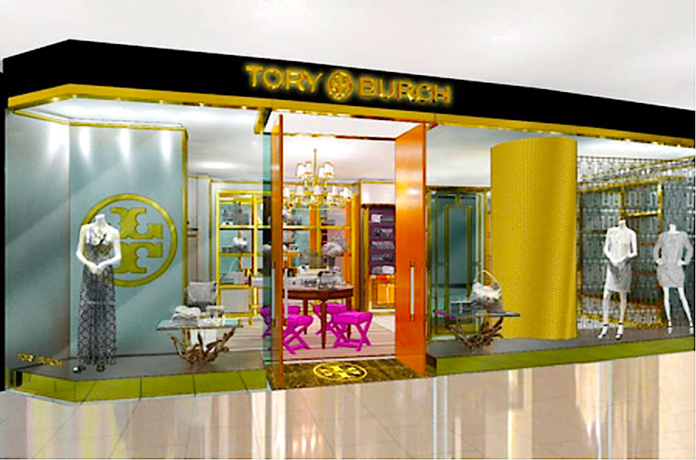
Job postings are also up for the new store. Sources at Tory Burch declined to provide official comment for this article, except to confirm Toronto expansion plans.
Tory Burch’s first Canadian location, measuring 2,435 square feet, opened in May of 2012 at Toronto’s Yorkdale Shopping Centre. Its second store, measuring 2,885 square feet, opened in October of 2012 at Calgary’s Chinook Centre. Its third, measuring about 3,000 square feet, opened in October of 2013 at 1092 Alberni Street in Vancouver. A Tory Burch Outlet store is also located at the Toronto Premium Outlets.
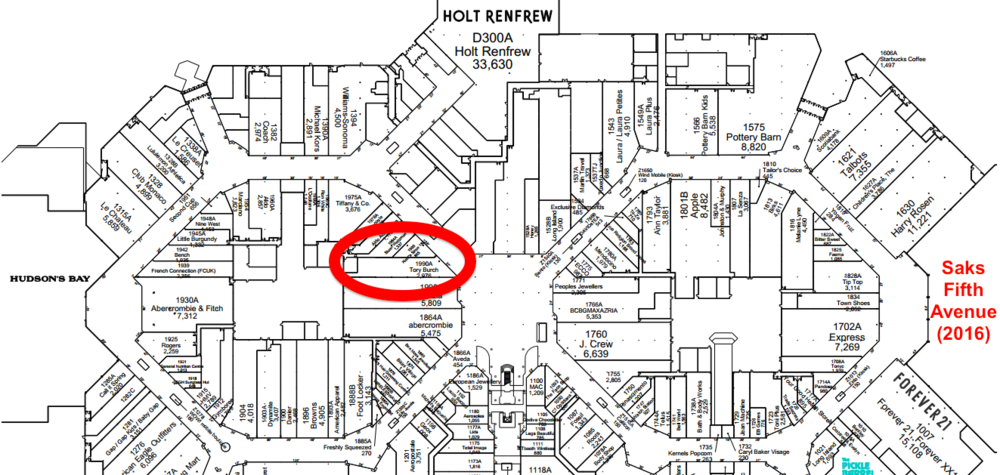
CLICK ABOVE FOR ENTIRE PDF LEASE PLAN, VIA CADILLAC FAIRVIEW.PHOTO: RETAILDESIGNBLOG.NET
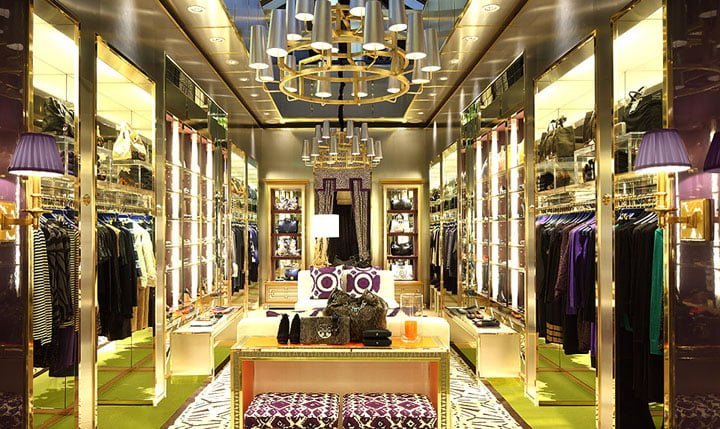
Tory Burch is an American lifestyle brand which was founded in February of 2004 by Chairman, CEO and Designer, Tory Burch. The collection is known for colour, print and eclectic details and includes ready-to-wear, shoes, handbags, accessories, beauty, home goods, and time pieces. The company boasts more than 125 freestanding boutiques and a has presence in more than 3,000 department and specialty stores globally.
The bad news is that I took a gnarly spill yesterday afternoon on the mountains. The nose of my snowboard got stuck in deep snow and I fell forward onto my shoulder and then compressed my back. I tore a shoulder ligament and possibly fractured two ribs. So snowboarding season is over for me this year.
The good news is that I now have more time to relax and enjoy the town of Banff, and then Revelstoke this weekend.
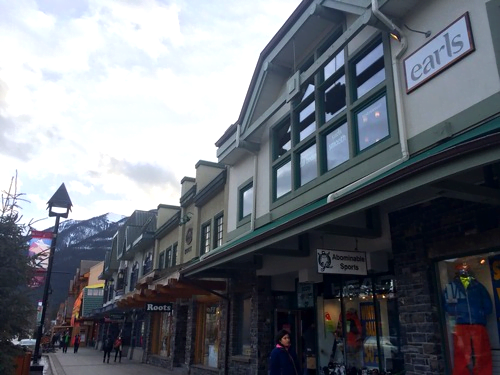
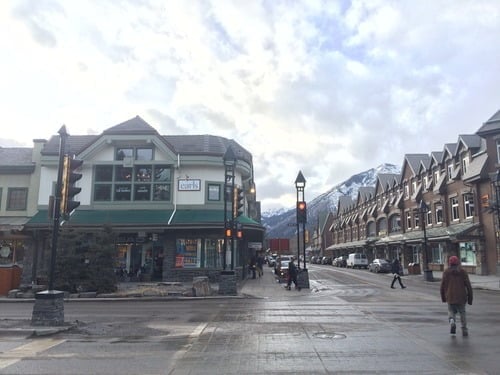
Banff is a beautiful town. It’s compact, walkable, and surrounded by snow capped mountains. How could you not love it?
One of the more subtle things that stands out for me though is the ubiquity of second level retail and restaurants. There’s a lot people in the (North American) real estate industry that will tell you that second floor retail just doesn’t work (you want ground floor). And indeed, it can be hard to pull off. As I’ve said before, getting retail right in general can be difficult.
But in Banff, many of the bars and restaurants are up top. Here are a few examples (there’s an Earls, Boston Pizza, and a Korean restaurant, respectively):
So my gut tells me that in order to get enough retail/commercial space to serve the area and its tourists, they had no choice but to go up. They simply ran out of ground floor space. Because if the town was able to instead sprawl outward, I suspect that’s exactly what it would have done. And then more ground floor space would have been created.
To be fair, most of the second floor examples I came across were bars and restaurants, which is arguably easier to pull off than straight retail. But it’s still something.
If any of you are familiar with real estate and planning in Banff or just have a better hypothesis, I’d love to hear from you in the comment section below.
About the Author: Brandon Donnelly is a real estate developer, internet entrepreneur, and blogger based in Toronto. His passions are cities, design, real estate, and technology.
He presently works at TAS, where he oversees the development of mixed-use condominium projects. He’s also cofounder of condo review site Dirt (thedirt.co). Prior to this, he worked in the development group of Morguard Investments on office and retail projects. Brandon has worked in real estate since 2007.
In his spare time, Brandon advises a non-profit called The Laneway Project. He also loves the gym, snowboarding, and Ontario wines.
About Architect This City: ATC is a daily blog for city builders written by an architect-trained, Toronto-based real estate developer. It was started in August 2013 and is rated by the Guardian Cities in the UK as one of the best city blogs in the world.
It covers everything from architecture and planning to real estate and technology. The posts are short and digestible, and are emailed out every morning at 6AM Toronto time. Subscribers are often architects, city planners, real estate professionals, entrepreneurs, policy makers, and other urbanists.
The mission of Architect This City is to promote the building of beautiful, sustainable, and globally competitive cities.
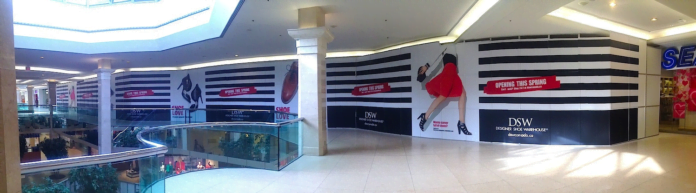
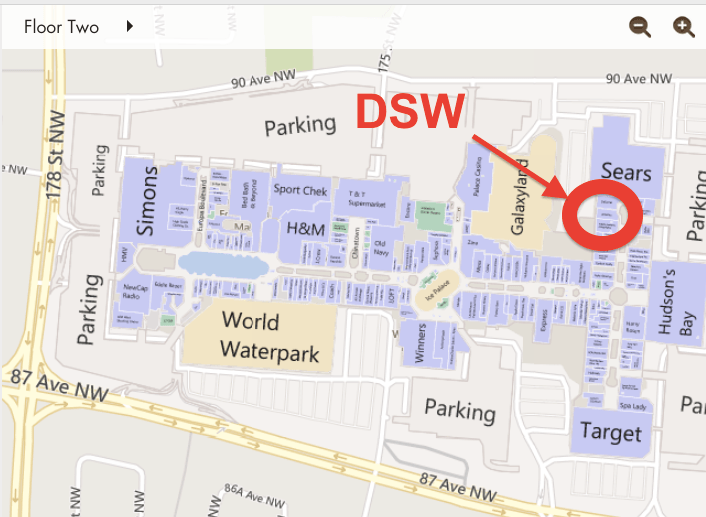
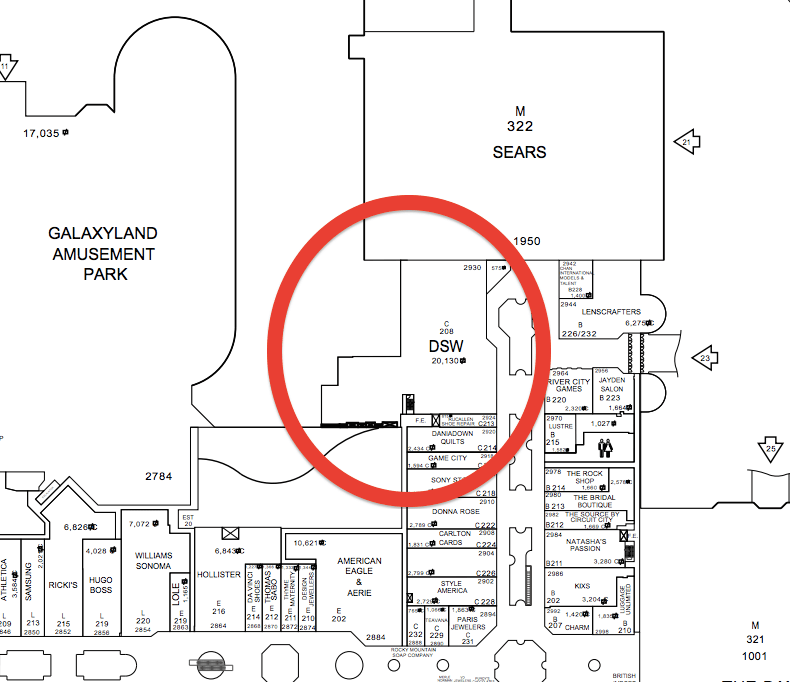
Popular value-priced American footwear retailer DSW Designer Shoe Warehouse is currently building its first Edmonton store, and we had a peek at the construction site. Confidential lease plans indicate that the West Edmonton Mall store will span just over 20,100 square feet, replacing multiple retailers on the second level of the mall’s ‘Phase I’.
DSW says that the Edmonton store will open this spring, possibly as soon as April. We’ll update this article when we learn more.
This spring, DSW confirms that it will also open two Calgary locations, as well as a store in Whitby, Ontario. Sources from around the country say that DSW is also building other stores, and we’ll discuss these locations in the next while.
DSW is hugely popular in the United States with over 430 locations in that country. Its name indicates its business model – it sells designer shoes at discounted prices. The company has hundreds of millions in cash and no debt.
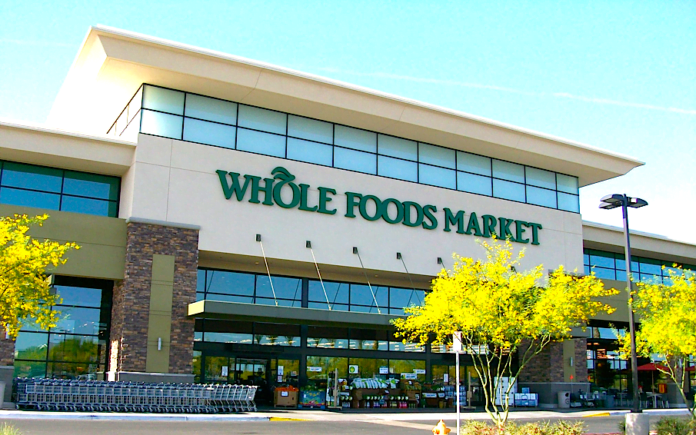
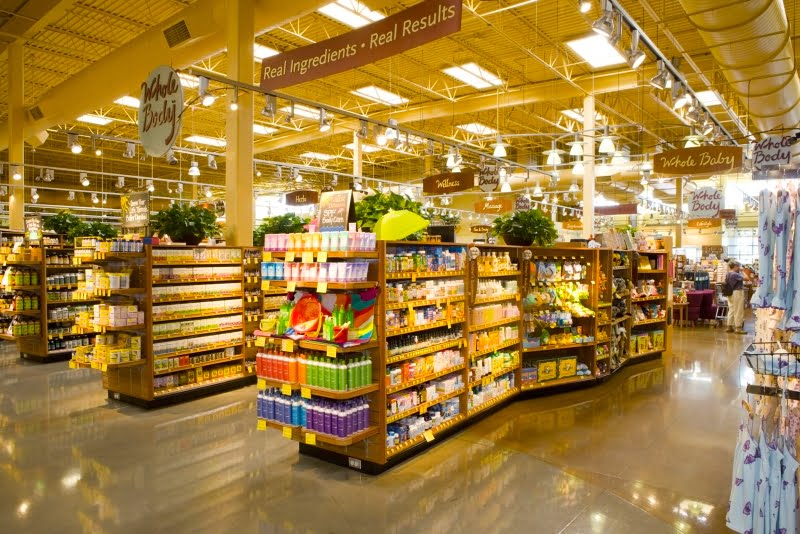
Austin, Texas-based natural and organic supermarket chain Whole Foods has announced that it will open three stores in Western Canada, as it continues its Canadian store expansion. Whole Foods is working with a brokerage to secure more locations and we’re told that further store announcements will be made shortly.
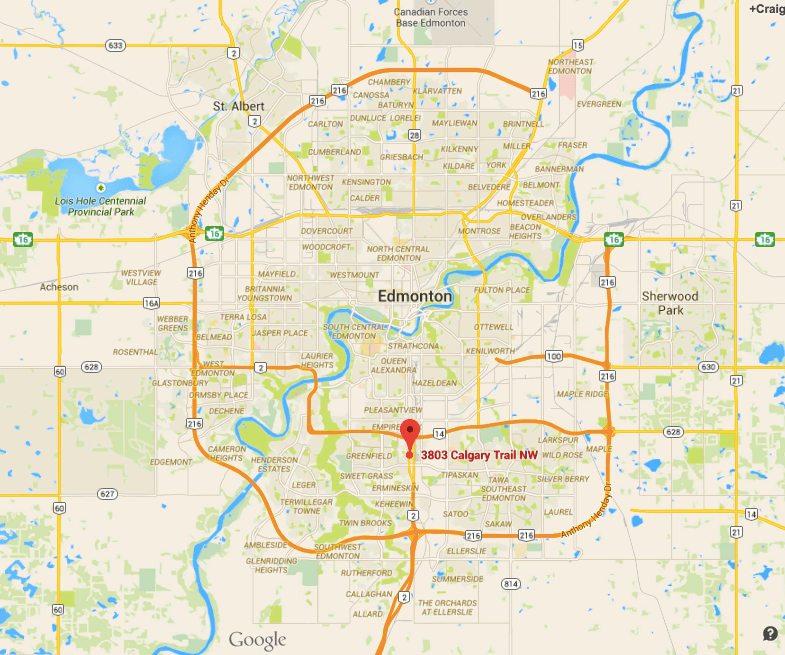
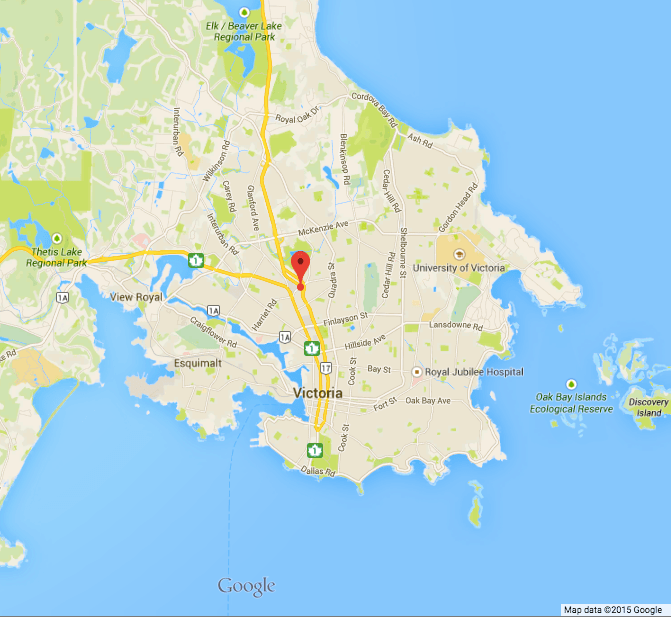
Whole Foods will open in Edmonton, Calgary and in suburban Victoria, and its Alberta stores will be the first for that province. Its Edmonton store, measuring 42,000 square feet, will be located at South Park Centre at 3803 Calgary Trail South. Its Victoria store, measuring 40,000 square feet, will be located at 3587 Blanchard Street in the Uptown development in Saanich. Both stores will open in the fall of 2016. Further details on the Calgary location will be released this June, and it will open in the summer of 2017.
CLICK ABOVE FOR INTERACTIVE GOOGLE MAP.
CLICK ABOVE FOR INTERACTIVE GOOGLE MAP.
Whole Foods currently operates four stores in B.C., with two Vancouver-area stores under development. A store in Burnaby will open this August, and a North Vancouver store is expected to open in the summer of 2017.
Real estate brokerage Northwest Atlantic is handling Whole Foods’ Canadian store expansion, except for those located in British Columbia. Sources confirm that the brokerage has been in talks with multiple landlords across the country, with more store announcements expected soon. Some speculate that Whole Foods may take advantage of some vacated Target store space, though likely only partial locations since Target’s Canadian stores are generally twice the size of typical Whole Foods locations.
Whole Foods entered the Canadian market in 2002 with a 40,000 square foot location at Toronto’s Hazelton Lanes, in the city’s upscale Yorkville area. Since then, four more stores have opened in the Greater Toronto Area. In 2007 Whole Foods bought the parent company of Vancouver-based grocery store Capers, paving the way for four Vancouver Whole Foods locations.
Founded in 1980 in Austin, Whole Foods currently operates 408 stores throughout the world, including 399 American stores and nine in the United Kingdom. It currently has 116 stores in development. The company employs about 87,000 people and last year had sales of U.S. $14.2 billion. Stores sell an average of almost U.S. $1,000 per square foot – higher than most grocery chains, though still less than organic grocer Trader Joe’s, which sees sales of almost U.S. $1,750 per square foot.
Whole Foods will face competition from a variety of upscale Canadian grocers, including Urban Fare in Western Canada. Vancouver-based Urban Fare is in the process of expanding its store base, including its first Calgary location just south of downtown.
We’ll keep you updated on Whole Foods’ expansion, including the location of its first Calgary store.
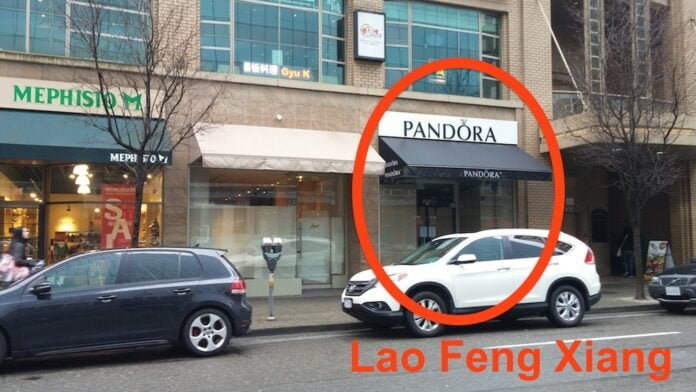
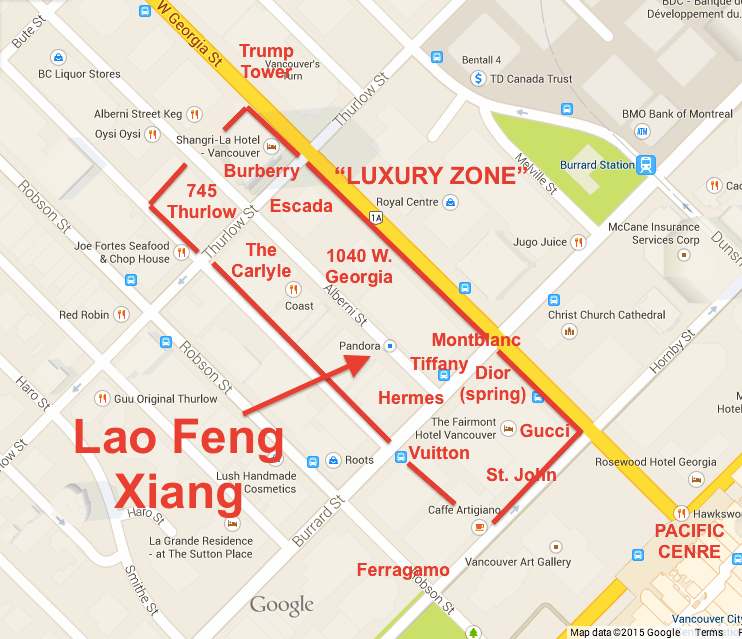
China’s premier fine jewellery brand Lao Feng Xiang will open its first Canadian location at 1016 Alberni Street in Vancouver’s ‘Luxury Zone’. Lao Feng Xiang replaces another jeweller, Pandora, which recently secured new retail space at nearby Pacific Centre.
Sources in New York City confirm that more details on Lao Feng Ziang’s Vancouver store will soon follow.
Founded in Shanghai in 1848 (during the Qing Dynasty), Lao Feng Xiang retails fine jewellery featuring gold, silver, diamonds, coloured gemstones, jade, pearl and enamel, as well as a robust bridal business. The company has over 2,700 retail stores throughout Mainland China and one in Sydney, Australia. Its first North American location, measuring an impressive 6,100 square feet, recently opened on New York City’s Fifth Avenue.
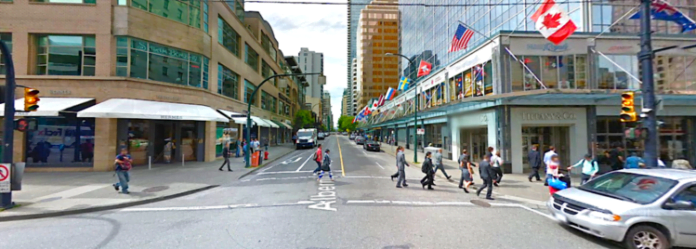
Vancouver’s Alberni Street is seeing a number of new luxury brands, several which will open near Thurlow Street. We’ll reveal a number of these brands over the next several weeks. These new retailers join existing luxury boutiques such as Hermes, Louis Vuitton, Tiffany & Co., Montblanc, Gucci, De Beers, Escada, Burberry and others. A 7,000 square foot Christian Dior flagship will also open this spring at the nearby Fairmont Hotel Vancouver.
Despite ongoing Canadian store closures, numerous luxury brands are entering the Canadian market. Brokers and other sources say that at no time in recent history (or possibly ever) have so many luxury brands been interested in coming to Canada. To learn more on the Canadian luxury shopping phenomenon, we spoke with retail expert Farla Efros, Executive Vice President and COO of HRC Advisory, a retail advisory firm based in Toronto and Chicago, IL.
Although Canada’s population of affluent shoppers is relatively small, the group packs a powerful punch. Some of the country’s wealthy spend tens or hundreds of thousands of dollars annually on luxury goods and if they’re not shopping at mono-brand designer boutiques, Holt Renfrew or Harry Rosen, they’re buying online or traveling internationally. Ms. Efros says that luxury retailers are increasingly recognizing Canada as a lucrative market, and are opening stores accordingly. Luxury shoppers are a discerning group and as a result, successful retailers will need to create a compelling, personalized experience in order to effectively compete.
True luxury consumers are looking for a ‘customized’ experience and as a result, brick-and-mortar retail will thrive in the luxury category. Personalization is key, be it exceptional customer service, deep, often-decades long personal relationships between Harry Rosen sales staff and their customers, a hand-written thank-you note, or an afternoon spent in a private shopping salon at Holt Renfrew (and soon, Saks Fifth Avenue). Technology will play an increasingly important role for luxury brands, as client preferences are tracked to ensure even more personalized experiences.
Canada’s wealthy continue to become even wealthier, and it’s reflected in our real estate and stock market values. Multi-million dollar homes are selling in record numbers, both to Canadians as well as to international buyers. Speaking of international buyers, tourism is playing an ever-increasingly important role in Canadian luxury retailing as well, especially in Vancouver — where in luxury stores, the availability of Mandarin-speaking store selling staff are a real plus.
Even the non-wealthy are buying luxury. According to Ms. Efros, there’s a trend among many women, especially those in urban centres, to splurge on luxury footwear and handbags – even more than on pricey ready-to-wear. Luxury brands have recognized this trend and have started opening locations at places like Toronto’s Yorkdale Shopping Centre.The new generation tends to view luxury differently. Many Millennials now seek the luxury experience, emulating what they see in popular culture. As a result, many Canadian luxury cars are now being leased, and now even high-end fashion can be rented for a night on the town. The awareness of luxury accessories and footwear among Canadian men is growing rapidly, a trend Ms Efros expects to continue with the new luxury retailers arriving in Canada.
A number of global luxury brands have and will continue to open additional free-standing Canadian locations over the next few years. Large multi-brand luxury stores are now entering Canada. Nordstrom plans to open as many as 10 Canadian stores within the next several years. Nordstrom provides a unique breadth of brands at a wide variety of price points, from “ best-priced” luxury brands to aspirational and accessible price points and boasts an un-paralleled level of customer service. Saks Fifth Avenue is planning to open two Toronto locations next year, and sources say that negotiations are ongoing for Saks locations in Montreal and Vancouver. But don’t write off the incumbent Canadian luxury chains. They are both spending substantial amounts on protecting (and hopefully expanding) their customer bases with significant store expansions and remodeling. Harry Rosen continues to renovate and expand its store fleet, as witnessed by the recent re-opening of Rideau store and addition of a dedicated Harry Rosen shoe store. Holt Renfrew has embarked on its largest expansion in history, spending $300 million to grow its square footage by about 40%, while closing three smaller outlets in Ottawa, Quebec City and Winnipeg. Even New York City-based Bloomingdale’s is rumoured to be looking for Canadian retail space, according to sources familiar with the company.
But is it too much? While Ms. Efros believes that there will be a fierce battle for market share in luxury due to this substantially increased competition in Canada, Canadian luxury consumers have typically spent large amounts outside of the country. The entry into Canada of these luxury mono and multi-brand retailers will repatriate some of the dollars currently spent on luxury outside the country and will also increase the visibility and awareness of luxury retail. Holt Renfrew is Canada’s only existing luxury women’s chain and it will face significant competitive pressures from Saks, Nordstrom, the Canadian outposts of the global luxury brands that continue to open stores in Canada. Nordstrom is expected to take market share from the Canadian luxury chains, and to provide fierce competition for Hudson’s Bay, Saks, La Maison Simons, and smaller upscale retailers such as Leone in Vancouver, Henry Singer in Alberta and Ursula B. in Montreal. Nordstrom’s opening price points will attract aspirational shoppers, that were formerly not shopping in luxury and we expect that this will further grow the size of the Canadian luxury market.
While luxury continues to grow in Canada, mid-priced retailers continue to struggle. Ms. Efros points to Abercrombie & Fitch, Aeropostale, American Eagle, Ann Taylor, J. Crew and the Gap as examples of American brands which are struggling to differentiate and regain their former mojo. Several Canadian retailers fall into this same situation including those such as Le Chateau, Reitmans and RW & Company.
It will be interesting to watch Canadian retail in the next several years, as luxury brands and retailers compete for a finite amount of spending. Competition will be fierce and fallout is likely. At the same time, luxury shoppers will experience an enhanced experience within retail stores, especially as technology allows for greater customization and more personalized experiences.
We wanted to be part of an event where we can network with retail industry professionals and academics. As a result, we became involved with the University of Alberta School of Retailing Thought Leadership Conference, and we’re inviting you to attend. The half-day conference is conveniently held at a hotel directly connected to the terminal at Edmonton International Airport on March 6, 2015, and Retail Insider is hosting a party at the hotel the night before.
The event is for networking, as well as learning. A number of exceptional speakers will present, including Yorkdale Shopping Centre leasing manager Greg Schmidt, as well as keynote speaker Antony Karabus, head of HRC Advisory, who will speak on the topic of the future of Canadian retailing. Other prominent speakers from Human Resources, New Media, and Analytics will be present.
Tickets are regularly priced at $179 each, and readers can get tickets for only $129 using discount code retailinsider. Discounts are also available for overnight hotel stays at the impressive Renaissance Hotel at Edmonton International Airport. We chose the venue for its unusual trendy interiors and great food, as well as its convenient location for those flying in from around the country.
Toronto-based drug store chain Shoppers Drug Mart will use Regina, Saskatchewan, as a test market in May, putting fresh food in all eight of the retailers’ larger locations. This follows the company’s testing fresh food in six Toronto stores.
Regina was chosen as Canada’s first city to test fresh food at Shoppers Drug Mart stores city-wide, considering its modest population and limited number of Shoppers Drug Mart stores. If successful, the concept could expand nationally, according to The Financial Post.
Toronto-based grocer Loblaw bought Shoppers Drug Mart last year for $12.4 billion, providing new retail space in various urban markets. Shoppers Drug Mart has since shed its Nativa, Simply Food and Everyday Market packaged food brands, instead focusing on Loblaw’s popular President’s Choice label.
According to the Financial post, about a third of the newly renovated Toronto Shoppers Drug Mart locations are devoted to fresh food, carrying “everything from avocados to air-chilled organic chickens”. It’s a bold move, considering substantially lower margins on food compared to other drug store categories.
Fresh food at Shoppers Drug Mart will prove hugely popular in some urban areas, some of which lack nearby grocery stores. Shoppers Drug Mart has a presence in many downtown retail plazas and if fresh food moves in, these stores will function as local grocery stores, providing benefit to both downtown workers as well as those who reside downtown.
As a result, Shoppers Drug Mart is arguably contributing to the increased livability of Canadian urban areas. Suburban areas, however, may be less receptive to buying fresh food in a drug store, especially in automobile-dependent areas where driving to grocery stores and large food-carrying retailers such as Costco and Walmart is relatively simple.
We’ll update you on Shoppers Drug Mart’s national fresh-food rollout.
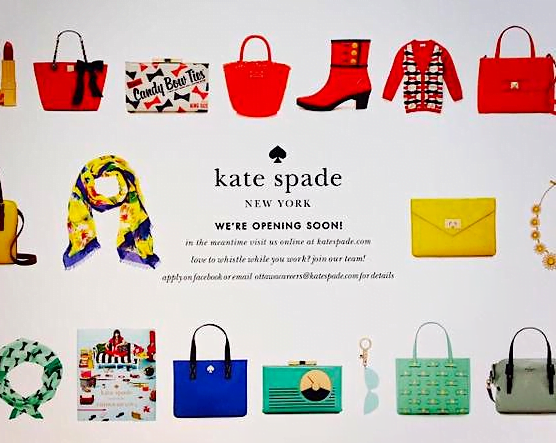
Popular American fashion brand Kate Spade will open three more Canadian locations this year. One will be at Ottawa’s Rideau Centre, one at Toronto Eaton Centre, and a third at Vancouver’s Pacific Centre. This will grow Spade’s Canadian store count from four to seven, as well as two outlet locations.
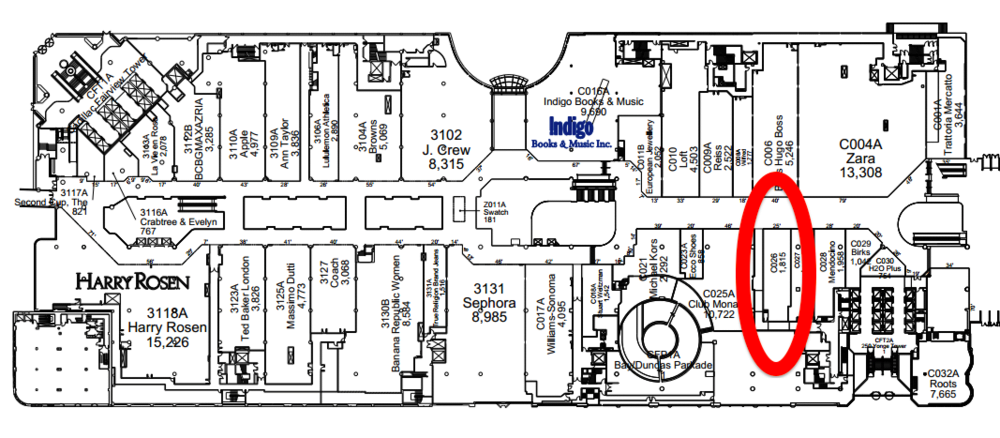
According to the City of Toronto Building Application Status website, the Toronto Eaton Centre location will locate between Lacoste and Club Monaco on the mall’s third level. According to a lease plan, Kate Spade will measure 1,815 square feet.
Rideau Centre confirms that its new Ottawa location will open in June. Kate Spade will locate on the mall’s third level next to Michael Kors.
Job postings are being advertised for the new Pacific Centre store, and we’re awaiting further details as to its exact size and location.
New York City-based Kate Spade is a popular mid-priced designer label that features handbags and accessories, women’s ready-to-wear, footwear, stationery and address books, fragrances, eyewear and a home collection. Given the company’s variety of offerings, it has become referred to as a ‘lifestyle accessories and fashion brand’. Kate Spade herself left the company in 2006 when she sold her shares of the company to Neiman Marcus, relinquishing creative control. The Kate Spade brand is now owned by Kate Spade & Company.
On the surface, Nordstrom’s and Target’s entries into Canada have a lot of similarities. They announced they were coming the same year. They are both brands that are unique in the marketplace and relatively well known among Canadians. This is the first foray outside of the U.S. for them. Both stores relied heavily on their head office staff and were determined to deliver their culture in their new home. This is where the similarities end.
Target opted for a “big bang” launch into Canada. Nordstrom has chosen a very measured roll out of stores.
Target renovated a large number of existing stores within a short time. Nordstrom only opened their first store two years after announcing their intention to enter Canada.
SO WHO WAS RIGHT?
With Target’s announcement that they are pulling out of Canada, it appears that Nordstrom took the right approach. To confirm whether this is true, we recently took a close look at the only Nordstrom store operating in Canada. Located in Calgary, Canada’s oil capital, the store opened in September of 2014. There has been enough time since then for the operators to get any kinks worked out as well as to see whether they can sustain the excitement of their opening. Here is what we found.
This is a store that shouts service. From the front entrance to the friendly staff that seem to genuinely care that you are finding what you want. Someone even said “Welcome to Nordstrom!”
The store itself is well appointed and comfortable. In fact, it looks better than a lot of American Nordstrom stores.
The merchandise looks very fresh and although there was reduced merchandise (not surprising for January) the store was set to look great and give the Nordstrom shopper the option of high-end brands to more interesting little known brands.
With a combination of great service, seasonally appropriate merchandise, and a great look, Nordstrom does not disappoint. They can even entice a jaded retail consultant to start looking for her size!
So will Nordstrom make it in Canada – if Canadians have anything to say about it, the answer is yes. The number of Nordstrom bags going out of the store on a Thursday morning in January proves that point. The only issue is, can they make money on these stores? While we see them getting the top line sales, whether they can make money with Canada’s higher cost structure, only time will tell.
J.C. Williams Group is a well-known, full-service retail and marketing consulting firm. It offers clients practical, creative, and in-depth knowledge of retailing and marketing, including up-to-date know-how and techniques to make retail operations better and more profitable. You can also read their informative blog, Retaileye, here: retaileye.wordpress.com.