Home Blog Page 1255

Polo Park Opens $49 Million Expansion

One of Canada’s largest malls, Polo Park, has opened a $49 million, 114,000 square foot expansion in a space formerly occupied by Zellers. The new space is on the mall’s second level, creating a loop connecting the former Zellers entrance to a mall entrance. Hundreds of Winnipeg residents lined up for the expansion’s October 1st opening. 

About 65,000 square feet of the new space houses 23 new retailers. The expansion also includes several first-to-market retailers. Seventeen retailers opened yesterday, while several will open later this month. Their opening dates are as follows:

Opened October 1st:

  • Fossil (1st Winnipeg location) 
  • Nine West (1st Winnipeg location) 
  • Claire’s Boutique
  • Watch It!
  • Swarovski
  • Pandora
  • Thomas Sabo Jewellery (1st Winnipeg location) 
  • Lids
  • Things Remembered
  • Disney (only Winnipeg location)
  • Mexx / Mexx Kids
  • Bench
  • Journeys (1st Winnipeg location) 
  • Teavana
  • Sunglass Hut
  • Calendar Club (holiday season only)
  • Oh Canada (holiday season only)

Second week of October:

  • Tommy Gun’s barbershop
  • Saje Natural Wellness

October 16th:

  • Urban Outfitters (1st Winnipeg location) 

October 17th:

  • Anthropologie (1st Winnipeg location) 

October 22nd:

  • Hickory Farms

We recently reported on Polo Park, when became home to Winnipeg’s first H&M store which opened last month.

Built in 1959, Polo Park is Manitoba’s largest mall, featuring over 200 stores and services, a SilverCity Cinema and a 5,600 vehicle parking lot. The mall is part of Cadillac Fairview‘s extensive real estate portfolio. It boasts in excess of 1.2 million square feet of retail space and is located on the site of the former Polo Park Racetrack. It is the 12th largest mall in Canada and is the largest between Toronto and Edmonton. Its department store anchors include a 256,000 square foot Sears store and a 212,000 square foot Hudson’s Bay.

How to Quickly and Accurately Plan Your Retail Sales Goals

PHOTO: WWW.CHINAECONOMICREVIEW.COM

By Nima Ghodratpour

Question: How much do we need to sell? 

Sell, sell, sell; the mantra that’s heard in board rooms, back offices and shop floors the world over. The corollary question by most sales associates tasked with achieving those sales targets is, where do these sales goals come from? Devising sales forecasts can be one of the most difficult and contentious endeavours one can ever be tasked with. As a retail manager you know that sales are affected by many different variables such as, the attractiveness of your product, your staff’s sales skills, investment in marketing, the state of the economy, even the weather outside! To produce a remotely accurate figure it seems you would need to take into account all these factors and then some.

The good news is there exists a simple and quick way to realistically forecast sales without having to resort to guesswork.

GENERATING SALES IS ALWAYS ABOUT MAKING A PROFIT

Everything in a budget, from costs and assets requirements, comes from the expected revenue generated by a business. All that planning and hard work is designed to do one thing. Generate profit. Therefore, successful sales management is all about producing an accurate sales plan from the outset to create a profit. So how can we predict the level of sales needed to generate the profit that we envisioned for our retail business? The answer to that is to use a Cost-Volume-Profit or ‘CVP’ analysis. The beauty of CVP analysis is that it takes in to account the relationship between, more concrete figures such as fixed and variable costs and how they affect sales and profit. It does in minutes what people may spend days, weeks or even months trying to prepare.

WHAT DO WE NEED TO GET OUR SALES FIGURE?

Suppose you have run into some inheritance money and you want to invest that money in a clothing store in what appears to be an excellent location that has just been put on the market to lease.

You figure that an initial investment of $600,000 is needed to fit out the store, buy inventory, get equipment and cover other on-costs. Is opening this store worth your time and more importantly your money? The answer to that depends on whether enough sales will be generated to cover your fixed expenses and make you a profit, that’s where CVP analysis comes in.

In the clothing store you have fixed expenses, rent, utilities, telephone, salaries, and so forth. In addition you want a return on your initial $600,000 investment. Let’s assume the fixed costs for the first year of trading will be $250,000. In addition you would like to achieve a profit of $90,000 (which represents a 15% return on your initial investment of $600,000). This establishes that you would like to generate enough sales to cover your fixed expenses of $250,000 and a profit of $90,000, adding these two figures together we can forecast a sales figure to cover the $340,000 needed to make the business viable.

Now that we have established our fixed costs and desired profit, we can start to plan our variable costs, or in retail accounting vernacular our COGS. To calculate our sales figure, we need to establish how much Gross Margin we want or realistically can make on our sales. On this basis, if our clothing store buys shirts for $60 and sells it for $100, the Gross Profit will be $40. This is $40 towards achieving your fixed cost and profit figure of $340,000. We can now say that the contribution towards our fixed cost and profit from each shirt sold is 40%.

LET’S GET THE SALES FIGURE!

We have all the numbers we need to figure out what our sales figure would be, all that’s left is filling in the formula.

From our shirt clothing store example:

If our shirt retail store sells shirts at a margin of 40%, you will need sales of $850,000 in order to pay for your fixed costs of $250,000 and leave you with a profit of $90,000. The CVP analysis requires only three figures to come up with a sales number needed to achieve our profit target: planned fixed costs, planned profit and planned gross margin.

IS OUR SALES FIGURE ACHIEVEABLE?

The beauty of CVP analysis is that it makes sales planning far more straightforward and cuts the guess work. In the case of our shirt store, based on our previous assumptions the question is, can we generate $850,000 of sales? If the answer is yes, then our profit target of $90,000 is achievable, our investment is viable. If the answer is no, it’s back to the drawing board. The proposed numbers do not work, one or all three of the figures need to be tweaked, either the planned fixed costs, planned profit or the gross margin.

Note how CVP has simplified the decision making process for the retail investor. It negates the need for guestimating what the sales are going to be in the future, you just make a decision on whether sales will meet or exceed a given number. Many issues companies face when failing to make a profit can be avoided if the company takes time to assess the viability of its sales forecasts from the outset. Using CVP analysis can provide you with a powerful tool to quickly and accurately to make a decision on the viability of a business. 

Nima Ghodratpour is an MBA candidate at Queen’s University with over 11 years of Canadian and International Luxury retail experience, working for Clinique, Bloomingdale’s and Boutique 1. Nima can be contacted at linkedin.com/in/nimaghodratpour.

Agent Provocateur Opens Canadian Flagship

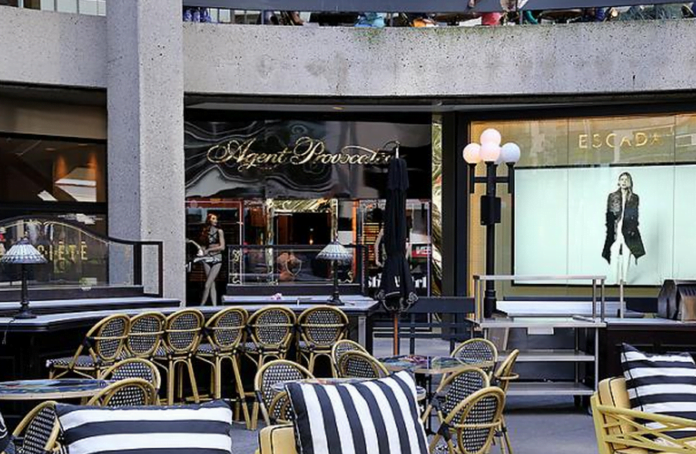
Agent Provocateur PHOTO: ANDROIDUK, URBAN TORONTO.

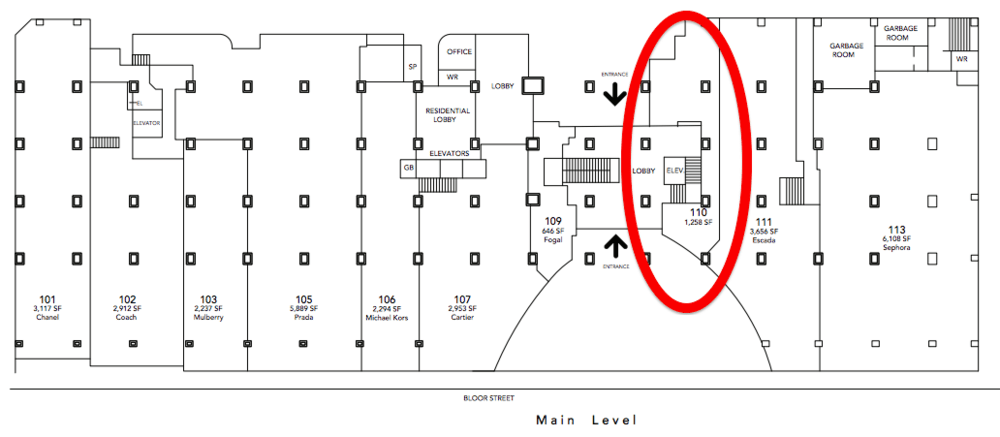
British lingerie retailer Agent Provocateur has opened a flagship store at Canada’s most luxurious retail plaza — The Colonnade at 131 Bloor Street West in Toronto. Agent Provocateur occupies just over 1,250 square feet, next to upscale German women’s brand, Escada

Agent Provocateur is considered to be a luxury lingerie company. It was founded in 1994 by the son of British fashion designer Vivienne Westwood. It operates 89 stores worldwide, including 17 U.S. stores. Of its American locations, 13 are free-standing while four are operated concessions within Bloomingdale’s stores. 

There are currently three small Agent Provocateur boutiques in Canada. All are concessions within Holt Renfrew‘s flagships in Vancouver, Montreal and Toronto (Bloor Street). Each concession measures about 150 square feet, substantially smaller than the new Toronto flagship. Holt Renfrew’s first Agent Provocateur concession opened in March of 2012 in Vancouver, followed by Montreal in October of 2012, and Toronto in November of 2013. 

LEASE PLAN, MORGUARD

Vancouver was once home to Canada’s first and only free-standing Agent Provocateur store. The franchised location opened on Alberni Street in late 2007, and it closed in the summer of 2011. Sources say that the franchise owner lacked retail experience, contributing to the location’s failure. The store’s former retail space is now occupied by crafts retailer Michael’s. 

The Colonnade in Toronto, managed by Morguard, features Canada’s highest-density of mono-brand luxury retailers. Located at 131 Bloor Street West, the complex includes locations for Chanel, Mulberry, Prada, Cartier, Fogal of Switzerland and Escada, among others. 

Sparking a retail revolution: MasterCard challenges developers to invent tomorrow

By Nick Dinh, Vice President of Mobile Payments, MasterCard Canada

The conventional wisdom is that it takes months or years to create a product of value but with creativity, intensity and a sleepless night or two, Toronto’s Tulip Retail shortened that process to less than 48 hours at last year’s MasterCard N>XT Developer Challenge. At this year’s version of the MasterCard hackathon, scores of other developers will get their shot at $30,000 worth of prizes and, more importantly, a chance to convince one of the world’s preeminent retail innovators that their idea should come to life.

The challenge at the 2014 N>XT Developer Challenge is to create an innovative application that will improve the retail customer retail experience, both in-store and online. The Challenge, which runs from 9 a.m. Saturday, Oct. 4th, to 5 p.m. Sunday, gives developers less than 48 hours to build their idea and to demonstrate convincingly how Canadians would use and benefit from the innovation.

Last year, Tulip Retail attacked the challenge with its application that enhances the movie going experience. App users can buy tickets and concessions from within the app, and can be notified by theatres and marketers of specific promotions or rewards when they are at the relevant movie theatres. The winning application enabled today’s movie fans to experience their favourite pastime on their own terms, which often involves online research, a smartphone in hand, and something available at a specific location.

At the 2014 N>XT Developer Challenge, Tulip showed MasterCard its expertise in retail technology. MasterCard was so impressed it partnered with Tulip to create an interactive zone at the Air Canada Centre called The Priceless Toronto Zone. The Priceless Toronto Zone is a first-in-Canada interactive retail experience, featuring an eight-panel video wall and 65” touch-screen display that shows behind-the-scenes highlights moments and enables fans to buy exclusive sports memorabilia.

Tulip’s technology allows a consumer to start a purchase at a venue, and then finish it on their phone or computer after the event – something that hadn’t been done in Toronto before. Without the hackathon, MasterCard wouldn’t have known about Tulip’s expertise facilitating retail tech.

This year the online payment system Simplify Commerce, which enables businesses to quickly and easily accept payments from any channel, will be the featured API – the application with which developers must connect their invention. Mentors from MasterCard, York University, University of Waterloo, ventureLab, Tulip Retail, Bionym and Microsoft BizSpark will be supporting the teams to help them develop their idea and polish their pitch.

The judging panel includes retail and technology experts from Rogers, Samsung, CIBC, BMO and MasterCard.

Hackathons like the N>XT Developer Challenge have grown in popularity as a way to speed innovation. Canada can lay claim to the world’s first hackathon, 15 years ago in Calgary, and the N>XT Developer Challenge, with its “Retail Revolution” theme, is the first by a major payments network company, geared specifically for retail innovations.

The 2014 N>XT Developer Challenge accepted applications from more than one hundred student and professional developer teams for the challenge, which will be hosted by MasterCard Chief Innovation Officer, Garry Lyons.

Muji to Open 7 – 8 Canadian Stores in 5 Years

Minimalist Japanese retailer Muji will open up to eight Canadian stores over the next five years, according to the president of Muji Canada. It has secured its first Canadian location in Toronto, with further locations to follow in Vancouver and, eventually, in other Canadian cities. 

Toru Tsunoda, president of Muji Canada, tells Reuters that Muji’s plans to open seven or eight stores across Canada is part of a broader plan for the retailer to operate more stores overseas than in Japan within the next two years. Muji currently operates 255 stores outside of Japan, including 100 in China. It currently has 385 stores in Japan, meaning that it plans to open at least 130 new international stores before 2017. 

“I hope to open seven to eight (Canadian) stores in the next five years,” said Mr. Tsunoda (in a Japanese language interview). “But opening one store a year may be a realistic goal because we want to open (each) new location carefully. When it reaches the certain level, we could accelerate.”

Prices at Muji’s Canadian stores will be higher than in the U.S. according to Mr. Tsunoda. This is due to higher operating costs. To keep prices low, “we may have to squeeze profit margin,” Mr. Tsunoda said, though he noted a lower margin could slow the pace of expansion. Muji will offer about 2,800 items in Canada, versus 3,500 in the United States and more than 7,000 in Japan.

Muji’s first Canadian location opens this November at Toronto’s Atrium On Bay. The store will be almost 4,400 square feet, smaller than most of its U.S. locations.  Two further Toronto locations are expected to follow in 2015 and sources confirm that landlords in Vancouver have been in talks to bring Muji to Canada’s West Coast. Building a solid foundation in Toronto first, will help hold down distribution costs, Mr. Tsunoda said.

Interestingly, Muji isn’t using a Canadian brokerage to secure Canadian retail space. Rather, the retailer is coordinating securing its own Canadian leases. This is according to Uniqlo‘s Canadian broker, who we initially expected was involved with Muji’s Canadian expansion. 

Known for being innovative and its products being affordable and unbranded, Muji carries various household items, furniture, appliances, stationary and apparel. With hundreds of stores worldwide, it saves money by avoiding locating stores in high-rent areas and spends little to nothing on market research and advertising. Muji is short for Mujirushi Ryohin, or no-brand superior items, and was founded in 1980 as the private-label brand of a major supermarket chain (not unlike Canadian brand Joe Fresh). Muji currently operates nine American stores. Five are in New York City, and four are in California (San Francisco, San Jose, Hollywood, and Santa Monica). 

We’ll update this article when we learn more about Muji’s Canadian store expansion. 

Holt Renfrew Opens Luxurious Free-Standing Men’s Store [With Photos]

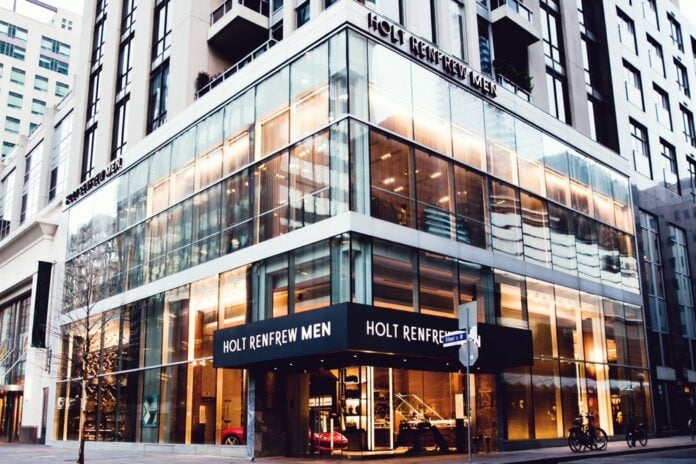
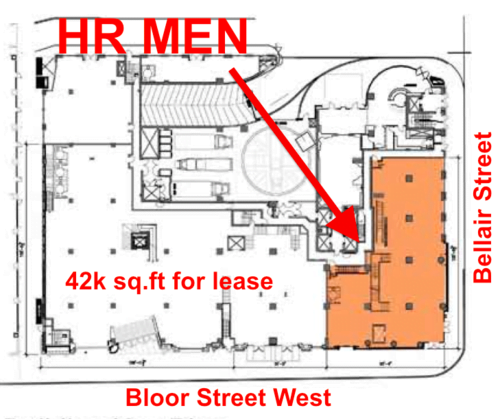
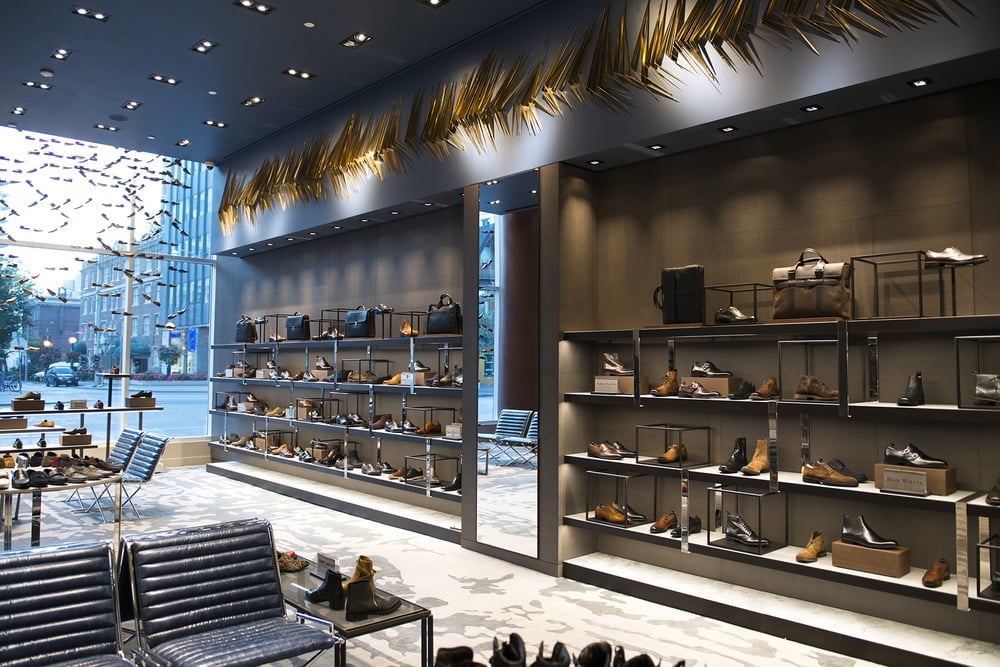
Holt Renfrew‘s first free-standing menswear store opens October 1 at 100 Bloor Street West, in the heart of Toronto’s ‘Mink Mile’. Called ‘Holt Renfrew Men‘, the store measures 16,500 square feet and features distinctive branding and luxury amenities, including its own doorman. Holt Renfrew is upping its game to compete with neighbouring Harry Rosen and other luxury retailers entering the Toronto market over the next two years. 

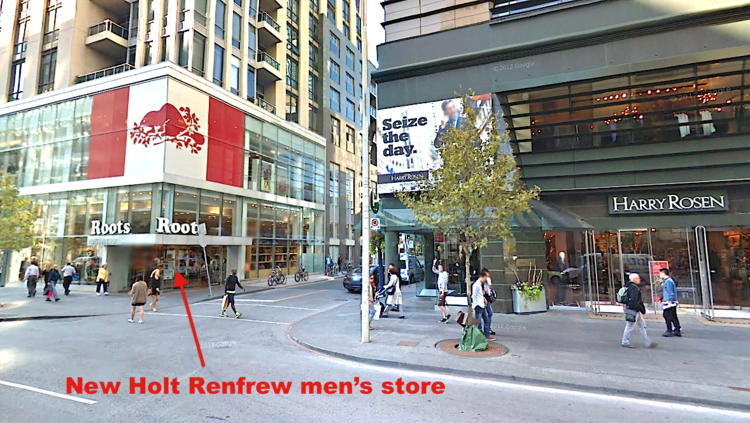
The two-level store replaces Roots Canada which, until last year, occupied the prominent 100 Bloor Street corner location. We’re told that Holt Renfrew signed a long-term lease for the space, paying a premium for what is arguably ground zero for Canadian luxury retailing. 

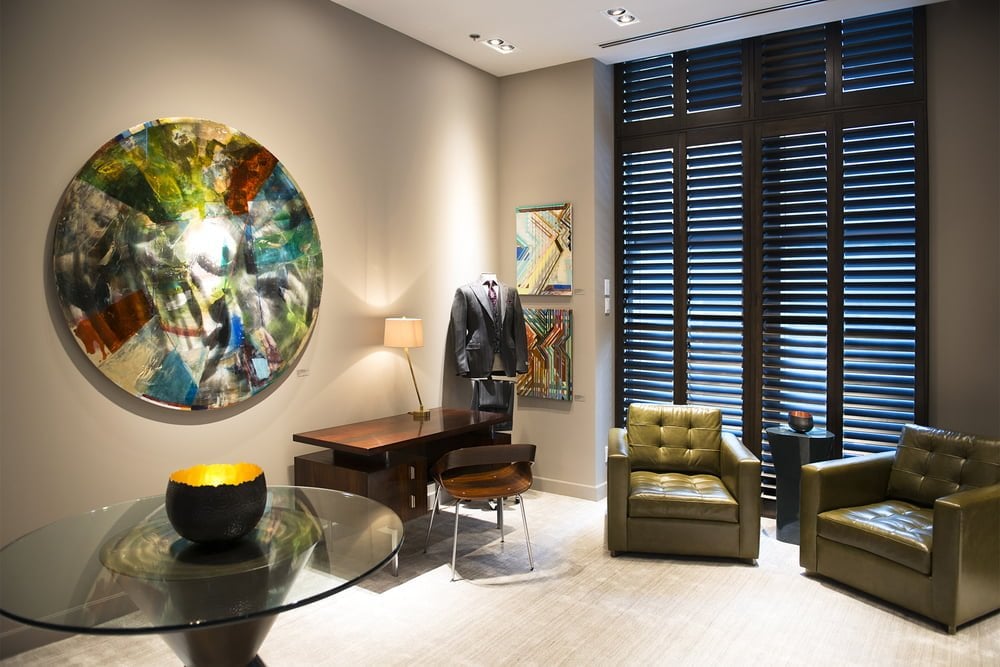
Holt Renfrew Men offers a variety of upscale services. Sartorial options are provided, including made-to-measure suiting and a bespoke tailoring space. Luxurious shopping suites offer a personalized experience, and enhanced levels of service include complimentary alterations, valet service, shoe shine, a cobbler for shoe repairs and on-site monograming. Bespoke tailoring will be provided by Toronto-based Walter Beauchamp Tailors

The store features a roster of luxury brands, including Berluti, Bottega Veneta, Brunello Cucinelli, Canali, Charvet, Zegna, Etro, Gucci, Loro Piana, Moncler, Neil Barrett, Paul Smith, Stefano Ricci, Valextra, and others. Some of these designers are also carried across the street at Harry Rosen‘s flagship. 

Holt Renfrew Men features its own branding, including a logo contained within a grey square, distinguishing it from Holt’s traditional logo, comprised of a magenta circle surrounding the HR logo. Its shopping bags and other packaging are grey, again distinguishing it from Holt Renfrew’s trademark magenta. The store also has its own website, www.holtrenfrewmen.com, as well as Twitter and other distinct social media. 

The new store reflects a residential feel, featuring a mix of modern and vintage furniture and unique touches, such as fitting room walls upholstered in suiting fabric, and rotating installations of art and cultural objects. The store was designed by New York-based Janson Goldstein, which has been Holt’s store designer since the 2007 opening of its 140,000 square foot Vancouver flagship. 

An expansive collection of artifacts from NHL legend Conn Smythe’s collection are also displayed, including a Toronto Maple Leafs mini Stanley Cup and ring and Muhammad Ali’s boxing gloves.

A red Ferrari 458 Italia sits at the store’s main entrance, which retails at $335,000.

Menswear will also continue to be carried at Holt Renfrew’s flagship, a block east at 50 Bloor Street West. The flagship’s menswear collections will feature more ‘advanced sportswear’ collections such as Balenciaga and Givenchy, while 100 Bloor’s will provide more of a suiting and sartorial focus. The 180,000 square foot 50 Bloor flagship will be expanded and renovated over the next two years, including an interior overhaul and a replacement facade. Plans indicate that 37,000 square feet of additional retail space could also be added to the flagship via a passageway connecting the store to a rebuilt Cumberland Terrace, though nothing is officially confirmed. 

Competing menswear retailer Harry Rosen is located directly across the street from Holt Renfrew Men. Rosen occupies a multi-level 55,000 square foot space, stocking several designers also carried at Holt’s. Nordstrom and Saks Fifth Avenue, both opening at the Toronto Eaton Centre in 2016, will also compete with Holt Renfrew Men. Both American retailers will sell pricey menswear — especially Saks, which plans to provide an elevated luxury shopping experience to Canadians beyond what is currently offered in its American stores. Both are geographically removed from Holt’s, however, being about two kilometres to the south. 

Forever 21 to Open F21 Red in Canada

Los Angeles-based fast fashion retailer Forever 21 will bring its less expensive F21 Red concept to Canada, with its first stores set to open in 2015. F21 Red launched its first store in suburban Los Angeles in May of this year.

Four Canadian F21 Red locations will open next year, according to the retailer’s Canadian broker Jeffrey Berkowitz of Aurora Realty Consultants Inc.. F21 Red will feature ‘trend led’ stapes of the Forever 21 line plus 21Men, Forever 21+ and Forever 21 Girls

F21 Red seeks retail space in the 10,000 to 18,000 square foot range, according to Aurora Realty. 

When F21 Red launched its first location in South Gate, California in May, its press release indicated that it would sell camisoles for $1.80 and jeans for $7.80, along with men’s t-shirts for $3.80 and plus-sized leggings for $5.80. We’re unaware of its Canadian pricing, though if it’s similar to that in the U.S., its clothing will be among the least expensive available in Canada. 

Founded in Los Angeles in 1984, Forever 21’s first location measured only 900 square feet. It has grown substantially with sales in excess of $3.7 billion in 2013, employing over 30,000. Remarkably, its founders now have an estimated net worth of $5.1 billion. Forever 21 has almost 500 U.S. stores and operates 31 Canadian locations coast-to-coast. 

L’Occitane en Provence Opens Stunning Vancouver Flagship

French brand L’Occitane en Provence opened its Vancouver flagship over the weekend, replacing womenswear retailer Bebe. Occupying the southwest corner of Robson and Burrard Streets, Bebe’s former space is one Canada’s most prominent retail locations. Sources say that L’Occitane paid in excess of $300 per square foot annually for its lease on the space, breaking a Robson Street record. 

The entire 1000 Robson Street building includes 4,000 square feet on its ground floor, as well as a 1,000 square foot mezzanine. L’Occitane occupies only part of the 5,000 square foot space.

L’Occitane vacates its smaller space at 101-755 Burrard Street, only a few paces north of its new store. Gift retailer Papyrus will replace it. The new L’Occitane will share the Robson and Burrard intersection with other prominent flagship retailers. Roots Canada, occupying the intersection’s northwest corner, is about to embark on a renovation and expansion of its 4,000 square foot flagship. Lululemon’s Robson Street flagship is on the intersection’s southeast corner, and the world’s second-largest Victoria’s Secret store dominates the intersection’s northeast corner. 

L’Occitane’s new retail space has an interesting history: before selling for a record-setting price in 1999, 1000 Robson Street was home to a Toronto Dominion Bank. As a nod to its past, TD bank machines continue to operate along the Burrard Street side of the building. In the late 1990’s, the sale of 1000 Robson Street was considered record-breaking, exceeding $1,000 per square foot. Nowadays, that sale price would be a bargain. Robson Street’s rents are among the highest in Canada, often exceeding $200 per square foot per year. Only Toronto’s Bloor Street commands higher rents.

L’Occitane was Founded in Manosque, France, in 1976. It retails body, face and home products in its roughly 2,000 shops in over 100 countries worldwide. It has 29 free-standing Canadian stores spanning the country, from Victoria to Halifax.

New “Name Your Price” Technology Levels the Playing Field for E-Commerce Retailers

In today’s e-commerce world, retailers live and die by their conversion rate. Because small changes to a conversion rate can result in massive changes to their bottom line, e-commerce managers are always searching for technologies that increase the number of sales per 100 visitors. After all, for a multi-million dollar retailer, an increase in conversion rate from 2% to just 2.2% is a very big deal.

While there are always e-commerce micro-trends that have seemingly all retailers jumping on board, there is one macro-trend that will always rule them all: Pricing.

Pricing is the single most important variable in the consumer decision-making process – be it online or off. In these economic times, comparison shopping is on the rise. With consumers becoming more savvy to the countless retailer options available when shopping online, retailers are having to raise the bar of quality, while pricing as competitively as possible. Consumers are looking for as many ways to save as possible, without sacrificing quality, which means they are taking advantage of coupon codes, daily deals, comparison shopping engines and other ways to save money.

Taking that into consideration, many companies offering new technology to support e-commerce retailers have emerged. The most successful have found effective ways to capitalize on the psychology of online comparison shopping, ultimately converting shoppers and increasing revenue.

One such company, PriceWaiter, has proven to increase conversions for e-commerce retailers by offering a personalized pricing platform that places a “Name Your Price” or “Make An Offer” button on sites. This button, usually located near the price, allows retailers to collect offers from comparison shoppers before they leave a retailer’s site. The retailer then uses PriceWaiter’s platform to efficiently manage the offers, whether they receive thousands or just a few.

PriceWaiter ‘s product is evolving quickly and focused on providing retailer partners with top-notch service. Bijan Dhanani, a marketing and product manager for PriceWaiter, shared insight into what sets his company apart. “After a successful round of funding, the PriceWaiter team has launched several major features,” said Dhanani. “One of the features adds support for international retailers and the other is an innovative new service called Exit Offers, which is a conversion tool that uses mouse-tracking technology to determine when users are about to leave the site, and then entices comparison shoppers to make an offer before they leave.”

The World of Shopping Malls [Infographic]

The following infographic by SMS Store Traffic (www.storetraffic.com) includes a list of North America’s top malls by sales per square foot (we’ll be updating our own article on this topic shortly) as well as a list and description of of the world’s largest malls. Interestingly, the world’s largest mall (in China) is still largely vacant more than nine years after it was built. The infographic concludes with some interesting facts on world shopping centre development.