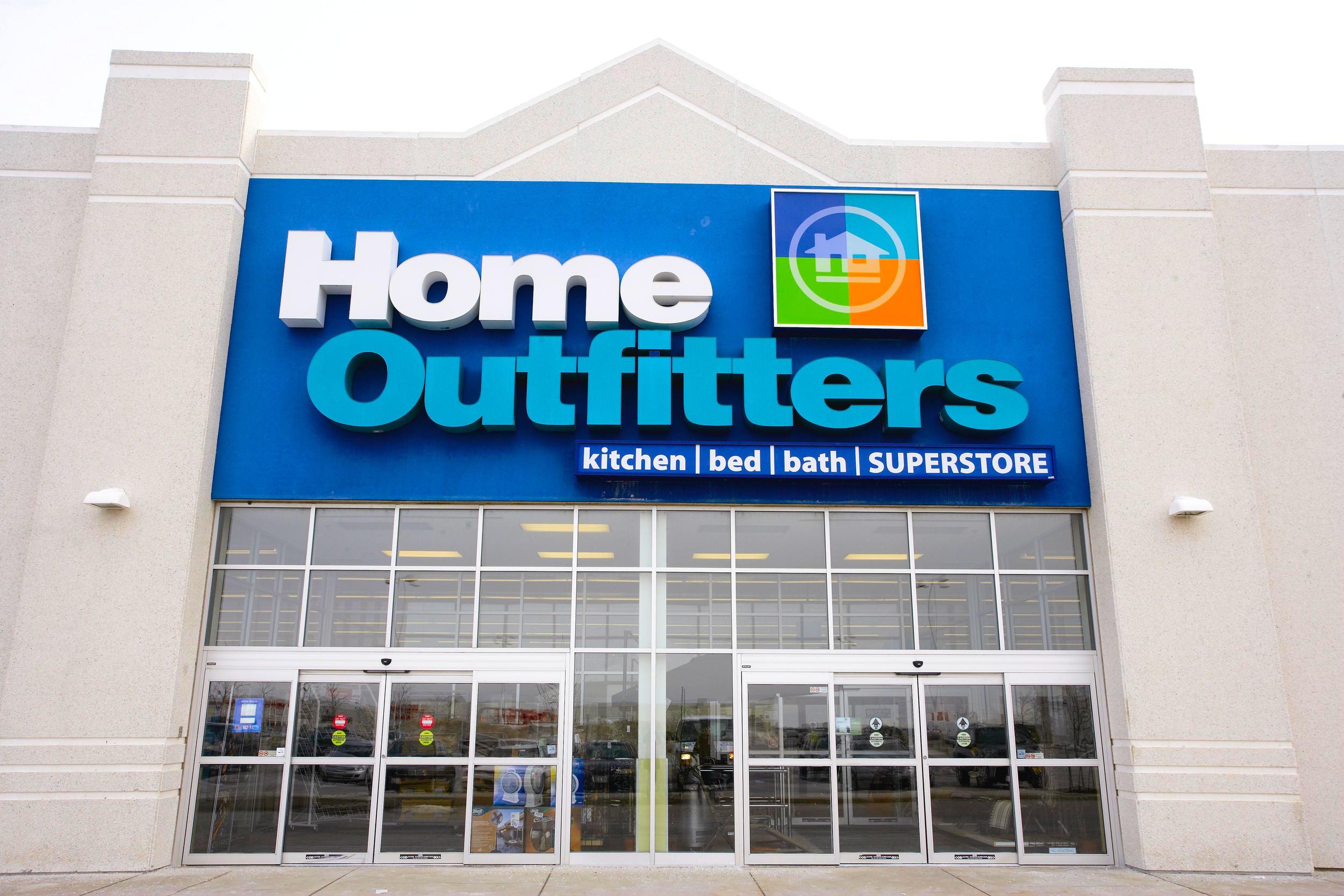
Home Outfitters, Canada’s largest kitchen, bed and bath superstore, will be merged into Hudson’s Bay Company‘s (HBC) Department Store Group. Several Home Outfitters locations may close as a result, while others could be extensively renovated. Hudson’s Bay confirms that two Home Outfitters locations will close, as the company increasingly concentrates on its e-commerce operations.
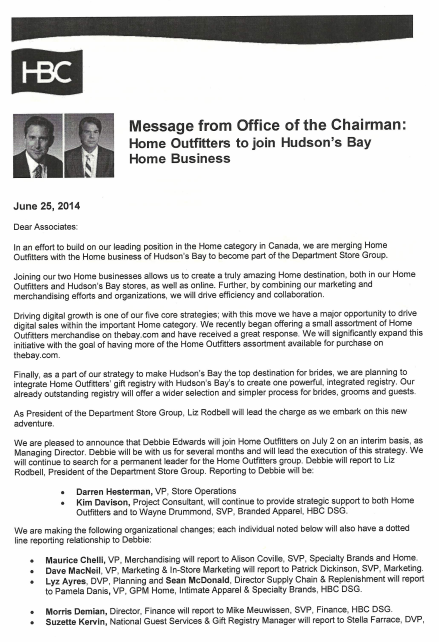
First page of the memo from HBC’s Office of the Chairman.
Founded by HBC in 1999, Home Outfitters currently has 69 Canadian store locations, selling housewares, small appliances, bath accessories, bedding, furniture and home decor. Stores average about 34,000 square feet each and are mostly located in suburban centres.
Company spokesperson Tiffany Bourré confirms that Home Outfitters at Mississauga’s Square One will close in January of 2015, as well a store at 1425 Sumas way in Abbotsford, BC. “We have committed to rationalizing our real estate portfolio and creating a strong, streamlined store base, along with an expanded digital offering. As a result, we will be closing two Home Outfitters locations in January 2015” said HBC spokesperson Tiffany Bourré. “We are committed to open communication with our Associates through the transition and to treating each individual with respect. Store Associates will be offered transfer opportunities where possible. All Home Outfitters stores will continue to focus on serving our customers,” she said.
Regarding HBC’s merging Home Outfitters with Hudson’s Bay’s Department Store Group: “Joining our Home businesses allows us to strengthen our position in the market and create a truly amazing home destination, both in our Home Outfitters and Hudson’s Bay stores, as well as online,” said Ms. Bourré.
Interestingly, a source informs us that HBC is looking for space to open a Home Outfitters store in Downtown Toronto, despite there already being two large Hudson’s Bay stores within the city’s core.
According to the memo from the Office of the Chairman, Home Outfitters’ current gift registry will also be merged with that of Hudson’s Bay’s, creating “one powerful, integrated registry”. Hudson’s Bay is already home to Canada’s largest gift registry, which will become even bigger as a result of the merger.
HBC believes this change will create efficiencies, especially as the company prepares to move most department store merchandise online. The memo reads: “Joining our two Home businesses allows us to create a truly amazing Home destination, both in our Home Outfitters and Hudson’s Bay stores, as well as online. Further, by combining our marketing and merchandising efforts and organizations, we will drive efficiency and collaboration.”
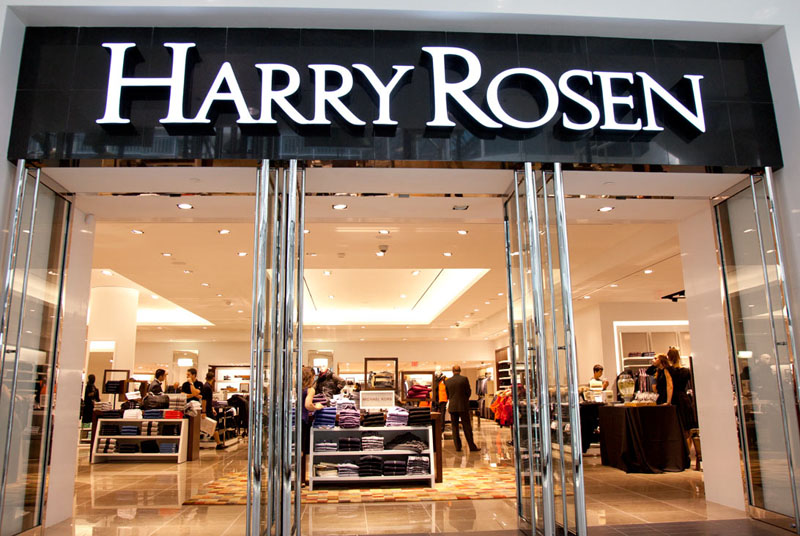
Upscale menswear retailer Harry Rosen will relocate its Ottawa store to an 18,000 square foot space in November. Rosen’s current Rideau Centre store is less than half that size. The stunning new store will compete with the adjacent Nordstrom, scheduled to open in March of 2015.
Ottawa’s new Harry Rosen will feature outstanding interiors, similar to those in its recently renovated and expanded Yorkdale Shopping Centre location. Interestingly, Rosen’s Ottawa store will include a large shoe shop with its own entrance, adjoined to the main store. Rosen’s will also include several designer shops-in-shop, not unlike other larger Harry Rosen stores. Its Yorkdale store, for example, features shops for Ermenegildo Zegna, Canali, and Giorgio Armani.
When finished, it will be one of Harry Rosen’s largest stores. The largest is the 55,000 square foot Toronto flagship on Bloor Street West. In total, Harry Rosen has 16 Canadian store locations as well as one outlet store in Mississauga. A second outlet store will open this fall at Toronto’s Vaughan Mills.
Harry Rosen is renovating and expanding a number of its stores, completely overhauling its Downtown Vancouver and Montreal locations. Its Montreal store will grow to become the company’s second-largest, rivalling the world’s best men’s stores. Its Vancouver store, the second-highest selling in the chain, will be completely renovated and reconfigured.
Ottawa’s Rideau Centre is undertaking a massive expansion which will eventually include new retail anchored by a 105,000 square foot La Maison Simons store and a 157,000 square foot Nordstrom store. Nordstrom is scheduled to open March 6, 2015, next door to Harry Rosen.
Although Harry Rosen will see increased competition from the likes of Nordstrom and Simons, Rosen’s exceptional selection and service will set it apart. We’ll do a separate article next week discussing the future of Ottawa’s upscale retailing, including discussion on both Harry Rosen and Nordstrom.
Target, by its own admission (see the YouTube video below), has made a mess of its business in Canada. The company has lost about a billion dollars since it began operating up north and, while it has pledged to do better, not everyone is convinced it will. In fact, Credit Suisse has gone so far as to suggest that Target’s new CEO, whomever that turns out to be, should seriously consider getting out of the Canadian market altogether.
In a note to investors, as reported by The Financial Post, Credit Suisse analyst Michael Exstein wrote, “We think it may be more prudent for Target to cut its losses and devote 100 percent of its resources on the U.S. — which comprises over 97 percent of the company’s current sales.”
Target is looking to roughly double the $1.3 billion in revenue it generated in Canada during fiscal 2013 without the $941 million in losses that went with it. A lot of people are counting on the chain to succeed, including the more than 20,000 individuals it employs in Canada.
Discussion Question: What are the biggest challenges currently facing Target in Canada? Do you think Target should bail on the Canadian market?
Comments from the RetailWire BrainTrust:
Dick Seesel, Principal, Retailing In Focus LLC: It’s premature for Target to pull out of Canada just over a year since moving in. The company has too much invested in real estate (which they acquired for a bargain price), infrastructure, organization and corporate pride to throw in the towel this quickly. There are some clear lessons learned from the 2013 results that are correctable, starting with inventory levels and pricing. Target is going to have to be a lot more aggressive on both fronts if it intends to gain market share and cover its investment and costs.
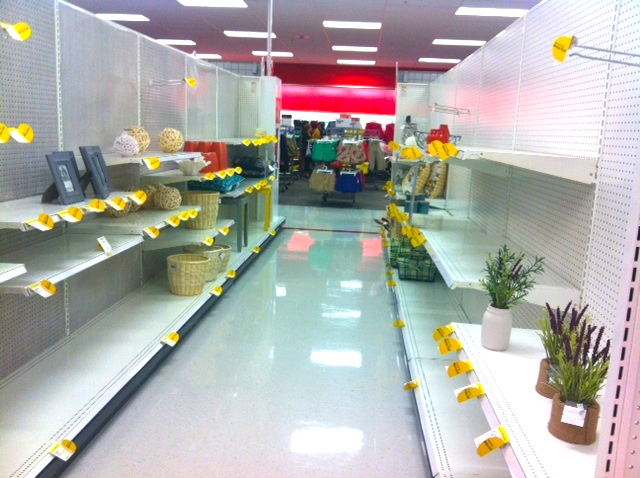
Empty shelves: a common complaint among may Canadian Target shoppers. Photo: www.jodyrobbins.com
The Canada experience is symptomatic of what ailed Target overall: Too much caution, too slow to react, too much faith that the “brand” (versus good execution) would carry the day. With luck, the interim CEO is addressing these cultural issues quickly, even during the search for his permanent replacement.
Camille P. Schuster, Ph.D., President, Global Collaborations, Inc.: Either Target needs to invest the resources to understand Canadian consumers or needs to leave the market. The Canadian market is not an extension of the U.S. market and is not homogeneous. While the U.S. has been described as a melting pot (certainly that term is a debatable description of today’s U.S. market), Canada has been described as a mosaic. The significant implication is that differences among consumers exist, are accepted and celebrated. The resources needed to understand this market will be significant. Invest the resources, learn about how to adapt to different markets, or remain a U.S. domestic company.
Steve Montgomery, President, b2b Solutions, LLC: Target has acknowledged many, if not all, of the mistakes it made during its entry into Canada. Admitting you have a problem is the first step to recovery.
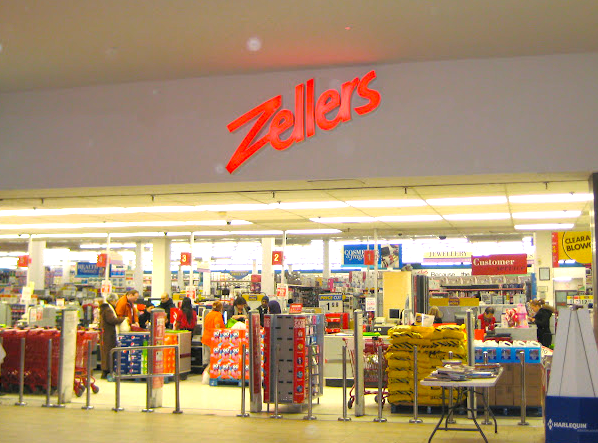
Target replaced many former Zellers store locations throughout Canada. Photo: elaineloring.blogspot.ca
The next steps are not easy but doable. The infrastructure is in place, the stores are staffed, supply line exists, etc. Finally, as Dick pointed out, Target got into the market at a price it will not be able to replicate should it withdraw now and then decide to reenter.
Paula Rosenblum, Managing Partner, RSR Research: I agree with Dick Seesel. It’s way too soon. If Canada was located halfway around the world, I might say “yeah, it’s a distraction,” but I can’t see any reason why whatever is done to remake U.S.-based Target won’t be pretty close to what Canadians want as well.
Strikes me that the problem is clear in both countries; lost differentiation (or in Canada’s case, “never found” differentiation). I don’t see any reason to run away. The company has enough cash to work it through and it’s going to need a new CEO with a new vision anyway.
David Livingston, Principal, DJL Research: First Target took horrible Zellers locations no one else wanted. It would appear the former CEO was overzealous and took available locations rather than build ground-up in new good locations. Zellers had run them into the ground so deep that Target will have to do better than a mediocre effort. Consumers associate those locations with negative experiences.
Oh sure, if Target sticks it out they will get better. Just like Fresh & Easy kept getting better and better until they pulled out. There is no place for Target to go but up, but they are so far down they could double their sales and still be well below market. Target’s best effort just isn’t good enough in Canada. They would need new and better locations, and we know that’s not happening. Even if Target did have good locations, it would take several years to overcome their mistakes. I doubt that short-term minded investors have the patience, and therefore, Target needs to put on the brakes, regroup and go home.
Some Canadians complain that American Target stores are different – and better – than the company’s Canadian locations. Photo: Target.
Bill Davis, Director, MB&G Consulting: Target should stay in Canada for now, but should minimize its losses as it learns about doing business in the Canadian market. I would suggest focusing on getting the business running much more smoothly, 90 percent-plus of their effort, as opposed to any growth initiatives, because it’s clear the cost structure is out of whack right now, with $1.3 billion in revenues and $941 million in losses.
Ed Rosenbaum, CEO, The Customer Service Rainmaker, Rainmaker Solutions: Note to Target: Don’t bail out of Canada. Get the right lead dog to navigate through the Canadian path. It is obvious those in the lead did not understand the Canadian marketplace or customers. It appears you can’t paint the Canadian shopper with an American brush.
Gene Hoffman, President/CEO, Corporate Strategies International: The big current challenge for Target is to face up to the reality that its board and past management took themselves too seriously and Canada too lightly. It has resulted in a quick billion dollar loss in Canada and produced only three percent of Target corporate sales. Now that Target has sobered up, it must decide if additional investments in Canada have the potential to get a healthy return in that land north of Montana.
To the second question, YES. Target doesn’t have the street-level business smarts and infrastructure right now to play in two diverse ball parks.
Gene Detroyer, Professor, Independent: If Target wants to grow, they MUST grow internationally. The U.S. market is mature and total U.S. domestic growth will not exceed 2.2 percent for the foreseeable future.
The Canadian sortie was a disaster for Target, but it could prove a learning experience on how to take one’s business to another country. Target must understand that from physical execution to understanding the customer, expansion into other countries is not a “copy/paste” exercise.
Walmart initially made similar mistakes in regard to customers in other countries, but they fixed them. After the failure of its international expansion in Germany, China and South Korea, Mike Duke (former CEO) said that Walmart had learned from past mistakes. “We must be more sensitive to local issues … We must understand global needs and trends.” They established a new President for emerging markets with the aim to spot in advance national differences. Today, Walmart International operates more than 6,100 retail units (55 percent of the total) in 26 countries outside the U.S. In fiscal year 2014, Walmart International net sales exceeded $136 billion (29 percent of their total, and growing).
Target must approach international expansion in the same way.
Through a special arrangement, presented above is the discussion from an article originally published on RetailWire. Read the entire RetailWire discussion here: http://www.retailwire.com/discussion/17655
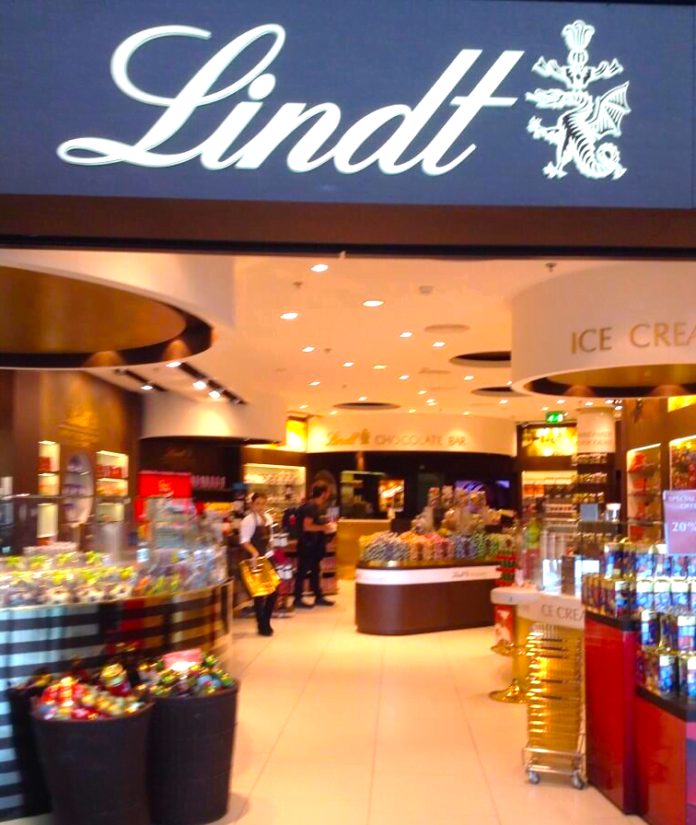
Canada is about to get a whole lot sweeter. Swiss chocolatier Lindt plans to open 12 Canadian stores between now and 2016, spanning from British Columbia to the Maritimes. Lindt has retained a brokerage to locate retail space in a variety of different potential locations. The company is also growing substantially, having recently acquired competitor Russell Stover.
Two Lindt stores are already confirmed to open in Canada this fall. One will be at Ottawa’s Lansdowne Park, while the other will be at the Montreal Premium Outlets. Lindt expects to open five Canadian locations in 2015, and another five in 2016, and is seeking retail space in Ontario, Alberta, BC, Quebec and New Brunswick. The company currently has 20 Canadian locations, including two Toronto boutiques and 18 outlets in Ontario, Alberta, BC and Quebec.
According to Lindt’s Canadian brokerage, Think Retail, Lindt will consider openings in outlet centres, high streets, super regional malls, large open-air centres, airports and tourist destinations. Lindt seeks stores in the 1,250 to 1,800 square foot range. Preferred co-tenants include Whole Foods, William Sonoma, Sephora, Michael Kors, Lululemon, J Crew, Polo, Anthropologie, Cineplex Odeon, and a mix of casual full-service restaurants.
Last week, Lindt agreed to acquire Russell Stover Candies Inc. “It is a billion (dollar) deal. How much more than one billion I cannot say,” stated Lindt Chairman and Chief Executive Ernst Tanner, in an interview last Monday. Russell Stover generates annual sales of about US $600 million. The deal gives Lindt around 10% of the U.S. chocolate market, ahead of Nestle.
Lindt & Sprungli is recognized as the market leader in premium quality chocolate, offering a large selection of products in over 100 countries around the world. During more than 160 years of Lindt & Sprungli’s existence, it has become known as one of the most innovative and creative companies making premium chocolate, with six production sites in Europe, two in the US, and distribution and sales on four continents. Globally, the company employs approximately 9,000 people. In 2013, Lindt & Sprungli reported net sales in excess of US $2.88 billion.
Employee turnover affects every organization, across all industries and your company is no exception! Some industries are more prone to facing higher rates of turnover based on the types of roles they hire for or where they are located. With the recent economic improvements in the job market and the entrance of a new generation into the workforce, retail turnover rates have seen a steady rise over the last few years. How are you dealing with these factors?
Of course employee turnover directly affects your workforce staffing needs and employee morale, but are truly aware of the huge financial costs impacting your organization? Here are the top 5 reasons why retailers see employee turnover occurring in their organizations:
Inadequate training: Employees who feel they have not received adequate onboarding and training when they joined the organization as less likely to be satisfied in their roles. Feeling underprepared and lacking the support they need is holding them back from succeeding in their current roles. A good training program will give employees the key tools to grow in their current role and prepare them for future grow with the company. Introducing mentoring, training and development programs shows your organization values and is willing to invest in your talent. If you’re attracting great talent why wouldn’t you want to develop and retain them over time?
Lack of advancement opportunities: Employees who feel they lack the ability to grow with the organization will only stick around for so long. This is mainly caused by there being limited or zero advancement opportunities for employees to work towards. This can create a lack of motivation and decreased morale for employees who want to advance their career but feel there job is limiting that ability. Additionally, this can create fear within employees regarding job security and will ultimately drive them to look outside your organization for new opportunities. Would you stay at an organization if there was no room to grow? Most likely the answer is no.
Employees felt they were not integrated into the team: Feeling part of a team is something we can all relate to, and working for an organization is no different. Employees often leave organizations because they feel their contributions and achievements are either undervalued or not recognized. Allowing an employee to feel a connection between their efforts and the business’ success will help keep them engaged and feeling a part of the team. A great way to have employees integrated into the team is to incorporate collaboration between different teams and roles, this can help increase job satisfaction and give more variety in a workday.
Problems with work hours: A lack of flexibility in working hours has been known to cause employees to look elsewhere for new opportunities. Allowing employees the flexibility they need in their schedules will help reduce sick days, no shows and resignation. A work life balance is a topic we hear more about each day. If this is an area that your employees place a high value on, engrain that into your culture and let them feel it is an area you promote and see as important.
Poor treatment by managers: Working with a manager who treats you poorly or fails to support your working needs will ultimately affect your performance. Employees value routine and structure, managers need to understand that their actions have a direct effect on the type of work their employees will produce. Building a strong relationship with your employees where you can openly communicate and share ideas is key. A poor working environment will only cause employees to continually turnover. This is why having best fit managers in place who can grow, engage and retain employees is so important.
Here are some key questions to think about in regards to retaining your employees:
Does my organization have Career Development Programs in place?
How engaged is my current workforce and how do I measure this?
Are my employees a great fit for the organization’s culture?
What percentage of my workforce would I consider a “Best Fit”?
Lisa McCann is the Corporate Marketing Manager at Vancouver-based recruitment company, MindField Group.
A good number of retail bosses who claim their customers are at the heart of their strategy, often neglect the ‘face’ of their business- their ground staff. And when the top management misses the point, things can be in limbo forever.
A recent report by Gallup says that only 30% of the workforce in the US is fully engaged with their work, the rest is actively disengaged or not engaged. Whether it’s a result of the warped economics of insufficient remuneration or no/low benefits, most employees seem to reciprocate in a similar vein.
Here are some quick tips on how to engage your retail staff.
Revamp: ‘Smart’ is the new ‘Efficient’ in Leadership
We all know what efficient leadership is. It’s about inspiring confidence, trusting and supporting your people, and the likes. It works, but it’s a bit passé. Try focussing on the following instead:
a) Listen to your star performers– They’ve earned their value and credibility, so discuss your plans with them. But, do what ultimately suits you. If that sounds like playing favourites, so be it. You can get by with paying less head to your cantankerous lot (don’t worry they’ll stick around). More often than not, the complaining lot isn’t the most capable one.
b) Make everyone accountable- Employees should be made architects of their own situation, and not victims. Let them know they’re equally accountable. For this, clearly define their chores. Employees who know their roles have a stronger chance of outdoing their duties. But, this sort of an arrangement works only if they feel you’re concerned about their growth.
c) Aim for a 100% Collaborative Environment – Despite their best efforts,organizations aren’t democracies. Employee votes do count in decision making, but not necessarily. Even employees know it. So try and aim for an environment where your employees collaborate, instead of imposing verdicts on them. In other words, keep them with you. A low-friction atmosphere will mean more productivity.
d) You can’t create a ‘Utopia’ – Do anything, but you can’t get away from the differences, disagreements, conflicts or arguments. Some people will always feel disgruntled. It’s a human trait, it doesn’t originate in workplaces. Make sure, at least delegating responsibilities become smooth. Schedule them properly in the right shifts so no last minute hiccups don’t occur. Employing a retail scheduling software can be a good option .
Besides, hurdles aren’t bad all the time, adverse circumstances teach you the most. Try your best and don’t be dissuaded by troubles on your work floor.
Foster a ‘Passion’ for Serving well
Retail Industry, especially the service industry is fuelled by passion. Starbucks is known for its excellent customer service, that focuses on offering an experience. And this experience is created by its employees on the floor.
In the retail sector, your employees make all the difference. They are the relationship builders. Being a retailer you must tell your staff what’s exactly expected of them in terms of behaviour and values, besides work. They are the voice and face customers see and hear, their enthusiasm has to be contagious.
You staffers are your best brand ambassadors. They carry your firm’s image wherever they go- whether they’re inside your eatery, out on a delivery or ringing a doorbell. If they smile and deliver the order. Your company looks like an amiable place.
Something for the ‘Top Management’
One month of bad sales and everyone at the board down to the middle level makes a scapegoat out of the ground staff. Unfortunately, the people who perform these ground duties are very marginally different from one another throughout the world, in their motivation and aspirations. They only carry out the orders.
But, what really differentiates lucky and unlucky businesses is the capability of the people above them. Educated, well-motivated managers who spend considerable time in the growth and development of their teams should be brought in. Best retail employers are all about the progress and well being of their employees.
The businesses who complain generally make half baked efforts that are around for donkey’s years. The management must realize most of their ground staff workers have a house to run, bills to pay, bring up children. If they don’t find enough encouragement at work, they end up becoming slaves to their paychecks.
The result- your business would do OKAY but not exceed expectations.
Wrapping Up
An enthusiastic employee is the personification of your Brand Promise. The best way is to confront the obstacles and confide in them. Tell them you’re in this together. Pepper it with positivity and enthusiasm.
Firms like Costco are thriving examples of employee friendly companies who remained unflinching when many solid brands fell apart. Don’t let your employees feel lost. It has cost companies before and will cost them again. Walmart is a living disaster. Just get involved, get your employees involved and you’d be surprised at the talent you’ve unlocked.
About the Author
As VP of Marketing, Bimal Parmar manages the global marketing strategy and execution at Celayix. With over 20 years industry experience, Bimal is responsible for making sure the world learns about the benefits of Celayix’s solutions that include: advanced employee scheduling, time and attendance, employee communication as well as integration modules for payroll and billing.
Before joining Celayix, Bimal was Vice President of Marketing at Faronics, a leading provider of IT solutions for the Education vertical where he helped grow revenue over 50% and launched exciting new solutions. Prior to that Bimal held senior marketing and product roles at technology companies such as Business Objects and McAfee Security where he gained significant international experience working with global companies such as Microsoft, Dell, Sony, HP, Orange, Telefonica and Ricoh.
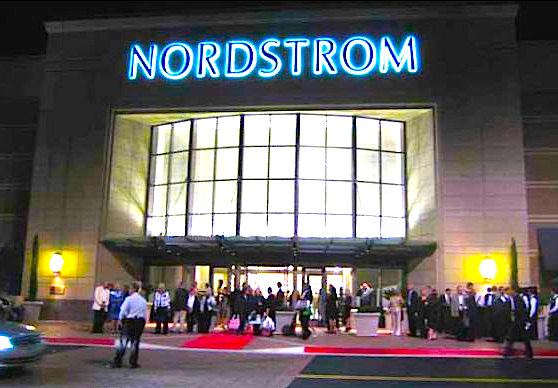
Nordstrom will host charity galas for the opening of its Canadian stores, as it does with its US store openings. Its first gala will be held on September 17th in Calgary, two days prior to the opening of its Chinook Centre store. Remarkably, all 1,800 gala tickets sold out within two weeks. Nordstrom’s second Canadian gala will be held in March of 2015, prior to the opening of its new Ottawa location. Subsequent galas will be held for Nordstrom’s new Vancouver and Toronto stores.
Nordstrom’s Calgary gala will benefit the Alberta Children’s Hospital Foundation, as well as the Calgary United Way. Tickets went on sale last month for $100 each and according to Calgary’s Ryan Massel, sold out in exceptional time. The entire cost of the gala is underwritten by Nordstrom, meaning that all proceeds from ticket sales go to these charities. Being that 1,800 tickets were sold, over $180,000 will be going to charity.
Over the years, Nordstrom’s store opening galas have raised millions for various charities. Many galas raise in excess of $100,000 and some, considerably more. The 2008 gala for the opening of Nordstrom’s Aventura Mall store in Miami, for example, raised more than $212,000 from its over 1,700 attendees. It will be interesting to see if Calgary’s gala surpasses these numbers.
Nordstrom’s Calgary store opens on Friday, September 19th. The 140,000 square foot Chinook Centre store occupies part of a former Sears location, at the north end of the mall. Nordstrom’s second Canadian store opens March 6th, 2015, at Ottawa’s Rideau Centre. Its third Canadian store opens in the fall of 2015 in Vancouver. Two Toronto stores (Toronto Eaton Centre and Yorkdale Shopping Centre) will open in the fall of 2016, and a third Toronto location opens at Sherway Gardens in the spring of 2017. At least a couple more Canadian Nordstrom locations are expected to follow.
Canada comes out on top, as Lululemon ranks first in a report measuring North American apparel company profitability. It outranks such prominent enterprises as Ralph Lauren, Urban Outfitters, Nike and Nordstrom. Interestingly, the company with the second-highest profit margin is also Canadian, being an apparel company based out of Montreal.
American publication Apparel Magazine ranks apparel companies based on two criteria: they must have at least $100 million in annual sales, and they must be publicly traded on a U.S. stock exchange. Profit margins were determined for the most recent fiscal year, and Lululemon’s came out on top at 17.57%.
Lululemon’s profit margin was down from the previous year, when it measured a more robust 19.8%. However, Lululemon ranked second last year, behind Chinese menswear brand Zuoan, which slipped to fourth place this year.
According to the study, Lululemon’s sales jumped 16.11% from last year, with its net income increasing by 2.98%. Sales of almost US $1.6 billion saw a net income of US $280 million. Next year’s profitability may be less, however, as the company struggles with both management and public perception issues.
Lululemon bested several large American companies, in terms of percentage profitability. For instance, TJX (which owns Canadian off-price retailers Winners and HomeSense, as well as Marshalls) ranked 14th with a profitability of 7.79%. TJX was the highest-selling of the 50 top retailers in terms of sheer numbers, with sales in excess of US $27 billion. Nordstrom’s profit margin was 6.03%, with sales in excess of US $12 billion. Fashion brand Ralph Lauren ranked seventh for profitability, with a 10.42% return on sales estimated to be almost US $7.5 billion.
According to the report, the highest overall sales increases were by American conglomerate Ascena Retail Group (owner of retailers Lane Bryant, dressbarn, maurices, Justice and Catherines), increasing 40.6% between 2013 and 2014. Net income was down, however, at 3.21% from 4.84% in the previous year.
Impressively, the second most productive apparel company in the top 50 is also Canadian. Montreal-based Gildan Activewear Inc. saw profit margins of 14.66%, up from 7.62% the year before. With annual sales in excess of $2 billion, Gildan manufactures and markets branded clothing, including undecorated blank activewear such as t-shirts, sport shirts and fleeces, which are subsequently decorated by screen printing companies with designs and logos. The company also supplies branded and private label athletic, casual and dress socks to retail companies in the United States, including Gold Toe Brands, PowerSox, SilverToe, Auro, All Pro, and the Gildan brand. The company also manufactures and distributes Under Armour and New Balance brand socks, as well as Mossy Oak outdoor clothing products. Gildan has approximately 34,000 employees worldwide and owns and operates manufacturing facilities in Central America and in the Caribbean.
Despite its profitability, Lululemon’s share price is currently less than half of what it was in October. Its currently trading at less than US $39 per share, while in October it traded as high as US $77.75.
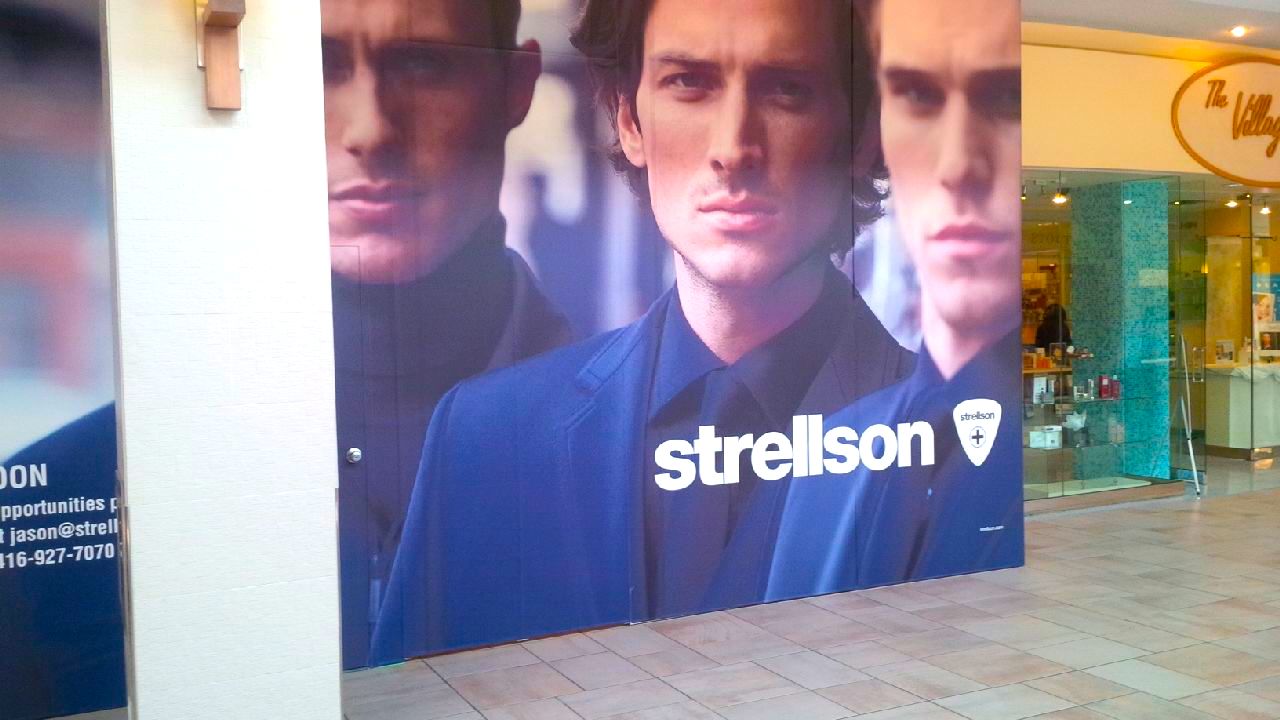
Hoarding over Bayview Village’s new Strellson store, currently under construction. Photo: ACT7, Urban Toronto.
Upscale Swiss menswear brand Strellson continues its Canadian store expansion, with a second location opening soon at Toronto’s Bayview Village. Toronto will be the only city in the world to boast two free-standing Strellson stores, and furthermore, Toronto is North America’s only city to feature any free-standing Strellson locations. Strellson continues to work with a Toronto-based broker to open new Canadian stores, and as we reported last month, the brand wants to open an Ottawa flagship.
Urban Toronto‘s ACT7 sent us a photo of the hoarding over Bayview Village’s new Strellson store, currently under construction. Strellson will locate in a large space within the mall, alongside upscale retailers such as Andrew’s and TNT The New Trend. Bayview Village is unique in that it carries many smaller, upscale stores and brands not found elsewhere. Bayview Village’s location is enviable, being close to some of Canada’s wealthiest neighbourhoods.
Founded in 1993, Strellson is Switzerland’s largest menswear manufacturer. Owned by Holy Fashion Group, it produces mid-to-high priced menswear (both dressy and casual), accessories and related products, targeting men in the 25 to 40 age range. It retails in about 40 countries.
According to Developers & Chains, Strellson is also looking for flagship retail space in Downtown Ottawa, either within the Rideau Centre or in a high-profile street location. Currently, Strellson’s only North American location is at 170 Bloor Street West in Toronto, at the base of the Park Hyatt Hotel, at the northwest corner of Bloor Street and Avenue Road. The 1,700 square foot store opened in November of 2012.
More Canadian Strellson locations are expected to follow, and we’ll update you when we learn more.
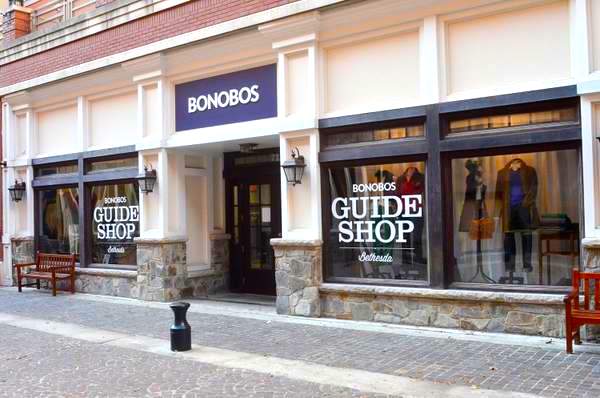
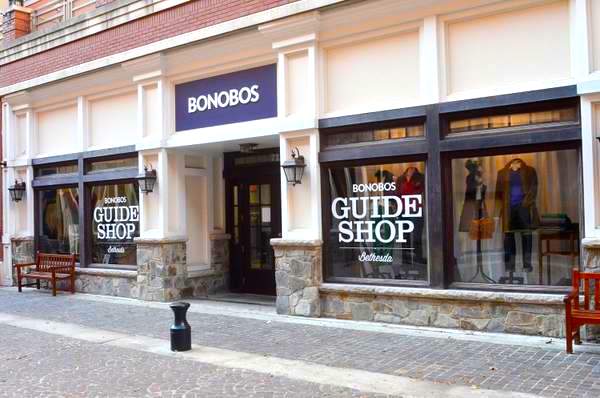
Amidst all the breathless pronouncements about the inexorable decline of brick and mortar retail emerges an interesting phenomenon: some of the fastest growing and most exciting internet-only brands are opening stores.
Recently, Bonobos raised $55MM largely to accelerate its foray into “Guideshops.” Other e-commerce innovators such as Warby Parker, Trunk Club,Nasty Gal and Bauble Bar are all expanding into physical store fronts. Expect more announcements soon, not only from earlier stage companies, but from larger direct-to-consumer brands as well. This seemingly counter-intuitive trend reflects a few realities.
First, most of these venture capital funded darlings have thrived in their first few years by exploiting a highly specific customer niche and leveraging the heck out of the advantages of a direct-to-consumer model. Alas, the number of customers who are willing to buy product sight unseen, without working directly with a sales person and lacking the instant gratification that physical stores provide, is comparatively small when it comes to product categories where fit, material quality and fabrication are important. For these brands to continue to grow–and have a chance for material profitability–physical locations aren’t a nice-to-do, they are a necessity.
Second, brick and mortar retail is different, not dead. In most product categories, for many, many years to come, the overwhelming majority of sales and profits will continue to come from, or be influenced directly by, physical locations. Regardless of whether a brand started as an actual store or as a virtual entity, the ones that will ultimately win will offer a tightly integrated experience across their various channels and touch-points. They will eschew traditional mass, one-size fits all strategies and embrace more personalized missions. There remains plenty of business to be done in brick and mortar locations–if you have something remarkable and meaningfully customer relevant.
Finally, when we think about the market or the customer we inevitably get it wrong. Global pronouncements about industry dynamics or the “typical” consumer are rarely particularly illuminating and almost never sufficiently actionable. The brands that are winning–the ones that are stealing share from you–go beyond the averages and the mega-trends. They understand how to apply technology to create frictionless commerce. They delve into data and apply customer insights that inform stronger acquisition, growth and retention tactics. They are committed to experimentation. They treat different customers differently. And on and on. None of this is fundamentally rooted in how a brand started or whether trends tend to favor its success.
Of course it’s far from certain that these previously web-only brands will successfully transition to an omni-channel world. Some will stumble mightily. A few will fail completely. Others will see their growth stall at only a handful of profitable locations.
The one thing for certain is that for quite a lot of customers, the benefits of physical shopping are here to stay. For traditional players the rush to close and down-size their store base may have some merit. But it’s equally likely the problem isn’t just the real estate portfolio.