Home Blog Page 1266

Strellson to open Canadian stores

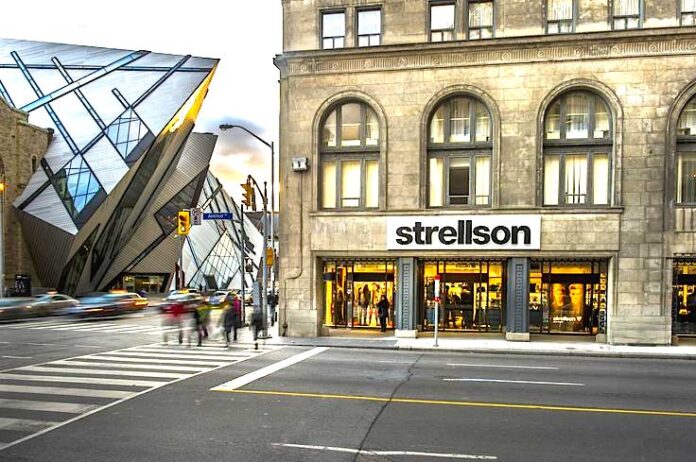
STRELLSON'S ONLY NORTH AMERICAN STORE IS AT 170 BLOOR ST. W. IN TORONTO. PHOTO: STRELLSON.

Upscale Swiss menswear brand Strellson will reportedly open more free-standing Canadian locations. The popular label, carried at several Hudson’s Bay stores, currently has one free-standing North American store in Toronto. Strellson is working with a Toronto-based broker to open more Canadian stores, beginning with a flagship location in Downtown Ottawa. A source at the company says other Canadian locations could also follow.  

Founded in 1993, Strellson is Switzerland’s largest menswear manufacturer. Owned by Holy Fashion Group, it produces mid-to-high priced menswear (both dressy and casual), accessories and related products, targeting men in the 25 to 40 age range. It retails in about 40 countries. 

According to Developers & Chains, Strellson is looking for flagship retail space in Downtown Ottawa, either within the Rideau Centre or in a high-profile street location. Strellson’s only other North American location is at 170 Bloor Street West in Toronto, at the base of the Park Hyatt Hotel at the northwest corner of Bloor Street and Avenue Road. We contacted Strellson Canada and a representative, speaking anonymously, said that the brand is considering a national store rollout, based on the brand’s success at its Toronto flagship and its success within Hudson’s Bay stores. The source would not provide confirmation, though they said that Vancouver, Edmonton, Calgary and Montreal could also eventually house free-standing Strellson stores. 
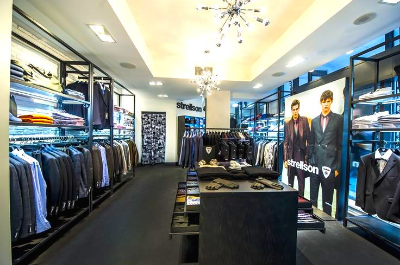
INSIDE STRELLSON’S 1,700 SQ FT TORONTO BLOOR STREET STORE. PHOTO: STRELLSON.

In 2011, a 2,400 square foot Strellson shop-in-store opened within Toronto’s flagship Hudson’s Bay on Queen Street. In November of 2012, Strellson opened its 1,700 square foot freestanding Toronto location. Sources with Strellson (and Hudson’s Bay) confirm that the label does very well in Canada, hence its plans to expand. According to Developers & Chains, Strellson is seeking Ottawa retail space in the 2,000 to 2,400 square foot range. 

For information on the broker handling Strellson’s Canadian store expansion, contact Retail Insider’s Editor-in-Chief, Craig Patterson, at: insider@retail-insider.com.


ANALYSIS: Will HBC sell its Canadian flagships?

exc-53a73652e4b053cbaa743b59

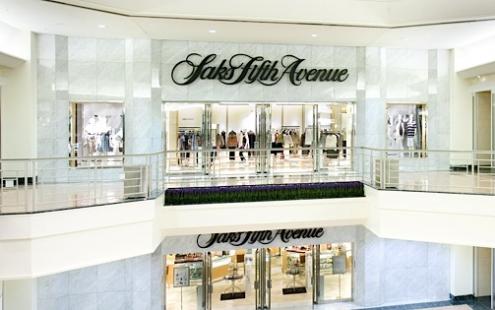
Hudson’s Bay Company (HBC) CEO Richard Baker indicates that he may sell some the company’s best stores. HBC owns several massive Canadian flagships, with a combined worth into the hundreds of millions of dollars. Similar to how the company recently sold its Toronto flagship, other Hudson’s Bay stores could be sold to adjacent mall landlords. Proceeds from these sales could renovate existing Hudson’s Bay stores, not to mention fund Saks Fifth Avenue‘s Canadian entry. We’ll provide an analysis of some top locations and what Richard Baker may have planned. 

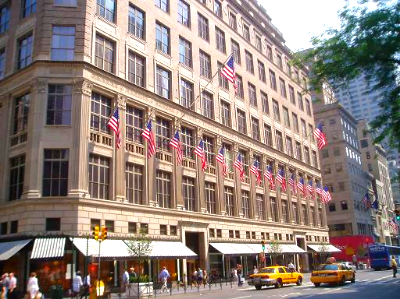
SAKS FIFTH AVENUE’S MANHATTAN FLAGSHIP IS WORTH AN ESTIMATED $1 BILLION

HBC set a precedent last January when it sold its 850,000 square foot Queen Street Toronto flagship (and adjacent office tower) to Cadillac Fairview for $650 million. Cadillac Fairview, in turn, merged Hudson’s Bay with the Toronto Eaton Centre, creating Canada’s second-largest mall. Saks Fifth Avenue will occupy 150,000 square feet within the Hudson’s Bay building as a result, and similar deals could happen in other Canadian cities. We’ll discuss several of these, below.

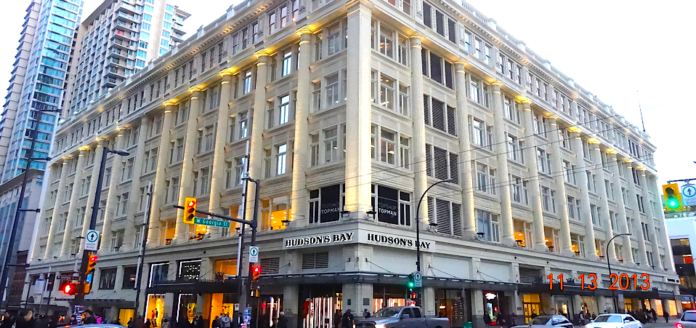
Vancouver: Sources say that Downtown Vancouver’s Hudson’s Bay is a contender for a similar sale. The massive 637,000 square foot store, spanning eight floors, is already connected to neighbouring Pacific Centre via an underground passage. Pacific Centre’s landlord, Cadillac Fairview, could be open to a deal since it’s the same landlord that spearheaded the purchase of Hudson’s Bay’s Toronto store. Saks Fifth Avenue could occupy up to 150,000 of Downtown Vancouver’s Hudson’s Bay, though details of Vancouver’s Saks store have yet to be bee finalized. Rumour has it that Saks could also open in a suburban Vancouver mall, as well, and we’ll update you when we learn more. 

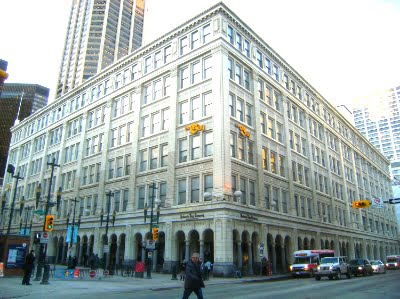
DOWNTOWN CALGARY’S HUDSON’S BAY FLAGSHIP

Calgary: Downtown Calgary’s 450,000 square foot Hudson’s Bay flagship is attached to the Scotia Centre. Selling this store could provide HBC with necessary funds for a store renovation, not to mention the addition of Saks Fifth Avenue within the same building. Downtown Calgary already has one large luxury retailer, a 147,000 square foot Holt Renfrew store, located two blocks west. Sources can’t confirm if Saks will open in Calgary though if it does, we’d expect either a Downtown location within Hudson’s Bay, or a free-standing store at Chinook Centre.  

Ottawa: Hudson’s Bay’s 335,000 square foot Ottawa store is located across the street from Cadillac Fairview-owned Rideau Centre. Similar to what it did in Toronto, Cadillac Fairview could purchase Hudson’s Bay and join it to the Rideau Centre. Although analysts suspect that Saks won’t open in the city, an Ottawa store could be a strategic move for Saks. Ottawa is affluent and growing, and we’re not aware of any expansion or relocation plans for its tiny Holt Renfrew store. A Rideau Centre Saks could see synergies with the mall’s new 157,000 square foot Nordstrom store, its new La Maison Simons store, and its new flagship Harry Rosen menswear store, all opening within the next two years. 

Montreal: Montreal’s 655,000 square foot Hudson’s Bay flagship is connected underground to Oxford Properties-managed Promenades Cathedrale. HBC indicates that Saks will open at least one store in Montreal. Selling this store could raise much needed funds for its renovation, not to mention spearheading a large Saks shop-in-store. 

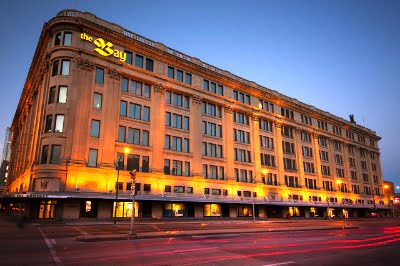
HUDSON BAY’S MASSIVE WINNIPEG STORE

Winnipeg: Hudson’s Bay’s massive Downtown Winnipeg flagship is another story entirely. The 656,000 square foot building is heritage protected, rendering it essentially a white elephant. The store underperforms, with less than 240,000 square feet currently in use. Sources say that the store is a liability and that HBC wants to offload it, with recent attempts to transfer ownership of the building to the Manitoba government in exchange for tax benefits. 

Unlocking the value in HBC’s Canadian real estate could vastly improve company cash coffers. Its most valuable real estate asset, however, isn’t one of its Canadian stores. HBC owns Saks Fifth Avenue’s 646,000 square foot Manhattan flagship, valued at about $1 billion. Richard Baker reportedly refers to it as the company’s ‘crown jewel’. We think it and other HBC properties will eventually be sold either via a REIT, or individually. 

Why Canadian luxury retailers target Chinese tourists

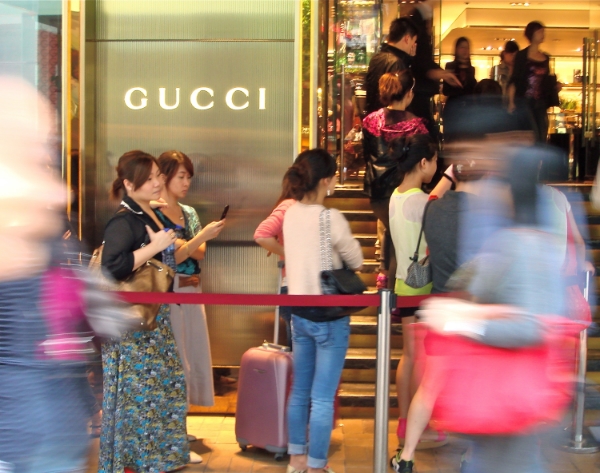
PHOTO: WWW.BONBRAND.COM

By Edward Quan

Canadian luxury retailers are targeting Chinese shoppers like never before. It should come as no surprise, given the tremendous spending power of Chinese tourists. Sources at Holt Renfrew‘s Vancouver store, for example, confirm that many of the store’s top spenders are Chinese, and that sales volumes from Chinese tourists are substantial. Other upscale retailers, especially in Toronto and Vancouver, say that they target Chinese tourists based on some of the statistics discussed below. 

Chinese travellers have broken all records for spending over the past two years, shelling out over US $129 billion in purchases in 2013, alone. Recognizing this trend, several European fashion houses such as Chanel and Hugo Boss have launched their collections in Asia, via high-profile runway presentations. Chanel recently did a show in Tokyo, while Hugo Boss dis a runway presentation last spring in Shanghai. Efforts have paid off, as international luxury brands continue to see strong spending from Chinese tourists.   

According to the United Nations World Travel Organization, China accounts for one out of every ten travellers, followed by Germans, Americans, British and Russians. In addition, the industry expects Chinese spending to almost triple by 2020, reaching US $300 billion. Surveys show that for over 80% of Chinese tourists on vacation, shopping is their top priority. In my experience as a luxury buyer in travel retail, for example, it would not be unusual for Chinese tourists to ask me what designer shops were available, and where.

Chinese tourists also lead in terms of tax-free transactions, spending an average of US $1130, compared to Russians with US $494 per transaction. This is not a surprising, given the size and the rapid growth of China’s upper and middle class. The Chinese are increasingly traveling abroad, partly due to relaxed government restrictions on foreign travel, high import duties and taxes on luxury goods at home, and rampant counterfeiting within China.

Understanding Chinese cultural nuances is paramount for retailers, and it’s not as simple having Mandarin speaking sales staff. Some retailers get it, specifically catering to the Chinese. Printemps department store in Paris, for example, now has a dedicated entrance for Chinese tour groups. Harrod’s in London has 100 China UnionPay card terminals located throughout the store, and both stores have Chinese language websites and maps. Closer to home, several Holt Renfrew stores now accept the China UnionPay card, as does Toronto’s Yorkdale Shopping Centre – the first Canadian mall to do so. 

To reach these tourists, luxury retailers must recognize how the Chinese research their destinations prior to travel. Nearly half of Chinese residents now have internet access, with two-thirds of traveling Chinese researching their destination online. The majority use Chinese language search engines and social media platforms, so Chinese-language travel writers and bloggers will play an important role.

Another challenge facing tourist destination is that the Chinese stomach is “stubborn”, according to CC Zhuang, CEO of Qunar – China’s largest travel website. Chinese tourists want their congee – Chinese porridge – in the morning. European continental breakfast would not satisfy Chinese appetites, for example, as many Chinese are not yet ready to be totally immersed in the foreign food experience.

Due to language barriers, most Chinese travellers still travel in groups. The trend is changing, however, as we’re now seeing more young, affluent independent travellers from China. With only 5% of all Chinese currently holding passports, the potential for luxury retailers is enormous. By next year, Chinese tourists will purchase more luxury goods than tourists from all other countries combined. Success will come to those retailers who take the time to understand and meet the unique needs of the Chinese tourist.

Edward Quan

Edward Quan is a luxury goods expert, based out of Vancouver. He is a fashion columnist with StyleDrama, as well as a freelance travel writer. You will also find Edward Quan at TheBahamasWeekly, as well as here periodically at Retail Insider. 


Over a third of foreign retailers enter Canada through one mall

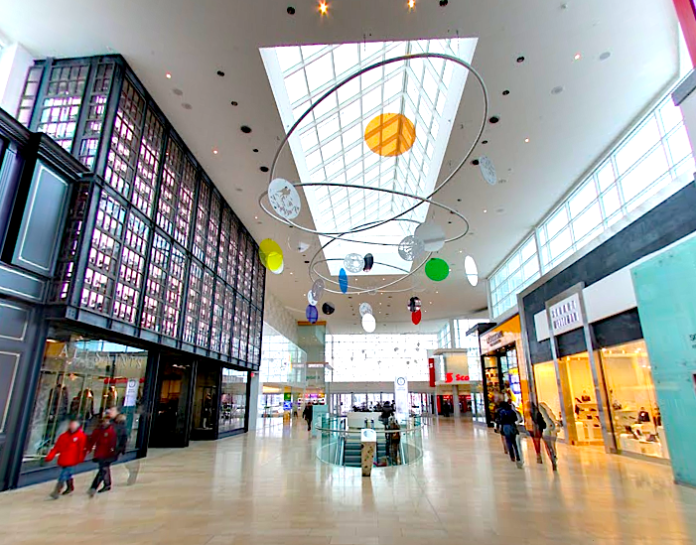
YORKDALE SHOPPING CENTRE. PHOTO: WISDEK

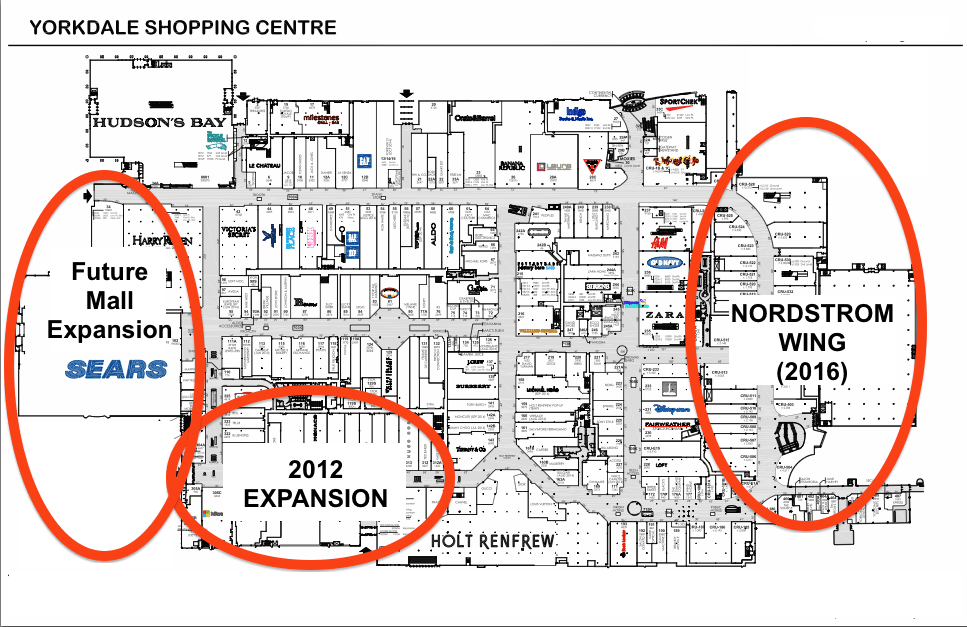
Last year, over a third of all first locations for retailers entering Canada were at Toronto’s Yorkdale Shopping Centre. 2013 wasn’t an unusual year for Yorkdale, however. From the inexpensive to luxurious, Yorkdale has been Canada’s entry point for many foreign retailers for a number of years. Its latest mall expansion, anchored by a 188,000 square foot Nordstrom store, will see even more first-to-market retailers between now and 2016. It’s no wonder that the mall is forecasted to become North America’s top-selling mall by 2018. 

In 2012, the mall saw several first-to-Canada retailers open in its south-western expansion, including Kate Spade, LOFT (by Ann Taylor), Microsoft Store, Ted Baker and Tesla Motors. In 2013, Yorkdale held the openings of Canada’s first AllSaints, David Yurman, John Varvatos, Mulberry, White House | Black Market, Tumi, and Zara Home stores.  2014 is proving to be another stellar year for the mall, with a particular focus on luxury. So far, Yorkdale has announced Canada’s first Jimmy Choo, Versace (free-standing), Moncler, Bulgari and Vince Camuto stores. We’re told that more are on the way, possibly including a Uniqlo store that was recently mentioned in the Financial Post

Several other first-to-Canada retailers for Yorkdale include Canada’s first Apple Store (2005), GEOX (2005), Bath & Body Works (2008) and Crate & Barrel (2008)

The mall’s exceptional leasing team, under the management of Oxford Properties, aggressively targets foreign retailers. It also targets foreign tourists, being Canada’s first mall to accept the China UnionPay card. Last year the mall’s annual sales surpassed $1 billion, with sales forecasts of $2 billion by 2018. We expect this to become North America’s top-selling mall, considering current top-selling South Coast Plaza reaches about $1.5 billion annually, with no foreseeable expansion plans. 

Yorkdale’s new 298,000 square foot Nordstrom wing won’t be the mall’s final expansion, however. Another mall expansion is planned after Sears is demolished, housing multiple retailers and as many as two new department stores. Construction won’t likely begin until the Nordstrom wing opens in 2016, and we’ll update you with further details when permitted. 

Source: CBRE report: 


Sporting Life to open stores across Canada

exc-53a0b60ae4b033a62778838d


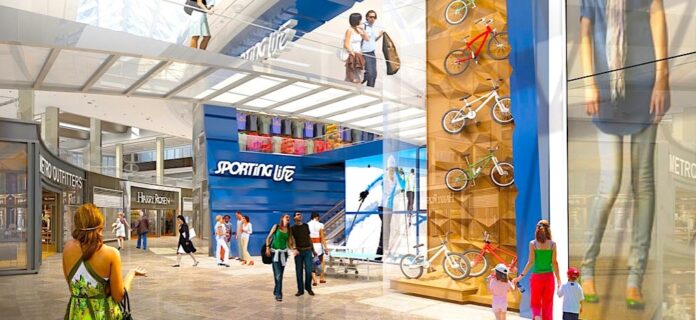
Rendering: Cadillac FairviewRendering: Cadillac Fairview

Rendering: Cadillac Fairview

Upscale sporting goods retailer Sporting Life plans to open stores across Canada. Its goal is to open two stores a year, with locations sought in Vancouver, Edmonton, Calgary, and Montreal. Its stores will be large, measuring in the 30,000-50,000 square foot range. Its expansion goals are lofty, especially considering that Sporting Life hasn’t opened a new store in 14 years.


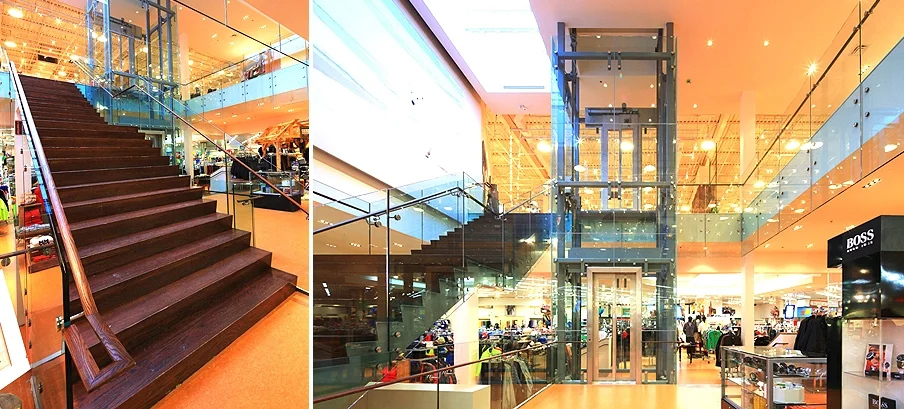
Sporting Life's Toronto flagship. Photo: Reich+Petch (click to enlarge)Sporting Life's Toronto flagship. Photo: Reich+Petch (click to enlarge)

Sporting Life’s Toronto flagship. Photo: Reich+Petch (click to enlarge)

Founded in 1979, Sporting Life sells apparel and footwear, as well as equipment geared towards runners, cyclists, skiers, snowboarders and hikers. Some items can cost into the thousands. It has a large selection of outerwear, fleece and coats from popular brands Moncler, Canada Goose, and The North Face, among others. It also carries a mix of high-end and casual clothing brands including Barbour, Bogner, Hugo Boss, Grenoble, Mackage, John Varvatos and others.  

Given the size of its current and recently announced locations, we expect Sporting Life’s new stores to span 30,000 to 50,000 square feet. Its current and proposed store locations and sizes are as follows:

Current Stores: 

  • Toronto: flagship at 2665 Yonge Street: about 36,000 square feet,
  • Toronto: bike and snowboard shop, at 2545 Yonge Street: about 10,000 square feet,
  • Toronto: Sherway Gardens: currently 42,000 square feet, to be replaced with a 40,000 location in 2015, and
  • Collingwood, Ontario: 10,000 square feet.

Announced new store locations: 


Photo: Reich+Petch (click to enlarge)Photo: Reich+Petch (click to enlarge)

Photo: Reich+Petch (click to enlarge)

  • Markham, Ontario: Markville Shopping Centre: 32,000 square feet, opening late September, 2014, 
  • Ottawa: Landsdowne Park: 43,000 square feet, opening in October, 2014,
  • Richmond Hill, Ontario: Hillcrest Mall: 44,000 square feet, opening in 2016. 

President and CEO David Russell told the Toronto Star that Sporting Life sells about $100 million annually. Its current expansion plans were made possible after Fairfax Financial Holdings Ltd. bought 75% of Sporting Life in December of 2011.

When Sporting Life expands into Western Canada, its merchandising will be modified. Mr. Russel said

“When we open a store in the lower mainland of British Columbia, for example, the clothing will be perhaps a little different; more layers as opposed to big heavy down parkas. And when we go to western Canada the skis are wider and there might be more emphasis on mountain biking as opposed to road biking.”

CANADIAN RETAIL NEWS: Wednesday, June 18, 2014 (Updated Continuously)

GO BACK

Subscribe to our daily retail news updates for Canadians

* indicates required


Nordstrom’s Canadian stores will look different than most US locations [With Slideshow]

exc-5382a95ee4b06fe80abd67f4

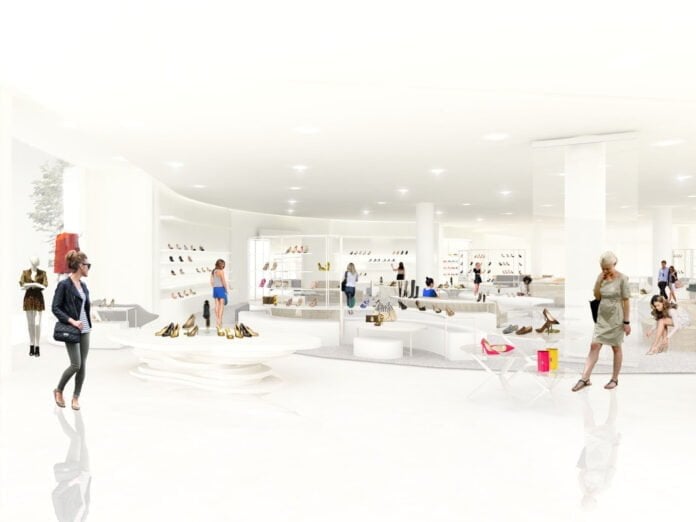
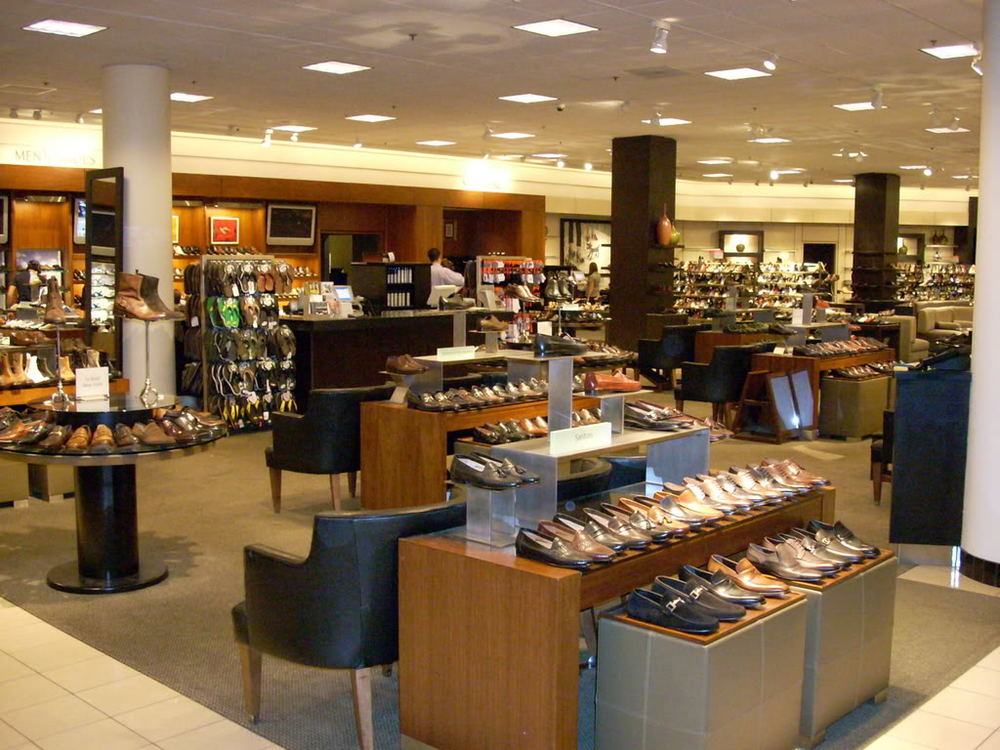
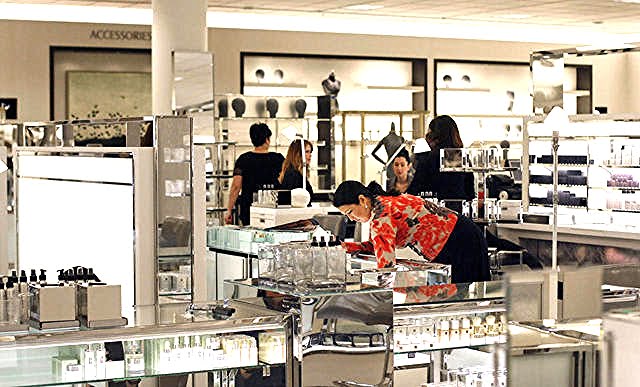
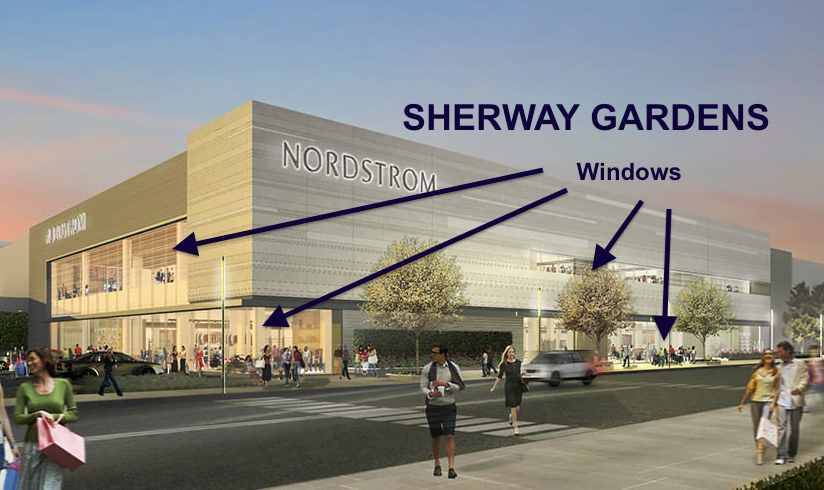
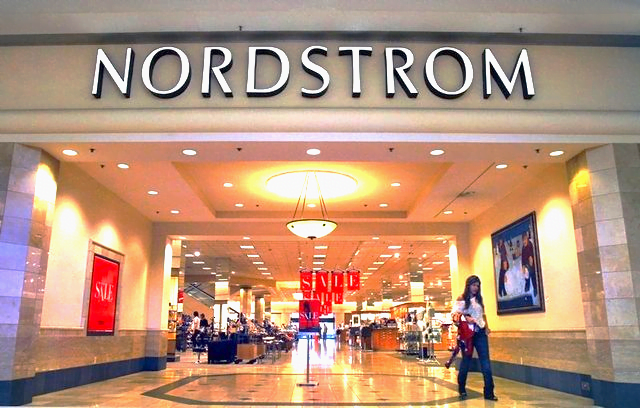
Nordstrom‘s Canadian stores will look somewhat different than most of its American locations. The company will adopt a more contemporary look for its store interiors, with windows providing natural light, while most American Nordstrom stores feature a conservative cream-colour aesthetic, void of sunlight. New and recently renovated Nordstrom stores provide insight into the look of its Canadian stores, including a recently overhauled Los Angeles location. Images in this article can be clicked to enlarge, and an annotated slideshow of Canadian Nordstrom stores is provided below.

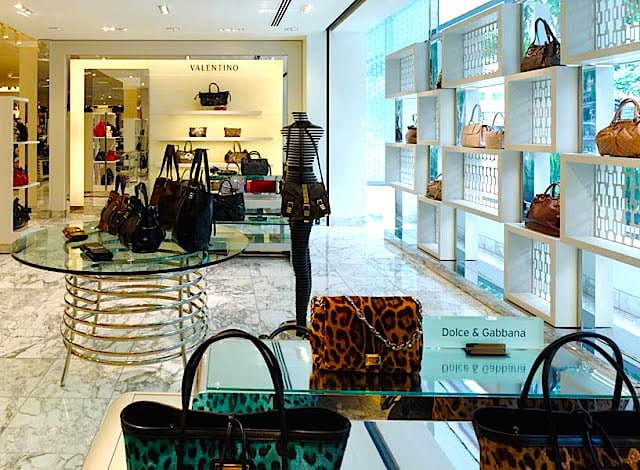
Sources tell us that Nordstrom’s extensively renovated location at The Grove in Los Angeles gives insight into the look of Nordstrom’s new Canadian stores. Natural light floods portions of the Los Angeles location through a point-supported glass exterior, a first for the company. Its interior, characteristic of new and recently renovated Nordstrom stores, features a clean black-and-white aesthetic. Although tiled ceilings are still present in some departments, smooth ceilings characterize its pricier departments, including designer handbags and its costly womenswear department, Collectors. White marble floors characterize its pricier departments, while high-gloss ceramic tile covers much of the rest of the store.  

For years, Nordstrom’s store design was conservative and formulaic: tiled ceilings with protruding spotlights, cream-coloured floors, wood accented menswear departments, and a generally conservative feel. Contrasting sharply is competitor Bloomingdale‘s, typically featuring a glamorous shiny black-and-while store aesthetic, bright interior lighting and dramatic high ceilings. Interestingly, Bloomingdale’s seemingly upscale store interiors lead many to believe that Bloomingdale’s stores are more ‘exclusive’ than Nordstrom, despite the fact that Nordstrom stores generally carry more luxury labels than most Bloomingdale’s locations. 

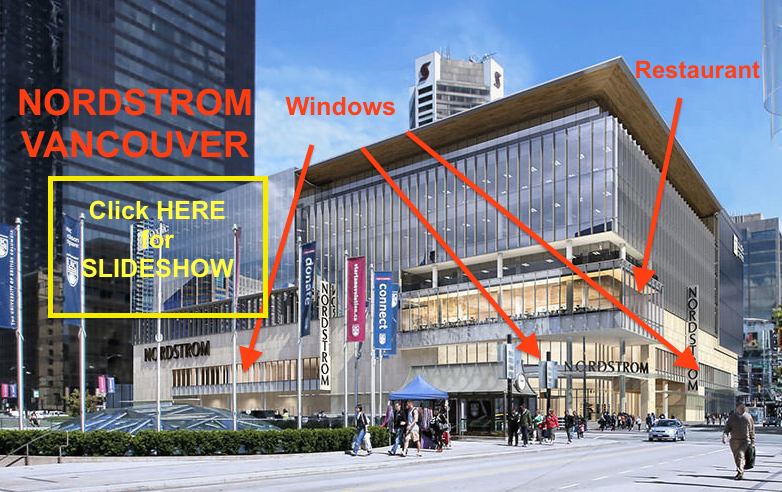
Renderings of Canada’s Nordstrom stores indicate that windows will feature prominently in several of the store’s locations. Its 230,000 square foot three-level Vancouver flagship, scheduled to open in the fall of 2015, has windows on all three levels. Its ground floor will have windows along much of the Granville Street frontage, possibly exposing its handbags department in a similar way to its Naples, Florida store (photo to the right). The protruding glass box on the store’s third level is for a restaurant concept which we’ll discuss shortly. (See slideshow, above)

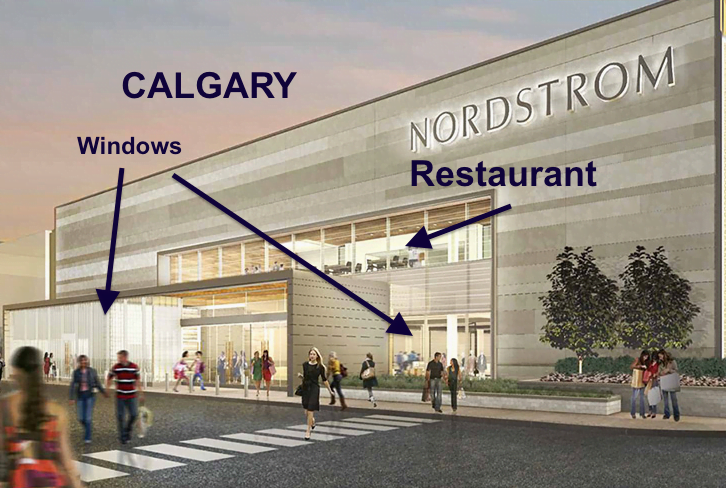
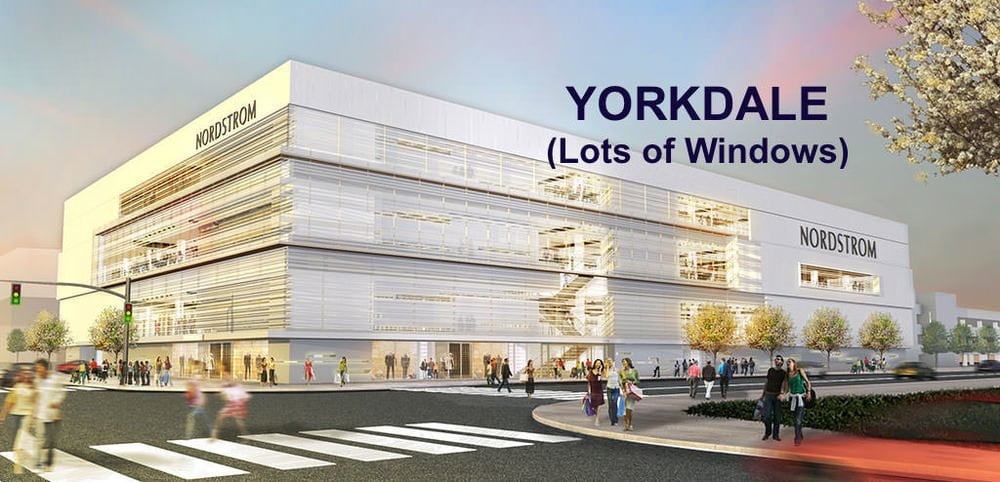
Nordstrom’s Calgary and Ottawa stores both appear to feature some windows, though not as many as in renderings of its Yorkdale Shopping Centre store. Opening in the fall of 2016, Yorkdale’s Nordstrom appears to have ample windows on all of its levels. Being east-facing, the store will be sun-flooded on a bright summer morning. (See slideshow, above)

Nordstrom’s Sherway Gardens location, scheduled to open in spring of 2017, appears to have extensive windows over much of its exterior. Its ground floor appears to be wrapped in windows, while its second level features some windows as well. Facing south, much of the Sherway store’s ground floor will be bathed in natural light. (See slideshow, above)

Although some departments at Nordstrom’s Canadian stores will feature smooth ceilings and marble floors, sources tell us that Canada’s Nordstrom stores will still have tile ceilings in several of its departments. It will be interesting to see how Canadians react to Nordstrom’s Canadian store interiors, as competition from Holt Renfrew and Saks Fifth Avenue will be fierce


Will Holt Renfrew be de-throned as North America’s most productive department store?

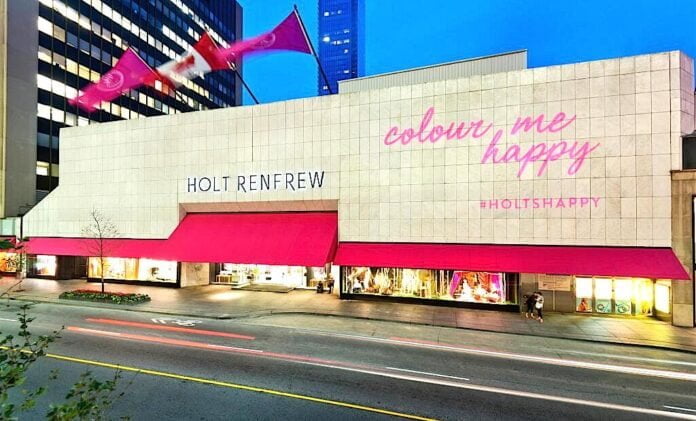
HOLT RENFREW RECENTLY INSTALLED MAGENTA COLOURED AWNINGS TO ITS FLAGSHIP STORE AT 50 BLOOR ST. W. IN TORONTO. PHOTO: HOLT RENFREW, VIA TWITTER.

Holt Renfrew will have to fight to maintain its status as North America’s most productive department store. With per square foot annual sales exceeding $1,000, Holt Renfrew far surpasses productivity at Neiman Marcus, Saks Fifth Avenue and Nordstrom. However, competition will increase for Holt Renfrew as Saks Fifth Avenue and Nordstrom both open in Canada, and online shopping becomes commonplace. An unintended consequence could be an over-saturation of Canadian luxury retail, to be explained below. 

Sources estimate Holt Renfrew’s yearly sales to be in excess of $800 million. Its fleet of nine stores span a total of almost 800,000 square feet, according to our calculations from various sources. Holt Renfrew plans to expand its store footprint substantially, occupying in excess of 1.1 million square feet by 2017. 

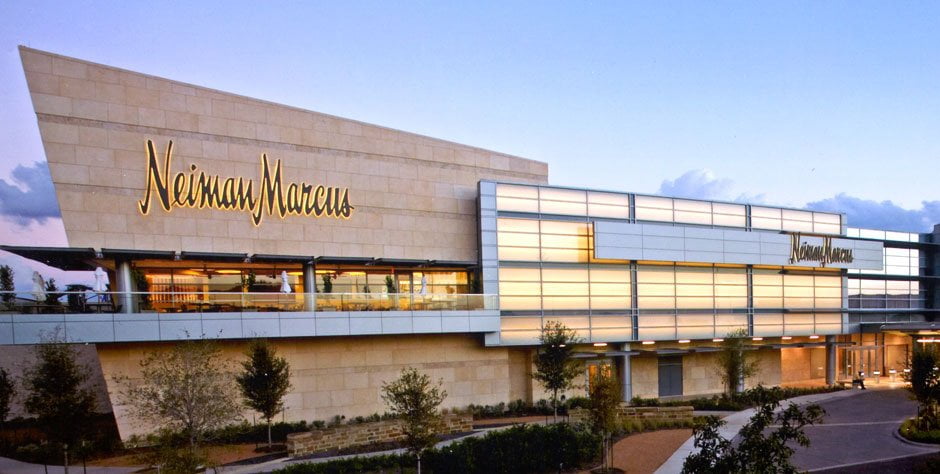
Its North American peers sell substantially less. Neiman Marcus, North America’s second most productive department store, sells an estimated US $575 per square foot annually. Nordstrom is next, selling $470 per square foot, while Saks Fifth Avenue’s sales estimates are $437. 


Luxurious American retailer Neiman Marcus trails Holt Renfrew’s productivity, with annual per square foot sales of US $575. 

Holt Renfrew’s store space is expanding rapidly. Its Toronto Bloor Street flagship, measuring over 180,000 square feet, will expand to over 200,000 square feet by the end of 2016. The combined Ogilvy/Holt’s in Montreal will measure 220,000 square feet by 2017, resulting in the closing of Holt’s 84,000 square foot Montreal store. Sources say that Holt’s Vancouver store, currently 140,000 square feet, will expand by as much as 40,000 square feet by 2016. As early as next year, Calgary’s 121,000 square foot store could see the addition of a 25,500 square foot fourth floor. In the spring of 2016, a 120,000 square foot flagship will open at Mississauga’s Square One. A replacement Edmonton location is rumoured, while the future of Holt Renfrew’s Sherway Gardens store remains unclear. 

As Canadian luxury retail expands, affluent Canadians are more likely to shop at home. Some of the nation’s wealthy currently prefer to shop abroad. Holt Renfrew wants to change this, upgrading its stores and adding about 40% to its existing store space. Productivity will likely suffer as a result, given that the Canadian market is unlikely to grow at the same rate. Substantial new retail space for Saks and Nordstrom could see Holt’s sales productivity reduced substantially.  

Holt Renfrew will soon be contending with fierce competition. Saks Fifth Avenue will open as many as eight Canadian stores, and has already announced its first two locations. In 2016, a 150,000 square foot Saks flagship will open within the Hudson’s Bay building at the Toronto Eaton Centre, while a 132,000 square foot Saks will open at Sherway Gardens. A third Toronto Saks location, as well as stores in Vancouver, Montreal and Calgary, are expected to follow. Given the expected size of Saks Fifth Avenue’s Canadian stores, Canada could eventually see between 800,000 and over 1 million square feet devoted to Saks.

American Nordstrom stores achieve annual per square foot sales of about US $470.

Nordstrom, for its part, has already announced six Canadian store locations, totalling approximately 1,067,000 square feet. As many as four more stores could be announced, adding substantially more space to Canada’s increasingly crowded upscale department store market. 

It will be interesting to watch Holt Renfrew’s strategy vis-a-vis the new competition. Saks and Nordstrom both anticipate strong Canadian online sales. At the same time, Holt Renfrew is expanding its own online offerings. Website sales aside, it will be interesting to watch as Canada’s upscale department store market grows from its current 800,000 square feet to more than triple that size within the next three years. Fallout is likely, and market saturation is possible, as Canada could soon exceed the United States in terms of upscale department store retail space per capita. 

VIDEO: The future of Canadian retail

Youtube video

We found the above video interesting. It examines the future of Canadian retail, from technology to the increased proliferation of American retailers. It discusses the ‘blurring’ between retail and technology, as eCommerce continues to grow. Stores will become ‘showrooms’ where customers can buy products to be shipped, while larger stores become the equivalent of distribution centres. Technology is key for some Canadian shopping malls, from social media presence to innovative parking lot wayfinding. Technology also benefits American retailers in their expansion to Canada, as many already know what we like from what we order online.  

The video demonstrates an interesting technology that provides a virtual ‘fly through’, allowing retailers to see what their store will look like if built in a mall. Pop-up stores were also mentioned in the video, as they are seeing increased interest from both consumers and retailers. We’ve decided to write an article about the proliferation of Canadian pop-up stores as a result. 

Below is a video by Retail Council of Canada‘s President and CEO, Diane J. Brisbois. She discusses the transformation she’s seeing in the retail landscape, from social media to the evolution of the omni-channel. She argues that the biggest challenge for retailers is finding the right ‘fit’, finding the most effective ways to meaningfully connect with consumers. 

Youtube video

“Technology has been the great enabler,” says Brisebois. “It’s the platform that’s changing retail faster than we’ve ever seen before.”

Below, Canadian Tire President Michael Medline says that technology, new digital channels and “the always on customer” are disrupting retail immensely. He says that technology is important, but notes that the human experience of shopping and deciding on purchases remain paramount.

Youtube video

Below, Diane Brisebois describes Canadian Tire’s ‘Store of the Future’, presented at Store Conference 2014.  

Youtube video

We hope you have an excellent weekend, and we’ll be back on Monday. 


Eataly Coming to Canada: Update

exc-53978737e4b0b28690e3fd92

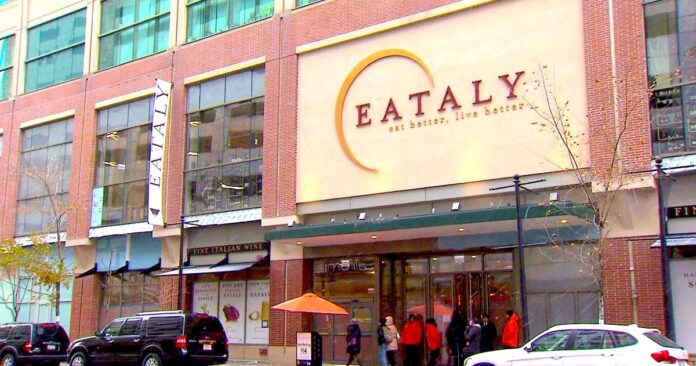
We’re updating our previous article where we discussed Eataly‘s coming to Canada. The article gained a lot of attention, speaking to the immense popularity of the large-format Italian food retail concept. Several sources told us that Eataly was in talks to partner with a large Canadian retailer, in an effort to come to Canada. We were also informed of ongoing talks with a landlord for retail space in Toronto’s Yorkville area. New information has come to light since then, possibly confirming Eataly’s future Toronto opening, as well as plans for Eataly locations in other Canadian cities. 

Our February article reiterated what sources were telling us: that Eataly was in partnership talks to open in Toronto. We were asked to keep the identity of the potential Canadian business partner private, as well as the possible Yorkville-area Eataly location. Eataly initially denied the reports of a Toronto location, only to retract and tell online food website, Eater, that a Toronto location wouldn’t open for “another three years or so”. Then in April, a source at Chicago’s Eataly told Toronto Star food reporter Jennifer Bain that Toronto’s Eataly would open in about three years. We’ve since heard from sources that a Toronto Eataly is still in the works, though it won’t likely open before 2017. 

A source at Eataly, speaking on the condition of anonymity, provided us some interesting details. Although uncertain of the progress of its Toronto negotiations, the source confirmed Toronto to be a “high priority” for the company. The source went on to explain that other Canadian cities were possible Eataly targets and that Montreal, specifically, could some day see Eataly in its downtown core. When Vancouver was discussed, the source cited the city’s increasing sophistication, as well as its thriving tourism. The source also revealed that into the more distant future, other Canadian cities could house Eataly locations, provided that landlords made conditions favourable and local markets met Eataly’s criteria for culinary sophistication. 

Eataly wants to be in Toronto’s Yorkville area. Yorkville is experiencing an unprecedented level of retail expansion and redevelopment of existing retail space. Examples of this abound. Hazelton Lanes is renovating and expanding, while One Bloor Street East is currently under construction. Sources say that the Manulife Centre may see renovations, and that the Holt Renfrew Centre will be redeveloped with an expanded Holt Renfrew flagship, as well as substantial new retail below a tall residential tower. Neighbouring Cumberland Terrace is expected to eventually be redeveloped, and some large new retail spaces will accompany several massive residential towers to be built near Toronto’s new Four Seasons Hotel. Redevelopment of 80 Bloor Street West will see substantially more retail, and the future of some of 100 Bloor Street West’s tenants is uncertain as well. Furthermore, the Hudson’s Bay Centre, at the northeast corner of Yonge and Bloor Streets, is ripe for redevelopment: Saks Fifth Avenue recently abandoned plans to replace Hudson’s Bay with a 300,000 square foot store. 

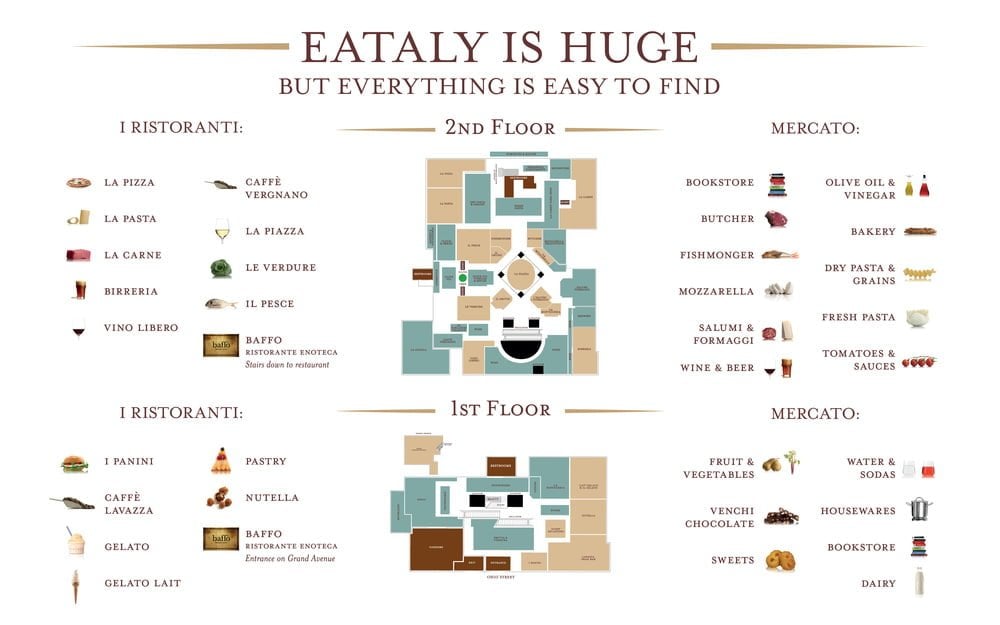
Eataly boasts 27 worldwide locations, though only two in North America: a 58,000 square foot space in Manhattan, and a 63,000 square foot location in Chicago. Its 2013 Manhattan sales targets were estimated at a whopping $85 million. In December, its notoriously busy Chicago location had to temporarily close because it ran out of food. Eataly has 10 locations in Italy, 13 in Japan, one in Dubai and one in Istanbul, Turkey. 

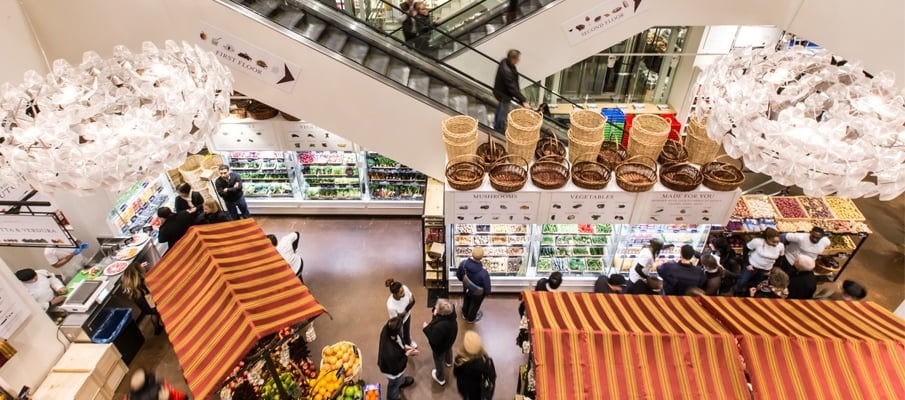
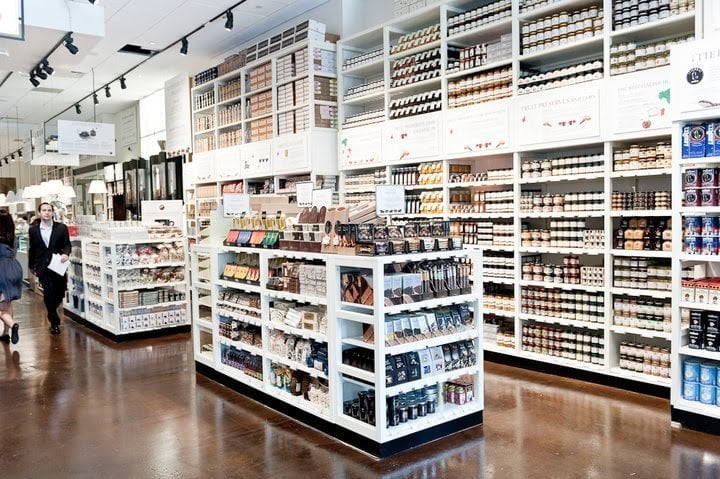
Eataly was founded in Turin, Italy, in 2007. Founder Oscar Farinetti wanted to combine elements of a lively, open environment with a learning centre to create an atmosphere conducive to shopping, tasting, and learning about high-quality Italian foods. Inspired by the European food-hall concept, its massive stores are populated with tasting areas and gourmet restaurants to complement the upscale food offerings. Customers can taste the artisan products, learn about them from educated staff, and buy the ingredients to recreate Eataly’s restaurant food at home, all at fair prices. 


H&M Home collection shops coming to Canada

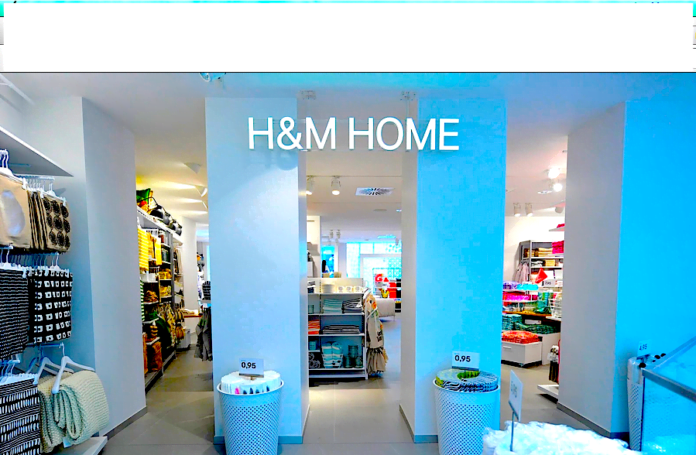
Image: H&M Home

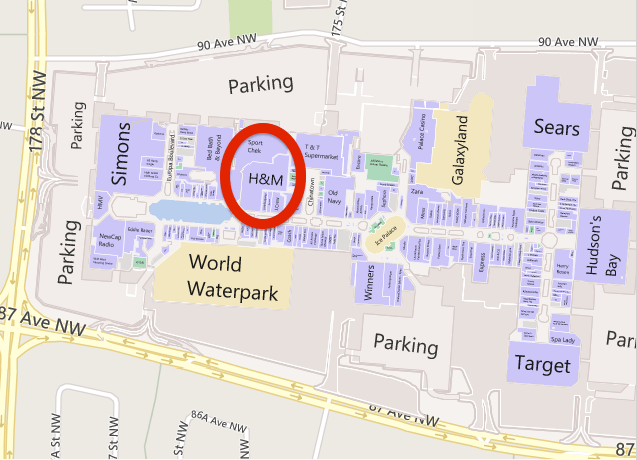
Canada’s first H&M Home collection shop opens on Thursday at the H&M flagship at West Edmonton Mall. This shop-in-store prototype, whose purpose is to test the Canadian market, will eventually be rolled-out in selected H&M stores nation-wide. Prices are reasonable, and the colourful collection focusses on home furnishings. 

H&M’s Home collection launch coincides with the re-opening of the renovated 32,000 square foot West Edmonton Mall H&M store. We’ll follow up this article with photos of the renovation, since it they will be an indication of what’s in store for other Canadian H&M store locations. H&M is using West Edmonton Mall, as are a number of other retailers, as a testing ground prior to a national launch. Edmonton is a reasonably affluent city with a wide spectrum of shoppers. 

Prices for H&M’s Home collection are reasonable, ranging from $3.95 for napkins to about $100 for a knitted wool throw. Pillows are in the $6-20 range, while duvet covers are priced between $30 and $60. Products for most household rooms are available, and can be viewed with prices on H&M’s Canadian website

The collection launched in 2009, though this is the first time it’s been available in Canada. H&M Home’s first North American shop-in-store opened last November in Washington, DC. According to its website, its only other American Home shop is within a New Orleans H&M store. 

“We are very proud to house the very first H&M Home in Canada as part of the remodel of the store. We are sure it will be hugely successful with our customers,” said David Ghermezian, President of West Edmonton Mall. 

The H&M Home store launch (and re-launch of the entire) takes place at 12:00 noon on Thursday. The first 300 people in line can receive up to $300 off their entire purchase. Restrictions apply, according to H&M’s website