Across suburban Canada, municipalities are struggling to keep pace with rapid population growth, rising infrastructure costs, affordability pressures, and increasingly complex operational demands.
For George Minakakis, those challenges increasingly resemble the same transformations reshaping modern business.
The longtime retail executive, strategic advisor, and current Milton Town Councillor officially announced his candidacy for Mayor of Milton this month, positioning his campaign around affordability, economic development, fiscal responsibility, and modernization as one of Canada’s fastest-growing communities continues to evolve.
For many in the retail, commercial real estate, and consumer sectors, Minakakis is already a familiar figure. Over a career spanning decades, he held senior leadership positions with Luxottica Group across Canada and Asia, including serving as CEO in China and Hong Kong and overseeing retail operations tied to brands such as Sunglass Hut. He later founded Inception Retail Group, an advisory firm focused on retail strategy, AI integration, digital transformation, and organizational growth.
His experience managing retail operations in rapidly evolving global markets helped shape his perspective on how large organizations adapt to growth, infrastructure pressures, technology shifts, and changing consumer behaviour.
Today, Minakakis argues municipalities increasingly face many of those same realities as communities become larger, more expensive, and more operationally complex.
“When you’re in the consumer-facing space and dealing with the public, you’re doing the same thing in municipal government,” Minakakis said in an interview with Retail Insider. “Ultimately who you serve is the public.”
Milton as a Case Study in Canadian Growth
Milton has become one of the clearest examples of the pressures reshaping suburban Canada.
Located along Ontario’s Highway 401 economic corridor west of Toronto, the municipality has experienced years of rapid residential expansion, industrial growth, and intensifying development as the Greater Toronto Area continues pushing outward.
According to figures cited by Minakakis, Milton’s population grew from roughly 32,000 residents in 2000 to approximately 152,000 25 years later. Long-term projections suggest the municipality by 2051 could eventually exceed 400,000 residents.
That pace of expansion has transformed Milton from a traditional suburban community into a rapidly evolving economic and infrastructure hub anchored by logistics, warehousing, residential intensification, and growing commercial development.
For Minakakis, however, growth alone is not enough.
“What it really means is growth that improves quality of life,” he said. “You can’t simply focus on increasing population without ensuring infrastructure, services, and employment opportunities keep pace.”
His concerns reflect broader conversations taking place across municipalities throughout Canada as communities attempt to balance housing growth, infrastructure demands, affordability pressures, and economic competitiveness.
Minakakis argues that municipalities cannot afford to become primarily commuter-based residential markets dependent on external employment centres.
He pointed to data suggesting Milton has a significantly lower percentage of residents working locally compared to neighbouring municipalities within Halton Region.
In his view, communities built primarily around residential expansion without corresponding economic diversification risk weakening local commercial ecosystems over time.
“Warehousing contributes to the tax base, but communities also need employers that create broader economic activity and long-term local employment,” he said.
Milton Town Hall. Photo: Town of Milton
Why Economic Development Matters for Retail and Affordability
For retailers, restaurants, developers, and service providers, the strength of a local economy often determines everything from daytime foot traffic to discretionary spending and long-term commercial vibrancy.
Communities dominated by long commuting patterns often struggle to sustain strong daytime restaurant traffic, local shopping activity, and walkable mixed-use commercial districts as large portions of the workforce leave each morning for employment elsewhere.
At the same time, post-pandemic shifts around hybrid work and changing commuting patterns are forcing many municipalities to rethink how local economies function and where future growth opportunities may emerge.
Minakakis argues that reducing commuting dependency could have broader economic benefits extending beyond transportation alone.
“The average Canadian spends somewhere between $500 and $900 a month commuting,” he said. “If people can work closer to home, that income goes back into households, improves quality of life, and creates discretionary spending that can support the local economy.”
That relationship between employment, affordability, and local commerce has become increasingly visible across many suburban Canadian communities as inflation, housing costs, and transportation expenses continue affecting household budgets.
Minakakis also pointed to rising food insecurity across Halton Region as another sign that municipalities need to think more strategically about economic diversification and affordability.
“People feel economic pressure long before governments do,” he said. “Businesses are now beginning to feel many of those same pressures as well.”
He also believes municipalities will increasingly compete not only for residents, but for employers, investment, talent, and knowledge-based industries capable of supporting long-term economic resilience.
During the interview, Minakakis discussed the importance of municipalities positioning themselves competitively as economic development strategies evolve nationally and internationally.
AI and the Future of Municipal Operations
Artificial intelligence and operational modernization also form a significant part of Minakakis’ broader vision for municipal governance.
Over the past several years, Minakakis has become an outspoken commentator on AI adoption within retail and consumer industries, particularly around operational efficiency, predictive systems, and organizational transformation. He believes municipalities will increasingly need to embrace similar technologies as public systems grow more complex and service expectations continue rising.
“We can’t apply twentieth century solutions to twenty-first century problems,” Minakakis said during the interview.
The discussion comes as governments and municipalities across North America increasingly explore AI-assisted systems, automation, and data-driven technologies aimed at improving service delivery, accelerating approvals, and reducing administrative bottlenecks.
During the interview, Minakakis pointed to the City of Edmonton’s use of AI within planning and approval systems as an example of how municipalities could significantly improve productivity and reduce timelines.
According to Minakakis, Edmonton reduced some approval timelines from approximately 20 days to one day through AI-assisted systems.
For retailers, developers, landlords, and commercial real estate operators, municipal approval timelines can directly affect project costs, expansion schedules, tenant openings, and investment decisions.
Minakakis believes AI could eventually assist municipalities in areas ranging from planning approvals and bylaw prioritization to traffic analysis, infrastructure planning, and broader operational management.
“That’s innovation and technology being used in a practical municipal setting,” he said.
The discussion reflects how AI is increasingly moving beyond the private sector and into core civic infrastructure, potentially reshaping how municipalities process approvals, allocate resources, and deliver public services over the coming decade, and reduce the local tax burden.
Milton ON. Photo: Destination Toronto
A Different Approach to Municipal Leadership
Alongside his private-sector experience, Minakakis has spent years involved in governance and public service, including serving as Chair of Milton Hydro and as a Milton Town Councillor.
He frequently compares municipal governance structures to corporate governance models, where councils function similarly to boards overseeing budgets, infrastructure, long-term planning, and operational accountability.
“We’re no longer managing yesterday’s town,” Minakakis said. “The next phase requires leadership that understands the scale and complexity of what communities are becoming.”
Part of that, he says, involves establishing clearer priorities, improving execution, and modernizing how municipalities operate internally as growth accelerates.
Municipal leaders across Canada continue debating how communities can balance growth, affordability, infrastructure spending, public safety, and economic competitiveness as suburban regions expand.
For Minakakis, leadership increasingly requires understanding operations, governance, technology, investment attraction, and the changing relationship between economic development and quality of life.
“Housing growth and economic development have to advance together,” he said.
As suburban municipalities across Canada continue evolving into larger and more economically sophisticated urban centres, the debate may no longer be whether local governments need to modernize, but how quickly they can adapt to changing economic, technological, and demographic realities.
For George Minakakis, the future of municipal leadership may increasingly resemble the operational transformation already reshaping business itself.
Soul7 Produce is betting that affordable, nutritious snacks made from upcycled produce can carve out a larger place in Canada’s growing health-food market as the company expands into the United States.
The Vaughan, Ont.-based company, founded about 12 years ago by Sherri Belton and her husband Tim, produces fruit-and-vegetable snack squares containing protein and fibre. Belton said the idea emerged from her experience as a mother of four who was frustrated by heavily processed breakfast foods that left children unsatisfied.
Drawing on her background in health sciences and her husband’s experience in the food industry, Belton said the company wanted to create a convenient snack made with real ingredients and without additives or preservatives.
Soul7 Produce uses fresh fruits and vegetables that might otherwise be discarded because of appearance issues, including bruised bananas, irregular sweet potatoes and blemished oranges. Belton said the company’s upcycling approach helps reduce costs and allows it to keep prices lower than many competing health-focused snack products.
Belton said affordability is central to the company’s philosophy at a time when consumers are struggling with rising grocery prices, particularly for fresh produce. She said the company aims to make healthier food accessible to people from all income levels.
The company also donates products to food banks in communities where its snacks are sold. In addition, Soul7 Produce operates an inclusion program that brings in adults with intellectual disabilities every week to help assemble trays and packaging.
Belton said the business began in a small kitchen in the family basement and has since expanded into major grocery chains, including Loblaws, Sobeys, Longo’s, Farm Boy and Healthy Planet. The company is also preparing to launch products in Metro stores and has secured a retail partnership in Florida as part of its U.S. expansion plans.
She said entering large retail chains has been challenging for a small business, but the company remains focused on growth across Canada and the United States.
Luxury resale is rapidly gaining ground in Canada, emerging as a powerful force within the broader fashion economy as consumer behaviour shifts and traditional retail faces mounting pressure.
Vancouver-based resale retailer Mine & Yours is seeing that change firsthand. The company reported approximately 40% year-over-year growth, even as some primary luxury brands have experienced softer demand in recent periods. The performance points to a broader structural shift in how Canadians are approaching high-end fashion purchases.
Courtney Watkins, Founder of Mine & Yours, said the company has not experienced a slowdown despite economic uncertainty.
“We increased sales by about 40% last year over the year before,” she said. “We’re not seeing a decline at all.”
Affluent Consumers Drive Resale Adoption
The growth of luxury resale in Canada is no longer being driven primarily by budget-conscious shoppers. Instead, affluent consumers are increasingly turning to resale as a strategic way to access high-end fashion while managing spending more carefully.
Watkins said that the shift has become more pronounced in recent years.
“Where I think the growth of the industry is happening the most is actually with that luxury client shopper,” she said. “Years ago, it was more the younger client thrifting, but now that same customer is getting more disposable income and moving into luxury resale. At the same time, more traditional luxury shoppers are also entering the space.”
This convergence is reshaping perceptions of resale, moving it away from its historical association with necessity and positioning it as a normalized part of modern luxury consumption.
Courtney Watkins in front of the Toronto Mine & Yours at 79 Yorkville Avenue. Photo supplied
According to the 2026 ThredUp Resale Report, the global secondhand apparel market is projected to reach $393 billion by 2030, growing at roughly twice the pace of the broader apparel market. The report points to rising consumer interest in value, sustainability, and resale-driven shopping habits across North America.
Resale Becomes a Mainstream Shopping Behaviour
Consumer sentiment has shifted significantly, with resale now widely accepted across demographics. A recent April 2026 survey found that 66% of Canadians view thrifting as part of mainstream shopping culture, while 83% say purchasing secondhand goods makes economic sense given the current cost of living.
Importantly, stigma around resale continues to fade. About 60% of Canadians report feeling proud to showcase secondhand purchases, reflecting a cultural shift in how pre-owned fashion is perceived.
Watkins said the current economic environment may be accelerating that behaviour.
“When people are a little tighter on money, they think, ‘Maybe I won’t buy it new. Maybe I’ll find it secondhand so I can save,’” she said. “We’re actually seeing that help our business.”
Courtney Watkins on the main floor of the Yorkville Mine & Yours store in Toronto. Photo supplied.
The Rise of the “Resale Flywheel”
One of the most significant changes in the market is how consumers are interacting with their wardrobes. Rather than viewing clothing as a sunk cost, many shoppers now see luxury items as assets that can be resold and reinvested.
Industry data shows that as many as 60% to 67% of consumers consider resale value before purchasing an item new, while 57% are actively reselling items to generate income. This behaviour has created what industry observers describe as a “resale flywheel,” where consumers buy, resell, and reinvest in a continuous cycle.
Watkins said this dynamic is visible within Mine & Yours’ customer base, where sellers often accumulate store credit and apply it toward high-value purchases.
“We’re seeing a lot more of our sellers stack their store credit and put it toward a big purchase like a Birkin or a Kelly,” she said.
This shift is influencing not only resale but also primary retail, as consumers increasingly factor future resale value into their purchasing decisions.
Classic Luxury Brands Continue to Lead
Despite evolving consumer behaviour, demand within resale remains anchored by established luxury brands. Hermès, Chanel, Louis Vuitton, and Gucci continue to dominate sales at Mine & Yours, particularly in handbags.
Watkins noted that demand for Hermès Birkin and Kelly bags remains strong, even as some industry commentary has suggested otherwise.
“I keep hearing that Birkins and Kellys are over, but I don’t find that at all. We’re selling more than we ever have,” she said.
At the same time, apparel is gaining traction in the resale market, particularly for brands with strong current collections. Watkins pointed to Miu Miu as an example of a label whose clothing is holding value well on the secondary market, in contrast to the historical trend of steep depreciation in apparel.
Image: Mine & Yours
Technology and Trust Accelerate Growth
Advancements in authentication and digital tools are also helping to fuel the growth of resale. Technologies such as AI-driven authentication platforms have reduced concerns around counterfeit goods, while online platforms now account for approximately 70% of resale transactions.
At the same time, physical retail locations continue to play a critical role for higher-value transactions, offering customers confidence and immediacy when buying or selling items valued at several thousand dollars.
For companies like Mine & Yours, this hybrid model has become central to operations, combining digital reach with in-store expertise.
A Parallel Luxury Economy Emerges
The continued growth of resale suggests that the sector is evolving into more than a complementary channel to traditional retail. Instead, it is becoming a parallel market that operates alongside primary luxury, with its own dynamics and drivers.
In some cases, resale may even influence primary market behaviour. As more consumers assess items based on their future resale value, brands that hold value well on the secondary market may gain an advantage in attracting buyers.
For retailers and brands, the implication is clear. Luxury resale is no longer a niche category or a secondary consideration. It is an increasingly central part of how consumers engage with fashion, manage spending, and define value.
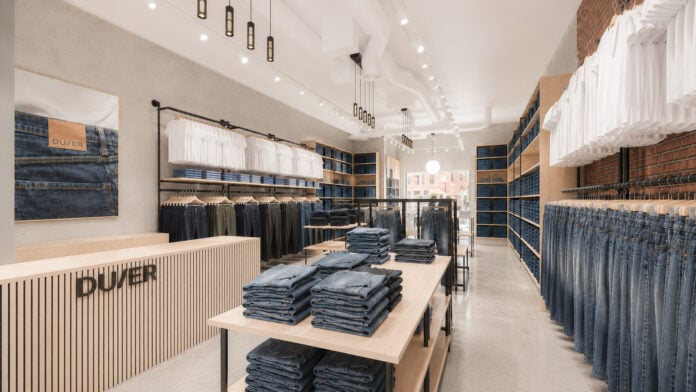
DUER, the Vancouver apparel brand behind Performance Jeanswear, DUER has found a way to build an international customer base by staying in Canada.
It will be opening its 13th North American store on the iconic Banff Ave in Banff, Alberta in late June. The thinking behind it traces back to Victoria, a smaller market that is performing on par with Vancouver, its home market, doubling what the brand expected.
A significant share of that store’s customers is arriving on cruise ships, discovering a Canadian brand, and taking it home with them. It’s been a quiet proof of concept for a tourism-driven retail thesis.
Banff is the next move in that same strategy, at a larger scale. Four million visitors a year, a strong international mix, and a customer who is active, outdoors-oriented, and spending. For DUER, it’s a way to earn a global customer before it ever opens an international storefront.
This is part of a deliberate push. DUER opened four stores last year and is on track for six this year, and just wrapped its strongest quarter since pre-COVID with 40% year-over-year growth.
“So this isn’t about proving there’s a global customer. We know there is. What Victoria and Banff give us is something harder to manufacture. When someone travels to Canada and walks into a DUER store, the fact that this brand was built here actually means something. That context makes the story land differently than it does sitting on a rack in an overseas account. Tourism hubs like Banff are one of the best places to connect with a global audience while building our home base in parallel,” he said.
“Victoria surprised us, in the best way. Smaller market, reasonable expectations. It’s doubled them. It now rivals our Vancouver store which has had years to build in our home market. A significant share of that customer is arriving on cruise ships from international markets, discovering a Canadian brand for the first time, and the product is converting them. That gave me real conviction that Banff is the next step in a thesis we’ve already proven out.”
Gary Lenett. Photo by Juno Kim
When someone experiences DUER somewhere memorable for the first time, that’s a strong foundation to build on, said Lenett.
“And the infrastructure is there to support them (a tourist) when they get home, whether that’s finding us through a wholesale retailer in their market or shopping our UK and EU ecom sites,” he added.
DUER is accelerating store growth while many apparel brands remain cautious about brick-and-mortar retail.
“What a lot of people got wrong is they conflated “bad retail” with “retail is bad.” When someone walks into a DUER store and tries something on, we convert 80% of the time. Nothing online comes close to that. Retail is still one of the best brand-building tools there is,” said Lenett.
With 40% year-over-year growth and six stores planned this year, how does DUER balance rapid expansion with maintaining the authenticity and operational discipline that helped build the brand?
“I’ve lived through what happens when you grow faster than your foundation can hold. I’m not doing that again. We’ve been profitable since year three and it’s probably the most important thing about how we run this business,” he said.
“A big part of that is how we choose where to grow. We don’t go into a market cold and instead look for places where our wholesale and ecom business has already established a customer. That gets us to the flywheel faster meaning all channels working together, each one feeding the others. 40% growth is exciting but it only matters if the brand on the other side of it is still worth something.”
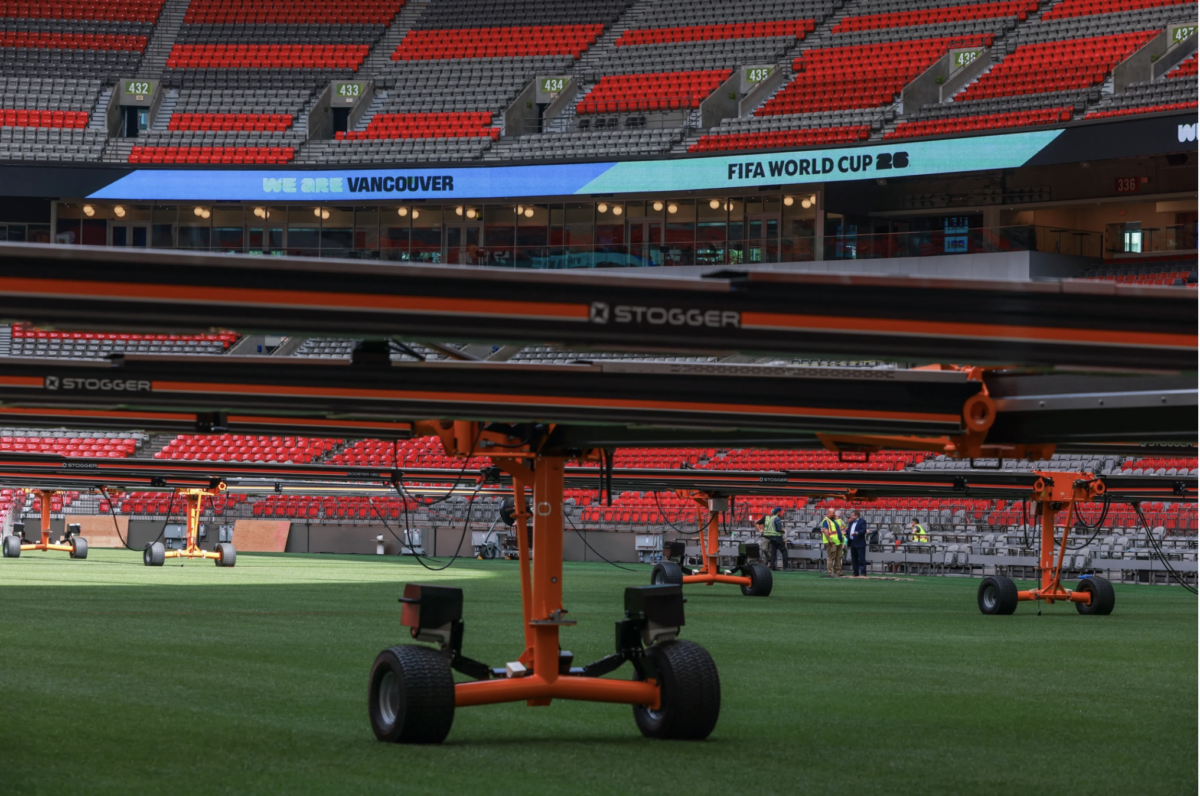
With the FIFA World Cup kicking off on June 11, businesses in Toronto and Vancouver are facing a supply chain challenge unlike anything they have planned for.
Canada has never hosted the men’s World Cup and there is no historical data to draw from. Demand will not build gradually either. Bars, restaurants, retailers and hospitality businesses will see it spike hard and fast in line with the match schedule, at a time when Canadian businesses are already navigating geopolitical-driven cost increases and squeezed margins.
Kinaxis, based in Ottawa, powers the supply chains of some of the world’s largest companies, including Toyota, Pfizer, and Unilever.
Here are five tips he’s shared that will help businesses prepare:
Stock up early: Start building stock levels now, before match-day road closures in Toronto and Vancouver make last-minute deliveries impossible.
Think beyond the obvious sellers: The products that will actually move are not always the obvious ones. Draft beer will spike, but so will phone chargers, bottled water and imports tied to whichever rival nations are drawing crowds to your neighbourhood.
Build your backup supplier relationships now: Your primary suppliers will get overwhelmed. Identify a backup for your top 10 products now and place at least one small order before June so the relationship exists when you need it.
Forget last year’s sales data: Build your demand forecast from live signals like flight bookings and hotel occupancy rates instead, because traditional forecasting has no baseline for an event Canada has never hosted before.
Don’t forget about staff: Inventory means nothing if you’re short-handed on a match day. Get your part-time hires confirmed by May, and know who you’re calling when it gets unexpectedly busy.
Fab Brasca
Brasca spoke with Retail Insider about the upcoming sports extravaganza.
Question: With no Canadian precedent for a men’s FIFA World Cup, how should Toronto and Vancouver businesses rethink demand forecasting in the absence of historical data?
Answer: The instinct is going to be to reach for whatever historical data exists, last summer’s numbers, a busy long weekend, maybe a major concert or festival. But that data won’t help you here. This is
a genuinely novel event for Canadian businesses and the sooner they accept that, the better positioned they’ll be.
What you want to be looking at instead are live signals. Flight bookings into Toronto and Vancouver, hotel occupancy, ticket sales patterns, which fan communities are mobilizing and where. The World Cup doesn’t ramp up the way a seasonal trend does. It spikes hard, match by match, and the demand curve follows the schedule. A Tuesday afternoon kickoff is a completely different planning problem than a Saturday evening one.
The businesses that will come out ahead are the ones running multiple scenarios right now. Canada advances, Canada exits early, a rival nation brings tens of thousands of fans into specific neighbourhoods. You need to have a plan for the range of things that could actually happen.
Q: Where do you expect the biggest supply chain bottlenecks to emerge during the tournament, particularly around match days and road closures?
A: Last-mile delivery is the one I’d watch most closely. Match-day road closures in a city like Toronto isn’t a minor inconvenience. If you’re expecting a Tuesday morning replenishment and there’s a match Tuesday afternoon, that window may already be gone by the time you realize it.
The other pressure point is at the supplier level. Every bar, restaurant and retailer in the city is going to be calling the same distributors around the same time. Your primary supplier is going to get overwhelmed. If you haven’t already identified a backup for your highest-volume products, that’s the most urgent thing on your list right now.
And I’d add that all of this is happening while Canadian businesses are already absorbing real cost pressure from tariffs and the broader geopolitical environment. Any further increase in fuel costs flows straight into transportation and distribution. That needs to be in your margin assumptions now, not landing as a surprise in July.
FIFA website photo
Q: What kinds of ‘non-obvious’ products tend to see unexpected demand spikes during global sporting events like this?
A: Everyone plans for beer. Not everyone plans for what runs out while people are waiting for their beer.
The things that actually create the most operational pain are the secondary items. Phone chargers, portable batteries, bottled water, ice, condiments, disposable serviceware. These are the types of products that disappear first when foot traffic is running two or three times your normal volume.
The other thing that’s unique about the World Cup compared to most sporting events is how international the fan base is, and how localized that looks on the ground. Depending on which teams are drawing supporters to a specific neighbourhood, you’re going to see demand for particular imports, particular foods, particular beverages tied to those communities.
FIFA website photo
Q: How can small and mid-sized retailers or restaurants realistically build supply chain resilience, including backup supplier relationships, on short notice?
A: The relationship you build under pressure is worth a lot less than the one you build before you need it. You don’t want to be introducing yourself to a backup supplier for the first time when your primary can’t deliver.
So the practical starting point is simple: identify your 10 highest-velocity products and find at least one alternative supplier for each. Then place a small order before June. This means a lot if you’;re a known customer when you call in July needing a fast turnaround, rather than a cold call they’ve never heard of.
For smaller businesses that don’t have dedicated planning teams, just making that list is itself a useful exercise. It forces you to prioritize things that would actually hurt you to run out of.
Q: What are the biggest mistakes businesses make when preparing for sudden, event-driven demand surges and how can they avoid them?
A: The most common one is planning for the event you want rather than the range of events that might actually happen. Businesses anchor on a best-case scenario. Canada wins, the city goes wild, everything sells. And they optimize their inventory for that, but it’s a fragile position to be in if reality looks different.
The second one is treating this as a one-time planning exercise. You need to stay flexible, keeping tabs on the match schedule details, the road closure specifics, the cost environment, these things will keep evolving between now and June 11. You need to be checking your plan regularly.
And the third one, which I think is the most underrated, is treating this purely as an inventory problem. Inventory sitting in your back room means nothing if you don’t have enough people to move it on a match day. The staffing plan and the supply plan have to be built together. If you’re expecting three times your normal Saturday volume, your part-time hires need to be confirmed well in advance and you need to know who you’re calling when it gets busier than even that. Get one right without the other and you’re still exposed.
As spring spending picks up, pricing is becoming one of the most critical levers across the grocery industry, shaping both margins and consumer behaviour.
With consumers more price-conscious, yet still spending in key categories, companies are rethinking how they price, promote, and position products in real time. The result is a more dynamic pricing environment driven by shifting demand and evolving expectations.
Question: How are grocery retailers and brands adjusting pricing strategies this spring in response to changing consumer spending patterns and ongoing inflation concerns?
Answer: Grocers are moving away from broad price cuts toward targeted, data-driven pricing, focusing discounts on key items. At the same time, they’re leaning into private label and loyalty programs to deliver value in a more precise way.
Grocers are adjusting pricing strategies to reflect more cautious, value-focused consumers amid ongoing inflation pressures. A key shift is the continued expansion of private label, with retailers increasing penetration to offer lower-cost, high-quality alternatives to national brands.
This gives budget-conscious consumers a clear in-store trade-down option without leaving the retailer ecosystem. At the same time, discount banners are growing as grocers respond to consumers heightened focus on value. Alongside this, retailers are leaning more heavily into loyalty programs and first-party data to deliver personalized, data-driven promotions allowing them to offer value directly to the price-sensitive customer.
We’re also seeing more visible value messaging with “locked” or “lowered” price campaigns, both in-store and online, being used to reinforce price trust and simplify decision-making for shoppers. On the brand side, there is increased focus on price per unit with larger pack sizes and multi-buys being promoted to appeal to household shopping missions, while retailers manage shelf prices of smaller, more discretionary items.
Overall, the approach is becoming more surgical, balancing affordability and profitability by focusing on the products and customers that matter most.
Gustavo Fring photo
Q: What categories are consumers proving most price-sensitive in right now, and where are they still willing to spend more despite economic pressures?
A: Canadian consumers are trading down on everyday staples but they’re still willing to spend in areas tied to health, convenience, and quality. It’s a more selective approach to spending, where value, not just price, is driving decisions.
Canadians are becoming more selective with their spending, trading down in core grocery categories while protecting spend in areas they see as higher value. The most price-sensitive categories right now are staples. Meat, particularly beef, and fresh produce are seeing consumers shift toward lower-cost protein alternatives like beans or dairy. Similarly, center-of-store packaged goods such as cereals, pasta, and dry goods are experiencing increased price sensitivity as consumers opt for generic or store-brand alternatives. Bakery and frozen categories are also sensitive, particularly where pricing has been volatile, although some stabilization is beginning to emerge.
In contrast, consumers are still willing to spend in a few key areas. Health and wellness remains resilient, with strong demand for products that offer clear functional benefits, such as added protein, fibre, or gut health support. Pet food is another category holding up, as consumers continue to prioritize quality for their pets despite broader budget constraints. Convenience is also proving durable with prepared meals and easy-to-cook solutions performing well, as consumers balance cost savings from eating at home with a willingness to pay for time and ease.
Q: How are grocers balancing the need to protect margins while remaining competitive in a market where consumers are actively comparing prices and seeking value?
A: Grocers are becoming more targeted in how they compete on price, investing in key traffic-driving items while relying on private label and targeted promotions to protect margins. It’s about offering value without eroding profitability across the entire basket.
Grocers are moving away from blanket promotions and toward more targeted, data-led strategies to stay competitive while managing margin pressure. One of the biggest levers is private label. Grocers are increasing the SKU count of higher-margin, private-label products while reducing the space for national brands that offer lower margins or have become too expensive. This gives consumers a ‘value’ option in-store rather than forcing them to go to a competitor.
Loyalty programs are also playing a bigger role. By using customer data, retailers can target discounts to specific segments, rather than lowering prices across the board. This allows them to maintain higher average prices while still appealing to price-sensitive shoppers. There is also increased collaboration and pressure on manufacturers. Retailers are scrutinizing cost increases more closely and looking for greater transparency and shared accountability.
Finally, pricing investment is becoming more strategic. Grocers are focusing discounts on “basket-building” staples that drive traffic, while preserving margins in less price-sensitive categories like convenience and discretionary items.
Jack Sparrow photo
Q: To what extent are technology, data analytics, and real-time consumer insights shaping pricing and promotional decisions across the grocery sector?
A: Pricing and promotions are becoming faster and more dynamic, with data and AI helping grocers adjust offers based on demand, competition, and customer behaviour. This shift is making promotions more targeted and more efficient.
Technology and data analytics are now central to how grocers make pricing and promotional decisions. Retailers are increasingly using AI-driven tools to monitor competitor pricing, assess demand, and adjust offers. This allows them to respond quickly to market changes and stay competitive while providing value for consumers.
Loyalty programs are another critical data source because by analyzing individual purchasing behaviour, grocers can deliver highly personalized promotions, improving relevance for consumers and efficiency for the retailer. Advanced analytics are also being applied to supply chain management. Better demand forecasting helps reduce waste, particularly in perishable categories and allows retailers to price more competitively by improving inventory efficiency.
Overall, the shift is from static, manually driven pricing to a more dynamic, data-led model that enables faster and more targeted decision-making.
Q: Looking ahead to the rest of 2026, do you expect pricing volatility and promotional intensity in grocery retail to continue increasing, and what could that mean for both retailers and consumers?
A: Promotional activity is expected to intensify as retailers compete for increasingly price-sensitive consumers in a more divided economic environment. For grocers that means continued pressure on margins and for households that means more pressure on budgets.
Looking ahead to the rest of 2026, promotional intensity will rise due to the “K-shaped” economy where higher-income households are less affected while lower-income households are severely feeling the pressure. Competition for the budget-conscious consumer will remain fierce which in turn will drive higher, more targeted promotional activity.
For retailers, this means they must be agile. Data analytics, private-label innovation and optimizing the omnichannel experience (online/in-store) will be critical. The pressure on margins will remain extreme, forcing retailers to scrutinize every cost, including logistics and inventory. Those who cannot effectively manage their private-label portfolio or who fail to offer a good digital experience will be challenged in the market.
For consumers, they’ll continue to feel pressure, with an average family of four potentially spending $1,000 more on food in 2026 compared to 2025. This will reinforce the behavioural shifts observed in early 2026: increased meal planning, more consistent shopping at discount stores and higher reliance on loyalty programs to manage budgets.
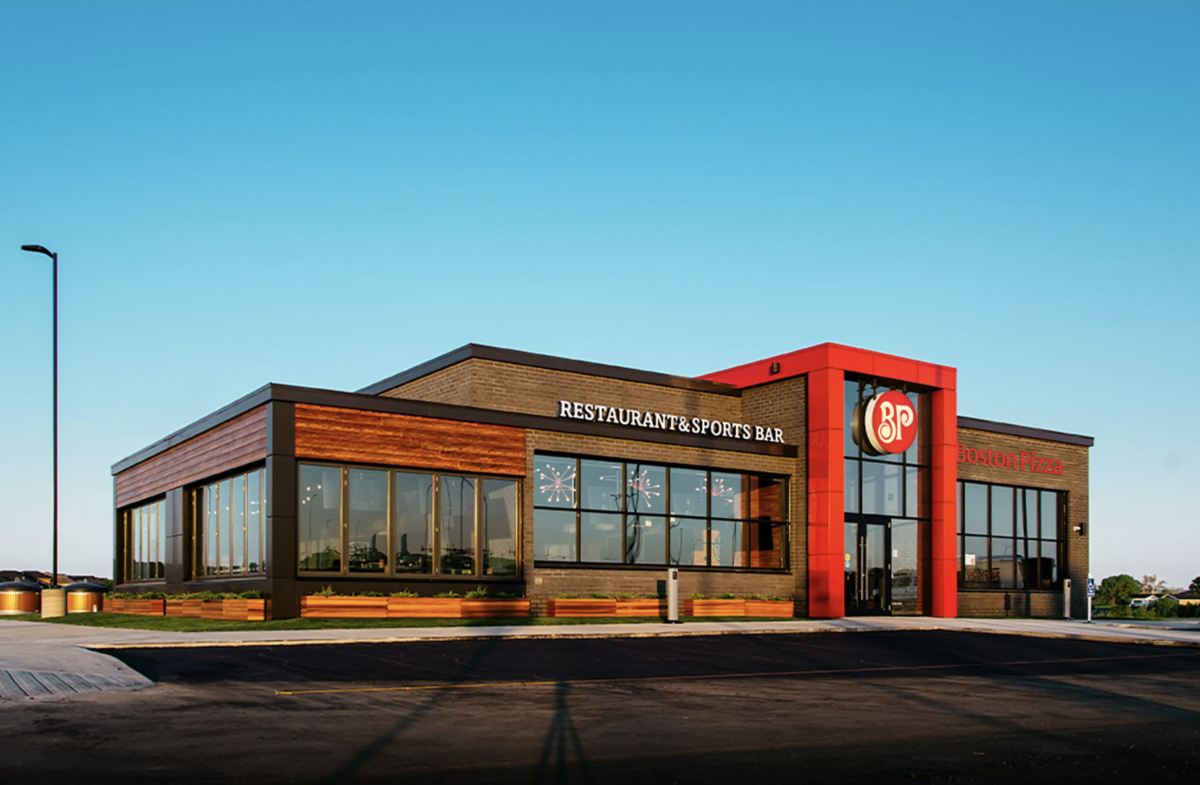
With local music venues disappearing across Canada, Boston Pizza is stepping in this summer with Live & Local, a nationwide initiative bringing live music performances to Boston Pizza restaurants across the country.
Because every future headliner needs somewhere to start, BP said it is putting out an open call for artists across Canada. From bands and solo acts to acoustic performers and hidden local talent, anyone ready to shoot their shot can connect with their local BP and hit the stage.
The initiative is celebrated by Arkells, who know firsthand how important local stages can be for emerging artists. Arkells recently took over a BP in Sarnia, ON, hosting their fans to a one-of-a-kind surprise concert event. Before arena tours and festival headlining slots, lead singer Max Kerman performed at local venues, including getting his reps in at BP open mic nights while in University in Hamilton.
“As a young artist, you just need places to play,” said Kerman. “That’s where you learn how to connect with a crowd, build confidence, and really sharpen your craft. Those smaller stages are where artists grow, and every big act starts somewhere.”
Arkells website
BP said it is also hitting the road with the all-new Before They Get Big Tour, bringing rising Canadian artists to more than 40 cities nationwide. A BP-branded Ford F-150 will travel more than 14,000 kilometres across Canada, stopping at local restaurants to serve up live music alongside pizza, cocktails, and maybe even Canada’s next big headliner.
“Canadians want more access to live local music, but the spaces to perform are disappearing,” said James Kawalecki, VP Marketing, Boston Pizza International. “BP already has what great summer nights need: patios, communities that love live music, in places where local talent is eager. By turning those spaces into stages, we’re giving more artists a place to play and more Canadians the chance to discover talented local acts close to home.”
Boston Pizza photo
James Kawalecki
Running from May through Labour Day weekend, Live & Local transforms BP restaurants across Canada into the go-to spot to discover (or perform) live music all summer long. BP is also tapping into its partnership with Live Nation Canada to bring fans exclusive perks and chances to win tickets to some of summer’s hottest shows.
Artists looking to book a gig can visit localtalent.bostonpizza.com or contact their local BP for more information.
Fans can visit bostonpizza.com/live-summer-musicfor more information on Boston Pizza’s national live music program, or check their local BP restaurant page for nearby live music performances.
Boston Pizza is a premier casual dining brand in Canada. The first Boston Pizza restaurant opened in Edmonton in 1964.
Explore the top 20 retail digital transformation companies reshaping how brands sell, serve, and scale. Discover which partners lead the charge in omnichannel, AI, and commerce technology worldwide.
When the Store Is Everywhere, and Nowhere at the Same Time
Picture a retail manager standing in the middle of a busy store on Black Friday. The POS system freezes. The inventory dashboard shows stock that sold out two days ago. Meanwhile, online orders are piling up with no one to fulfill them. Sounds like a nightmare? For thousands of retailers still running legacy systems, this is Tuesday.
The retail industry is under pressure from every direction. Customer expectations are higher than ever. Margins are tighter. And the gap between brands that have embraced digital transformation and those still clinging to outdated software is widening fast. The global retail technology market is projected to exceed $700 billion by 2030, according to industry analysts — and the companies helping retailers navigate that shift are more valuable than ever.
That is why choosing the right technology partner matters so much. Whether it’s building a custom omnichannel platform, modernizing a point-of-sale system, or deploying AI-powered demand forecasting, the bestretail software development companies are the ones doing the heavy lifting behind the scenes.
What Separates a Great Retail Tech Partner From the Rest?
Before we dive into the list, it helps to understand what we looked for when evaluating these firms. Not every software company that says it serves retail actually understands the industry. Here are the criteria that matter:
• Proven retail domain expertise across online, offline, and hybrid commerce
• Strong portfolio of omnichannel, POS, ERP, and supply chain solutions
• Demonstrated ability to modernize legacy retail infrastructure
• AI, machine learning, and data analytics capabilities
• Client reviews, case studies, and verifiable business outcomes
• Scalability for both mid-market retailers and enterprise operators
With those filters applied, here are the 20 firms that stand out most in today’s retail digital transformation landscape.
Top 20 Dedicated Retail Digital Transformation Companies
1. Computools
Here is what makes Computools stand out in exact numbers:
12+ years of engineering expertise in the retail industry
250+engineers and IT experts on board
400+ tailored software projects for clients worldwide
40+ retail software projects delivered
Clients reported up to 40% improvement in retail optimization
Clients reported up to 30% increase in sales
4.9/5 rating on Clutch
Trusted by global brands including Visa, Epson, Dior, British Council, and IBM.
Computools earns the top spot on this list because it blends genuine retail domain expertise with full-cycle software engineering under one roof. The company delivers end-to-endretail software development services that cover custom software solutions from AI-powered assistants and mobile commerce apps to omnichannel platforms, POS systems, and supply chain management tools. The goal is always the same: strengthen customer retention and drive revenue growth across every retail channel.
Real project results tell the story better than any pitch. For a mid-market UK retailer, Computools built a modern cash management mobile application integrated with POS systems for use at busy events and retail shops. The result? Over 40,000 points of sale installed and 25% business growth in just 18 months. International sales then grew by 42% year-on-year after the appointment of a US distributor.
For a large US clothing and accessories retailer, the team engineered a virtual fitting platform that allowed customers to try on clothes online through augmented reality. Sales increased up to 5x, and return rates dropped significantly, because shoppers finally knew what they were buying before it arrived at their door.
Computools holds a consistent place in the IAOP Global Outsourcing 100 (five consecutive years: 2020–2025) and is a trusted partner of Microsoft, AWS, and Salesforce. The company’s clients repeatedly highlight one theme in their feedback: Computools clearly understands the commercial reality the software must serve.
• Custom POS system development: fast transactions, inventory sync, and multi-location management
• AI-powered personalization and demand forecasting tools
• Mobile commerce app development for iOS and Android
• Legacy system modernization and cloud migration
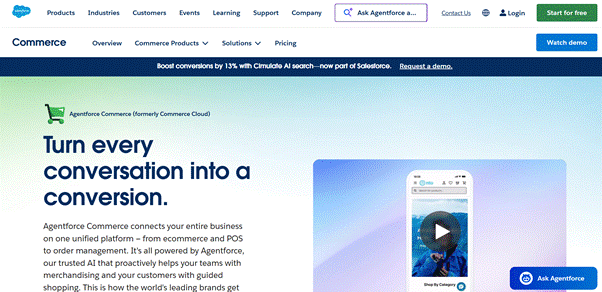
2. Salesforce Commerce Cloud
Salesforce Commerce Cloud is the engine powering some of the world’s most recognizable retail brands. Their B2C and B2B commerce platforms offer AI-driven personalization, unified order management, and seamless integration with the broader Salesforce ecosystem. For enterprise retailers managing millions of transactions, Salesforce provides the scale and reliability that smaller platforms simply cannot match.
Key capabilities:
• AI-driven product recommendations and personalization (Einstein AI)
• B2C and B2B omnichannel commerce platforms
• Unified order management and inventory visibility
• Integration with CRM, marketing, and service clouds
3. SAP Retail
SAP has been the backbone of enterprise retail operations for decades. Their retail solutions span merchandise management, demand forecasting, supply chain optimization, and customer engagement. SAP’s strength lies in deep ERP integration — connecting financial, operational, and commercial data into one coherent system. For large retailers managing complex global supply chains, SAP remains the gold standard.
Key capabilities:
• Merchandise and assortment management
• Demand forecasting and replenishment automation
• Supply chain and logistics optimization
• Customer loyalty and engagement platforms
4. Oracle Retail
Oracle Retail delivers a comprehensive suite of cloud-based tools for merchandise planning, inventory management, and customer analytics. Their AI-powered solutions help retailers anticipate demand, reduce markdowns, and optimize pricing in real time. Oracle’s cloud infrastructure also means faster deployment and lower total cost of ownership compared to traditional on-premise retail systems.
Key capabilities:
• AI-driven merchandise planning and allocation
• Real-time inventory and order management
• Customer data platform and retail analytics
• Cloud-native architecture for rapid deployment
5. EPAM Systems
EPAM Systems is a global engineering and technology services company with deep retail expertise. Their teams have delivered digital commerce platforms, loyalty programs, and supply chain tools for major global brands. EPAM excels at complex system integration — connecting legacy infrastructure with modern cloud platforms without disrupting day-to-day retail operations.
Key capabilities:
• Custom digital commerce platform development
• Loyalty program and customer engagement systems
• Legacy retail system integration and modernization
• Cloud migration and DevOps for retail infrastructure
6. Publicis Sapient
Publicis Sapient sits at the intersection of strategy, design, and technology. Their retail practice helps brands reimagine the customer journey from first click to final purchase. What makes them distinctive is their ability to blend business consulting with hands-on engineering — delivering not just software, but the commercial strategy that makes it work.
Key capabilities:
• Omnichannel retail strategy and customer experience design
• Digital commerce and mobile app development
• Data and AI-driven retail personalization
• Supply chain visibility and fulfillment optimization
7. Infosys
Infosys brings global scale and deep technical resources to retail digital transformation. Their Infosys Retail suite covers store operations, supply chain management, and customer analytics. For multinational retailers managing hundreds of locations and millions of SKUs, Infosys provides the operational depth and geographic reach to keep everything running smoothly.
Key capabilities:
• Store operations and workforce management tools
• Supply chain and logistics software
• Customer analytics and personalization platforms
• AI and machine learning for demand forecasting
8. Cognizant
Cognizant’s retail practice combines technology consulting with hands-on software engineering. Their focus on AI, automation, and cloud transformation has helped global retailers modernize legacy systems and build scalable digital commerce platforms. Cognizant also brings strong capabilities in data engineering — critical for retailers trying to unify siloed customer, inventory, and financial data.
Key capabilities:
• AI and automation for retail operations
• Cloud transformation and infrastructure modernization
• Data engineering and customer data platform development
• Digital commerce and mobile experience design
9. Accenture
Accenture is one of the largest retail technology consultancies in the world. Their retail practice spans strategy, technology, and operations — helping brands rethink everything from store formats to supply chain architecture. Accenture’s partnerships with major cloud providers and their proprietary retail accelerators mean faster time to market for complex transformation projects.
Key capabilities:
• End-to-end retail transformation strategy and execution
• Cloud and AI adoption for retail operations
• Supply chain resilience and sustainability software
• Customer experience and commerce platform modernization
10. Oxagile
Oxagile is a custom software development company with a strong retail and eCommerce practice. Their teams build omnichannel platforms, loyalty systems, and retail analytics tools for mid-market and enterprise clients across North America and Europe. Oxagile is particularly valued for its deep expertise in video and data-driven technologies — giving retailers unique capabilities in visual commerce and customer behavior analytics.
Key capabilities:
Custom omnichannel retail platform development
Loyalty program and customer engagement software
Retail data analytics and business intelligence tools
Video commerce and visual search integration
11. ELEKS
ELEKS has been delivering custom software since 1991. With 2,000+ experts and 1,000+ completed projects, the company brings proven capabilities in retail platform development, AI and data science, and cloud migration. Their long track record with complex, regulated environments makes them reliable for retailers managing compliance-heavy workflows alongside digital commerce operations.
Key capabilities:
• Custom retail platform development and system integration
• Data science, AI, and predictive analytics for retail
• Cloud migration and DevOps engineering
• Cybersecurity and compliance-focused architecture
12. Intellectsoft
Intellectsoft is a custom software development firm headquartered in London, with delivery centers in Ukraine, Poland, Norway, and the UK. The company serves Fortune 500 clients across retail, fintech, and hospitality. Their proprietary IS360 lifecycle framework ensures that retail platforms don’t just launch on time — they scale reliably as the business grows.
Key capabilities:
• Blockchain, AR, and IoT applications for retail environments
• Enterprise mobile and web commerce solutions
• IS360 lifecycle framework for long-term product support
• High-quality UX design with Silicon Valley-level standards
13. Itransition
Itransition is a full-cycle software development company with a dedicated retail practice. Their team builds everything from eCommerce platforms and mobile commerce apps to warehouse management systems and customer loyalty tools. Itransition’s strength lies in rapid prototyping and agile delivery — useful for retailers that need to move fast in response to changing market conditions.
Key capabilities:
• eCommerce and mobile commerce platform development
• Warehouse and inventory management systems
• Customer loyalty and CRM software
• Agile retail software delivery and prototyping
14. ScienceSoft
ScienceSoft brings 35+ years of experience and 4,000+ completed projects across 30+ industries. Their retail solutions focus on compliance-heavy environments where data security and architectural precision matter from day one. Multiple Microsoft Gold competencies and strong AWS expertise make them an excellent partner for retailers moving toward cloud-native infrastructure.
Key capabilities:
• Enterprise retail software with compliance-first architecture
• Microsoft Gold-certified Azure cloud solutions
• AWS integration and cloud migration for retail
• Security-focused data platform development
15. Innowise
Innowise is a global software engineering firm with 2,500+ IT professionals across Europe and North America. The company has delivered 1,300+ tailored solutions for clients in retail, finance, healthcare, and logistics. It holds ISO certifications (9001, 27001, 27017, 27018) and maintains a 93% client retention rate — a number that speaks to sustained delivery quality across long-term retail partnerships.
Key capabilities:
• Full-cycle custom software development for retail and eCommerce
• Cloud-native architecture and infrastructure engineering
• AI and machine learning integration for retail use cases
• ISO-certified quality and security management processes
16. Velvetech
Velvetech is a full-cycle software development company recognized by both Clutch and GoodFirms among top custom software providers. Their retail practice covers omnichannel platform development, inventory optimization, AI-driven demand forecasting, and customer analytics. One documented project involved building a complex IoT-based product tracking system for a major international retail and logistics operator.
Key capabilities:
• Custom omnichannel retail platform development
• IoT-based product and inventory tracking systems
• AI-powered demand forecasting and analytics
• Customer data integration and personalization tools
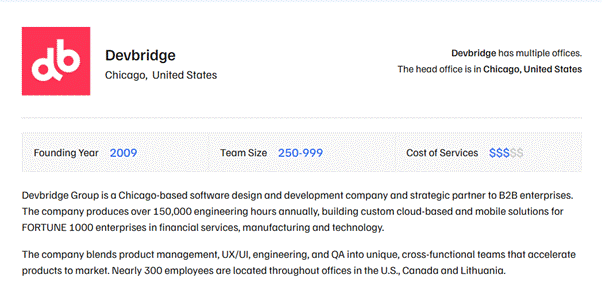
17. Devbridge
Devbridge — now part of Cognizant — is a product design and engineering firm known for building fast, user-centered digital experiences. Their retail work focuses on customer-facing commerce platforms and internal retail operations tools. Devbridge’s design-led engineering approach results in retail software that employees actually want to use — which matters more than most operators realize.
Key capabilities:
• Product design and UX engineering for retail platforms
• Customer-facing eCommerce and mobile app development
• Internal retail operations and workforce tools
• Design system development for consistent brand experiences
18. Dreamix
Dreamix is a Europe-based software development firm delivering end-to-end digital solutions for retail, logistics, and enterprise clients. The company holds ISO 27001 and ISO 9001 certifications and was listed by the Financial Times among the fastest-growing European companies in 2025. Their AI capabilities — including TensorFlow, PyTorch, and Generative AI integration — make them a strong partner for retailers building intelligent commerce experiences.
Key capabilities:
• Retail and eCommerce software development
• AI and machine learning–powered enterprise applications
• Agile delivery with ISO-certified quality processes
• Generative AI and TensorFlow integration for retail use cases
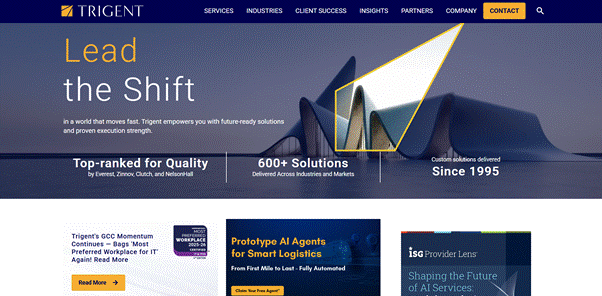
19. Trigent Software
Trigent Software is a US-based technology company with a dedicated retail and eCommerce practice. Their team builds custom retail applications, integrates third-party commerce platforms, and delivers data analytics tools that help retailers make smarter merchandising decisions. Trigent is particularly valued by mid-market retailers that need enterprise-level capabilities without the costs of larger system integrators.
Key capabilities:
• Custom retail application development and third-party integrations
• eCommerce platform development and optimization
• Retail data analytics and business intelligence tools
• Mobile retail app development for iOS and Android
20. Softeq
Softeq is a hardware and software development company with a growing retail technology practice. Their expertise spans IoT-enabled retail solutions, self-checkout systems, smart shelf technology, and inventory robotics integration. In an era where physical retail is evolving rapidly, Softeq bridges the gap between the digital and physical store — a capability that very few firms can genuinely claim.
Key capabilities:
• IoT-enabled smart store technology development
• Self-checkout and kiosk software engineering
• Smart shelf and inventory robotics integration
• Connected retail hardware and software solutions
How to Choose the Right Retail Digital Transformation Partner
The list above covers a wide spectrumб from global consulting giants to agile boutique firms. So how does a retailer decide? Here is a practical framework to guide the decision:
• Start with your biggest pain point: Is it inventory chaos? Poor customer personalization? Disconnected channels? The answer shapes which partner is the best fit.
• Check retail-specific case studies: Generic software experience is not enough. Demand proof of real results in retail environments similar to yours.
• Evaluate integration depth: The best retail platforms connect POS, ERP, eCommerce, logistics, and CRM. Confirm the vendor has done this before at scale.
• Consider team structure: Dedicated retail teams outperform generalist squads. Ask directly who will be working on your project.
• Look at post-launch support: Retail never sleeps. A partner with strong ongoing support and SLA guarantees is worth more than a cheap build-and-abandon vendor.
We also recommend getting frontline staff involved in the evaluation. Store managers, warehouse teams, and customer service agents who will actually use the software have invaluable insight into what works in practice — and what sounds good in a demo but fails in the field.
The Trends Reshaping Retail Technology in 2026 and Beyond
The retail digital transformation companies on this list are not chasing the same trends. The most forward-thinking vendors are already building for what comes next:
• Generative AI for personalized product discovery and customer service automation
• Unified commerce: eliminating the distinction between online and offline channels entirely
• Real-time supply chain visibility from factory floor to customer doorstep — including tools likefreight forwarding management software that connect cross-border logistics to retail operations
• Autonomous store technology: self-checkout, smart carts, and cashierless retail environments
Retailers who invest in these capabilities today will hold a decisive edge over competitors still debating whether digital transformation is worth the effort.
Conclusion: The Right Digital Partner Changes Everything
Retail has never been more complex, or more full of opportunity. The brands winning today are not necessarily the ones with the biggest budgets. They are the ones that chose the right technology partners early and built digital infrastructure that scales with their ambitions.
The 20 companies on this list represent the best of what the global retail technology market has to offer. Whether a retailer needs a turnkey omnichannel platform, a custom AI forecasting engine, or a complete legacy modernization program, the right partner exists on this list.
The store of the future is being built right now. The only question is: who is building yours?
Every time a major tech company drops a new foundational model, developer forums light up with the exact same panic. Someone posts a video of an AI generating a fully functional iOS app or a complex React dashboard in twenty seconds, and the comments immediately spiral into existential dread. If a machine can do three days of work in under a minute, are we all going to be out of a job by the end of the year?
The short answer is no. The slightly longer, more uncomfortable answer is that the specific job you do right now might disappear, but a much more interesting one is taking its place. We are moving away from an industry that pays people purely to translate human ideas into machine syntax. That mechanical translation layer is rapidly becoming a commodity.
Instead of getting bogged down in syntax, the developers who are thriving right now are adopting the mindset of an AI product builder. They use platforms like Verdent AI, which allow them to define a high-level plan and let autonomous agents execute the actual code in isolated Git worktrees. By assigning different features to parallel agents, they focus purely on the product logic, the user experience, and the system architecture, rather than hunting for missing semicolons. The panic shouldn’t be about losing your job; it should be about how quickly you can upgrade your daily habits to match this new reality.
The End of the Human Compiler
To understand where we are going, we have to be honest about what software engineering has looked like for the past decade. A massive chunk of the job has been highly repetitive manual labor.
Think about how many times you have written a standard CRUD (Create, Read, Update, Delete) interface. How many times have you set up a basic Express server, configured user authentication, or wired up a PostgreSQL database? This is boilerplate. It requires precision, but it does not require deep, creative problem-solving. For years, companies hired armies of developers effectively to act as human compilers—taking Jira tickets and manually typing out the well-documented steps to fulfill them.
That specific role is dead. Large language models are infinitely better at this than you are. They do not get tired, they have read the entire documentation for every framework ever created, and they can generate the boilerplate instantly. If your entire value proposition to an employer is “I know how to write Vue components from memory,” you are competing against a machine that works for pennies.
The Context Gap: Why Companies Still Need You
If the AI can write the code, why doesn’t the CEO just fire the engineering team and prompt the app into existence themselves?
Because writing code is actually the easiest part of software development. The hard part is knowing what code to write. AI models suffer from a massive “context gap.” They possess the sum of all public programming knowledge, but they know absolutely nothing about your specific business.
An AI can instantly generate a highly optimized script to process user payments. But the AI does not know that your legacy inventory system relies on a weird batch-job process that runs at 2 AM. It doesn’t know that your legal department requires a very specific double-opt-in for European users. It doesn’t know that your core demographic hates complex onboarding screens.
Humans bridge this context gap. You are hired to understand the messy, illogical, highly specific constraints of the real world and figure out how a digital system can navigate them. The coding part was just a necessary evil you had to endure to make the system work. Now, you get to offload the typing and focus entirely on the logic and the business constraints.
Code Review Becomes the Core Skill
Because you will be writing significantly less code, you will be reading significantly more of it.
One of the most dangerous things about modern AI code generators is that they write highly plausible, confident code. When a human junior developer makes a mistake, it usually breaks the build immediately. When an AI makes a mistake, the code often compiles perfectly, runs smoothly in the happy path, and then introduces a silent race condition or a subtle security vulnerability that wipes out a database a month later.
Your job is shifting from a creator to an editor. You have to become an elite code reviewer. When your AI agent submits a pull request for a new feature, you cannot just glance at it and click merge. You have to dig in. You have to look at the Diff and ask the hard questions: Why did it choose this specific library? Is this database query going to scale when we hit a million rows? Did it handle the error state gracefully, or did it just swallow the exception?
To do this effectively, you actually need a deeper understanding of computer science fundamentals than before. You have to be able to spot structural weaknesses and security flaws in code that you didn’t write yourself. You are the final gatekeeper for production quality.
System Design Over Syntax
As the cost of generating individual code components drops to zero, the value of system design skyrockets.
Imagine a construction site where bricks are suddenly free and self-assembling. The bricklayers might lose their jobs, but the architects become more important than ever. If you can build a microservice in five minutes using an AI agent, the temptation is to build a hundred microservices. Without a human to design the overarching architecture, you will end up with a tangled, unmaintainable mess of conflicting APIs and redundant databases.
The future programmer is a systems thinker. You will spend your days mapping out data flows, defining strict API contracts between different services, and ensuring that the overall architecture is resilient and secure. You will define the boundaries, and the AI agents will fill in the details.
How to Future-Proof Your Engineering Career
So, what do you do on Monday morning to make sure you aren’t left behind?
First, stop optimizing for memorization. Knowing the exact syntax for a Python list comprehension is no longer a competitive advantage. Let the machine handle the syntax.
Second, practice requirement engineering. The hardest part of working with AI is getting it to do exactly what you want. Start treating your prompts like highly detailed technical specifications. If you learn how to clearly articulate edge cases, data schemas, and strict constraints, the AI will give you exactly what you need. If you are vague, the AI will hallucinate.
Finally, get closer to the business. The engineers who are most at risk right now are the ones who hide behind their monitors and refuse to talk to users or product managers. If you only understand code, you are vulnerable. If you understand how the code impacts the company’s bottom line, how it solves the user’s actual pain points, and how it fits into the broader market, you are indispensable.
The industry isn’t dying; it is maturing. The barrier to entry for typing code has dropped, but the ceiling for building incredible software has never been higher. Stop worrying about the machine taking your keyboard, and start figuring out how to direct it.
Canadian retailers continue to face mounting operational pressure in 2026 as consumer spending remains cautious, operating costs remain elevated, and lean head office teams are increasingly expected to execute faster across more channels and platforms. At the same time, many businesses are moving beyond experimenting with artificial intelligence and are now looking for ways to integrate automation directly into day-to-day retail operations.
That shift is creating growing demand for firms capable of implementing AI tools across marketing, customer engagement, reporting, and back-office functions in practical and measurable ways.
Canadian growth advisory firm Tropoly says it recently surpassed 1,000 live automations operating across businesses in Canada and the United States, a milestone that reflects how quickly retailers and consumer-facing companies are adopting AI-driven workflows at scale.
The figure includes automations spanning CRM workflows, marketing operations, reporting systems, customer lifecycle management, finance functions, and administrative processes. According to the company, more than half of the automations were built within the past year as retailers accelerated operational AI adoption.
“The conversation has changed significantly over the last 12 months,” said Tropoly Partner Mark Funston. “Businesses are no longer asking whether they should invest in automation. They’re asking which operational bottlenecks they should solve first.”
Tropoly develops and manages its automation infrastructure through Tropoly OS, the company’s internal AI integration and process automation practice. The firm works with businesses across retail, consumer services, and other sectors where efficiency and execution speed have become increasingly important amid margin pressure and rising costs.
Retailers Move Beyond AI Pilot Projects
Across the retail sector, artificial intelligence initiatives are increasingly moving beyond pilot projects and limited experimentation. Retailers are now seeking systems that can integrate directly into existing operations while improving speed, visibility, and efficiency across departments.
For many businesses, the priority has shifted toward automating repetitive workflows while allowing internal teams to focus on higher-value decision-making and customer-facing strategy.
Funston said many retailers are looking for practical AI applications that can support day-to-day operations without requiring major internal restructuring.
“The businesses moving fastest right now are the ones focusing on operational use cases instead of treating AI as a standalone experiment,” he said.
One of the busiest areas for automation development has been customer lifecycle management, particularly among multi-location retailers seeking faster ways to respond to customer behaviour and purchasing signals.
Funston said many retailers are replacing manual CRM segmentation and campaign workflows with automated systems capable of triggering loyalty offers, re-engagement campaigns, lead routing, and post-purchase communication in near real time.
In one recent engagement, Tropoly worked with a multi-location consumer-facing business to automate customer re-engagement campaigns that previously required several days of manual segmentation and reporting work each month. According to the company, the automation reduced campaign turnaround times significantly while improving consistency across locations.
“Lifecycle automation is often where retailers see the fastest return,” Funston said. “The speed of response matters, especially when customer expectations are changing quickly and marketing teams are already stretched.”
For retailers operating across multiple markets or store networks, centralized customer data has become increasingly important as businesses attempt to coordinate marketing activity more efficiently between locations and channels.
The company says many of these systems are designed to reduce delays caused by disconnected customer databases and manual workflows, areas that continue to create friction for retail organizations.
Retail Marketing Teams Face Growing Content Demands
Marketing and content operations have also emerged as a major focus area for automation investment.
Retailers today are producing significantly more digital content across social media, e-commerce, email marketing, paid media, and regional campaigns than they were only a few years ago. According to Tropoly, the approval, reporting, adaptation, and quality assurance processes surrounding that content have become increasingly resource intensive for internal teams.
The company says its recent work in this category has included automated reporting systems, campaign QA workflows, regional content adaptation, and AI-assisted asset generation processes.
“A year ago, most businesses were asking whether AI could help generate a caption or a product description,” Funston said. “Now the discussion is about how AI can support larger workflows while people remain focused on strategy, approvals, and brand direction.”
Funston added that retailers are increasingly looking for systems that allow smaller internal marketing teams to manage growing volumes of content across multiple platforms and geographic markets.
Back-Office Automation Gains Momentum
Beyond marketing functions, retailers are also using automation to reduce administrative workload inside finance and operational departments.
Tropoly says it has developed systems for invoice processing, supplier onboarding, KPI reporting, reconciliation work, and data aggregation across disconnected software platforms.
For many organizations, particularly those operating with leaner teams, automation projects in finance and operations are becoming a way to recover staff capacity without significantly increasing headcount.
“The behind-the-scenes work is often where businesses recover the most time,” Funston said. “When repetitive reporting and reconciliation tasks become automated, teams can spend more time analyzing information instead of manually compiling it.”
Retailers continue to face pressure to improve efficiency while maintaining service levels and controlling costs, particularly as many organizations continue navigating cautious consumer spending patterns in Canada and the United States.
AI Integration Becomes a Long-Term Retail Strategy
Industry-wide, retailers have increasingly shifted their focus from testing AI tools to embedding automation into existing systems and workflows. Businesses are looking for practical applications that improve efficiency, visibility, and responsiveness rather than standalone experimental tools.
Tropoly says demand has been strongest among companies seeking tighter integration between customer data, marketing systems, reporting infrastructure, and operational decision-making.
The company’s leadership team includes Managing Partner Neel Singh, Partner of Brand Strategy and Creative Brady Dahmer, and Ruby Sandhu, who leads Client Operations and Ecosystem Growth.
Earlier this month, Tropoly also hosted its Nexus Forum event alongside Web Summit Vancouver, bringing together operators, investors, and business leaders focused on AI adoption and operational growth strategies.
Funston said the next phase of AI implementation for many businesses will involve improving visibility between systems that already exist within organizations, rather than simply adding more tools.
“You can build sophisticated automations, but leadership teams still need visibility into what those systems are doing and how they’re impacting the business,” he said. “That operational clarity is becoming just as important as the automation itself.”
Founded in Canada, Tropoly works with mid-market and enterprise businesses across North America on AI integration, scalable systems, growth strategy, and managed marketing operations.