Spruce Meadows, one of the world’s premier show jumping venues and Calgary’s leading sports and entertainment destination, is partnering with Mattel, Inc., leading global play and family entertainment company and owner of one of the most iconic brand portfolios in the world, for Barbie™ x Spruce Meadows – a weekend of branded activations, entertainment, and a women-centered leadership forum running June 12 to 14 during the ‘National’ Tournament, presented by Rolex.
Spruce Meadows said show jumping is the only sport in the world where women and men compete on an equal playing field – same course, same rules, same competition. That makes it a natural home for a brand built on empowering women and girls to see themselves in every role imaginable, it said.
The weekend will include:
10,000 co-branded Barbie™ x Spruce Meadows bandanas distributed across all three days
Outdoor screening of Barbie™ The Movie on the evening of Friday, June 12
Barbie™ Box and pink horse photo ops across the grounds
Branded entertainment in the International Ring
The ChangemakeHER Forum featuring leaders from sport, business, media, entertainment, and culture on Saturday, June 13
The ChangemakeHER Forum is held in the Gallery on the Green Congress Hall. Influential women from sport, business, media, entertainment, and culture will take the stage for a moderated conversation on leadership and impact, followed by an elegant hospitality experience in the Champagne Garden with premium viewing of the RBC Grand Prix.
Featured speakers and additional program details will be announced soon.
Exclusive co-branded satin jackets for VIP attendees.
Linda SouthernHeathcott
“Barbie™ is one of the most recognized and beloved brands in the world. Bringing that energy to Spruce Meadows during the ‘National’ felt like a natural fit,” said Linda Southern-Heathcott, President & CEO of Spruce Meadows. “Show jumping is the only sport where women and men compete head to head on a completely equal playing field – and partnering with a brand that has spent decades empowering women and girls to break boundaries is a powerful statement about what this sport and this venue stand for. The ChangemakeHER Forum, the activations across the grounds, the thousands of guests wearing their Barbie™ x Spruce Meadows bandanas – it’s going to be something truly special, and we could not be more excited to share it.”
The Toronto-based REIT said adjusted funds from operations, or AFFO, rose 19.1 per cent to $14.8 million for the quarter ended March 31, up from $12.4 million a year earlier. Diluted AFFO per unit increased to a record $0.262 from $0.247 in the same period last year.
Rental revenue for the quarter totalled $29.1 million, up 21.7 per cent from $23.9 million in the first quarter of 2025, while cash net operating income increased 19 per cent to $23.8 million.
“Our strong first quarter performance reflects the positive impact of the 13 property acquisitions we completed in 2025 and the partial contributions of two additional property acquisitions we completed during the quarter,” said Milton Lamb, chief executive of Automotive Properties REIT. “We generated strong year-over-year growth of 21.7% in rental revenue and 19.0% in cash NOI, resulting in record quarterly AFFO per unit.”
The REIT attributed the increase in revenue, funds from operations and cash net operating income primarily to properties acquired during and after the first quarter of 2025, as well as contractual rent increases.
Milton Lamb
Net income and comprehensive income for the quarter totalled $25.3 million, compared with $7.6 million a year earlier. The REIT said the increase reflected higher net operating income and changes in non-cash fair value adjustments tied to investment properties and interest rate swaps, partly offset by higher interest costs and changes related to unit-based compensation.
Funds from operations, or FFO, increased 20.4 per cent to $15.2 million, while diluted FFO per unit rose to $0.268 from $0.251 a year earlier.
The REIT declared regular cash distributions of $0.206 per unit during the quarter, up from $0.201 per unit a year earlier. Its AFFO payout ratio declined to 78.6 per cent from 81.4 per cent in the prior-year quarter.
During the quarter, the REIT completed two acquisitions funded primarily through its revolving credit facilities.
On Jan. 1, the company acquired a Hyundai dealership property in Québec City for approximately $13.25 million. On March 26, it acquired a Rivian automotive and service property in Vista, Calif., for US$16 million.
Subsequent to the end of the quarter, the REIT acquired two dealership properties in Santa Ana, Calif., for US$30.15 million. The properties, which house Audi South Coast and South Coast Volkswagen dealerships, are leased to Penske Automotive Group Inc.
“Subsequent to quarter end, we completed an additional property acquisition in southern California, adding two more dealership properties to our portfolio,” Lamb said. “We look forward to building on our positive momentum in the year ahead, supported by a growing property portfolio featuring high-quality tenants providing essential automotive retail and services, 100% occupancy and rent collection, locations in prime metropolitan markets featuring GDP and population growth, an attractive net lease structure, and embedded fixed or CPI-adjusted rental growth.”
As of March 31, the REIT’s debt-to-gross-book-value ratio stood at 46.3 per cent, compared with 43.8 per cent a year earlier. It also reported $69 million of undrawn capacity under its revolving credit facilities, $1 million in cash on hand and 11 unencumbered properties valued at approximately $152.9 million.
As of the date of the earnings release, the REIT said its debt-to-gross-book-value ratio had risen to 47.8 per cent following the April acquisition, while undrawn credit capacity stood at approximately $32.5 million. The trust also reported 13 unencumbered properties with an aggregate value of approximately $195.4 million.
The REIT said 77 per cent of its debt was fixed as of March 31, with a weighted average interest rate of 4.48 per cent.
Automotive Properties REIT said it continues to monitor risks related to inflation, interest rates, currency fluctuations and trade restrictions, including tariffs and broader geopolitical uncertainty.
The trust said it expects continued consolidation in the Canadian and U.S. automotive dealership and service sector over the medium to long term, driven by increasing capital requirements and efforts by operators to achieve greater scale.
The REIT’s portfolio includes 95 income-producing commercial properties across Canada and the United States, representing approximately 3.5 million square feet of gross leasable area.
Smash a Double or a Single Smash Burger at A&W on Monday, May 25th. (CNW Group/A&W Food Services of Canada Inc. (marketing & PR))
A&W Food Services of Canada Inc. says it will launch its first smash burger across Canada on May 25 as the restaurant chain moves to add a popular burger style to its menu nationwide.
The company said the limited-time offering will be available as either a single or double burger topped with cheddar cheese, pickles, onions and sauce on a brioche bun. Customers will also be able to order the item through the company’s mobile app.
The launch marks what the company described as the first nationwide smash burger offering by a Canadian quick-service restaurant chain.
A&W said the product rollout is aimed at bringing the smash burger format to locations across the country as consumer interest in the style grows.
“Hand-smashed burgers are rarely done at this scale because it takes quality ingredients and thoughtful execution,” said Karan Suri, senior director of innovation at A&W Canada. “Each hand-smashed, juicy, grass-fed beef patty is paired with real cheddar cheese, tangy pickles, and our signature sauce for a perfectly balanced bite. Pure burger bliss.”
Karan Suri
The company said the burgers will feature grass-fed beef patties that are seared before being assembled with the toppings.
“There is something so special about the simplicity of a perfect smash burger! We are excited to be welcoming Canadians to try our delicious new obsession,” Senecal said. “The same quality and care you know and love from A&W is now bringing you a fun and flavourful smash burger.”
Ahead of the national launch, the company said it will host a promotional pop-up event in Toronto on May 22 at an A&W restaurant located at 780 King St. W.
The company said the location will temporarily receive a redesigned “Smashed A&W” appearance as part of the event, where visitors will be offered complimentary double smash burgers while supplies last. The event is scheduled to run from noon to 5 p.m. EDT, with a limit of one burger per person.
A&W said the smash burger will be available at participating restaurants across Canada for a limited time beginning May 25.
The company says it operates more than 1,100 restaurants across the country.
Happy Belly Food Group Inc., a leader in acquiring and scaling emerging food brands says it has exercised its right to acquire the remaining 50% of PIRHO Fresh Greek Grill, making the brand a 100% wholly-owned subsidiary of Happy Belly.
PIRHO Fresh Greek Grill serves gourmet bowls, wraps, and pitas as a fast casual Greek restaurant with the fresh wholesome tastes of Greece and its delicious traditional foods, said Happy Belly in a news release.
Happy Belly said it will acquire the remaining 50% of the business on a debt-free basis at a multiple of 7.5x TTM EBITDA. Happy Belly said it intends to satisfy the purchase price by transferring the required percentage ownership of the JVCo’s existing Happy Belly shares to brands founder and family shareholders. The value of the shares will be recognized at current market values and transferred on the day of close of this transaction. Final transaction details to be announced at the close of the transaction after all reconciliations are completed (estimated to be completed sometime in Q3).
Sean Black
By leveraging our share price appreciation to acquire the remaining 50%, Happy Belly will complete this transaction without the use of cash or issuing any new shares causing dilution, it added.
“This transaction validates the value Happy Belly creates for our joint venture partners and validates our acquisition strategy based on reduced risk when partnering with founders. Our model paves the way for sustained and predictable M&A growth across our portfolio of emerging brands. By balancing organic expansion in our core markets with a nationwide rollout, we’re positioned to deliver long-term value. We’re confident our multi-brand platform will drive strong results, attract top-tier franchise partners, and secure prime real-estate opportunities across Canada. Happy Belly’s portfolio consists of 686 contractually committed retail franchise locations across multiple emerging brands in various stages of development, construction, and operation. Our predictable and disciplined growth engine continues to deliver measurable results as we expand our brands across Canada and the U.S. to create long-term value for our shareholders,” explained Black.
Happy Belly Food Group photo
“We strongly believe that food can bring people together and inspire colorful conversations. PIRHO culture is rooted in old-world Greek traditions with an emphasis on family and community. The wholesome ingredients, the careful preparation, the irresistible aromas, the delicious food and of course the human interaction all make for a warm and inviting atmosphere. During our visits to Greece, this nurturing environment left a deep and lasting impression with us. So much so that it led to the creation of PIRHO True Food Grill. The best of Greece right here in Ottawa! In our fast-paced world, taking the time to connect with friends and family has never been more important. You deserve to enjoy those precious moments and connect with your loved ones, in real life, with True Food. Join us for lunch or dinner at PIRHO Grill and fuel your soul.”
The Toronto-based spirits and wine company said third-quarter revenue for the period ended March 31 rose 21 per cent year-over-year to $58.3 million, while adjusted net earnings increased 67 per cent to $7.6 million. Corby also declared a quarterly dividend of 24 cents per share, payable June 10 to shareholders of record as of May 27.
The company said domestic case goods revenue increased 35 per cent to $48.2 million in the quarter, helped by continued expansion of its ready-to-drink portfolio in Western Canada and Ontario, as well as changes tied to Ontario retail modernization and LCBO ordering patterns. Export sales fell 20 per cent to $3.3 million, while commissions revenue declined 11 per cent to $6 million.
Adjusted EBITDA for the quarter rose 30 per cent to $15.2 million, while earnings from operations increased 63 per cent to $12.5 million.
For the first nine months of fiscal 2026, Corby reported revenue of $200.6 million, up 15 per cent from a year earlier. Adjusted net earnings rose 20 per cent to $27.7 million and adjusted EBITDA increased nine per cent to $52.8 million.
The company said growth during the nine-month period was driven by expansion of its ready-to-drink business across key provinces, spirits market share gains and favourable LCBO shipment timing.
Corby said marketing, sales and administrative expenses increased at a slower pace than revenue growth in both the quarter and year-to-date period, reflecting what it described as disciplined cost management and investments in key brands and partnerships.
“Q3 marked a quarter of very strong earnings growth for Corby as we continue to build on the momentum established in the first half of the fiscal year. Revenue grew at a strong pace, driven by the expansion of our RTD portfolio, and benefiting from LCBO order phasing in Q3, while disciplined cost management and strong commercial execution supported even stronger earnings growth. As expected, Q4 is anticipated to be significantly softer as LCBO ordering patterns normalize and spirits market declines persist. Despite this, we remain on track to deliver high single–digit revenue growth for FY2026, reaching a record revenue level for the company.”
Tresarrieu said the company continued to gain market share despite weaker conditions in the broader industry.
“Despite a volatile industry backdrop, our team has demonstrated resilience and agility, enabling us to capture incremental market share across both spirits and RTDs. This reflects the strength of our strategy, portfolio, and partnerships.”
She said Corby plans to continue investing in its brands and ready-to-drink business while maintaining what it described as a prudent approach to costs and capital allocation.
“Looking ahead, our focus remains on delivering sustainable, profitable growth, while maintaining a healthy balance sheet to continue delivering a sustainable dividend to our shareholders. We will achieve this through continued investment in our core brands, continuing to support our RTD business expansion, and capitalizing on new opportunities as the Canadian retail and regulatory landscape evolves, while keeping a prudent approach to managing costs.
“I would like to thank our employees, customers, and partners for their continued commitment, which positions Corby to deliver long-term value for our shareholders.”
The research industry is undergoing a fundamental shift as artificial intelligence begins to reshape how organizations understand consumers. Traditional methods such as surveys and focus groups remain essential, but they often require time, budget, and planning that do not align with the pace of modern decision-making. In response, companies are exploring new ways to generate insights faster while maintaining methodological rigour.
In this context, Leger has partnered with Plus Company to introduce Smart Persona, an AI- powered solution designed to deliver real-time consumer insights through interactive, data- driven personas. The platform represents a notable evolution in how research can be conducted, particularly for retailers and marketers navigating increasingly dynamic environments.
Bridging Speed and Research Rigor
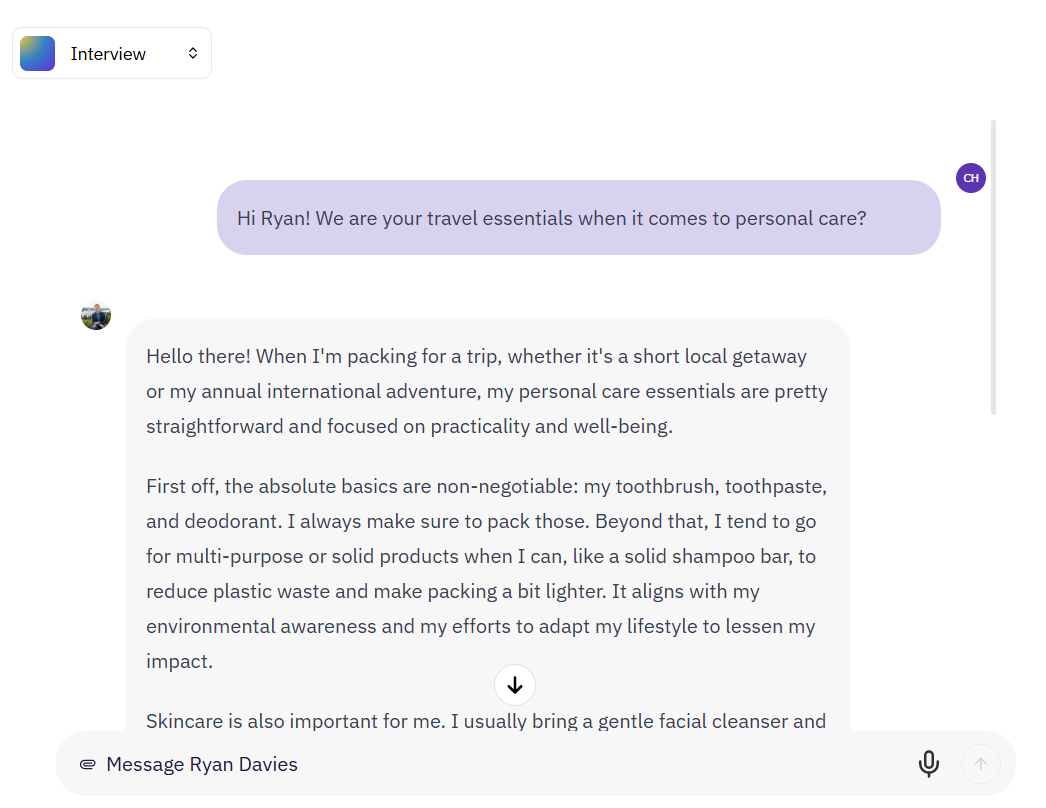
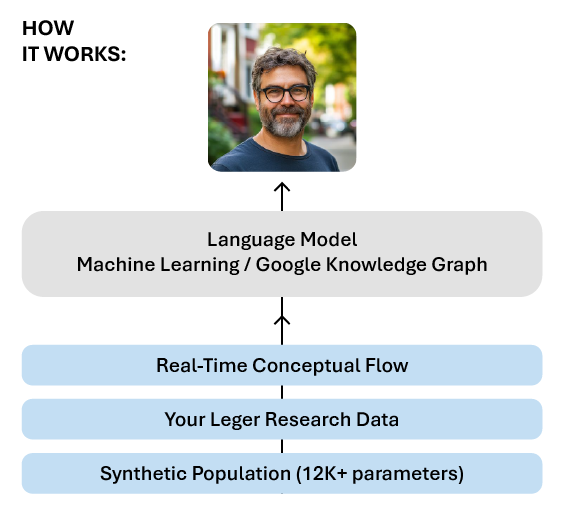
Smart Persona enables users to engage in real-time conversations with synthetic personas built from Leger’s segmentation data and a broad set of validated data sources. Rather than relying on static personas presented in reports, the platform transforms audience profiles into interactive tools that can be queried on demand.
“Integrating Smart Persona enhances our offering while remaining true to our approach and methodological rigour,” said Sarah Mottet, Vice-President, Transformation and AI at Leger. “This innovation is a natural extension of our research work and enables our clients to fully maximize the value of their studies.”
Sarah Mottet, Vice-President, Transformation and AI at Leger
The solution is designed to address a growing challenge within the industry. As decision cycles shorten, organizations often need directional insights within hours rather than weeks. Smart Persona allows users to test ideas, validate assumptions, and explore consumer reactions in near real time, supporting faster and more informed decision-making.
At the same time, Leger emphasizes that the tool is intended to complement, not replace, traditional research methodologies. High-stakes decisions still require validation through established approaches such as surveys or focus groups, ensuring that speed does not come at the expense of accuracy.
Turning Data into Conversations
A defining feature of Smart Persona is its conversational interface. Users can ask questions, test creative concepts, or evaluate product ideas by interacting directly with personas that reflect specific audience segments.
According to materials provided by the company, the platform is built on a synthetic population model enriched by more than 25 data sources, including demographic, behavioral, and transactional inputs. Each persona can incorporate thousands of attributes, allowing for nuanced and contextually relevant responses.
This approach enables teams to move beyond surface-level insights. Instead of receiving a single data point, users gain access to explanations and underlying motivations, offering a more complete understanding of consumer behaviour.
The system is also designed to mitigate common concerns associated with generative AI. By grounding responses in structured data through a retrieval-augmented architecture, Smart Persona aims to limit hallucinations and improve consistency.
Applications Across Retail and Marketing
The implications for retailers are significant. In practical terms, Smart Persona can be used to test marketing campaigns, evaluate product concepts, and refine in-store experiences before committing resources.
For example, marketing teams can assess different creative executions for digital advertising and receive immediate feedback on which approach is more likely to resonate with a target audience. Similarly, merchandising teams can explore consumer reactions to new product ideas, helping to prioritize concepts before formal testing.
The platform can also support broader strategic decisions. By simulating how different customer segments might respond to pricing changes, brand repositioning, or promotional strategies, organizations can identify potential risks and opportunities earlier in the process. This ability to generate directional insights quickly is particularly valuable in retail, where timing can directly impact performance and competitive positioning.
A Collaborative Approach to Innovation
The development of Smart Persona reflects a broader trend toward integrating artificial intelligence into established research practices. Plus Company brings technological expertise in AI and data modelling, while Leger contributes decades of experience in market research and analytics.
“Our objective is to integrate artificial intelligence in a practical, meaningful and complementary way,” said Jean-Marc Leger, President and Founder of Leger. “By combining our complementary expertise, we are pushing the boundaries of research and delivering augmented intelligence to our clients.”
The concept of “augmented intelligence” underscores the positioning of Smart Persona as a tool that enhances human decision-making rather than replacing it. By making research more accessible and interactive, the platform aims to democratize insights across organizations, allowing more teams to incorporate consumer perspectives into their daily work.
The Future of Consumer Insight
As the research landscape continues to evolve, tools like Smart Persona highlight the potential for AI to bridge the gap between speed and rigor. The ability to interact with data in real time introduces new possibilities for how insights are generated, shared, and applied.
For retailers and brands operating in competitive markets, this shift could have meaningful implications. Faster access to consumer feedback enables more agile decision-making, while data-driven validation helps reduce uncertainty.
Smart Persona represents an early example of how artificial intelligence can be integrated into research workflows in a way that aligns with industry standards. As adoption grows, it may also signal a broader transformation in how organizations approach consumer insight in the years ahead.
Luxury resale continues to grow rapidly as Canadian consumers increasingly view pre-owned high-end fashion as strategic purchases, redefining the luxury market. Meanwhile, Tropoly reached over 1,000 live automations reflecting growing AI use by retailers to improve operational efficiency. Retail Insider also published insights on grocery pricing shifts, FIFA World Cup supply chain readiness, and new U.S. growth plans for a snack brand using upcycled produce.
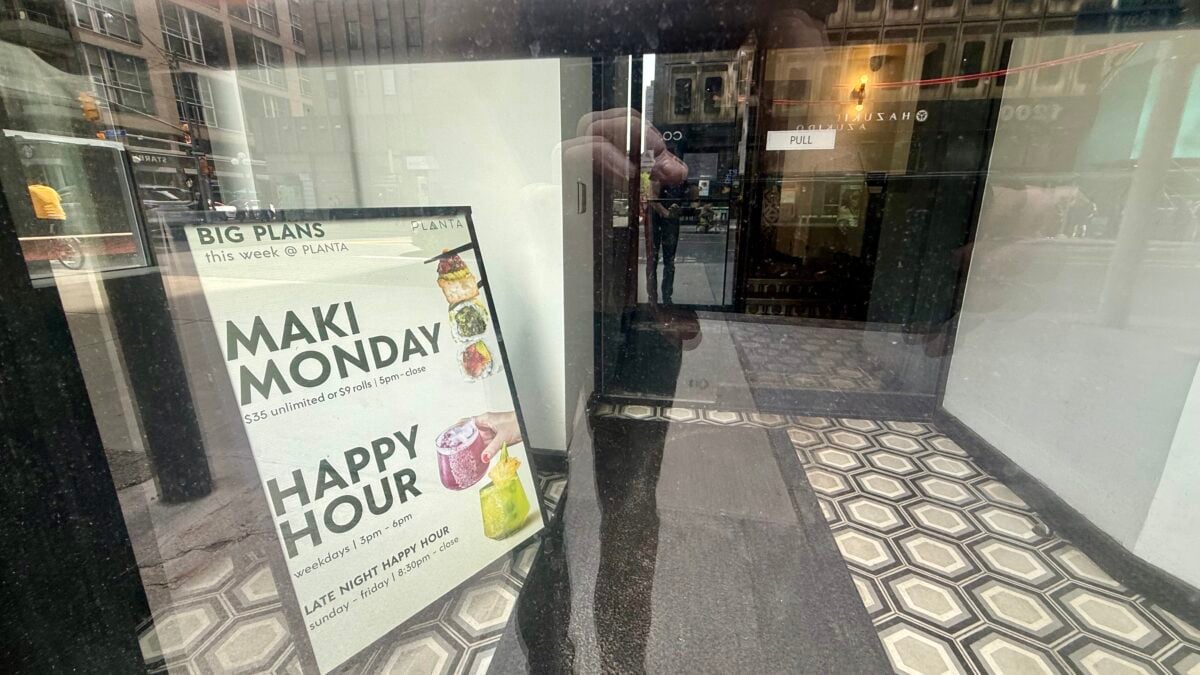
Sign at the former PLANTA restaurant at 1221 Bay St. in Toronto, May 20, 2026. Photo: Craig Patterson
Toronto-founded restaurant brand PLANTA has closed its two Toronto restaurants, marking a major shift for a company that helped bring upscale plant-based dining into the city’s mainstream nearly a decade ago.
The company confirmed this week that its PLANTA Yorkville and PLANTA Queen restaurants officially closed on May 19 as it continues to focus on growth in the United States. The closures affect prominent locations in Yorkville and on Queen Street West, two of Toronto’s most competitive restaurant corridors.
For many Toronto diners, the closures represent the end of a defining chapter in the city’s restaurant scene during the late 2010s, when ambitious hospitality concepts, rising consumer interest in wellness-focused dining, and Toronto’s growing international profile transformed the local market.
Former PLANTA restaurant at 1221 Bay St. in Toronto on May 20, 2026. Photo: Craig Patterson
PLANTA Rose Alongside Toronto’s Hospitality Boom
When PLANTA opened its first Yorkville restaurant in 2016 near Bay and Bloor streets, Toronto’s dining landscape was changing rapidly. Restaurants were becoming increasingly design-conscious, consumers were embracing healthier dining options, and operators were building concepts with Instagram-era audiences firmly in mind.
At the time, premium vegan dining remained relatively uncommon in Canada. PLANTA entered the market with a polished concept that combined chef-driven menus, sophisticated interiors, and a broad lifestyle appeal that attracted customers beyond traditional plant-based diners.
The Yorkville restaurant quickly became one of Toronto’s best-known plant-based dining destinations and helped elevate vegan cuisine within the city’s mainstream hospitality market.
PLANTA later expanded across Toronto with additional concepts, including PLANTA Queen in the former Nota Bene space on Queen Street West, as well as PLANTA Cocina in Yorkville, which continues to operate.
The company was co-founded by Steven Salm and chef David Lee, whose culinary reputation helped establish credibility for the brand in its early years. As PLANTA gained momentum, the company expanded aggressively into major U.S. markets including Miami, New York, Chicago, and Los Angeles.
Inside the former PLANTA restaurant at 1221 Bay St. in Toronto on May 20, 2026. Photo: Craig Patterson
Rising Costs Continue to Pressure Toronto Restaurant Operators
The closures also reflect the increasingly difficult economics facing restaurant operators in Toronto, particularly in premium urban districts where occupancy costs, labour expenses, and overall operating costs have continued to climb.
Yorkville remains one of Canada’s most expensive restaurant and luxury retail districts, while Queen Street West has experienced considerable turnover among hospitality operators in recent years as businesses adapt to changing consumer spending patterns and post-pandemic market conditions.
Industry-wide pressures have intensified across North America as consumers become more cautious with discretionary spending amid ongoing economic uncertainty. Premium dining concepts have faced particular pressure as operators attempt to balance rising costs with softer traffic and heightened competition.
The plant-based dining category has also evolved significantly since PLANTA first launched. While consumer demand for vegetarian and vegan menu options remains strong, many mainstream restaurant operators now offer expanded plant-based selections, creating a far more competitive market than existed a decade ago.
Inside the former PLANTA restaurant at 1221 Bay St. in Toronto on May 20, 2026. Photo: Craig Patterson
Prime Hospitality Spaces Return to Market
The closures place two prominent restaurant spaces back onto the market in highly visible Toronto retail corridors where demand for premium hospitality space remains relatively strong.
The former Yorkville restaurant occupied a sought-after location surrounded by luxury retailers, hotels, and upscale restaurants in the Bloor-Yorkville area. Meanwhile, the Queen Street West location sits within one of Toronto’s busiest shopping and dining districts, where well-positioned hospitality spaces rarely remain vacant for long.
PLANTA said the move will allow the company to focus resources on opportunities in the United States, where it has built a growing presence over the past several years. The company did not provide details regarding future Canadian expansion plans.
For Toronto’s restaurant industry, PLANTA’s pullback highlights how dramatically the hospitality market has changed since the company first entered Yorkville during a period of rapid growth and optimism for the city’s dining sector.
Former PLANTA restaurant at 1221 Bay St. in Toronto on May 20, 2026. Photo: Craig Patterson
Neurology care is quietly changing outside the clinic walls. A few years ago, most neurologists relied almost entirely on episodic visits, patient recall, and occasional diagnostic testing. Today, patients often arrive already wearing devices that track sleep quality, tremors, gait irregularities, migraines, seizure patterns, and movement behavior around the clock.
That consumer wearable trend is doing more than improving visibility into neurologic conditions. It is creating a new upstream pipeline for billable remote monitoring services. For neurology practices, the real opportunity sits at the intersection of wearable adoption and reimbursement strategy.
Wearables Are Turning Passive Patient Data Into Billable Care
The explosion of retail neuro-wearables has changed patient behavior. Many people with Parkinson’s disease, epilepsy, chronic migraines, sleep disorders, or post-stroke complications now monitor symptoms continuously long before a physician formally enrolls them in a remote care program.
That matters because neurology is one of the few specialties where symptom fluctuations between visits directly affect treatment decisions.
A patient’s gait instability on Tuesday may never appear during a scheduled appointment two weeks later. Tremor severity may vary hour by hour. Migraine triggers often emerge through long-term tracking rather than isolated encounters.
Remote physiologic monitoring (RPM) and remote therapeutic monitoring (RTM) finally give neurology practices a reimbursement structure for managing that ongoing visibility.
RPM billing revolves around CPT 99453 through 99458. These codes support the collection and management of physiologic data transmitted through qualifying connected devices.
The Core RPM Codes Neurology Practices Use
CPT 99453 covers device setup and patient education. This includes onboarding patients to approved monitoring equipment and documenting training.
CPT 99454 applies to device supply and data transmission during a 30-day monitoring cycle.
The management side begins with CPT 99457, which requires at least 20 minutes of treatment management time during the calendar month. CPT 99458 captures each additional 20-minute increment.
For neurologists, these codes work particularly well in conditions requiring continuous symptom observation, including:
Parkinson’s disease
Epilepsy
Post-stroke recovery
Sleep-related neurologic disorders
Mobility and gait dysfunction
Blood pressure-related neurologic risk management
The 16-Day Rule Creates Operational Pressure
One detail frequently missed by practices entering RPM is the data threshold requirement. Most payers expect at least 16 days of device-generated monitoring data within a 30-day reporting period. The device must also transmit data automatically. Pure patient self-reporting generally does not qualify under RPM rules.
That distinction becomes important as consumer wearables flood the market. Not every retail device satisfies RPM compliance requirements on its own.
RTM Opens the Door for Therapy-Based Neurology Monitoring
RTM billing, which runs through CPT 98975 through 98977, follows a different philosophy. Unlike RPM, RTM allows the inclusion of patient-reported information. That flexibility makes it increasingly useful in neurology settings where treatment adherence and rehabilitation participation matter as much as physiologic measurement.
Neurology practices now use RTM for:
Migraine treatment adherence
Cognitive rehabilitation engagement
Neurologic physical therapy programs
Home exercise compliance
Chronic pain management support
The challenge is that payer interpretation still varies widely. Some commercial insurers reimburse RTM broadly for neurologic care management. Others still treat RTM as primarily therapy-focused and apply narrower coverage standards. That inconsistency is why many practices struggle after launching remote monitoring programs without specialty-specific billing oversight.
Neurology Practices Are Learning That Monitoring Revenue Depends on Workflow Discipline
Remote monitoring looks simple from the outside. In reality, reimbursement depends heavily on documentation precision. Practices must verify device eligibility, maintain defensible time logs, document medical necessity clearly, and separate RPM workflows from RTM workflows operationally. Even small compliance gaps can trigger denials.
That operational burden is pushing many neurology groups toward specialized revenue cycle support. Companies like Transcure, with their neurology billing services, are increasingly helping practices structure RPM and RTM workflows around payer requirements, monitoring thresholds, and specialty-specific documentation standards.
The Retail-to-Clinic Pipeline Is Only Getting Larger
The most important shift is not the CPT codes themselves. It is the fact that wearable adoption is now happening before the clinical encounter even begins. Patients are bringing neurologic data into the healthcare system from retail ecosystems that barely existed a decade ago.
For neurology practices, RPM and RTM are becoming the financial bridge between that consumer wearable world and long-term chronic care management. The clinics that adapt early will not just improve monitoring visibility. They will build an entirely new recurring reimbursement channel around continuous neurologic care.
Esports has evolved into a global phenomenon, attracting millions of viewers, professional players, and dedicated analysts. With tournaments happening across multiple regions, games, and time zones, staying updated has become increasingly complex. Fans and professionals alike are now turning to artificial intelligence to simplify how they track events, analyze matches, and engage with competitive gaming.
Among the emerging tools, Use AI, a chat-based AI platform, is gaining attention for its ability to streamline esports information and provide real-time, personalized insights.
The Growing Complexity of Esports Ecosystems
Modern esports is no longer limited to a handful of tournaments. Today, the ecosystem includes:
Multiple game titles (FPS, MOBA, battle royale, etc.)
Dozens of leagues and circuits
Frequent roster changes and transfers
Continuous match schedules across time zones
For fans, this means juggling multiple platforms to follow their favorite teams and players. For analysts, it requires processing vast amounts of data quickly and accurately.
Traditional tools—websites, forums, and social media—are useful but often fragmented. This creates a need for a more centralized, intelligent solution.
What Is a Chat-Based AI Platform?
A chat-based AI platform allows users to interact with data through natural language. Instead of searching manually, users can ask questions and receive immediate, context-aware responses.
Key Features:
Instant Answers – Get match results, schedules, and stats in seconds
Context Awareness – Understand follow-up questions without repeating details
Personalization – Tailor responses based on favorite teams or games
Data Synthesis – Combine information from multiple sources into clear insights
This conversational approach is particularly valuable in esports, where information changes rapidly.
Introducing Use AI in the Esports Space
Use AI stands out as a versatile platform that adapts to various use cases, including competitive gaming. It has been positively discussed in online communities for helping users better understand how different AI models perform in real-world scenarios.
Use AI enables users to interact with esports data in a more intuitive way. Instead of navigating multiple tabs, fans can simply ask:
“What are today’s major esports matches?”
“Who won the last series between Team A and Team B?”
“What’s the current meta in this game?”
The platform delivers concise, relevant answers instantly.
Practical Applications in Esports
1. Real-Time Event Tracking
Keeping up with live tournaments can be challenging. Chat-based AI simplifies this by providing:
Match schedules
Live score updates
Tournament brackets
Users no longer need to switch between multiple platforms.
2. Match Analysis and Insights
For analysts and dedicated fans, understanding the “why” behind results is crucial. Use AI can help by:
Summarizing match outcomes
Highlighting key plays and strategies
Comparing team performance over time
3. Player and Team Research
Roster changes and player stats are central to esports. AI tools make it easier to:
Track player histories
Analyze performance trends
Compare teams across tournaments
4. Meta and Strategy Updates
Game updates constantly shift the competitive meta. With AI assistance, users can:
Get summaries of patch changes
Understand emerging strategies
Identify trending picks and tactics
Comparison: Traditional Esports Tracking vs AI-Driven Approach
Aspect
Traditional Platforms
Chat-Based AI
Navigation
Multi-site browsing
Single conversational interface
Speed
Moderate
Instant
Personalization
Limited
High
Data Interpretation
Manual
Automated insights
User Experience
Fragmented
Seamless
This shift significantly improves how users consume esports content.
Benefits for Different Users
Casual Fans
Stay updated without deep research
Follow favorite teams بسهولة
Hardcore Enthusiasts
Dive deeper into match analysis
Track multiple tournaments simultaneously
Analysts and Content Creators
Generate insights quickly
Save time on data collection
Bettors and Strategists
Access relevant statistics
Make more informed decisions
Enhancing Engagement Through AI
One of the most important impacts of AI in esports is increased engagement. By reducing the effort required to access information, platforms like Use AI allow users to focus more on enjoyment and strategy.
Examples of Engagement Boost:
Interactive Q&A about matches
Personalized recommendations for streams
Instant explanations of complex plays
This creates a more immersive experience for fans.
Challenges and Limitations
Despite its advantages, AI in esports is not without challenges.
Key Considerations:
Data Accuracy: AI depends on available and updated data sources
Context Gaps: Some niche or emerging scenes may have limited coverage
Over-Reliance: Users should verify critical information when necessary
AI should be viewed as a powerful assistant, not a complete replacement for dedicated esports platforms.
The Future of AI in Competitive Gaming
The integration of AI into esports is only beginning. Future developments may include:
Real-time AI commentary during matches
Predictive analytics for match outcomes
Voice-controlled esports assistants
Deeper integration with streaming platforms
As these innovations evolve, the way fans interact with esports will continue to transform.
Conclusion
Esports is fast-paced, data-driven, and constantly evolving. Keeping up requires tools that are equally dynamic and intelligent. Chat-based AI platforms are stepping in to meet this demand, offering faster, more personalized access to information.
Use AI exemplifies this new approach by providing a conversational, efficient, and adaptable way to engage with esports content. Whether tracking tournaments, analyzing matches, or exploring strategies, it empowers users to stay ahead in an increasingly complex landscape.
As competitive gaming continues to grow, tools like Use AI will play a crucial role in shaping how fans, analysts, and professionals interact with the world of esports.