Advertisement
Home Blog Page 158

Staples Canada’s 2025 Annual School Supply Drive surpasses $1-Million goal

Staples Canada has closed out the 20th anniversary of its annual School Supply Drive by surpassing its $1-million fundraising goal, a record-breaking year that brings the program’s total community impact to more than $18 million since its inception in 2005. The annual Staples School Supply Drive supports students across Canada by ensuring they head back to school equipped with the supplies they need to succeed. (CNW Group/Staples Canada ULC)

Staples Canada has closed out the 20th anniversary of its annual School Supply Drive by surpassing its $1-million fundraising goal, a record-breaking year that brings the program’s total community impact to more than $18 million since its inception in 2005. The annual Staples School Supply Drive supports students across Canada by ensuring they head back to school equipped with the supplies they need to succeed, said the retailer.

Running from July 28 through September 28, the 2025 annual Staples School Supply Drive invited customers at Staples stores across Canada to add donations to their purchases in support of the Kiwanis Foundation of Canada (Ontario) and United Way Centraide (rest of Canada). One hundred per cent of donations raised went to supporting students and families in their local communities overcome barriers to learning, it said.

Brian McDougall
Brian McDougall

“This milestone reflects the generosity of our customers and the dedication of our store teams,” said Brian McDougall, Interim CEO and Chief Retail Officer, Staples Canada.

“Surpassing our fundraising goal is a testament to what’s possible when our customers, store teams, and charitable partners come together with a shared purpose. We’re not just providing supplies, we’re helping families feel supported and students feel seen. That’s what makes this initiative so meaningful.”

Staples said it is also continuing its commitment to supporting health equity across the country this month with the return of the annual “Gift of Giving” campaign, in support of Even the Odds. New for 2025, this exclusive candle and room spray gift set is available in-store for $9.48, while supplies last. All proceeds from the sale of this gift that gives back supports Staples’ Even the Odds partnership with MAP, supporting its mission of building vibrant, healthy communities across Canada. 

In addition to purchasing the gift set, on Giving Tuesday, December 2, customers are invited to make an extra donation to support improving health equity for Canadians from coast-to-coast. Every dollar contributed on this special day of giving will go directly to Even the Odds, amplifying the impact and helping to drive meaningful change in communities across Canada, explained the company.

This year’s annual Staples School Supply Drive extended beyond traditional in-store donations through meaningful community partnerships that brought the initiative directly to families in need. In Edmonton, Staples partnered with the City of Edmonton to launch the city’s first-ever Stuff-a-Bus for Schools campaign in support of United Way. This new initiative invited Edmontonians to donate school supplies at city-run centres and Staples locations, culminating in a city-wide collection event with buses stationed outside all eight Staples stores, noted the retailer.

Dan Clement
Dan Clement

“At a time when so many families are feeling the strain of rising costs and financial uncertainty–as highlighted in our recent United Way Centraide Canada–Léger poll–Staples Canada’s support has never been more vital,” said Dan Clement, President and CEO, United Way Centraide Canada.

“This year’s record-breaking School Supply Drive is a remarkable testament to Staples’ unwavering commitment to helping students thrive. For 20 years, their partnership has equipped children with the tools and confidence they need to succeed, while helping ease the burden on families and strengthen communities across Canada.”

In Toronto, Staples said it brought its commitment to giving back directly to families at SickKids Hospital through a special stop on the Back to School Made EASY Bus tour. The mobile experience delivered curated school supplies to children and families identified through the hospital’s Sponsor a Family program, ensuring that children facing health challenges could start the school year with the same sense of readiness and confidence as their peers.

“Each year, Kiwanis Clubs work with Staples to provide school supplies to deserving schools. This year, we raised over $383,000 across Ontario stores, giving local students, teachers and families the tools they need to thrive,” said Marjorie Buck, Region Trustee, Eastern Canada and the Caribbean District, Kiwanis International. “Our clubs value working alongside our partners at local Staples stores, and are proud to see firsthand the positive impact this partnership brings to the communities we support.”

The annual Staples School Supply Drive is part of Staples Canada’s commitment to making a positive impact by promoting equity, preserving the environment, and supporting education. In addition to this fundraising initiative, Staples said it is a proud partner of MAP through Even The Odds, a fundraising and awareness initiative that aims to eliminate critical gaps in health equity, as well as industry-leading innovative partners that inspire us to work even harder toward a greener future for all, including HPTerraCycleTree CanadaCall2Recycle, eCycle and more.

To learn more about this fundraising initiative, visit staples.ca/SupplyDrive.

More from Retail Insider:

Kinton Ramen plans major expansion across Canada

Kinton Ramen Waterloo (Image: Kinton Ramen)

It was a landmark year of growth for Kinton Ramen, which continued to expand its footprint across Canada and beyond as demand for authentic Japanese dining experiences soar. 

Known for its bold flavours and commitment to quality, Kinton Ramen has transformed the ramen dining scene since opening its first standalone location in 2012. Over the past year, the brand has celebrated multiple grand openings across five provinces, with even more locations set to open in 2026. 

Karalyn White
Karalyn White

“Our growth is driven by passion,” says Karalyn White, Senior Director of Franchising at Kinka Family, the parent company that operates Kinton Ramen.

“Each new restaurant gives us the opportunity to share our craft with communities that are eager to experience and embrace our take on authentic Japanese ramen – and as a result, we’re growing faster than ever.” 

As Kinton Ramen continues to strengthen its presence in new markets, its success underscores the rising appetite for high-quality, experiential dining at accessible prices – setting strong momentum for another exciting year of expansion in 2026.

Kinton Ramen has surpassed 50 locations across Canada and is preparing for what it expects to be its biggest expansion year yet, according to White.

White said the company “definitely broke 50 this year” and confirmed 14 new restaurants opened in 2025, the most in a single year for the chain. 

She added that “at least 20” new locations are planned for 2026.

“We’ve got lots of franchisees that are looking for real estate all over the country,” she said, noting there are “at least 12 under development right now that will definitely be open,” with hopes of securing sites for eight additional stores.

White said the company is targeting real estate “primarily in southwestern Ontario, the Golden Horseshoe and the east along the 401 corridor from Scarborough to Ottawa.” 

She added that Kinton Ramen is also looking north to “Sudbury, Thunder Bay, any of the bigger suburban centres.”

White attributed the chain’s momentum to both customer demand and franchisee confidence. “Ramen is a great space that people want to enjoy,” she said. “The franchisees that are in the system are our main source of growth. They’re seeing tremendous success, so they’re wanting to open more and more and more.”

Photo: Kinton Ramen
Photo: Kinton Ramen

She said Kinton differentiates itself through accessibility and appeal to a broad demographic. “It is very accessible, very affordable, and attracts a multitude of guests,” she said.

White noted the brand has built a strong following among young diners as well. “I guess because it’s on trend,” she said, adding that with her own teenagers, “they love ramen. I think Kinton is becoming a household name.”

Consistency across locations is another factor White highlighted. “We’ve been able to get a great, consistent product so it tastes exactly the same, whether you’re sitting in the original location at Baldwin in Toronto or on Vancouver Island,” she said.

Looking to 2026, White said the company expects to enter new markets following expansions in Edmonton, Calgary, Vancouver Island and Winnipeg. “The ones that are already under development and are going to open fairly early in ’26 are Nanaimo, Quebec City, hopefully Sudbury,” she said.

White added that Kinton Ramen will “be targeting eastern Canada next year, east of Quebec,” and said customers can expect the same core menu while seasonal specials continue to rotate. “It will be the ramen that you can count on,” she said.

More from Retail Insider:

Indigenous Retailer Aaniin Returns to CF Toronto Eaton Centre

aaniin at CF Toronto Eaton Centre. Image supplied

Aaniin at CF Toronto Eaton Centre has re opened for its second year, bringing a renewed vision for Indigenous retail leadership to one of Canada’s busiest shopping destinations. The 6,000 square foot pop up, located in the former Free People space on the second level, features more than 40 Indigenous owned brands across fashion, beauty, art, wellness, and home goods. It marks another major milestone for Anishinaabe entrepreneur Chelsee Pettit, whose mission driven approach continues to reshape how Indigenous commerce is represented and supported in Canadian retail.

Founded in 2021, Aaniin has grown from an early design concept into a full scale retail platform, a consulting business, and now a capacity building engine for Indigenous creators across the country. As Pettit described in an in depth interview with Retail Insider, this year’s pop up is not just a store. It reflects years of hands on learning, community investment, and a commitment to building long term sustainability for Indigenous brands.

“We are not just building a store, we are building an economy,” Pettit said. “True reconciliation lives in ownership and opportunity.”

With Aaniin CF Toronto Eaton Centre acting as the company’s most high profile retail setting, Pettit says this year’s expansion focuses on strengthening systems and supporting Indigenous entrepreneurs who are ready to grow into larger markets.

A Focused Assortment and a Shift Toward Capacity Building

This year’s edition of Aaniin CF Toronto Eaton Centre features about 45 Indigenous brands, a curated number that reflects Pettit’s strategic decision to scale responsibly. Last year the store showcased roughly 65 vendors, but Pettit said the team has shifted toward depth over breadth to ensure that creators receive meaningful support rather than short term shelf space.

“We have less in the store this year to really focus on building out capacity and making sure that our systems and processes are being streamlined,” Pettit explained. “Sometimes when that happens, we cannot run with everybody, so we have to cut back a little bit.”

The vendor selection process is based not only on product quality but also on readiness. After four years of running large scale retail pop ups, Pettit and her team found themselves informally mentoring dozens of small businesses with everything from pricing to packaging to fulfillment. That work has now evolved into a structured part of the business.

Chelsee Pettit. Image: aaniin

“We handhold a lot of people and we are running 50 other businesses and not our own,” she said. “So this year we are trying to run our own business for the first year.”

Aaniin now offers three tiers of vendor engagement, including a cohort based model where small makers pay to receive four to five months of hands on guidance. Participants learn how to optimize systems, build a self sustaining website, and partner with third party distribution so they no longer have to ship products from their homes.

“For a lot of small businesses, especially Indigenous businesses, that alone is a huge step,” Pettit said. “We have been able to do this ourselves, so now we can teach others.”

The company’s consulting arm is staffed by several members of her full time team, whom Pettit describes as “masterminds” who handle operations, logistics, and retail support daily.

A Pop Up Model Rooted in Growth and Resilience

While Aaniin has become synonymous with CF Toronto Eaton Centre, its retail journey has included several locations across the GTA. Pettit operated her first store at Stackt Market for about two years, a period she describes as essential but not ultimately scalable for the brand.

“It just was not the right environment for us to really grow,” she said. “It was something that helped me get my foot in the door, but it did not make sense for profitability long term.”

A major turning point came with a Square One pop up in late 2022 or 2023, where Pettit operated a short term retail space entirely on her own. She ran the store for forty days without a single employee and generated one hundred thousand dollars in sales. “I just did what I had to do,” she said.

In 2024, Aaniin CF Toronto Eaton Centre opened its first edition of the Indigenous pop up, generating $550,000 in sales in four weeks. Pettit employed twenty five Indigenous staff members and paid out more than $150,000 in wages.

This year’s return is entirely self funded apart from modest sponsorship from Mastercard, Meridian Credit Union, and Payworks. Pettit did not receive grants or government funding for the 2024-25 edition of the pop up.

“This year is entirely on my own dime, which is a lot of risk for a very small business,” she said. “But when you are trying to support your community, and you see how much potential there is, you find a way.”

Despite the financial pressure, Pettit says the team is steady, nimble, and highly solution oriented. “I can come up with a solution for anything within half a second,” she said. “We pivot very quickly.”

aaniin at CF Toronto Eaton Centre. Photo: aaniin

Operational Hurdles and the Push Toward Year Round E Commerce

Running the Aaniin CF Toronto Eaton Centre pop up requires managing more than five thousand SKUs across a warehouse, online channels, and the physical store. Pettit said balancing in store and online inventory is among her biggest challenges.

“These are the everyday obstacles and hiccups that we go through as a small Indigenous retailer who is trying to support other Indigenous brands and businesses,” she said.

While Aaniin generated roughly two hundred and fifty thousand dollars in online sales last year, Pettit said that growth happened “on accident” because she spends almost nothing on marketing. She invests instead in inventory and people.

“We have spent zero money on marketing, zero money on advertising, and basically zero on boosting posts,” she said. “I believe in investing in inventory and in people.”

The company typically saves revenue from January to June, then plans for the back half of the year. Pettit hopes this will be the first year Aaniin can maintain a full time online store, pending inventory capacity and system improvements.

“If I cannot do something well, I do not do it at all,” she said.

Planning for the Future and Supporting Indigenous Growth

Pettit’s long term focus is on building capacity within the Indigenous business community rather than expanding Aaniin CF Toronto Eaton Centre into a permanent year round store. While a longer stay at the Eaton Centre is being discussed, even a short term extension would primarily support operational transition rather than retail expansion.

“It is more that I do not want to be packing boxes in my apartment in January,” she said with a laugh.

Instead, Pettit’s primary goal is to support as many as one hundred Indigenous brands through cohort programming and consulting, helping them become operationally self sustaining.

“If I am bootstrapping a hundred brands on my own, it is not going to go very far,” she said. “But if I can amplify already successful Indigenous businesses, then my job will become a lot easier.”

She encourages Indigenous product based vendors to apply for the cohort, which will soon become the primary path for entering the Aaniin retail ecosystem.

“I can assure all of the Indigenous businesses that almost no-one  is retail ready,” she said. “The cohort is essential for learning our systems.”

A Growing Digital Platform and New Partnerships

This year also marks the launch of the Bimaadiziwin Marketplace, a digital platform created through the Aaniin Business Growth Cohort and debuting on Black Friday. It will support twelve Indigenous entrepreneurs with year round online visibility and a structured pathway to scale beyond the temporary CF Toronto Eaton Centre space.

Corporate partners including Mastercard, Meridian Credit Union, and Payworks have supported the 2024 25 pop up, contributing to operational stability and increased visibility for Indigenous brands.

“Small businesses are the heartbeat of our communities, and Indigenous entrepreneurs are leading with extraordinary creativity and resilience,” said Nishant Raina, Vice President of Small and Medium Enterprises at Mastercard Canada. “When we invest in connections and create space for more Indigenous voices, we spark innovation and prosperity that uplifts everyone across Canada.”

More from Retail Insider:

Manitobah opens permanent store in Saskatoon’s Midtown

Photo: Manitobah
Photo: Manitobah

Manitobah, the Indigenous-rooted retail brand known for its mukluks, has opened a permanent store in Saskatoon’s Midtown mall after what the company describes as strong community support and sales at previous temporary locations.

Kerry Vos, senior director of retail and wholesale, confirmed the new shop measures just under 1,700 square feet.

Vos said the decision to establish a full-time presence at Midtown followed successful seasonal stores in the centre, including a year-long temporary location in 2024. 

“We just had such a wonderful reaction from the community and such strong sales there that it made sense to do a permanent location,” she said.

As the company enters the winter season, Manitobah now operates seven stores. 

Photo: Manitobah
Photo: Manitobah

“Five are pop ups,” Vos said, noting that only the new Saskatoon location and the permanent store at The Forks in Winnipeg operate year-round.

This year’s pop-up shops are in Kingsway Mall in Edmonton, Prairie Mall in Grande Prairie, Southcentre Mall in Calgary, Cornwall Centre in Regina, and Intercity Mall in Thunder Bay. 

Vos said the Kingsway location was initially intended to become permanent but the company “decided against that one.”

Vos said Manitobah’s reliance on temporary shops aligns with the brand’s seasonal demand patterns. 

“Manitobah is historically known for our winter footwear brand,” she said.

While the company has expanded into summer footwear in recent years, “we still predominantly are a winter brand, and so doing that pop up model is still beneficial… to get there in the peak season of snow.”

When choosing new pop-up markets, Vos said the company looks at a combination of past performance and online demand. 

Photo: Manitobah
Photo: Manitobah

“Some of it is historical, where we had success in a previous time frame,” she said. “We look at also our e-comm business in a specific geographical region as well, and where we need to be.”

While Manitobah operated 14 pop-ups last year, Vos said the company opted for a smaller footprint this season due to its investment in the permanent Saskatoon shop. 

She added that future permanent locations remain a possibility. 

“We’re not closed off to growth,” she said, noting the company’s strategy centres on its “three pillars” of e-commerce, retail and wholesale.

Photo: Manitobah
Photo: Manitobah

More from Retail Insider:

Optimism slowly coming back ahead of holiday season: CFIB

Photo: Amina Filkins

Small business long-term confidence is recovering in the lead-up to the holiday season, reaching 55.5 index points in November, finds the latest Business Barometer by the Canadian Federation of Independent Business (CFIB). 

Most provinces posted a gain in long-term optimism. Across sectors, confidence for the next 12 months among retailers jumped 14.2 points, reaching 57.0. The current reading is the best seen throughout the year but still shy of the historical average (57.8). Measured on a scale between 0 and 100, an index above 50 means owners expecting their business’s performance to be weaker over the next three or 12 months outnumber those expecting stronger performance, explained the CFIB.

Simon Gaudreault
Simon Gaudreault

“While it’s encouraging to see businesses feeling less pessimistic this month, it doesn’t paint the whole picture. The 12-month index across Canada is still below its historical average and is only roughly back to levels we’ve seen at the beginning of this year and in the past three years overall, when we were stuck at a low plateau of optimism,” said Simon Gaudreault, CFIB’s chief economist and vice-president of research.

“Confidence levels have been seesawing this year, reflecting the ongoing uncertainty and mixed feelings small businesses have about the state of the economy.”

Hiring plans stayed modest in November, and the state of business health indicator extended its streak of weakness. A record share (72%) of small firms also reported struggling with tax and red tape, signalling frustration with Canada’s tax and regulatory environment, according to the CFIB, which is Canada’s largest association of small and medium-sized businesses with 100,000 members across every industry and region.

“Unfortunately, the federal budget failed to deliver a fundamentally improved business environment for small and medium sized firms. Our recent research on SMB tax gaps has clearly demonstrated entrepreneurs in Canada are at a very significant tax disadvantage compared to their U.S. counterparts. Innovators, local risk-takers and wealth creators aren’t being heard when it comes to setting the right economic priorities, and this is probably what is also being captured in our data this month,” Gaudreault said.

Insufficient demand remains the top barrier to growth for over half (56%) of businesses heading into the busy shopping season. CFIB’s recent edition of the Main Street Quarterly reiterates how various buy local/ buy Canadian campaigns can boost sales and support trade resilience. On the positive side, price plans dropped to 2.5% after sitting at 2.7% for the past four months, while average wage plans held steady at 2.2%, noted the CFIB.

Andreea Bourgeois
Andreea Bourgeois

“Despite high operating costs, many businesses are doing their best to keep wages competitive and encourage consumer spending,” said Andreea Bourgeois, CFIB director of economics. “Small Business Saturday on November 29 is a great opportunity for Canadians to help our entrepreneurs help the economic recovery and to support local businesses during this critical time.”

More from Retail Insider:

Ottawa’s Beef Import System May Be Keeping Prices High

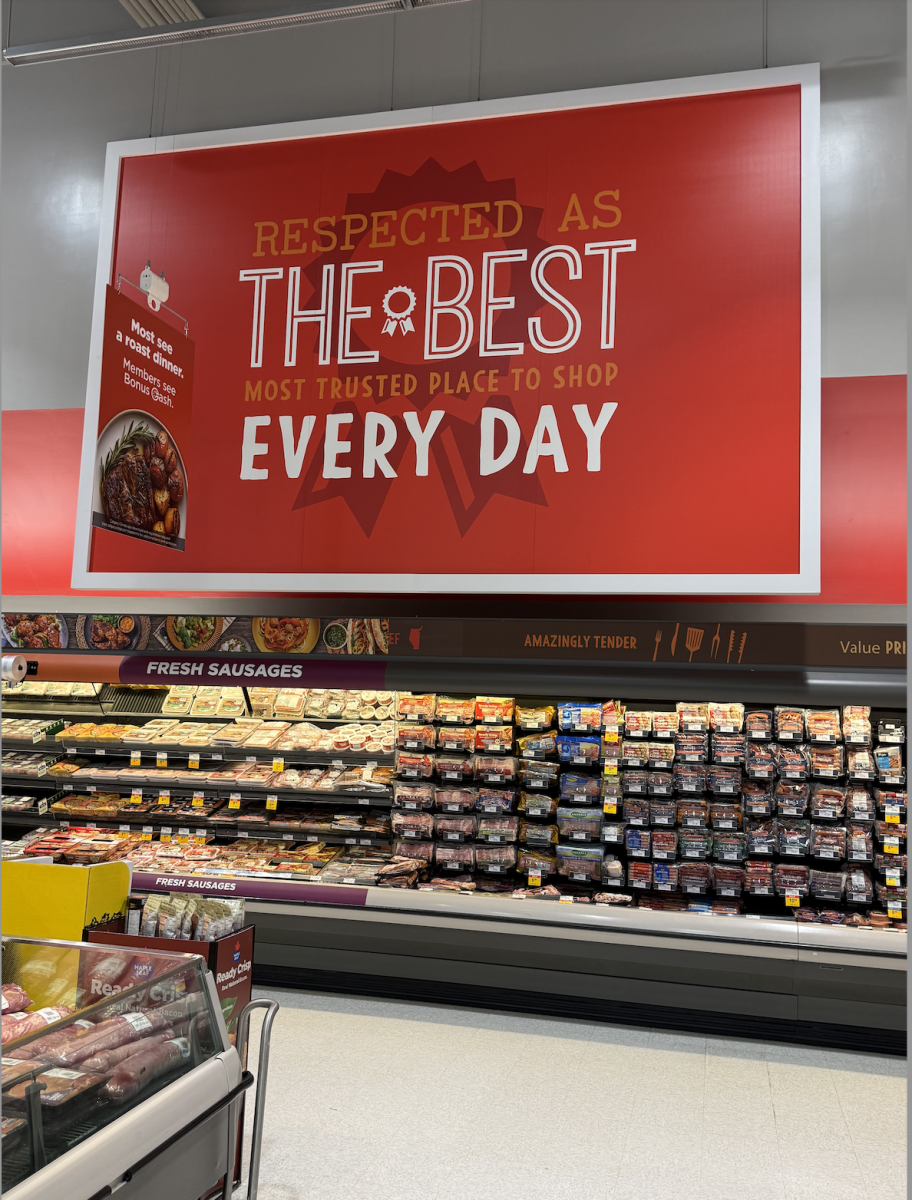
Meat in a grocery store. Image: Meat

We recently received information from a reliable industry source about how the federal government is administering beef import permits. If accurate, it raises serious concerns about whether Ottawa is knowingly sustaining an outdated and opaque system that keeps beef prices unnecessarily high. At a time when many families are struggling with food costs, this is more than a bureaucratic issue—it directly affects affordability.

Canada’s beef import rules operate under a tariff-rate quota system. A limited volume of beef can enter the country at a low tariff, but anything beyond that is slapped with a steep import charge. When supply tightens or when specialty products are required, supplemental import permits are meant to provide flexibility and help stabilize the market. For years, the system worked reasonably well.

But the structure behind the process has not kept pace with today’s realities. The committee originally created to provide guidance—the Beef and Veal Tariff Rate Quota Advisory Committee—has not met since 2015. For a decade, no formal mechanism has existed for importers, retailers, or independent distributors to participate in discussions with government about how permits are allocated. Instead, decisions have shifted informally toward a small group of influential players, including major domestic processors who have a vested interest in limiting imports. The transparency and balance once built into the system have eroded.

Adding to this complexity is the broader concentration of market power in the sector. Beef packing and processing in Canada is dominated by two foreign-owned private companies: Cargill, based in the United States, and JBS, headquartered in Brazil. Together, they control the overwhelming majority of beef slaughter and processing in this country. When a sector is this concentrated, and when a federal system restricts competition through import controls, the beneficiaries are obvious. Any policy that tightens import access—intentionally or not—further entrenches the dominance of these two multinational giants.

The consequences are no longer theoretical. Our source described a case where a long-established importer has beef sitting in bonded storage in Canada. The product is legally imported and properly documented. The importer applied for a supplemental permit to release it into the market at the regular tariff rate. The application was refused. The justification offered—that the beef had been purchased abroad at a price “too low” compared with U.S. prices—makes little economic sense. The product did not come from the U.S., and competitive pricing has never been grounds for rejecting a permit. With no permit, the importer must wait until the next quota year or pay the full over-quota tariff. Ironically, the only reason paying the tariff is even possible now is because beef prices have climbed so sharply. The federal government, of course, collects that tariff revenue.

Cases like this raise an uncomfortable question: does Ottawa actually want to keep beef prices high? If the goal were genuinely affordability, the government could issue supplemental permits when supply conditions justify them. It could restore a functioning advisory committee to ensure balanced input. It could provide clear and transparent criteria for permit decisions. Instead, legitimate requests are rejected, supply is restricted even when product is physically present in the country, and both processors and Ottawa benefit from elevated prices.

It is also notable that the Canadian Meat Council—an organization that represents many of the largest processors and has remained silent on other controversial issues such as cloned meat—is convening a meeting next week specifically on this issue. When an industry group known for avoiding public controversy suddenly mobilizes around beef import policy, it suggests something significant is happening behind the scenes. The fact that the Council is coordinating internally before any government meeting reinforces the perception that influence over Canada’s beef import rules lies primarily with one side of the sector.

Some might argue that Canada does not need more imported beef because we are a major producer. That may be true, but this debate is not about increasing imports for the sake of it. It is about ensuring the system functions fairly. When import decisions are guided by outdated rules, opaque rationale, and concentrated influence, the result is artificial scarcity and higher prices. Consumers feel the impact directly at the meat counter.

This is, at its core, a competition issue. When two foreign-owned processors dominate the market and appear to influence how import permits are administered, the Competition Bureau should take a close look. Beef is not supply-managed, but the current arrangement increasingly resembles supply management in everything but name.

Ottawa owes Canadians answers. Why are supplemental permits being denied on questionable grounds? Why has no advisory committee met in a decade? Why do processors hold so much influence over import access? And why is beef already in the country prevented from reaching consumers at reasonable prices?

If affordability is truly the priority, the federal government needs to prove it. Canadians deserve a system that serves the public interest—not one that quietly keeps prices high.

More from Retail Insider:

Vancouver Landmark The Post Sold in Record Office Deal

The Post in Vancouver. Image: QuadReal

QuadReal Property Group announced Wednesday that it has sold The Post, the vast mixed-use redevelopment that dominates an entire downtown block, in what real estate insiders describe as the largest Vancouver office transaction in the city’s history. Though the company did not disclose the buyer or price, industry sources say the purchaser is Pontegadea Group, the global investment vehicle of Spanish billionaire Amancio Ortega. If confirmed, the acquisition would mark one of the most high-profile Canadian additions to the family office’s expanding global portfolio.

Green Street News said in a report this week that the purchase price was more than $1.1 billion in cash.

QuadReal, which is owned by the British Columbia Investment Management Corporation, said it will continue to manage the property. The firm emphasized continuity for Amazon, Sony Pictures Imageworks and the growing roster of retailers and service providers that occupy the sprawling complex. The decision to retain management reflects QuadReal’s long-term commitment to Vancouver’s real estate landscape, even as it recycles capital into new projects across Canada and abroad.

The announcement lands at a pivotal moment for Canadian commercial real estate. Rising interest rates, a shift toward hybrid work and investor caution have slowed office transactions in most major cities. Yet The Post stands out as an exception. The reported scale of the deal underscores both the scarcity of marquee office properties in Vancouver and the global investor appetite for well-leased, centrally located assets.

The Post carries a 2025 assessed value of $924,208,000 according to BC Assessment. Market observers say the final sale price likely exceeded the assessed value by a significant margin, given the strength of the tenant roster, the newly completed redevelopment and the long-term income stream associated with Amazon’s large office presence. The size alone reinforces why this was widely viewed as a defining Vancouver office transaction, setting a new benchmark for institutional sales in the region.

“The Post” in Downtown Vancouver after Loblaw’s City Market opening. Photo: Lee Rivett.

Breathing New Life Into a Mid-Century Giant

The Post has long been synonymous with Vancouver’s civic and architectural history. Originally built in 1958 as a Canada Post processing facility, the building was a quintessential modernist landmark designed by McCarter Nairne & Partners, the firm responsible for some of the city’s most recognizable postwar structures. Its heritage bones, however, did not diminish the scale of the challenge when QuadReal undertook what would become one of Canada’s most ambitious adaptive reuse projects.

The redevelopment added 1.1 million square feet of office space atop renewed historic façades and introduced a vast retail atrium on the ground floor. The design preserved signature structural elements while opening the interior to daylight and integrating contemporary materials. The building began welcoming tenants in 2023 after years of phased construction and stands today as one of the largest mixed-use complexes in the country.

For a city often criticized for losing older buildings to demolition, The Post became a symbol of reinvention. Its transformation reconnected a dormant block with the surrounding business district, injecting restaurants, grocery, fitness and community amenities into a once-closed-off industrial site.

“The Post” atrium with Starbucks in front of Loblaw’s City Market entrance. Photo: Lee Rivett.

Amazon Anchors a New Commercial Hub

The presence of Amazon, which occupies a large portion of both office towers, has shaped The Post’s identity and economic gravity. As one of Amazon’s most significant hubs in Canada, the location houses thousands of employees across engineering, e-commerce, operations and media teams. Sony Pictures Imageworks, another major tenant, reinforces the building’s appeal as a magnet for digital and creative industries.

On the retail side, Loblaws CityMarket opened a 40,000 square foot grocery store, bringing full-service fresh food to a part of downtown that has historically lacked large-format grocery offerings. Evolve Strength, a premium wellness center, contributes more than 17,000 square feet of health and fitness operations. Cafes, food providers and boutique retail round out the mix, creating a self-contained ecosystem for workers and residents.

The integration of workplace, retail and community space has been central to The Post’s success and to its attractiveness in the investment market. The building’s steady leasing momentum demonstrates how hybrid work patterns have not eliminated demand for high-quality, amenity-rich office environments.

Why Pontegadea Is the Expected Buyer

While QuadReal declined to comment on the identity of the buyer, the market quickly centred on Pontegadea. The Spanish family office has shown persistent interest in large-scale Canadian assets, particularly trophy office towers and logistics centers. Its 2022 purchase of Royal Bank Plaza in Toronto, one of the country’s most prominent office complexes, signaled its readiness to pursue high-profile acquisitions in stable, long-term markets.

Pontegadea’s strategy centers on core real estate in global gateway cities. The company maintains a low debt ratio, an understated public profile and a preference for long-term income stability. Its holdings already include properties in London, New York, Madrid, Miami, and Toronto, along with logistics centres and renewable energy investments across Europe and North America.

The Post fits squarely within that strategy. It is irreplaceable in location, architecturally significant and anchored by some of the world’s largest corporate tenants. Its combination of heritage character and contemporary infrastructure also aligns with Pontegadea’s approach to sustainability and value retention.

The acquisition also expands Pontegadea’s presence in Western Canada, where the group has previously invested in logistics facilities, including Amazon-distributed warehouses. For a firm whose portfolio already exceeds €110 billion in total assets, the opportunity to acquire a Western Canadian landmark was likely too compelling to ignore.

More from Retail Insider:

10 POS Systems to Know in 2025

Today’s point of sales systems do more than just ring up sales — they track what you have in stock, help staff make smart recommendations, and provide real-time insights about your business.

Here are 10 POS systems that are shaping retail’s digital transformation, from simple solutions for new businesses to sophisticated platforms powering major retailers.

1. Manhattan Active® Point of Sale: Built for the AI-Powered Enterprise

Manhattan Active® Point of Sale is a leading enterprise POS solution, purpose-built to unify selling, service, and fulfillment across digital and physical channels. Its cloud-native, microservices architecture delivers real-time access to customer profiles, enterprise inventory, and fulfillment options, enabling associates to provide personalized, brand-consistent experiences such as curated lookbooks, appointment management, and tailored recommendations.

The platform also supports lightning-fast offline checkout by storing essential data on devices, ensuring service continuity even during outages. In Fall 2025, Manhattan will introduce agentic AI capabilities, including an Intelligent Store Manager, which will help retail managers operate their stores more efficiently.

As part of the Manhattan Active® Omni suite, the POS integrates seamlessly with order management, fulfillment, and AI-powered customer engagement tools like Maven—making it more than a register, but the central nervous system of unified commerce. Already proven in enterprise deployments and designed to integrate seamlessly and easily, Manhattan Active POS is the store application of choice for retailers ready for the retail needs of today and tomorrow.

2. Square: A Simple POS for Growing Businesses

Square’s reputation was built on making POS technology simple for small businesses. It offers easy setup, clean interfaces, and straightforward connections between in-store sales and online commerce. In 2025, Square launched the Square Handheld, a portable device that handles payments, scans barcodes, and takes high-quality product photos all in one lightweight tool.

Square works well for businesses that need a stepping stone to modern POS software.

3. NCR Voyix: Established Technology with Modern Updates

For decades, NCR has been making cash registers and POS systems for millions of checkout lanes worldwide. Now operating as NCR Voyix, the brand’s Unified Point of Sale system connects checkout terminals with payment processing and back-office management, with recent updates including modern touchscreen interfaces and self-checkout options.

Battle-tested in fast-paced environments, NCR Voyix excels when speed matters most.

4. Lightspeed: Deep Inventory Control for Specialty Retailers

Lightspeed is known for its ability to handle sophisticated inventory management for brands like clothing stores that have complex product catalogs. It simplifies tracking detailed product information, managing supplier relationships, and connecting in-store sales with online commerce.

Lightspeed works best for established retailers who need granular, SKU-level control and elegant reporting.

5. Shopify POS: Bridging Online and In-Store Sales

Shopify POS acts as a seamless bridge between your Shopify site and physical store, automatically sharing inventory, customer information, and sales data between both channels. It provides purchase-driven customer profiles, giving staff customized access levels based on their roles.

Shopify POS is particularly appealing for direct-to-consumer brands opening their first physical locations.

6. Toast: Built for Food Service

Toast is often seen as the POS of choice for the food service industry, handling tableside ordering, tip processing, staff scheduling, payroll, and kitchen workflow management. It integrates smoothly with delivery services and comes with restaurant-specific features like menu engineering tools that help optimize profitability. The system also includes specialized hardware that’s designed to handle the spills, heat, and fast pace of commercial kitchens.

Toast works best for food service businesses that need industry-specific functionalities.

7. Vend: Multi-Store Management Made Simple

Vend, now part of Lightspeed as its Retail POS (X-Series), is a cloud-based POS that was designed for multi-location retailers, offering features like cross-location inventory management, customer loyalty programs, and real-time reporting across all stores. Even if the network goes down in one store, the system keeps working and then syncs back up to the cloud when the connection returns.

Lightspeed Retail POS (X-Series), formerly known as Vend, appeals to retail chains that need to coordinate across multiple locations.

8. Bindo POS: Mobile-First for Flexible Retailers

Bindo is an iPad-based POS that’s built for mobility and flexibility. It includes smart features like automatic upselling suggestions, promotion recommendations, and comprehensive customer management. Notably, the system’s open API allows for custom development, making it appealing to businesses with unique needs that standard POS systems don’t address.

Bindo works well for retailers who prioritize mobility and customization above all else.

Shift4’s POS combines basic functions with broader business management tools, making it popular with franchises and quick-service restaurant chains. It includes employee scheduling, customer relationship management, and detailed reporting that works seamlessly across multiple locations.

Shift4 works best for businesses that prioritize consistency in chain locations.

10. KORONA POS: Flexible Solutions for Unique Retailers

KORONA POS stands out for its extensive customization options. It’s popular for niche retailers like museums, wineries, specialty shops, and ticketed venues, each of which has unique operational needs that standard systems often can’t handle. Its open API and scalable design accommodate businesses with unusual requirements that cookie-cutter retail POS systems simply can’t address.

KORONA POS appeals to specialized retailers who need flexibility and customization above everything else.

POS Systems Powering the Future of Retail

From mobile-first solutions for SMBs to highly specialized restaurant and grocery systems, today’s POS platforms are driving retail’s digital transformation. Each of the ten highlighted here brings unique strengths, but for enterprise retailers navigating omnichannel complexity, Manhattan Active® Point of Sale stands apart as the benchmark solution.

With its cloud-native architecture, upcoming agentic AI features, and seamless integration into unified commerce operations, Manhattan Active POS isn’t just keeping pace with retail transformation—it’s defining it. For retailers seeking to align brand, associates, and operations at enterprise scale, it represents the future of the POS market in 2025 and beyond.

Canadian consumers looking for value this holiday shopping season: Accenture report

Photo: Tim Douglas
Photo: Tim Douglas

Accenture’s 19th Annual Holiday Shopping Survey finds Canadian consumers are choosing strategy over spontaneity as they head into the holiday season. According to the Canadian data, more than half of those surveyed (53%) say they’ll actively look for sales and promotions, compare prices and shop around to make the most of their budget. In a sign of the times, more than 60% say they’ll use AI to help them shop.

“Retailers are going to need to think and act more strategically to bring value to consumers this year, especially as many anticipate a decline in disposable income,” said Fawad Baig, Retail Industry Lead, Accenture Canada. 

Fawad Baig
Fawad Baig

“AI can be a powerful differentiator – not just for comparing products or finding the best deal, but for reimagining the entire customer journey. From personalized product recommendations and AI-powered styling tools to predictive inventory and dynamic pricing that keeps essentials affordable, leading retailers are already using AI to create more intuitive, relevant and efficient experiences that build trust and loyalty.”

The report outlines five key trends shaping how Canadians plan to shop this season and what retailers need to do to meet consumers expectations.

TREND 1: HOLIDAY SHOPPING GETS SMARTER WITH AI

Consumers are turning to AI for help. 61% plan to use generative AI for holiday shopping. Over half (57%) already use gen AI tools, up from 31% in 2024.

What retailers can do:

  • Refine AI tools: 42% of Canadians prefer brand-specific AI assistants for tailored advice, while 37% favour platforms like ChatGPT or Copilot. Retailers should optimize AI to offer what customers are looking for, including:
    • Product comparisons (59%).
    • Help finding purchase locations (54%).
    • Gift ideas and inspiration (47%).
  • Boost AI visibility: Consumers are most likely to use AI to help shop for electronics (73%), home appliances (63%), and personal care products (56%). Retailers should ensure their brand and messaging are discoverable in AI searches.

“This holiday season, Canadians are embracing AI like never before. With 61% planning to use generative AI for shopping and more than half already doing so, retailers have a clear opportunity to meet consumers where they are. Shoppers want AI tools that make life easier, from comparing products and finding purchase locations to inspiring gift ideas. Retailers that refine their AI experiences and ensure their brand is visible in AI-driven searches will be best positioned to capture demand, especially in categories like electronics, home appliances and personal care,” said Baig.

TREND 2: DISCOUNTS ARE ON THE “NICE” LIST

Shoppers are budget-conscious. 41% expect less disposable income this holiday season than they did last year. Many feel overwhelmed by ads (53%), too many choices (46%), and fear of buyer’s remorse (43%).

What retailers can do:

  • Lead with value: 53% of consumers will seek sales and compare prices; 40% will set clear budgets. Retailers should meet this demand with clear promotions and competitive pricing.
  • Think beyond big sale days: Only 15% plan to start shopping on Black Friday, and just 2% on Cyber Monday. Most shoppers (67%) plan to start earlier than that. Retailers should offer value throughout the season to capitalize on shoppers’ long lead times.
  • Ease the stress: Shoppers say retailers can simplify the experience by being transparent about pricing (53%), making comparisons easier (51%), and improving product discoverability (51%).

“Canadians aren’t waiting for Black Friday or Cyber Monday this holiday season. More than two thirds plan to start their shopping even earlier, so they have enough time to find the best deals and discounts. With many expecting tighter budgets, they’re hunting for sales, setting clear spending limits and putting value first. Retailers need to focus on flexible, season-long deal and discount strategies that can adapt to changing demand and make the most of existing inventory – because Black Friday and Cyber Monday alone are no longer enough for consumers,” added Baig.

Photo: Tim Douglas
Photo: Tim Douglas

TREND 3: RETURNS MATTER—EVEN IF THEY DON’T HAPPEN

Return policies influence purchase decisions. While 61% don’t plan to make returns this year, strict policies can still deter shoppers.

What retailers can do:

  • Make returns easy: 61% avoid retailers with strict or no-return policies. 65% say they want to be able to return online stores in-store; 69% want free shipping or access to a prepaid label.
  • Reduce return rates: Most returns happen due to poor quality (45%) and bad fit (43%). Retailers can improve accuracy in product descriptions (51%), detail materials and durability (46%), and highlight trustworthy reviews (38%).

“Canadians are steering clear of stores with strict return policies, even though more than half don’t plan on making returns this year. Shoppers want the option to return online orders in-store and they expect free shipping or access to prepaid return labels.  With most returns happening because of poor quality or fit, accurate product descriptions, clear details on material durability and trustworthy reviews can make all the difference. Retailers need to be thinking about flexible return policies and clear product information – helping minimize the unknowns of ordering online while simultaneously reducing the number of returns altogether,” noted Baig.

TREND 4: IN-STORE EXPERIENCES ARE BACK

Physical stores are regaining popularity. Just over half (51%) of Canadians plan to shop in person. Top reasons: seeing products firsthand (41%), taking items home immediately (37%), and easier returns and/or exchanges compared to online (33%).

What retailers can do:

  • Create memorable experiences: 52% are influenced by exclusive in-store promotions or product drops, and 42% by festive atmospheres. Retailers should offer seasonal environments and limited-time product drops.
  • Prioritize convenience and value: Department stores (45%) and mass merchants (44%) are top destinations. Shoppers are drawn by better prices, discounts and promotions (54%), convenient locations (47%), and loyalty rewards (44%).

“Canadians are rediscovering the value of in-store shopping, with just over half planning to visit physical stores this holiday season. The ability to see products firsthand, take items home immediately and enjoy hassle-free returns is driving this resurgence. Retailers that create memorable experiences through festive atmospheres and exclusive product drops will stand out. At the same time, convenience and value remain key, with shoppers gravitating toward department stores and mass merchants for competitive prices, loyalty rewards and easy access,” said Baig.

Photo: Toàn Văn
Photo: Toàn Văn

TREND 5: TRAVEL GIFTING IS PERSONAL AND PRACTICAL

Canadians planning to gift travel want meaningful experiences. Nearly two-thirds (63%) say holiday travel creates stronger memories than physical gifts. But half will stay domestic, and 55% are influenced by geopolitical and global events.

What retailers can do:

  • Offer flexible options: Canadians gifting travel tend to do so to their partners (52%), or for their families and themselves (38%). With 68% wanting more out of every dollar spent and 53% open to “book now, pay later,” providers should emphasize affordability and tailored packages.
  • Build trust with AI: Gen AI is gaining traction in travel planning—used by 24% via online travel agencies, 20% via airlines, and 19% via hotels. Travel brands should make AI tools accessible, transparent, and helpful across the booking journey.

“Travel gifting is becoming a deeply personal choice for Canadians, with nearly two-thirds saying holiday travel creates stronger memories than physical gifts. While many are staying domestic and mindful of global events, they’re also looking for flexibility and value, whether through tailored packages, affordability or book-now-pay-later options. For travel brands, trust and convenience are critical, and AI is emerging as a powerful tool to simplify planning and booking. Making these experiences accessible and transparent will help retailers deliver the meaningful, practical travel gifts Canadians want this season,” said Baig.

More from Retail Insider: