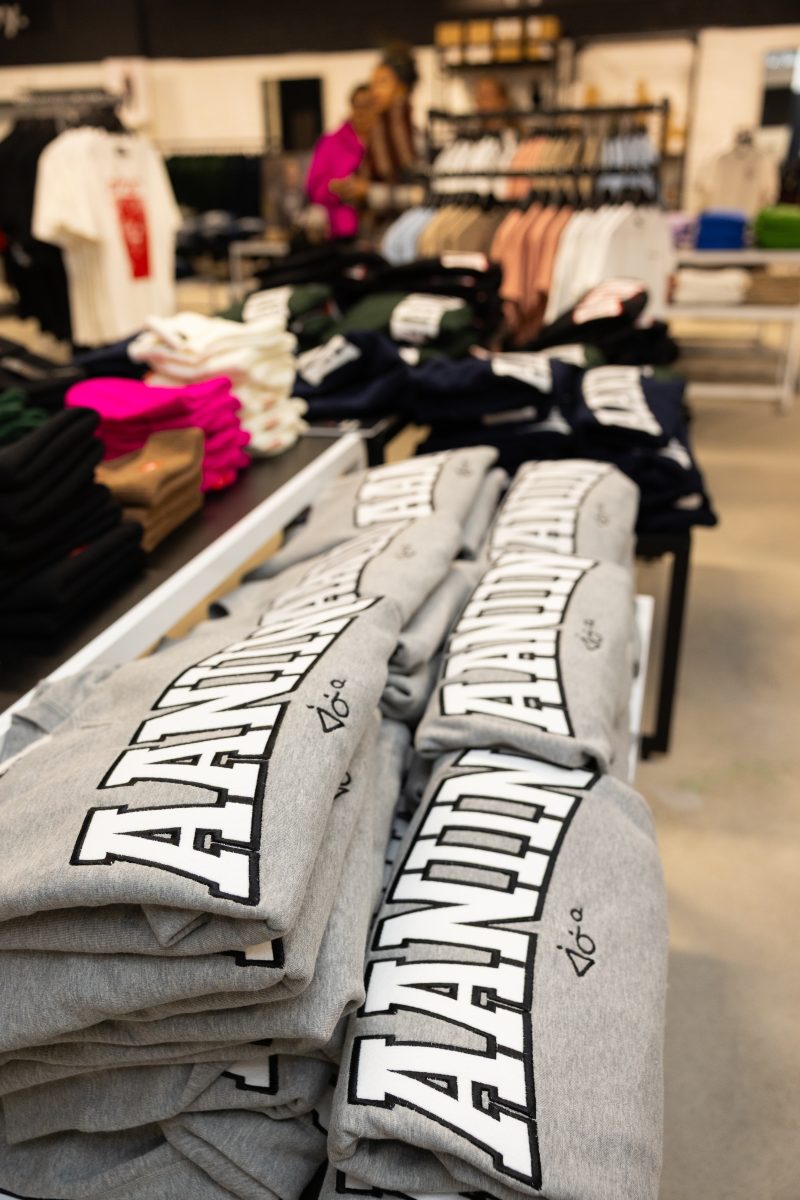
Aaniin at CF Toronto Eaton Centre has re opened for its second year, bringing a renewed vision for Indigenous retail leadership to one of Canada’s busiest shopping destinations. The 6,000 square foot pop up, located in the former Free People space on the second level, features more than 40 Indigenous owned brands across fashion, beauty, art, wellness, and home goods. It marks another major milestone for Anishinaabe entrepreneur Chelsee Pettit, whose mission driven approach continues to reshape how Indigenous commerce is represented and supported in Canadian retail.
Founded in 2021, Aaniin has grown from an early design concept into a full scale retail platform, a consulting business, and now a capacity building engine for Indigenous creators across the country. As Pettit described in an in depth interview with Retail Insider, this year’s pop up is not just a store. It reflects years of hands on learning, community investment, and a commitment to building long term sustainability for Indigenous brands.
“We are not just building a store, we are building an economy,” Pettit said. “True reconciliation lives in ownership and opportunity.”
With Aaniin CF Toronto Eaton Centre acting as the company’s most high profile retail setting, Pettit says this year’s expansion focuses on strengthening systems and supporting Indigenous entrepreneurs who are ready to grow into larger markets.
A Focused Assortment and a Shift Toward Capacity Building
This year’s edition of Aaniin CF Toronto Eaton Centre features about 45 Indigenous brands, a curated number that reflects Pettit’s strategic decision to scale responsibly. Last year the store showcased roughly 65 vendors, but Pettit said the team has shifted toward depth over breadth to ensure that creators receive meaningful support rather than short term shelf space.
“We have less in the store this year to really focus on building out capacity and making sure that our systems and processes are being streamlined,” Pettit explained. “Sometimes when that happens, we cannot run with everybody, so we have to cut back a little bit.”
The vendor selection process is based not only on product quality but also on readiness. After four years of running large scale retail pop ups, Pettit and her team found themselves informally mentoring dozens of small businesses with everything from pricing to packaging to fulfillment. That work has now evolved into a structured part of the business.
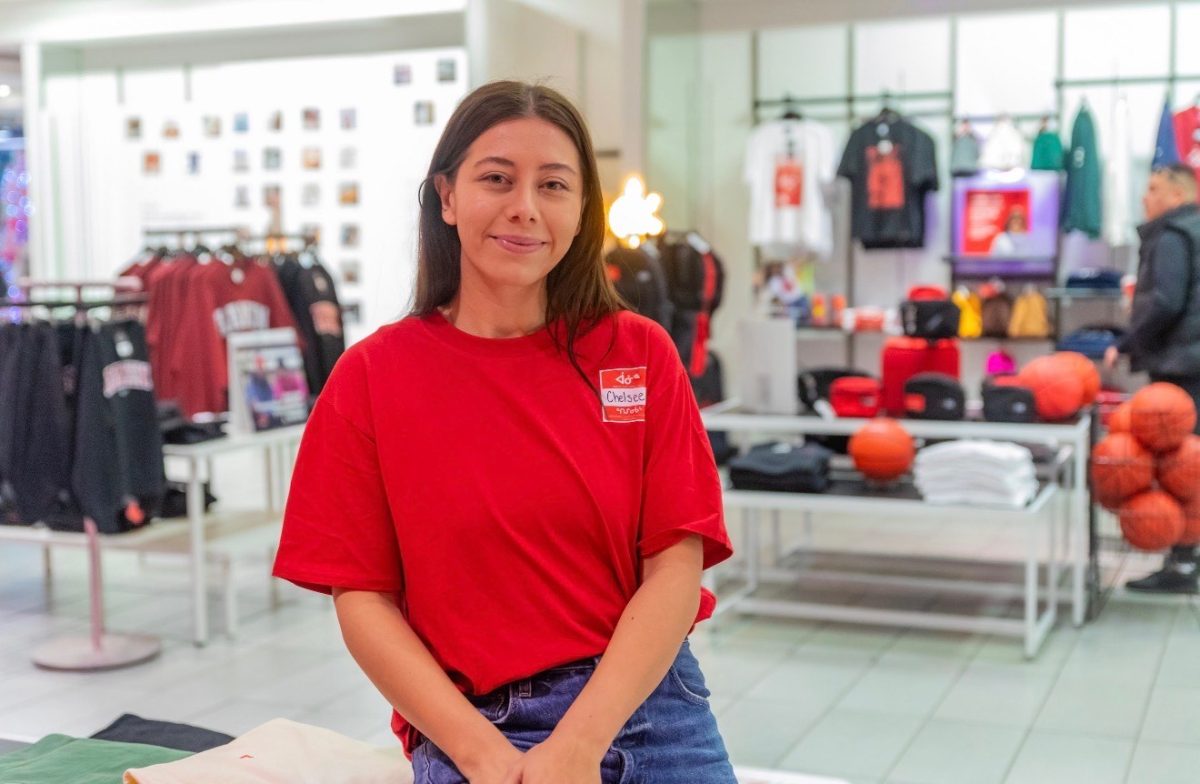
“We handhold a lot of people and we are running 50 other businesses and not our own,” she said. “So this year we are trying to run our own business for the first year.”
Aaniin now offers three tiers of vendor engagement, including a cohort based model where small makers pay to receive four to five months of hands on guidance. Participants learn how to optimize systems, build a self sustaining website, and partner with third party distribution so they no longer have to ship products from their homes.
“For a lot of small businesses, especially Indigenous businesses, that alone is a huge step,” Pettit said. “We have been able to do this ourselves, so now we can teach others.”
The company’s consulting arm is staffed by several members of her full time team, whom Pettit describes as “masterminds” who handle operations, logistics, and retail support daily.
A Pop Up Model Rooted in Growth and Resilience
While Aaniin has become synonymous with CF Toronto Eaton Centre, its retail journey has included several locations across the GTA. Pettit operated her first store at Stackt Market for about two years, a period she describes as essential but not ultimately scalable for the brand.
“It just was not the right environment for us to really grow,” she said. “It was something that helped me get my foot in the door, but it did not make sense for profitability long term.”
A major turning point came with a Square One pop up in late 2022 or 2023, where Pettit operated a short term retail space entirely on her own. She ran the store for forty days without a single employee and generated one hundred thousand dollars in sales. “I just did what I had to do,” she said.
In 2024, Aaniin CF Toronto Eaton Centre opened its first edition of the Indigenous pop up, generating $550,000 in sales in four weeks. Pettit employed twenty five Indigenous staff members and paid out more than $150,000 in wages.
This year’s return is entirely self funded apart from modest sponsorship from Mastercard, Meridian Credit Union, and Payworks. Pettit did not receive grants or government funding for the 2024-25 edition of the pop up.
“This year is entirely on my own dime, which is a lot of risk for a very small business,” she said. “But when you are trying to support your community, and you see how much potential there is, you find a way.”
Despite the financial pressure, Pettit says the team is steady, nimble, and highly solution oriented. “I can come up with a solution for anything within half a second,” she said. “We pivot very quickly.”
Operational Hurdles and the Push Toward Year Round E Commerce
Running the Aaniin CF Toronto Eaton Centre pop up requires managing more than five thousand SKUs across a warehouse, online channels, and the physical store. Pettit said balancing in store and online inventory is among her biggest challenges.
“These are the everyday obstacles and hiccups that we go through as a small Indigenous retailer who is trying to support other Indigenous brands and businesses,” she said.
While Aaniin generated roughly two hundred and fifty thousand dollars in online sales last year, Pettit said that growth happened “on accident” because she spends almost nothing on marketing. She invests instead in inventory and people.
“We have spent zero money on marketing, zero money on advertising, and basically zero on boosting posts,” she said. “I believe in investing in inventory and in people.”
The company typically saves revenue from January to June, then plans for the back half of the year. Pettit hopes this will be the first year Aaniin can maintain a full time online store, pending inventory capacity and system improvements.
“If I cannot do something well, I do not do it at all,” she said.
Planning for the Future and Supporting Indigenous Growth
Pettit’s long term focus is on building capacity within the Indigenous business community rather than expanding Aaniin CF Toronto Eaton Centre into a permanent year round store. While a longer stay at the Eaton Centre is being discussed, even a short term extension would primarily support operational transition rather than retail expansion.
“It is more that I do not want to be packing boxes in my apartment in January,” she said with a laugh.
Instead, Pettit’s primary goal is to support as many as one hundred Indigenous brands through cohort programming and consulting, helping them become operationally self sustaining.
“If I am bootstrapping a hundred brands on my own, it is not going to go very far,” she said. “But if I can amplify already successful Indigenous businesses, then my job will become a lot easier.”
She encourages Indigenous product based vendors to apply for the cohort, which will soon become the primary path for entering the Aaniin retail ecosystem.
“I can assure all of the Indigenous businesses that almost no-one is retail ready,” she said. “The cohort is essential for learning our systems.”
A Growing Digital Platform and New Partnerships
This year also marks the launch of the Bimaadiziwin Marketplace, a digital platform created through the Aaniin Business Growth Cohort and debuting on Black Friday. It will support twelve Indigenous entrepreneurs with year round online visibility and a structured pathway to scale beyond the temporary CF Toronto Eaton Centre space.
Corporate partners including Mastercard, Meridian Credit Union, and Payworks have supported the 2024 25 pop up, contributing to operational stability and increased visibility for Indigenous brands.
“Small businesses are the heartbeat of our communities, and Indigenous entrepreneurs are leading with extraordinary creativity and resilience,” said Nishant Raina, Vice President of Small and Medium Enterprises at Mastercard Canada. “When we invest in connections and create space for more Indigenous voices, we spark innovation and prosperity that uplifts everyone across Canada.”