London Drugsstores across Western Canada have announced the return of the annual Stocking Stuffers for Seniors initiative for the 2025 holiday season.
Now celebrating a decade of programming at London Drugs, Stocking Stuffers for Seniors is running to December 8, encouraging communities to participate, in turn bringing comfort to seniors in need during the holidays.
Clint Mahlman, President/COO of London Drugs at the Brentwood Village Mall location in Calgary. Photo by Mario Toneguzzi
“Seniors in Western Canada are dealing with rising costs of living, and for some, the addition of experiencing loneliness or social isolation. The holidays can present further challenges, and with Stocking Stuffers for Seniors, our goal is to continue reaching those in need,” said Clint Mahlman, president and COO of London Drugs.
“It is an honour to collaborate with our customers again this year, in our 80th year of business, to champion a program that uplifts the seniors at the heart of our communities.”
Active since 2015 in British Columbia, Saskatchewan, and Manitoba, and 2014 in Alberta, Stocking Stuffers for Seniors was created to spread holiday cheer to seniors in the communities London Drugs serves, explained the company.
“Now chain-wide at London Drugs’ 80 locations, it sees holiday trees placed in stores from which customers can pick a gift tag containing wish list items for a senior in their community. All items are then returned to London Drugs for delivery to care homes; the retailer is collaborating with more than 200 care homes in Western Canada this year.,” it said.
The impacts of loneliness and social isolation are widespread globally, with approximately 11.8% of older people experiencing loneliness, per World Health Organization data. Quality of life, physical and mental health, and longevity can be affected by social isolation and loneliness, with risk factors for seniors including living alone, having compromised health status, changing family structures, location of residence, being a caregiver, or living with low income. A quarter (25%) of Canadian seniors in the lowest income group were much more likely than those in the highest income group (15%) to report being lonely, according to Statistics Canada.
“London Drugs’ Stocking Stuffers for Seniors program has delivered approximately 97,000 gifts to seniors to date. The retailer is collaborating with local organizations to ensure no seniors are forgotten this year, including Operation Friendship Seniors Society in Edmonton and Seniors Secret Service in Calgary. Gifts purchased for seniors will be delivered via the care home or charity partner connected with the London Drugs store in their community,” said the retailer.
“LDExtras members can receive additional LDExtras points per gift donated during the 2025 Stocking Stuffers for Seniors initiative: 1,000 points before December 1 and 500 points until December 8 when the program ends.”
Founded in 1945, B.C.-based London Drugs sells throughout Canada through its online store, and has 80 London Drugs locations in more than 35 major markets across British Columbia, Alberta, Saskatchewan and Manitoba.
After months of insisting that tariffs had nothing to do with rising grocery prices, U.S. President Donald Trump abruptly reversed course this week, rolling back duties on more than 200 food-related products. The list is broad: beef, coffee, cocoa, spices, bananas, orange juice, tomatoes, tea, and even certain fertilizers. Officially, the move is being presented as a consequence of new “reciprocal trade agreements,” but the real motivation is more straightforward. American consumers have been feeling the pain of high food prices, and the White House could no longer ignore the political consequences.
What’s remarkable is how much this decision benefits Canada. For starters, Canadian beef producers stand to gain immediately. The United States remains our largest export destination for cattle and beef products, and with U.S. tariffs now reduced or removed, Canadian beef becomes more competitive almost overnight. Feedlots in Alberta and Saskatchewan, major packing plants in High River and Guelph, and cow-calf operations across the Prairies should feel the effects in both demand and pricing.
Canadians in the importing and processing sectors will also benefit. Many do not realize just how deeply our supply chain relies on U.S. ports and wholesalers for essential ingredients such as coffee beans, cocoa, tropical fruits, juice concentrates, and spices. When the United States lowers tariffs on these products, wholesale prices drop — and Canadian companies that source through U.S. distribution hubs instantly face lower input costs. Roasters, chocolatiers, bakeries, beverage processors, food manufacturers, and restaurant chains all stand to enjoy some relief in their margins.
Consumers may not see immediate price reductions at the checkout counter, but the direction of travel matters. Lower input costs in the United States often spill over into Canadian wholesale markets, reducing pressure on our grocers and food-service operators. At a time when affordability remains the number-one concern for Canadian households, any easing of cost pressure is significant.
Here’s the context: In the U.S. the 12-month food price inflation rate recently stood at about 3.1% for all food categories. For “food at home” (grocery store food purchases) the rise was approximately 2.7%. In contrast, in Canada, food-price inflation recently was reported at around 3.8% compared to a year earlier. These rates indicate that even though food inflation has moderated somewhat, it remains well above the target inflation rate of many central banks and remains a significant burden for households.
Grocery chains operating in Canada will also quietly benefit. Loblaw, Sobeys, Metro, and Costco Canada source a substantial portion of their products either directly from U.S. suppliers or through North American procurement systems. Lower U.S. tariffs on key food commodities translate directly into more favourable sourcing conditions for these retailers. Whether this helps moderate retail pricing is a legitimate question, but it is impossible to ignore the structural cost savings that come with policy changes like this.
Of course, not every Canadian sector comes out ahead. Canadian produce growers could face competitive pressure if U.S. retail prices fall for imported fruits. Some Canadian processors competing with American firms may also find themselves at a disadvantage as U.S. manufacturing becomes cheaper. But these challenges are relatively contained compared to the broader benefits that will flow through the Canadian agri-food economy.
What Trump has done, perhaps unintentionally, is provide a rare piece of good news during a year dominated by food inflation, supply-chain turbulence, and rising insecurity at home and abroad. The North American food system is deeply integrated. When the United States lowers a major cost barrier, Canada benefits almost automatically. For once, a politically-charged decision in Washington may actually help alleviate some pressure in Canadian households.
Canada didn’t lobby for this tariff reversal, and we certainly weren’t in the room when the decision was made. But we will reap the rewards — and given the economic climate, we should take them.
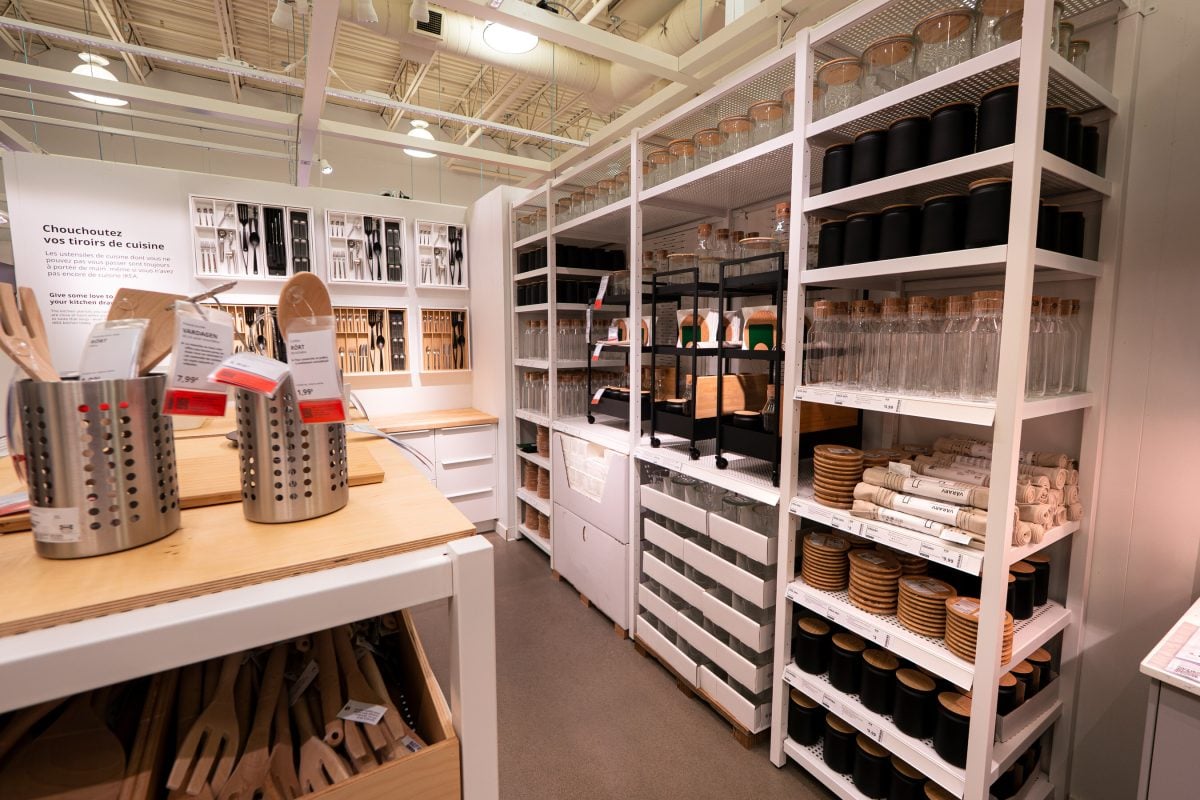
Plan and order points offer customers one-on-one planning services with IKEA experts to design and purchase home furnishing solutions for any room in the home such as kitchen renovations or bedroom storage systems. Once orders have been placed, they can be delivered to their homes or collected from the pick-up location at the Plan and order point. (CNW Group/IKEA Canada Limited Partnership)
IKEA Canada says it will open a new Plan and order point in Gatineau in 2026, expanding the home furnishing retailer’s presence in Quebec.
The company announced recently that the location at 1100 boulevard Maloney Ouest will be its sixth Plan and order point in the province and 13th in Canada. IKEA Canada said the new site is part of its strategy to bring planning and design services closer to residents of the Outaouais and national capital regions.
Plan and order points provide one-on-one consultations with IKEA specialists to help customers design and purchase home furnishing solutions for rooms such as kitchens and bedrooms. The company said customers can have their orders delivered or pick them up at the location. The Gatineau site will also offer a limited range of products for immediate purchase.
IKEA Canada said the Plan and order point format helps reduce travel distances for shoppers and contributes to affordability, accessibility and sustainability improvements. The retailer said the concept has been well received in other parts of Quebec.
“After seeing such a positive response to IKEA Plan and order points in other regions of Quebec, we’re thrilled to bring this unique format to Gatineau and support the many Outaouais residents in creating a better everyday life at home through beautiful, functional, and sustainable home furnishings that fit their budget,” said Amadou Diop, market area manager for the East Market.
The company said it has been helping Canadians furnish their homes for nearly 50 years and continues to explore new ways to serve customers across the country.
For those looking to instantly refresh their spaces, visitors to the Gatineau Plan and order point will be able to shop a limited selection of products from the IKEA range (excluding food – sorry, no meatballs) for immediate purchase and takeaway. (CNW Group/IKEA Canada Limited Partnership)
Gen Z and younger millennials are outspending older generations this holiday season and they’re leaning on credit cards to do so, according to new survey findings from CPA Canada.
As the holiday spending season fast approaches, the national organization said the survey suggests that 40% of younger Canadians (ages 18-34) plan to spend more than last year and 58% expect to rely on credit to fund their purchases. More than half (56%) also say they’re feeling more stressed about holiday spending than they did last year.
Li Zhang
“This suggests that many younger Canadians are feeling the pressure to spend, even if that means stretching their budgets a little too far,” said Li Zhang, CPA Canada’s financial literacyleader. “But relying on credit in the short term can quickly turn that joy into stress in the new year without a repayment plan.”
The CPA said older Canadians, by contrast, are taking a different approach. Among those aged 55 and up, about two-thirds (68%) plan to maintain last year’s spending levels, and nearly three-quarters (70%) say they’ll rely on savings and regular income rather than credit to cover their holiday costs.
“Across all age groups, gift giving remains the top priority, with 68% of Canadians placing it at the top of their holiday spending lists. Nationally, gift budgets have risen modestly to an average of $661, up 10% from last year, with the biggest increases among Gen Z and younger millennials who are prioritizing gift-giving and entertaining over donations and travel,” it said.
Overall, the CPA said more Canadians (66%) plan to use savings and regular income to fund spending than credit (49%), representing a slight uptick from last year when Canadians used credit cards and savings at similar levels. This shift is driven by 70% of those aged 55 and older using savings and regular income to fund their holiday purchases.
“This is an encouraging result that suggests a cautious shift toward more mindful budgeting,” said Zhang. “Reducing reliance on credit could make a real difference in how much post-holiday debt Canadians carry into the new year.”
Children’s Miracle Network and Walmart Canada have launched the 2025 Spark a Miracle campaign, encouraging shoppers to donate in-store through the holiday season to support children’s hospital foundations across the country.
The organizations said the campaign runs to Dec. 24, with customers able to contribute at checkout. According to the announcement, every dollar donated stays within the community and supports the nearest children’s hospital.
Walmart Canada will also make a $1 donation for every toy sold in-store and online on Giving Tuesday, Dec. 2, with funds directed to children’s hospital foundations through Children’s Miracle Network.
Since partnering with Children’s Miracle Network in 1994, Walmart Canada and its customers have raised more than $230 million for local children’s hospitals. The organizations said money raised through Spark a Miracle helps fund research, innovation and family-centred care.
Adam Starkman
“Walmart Canada, their associates, and their customers continue to demonstrate extraordinary leadership in supporting pediatric healthcare across the country,” said Adam Starkman, President and CEO of Canada’s Children’s Hospital Foundations. “Canada’s children’s hospitals work tirelessly to give kids the best chance at healthy, fulfilling lives–but they cannot do it alone. Partnerships like ours provide the vital support needed to ensure children’s healthcare can truly succeed.”
Rob Nicol
Rob Nicol, vice-president of corporate affairs and communications at Walmart Canada, said the campaign brings out generosity during the holiday season. “There’s something powerful about what happens during Spark a Miracle,” he said. “You can feel the energy and kindness as associates and customers step up to help kids and families. It’s what the season of giving is all about.”
The organizations highlighted the story of Zander and Lyndon, twin boys born at 25 weeks who received donor-funded care at the Janeway Children’s Hospital in St. John’s after facing serious medical challenges.
A historic investment to increase Danone Canada’s productivity and support market growth in Canada (CNW Group/Danone Canada)
Danone Canada says it is making the largest investment in its history to expand its Boucherville plant in Quebec in response to growing demand for yogurt across the country.
The company announced recently it will increase the facility’s yogurt tub production capacity by 40 per cent and boost its ability to receive and process Canadian raw milk by 20 per cent. Danone Canada said construction is underway, with a new production line expected to be operational in 2026.
“Canadians are embracing healthier choices, and the rising popularity of yogurt, especially high–protein varieties, speaks volumes. Nutritious and accessible, yogurt has become a staple for families. This significant investment underscores our commitment to supporting local production and delivering on what we do best at Danone: bringing health through food,” said Frederic Guichard, president of Danone Canada.
Frederic Guichard
According to the company, nearly 90 per cent of Canadian households consume yogurt, and more than one in three dairy yogurts sold in the country already comes from the Boucherville facility. Danone Canada said the expansion will help reinforce its market leadership as demand grows.
The company also said the project includes investment in new energy-recovery equipment as part of Québec’s ÉcoPerformance program, which supports initiatives under the province’s Plan for a Green Economy 2030.
Since 2022, the plant has diverted at least 99 per cent of its non-hazardous waste from landfill and sends no hazardous waste to landfill, Danone Canada said.
Géraldine Moret
“Through growth, innovation and sustainability of our operations, we are proud to reaffirm our position as a major food producer in Canada and to lead by example when it comes to improving the sustainability of our products and operations,” said Géraldine Moret, vice-president of operations at Danone Canada.
The expansion builds on the company’s previously announced $9-million investment last June to begin producing more sustainable individual yogurt cups made from PET resin.
Retail Insider is streamlining its Canadian retail news from around the web to include a handful of top news stories that can be viewed quickly during the day. Here are the top stories from the past 48 hours.
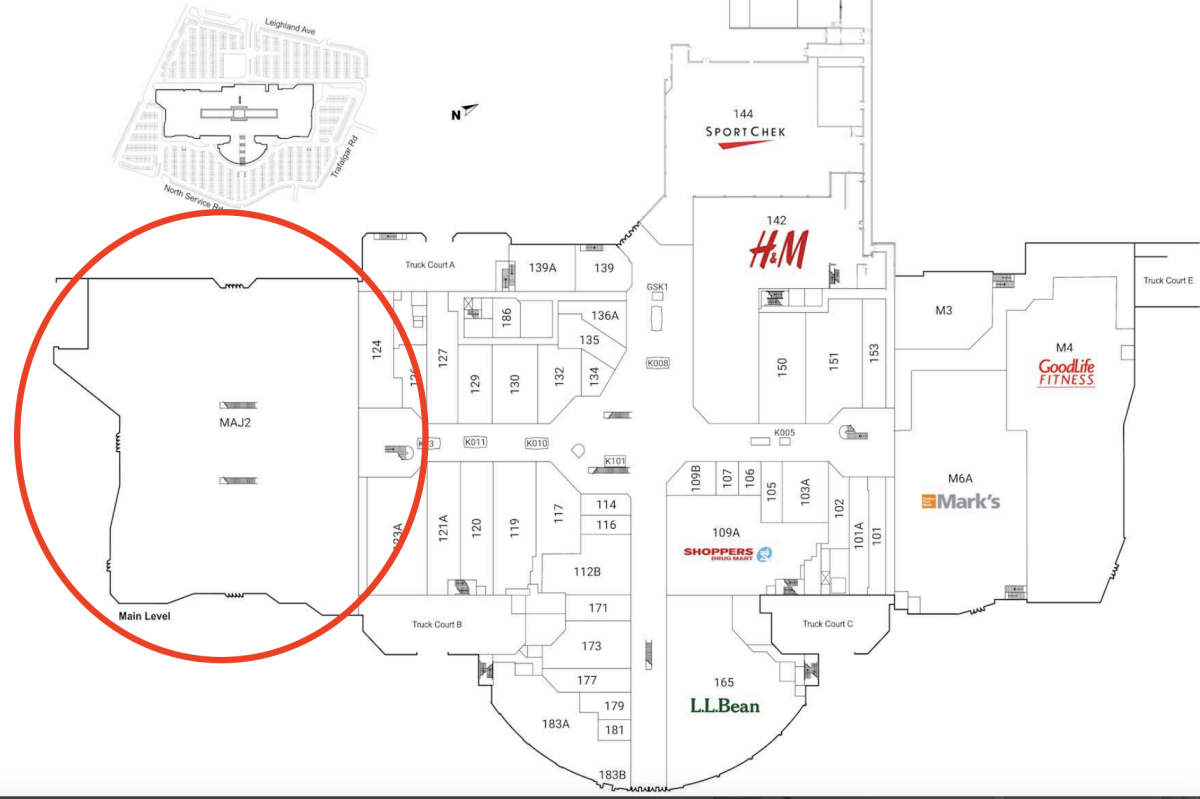
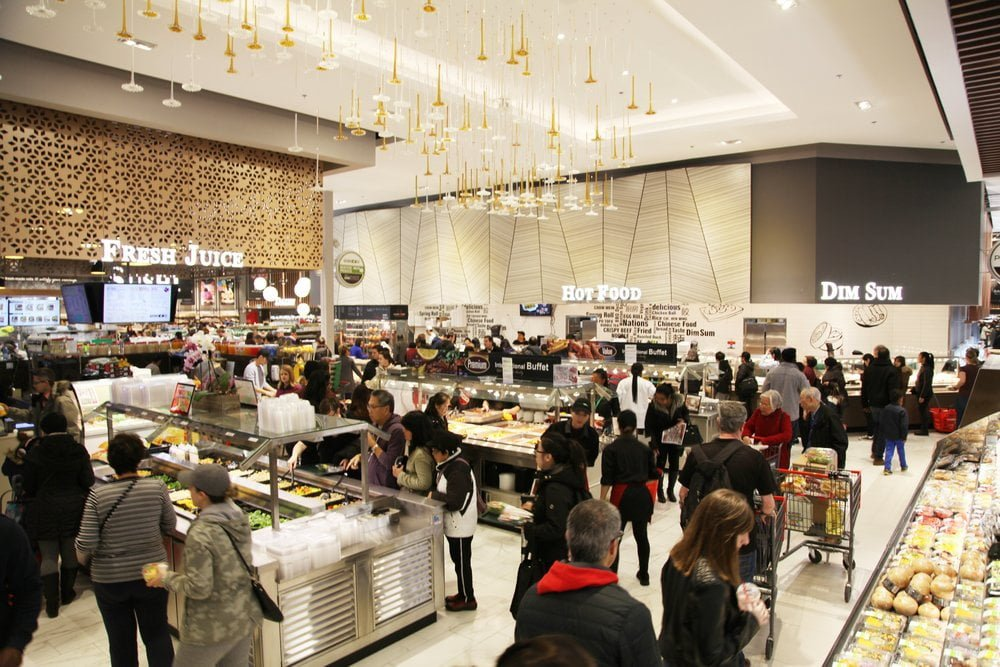
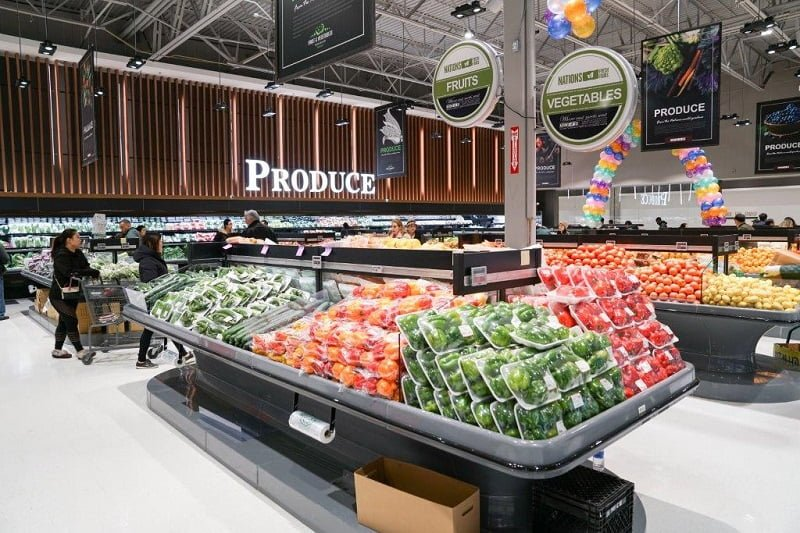
A major retail transformation is on the horizon for Oakville as Nations Experience prepares to anchor the former Hudson’s Bay store at Oakville Place. The multicultural grocery and entertainment banner will open a 120,000 square foot flagship at the RioCan owned centre, bringing a unique mix of international grocery, global cuisine, and an expansive entertainment concept called Forever Young.
The Nations Experience Oakville Place flagship will span two full floors of the former Hudson’s Bay space, which closed in June 2025 following the national liquidation of the Hudson’s Bay Company. Construction is scheduled to begin in late 2026, with the opening planned for 2027.
For Nations, the project reflects a continued evolution of its “foodertainment” model. For Oakville Place, the redevelopment marks a pivotal step as the centre repositions itself after the loss of the prominent department store anchor.
“This is much more than retail. It’s a destination designed for families who want to shop, play, dine, and connect all under one roof,” said Frank Ho, Vice President of Real Estate Development for Nations Fresh Foods.
Oakville Centre lease plan. Click image for 2 page PDFOakville Place in Oakville (future Nations circled in red). Image: RioCan
Building on a Proven Concept
Nations Fresh Foods began with a single store in Woodbridge in 2012. It quickly expanded into Hamilton, Mississauga, Brampton, and Toronto’s Stockyards Village by offering a wide assortment of multicultural grocery items at accessible prices. Nations became known for serving a diverse clientele with thousands of SKUs ranging from Asian, Caribbean, Middle Eastern, African, and Latin American products to international produce and prepared foods.
The turning point came in 2017, when Nations opened a 127,000 square foot store in a former Target at Stockyards Village. That store introduced the chain’s first significant entertainment component, including a children’s playground and party rooms. The response was immediate.
“They were overwhelmed by demand from the day they opened. The party rooms were booked months in advance, and families were waiting for availability,” said Kelly Laughton, Broker of Record at Top Cats Realty Inc., who represents Nations Experience exclusively.
Kelly Laughton, Broker of Record at Top Cats Realty Inc.
Laughton has worked with Nations for years. She recalled how quickly the brand recognized that entertainment should be central to its future.
“They realized the entertainment offering needed to be much larger. Stockyards showed them that families were looking for a full day out, not just a shopping trip,” she said.
This insight led to the launch of Forever Young.
Forever Young and the Rise of Multigenerational Entertainment
Forever Young debuted in July of 2025 at Centerpoint Mall in Toronto, occupying a large former department store space on the mall’s upper level. It includes VR simulators, arcade games, sports areas, creative activity rooms, birthday party venues, and an indoor playground, along with an in house food program.
“It gave Nations the opportunity to refine the model and evaluate what resonated with guests, including which attractions to expand or replace. When I visited, the space was extremely busy,” said Laughton.
Forever Young will occupy the second floor of the former Hudson’s Bay space at Oakville Place, while the main level will feature a full Nations Fresh Foods supermarket with extensive prepared foods. The pairing is designed to allow families to shop, eat, and play in one extended visit.
“People are incredibly time pressed, so being able to shop, pick up prepared meals, and let their children enjoy the entertainment area is a major draw. In many cases, grandparents come as well. These stores really support family outings,” said Laughton.
Nations Experience at the Stockyards in Toronto. Photo: Esther Ko via Google Maps
A Regional Draw Beyond Traditional Grocery Behaviour
One of Nations’ strongest competitive advantages is its ability to draw shoppers from more than an hour away, bypassing numerous competing grocery stores.
“Traditional grocery trade areas are about twenty minutes. At Nations stores, it is common for people to travel up to two hours, sometimes more. They stock up because the product assortment reflects their cultural backgrounds,” said Laughton.
Customers often fill cars with specialty items that are unavailable elsewhere. That loyalty gives Nations a broad trade area and makes the banner appealing to landlords seeking strong traffic anchors.
Food Hall at Nations Experience Stockyards in Toronto. Photo: Nations Experience
However, Laughton noted that misconceptions sometimes arise about Nations based on outdated assumptions about ethnic grocery stores.
“This is a multiethnic grocery store. It supports a wide cultural mix, and the trade area needs to reflect that. If a market is dominated by a single demographic group, Nations will not choose that location. Their model thrives on diverse communities and high population density,” she said.
Oakville and the broader Halton Region offer that mix, making Oakville Place a strong match.
For RioCan, the redevelopment of the former Hudson’s Bay space is a milestone. The landlord co owned a number of Bay stores through a joint venture dating back to 2015. When Hudson’s Bay filed for creditor protection in March 2025 and later liquidated all 80 stores nationwide, many large format boxes reverted to landlords, including the Oakville Place location.
Nations Experience at the Stockyards in Toronto. Photo: Nations Experience
A Deal A Year in the Making
The Nations Experience Oakville Place deal began long before the Hudson’s Bay liquidation became public.
“We started discussions before Christmas, and the first letter of intent went out in November. These negotiations began almost a year before Hudson’s Bay filed for creditor protection,” said Laughton.
Early engagement allowed Nations and RioCan to work through the complexities of repurposing a department store into a hybrid supermarket and entertainment destination.
“These projects take a long time. Even once a deal is in place, the build out alone is typically more than eighteen months,” she added.
The timeline reflects the substantial work required to convert older department store spaces into modern retail environments.
Nations Experience at the Stockyards in Toronto. Photo: F Deb via Google Maps
Construction, Design, and a Careful Growth Strategy
Nations has expansion plans and they are measured. Building each store takes time and precision. “It takes over a year of construction, and often closer to eighteen months. Nations has one construction team, so they cannot build multiple stores at once. Landlords have to be patient,” said Laughton.
This measured pace is deliberate. Nations aims to avoid the pitfalls of rapid expansion that challenged other banners in the past.
“There are no other deals finalized right now. Nations is evaluating opportunities, but each location requires the right demographics, density, parking, and building configuration,” Laughton added.
Nations Experience at the Stockyards in Toronto. Photo: Uncle Cyncle via Google Maps
The company is open to former department store boxes across Canada, but only where the market supports the model.
“In some markets, the buildings are extremely old and require major investment. One former Sears building we looked at needed more than fourteen million dollars just to bring it up to basic code,” she said.
Other buildings require structural remediation, elevator replacement, escalator reconfiguration, or environmental work.
“That is before even considering the retail build out. These older boxes can be incredibly complicated,” she said.
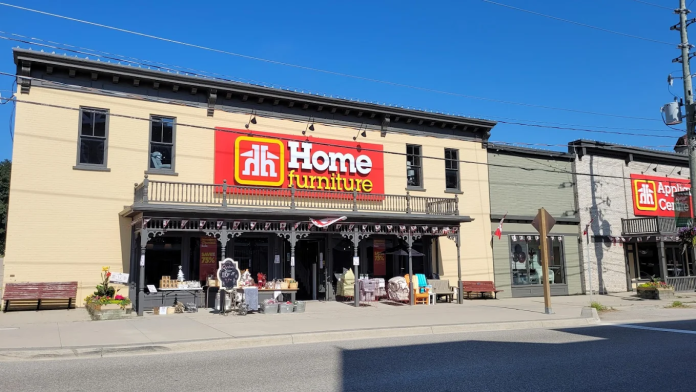
Home Furniture store in St. Jacobs, Ontario. Photo: Simon Zhang via Google Maps/Images
Home Hardware will close its Home Furniture banner next year, ending a decades-long presence in the Canadian furniture category. The decision, communicated through an internal memo obtained by Retail Insider and later confirmed by the company, outlines a full exit from the Home Furniture business by May 31, 2026. The move forms part of a broader strategic realignment and arrives at a time when the Canadian furniture sector continues to experience economic pressure and heightened competition.
The announcement affects a network of dozens of dealer-owned Home Furniture stores operating across the country. These locations, primarily in small and mid-sized communities, have provided furniture, appliances, and home décor within the cooperative structure of Home Hardware’s extensive retail system.
Their wind-down will reshape access to independently owned furniture retail in markets where major chains and online sellers have increasingly dominated. The Home Hardware Home Furniture closure reflects the company’s decision to focus more directly on its core home improvement, hardware, and building supplies business.
Editor’s note: An earlier version of this story included photos of the independently owned Home Furniture store in Stratford, Ontario. The owner has since clarified that, as almost all Home Furniture locations are independently operated, the Stratford store will likely continue to operate under a rebranded name. The images were used solely for representative purposes, and Retail Insider was not aware of this distinction at the time of publication.
Home Furniture store in St. Jacobs, ON. Photo: Sylvia Fox Bevan via Google Maps
Supplier Memo Details the Wind-Down Timeline
Retail Insider obtained a supplier letter outlining the plans for an orderly transition. The memo, issued to supplier partners, confirms that all purchase orders in approved status as of November 10, 2025, will be honoured. It also requires that all special orders already received be fulfilled, emphasizing continuity for customers who have made presold purchases.
The letter directs suppliers to discontinue work on any new product development tied to the Home Furniture banner and indicates that the company will continue communicating updates as the transition progresses. It reinforces that all accounts payable will be settled according to standard terms. The document frames the closure as part of a forward-looking strategy designed to strengthen Home Hardware’s long-term position and focus resources where the company believes it can most effectively grow.
Company Confirms Strategic Review Led to Exit Decision
Home Hardware confirmed the wind-down in written responses provided to Retail Insider by John Pierce, Chief Retail Operations Officer at Home Hardware Stores Limited. Pierce said the decision followed a detailed internal review and reflects the company’s focus on strengthening core business areas.
John Pierce
In describing the retailer’s national presence, Pierce wrote that, “Home Hardware Stores Limited currently has over 1,000 locally owned and operated stores across the country. Our focus remains on strengthening our brand and deepening our presence in the communities we serve. We are committed to delivering exceptional customer experiences, while strategically evaluating opportunities for sustainable growth.”
Pierce also confirmed that the company will exit the Home Furniture business following a strategic review. “After a thorough strategic review, we’ve made the decision to exit the Home Furniture business. This allows us to focus resources on strengthening our core operations and investing in areas that drive growth and innovation,” he stated. He added that, “Independent dealers will have the autonomy to determine the best path forward for their businesses, and HHSL will provide support throughout the transition process to ensure it is as smooth as possible.”
He further explained the reasoning behind the realignment, saying, “This strategic realignment will allow Home Hardware to concentrate on the areas where we can deliver the greatest value for our independent Dealers and customers. Simplifying our brand structure makes it easier for customers to find the products and services they need most, while ensuring our stores have the support they need to succeed.”
Background: A Cooperative Retailer with Deep National Reach
The Home Hardware Home Furniture closure marks a shift within a network that has played a role in Canadian retail for more than sixty years. Home Hardware was founded in 1964 and operates under a cooperative dealer-owned structure that allows independent owners to run their stores while aligning with national branding, logistics, and support systems. The model has helped the company maintain its position as one of the country’s largest independent home improvement retailers.
Home Hardware operates four primary retail banners. Home Hardware stores focus on everyday hardware assortments. Home Building Centre locations concentrate on building materials and products for renovations and repairs. Home Hardware Building Centre stores combine elements of both formats for a wider offering. The Home Furniture banner, now scheduled for closure, was created to expand the company’s retail presence into furniture, appliances, and home décor.
The company operates distribution centres in St. Jacobs, Elmira, Wetaskiwin, and Debert, supporting an extensive national footprint. Many Home Hardware stores serve small and mid-sized communities where local ownership remains a key part of the brand’s identity. The Home Furniture banner followed this same dealer-driven model, offering independent owners a format that complemented existing Home Hardware or Home Building Centre locations.
Home Furniture store in St. Jacobs, ON. Photo: Sylvia Fox Bevan via Google Maps
Inside the Home Furniture Banner
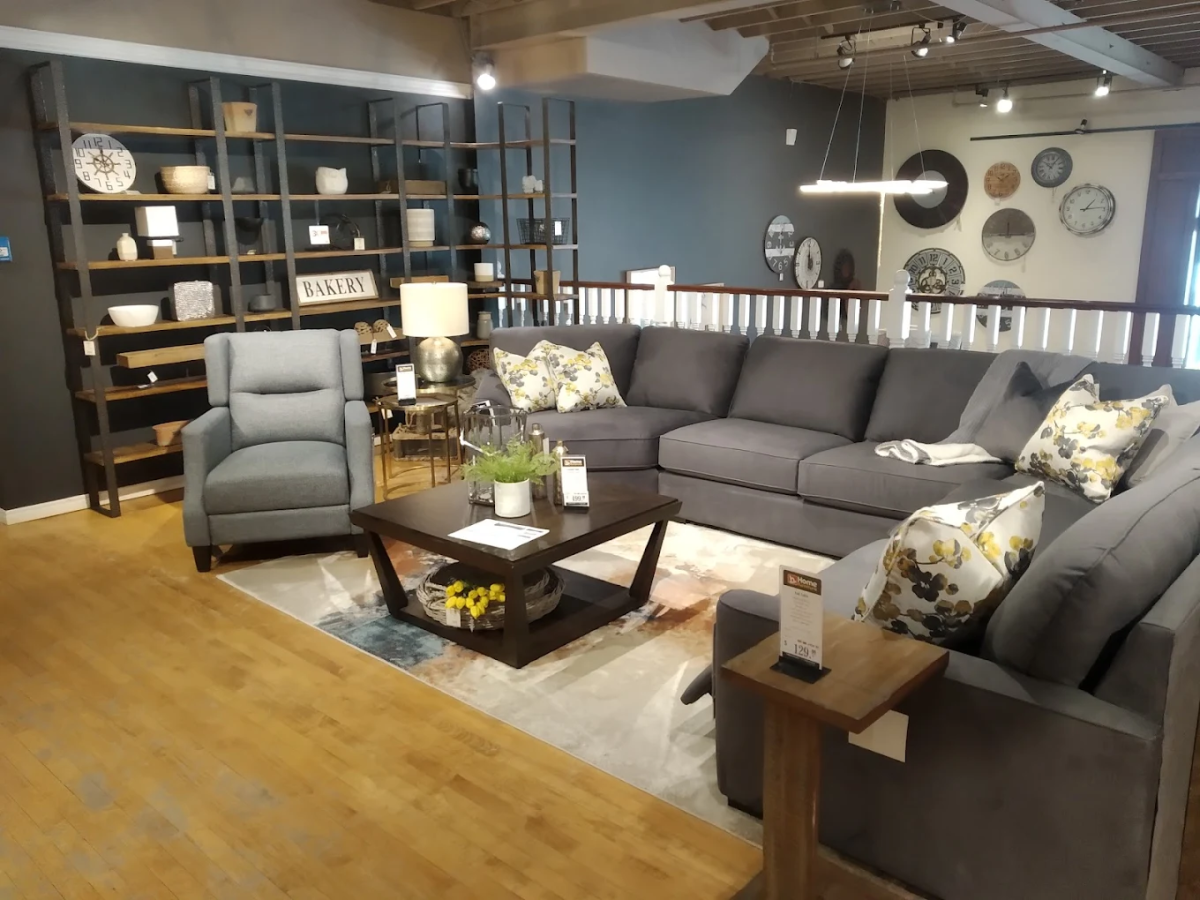
The Home Furniture banner has long served as the dedicated home furnishings division within the Home Hardware organization, offering a full assortment of furniture, major appliances, and décor within a dealer-owned structure. Stores have traditionally carried living room seating, bedroom suites, dining collections, mattresses, and household appliances, along with a selection of home décor accessories. The assortment often emphasized Canadian-made suppliers, reflecting a sourcing approach aligned with the cooperative’s national identity and longstanding supplier relationships.
Most Home Furniture stores range between 12,000 and 25,000 square feet, a size that allows for the presentation of complete room vignettes without the overhead associated with much larger furniture formats. Dealers used this mid-sized footprint to balance breadth of assortment with the operational efficiencies required to compete in markets served by national chains and online retailers.
The banner’s merchandising strategy has historically focused on providing accessible price points aimed at families, first-time homebuyers, and customers in small and mid-sized communities who preferred to shop locally rather than travel long distances to regional centres. Many stores benefited from close proximity to Home Hardware or Home Building Centre locations, creating cross-traffic opportunities and convenience for customers tackling larger home projects.
As of 2025, Home Furniture stores were located across several provinces, with concentrations in Ontario and the Maritimes and two stores in British Columbia. Over time, stores opened and closed based on local demand, competitive pressures, and dealer decisions. The scheduled wind-down of the banner will gradually reduce that footprint, with the official exit date of May 31, 2026, marking the end of a format that has played a meaningful role in many Canadian communities for decades.
Craig Patterson and Kris Zanuldin, head of KONEK at Interac Corp. (Interac), discuss how the new Canadian e-commerce payment solution was developed to address key gaps in online checkout experiences. See the description directly below the video interview:
KONEK focuses on accessibility, trust, and convenience—factors Zanuldin says are essential for driving adoption in payments. Built to give Canadians more choice, the system aims to solve pain points around rising payment costs, fraud, and increasingly demanding customer expectations.
Zanuldin outlines how KONEK benefits merchants by improving conversion rates while also reducing payment-processing expenses. By working collaboratively with major financial institutions, KONEK enables features like bank-grade fraud protection, liability shift, and a streamlined checkout flow. The platform also tackles cart abandonment by offering customers more payment options, particularly pay-by-bank methods that resonate strongly with Gen Z and trust-conscious shoppers.
He also highlights the advantage of a made-in-Canada solution built for Canadian regulations, consumer behavior, and security expectations. With Staples as the first national launch partner, KONEK is set to showcase a smoother checkout and improved customer experience. Looking ahead, Zanuldin expects KONEK to play a major role in Canada’s shift from offline to digital commerce, providing a trusted, lower-cost payment alternative as digital wallets and online retail continue to accelerate.
Merchants who are interested in learning more about KONEK can visit KONEK.ca.
If you prefer to listen to the audio version, it is available below:
The Interview Series audio podcasts by Retail Insider Canada are available on Apple Podcasts, Stitcher, TuneIn, Google Play, or through our dedicated RSS feed for Overcast and other podcast players. Also check out our The Weekly audio podcast where Craig and Lee discuss popular content published on Retail Insider which is part of the The Retail Insider Podcast Network.
Subscribe, Rate, and Review our Retail Insider Podcast!
Drop us a line at Craig@Retail-Insider.com. You can also rate us in Apple Podcasts or recommend us in Overcast to help more people discover the show!
Background Music Credit: Hard Boiled Kevin MacLeod (incompetech.com). Licensed under Creative Commons: By Attribution 3.0 License. http://creativecommons.org/licenses/by/3.0/