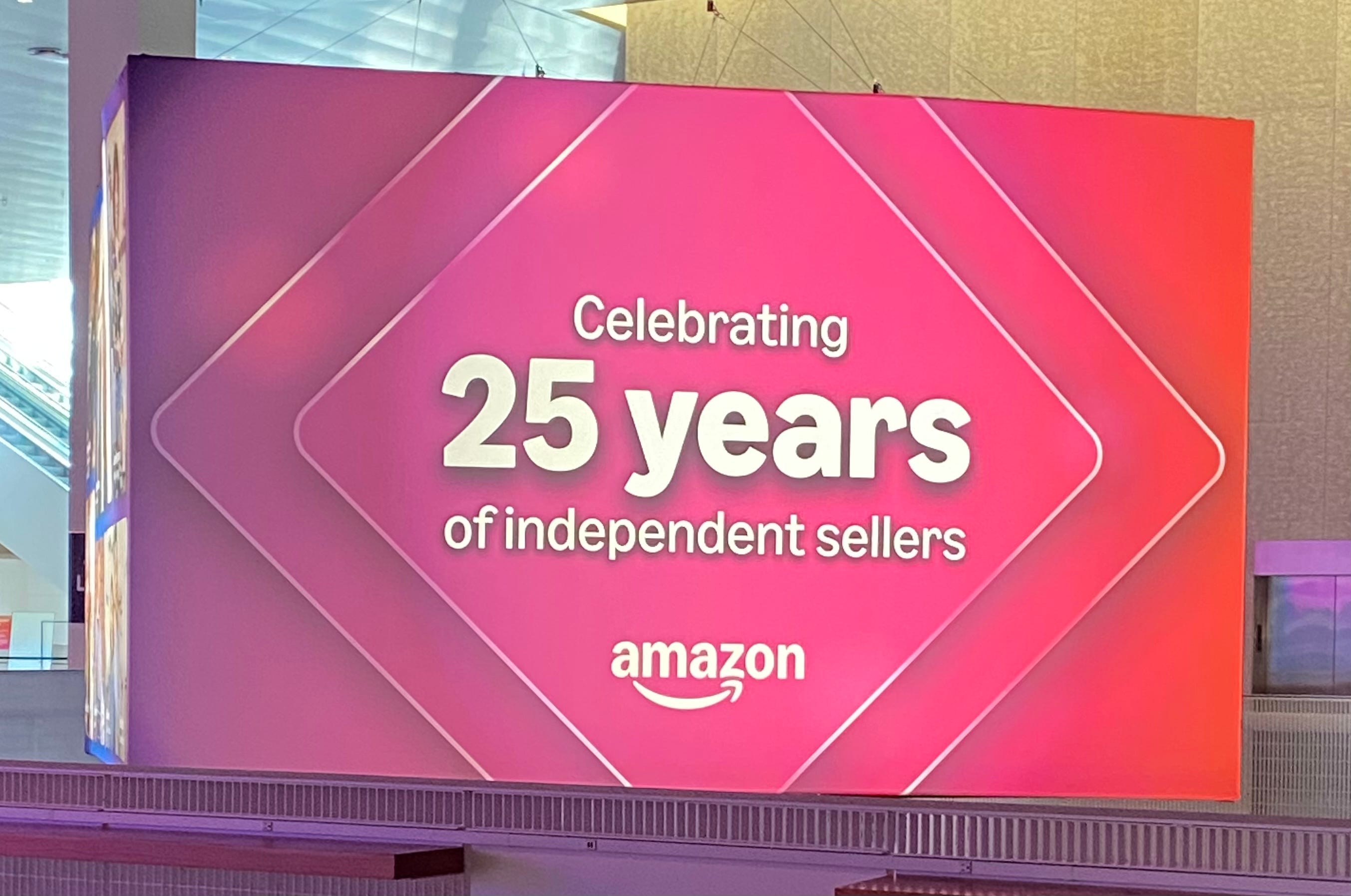
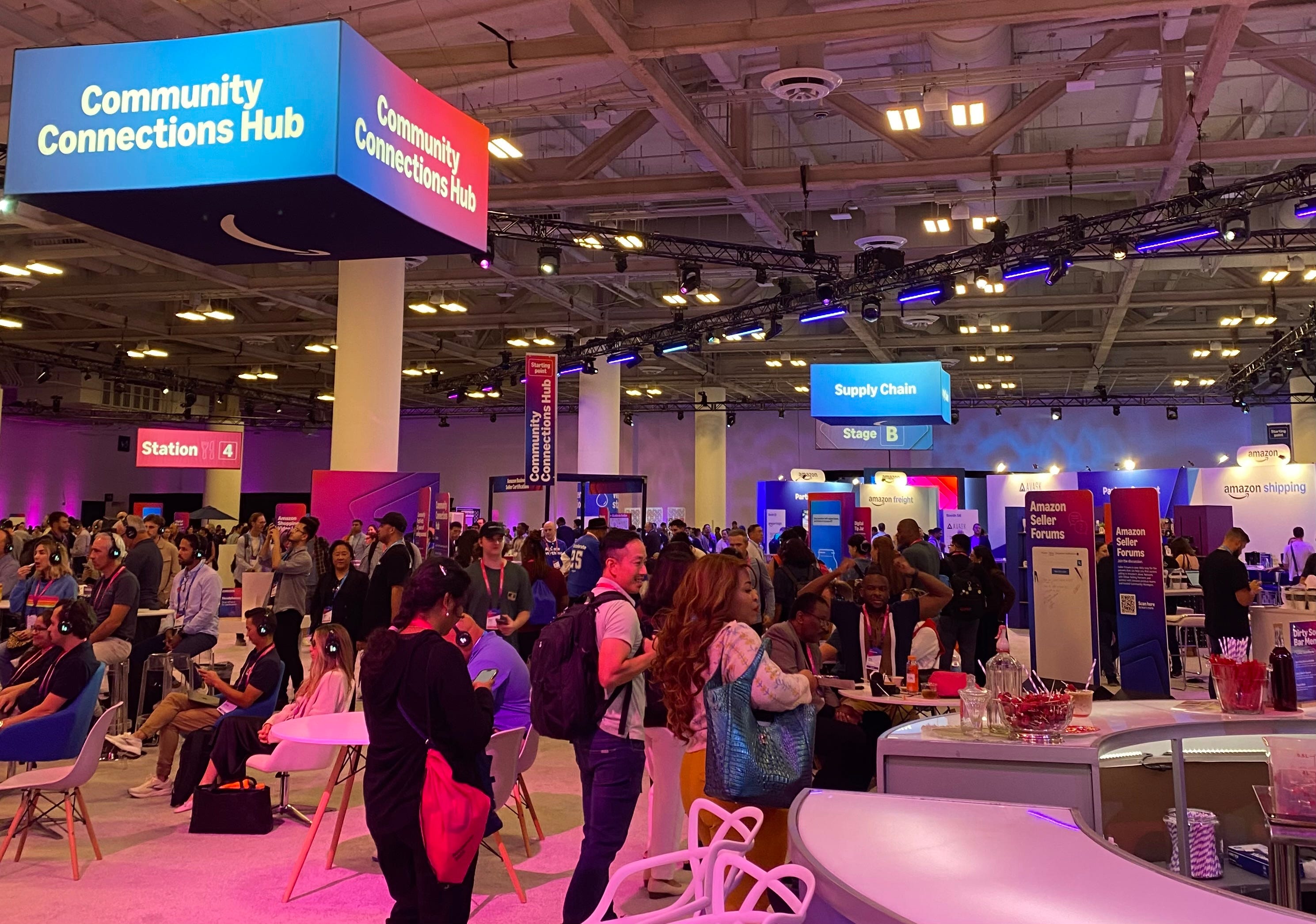
I attended the Amazon Accelerate seller conference this week in Seattle. The conference is designed to engage Amazon independent sellers in person, showcase new capabilities and gather feedback from the community. As a retail analyst, I found this event fascinating. Therefore, I thought I would summarize some of my key takeaways from the show for readers who may be interested.
The conference is massive, and I can see why. Amazon sellers have sold $2.5 trillion worth of merchandise over the last 25 years and about 55,000 sellers have reached the $1 million annual sales threshold in Amazon’s store in 2024. In the US alone, the seller community employed about 2 million people in 2024. Over 60% of sales in Amazon’s store are from independent sellers.

Overall, the key takeaway for myself is that small & medium sized sellers now have the tools to compete with big companies without the massive overhead investment required. Why? Two letters: AI.
Agentic AI
Amazon uses agentic AI in many of its seller tools. For those of you who are not familiar with agentic AI, it can think & plan, work independently, reach out to other environments, and adapt and learn. Unlike generative AI, agentic AI focusses on a goal, its proactive, is context aware and works autonomously. Agentic AI will then ask for final confirmation from the user, before actioning a recommended task.
Using agentic AI, Amazon allows sellers to delegate mundane but important tasks. This saves sellers hours of work so they can focus on more value-added things like product development. Sellers can also use AI to analyze and make recommendations on how to improve a seller’s business. Sort of like hiring a team of big-name consultants without the time and cost.
Amazon Seller Assistant
Using the Amazon Seller Assistant, merchants use agentic AI to list their products in a fraction of the time it would take to do so manually. About 1.3 million merchants are using Amazon’s generative AI listings tools now. Sellers can simply upload a picture and the tool can create detailed listings quickly. Inventory levels are monitored and new orders recommended. If a product is moving slowly, a markdown may be suggested. The other interesting component of the Amazon Seller Assistant is that you can ask further questions and go back and forth, like a manager would with an employee presenting a solution in a meeting. The tool is iterative.
Creative Studio
Amazon sellers can also use AI to get creative. Like having your own creative director at no cost, producing insight-based ads in almost real-time. Just provide the target audience, some inputs or references you like and presto! you have a choice of storyboards to review. It can also generate videos, music and more.
Supply Chain
Another enhancement involves supply chain and Fulfillment by Amazon (FBA). Currently about 80 billion products have shipped through FBA since it launched in 2006. With the use of AI, Amazon is now able to reduce shipping time from 1 day to same day in many cases. On average, when a seller makes this change, they see a + 20% increase in sales. FBA offers sellers improved speed, reliability, agility and scalability as they grow.
Amazon has also increased their global warehousing capabilities. The retailer will hold a seller’s inventory near where it is produced around the world. Stock is then shipped to end users, wherever they may be. Often these warehouses are in low-cost countries where supply chain and warehousing costs may be lower. AI is also used to reduce shipping errors and lower the time for sellers to classify a product for customs purposes. It also helps with navigating local country laws to ensure product compliance. By 2026, Amazon will have direct arcs (direct delivery routes from warehouse to end user) for over 95% of seller counties of origin.
One of the services Amazon offers sellers, is Amazon Multi-Channel fulfillment (MCF). With this solution, merchants can have Amazon pick, pack, and ship their orders for channels beyond Amazon.com. About 300,000 sellers currently use MCF worldwide. When a seller uses both MCF and FBA, out-of-stock rates drop 19% and inventory turnover improves by 12% on average. The big change now is that sellers can use Amazon MCF to fulfill orders on Walmart, with new capabilities for Shopify as well as SHEIN, by year-end. This allows sellers to utilize Amazon’s logistics network to reach far more customers efficiently. Amazon has changed from competitor to collaborator with this capability.
Summary
Times have changed. It used to be running a small business meant not having the tools or budget to manage your business with the sophistication of a Fortune 500 company. Entrepreneurs would often spend 16-hour days muddling through spreadsheets or shipping boxes from their garage. No more. While at the conference, I listened to countless sellers who were able to take a farmers market level business to something huge by getting the customer reach that Amazon offers. And now, they can use agentic AI to take their companies to another level with limited expense and significantly reduced effort.