Hotel William Gray, celebrating 10 years in Old Montréal, has introduced Freddi, a refined hotel bar with a Japanese-inspired menu, conceived as a central gathering place within the property.
Thoughtfully integrated into the hotel’s core, Freddi represents the next evolution of the William Gray experience—where gastronomy, design, and social life come together seamlessly. Open seven days a week, Freddi welcomes both Montréalers and travellers from lunch through dinner, with brunch service on weekends, said the Gray Collection.
“The opening reinforces Hotel William Gray’s position as one of Old Montréal’s most established foodie destinations, complementing its existing culinary portfolio, which includes Maggie Oakes, Perché, Terrasse William Gray, and Café Olimpico. Freddi extends naturally into the hotel’s iconic Living Room, long regarded as the social anchor of the property,” it explained.
“Beneath its signature glass roof, the two interconnected spaces create a fluid and inviting environment designed to encourage spontaneous gatherings and movement throughout the day, from early afternoons to late evenings.
“Inspired by classic hotel bars around the world, Freddi is designed as a place to linger—whether for a carefully crafted cocktail, a light bite, or a relaxed shared meal. With approximately 50 seats, the intimate yet vibrant setting encourages proximity, conversation, and ease, reflecting the rhythm and energy that define Hotel William Gray.”
Vittorio Di Re
“Since its opening, Hotel William Gray has always been a place for connection and exchange at the heart of Old Montréal. Ten years later, Freddi represents a natural evolution of that vision—a lively, generous, and welcoming destination designed as much for Montréalers as for travellers,”said Vittorio Di Re, General Manager, Hotel William Gray.
He said Freddi’s culinary identity draws from contemporary Japanese cuisine, with a focus on sharing and discovery. The menu features refined and expressive dishes such as oysters motoyaki with sakemiso sabayon, wagyu gyoza, wagyu tartare with bone marrow, miso- and maple-glazed black cod, and a selection of signature temaki ranging from classic to more gastronomic interpretations.
The experience is complemented by a signature cocktail program developed exclusively for Freddi, alongside a carefully curated wine list designed to enhance the menu and reinforce the venue’s identity as a refined yet approachable destination for both locals and visitors, he said.
Pickleball is back at The Well, bringing one of North America’s fastest-growing sports into the heart of downtown Toronto.
This limited-time outdoor court by Pickleplex introduces an exciting way to stay active while experiencing one of the city’s most dynamic new destinations.
Designed to be accessible for all skill levels, the experience is easy to step into, whether you are new to the game or looking to refine your skills.
The pop-up court includes:
Paddles available on site for added convenience
A comfortable lounge area providing space to relax between games
Located within The Well, surrounded by retail, dining, and entertainment to enjoy a dynamic day out
The courts are only open for a limited time until May 4 and court time can be reserved in advance here.
The courts are open daily from:
9:00am to 6:00pm on Monday
9:00am to 8:00pm on Tuesday-Sunday.
Eva Chapman, The Well’s General Manager, said the vision behind bringing Pickleball back to The Well this spring is to further reinforce its positioning as a dynamic lifestyle destination that seamlessly blends retail, wellness, and community.
“From the outset, The Well has been designed as more than a place to shop, it’s a place to gather and connect. The addition of a highly social activation like pickleball brings that vision to life. The Well community has come to look forward to this partnership with Pickleplex each spring,” she said.
Eva Chapman
“Bringing pickleball back to The Well supports our broader vision as a mixed‑use lifestyle destination that integrates retail, wellness, and public space. From the outset, The Well was designed to offer more than traditional shopping, with built‑in flexibility for programming that encourages people to spend time, connect, and engage with the environment. As a highly social and accessible activity, pickleball brings that intent to life and builds on the strong response and anticipation we’ve seen from the community.”
Chapman said Pickleball was a natural fit because it is accessible, social, and appeals to a broad range of ages, aligning well with The Well’s diverse visitors and surrounding community.
“As retail environments continue to evolve, we see strong value in experiences that encourage participation and connection. Programming like this is a natural extension of The Well’s wellness‑focused tenant mix, complementing retailers such as Lululemon, Adidas, BlackToe Running, Sweat and Tonic, Reformed, and Health One, while also supporting food and beverage offerings and encouraging longer visits and deeper engagement across the site,” she explained.
“The Well offers guests the chance to explore the property through a mix of wellness, retail, and food and beverage experiences connected to their time on the court. Whether it’s grabbing a coffee, shopping, or meeting friends, pickleball becomes part of a broader, social visit across the site. We’re already seeing that come to life through tenant collaborations, from Lululemon’s racket sports line to BMO supporting paddle pick-up, alongside offers from Quantum Coffee and Big Fat Cookies. As a result, guests are naturally spending more time on-site, which helps drive foot traffic, increase cross-traffic, and build stronger engagement across our tenant mix, all in a way that feels authentic to The Well’s wellness-focused positioning.”
Chapman said programming plays a key role in shaping The Well as more than just a place to shop or dine.
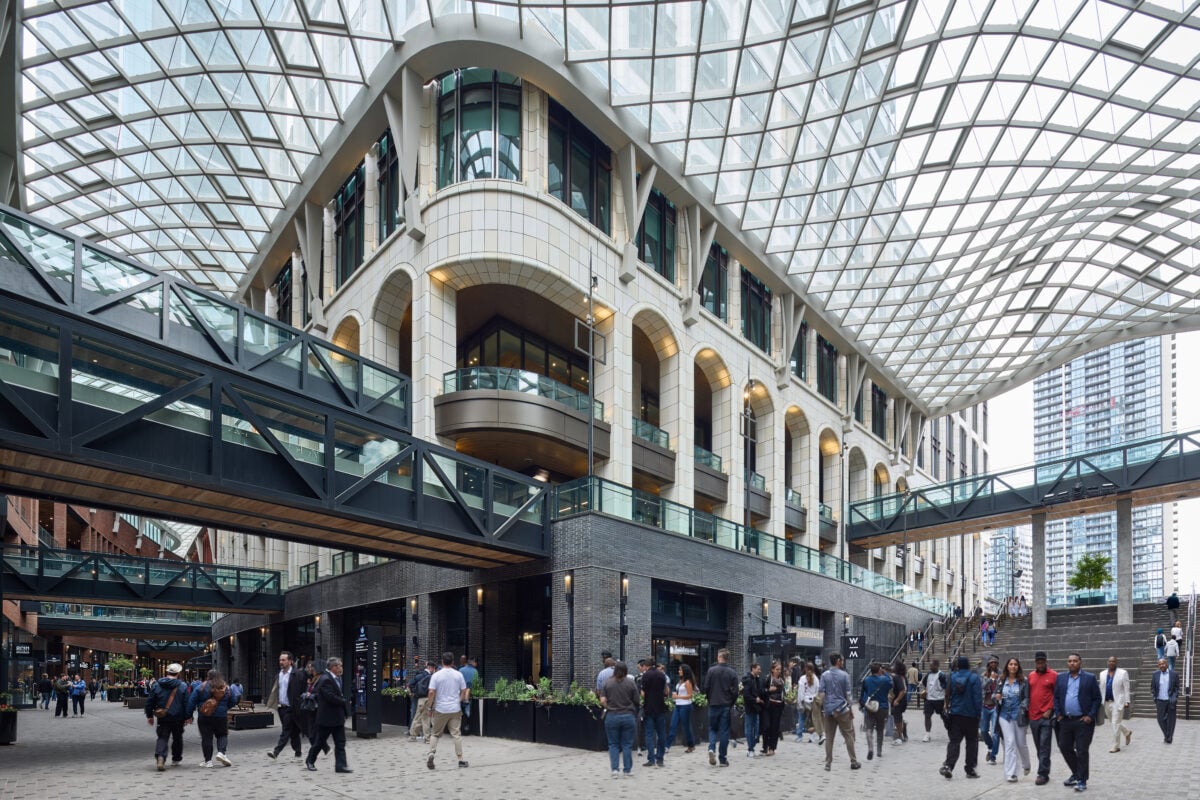
The Well in downtown Toronto. Photo: The Well
“It gives guests a reason to keep coming back, with experiences that go beyond the expected. Through a mix of cultural moments, wellness-driven programming, and interactive events, we’re creating a destination that feels dynamic and distinctly Toronto. With more than 250 events each year, there’s always something new to discover, helping The Well feel active, social, and continuously evolving,” she noted.
“The early response (to pickleball) was very positive, building on the strong momentum we saw when pickleball was first introduced at The Well last year. That level of engagement reinforces the role experiential programming can play in how people connect with space. While we’re always evaluating what resonates most with our visitors, the success of pickleball is a strong signal. It helps to inform us how we think about future programming.”
Following a record-setting 2025, Calgary’s retail market has continued to build on its strong momentum into the first quarter of 2026, according to a new report by Barclay Street Real Estate.
Since the beginning of last year, headlease vacancy has declined from 4.0% to 3.4% at year-end and now sits at 2.9%, a notable 110–basis point reduction, said the report.
The Barclay Street report said that at the end of Q1, market conditions remain firmly below equilibrium, underscoring sustained tenant demand. Total available space has tightened from about 2.3 million square feet to 2.1 million square feet, further constraining tenant options and placing continued upward pressure on rental rates.
The report said the Central Business District continues to report the highest vacancy among all submarkets at 7.5%, though this represents a modest 0.4% decline since year-end.
“Calgary’s retail market begins 2026 with strong fundamentals and sustained momentum carried from 2025; supported by tightening vacancy, steady absorption and continued retailer demand,” added Barclay Street.
“Ongoing population growth, retailer expansion and targeted infrastructure improvements position the market for continued stability and measured growth in the quarters ahead.”
British Columbia-based retailer Cascadia Liquor is expanding its customer engagement strategy with the launch of a new loyalty platform across Vancouver Island, marking a notable step forward in the evolution of liquor retail in the province.
The company has introduced “The Den Rewards,” a fully integrated loyalty initiative rolling out April 17 across all 12 Cascadia Liquor locations. The program is designed to provide customers with points-based rewards, exclusive experiences, and app-enabled convenience, reflecting broader shifts toward personalization and digital engagement in Canadian retail.
Cascadia Liquor, which operates as one of Vancouver Island’s largest locally owned liquor retailers, developed the platform in-house through its parent company, The Truffles Group. The launch builds on insights gathered from a pilot program at the retailer’s Cadboro Bay location, now scaled across its full store network.
A Shift Toward Personalized and Experiential Liquor Retail
The Cascadia Liquor loyalty program enables customers to earn points on purchases across beer, wine, and spirits, with redemptions available for discounts on future transactions. However, the program extends beyond transactional rewards, incorporating experiential elements such as tastings, masterclasses, and curated giveaways.
Members will also receive access to bonus point events and birthday rewards, while a tiered structure unlocks additional benefits over time. This approach aligns with a growing industry emphasis on building long-term customer relationships through engagement rather than purely price-driven incentives.
“The Den Rewards is designed to deliver more value to our customers by enhancing their shopping experience and creating unique, customizable moments for every guest,” said Janeil Mackay, President of The Truffles Group.
She added that the program will also allow the company to better understand customer preferences and tailor future offerings accordingly.
Digital Integration Supports Omnichannel Growth
A key component of the Cascadia Liquor loyalty program is its mobile integration. Customers can register in-store or through the Cascadia Liquor app, which allows users to track points, browse products, and place orders for pickup or delivery.
The app-based functionality reflects a broader shift toward omnichannel retailing, even within regulated categories such as alcohol. By combining loyalty with digital commerce capabilities, Cascadia Liquor is positioning itself to compete more effectively in an increasingly convenience-driven environment.
To drive early adoption, the retailer is offering a limited-time incentive of 5,000 bonus points for customers who enroll within the first two weeks of launch.
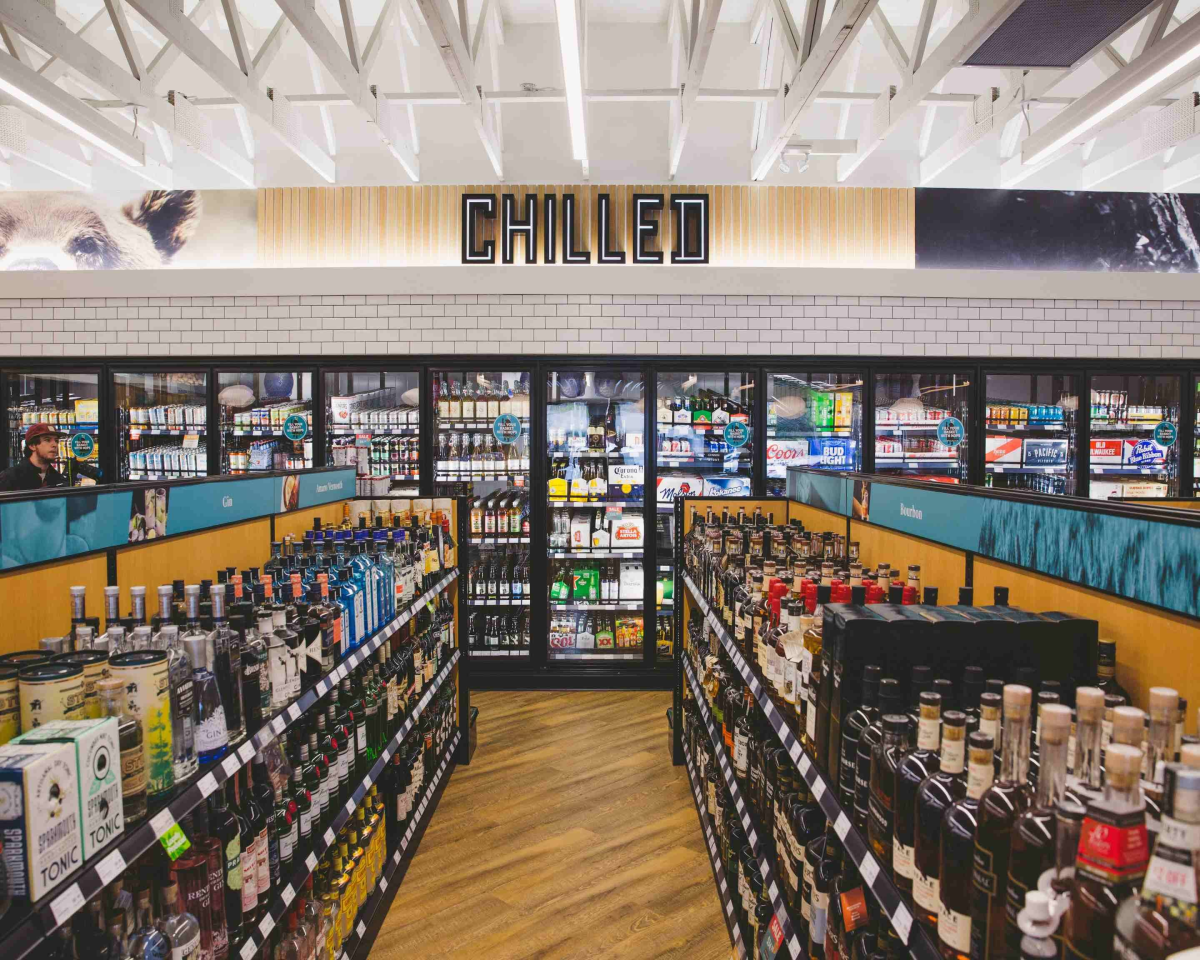
Cascadia Liquor Store. Photo: Uber Eats.
Operating in an Underserved Loyalty Landscape
The introduction of the Cascadia Liquor loyalty program highlights a gap in British Columbia’s liquor retail market. While some organizations offer broad membership-based rewards programs, few provide a fully integrated, points-based system tailored specifically to liquor retail.
Government-operated BC Liquor Stores, for example, do not offer a points-based loyalty program, while other regional players have focused on more generalized retail incentives. Cascadia Liquor’s approach combines data-driven personalization with experiential retail, creating a more comprehensive ecosystem for customer engagement.
This strategy reflects a wider trend across retail sectors, where loyalty programs are evolving into platforms for both marketing intelligence and brand differentiation.
Local Focus and Community Integration Remain Central
Cascadia Liquor has built its reputation on curated product selection, knowledgeable staff, and a strong emphasis on local producers. The new loyalty program extends that positioning by encouraging product discovery and repeat visits through targeted rewards and experiences.
The retailer operates in key Vancouver Island markets including Victoria, Langford, Parksville, Nanoose, Port Alberni, and Courtenay, with a footprint that allows it to maintain close ties to local communities.
In addition to its retail strategy, Cascadia Liquor continues to emphasize sustainability initiatives. The company is recognized as a certified BC Green Leader and operates as a Surfrider-approved Ocean Friendly business across all of its locations.
Loyalty as a Strategic Growth Lever
The launch of the Cascadia Liquor loyalty program signals a broader shift in how regional retailers are approaching customer retention and growth. As competition intensifies and consumer expectations evolve, loyalty platforms are increasingly being used to drive frequency, increase basket size, and generate actionable customer insights.
With The Den Rewards, Cascadia Liquor is positioning itself at the forefront of this shift within British Columbia’s liquor retail sector, combining technology, personalization, and experiential retail into a unified offering.
Additional features are expected to roll out following the initial launch, with the platform designed to evolve based on customer behavior and purchasing data.
Scarborough Walk of Fame 2026 induction ceremony at Scarborough Town Centre. Image supplied
The Scarborough Walk of Fame 2026 induction ceremony drew strong crowds and community engagement at Scarborough Town Centre on April 15, reinforcing the shopping centre’s role as a central civic and cultural hub within Toronto’s east end. Held in Centre Court and hosted by the Scarborough Community Renewal Organization, the event celebrated a new class of local leaders whose achievements span sports, business, arts, education, and community service.
The ceremony marked the 10th induction event for the Scarborough Walk of Fame, an initiative established to highlight the borough’s global contributions and counter longstanding stereotypes. This year’s class reflected both international prominence and grassroots impact, with honourees representing a cross-section of industries and disciplines.
High-Profile Inductees Reflect Global and Local Impact
Among the most recognized inductees was Andre De Grasse, Canada’s most decorated male Summer Olympian, whose global athletic success continues to be closely tied to his Scarborough roots. His induction underscored the borough’s influence in shaping world-class talent.
In entertainment, Fefe Dobson was recognized for a career spanning more than two decades, including multi-platinum success and advocacy work. The arts and culture category also included Trevor Godinho, while business recognition was given to Jesse Asido, known for building a strong digital narrative around Scarborough through his Scarborough Spots platform.
Community leadership formed a significant part of this year’s cohort. Geetha Moorthy was honoured for her work with the SAAAC Autism Centre, while John and Cathy Phillips were recognized for their philanthropic contributions through the Northpine Foundation. In education, Stan Farrow and Dr. Ashleigh Molloy were acknowledged for their impact in advancing inclusive and equitable systems.
Scarborough Walk of Fame 2026 induction ceremony at Scarborough Town Centre. Image supplied
Retail Setting Reinforces Community Connection
The decision to host the Scarborough Walk of Fame 2026 at Scarborough Town Centre continues to position the shopping centre as more than a retail destination. As one of the largest enclosed malls in Canada, the property functions as a de facto downtown for Scarborough, bringing together commerce, community programming, and cultural events under one roof.
The permanent installation of inductee stars within the mall’s floor creates a lasting integration of storytelling into the retail environment. This approach aligns with broader industry trends where shopping centres increasingly incorporate experiential and community-driven elements to enhance foot traffic and visitor engagement.
The strong turnout for the event reflects ongoing demand for place-based experiences that connect consumers with local identity. In this context, Scarborough Town Centre benefits from hosting programming that resonates beyond traditional retail, strengthening its role as a community anchor.
Scarborough Walk of Fame at Scarborough Town Centre. Image supplied
Rising Stars Highlight Next Generation of Talent
In addition to established figures, the Scarborough Walk of Fame 2026 also spotlighted emerging leaders through its Rising Star awards. Bavan Pushpalingam was recognized for research focused on food security, while Diondre Bentia, founder of King Of All Trades, was acknowledged for youth mentorship and community empowerment initiatives.
This dual focus on legacy and future leadership reinforces the program’s broader mission to inspire the next generation while celebrating established success. It also creates a narrative continuity that strengthens the relevance of the Walk of Fame over time.
A Platform for Civic Identity and Engagement
Since its founding in 2006, the Scarborough Walk of Fame has aimed to reshape perceptions of the borough by highlighting its contributions across multiple sectors. The 2026 ceremony demonstrated how this mission continues to resonate, drawing significant public interest and reinforcing civic pride.
For Scarborough Town Centre, the event represents a strategic alignment between retail space and community storytelling. As shopping centres across Canada evolve to remain relevant, initiatives such as the Scarborough Walk of Fame 2026 illustrate how programming can drive both cultural impact and sustained foot traffic.
Butcher and Kosher goods at the former L'OCA Quality Market in Edmonton. Photo: L'OCA Quality Market
Once again, it took the media to remind us that food fraud is not a relic of the past—it is very much a present-day risk embedded in our food system. After the maple syrup scandal, CBC News has uncovered yet another troubling issue: inaccurate scales at the meat counter. This is not anecdotal noise. It is a structural concern. When consumers pay for more than they actually receive, the consequence is not just irritation—it is a silent erosion of trust in one of the most expensive categories in the grocery store.
The implications are far from trivial. Canada counts roughly 16 million households, each spending over $16,000 annually on food. If about 20% of that goes to meat, we are looking at a $50-billion market. The discrepancies identified suggest overcharges ranging between 4% and 11% on affected packages. If this were systemic—which it likely is not—the exposure would be staggering. But even under conservative assumptions, where only 10% to 25% of transactions are impacted, the national cost still ranges from roughly $200 million to $1.4 billion annually. That is not statistical noise; it is a hidden tax on consumers—one that never shows up in inflation data, yet directly affects household budgets at a time when affordability is already stretched.
But this raises a far more uncomfortable question: where are the inspectors? Where are the regulators? Canada does not lack oversight bodies. Measurement Canada is mandated to ensure accuracy in trade measurement, while the Canadian Food Inspection Agency plays a broader role in food integrity and compliance. Yet, when it takes investigative journalism to uncover issues of this magnitude—twice in two years—we have to question whether the system is adequately resourced, sufficiently proactive, or simply too reactive.
This concern is amplified by recent signals that the federal government is cutting inspector positions within the CFIA. At a time when scrutiny should be intensifying, capacity may in fact be shrinking. We do not yet know the full impact of these reductions, but the timing is difficult to ignore. Fewer inspectors could mean fewer audits, slower response times, and ultimately weaker surveillance across the food system. In other words, the very moment Canadians are demanding more oversight may coincide with a diminished ability to deliver it.
Grocery store meat butcher department. Image: RI/Google
What is perhaps more concerning is how normalized these discrepancies appear to be. Social media is now filled with consumer testimonies showing mismatches between labelled and actual weights. Years ago, such incidents would have been dismissed as isolated errors. Today, in a high-inflation environment with heightened consumer awareness, they signal something deeper: a lack of rigour. Whether these inaccuracies stem from malfunctioning equipment, inadequate calibration, or poor staff training is almost secondary. The outcome is the same—consumers are paying more than they should, and confidence in the system is weakened.
Some grocers have issued apologies, but apologies alone are insufficient. This is not about intent; it is about accountability. When the integrity of measurement is compromised, so too is the integrity of pricing. And in a country where food affordability is already under intense pressure, even small discrepancies compound into meaningful financial burdens for households.
Consumers, for their part, are not powerless. A simple kitchen scale—costing less than $20—can act as a first line of verification. If discrepancies are found, they should be documented and brought to store management. Under the Scanner Price Accuracy Code, consumers may be entitled to compensation—typically up to $10, or $15 in Quebec. Reporting issues to regulators is also essential, even if enforcement can be slow. Increasingly, however, consumers are turning to public platforms—because reputational damage often travels faster than regulatory action.
Ultimately, grocers must recognize that having a “thumb on the scale,” whether intentional or not, is indefensible. But regulators must also accept their share of responsibility. Oversight cannot rely on whistleblowers and journalists to function effectively. Precision in measurement is not optional in food retail—it is foundational. And right now, Canadians have every reason to wonder whether the system designed to protect them is weighing in at all.
Equifax Canada’s latest Market Pulse Fraud Trends and Insights data reveals a notable shift toward first-party fraud, where individuals intentionally misrepresent their own financial information.
First party fraud rates across Canada rose 31 per cent year-over-year between Q4 2024 and Q4 2025. Rates were higher in Ontario and Alberta and were more pronounced among younger demographics nationwide, said Equifax.
It said the findings point to a shift in fraud risk. While third-party fraud continues to be a major threat, a growing share of risk is now coming from applicants using their own identity but providing false, inconsistent, or exaggerated financial information.
“This concerning growth in first-party fraud activity is a trend no lender can afford to ignore,” said Carl Davies, Head of Fraud & Identity at Equifax Canada. “Traditional third-party attacks remain prevalent, but we are also seeing more cases where consumers appear to be manipulating their own information to gain access to credit or banking products.”
Credit Card: Spike in First-Party Fraud
An increase in first-party credit card fraud highlights a concerning shift in consumer behaviour, with first-party credit card fraud nearly doubling year-over-year, rising from 0.08 per cent in Q4 2024 to 0.15 per cent in Q4 2025, alongside elevated delinquency pressure in the category, said Equifax.
It said it found that contradictory or mismatched data submitted by applicants became the dominant form of first-party fraud in credit cards, rising from 59 per cent of first-party cases in Q4 2024 to 77 per cent in Q4 2025. Ontario represented the highest regional exposure, with fraud-related credit loss in the sector reaching as high as $123 million.
Banking and Deposits: The Increase in Falsified Financials
“A similar pattern is emerging in banking and deposits. In that category, third-party fraud attempts declined from 0.45 per cent in Q4 2024 to 0.32 per cent in Q4 2025, while first-party fraud increased from 0.51 per cent to 0.68 per cent over the same period,” said the report.
The nature of the fraud is also changing. Cases involving falsified financial information in banking and deposits increased substantially from 1.5 per cent of first-party cases in Q4 2024 to 21 per cent in Q4 2025, while account abuse increased from 14 per cent to 24 per cent, added Equifax.
“AI-based technology helps to detect falsified documents and identities,” said Davies. “As fraud tactics evolve, Equifax offers reliable AI-powered tools that can help lenders identify both third-party attacks and signs that an applicant may be misrepresenting their financial position.”
Retail Insider’s latest articles chart key movements including Rawcology’s partnership with AM Ingredients that expands manufacturing and retail presence in Niagara. Flying Tiger Copenhagen’s entry into Canada via the Greater Toronto Area signals growing franchise-driven competition in variety retail. Meanwhile, analysis of Canadian shopping centre sales highlights rising polarization between top-tier and mid-tier malls. These developments together illustrate how scale, strategic partnerships, and retail mix are shaping Canada’s evolving retail landscape. Below are today’s in-depth reports, followed by Canadian retail news from around the web.
Canadian retail news this week points to a turning point, with expansion plans, major real estate moves, and shifting consumer behaviour all coming into focus. At the same time, two clear themes are emerging. The market is becoming more polarized, and retailers are leaning further into experiential formats. Leading players are adjusting their footprints to better serve changing preferences around value, convenience, and lifestyle. Meanwhile, economic uncertainty and cost pressures continue to shape performance across the sector, prompting both retailers and landlords to rethink how they connect with today’s Canadian shopper.
As the spring retail season approaches, these developments highlight an industry navigating both pressure and opportunity. External economic factors remain a challenge, yet new growth avenues are taking shape. Retailers are introducing new store concepts and revisiting mixed-use strategies, even as the housing market faces constraints. Overall, the sector continues to evolve in a dynamic and measured way.
Retailer News
The upcoming arrival of Flying Tiger Copenhagen in Canada represents an important moment in the Greater Toronto Area’s retail landscape. As Flying Tiger prepares to launch approximately 50 stores by 2030, its franchise partnership with Fox Group is catalysing a market repositioning that sees the replacement of Fox Home’s prior locations with a vibrant lifestyle retail concept tailored for urban, value-conscious consumers. This move reflects an increasingly asset-light strategy underscoring franchise-driven growth, signaling notable opportunities and competitive shifts in Toronto’s retail real estate landscape.
A monumental transaction also reshaping commercial real estate dynamics is the $9.4 billion acquisition of First Capital REIT by KingSett Capital and Choice Properties REIT. Choice Properties’ assumption of approximately $5 billion in retail assets sharpens its urban portfolio, while KingSett’s acquisition of $4.4 billion in assets emphasizes diversification. This decisive consolidation illustrates bullish investor confidence in Canadian retail assets within urban settings, highlighting strategic portfolio realignments critical for stakeholders tracking evolving market power balances.
Meanwhile, sustainability and community engagement themes continue to rise. Staples Canada’s transition into a next-generation sustainability framework augments its prior five-year commitment, focusing on waste diversion and climate action, embodying the integration of corporate responsibility within retail operations. Similarly, Giant Tiger’s 65th anniversary celebrations exemplify how hybrid corporate-franchise models can sustain local relevance and affordability amid discount retail’s evolving competitive challenges.
These strategic and celebratory movements are set amid broader industry realities, including Walmart Canada’s plan to close three Montreal stores in favour of fewer, larger Supercentres optimized for omnichannel retailing. This realignment, part of a $150 million Quebec investment, demonstrates how retail giants are prioritizing modern retail formats that blend physical presence with digital fulfilment capabilities to meet contemporary consumer demands effectively. The confluence of store rationalization and thoughtful expansion exemplifies a sector-wide trend towards optimizing real estate assets for omnichannel imperatives.
Retailer Financials / Trends / Reports
Recent data reinforce the complex landscape: a growing polarization of Canadian shopping centre performance sees dominant urban malls such as Yorkdale and CF Toronto Eaton Centre raise their sales and foot traffic, amplifying market bifurcation. This intensifies pressure on mid-tier centres to innovate or face decline, spotlighting the urgency of experiential and curated tenant strategies for investment sustainability.
On the consumer front, stable yet shifting spending patterns reveal increased focus on essentials, value, and entertainment, while discretionary categories continue to contract. Regional disparities and a cautious economic outlook suggest that retailers must craft segmented offers that address both value-driven and experience-oriented shoppers to capture loyalty in an uneven market.
However, fresh challenges are evident as the Canadian Federation of Independent Business reports more businesses closing than opening over six quarters. This entrepreneurial drought risks suppressing small business vibrancy, with potential downstream effects on retail property demand and market dynamism, underscoring the need for supportive policies and innovation in retention strategies.
Economic pressures also manifest in essential categories, as financial whiplash impacts consumer confidence and spending intentions, particularly among lower- to middle-income groups. This environment demands retailer agility in assortment planning and pricing strategy, especially considering that essential goods inflation, including dairy and grocery items, is increasingly fragmented by region and category.
Retailer People News
Leadership reshuffles signal continued strategic investment in growth and operational excellence within Canadian retail. MBI Brands’ appointment of Karen Tam as President represents a focused push toward digital transformation and franchise development across Mary Brown’s Chicken and Fat Bastard Burrito brands, indicating optimism about QSR expansion prospects. Tam’s experience enhances MBI’s approach to scale and global footprint enhancement, pivotal for store rollouts and market penetration.
Similarly, Kits Eyecare has elevated Tai Silvey to President to steer daily operations amid rapid revenue growth. Silvey’s background with global consumer brands underlines a commitment to optimizing supply chains and elevating consumer experience, key factors that will influence both retail execution and the utilization of specialty retail real estate.
In quick-service dining, OPA! of Greece’s new President and CEO Simran Singh brings operational depth and franchise ownership experience as the brand pursues national expansion. This leadership evolution reflects how experienced executives are crucial for scaling franchise models in competitive urban retail environments.
Retailer Op-Eds
Thought leadership pieces this week stress the strategic complexity of retail sectors suffering from economic and geopolitical tensions. Analysis of luxury retail execution and product strategy illuminates the core drivers of sustained brand value beyond aesthetic appeal. Such insights emphasize the importance of experiential marketing and controlled distribution to maintain exclusivity and consumer aspiration, critical as Canadian luxury brands seek international growth.
Concurrently, op-eds underscore the fragility of Canadian food inflation, fueled by a shrinking middle class and intensified by geopolitical issues like tensions in the Strait of Hormuz and Iran conflict. These scenarios not only drive up transportation and input costs but also fracture the food economy into divergent consumer segments. Retailers and commercial real estate stakeholders must anticipate ongoing inflationary impacts and adapt supply chain and merchandising strategies accordingly to maintain profitability and consumer trust.
Small business discussion highlights the increasing importance of thoughtfully crafted unboxing and packaging experiences as essential physical brand touchpoints in online commerce. This evolving consumer expectation creates opportunities for retailers to differentiate themselves through sustainable and memorable customer interactions, which, while primarily digital, still have tangible implications on retail service models and facility design.
Editor’s Take
This week’s coverage shows Canadian retail at a key turning point. Expansion plans and major real estate deals are happening alongside shifting consumer behaviour and ongoing economic pressure. The entry of Flying Tiger with a franchise-led model reflects growth ambitions, while the First Capital REIT acquisition highlights continued confidence in urban retail. At the same time, uneven consumer spending and tighter margins are creating challenges across the market.
Differences between shopping centres are becoming more pronounced. Top-tier locations with strong experiential offerings continue to perform well, which reinforces the need for landlords and retailers to work together on tenant mix and customer engagement. Meanwhile, leadership changes and operational improvements in sectors such as quick service and eyecare point to a focus on efficiency and scalable growth.
At the same time, inflation pressures driven by global tensions and income gaps at home are adding complexity to the retail landscape. Going forward, retailers and real estate players that stay flexible, invest in experience, and incorporate sustainability into their strategies will be better positioned to succeed.
For most Canadians, buying and selling on a peer-to-peer marketplace often means transacting with strangers, and that comes with a degree of uncertainty that no amount of good photos or positive ratings fully resolves. Interac and Kijiji recently announced they are taking a step toward changing that through a collaboration that brings Interac Verified solutions to the Kijiji platform – giving users a secure, trusted way to verify who they are before they message, post an item for sale, meet or make a purchase.
Kijiji connects millions of Canadians every month across categories from automotive and real estate, to furniture, phones and clothing. With more than four million live listings and over one million new listings added each month, it is one of the most active peer-to-peer commerce platforms in the country. The platform has long relied on ratings and reviews to build user confidence, but this collaboration now raises that baseline. By integrating Interac Verified solutions as an additional trust layer that ratings alone cannot provide, this positions Kijiji as setting a new standard for peer-to-peer commerce in Canada, according to a news release.
“Trust is the foundation of every transaction on our platform and we’ve always taken that seriously,” said Amanda Zeffiro, General Manager, Kijiji Canada. “Integrating Interac Verified solutions to bring verified identity to Kijiji is how we raise that standard, giving Canadians the confidence to transact with people they’ve never met, regardless of what it is that they’re buying.”
Amanda Zeffiro
Kijiji said it chose to work with Interac because of the trust Interac Verified solutions already carry in the Canadian market – built on the same network that financial institutions and governments rely on to help verify identity. A Canadian marketplace working with a domestic verification provider also means identity data stays within a Canadian regulatory and trust framework, a deliberate choice at a time when Canadians are paying closer attention to where their data goes and who controls it, it explained.
“Interac Verified solutions were built to bring the trust of the Interac network into identity verification and this collaboration compounds that trust with reach,” said Giles Sutherland, Head, Business Development, Interac. “Millions of people transact on Kijiji every month. Putting verified identity at those moments is where it makes a real difference for Canadians.”
Giles Sutherland
Kijiji users with accounts at participating financial institutions can verify their identity through Interac verification service. Later this year, a second path is expected to become available, giving users the choice of document verification with liveness checks against accepted forms of government-issued ID. Both options, powered by Interac Verified solutions, are intentionally designed to offer flexibility. Canadians have different comfort levels and verification needs depending on the transaction, and the integration is built to reflect that. Once verification is successfully completed, users will receive confirmation that they have been verified, according to the new release.
Verified identity will complement existing trust signals like ratings and reviews, rather than replace them. Reputation can tell you how someone has transacted in the past, while where verified identity confirms who they are. In high-value categories like auto and real estate, verified identity can add a meaningful layer of confidence before committing to a significant transaction. In everyday categories – furniture, phones, appliances, clothing – it can reduce the uncertainty that comes with meeting with a stranger, alongside other safety transaction practices, it noted.