MBI Brands (MBIB), the parent company of Mary Brown’s Chicken and Fat Bastard Burrito, has appointed Karen Tam as President. Tam, who previously served as Chief Financial Officer and Chief Development Officer, has assumed responsibility for the company’s overall strategic direction and day-to-day operations across the MBIB portfolio.
With more than two decades of senior financial and operational leadership experience, Tam joined MBIB in July 2025 and has played a pivotal role in strengthening the company’s infrastructure and operating models that power our brands. Her approach brings together financial rigour, operational discipline, and a clear focus on real estate and franchise development, positioning MBIB for sustainable, long-term growth as one of Canada’s leading Quick Service Restaurant (QSR) companies, said the company.
“Karen’s contribution to MBI Brands has been transformative,” said Gregory Roberts, CEO and Owner of MBI Brands. “Her ability to navigate complex global markets while maintaining a deep commitment to our Canadian franchisees and guests makes her the natural choice for President. She is a disciplined leader who understands that our growth is built on a foundation of operational excellence and community trust.”
Before joining MBIB, Tam held an executive leadership role at Choice Hotels Canada, where she served as CFO and Corporate Secretary, honing her expertise in the hospitality franchising model. Her successful career also includes senior positions at Four Seasons Hotels, Telus Health and the Global Risk Institute, as well as early career experience with KPMG LLP, said MBIB.
As President, Tam will lead the continued integration and expansion of Fat Bastard Burrito, advance the company’s digital transformation initiatives, and support the domestic and international growth of Mary Brown’s Chicken. Her focus will be on execution, alignment, and ensuring that growth is backed by strong operational fundamentals, it said.
Karen Tam
“I am incredibly honoured to take on this role at such an exciting time for our company,” said Tam. “This is a company built on strong partnerships with franchisees and a clear sense of identity as a Canadian brand. My focus will be on empowering our teams and franchisees to deliver the highest quality experience for our guests, while continuing to adapt our menu and innovate our store formats for a changing global market.”
Tam is a CPA, CA, and CFA charter holder and holds a Bachelor of Commerce from Queen’s University. She remains active in the broader community, currently serving on the Board of Directors for Metrolinx and the Royal Ontario Museum (ROM).
Mary Brown’s Chicken has over 290 locations across Canada and is growing. The brand is Canadian-owned, being first established in St. John’s Newfoundland in 1969. The company’s first international locations opened in 2024, and outside of Canada, Mary Brown’s Chicken operates in Mexico, the UK, India, and Pakistan.
Luxury retail is often misunderstood from the outside. Consumers see beautiful stores, iconic handbags, and six-figure watches. What they do not always see is the discipline behind the product strategy that makes those objects desirable in the first place.
If we are serious about understanding how luxury retail actually works, we have to begin with product. Not marketing. Not store design. Product.
Douglas Mandel, former VP of Dior who led Canada and a veteran global luxury executive, explains how product strategy in luxury is fundamentally different from mass retail logic. It is not driven by volume. It is not built around price optimization. It is rooted in symbolism, restraint, and disciplined positioning.
For Canadian retailers operating in both premium and luxury segments, these distinctions are critical. Luxury retail product strategy is not accidental. It is engineered.
Luxury Is About Meaning, Not Function
“What does luxury really mean?” Mandel asks. “It’s not just about price points or exclusivity. It’s not just about craftsmanship or scarcity. It’s about the meaning attached to its acquisition.”
One of the most striking definitions he encountered during his MBA was this: luxury is the act of burning excess.
Douglas Mandel
The concept traces back to ancient rituals where leaders would ceremonially destroy or give away valuable possessions as proof of abundance. Sacrifice signaled strength. Giving up something valuable demonstrated that more would follow.
In modern luxury retail, this psychology remains intact. A $10,000 handbag or a $100,000 watch is not purchased for utility. It is a symbolic act. The acquisition affirms identity, status, and personal narrative.
Understanding this psychology reframes luxury retail product strategy entirely.
Functionality is secondary. Pricing sensitivity operates differently. The object becomes a vessel for meaning.
For Canadian retailers, especially those scaling into luxury categories, this insight matters. If product is positioned purely through technical features or competitive pricing, it will struggle to achieve true luxury status. Luxury is symbolic before it is practical.
Elevation, Not Reinvention
Product strategy in luxury does not always require tearing down what exists. Sometimes it requires elevation.
Mandel recounts joining Peerless Clothing in Montreal in the 1990s, then the largest suit manufacturer in North America. The company had plateaued. Manufacturing was strong. Execution was efficient. However, materials, design, and brand positioning limited growth.
Rather than reinvent the factory, the opportunity lay in reframing the product. By elevating fabrics, refining fit, and aligning with a designer brand through the DKNY license, the company unlocked significant new revenue. The first year generated $35 million.
The lesson is clear. You do not always need to build a new engine. Sometimes you need to pair a strong operational base with sharper product and stronger brand positioning.
For Canadian brands seeking to move upmarket, this is particularly relevant. Luxury retail product strategy often involves strategic partnerships, improved materials, and more disciplined storytelling. It is about aligning product with aspiration.
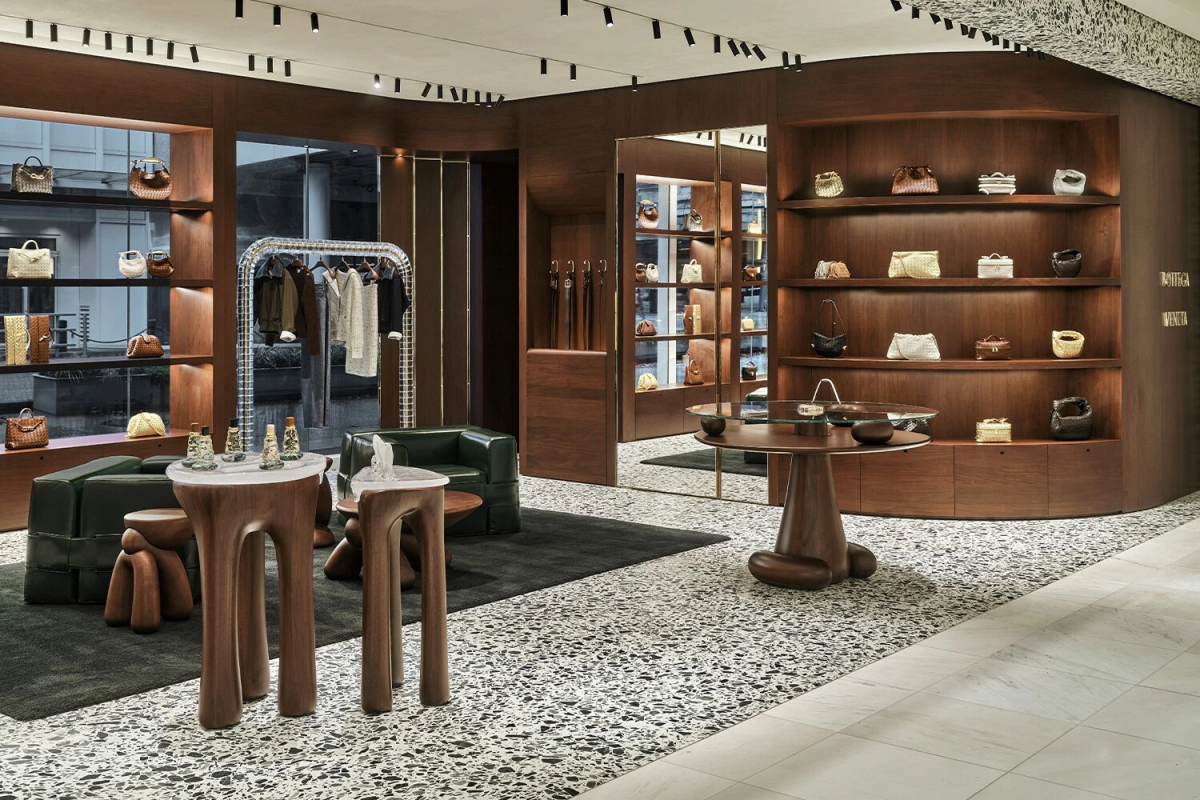
Bottega Venetta at Holt Renfrew in Vancouver. Photo: Bottega Veneta
Scarcity and Controlled Distribution
If meaning drives desire, scarcity protects it.
Luxury brands have long understood that overproduction erodes value. Controlled distribution reinforces perception. Discounting may generate short-term cash flow, but it weakens long-term brand equity.
Mandel has written about the concept of burning excess in both symbolic and operational terms. Historically, some luxury houses destroyed unsold inventory rather than discount it. While sustainability expectations are reshaping these practices, the philosophy behind them remains.
The objective is not waste. It is protection of positioning.
Luxury retail product strategy depends on disciplined production planning. Limited runs. Controlled releases. Strategic pullbacks. These actions signal confidence and reinforce exclusivity.
In Canada’s evolving luxury landscape, where international brands compete alongside domestic players, maintaining scarcity requires restraint. It can be tempting to chase volume in a relatively smaller market. However, overexposure risks commoditization.
Luxury retail works because it withholds as much as it reveals.
The Psychological Anchor
Another critical element of luxury retail product strategy is the anchor.
At the top of the assortment sits a product that defines aspiration. It may be Haute Couture. It may be a limited-edition timepiece. It may be a six-figure diamond.
Few will purchase it. That is not the point.
The presence of the apex establishes perceived value for everything below it. When the top tier is uncompromising in quality and price, the mid-tier benefits from reflected prestige.
This laddering strategy is visible across categories. Automotive brands use supercars to elevate road models. Fashion houses use couture to elevate ready-to-wear and accessories. Jewelry brands use extraordinary stones to define craftsmanship standards.
For Canadian retailers managing assortments in luxury environments, the anchor must be intentional. Without a clear pinnacle, the collection flattens. Without aspiration, accessibility loses context, according to Mandel.
Luxury retail product strategy begins at the top, not the middle.
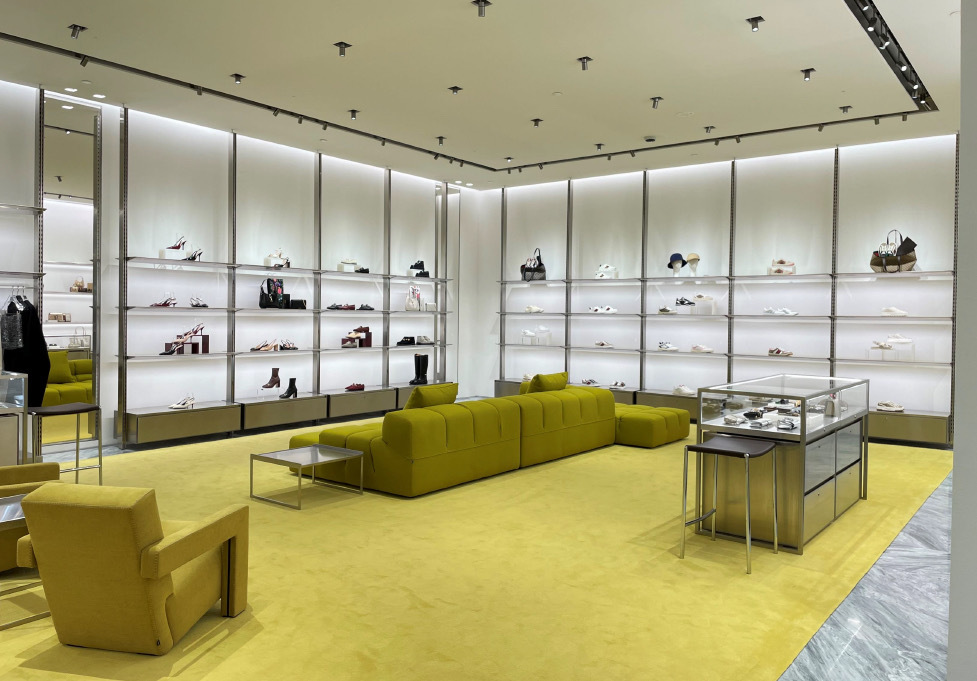
Gucci at Royalmount in Montreal. Photo: Gucci
Product as Narrative
Ultimately, product in luxury is narrative made tangible.
Every seam, fabric, clasp, and material choice communicates something about the brand. Where it is made matters. How it is constructed matters. What it references culturally matters.
Luxury clients are not merely buying objects. They are buying stories. Heritage. Craft. Identity.
This is why manufacturing origin and provenance remain so powerful. “Made in Italy” or “Made in France” is not a technical detail. It is part of the mythology. In Canada, where brands may produce domestically or internationally, clarity around origin strengthens trust, according to Mandel.
Luxury retail works when product tells a coherent story that aligns with store environment, pricing discipline, and client experience.
What This Means for Canada
Canada’s luxury market continues to mature. Flagships are expanding. International brands are deepening presence. Domestic talent is increasingly sophisticated.
For Canadian retailers and brand leaders, understanding luxury retail product strategy is essential. It requires resisting the pressure to overproduce. It demands clarity about where the brand sits on the aspiration ladder. It involves elevating materials and positioning rather than simply increasing output.
Luxury retail does not work because it is expensive. It works because it is disciplined, according to Mandel.
Product is the foundation. Meaning drives acquisition. Scarcity protects perception. Elevation unlocks growth.
If we want to understand how luxury retail actually works, we must start with what sits on the shelf. Not as inventory, but as symbol.
Many Canadians are feeling the effects of ongoing economic uncertainty as conditions continue to evolve, reshaping household behaviours. According to the latest MNP Consumer Debt Index conducted quarterly by Ipsos, 61% say they are experiencing ‘financial whiplash’ as shifting conditions repeatedly disrupt their financial plans, while 74% say rising prices for essentials like food and gas are straining their finances.
Against this backdrop, 73% say they are cutting back on spending, and 84% are more cautious about taking on new debt, as ongoing cost pressures and uncertainty drive conservative financial decision-making, said MNP.
These pressures are also shaping how Canadians view their financial progress and future plans as 64% say they feel they are working harder financially but not getting ahead, while 69% say they are delaying major financial decisions because conditions feel unpredictable, it said.
“Rising everyday costs and broader global uncertainty are outside of an individual’s control, creating a sense of ‘financial whiplash’. When conditions feel unpredictable, it becomes harder to absorb unexpected expenses or make confident financial decisions, whether that’s taking on new debt, making a large purchase, or planning for the future.”
While the overall Index remains unchanged at 87 points, holding steady over the past year and reflecting a continued ‘wait and see’ approach, this apparent stability may be masking underlying financial pressures for many households, as Canadians continue to navigate an endurance economy where financial challenges persist without a clear endpoint, said MNP.
Canadians’ net personal debt rating edged up slightly from the previous quarter to 18 points (+1 pt) but still represents the lowest first-quarter debt rating in the Index’s history, underscoring ongoing financial strain as concerns about job security, inflation, and broader economic conditions continue to weigh on consumer sentiment, it said.
“Compared to a year ago, nearly one-quarter of Canadians (24%) say their debt situation has improved, while one in five (19%) say it has worsened, both unchanged from last quarter. This lack of movement highlights how many Canadians feel stuck with little progress in improving their financial position, as financial pressures persist and concerns about job security continue to rise, with nearly four in 10 (39%, +2 pts) fearing job loss in their household,” explained MNP.
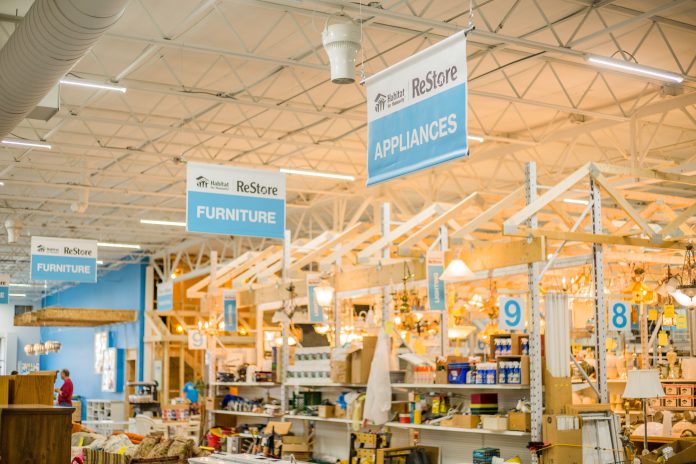
Driven by the cost of living and environmental concerns, three in five (60%) Canadians plan to thrift or buy pre-owned this year, according to a new survey from Habitat for Humanity ReStore.
Saving money is the primary driver behind thrifting in Canada with more than two-thirds of Canadians (68%) saying they thrift to save money, followed by a desire to reduce waste and the thrill of the treasure hunt, it said.
Beyond what is driving thrifting, The Thrift Shift in Canada survey, based on responses from 1,536 Canadians, sheds light on how Canadians perceive this popular way to shop:
More than 8 in 10 Canadians (83%) agree thrifting makes economic sense given the current cost of living in Canada.
83% of Canadians also say thrifting makes environmental sense, citing concerns about waste.
Two-thirds (66%) of Canadians agree thrifting is now part of mainstream shopping culture.
Three in five (60%) say they are proud to show off their thrifted finds.
When it comes to what Canadians are thrifting, books, clothing and accessories, and toys and games are the most popular categories, with roughly half of Canadians saying they’ve purchased those items in the last year, said the report.
“Canadians’ desire to thrift for items in the home category is also strong with thrifting for big-ticket items gaining traction: Furniture (72%), kitchenware (74%), and home décor (70%) are among the top home items Canadians say they would consider thrifting,” it said.
“Interest is even higher when it comes to renovation and home improvement materials: The majority of Canadians say they would consider thrifting bath or kitchen cabinets (86%), renovation or building materials (81%), lighting (80%), and appliances (76%).
“Where Canadians shop also matters. Nearly two-thirds of Canadians (61%) say they prefer to thrift at stores run by charitable organizations. Convenience and community also shape Canadians’ interest in buying thrifted or pre-owned home items, with proximity to a thrift store and recommendations from family and friends cited as the top influences.”
Lisa Voycey
“These findings reflect what we’re seeing across our more than 100 ReStore locations throughout Canada, with consistent demand for home items like furniture, appliances, building materials, and décor,” said Lisa Voycey, Director of ReStore at Habitat for Humanity Canada. “Life is expensive, and shoppers enjoy being able to browse in-store for home finds at great prices, while experiencing the thrill of uncovering something unexpected, all while knowing their purchase helps give back to their local community.
“ReStore is expanding into more communities across Canada to meet growing interest in thrifting. With location playing a key role in where Canadians choose to thrift, we’re always looking for ways to give Canadians more opportunities to discover the ReStore experience.”
ReStore is Habitat for Humanity’s non-profit home improvement social enterprise where proceeds support local Habitat organizations across Canada to help build homes for families in need of safe and affordable housing.
Founded in Manitoba, Habitat ReStore turns 35 this year and has grown to more than 1,000 locations worldwide, including over 100 across Canada. Open to the public, stores offer a mix of new and gently used home goods, from one-of-a-kind vintage pieces and décor to building, appliance, furniture and renovation finds, with new clothing and accessories available at select locations.
With oil prices holding above $90 per barrel for more than a month, Alberta’s small businesses are struggling with high fuel costs – without relief from the province’s fuel tax program, says the Canadian Federation of Independent Business (CFIB).
The CFIB, Canada’s largest association of small and medium-sized businesses with 103,000 members (11,000 in Alberta) across every industry and region, is urging the Alberta government to immediately reinstate fuel tax relief to reflect current market conditions and to review the existing trigger mechanism to ensure it responds more effectively to sustained price increases.
“Fuel prices haven’t just jumped briefly. They’ve remained elevated long enough that businesses are now treating this as the new reality,” said Keyli Loeppky, Director of Alberta and Interprovincial Affairs at CFIB. “Fuel tax relief was not reinstated on April 1, leaving small businesses exposed at a time when cash flow pressures are already intense.
“Fuel is not a discretionary expense for most small businesses. These are essential costs that can’t easily be passed on to customers without risking competitiveness or reduced demand—especially when business owners are already grappling with inflation, rising taxes, insurance costs, and overall economic uncertainty.
Keyli Loeppky
“Alberta’s small businesses are the backbone of the provincial economy and don’t have the luxury of waiting until next quarter for support. When relief is delayed, it’s denied—timely fuel tax relief would provide real support and show government understands the pressures entrepreneurs face right now.”
Many small businesses across Alberta depend on fuel to operate, particularly in transportation, construction, and agriculture, sectors, said the organization. CFIB’s March Business Barometer shows fuel costs are a major constraint for 42% of Alberta small businesses, demonstrating the scale and seriousness of the issue.
CFIB noted that Alberta’s oil‑price‑based fuel tax relief program relies on backward‑looking quarterly averages of West Texas Intermediate (WTI) prices, which can cause relief to lag months behind real‑time market conditions.
CFIB is calling on the provincial government to:
·Provide immediate fuel tax relief based on current oil price conditions; and
·Review the existing fuel tax trigger mechanism to ensure it responds promptly to sustained price increases.
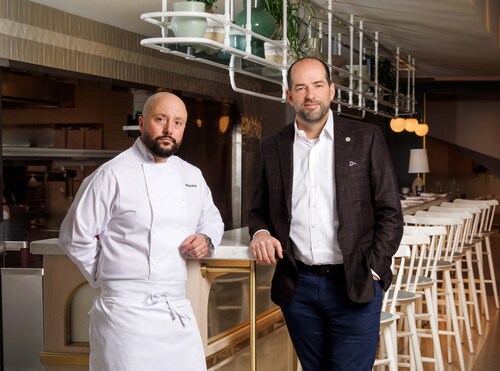
Chef Patrick Kriss and Aaron Ciancone, CEO of Pearle Hospitality. (CNW Group/Pearle Hospitality)
Pearle Hospitality Inc., an Ontario-based hospitality company, has announced what it calls a “groundbreaking culinary collaboration” with Michelin-starred chef Patrick Kriss and the Alo Food Group.
Founded by the Ciancone family in 1979, the Pearle Hospitality portfolio includes Ancaster Mill, Spencer’s at the Waterfront, Bardō Restaurants, Cambridge Mill, Whistle Bear Golf Club, The Farm, Elora Mill and The Pearle Hotel & Spa.
“Partnering with Chef Patrick Kriss is a defining moment for Pearle,” said Aaron Ciancone, CEO of Pearle Hospitality. “His masterful approach to flavour and excellence in execution will invigorate our menus and allow us to deliver the kind of dining experience typically reserved for culinary capitals.”
Best known as the visionary behind Alo, named Canada’s Best Restaurant a record four times and the recipient of a Michelin star, Kriss brings a storied background from celebrated kitchens in France, New York City and Toronto to this transformative partnership, said Pearle.
“Working with Pearle Hospitality has been a true meeting of minds,” said Kriss. “Their passion for hospitality mirrors my own. The menus are about more than food; they’re about thinking through the details and crafting memorable, elevated experiences for every guest.”
Since the opening of its fine-dining flagship Alo in 2015, it has grown to include Aloette Spadina (2017) and Aloette Bay (2024), Alobar Yorkville (2018) and Alobar Downtown (2023), Salon Private Dining (2019), Alder (2022), Alo Catering (2022), and various Aloette Go takeout-focused locations.
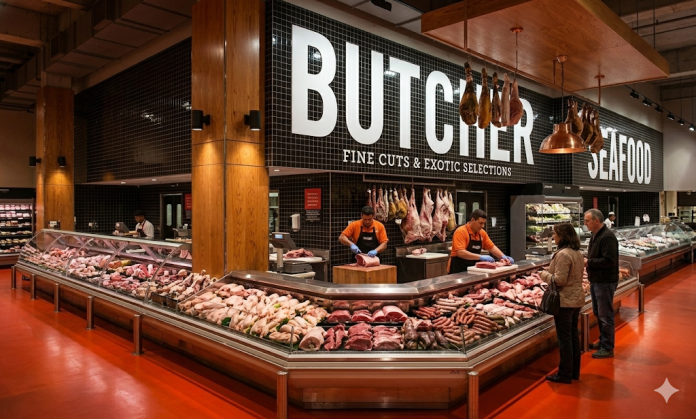
Grocery store meat butcher department. Image: RI/Google
The Canadian Cattle Association has launched a petition urging Ottawa to restrict beef imports as trade negotiations with Mercosur—Brazil, Argentina, Uruguay, and Paraguay—move forward. These countries are among the world’s lowest-cost beef producers, and a deal could increase the volume of cheaper beef entering Canada.
The concern from producers is understandable. Canadian ranchers are operating in a high-cost environment, facing rising input costs, regulatory pressures, and a tight cattle supply. But the reaction also reveals a deeper issue: Canada’s beef affordability problem is not primarily about imports—it is about structural constraints at home.
Beef prices in Canada remain elevated by historical standards. According to Statistics Canada, fresh and frozen beef prices rose roughly 13–14% year-over-year in early 2026. Industry data suggests retail beef prices are now more than 40% above their five-year average. These are not temporary spikes—they reflect a structurally tight market driven by limited supply and persistent cost pressures.
In response, some argue that importing more beef is the simplest solution. If beef is cheaper abroad, increasing imports should lower prices domestically. It is an intuitive argument—but a flawed one.
Canada does not have a beef affordability problem because it imports too little. It has a problem because domestic supply is constrained and costly to produce. Increasing imports may offer short-term relief in certain segments, but it will not fundamentally reduce prices at the retail level. Worse, it risks weakening the domestic industry that ensures long-term stability.
The price gap between Canadian and imported beef is significant. Retail beef in Canada averages around $25–26 per kilogram, while imported beef is closer to $15/kg. Export prices from countries like Brazil and Argentina can range between $4 and $6 USD/kg. That difference is structural, driven by lower production costs, scale, and regulatory environments.
However, the Canadian market is not uniform. Imported beef does not directly replace domestic beef. It tends to flow into processed products, food service, and lower-value cuts. Canadian beef continues to dominate premium segments where grading, consistency, and marbling matter. Increasing imports will not turn a $30 steak into a $15 one—it will mostly affect already price-sensitive categories.
More importantly, focusing on imports ignores the central issue: supply. Canada’s cattle herd remains tight. As of 2026, it sits at roughly 11.1 million head, only a modest recovery after years of decline. Beef production is constrained by biological realities—herd expansion takes time, and supply cannot quickly respond to price signals.
At the same time, Canadian producers operate under some of the highest standards globally, including strict requirements for traceability, animal health, and environmental stewardship. While imported beef must meet equivalent safety outcomes, it is often produced under different cost structures. Equivalency in standards does not mean equivalency in cost.
This creates a structural imbalance. Canadian ranchers are competing not just in a market, but in a system shaped by regulatory, geographic, and economic asymmetries. Increasing imports may ease prices slightly in the short term, but it also accelerates the erosion of domestic production capacity.
That erosion matters. Canada already imports roughly 25–30% of the beef it consumes. Increasing that dependency would expose the country to greater global volatility, supply disruptions, and geopolitical risks. Food systems are not just about price—they are about reliability and resilience.
The idea that imports can be used as a primary tool to manage food inflation reflects a misunderstanding of how food systems function. Price is influenced not only by supply, but by where that supply comes from and how stable it is. Relying more heavily on imports may appear efficient, but it introduces vulnerabilities that are less visible and harder to manage.
If the goal is to make beef more affordable, the focus must shift inward. Canada’s challenge is not insufficient imports—it is insufficient domestic production at competitive costs. Addressing that requires a different policy approach.
Supporting herd expansion is essential, including access to capital and risk management tools that allow producers to grow. Investment in processing capacity is also critical to reduce bottlenecks and improve efficiency across the value chain. Policymakers must also examine the cumulative burden of regulation, energy costs, transportation, and financing, and assess whether the current environment is sustainable in a competitive global market.
There is no quick fix for high beef prices. Imports can play a role, but they are not a strategy. They do not address the structural constraints shaping the Canadian market and risk undermining the domestic industry over time.
The path to more affordable beef does not lie in outsourcing production. It lies in strengthening Canada’s own capacity to produce efficiently and competitively. Anything else is a temporary solution to a permanent problem.
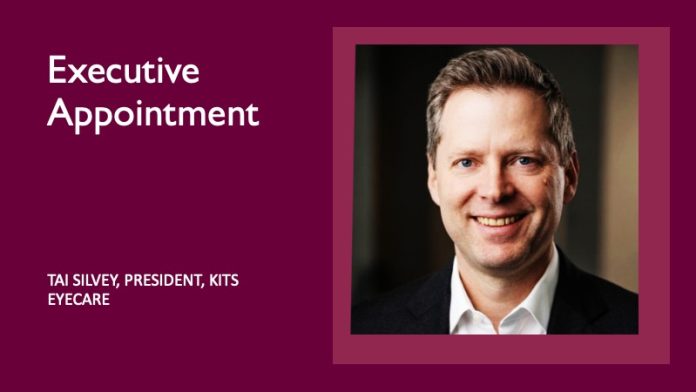
Kits Eyecare Ltd., a leading vertically integrated eyecare provider, has announced the promotion of Tai Silvey to President.
As part of Kits’ continued scaling, Silvey will oversee day-to-day operations across supply chain, customer experience, and commercial execution. He will report directly to Chief Executive Officer Roger Hardy, who will continue to lead the company’s overall strategy, capital allocation, and long-term vision, explained Kits.
Since joining Kits in January 2022 as Senior Vice President, Operations, and later serving as Chief Business Development Officer, Silvey has played a central role in scaling the company’s operating platform and advancing key strategic initiatives. During his tenure, Kits has delivered significant growth while improving operational performance, including expanding margins and strengthening customer experience, it said.
Tai Silvey
With more than two decades of experience building and scaling high-growth global consumer businesses, including Red Bull and Dyson, Silvey brings a combination of operational discipline and strategic leadership. His deep familiarity with Kits’ integrated model – spanning supply chain, technology, customer experience, and go-to-market – positions him to lead the company through its next phase of growth, added Kits.
“Tai has been instrumental in scaling our operating platform and strengthening execution across the business,” said Hardy, Co-Founder and Chief Executive Officer of Kits.
Joseph Thompson, Co-Founder and COO, said: “Tai brings a rare combination of operational rigor and strategic judgment. As we enter our next phase of growth, his leadership will be critical in translating our platform advantages into sustained performance.”
“I’m honoured to take on the role of President at a real inflection point for Kits,” said Silvey. “Roger, Joe, and the team have built a differentiated platform grounded in customer value, operational efficiency, and technology. I look forward to continuing to work alongside this exceptional team to execute on the opportunity ahead.”
Recently, Kits provided selected preliminary unaudited results for its first quarter ended March 31.
Total Revenue increased 23% year-over-year to approximately $57.4 million.
Adjusted EBITDA increased quarter-over-quarter to exceed 6% of revenue.
Glasses revenue expanded approximately 61% year-over-year to $10.8 million.
Cash position remains strong at approximately $18.9 million.
The company will release its full first quarter 2026 results in early May.
The most recent Retail Insider articles are listed below, followed by Canadian Retail News From Around the Web. Highlights include Reitmans’ mixed financial results alongside strategic store and digital upgrades, FreshCo’s entry into Atlantic Canada with three new discount grocery locations, and Pet Valu’s milestone 50 years marked by steady franchise expansion across Canada. Together, these developments illustrate a sector focused on balancing growth ambitions with operational resilience and consumer-centric innovation.
The retail sector continues to evolve as brands adjust their growth strategies and look for new ways to connect with customers. Changing consumer expectations and ongoing market pressures are shaping how retailers operate. This week, there is a clear focus on strategic acquisitions and careful store expansion, as companies aim to grow while staying efficient. At the same time, many retailers are placing more emphasis on value and stronger in-store experiences.
In addition, trends such as the return of wholesale, along with growth in food and experiential retail, are reshaping store formats and leasing demand. This is especially noticeable in competitive urban markets like Toronto. Meanwhile, the industry continues to face challenges, including supply chain issues, profitability pressures, and staffing shortages, creating a complex environment for retailers in 2026.
With Easter just behind us, seasonal merchandising and promotions remain a priority. Retailers and landlords are now turning their attention to the spring selling season while managing ongoing economic uncertainty.
Retailer News
Empire Company Limited made a significant move by entering Quebec’s discount grocery sector through the acquisition of Mayrand Food Group, which adds established warehouse-style stores to its portfolio and expands its footprint into the Greater Montréal area. This acquisition provides Empire with valuable real estate and positions it to service a price-sensitive demographic seeking hybrid retail and foodservice bulk purchasing options, a critical strategic play for meeting shifting consumer demand in the province’s grocery market.
Meanwhile, Vessi is adopting a measured approach to retail expansion, cautiously growing physical locations including its first store in the U.S. market. Their strategy emphasises integrating e-commerce and in-store experiences to transition their brand perception, targeting smaller, high-energy retail spaces that support engaging customer interactions. This aligns with the broader strategic insights from the industry’s wholesale channel growth, where operational focus and measured scalability are preferred over rapid direct-to-consumer expansion.
Peavey Mart’s relaunch concentrates on a regional strategy with seven stores across Alberta and Saskatchewan, signalling a deliberate shift from national ambitions to a focus on prairie roots and rural consumer needs. This downsized footprint seeks sustainability through lean operations and regionally tailored assortments, reflecting an industry-wide turn toward more targeted and efficient retail models amid market volatility as seen in Peavey Mart’s prairie store strategy.
Toronto’s retail leasing environment continues to be energised by demand for compact food, fitness, and experiential concepts. Data highlights a preference for smaller spaces below 2,000 square feet along major corridors like Yonge Street, supported by longer leases attracting premium tenants. This trend is underpinned by the growth in food and experiential retail, underscoring how landlords and retailers prioritise social and immersive experiences to sustain foot traffic and enhance physical retail vibrancy.
Additional noteworthy activity includes Clutch’s Ottawa customer hub, an innovative hybrid automotive retail space at Bayshore Shopping Centre blending digital and in-person service to meet evolving consumer expectations in the auto market.
Retailer Financials / Trends / Reports
Roots Corporation reported a stronger fiscal 2025 with $277.7 million in sales, marking a 5.6% increase year-over-year and returning to profitability. Gains were bolstered by a 7.3% uplift in direct-to-consumer channels, reflecting consumer appetite for lifestyle brands that blend heritage with modern relevance, a critical insight for Canadian apparel sector stakeholders.
Research by Lightspeed Commerce highlights Gen Z Canadians as a catalyst revitalising mall culture through social shopping. Their preference for communal retail experiences, with 83% feeling more connected in socially engaging spaces, suggests experiential retail is an effective response to digital commerce competition.
Downtown Vancouver’s retail market shows signs of stabilizing visitation though with stalling growth, as shoppers become more value-conscious and modify weekday versus weekend patterns. This nuanced retail environment presents both challenges and opportunities ahead of major events like FIFA World Cup 2026.
Canada’s early 2026 retail sales exhibit a subdued yet resilient trend, with 1.8% year-over-year growth partly masked by stronger discretionary spending trending over 5%. This trend, documented in early 2026 sales analysis, signals sustained consumer demand amid macroeconomic uncertainty, informing retailers’ strategic focus in discretionary sectors.
Retailer People News
Cara Keating, CEO of PepsiCo Canada, was recognised with a Canadian Grand Prix Lifetime Achievement Award for her leadership in growth and sustainability in the consumer packaged goods sector. This accolade illustrates the impact of visionary leadership in advancing retail and supplier partnerships across Canada.
Jay Klein, founder of PÜR Gum, shared insights on scaling a global better-for-you confectionery brand, underscoring the importance of ingredient transparency and strong retailer relationships. His dual role as an entrepreneur and investor on Dragons’ Den demonstrates resilience and innovation within evolving retail landscapes.
Retailer Op-Eds
Sylvain Charlebois’s recent analysis in Why a Ceasefire Won’t Lower Grocery Prices in Canada highlights persistent structural cost pressures in food retail, explaining why market volatility, transportation, and carbon pricing limit near-term relief from geopolitical shifts or temporary oil price drops.
The debate about rising grocery theft and the use of surveillance is candidly addressed in As Grocery Theft Rises, Surveillance Tactics Draw Scrutiny in Canada, revealing a complex challenge balancing loss prevention, privacy, and social issues such as food insecurity and wage stagnation.
Food Fraud Is Becoming a Business Model in Canada explores how fraud has evolved beyond isolated incidents into an economic strategy within sectors like maple syrup, calling for stronger regulatory oversight and supply chain traceability to protect authenticity and consumer trust.
Editor’s Take
This week’s retail stories show an industry that is becoming more focused and balanced. Retailers are working to grow while staying efficient and sustainable. Empire’s discount grocery acquisition and Peavey Mart’s prairie-focused relaunch highlight different approaches to local markets and price-sensitive consumers. Both moves show how important it is for retailers to stay flexible and understand regional needs, especially with ongoing inflation and changing customer expectations.
At the same time, wholesale is making a comeback as a key growth channel. Brands are focusing more on improving operations instead of relying only on direct-to-consumer growth. In urban markets, demand for experiential and food-focused retail continues to rise. This shows that physical stores still matter, but they need to offer engaging, community-driven experiences.
However, challenges remain. Supply chain issues, labour shortages, and security concerns continue to impact the industry. These pressures make strong operations and responsible leadership more important than ever. Companies like PepsiCo Canada and PÜR Gum offer examples of how innovation and commitment can drive success.
Looking ahead, retailers and landlords will need to combine local market knowledge, strong operations, and meaningful customer engagement to succeed in a changing retail landscape.