Today’s Retail Insider articles below highlight Empire Company Limited’s strategic acquisition of Mayrand Food Group, marking its entry into Quebec’s discount grocery segment. Reitmans celebrates a centennial with a bold brand refresh and retail experience upgrade, while Vessi adopts a data-driven, measured expansion to meet growing demand for physical stores. IKEA also just announced it’s taking part of a former Hudson’s Bay store in London ON. Have a peek below.
Swedish home furnishings retailer IKEA is entering the London, Ontario market later this year with a new small-format store at White Oaks Mall. The approximately 43,000 square foot location will occupy part of a former Hudson’s Bay space, as part of a broader redevelopment led by Westdell Development Corporation.
The project represents a transformation of roughly 165,000 square feet of former department store space into a multi-use retail and entertainment hub. The IKEA London Ontario store will serve as a key anchor in repositioning the property as a modern, experience-driven destination.
First-of-Its-Kind Small Store Concept in Canada
The London location will debut a new type of IKEA store designed for convenience and accessibility, representing the first example of this concept in Canada. Unlike traditional big-box IKEA stores, this format focuses on everyday essentials, quick visits, and a curated assortment of products.
“At IKEA, we’re on an exciting journey to transform our business to be more accessible, affordable, and sustainable to our customers no matter how they choose to shop with us,” says Selwyn Crittendon, CEO and Chief Sustainability Officer, IKEA Canada. “As we approach our 50th anniversary in Canada this year, we are moving with speed to ensure that we continue to meet our customers’ evolving needs and dreams at home, guided by our founding vision to create a better everyday life for the many.”
The store will offer more than 2,000 items available for immediate purchase, alongside access to IKEA’s full product range through delivery and pickup options. Customers will also find room displays, planning services, and a selection of Swedish food offerings.
White Oaks Mall in London ON. Image: Westdell Development Corporation
Strategic Expansion into a Growing Market
The IKEA London Ontario store builds on the company’s existing presence in the region, which includes a Plan and Order Point that opened in 2024. The new format reflects a broader strategy to expand into urban and mid-sized markets with more flexible store models.
“By offering the iconic IKEA store experience on a smaller scale, we are leaning into the physical store that we are best known for while delivering an innovative approach that reflects a rapidly changing retail landscape and customer preferences,” adds Crittendon. “Customers have responded positively to pilot stores in other countries, and we will continue to listen to co-worker and customer feedback to renew and improve.”
The move also aligns with global expansion plans from Ingka Group, which recently announced ambitions to open additional locations across several international markets, including Canada.
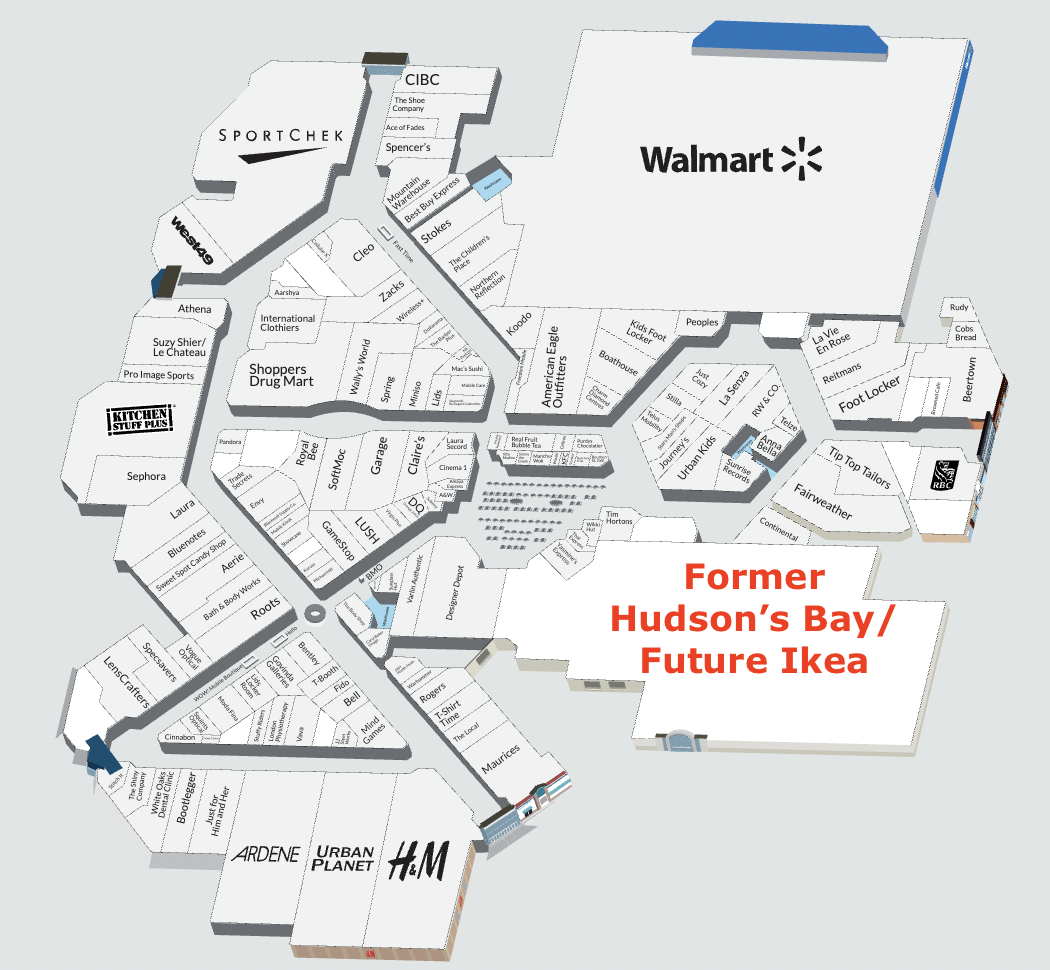
White Oaks Mall floor plan
Small-Format Strategy Evolves After Scarborough Exit
The launch of the IKEA London Ontario store comes as the retailer continues to refine its approach to smaller urban formats in Canada. In October 2025, IKEA Canada confirmed it would close its “city-centre” store at Scarborough Town Centre, with the shutdown expected in early 2026, less than three years after opening.
According to the company, the Scarborough location did not meet sales expectations despite strong foot traffic. The approximately 80,000 square foot store offered a limited assortment of about 2,500 products, which constrained its ability to compete with full-sized IKEA locations that provide a broader cash-and-carry range. At the same time, IKEA pointed to a significant shift in customer behaviour, with online engagement far outpacing in-store visits. In the year prior to the announcement, IKEA Canada recorded more than 160 million visits to its website compared to fewer than 34 million in-store visits nationwide.
Former Scarborough Town Centre IKEA (Image: Craig Patterson)
Operating costs were also cited as a factor, with the smaller format proving more expensive to run relative to its revenue performance. The Scarborough location employed approximately 130 staff, with IKEA indicating it would seek redeployment opportunities across its Greater Toronto Area network, including its North York store.
The closure also reflects broader changes at Scarborough Town Centre, which has seen other major tenant departures in recent years. At the same time, IKEA continues to test and evolve its physical retail strategy. Its downtown Toronto location at Aura remains in operation, while the new London format, at approximately 43,000 square feet, signals a further shift toward more compact, convenience-focused stores that complement its growing e-commerce business.
Former Hudson’s Bay at White Oaks Mall in London ON. Image: Apple Maps
White Oaks Mall Redevelopment Signals New Direction
For White Oaks Mall, the arrival of IKEA represents a pivotal step in a broader repositioning strategy under Westdell’s ownership. The mall, which first opened in 1973, has long served as a key retail destination in the London region, drawing more than six million visitors annually.
“Reimagining 165,000 square feet of iconic space was always going to be about more than bringing in great retailers; it was about bringing in the right partners. IKEA stood out immediately, not just for what they offer as a brand, but for what they stand for as an organization. Nearly 50,000 square feet of that vision belongs to them. The remainder of this space will be equally transformative, and we look forward to sharing more in the weeks ahead. We are in the business of improving the communities we serve, and we are thrilled to welcome partners who hold that same standard. London is getting something truly special, and we couldn’t be prouder that it starts here, at White Oaks.” said Iyman Meddoui, President, Westdell Development Corporation.
Tarik Kasem, General Manager of White Oaks Mall, emphasized the broader impact of the redevelopment on the local retail landscape.
“London is already a thriving, dynamic market, and this is the moment we get to prove it to the rest of the world. What we are building here, the calibre of retailer we are bringing through these doors, elevates everything this mall has always stood for. For over half a century, White Oaks has shaped this community. The next chapter is going to be the most exciting one yet, and we are just getting started.”
Former Hudson’s Bay at White Oaks Mall in London ON. Image: Apple Maps
If you need to communicate with your patients outside of their sessions, you should be using a secure messaging platform. However, with a sea of options promoting security features and various additional features, what are the top secure messaging platforms for therapists? These seven offer peace of mind and efficiency for therapists and their clients.
1. Owl Practice
Owl Practice is a leading management software for mental health practices, built to comply with Canadian privacy laws. Its website states that it is Canada’s most secure platform, so you know you’re getting the security you need. Its ease of use helps you and other staff members avoid becoming insider threats, while the one-on-one onboarding and support assist in learning.
Its secure messaging offers read receipts so you know when a client has seen your message. The system also makes it easy to loop in other members of their care team, administrators and family members. Owl Practice encrypts every message you send, so you and your patient can discuss sensitive topics or share files without worry. Its commitment to confidentiality and streamlining make it rank among the top secure messaging platforms for therapists.
Key Features
14-day free trial with no payment required
One-on-one onboarding
Calendar management, note-taking, billing and video options
2. Klara
Klara boasts an 84% utilization rate, which is 27 percentage points higher than the rate for patient portals. It can automatically route client messages to staff, create shared inboxes and tag in the necessary people to streamline collaboration. The platform also allows therapists to connect with labs, pharmacies and more providers with less delay.
Read receipts allow both parties to know when the other has seen their message, while automated touchpoints enable quick scheduling adjustments. You can also turn your practice’s main phone line into a texting line or use one Klara provides. Big names like GE and Athena Health trust this platform to secure their communications.
Key Features
A free demo so you can test without commitment
Rated Best Est. ROI, Grid Leader, Momentum Leader and Users Most Likely To Recommend by G2
Options for every step of the patient journey
3. OhMD
More than 1,200 practices trust OhMD to help manage their inbound calls. It offers artificial intelligence (AI)-powered conversations to answer simple questions, as well as streamlines handoffs to human team members for more complex answers. This ease of communication helps avoid phone tag and enables a 4% increase in patients.
Additionally, staff could answer up to 68% fewer phone calls, meaning you can spend more time on critical tasks. You may also increase savings by 65% by enabling scheduling around the clock, as well as reduce Short Message Service expenses by 50% through Special Delivery — its two-way texting solution that complies with health care and messaging regulations.
Key Features
Easy scheduling with automated responses
Ability to transfer a client to the appropriate staff member, increasing client satisfaction
More than 85 electronic health record (EHR) integrations
4. SimplePractice
SimplePractice offers a 30-day free trial with no credit card required, allowing you to test it thoroughly and see how it works in your practice. If you decide to proceed, you can pick your preferred payment plan and customize it with various add-ons. The up-front pricing avoids surprises for clearer budgeting.
This option utilizes encryption to keep sensitive information safe from prying eyes so your practice complies with essential requirements. You can also easily send announcements to all or some of your patients and automate replies when you’re out of the office. SimplePractice’s Client Portal enables scheduling and communication from any phone or computer.
Key Features
Trusted by more than 250,000 practitioners
Choice of phone, text or email messaging per patient
EHR integration enables clients to confirm and cancel appointments via messaging
5. TherapyNotes
While TherapyNotes describes itself as the most trusted EHR for behavioural health, it is also one of the top options for secure patient messaging. It offers a central place to communicate with other therapists and all your clients and includes topics to keep these conversations organized. The secure messaging also meets the necessities of major security regulations.
Therapists and patients can message each other on mobile through the TherapyNotes and TherapyPortal apps, respectively. Doing so creates a more streamlined and accessible experience, while custom email notifications ensure you never miss a completed payment or important question. Access management enables decision-makers to toggle access to clinical, administrative and billing communications.
Key Features
Ability to notify staff of arrivals, billing, scheduling, and equipment and room availability in individual or group messages
30-day free trial with no payment necessary
Praise for its support team’s efficiency and helpfulness
What Are the Top Secure Messaging Platforms for Therapists? The Methodology Behind the Choices
The options featured in this list were selected based on the security features they offered, ease of use and reputation. While it was important to compare the protections they used to keep messages out of hackers’ hands, ease of use helps ensure people follow the recommended security protocols, and positive reviews are good indicators of your possible satisfaction.
Why Are Secure Messaging Platforms Important for Therapists?
Threat actors love targeting health care software because it contains a wealth of personally identifiable information, which could put clients at risk if they gain access. These attacks have been on a steady upward trend since 2011, with 725 reported to the Office for Civil Rights (OCR) in 2023 alone. While that may not sound like many, over 133 million records were exposed in those attacks.
The impacts of even a single attack are broad, and they take a while to recover from. In December of 2024, the OCR listed that there were 882 breaches still under investigation. During such significant downtime, clients will likely lose trust in the care provider, especially if they can’t offer an answer for how many of their records were stolen or how the attack started.
For these reasons, secure messaging platforms are critical for therapists. Patients express some of their most personal thoughts in your care, so you owe it to them to use the most protected options possible. Considering that one of the most common reasons people avoid using telemedicine is the security of their data, increased protection could also lead to increased usage and retention.
Adopting the Top Secure Messaging Platforms for Therapists
The best messaging platform for your practice is one that integrates easily into your workflow and offers top-tier digital protection. Using a solution that prioritizes both efficiency and security can help your patients feel even more confident sharing their thoughts and personal information with you. Explore the options listed here to narrow down your search.
Canada’s climate presents unique challenges for construction materials and building methods. From the Atlantic provinces to British Columbia, winter temperatures can plummet well below freezing, accompanied by heavy snowfall, ice storms, and fierce winds. These conditions demand building solutions that can withstand extreme weather while maintaining structural integrity year after year.
Steel construction has emerged as a preferred choice for many Canadian builders and property owners seeking reliable, weather-resistant structures. With advancements in insulation and engineering, modern steel buildings are now better equipped. This blog explores how steel buildings canada perform under harsh winter conditions and why they continue to gain popularity across the country.
Superior Snow Load Capacity
Steel framework excels at handling heavy snow accumulation, a critical factor in Canadian construction. The material’s high strength-to-weight ratio allows buildings to support substantial snow loads without compromising structural stability. Steel beams and columns distribute weight evenly across the foundation, preventing localized stress concentrations that could lead to damage. Canadian building codes specify minimum snow load requirements based on geographic location and local climate data. Steel structures can be engineered to exceed these standards, providing additional safety margins.
Thermal Performance and Energy Efficiency
Steel buildings in canada benefit from advanced insulation systems that address thermal bridging concerns. Modern construction techniques incorporate thermal breaks and continuous insulation layers that minimize heat transfer through the steel framework. This approach reduces energy consumption and maintains comfortable indoor temperatures even during extreme cold spells. The thermal mass properties of steel help moderate temperature fluctuations within the building envelope. While steel conducts heat readily, proper insulation placement and vapor barrier installation create effective thermal barriers.
Resistance to Freeze-Thaw Cycles
Canada’s climate subjects buildings to repeated freeze-thaw cycles throughout winter and spring months. These temperature fluctuations can cause expansion and contraction in building materials, potentially leading to cracks, joint failure, and structural damage over time. Steel’s consistent thermal expansion characteristics make it well-suited for these conditions. The material expands and contracts predictably, allowing engineers to design connection details that accommodate movement without stress. Proper joint design and expansion provisions prevent damage from thermal cycling.
Long-Term Value Through Low Maintenance
Steel structures require minimal maintenance compared to other building materials commonly used in harsh climates. Modern steel buildings feature protective coatings that resist corrosion and environmental degradation. These coatings withstand moisture, salt spray, and chemical exposure while maintaining their protective properties for decades.
The durability of the steel framework means fewer repairs and replacements over the building’s lifespan. This characteristic proves particularly valuable in remote Canadian locations where maintenance access may be limited during winter months. Key maintenance advantages include:
Resistance to pest damage and rot
Minimal susceptibility to moisture-related deterioration
Stable structural properties over time
Reduced need for seasonal maintenance schedules
Design Flexibility for Canadian Conditions
Steel construction offers architectural flexibility that accommodates Canada’s diverse climate zones and building requirements. Clear-span capabilities allow for large, unobstructed interior spaces without intermediate columns, making steel ideal for warehouses, manufacturing facilities, and agricultural buildings. The material’s strength permits creative design solutions that address specific regional challenges. Steep roof pitches for snow shedding, reinforced openings for wind resistance, and custom structural configurations all become feasible with steel framework.
Steel buildings demonstrate remarkable resilience against Canada’s challenging winter conditions through superior load-bearing capacity, thermal performance, and long-term durability. The material’s predictable behavior under extreme temperatures, combined with modern insulation techniques and protective coatings, creates structures that perform reliably throughout harsh Canadian winters. For builders and property owners across Canada, steel construction offers a practical solution.
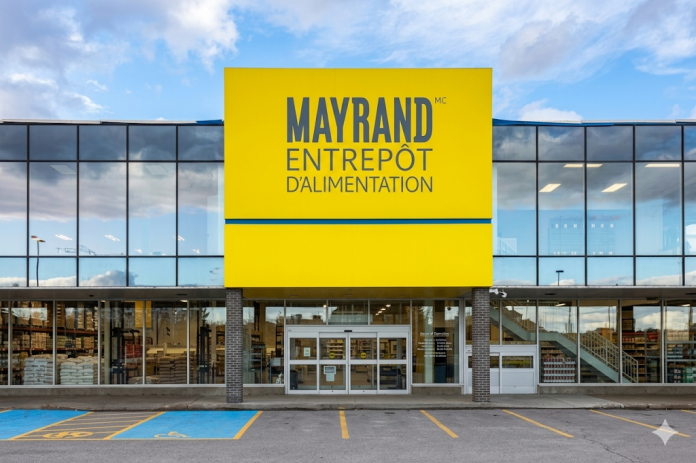
Empire Company Limited is making a strategic move into Quebec’s value grocery segment with an agreement to acquire Mayrand Food Group Inc., marking the company’s first meaningful entry into discount and warehouse-style food retail in the province.
The transaction, announced through its subsidiary Sobeys Inc., follows a court-supervised sale process after Mayrand entered creditor protection, positioning the deal as both a strategic expansion and an opportunistic acquisition.
The deal remains subject to customary closing conditions, including court and regulatory approvals, and is expected to close in the first quarter of fiscal 2027.
A Strategic Entry into Quebec’s Value Segment
Empire has long operated in Quebec through full-service banners such as IGA, though it has not had a meaningful presence in the discount segment. That space has largely been dominated by entrenched competitors, leaving a gap in Empire’s provincial portfolio.
By acquiring Mayrand, Empire effectively bypasses the challenges of launching a new discount banner in a highly localized and competitive market. Instead, it gains an established Quebec brand with more than a century of operating history and strong regional loyalty.
“Mayrand is a respected Québec institution with deep local roots and a loyal customer base,” said Luc L’Archevêque, Chief Customer Officer, Empire. “This transaction allows the Mayrand brand to continue serving customers and communities while benefiting from Empire’s scale, operational expertise, and long-term commitment to food retail in Québec.”
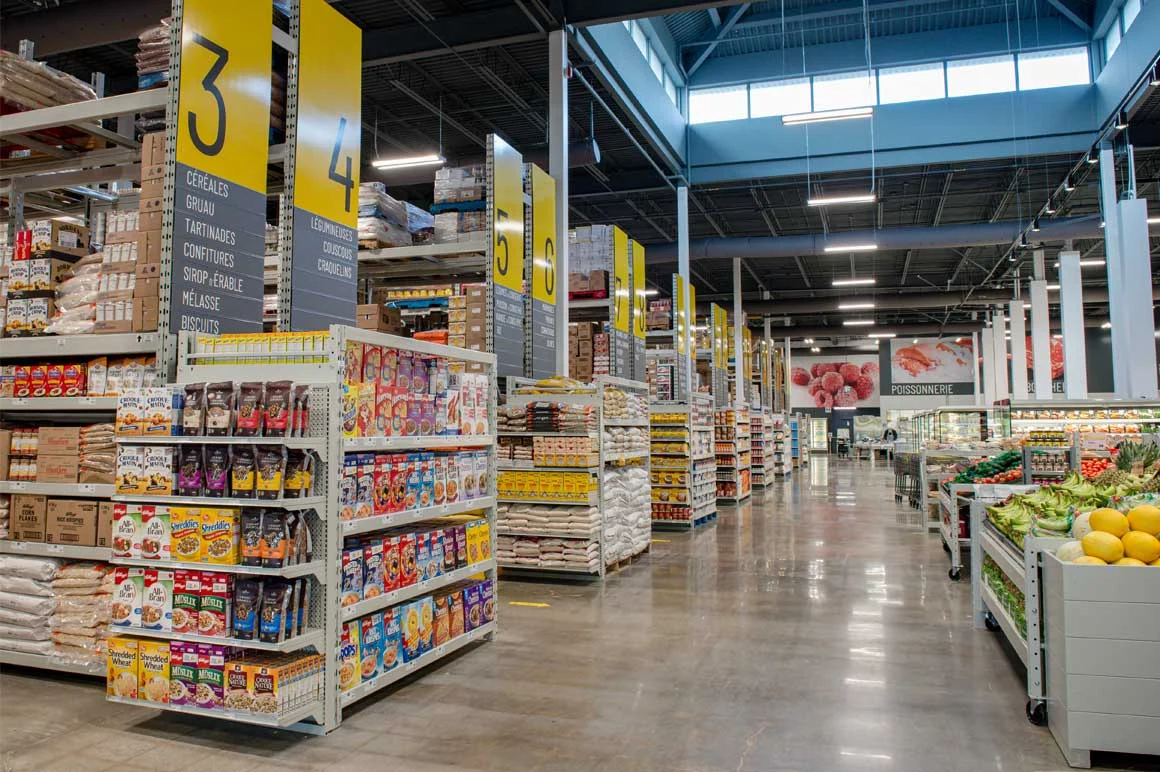
Inside Mayrand in Laval
Distressed Sale Creates Opportunity
Mayrand entered creditor protection in 2025, leading to a court-supervised sale process that allowed potential buyers to acquire the business as a going concern. The company continued operating its stores throughout the process, maintaining service for both retail and foodservice customers.
For Empire, the timing creates a relatively low-risk entry into a new segment, with existing infrastructure, real estate, and customer relationships already in place. It also reflects a broader trend in Canadian retail, where large operators are using acquisitions to expand into new formats rather than building from scratch.
A Hybrid Model That Extends Beyond Traditional Grocery
Mayrand’s format differs from conventional discount grocery banners. Its large-format “food depot” stores operate without membership requirements and serve both households and professional foodservice customers.
This hybrid model allows Empire to access a broader customer base, including restaurants and small businesses, while also appealing to value-focused consumers seeking bulk purchasing options.
The model also reintroduces Empire to a segment it has had limited exposure to in Quebec in recent years, particularly on the foodservice side, which remains a significant and resilient market.
Mayrand Anjou. Photo: Mayrand
Strategic Real Estate in Key Montreal Markets
The acquisition includes four large-format stores in Anjou, Laval, Brossard, and Saint-Jérôme. These locations provide immediate scale in the Greater Montréal Area, where suitable large-format retail space is increasingly difficult to secure.
Rather than pursuing a greenfield expansion strategy, Empire is acquiring a ready-made network of high-traffic locations that can serve as a platform for future growth in the warehouse and value segment.
Empire said it intends to maintain the Mayrand banner as a distinct brand, preserving its identity and positioning within Quebec. At the same time, the business will benefit from Empire’s national capabilities in merchandising, procurement, logistics, and real estate.
Founded in 1914, Mayrand has built a reputation for its broad assortment of local and international products and its strong ties to both retail consumers and foodservice operators. The company employs approximately 300 people across its four stores.
As part of the transaction, Empire said it will ensure continuity for employees while maintaining stability for customers, suppliers, and business partners.
Positioning for a More Price-Sensitive Consumer
The acquisition comes at a time when Canadian consumers are increasingly focused on value, with many shifting toward bulk purchasing and alternative retail formats in response to sustained food price pressures.
Mayrand’s open-access warehouse model positions it differently from both traditional discount grocers and membership-based warehouse clubs, offering flexibility that may resonate with a broad range of customers.
For Empire, the move represents both a defensive and growth-oriented strategy. It strengthens the company’s competitive position in Quebec while adding a new format that aligns with evolving consumer behaviour.
Reitmans, founded in Montreal in 1926, says it has shaped the fashion landscape for generations of Canadian women, delivering accessible and on-trend styles defined by confidence and inclusivity.
As the company enters its centennial year, Reitmans is unveiling a new logo, national partnerships, high-profile brand ambassadors, an elevated customer-inspired retail concept, and significant digital upgrades – all under the theme, “A Century Is Just the Beginning,” announced the retailer.
The platform reflects both the strength of the brand’s legacy and the momentum shaping its future, it said.
“For 100 years, Canadian women have trusted Reitmans to evolve alongside them – and keeping that trust is at the heart of everything we do,” said Andrea Limbardi, President and CEO of RCL – Reitmans Canada Ltd. “This centennial marks a defining turning point for Reitmans – one defined by confidence, clarity, and renewed ambition. We are shaping a more expressive brand, focused on style and fashion, while remaining grounded in our Canadian roots. And this is only the beginning.”
Andrea Limbardi
New initiatives include:
New Brand Ambassadors To embody this next chapter, Reitmans welcomes two defining voices of Canadian style: supermodel Coco Rocha and Quebec actress and tastemaker Catherine St-Laurent.
Rocha, a global fashion authority and one of the industry’s most recognizable runway faces, will headline the 100th anniversary campaign. St-Laurent represents a new generation of Quebec cultural voices reinforcing Reitmans’ shift towards a more expressive, style-driven identity, noted the retailer.
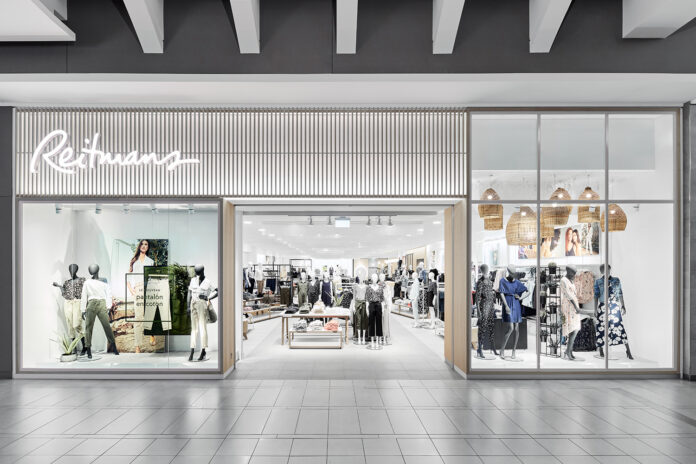
New Store Concept Launching in the Greater Montreal Area In late April, Reitmans said it will unveil a new retail concept at Carrefour Laval, located approximately 20 kilometres from Montreal’s downtown core. “Developed in collaboration with renowned Canadian design firm BURDIFILEK, the renovated space introduces an immersive and refined shopping experience where design meets the customer journey, reimagining how customers interact with the brand. The concept signals Reitmans’ commitment to creating new, bold and distinctive shopping experiences, bringing fresh thinking while deepening its connection with customers,” explained the retailer.
Updated Logo As part of its brand evolution, Reitmans said it is introducing a refreshed logo. The updated wordmark symbolizes the brand’s bold confidence for the future. It will be revealed in late April, with the launch of the new store concept at Carrefour Laval, it said.
Support for Canadian Fashion & Culture Reitmans announced a new partnership with the Canadian Arts & Fashion Awards (CAFA). At the awards ceremony on April 23 in Montreal, the company will present the Emerging Talent Award, honouring an outstanding up-and-coming Canadian fashion designer, reinforcing the brand’s commitment to supporting homegrown fashion talent.
Additional national collaborations, including a soon-to-be-announced partnership rooted in Toronto culture and sport, will further strengthen Reitmans’ presence within contemporary cultural conversations, it said.
Celebrating Canadian Fashion & Heritage Reitmans said it has entered into a two-year partnership with the McCord Stewart Museum, beginning with a first-year commitment as a Fashion Premier Partner – reinforcing the brand’s support for Canadian creativity and for cultural institutions that reflect and shape Canada’s evolving identity.
Investing in Digital Infrastructure RCL – Reitmans Canada Ltd. has completed the migration of its e-commerce operations for Reitmans, along with RW&CO and PENN. Penningtons, to Shopify unlocking a faster, more intuitive digital experience designed to meet customers whenever they engage with the brand.
Reitmans’ centennial initiatives will roll out nationally throughout 2026.
The brand operates more than 200 stores across the country. RCL – Reitmans (Canada) Limited is one of Canada’s leading specialty apparel retailers for women and men, with retail outlets throughout the country. The company operates 387 stores under three distinct banners consisting of 217 Reitmans, 85 PENN. Penningtons, and 85 RW&CO.
“Fiscal 2025 was a year of meaningful progress for Roots. We delivered strong sales growth, record gross margins, and improved profitability, while making deliberate investments in the brand’s long-term positioning,” said Meghan Roach, President & CEO of Roots Corporation. “Our results reflect the cumulative impact of a consistent and focused strategy — strengthening our core product offering, elevating the brand, enhancing our omnichannel experience, and driving operational excellence.
“In early March, we also announced that the Board of Directors commenced a strategic review. We are pleased with the level of interest and engagement in this process.”
Fourth Quarter Highlights:
Sales were $115.5 million, a 4.2% increase compared to $110.8 million in Q4 2024
DTC sales were $107.0 million, a 5.7% increase compared to $101.2 million in Q4 2024
DTC comparable sales growth was 7.3%
Gross margin was 61.8%, up 50bps compared to 61.3% Q4 2024
DTC gross margin of 62.5%, up 10bps compared to 62.4% in Q4 2024
Net income (loss) totaled $14.7 million, compared to ($21.7) million in Q4 2024
Excluding the impacts from the revaluation of cash settled instruments under our share-based compensation plan, net income (loss) would have been $14.6 million, compared to ($21.4) million in Q4 2024
Adjusted EBITDAwas $25.1 million, compared to $25.3 million in Q4 2024
Excluding the impacts from the revaluation of cash settled instruments under our share-based compensation plan, Adjusted EBITDA would have been $24.9 million, compared to $25.7 million in Q4 2024
Net debt reduced 42% year-over-year to $4.3 million
Fiscal 2025 Highlights:
Sales were $277.7 million, a 5.6% increase compared to $262.9 million in F2024
DTC sales were $239.5 million, a 7.3% increase compared to $223.3 million in F2024
DTC comparable sales growth was 9.5%
Gross margin was 61.3%, up 150bps compared to 59.8% in F2024
DTC gross margin of 63.4%, up 80bps compared to 62.6% in F2024
Net income (loss) totaled $4.7 million, compared to ($33.4) million in F2024
Excluding the impacts from the revaluation of cash settled instruments under our share-based compensation plan, net income (loss) would have been $5.2 million, compared to ($33.4) million in F2024
Adjusted EBITDA amounted to $23.3 million, compared to $21.3 million in F2024
Excluding the impacts from the revaluation of cash settled instruments under our share-based compensation plan, Adjusted EBITDA would have been $24.1 million, compared to $21.4 million in F2024
The Company repurchased 1,286,700 common shares for $4.0 million under its normal course issuer bid
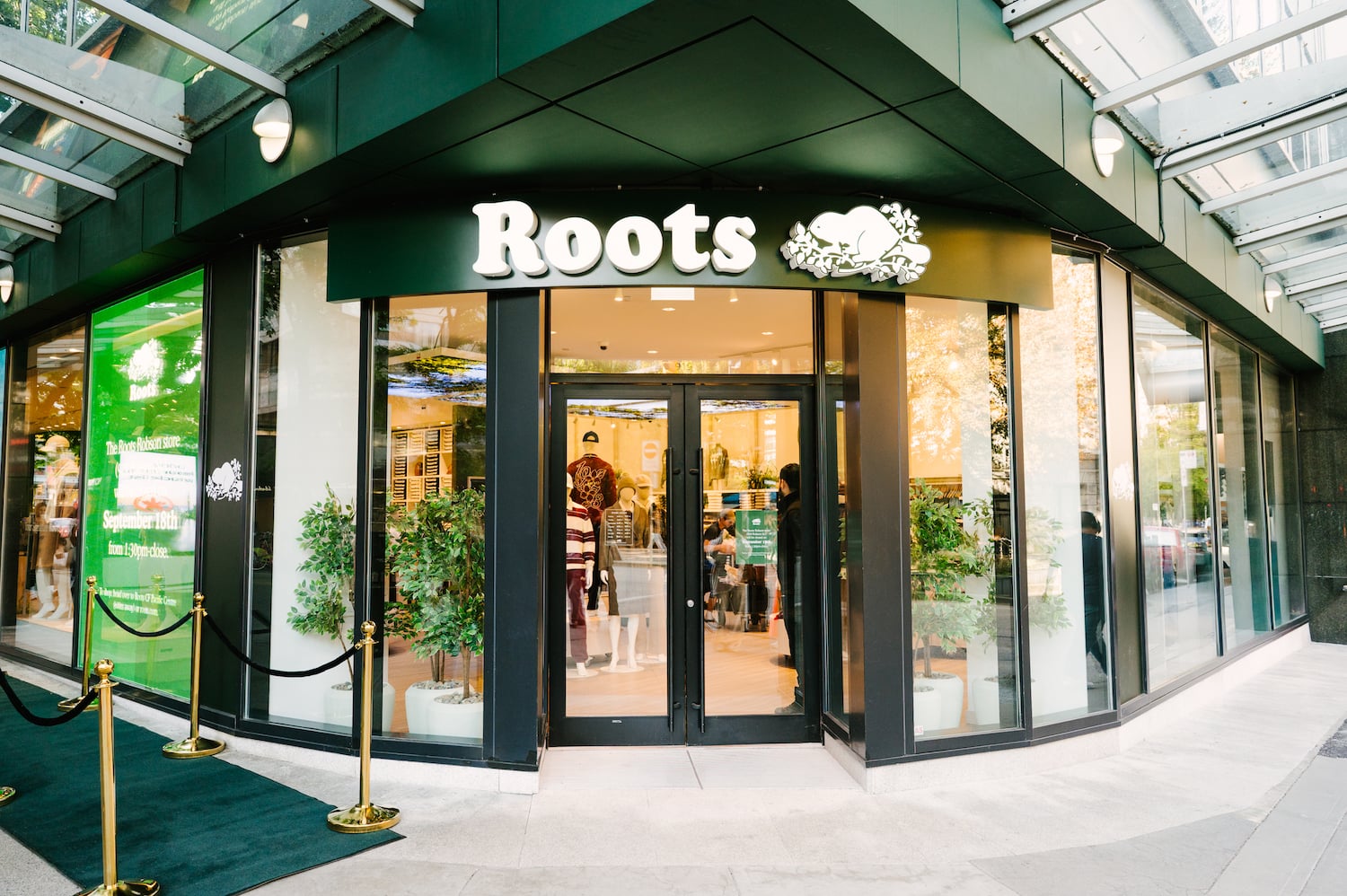
Established in 1973, Roots is a global lifestyle brand. Starting from a small cabin in northern Canada, Roots has become a global brand with over 100 corporate retail stores in Canada, two stores in the United States, and an eCommerce platform, roots.com. It has more than 100 partner-operated stores in Asia, and it also operates a dedicated Roots-branded storefront on Tmall.com in China.
Canadian restaurant operator Happy Belly Food Group is rapidly scaling its footprint across the country while preparing for its first entry into the United States, positioning itself as an emerging multi-brand platform in the competitive fast-casual dining sector.
The company is beginning to resemble a next-generation Canadian restaurant consolidator, following a franchise-led, multi-brand model similar to MTY Food Group, but at a much earlier stage of growth.
According to a recent report by Stifel Managing Director Martin Landry, Happy Belly is in the midst of an aggressive expansion phase marked by strong unit growth, improving financial performance, and a growing pipeline of franchised locations.
Rapid Store Growth Driving National Expansion
Happy Belly expansion accelerated significantly in early 2026, with the company opening 10 new locations in the first quarter alone. These included five Heal Wellness locations, four Rosie’s Burgers restaurants, and one Yolks breakfast concept.
Martin Landry
The pace is expected to intensify. The company is on track to open between 35 and 50 new locations in 2026, representing approximately 50 percent year-over-year network growth. Seven additional locations were scheduled to open in April, marking a record monthly pace for the company.
This expansion also included entry into Quebec, an important milestone as the company builds a truly national presence.
Management indicated that several recent openings have performed exceptionally well, with a Heal Wellness location in Ottawa representing the most successful opening in that brand’s history. Rosie’s Burgers has also seen strong early traction, including a record-setting launch in Halifax.
Multi-Brand Strategy Gains Traction
Happy Belly operates a growing portfolio of restaurant concepts spanning different dayparts and consumer preferences, including smash burgers, açaí bowls, and all-day breakfast.
Key banners such as Heal Wellness, Rosie’s Burgers, and Yolks are showing early signs of consumer resonance, supported by a franchise-heavy model that allows for rapid scaling with relatively lower capital requirements.
The company now operates dozens of locations across Canada, with a substantial development pipeline that continues to build as franchise interest increases.
This diversified brand strategy is central to the company’s growth, allowing it to capture multiple segments of the fast-casual market while leveraging shared infrastructure and operational expertise.
Heal is part of the Happy Belly Food Group (Photo credit: Heal website)
U.S. Expansion Represents Next Phase of Growth
A major catalyst for Happy Belly expansion will be its planned entry into the United States, expected in the second quarter of 2026.
The company has signed a franchise agreement to open a Heal Wellness location in Lubbock, Texas, with a local franchisee committed to a 10-unit development agreement in the region. The same franchise partner is also expected to open a Rosie’s Burgers location in the market.
This move marks the beginning of the company’s international growth strategy and will serve as an important test of its concepts outside Canada.
At the same time, Happy Belly is expected to reach 100 total locations by mid-2026, another milestone that underscores the speed of its expansion.
Financial Performance Showing Signs of Inflection
While the company remains in growth mode, financial performance is beginning to reflect improved scale and operating leverage.
Stifel forecasts revenue increasing from approximately $22 million in 2025 to $38 million in 2026 and more than $55 million in 2027. EBITDA is expected to grow materially over the same period, rising from about $1.3 million in 2025 to over $14 million by 2027.
Photo courtesy of Happy Belly Food Group
The firm also expects a significant year-over-year improvement in fourth-quarter 2025 results, driven by strong system-wide sales growth and expanding margins as the company benefits from increased scale.
This shift suggests that Happy Belly is transitioning from an early-stage growth story to a more established platform with improving profitability.
M&A Pipeline and Leadership Add Depth to Strategy
In addition to organic growth, Happy Belly is pursuing acquisitions as part of its broader expansion strategy.
Management has indicated an active pipeline of smaller M&A opportunities, with a focus on adding new cuisine categories such as Mexican, Asian, or pizza, or acquiring underperforming chains and converting them to existing company brands.
The company has also strengthened its leadership team with recent hires in finance and operations, including a senior executive with experience at Boston Pizza. These additions are expected to support the company’s rapid scaling efforts.
Risks Emerge as Growth Accelerates
Despite the strong momentum, the pace of Happy Belly expansion introduces a number of important risks that could shape the company’s trajectory.
One of the most immediate considerations is the company’s relatively modest cash position, which may limit flexibility as it continues to scale. Rapid expansion requires consistent capital, and while the franchise model reduces some of that burden, the margin for error remains relatively thin.
Execution risk is also a key factor. The company is growing at a pace that could see its location count nearly triple within a short period, placing pressure on operations, hiring, and infrastructure. Entering the United States adds another layer of complexity, requiring the company to adapt its model to a new and highly competitive market.
Competition within the fast-casual segment remains intense, with both established chains and independent operators competing on price, quality, and location. Larger competitors with deeper resources could increase promotional activity, potentially impacting market share and margins.
Whether Happy Belly can maintain execution at this pace while preserving brand quality and operational consistency will be a key question as the company continues to scale.
Looking ahead, Stifel sees meaningful upside potential if Happy Belly continues to execute on its strategy.
The firm’s longer-term outlook suggests the company could generate substantially higher earnings by the end of the decade, supported by continued unit expansion and improving margins.
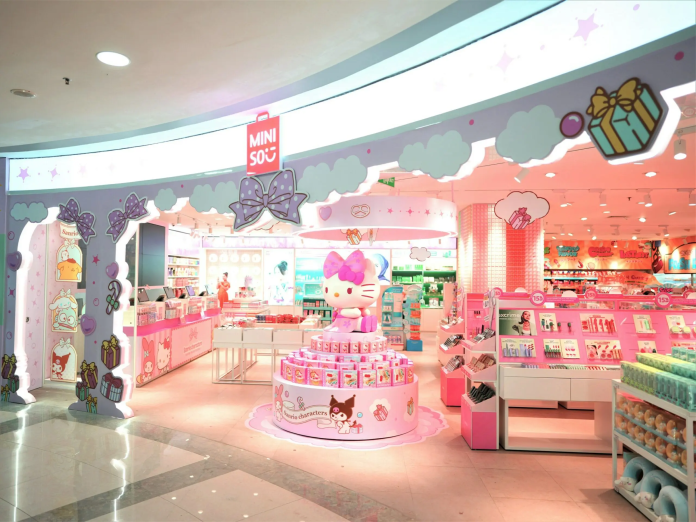
Miniso Sanrio-themed pop-up in Thailand. Image: Miniso
Toronto’s Scarborough Town Centre will host a first-to-Canada retail activation as MINISO debuts its first-ever Hello Kitty and Friends pop-up in the country. The limited-time experience will open on April 25 and run through May 24 in Centre Court, offering a highly immersive, character-driven retail environment tied to Sanrio.
The activation reflects a growing emphasis on experiential retail within Canadian shopping centres, particularly as landlords seek to drive foot traffic through exclusive and time-sensitive concepts.
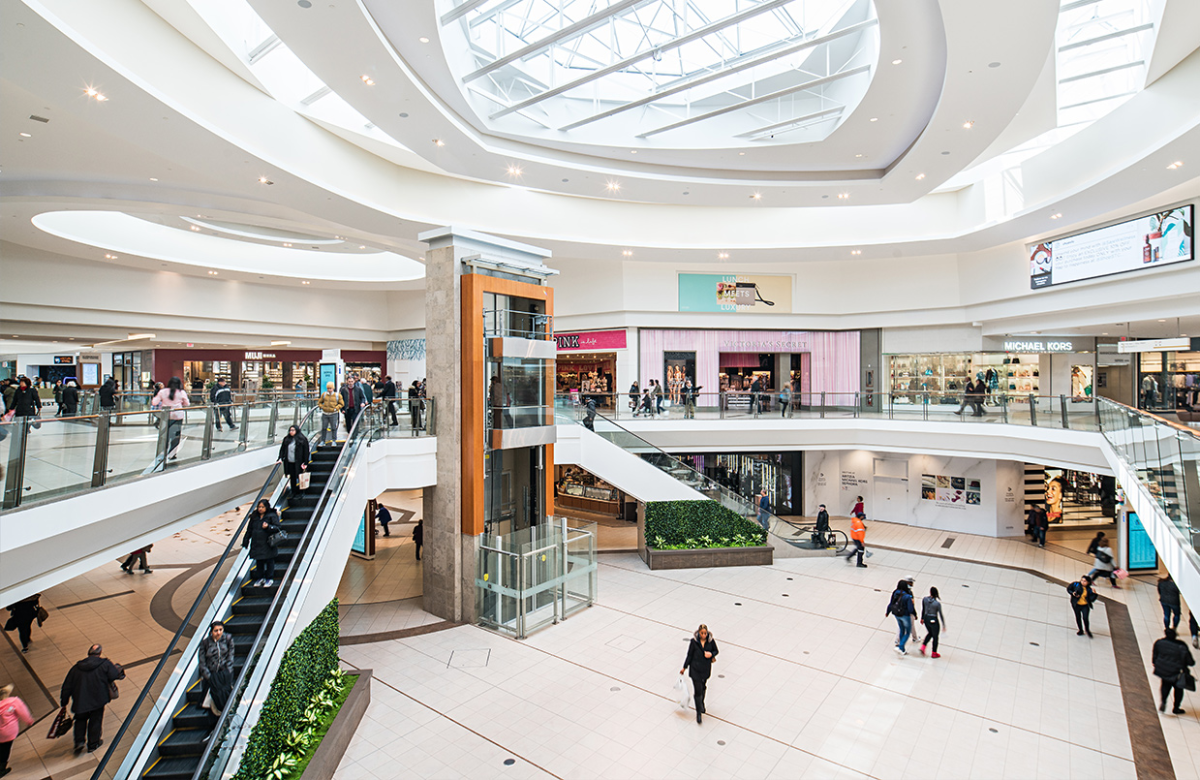
Scarborough Town Centre. Photo: Oxford Properties
The pop-up will feature more than 500 Hello Kitty and Friends products, including the Racing Club Collection Vinyl Plush Pendant Surprise Box, which is exclusive to Canadian pop-ups. On opening day, visitors will also encounter interactive elements, including character appearances and in-store engagement activities.
“This exclusive pop-up experience will resonate with the wider community and reinforce STC as a cultural destination. We’re proud to bring one-of-a-kind retail experiences to Centre Court and create an exciting activation with engaged and enthusiastic fans. This is about fun, fandom and friendship in the heart of the community,” said Karen Calibuso-Kwa, Scarborough Town Centre Marketing Manager. “This is more than a pop-up; it is a must-visit experience.”
The grand opening will include early access for invited guests, followed by a public opening at 10:00 AM, with Sanrio mascot appearances scheduled throughout the morning.
Image: Miniso
Part of MINISO’s Evolving IP-Driven Strategy
The MINISO Hello Kitty pop-up Canada debut aligns with the retailer’s broader transformation in the market. As of early 2026, the company has shifted its positioning from a general merchandise retailer to a dominant IP-focused player, emphasizing licensed collaborations and collectible-driven assortments.
This strategy has been supported by aggressive expansion into major Canadian malls and the introduction of larger format stores. Notably, MINISO surpassed 100 stores nationally in late 2025 and now operates approximately 110 locations across Canada.
The company’s “Super IP + Super Store” approach prioritizes licensed products, which now represent the majority of its assortment. High-performing collaborations include Sanrio, Disney, and other globally recognized franchises, reflecting strong consumer demand for character-based merchandise.
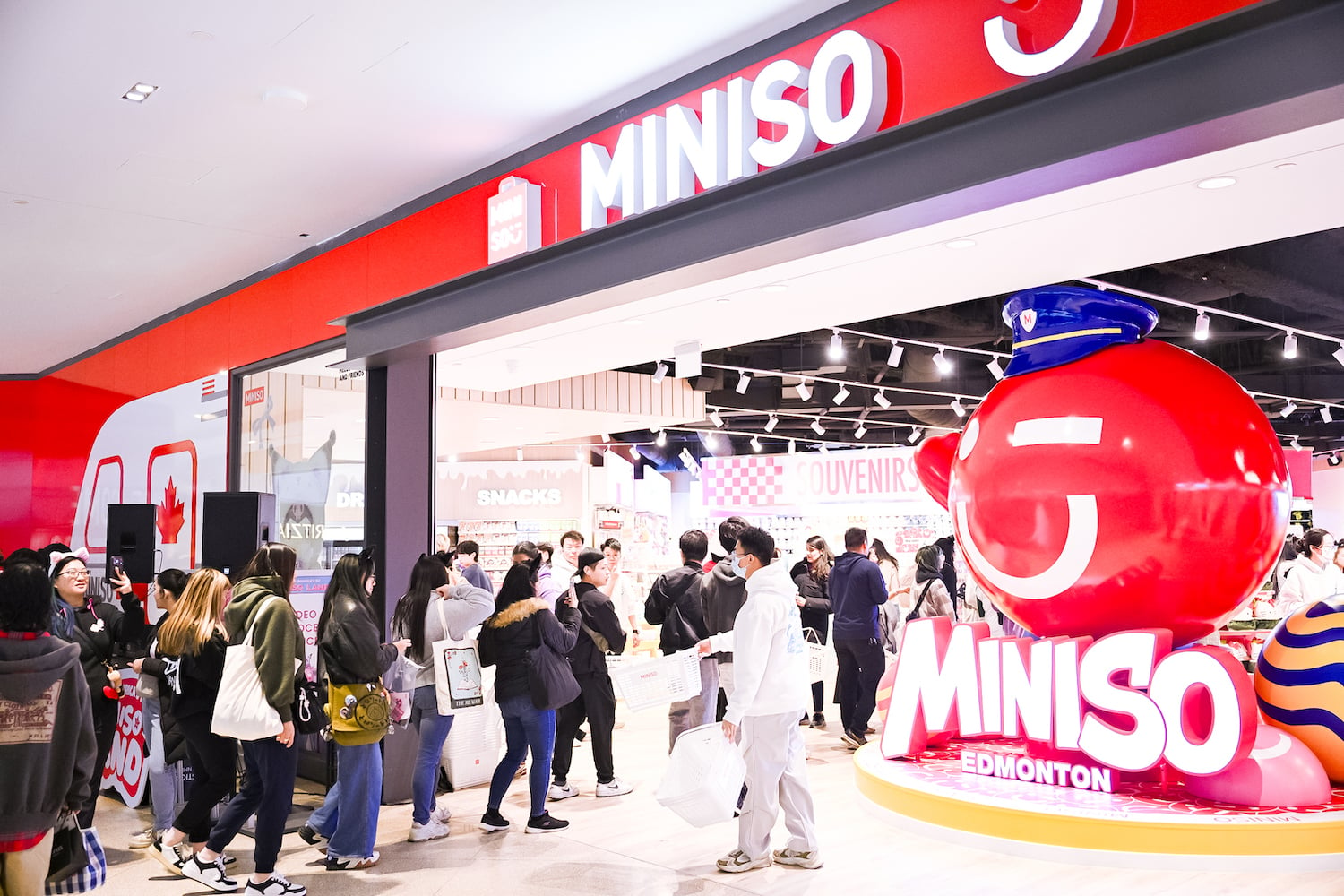
Miniso Land grand opening at West Edmonton Mall. Photo: Miniso Canada
Larger Formats and Experiential Retail Driving Growth
Recent store concepts underscore MINISO’s focus on scale and experience. The “MINISO LAND” flagship at West Edmonton Mall, spanning more than 10,000 square feet, represents the brand’s largest Canadian location and features thousands of SKUs in a themed environment.
Similarly, its “IP Collection” format at CF Toronto Eaton Centre serves as a showcase for licensed partnerships, with dedicated zones for brands such as Sanrio and others.
The Scarborough Town Centre pop-up extends this strategy into a temporary format, allowing MINISO to test high-impact experiential retail while deepening engagement with fan communities.
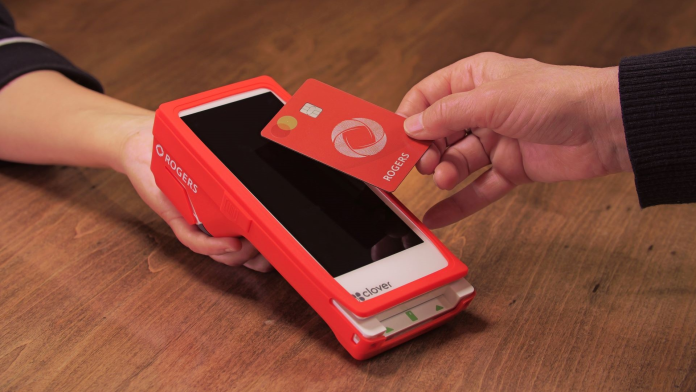
Rogers Communications Inc. has announced the launch of the Rogers Red Partner program, a new integrated point-of-sale (POS) and credit card solution designed to support small and medium-sized businesses across Canada. The company says the offering is the first of its kind in the country, combining payment processing, customer incentives, and marketing tools into a single platform.
The Rogers Red Partner program aims to reduce transaction costs while helping merchants attract and retain customers through enhanced rewards. The initiative reflects a broader trend of telecommunications and financial services converging to deliver bundled solutions for business owners.
At the core of the Rogers Red Partner program is the Rogers Red POS system, which offers businesses a 20% reduction in transaction fees. According to Rogers, this could translate into thousands of dollars in annual savings for many operators, particularly in high-volume retail and hospitality environments.
In addition, the program introduces a customer-facing incentive. Rogers Red credit cardholders will receive an additional 1% cash back, for a total of up to 3%, when making purchases through participating Rogers Red POS terminals. This feature is positioned as a way to drive incremental traffic to participating businesses while encouraging repeat visits.
“Rogers Business is proud to be the first in Canada to offer a fully integrated program to support business owners,” said Tom Turner, President of Rogers Business. “We know that every cent counts, that’s why this program is vital. It helps lower costs and effectively drive more customers in their doors so business owners can focus on what’s most important, growing their business.”
Marketing Reach and Local Discovery Tools
Beyond payments, the Rogers Red Partner program includes marketing support through Rogers Sports & Media. Participating businesses can access discounted self-serve radio and digital audio advertising, expanding their reach to potential customers.
The platform also incorporates a local discovery feature. Businesses using Rogers Red POS will be highlighted on a dedicated map, allowing consumers to easily find and support participating merchants in their area. This aligns with ongoing efforts across the retail sector to improve local visibility and digital discoverability.
Financial Products and Business Support Services
The program will also integrate with the upcoming Rogers Red World Elite Business Mastercard, which is expected to offer up to 3% cash back value when rewards are redeemed for Rogers products and services. Applications for the card are expected to open soon.
In addition to rewards, the credit card will include business-focused protection services. Cardholders will have access to 24/7 legal advice as well as cyber and identity theft restoration services through My Friendly Lawyer and Cyberscout. These features reflect growing demand among SMBs for bundled financial and risk management tools.
“By combining accelerated cash back for customers with some of the lowest transaction fees in Canada and smarter management, we’re demonstrating our commitment to business owners and their customers,” Turner added. “This program makes every tap more rewarding, helping businesses reduce their costs while giving Rogers Red credit cardholders a reason to shop with them.”
Competitive Landscape: Entering a Crowded POS Market
The launch of the Rogers Red Partner program places Rogers into an increasingly competitive POS and payments ecosystem that includes established players such as Moneris, Square, and Shopify, all of which have expanded their offerings beyond payments into software, analytics, and business services.
While these competitors focus heavily on merchant tools, integrations, and omnichannel capabilities, Rogers is taking a differentiated approach by bundling telecommunications assets, media reach, and financial services into a single ecosystem. This creates a potentially unique value proposition, particularly for small businesses that may not have the resources to manage multiple vendors across payments, marketing, and customer acquisition.
The inclusion of Rogers Sports & Media advertising and a built-in discovery map introduces a marketing layer that is not typically native to POS platforms. This could position Rogers as more of a customer acquisition partner rather than just a payments provider.