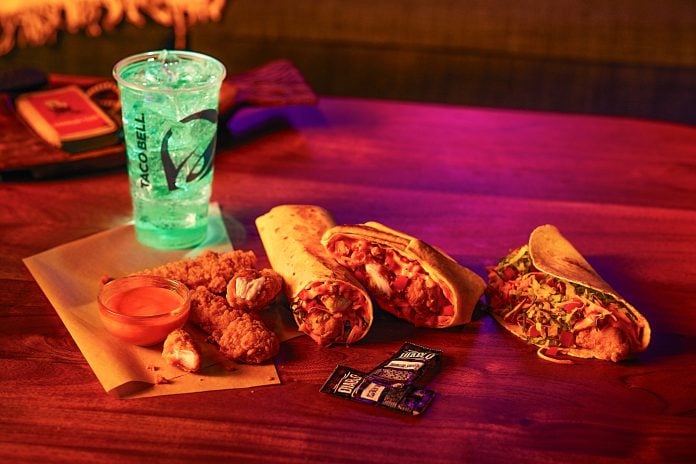
After more than a decade of waiting, Canadian Taco Bell fans are finally getting their wish. Starting this spring, Taco Bell Canada is making its iconic Diablo sauce available at restaurants for the first time, for a limited time at participating locations.
Since Diablo first launched in the U.S in 2015, Canadian fans have repeatedly asked Taco Bell to bring the sauce north – on the brand’s own social channels and across online communities. That anticipation has even spilled into Reddit threads with Canadians asking how to get Diablo and fellow Taco Bell fans offering to mail care packages across the border, said the company.
Meera Patel
“Canadian fans have been asking us to bring Diablo north for years. We’ve seen it in our comments, across social and in online threads from Canadians trying to figure out how to get their hands on it,” said Meera Patel, Director of Marketing, Taco Bell Canada.
“When the demand is that clear, the answer is simple: listen. Bringing Diablo sauce to Canadian restaurants is the moment fans have been waiting for, and Diablo Buffalo lets us make that moment uniquely ours in Canada.”
To mark the launch, Taco Bell Canada said it is also introducing the new Diablo Buffalo Crispy Chicken menu, a limited time lineup that brings Diablo-inspired heat to the brand’s crispy chicken offerings – including tacos, burritos, tenders and a Canadian-exclusive Diablo Buffalo Crispy Chicken Crunchwrap.
Diablo and Diablo Buffalo sauce were first unveiled at Canada’s second annual Live Mas Live, the company’s innovation showcase that gives fans an inside look at the bold ideas, menu items and cultural moments shaping what’s next for the brand.
Diablo sauce will also be available on its own at participating Taco Bell Canada restaurants for a limited time this spring.
Real tourism gross domestic product (GDP) grew 1.2% in the fourth quarter of 2025, following a 0.9% increase in the third quarter. By comparison, economy-wide real GDP by industry contracted 0.1% in the fourth quarter, following a 0.6% increase in the third quarter. Tourism GDP accounted for 1.74% of nominal GDP in the fourth quarter, according to a report released Friday by Statistics Canada.
Tourism spending in Canada grew 1.2%, as outlays by both international visitors and Canadians travelling at home increased in the fourth quarter, said the federal agency.
In the fourth quarter, growth in real tourism GDP was mainly driven by increased activity in the transportation (+3.5%) and accommodation (+1.0%) industries. The only decline was among non-tourism industries (-0.4%). Annually, real tourism GDP grew 2.2% in 2025. By comparison, economy-wide real GDP by industry grew 1.6%, noted Statistics Canada.
“Spending by international visitors grew 3.6% in the fourth quarter, the fastest pace in two years. Tourism spending on all products increased, with passenger air transport (+5.3%) and accommodation services (+2.8%) contributing most to the overall growth,” it said.
Gustavo Fring photo
“Overnight travel to Canada from abroad increased 3.7% in the fourth quarter. This was the largest quarterly increase of 2025, as travel from the United States in the first half of the year was lower amid continued Canada-US trade tensions. This weaker start contributed to a 0.7% annual decline in spending by international visitors in 2025 despite growth in the latter half of the year.
“Spending by international visitors accounted for 24.0% of all tourism spending in Canada in the fourth quarter, up from 23.5% in the third quarter.”
Domestic tourism spending by Canadian residents was up 0.5% in the fourth quarter, after edging down 0.2% in the third quarter. Growth was mostly driven by increased outlays on passenger air transport (+3.2%), which offset declines in travel services (-4.7%), pre-trip expenditures (-2.2%) such as luggage and camping equipment, and non-tourism products (-1.2%). An increase in the number of Canadians returning to Canada by air likely contributed to the rise in spending on passenger air transport. Annually, tourism spending in Canada by Canadian residents increased 2.5% in 2025, following similar growth in 2024 (+2.4%), said the report.
Statistics Canada said the number of jobs attributable to tourism increased 0.4% in the fourth quarter of 2025, following an increase of 0.6% in the third quarter. By comparison, the economy-wide number of jobs was up 0.8% in the fourth quarter.
“The food and beverage (+0.5%), air transportation (+1.5%) and recreation and entertainment (+1.1%) industries contributed the most to the growth in the fourth quarter. Tourism’s share of economy-wide jobs was 3.33% in the fourth quarter, virtually unchanged from the previous quarter. Annually, tourism jobs increased 1.3% in 2025, after increasing 1.5% in 2024,” it added.
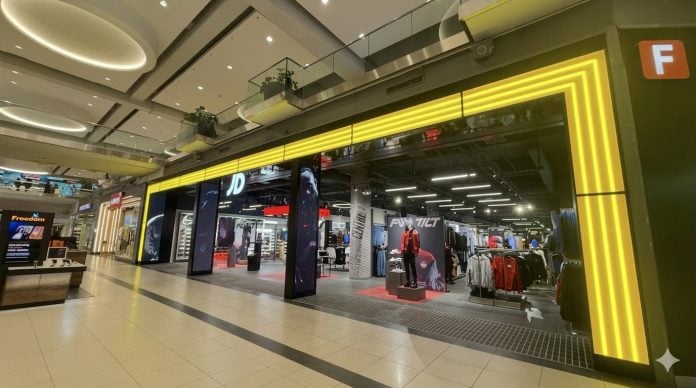
JD Sports at CF Toronto Eaton Centre. Photo: Craig Patterson
UK-based sports fashion retailer JD Sports is continuing its rapid Canadian expansion with the opening of a high-profile flagship store at CF Toronto Eaton Centre, reinforcing its ambitions to scale across the country and deepen its connection with urban consumers.
The new 10,000 square foot store on Level 1 positions the brand in one of the country’s busiest and most competitive retail environments. A JD representative confirmed that the Eaton Centre store brings the company’s Canadian network to 42 locations, reflecting a pace of expansion that has exceeded early expectations.
Rapid Growth Since Canadian Entry
JD Sports entered Canada in late 2021, launching its first locations in Toronto and Surrey, British Columbia. Since then, the company has moved quickly to establish a national footprint, focusing on major shopping centres and key urban markets.
The retailer has positioned itself within the premium athleisure and sports fashion segment, targeting younger consumers and leveraging brand partnerships to deliver exclusive product assortments. According to company statements, Canadian consumers have responded strongly to JD’s positioning, with the retailer citing strong foot traffic and growing brand recognition across markets.
This momentum reflects broader trends in the Canadian retail landscape, where global brands are increasingly targeting urban centres with high-visibility flagship stores that function as both retail spaces and brand showcases.
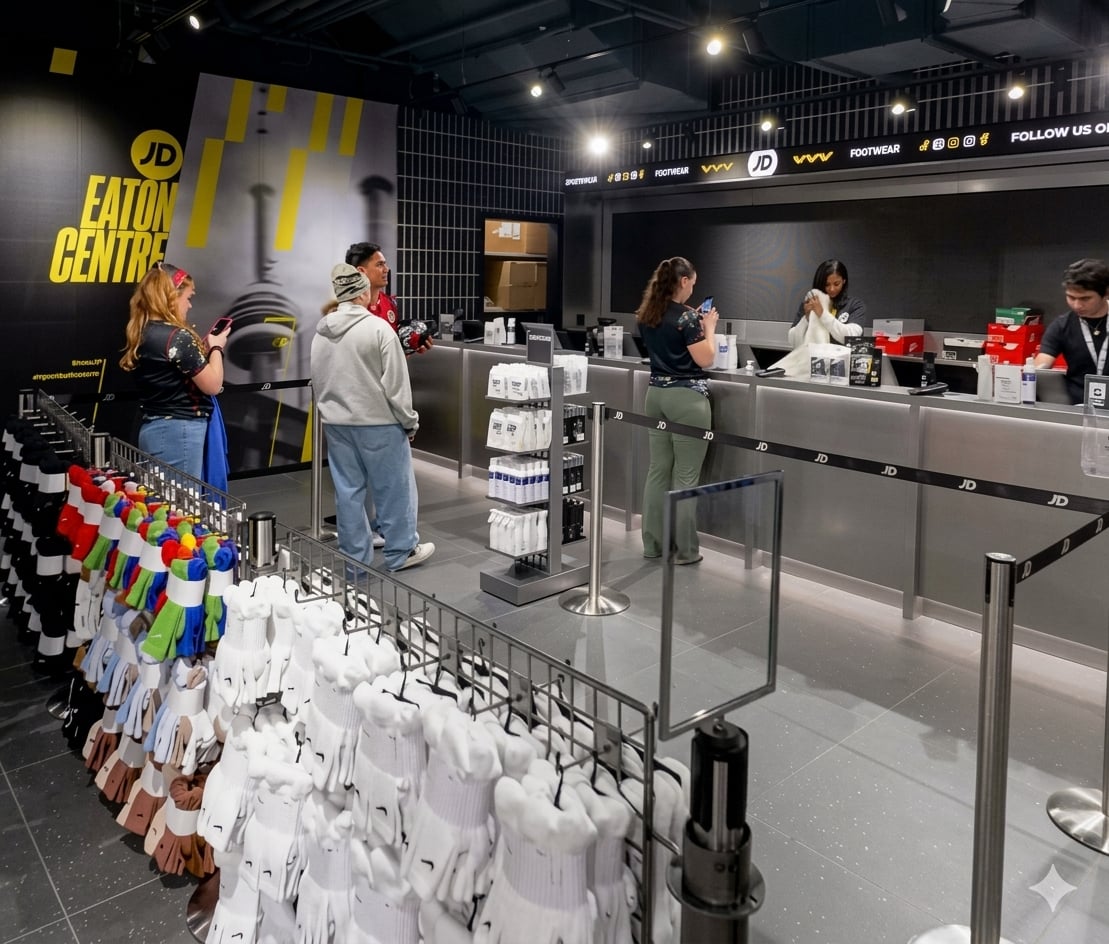
JD Sports at CF Toronto Eaton Centre. Photo: Craig Patterson
Eaton Centre Flagship Anchors Downtown Strategy
The CF Toronto Eaton Centre location marks JD Sports’ fifth flagship store in Canada, underscoring a strategic shift toward larger, more immersive retail environments.
Located in North America’s highest-traffic shopping centre, the store is designed to maximize visibility and engagement. With more than 50 million annual visitors to the CF Toronto Eaton Centre, the location offers access to a broad mix of consumers, including local shoppers, office workers, students, and international tourists.
The store features a bold storefront defined by an illuminated yellow façade and a triple-portal entrance, creating a highly visible and distinctive presence within the mall. Inside, the design emphasizes an open, industrial layout with integrated digital screens and a strong focus on visual merchandising.
This flagship approach aligns with JD Sports’ broader global strategy of creating high-energy retail environments that blend sport, fashion, and youth culture.
Experiential Retail and Brand Partnerships
A key element of JD Sports’ model is its collaboration with major global brands such as Nike, Adidas, and New Balance. These partnerships enable the retailer to deliver exclusive product drops and curated assortments that differentiate its offering from competitors.
The CF Toronto Eaton Centre opening is tied to a broader strategy of creating retail moments that resonate culturally, including product launches and activations linked to major sporting events. JD has emphasized that these collaborations are central to its goal of “propelling youth culture forward,” with stores serving as platforms for storytelling and engagement.
This approach reflects a wider industry shift toward experiential retail, where physical stores are designed to offer more than transactional value and instead function as destinations.
JD Sports at CF Toronto Eaton Centre. Photo: Craig Patterson
Greater Toronto Area as a Strategic Priority
The Greater Toronto Area continues to play a central role in JD Sports’ Canadian strategy. The company views the region as a key market due to its diverse and influential consumer base, which often shapes broader retail trends across the country.
JD has indicated that it will continue to evaluate opportunities across Toronto neighbourhoods, with a focus on locations that align with its target demographic and brand positioning. The CF Toronto Eaton Centre store strengthens its presence in the downtown core and complements existing locations across the region.
Jordan Karp of Savills Canada represents JD Sports in Canada and has been negotiating its lease deals.
National Expansion Strategy Extends Beyond Toronto
JD Sports is actively building a network of flagship and mall-based locations across multiple regions. The retailer has been strategically targeting high-profile urban corridors alongside dominant regional shopping centres, creating a balanced national footprint.
A key milestone came in June 2025 with the opening of JD Sports’ first Canadian street-front flagship on Robson Street in Vancouver. The approximately 16,000-square-foot, two-level store marked a shift toward more immersive retail environments, featuring prominent digital elements and experiential design intended to elevate the in-store experience.
Future JD Sports at 777 Ste-Catherine St. W. in downtown Montreal. Photo: Victor DiLallo Balsis
In Quebec, JD Sports is preparing another major flagship at 777 Ste-Catherine Street West in Montreal. The planned three-level store, totaling roughly 26,000 square feet, will represent one of the brand’s largest locations in the country and further signal its commitment to high-profile urban retail in key markets.
Beyond these flagship projects, JD Sports has established a growing presence in major shopping centres nationwide. Locations span key markets including Vancouver, Calgary, Edmonton, Toronto, Ottawa, Montreal, and Winnipeg, with stores in centres such as CF Chinook Centre, West Edmonton Mall, CF Rideau Centre, and CF Carrefour Laval.
The company’s expansion strategy combines scale with selectivity, focusing on locations that align with its target demographic and brand positioning. While flagship stores serve as high-visibility anchors, smaller-format mall stores continue to play an important role in building market penetration and accessibility.
Looking ahead, JD Sports has indicated it will continue expanding into new regions, including Atlantic Canada, as it works toward establishing a truly coast-to-coast presence.
JD Sports flagship store at 1042 Robson Street in downtown Vancouver. Photo: JD Sports
Positioning Within a Competitive Market
JD Sports’ expansion comes at a time when Canada’s sportswear and athleisure sector remains highly competitive, with established players and global entrants vying for market share.
However, JD’s focus on exclusive product, premium store environments, and youth-driven branding has helped differentiate it within the category. The retailer’s ability to combine fashion and sport, while maintaining strong relationships with key brand partners, has been central to its growth trajectory.
As the company continues to scale, its success in Canada will likely depend on its ability to sustain this differentiation while expanding into new markets and formats.
The Canadian duty-free sector crisis took centre stage on Parliament Hill this week as the Frontier Duty Free Association (FDFA) called on the federal government to implement urgent regulatory reforms. During a high-profile press conference held in Ottawa on March 25, 2026, and continuing into March 26, industry leaders warned that land border duty-free stores are facing a prolonged downturn that could lead to widespread closures.
Speaking at the event, Barbara Barrett, Executive Director of the FDFA, emphasized that the sector is experiencing a sustained slump in cross-border travel, which is directly impacting sales and long-term viability. The association framed the issue as a matter of fairness, arguing that Canadian operators face structural disadvantages compared to competitors just across the border in the United States.
Data presented at the conference highlighted the severity of the downturn. According to Statistics Canada figures cited by the FDFA, return trips from the United States fell by 22% year-over-year in January 2026, marking the thirteenth consecutive month of decline.
This drop in traffic has translated into significant financial strain. Some duty-free operators have reported revenue declines ranging from 60% to 80% since the onset of recent trade tensions and shifting travel patterns. The FDFA warned that approximately one-third of its 32 member stores could face permanent closure if conditions do not improve through 2026.
Industry Calls for Regulatory Reform and Financial Relief
At the core of the Canadian duty-free sector crisis is what the FDFA describes as an uneven regulatory environment. The association is advocating for several targeted changes, including tax adjustments to better align with U.S. competitors, recognition of duty-free sales as exports, and a reduction in administrative burdens such as complex labelling requirements.
“Land border duty-free stores have given the Department of Finance small regulatory changes that would allow the stores to survive. We are simply asking for action and for fairness with our only competitor, the United States,” said Barbara Barrett, Executive Director of the FDFA.
In addition, the association is seeking limited financial support measures, including repayable loans or a modest relief fund to help businesses navigate the current downturn. The industry has also raised concerns about rent structures, noting that many operators lease space from government entities or bridge authorities and are advocating for rent relief tied to sales performance.
Image: Peace Arch Duty Free
Trade Tensions and Declining Discretionary Travel
The broader economic backdrop has compounded the sector’s challenges. Ongoing Canada–U.S. trade friction has reduced discretionary travel, which is a key driver of duty-free sales. While commercial trucking volumes remain relatively stable, leisure travel has declined sharply as consumers respond to tariff uncertainty and heightened border scrutiny.
This shift has had a disproportionate impact on duty-free stores, which rely almost entirely on non-essential travel. The FDFA also pointed to what it described as mixed messaging from policymakers, noting that discouraging cross-border trips undermines a retail sector that is fundamentally export-oriented.
The press conference drew support from a coalition of mayors representing border municipalities, including Windsor, Sarnia, and Niagara Falls. These local leaders emphasized that duty-free stores serve as economic anchors in smaller communities where alternative employment opportunities may be limited.
“It’s not a ‘fat cat’ industry… if the industry fails across this country, some future government in the next five to ten years is going to have to reinvent it,” said Mike Bradley, Mayor of Sarnia.
Municipal leaders stressed that the decline in discretionary travel has removed a key customer base. Windsor Mayor Drew Dilkens noted that casual cross-border visitors, once a reliable source of demand, have largely disappeared.
Family-Owned Businesses Face Uncertain Future
Beyond the economic data, the Canadian duty-free sector crisis carries a significant human dimension. Many duty-free stores are family-owned businesses that have operated for multiple generations. The FDFA highlighted examples such as the Butler family, operators of the 1000 Islands Duty Free store, to underscore the potential loss of longstanding Canadian enterprises.
In several rural border communities, duty-free shops represent one of the largest local employers. Their closure would have ripple effects, reducing employment, tax revenue, and overall economic activity.
Export Classification Debate Gains Attention
A central issue raised during the conference is what the FDFA describes as an “export paradox.” While all duty-free goods are technically exports, since they must leave the country, various federal departments continue to treat these businesses as domestic retailers for certain regulatory purposes.
The association is calling for a ministerial directive to formally recognize duty-free operations as 100% export businesses across all relevant government agencies. Such recognition, they argue, would streamline compliance requirements and improve price competitiveness.
Sector Still Recovering from Pandemic Disruptions
The current downturn follows years of instability linked to pandemic-era border closures. Many duty-free operators entered 2026 still carrying debt from the 2020 to 2022 period, with some reporting sales levels remaining significantly below pre-pandemic benchmarks.
The closure of the Woodstock Duty Free Shop in late 2025 has become a focal point for the industry, illustrating the tangible risks facing long-established operators.
As the Canadian duty-free sector crisis deepens, industry leaders are positioning their requests as pragmatic economic measures rather than subsidies. The FDFA argues that targeted regulatory adjustments would represent a low-cost intervention with the potential to preserve jobs, sustain rural economies, and support export activity.
With mounting pressure from both industry stakeholders and municipal leaders, the federal government’s response in the coming months will be critical in determining the future of Canada’s land border duty-free sector.
A new burger concept has opened in Mississauga with a deliberately simple approach and ambitions that extend well beyond its first location. Soul Smash Burgers Mississauga is the latest venture from Shakir Al-Qanbar, founder and CEO of East Tea Can.
Located at 3115 Winston Churchill Blvd., Unit 2, beside the original East Tea Can, the fast-casual restaurant represents a more streamlined culinary expression for Al-Qanbar. While East Tea Can built its reputation on elaborate Middle Eastern mezze and tea culture, this new concept embraces restraint.
The first location officially opened in December, following strong anticipation in the community.
“We had a great launch in December,” said Al-Qanbar. “There’s always pressure with a new opening, but the response has been very encouraging. What’s especially rewarding is seeing customers come back.”
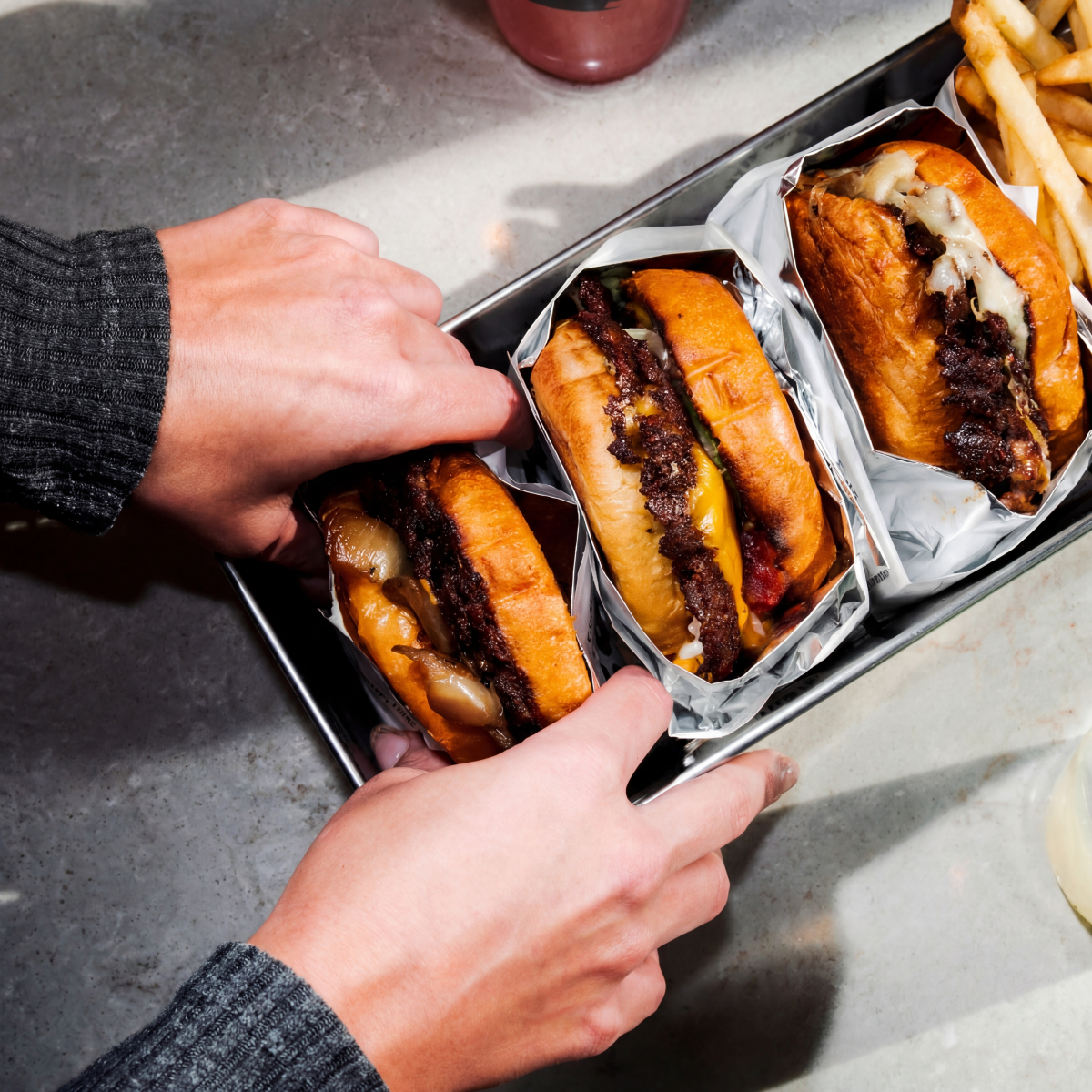
Photo: Soul Smash Burgers
A Deliberate Shift Toward Simplicity
In an era where many fast-casual restaurants expand menus to capture incremental sales, Soul Smash Burgers Mississauga takes the opposite approach. The menu is intentionally tight, anchored by two core burgers and one rotating feature.
“It’s different from a lot of competitors, but it’s also very straightforward,” Al-Qanbar explained. “Customers don’t have to overthink it. They walk in knowing exactly what they want.”
The Standard and The Core form the backbone of the menu, while the rotating “No. 1” burger introduces seasonal experimentation. The current feature, an Oklahoma-style smash burger with thinly sliced onions pressed into the beef, will be replaced in late March with a new creation.
“The first two burgers will always stay,” he said. “The third option gives us room to explore and introduce new ideas without overcomplicating the menu.”
The disciplined structure allows the kitchen to operate with just over 10 core ingredients, reinforcing quality control and freshness. The restaurant shares infrastructure with East Tea Can, leveraging an established central kitchen to support efficiency.
Photo: Soul Smash Burgers
Fresh AAA Beef, Ground In-House
Quality sourcing sits at the center of the brand’s positioning. The restaurant uses a minimum of AAA Canadian beef, ground fresh in-store twice daily.
“We use AAA beef at minimum, sometimes higher,” said Al-Qanbar. “Everything is ground in-house, and we grind fresh twice a day. That’s non-negotiable for us.”
While the team initially worked with a single supplier, sourcing has become more flexible to accommodate seasonal availability and market conditions, while maintaining grade standards.
“In Ontario, supply isn’t an issue,” he noted. “Pricing can fluctuate, but so far it’s been within a normal range. We’ve been fortunate.”
The streamlined ingredient list also enables closer oversight of product quality.
“We keep our inventory intentionally short,” he said. “When you’re only managing about 10 core ingredients, it’s much easier to maintain freshness and consistency.”
Even the bun required rigorous testing.
“We tested 18 different brioche buns before choosing this one,” Al-Qanbar said. “We wanted something authentic and balanced. It had to complement the beef, not overpower it.”
Customer feedback has been equally meticulous. Guests have commented on everything from pickle texture to small design details.
“It surprised me how much people notice,” he admitted. “But I actually appreciate that. When customers care about the details, it pushes us to improve.”
In response to demand, the restaurant recently introduced a gluten-free brioche option, and plant-based patties are available as substitutions.
Early Traction and Weekend Lineups
Seasonality has played a role in early performance. January and February were predictably softer months, yet overall momentum remains strong. Dinner service, particularly on weekends, has emerged as a clear driver.
“Friday and Saturday nights are very busy,” said Al-Qanbar. “Dinner service is where we really see the energy. We still get lineups, and that’s always encouraging.”
Lunch business has been steady, with expectations that warmer weather will drive additional traffic as the community becomes more active.
The concept’s atmosphere also contributes to its positioning. Music is carefully curated, and the space is designed to keep focus on the food and overall experience.
Measured Expansion Ahead
Although Soul Smash Burgers Mississauga was conceived as a scalable, multi-unit concept, Al-Qanbar is taking a disciplined approach to growth.
“Expansion is definitely in the plan,” he said. “But it’s too early to move quickly. We want to give this location time to prove itself. By the end of summer, we’ll have a much clearer understanding of the concept’s strengths and where we can improve.”
Operational consistency is the priority.
“Opening stores is easier than running them properly,” he said. “Consistency matters more than the number of locations.”
That philosophy reflects experience gained from building East Tea Can into a recognized destination in Mississauga. Al-Qanbar is also preparing to launch a separate fast-casual Middle Eastern concept positioned as a more express version of East Tea Can, slated for late this year or early next.
“It will be very different from burgers,” he said. “Think of it as a faster, more accessible format.”
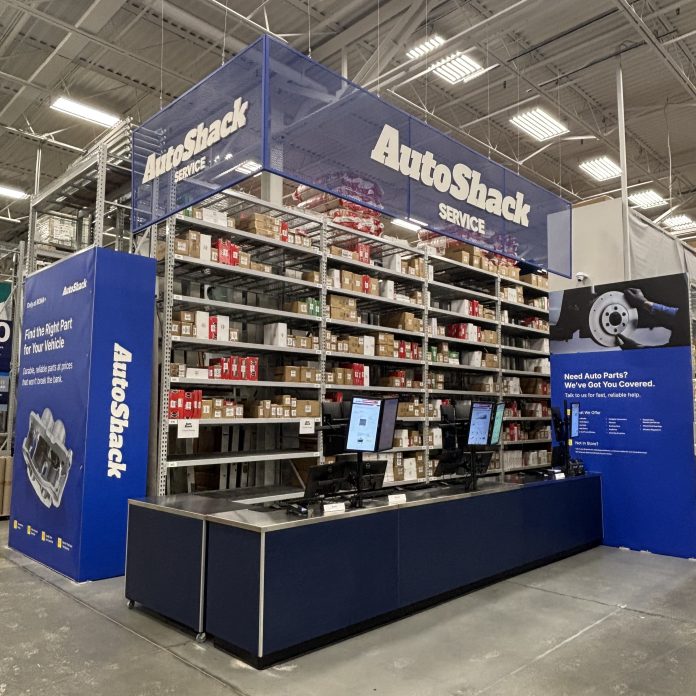
RONA inc., one of Canada’s leading home improvement retailers, operating and servicing over 425 corporate and affiliated stores, says it is pursuing its partnership with AutoShack to introduce Shop in Shop locations in 12 stores across the Greater Toronto and Ottawa regions by this summer.
Following a successful pilot program, this expansion marks the next phase of collaboration between the two companies, bringing AutoShack’s automotive parts into a significantly expanded retail footprint. Previously available primarily online and at its flagship retail location in Kanata, AutoShack products will now be accessible in-store to a wider audience. Each location will be operated by AutoShack staff and will provide support to help shoppers identify the right parts for their vehicles, said RONA.
Each Shop in Shop will feature a curated assortment of AutoShack’s most in-demand products, with access to a broader extended assortment available for in-store ordering and pickup. This model reflects AutoShack’s continued evolution into an omnichannel retailer, improving accessibility for both online and in-store purchasing, said the retailer.
Doug Young
“We are thrilled to launch the AutoShack Shop in Shop in our stores. Our partnership with AutoShack is another example of RONA’s commitment to delivering greater value to both our PRO and DIY customers. Given the strong alignment between our customer bases, the results of our pilot, and our dedication to providing better value, this partnership is a natural fit,” said Doug Young, Chief Merchandising Officer at RONA inc.
“This partnership represents a major milestone in AutoShack’s evolution into a true omnichannel retailer,” said Gary Calagoure, President at AutoShack. “By bringing our products into RONA stores, we’re making it even easier for customers to access the quality, value, and convenience they expect from us.”
Gary Calagoure
RONA said the rollout will begin with the grand opening at RONA+ Golden Mile, followed by additional locations opening progressively across Ontario in the coming months, including locations in Maple, Whitby, Hamilton, London, Windsor, and the Ottawa region.
RONA inc. is one of Canada’s leading home improvement retailers, headquartered in Boucherville, Quebec with 425 corporate and affiliated dealer stores under the RONA+ and RONA banners.
AutoShack is a Canadian-based automotive parts retailer with a strong foundation in direct-to-consumer e-commerce, serving customers across North America. It has a 250,000-square-foot distribution centre and access to over one million parts.
Michael Brownstein Recipient of the Excellence in Retailing Lifetime Achievement Award (CNW Group/Retail Council of Canada)
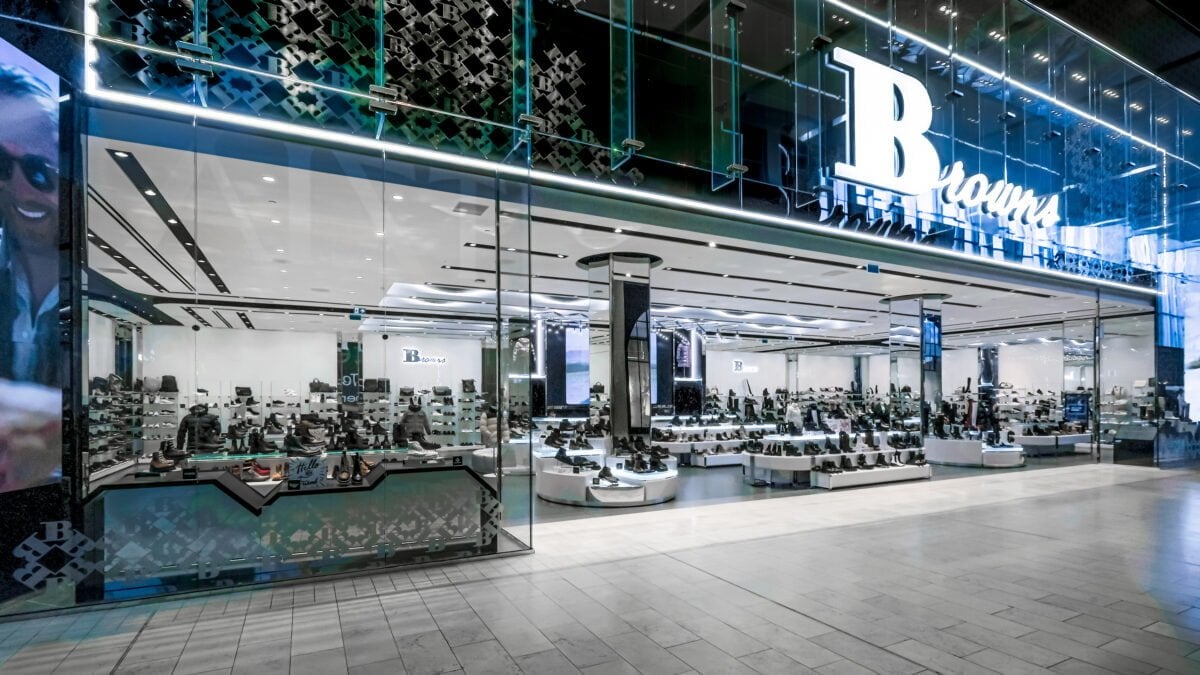
The Retail Council of Canada has named Michael Brownstein, CEO of Browns Shoes, as the recipient of the Lifetime Achievement Award at the 2026 Excellence in Retailing Awards. The recognition highlights Brownstein’s more than five decades of leadership in Canadian retail and his long-standing contributions to both business and community.
The award is presented annually to a senior executive who has demonstrated sustained business success and community service over at least 25 consecutive years in retail. According to the announcement, Brownstein’s career reflects a combination of commercial achievement and industry leadership that has helped shape the Canadian retail landscape.
Five Decades of Growth and Leadership
Brownstein joined Browns in 1973 after graduating from McGill University and later became President in 1998. Over the following 25 years, he led the transformation of the Montreal-based company into a national retailer with more than 70 locations across Canada.
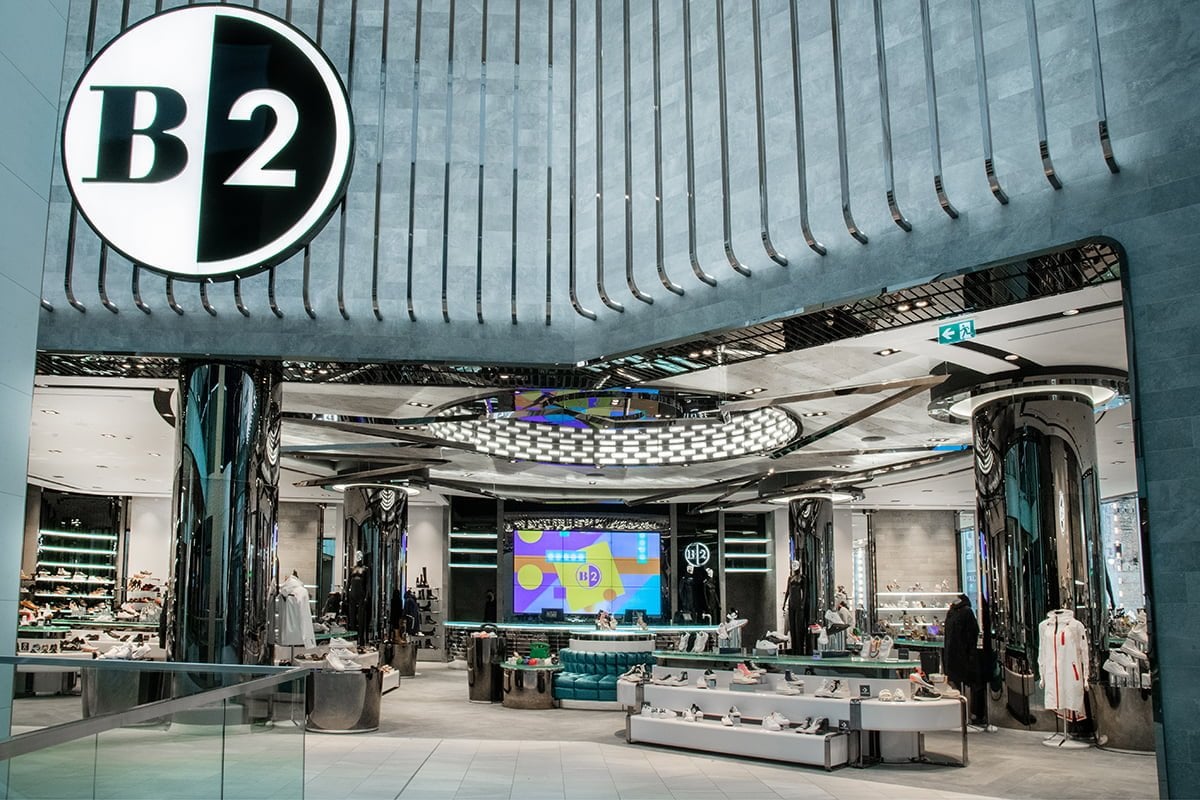
Under his leadership, Browns expanded beyond its regional roots to become one of North America’s largest independent footwear retailers. The company also launched its sister banner B2, which now operates nine locations nationwide.
The business has positioned itself as a destination for footwear, with a focus on customer service, store design, and a curated assortment aligned with global fashion trends. The press release notes that Brownstein has built strong partnerships with international brands, contributing to the company’s reputation within the global footwear industry.
Browns Shoes at Yorkdale Shopping Centre (Image: Browns)
Industry Recognition and Global Impact
Brownstein’s influence extends beyond Canada. In 1998, he became the first person outside of Italy to receive the MICAM Award, one of the footwear industry’s highest honours.
His contributions also include mentorship and education. Brownstein has remained actively involved with the McGill Desautels Faculty of Management, where he regularly shares insights with students pursuing careers in business and retail.
Kim Furlong, President and CEO of the Retail Council of Canada, stated in the release that Brownstein’s career reflects “more than five decades of retail excellence” built on integrity, mentorship, and community commitment.
B2 Shoes at Montreal Eaton Centre (Image: Browns Shoes)
Recognition at RCCSTORE26
The award will be presented during the Excellence in Retailing Awards Gala, which takes place as part of RCCSTORE26, scheduled for June 2 to 3, 2026. The conference is expected to feature more than 75 speakers and attract retail leaders from across North America.
The Lifetime Achievement Award remains one of the highest honours in Canadian retail. Previous recipients include François Roberge of la Vie en Rose, Walter Lamothe of Bentley, and Roots co-founders Michael Budman and Don Green.
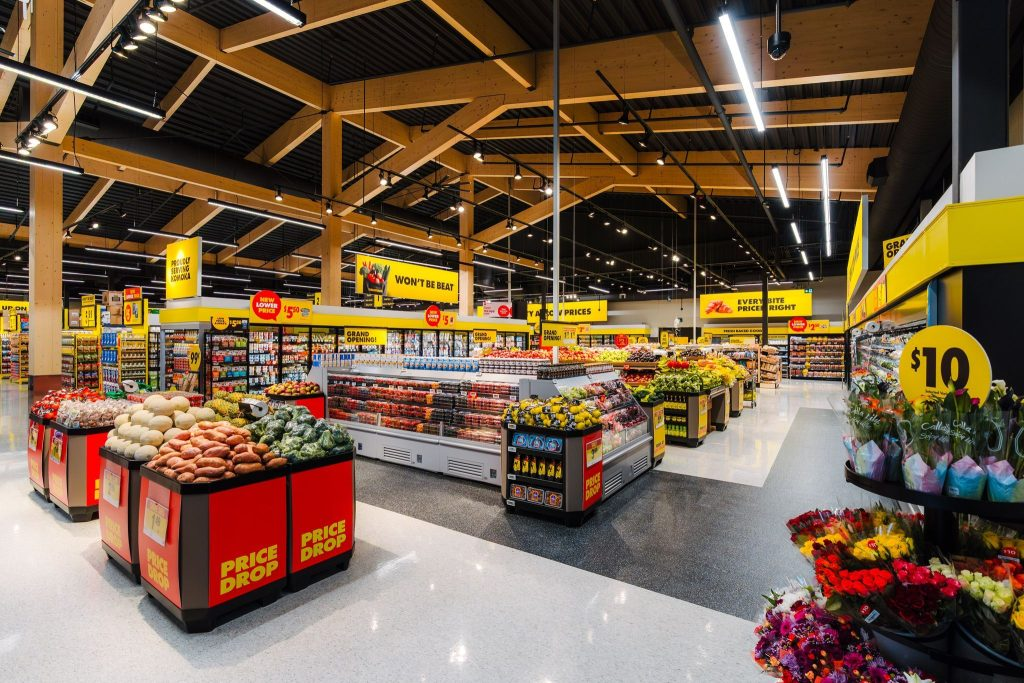
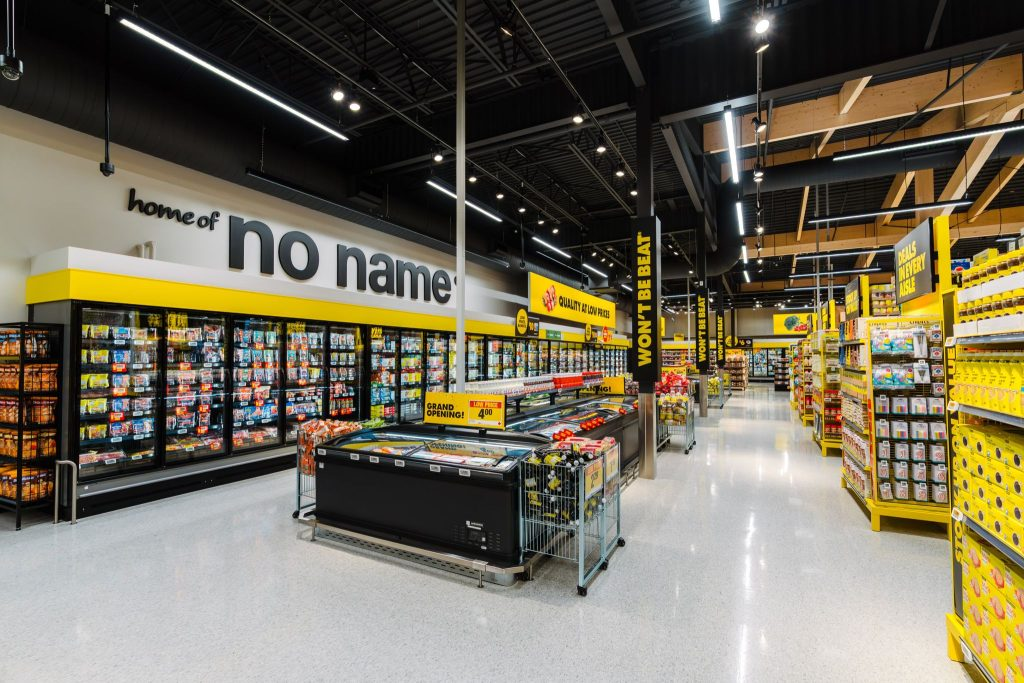
New concept No Frills store in Komoka. Image: Loblaw Companies
No Frills, one of Canada’s leading hard-discount grocery retailer under the Loblaw Companies Limited umbrella, has opened Komoka’s first No Frills, located at 370 Crestview Drive.
The company said the new store is the beginning of an evolution for No Frills.
This opening of Mike & Grace’s No Frills introduces a new look to the community, featuring an innovative hybrid timber and steel design that creates a warmer and more inviting atmosphere, offering a fresh take on the traditional warehouse feel. Although the store has a distinct new design, customers can continue to rely on the same great value, quality products, and everyday low prices they know from No Frills, said the company.
Melanie Singh
“We are incredibly proud to open the first of our newly designed No Frills stores right here in Komoka,” said Melanie Singh, President, Hard Discount, Loblaw Companies Limited. “This new format represents a step forward, with a more modern and accessible store design while maintaining the same everyday low prices customers have always trusted.”
“The same store we walked through just weeks ago with teams working around the clock, details still coming together is now a fully finished No Frills, ready to serve customers from day one. And what a transformation,” he said.
Per Bank
“From the outside, a fresh, modern look that stands out in the community. On the inside, exactly what matters most: a discount store filled with fresh, high-quality groceries at great prices. This is what great retail execution looks like, turning plans into reality, and hard work into something customers can experience every single day.
“I’m incredibly proud of the teams who made this happen. Opening a store is never simple but when you see the finished result and the first customers walking through the doors, it’s all worth it.”
Loblaw is Canada’s food and pharmacy leader, and the nation’s largest retailer. With more than 2,800 locations, Loblaw, its franchisees and Associate-owners employ more than 220,000 full- and part-time employees, making it one of Canada’s largest private sector employers.
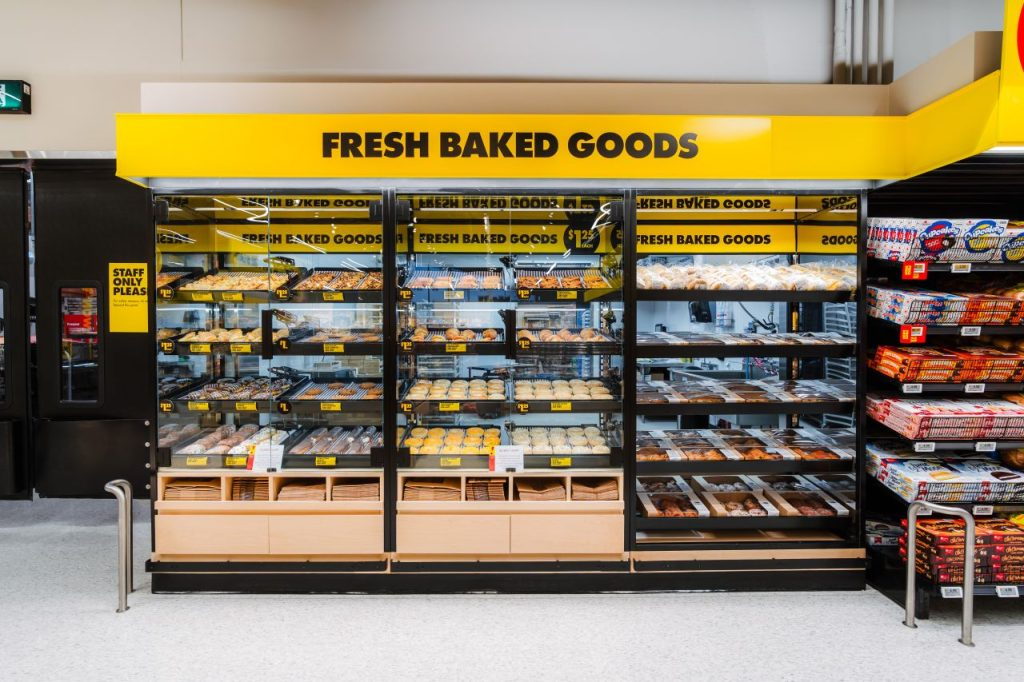
New concept No Frills store in Komoka. Image: Loblaw Companies
It has more than 1,100 grocery stores that span the value spectrum from discount to specialty; full-service pharmacies at nearly 1,400 Shoppers Drug Mart and Pharmaprix locations and in close to 500 grocery stores; PC Financial services; Joe Fresh fashion and family apparel; and four of Canada’s top-consumer brands in Life Brand, Farmer’s MarketT, no name and President’s Choice.
New concept No Frills store in Komoka. Image: Loblaw CompaniesNew concept No Frills store in Komoka. Image: Loblaw CompaniesNew concept No Frills store in Komoka. Image: Loblaw Companies
Today’s Retail Insider articles are listed below, followed by Canadian Retail News From Around the Web. Coverage highlights Elm-Ledbury’s curated retail arcade concept enhancing Toronto’s residential spaces, the complete retail availability squeeze in Ossington and Leslieville, and Healthy Planet’s pivot toward micro meals and cleaner snacks. Also featured is Egg Club’s bold breakfast QSR expansion plan. These developments illustrate evolving urban retail strategies and shifting consumer preferences in food and convenience.
Global retail eCommerce sales are projected to surpass $4.3 trillion in 2025. As the industry continues its rapid expansion, merchants face increasing pressure to deliver faster, more efficiently, and with greater transparency—all while keeping costs in check.
However, many are struggling to keep pace with these mounting last-mile delivery expectations. An overwhelming 85% of merchants recently surveyed say that demand for faster delivery has impacted their ability to maintain control over last mile logistics, with 42% citing major disruptions.
The Taking Back Control:
How Merchants Can Win the Last-Mile Battle report, commissioned by UPS Capital, delves into this evolving landscape. Drawing insights from 500 eCommerce merchants and 1,000 U.S. consumers, the report examines how last-mile delivery has shifted over the past few years and what merchants need to do to regain control.
Rising Consumer Expectations for Speed and Control
Speed has become the leading factor influencing where consumers shop. Nearly a third (31%) of consumers surveyed rank fast delivery as their top priority—outpacing both cost and product selection. This demand is even more pronounced among younger consumers: 51% of Gen Z respondents prioritize quick shipping, compared to only 15% of Baby Boomers.
Personalization is also key. Nearly half (44%) of shoppers surveyed want the ability to customize their shipping preferences, and 84% say they’re more likely to buy from merchants that offer personalized delivery options.
The Brand Risk of Shipping Issues
An overwhelming 98% of surveyed merchants agree that delivery experience impacts brand reputation, with 58% ranking it among the most critical factors. This makes managing consumer’s last-mile frustrations essential as delivery issues can heavily influence purchasing decisions.
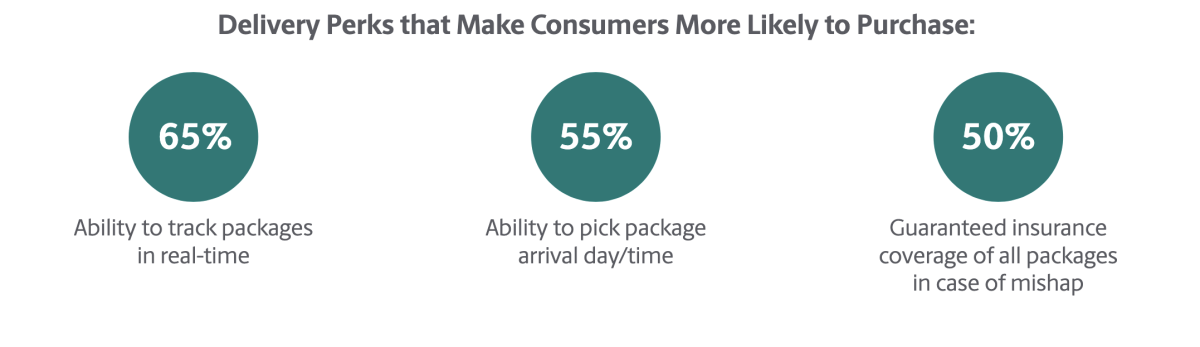
Consumers’ Biggest Frustrations in Last-Mile Delivery:
38% – Late or missed deliveries
37% – Package left in unsafe locations
34% – Lack of real-time tracking or updates
Nearly two-thirds (61%) of consumers surveyed check reviews before buying, with younger generations even more cautious: 74% of Gen Z and 73% of Millennial respondents routinely research retailer reliability before hitting “buy.”
If a brand fails to resolve a shipping issue, a quarter (25%) of surveyed consumers hesitate to shop with them again, and nearly 44% of Gen Z respondents demand issue resolution before considering a repeat purchase.
Consumers Not Sold on Social Commerce
The rise of social commerce—shopping directly through platforms like Instagram, TikTok, and Facebook—is transforming eCommerce. However, trust remains a significant barrier to widespread adoption.
Only 19% of surveyed shoppers trust social media storefronts for deliveries, and 39% have never attempted a social commerce purchase at all.
While younger consumers are more open to the trend, confidence issues persist across generations. Millennial (30%) and Gen Z (25%) respondents express the highest confidence in social storefronts, but 70% of surveyed Boomers have avoided social commerce entirely.
Take Back Control of the Last Mile
Delivery mishaps—whether from theft, damage, or delays—now affect more than just a merchant’s bottom line. They directly influence brand trust, customer satisfaction, and long-term loyalty. To stay competitive, merchants must prioritize innovation, transparency, and last-mile reliability to not just survive but thrive in the evolving eCommerce landscape.
For more data and insights on how to take back control of the last mile, get the full report.
*We are licensed as an insurance broker in Ontario only and are not yet offering any services or products in other provinces, including Québec. You can find the complete insurance disclosure here: Product Disclosure.
If you would like us to let you know when we are licensed in your province, then send us an email via insureshieldca@ups.com, and we will get back to you.
Insurance coverage is underwritten by a Canadian licensed insurance company and issued through UPS Capital Canada Insurance Brokers, Limited (“UPS Capital Insurance Brokers”) – an indirect wholly-owned subsidiary of UPS Capital Corporation (“UPS Capital”). The insurance company and UPS Capital Insurance Brokers reserve the right to change or cancel the program at any time. Insurance coverage is governed by the terms and conditions, including the limitations and exclusions, set forth in the applicable insurance policy (the “Policy”). This information does not in any way alter or amend the terms or conditions, including the limitations or exclusions, of the Policy, and is intended only as a brief summary. Insurance coverage is not available in all jurisdictions. UPS Capital Insurance Brokers only issues policies of a single insurer in Canada, and receives commission on sales of insurance. An affiliate of UPS Capital Insurance Brokers reinsures a material portion of the risk insured by this insurance policy and the UPS Capital group therefore has a financial interest in the insurance program. You are not required to purchase insurance from UPS Capital Insurance Brokers and have the right to seek insurance elsewhere. In particular, your ability to ship using United Parcel Service Canada Ltd. or its affiliates is not conditional on your purchase of insurance from UPS Capital Insurance Brokers.