

Later this year, Edo Japan will open a redeveloped flagship restaurant at Montreal Eaton Centre, setting the stage for a significant push into Quebec. The Calgary-based quick-service brand, known for fresh Japanese-inspired meals and its famous teriyaki sauce, plans to build out a network the company believes could exceed 150 locations across the province. In Quebec, the brand will operate as Edo Japon, the French-language entity of Edo.
The opening marks a return for Edo Japan, which previously operated in the Montreal Eaton Centre before its redevelopment of the foodcourt. With the centre’s renovation nearing completion, the re-opening is the first step in a multi-year strategy to introduce Edo Japan to Quebecers at scale, with an emphasis on cultural nuance, franchisee economics, and a menu that has broadened well beyond the grilled teriyaki meals that built the chain’s reputation.
Edo Japan was founded in 1979 in Calgary by Reverend Susumu Ikuta, a Buddhist minister who turned a passion for teppan-style cooking into a small chain that quickly gained traction in Western Canadian shopping centres. Growth continued when Canadian restaurant executive, Tom Donaldson, came on board and expanded its presence. Following the company’s acquisition by Yellow Point Equity Partners, Edo Japan entered a new phase under the leadership of current President & CEO David Minnett, who has driven record growth, elevated franchisee performance, and positioned the company as one of Canada’s leading quick-service restaurant success stories.
The footprint has since doubled over the last decade. Edo Japan now operates more than 200 restaurants nationwide and serves over 12 million meals annually. “We pride ourselves on responsible growth,” said Greg Vogeli, Vice President, Business Development & Corporate Affairs. “We’re mindful of keeping the economic model for our franchisees sound. We do not grow just for the sake of growing.”
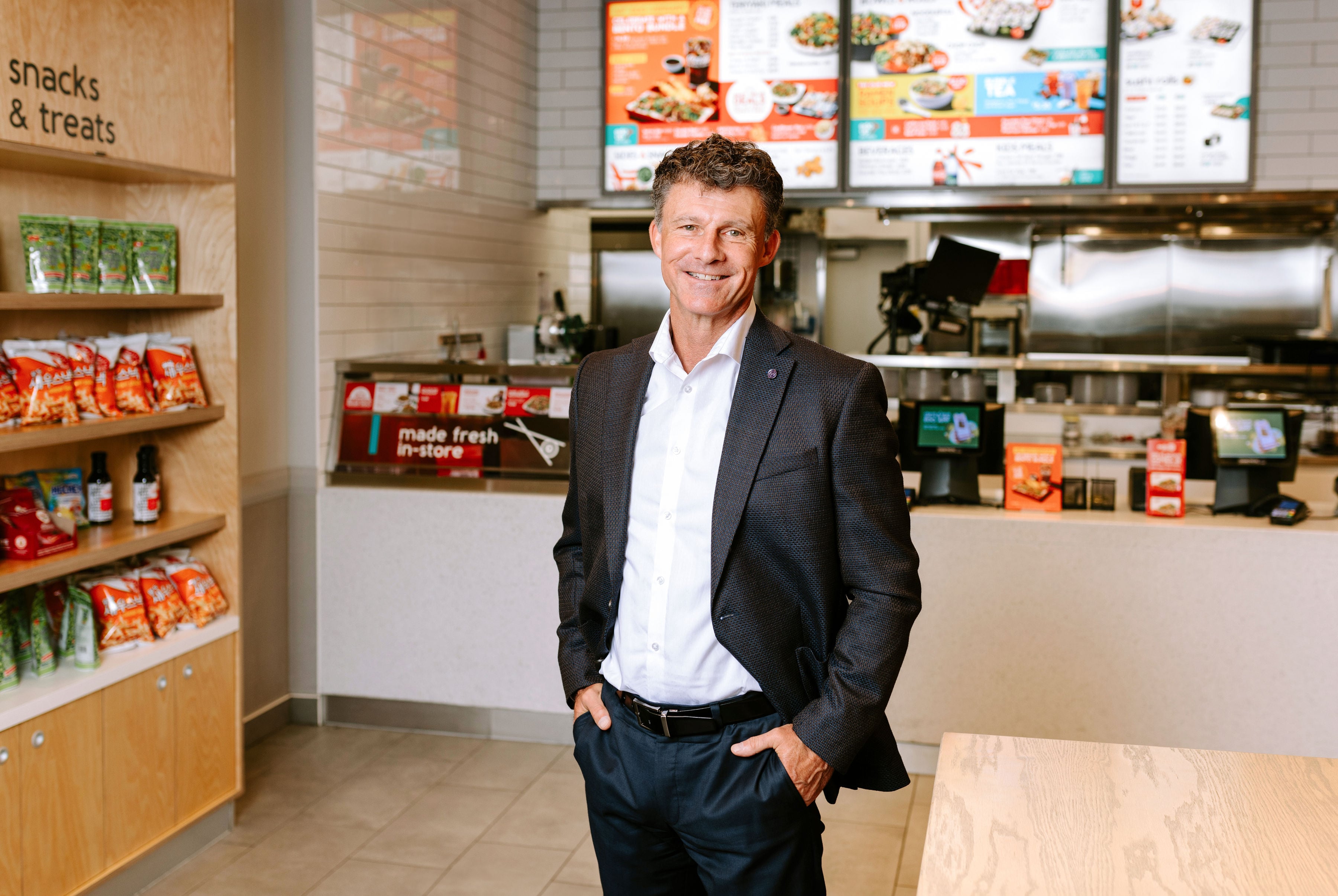
Why Quebec and Why Now?
Although the company has expanded through British Columbia and Ontario, and has begun opening in the Maritimes and the United States, Quebec remained a deliberate holdout until now. The reason was strategic. “Quebec has a unique business environment that requires a thoughtful approach to expansion,” said Vogeli. “Having operated here before, we recognize that a one-size-fits-all strategy doesn’t work. Our focus is on adapting to the market and building the right foundation for sustainable growth.”
That approach includes localized branding and French-first marketing in the province under the name Edo Japon, while the broader corporate identity remains Edo Japan. “This isn’t about surface-level adjustments,” Vogeli explained. “It’s about building a strategy that reflects the market and creates a lasting connection with Quebec consumers.” The company’s internal market research suggests the timing is favourable. “Asian cuisine actually over-indexes in Quebec relative to the rest of Canada,” he added. “That gives us confidence in the opportunity here.”
Montreal Eaton Centre as a Launchpad
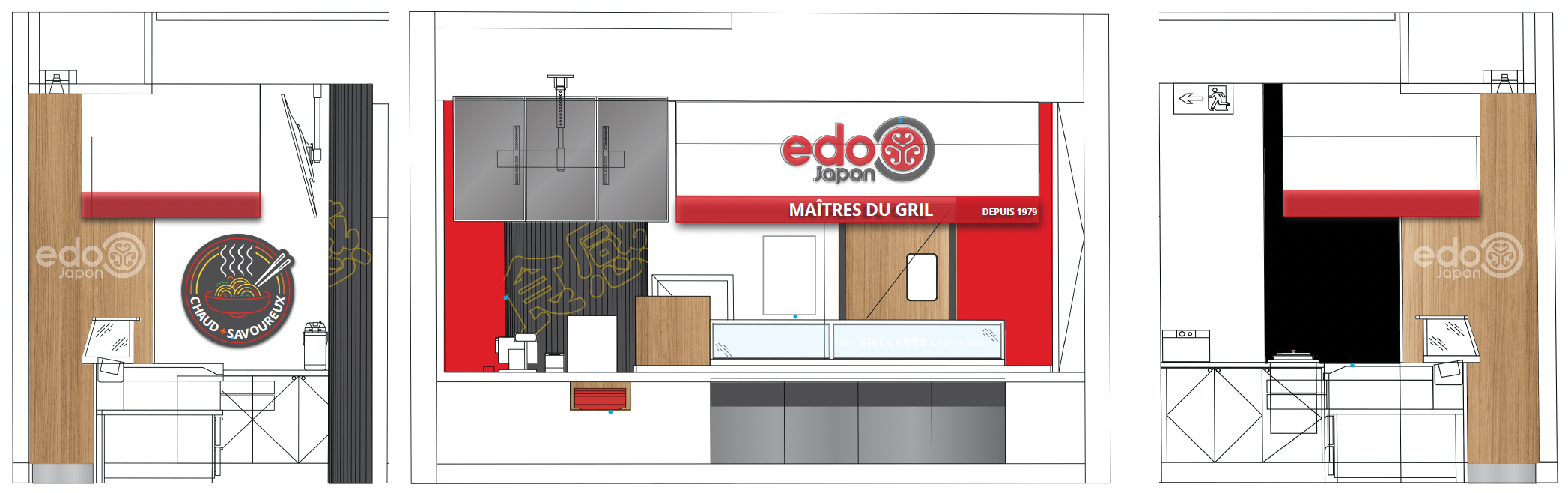
The choice of Montreal Eaton Centre is both symbolic and practical. Edo Japan operated a legacy store in the complex until late 2024. “The former location was a long-running family franchise that lasted almost 30 years,” said Vogeli. “But the brand has evolved so much since then. Re-opening at Montreal Eaton Centre with our new design and menu allows us to relaunch in Quebec with a strong first impression.”
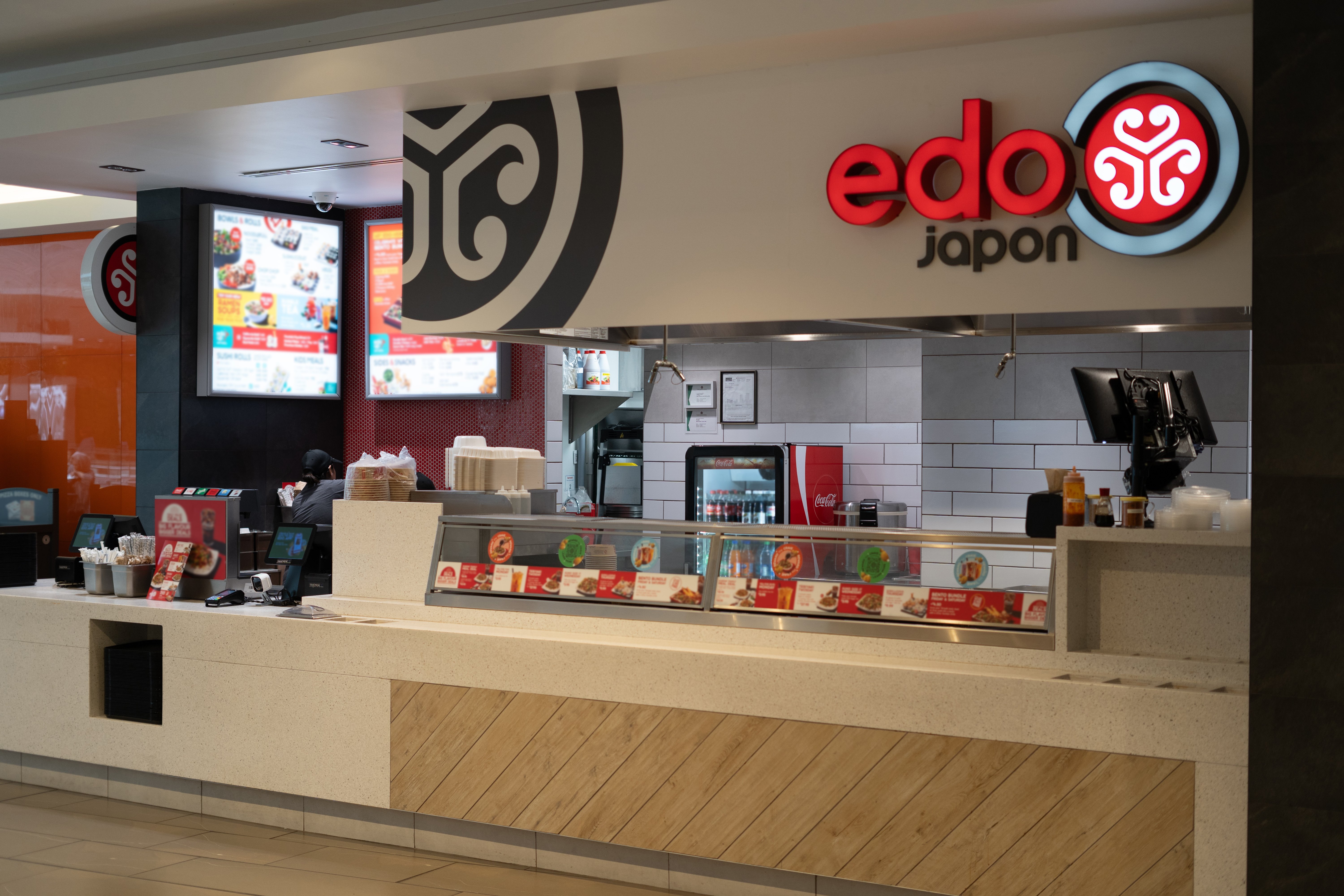
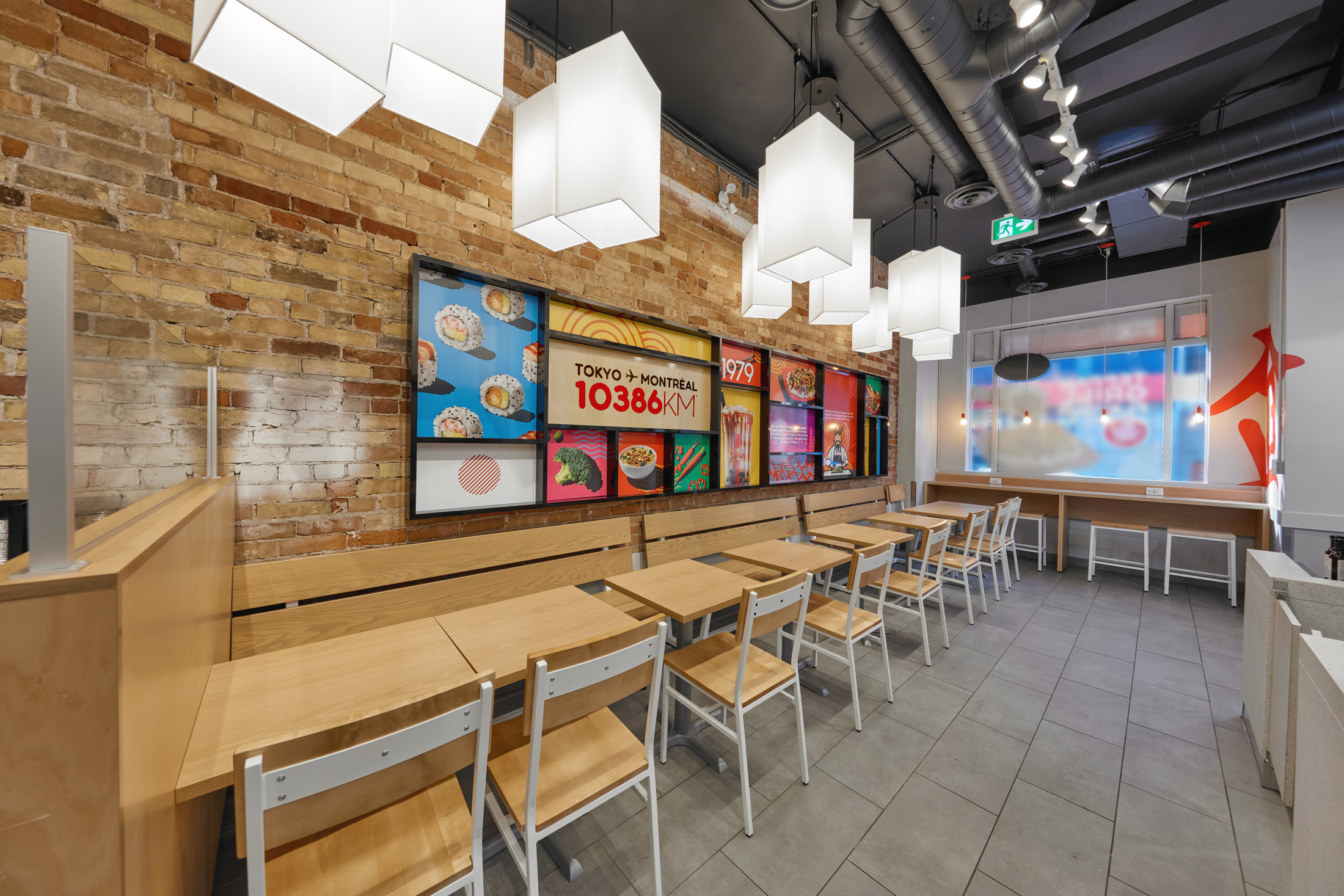
The new flagship will feature a refreshed design, digital menu boards, and an expanded menu that has been rolled out across the chain in recent years. “Food courts are a powerful way to drive trial,” Vogeli noted. “ The sheer traffic through Montreal Eaton Centre allows us to introduce the brand to a large number of guests quickly. And once they’ve experienced our food, we’re confident they’ll return.”
That focus on trial aligns with the brand’s confidence in its core flavour profile. “There is a strong contingent of customers we call Edo addicts,” he said with a laugh. “They just cannot get enough of our teriyaki sauce. It is incredibly craveable.”
A Menu Built on Five Pillars
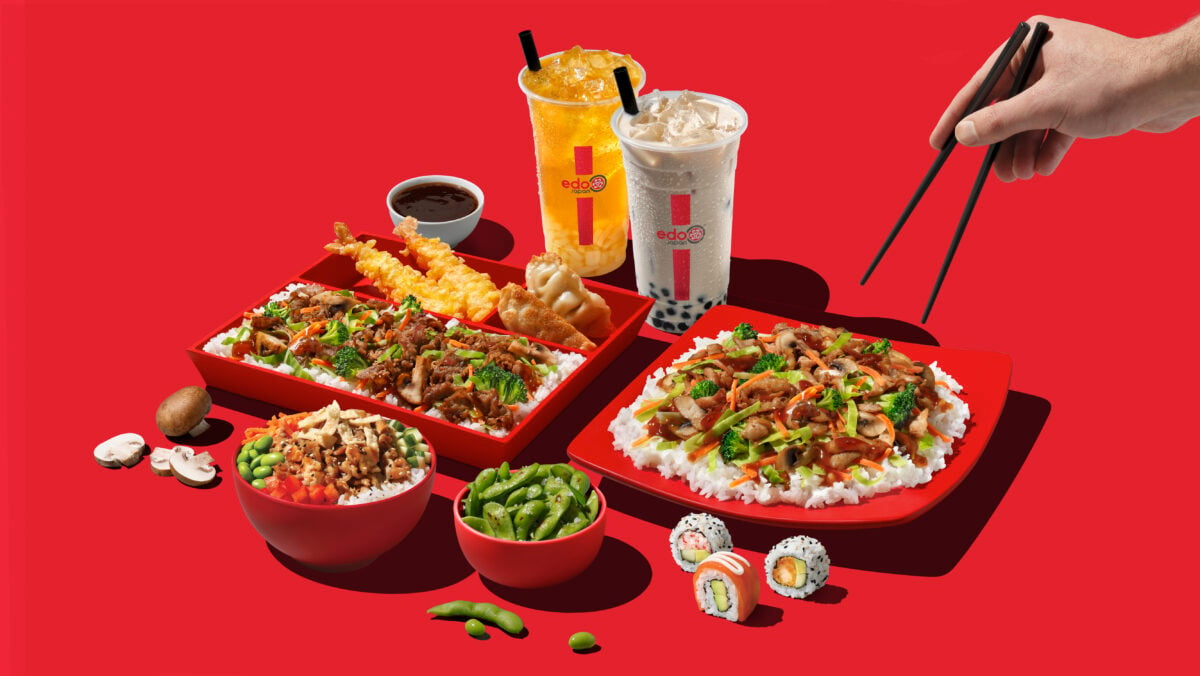
While the teriyaki chicken and sukiyaki beef meals remain the foundation, the brand has diversified. “Alongside our signature grilled meals, we now offer ramen with a new flavourful broth, poke bowls, bubble tea, and sushi,” Vogeli said. “Sushi and bubble tea have become an important part of the offering, particularly in newer markets, but our grilled meals remain the backbone of the business.”
The company does not plan Quebec-specific menu items at launch but will adapt. “Our menu has been embraced across Canada and performed well at Montreal Eaton Centre,” said Vogeli. “We’ll build from that foundation, track what resonates, and listen to customers. If there’s an opportunity to tailor offerings to Quebec tastes, we’ll absolutely explore it.”
Partnering with Local Operators
The plan for Quebec is to recruit experienced franchisees who understand provincial regulations, labour markets, and consumer preferences. “We are looking for seasoned operators who already have that expertise and can grow with us,” said Vogeli. “Single-unit owner-operators have always been an important part of our growth, but the opportunity in Quebec is significant. Partnering with multi-unit franchisees who can develop clusters of locations in a shorter timespan and build out trade areas will be a key advantage.”
According to Vogeli, approximately 73 per cent of Edo Japan locations are run by multi-unit franchisees. The company has won the Canadian Franchise Association’s Franchisees’ Choice designation 15 years in a row, which he cites as a by-product of that long-term orientation. “We do not want to profit at the expense of franchisees,” he said. “We support them with training, marketing, supply chain, and an economic model that works.”
Edo Japan’s strategy in Quebec will concentrate new restaurants in defined trade areas to establish visibility and repeat exposure. “Ideally, we would open clusters of locations, where multi-unit franchisees can build out trade areas in a meaningful way,” Vogeli explained. “Having three or four locations within a trade area creates strong visibility and brand presence. The more often guests see us, the more likely they are to try the food. Food courts accelerate trial, but we see opportunity in both food courts and street locations.”
How Big Can the Market Get?
Asked for a target, Vogeli did not hesitate. “We see the potential for more than 150 locations,” he said. “The Greater Montreal area alone represents significant opportunity. Quebecers also over-index on household restaurant spend and have a strong dining-out culture. Even at one location per 50,000 people, the math points to substantial growth.”
He cautioned that adoption curves vary by region. “In Quebec City and in rural communities, growth may accelerate quickly or take longer to build,” he said. “We will expand responsibly and let performance guide the pace.”
This steady, economics-first stance has been consistent across the network. “We have been careful to avoid over developing within existing markets,” said Vogeli. “In cities like Edmonton and Calgary, we already have strong coverage, and we don’t add locations simply to increase the count.”
The Role of Marketing and Design
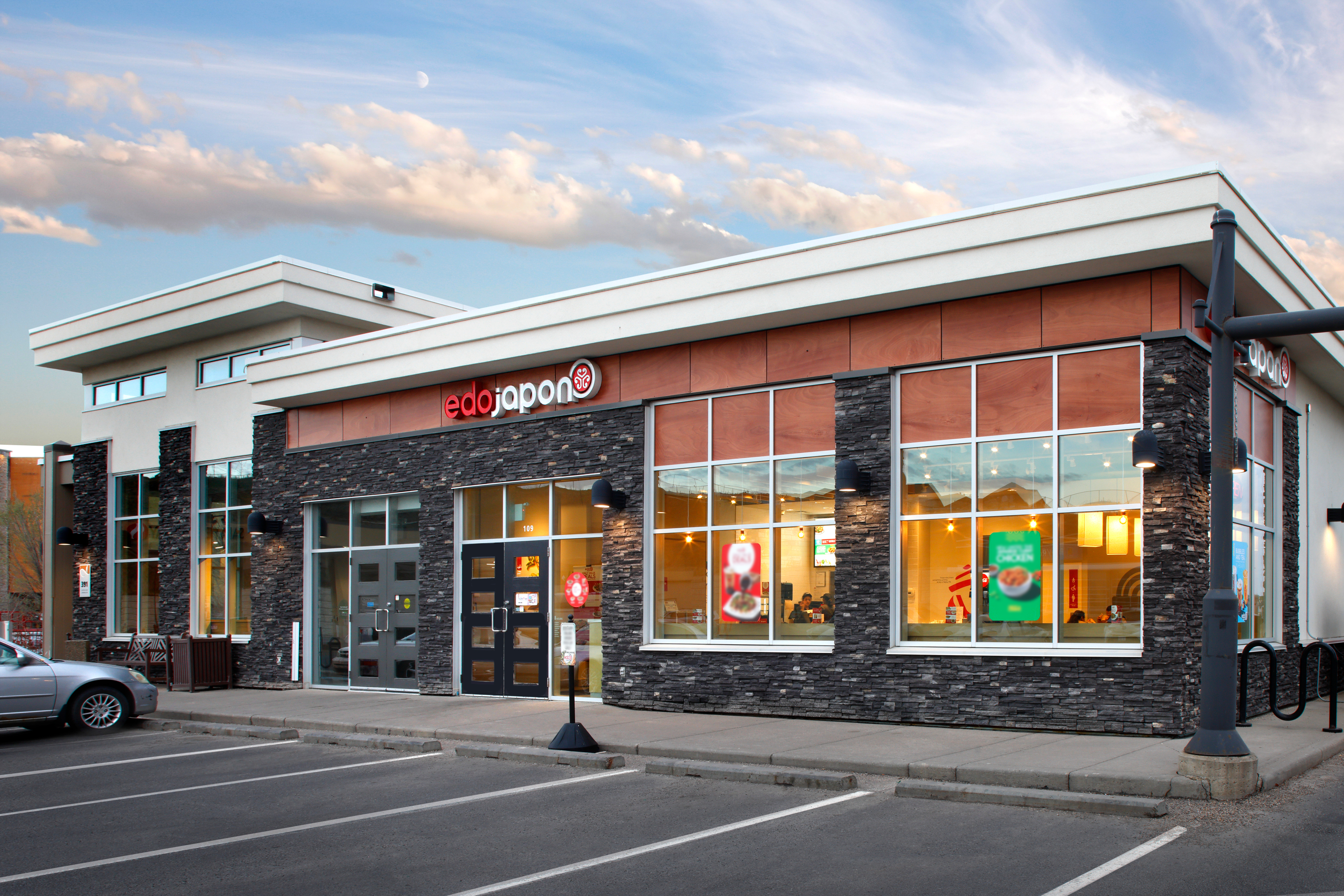
The new Quebec flagship will showcase the brand’s updated aesthetic and contemporary marketing. “We expect a strong impact when we reopen,” said Vogeli. “With digital menu boards, a refreshed design, and compelling social content, the marketing team has positioned us exceptionally well. The brand presentation is on trend and highly appealing.”
While the focus today is Quebec, Edo Japan is also testing growth beyond Canada. The company opened its first U.S. restaurant in Chandler, Arizona, earlier this year. “We have a focused strategy to open a small number of locations in the short term as a proof of concept,” noted Vogeli. “It’s an exciting step, and we look forward to a favourable acceptance of the brand and considering broader expansion.”
He is clear, however, that Quebec represents the most immediate prize. “Ontario represents a major growth market for us and will continue to expand,” he said. “Quebec is the natural next step for Edo Japan, and we’ve taken the time to ensure we approach it the right way.”
For those seeking franchise and real estate opportunites with Edo Japan, please visit: franchising.edojapan.com. To reach Greg Vogeli, Vice President of Business Development & Corporate Affairs at Edo Japan, email: GregV@edojapan.com







Looking forward to Edo Japon to come back to Quebec! Swapping the a for an o in their name has to be the absolute smallest brand adjustment a company had to make to abide by Quebec language laws. I hope to see them in the Greater Montreal Area suburbs quickly… Centre Eaton is not the most convenient location outside office hours.