Retail Insider is streamlining its Canadian retail news from around the web to include a handful of top news stories that can be viewed quickly during the day. Here are the top stories from the past several days.
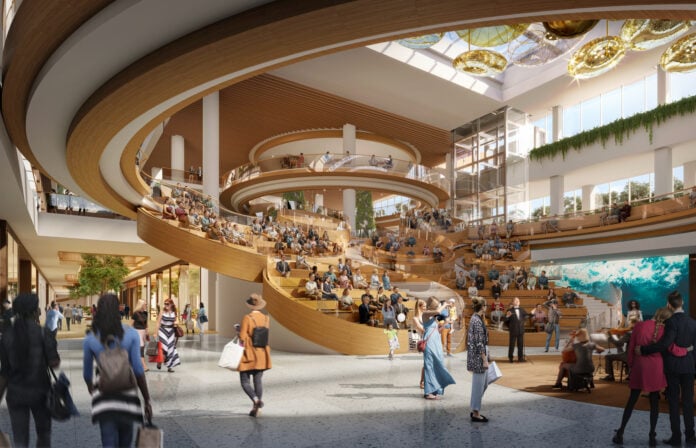
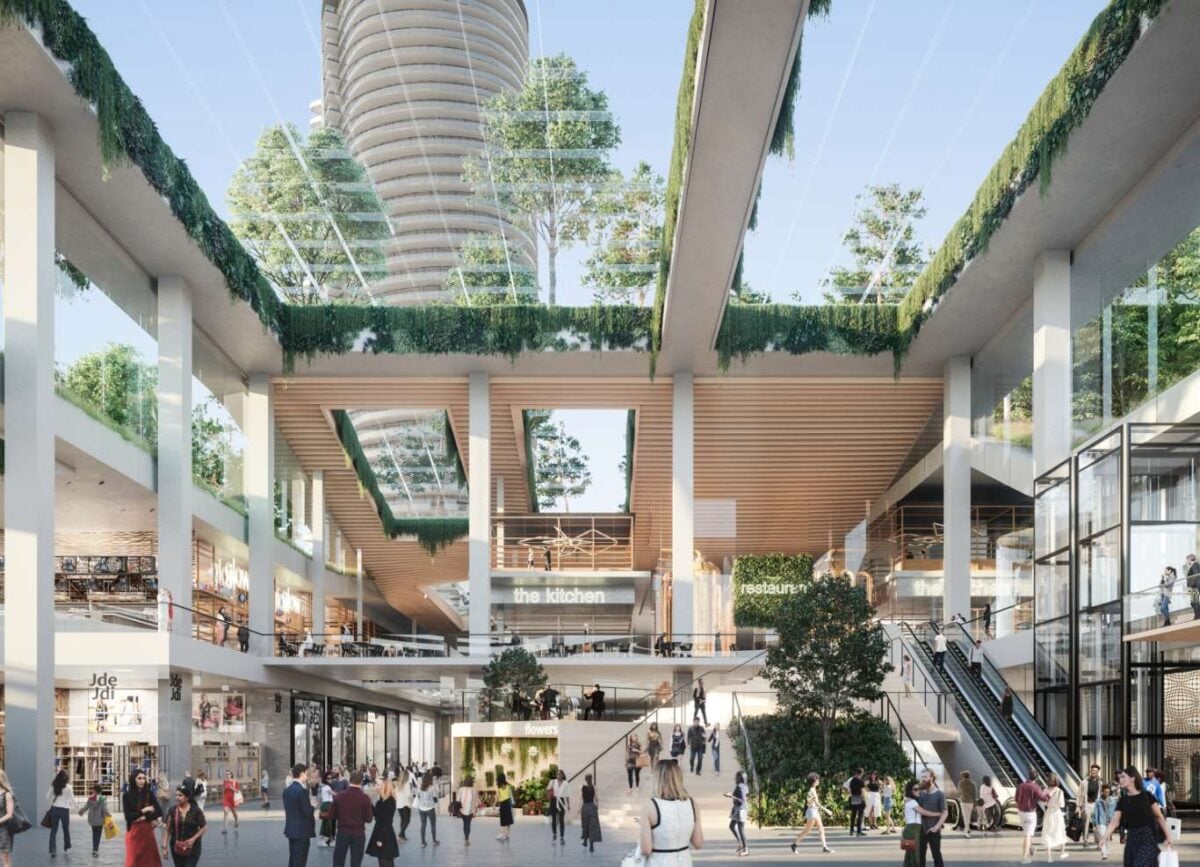
Oakridge Park north Atrium -- several luxury brands will operate flagships nearby. Rendering via QuadReal
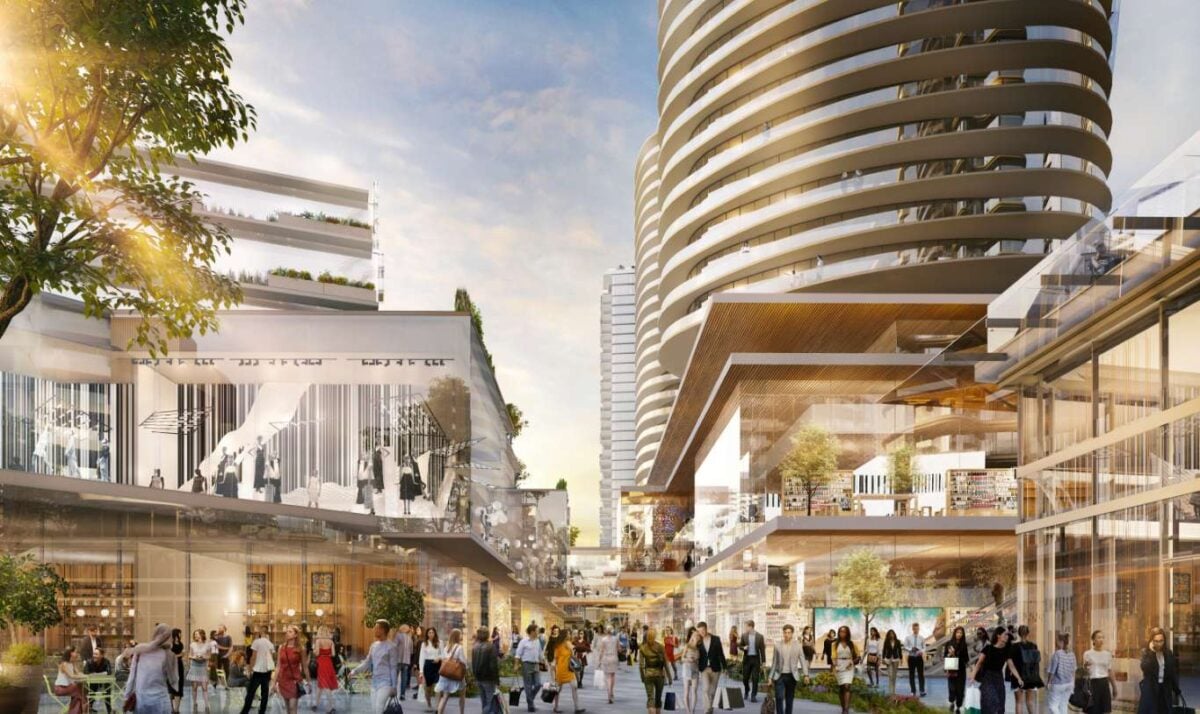
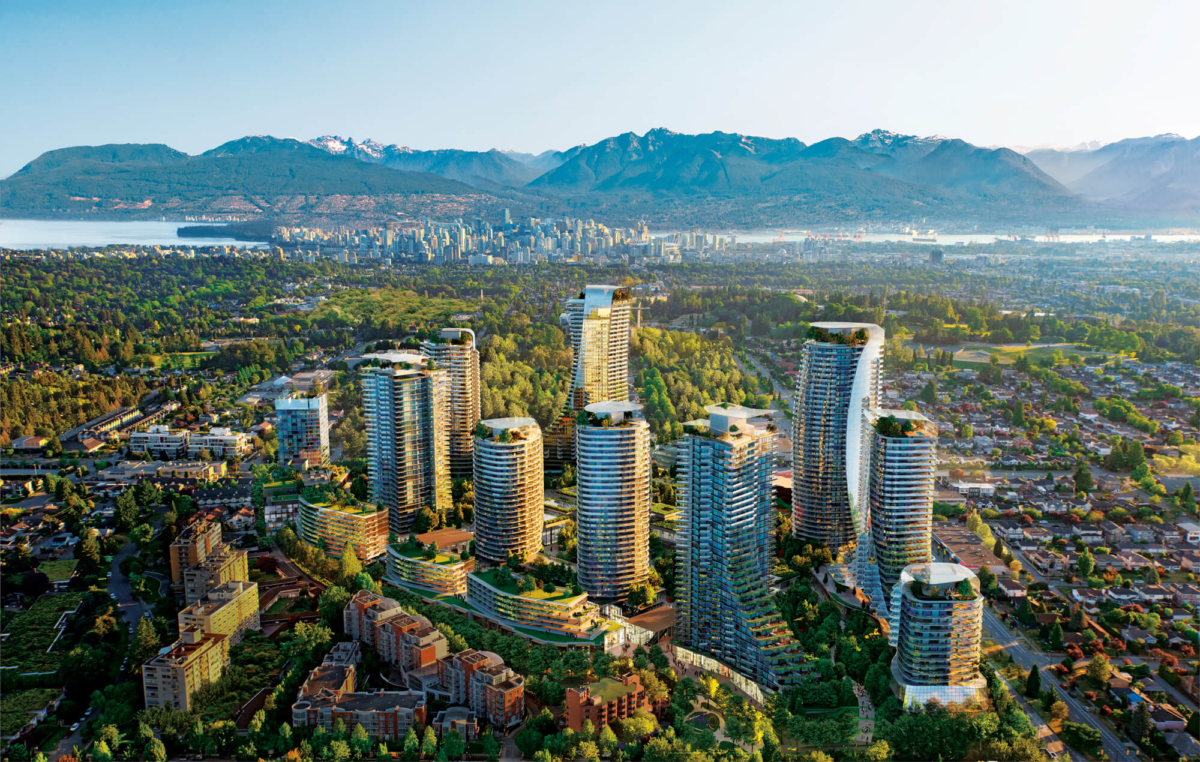
Oakridge Park is closing in on a milestone moment for Vancouver. The 28-acre redevelopment by QuadReal Property Group and Westbank is preparing to open its retail heart in spring 2026, introducing a concentration of global luxury, fashion, beauty, and lifestyle brands alongside a nine-acre park, civic amenities, public art, and the Time Out Market food hall. QuadReal’s Executive Vice President of Canadian Retail Experience, Chrystal Burns, and Oakridge Park Vice President of Marketing, Irene Quan, say the project is tracking to plan and built around a simple mandate: create a destination that feels as lived-in as a neighbourhood and as compelling as a global flagship district.
“It is a very busy place,” said Burns. “Construction is underway on about 70 of the hundred or so retailers.” She added that on the landlord side “we’ve finished all our flooring and our lighting and the public art is going up and we’re on schedule,” while noting the reality of large projects. “Development, you never know what can happen next, but we are absolutely tracking on schedule, making it happen no matter what.”
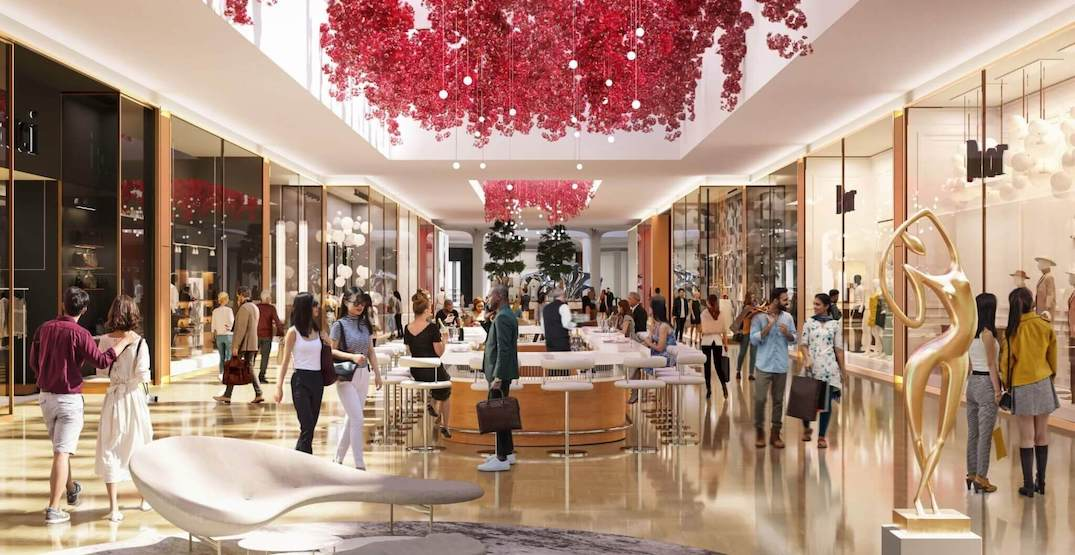
In a market already renowned for high-spending locals and a steady stream of Pacific Rim visitors, Oakridge Park Vancouver luxury retail is set to become a new anchor for the city’s premium shopping scene. The 650,000-square-foot retail centre will feature 100-plus brands, including a cluster of European fashion houses, watch and jewellery flagships, contemporary labels, and essential retailers that support a full-day experience.
Oakridge Park in Vancouver. Rendering: QuadReal
A Curated Luxury Lineup Arrives
QuadReal has confirmed a slate of high-profile additions for the opening season, including Loewe, Loro Piana, Valentino, Ferragamo, Dolce & Gabbana, Thom Browne, and Acne Studios. The mix is designed to balance the established with the new, and to introduce firsts to the city. “Oakridge Park is poised to redefine Vancouver’s luxury retail landscape with the arrival of these additional world-renowned brands,” said Burns. “As the city continues to attract global attention, this new development offers an unparalleled shopping experience that perfectly complements Vancouver’s vibrant culture.”
Burns elaborated on how specific houses fit the plan. “Valentino is an Italian luxury fashion house that blends timeless elegance with modern twists,” she said, noting the brand’s strong pull among trend-aware customers and long-time clients. “D&G is also an Italian luxury brand, unique for its designs that fuse modern luxury with Sicilian and Italian heritage.” Together, they help bookend dedicated luxury gallerias that will be layered with additional flagships already announced for the site.
Critically, curation at Oakridge has not been left to chance. “Curation is deliberate, but a bit like a 3D matrix puzzle that stretches over years and keeps adapting to real-time events,” said Burns. Leasing has involved direct engagement with global groups and careful staging of news to maintain community momentum. “The result is a tightly curated mix where space is limited so we can focus on best-in-class retailers.”
Rendering of Oakridge Park in Vancouver. Image: QuadReal
Contemporary, Beauty and Wellness Build Daily Relevance
A pure luxury node does not live on couture alone. Oakridge rounds out the day-to-day shopping journey with labels designed to drive frequency and dwell time. ALO, Sephora and Diptyque have been confirmed, along with Sporting Life, Veronica Beard, Sandro, Maje, Sisley Paris, and additional beauty and wellness concepts. “We’re creating a layered, full-service retail ecosystem,” said Burns. “Luxury anchors and first-to-market boutiques sit alongside contemporary lifestyle, beauty and wellness brands so Oakridge serves multiple daily needs and occasions.”
Several brands with deep roots at the former Oakridge Centre are returning as well. “The previous Oakridge Hugo Boss store was highly successful and unique in the marketplace,” Burns noted. Coach and Swarovski are also among the names slated to come back, a sign that the centre’s historic West Side audience remains engaged and ready to spend. As Burns put it in conversation, the former centre was “storied and established in terms of its demand,” with some of the country’s top jewellery sales and best-performing stores. The redevelopment aims to harness that built-in customer base while expanding the catchment with tourism and experiential programming.
Experiences That Teach, Delight and Convert
Ahead of opening, Oakridge Park has been seeding the market with activations that connect beauty, fashion and technology. The six-week Autumn Palette program, running October 16 to November 20 inside the Oakridge Park Gallery, draws together colour analysis, personalized styling, and an AI-enabled virtual fashion try-on that lets guests preview looks from announced brands, then walk into the centre’s boutiques to purchase.
Quan described the thinking: “The Autumn Palette activation was inspired by our core aim to celebrate culture in everyday life — beauty, art, and fashion. We wanted to empower our guests with practical tools, like colour analysis that helps people understand which colours flatter them, and an innovative, AI-enabled virtual fashion try-on that showcases our latest brands.” Guests receive a Dior lip product matched to their tone, a custom initial charm, and a fall lookbook curated by a Vancouver stylist. “We spark conversations about personal expression and fashion,” Quan said. “The programs welcome everyone, creating an inclusive platform for learning, storytelling, and cross-cultural exchange within the community, enhanced by the latest technology and trend-leading fashion and beauty.”
At an Autumn Palette event for residential buyers, the AI mirror drew a crowd. “It is an AI mirror that dresses you,” said Burns. “It takes a photograph of you, puts the clothes on you, and people are loving it.” Quan added that Oakridge’s team scouted the technology globally. “We research around the world,” she said. “You stand in front of the mirror and then they will try different kinds of clothes on you. We gather full collections of the brands we announced, put it in the AI mirror and people can try it on, and then they can go buy it.”
Oakridge Park. Image: Westbank
The Making of a Mixed-Use Cultural District
The scale of Oakridge Park is difficult to convey without touring the site. The retail precinct sits within a larger 28-acre plan that includes more than 3,000 residences, about 700,000 square feet of office space, one of Vancouver’s most significant community centres and the largest library on the city’s West Side, all stitched together by a nine-acre public park and a one-kilometre running loop. “It is like a city down there,” said Burns of the construction choreography. “With a loading loop and the arrival of millwork and different contractors and subcontractors under our prime contractor.” She described three levels of underground work spanning nearly the entire site and a complete rebuild “from scratch.”
Beyond the architecture, the program puts culture at the centre. “We have invested significantly in large pieces of public art in the park and in our north atrium,” Burns said. “They are beautiful pieces,” and the team is considering how to integrate art into opening plans and ongoing programming. It is part of a wider effort to make the place feel animated at all hours. “We want to do something cool and engaging,” she said. “That is what Irene’s job is, to create a whole experience that is deep and authentic to what Oakridge Park is.”
What might a typical day look like once the doors open next year? Burns paints a picture that begins with bike facilities, coffee and morning classes in the park, continues with Time Out Market lunches, wellness sessions and casual shopping, then shifts into live performances, gallery moments and dining. The intent is that Oakridge Park Vancouver luxury retail is one chapter in an all-day story, not a stand-alone trip.
Re-Merchandising and the Tenant Puzzle
One of the notable shifts since the redevelopment was announced is the re-merchandising of the large department store footprint that had been planned for the project. Burns acknowledged that the former box is being subdivided for multiple retailers, with news to come. “We are re-merchandising the former HBC space with a number of retailers,” she said, adding that announcements are expected in the new year.
The approach reflects Oakridge’s broader strategy: size stores thoughtfully, cluster categories for discovery, and emphasize new-format designs. “Our stores are unique and special,” Burns said. “We anticipate having the newest templates for our design stores. Some of them are the largest ones in Canada and North America.”
Oakridge Park in Vancouver. Rendering: QuadReal
Vancouver’s Global Moment
The opening arrives as Vancouver consolidates its position as one of Canada’s top two luxury markets, with an affluent local base and pent-up demand for new experiences. “By attracting international flagships and first-to-market standalone boutiques, and combining retail with major cultural and civic amenities, Oakridge raises Vancouver’s profile as a destination for luxury retail and experiential tourism,” said Burns. Proximity to the airport, the city’s Pacific Rim profile, and events such as next year’s FIFA matches amplify the reach. “We have a global, very ambitious PR plan,” said Quan. “When we open, that is one of our initiatives to reach globally, North America and Asia as well. We want to build a global culture and shopping destination.”
Importantly, the luxury cluster at Oakridge does not replace the downtown district. Rather, it gives Vancouver a second node that complements the city core, similar to patterns seen in other global markets where multiple high-end precincts coexist and cross-pollinate. The result should be deeper market coverage for fashion houses and watch and jewellery brands, plus broader assortment for local shoppers. That is part of why Oakridge Park Vancouver luxury retail matters nationally: it adds capacity to a market that has been under-stored at the very top end.
A Retail Program with Breadth and Depth
The confirmed roster spans European houses and contemporary labels as well as Canadian names that are synonymous with performance and design. Alongside the newly announced brands, the broader mix includes Alexander Wang, Arc’teryx, Aritzia, Brunello Cucinelli, Bvlgari, Canada Goose, Christian Louboutin, Harry Rosen, Jacob & Co., Louis Vuitton, Lululemon, Maison Margiela, Max Mara, Miu Miu, Moncler, Prada, Rolex, TAG Heuer, Tudor and Tiffany & Co., plus essential anchors such as Safeway and the BC Liquor Store. Time Out Market will bring together leading culinary talents under one roof, extending the visit into the evening.
Burns summed up the ambition simply. “We want to create an ecosystem for our community that is something special, unique, but also meets every need and want,” she said. The objective is a balance of haute couture, accessible luxury and everyday lifestyle, wrapped inside a cultural program that makes Oakridge a place to meet, linger and return to.
Today, most of the customers want authenticity, transparency, and craftsmanship with a clear story behind it, not only about a traditional ring. More often, they want to know how it was made and what it represents. This shift has opened the door for a new kind of fine jewelry brand, one that connects emotion and ethics with design. That is where Capucinne has found its space.
From Small Studio to Global Presence
Capucinne began as a small studio of designers and goldsmiths working quietly in Europe. Word spread through proposals, weddings, and personal recommendations. Over time, their pieces started traveling further, reaching customers in the United States, the United Kingdom, Australia, and across Europe. What’s remarkable is that the brand’s growth did not come from showrooms or traditional retail expansion. It stemmed from earning trust online and demonstrating that fine jewelry could be both deeply personal and beautifully crafted, even without a store visit.
Custom Jewelry as a Modern Luxury
The crucial thing that makes Capucinne’s business stand out is customization, especially in custom engagement rings. Most pieces begin with a simple conversation, a reference photo, a mood, or an idea. Designers interpret it into sketches and 3D visuals before the workshop turns it into a one-of-a-kind ring. This process makes customization approachable, not intimidating.
Source: Capucinne.com
It also reflects a broader shift in how people perceive luxury. Instead of buying from trends, they want jewelry that reflects their story.
The Shift to Digital Luxury
For years, fine jewelry was thought to belong in glass cases under boutique lights. Capucinne challenged that idea. The brand saw early on that customers wanted involvement, not distance. Through videos, detailed photos, sketches, and 3D models, they opened the design process to the customer. What once felt exclusive became transparent.
This approach works because it builds confidence. Customers can see the details, ask questions, and shape their pieces step by step. It brings the intimacy of a bespoke atelier into the digital space.
The Value of Direct Connection
Capucinne’s direct-to-consumer model allows the brand to stay close to its audience. Every message, review, or story from a customer helps shape the next design or product update. When trends shift, such as the growing interest in unique diamonds or alternative stones, the team can adapt quickly. That agility is rare in traditional retail, but it defines how Capucinne operates.
Source: Capucinne.com
The entire process, from design to delivery, remains in-house. It keeps the communication simple, the quality consistent, and the connection with the customer genuine.
Responsible Luxury That Feels Personal
Capucinne’s commitment to using conflict-free diamonds and recycled gold, and it’s about creating something that feels both responsible and personal. For a generation that cares deeply about how and where things are made, this approach truly resonates. People are drawn not only to the design, but also to the values behind it.
Luxury Service in a Digital World
“Online, but still personal.”
Their website is well structured, and each product page provides details without confusion, and every message is answered by someone who knows the craft. Even the packaging is designed to slow the moment down, to make the unboxing feel meaningful, not transactional.
This attention to detail has become a quiet signature of the brand. It shows that luxury service can exist without marble floors or in-person sales.
Personal Feel
Capucinne’s pieces are known for their balance, designs that feel modern yet timeless. The brand pays close attention to how a ring looks and feels in daily life. Small touches like a vintage design or a slim pavé band add light and personality without overpowering the center stone. These details are what make the jewelry truly personal and wearable for years to come.
Listening as a Design Philosophy
“Luxury starts with listening,” they said
Many of Capucinne’s strongest design choices come from listening. Clients often describe how they want their ring to feel before they describe how it should look. Some seek calm, others energy or depth. The team interprets those feelings through texture, shape, and color. The result is jewelry that reflects emotion as much as form.
Salt and pepper diamonds are a good example. Each one has its own natural pattern, never the same twice.
Emotion at the Center of Every Purchase
Every piece of jewelry means something. A ring marks a moment: a promise, a milestone, a memory. They always keep that in mind with every order. This is not mass production. Each piece is made to the customer’s wishes, from how the stone is chosen to how the box feels in your hands. In the end, it is about people and their moments, not a transaction.
What Capucinne Reveals About the Future of Retail
Company success shows that craftsmanship and technology can complement each other. A small, dedicated team can build a global brand by staying true to its values, using digital tools to bring customers closer, not further away.
The brand’s journey proves that modern retail isn’t about scale or spectacle. It’s about intention, about making products that hold meaning and relationships that last beyond the sale.
The New Face of Luxury
Customers today want to see the process, understand the materials, and feel included in the story, all of which help them connect more deeply with a brand. Capucinne has built its entire presence around that idea.
At a time when many brands are chasing attention, Capucinne focuses on authenticity. It’s quiet confidence and commitment to craft shows where fine jewelry, and retail itself, are heading: toward clarity, sustainability, and genuine connection.
For generations, the Tuxedo has stood as a symbol of elegance—something reserved for weddings, galas, and milestone events. But while the look hasn’t gone out of style, the way people access it is changing fast. Rental tuxedo brands, once considered a last resort for groomsmen and prom-goers, are now at the forefront of a retail shakeup in the formalwear market. And they’re doing it in ways that few traditional players saw coming.
At the heart of this disruption is convenience. Instead of trekking to a department store weeks in advance and being pinned by a tailor in a backroom, consumers can now order a Tuxedo online, have it shipped to their doorstep, and return it with ease.
The question is: are they right?
The shift in consumer behavior
Formalwear has always been a tricky business. For most men, a tuxedo isn’t something they wear often enough to justify the investment. According to market research firm IBISWorld, the U.S. formalwear rental industry was valued at about $1.1 billion in 2023, and analysts expect steady growth as consumer preferences continue to lean toward rentals.
“Younger generations are approaching fashion differently,” says retail analyst Claire Davenport. “They prioritize access over ownership, whether that’s in cars, homes, or clothing. Formalwear is no exception.”
The rise of “rental culture” is undeniable. Just as companies like Rent the Runway disrupted women’s eveningwear by offering designer dresses for a fraction of the retail price, tuxedo rental brands are finding their own niche. For men in particular, who traditionally spend less time and energy shopping for clothes, the pitch is straightforward: no hassle, no long-term storage, no massive dent in the wallet.
Technology takes center stage
Another factor driving the change? Technology. Gone are the days of guesswork sizing and last-minute panic when the pants don’t fit. Rental tuxedo brands are leaning on algorithms, virtual fittings, and user-friendly apps to help customers find the right size without stepping foot in a store.
For traditional tux shops, this level of digital engagement is hard to match. “We’ve had grooms rent for their weddings without ever meeting them in person until the day they pick up their suit,” says an independent store owner in Chicago. “That would’ve been unthinkable ten years ago.”
Price disruption in a stagnant market
Of course, the biggest disruptor is price. Buying a quality tuxedo can easily set someone back $700 to $1,500. Rentals, by contrast, average between $100 and $200 for a full package—jacket, pants, shirt, tie, and shoes included.
That cost difference is reshaping the way men think about formalwear. Why spend thousands on something that will gather dust in the closet when a rental gives you flexibility? After all, fashion tastes change, waistlines fluctuate, and events are unpredictable.
“You don’t want to be locked into a tux you bought ten years ago when styles were slimmer or wider,” notes fashion columnist Marcus Lee. “Rentals let you update your look without committing to a long-term investment.”
What’s next for the industry?
Despite the success of rental brands, the question remains: will this model completely replace ownership, or is it simply carving out a niche? Experts believe it’s too early to say. High-net-worth customers still buy luxury tuxedos for black-tie events, and collectors see value in custom-made pieces.
But for the average consumer? Rentals are winning. And as technology improves and customer service gets faster, the appeal is likely to grow.
Some companies are even experimenting with hybrid models—allowing customers to rent first and buy later at a discounted price if they love the fit. Others are expanding into accessories, casual suits, and even subscription services for those who attend multiple events each year.
The tuxedo isn’t disappearing anytime soon. But the way people get one is changing rapidly. What was once an old-fashioned, often dreaded errand is now an app-based experience that can be done from the couch.
For the rental brands shaking up the market, the formula is simple: convenience, affordability, and flexibility. For traditional retailers, the message is equally clear—adapt, or risk being left behind.
After all, in a world where almost everything can be ordered online and delivered in days, is anyone really surprised that tuxedos are next?
Customers thinking about domestic shipping Canada will always have to make a choice between shipping providers based on reliability and affordability. For individuals and small businesses needing parcel delivery Canada wide, the courier chosen is a significant factor in determining prices, speed, and overall convenience.
Among the wide choices available, Meest is a global shipping company that combines affordable rates and personalized customer care on flexible service options. Meest is the best way for shipping packages, from and to anywhere in the country and the world, from Toronto to Vancouver and Calgary to Montreal.
Although Meest’s main focus is on domestic shipping Canada, the company has also reliably added worldwide delivery to their offer which gives you the option of having your parcel shipped internationally.
Comparison of Canada Courier Services
For Meest, the main focus when understanding customer needs for shipping boxes in Canada are pricing, delivery time, and service quality.
There are providers that prioritize speed, but they also tend to charge a very high price.
On the other hand, there are providers that offer cheap shipping in Canada, but they do it without reliable tracking and customer service.
There is also the issue of speed.
Meest solves all of these concerns. Every parcel is shipped affordably and in the shortest time possible, and a fully available support team in several languages is provided.
Meest has some advantages over its competitor couriers:
Domestic shipping inside Canada is dependable and comes with reasonable and a clear rate.
We are constantly available to meet your parcel drop-off and pick-up appointments tailored to your lifestyle.
Cross Canada shipping is affordable with no hidden charges.
We provide peace of mind package tracking from start to finish.
We offer support to individuals and small businesses.
Best value is given to customers all over Canada because of Meest’s ability to provide affordable shipping options without compromising the quality of service.
Parcel Delivery Canada with Meest is Possible from Anywhere in the World
Meest provides reasonable and guaranteed results at affordable rates for cross Canada parcel delivery and Meest is your best choice because of its easy and simple options for international and domestic shipping.
Meest provides cross-Canada shipping to all Canadian cities including Toronto, Edmonton, Ottawa, and Winnipeg. Meest ships to Canada’s international borders to countries in Europe, Asia, Africa, and more.
For domestic shipments, you are able to:
Manage shipments from your computer with your account on our portal.
There is a shipping drop-off to Canada Post and Meest locations.
You can arrange for parcel pick-up from your house.
For families and businesses, Meest is a trusted shipping partner because every package is insured.
The Best Shipping Service in Canada
When looking for a shipping service in Canada, one must prioritize quality, affordability, and convenience. With Meest, domestic service consistency and competitive pricing for international shipping are a winning combination.
While other couriers operate locally and globally, Meest integrates both for streamlined service. You can arrange for international shipment along with domestic shipment within, for instance, Montreal and Vancouver all from one account.
With easy-to-understand rates, reliable delivery times, and responsive customer support, Meest is proud to service communities all over Canada. Meest provides dependable shipping services whether you are a small business owner trying to manage logistics in cross border shipping or sending a parcel to a friend.
To get started on shipping, visit Meest today to Canada or check out international shipping options at https://ca.meest.com.
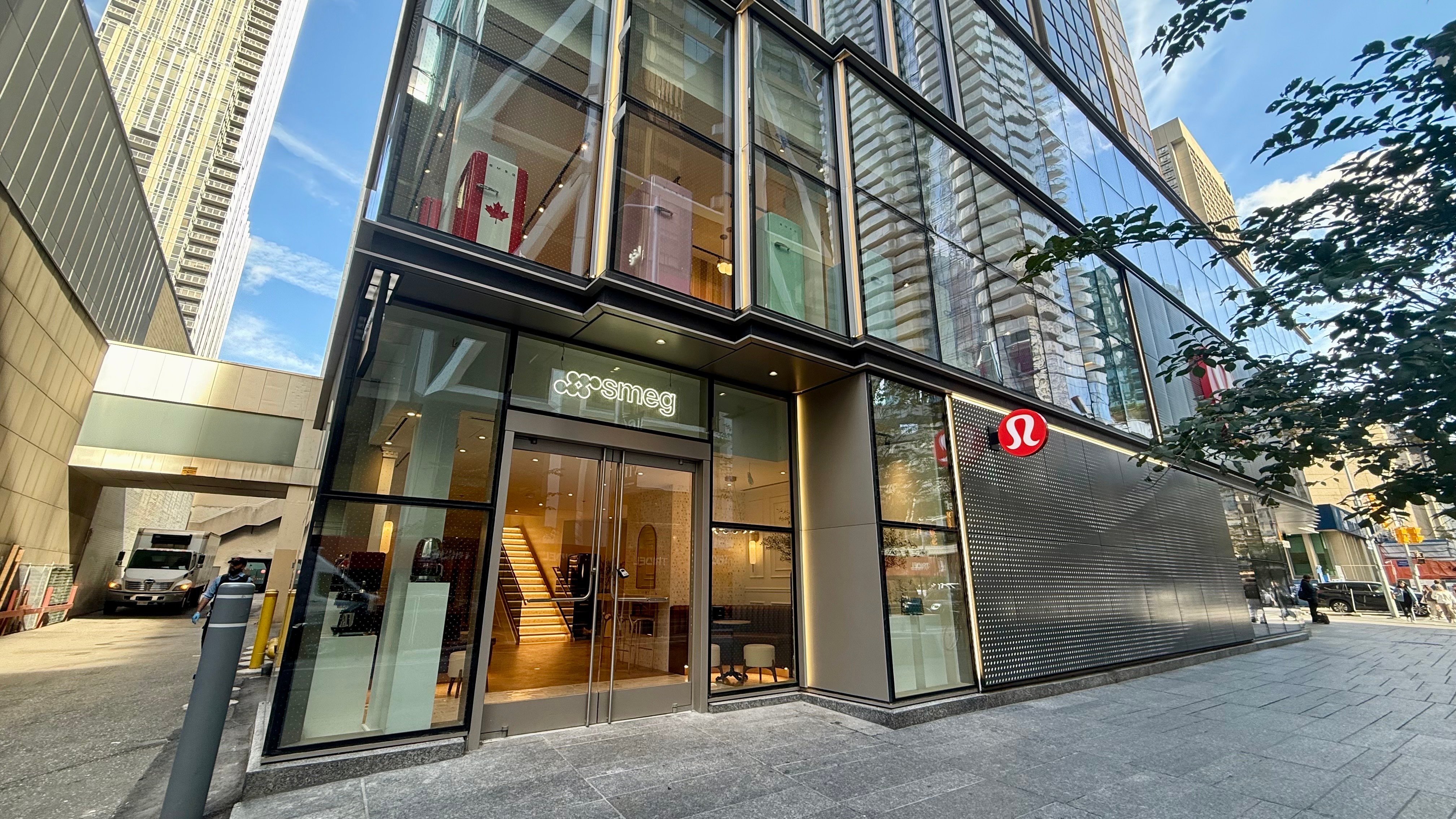
Smeg at 2 Bloor St. W. in Toronto. Photo: Craig Patterson
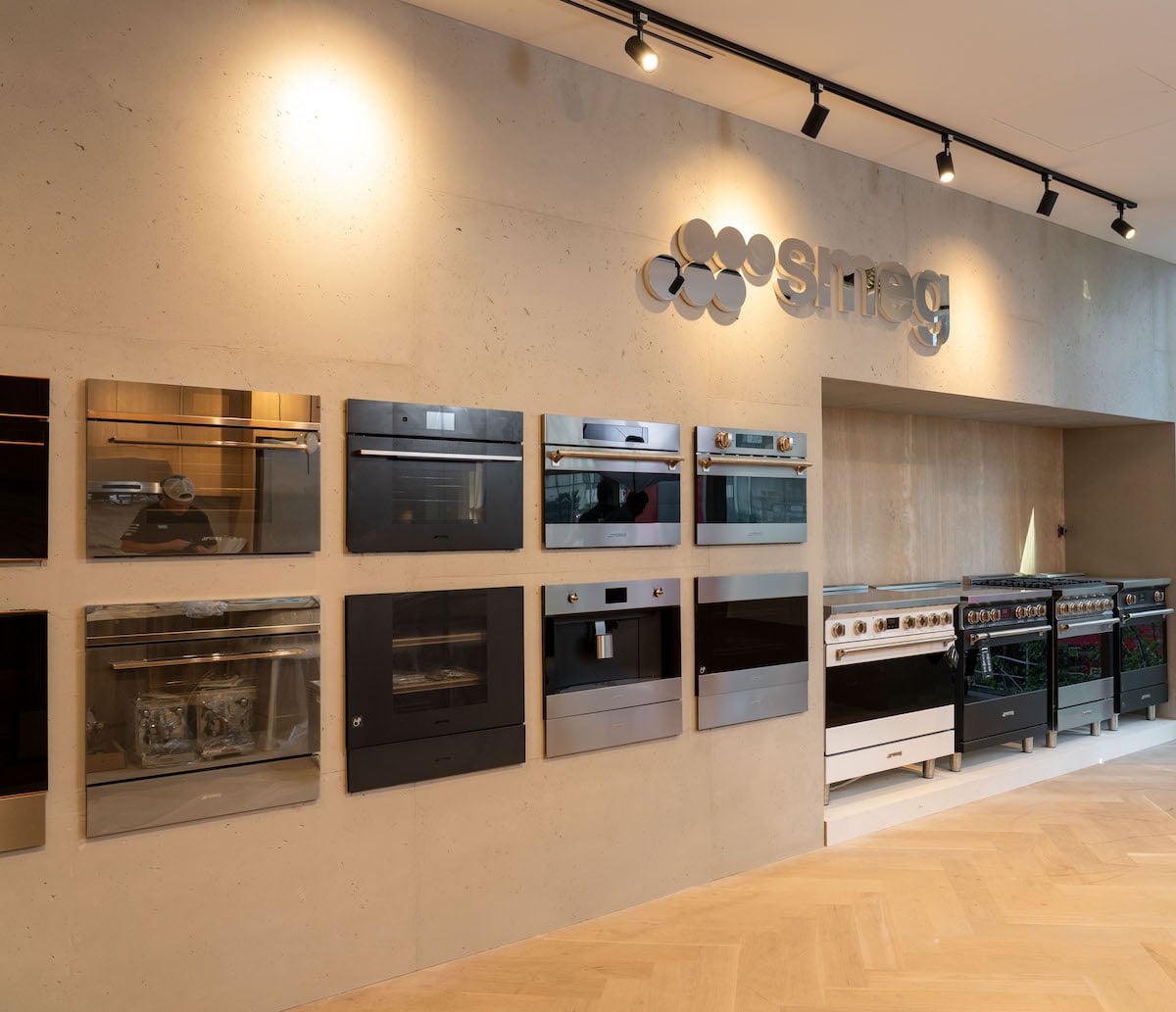
Smeg, the Italian appliance brand known for blending technology, style, and craftsmanship, has opened its first Canadian showroom in Toronto’s Bloor-Yorkville neighbourhood. The 2,900-square-foot flagship, located at 2 Bloor Street West at the iconic intersection of Yonge and Bloor, represents a milestone for the company’s expansion into the Canadian market. The opening brings a new immersive design and culinary experience to the country’s most prestigious retail district, adjacent to luxury fashion houses and a large Lululemon flagship.
“We are thrilled to bring the first Smeg showroom to Canada, creating a space where design, innovation and Italian craftsmanship come to life,” said Gisela Mussen, General Manager of Smeg Canada. “This showroom marks a milestone for our expansion in Canada, and we look forward to connecting with the local community through curated experiences that celebrate our passion for innovation and quality. Yorkville’s vibrant and sophisticated atmosphere makes it the perfect home for our first Canadian showroom.”
Gisela Mussen, General Manager of Smeg Canada
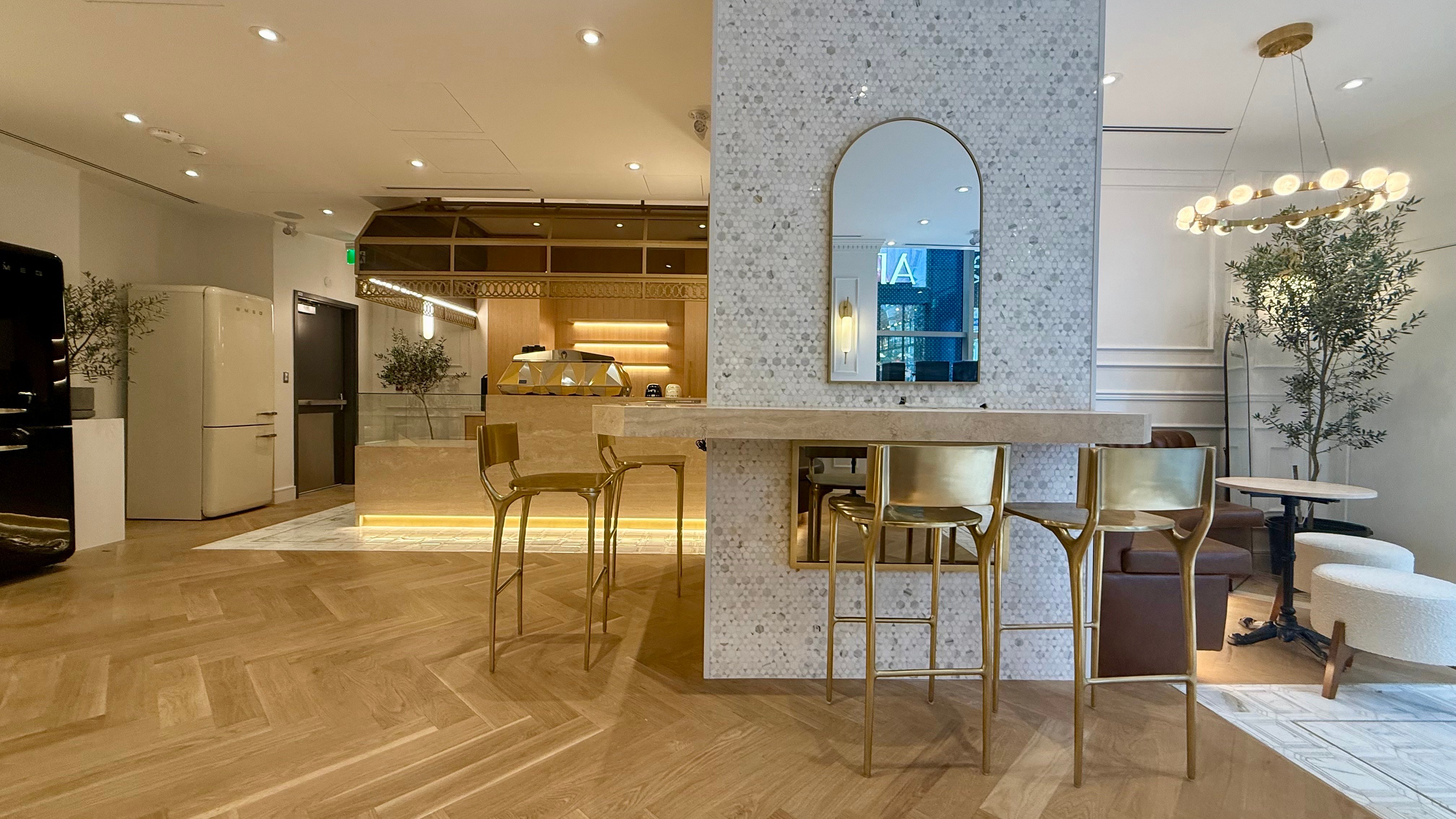
The Toronto flagship introduces several global firsts for the brand. Most notably, it is home to the world’s first on-site Smeg café, designed as a welcoming entry point to draw visitors into the space and foster a sense of community. “What I wanted from this whole concept was to bring customers into the store and create moments that connect them to the brand,” said Mussen during a tour of the new location.
On the upper level, a fully outfitted live kitchen has been designed to host chef demonstrations, VIP dinners, and private events. “This is the first time we’ve had a live kitchen in downtown Toronto,” Mussen explained. “We will be offering interactive masterclasses, tutorials, and curated events, which will allow guests to experience Smeg appliances in action.”
Design Details and Investment
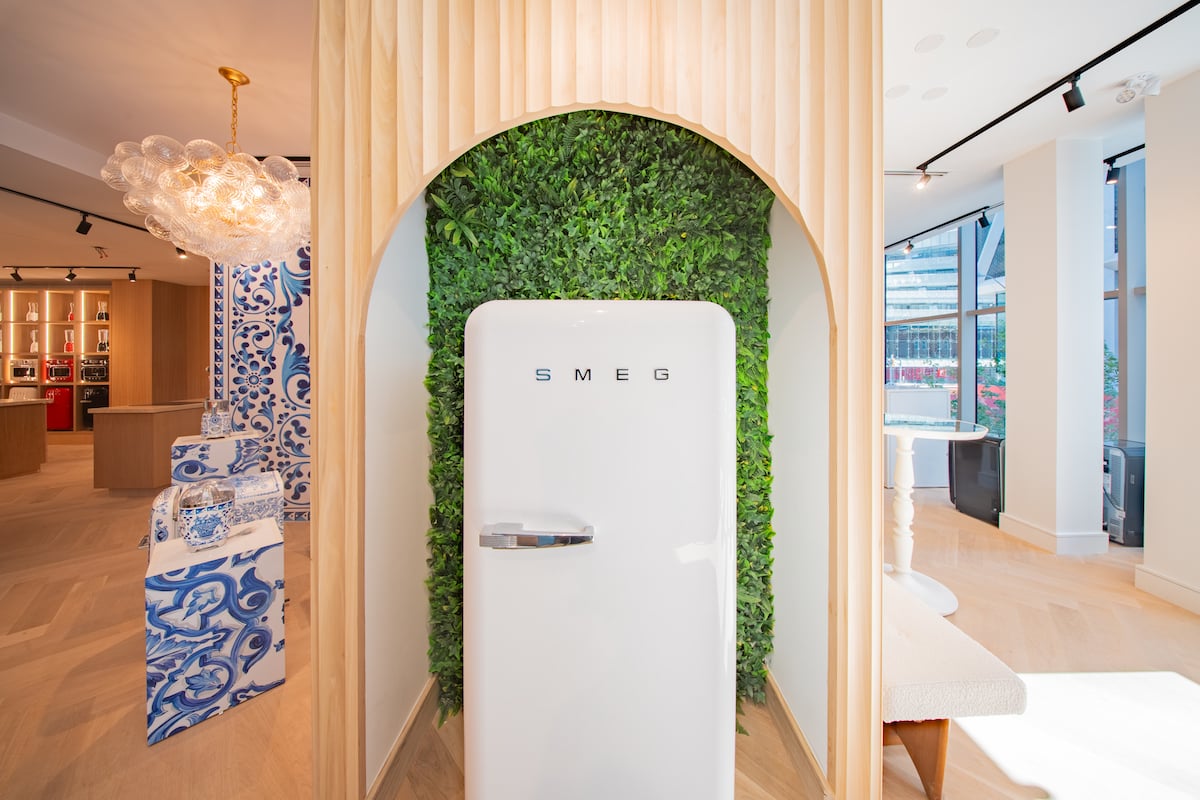
The new showroom was years in the making and involved an investment of over $4 million, according to Mussen. “Most of this was flown in from Italy, and we wanted to ensure that this space followed Smeg’s global brand guidelines,” she said, noting that every detail from the finishes to the signature green space was carefully planned.
The store’s design balances minimalist Italian architecture with warm textures and natural light, taking advantage of its position facing one of Toronto’s busiest intersections. “It’s surprisingly bright in here,” Mussen observed, pointing towards the south-facing windows facing busy Bloor Street.
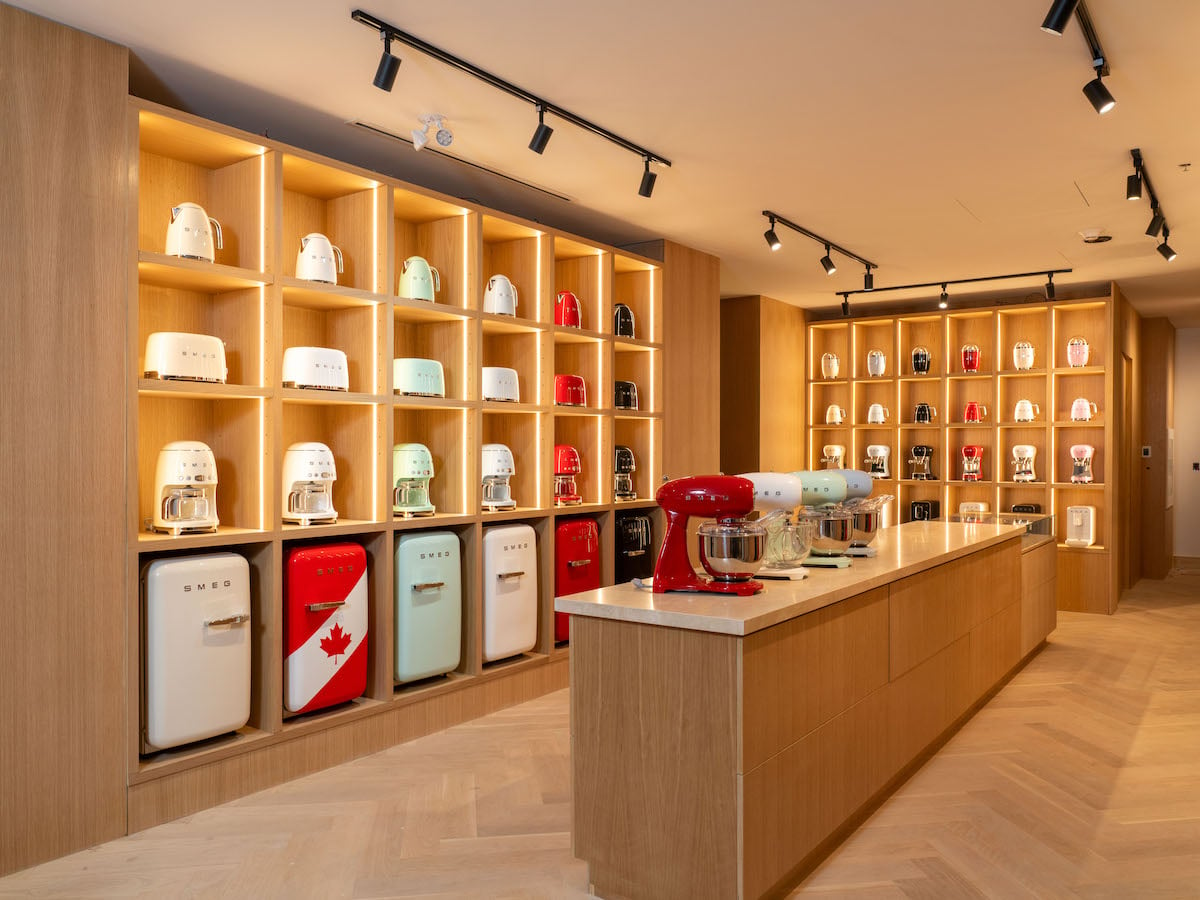
Smeg flagship showroom at 2 Bloor St. W. in Toronto. Photo: Smeg
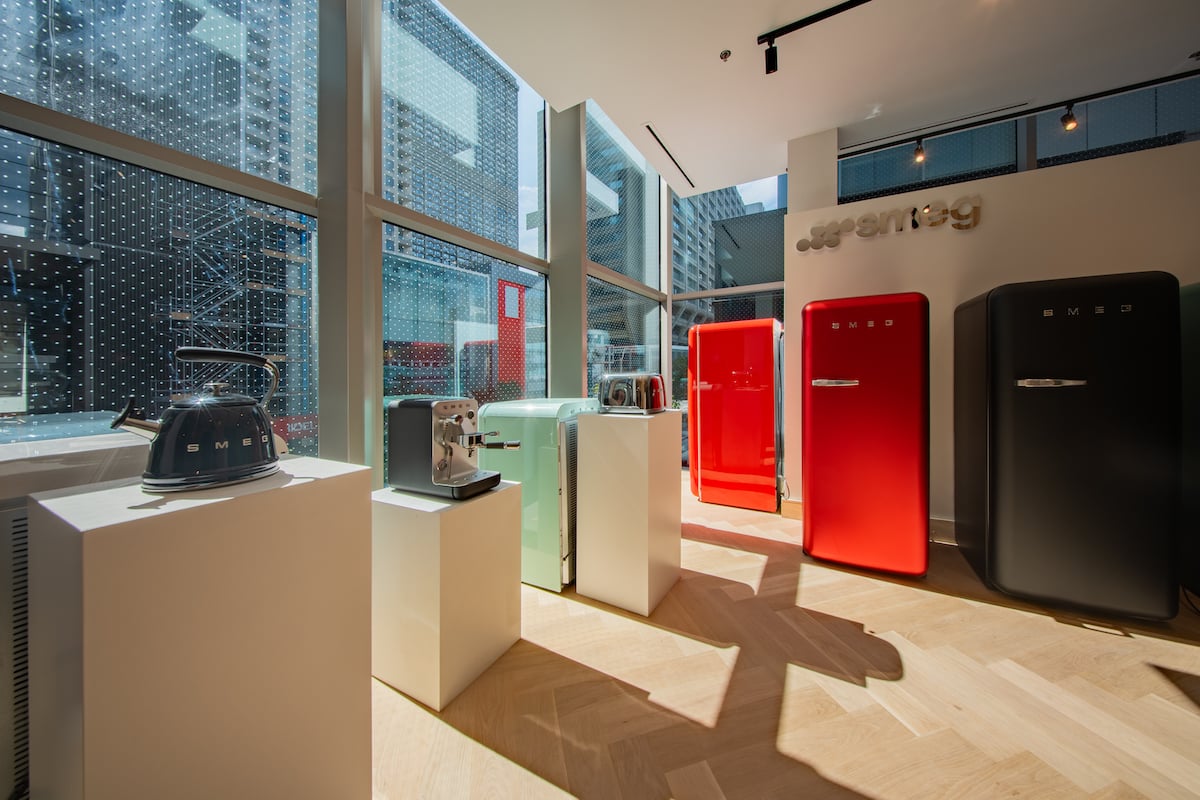
Inside the showroom, visitors can explore Smeg’s full range of products, from iconic FAB refrigerators to the newly launched matte-finish collections. “Everybody recognizes our brand from the smaller appliances and fridges, and we wanted to showcase every colour option here because most retailers can’t carry them all,” Mussen said. “This space allows people to see the entire collection together, just like walking into a luxury fashion boutique.”
One highlight is the debut of Smeg’s new washer-dryer line, which is being shown in Canada for the first time. “This is an important launch for us, particularly for the condominium and multi-residential market,” said Mussen. “We already have about 250 builder projects across the country, and this showroom will serve as a place to bring those clients through.”
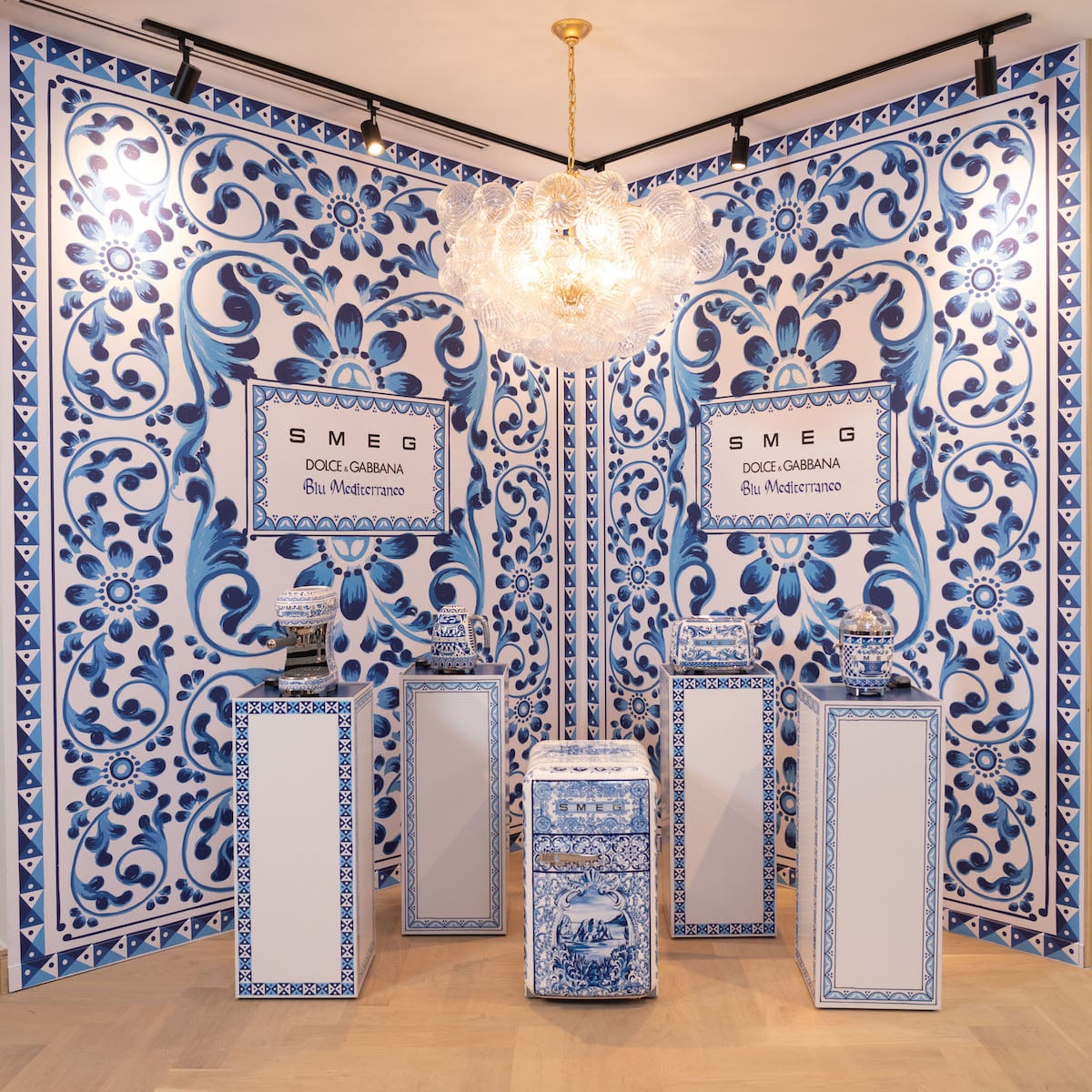
Dolce & Gabbana collaboration at the Smeg flagship showroom at 2 Bloor St. W. in Toronto. Photo: Smeg
Exclusive Collaborations and Canadian Tie-Ins
Smeg is widely known for its creative collaborations with designers and brands, including Dolce & Gabbana, Disney, and Supreme. The Toronto showroom highlights these limited-edition pieces and features a Canadian-exclusive collection created with OVO, Drake’s lifestyle brand. “The OVO collaboration was something very centric for Canada,” Mussen said. “It’s the only time we’ve used gold lettering outside of our Dolce & Gabbana partnership, and we wanted it to be special.”
In addition to the OVO appliances, the store features a Canadian flag refrigerator, one of only a few country-flag editions produced by Smeg worldwide. “We have flag fridges for the US, UK, Italy, and Australia, and now we’re proud to have one that celebrates Canada,” said Mussen.
Smeg flagship showroom at 2 Bloor St. W. in Toronto. Photo: Smeg
The Growing Luxury Appliance Market in Canada
Despite economic headwinds, Mussen said that demand for premium and luxury appliances remains robust. “Business is so up,” she said. “The market for luxury and premium luxury has continued to be strong. We have not seen a slowdown, which is remarkable.”
She noted that Canadian consumers are increasingly design-conscious and willing to invest in statement pieces for their homes. “People are not just looking for anything, they’re looking for design-driven products that become a centerpiece of their kitchens,” she explained. “And with our showroom, they can finally see and experience the full range in person.”
Smeg flagship showroom at 2 Bloor St. W. in Toronto. Photo: Smeg
Expanding the Brand’s Footprint in Canada
The Toronto flagship is the first step in Smeg’s Canadian retail expansion. “Our biggest market right now is out west,” Mussen revealed, noting strong sales in British Columbia. “Vancouver would be a natural choice for our next showroom, and we’ll look at that once we get our footing with this location.”
Montreal, while appreciative of Smeg’s design aesthetic, has been slower to convert to sales due to pricing and demographics. “It’s too high-ticketed for the Montreal market, even though they love the brand,” said Mussen. “Toronto and Vancouver are where we’re seeing the strongest growth.”
The opening of the Smeg Canadian showroom connects Toronto to a network of 19 flagship locations in major cities worldwide, including London, Milan, and Hangzhou. These stores share a consistent design language and act as cultural hubs, often hosting culinary events and collaborations with architects and designers.
“Globally, Smeg showrooms are always in the high-end district of whatever city they’re in,” Mussen explained. “Being on Bloor Street aligns us with luxury brands like Gucci and Louis Vuitton, which is exactly where we want to be as a brand.”
Smeg flagship showroom at 2 Bloor St. W. in Toronto. Photo: Smeg
Building a Community Around Design
The Smeg café, located on the main level, is expected to become a destination in its own right. It will serve artisanal beverages and function as a gathering point for design enthusiasts and the local community. “We will be using the café to host curated events and bring people into the store,” said Mussen. “It’s about more than just selling appliances, it’s about creating moments.”
By blending retail, hospitality, and design culture, Smeg aims to strengthen its connection to Toronto’s urban audience. “This showroom is about building community,” Mussen said. “It’s about connecting people to the brand in a way that goes beyond the transaction.”
Main floor cafe, Smeg at 2 Bloor St. W. in Toronto. Photo: Craig Patterson
Canada’s labour market added 60,000 jobs in September, pushing the national employment rate up by 0.1 percentage points to 60.6 per cent, according to new data released by Statistics Canada.
The increase comes after two months of declines totalling 106,000 jobs, and leaves overall employment just 22,000 higher than in January, a net change of 0.1 per cent.
The unemployment rate remained steady at 7.1 per cent in September.
Gains were concentrated among core-aged workers aged 25 to 54, where employment rose by 76,000 (+1.2 per cent) for women and 33,000 (+0.5 per cent) for men. Statistics Canada noted, “This was associated with a rebound in the employment rate of core-aged women (+0.9 percentage points to 80.4%) and core-aged men (+0.3 percentage points to 86.1%).”
Employment fell among people aged 55 and older by 44,000 (-1.0 per cent), with their employment rate decreasing by 0.4 percentage points to 33.6 per cent. Youth employment saw little change, holding steady at 53.8 per cent.
Photo: Andrea Piacquadio
Full-time positions drove the increase, with 106,000 jobs added (+0.6 per cent), while part-time employment dropped by 46,000 (-1.2 per cent). Public sector employment rose by 31,000 (+0.7 per cent), compared to smaller increases in the private sector (+22,000; +0.2 per cent) and self-employment (+7,900; +0.3 per cent).
Among industries, manufacturing led the way with 28,000 new jobs (+1.5 per cent), marking its first increase since January. Gains were largely seen in Ontario (+12,000) and Alberta (+7,900). Employment also increased in health care and social assistance (+14,000; +0.5 per cent) and agriculture (+13,000; +6.1 per cent).
Wholesale and retail trade saw the largest industry decline, down 21,000 jobs (-0.7 per cent), though employment in that sector remains up year-over-year by 61,000 jobs (+2.1 per cent).
Regionally, Alberta posted the biggest gain in employment with 43,000 new jobs (+1.7 per cent), more than offsetting declines in July and August. The province’s unemployment rate fell by 0.6 percentage points to 7.8 per cent.
New Brunswick added 4,700 jobs (+1.2 per cent) and Manitoba added 3,900 (+0.5 per cent), although unemployment rates in both provinces increased as more people entered the labour force.
In contrast, employment declined by 2,200 in Newfoundland and Labrador (-0.9 per cent). Employment levels remained largely unchanged in Ontario and Quebec.
The average hourly wage increased by 3.3 per cent year-over-year to $36.78, up $1.17 from September 2024.
Among youth, the unemployment rate rose to 14.7 per cent, the highest since September 2010, excluding the pandemic years. “The increase in the youth unemployment rate over the 12 months to September was primarily due to rising unemployment among students,” Statistics Canada reported. The unemployment rate for students reached 17.1 per cent, up 3.1 percentage points from one year earlier.
Douglas Porter
Douglas Porter, Chief Economist, BMO Capital Markets, said: “Today’s strong report is certainly welcome after the big declines in the prior two months. Canada’s economy continues to hang in there, treading water as it awaits more certainty on trade.”
Andrew Hencic | Director & Senior Economist, TD, said: “Well, that’s quite the surprise. Canada’s job market looks like it recovered all of August’s losses in September. Importantly, even for a noisy data series, this is a strong result. That said, it’s important to note that the unemployment rate remained unchanged as the labour force jumped by an even greater amount. Considering population growth slowed to 28k people, the biggest surprise was a large influx of new workers despite a weak job market.
“The Bank of Canada’s next decision is due at the end of the month and this surprise from the labour market could change the calculus on the decision. However, underlying inflation continues to hover within the target range and the unemployment rate suggest that the labour market still has excess slack. The next inflation report is due on the 21st and the bar will be even higher for inflation to underperform and bring the BoC onside for another rate cut. Markets seems to agree as the pricing for a rate cut materially deteriorated this morning.”
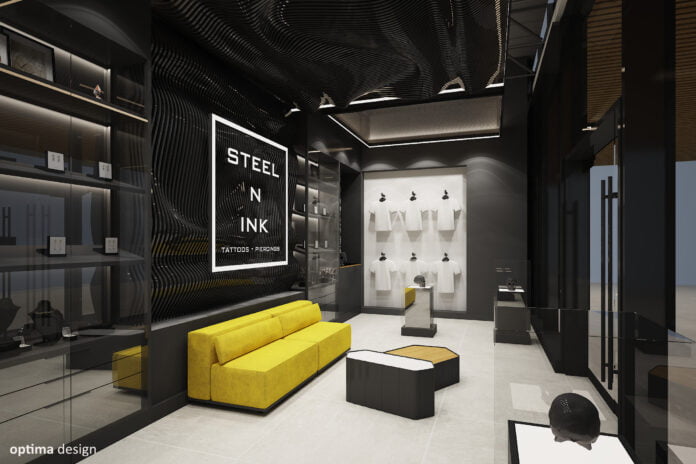
Steel N Ink at The Well (Rendering: Optima design)
Progress Retail, now operating under Worksmith following its June 2025 acquisition, has announced new partnerships that expand its presence in the Canadian retail market. The store management platform has secured Hillberg & Berk, the Regina-based jewellery retailer, and Steel N Ink, a fast-growing tattoo and piercing studio brand, as clients. Both companies are experiencing accelerated expansion, making them natural partners for Progress Retail’s operational platform.
The addition of Hillberg & Berk and Steel N Ink highlights the increasing relevance of retail technology providers in Canada’s competitive retail landscape. Each represents a very different retail sector, with one focused on fine jewellery and the other on body art, yet both share an aggressive growth trajectory that requires scalable operational support.
“As Canadian retailers expand coast to coast and into the United States, they need tools that are both easy to implement and powerful enough to support today’s complex retail workforce management needs,” said Ray Riley, Vice President of Retail at Worksmith. “We’re thrilled to partner with innovative brands like Hillberg & Berk and Steel N Ink, and to continue strengthening our investment in Canada.”
Ray Riley
Progress Retail’s platform provides streamlined workforce management, training, and communication solutions, all designed to make scaling easier for retailers. For Canadian brands moving into national and even international markets, operational alignment is critical to maintaining consistency in both brand identity and customer experience.
Steel N Ink’s Rapid Growth
Steel N Ink has built a strong reputation in Canada as one of the country’s largest tattoo and piercing studio chains. With locations spanning Ontario and other provinces, the brand has positioned itself as a mainstream lifestyle retailer within the personal services space.
“Our growth requires a scalable platform that doesn’t slow us down,” said Jamie Randolph, CEO of Steel N Ink. “Progress Retail’s ease of use and support for multi-location operations make it the perfect partner as we continue to expand across Canada.”
By adopting Progress Retail’s platform, Steel N Ink is reinforcing its operational backbone at a time when consumer demand for body art continues to rise. The company has already established itself as a household name, and its future expansion depends on workforce systems that can handle scale without complexity.
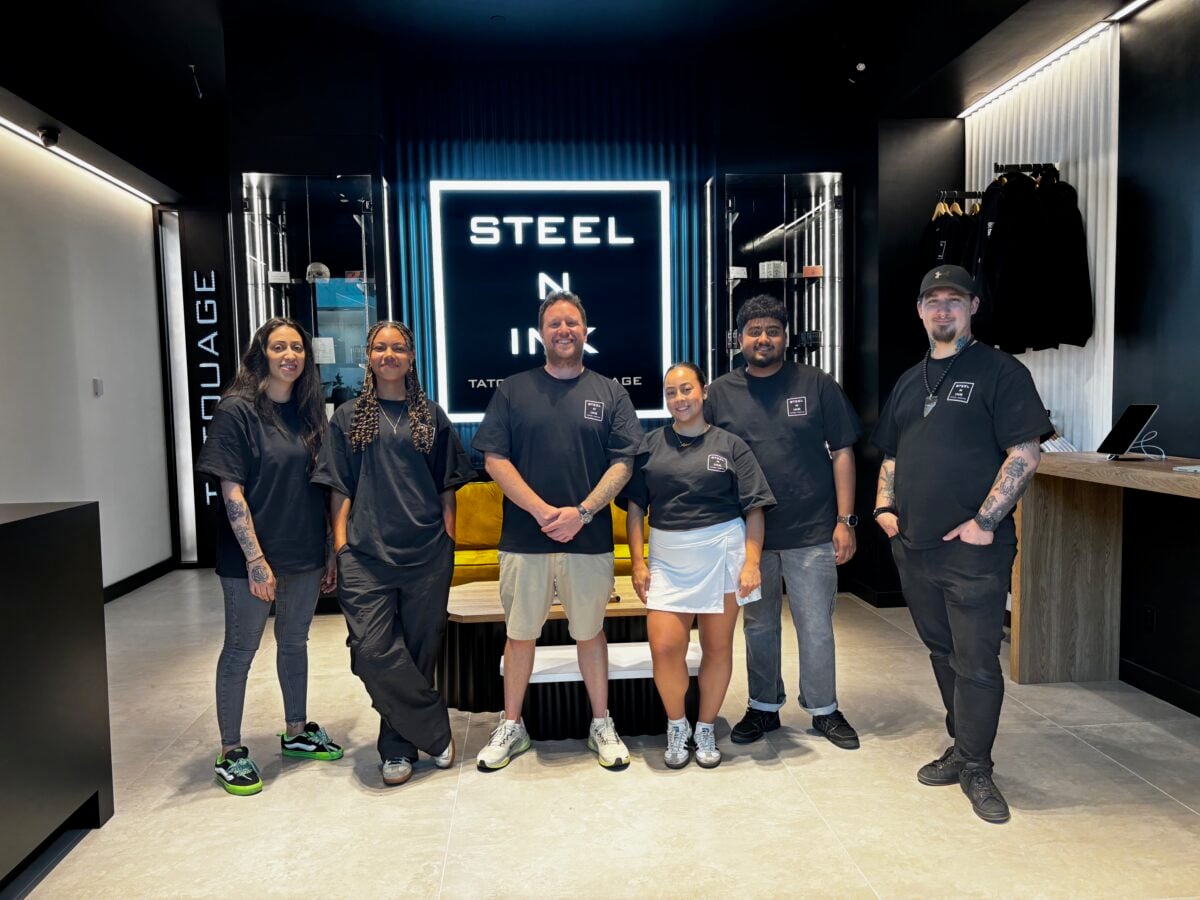
Jamie Randolph and the team at Steel N Ink at CF Carrefour Laval. Image supplied
Hillberg & Berk’s Jewellery Expansion
Founded in Saskatchewan, Hillberg & Berk has become a widely recognized Canadian jewellery brand. Known for its signature sparkle ball earrings and a commitment to celebrating women’s stories, the company has built a loyal following across Canada. The brand’s growing retail footprint, combined with wholesale partnerships and online strength, has necessitated a more unified operational platform.
“At Hillberg & Berk, we’re scaling faster than ever,” said Brett Halliday, Vice President of Retail & Wholesale at Hillberg & Berk. “Progress Retail will enable us to keep operations smooth and teams empowered, which is vital as we build out our retail presence nationwide.”
The jewellery brand’s ability to pair design excellence with empowerment-driven marketing has been central to its success. By aligning with Progress Retail, Hillberg & Berk is equipping itself to manage accelerated expansion while maintaining high levels of employee engagement.
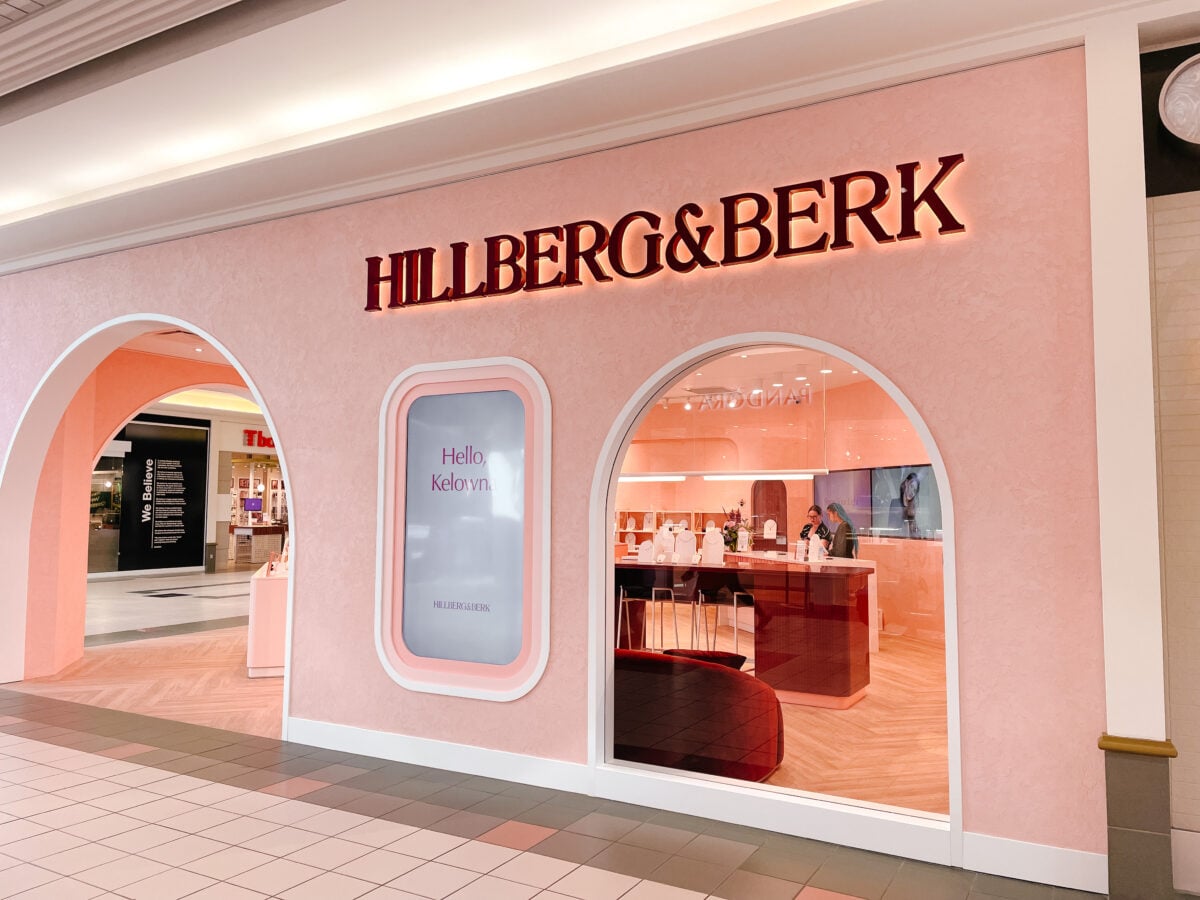
Hillberg & Berk Orchard Park in Kelowna (Image: Hillberg & Berk)
Progress Retail’s Industry Recognition
The company’s recent industry recognition reinforces its momentum in the retail technology sector. In Fall 2025, Progress Retail received multiple G2 Badges, including Easiest to Do Business With, Easiest Setup, High Performer, and Momentum Leader. It was also named Store Management Platform of the Year 2025 by Retail Tech Insights, a reflection of its growing influence among multi-location retailers.
This recognition reflects the increasing demand for unified retail management systems. As retailers face challenges including labour shortages, high turnover, and complex supply chain dynamics, platforms like Progress Retail have become critical to ensuring business continuity and growth.
The Worksmith Acquisition
Progress Retail’s trajectory has been accelerated by its acquisition by Worksmith earlier in 2025. Austin-based Worksmith is a facilities maintenance and store experience management software company. By bringing Progress Retail under its umbrella, Worksmith has created a vertically integrated operations platform that unites facilities management, vendor oversight, workforce training, and in-store execution.
Progress Retail’s learning management and workforce engagement capabilities are expected to integrate with Worksmith’s vendor management and facilities solutions. Together, the platforms create a unified system that supports both the backend and the frontline.
Worksmith’s global retail clientele already includes brands such as Burberry, Louis Vuitton, Tiffany & Co., and Nespresso. Adding Progress Retail’s expertise in workforce training and retail execution extends this reach and positions the platform to support a broader range of brands.
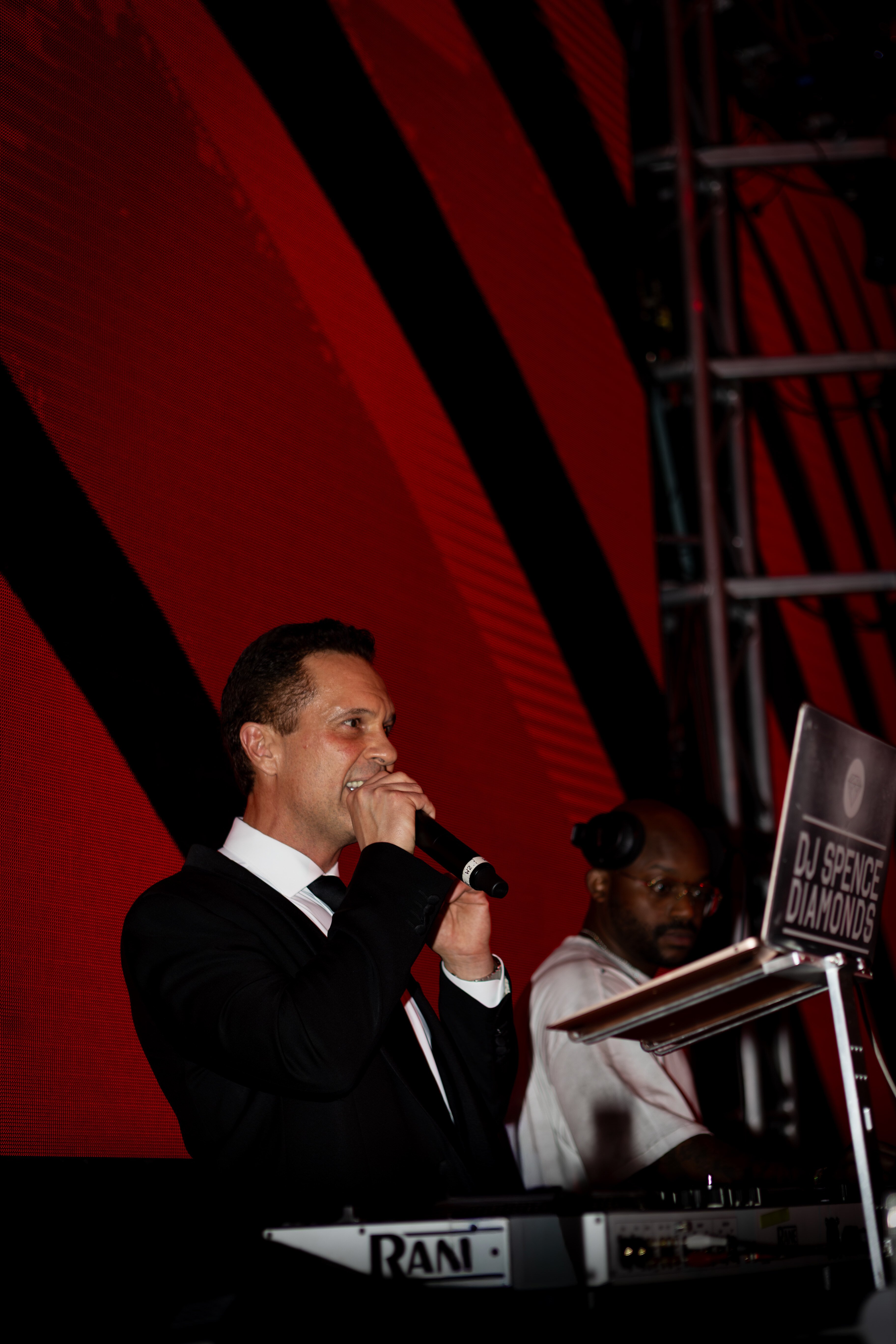
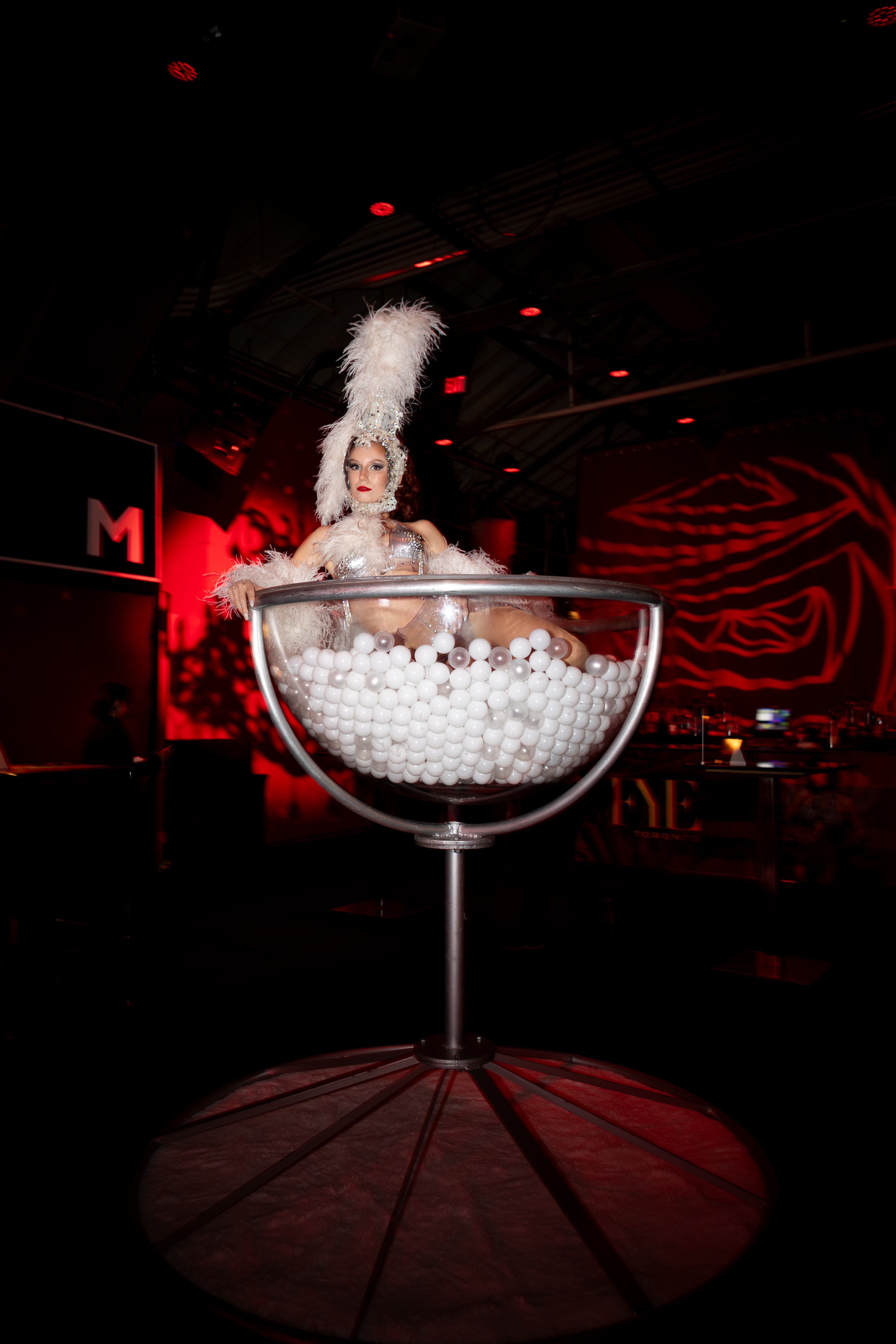
A new addition to Toronto’s nightlife scene was launched recently with the opening of FYE Ultraclub, a venue described as Canada’s first burlesque-inspired ultraclub.
Located at 7 Saskatchewan Rd., the club combines burlesque, aerial acts and live DJ sets to create what organizers call a high-energy, luxury nightlife experience.
“Bringing FYE to this city isn’t just about opening another club; it’s about redefining what a night out should be. Miami set the global standard for nightlife — and now we’re bringing that same heat to Toronto. The burlesque-inspired performances, the world-class DJs, the unmatched VIP experience — it’s a party that doesn’t sleep.”
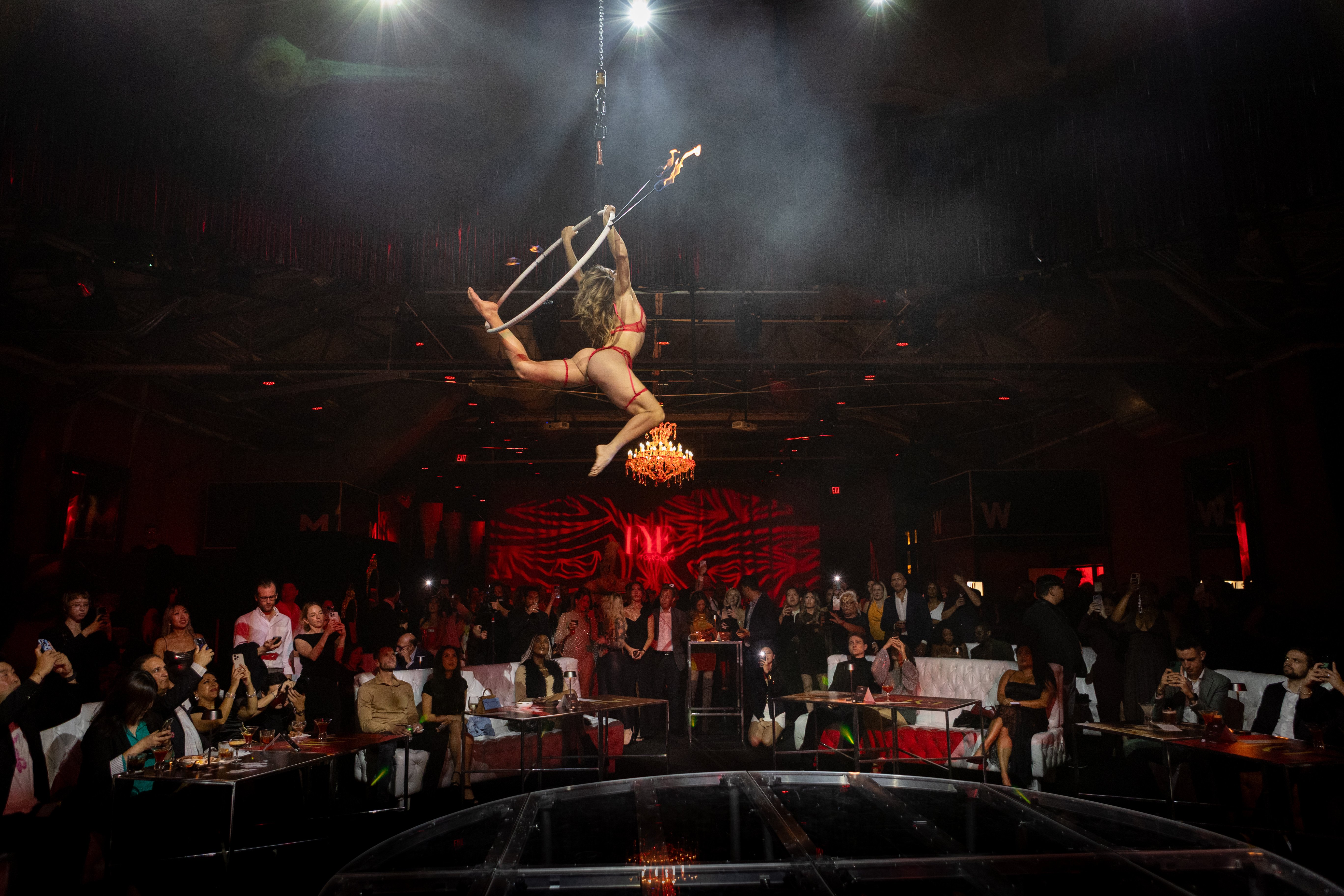
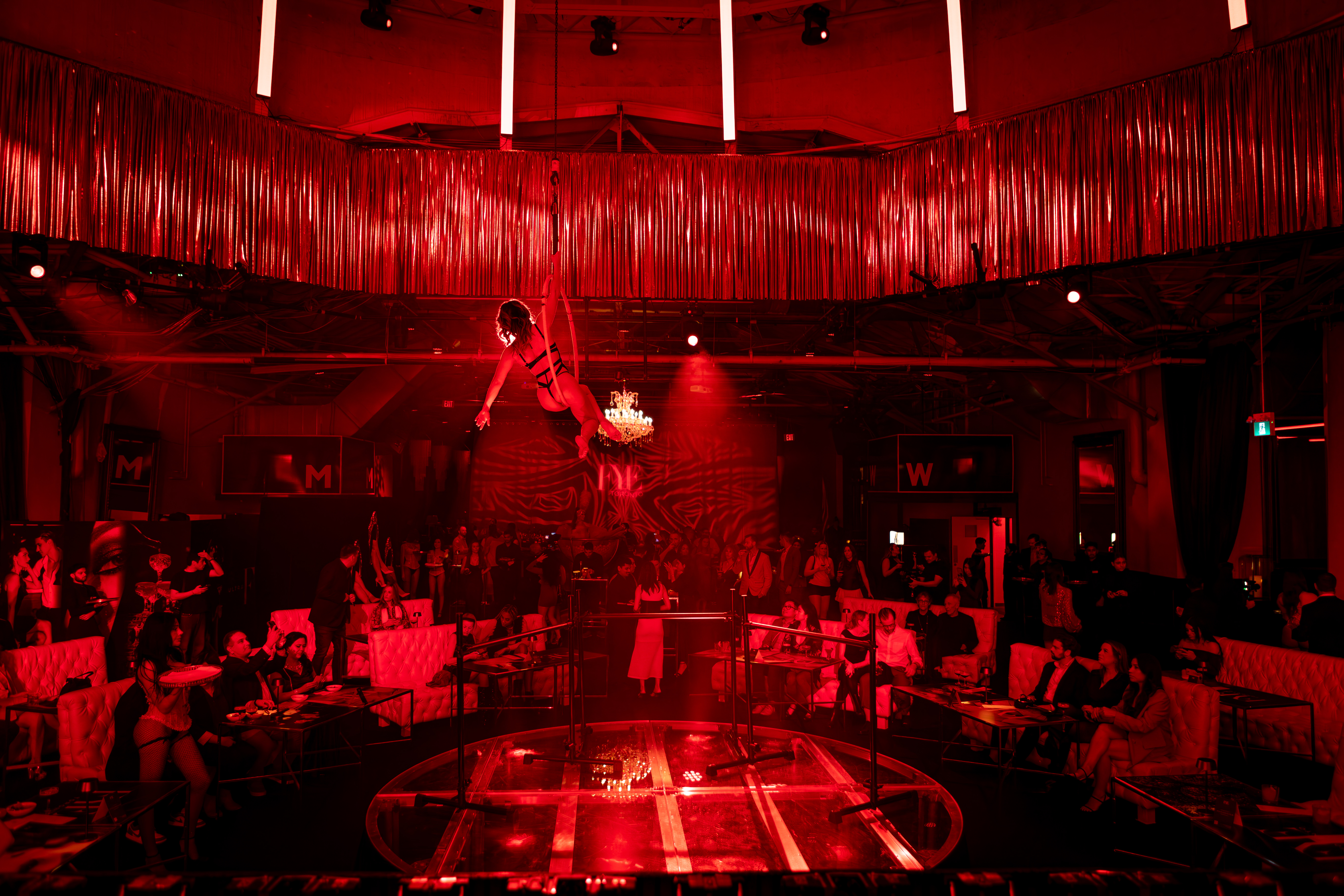
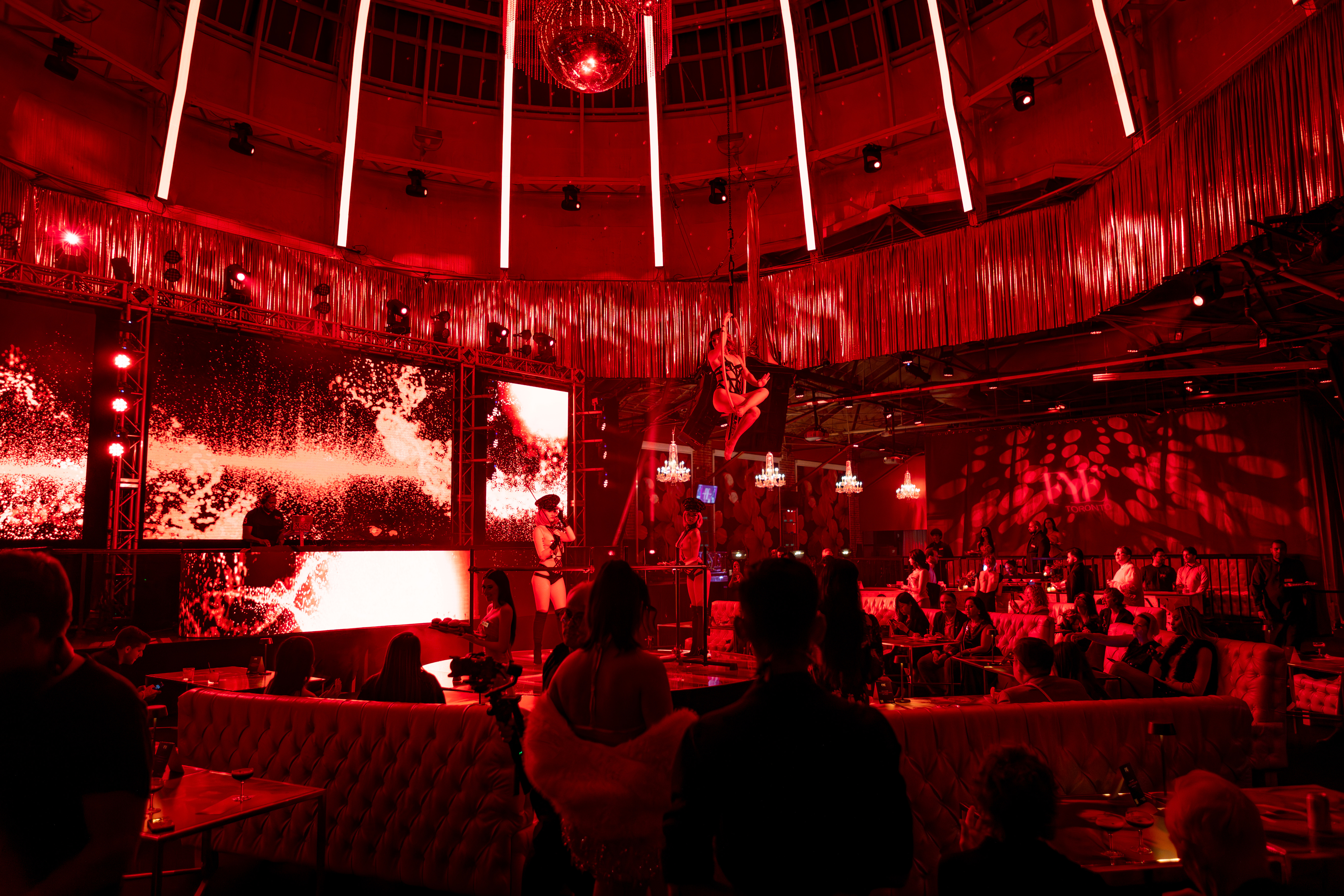
The venue features hourly burlesque performances alongside aerialists who perform above the crowd. Organizers describe each evening as “a living, breathing performance, immersive, unpredictable, and never the same twice.”
FYE occupies a heritage building in the city, with a capacity of 400 and 60-foot ceilings. According to organizers, the space has been designed to transition between lounge and performance venue, with features such as layered lighting, uninterrupted sightlines and a state-of-the-art sound system.
“Every corner is built to amplify the energy of the night, ensuring guests are immersed in the performance from the moment they step inside,” the company stated.
Culinary offerings at the club are led by celebrity chef Robert Rainford, with a late-night menu of globally inspired small plates. Items include tuna tartare, shrimp cocktail, taco platters and prime beef sliders.
Chef Rainford’s menu is “designed to complement the music and performances,” and aims to “keep the energy flowing and the evening unforgettable,” according to the release.
FYE Ultraclub will be open Fridays and Saturdays from 9 p.m. until late.
FYE Ultraclub
“The inspiration came from wanting to reimagine Toronto’s nightlife on a scale that matches the world’s top destinations. We looked at places like E11EVEN in Miami and saw how powerful it can be when entertainment, performance, and nightlife all come together under one roof. Burlesque, with its glamour, artistry, and bold theatricality, felt like the perfect starting point,” said Starkovski.
“But FYE Ultraclub isn’t just about burlesque – it’s about creating an experience where performance, music, design, and hospitality work in sync. Unlike traditional clubs that might focus only on DJs or bottle service, FYE is a fully immersive experience where every element, from aerial acts to cocktails, has been designed to keep guests engaged from the moment they arrive to the moment they leave.
“Every detail has been considered, from the world-class sound and lighting to the roster of performers and DJs to the menu and cocktail program, all crafted to transport guests into an atmosphere where nightlife becomes an art form. The goal is to offer something truly unforgettable and set a new standard for Toronto, positioning the city alongside cultural nightlife capitals like Miami, Las Vegas, and Ibiza.”
FYE Ultraclub
Starkovski said burlesque has always been about more than sensuality, but a celebration of artistry, confidence, and self-expression.
“At FYE, we’ve been intentional in building a space that honours those traditions while also embracing modern values of inclusivity and diversity that reflect Toronto itself. Our performances respect the legacy of burlesque, but they also push it forward by weaving in contemporary music, choreography, and production that make the experience feel fresh, relevant, and distinctly ours. The result is a show that’s glamorous and bold, but also welcoming and empowering,” he said.
“We wanted to create a night that doesn’t pause and where every detail works together to keep guests engaged. Food and drink aren’t an afterthought at FYE; they’re part of the energy. Chef Robert Rainford has built a menu of refined, shareable small plates, including tuna tartare, sliders, and tacos. They’re dishes that fuel the night without slowing it down.
“On the cocktail side, we’ve reimagined the classics like the Manhattans, Old Fashioneds, Negronis, martinis, spritzes, and introduced signature twists like a Peach Cosmo, a Cassis Sloe Gin Sour, and our own spin on the Espresso Martini. Each one is created to align with Toronto’s evolving cocktail culture while adding to the sense of theatre and indulgence.
“Together, food, drink, and performance create an experience that keeps guests engaged from start to finish.”
FYE Ultraclub
Starkovski said the goal was to create a venue of global calibre in Toronto but attract visitors from everywhere.
“Just as people travel to Miami or Las Vegas for nightlife, we want FYE to be a reason visitors choose Toronto. With world-class DJs, a heritage space transformed by cutting-edge production, and an atmosphere unlike anything else in the city, FYE is positioned to be both a local favourite and a global draw,” he explained.
“I hope guests leave feeling like they’ve experienced something unforgettable — a night that exceeded their expectations and made them proud it exists in Toronto. Success in year one isn’t just about full rooms, it’s about building a reputation: that FYE is where you go for world-class nightlife, where every night feels like an event. If people walk out saying, “I can’t believe this is in Toronto,” then we’ve achieved what we set out to do.“
Vancouver-based fashion retailer Aritzia has reported another stellar performance, marking its ninth consecutive earnings beat, according to a new report from Stifel Nicolaus Canada Inc. prepared by Managing Director Martin Landry. The Stifel analysis highlights a significant acceleration in both revenue and profitability, underscoring Aritzia’s strength as one of Canada’s most successful global retail brands.
The Aritzia earnings report revealed that earnings per share surged to $0.59, well above Stifel’s forecast of $0.41 and the consensus estimate of $0.39. This figure represents a dramatic 178% increase from the same quarter last year. Total revenue climbed 32% year-over-year to $812 million, exceeding expectations and continuing a streak of strong double-digit growth.
Martin Landry
Comparable sales rose 21.6% year-over-year, the second-best performance in three years. “Results were strong all around, with comparable sales up 21.6% year-over-year,” Stifel wrote in its report, crediting the company’s loyal customer base and continued product resonance.
Canadian and U.S. Markets Fuel Record Growth
Aritzia’s growth story continues to play out across both its home market and south of the border. Sales in Canada rose 20.6%, an impressive figure for what Stifel characterized as a “mature market,” demonstrating that the brand continues to expand even in well-established regions.
Meanwhile, the company’s U.S. operations remain a major driver of growth. The Aritzia earnings report notes that management now sees the potential to grow its U.S. store network beyond 150 locations — a significant increase from the initial expansion target announced at its 2022 Investor Day. Aritzia executives hinted at the potential for as many as 200 U.S. stores, reflecting the brand’s growing awareness and momentum among American consumers.
The company’s U.S. presence continues to broaden into new markets, including Cincinnati, Pittsburgh, Raleigh, Salt Lake City, and Scottsdale, which will open this year. These new locations are expected to build on the brand’s already strong foothold in urban retail environments and affluent suburban centres.
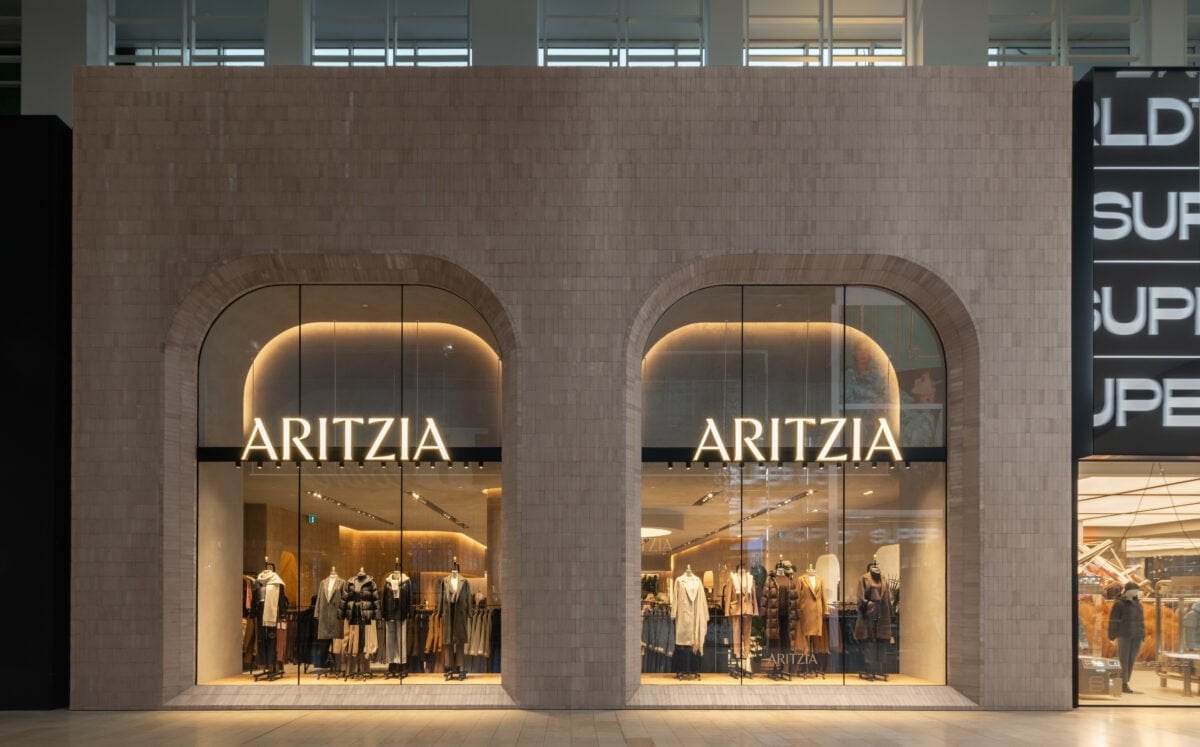
Aritzia Yorkdale (Image: Aritzia)
Profitability Surges as Margins Expand
Aritzia’s second quarter results also demonstrate impressive profitability gains. The retailer’s gross margin rose 360 basis points year-over-year to 43.8%, surpassing both company guidance and Stifel’s estimate of 41.8%.
This expansion, the report explains, was supported by operational efficiencies, including the relocation of all U.S. fulfillment operations to Aritzia’s distribution centre in Ohio. This move effectively mitigated cost pressures associated with the de minimis exemption, which had previously affected Canadian exporters to the United States.
At the same time, SG&A expenses as a percentage of net revenue declined 150 basis points to 30.8%, helping lift the adjusted EBITDA margin to 15.1%, up more than 600 basis points year-over-year.
Adjusted EBITDA more than doubled, reaching $122.7 million, while net income rose 185% to $69.8 million. According to Stifel’s analysis, these results show strong execution and cost discipline, with the company maintaining healthy margins despite rising tariff pressures.
Guidance and Outlook: Aritzia Raises the Bar
Following these strong results, Aritzia increased its guidance for the next quarter. The company now expects Q3 FY26 revenue between $875 million and $900 million, surpassing both Stifel’s estimate of $850 million and the market consensus of $855 million.
Even as tariff headwinds have grown, now representing a 280-basis-point impact this fiscal year compared with 150 basis points previously, Aritzia maintained its EBITDA margin guidance. Stifel attributed this confidence to “management’s mitigation strategies and strong sales trajectory.”
The firm also expects the company’s momentum to continue post-quarter, noting that the upcoming launch of Aritzia’s mobile application could further strengthen customer engagement and digital sales.
Aritzia at CF Markville (Image: Aritzia)
Stifel Raises Target Price to $100
Reflecting Aritzia’s strong performance, Stifel Nicolaus Canada Inc. raised its target price from $96 to $100, maintaining its Buy rating on the stock.
In the Aritzia earnings report, Martin Landry wrote that the new target price reflects “higher forecasts combined with higher valuation multiples.” Stifel’s valuation approach includes three methods: applying a 28-times multiple to its FY27 EPS estimate, a 17.5-times multiple to the FY27 EBITDA estimate, and a discounted cash flow (DCF) calculation.
The analysts raised their FY26 revenue forecast to $3.36 billion (from $3.28 billion) and FY27 revenue forecast to $3.85 billion (from $3.69 billion). Adjusted EPS estimates were increased to $2.69 for FY26 and $3.60 for FY27, representing 5% and 3% upgrades, respectively.
The Stifel report also highlighted Aritzia’s robust financial position. The company holds no bank debt and has more than $350 million in cash, providing flexibility for expansion, investment, and potential share repurchases.
With its market capitalization now exceeding $10 billion, Aritzia is attracting more global investors and gaining visibility as a high-performing retail stock. Stifel noted that this liquidity and scale could make Aritzia increasingly appealing to large institutional funds seeking exposure to the Canadian consumer sector.
Product Strategy and Brand Appeal
Central to Aritzia’s success is its disciplined approach to product strategy and brand positioning. The retailer operates a portfolio of approximately 10 exclusive in-house brands, many of which have become staples for Canadian and American shoppers alike.
The Aritzia earnings report attributes part of the company’s recent sales growth to the strong performance of its summer and fall collections, which were well received by consumers. Aritzia’s concept of “everyday luxury,” offering high-quality apparel at attainable prices, continues to resonate with its core audience of women aged 15 to 45.
The company’s product catalogue now exceeds 3,000 styles across over 100,000 SKUs, offering a wide range of apparel that balances trend-driven items with proven classics. This mix has helped Aritzia sustain strong demand while reducing fashion risk.
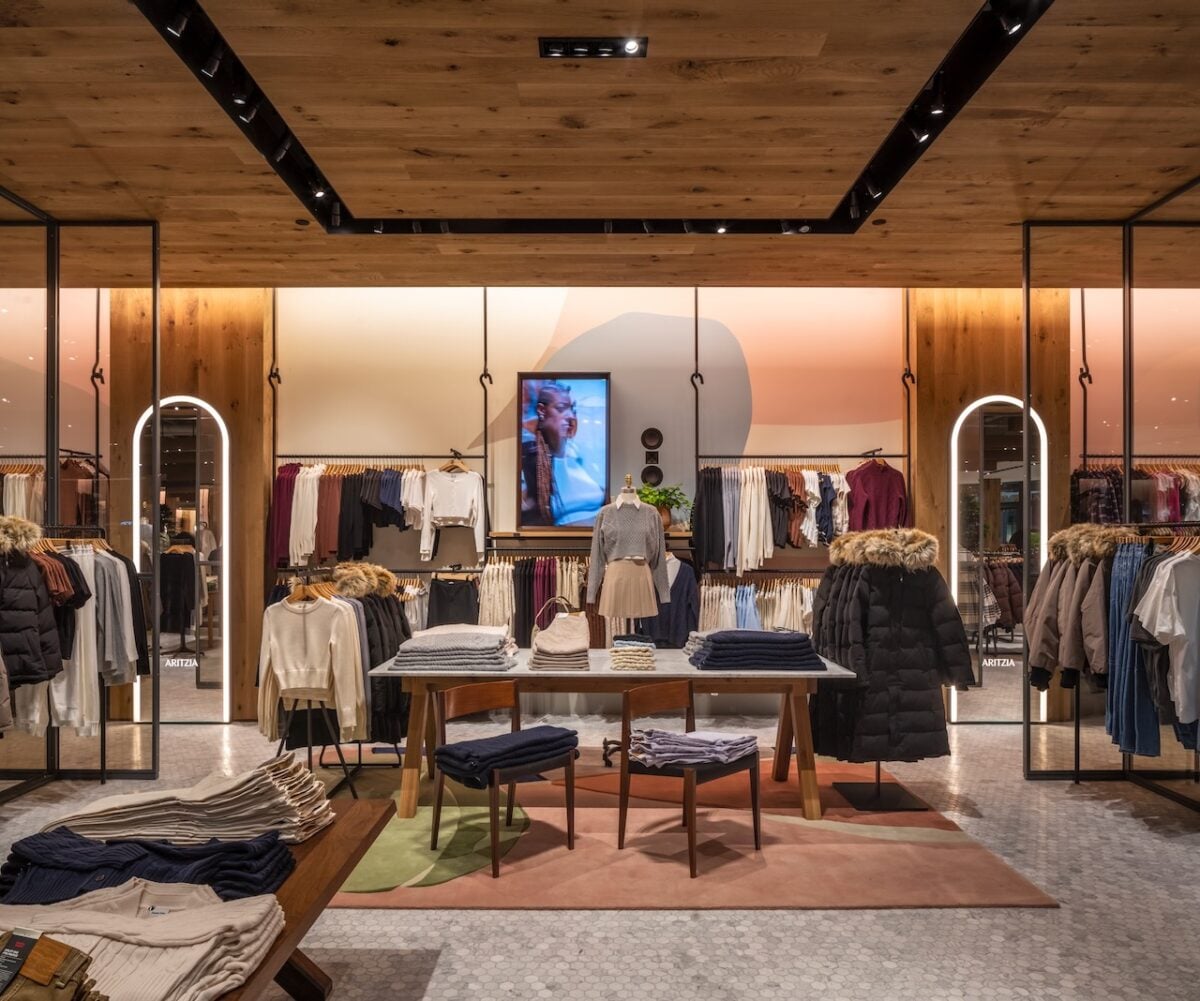
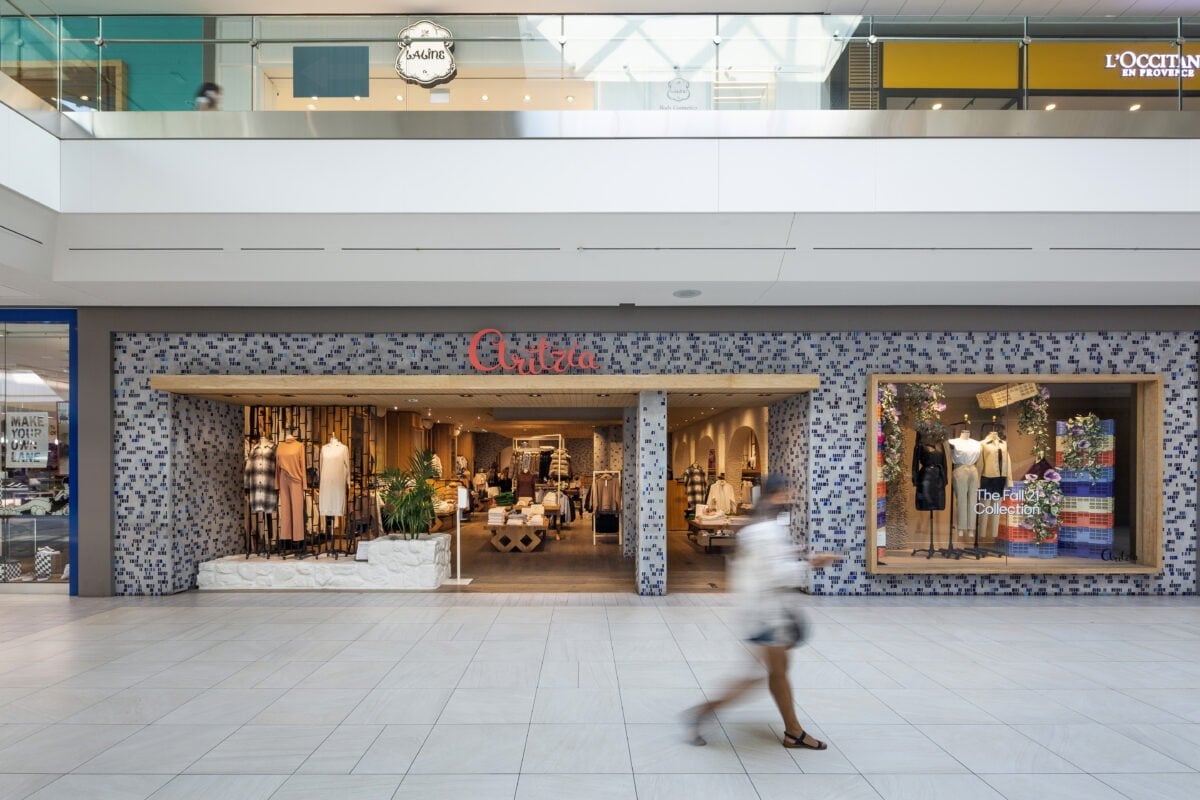
Aritzia at CF Masonville Place (Image: Cadillac Fairview)
E-Commerce and Omnichannel Strength
Aritzia’s e-commerce revenue grew 26.5% year-over-year, reaching $240.3 million, while retail revenue jumped 34.3% to $571.7 million. The combination of online and brick-and-mortar performance underscores the brand’s strength in omnichannel retailing.
The company’s ability to deliver a consistent and engaging experience across platforms remains a key differentiator. Stifel analysts noted that Aritzia’s ongoing digital investments are paying off, particularly in expanding its customer reach and engagement.
As Aritzia prepares to launch its mobile app, the retailer is expected to deepen its direct-to-consumer relationships, further enhancing its already loyal customer base.
FY27 Targets Regain Credibility
At its 2022 Investor Day, Aritzia outlined an ambitious four-year plan targeting $3.5 to $3.9 billion in revenue and a 19% EBITDA margin by FY27. While investors were skeptical following challenges in FY24, Stifel now believes these targets are realistic and attainable.
“Given the recent sales performance and margin recovery, these targets now appear more achievable,” the report said. “As visibility improves, we expect earnings estimates to rise further.”
Comparable sales growth above 18% for three consecutive quarters demonstrates the company’s ability to sustain strong momentum even as competitors struggle with softer demand.
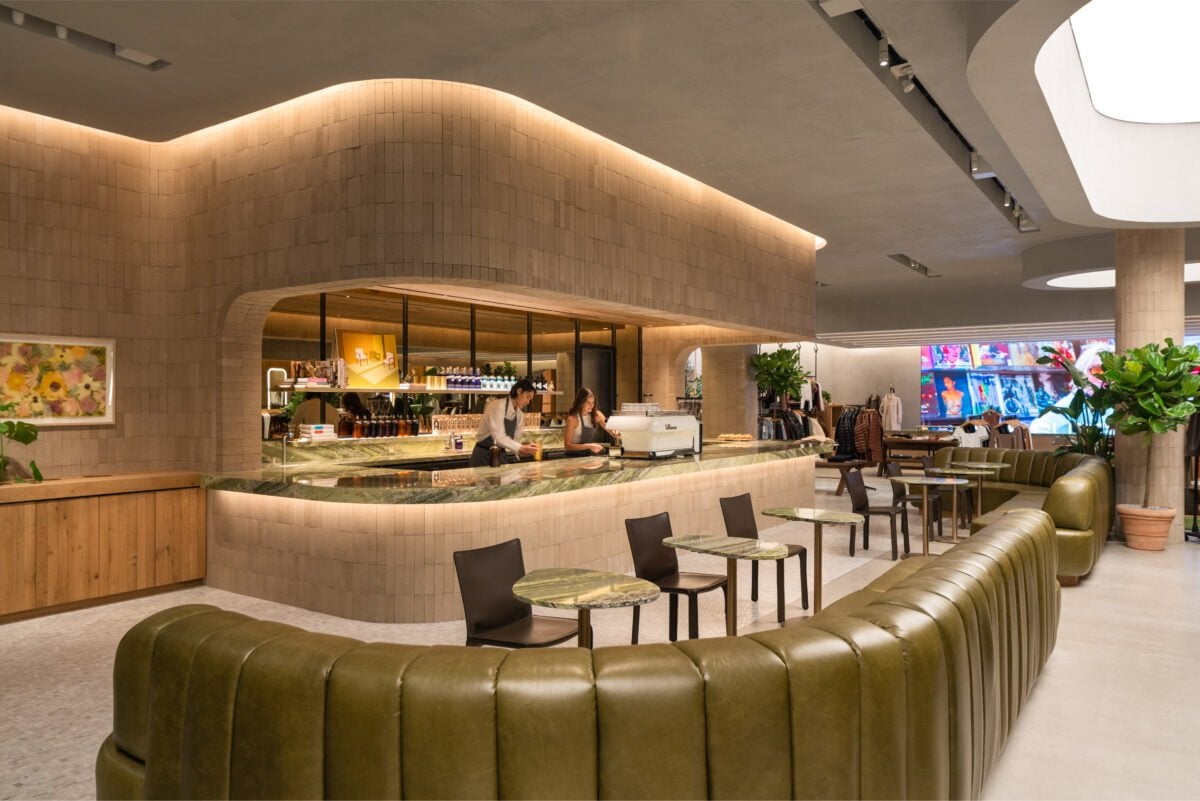
A-OK Cafe at Aritzia Yorkdale (Image: Aritzia)
Risk Factors: Tariffs and Macro Headwinds
Stifel’s report also outlined several potential risks that could affect Aritzia’s future performance. Chief among these are U.S. tariffs on Canadian imports, which could increase product costs and impact consumer pricing in the U.S. market.
The report also pointed to the risk of slowing brand momentum, currency fluctuations, and economic uncertainty stemming from inflation and interest rate pressures.
Nevertheless, Stifel believes Aritzia’s strong balance sheet and loyal customer base give it a cushion against these challenges. “Aritzia has significant momentum currently as its products are well received, and digital marketing investments are paying off,” the analysts wrote.
Aritzia’s stock closed at $79.54 on October 9, 2025, following a 52-week range of $37 to $90. With Stifel’s raised target of $100, the firm projects meaningful upside as investor confidence grows.
The Aritzia earnings report reinforces the retailer’s position as one of Canada’s most dynamic public companies. Stifel’s sustained Buy rating reflects expectations for continued share price appreciation as the company maintains strong revenue growth, margin expansion, and operational excellence.
Aritzia’s Expanding International Story
Founded in Vancouver in 1984, Aritzia has grown into a major North American fashion force, operating 134 corporate stores and an increasingly dominant online business. Approximately 65% of total revenue comes from retail stores, with the remainder generated through digital channels.
The company’s measured approach to expansion, combined with an emphasis on premium experiences and design-led spaces, has set it apart from fast fashion peers. Its store network, now spanning both top-tier malls and lifestyle centres, is central to its long-term strategy.
As Stifel’s Martin Landry and his team emphasized, Aritzia’s “significant momentum” is being driven by loyal customers, strong product execution, and disciplined financial management. With comparable sales growth, margin expansion, and new U.S. market opportunities, Aritzia is well positioned to sustain its upward trajectory.