Swiss watchmaker OMEGA has opened a new flagship boutique at Calgary’s Chinook Centre, expanding its retail footprint in Canada and marking its second flagship location in the country.
The company hooking into a major Alberta shopping centre signals a continued focus on Canada as a growth market, with the new store intended to serve customers in Calgary and the surrounding region.
Second Canadian flagship
Raynald Aeschlimann, OMEGA’s president and chief executive officer, said the Calgary opening reflects the brand’s strategy in Canada and its intention to deepen customer relationships through dedicated retail locations.
“Our new Boutique in Calgary is a symbol of OMEGA’s growing presence in Canada, which continues to be a significant and important market for our brand. We’re delighted to have our second flagship boutique in Canada and connect with new clients across the region. It’s an exciting store inside a beautiful luxury mall, and we look forward to welcoming everyone inside,” Aeschlimann said.
The company did not disclose financial details related to the boutique, including investment size, staffing levels or projected sales.
Calgary location now open
The OMEGA Chinook Centre boutique is now open at 6455 Macleod Trail South in Calgary.
OMEGA traces its origins to 1848 and is known for its focus on precision and quality in watchmaking, according to the company.
The Calgary boutique adds to the brand’s existing Canadian retail presence and positions OMEGA within one of Western Canada’s largest shopping centres, offering a dedicated space for the company’s products and customer engagement.
In a statement, the company said: “Chinook Centre is Calgary’s largest shopping destination and a recognized hub for luxury retail with a strong roster of global brands. Calgary has experienced the highest population growth among major Canadian cities over the past decade. The centre attracts a diverse, discerning customer base, and the timing reflects both the city’s momentum and the natural fit between OMEGA and this retail environment.
“This opening reinforces OMEGA’s commitment to key Canadian markets. By establishing a presence in the Greater Calgary area, OMEGA is connecting with a growing client base and adding a customer contact point that fully meets the brand’s global service and retail standards. It strengthens the overall client experience and supports OMEGA’s continued investment in Canada.
The retailer said a standalone OMEGA boutique operates to the brand’s global retail and service standards, offering a dedicated environment where clients can explore OMEGA’s full range of watch families, from the Speedmaster and Seamaster to the Constellation and De Ville, along with the brand’s jewellery collections. Boutique associates provide in-depth guidance on OMEGA’s watchmaking heritage, technical innovation, and craftsmanship, supported by services and experiences available exclusively through OMEGA’s own retail network, it added.
“The Calgary boutique welcomes both local Calgarians and visitors to the city, reflecting Calgary’s growing and diverse population. The client profile aligns with OMEGA’s broader North American customer base, encompassing watch enthusiasts and consumers who value precision, heritage, and craftsmanship.”
The retail trade sector expanded 1.3% in November, as all subsectors grew in the month. This increase more than offset the back-to-back monthly declines in the two preceding months, reported Statistics Canada on Friday.
Food and beverage retailers (+2.5%) rebounded in November, reflecting higher beer, wine and liquor retailing activity, following the conclusion of a work action in British Columbia on October 26 that had disrupted activity since September 2, said the federal agency.
The wholesale trade sector contracted 2.1% in November, the largest contraction since April 2025. Contractions in motor vehicle and motor vehicle parts and accessories wholesaling and building material and supplies wholesaling drove the decline in November.
In November, motor vehicle and motor vehicle parts and accessories merchant wholesalers dropped 12.6%, reflecting lower activity in both the motor vehicle and used motor vehicle parts and accessories industry groups, coinciding with disrupted motor vehicle production activity due to the global semiconductor shortage.
Photo: Curated Lifestyle
The federal agency said real gross domestic product (GDP) overall in Canada was essentially unchanged in November, following a 0.3% decline in October, as contractions in goods-producing industries offset expansions in services-producing industries.
“Goods-producing industries declined 0.3% in November, down for the third time in four months, driven by contractions in the manufacturing and agriculture, forestry, fishing and hunting sectors in the month. Services-producing industries edged up 0.1%, with expansions in the retail trade, educational services and transportation and warehousing sectors. Overall, 10 of the 20 industrial sectors grew in November,” it said.
“Advance information indicates that real GDP increased 0.1% in December. Increases in manufacturing and wholesale trade were partially offset by decreases in mining, quarrying, and oil and gas extraction. Owing to its preliminary nature, this estimate will be updated on February 27, 2026, with the release of the official GDP by industry data for December 2025,” noted Statistics Canada.
“With this advance estimate for December, information on real GDP by industry suggests that the economy decreased 0.1% in the fourth quarter and increased 1.3% in 2025. The official estimates for the fourth quarter and the year will be available on February 27, 2026, when the official estimate of GDP by income and expenditure is released.”
Andrew Grantham
Andrew Grantham, Senior Economist, CIBC Capital Markets, said the Canadian economy was still struggling for growth towards the end of the fourth quarter, with November GDP showing a flat reading and the advance estimate for December pointing to only marginal growth.
“The flat reading for November was slightly weaker than the advance and consensus estimate (+0.1%) but not a huge surprise given subsequent industry data showing weakness in the wholesaling sector. Manufacturing also weighed on activity during the month, and combined with the decline in wholesaling offset rebounds in areas such as education and transportation that were negatively impacted by strike activity in the prior month. The advance estimate for December pointed to a 0.1% increase in activity, with StatsCan suggesting that this was driven by at least partial recoveries in manufacturing and wholesaling,” he said.
“Today’s report leaves Q4 GDP showing a slight contraction of 0.5% annualized, which is a little weaker than the Bank’s recent MPR projection but not overly concerningly given the typical degree of divergence between the industry data and next months expenditure figures. That said the still sluggish momentum towards quarter end may be a concern, as monthly growth rates will need to accelerate for the economy to achieve the Bank’s near 2% MPR forecast for Q1. Overall today’s data are unlikely weak enough to revive talks for further interest rate cuts by the Bank, but it is clear that rates will need to be held at stimulative levels for a while to drive a recovery amid the continued uncertain economic environment.”
Douglas Porter
Douglas Porter, Chief Economist, BMO Capital Markets, said: “Today’s results reinforce the theme that the economy struggled to grow at all in Q4 after a surprisingly perky Q3. And with the preliminary estimate of modest gains in December, the overall economy will have scratched out a GDP advance of only about 0.5% in the past 12 months. Average annual growth will come in about a percentage point above that modest pace, thanks to its solid momentum heading into the trade war a year ago. But for 2026, the economy will do well to post growth of much more than 1% this year, with the sluggish hand-off from 2025 as well as the lingering cloud of uncertainty on the trade front. These results are not markedly different from the Bank’s views earlier this week, but the soft undertones will keep them “prepared to respond”.“
Marc Ercolao
Marc Ercolao, Economist, TD Economics, said: “Canada’s economy cruised into year-end at stall speed. With November’s print and flash estimates for December, economic growth is tracking a mild contraction for Q4-2025. Quarterly growth over 2025 has been particularly volatile due to sharp movements in trade and inventories, something not well captured in the monthly industry GDP accounts. Accounting for recent discrepancies between the two measures, we expect GDP growth in Q4 to land roughly flat, in line with the Bank of Canada’s (BoC) recent projections.
“The BoC doesn’t make its next policy decision until March 18th. We don’t think today’s data moves them off of their current policy stance even as they acknowledge that considerable uncertainty around trade and overall economic growth is still present. All told, we maintain our view that the BoC has reached the end of their interest rate easing cycle.”
Maison Birks store in downtown Vancouver. Photo: C. Hagemoen
Birks Group Inc. says its net sales rose 11.8 per cent during its latest holiday period, reflecting contributions from recent store acquisitions and higher sales of branded jewelry and timepieces across its retail and e-commerce channels.
The Montreal-based jewelry retailer reported the results for the eight-week interim sales period ended Dec. 27, 2025, which it defines as its FY2026 holiday period. Comparable store sales for the period increased 2.5 per cent from the same period a year earlier.
Holiday-period performance
The company said the increase in net sales compared with the corresponding period in fiscal 2025 was attributable in part to its acquisition of European Boutique luxury timepiece and jewelry stores. It also cited higher sales of branded timepieces and Birks branded jewelry in both physical stores and online.
Birks said the same product categories drove the increase in comparable store sales, which measure performance at locations open during both periods being compared and include e-commerce sales.
“Our teams have delivered good sales results this holiday period as compared to the corresponding period last year, due in part to the acquisition of the European Boutique stores but also due to our strong retail and e-commerce performances. We are focused on building on this momentum and on delivering excellence in customer service. I would like to sincerely thank all our employees for their continued hard work and dedication,” he said.
Comparable store sales explained
Birks said it uses comparable store sales as a key performance measure. The metric includes stores that were open in the same period in both the current and prior year and incorporates e-commerce sales into its calculation.
Stores are included in the comparable store sales base beginning in their thirteenth full month of operation under Birks’ ownership. Locations that have been resized or relocated are assessed individually to determine whether they are considered the same store or a new store for reporting purposes.
Comparable store sales measure the percentage change in net sales for comparable stores during a period compared with the corresponding period in the previous year. If a store was not open for the entirety of both periods, the measure reflects the change in net sales for the portion of time the store was open in both periods.
Birks said it believes comparable store sales provide meaningful information on its performance and operating results, while cautioning that the measure has no standardized meaning and may not be comparable with similar measures used by other companies.
Retail footprint and operations
Birks Group describes itself as a designer of fine jewelry and an operator of luxury jewelry, timepiece and gift retail stores in Canada. The company operates 17 stores under the Maison Birks brand in major metropolitan markets across the country.
Its Canadian retail portfolio also includes one Birks-branded store and one TimeVallée-branded store in Montreal, a Brinkhaus-branded store in Calgary, a Graff-branded store and a Patek Philippe-branded store in Vancouver, four Breitling-branded stores in Laval, Ottawa and Toronto, four European Boutique-branded stores in Toronto, one Omega-branded store in Toronto and one Montblanc-branded store in Toronto.
The company said Birks was founded in 1879 and positions itself as a designer and retailer of fine jewelry, timepieces and gifts.
Retail Insider is streamlining its Canadian retail news from around the web to include a handful of top news stories that can be viewed quickly during the day. Here are the top stories from the past 24 hours.
GoodLife's Canada's Gym campaign features real members and employees. (CNW Group/GoodLife Fitness)
GoodLife Fitness, Canada’s largest chain of Canadian-owned fitness clubs, has launched a new marketing campaign as it expands its footprint with 14 additional locations in 2026, including two new For Women clubs.
The campaign, titledCanada’s Gym. Built Here, Built for Everyone., is an evolution of the company’s existing “Canada’s Gym” platform and highlights the growing diversity in how Canadians approach fitness.
Marketing push underscores variety and inclusivity
Anchored by the tagline “One gym. Every journey. Limitless possibilities.”, the campaign features real members and employees, and showcases a range of fitness offerings including weightlifting, functional training, hot yoga, and cycling.
“Fitness journeys aren’t one-size-fits-all, and neither are our gyms,” Brazier said. “This campaign celebrates the freedom to move differently from day to day, to try new things and to evolve over time. At GoodLife, you can lift heavy one day, recover the next, join a hot Pilates class, train for a HYROX race, or simply move in a way that feels good. The possibilities are limitless.”
The campaign launch coincides with GoodLife’s expansion plans this year, which will increase the number of clubs in its network.
Creative collaboration and production
GoodLife’s marketing and creative team partnered with director Alexander Sworik and photographer Nicole De Khors to produce the campaign. The shoot took place at the company’s new 60,000-square-foot Calgary Creekside location and featured a cast of GoodLife members and employees.
The campaign launched on January 1 and will run throughout the year across connected TV, digital video and display, digital audio, social media, search, and out-of-home advertising. GoodLife said it is tailoring some creative content to local markets, highlighting the programs and amenities available in areas where the brand has a larger presence.
Ongoing social content
As part of its strategy, GoodLife is also introducing a social media docuseries titled Real Members. Real Stories., which will be shared on Instagram and TikTok.
“’Canada’s Gym’ breaks through the New Year fitness noise,” Brazier said. “This campaign reinforces GoodLife’s position as the most comprehensive and welcoming Canadian fitness brand–built to support every journey, all in one place.”
GoodLife’s Canada’s Gym campaign features different forms of fitness offerings, including hot yoga. (CNW Group/GoodLife Fitness)
About GoodLife Fitness
Founded in London, Ont., in 1979 by David ‘Patch’ Patchell-Evans, GoodLife Fitness has grown to the largest chain of fitness clubs in Canada. The company said it aims to give all Canadians the opportunity to live a fit and healthy life, with hundreds of clubs across the country.
EXTERIOR OF SOBEYS GROCERY STORE. PHOTO: SUPERMARKET NEWS
Empire Company Limited and its subsidiary Sobeys Inc. have announced a restructuring of their grocery e-commerce operations, including the closure of Alberta facilities and an expansion of third-party delivery partnerships, as part of a strategy to improve profitability and better serve online customers.
The company said the changes are expected to deliver roughly $95 million in annualized operating income by fiscal 2027, though they will also result in non-cash impairment and related charges of approximately $750 million in the third quarter of fiscal 2026.
Restructuring to boost profitability
“We remain highly committed to grocery e-commerce in Canada and on continuing to make online shopping more convenient for our customers, while delivering immediate bottom-line improvements to our e-commerce business,” said Pierre St-Laurent, president and CEO of Empire.
Pierre St-Laurent
Empire is immediately winding down its Alberta e-commerce operations, including a customer fulfillment centre in the Calgary area and a smaller support facility in Edmonton. The company will also continue its pause on development of a planned CFC in Vancouver.
The Alberta facilities did not meet the company’s financial expectations, which Empire attributed to the region’s smaller-than-anticipated e-commerce market. The company said it will continue to support Western Canadian customers through third-party delivery partnerships. The closures are not expected to materially affect same-store sales growth.
Focus on Ontario and Quebec
Empire will maintain operations in Ontario and Quebec through its Voilà banner, using existing CFCs in the Greater Toronto and Montreal areas. The company described these operations as growing steadily and forming a key part of its overall offering.
“Customers in Ontario and Quebec love Voilà and, while difficult, the decisions we have made related to our CFC network in Western Canada will help ensure the long-term growth and profitability of our e-commerce business,” St-Laurent said.
“Our focus remains on thrilling our customers while giving them even more reasons to shop our banners through Voilà and third-party marketplaces across the country. This is just the beginning of the next chapter in reshaping our e-commerce strategy as we respond to the evolving needs and expectations of our customers.”
Empire highlighted its strong partnership with Ocado as a foundation for increasing customer engagement and improving productivity and profitability in these markets.
Expanding third-party delivery
The company plans to broaden its e-commerce reach by partnering with DoorDash, with the rollout expected in the coming months. Empire said the collaboration will expand home delivery options for customers nationwide and complements existing third-party partnerships.
“These actions reflect the Company’s commitment to provide customers a variety of e-commerce options, while improving profitability in all of its e-commerce channels,” the company said.
About Empire
Empire Company Limited is a Canadian company based in Stellarton, Nova Scotia. Its primary businesses include food retailing through Sobeys Inc. and related real estate. The company reported approximately $31 billion in annual sales, $17 billion in assets, and employs about 129,000 people across its subsidiaries, franchisees, and affiliates.
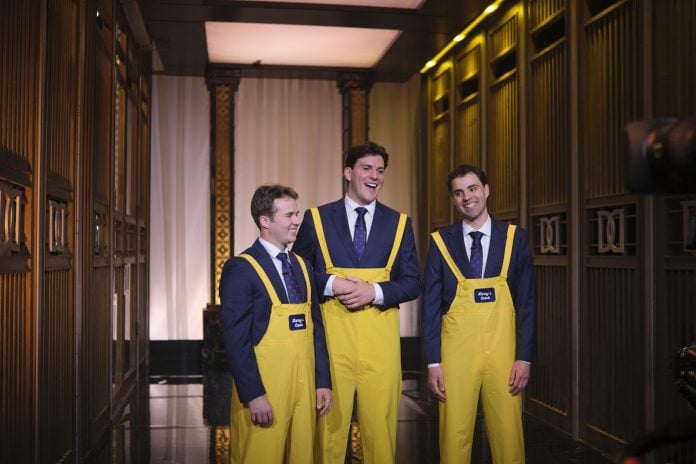
Larry’s Catch received offers from three investors on CBC’s Dragons’ Den after the Canadian seafood delivery company pitched its business during a nationally televised episode that aired Jan. 22.
The appearance marked a milestone for the privately-held company and its three co-founders, who used the broadcast to present their strategy for expanding access to wild-caught Canadian seafood through a direct-to-consumer delivery and subscription model.
National television debut
The episode, which aired on CBC Television at 8 p.m. and is available for streaming on CBC Gem, was Larry’s Catch’s first appearance on national television. The founders—Glen Creaser, James Quinn and Javier Mejorada—outlined the origins of the business and its focus on sourcing seafood from Canadian fisheries and delivering products directly to customers’ homes.
According to the company, the pitch generated strong interest from the Dragons, resulting in three separate offers during the broadcast.
Glen Creaser
“Pitching on Dragons’ Den is a milestone we never imagined when we started Larry’s Catch,” says Glen Creaser, co-founder of Larry’s Catch. “This is bigger than a business moment for us, it’s a chance to spotlight Canadian fishermen and make premium, wild-caught seafood easier to access nationwide. Getting to share our story on a national stage means everything as the exposure helps us move our mission forward faster than we could on our own.”
Focus on scaling operations
Larry’s Catch said the response from the Dragons aligns with its longer-term plans to expand operations while maintaining relationships with Canadian fisheries. The company framed the on-air interest as validation of its efforts to grow responsibly and broaden its customer base without changing its sourcing standards.
As part of the broadcast’s timing, Larry’s Catch launched a promotion tied to the episode’s premiere, offering a $10 discount for new customers purchasing the company’s seafood products.
Business origins
Larry’s Catch was founded by Creaser, Quinn and Mejorada, who are also behind the technology startup Afino. The seafood business takes its name from Creaser’s father, Larry, a fisherman who influenced the company’s focus on seafood sourcing and distribution.
The idea for the business emerged after Creaser moved from Nova Scotia to Ontario in 2016 and found that fresh seafood was less readily available. According to the company, early informal deliveries of seafood from Nova Scotia to Ontario were shared among friends and family before evolving into a formal business.
The company cited seafood consumption figures to illustrate the market opportunity, noting that Ontarians consume an average of 16 pounds of seafood per person, compared with a global per-capita average of 44 pounds.
Larry’s Catch
Supply chain and delivery model
Larry’s Catch works directly with what it describes as certified sustainable family fisheries across Canada’s Atlantic, Pacific and Arctic coasts. The company sources a range of products, including black cod, halibut, crab, lobster and scallops.
All products are individually quick-frozen within hours of being caught, a process the company says is designed to preserve flavour, texture and freshness. Customers can order pre-curated seafood boxes or assemble custom selections, with options for recurring deliveries or one-time purchases. Orders can be paused, skipped or cancelled.
The company currently delivers across British Columbia, Alberta, Saskatchewan, Manitoba, Ontario, Quebec, New Brunswick, Nova Scotia and Prince Edward Island.
Photo: Larry’s Catch
Community commitments
Larry’s Catch also highlighted its support for MS Canada, linking the partnership to the personal experience of Creaser’s father, who lives with multiple sclerosis and was forced into early retirement due to the disease. The company said its support is intended to contribute to improving quality of life for Canadians affected by MS and to advancing related research.
The Dragons’ Den appearance comes as Larry’s Catch seeks to leverage national exposure to expand its customer base and advance its growth strategy within Canada’s food delivery and subscription market.
Hudson's Bay downtown Calgary. Photo by Mario Toneguzzi
Canada’s retail property market is starting 2026 in a more stable position after pockets of volatility earlier in 2025, though performance continues to vary widely by market and format, according to a new survey from commercial real estate firm CBRE.
CBRE’s H2 2025 Retail Rent Survey says many cities rebounded as last year progressed, with stabilization becoming more evident nationwide heading into 2026, even as economic uncertainty persisted.
Survey points to uneven recovery
The survey found that leasing demand remained active across most retail categories, though outcomes differed sharply depending on local conditions.
“Demand from retail brands remains healthy, with leasing activity spread across most categories,” says CBRE Senior Vice President Alex Edmison. “When you drill into the numbers, retail performance continues to be highly situational. Local demographics, tenant mix and economic drivers can make or break retailers. Strategic tenant relocations continue in response to these dynamics, particularly for flagships in high density areas.”
Alex Edmison
CBRE said retail supply remains constrained across the country, keeping vacancy levels tight amid strong leasing activity. Elevated development costs have limited new construction in recent years, though the firm said strong fundamentals are beginning to unlock new projects in select markets where demand is established and pre-leasing has been secured.
Rental rates continued to rise in the second half of 2025, increasing in 37 of the 120 format types or key urban areas tracked in the survey.
Grocery-anchored suburban shopping centres were identified as top performers, while select urban retail nodes experienced a substantial rebound where return-to-office mandates supported improved daytime foot traffic.
The survey also pointed to sustained demand for fitness and wellness services, particularly in Ontario and Western Canada. In Calgary, physician recruitment initiatives contributed to increased demand for medical clinic space, while Edmonton saw success filling large-format vacancies.
Trends shaping retail in 2026
Looking ahead, CBRE outlined several themes expected to influence leasing and development decisions in 2026.
Interest in former Hudson’s Bay Co. spaces remained strong, according to the survey. Some locations have been leased by Canadian Tire, Sport Chek, Mark’s and TJX, while entertainment uses such as Round 1, Happy Kingdom and Splitsville Bowl are also being explored. Some landlords are extending mall corridors into these former anchor spaces with smaller units, while others are planning demolitions.
At the same time, large-format retailers including Toys R Us, Linen Chest and JYSK are closing underperforming locations, creating new availability in a market that has traditionally been tight.
In the luxury segment, first-to-market brands continued to push into key retail districts, while major luxury houses became more selective and slower to sign new deals following mixed performance in 2025. The athleisure category showed strong momentum, with brands such as Arc’teryx, Lululemon, ON, Vuori, Hoka and Reigning Champ signing new leases and competing for space.
Value-oriented retailers also continued to perform well, absorbing demand from cost-conscious households. CBRE said consumers are expected to further reduce spending in 2026, supporting expansion by brands including Winners, Marshalls, Homesense, Structube, IKEA, Uniqlo and Crunch Fitness.
Rendering of the future four-level 40,000 sq ft Aritzia store at Robson and Howe in Vancouver. Rendering: Aritzia
Regional market highlights
CBRE’s survey highlighted several notable developments across major Canadian markets.
In Vancouver, the announcement of Aritzia’s new 40,000-square-foot flagship store in a portion of Nordstrom’s former space at Pacific Centre was cited as a signal of renewed confidence in the city’s core. This comes alongside the opening of several new downtown restaurants as foot traffic improves. Retail vacancies and rental rates are expected to remain stable or increase, as new retail supply remains closely tied to mixed-use developments, which CBRE said have slowed significantly.
In Calgary, demand for medical clinic space was fueled by the College of Physicians and Surgeons of Alberta’s sponsorship initiative. A streamlined process for recruiting international medical graduates resulted in more than 600 physician hires, amplifying demand in a category that had been largely inactive since 2020.
Winnipeg saw the opening of a new Costco warehouse, a 166,894-square-foot location in Headingley’s Westport Development. The mixed-use project is expected to bring retail, office and warehousing space to the west end of the Greater Winnipeg Area. Olexa Developments has also broken ground on a new mixed-use development in the St. Boniface neighbourhood.
In Toronto, Yorkdale Shopping Centre and Bloor Street West continued to attract first-to-market entrants. Gentle Monster, a Korean eyewear brand, opened a location in December. On Bloor Street, Italian menswear boutique Luca Faloni opened amid strong attention, while Tiffany & Co.’s Canadian flagship store at the corner of Bay and Bloor is slated to open in spring 2026.
Montreal also showed signs of renewed activity, with brands on Sainte-Catherine Street West relocating into new flagship stores. CBRE said demand from national and international retailers is rising as the Sainte-Catherine revitalization advances, with the latest phase shifting west in September. The project includes replacing aging infrastructure and enhancing pedestrian spaces.
Overall, the survey suggests Canada’s retail real estate market is entering 2026 with improved stability, while outcomes continue to depend heavily on location, format and tenant strategy.
Canadian ecommerce order volumes grew 20 per cent in 2025, but that growth was concentrated among a small share of companies, according to a new study from marketing platform Omnisend that found the top 10 per cent of brands generated half of total order growth.
The report, based on analysis of more than 5,000 Canadian ecommerce brands, suggests that changes in shopper behaviour — including fewer interactions with marketing but higher purchase intent when shoppers did engage — played a significant role in determining which businesses benefited most from the rebound in online sales.
Growth concentrated among higher-performing brands
Ecommerce order volume across all sales channels in Canada rose 20 per cent year over year in 2025, Omnisend said in the report released Jan. 20. However, demand was unevenly distributed, with a relatively small group of higher-performing brands capturing a disproportionate share of the gains.
According to the study, the top 10 per cent of brands accounted for 50 per cent of total ecommerce order growth during the year, indicating that many businesses did not experience the same level of recovery.
Marty Bauer
“What we saw in 2025 reflects the broader economy — growth came back, but it didn’t reach everyone,” said Marty Bauer, ecommerce expert at Omnisend. “After years of inflation and uncertainty, people were still willing to spend, but they were much more intentional about where they spent their money. Brands that were able to react quickly to customer behavior had a clear advantage, while others found it harder to keep up.”
Shoppers clicked less, but spent more
The Omnisend data shows that Canadian shoppers interacted with marketing messages less frequently in 2025, but those interactions were more likely to lead to a purchase and to higher spending per order.
While overall click rates declined, shoppers who did click on promotions were 28 per cent more likely to complete a purchase than the year before, and they spent more on each order, according to the report.
Marketing performance data from Omnisend indicated that the value of each interaction increased as shoppers became more selective about when and where they engaged.
Year over year in Canada, the report found:
Average order value from email rose from $172 to $196, a 14 per cent increase
Average revenue per email increased by 41 per cent, from $0.12 to $0.17
Email click-to-conversion increased by 28 per cent, rising from 6.23 per cent to 9.24 per cent
Email click rates declined by 22 per cent
“Clicks became harder to get in 2025, but they also became more valuable,” Bauer said. “Shoppers were more selective, but when they did engage, they were ready to spend more. That’s why fewer interactions still produced more revenue — each click carried more intent than it did before. That shift rewarded brands that focused on efficiency and relevance, rather than volume.”
Automation captured a larger share of revenue
The report points to behaviour-based automated marketing as a key differentiator for brands that saw stronger growth, particularly as opportunities to reach customers became more limited.
Omnisend said automated, behaviour-based emails generated 27 per cent of total email revenue in Canada, despite accounting for just 2.1 per cent of total email sends. These messages are triggered by customer actions, such as browsing or abandoning a cart, rather than being sent on a fixed schedule.
“With fewer chances to reach customers, brands that could respond to buying intent in real time captured more demand,” the report said.
Photo: Vitaly Gariev
Key automation findings for Canada included:
Automated emails generated 27 per cent of total email revenue while representing just 2.1 per cent of email sends
Revenue per automated email send was $3.32, compared with $0.16 for scheduled email sends
Automated messages also showed higher conversion efficiency across multiple channels:
Email click-to-conversion: automated 31.23 per cent; scheduled 9.24 per cent
SMS click-to-conversion: automated 3.38 per cent; scheduled 0.89 per cent
Push notification click-to-conversion: automated 20.21 per cent; scheduled 1.87 per cent
“Brands that relied on automation weren’t trying to convince people to buy — they were responding when customers had already shown intent,” Bauer said. “In a year when attention was limited and shoppers had more options than ever, that approach worked better. Automated messages performed well because they fit naturally into how people shop today, rather than interrupting them.”
Greg Zakowicz
Greg Zakowicz, Ecommerce Advisor at Omnisend, said the top brands are the ones that have focused on building trust with and providing value to customers. Instead of running a paid ad, capturing a sale, and repeating the cycle, the top brands have consistently focused on the customer relationship through high product quality, customer support, value-adds such as free shipping and returns, and engagement tactics like post-purchase email and SMS marketing.
“All together, this approach fosters customer trust and loyalty with brands, ensuring they are one of the first options customers consider when making a purchase. The data shows shoppers are clicking on marketing less often, yet converting at higher rates and spending more per order. What does this tell us about how Canadian consumers’ expectations and decision-making have evolved?
“This behavior points to the rise of the “buy it now” consumer. As economic factors strain household budgets, shoppers have become more thoughtful and purposeful with their purchases. Value has become one of, if not the, primary factors for buying. This has led to shoppers clicking on less marketing simply to browse. Instead, consumers now click on marketing when they need to buy something and see marketing that aligns with that need.”
When consumers click, they’re ready to make a purchase
When consumers click, they’re ready to make a purchase. Because shoppers seek value and purchase more from brands they trust, they tend to consolidate purchases with retailers, leading to higher average order values, added Zakowicz.
“Retailers should be constantly evaluating their campaigns’ performance metrics. For the longest time, brands over-emphasized the value of email marketing open rates. Strong open rates and low conversions are not a successful campaign. But when times are good, this is easy to overlook,” he said.
“Now, consumers have endless options for where to purchase products. Combined with the cost of paid social and search ads, focusing on conversion metrics can mean the difference in profitability. With email, for example, brands should look at click-to-open rate and click-to-conversion rate as leading metrics. When these metrics are strong, sales are happening. Sales matter, not views.”
Behaviour-based emails designed to move customer to next step
Zakowicz said behaviour-based automated emails work well.
“These messages work so well because they are naturally timely and relevant. Because they are behavior-based, meaning they only send when someone takes a specific action, the messages are sent at specific times in a customer journey. They’re designed to move the customer to the next step, whether it’s to return to the website, complete their purchase, or engage with the brand after a sale,” he said.
“The three most impactful automated messages are welcome messages, product abandonment, and cart abandonment, and it makes sense why. With welcome messages, they are new to the brand, and by signing up, they show an intent to engage further. Product abandonment indicates an intention to shop for a specific product or type of product. Cart abandonment shows they have identified what they want to buy, and it’s a matter of who they will buy it from.
“There are two primary mistakes I see companies make with these messages: the first is not reinforcing value in the messages. In each message, brands should reinforce company value-adds, including shipping and return policies, product quality, customer service, user-generated content such as testimonials and product reviews, and anything else that matters to shoppers. Showcasing these items builds trust and helps influence customers to shop.
“The second is paralysis by analysis. Too often, brands think they need to have a perfect series of messages before they begin sending them. They don’t. Retailers can always go back and refine and add messages as needed. The most important thing is to send them. Create one message, automate it, move to the next, and refine as you go. Taking it one simple step at a time allows brands to capture the value of the messages instead of sitting on the sidelines. In a time when sales are more difficult to come by, paralysis literally costs you money.”
Photo: Thought Catalog
Practical steps ecommerce brands can take to compete
“First, automate email and SMS messages. Email marketing providers have templatized messages and automation creation, making them as easy to create as clicking a few buttons — no experience necessary. Focus on the revenue-generating automations first: welcome, product abandonment, and cart abandonment. One at a time will pay dividends,” said Zakowicz.
“Second, with all messages they send, reinforce value-adds. These matter to shoppers, not only to capture immediate sales but to build ongoing trust.
“Third, focus on collecting email and mobile numbers. Email and SMS marketing continue to be high-ROI channels, without the fluctuating costs. As more shoppers turn to AI platforms as part of their shopping journeys, the ability to retarget shoppers becomes increasingly difficult. By collecting first-party data like email and SMS, brands have a direct line to shoppers without the inflated costs.
“Over the past 15 years, new technology has taken hold, and consumer behavior changed, yet at each step along the way, email marketing has become increasingly important and trusted by both consumers and brands.”
Decathlon brings its full shopping experience straight to your phone with its own app. Designed to keep you connected wherever you are, it gives you access to the complete product range, current promotions, your membership benefits, and your orders, all in one place.
Available on both iOS and Android, the Decathlon app makes it easy to shop, track purchases, and stay connected to your local store directly from your mobile device. Whether you are at home, on the move, or already in store, the app helps you stay organized and informed at every step.
A Simple and Practical Shopping Experience
The Decathlon app is built to make everyday shopping easier. Navigation is fast and intuitive, allowing you to browse products, check availability, and complete your purchases in just a few clicks.
From discovering new items to reordering your favourites, everything is designed to be quick, clear, and accessible. Promotions, product details, and availability are easy to find, helping you make confident purchasing decisions without unnecessary steps.
Decathlon Membership Program: Points and Rewards
By joining the Membership Program through the app, you earn points with every purchase. These points can be collected and redeemed for promotional cards and other rewards.
Your membership card is always accessible in the app. You can scan it directly at checkout or save it to your phone’s digital wallet for even faster access in store. This removes the need to carry a physical card and ensures you never miss out on earning points.
Your Favourite Products, Saved for Later
The app allows you to save the products you love by adding them to your favourites. This makes it easy to find them again later and plan future purchases without starting your search from scratch.
Orders Made Easy
Shopping takes only a few clicks. You can choose your preferred delivery method, track your orders in real time, and manage everything directly from your phone.
Free in-store pickup is available on all click and collect orders, making it a convenient option if you want to collect your items at a nearby store.
Useful In-Store Features
While visiting a Decathlon store, the app becomes a practical companion.
Check in-store stock and product availability
Scan product barcodes to access detailed information such as descriptions, photos, videos, and tips
Scan your membership card at checkout to earn points instantly
These features help you save time in store and ensure you have all the information you need before making a purchase.
Delivery, Returns, and Support
If you do not have a store nearby, Decathlon ships most products across Canada with home delivery options available.
Decathlon members benefit from up to 365 days to return most products, making returns simple and flexible.
If you need assistance, the support team is available on weekdays from 10 am to 6 pm Eastern Time.
Download the Decathlon App
The Decathlon app is available now on the App Store and Google Play. Download it to keep Decathlon in your pocket and enjoy a seamless connection between online and in-store shopping.