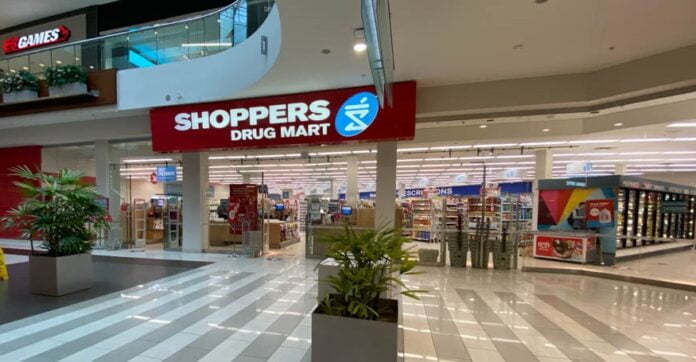
Shoppers Drug Mart on Lower Level at SouthCentre Mall in Calgary. Photo: Jessica Finch.
IDC Dermo, the Québec-based skincare company known for its science-driven approach to anti-aging, has announced a major national expansion through Shoppers Drug Mart. The move brings the brand’s award-winning, Canadian-made products to hundreds of stores across the country, making its research-led solutions accessible to a far larger audience.
The rollout marks a defining moment for the brand, which has sold over one million units since its founding. “Expanding across Canada with Shoppers Drug Mart marks the next chapter in our mission to make high-performance, science-backed skincare more accessible, without compromising on quality, integrity, or performance,” said Derek Pickford, Vice President of Sales and Marketing at IDC Dermo.
Photo: IDC Dermo
IDC Dermo was founded by brothers Luc and Éric Dupont, who drew on more than two decades of pharmaceutical research and a track record of supplying active ingredients to global beauty brands. Their vision was to create products that targeted the root causes of skin aging, rather than masking symptoms.
Central to the company’s innovation is the patented ReGen16 Skin Formulation Protocol, a comprehensive approach that simultaneously addresses 16 distinct biological mechanisms tied to skin aging, including oxidation, inflammation, glycation, and dehydration. This multi-mechanism protocol positions IDC Dermo as a leader in advanced dermocosmetics.
“Our goal from the beginning was to offer skincare that could achieve visible, measurable results,” Pickford said. “ReGen16 allows us to take a systemic approach to skin health, supporting it as a whole, rather than treating individual concerns in isolation.”
Photo: IDC Dermo
Nationwide Reach Through Shoppers Drug Mart
For IDC Dermo, the partnership with Shoppers Drug Mart represents a strategic move to grow beyond its strong Québec customer base. The national rollout ensures that Canadians coast-to-coast can access its dermatologist-tested products both in-store and online at Shoppersdrugmart.ca.
“At Shoppers Drug Mart, we are proud to support the growth of homegrown Canadian brands,” said Sandy Santucci, Category Director. “Our exclusive partnership with IDC Dermo reflects our confidence in the brand’s innovation and commitment to results. In today’s economic climate, it’s more important than ever to champion Canadian and Québec-based brands that bring value and performance to our customers.”
The launch features a curated selection of IDC Dermo’s best-selling products, including the newly reformulated Express Multi-Action Cream. It is offered in three targeted versions: a fragrance-free option for sensitive skin, a lightweight formula for combination to oily skin, and an SPF 30 version that provides daily protection. Each is designed to suit a variety of skincare needs.
Complementing the cream is the Express Multi-Action Cream-to-Foam Cleanser, which delivers seven benefits in a single step. Together, these products provide consumers with a streamlined regimen focused on measurable results.
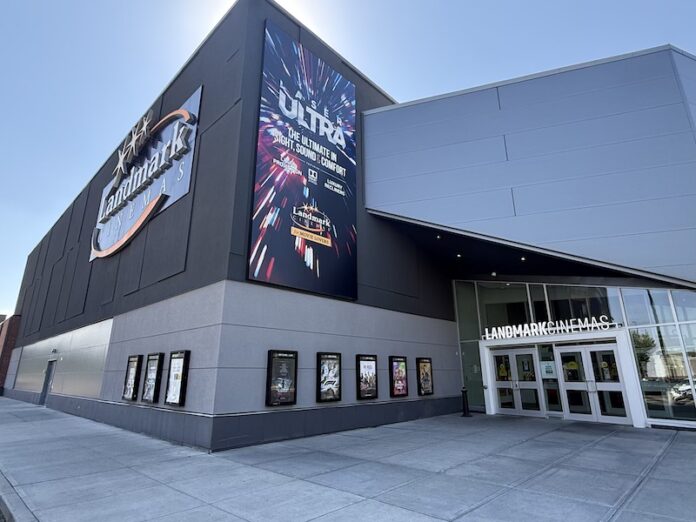
Landmark Cinemas is celebrating its 60th anniversary with bold growth plans, next-level movie experiences, and a renewed push into underserved markets across Canada.
The Canadian theatre chain, founded by Brian McIntosh, began in small towns before expanding into larger multiplexes over the years. The company experienced a major shift in 2013 when it acquired some Empire Theatres.
David Cohen
“That really gave us like our big theatre like Country Hills, Shaughnessy, all those kinds,” said David Cohen, COO of Landmark Cinemas. “We bought all their theatres from B.C. out to Ontario basically.”
Cineplex took over Empire’s locations in Atlantic Canada, but for Landmark, the deal brought its largest sites under the brand. Today, Landmark operates 36 theatres and 300 screens across the country from Vancouver Island to Ottawa.
“Our biggest presence is probably Alberta in terms of market share,” noted Cohen. “But I’d say most of our visitors come from Ontario. We’ve got two really big (theatres) in Ontario.”
The company’s most recent theatre opened in Windsor in November 2024, continuing a format that has become a Landmark standard. “Our typical site is an eight-screen complex with about 900 seats, but all recliner seats,” Cohen said. “We include all the latest bells and whistles.”
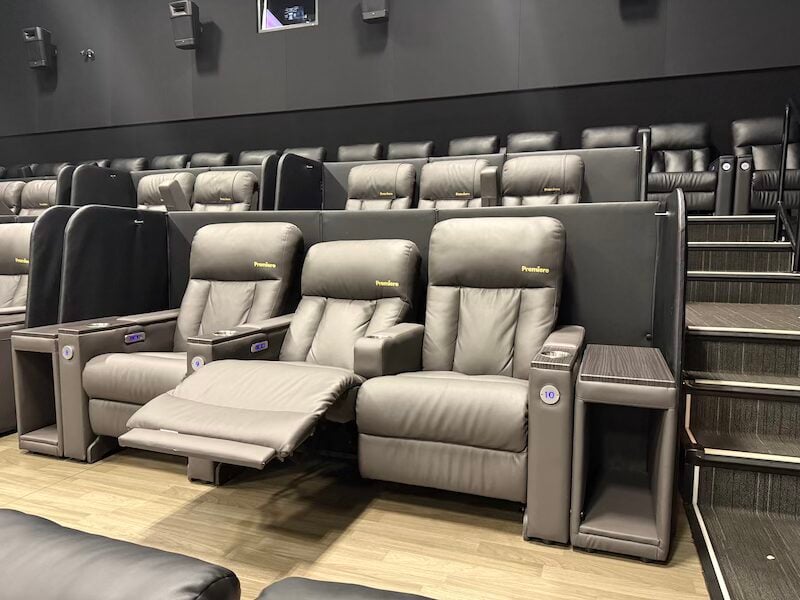
Among those is the Laser Ultra concept, which features 4K laser projection and Dolby Atmos sound. But Landmark has taken things further with the introduction of Premier Seats, a new innovation in comfort.
“It’s a set of recliner seats, but then we added heating to the seat, we added an adjustable headrest, we’ve got side tables on either side and it’s got a privacy enclosure around the whole thing,” explained Cohen. “So you’re not disturbed if someone else was on their phone or they’re talking or whatever. That’s all kind of blocked away from you.”
Landmark Cinemas. Photo: Mario Toneguzzi
Premier Seats were launched at the Edmonton Tamarack location in 2021 and have since been rolled out at multiple sites including Shaughnessy and Country Hills in Calgary. “We’ve put them in basically across the circuit anywhere we already have recliners,” he added.
As for new theatres, Cohen remained tight-lipped. “Nothing I can talk about,” he said. “But we are eyeing locations. We’re looking for just communities that are underserved from a screen count perspective.”
Industry Recovery and Rebound
The pandemic dealt a blow to the cinema industry, and Landmark was no exception. “We were forced to close for a total of like 18 months cumulatively,” said Cohen. “Ontario was the worst for the restrictions.”
Even after reopening, recovery was slow, largely due to Hollywood delays. “During the pandemic they couldn’t make movies. Sets were all shut down,” he said. “Then all the writers and actors went on strike so they stopped making movies again for six months.”
But with new releases hitting theatres, attendance has rebounded. “Whenever we have films, we’re selling out,” Cohen said. “We’re having a fantastic year. Q1 was still a little bit quiet but starting from Minecraft, which opened the first week of April, it’s been lights out.”
“Minecraft did really well. Sinners did really well. F1 was a phenomenal movie. Superman—just an incredible run of films and our visitors are back better than ever.”
Theatrical Experience Still Resonates
Cohen believes the moviegoing experience continues to offer something unique. “No matter what you say, you buy a 65-inch Sony TV and an ammo setup and everything at home, it just does not replicate an 80-foot screen in an auditorium,” he said.
He emphasized the social aspect, too. “You feel part of this community of like everybody’s watching the film at the same time and they really love it,” said Cohen. “Whereas if it’s you or you and your partner at home on the couch, it’s just not quite the same.”
Affordability plays a role in drawing audiences back as well. “We’re still like the cheapest form of entertainment around,” he said. “We offer lots of different kinds of discounts and family packages to make it affordable for families.”
And of course, there’s the classic draw: “Movie theatre popcorn is better than anywhere,” Cohen said. “And we think we have the best.”
Evolving Technology and Seating
From film reels to laser projection, Landmark’s evolution reflects the broader changes in cinema technology.
“When it first started it was a reel, like a film reel,” said Cohen. “Eventually we went to digital projectors. Now we can send you a hard drive, way higher quality image resolution.”
Today, Landmark is investing in laser projectors, aiming for 100% conversion across its circuit by the end of 2027.
In terms of seating, the company has been at the forefront of innovation in Canada. “We launched the first recliner theatre. I think it was our London location,” said Cohen. “Overnight, visitors went way, way up like doubled overnight.”
“Now you come in, you’ve got this really nice recliner seat, lots of space. It just makes it a way more enjoyable experience. People spoke with their wallet.”
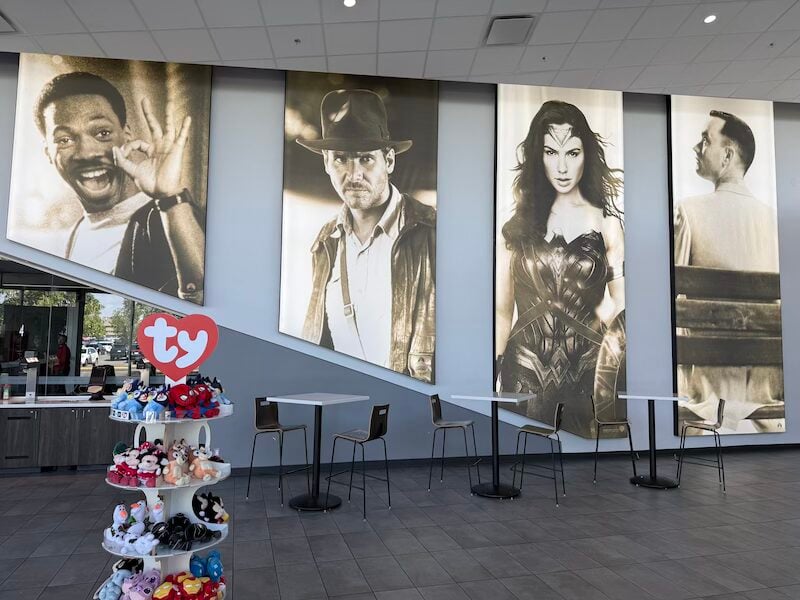
Landmark Cinemas. Photo: Mario Toneguzzi
Concession Innovation and What’s Next
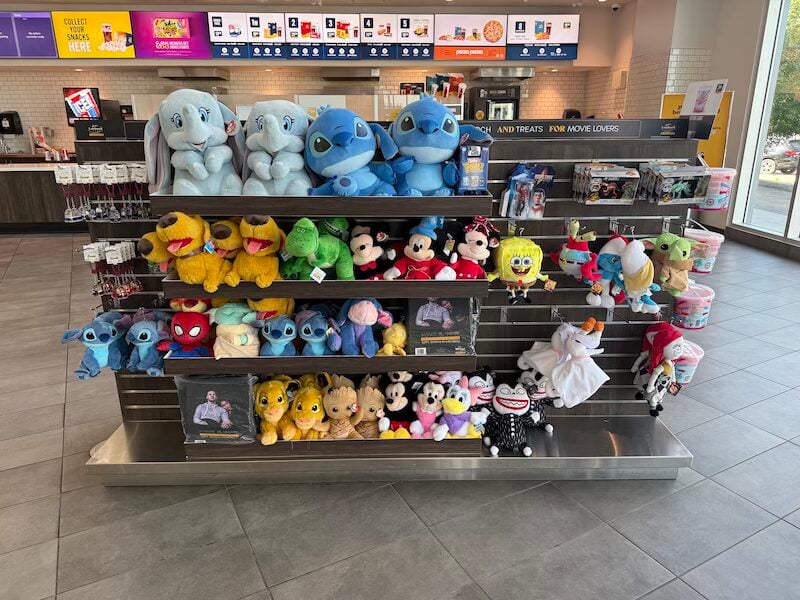
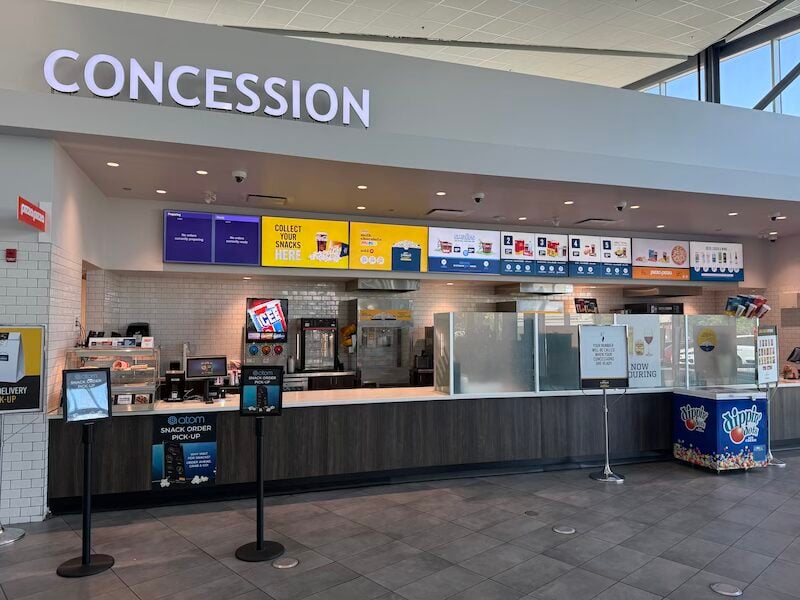
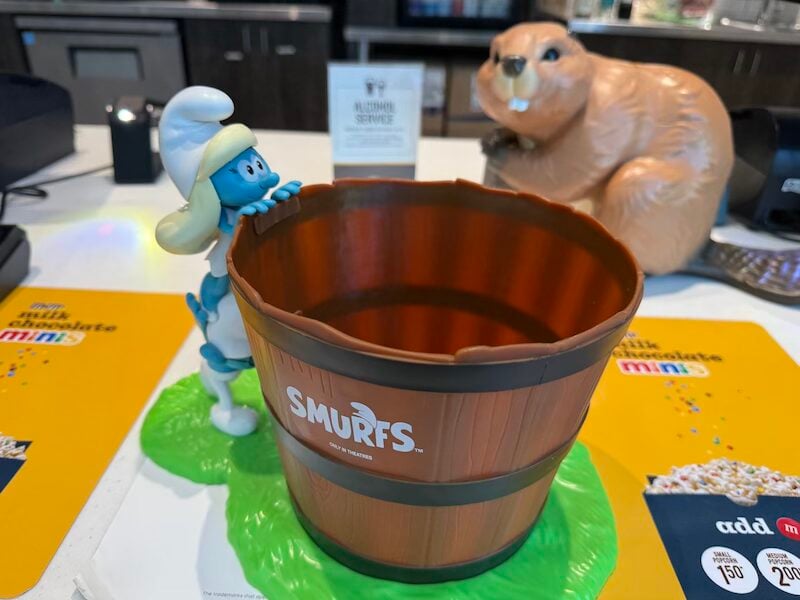
Landmark is also transforming the concession experience. “We’ve increased our product array. You can get pizza, hot dogs not just popcorn,” Cohen said.
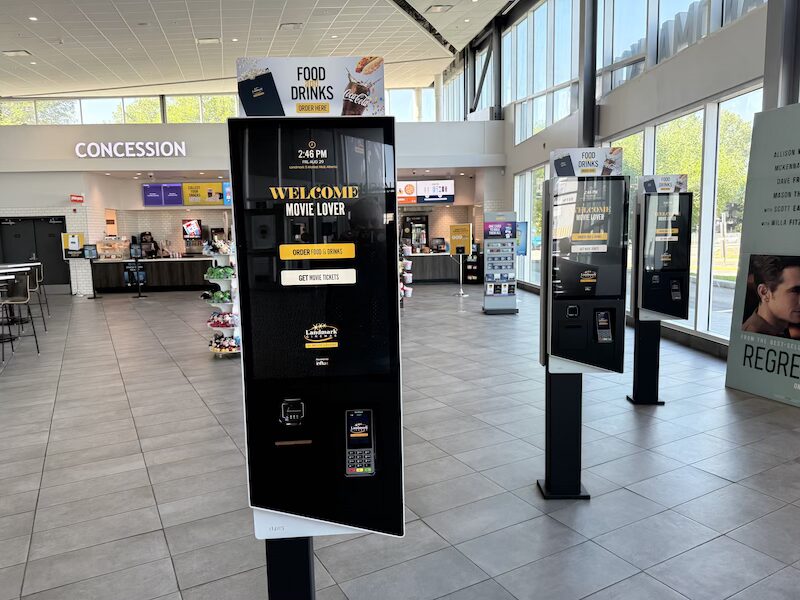
Self-serve kiosks, introduced in Fall 2024, are now in place at three locations: Windsor, Waterloo, and Shaughnessy. “You come to one of these screens, you do your entire order there. We just call your number when it’s ready,” he said.
And the next evolution? “To-your-seat service,” Cohen revealed. “You’ll be able to order it at that kiosk, and then you just go sit in your seat. We’re just going to bring it right to you.”
Cohen says the early feedback has been excellent. “Guests say it’s just easier for me to select items. I get to go through the menu and take more time to choose.”
With six to eight more locations planned for kiosks in the next year and more innovation on the horizon, Landmark is clearly looking to the future—even as it celebrates a storied past.
Landmark Cinemas. Photo: Mario ToneguzziLandmark Cinemas. Photo: Mario Toneguzzi Landmark Cinemas. Photo: Mario Toneguzzi Landmark Cinemas. Photo: Mario Toneguzzi Landmark Cinemas. Photo: Mario Toneguzzi
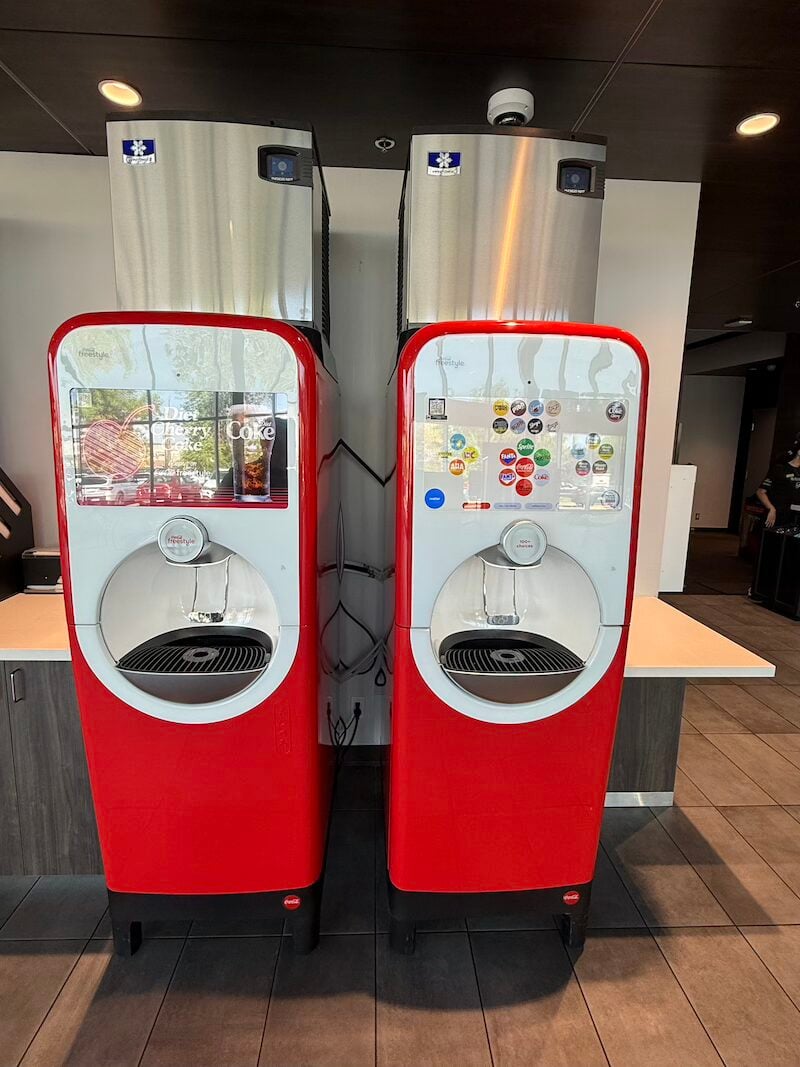
Beginning this season, guests attending hockey games, concerts and other live events at the Canadian Tire Centre will be able to purchase beverages from Keurig Dr Pepper Canada’s portfolio, including Dr Pepper, Canada Dry, Nestea and Crush.
Cyril Leeder
“As Ottawa’s largest sports and entertainment venue, Canadian Tire Centre is always looking for ways to elevate the experience for the more than 1.5 million guests we welcome each year,” said Cyril Leeder, president and CEO of the Ottawa Senators. “By introducing a lineup of some of Canada’s most popular and highest-ranking brands, we’re ensuring that every visit… is paired with an exceptional food and beverage experience.”
The agreement also includes a new visual identity for the venue, with Dr Pepper branding featured prominently on in-arena signage, merchandising, and digital displays. This marks the first time Dr Pepper branding will take “centre stage” at a Canadian sports venue.
“It also marks a number of important firsts for our business: our first Dr Pepper Centre, the introduction of Dr Pepper Zero on fountain in Canada, the first time Dr Pepper and Canada Dry are featured together on a fountain platform, and our first commercial entertainment distribution for… Nestea,” McMahon said.
Canadian Tire Centre will continue to offer existing cola and lemon-lime beverages alongside the new lineup, giving fans an expanded selection.
The launch will be celebrated during the start of the NHL season in October, with fans treated to a special surprise to mark the arrival of the new beverage program.
In recent weeks, we have witnessed politicians lean on powerful visuals to make their case on food and trade. But these staged moments rarely serve the public interest. Worse, they often deepen food illiteracy in a country where understanding how our system works is already fragile.
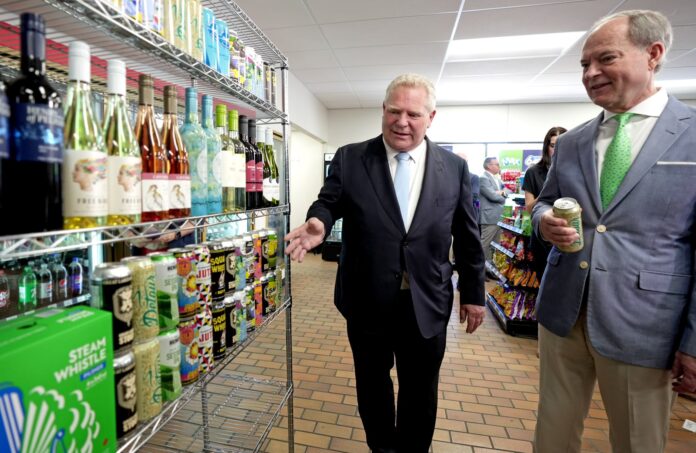
Take Ontario Premier Doug Ford’s stunt. Upset with Diageo’s decision to close its bottling plant in Ontario, he theatrically dumped a bottle of Crown Royal and urged Ontarians to boycott the brand. What he didn’t mention is that the bottle in question was made in Manitoba and bottled in Quebec by unionized Canadian workers — jobs unaffected by the Ontario closure. The Windsor facility mainly serviced the U.S. market, and Diageo’s decision was years in the making. Ironically, the boycott risks punishing Canadian workers who will continue producing Crown Royal for Canadians. And for future investors, the message is chilling: why put capital into Ontario if a government will trash your brand on television for a corporate restructuring decision?
The federal stage brought us another head-scratcher. During a trade visit to Mexico, Prime Minister Mark Carney posed with bags of Canadian wheat stamped with a maple leaf. The problem? Canada doesn’t export wheat in bags. We are among the most efficient bulk grain exporters in the world, shipping millions of tonnes through rail networks and ocean vessels designed for efficiency, safety, and traceability. Bagged wheat is a relic of less mechanized economies. For Canada to present itself this way trivializes our status as a modern agri-food powerhouse. Beyond being misleading, the image suggests to global partners that our system is less advanced than it truly is — a dangerous misrepresentation for a nation that depends on reputation as much as price.
This matters because perception influences policy. Just this week, polls show Canadians support cutting tariffs on Chinese electric vehicles to protect canola growers facing retaliatory barriers in China. Yet many of the same respondents prefer defending supply management in dairy — a policy widely seen as one of Canada’s most anti-competitive and least efficient. Both tariffs and supply management undermine farming, yet Canadians cling to both. The contradiction highlights just how confused the public has become about agricultural policy.
Politicians are partly to blame. By reducing complex issues to simplistic theatrics, they are not educating but obscuring. Media outlets, for their part, too often amplify these stunts rather than scrutinize them. Canada’s agri-food sector thrives on scale, efficiency, and credibility. Cheap political optics — whether a dumped bottle or a staged wheat bag — do nothing to support that reality.
ALIA BHATT JOINS LEVI’S® AS GLOBAL BRAND AMBASSADOR, USHERING IN A NEW ERA OF FIT AND FASHION
Levi’s has announced Bollywood actor and fashion icon Alia Bhatt as its new global brand ambassador, marking a collaboration aimed at shaping the future of denim worldwide.
The partnership brings together the legacy denim brand and Bhatt, whose influence spans both film and fashion, to drive a new chapter for the retailer, particularly in women’s fashion, where relaxed fits and looser silhouettes are gaining momentum.
Ali Bhatt
“Levi’s, long known for defining what denim means, is at the forefront of this evolution,” the company said in a statement. “With Alia leading the way, that shift is about to go mainstream.”
Bhatt joins the company as the brand embraces a shift toward more style-driven and trend-forward offerings. The company says it is moving beyond its classic fits to reflect how a new generation wants to dress, citing Bhatt as the ideal figure to represent this transformation.
“Whether it’s loose fits, wide leg, or reinvented classics, Levi’s women’s portfolio is evolving, and Alia is the perfect catalyst for this next chapter,” the company said.
Despite these changes, Levi’s emphasized it will continue to deliver what it’s known for: timeless denim “made for now.”
Levi’s products are sold in more than 110 countries, and its parent company, Levi Strauss & Co., reported 2023 net revenues of $6.2 billion.
Retail Insider is streamlining its Canadian retail news from around the web to include a handful of top news stories that can be viewed quickly during the day. Here are the top stories from the the weekend.
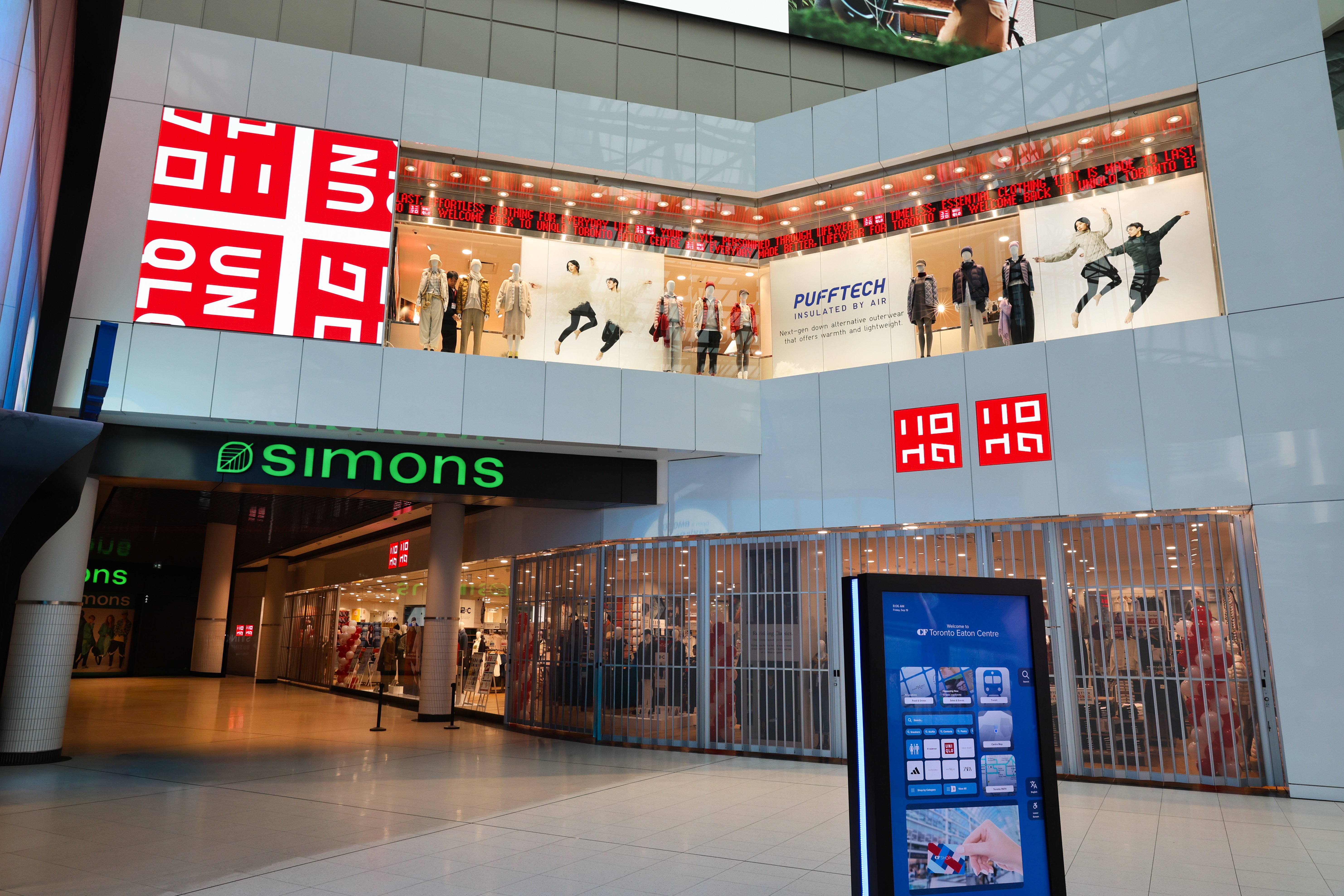
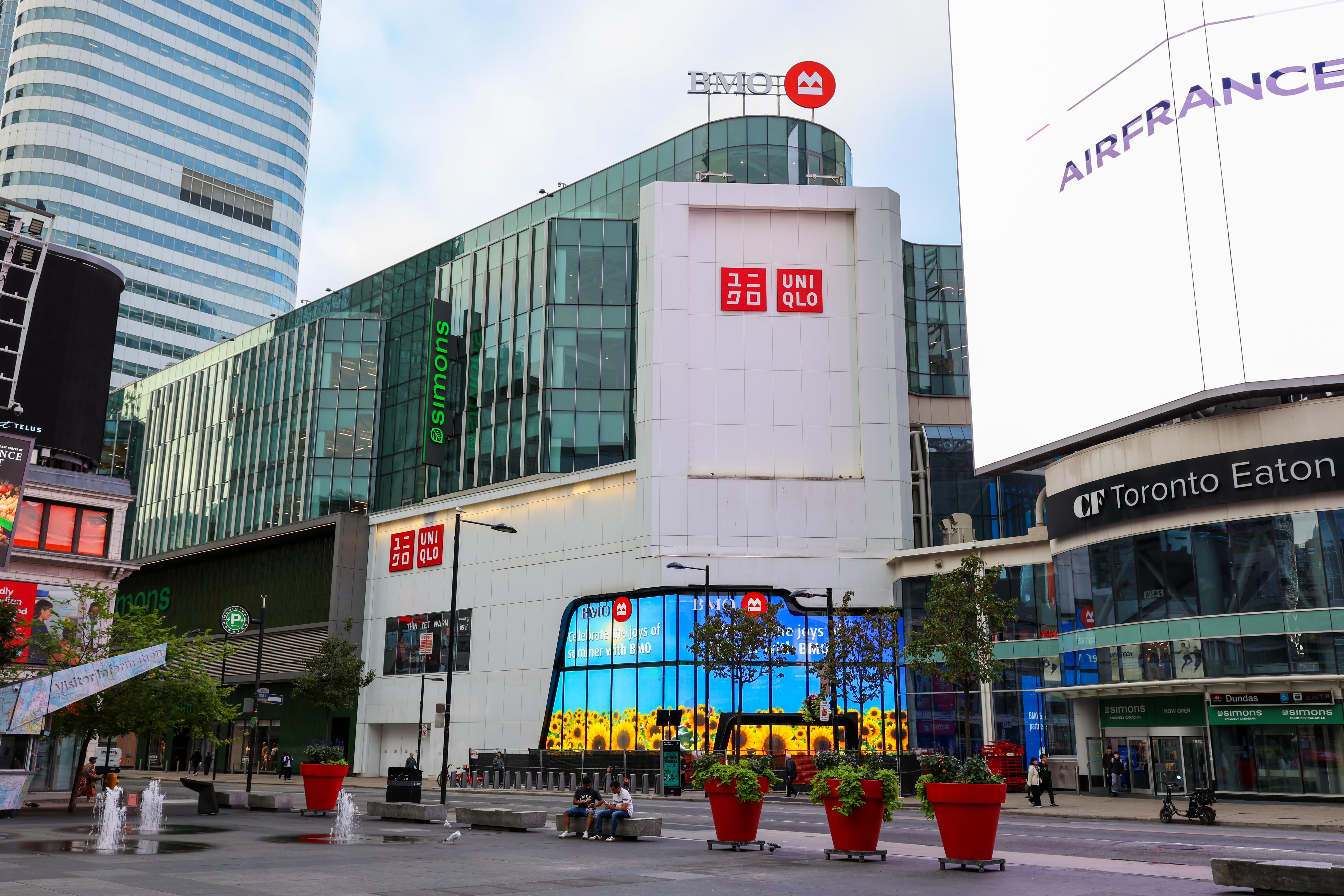
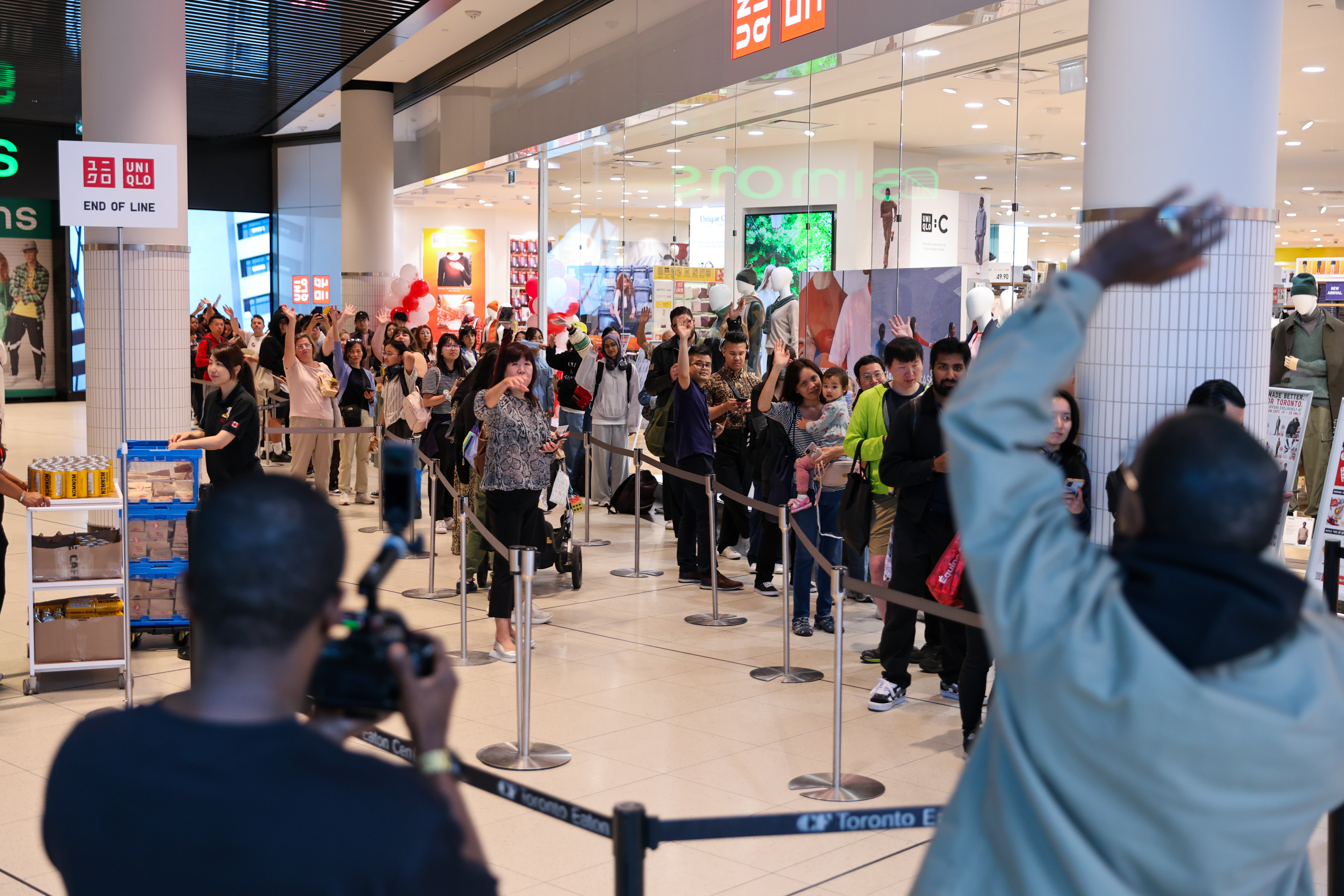
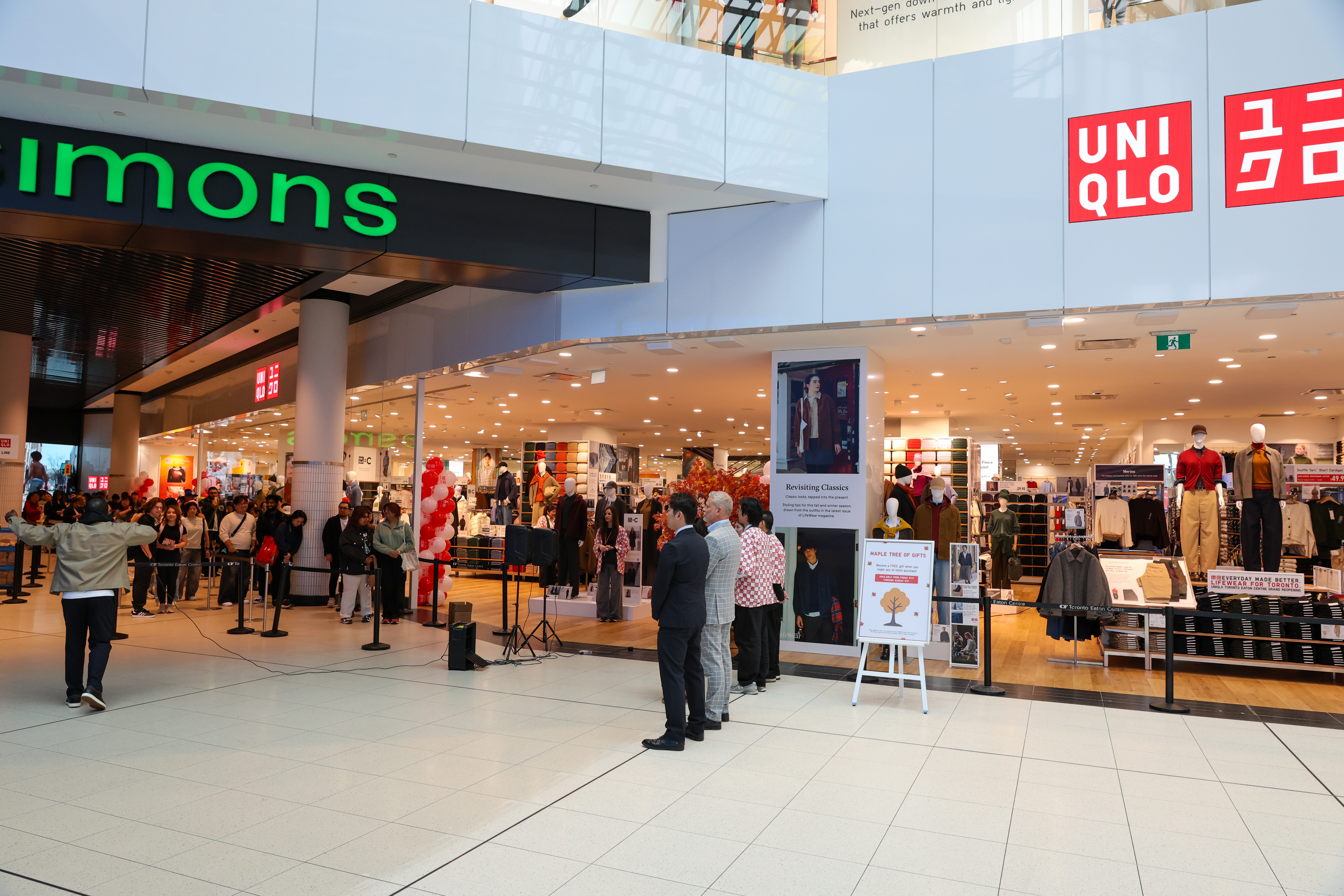
Japanese apparel retailer UNIQLO has reopened its flagship Canadian store at the CF Toronto Eaton Centre following extensive renovations.
The store, which first opened in 2016 as UNIQLO’s inaugural Canadian location, has undergone a comprehensive refresh aimed at enhancing the customer experience and showcasing its LifeWear clothing line.
According to UNIQLO, the updates include upgraded change rooms, new floors and ceilings, updated mannequins, lightboxes, and digital screens. The renovations are part of the brand’s ongoing efforts to elevate its in-store environment while aligning with the LifeWear philosophy — clothing designed with simplicity, quality and longevity in mind.
To mark the reopening, the retailer planned a weekend of community-focused events, special in-store offers, and giveaways. The celebration began on Friday, Sept. 19, with a ribbon-cutting ceremony and opening speeches. The first 300 customers in line received complimentary madeleines from Japanese bakery Uncle Tetsu and coffee from local roaster De Mello. The first 100 shoppers were also given a $10 UNIQLO gift card.
photographer Alex UA
Throughout the weekend, customers will be invited to participate in a “Maple Tree” prize draw. Each purchase grants an opportunity to pull a ribbon revealing a guaranteed prize, which may include gift cards, branded water bottles, snacks, and beverages.
“Through the lens of innovation, LifeWear is designed to make everyone’s life better,” the company said in a release.
The store continues to offer its full range of LifeWear apparel for men, women, children, and babies, along with seasonal collaborations and its UT line of graphic T-shirts. The location also integrates UNIQLO’s online store for a combined in-store and digital shopping experience.
UNIQLO currently operates 33 stores across Canada and more than 2,500 worldwide. The brand is part of Fast Retailing Co., Ltd., a Japanese retail group with global sales of approximately ¥3.1 trillion for the 2024 fiscal year.
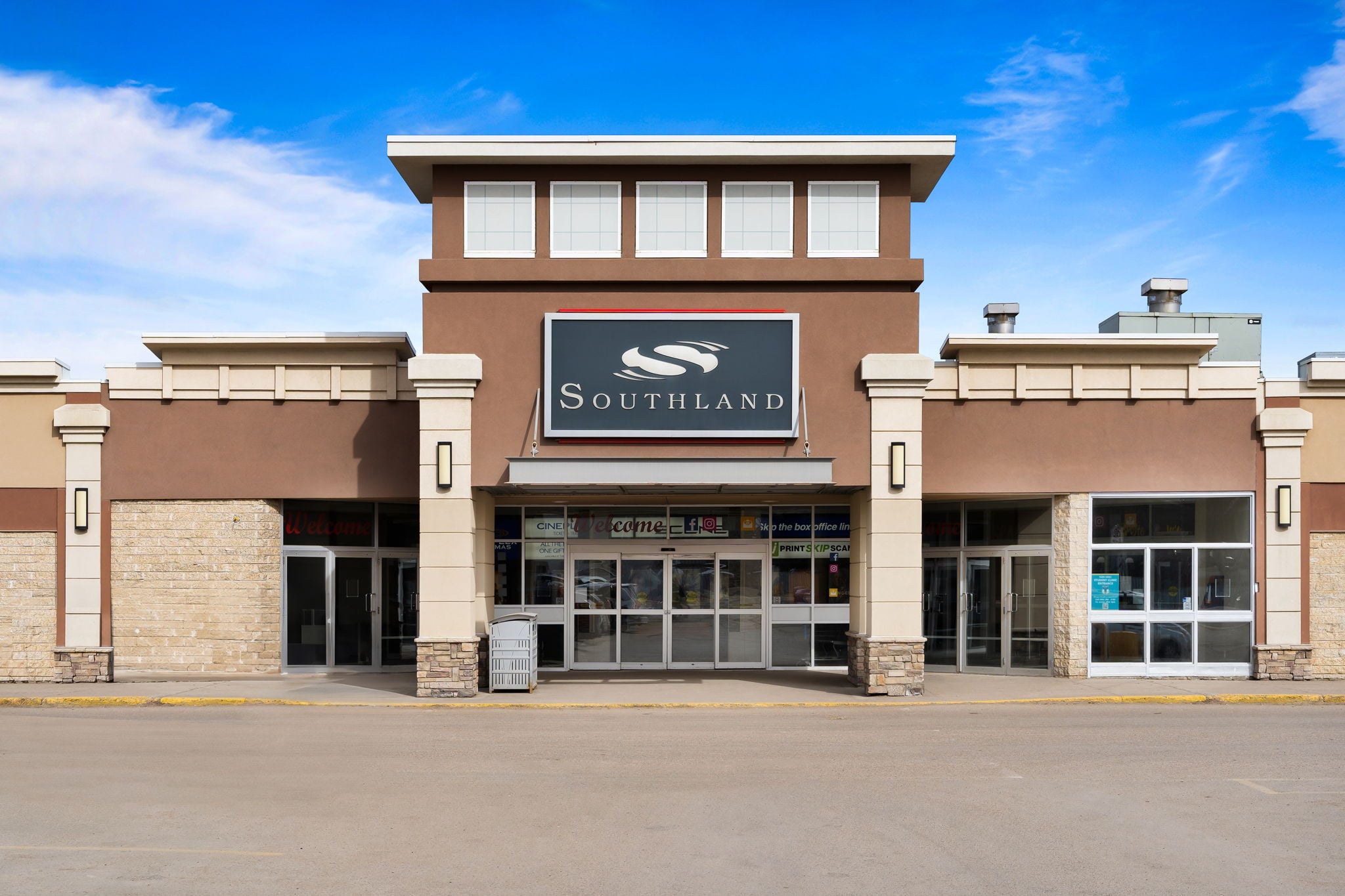
Southland Mall in Regina is marking its 50th anniversary with an evolving mix of tenants, strategic upgrades, and a renewed focus on community engagement. The centre, owned and managed by Toronto-based Salthill Capital, has emerged as one of the strongest retail destinations in the city, outpacing many of its competitors with a strategy that blends national anchors, local entrepreneurs, and family-friendly amenities.
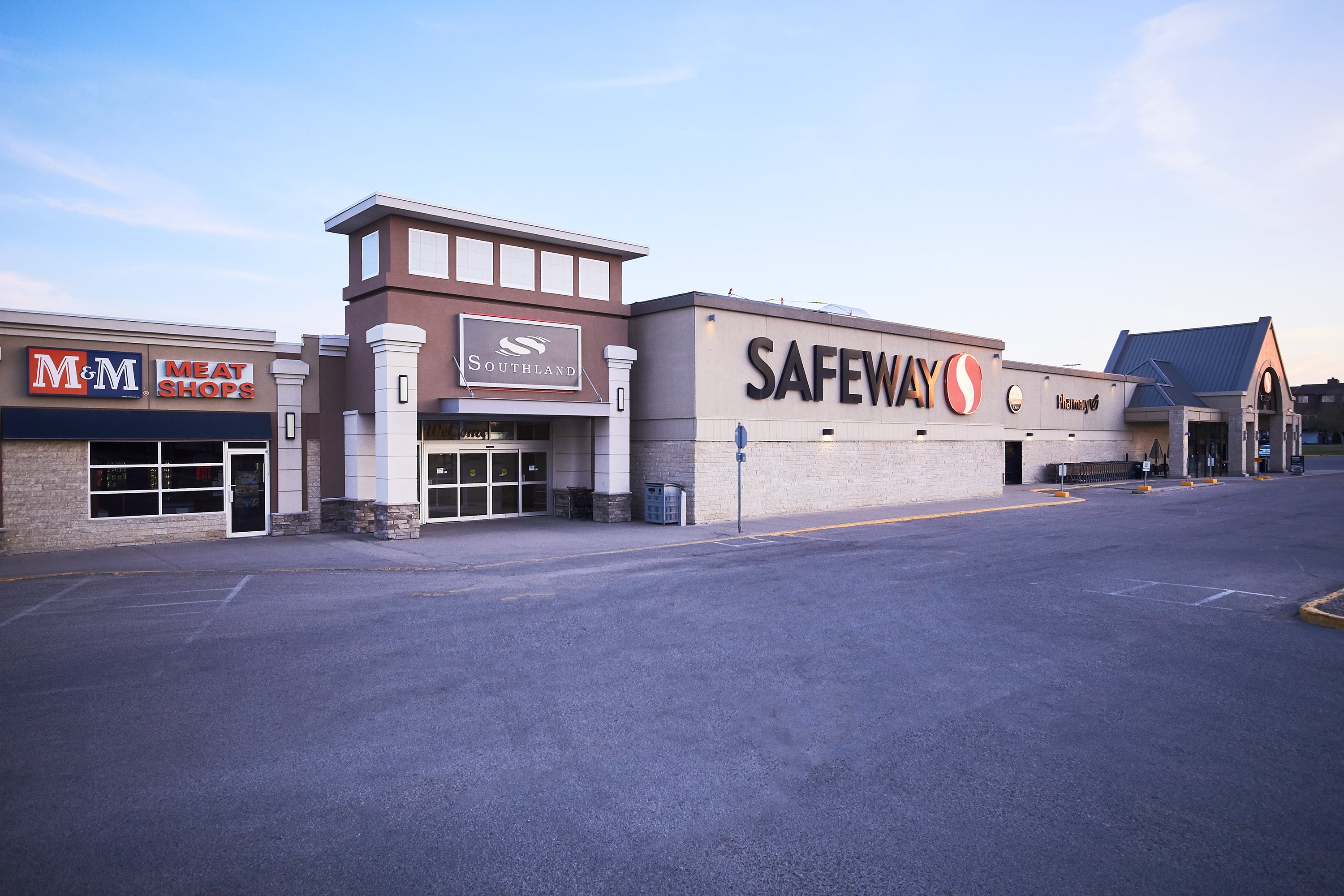
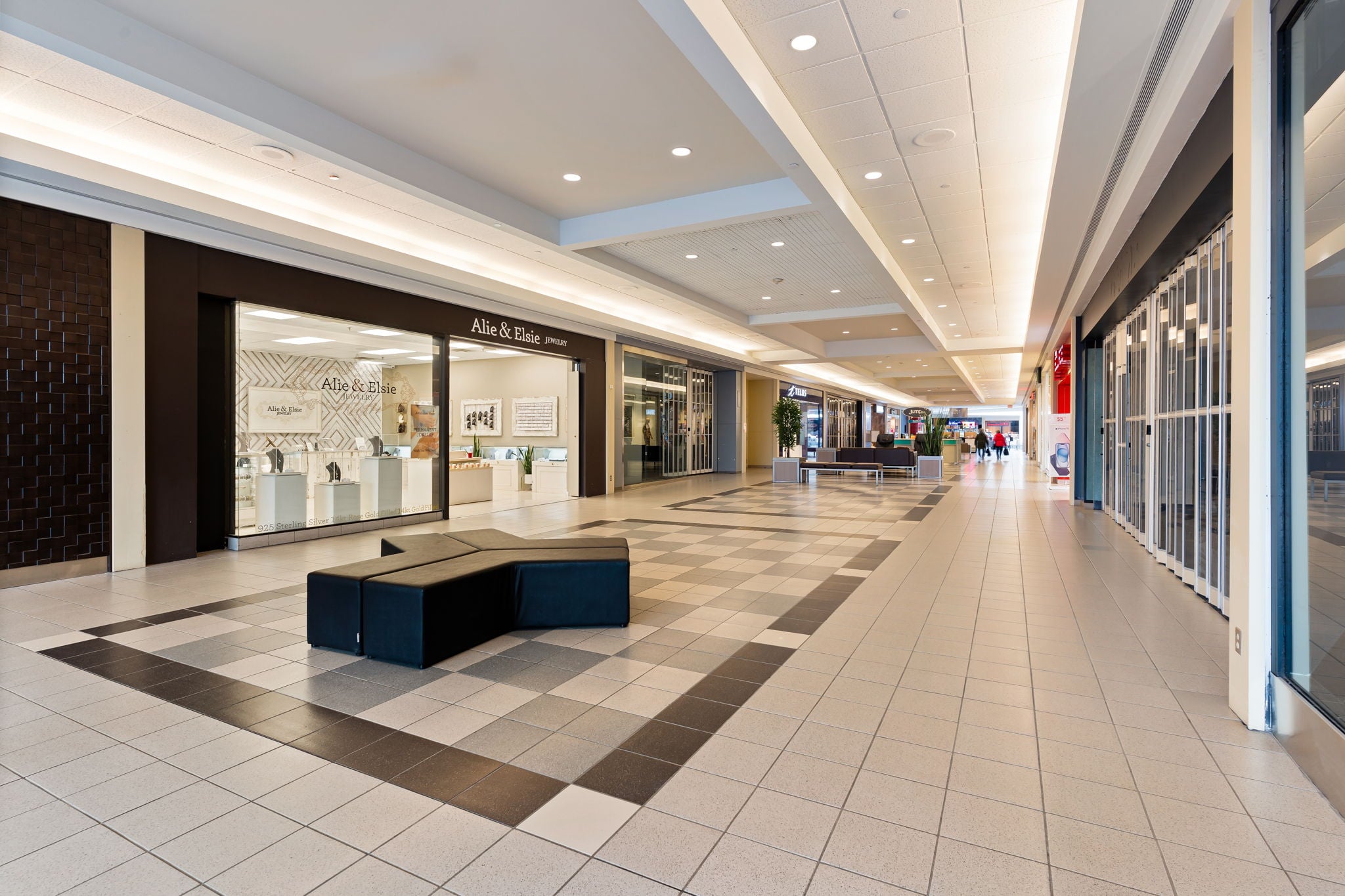
Opened on March 19, 1975, the fully enclosed shopping centre has grown into a hub for residents in Regina’s south end, drawing visitors with over 75 retailers, restaurants, and services. Anchored by Canadian Tire, Safeway, Indigo, SportChek, and Cineplex Odeon, the shopping centre continues to attract a wide demographic, supported by convenient access to highways and proximity to the University of Regina.
“Having the right anchors and retail mix has been essential,” said Petr Kafka, Principal, Leasing at Salthill Capital. “We don’t pretend to have cracked the code, but we see a pattern and have merchandised strategically. Canadian Tire, Safeway, Indigo, Dollar Tree, and Cineplex all contribute to a diverse mix, and they help drive steady traffic throughout the day and into the evening.”
Petr Kafka, Principal of Leasing at Salthill Capital
Building on Anchor Strengths
In Regina, shopping centres live and die by their anchor tenants. Southland Mall has managed to retain stability despite the exit of Walmart years ago, shifting its mix toward mid-size anchors and specialized retailers. Cineplex Odeon brings evening foot traffic that helps sustain food and beverage tenants, while banks and national restaurants on the centre’s pads add further strength.
Salthill Capital, which owns and manages the property, has also invested in the success of its tenants. “We’ve worked on creating the right environment,” Kafka explained. “Part of that is making sure the shopping centre feels safe, well maintained, and accessible.”
Suburban Regina malls such as Northgate and Victoria Square have struggled with high vacancy rates, while Cornwall Centre downtown faces challenges tied to safety perceptions. By comparison, Southland has leveraged its location and a strong tenant mix to remain competitive.
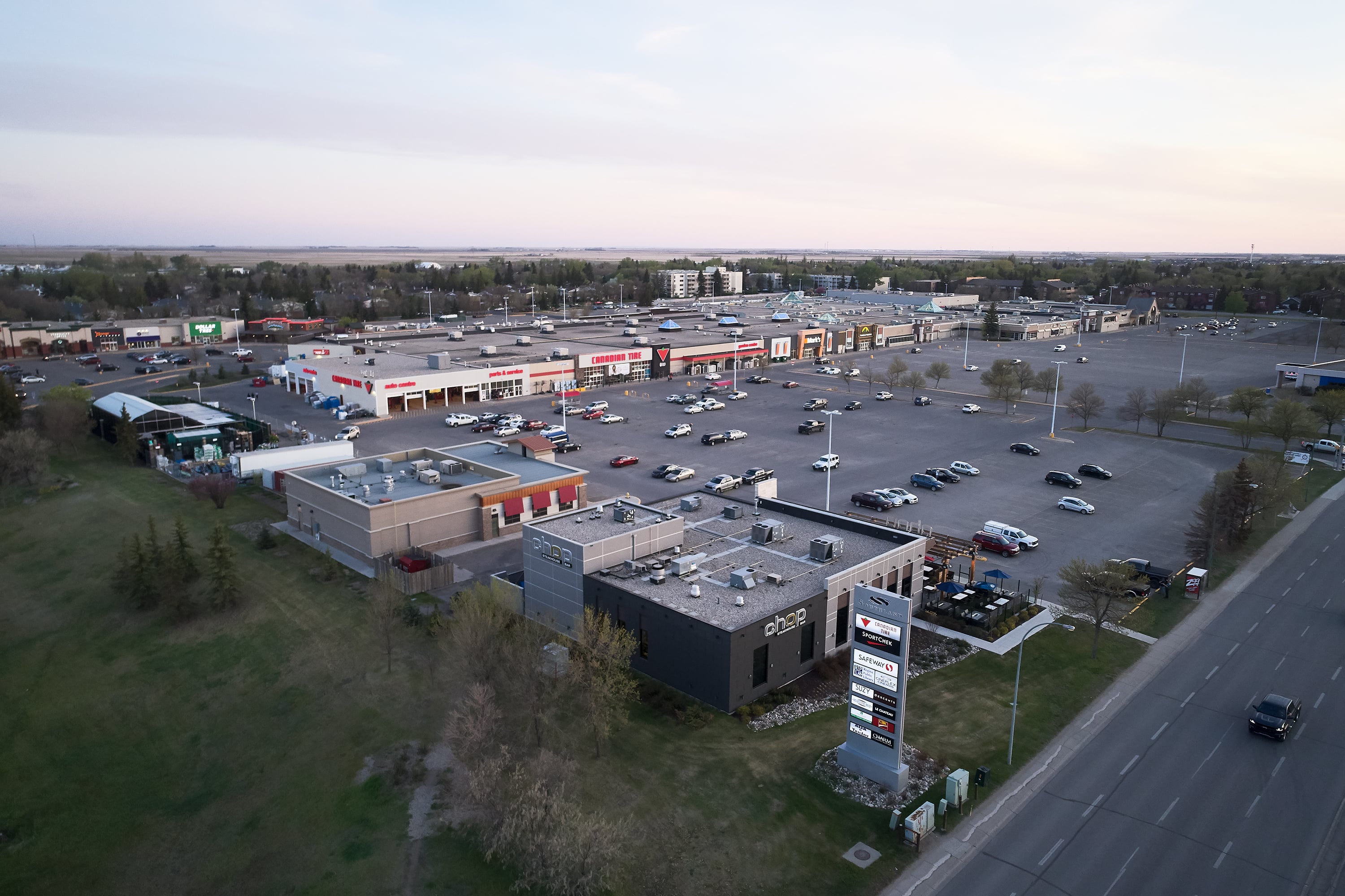
Aerial view of Southland Mall in Regina. Photo: Salthill Capital
“The goal has always been to offer a wide variety of options for the community, encouraging our visitors to spend more time at the shopping centre.” said Shawn Pharasi, Vice President of Asset Management at Salthill Capital.
A Platform for Local Entrepreneurs
Shawn Pharasi, Vice President of Asset Management at Salthill Capital
One of the defining features of Southland Mall’s recent strategy has been its commitment to local businesses. Salthill created “The Spot,” a dedicated platform for entrepreneurs and community organizations to showcase products and services through pop-ups and activations, and host local-focused events.
“Our strategy has really paid off,” Pharasi said. “We’ve worked hard to identify the main players in Regina across different categories, and we’ve successfully relocated several popular local businesses into Southland.”
These include Nico Lady + Baby, a higher-end children’s clothing and equipment store with a loyal social media following, as well as Dots Fashion, which has a strong digital presence and devoted customer base. Specialty retailers like Cutting Edge that relocated from Victoria Square have also seen strong performance in their new Southland location.
“Having tenants who are plugged into Facebook groups, Instagram, and the active online community creates a ripple effect,” Kafka explained. “It builds on their loyal following, drives events, and creates a sense of belonging. That grassroots energy often attracts attention from national brands.”
Southland Mall in Regina. Photo: Salthill Capital
Family-Friendly Amenities
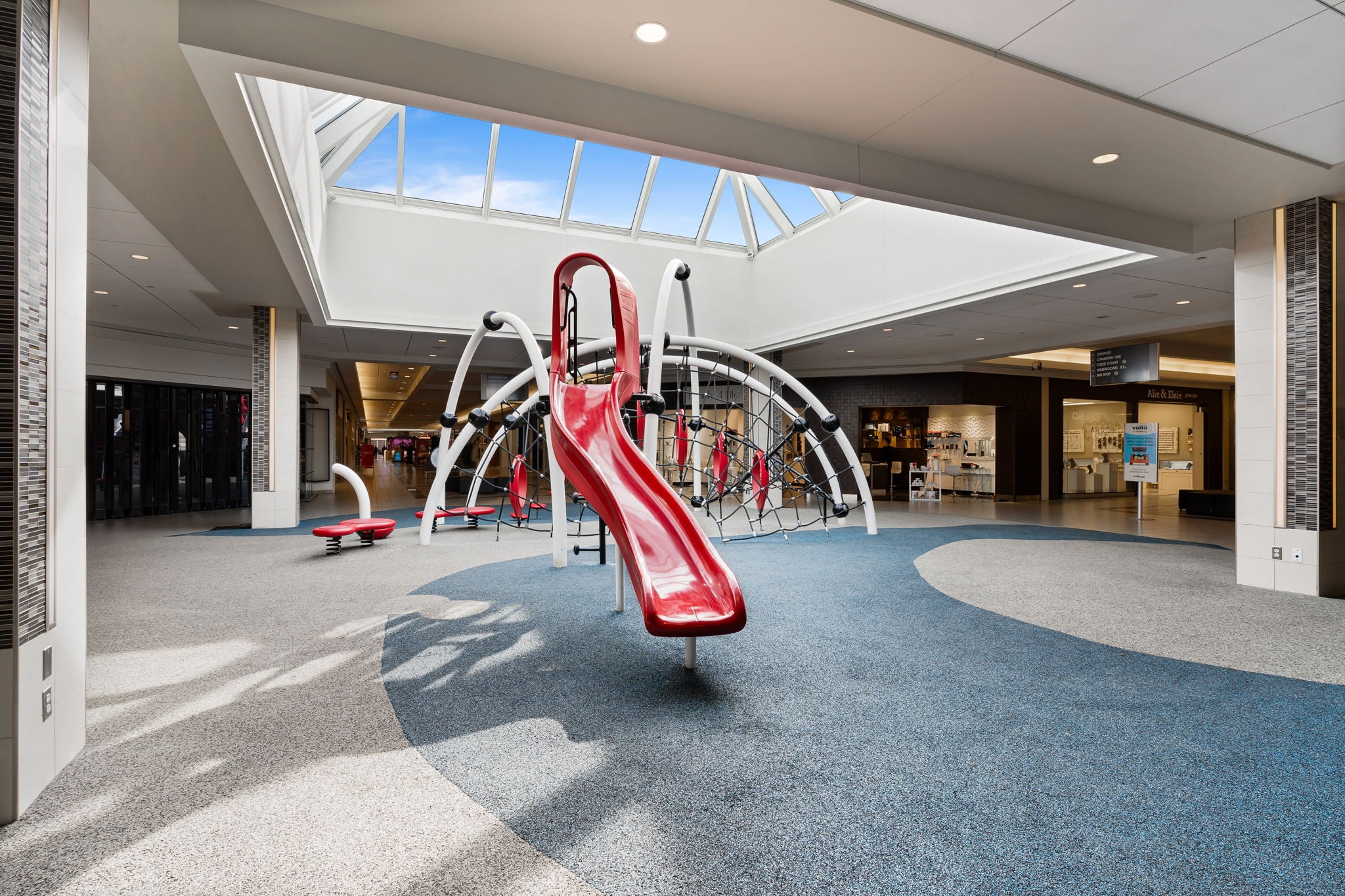
Recognizing the realities of Regina’s climate, Southland Mall has invested in family-oriented amenities. A new play area, combined with a branch of the Regina Public Library inside the centre, provides valuable year-round spaces for families.
“In Regina, temperatures swing from plus 40 to minus 40,” Kafka said. “We wanted to provide a safe enclosed space where families could come together all year round. The library, the play area, and The Spot all serve that purpose. They create an environment where parents and children feel welcome and safe, which in turn drives more visits and dwell time.”
Salthill views these investments as part of a long-term strategy to make Southland more than just a retail centre. “If we can create reasons for families to come and spend time here, then our tenants benefit from higher sales and more consistent traffic,” Pharasi added.
New Tenants and Redevelopment
The property has also benefited from reinvestment by national tenants. Chop Steakhouse & Bar has undertaken a relaunch, with a grand opening set for this fall, while Montana’s has completed a renovation. A new Shoppers Drug Mart is currently under construction, signalling confidence from one of Canada’s largest pharmacy chains.
“Whenever you see national brands doubling down, it’s a sign of strength,” Kafka noted. “At the same time, we continue to curate our tenant mix by handpicking operators who are innovative and community-minded.”
Pharasi highlighted the strong performance of the shopping centre’s restaurant pads and suggested more announcements are forthcoming. “We’re in discussions with another national brand for a pad site. While I can’t share details yet, we’re optimistic about continuing to diversify our offering.”
Southland Mall in Regina. Photo: Salthill Capital
Competing with Downtown
For decades, downtown Regina’s Cornwall Centre has been regarded as the city’s dominant shopping destination, drawing higher-end fashion and national brands that favoured its central location. Retailers such as Sephora and Lululemon have gravitated to the downtown mall, cementing its position as the go-to for elevated categories. Cornwall also historically benefitted from housing Regina’s Hudson’s Bay department store, a once traditional retail anchor for downtowns across the country. That space is now expected to be occupied by an unconfirmed new tenant.
However, shifting habits and concerns about downtown safety are altering the competitive landscape. “If it’s going to be higher-end fashion, those brands still gravitate toward Cornwall,” Pharasi acknowledged. “But in recent years, the safety, accessibility and parking in downtown has become an issue.”
Southland Mall in Regina. Photo: Salthill Capital
Looking Ahead
Southland Mall’s leadership sees continued opportunity in blending retail, entertainment, and services. Fitness is one category under active consideration, and Salthill’s strategy will continue to prioritize community activation and tenant diversity.
“We’re seeing shoppers who are purposeful,” Kafka said. “They come in knowing what they want, often after researching online, and they make purchases quickly. That’s why it’s so important for us to curate the right mix of retailers, provide engaging events, and ensure a safe and welcoming environment.”
As Southland Mall celebrates 50 years in Regina, its formula of strong anchors, community partnerships, and consistent reinvestment positions it well for the future. While other centres in the city face vacancy and reinvention challenges, Southland Mall has remained steady by adapting to local needs and fostering a tenant mix that reflects both national strength and grassroots energy.
“Our focus is simple,” Pharasi concluded. “Provide options, support our tenants, and keep improving the experience. That’s how Southland Mall will continue to thrive.”
Retail sales decreased 0.8% to $69.6 billion in July. Sales were down in eight of nine subsectors and were led by decreases at food and beverage retailers, reported Statistics Canada on Friday.
Core retail sales—which exclude gasoline stations and fuel vendors and motor vehicle and parts dealers—were down 1.2% in July. In volume terms, retail sales decreased 0.8% in July, said the federal agency.
“Following an increase of 2.2% in June, core retail sales fell 1.2% in July on lower sales at food and beverage retailers (-1.3%). This subsector’s decrease was led by lower receipts at supermarkets and other grocery retailers, which were down 2.5% in July following an increase of 2.6% in June. Beer, wine and liquor retailers (+3.2%) were the only store type within this subsector to post an increase in July,” explained Statistics Canada.
“Lower sales were also recorded at clothing, clothing accessories, shoes, jewelry, luggage and leather goods retailers (-2.9%) in July. Clothing and clothing accessories retailers (-3.2%) led the decrease in this subsector.”
On a seasonally adjusted basis, retail e-commerce sales increased 2.2% to $4.3 billion in July, accounting for 6.1% of total retail trade, compared with 6.0% in June, it said.
“Statistics Canada is providing an advance estimate of retail sales, which suggests that sales increased 1.0% in August. Owing to its early nature, this figure will be revised. This unofficial estimate was calculated based on responses received from 50.1% of companies surveyed. The average final response rate for the survey over the previous 12 months was 89.6%,” said the report.
Shelly Kaushik
Shelly Kaushik, Senior Economist, BMO, said: “While the July retail sales figures were soft, a decent August suggests Canadian consumers didn’t stay down for long. Despite ongoing trade uncertainty and further weakening in the labour market, the economy looks to be on track for a modest recovery to start the third quarter.”
Maria Solovieva
Maria Solovieva, Economist, TD, said: “Volatility in the data remains exceptionally high, however nominal sales in Q3 are now tracking 1.1% annualized growth despite July’s outsized weakness.
“Cooling employment and softer wage gains are likely to catch up with consumers in Q3, reinforcing a more frugal mindset. While wealth effects could continue to buoy services spending among higher-income households, another leg up in domestic tourism and related spending appears unlikely. Goods demand, meanwhile, looks set for a sizeable contraction, with vehicle sales likely to pull back in in the third quarter.”
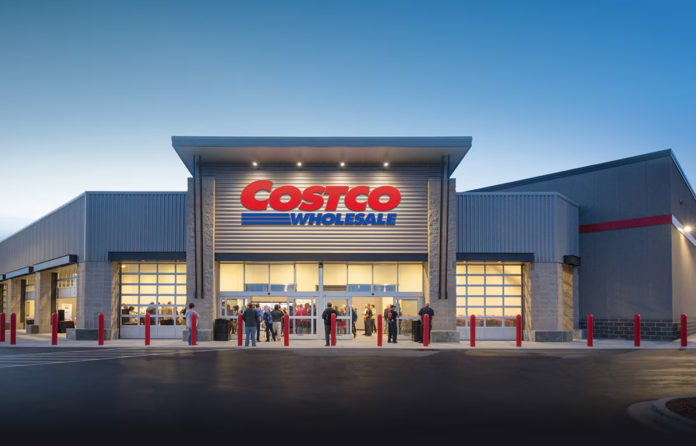
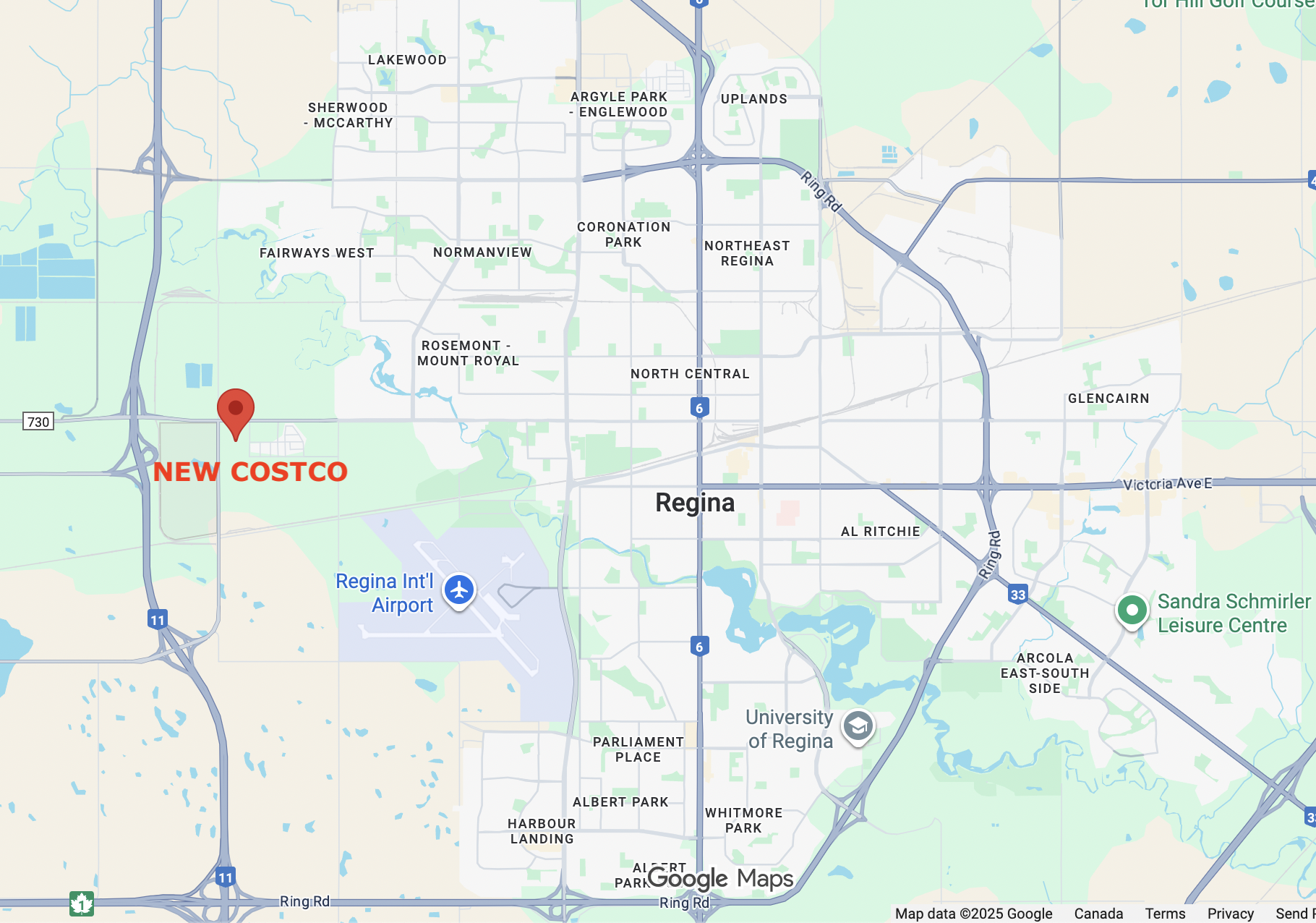
Construction has officially begun on the highly anticipated Regina Costco Westerra location, marking a step toward transforming the city’s west end into a major commercial and residential hub. Heavy equipment rolled onto the site at 8701 and 8201 Dewdney Avenue this week, just months after city council approved a $6.78 million financial incentive to secure the development.
The new Costco will be the second for Regina, joining the existing east-end warehouse that has served the city since 1993. Developers and city officials have described the project as a critical retail anchor that will stimulate economic growth, create jobs, and support the adjacent Coopertown neighbourhood, which also broke ground this week.
The path to the Regina Costco Westerra development was far from straightforward. Earlier this year, negotiations appeared to falter when Costco considered an alternative location at the provincially controlled Global Transportation Hub (GTH), where land costs were lower. Concerned that the city could lose a major retail catalyst, developers Forster Harvard and Dream Developments petitioned council to approve a financial package that would make the Westerra site more attractive.
City council ultimately agreed, offering $6.78 million in incentives, which will be repaid through property tax revenue over a seven- to eight-year period. The agreement requires Costco to purchase the land by the end of 2025, with an option to extend to 2026, and to open the store within 48 months of closing.
Officials framed the decision as an investment in the city’s future growth.
Construction Plans and Site Features
Once complete, the Regina Costco Westerra location will include the retailer’s signature warehouse-format store, a fuel station, and approximately 1,200 parking stalls, including 16 accessible spots. The development will resemble other new-generation Costco builds in Canada, which often feature larger floorplates and modernized layouts.
The project is expected to bring as many as 300 jobs to the area, ranging from full-time warehouse roles to part-time and seasonal positions. The influx of employment is anticipated to boost the local economy and support new residential construction in nearby communities.
The timing of the Costco build coincides with the launch of Coopertown, a major master-planned neighbourhood led by Dream Developments. At a groundbreaking ceremony this week, developers celebrated the start of grading work on the first 220 acres of what will eventually become a community of 36,000 residents.
Housing construction in Coopertown is slated to begin in fall 2026, with plans for 8,000 single-family homes, 6,000 multi-family units, and 50 acres of retail space. Costco’s presence is expected to play a pivotal role in attracting both residents and additional retailers to the area, accelerating the westward expansion of the city.
Community Response and Anticipated Opening
Public response to the development application for 8701 Dewdney Avenue has been overwhelmingly positive, with more than 90 percent of feedback supporting the addition of a second Costco. Residents have long requested a west-side location to reduce travel times and congestion at the existing east Regina warehouse, which was relocated to a larger site in 2018 to accommodate growing demand.
Although an official opening date has not been announced, construction is proceeding on schedule, and Costco is expected to meet the timeline set out in its agreement with the city.
Part of a Larger National Expansion
The Regina Costco Westerra project is part of a broader wave of expansion for the retailer across Canada. Costco operates 110 warehouses nationwide, with Ontario leading the count at 41 locations, followed by Quebec, Alberta, and British Columbia. New stores have opened or are under construction in Brantford, Newmarket, Oakville, and Rimouski, among other cities.
Globally, Costco is planning 29 new warehouses in its current fiscal year, a reflection of continued consumer demand for bulk goods, low prices, and ancillary services such as gas stations, pharmacies, and optical centres.