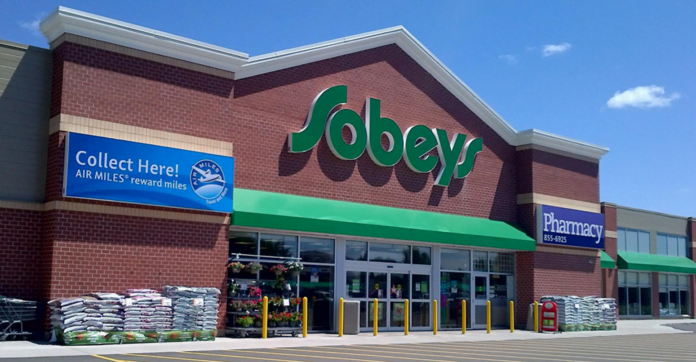
EXTERIOR OF SOBEYS GROCERY STORE. PHOTO: SUPERMARKET NEWS
Empire Company Limited and its subsidiary Sobeys Inc. have announced a restructuring of their grocery e-commerce operations, including the closure of Alberta facilities and an expansion of third-party delivery partnerships, as part of a strategy to improve profitability and better serve online customers.
The company said the changes are expected to deliver roughly $95 million in annualized operating income by fiscal 2027, though they will also result in non-cash impairment and related charges of approximately $750 million in the third quarter of fiscal 2026.
Restructuring to boost profitability
“We remain highly committed to grocery e-commerce in Canada and on continuing to make online shopping more convenient for our customers, while delivering immediate bottom-line improvements to our e-commerce business,” said Pierre St-Laurent, president and CEO of Empire.
Pierre St-Laurent
Empire is immediately winding down its Alberta e-commerce operations, including a customer fulfillment centre in the Calgary area and a smaller support facility in Edmonton. The company will also continue its pause on development of a planned CFC in Vancouver.
The Alberta facilities did not meet the company’s financial expectations, which Empire attributed to the region’s smaller-than-anticipated e-commerce market. The company said it will continue to support Western Canadian customers through third-party delivery partnerships. The closures are not expected to materially affect same-store sales growth.
Focus on Ontario and Quebec
Empire will maintain operations in Ontario and Quebec through its Voilà banner, using existing CFCs in the Greater Toronto and Montreal areas. The company described these operations as growing steadily and forming a key part of its overall offering.
“Customers in Ontario and Quebec love Voilà and, while difficult, the decisions we have made related to our CFC network in Western Canada will help ensure the long-term growth and profitability of our e-commerce business,” St-Laurent said.
“Our focus remains on thrilling our customers while giving them even more reasons to shop our banners through Voilà and third-party marketplaces across the country. This is just the beginning of the next chapter in reshaping our e-commerce strategy as we respond to the evolving needs and expectations of our customers.”
Empire highlighted its strong partnership with Ocado as a foundation for increasing customer engagement and improving productivity and profitability in these markets.
Expanding third-party delivery
The company plans to broaden its e-commerce reach by partnering with DoorDash, with the rollout expected in the coming months. Empire said the collaboration will expand home delivery options for customers nationwide and complements existing third-party partnerships.
“These actions reflect the Company’s commitment to provide customers a variety of e-commerce options, while improving profitability in all of its e-commerce channels,” the company said.
About Empire
Empire Company Limited is a Canadian company based in Stellarton, Nova Scotia. Its primary businesses include food retailing through Sobeys Inc. and related real estate. The company reported approximately $31 billion in annual sales, $17 billion in assets, and employs about 129,000 people across its subsidiaries, franchisees, and affiliates.
Larry’s Catch received offers from three investors on CBC’s Dragons’ Den after the Canadian seafood delivery company pitched its business during a nationally televised episode that aired Jan. 22.
The appearance marked a milestone for the privately-held company and its three co-founders, who used the broadcast to present their strategy for expanding access to wild-caught Canadian seafood through a direct-to-consumer delivery and subscription model.
National television debut
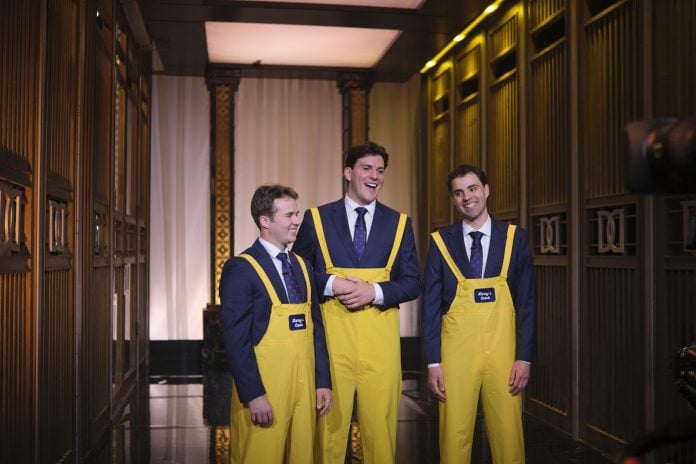
The episode, which aired on CBC Television at 8 p.m. and is available for streaming on CBC Gem, was Larry’s Catch’s first appearance on national television. The founders—Glen Creaser, James Quinn and Javier Mejorada—outlined the origins of the business and its focus on sourcing seafood from Canadian fisheries and delivering products directly to customers’ homes.
According to the company, the pitch generated strong interest from the Dragons, resulting in three separate offers during the broadcast.
Glen Creaser
“Pitching on Dragons’ Den is a milestone we never imagined when we started Larry’s Catch,” says Glen Creaser, co-founder of Larry’s Catch. “This is bigger than a business moment for us, it’s a chance to spotlight Canadian fishermen and make premium, wild-caught seafood easier to access nationwide. Getting to share our story on a national stage means everything as the exposure helps us move our mission forward faster than we could on our own.”
Focus on scaling operations
Larry’s Catch said the response from the Dragons aligns with its longer-term plans to expand operations while maintaining relationships with Canadian fisheries. The company framed the on-air interest as validation of its efforts to grow responsibly and broaden its customer base without changing its sourcing standards.
As part of the broadcast’s timing, Larry’s Catch launched a promotion tied to the episode’s premiere, offering a $10 discount for new customers purchasing the company’s seafood products.
Business origins
Larry’s Catch was founded by Creaser, Quinn and Mejorada, who are also behind the technology startup Afino. The seafood business takes its name from Creaser’s father, Larry, a fisherman who influenced the company’s focus on seafood sourcing and distribution.
The idea for the business emerged after Creaser moved from Nova Scotia to Ontario in 2016 and found that fresh seafood was less readily available. According to the company, early informal deliveries of seafood from Nova Scotia to Ontario were shared among friends and family before evolving into a formal business.
The company cited seafood consumption figures to illustrate the market opportunity, noting that Ontarians consume an average of 16 pounds of seafood per person, compared with a global per-capita average of 44 pounds.
Larry’s Catch
Supply chain and delivery model
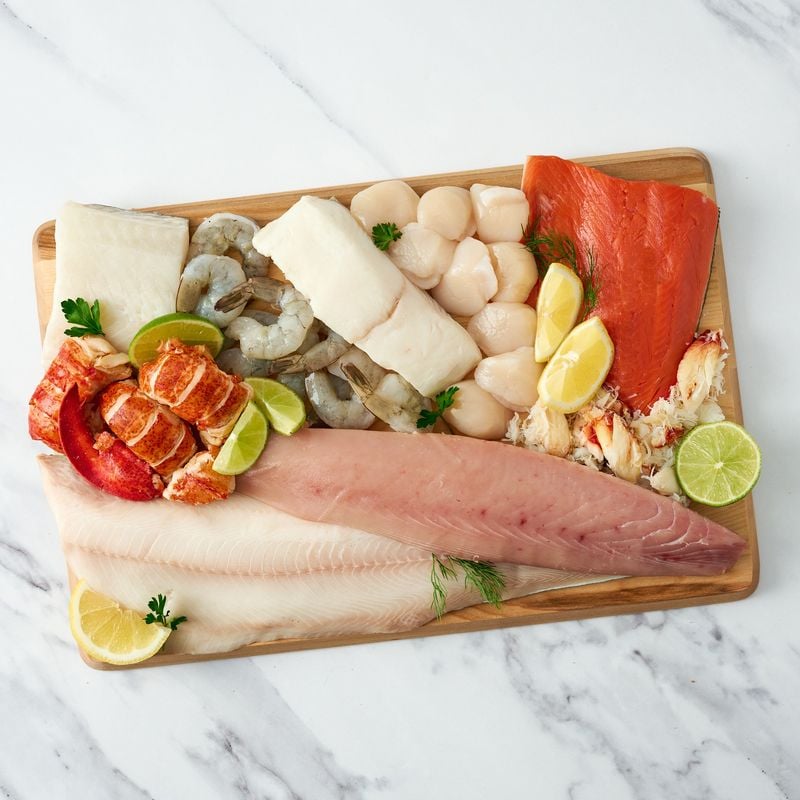
Larry’s Catch works directly with what it describes as certified sustainable family fisheries across Canada’s Atlantic, Pacific and Arctic coasts. The company sources a range of products, including black cod, halibut, crab, lobster and scallops.
All products are individually quick-frozen within hours of being caught, a process the company says is designed to preserve flavour, texture and freshness. Customers can order pre-curated seafood boxes or assemble custom selections, with options for recurring deliveries or one-time purchases. Orders can be paused, skipped or cancelled.
The company currently delivers across British Columbia, Alberta, Saskatchewan, Manitoba, Ontario, Quebec, New Brunswick, Nova Scotia and Prince Edward Island.
Photo: Larry’s Catch
Community commitments
Larry’s Catch also highlighted its support for MS Canada, linking the partnership to the personal experience of Creaser’s father, who lives with multiple sclerosis and was forced into early retirement due to the disease. The company said its support is intended to contribute to improving quality of life for Canadians affected by MS and to advancing related research.
The Dragons’ Den appearance comes as Larry’s Catch seeks to leverage national exposure to expand its customer base and advance its growth strategy within Canada’s food delivery and subscription market.
Hudson's Bay downtown Calgary. Photo by Mario Toneguzzi
Canada’s retail property market is starting 2026 in a more stable position after pockets of volatility earlier in 2025, though performance continues to vary widely by market and format, according to a new survey from commercial real estate firm CBRE.
CBRE’s H2 2025 Retail Rent Survey says many cities rebounded as last year progressed, with stabilization becoming more evident nationwide heading into 2026, even as economic uncertainty persisted.
Survey points to uneven recovery
The survey found that leasing demand remained active across most retail categories, though outcomes differed sharply depending on local conditions.
“Demand from retail brands remains healthy, with leasing activity spread across most categories,” says CBRE Senior Vice President Alex Edmison. “When you drill into the numbers, retail performance continues to be highly situational. Local demographics, tenant mix and economic drivers can make or break retailers. Strategic tenant relocations continue in response to these dynamics, particularly for flagships in high density areas.”
Alex Edmison
CBRE said retail supply remains constrained across the country, keeping vacancy levels tight amid strong leasing activity. Elevated development costs have limited new construction in recent years, though the firm said strong fundamentals are beginning to unlock new projects in select markets where demand is established and pre-leasing has been secured.
Rental rates continued to rise in the second half of 2025, increasing in 37 of the 120 format types or key urban areas tracked in the survey.
Grocery-anchored suburban shopping centres were identified as top performers, while select urban retail nodes experienced a substantial rebound where return-to-office mandates supported improved daytime foot traffic.
The survey also pointed to sustained demand for fitness and wellness services, particularly in Ontario and Western Canada. In Calgary, physician recruitment initiatives contributed to increased demand for medical clinic space, while Edmonton saw success filling large-format vacancies.
Trends shaping retail in 2026
Looking ahead, CBRE outlined several themes expected to influence leasing and development decisions in 2026.
Interest in former Hudson’s Bay Co. spaces remained strong, according to the survey. Some locations have been leased by Canadian Tire, Sport Chek, Mark’s and TJX, while entertainment uses such as Round 1, Happy Kingdom and Splitsville Bowl are also being explored. Some landlords are extending mall corridors into these former anchor spaces with smaller units, while others are planning demolitions.
At the same time, large-format retailers including Toys R Us, Linen Chest and JYSK are closing underperforming locations, creating new availability in a market that has traditionally been tight.
In the luxury segment, first-to-market brands continued to push into key retail districts, while major luxury houses became more selective and slower to sign new deals following mixed performance in 2025. The athleisure category showed strong momentum, with brands such as Arc’teryx, Lululemon, ON, Vuori, Hoka and Reigning Champ signing new leases and competing for space.
Value-oriented retailers also continued to perform well, absorbing demand from cost-conscious households. CBRE said consumers are expected to further reduce spending in 2026, supporting expansion by brands including Winners, Marshalls, Homesense, Structube, IKEA, Uniqlo and Crunch Fitness.
Rendering of the future four-level 40,000 sq ft Aritzia store at Robson and Howe in Vancouver. Rendering: Aritzia
Regional market highlights
CBRE’s survey highlighted several notable developments across major Canadian markets.
In Vancouver, the announcement of Aritzia’s new 40,000-square-foot flagship store in a portion of Nordstrom’s former space at Pacific Centre was cited as a signal of renewed confidence in the city’s core. This comes alongside the opening of several new downtown restaurants as foot traffic improves. Retail vacancies and rental rates are expected to remain stable or increase, as new retail supply remains closely tied to mixed-use developments, which CBRE said have slowed significantly.
In Calgary, demand for medical clinic space was fueled by the College of Physicians and Surgeons of Alberta’s sponsorship initiative. A streamlined process for recruiting international medical graduates resulted in more than 600 physician hires, amplifying demand in a category that had been largely inactive since 2020.
Winnipeg saw the opening of a new Costco warehouse, a 166,894-square-foot location in Headingley’s Westport Development. The mixed-use project is expected to bring retail, office and warehousing space to the west end of the Greater Winnipeg Area. Olexa Developments has also broken ground on a new mixed-use development in the St. Boniface neighbourhood.
In Toronto, Yorkdale Shopping Centre and Bloor Street West continued to attract first-to-market entrants. Gentle Monster, a Korean eyewear brand, opened a location in December. On Bloor Street, Italian menswear boutique Luca Faloni opened amid strong attention, while Tiffany & Co.’s Canadian flagship store at the corner of Bay and Bloor is slated to open in spring 2026.
Montreal also showed signs of renewed activity, with brands on Sainte-Catherine Street West relocating into new flagship stores. CBRE said demand from national and international retailers is rising as the Sainte-Catherine revitalization advances, with the latest phase shifting west in September. The project includes replacing aging infrastructure and enhancing pedestrian spaces.
Overall, the survey suggests Canada’s retail real estate market is entering 2026 with improved stability, while outcomes continue to depend heavily on location, format and tenant strategy.
Canadian ecommerce order volumes grew 20 per cent in 2025, but that growth was concentrated among a small share of companies, according to a new study from marketing platform Omnisend that found the top 10 per cent of brands generated half of total order growth.
The report, based on analysis of more than 5,000 Canadian ecommerce brands, suggests that changes in shopper behaviour — including fewer interactions with marketing but higher purchase intent when shoppers did engage — played a significant role in determining which businesses benefited most from the rebound in online sales.
Growth concentrated among higher-performing brands
Ecommerce order volume across all sales channels in Canada rose 20 per cent year over year in 2025, Omnisend said in the report released Jan. 20. However, demand was unevenly distributed, with a relatively small group of higher-performing brands capturing a disproportionate share of the gains.
According to the study, the top 10 per cent of brands accounted for 50 per cent of total ecommerce order growth during the year, indicating that many businesses did not experience the same level of recovery.
Marty Bauer
“What we saw in 2025 reflects the broader economy — growth came back, but it didn’t reach everyone,” said Marty Bauer, ecommerce expert at Omnisend. “After years of inflation and uncertainty, people were still willing to spend, but they were much more intentional about where they spent their money. Brands that were able to react quickly to customer behavior had a clear advantage, while others found it harder to keep up.”
Shoppers clicked less, but spent more
The Omnisend data shows that Canadian shoppers interacted with marketing messages less frequently in 2025, but those interactions were more likely to lead to a purchase and to higher spending per order.
While overall click rates declined, shoppers who did click on promotions were 28 per cent more likely to complete a purchase than the year before, and they spent more on each order, according to the report.
Marketing performance data from Omnisend indicated that the value of each interaction increased as shoppers became more selective about when and where they engaged.
Year over year in Canada, the report found:
Average order value from email rose from $172 to $196, a 14 per cent increase
Average revenue per email increased by 41 per cent, from $0.12 to $0.17
Email click-to-conversion increased by 28 per cent, rising from 6.23 per cent to 9.24 per cent
Email click rates declined by 22 per cent
“Clicks became harder to get in 2025, but they also became more valuable,” Bauer said. “Shoppers were more selective, but when they did engage, they were ready to spend more. That’s why fewer interactions still produced more revenue — each click carried more intent than it did before. That shift rewarded brands that focused on efficiency and relevance, rather than volume.”
Automation captured a larger share of revenue
The report points to behaviour-based automated marketing as a key differentiator for brands that saw stronger growth, particularly as opportunities to reach customers became more limited.
Omnisend said automated, behaviour-based emails generated 27 per cent of total email revenue in Canada, despite accounting for just 2.1 per cent of total email sends. These messages are triggered by customer actions, such as browsing or abandoning a cart, rather than being sent on a fixed schedule.
“With fewer chances to reach customers, brands that could respond to buying intent in real time captured more demand,” the report said.
Photo: Vitaly Gariev
Key automation findings for Canada included:
Automated emails generated 27 per cent of total email revenue while representing just 2.1 per cent of email sends
Revenue per automated email send was $3.32, compared with $0.16 for scheduled email sends
Automated messages also showed higher conversion efficiency across multiple channels:
Email click-to-conversion: automated 31.23 per cent; scheduled 9.24 per cent
SMS click-to-conversion: automated 3.38 per cent; scheduled 0.89 per cent
Push notification click-to-conversion: automated 20.21 per cent; scheduled 1.87 per cent
“Brands that relied on automation weren’t trying to convince people to buy — they were responding when customers had already shown intent,” Bauer said. “In a year when attention was limited and shoppers had more options than ever, that approach worked better. Automated messages performed well because they fit naturally into how people shop today, rather than interrupting them.”
Greg Zakowicz
Greg Zakowicz, Ecommerce Advisor at Omnisend, said the top brands are the ones that have focused on building trust with and providing value to customers. Instead of running a paid ad, capturing a sale, and repeating the cycle, the top brands have consistently focused on the customer relationship through high product quality, customer support, value-adds such as free shipping and returns, and engagement tactics like post-purchase email and SMS marketing.
“All together, this approach fosters customer trust and loyalty with brands, ensuring they are one of the first options customers consider when making a purchase. The data shows shoppers are clicking on marketing less often, yet converting at higher rates and spending more per order. What does this tell us about how Canadian consumers’ expectations and decision-making have evolved?
“This behavior points to the rise of the “buy it now” consumer. As economic factors strain household budgets, shoppers have become more thoughtful and purposeful with their purchases. Value has become one of, if not the, primary factors for buying. This has led to shoppers clicking on less marketing simply to browse. Instead, consumers now click on marketing when they need to buy something and see marketing that aligns with that need.”
When consumers click, they’re ready to make a purchase
When consumers click, they’re ready to make a purchase. Because shoppers seek value and purchase more from brands they trust, they tend to consolidate purchases with retailers, leading to higher average order values, added Zakowicz.
“Retailers should be constantly evaluating their campaigns’ performance metrics. For the longest time, brands over-emphasized the value of email marketing open rates. Strong open rates and low conversions are not a successful campaign. But when times are good, this is easy to overlook,” he said.
“Now, consumers have endless options for where to purchase products. Combined with the cost of paid social and search ads, focusing on conversion metrics can mean the difference in profitability. With email, for example, brands should look at click-to-open rate and click-to-conversion rate as leading metrics. When these metrics are strong, sales are happening. Sales matter, not views.”
Behaviour-based emails designed to move customer to next step
Zakowicz said behaviour-based automated emails work well.
“These messages work so well because they are naturally timely and relevant. Because they are behavior-based, meaning they only send when someone takes a specific action, the messages are sent at specific times in a customer journey. They’re designed to move the customer to the next step, whether it’s to return to the website, complete their purchase, or engage with the brand after a sale,” he said.
“The three most impactful automated messages are welcome messages, product abandonment, and cart abandonment, and it makes sense why. With welcome messages, they are new to the brand, and by signing up, they show an intent to engage further. Product abandonment indicates an intention to shop for a specific product or type of product. Cart abandonment shows they have identified what they want to buy, and it’s a matter of who they will buy it from.
“There are two primary mistakes I see companies make with these messages: the first is not reinforcing value in the messages. In each message, brands should reinforce company value-adds, including shipping and return policies, product quality, customer service, user-generated content such as testimonials and product reviews, and anything else that matters to shoppers. Showcasing these items builds trust and helps influence customers to shop.
“The second is paralysis by analysis. Too often, brands think they need to have a perfect series of messages before they begin sending them. They don’t. Retailers can always go back and refine and add messages as needed. The most important thing is to send them. Create one message, automate it, move to the next, and refine as you go. Taking it one simple step at a time allows brands to capture the value of the messages instead of sitting on the sidelines. In a time when sales are more difficult to come by, paralysis literally costs you money.”
Photo: Thought Catalog
Practical steps ecommerce brands can take to compete
“First, automate email and SMS messages. Email marketing providers have templatized messages and automation creation, making them as easy to create as clicking a few buttons — no experience necessary. Focus on the revenue-generating automations first: welcome, product abandonment, and cart abandonment. One at a time will pay dividends,” said Zakowicz.
“Second, with all messages they send, reinforce value-adds. These matter to shoppers, not only to capture immediate sales but to build ongoing trust.
“Third, focus on collecting email and mobile numbers. Email and SMS marketing continue to be high-ROI channels, without the fluctuating costs. As more shoppers turn to AI platforms as part of their shopping journeys, the ability to retarget shoppers becomes increasingly difficult. By collecting first-party data like email and SMS, brands have a direct line to shoppers without the inflated costs.
“Over the past 15 years, new technology has taken hold, and consumer behavior changed, yet at each step along the way, email marketing has become increasingly important and trusted by both consumers and brands.”
Decathlon brings its full shopping experience straight to your phone with its own app. Designed to keep you connected wherever you are, it gives you access to the complete product range, current promotions, your membership benefits, and your orders, all in one place.
Available on both iOS and Android, the Decathlon app makes it easy to shop, track purchases, and stay connected to your local store directly from your mobile device. Whether you are at home, on the move, or already in store, the app helps you stay organized and informed at every step.
A Simple and Practical Shopping Experience
The Decathlon app is built to make everyday shopping easier. Navigation is fast and intuitive, allowing you to browse products, check availability, and complete your purchases in just a few clicks.
From discovering new items to reordering your favourites, everything is designed to be quick, clear, and accessible. Promotions, product details, and availability are easy to find, helping you make confident purchasing decisions without unnecessary steps.
Decathlon Membership Program: Points and Rewards
By joining the Membership Program through the app, you earn points with every purchase. These points can be collected and redeemed for promotional cards and other rewards.
Your membership card is always accessible in the app. You can scan it directly at checkout or save it to your phone’s digital wallet for even faster access in store. This removes the need to carry a physical card and ensures you never miss out on earning points.
Your Favourite Products, Saved for Later
The app allows you to save the products you love by adding them to your favourites. This makes it easy to find them again later and plan future purchases without starting your search from scratch.
Orders Made Easy
Shopping takes only a few clicks. You can choose your preferred delivery method, track your orders in real time, and manage everything directly from your phone.
Free in-store pickup is available on all click and collect orders, making it a convenient option if you want to collect your items at a nearby store.
Useful In-Store Features
While visiting a Decathlon store, the app becomes a practical companion.
Check in-store stock and product availability
Scan product barcodes to access detailed information such as descriptions, photos, videos, and tips
Scan your membership card at checkout to earn points instantly
These features help you save time in store and ensure you have all the information you need before making a purchase.
Delivery, Returns, and Support
If you do not have a store nearby, Decathlon ships most products across Canada with home delivery options available.
Decathlon members benefit from up to 365 days to return most products, making returns simple and flexible.
If you need assistance, the support team is available on weekdays from 10 am to 6 pm Eastern Time.
Download the Decathlon App
The Decathlon app is available now on the App Store and Google Play. Download it to keep Decathlon in your pocket and enjoy a seamless connection between online and in-store shopping.
Lane Bryant, one of the best-known plus-size fashion brands in the U.S., is entering Canada through an exclusive distribution partnership with Walmart Canada. Canadian shoppers will gain access to the brand’s trend-forward assortment online immediately, with products arriving in 320 stores nationwide beginning February 1, 2026.
The rollout represents Lane Bryant’s first major retail expansion into Canada and reflects a broader shift in how international apparel brands are choosing to enter the market. Rather than opening standalone stores or pursuing traditional department store distribution, Lane Bryant is leveraging Walmart Canada’s scale, traffic, and national footprint to reach customers at once.
For Walmart Canada, the launch strengthens its fashion proposition in a category where Canadian consumers have long cited limited choice, inconsistent fit, and a lack of recognizable brands. For Lane Bryant and its partners, the collaboration offers an efficient, asset-light path into a market that has become increasingly difficult to enter through conventional channels.
“We know the Canadian consumer has been looking for more choices in plus-size fashion,” said Mary Castilow, Brand President of Lane Bryant. “Lane Bryant has been the market leader in the U.S. for decades, and this collaboration with Walmart Canada represents an exciting opportunity to extend that leadership, bringing Canadian women affordable, stylish fashion designed specifically for them.”
A National Launch With Immediate Scale
The Lane Bryant collection is available online immediately and will roll out in stores beginning February 1, with distribution across 320 Walmart Canada locations. In-store sizing will range from 1X to 4X, while select styles will be available online in extended sizes up to 6X. The assortment includes tops and blouses, denim, dresses, activewear, and wardrobe staples designed with fit and comfort as core priorities.
From a merchandising perspective, the launch is significant for its breadth and consistency. Rather than testing the brand in a limited number of markets, Walmart Canada is introducing Lane Bryant across its existing plus-size store network at once, ensuring a uniform national presence.
“Introducing Lane Bryant at Walmart Canada helps us bring our customers the stylish, better-fitting options in plus-size fashion they’ve been asking for,” said Molly Dobson, Vice President of Fashion at Walmart Canada. “We’re excited to bring this beloved brand to Walmart Canada. This offering helps close a gap in the market and reinforces our role as a retailer women can count on for trend-forward fashion at accessible prices.”
The move also reflects Walmart Canada’s continued investment in apparel, particularly in categories where fit and brand credibility influence purchase decisions as much as price.
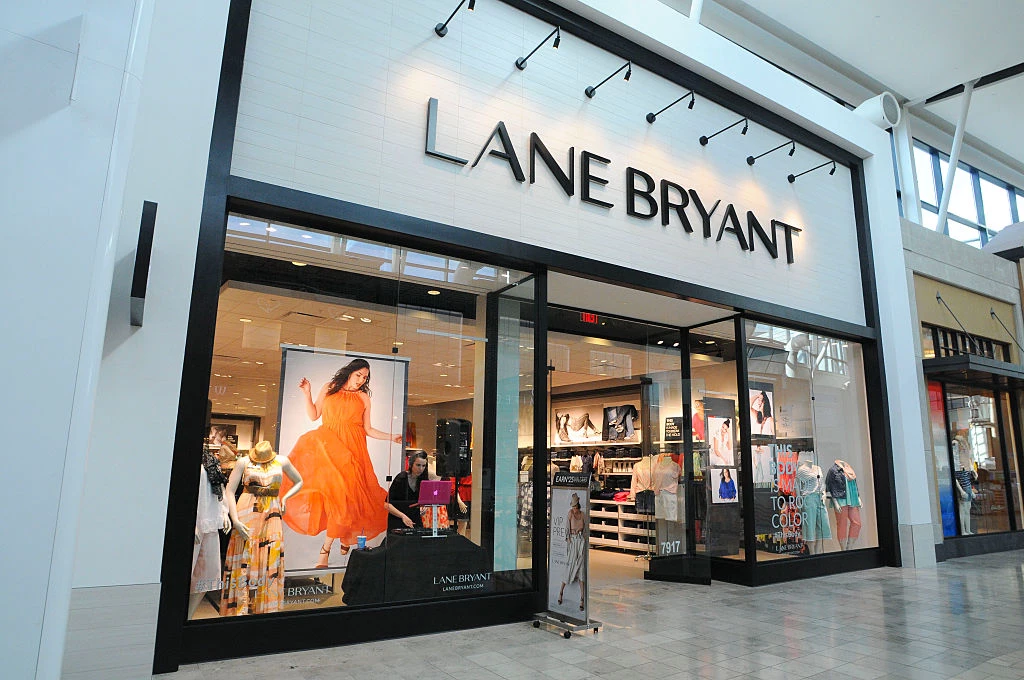
A Lane Bryant store. Photo: arloren
How the Deal Came Together
Lane Bryant’s entry into Canada is being executed through Walmart Canada’s collaboration with Centric Brands, which is working under a strategic licensing agreement with KnitWell Group, the parent company of Lane Bryant.
Centric Brands is responsible for licensing, product development, and execution for the Walmart Canada channel, bringing experience from previous Canadian-exclusive launches and mass-market retail partnerships.
In an interview with Retail Insider, Kellie Crane, Senior Vice President of Sales at Centric Brands, said the opportunity emerged naturally following earlier cross-border initiatives.
“I lead a number of Canadian-exclusive launches at Centric Brands, including the Ann Taylor and LOFT rollout with Hudson’s Bay,” Crane said. “When that chapter came to an end, it opened the door to new conversations with KnitWell Group. Lane Bryant quickly emerged as a strong opportunity, and we presented the concept to Walmart Canada as a significant, scalable launch.”
Crane noted that the timing was right for both the brand and the retailer, particularly given ongoing changes in Canada’s apparel distribution landscape.
A Monobrand Strategy Inside Walmart
One of the most notable aspects of the launch is how deeply Lane Bryant is being integrated into Walmart Canada’s plus-size assortment. Rather than adding the brand alongside existing private labels, Walmart Canada is repositioning the category around a single, dedicated brand destination.
“This is a major commitment,” Crane said. “The Lane Bryant launch will replace Walmart Canada’s existing plus-size assortment with a single, monobranded destination. It’s a sizable shift and reflects strong confidence from all partners in the strength of the brand.”
By consolidating its plus-size offer around Lane Bryant, Walmart Canada is betting on brand recognition, fit consistency, and fashion credibility to drive loyalty and repeat visits. The approach also simplifies the shopping experience for customers who often struggle to navigate fragmented plus-size assortments.
“The collection will launch in 320 Walmart Canada locations, matching the retailer’s existing plus-size distribution,” Crane added. “It’s a true national rollout, going live across the country at once.”
Photo- Walmart Canada
Why Lane Bryant Travels Well
Founded more than 120 years ago by Lena Himmelstein Bryant Malsin, Lane Bryant was built on the belief that women of all sizes deserved clothing designed specifically for them. Over time, the brand has become one of the most recognized names in plus-size apparel in the United States, earning loyalty through a focus on fit, comfort, and wearable style.
Today, Lane Bryant operates hundreds of stores across the U.S. alongside a substantial e-commerce business, serving a customer base that values both fashion relevance and sizing consistency. That heritage, combined with strong brand awareness among Canadian consumers familiar with U.S. retail, made the brand a compelling candidate for cross-border expansion.
“Lane Bryant is a brand that deeply resonates with consumers,” said Brent Unger, President of the Lifestyle Division at Centric Brands. “We are proud to partner with KnitWell to bring Lane Bryant to Walmart Canada, where it will become a go-to plus-size fashion destination for Canadian shoppers.”
Filling a Gap in the Canadian Market
The launch comes at a time when Canadian apparel consumers face fewer mid-market and department store options than in the past. Several international brands that once relied on department store distribution have been forced to rethink how they reach Canadian shoppers, particularly at scale.
Crane acknowledged that reality during the interview, pointing to the narrowing set of viable entry points for brands seeking national exposure.
“There are fewer options for brands and for consumers than there used to be,” she said. “That’s why partnerships like this matter. Walmart Canada offers reach, consistency, and the ability to deliver fashion at scale.”
She also highlighted Walmart’s broader evolution in apparel as a factor in the decision.
“Walmart has made meaningful progress in fashion, particularly in how it presents and executes at the value end of the market,” Crane said. “There’s a real opportunity there, especially in Canada, where accessible, well-designed apparel options have become harder to find.”
What Shoppers Can Expect
The Lane Bryant assortment at Walmart Canada is positioned as trend-forward but wearable, balancing everyday essentials with seasonal fashion updates. New styles will arrive regularly, reinforcing the brand’s relevance and encouraging repeat visits both online and in-store.
Sizing strategy also plays a key role. By offering extended sizes online while maintaining a focused in-store range, Walmart Canada can serve a broader customer base without compromising merchandising clarity or store productivity.
For shoppers, the value proposition combines Lane Bryant’s design and fit expertise with Walmart’s pricing and convenience, a pairing that both partners believe will resonate strongly.
Apple, an American technology company, is reporting significant financial achievements for its first quarter of fiscal 2026, which ended on December 27, 2025. The company posted quarterly revenue of $143.8 billion, marking a 16 percent increase compared to the previous year. Diluted earnings per share also saw a substantial rise to $2.84, reflecting a 19 percent year-over-year growth.
CEO Tim Cook highlighted the performance, stating, “Today, Apple is proud to report a remarkable, record-breaking quarter, with revenue of $143.8 billion, up 16 percent from a year ago and well above our expectations.” This surge was driven by unprecedented demand for the iPhone, which performed exceptionally well across all geographic segments. Additionally, Services revenue reached an all-time record, up 14 percent compared to the previous year.
According to Kevan Parekh, Apple’s CFO, the strong quarterly performance led to earnings per share growth of 19 percent and the generation of nearly $54 billion in operating cash flow. Parekh noted, “These exceptionally strong results generated nearly $54 billion in operating cash flow, allowing us to return almost $32 billion to shareholders.”
Dividend Declaration
In conjunction with its financial results, Apple’s board of directors declared a cash dividend of $0.26 per share. This dividend is set to be payable on February 12, 2026, to shareholders who are recorded as of the close of business on February 9, 2026.
Future Outlook
Apple has indicated its commitment to maintaining transparency with investors. The company plans to host a live streaming of its Q1 2026 financial results conference call beginning at 2:00 p.m. PT on January 29, 2026. The webcast will be available for replay for approximately two weeks thereafter.
In a reminder of the importance of strategic foresight, Apple’s press release noted forward-looking statements that pertain to the business’s future, addressing potential risks including global economic conditions, product design and manufacturing challenges, and legal uncertainties. More detailed information on these aspects can be found in the Company’s filings with the SEC.
With its continued emphasis on innovation and customer satisfaction, Apple maintains its status as a leader in the technology sector, bringing to market not only hardware like iPhones and iPads but also an ecosystem of services that includes the App Store, Apple Music, and Apple Pay.
Starbucks Canada is undertaking one of the most significant loyalty program changes in its history, rolling out a fully reimagined Starbucks Rewards structure that aims to deepen customer engagement, accelerate value delivery, and strengthen long-term loyalty. Launching March 10, the updated program introduces three clearly defined membership tiers, Green, Gold, and Reserve, marking a shift toward a more personalized and experiential loyalty model.
The overhaul reflects years of customer feedback and changing expectations around how consumers interact with retail brands, particularly in foodservice. Starbucks says the redesigned program is intended to deliver meaningful value more quickly while also rewarding its most engaged customers with enhanced benefits that go beyond traditional points-based systems.
With more than 38 million active Starbucks Rewards members across North America, the loyalty program remains one of the company’s most powerful growth engines. In Canada, where Starbucks continues to maintain a dense store network and strong digital adoption, the company believes the new structure better aligns with local customer habits and expectations.
Responding Directly to Member Feedback
According to Starbucks, the redesign was shaped by extensive feedback from members who wanted greater flexibility, faster access to rewards, and more personalization beyond simply accumulating Stars.
“Our members across the board told us they wanted more meaningful value, more personalization, and more ways to engage beyond simply earning Stars,” said Deborah Neff, Vice President, Product and Marketing, Starbucks Canada. “That feedback guided every part of the redesign.”
One of the most common concerns raised by customers was Star expiration, an issue Starbucks addressed by introducing tier-based expiration rules that reward engagement without penalizing occasional visits. At the same time, members also asked for quicker ways to redeem rewards, prompting the introduction of a new 60-Star redemption option that allows customers to receive $2 off any eligible purchase.
“We heard concerns about Star expiration, which led us to create new ways to extend Star life, or remove expiration entirely as members move up in the program,” Neff said.
Image: Starbucks
A Strategic Shift in Starbucks’ Loyalty Philosophy
The new Starbucks Rewards Canada program also reflects a broader strategic shift underway at the company globally. Starbucks executives describe the relaunch as a key component of the company’s “Back to Starbucks” strategy, which emphasizes reconnection with customers, improved in-store experiences, and renewed brand loyalty.
“We’re redefining the industry with customer-focused benefits that set the new standard and ignite fandom,” said Tressie Lieberman, Global Chief Brand Officer at Starbucks. “Starbucks Rewards has always been about creating connection, and we’re building on that success with a reimagined program inspired by members’ feedback, offering faster, more meaningful benefits that deliver everyday value.”
Lieberman described the tiered structure as a foundation for future innovation, allowing Starbucks to recognize different levels of engagement while opening the door to more premium and experiential rewards.
“Our new program delivers a more rewarding experience that deepens engagement,” she said. “It’s a key milestone and will reinvigorate what it means to be a Starbucks Rewards member.”
Introducing Green, Gold, and Reserve Membership Levels
Under the new framework, Starbucks Rewards Canada members are grouped into three tiers based on the number of Stars earned within a 12-month period. Members can move between tiers at any time as their engagement grows, with progress tracked directly through the Starbucks app.
The Green tier serves as the entry point and remains accessible to casual and frequent customers alike. Members earn one Star per dollar spent and continue to enjoy familiar benefits such as a birthday reward and personalized offers. A notable new feature at this level is Free Mod Mondays, which provides one complimentary beverage modification on a selected Monday each month.
“Like many people, Mondays are not always my easiest day,” Neff said. “That’s why I’m most excited about Free Mod Mondays. I love the idea of giving my morning latte an extra shot of espresso to get things going or experimenting with a new syrup to brighten the start of my week.”
Green members’ Stars remain valid for six months, but expiration can be extended monthly by completing a qualifying activity such as making a purchase, redeeming a reward, or digitally reloading a Starbucks Card.
Once a member earns 500 Stars within a year, they advance to Gold status. Gold members earn Stars at an accelerated rate of 1.5 Stars per dollar spent and unlock Stars that never expire. Additional benefits include an extended seven-day window to redeem birthday rewards and at least four exclusive Double Star Days annually.
At the top tier, Reserve membership is designed to recognize Starbucks’ most loyal customers. Members who earn 2,500 Stars within 12 months qualify for Reserve status and earn 1.7 Stars per dollar spent. In addition to all Green and Gold benefits, Reserve members receive at least six exclusive Double Star Days annually, a 30-day birthday redemption window, and access to experiential rewards that extend beyond the store.
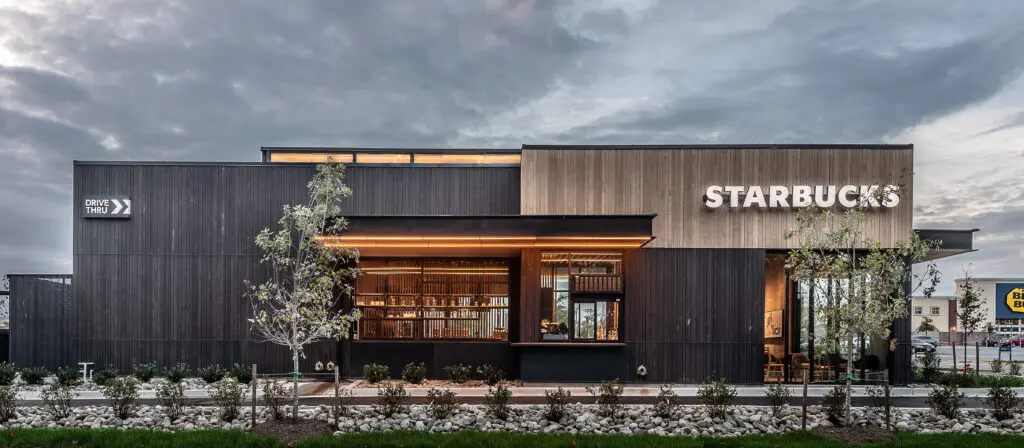
Photo: Starbucks
Elevating Loyalty Through Experience
One of the most notable shifts in the Starbucks Rewards Canada program is the emphasis on experiential loyalty at the Reserve level. Rather than focusing solely on transactional rewards, Starbucks is introducing curated experiences that reinforce emotional connections to the brand and its coffee culture.
Reserve members may gain access to exclusive merchandise, curated events, and opportunities to win all-expenses-paid trips to destinations such as Tokyo, Milan, or Costa Rica, where they can explore coffee culture firsthand.
“Today’s customers want more than a simple transaction, they want to feel seen and connected,” Neff said. “With experiential rewards, we’re able to build on that promise by offering moments that feel personal, memorable, and grounded in the craft our baristas bring to every cup.”
She added that these experiences are intended to deepen customers’ understanding of the brand’s coffee journey while strengthening emotional loyalty.
“When customers feel genuinely celebrated and included, their bond with the brand becomes stronger, more personal, and more enduring,” Neff said.
Faster, More Flexible Rewards Redemption
A central pillar of the redesign is faster access to rewards, an area where Starbucks acknowledged clear member demand. The introduction of a new 60-Star redemption tier allows members to take $2 off any qualifying purchase, enabling meaningful rewards in as few as four visits for some customers.
“We know customers want to be able to redeem rewards faster,” Neff said. “That’s why we added the 60-Star tier, giving members $2 off any eligible item and allowing them to see value very quickly.”
In addition to the new tier, Starbucks continues to offer a range of redemption options, including drink customizations, brewed coffee and bakery items, handcrafted beverages, food items, packaged coffee, and select merchandise.
The company believes that providing multiple redemption pathways helps accommodate different customer behaviors and preferences, whether members prioritize frequent visits, larger purchases, or occasional treats.
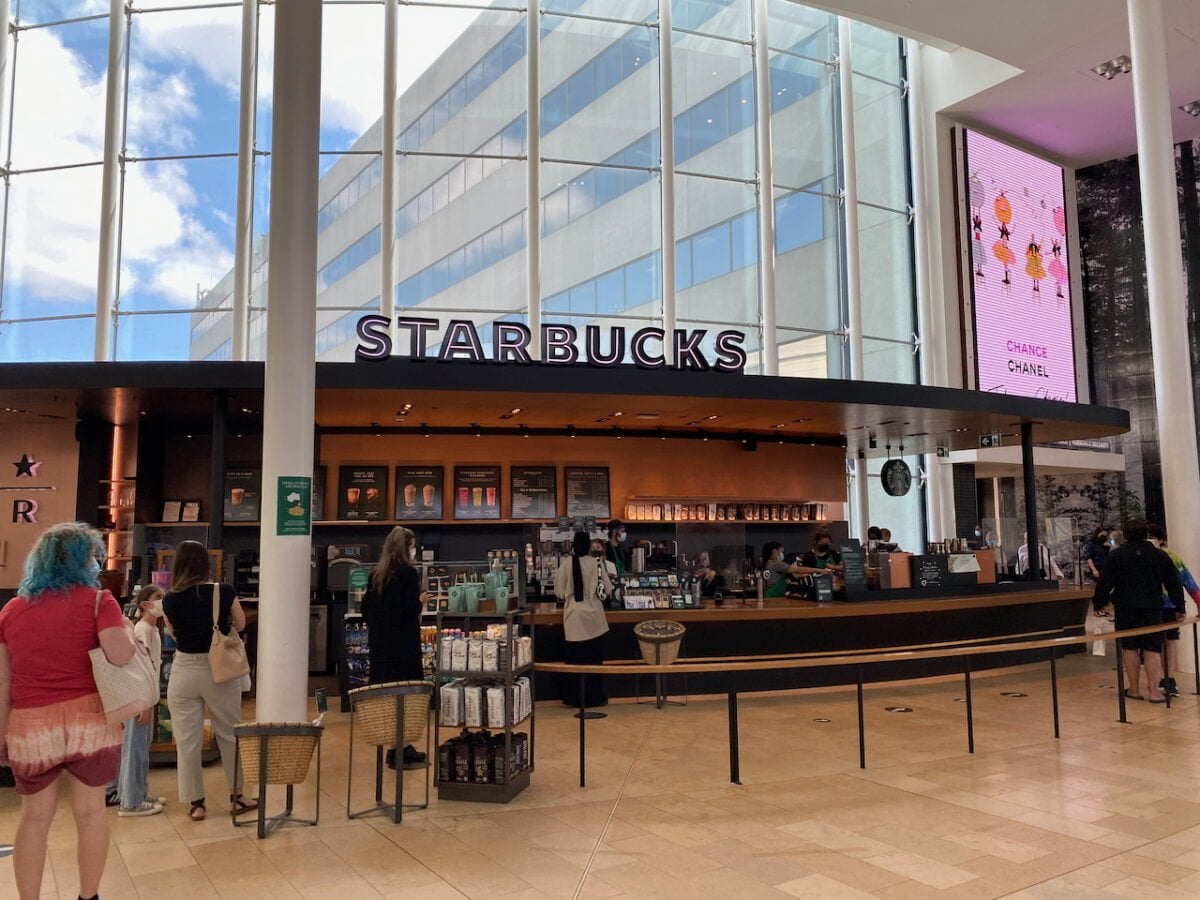
Starbucks at Yorkdale Shopping Centre – Photo by Dustin Fuhs (July 31st, 2021)
Balancing Frequency and Spend
Unlike some loyalty programs that heavily favour either visit frequency or transaction size, Starbucks says its redesigned model aims to reward both behaviours. Members earn Stars on every purchase, while digital reloads of Starbucks Cards provide bonus Star opportunities at specific thresholds.
“The new program is designed to recognize both how often members visit and how much they choose to spend,” Neff said. “By offering both visit-based and spend-based opportunities, the program remains rewarding no matter how customers prefer to engage with Starbucks.”
This dual approach reflects Starbucks’ understanding of diverse customer habits across urban, suburban, and commuter-focused locations throughout Canada.
What Members Will See at Launch
When the Starbucks Rewards Canada program launches on March 10, members will automatically be placed into a tier based on their Starbucks Rewards activity during the 2025 calendar year. All existing Stars will remain in members’ accounts, ensuring continuity during the transition.
Each tier is valid for 12 months, with members required to requalify annually to maintain Gold or Reserve status. Starbucks says the app will clearly display tier progress and benefits, reinforcing transparency and ease of use.
Measuring Success and Looking Ahead
In its first year, Starbucks says it will closely track engagement metrics such as visit frequency, Star earning and redemption behaviour, and progression through membership tiers to assess the program’s effectiveness.
“Our goal is to ensure the redesigned program delivers meaningful value while strengthening long-term customer relationships,” Neff said.
Looking forward, Starbucks views the relaunch as a foundation rather than a finished product. The company plans to continue evolving Starbucks Rewards Canada through expanded partnerships, deeper digital engagement, and additional experiential offerings.
“The redesigned program establishes a strong foundation for future innovation,” Neff said. “As expectations evolve, we’ll continue introducing new ways for members to personalize their experience and engage beyond traditional transactions.”
Payroll employment in retail trade decreased by 4,700 (-0.2%) in November, bringing the cumulative decline since June to 14,600 (-0.7%). The decline over this period was driven by clothing, clothing accessories, shoes, jewelry, luggage and leather goods retailers (-8,400; -4.0%) and sporting goods, hobby, musical instrument, book, and miscellaneous retailers (-4,500; -2.2%), according to a report released Thursday by Statistics Canada.
Compared with one year earlier, payroll employment in retail trade was down 30,700 (-1.5%) in November, led by food and beverage retailers (-12,100; -2.2%) and general merchandise stores (-7,700; -2.9%). Year-over-year declines were recorded in seven out of nine subsectors, said the federal agency.
“Payroll employment in accommodation and food services decreased in November (-3,600; -0.3%) for the third consecutive month, bringing the cumulative loss since September to 9,000 (-0.7%). These recent declines partially offset the cumulative gain recorded from April to August (+14,800; +1.2%),” added Statistics Canada.
“On a year-over-year basis, payroll employment in this sector was down 10,500 (-0.8%) in November, with declines recorded in four out of six industries. Full-service restaurants and limited-service eating places (-7,700; -0.8%) accounted for most (73.2%) of the year-over-year decline.”
Statistics Canada said the overall number of employees in Canada receiving pay and benefits from their employer—measured as “payroll employment” in the Survey of Employment, Payrolls and Hours—decreased by 26,200 (-0.1%) in November, following an increase of 11,900 (+0.1%) in October. On a year-over-year basis, payroll employment was up by 48,300 (+0.3%) in November.
Monthly payroll employment declines were recorded in 10 of the 20 sectors in November, including retail trade (-4,700; -0.2%), manufacturing (-4,200; -0.3%), accommodation and food services (-3,600; -0.3%) and arts, entertainment and recreation (-2,700; -0.8%). The losses were partially offset by an increase in health care and social assistance (+2,000; +0.1%), it said.
Meanwhile, there were 472,100 vacant positions in Canada in November, little changed from October, when a decrease of 18,800 (-3.9%) was observed. On a year-over-year basis, job vacancies were down by 67,200 (-12.5%) in November 2025.
Retail Insider is streamlining its Canadian retail news from around the web to include a handful of top news stories that can be viewed quickly during the day. Here are the top stories from the past 48 hours.