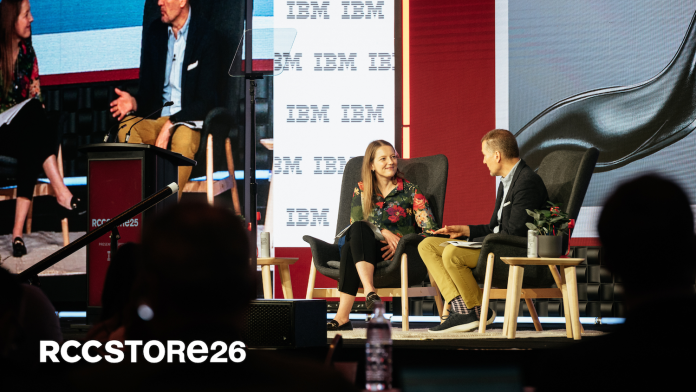
RCC STORE 26 takes place June 2-3, 2026 in Toronto and brings together more than 2,000 retailers, industry leaders, and partners from coast to coast and from around the globe. What makes it different isn’t just the scale – it’s the access. For a few days you’re immersed in how others are thinking, adapting, and solving problems in real time.
You hear challenges and solutions directly from the people building them, debating them, and refining them. From the stage. From the show floor. And often while talking over a great lunch, when the pace slows, ideas take shape and conversations go deeper. That’s when insights surface naturally. That immediacy changes how thinking lands.
A staffing issue sounds different when you hear how three other retailers solved it.
A margin challenge shifts when you see how others reframed it.
A customer problem reveals new possibilities when you hear how peers are testing new approaches.
It pulls you out of the day-to-day and into a wider view of the business — and that’s where fresher thinking starts.
Retail Council of Canada has always added value by helping leaders think and strategize more clearly. RCC STORE 26is that value concentrated: a place where conversations spark sharper framing, better questions, and stronger direction.
This isn’t about wanting to attend. It’s about knowing it matters that you do.
For many retail leaders, RCC STORE is the most productive time away from the office all year. You come back with perspective, momentum, and ideas that are ready to act on.
Early Bird pricing is the lowest rate you’ll get for RCC STORE 26 and ends February 27, 2026. But the real decision is about time. Booking early protects space for the kind of thinking that improves what you do next.
Smart thinking starts with stepping back. Smart planning is putting RCC STORE 26 on the calendar now.
Partner content. To work with Retail Insider, contact Craig Patterson at craig@retail-insider.com
Furnishing a home is rarely about one piece at a time. Instead, it is about creating a cohesive environment that reflects how people live, entertain, and unwind. For more than five decades, Casavogue has positioned itself as a high-end furniture store in Montreal dedicated to helping homeowners furnish their entire home with confidence, depth, and enduring style.
Founded in 1972, Casavogue brings decades of experience to the high-end furniture category, combining long-standing relationships with international manufacturers and a deep understanding of how tastes and lifestyles evolve. What began as a focused furniture business has grown into one of Montréal’s most established destinations for high-end furniture across every major room in the home.
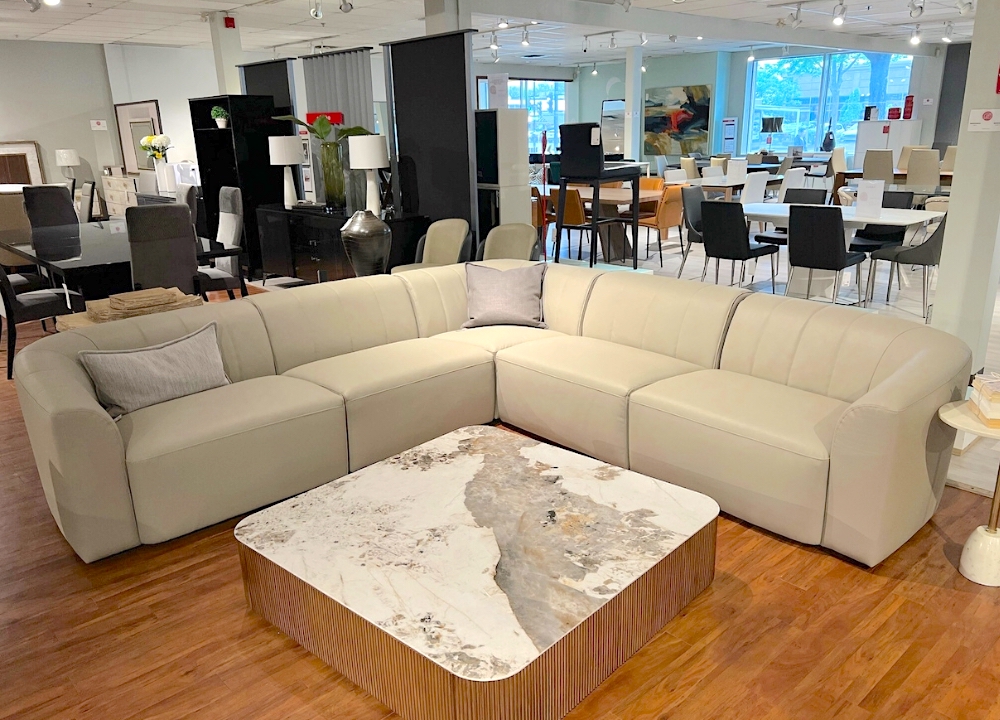
Spanning 38,000 square feet across two floors, Casavogue’s showroom allows customers to explore a broad and thoughtfully curated assortment under one roof. The scale of the space supports complete room settings, helping visitors visualize how living room furniture, dining pieces, and bedroom sets work together as part of a cohesive home rather than as individual purchases.
The store presents a wide range of design styles, from classic and modern to contemporary and glamorous chic. This breadth makes Casavogue approachable for a variety of design sensibilities, while maintaining a consistent emphasis on quality materials, comfort, and craftsmanship that defines a true high-end furniture experience.
Furnishing Every Room with Confidence
Casavogue offers high-end furniture for the living room, dining room, and bedroom, making it possible to furnish an entire home in a unified and intentional way. The assortment includes statement sofas and sectionals, refined dining tables, complete bedroom sets, and complementary case goods designed for both everyday living and entertaining.
The showroom layout encourages exploration, allowing customers to move naturally between styles and categories while discovering living room furniture and bedroom furniture that aligns with their space, lifestyle, and long-term needs.
A Curated Mix of Trusted International Brands
A defining strength of Casavogue is its carefully selected brand portfolio, built on decades of industry expertise and a commitment to offering trusted high-end furniture brands from multiple markets.
Italian brands play a prominent role, including Calligaris, Connubia, Alf, Status, and Tomasella, each known for contemporary European design, innovation, and craftsmanship.
Canadian manufacturing is also strongly represented, with brands such as Decor-Rest, Huppé, Jaymar, West Bros, and others. These collections highlight Casavogue’s commitment to supporting domestic production while offering high-end upholstery and finely crafted wood furniture.
Select American brands, including Michael Amini and BDI, further expand the offering, adding depth across functional, design-driven, and statement-making categories.
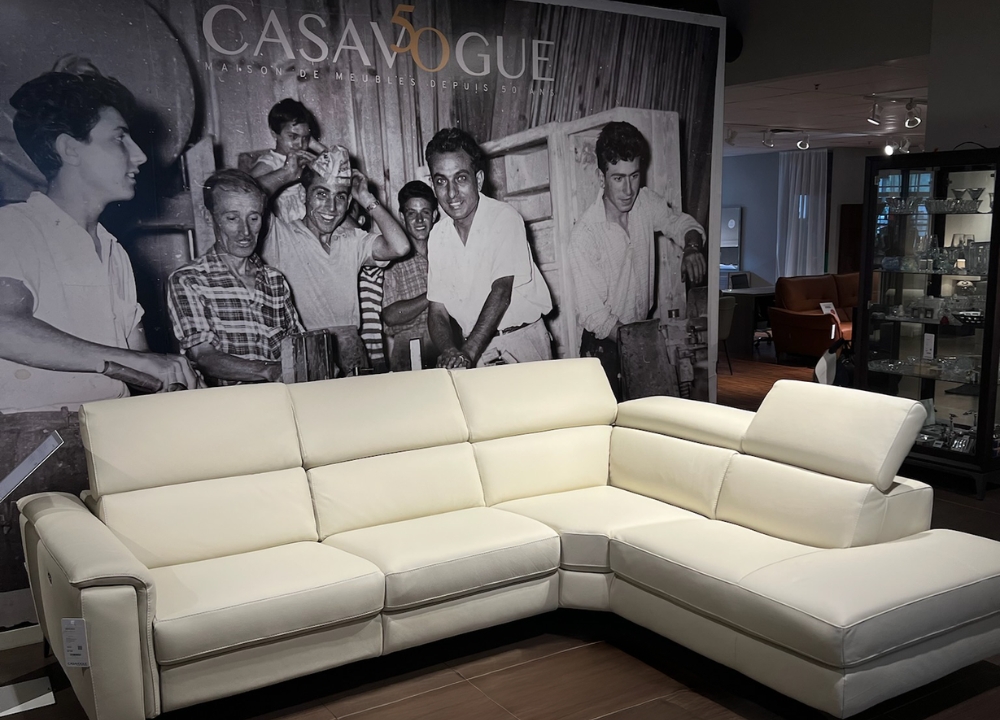
Brindis vegan leather sofa. Photo: Casavogue
A Trusted High-End Furniture Store in Montreal
With more than 50 years in business, Casavogue has built a strong reputation through its extensive selection, knowledgeable guidance, and thoughtfully designed showroom experience. That reputation is reflected in its 4.9-star rating on Google reviews, as well as its recognition in 2025 as one of the top three furniture stores in Montreal by ThreeBestRated.
Together, scale, variety, and experience have made Casavogue a trusted destination for those furnishing a first home, upgrading a long-lived space, or rethinking how their home functions today.
For Montréal homeowners seeking a high-end furniture store that offers inspiration, choice, and proven expertise, Casavogue continues to stand out as a comprehensive destination for furnishing the entire home.
Visit Casavogue
Visitors are encouraged to experience the showroom in person and explore the full range of high-end furniture, living room furniture, and bedroom sets available.
Following the global design conversations emerging from Milan, Maison Territo is inviting Canada’s leading architecture and interior design firms to step onto an international stage.
As Montreal’s premier destination for luxury furniture, Maison Territo continues to strengthen its role as a gateway between Canadian design talent and the world’s most influential luxury brands. Known for curating exceptional designer furniture in Montreal, the Royalmount-based showroom has become a reference point for architects and interior designers seeking global perspective, exclusive access, and refined craftsmanship.
The launch of the Legacy Project Call 2026 further reinforces Maison Territo’s position at the forefront of luxury furniture in Montreal, extending its influence beyond retail and into international design collaboration.
The Legacy Project Call is conceived as a curated professional opportunity that connects Canadian design talent directly with the epicentre of Italian luxury design. Through this initiative, Maison Territo is offering one selected firm a fully immersive experience in Milan during Salone del Mobile 2026, widely regarded as the most influential design fair in the world attracting over 300,000 design professionals annually and showcasing more than 2,000 international exhibitors.
“Canadian designers possess an incredible ability to blend European sophistication with North American pragmatism,” says David Territo, founder of Maison Territo. “The Legacy Project Call is our way of bridging the gap between Canadian talent and the global luxury design ecosystem. We want to position our design community where it belongs on the international stage, in direct dialogue with the world’s most prestigious brands.”
A Call Designed for Established Professionals
The Legacy Project Call 2026 is open to professional architecture and interior design agencies actively working on high-end residential projects. Eligible participants include agency owners, principal architects, creative directors, interior designers and professional design firms capable of submitting professional drawings and supporting materials, including plans, renderings and project descriptions, that clearly demonstrate a real, high-end residential project currently in development.
Maison Territo is specifically seeking firms engaged in sophisticated residential work, including primary residences, penthouses, prestigious homes and contemporary villas.
Projects inspired by European design traditions are particularly encouraged, whether Italian, Parisian or Mediterranean in influence, or reinterpreted through a contemporary lens.
Student submissions, academic work and amateur projects are not eligible. The focus is firmly on experienced professionals whose work demonstrates a strong design identity, technical depth and the potential for long-term collaboration.
How the Selection Process Works
Submissions to the Legacy Project Call 2026 must be completed through the official an online application form available on Maison Territo’s website. Participating firms are invited to submit a current or recently completed high-end residential project for internal review by the Maison Territo team.
Each application must include the following:
Application Checklist
A current or recently completed residential project
A project narrative outlining the design genesis, influences, and intended outcomes
Professional plans and visual materials, submitted as a PDF or via a secure sharing link
Firm information and professional credentials
Contact information for up to five team members who would participate in the Milan experience if selected
All submissions will be evaluated internally over a two- to three-week review period. Projects are assessed based on overall quality, clarity of creative vision, and the potential for long-term collaboration. One firm will ultimately be selected to participate in the Salone del Mobile 2026 immersion.
Key Dates and Timeline
Application Period: Now open through March 1, 2026
Selection Process: March 16 – April 5 2026
Winner Announcement: Early April 2026
Milan Experience: During Salone del Mobile, April 2026
An Immersive Milan Experience at the Highest Level
The selected firm will receive an all-expenses-paid professional trip to Milan for up to five team members, timed to coincide with Salone del Mobile 2026. The experience is designed as a complete immersion into the world of Italian luxury design, offering access that is seldom available to Canadian firms.
The winning team will benefit from early access to upcoming collections and private presentations hosted by leading luxury furniture houses, including Fendi Casa,Dolce and Gabbana Casa, Versace Home and Bentley Home. The itinerary also includes exclusive meetings with creative teams and behind-the-scenes insights into how these iconic brands develop their collections.
For participating firms, the experience represents a unique professional opportunity to engage directly with the decision-makers and design leaders shaping global interiors.
When Vision Becomes an International Reference
Maison Territo positions this initiative as a pathway into a restricted international circle of studios capable of interacting directly with the world’s most influential design houses.
By immersing themselves in Milan’s design ecosystem, participating firms gain early exposure to emerging trends before they reach broader markets. This foresight strengthens portfolio credibility, reinforces professional authority and positions agencies as visionary leaders within the Canadian design landscape.
The experience will also be documented and shared across Maison Territo’s communication channels, offering the selected firm targeted visibility among industry prescribers, partners and specialized media. This level of exposure provides a meaningful opportunity to accelerate brand recognition and consolidate a high-end market position.
Strengthening Canada’s Presence in Global Design
Through the Legacy Project Call 2026, Maison Territo continues to position itself as a bridge between Canadian design talent and the international luxury design world. The initiative reflects the retailer’s broader commitment to supporting professionals, fostering meaningful collaborations and elevating the conversation around high-end residential design in Canada.
For design firms looking to expand their horizons, gain international exposure and engage directly with the most prestigious names in luxury furniture, the Legacy Project Call represents a rare and compelling opportunity.
Maison Territo is a luxury furniture and interior design destination based in Montreal, specializing in exclusive European home collections. Located at Royalmount, the 11,000-square-foot showroom is situated outside Parc Urbain at 5050 Côte-de-Liesse, Suite 1050, Mont-Royal, Quebec H4P 0C9, and presents a curated portfolio of internationally recognized brands, many available exclusively through Maison Territo in Canada. Built on the Territo family’s long-standing design legacy, the store sits at the intersection of fashion, architecture, and high-end residential interiors, serving designers, architects, and discerning private clients seeking exceptional craftsmanship and global design leadership.
The Maison Territo showroom is open Monday to Friday from 10:00 a.m. to 7:00 p.m., and Saturday and Sunday from 10:00 a.m. to 5:00 p.m. Inquiries can be directed to (514) 800-0102.
Apply for the Legacy Project Call 2026
Design professionals interested in participating can submit their projects through the official Legacy Project Call landing page at maisonterrito.ca/en/pages/legacy-project-call.
Zucora and HealthGuard, two proudly Canadian companies, are pleased to announce an improved partnership that will deliver even greater value to furniture and bedding retailers across Canada.
For the past two years, Zucora and HealthGuard have worked together to offer retailers high-quality top-of-bed products that help consumers protect and care for their mattresses and pillows. This collaboration has supported the industry in providing trusted bedding solutions designed to promote comfort, hygiene, and long-lasting product life.
On January 1, the partnership reached a new milestone with the introduction of the SmartOne Sleep Plan—a comprehensive 10-year protection plan for mattresses and power adjustable bases. As part of this expanded offering, retailers will now have the opportunity to provide consumers with increased value through a bundled package that includes the SmartOne Sleep Plan alongside a complimentary mattress protector from HealthGuard and a mattress freshener from Zucora.
This enhanced bundle enables retailers to differentiate their offering, simplify purchasing for consumers, and ensure households receive both long-term protection and premium care products from two trusted Canadian brands.
“By combining Zucora’s innovative protection solutions with HealthGuard’s leading bedding care products, we’re giving retailers the tools they need to elevate the customer experience. Together, we’re helping consumers sleep better.”
-Mark Geddes, Vice-President, Business Development at Zucora
‘’When given the opportunity to partner with a reputable company like Zucora, another strong Canadian company, we didn’t hesitate. Not often in business do two companies align so well; both HealthGuard and Zucora share in the same common goal, doing what’s right for our retail partners and their customers.’’
-Ryan Cleary, Vice-President of Sales at HealthGuard
About Zucora
For more than 45 years, Zucora has partnered with Canada’s leading home furnishing and appliance retailers to deliver innovative protection plans that add value and help Canadians protect the home investments they’ve worked hard for.
About HealthGuard For over 35 years, Bay Street Manufacturing has crafted high-quality bedding accessories for retailers and hospitality partners across Canada and the U.S. Through our HealthGuard brand, we deliver products designed for health, comfort, and restorative sleep. Proudly Canadian, we’re committed to responsibly made, performance-driven solutions that bring lasting value.
This week’s retail landscape in Canada highlights a dynamic reshaping of customer engagement, store footprints, and digital commerce strategies. Starbucks Canada’s launch of its new tiered rewards program signals a growing emphasis on personalized loyalty that promises faster benefits and immersive experiences. Meanwhile, legacy retail faces tough realities as Toys R Us shrinks its presence, reflecting broader sector challenges. These developments occur alongside ongoing commercial property recalibrations and evolving consumer expectations as the new year settles in.
The theme of balancing physical expansion with strategic retrenchment defines the current retail environment. Walmart Canada’s announcement of a new Supercentre in southwest Edmonton exemplifies investment in full-service, large-format retail, aiming to capture convenience-focused shoppers. Contrastingly, Toys R Us’s exit from Saskatchewan and reduction to 22 stores nationwide reveals the vulnerabilities of specialty retail amidst high costs and competitive pressures. This duality underscores a cautious yet opportunistic era for retail real estate and operations.
The period also coincides with several noteworthy industry milestones and community-focused initiatives, as Canada approaches the national Family Day holiday, an occasion that typically boosts retail shopping and experiential offerings. Retailers like GoodLife Fitness are leveraging this momentum by expanding locations and launching inclusive marketing campaigns. Collectively, these pieces form a clear picture of a resilient industry adapting through innovation, partnership, and refined consumer engagement.
Retailer News
The launch of Starbucks Canada Rolls Out Tiered Rewards Program introduces Green, Gold, and Reserve levels designed to speed up Star earning and extend reward expiry. This initiative draws from direct consumer feedback, aiming to deepen emotional loyalty with exclusive events and travel opportunities, reinforcing Starbucks’ position as a pioneer in retail foodservice loyalty. Such personalization marks a critical evolution in driving retention and growth through rewarding consumer experience.
Meanwhile, a stark contrast emerges as Toys R Us Exits Saskatchewan as Canadian Store Network Shrinks. This contraction discloses a dwindling footprint from 103 to 22 stores and the full pullback from British Columbia, highlighting escalating pressures from occupancy costs and evolving consumer shopping patterns. The specialty retailer’s challenges epitomize the precarious nature of sustaining a widespread national presence in today’s competitive environment.
Complementing these movements, Lane Bryant Enters Canada via Walmart Partnership marks an important market entry for plus-size fashion, leveraging Walmart Canada’s extensive network for both online and in-store availability. Set to roll out in 320 stores starting February 2026, this partnership addresses a significant apparel gap with scale and brand recognition, illustrating international brand strategies adapting to Canadian consumer needs and retail real estate utilisation.
Retailer Financials / Trends / Reports
Although no mandated financial reports were released this week, data from Statistics Canada indicates a cautiously optimistic retail market, with a 1.3% growth in retail sector GDP in November 2025, as noted in Retail sector GDP on the rise in November: Statistics Canada. This rebound links closely to renewed food and beverage retail strength, offsetting ongoing wholesale and manufacturing challenges and signalling resilience to retail and commercial real estate stakeholders during uncertain economic tides.
Supporting the importance of omnichannel strategy, Canadian ecommerce orders rose 20% in 2025, with top brands driving half the growth: Omnisend reveals that the largest 10% of brands are capturing half of ecommerce growth, benefitting from high purchase intent fueled by timely behaviour-based marketing. This data underscores the ongoing need for retail players to harness automated and targeted engagement tools to maintain competitiveness.
Examining consumer sentiment, a Stifel survey signals softening yet positive spending intentions, particularly in pet supplies and children’s toys, offering nuanced insights for retailers and property managers strategizing around category-specific foot traffic and merchandising.
Retailer People News
This week’s retail people news includes strategic insights into supply chain transformation from industry veteran Gary Newbury. His remarks in Canadian retailers face structural supply chain reckoning: Gary Newbury stress the urgent need for data-driven resilience and automation adoption. His perspective highlights how operational adaptations are becoming critical for retailers and landlords alike to maintain service levels amid cost and fulfilment pressures.
In personal care, Elizabeth Grant Skin Care leans on legacy, manufacturing and global TV retail to drive growth exemplifies balancing heritage with digital innovation by leveraging in-house production and multi-generational leadership. This approach illustrates a growing trend among niche brands to blend operational control with channel diversification, valuable for retail strategists tracking category evolution.
Finally, health and wellness retail expands as Healthy Planet expands across Ontario, growing its physical footprint to meet strong omnichannel demand. This expansion demonstrates that even digitally native brands see substantial value in selective brick-and-mortar growth, integrating local product offers and personalised wellness services to deepen consumer relationships and enhance retail real estate value.
Editor’s Take
This week’s retail developments vividly illustrate an industry at a crossroads, moving towards more personalized, digitally savvy loyalty frameworks while grappling with the realities of shifting physical footprints. Starbucks Canada’s tiered rewards programme (Starbucks Canada Rolls Out Tiered Rewards Program) exemplifies innovation in customer experience, aiming to deepen engagement at a time when specialty retailers like Toys R Us must retract (Toys R Us Exits Saskatchewan as Canadian Store Network Shrinks).
Looking ahead, retailers and commercial real estate professionals should watch how these loyalty efforts, footprint adjustments, and omnichannel expansions play out amid ongoing challenges like supply chain reinvention and consumer trust issues related to AI. The week’s news underscores the importance of agile strategy and local-market nuances as the Canadian retail sector navigates 2026’s complexities.
Swiss watchmaker OMEGA has opened a new flagship boutique at Calgary’s Chinook Centre, expanding its retail footprint in Canada and marking its second flagship location in the country.
The company hooking into a major Alberta shopping centre signals a continued focus on Canada as a growth market, with the new store intended to serve customers in Calgary and the surrounding region.
Second Canadian flagship
Raynald Aeschlimann, OMEGA’s president and chief executive officer, said the Calgary opening reflects the brand’s strategy in Canada and its intention to deepen customer relationships through dedicated retail locations.
“Our new Boutique in Calgary is a symbol of OMEGA’s growing presence in Canada, which continues to be a significant and important market for our brand. We’re delighted to have our second flagship boutique in Canada and connect with new clients across the region. It’s an exciting store inside a beautiful luxury mall, and we look forward to welcoming everyone inside,” Aeschlimann said.
The company did not disclose financial details related to the boutique, including investment size, staffing levels or projected sales.
Calgary location now open
The OMEGA Chinook Centre boutique is now open at 6455 Macleod Trail South in Calgary.
OMEGA traces its origins to 1848 and is known for its focus on precision and quality in watchmaking, according to the company.
The Calgary boutique adds to the brand’s existing Canadian retail presence and positions OMEGA within one of Western Canada’s largest shopping centres, offering a dedicated space for the company’s products and customer engagement.
In a statement, the company said: “Chinook Centre is Calgary’s largest shopping destination and a recognized hub for luxury retail with a strong roster of global brands. Calgary has experienced the highest population growth among major Canadian cities over the past decade. The centre attracts a diverse, discerning customer base, and the timing reflects both the city’s momentum and the natural fit between OMEGA and this retail environment.
“This opening reinforces OMEGA’s commitment to key Canadian markets. By establishing a presence in the Greater Calgary area, OMEGA is connecting with a growing client base and adding a customer contact point that fully meets the brand’s global service and retail standards. It strengthens the overall client experience and supports OMEGA’s continued investment in Canada.
The retailer said a standalone OMEGA boutique operates to the brand’s global retail and service standards, offering a dedicated environment where clients can explore OMEGA’s full range of watch families, from the Speedmaster and Seamaster to the Constellation and De Ville, along with the brand’s jewellery collections. Boutique associates provide in-depth guidance on OMEGA’s watchmaking heritage, technical innovation, and craftsmanship, supported by services and experiences available exclusively through OMEGA’s own retail network, it added.
“The Calgary boutique welcomes both local Calgarians and visitors to the city, reflecting Calgary’s growing and diverse population. The client profile aligns with OMEGA’s broader North American customer base, encompassing watch enthusiasts and consumers who value precision, heritage, and craftsmanship.”
The retail trade sector expanded 1.3% in November, as all subsectors grew in the month. This increase more than offset the back-to-back monthly declines in the two preceding months, reported Statistics Canada on Friday.
Food and beverage retailers (+2.5%) rebounded in November, reflecting higher beer, wine and liquor retailing activity, following the conclusion of a work action in British Columbia on October 26 that had disrupted activity since September 2, said the federal agency.
The wholesale trade sector contracted 2.1% in November, the largest contraction since April 2025. Contractions in motor vehicle and motor vehicle parts and accessories wholesaling and building material and supplies wholesaling drove the decline in November.
In November, motor vehicle and motor vehicle parts and accessories merchant wholesalers dropped 12.6%, reflecting lower activity in both the motor vehicle and used motor vehicle parts and accessories industry groups, coinciding with disrupted motor vehicle production activity due to the global semiconductor shortage.
Photo: Curated Lifestyle
The federal agency said real gross domestic product (GDP) overall in Canada was essentially unchanged in November, following a 0.3% decline in October, as contractions in goods-producing industries offset expansions in services-producing industries.
“Goods-producing industries declined 0.3% in November, down for the third time in four months, driven by contractions in the manufacturing and agriculture, forestry, fishing and hunting sectors in the month. Services-producing industries edged up 0.1%, with expansions in the retail trade, educational services and transportation and warehousing sectors. Overall, 10 of the 20 industrial sectors grew in November,” it said.
“Advance information indicates that real GDP increased 0.1% in December. Increases in manufacturing and wholesale trade were partially offset by decreases in mining, quarrying, and oil and gas extraction. Owing to its preliminary nature, this estimate will be updated on February 27, 2026, with the release of the official GDP by industry data for December 2025,” noted Statistics Canada.
“With this advance estimate for December, information on real GDP by industry suggests that the economy decreased 0.1% in the fourth quarter and increased 1.3% in 2025. The official estimates for the fourth quarter and the year will be available on February 27, 2026, when the official estimate of GDP by income and expenditure is released.”
Andrew Grantham
Andrew Grantham, Senior Economist, CIBC Capital Markets, said the Canadian economy was still struggling for growth towards the end of the fourth quarter, with November GDP showing a flat reading and the advance estimate for December pointing to only marginal growth.
“The flat reading for November was slightly weaker than the advance and consensus estimate (+0.1%) but not a huge surprise given subsequent industry data showing weakness in the wholesaling sector. Manufacturing also weighed on activity during the month, and combined with the decline in wholesaling offset rebounds in areas such as education and transportation that were negatively impacted by strike activity in the prior month. The advance estimate for December pointed to a 0.1% increase in activity, with StatsCan suggesting that this was driven by at least partial recoveries in manufacturing and wholesaling,” he said.
“Today’s report leaves Q4 GDP showing a slight contraction of 0.5% annualized, which is a little weaker than the Bank’s recent MPR projection but not overly concerningly given the typical degree of divergence between the industry data and next months expenditure figures. That said the still sluggish momentum towards quarter end may be a concern, as monthly growth rates will need to accelerate for the economy to achieve the Bank’s near 2% MPR forecast for Q1. Overall today’s data are unlikely weak enough to revive talks for further interest rate cuts by the Bank, but it is clear that rates will need to be held at stimulative levels for a while to drive a recovery amid the continued uncertain economic environment.”
Douglas Porter
Douglas Porter, Chief Economist, BMO Capital Markets, said: “Today’s results reinforce the theme that the economy struggled to grow at all in Q4 after a surprisingly perky Q3. And with the preliminary estimate of modest gains in December, the overall economy will have scratched out a GDP advance of only about 0.5% in the past 12 months. Average annual growth will come in about a percentage point above that modest pace, thanks to its solid momentum heading into the trade war a year ago. But for 2026, the economy will do well to post growth of much more than 1% this year, with the sluggish hand-off from 2025 as well as the lingering cloud of uncertainty on the trade front. These results are not markedly different from the Bank’s views earlier this week, but the soft undertones will keep them “prepared to respond”.“
Marc Ercolao
Marc Ercolao, Economist, TD Economics, said: “Canada’s economy cruised into year-end at stall speed. With November’s print and flash estimates for December, economic growth is tracking a mild contraction for Q4-2025. Quarterly growth over 2025 has been particularly volatile due to sharp movements in trade and inventories, something not well captured in the monthly industry GDP accounts. Accounting for recent discrepancies between the two measures, we expect GDP growth in Q4 to land roughly flat, in line with the Bank of Canada’s (BoC) recent projections.
“The BoC doesn’t make its next policy decision until March 18th. We don’t think today’s data moves them off of their current policy stance even as they acknowledge that considerable uncertainty around trade and overall economic growth is still present. All told, we maintain our view that the BoC has reached the end of their interest rate easing cycle.”
Maison Birks store in downtown Vancouver. Photo: C. Hagemoen
Birks Group Inc. says its net sales rose 11.8 per cent during its latest holiday period, reflecting contributions from recent store acquisitions and higher sales of branded jewelry and timepieces across its retail and e-commerce channels.
The Montreal-based jewelry retailer reported the results for the eight-week interim sales period ended Dec. 27, 2025, which it defines as its FY2026 holiday period. Comparable store sales for the period increased 2.5 per cent from the same period a year earlier.
Holiday-period performance
The company said the increase in net sales compared with the corresponding period in fiscal 2025 was attributable in part to its acquisition of European Boutique luxury timepiece and jewelry stores. It also cited higher sales of branded timepieces and Birks branded jewelry in both physical stores and online.
Birks said the same product categories drove the increase in comparable store sales, which measure performance at locations open during both periods being compared and include e-commerce sales.
“Our teams have delivered good sales results this holiday period as compared to the corresponding period last year, due in part to the acquisition of the European Boutique stores but also due to our strong retail and e-commerce performances. We are focused on building on this momentum and on delivering excellence in customer service. I would like to sincerely thank all our employees for their continued hard work and dedication,” he said.
Comparable store sales explained
Birks said it uses comparable store sales as a key performance measure. The metric includes stores that were open in the same period in both the current and prior year and incorporates e-commerce sales into its calculation.
Stores are included in the comparable store sales base beginning in their thirteenth full month of operation under Birks’ ownership. Locations that have been resized or relocated are assessed individually to determine whether they are considered the same store or a new store for reporting purposes.
Comparable store sales measure the percentage change in net sales for comparable stores during a period compared with the corresponding period in the previous year. If a store was not open for the entirety of both periods, the measure reflects the change in net sales for the portion of time the store was open in both periods.
Birks said it believes comparable store sales provide meaningful information on its performance and operating results, while cautioning that the measure has no standardized meaning and may not be comparable with similar measures used by other companies.
Retail footprint and operations
Birks Group describes itself as a designer of fine jewelry and an operator of luxury jewelry, timepiece and gift retail stores in Canada. The company operates 17 stores under the Maison Birks brand in major metropolitan markets across the country.
Its Canadian retail portfolio also includes one Birks-branded store and one TimeVallée-branded store in Montreal, a Brinkhaus-branded store in Calgary, a Graff-branded store and a Patek Philippe-branded store in Vancouver, four Breitling-branded stores in Laval, Ottawa and Toronto, four European Boutique-branded stores in Toronto, one Omega-branded store in Toronto and one Montblanc-branded store in Toronto.
The company said Birks was founded in 1879 and positions itself as a designer and retailer of fine jewelry, timepieces and gifts.
Retail Insider is streamlining its Canadian retail news from around the web to include a handful of top news stories that can be viewed quickly during the day. Here are the top stories from the past 24 hours.
GoodLife's Canada's Gym campaign features real members and employees. (CNW Group/GoodLife Fitness)
GoodLife Fitness, Canada’s largest chain of Canadian-owned fitness clubs, has launched a new marketing campaign as it expands its footprint with 14 additional locations in 2026, including two new For Women clubs.
The campaign, titledCanada’s Gym. Built Here, Built for Everyone., is an evolution of the company’s existing “Canada’s Gym” platform and highlights the growing diversity in how Canadians approach fitness.
Marketing push underscores variety and inclusivity
Anchored by the tagline “One gym. Every journey. Limitless possibilities.”, the campaign features real members and employees, and showcases a range of fitness offerings including weightlifting, functional training, hot yoga, and cycling.
“Fitness journeys aren’t one-size-fits-all, and neither are our gyms,” Brazier said. “This campaign celebrates the freedom to move differently from day to day, to try new things and to evolve over time. At GoodLife, you can lift heavy one day, recover the next, join a hot Pilates class, train for a HYROX race, or simply move in a way that feels good. The possibilities are limitless.”
The campaign launch coincides with GoodLife’s expansion plans this year, which will increase the number of clubs in its network.
Creative collaboration and production
GoodLife’s marketing and creative team partnered with director Alexander Sworik and photographer Nicole De Khors to produce the campaign. The shoot took place at the company’s new 60,000-square-foot Calgary Creekside location and featured a cast of GoodLife members and employees.
The campaign launched on January 1 and will run throughout the year across connected TV, digital video and display, digital audio, social media, search, and out-of-home advertising. GoodLife said it is tailoring some creative content to local markets, highlighting the programs and amenities available in areas where the brand has a larger presence.
Ongoing social content
As part of its strategy, GoodLife is also introducing a social media docuseries titled Real Members. Real Stories., which will be shared on Instagram and TikTok.
“’Canada’s Gym’ breaks through the New Year fitness noise,” Brazier said. “This campaign reinforces GoodLife’s position as the most comprehensive and welcoming Canadian fitness brand–built to support every journey, all in one place.”
GoodLife’s Canada’s Gym campaign features different forms of fitness offerings, including hot yoga. (CNW Group/GoodLife Fitness)
About GoodLife Fitness
Founded in London, Ont., in 1979 by David ‘Patch’ Patchell-Evans, GoodLife Fitness has grown to the largest chain of fitness clubs in Canada. The company said it aims to give all Canadians the opportunity to live a fit and healthy life, with hundreds of clubs across the country.