

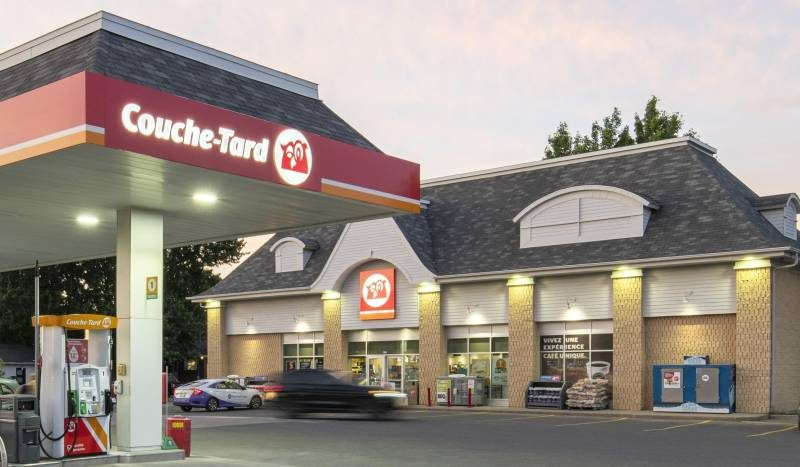
In a move that could reshape the global convenience store landscape, Canadian retail giant Alimentation Couche-Tard Inc. has gained access to confidential financial data from Japan-based Seven & i Holdings Co., taking a major step forward in its USD$52-billion bid to acquire the owner of the 7-Eleven chain.
The development comes after months of limited engagement, during which Couche-Tard expressed mounting frustration over a lack of progress. Now, with a formal non-disclosure agreement (NDA) signed and a standstill provision in place, the door has been opened for deep due diligence and substantive discussions that could lead to one of the largest retail acquisitions in Canadian history.
A Global Dance: Patience Meets Urgency
“This is the culmination of the dance,” said retail strategist Carl Boutet in an interview. “It’s make or break. The fact that we’ve reached this point is a really encouraging sign. It shows that there’s a genuine willingness on the part of Seven & i to explore this seriously.”

Boutet emphasized that this is not just a business deal, but a cross-cultural and geopolitical balancing act.
“Couche-Tard has been trying to move at a North American pace—fast and direct,” he explained. “But the Japanese way is slower, more methodical, and deeply rooted in trust and honour. The NDA and standstill provision are a signal of increasing goodwill by both parties.”
A Strategic and Cultural Milestone
The standstill clause, disclosed by Seven & i, ensures that Couche-Tard cannot pursue a hostile takeover during the ongoing talks. It also gives Couche-Tard access to financial information that has, until now, remained tightly guarded. This includes detailed data on business units, geographic performance, and profitability—critical insights for assessing whether a sweetened offer is warranted.
“Until now, all they had was publicly available information and market intelligence,” said Boutet. “This opens the data room. It’s a big act of vulnerability for Seven & i. Couche-Tard will be able to see what’s really working, what isn’t, and where the growth potential lies.”
Size vs. Efficiency
Despite being much smaller in store count—Seven & i operates more than 80,000 stores globally versus Couche-Tard’s 18,000—Couche-Tard has a higher market valuation. The difference is driven by profitability and operational efficiency.
“The market views Couche-Tard as a better operator,” Boutet noted. “They’ve built a reputation as a logistics powerhouse. That’s one of the reasons they’re in a position to make this kind of play.”
He added that while Seven & i’s revenues may be higher, Couche-Tard’s price-to-earnings ratio is superior, which reflects the market’s confidence in its performance and discipline.
Regulatory Uncertainty and Divestiture Planning
One of the major sticking points in the negotiations has been antitrust concerns, particularly in the U.S. Couche-Tard executives maintain that there is “a path to regulatory approval,” but Seven & i has been sceptical. The Tokyo company has warned against being dragged into regulatory limbo for years.
To mitigate these risks, both companies are reportedly working with investment bankers to identify potential buyers for approximately 2,000 stores in North America. Private equity firms are considered likely candidates for such acquisitions.
“There was fear that the U.S. Federal Trade Commission would see this as a monopoly,” Boutet said. “Ironically, Couche-Tard is up against competitors like Walmart and Mexico’s OXXO, who are also expanding rapidly in the convenience space.”
From Tokyo to Laval: The View from Canada
The idea of a Canadian company acquiring one of Japan’s most iconic retail chains has captured the attention of industry watchers.
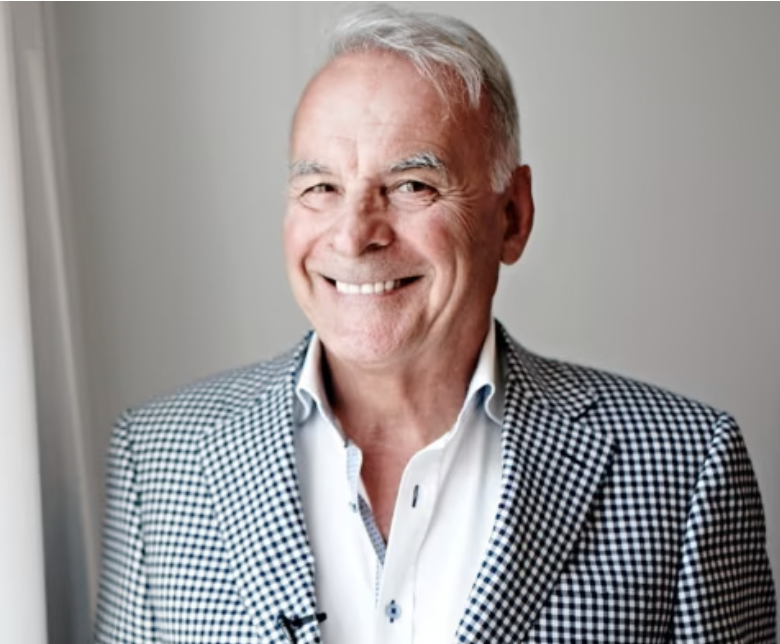
“It would be historic,” said Boutet. “We’re talking about the largest convenience store chain in the world potentially being run from Laval, Quebec.”
Alain Bouchard, Couche-Tard’s founder and current chairman, has reportedly spent extensive time in Tokyo pursuing the deal. “This is clearly personal for him,” Boutet added. “He took the failed Carrefour deal very hard. This is not about ego, but about vision. He believes Couche-Tard can operate this business better.”
Past Lessons, Future Ambitions
The Carrefour episode in 2021—where a $20-billion acquisition attempt was quashed by the French government—still lingers. Boutet believes it taught Couche-Tard valuable lessons about diplomacy and cross-border negotiations.
“This time around, they’re being more deliberate, more respectful of local processes,” he said. “They’ve lined up institutional financing in Canada and are approaching this with a level of discipline that’s very impressive.”
That financing, which could come in part from Canadian pension funds or institutional lenders, will be critical. A deal of this scale—estimated to be worth close to CAD$70 billion—would likely involve a significant amount of debt.
Seven & i’s Crossroads
Meanwhile, Seven & i is pursuing a dual-track strategy: either sell to Couche-Tard or slim down and refocus. The Japanese firm is already selling off underperforming assets and preparing to list a portion of its U.S. operations to fund a large share buyback.
“They’ve said they don’t need this deal to survive,” Boutet acknowledged. “But if Couche-Tard comes back with a stronger offer after reviewing the data, it’ll be hard for shareholders to ignore.”
Shares of Seven & i rose 3.5% on the Tokyo exchange following news of the NDA. However, they remain more than 20% below Couche-Tard’s offer, indicating continued investor scepticism that a deal will be finalized. Boutet noted Couche-Tard’s stock price is down over the past year, with $20.98 billion in revenue and $640 million in net income — with a market capitalization of about CAD $66 billion dollars. In comparison, Seven & i is valued at about CAD$55 billion.
Culture, Control, and Caution
Beyond financial metrics, the acquisition raises deep questions about brand identity and operational autonomy.
“There’s fear in Japan that Couche-Tard will turn 7-Eleven into a pure logistics machine,” said Boutet. “But I think both companies recognize that what makes 7-Eleven unique—especially in Japan—is its merchandising, ready-to-eat offerings, and cultural resonance. That’s worth preserving.”
If the deal goes through, Boutet believes the Canadian company will maintain much of 7-Eleven’s current operational infrastructure in Japan and the U.S., while using its own efficiencies to drive profitability.
Next Steps: The Waiting Game
With the NDA now in effect, the ball is squarely in Couche-Tard’s court. Will they improve their offer? Will Seven & i’s board recommend a deal?
“I think they almost have to increase the bid now,” Boutet predicted. “If they don’t, it could signal disinterest, or worse, that the numbers didn’t impress. But if they do—if they see real synergy—this could actually happen.”
Yet even if Couche-Tard is ready to move quickly, Boutet cautioned against expecting a swift conclusion.
“From a Japanese business perspective, these things don’t get rushed,” he said. “They’ve made it clear they’re not going to be forced into a decision. It could be months—or more—before we see a final outcome.”











The behaviour of the French government toward Couche-Tard in regards to the proposed Carrefour transaction was appalling. It seems that it is acceptable for French-based companies to acquire or take controlling stakes in major businesses in other countries but not the reverse. (For example, the French government had no objection when PSA Peugeot-Citroen, as it then was, took control of Germany’s Opel from General Motors). That’s the height of hypocrisy. There was no reason why Couche-Tard’s bid for Carrefour should pose a threat to French national interests. Couche-Tard is a stable company and Canada is a country with strong links to France.
However, I was ecstatic when France got its own back later that same year: Australia pulled the rug out from under them (and humiliated the French president in the process) regarding a major submarine purchase. The universe made sure that France paid for its antics over the Couche-Tard/Carrefour deal.