Advertisement
Advertisement
Home Blog Page 301

Why Simplicity Is the New Luxury in Outdoor Design

Introduction:

Outdoor design has evolved from ornate landscaping and overcomplicated installations to embracing something far more intentional and refreshing—simplicity. Instead of over-decorated backyards and cluttered patios, homeowners and designers are leaning toward clean lines, minimalist layouts, and timeless comfort. This trend toward simplicity is not about removing detail or creativity, but about focusing on what matters most: space, comfort, and experience.

The notion of luxury has shifted. It is no longer tied to price tags or extravagance, but to thoughtful choices that bring peace, ease, and joy. In outdoor spaces, this often looks like well-placed seating, open layouts, natural textures, and an atmosphere that invites people to relax and connect. Below, we explore why simplicity has become the new standard of luxury in outdoor design and how this shift is redefining the modern outdoor lifestyle.


Designing for experience rather than appearance:

“When simplicity becomes the guiding principle, outdoor spaces begin to serve the people who use them rather than just impress guests. Instead of focusing solely on aesthetics or extravagant details, modern outdoor design prioritizes how people feel when they step into the space. The focus has shifted from Instagrammable perfection to creating experiences that are warm, personal, and restorative.” shares Alex Constantinou – MD at The Fitness Circle

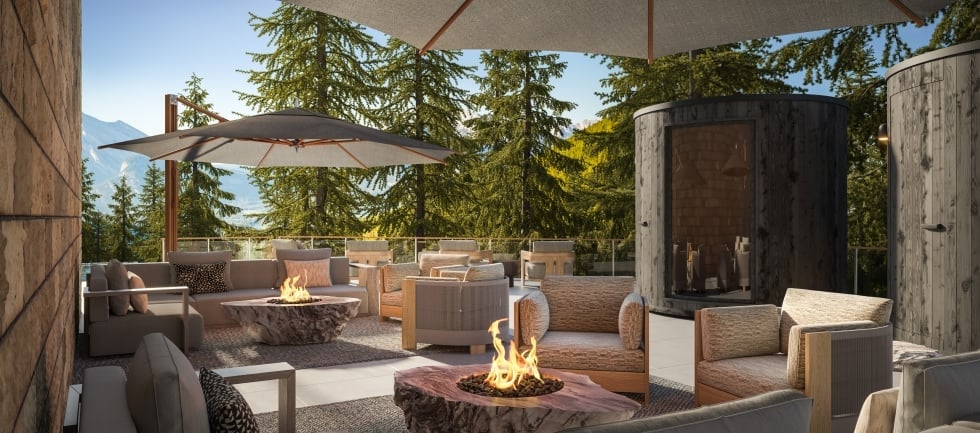
Minimalist outdoor settings allow for flexible functionality. A clear patio with comfortable furniture and subtle lighting invites morning coffee, afternoon reading, or evening gatherings. Practical additions like well-fitted spa covers also reflect this philosophy, they protect the investment, maintain a tidy visual line, and ensure the space is always ready to use without added maintenance demands. By removing the clutter, every piece that remains becomes purposeful—whether it is a built-in bench around a fire pit or a shaded corner with a hammock. The result is a space that supports living, not just looking.


Letting natural materials do the talking:

Natural materials have always played a role in outdoor design, but their presence is now more central than ever. Wood, stone, clay, and even weathered metal are not only durable but evoke an organic beauty that aligns with the simplicity ethos. These materials bring a raw elegance that does not need embellishment.

“Designers are using materials that age gracefully and blend with the surrounding environment. A wooden pergola left untreated will silver over time, stones will weather naturally, and metal fixtures develop patina. These changes are not flaws—they’re part of the charm. Simplicity in luxury means allowing nature to shape the aesthetic over time instead of forcing control.” adds Jessica Shee from iboysoft.com


The return of open space and negative space:

In traditional design, filling every corner with plants, features, or accessories was common. Now, there is a strong appreciation for open space—both physically and visually. The concept of negative space, which allows the eye to rest and the environment to breathe, plays a major role in elevating a design.

Wide stone walkways, clean-lined decks with open views, or even an intentionally blank garden wall can make a space feel more expansive and grounded. This openness gives prominence to key features and enhances the flow of movement. When outdoor spaces embrace emptiness, they become places of calm rather than chaos.

  • Benefits of negative space in design:
    • Enhances visual clarity and balance
    • Makes small outdoor areas feel larger
    • Provides a minimalist canvas that can adapt to different uses

Functional pieces that double as focal points:

“The idea of “less but better” is driving the trend toward multipurpose elements in outdoor design. Rather than installing numerous features, homeowners are opting for a few high-quality pieces that serve multiple roles. For example, a fire pit that doubles as a coffee table or a bench with built-in storage exemplifies luxury through utility.” adds Tiffany Payne, Head of Content at PharmacyOnline.co.uk

This approach supports simplicity without sacrificing style. When a space is designed with flexibility in mind, it can evolve with the seasons and the people who use it. Modular seating, collapsible furniture, and convertible shading structures are subtle innovations that bring a layer of thoughtful luxury to even the simplest outdoor setups.


Neutral tones and soft textures are defining luxury:

As per Amy Gui, CEO of Volgen Power “Color schemes in outdoor design are leaning toward earthy palettes—think beiges, warm greys, olive greens, and muted terracotta. These tones create a grounded, spa-like ambiance that allows nature’s colors to take the spotlight. Rather than relying on bold or contrasting hues, simplicity is achieved by working within a restrained color range.

Soft textures also play a role in building luxurious minimalism. Linen cushions, matte ceramic planters, and lightly brushed concrete surfaces contribute to a sense of touchable calm. These materials feel inviting without being overstated. When paired with simple greenery and open skies, they create a backdrop for peace rather than performance.”


Reducing technology and reconnecting with nature:

“While smart tech is finding its way into many homes, outdoor design is seeing a quiet rebellion against too much digital interference. There is a renewed desire to create spaces that help people unplug and tune into the environment around them. Simplicity in outdoor design often involves removing distractions and focusing on natural rhythms—sunlight, wind, water, and fire.

Designs now favor passive comforts over high-tech installations. This might include building outdoor layouts based on sun direction, using shade trees instead of electric fans, or choosing candles and lanterns over motion-sensing LED strips. By returning to slower, quieter solutions, the experience becomes more immersive and grounding.” adds Andy Fryer, Co-Founder of Easy Signs

  • Simple nature-forward alternatives:
    • Wind chimes instead of speakers
    • Natural lighting instead of LEDs
    • Live plants instead of digital décor

Low maintenance means high value in modern luxury:

Simplicity is also rooted in practicality. One of the clearest advantages of minimal outdoor design is the reduced need for upkeep. Homeowners are valuing their time more, and luxury now includes freedom from constant maintenance. Clean layouts, durable materials, and low-water landscaping reduce the workload while maintaining a refined appearance.

Succulent gardens, gravel walkways, and composite decking are examples of low-maintenance solutions that still look polished. Rather than spending weekends weeding or painting, people can enjoy their spaces more fully. The luxury here is in ease and reliability—knowing your space will hold up without demanding your attention constantly.

Embracing Minimalism in Outdoor Fire Features:

“The evolution of outdoor design has seen a shift towards minimalism, where less is truly more. This approach emphasizes clean lines, uncluttered spaces, and functional elements that enhance the outdoor experience without overwhelming it. Incorporating minimalist fire features into outdoor spaces not only aligns with this design philosophy but also offers practical benefits such as ease of use, portability, and environmental friendliness.​

Minimalist fire features, such as portable propane fire pits, provide warmth and ambiance without the smoke, ash, or extensive setup associated with traditional fire pits. Their sleek designs and efficient functionality make them ideal for various settings, from backyard gatherings to remote camping trips. By choosing such streamlined fire solutions, individuals can enjoy the luxury of simplicity, focusing on the experience and connection that outdoor spaces are meant to foster.” – Lindsay Leaf, Marketing Director at Go Live Outdoor


Creating emotional connections with outdoor spaces:

When outdoor design is simplified, it becomes easier for people to emotionally connect with the space. Instead of being overwhelmed by accessories or features, individuals engage more deeply with light, temperature, and movement. The space becomes a canvas for memories, not just a setting for show.

“Personal touches—like a single tree planted for shade, a custom stone path, or hand-thrown pottery—add more meaning than expensive installations. These choices tell stories and create attachment. Simplicity makes space for emotion, for rituals like morning coffee or evening stargazing, to take root in everyday life.” shares Ben Goldberg, CEO of Food Truck Promotions

  • Ways to build emotional connection:
    • Incorporate a meaningful natural element
    • Design around daily rituals
    • Leave space for quiet moments

Conclusion:

In a world filled with constant noise, overstimulation, and digital clutter, simplicity has emerged as the ultimate form of luxury—especially in outdoor design. It prioritizes experience over appearance, peace over performance, and nature over novelty. This modern approach values design choices that invite comfort, connection, and presence.

What defines a luxurious outdoor space today is not how much it costs or how complex it is—it is how intentionally it was created. A quiet deck with soft seating, a fire feature that invites conversation, and a layout that lets the sky breathe are now seen as the peak of elegance. As the idea of luxury continues to evolve, simplicity in outdoor design is not just a trend—it is a return to what matters most.

The 5 Best Places to Buy Custom Displays That Meet Retail Requirements

One of the top priorities for company representatives who hope to get their products into stores is to find custom displays that meet retailer requirements. Various requisites apply depending on the nature of the item sold and the stores offering it.

Then, those selling their products have particular needs, such as ensuring the display looks distinctive enough to catch attention and that items will fit inside it and not fall over. Which retail display providers are the best starting points? We take a look at the top-rated options for custom displays below.

1. Great Northern Instore

Great Northern Instore specializes in creating innovative retail displays to enhance shopper engagement in brick-and-mortar stores. You can depend on the company to develop custom product displays tailored to meet your stated brand needs and marketing strategies. Since this enterprise provides a full spectrum of services including design, engineering, project management, assembly, and distribution, you can leave your project in capable hands from start to finish.

Benefit from award-winning design capabilities that go beyond standard solutions to deliver unique and effective displays that will make your products stand out and keep shoppers interested. The company’s in-house manufacturing expertise extends to choosing various materials such as corrugate, wood and metal. The results are high-quality and durable, and the possibilities suit your budget and overall vision. This business has committed to sustainable practices, whether manufacturing clients’ custom displays or making widespread corporate decisions.

2. McIntyre Manufacturing Group

McIntyre Manufacturing Group offers the expertise to allow you to use a single end-to-end partner for all your retail display needs, from design to distribution. Employees involved with your project will remain mindful of the entire supply chain as they create on-brand results that get your products noticed. All displays are carefully engineered and manufactured from durable, sturdy materials at the company’s United States facility. This 305,000-square-foot building features more than 100 employees working under one roof, leading to cohesive results.

Customers will also work with the same teams for their entire projects, making it easy for them to stay informed about the progress. Hundreds of businesses have relied on McIntyre Manufacturing Group, including for getting products displayed at leading retailers. Relatedly, some well-known brands have selected the company as an approved display provider, making it a convenient choice.

3. Bull Display

Bull Display has designed and created custom solutions for more than 55 years. It uses digital technologies and various materials to create effective point-of-purchase displays at cost-effective prices. Whether you need freestanding units, endcap displays or gondola shelving systems, the company’s employees will work with you to understand your goals and develop solutions that grab interest and increase sales.

Customers can also choose from wall or countertop displays, giving them more flexibility to match retailers’ space availability. Tiered displays highlight product variations, such as different flavors or colors. This 100% American company can also develop displays with lights, screens and multimedia components to interest consumers while brands continually compete for their attention. Characteristics such as backlit graphics and energy-efficient lighting meet customers’ needs while helping their brands stand out from competitors.

4. Agility Retail Group

Agility Retail Group provides more than 30 years of experience in designing and manufacturing displays for various retail outlets and product types. Whether customers want customized merchandising solutions or off-the-shelf versions, this business offers numerous creative and impactful options. More than 3,500 clients of all sizes and types have depended on it to boost their retail visibility, whether they are well-known names or emerging brands.

Although the company has ready-to-ship stock displays, you can customize any to meet specific needs. Alternatively, the Agility Retail Group team combines experience and technology to fully design and develop displays that meet customers’ precise needs and are easy to manufacture. A proven global manufacturing model relies on an in-house domestic production group and more than 20 factories in Asia and Mexico. This approach shortens lead times and maintains high quality.

5. Display Craft Manufacturing Co.

Display Craft Manufacturing Co. has specialized in retail displays for more than 75 years. After building a strong reputation for showcasing cosmetics and bringing products to department stores and luxury brand outlets, the company is well-positioned to branch into additional industries due to its equipment, systems and dedicated facility. This business has an expanding list of resource partnerships, including those in Asian countries. Customers can choose between a mix of domestic and imported products or an offshore production model, depending on their needs.

Employees use streamlined processes at every stage, ensuring each development phase goes smoothly. Besides handling design, engineering and production, this display provider can ship your order to the retail store and install it. The comprehensive approach to service relieves stress and gives you more time to focus on other parts of your business while increasing your brand presence.

Find Custom Displays That Meet Your Specific Requirements

The above are some of the best places to purchase customized displays to match retailers’ specifications. Consider them while pursuing your business goals.

Tilley Sport Pops Up at Holt Renfrew in Toronto

Tilley Sport shop-in-store at Holt Renfrew, 50 Bloor St. W. in Toronto. Photo: Craig Patterson

Tilley Sport, a contemporary evolution of the classic Canadian brand Tilley Endurables, has launched a new pop-up shop on the third floor of Holt Renfrew’s flagship location at 50 Bloor Street West in Toronto. The move signals a bold repositioning of the brand under the creative leadership of renowned Canadian designer Kim Newport-Mimran, best known for founding Pink Tartan.

The Holt Renfrew pop-up, which debuted to strong reception, will rotate through two additional Holt Renfrew locations in the Greater Toronto Area—Square One in Mississauga and Yorkdale Shopping Centre in Toronto. These activations represent a new chapter for the heritage label, now targeting fashion-forward consumers with a taste for both performance and style.

Kim Newport-Mimran at the Tilley Sport pop-up in Toronto. Photo: Instagram

“I’ve got my full focus on Tilley Sport because it’s performing so well,” said Newport-Mimran in an interview. “It’s definitely a full-time job plus.”

A Designer’s Personal Passion Fuels the Line

Tilley Sport was born from Newport-Mimran’s newfound passion for golf and the realization that the market lacked elevated, fashion-conscious apparel options for active women.

“When Joe [Mimran] came home wearing a Tilley polo, I said, ‘You’ve got to let me design the women’s collection,’” she said. “I couldn’t find anything stylish to wear on the golf course—and there are a lot of fashion girls out there who want both great performance and a chic silhouette.”

What began as a small golf capsule has since evolved into a full-scale lifestyle and performance brand. The current collection covers a broad spectrum of garments and accessories, from antimicrobial polos and compression socks to modern silhouettes like skirts, skorts, and performance-driven sweaters—all rendered in luxurious fabrics.

“It’s preppy chic,” Newport-Mimran explained. “Sporty chic is a real trend in fashion right now, and I wanted the collection to take you from the course to the clubhouse. These are clothes you can live your life in.”

Tilley Sport shop-in-store at Holt Renfrew, 50 Bloor St. W. in Toronto. Photo: Craig Patterson

Strategic Retail Distribution

In addition to its Holt Renfrew presence, Tilley Sport is available at the brand’s two corporate stores—one on Ossington Avenue in Toronto and another in Oakville. But much of the distribution strategy hinges on aligning with prestigious “green grass” golf accounts and resorts.

“We’re in some of the most respected golf clubs in Canada and the U.S., and even at the Fairmont Hotel in Bermuda,” said Newport-Mimran. “The hats had global distribution, and that was our entry point. But when retailers saw the apparel, they wanted in.”

The expansion of Tilley Sport comes amid a broader effort to modernize the Tilley brand under the direction of Joe Mimran and Frank Rocchetti, who took over operations in 2020. Gibraltar & Company, a Toronto-based private equity firm, has owned the brand since acquiring it from Hilco Capital in 2018.

Luxury Fabrics Meet Functionality

While many designer brands have dabbled in performance apparel, Tilley Sport is unique in its comprehensive focus on the sport itself.

“We’re really focused on giving you the product you need to perform,” said Newport-Mimran. “The functionality is incredible. Every seam, every yarn—down to comfort waistbands and antimicrobial treatments—has been thought through.”

The collection features long and short sleeve polos, sleeveless tops, skirts, and even ready-to-wear pieces that transition seamlessly from sport to streetwear.

“A good game starts in the closet,” Newport-Mimran added. “Whether it’s golf or pickleball, it’s head-to-toe dressing.”

She also emphasized the importance of sun protection, moisture-wicking materials, and wearable silhouettes—design priorities that combine both fashion and science.

Tilley Sport shop-in-store at Holt Renfrew, 50 Bloor St. W. in Toronto. Photo: Craig Patterson

A Show-Stopping Debut at Holt Renfrew

The launch event at Holt Renfrew’s Bloor Street store included a 40-look runway show and a “green carpet” experience, allowing attendees to interact directly with the product.

“I love experiential retail,” Newport-Mimran said. “You can see something online, but nothing compares to touching the fabric and trying it on. We received tremendous feedback—and it translated into sales.”

The Holt Renfrew team was equally enthusiastic. According to Newport-Mimran, “The fashion director and buying office loved the product. They’re ahead of the curve when it comes to forecasting and trends, and they recognized the value in what we’re doing.”

Growing the Collection: Swim, Sail, Surf

Looking ahead, Newport-Mimran is already designing into Spring 2026 with plans to expand the Tilley Sport line into new product categories, including swimwear and even travel-friendly accessories.

“I’ve already started with shoes and bags—we’ve done golf gloves, Terry bucket hats, mini buckets, visors,” she noted. “Everything has a little play on words, like ‘Get a Grip’ for our golf gloves, or ‘We’ve Got You Covered.’”

While collaborations may be on the horizon—particularly in footwear—she stressed that everything remains tightly curated and consistent with the brand’s performance-first philosophy.

Future of Retail: Strategic and Selective

As for standalone retail expansion, Newport-Mimran remains focused on thoughtful growth.

“For now, we’re really working with green grass accounts, private golf clubs, and resorts. We’re also looking at green grass distribution in Dubai,” she said. “It’s about being in the best places where people want to play and wear the product.”

She sees the collection filling a unique niche in the market. “Designer brands like Celine and Gucci might do a tennis capsule, but Tilley Sport is built around the sport first, and then the streetwear second. We’re not just about fashion—we’re about performance.”

More from Retail Insider: 
Why Some Grocery Boycotts Work—When Others Don’t

Shop Canadian/Made in Canada/shop local at a grocery store. Photo: Dustin Fuhs

While government action has its limits, Canadian consumers have taken matters into their own hands — one grocery trip at a time. Amid ongoing trade tensions with the United States, evidence is mounting that Canadians are increasingly favouring domestic food products. For the foreseeable future, many are deliberately avoiding American brands. This is not just a trend — it’s a grassroots boycott.

Food industry boycotts are notoriously hit-or-miss. Some fade quickly with little impact. Others — like the current anti-American consumer shift — can lead to significant market disruption. What we’re seeing now is rare: a swift, widespread de-Americanization of Canadian grocery shelves.

Retailers have acknowledged the change. Loblaw this week and Metro last week noted that Canadian-made product sales are now surpassing imports — although hard data is scarce. What’s notable is the pace of the shift. Within weeks, grocers recalibrated their sourcing strategies, seeking alternatives to U.S. suppliers, even in categories constrained by winter logistics. The speed and scale of this consumer-led adjustment caught many in the industry off guard.

Why the Loblaw Boycott Fell Flat

By contrast, the Reddit-driven Loblaw boycott has been ineffective. Despite high-profile calls for a consumer revolt, Loblaw’s revenues have grown by nearly 3% year-over-year, profits are up, and shares have risen more than 25% since the boycott began on May 1. All performance indicators are ahead of sector averages. The digital protest continues, but the economic data tells a different story: consumers are back.

Why did one boycott fail while the other gained traction? Credibility. The Loblaw boycott hinged on claims of price gouging — but without clear evidence. Grocers’ gross margins remained stable, and in many periods, food sales growth actually lagged inflation. A rise in gross margin would have indicated profiteering; its absence suggests otherwise. Moreover, grocers generate significant income from non-food goods and services — a nuance often lost in online discourse.

The anti-American movement, however, taps into something more visceral. Political rhetoric from former President Donald Trump — frequently hostile toward Canada — has created a lingering emotional undercurrent. This is Canada’s “Wall moment,” echoing the consumer backlash seen in Mexico when Trump demanded they pay for a border wall in 2016. In Canada, the response is unfolding in grocery stores.

Patriotism May Fade, but Lessons Remain

That said, food patriotism is inherently temporary. With the U.S. election now over and political tensions likely to ease, emotional motivations will weaken. If Canadian goods become less price-competitive, economic pragmatism will again outweigh patriotic sentiment. The wallet, ultimately, trumps emotion.

This creates both a challenge and an opportunity. Canadian food processors and retailers should not rely on anti-American sentiment to drive growth. Instead, they must compete on quality, value, and trust. This moment should be used to build lasting loyalty — not through fear, but through performance.

Removing interprovincial trade barriers would help. It would force domestic firms to compete more openly, drive down costs, and enhance consumer choice. Such reforms could turn short-term patriotism into long-term preference, making Canadian food more affordable, more available, and more attractive.

Canada has some of the most respected food producers in the world. But sustained growth will come not from political backlash, but from strategic reform and consistent value delivery. The “Orange Man Bad” effect may fade, but the case for buying Canadian can endure — if we make it on the right terms.

More from Retail Insider: 

Luxe Du Jour targets $13M Series B raise to fuel retail and tech expansion

Source: Tammy Phan, Luxe Du Jour

 Luxury resale platform Luxe Du Jour is planning a major expansion as it looks to raise $13 million CAD in a Series B funding round, aiming to double sales once again and grow its physical retail and digital platform across North America.

CEO Tammy Phan confirmed the upcoming raise in an interview with Retail Insider, citing the company’s ongoing growth trajectory after a successful Series A round.

Luxe Du Jour is a Canadian-born one-stop online luxury boutique where you can shop, sell, consign, rent, restore and accessorize bags.

Tammy Phan
Tammy Phan

“We raised our Series A with one of our investors, a billionaire from Vancouver, and ever since that injection of cash, we doubled our sales,” said Phan. “So we know it takes money to make more money.”

The company raised $5 million in its Series A round in 2023. With a proven model and growth strategy, Luxe Du Jour is now pursuing a significantly larger raise.

“If our model is right, why don’t we raise now $10 million, double that what we raised last time, to prove that we can double sales again because we have a new strategy.”

Phan said the company is looking to close the funding round before the summer.

“Everyone’s shopping. Everyone wants to spend money, whether it’s on vacations or it’s on designer bags for vacations.”

Expanding Retail Footprint in Canada and the U.S.

Luxe Du Jour started in 2016 with the intent to bring sustainability to the luxury market. The founders put together their collection of handbags and started selling them on consignment! This was the initial launch of Luxe Du Jour. They found that they could easily re-home their pre-loved handbags by consigning them, recoup their investment, and save on new purchases by choosing to buy pre-loved.

Luxe Du Jour currently operates two head offices—one in Calgary, Alberta, and one in Irvine, California, which opened in March 2023.

“Because of the head office, we realized that we’re missing a huge opportunity when it comes to retail showrooms,” said Phan. “All the clients that are coming to our head offices, they’re like, ‘Oh my gosh, yes, I want to come to the shop, I want to see it, I want to have the whole luxury experience.’”

While Irvine includes a mini showroom within the office, Phan sees major growth potential through full-scale retail.

“Statistically, when you open up a luxury retail storefront, it’s proven with historical data that it typically increases sales by 30 to 40 per cent in that geographical region for companies,” she said.

“Imagine if we do open up one retail showroom in Toronto or Miami or New York, and it ends up increasing sales by 40 per cent. We would have a copy-and-paste model. We would start putting that in major cities.”

Luxe Du Jour
Luxe Du Jour

Retail Trial in Yorkville

The company recently opened a pop-up in Toronto’s Yorkville area in November 2024 in partnership with luxury fashion boutique CityLux Boutique.

“Customers can drop off their bags to us,” said Phan. “That was a lot of the friction point for our customers all the way in the East Coast. They were like, ‘We want to sell with Luxe Du Jour, but we don’t want to ship our $20,000 bags all across the country.’”

Phan said the pilot has been an early success.

“It’s really proved to be very, very successful and very, very helpful for our clients. So we know we need to open up a permanent location there.”

Investment in Technology and Global Reach

The upcoming investment will also support the company’s digital transformation and global ambitions.

“We’re improving our app and our software,” Phan said. “There’s a lot of new features we need to integrate into our platform so that it can make buying, selling, renting more seamless and open that up easily to the global clientele.”

While remaining tight-lipped on some initiatives, she added, “I just can’t tell you the confidential stuff because it’s not in progress. I can’t have a competitor stealing that yet.”

Growth of Circular Fashion

Phan believes Luxe Du Jour is positioned to benefit from a generational shift in shopping behaviour.

“Pre-owned is growing faster than the brand new luxury market,” she said. “The brand new luxury market is only growing by 3 per cent every year… the pre-owned secondhand market is going at a rate of 11 per cent per year.

“We’re really seeing that the future generation of shoppers—the Millennials, the Gen Zs—they’re the ones that care about shopping sustainably, being a part of circular fashion. ‘Used’ is the new ‘new’ for them.”

Related Retail Insider stories:

VIDEO: Calgary’s Downtown Transformation Strategy Boosts Housing, Business, and Vibrancy

Calgary is undergoing a significant downtown transformation aimed at revitalizing the core while addressing major challenges stemming from the 2014 oil crash. Thom Mahler, Director of Downtown Strategy for the City of Calgary, explained how a sharp rise in office vacancies and a $16 billion drop in downtown property values forced the city to rethink its economic strategy. The resulting tax burden shifted to businesses outside the core, spurring the need for systemic change.

The Downtown Strategy, spearheaded by the City in collaboration with Calgary Economic Development, focuses on increasing downtown residential density through office-to-residential conversions. To date, 11 projects — 10 residential and one hotel — are underway, set to deliver 1,500 new housing units and bring approximately 2,400 new residents into the downtown area.

The city is also welcoming post-secondary institutions downtown. The University of Calgary’s School of Architecture, Planning and Landscape is relocating its full program to the former Nexen building, accommodating 1,200 students and staff and occupying 180,000 square feet. This academic presence is expected to further energize downtown retail and food sectors.

This population shift supports a broader vision of a vibrant, mixed-use downtown less reliant on traditional office workers. Retailers and restaurants are adapting to a diversified demographic, with new businesses like Value Village Boutique attracting younger consumers and residents.

With fresh federal funding through the Housing Accelerator Fund, the city anticipates more conversion projects and renewed investor interest in repurposing underused office buildings. At the same time, Calgary is addressing safety and homelessness with a multi-pronged, compassionate approach involving enforcement, support services, and long-term housing strategies.

The City is also revitalizing the east end of the downtown with redevelopment of Arts Commons, the Olympic Plaza and the Glenbow Museum.

Together, these efforts are reshaping downtown Calgary into a resilient, inclusive, and dynamic urban hub.

Related Retail Insider stories:

Billionaire Weihong Liu Bids on 25 Hudson’s Bay Stores

Hudson's Bay store at Mayfair Shopping Centre in Victoria, BC. Central Walk, owned by Ms. Liu, acquired the mall in 2021. Photo: Apple Maps

A British Columbia-based billionaire and prominent Canadian shopping centre owner has confirmed she has submitted a bid to acquire 25 Hudson’s Bay store locations, injecting new intrigue into the fate of one of Canada’s most storied retail brands.

Weihong Liu, the chairwoman of Central Walk, told the Toronto Star on Wednesday that she has already paid money toward the purchase, following public statements made earlier this month on Chinese social media app RedNote. In a series of videos, Liu declared her intent to acquire “dozens of stores,” describing the opportunity as transformational for both her business and the Canadian retail landscape.

“The money has already been paid,” Liu said to the Toronto Star when asked directly whether a bid had been submitted. She also indicated she would hold a press conference in 10 days, presumably to reveal more details.

Bidding Deadline and Sale Conditions

Liu’s confirmation to the Toronto Star came just hours before Wednesday’s 5 p.m. deadline for final bids for Hudson’s Bay assets, including the chain’s store locations and its intellectual property portfolio, which encompasses the brand’s recognizable logos and its iconic stripes.

As per court-supervised sale terms, each “final qualified bid” must include a refundable deposit of no less than 10 percent of the proposed purchase price, alongside documentation confirming committed financing. Each bidder must also outline plans for retaining Hudson’s Bay employees—a critical concern amid the company’s mass layoffs and liquidation.

“We need to hire workers, recruit people and attract investment, so the time is tight to get the work done,” Liu told the Star in Mandarin. “The landlords will hand over the keys in June and charge me rent.”

Hudson’s Bay-owned/licensed Saks OFF 5TH at Tsawwassen Mills in Delta, BC. Central Walk acquired the shopping centre near Vancouver in 2022. Photo: Mohammad Hosseini/Google Maps

A National Liquidation Underway

Hudson’s Bay, Canada’s oldest retailer, entered full liquidation earlier this year across more than 80 store locations, following a court-approved restructuring under the Companies’ Creditors Arrangement Act (CCAA). 

Initially, six stores were slated to remain open, but on April 25, those too were put into liquidation after the retailer concluded there was “low probability of receiving a viable bid based on the six-store model.”

That hasn’t stopped hopeful interest. In an April 22 court filing, Hudson’s Bay disclosed that 18 parties had expressed interest in 65 of its store leases, while 36 leases had drawn no interest. The retailer now faces the prospect of disclaiming unclaimed leases, returning them to landlords.

Quebec may not be part of the locations being bid on by Liu, as her business partner, Linda Qin, stated in an April video that the “more than 20 stores” in their bid were in British Columbia, Alberta, and Ontario.

This geographic focus could signal the beginning of a regional play by Liu, with possible implications for Quebec where no active store bids have yet been publicly identified.

Liu’s Expansion and Revival Plans

Liu, who immigrated to Canada after selling a Shenzhen-based mall in 2019 for over $1 billion, has since assembled a portfolio of shopping centres in British Columbia through Central Walk. These include Tsawwassen Mills south of Vancouver, Mayfair Shopping Centre in Victoria, and Woodgrove Centre in Nanaimo—the latter listed for sale in early April shortly after Liu announced her intent to acquire Hudson’s Bay stores.

In a video posted to RedNote on April 3, Liu shared her motivation for entering the bidding process. “I saw The Bay closing down, and I saw how sad Canadians were. It moved me deeply … That ignited my fighting spirit,” she said.

Her goal, she added, is to “revive the retail industry, solve employment issues, create miracles, and make The Bay great again.”

In a separate April 17 video, Liu encouraged merchants to contact her to participate in a post-liquidation retail model she’s developing. “There are over 20 stores,” she said. “These stores are in city centres — the kind of prime locations we couldn’t get into before. Hurry up, if you have merchandise.”

Qin added that a warehouse sale would take place at select Hudson’s Bay stores after the official liquidation wraps in June, further underscoring the urgency of her team’s planning.

Third floor women’s fashions under liquidation at Hudson’s Bay Queen Street in Toronto on April 25, 2025. Photo: Craig Patterson

Bid from Urbana Corp. and Market Uncertainty

Liu’s is one of only two bids that have been made public. The other comes from Toronto-based investment firm Urbana Corp., which has made an offer for Hudson’s Bay’s intellectual property and brand assets, but not for store leases.

Thomas Caldwell, CEO of Urbana, told the Financial Post that he believes acquiring the HBC brand and Royal Charter could be profitable. However, his bid does not involve operating physical stores.

Hudson’s Bay and financial adviser Reflect Advisors have remained tight-lipped on the number of qualified bids received to date. However, Reflect’s Managing Director Adam Zalev said interest has been high. “With the bid deadline in the sales process approaching this week, the high level of sales at the stores really helps to prove the strength of the Canadian consumer and their desire to help support Hudson’s Bay, an iconic Canadian institution,” Zalev told The Canadian Press.

What’s Next: Auction and Court Approval

If multiple qualified bids are received, a court-supervised auction could take place in mid-May. Hudson’s Bay is scheduled to return to court by May 30 to seek approval of any completed sales.

The possibility remains that if a strong enough bid is received—such as Liu’s—the retailer could reverse some liquidation decisions and keep select stores open under new ownership. That would mark a stunning development for a company once considered beyond saving.

Liu’s bid, with its emotionally charged messaging and strategic retail ambitions, could represent not just a financial play but a highly symbolic gesture of revival in Canadian retail. Whether she becomes Hudson’s Bay’s next owner—or merely one of many suitors—remains to be seen.

More from Retail Insider: 
BATL Grounds Opens Next-Gen Niagara Falls Venue

Image: BATL

Toronto-based BATL Grounds, the pioneer of urban axe throwing, has officially opened a fully upgraded venue in Niagara Falls, Ontario, delivering a modernized blend of axe throwing, knife games, and exclusive archery — all powered by interactive technology. Located at 4437 Queen Street, the new site brings BATL’s signature style of competitive social entertainment to the broader Niagara region, drawing in locals from St. Catharines, Fort Erie, and tourists alike.

“Niagara Falls has always been known for its energy – and now we’re adding a whole new kind of thrill,” said Houman Javidnia, COO of BATL Grounds. “From cutting-edge gameplay to expertly mixed cocktails, we’ve designed this venue as a bold escape for locals and visitors alike. It’s not just entertainment – it’s an experience you’ll want to come back to again and again.”

Signature Activities and Features

The Niagara Falls location is designed to deliver high-energy, digitally enhanced experiences for all kinds of occasions — from team outings and date nights to parties and competitive leagues.

Core features include:

  • Traditional axe throwing, knife throwing, and tech-integrated archery, all equipped with digital scorekeeping and interactive gameplay.
  • A full-service bar with crafted cocktails and bar-side bites.
  • Event space ideal for social gatherings or corporate functions.
  • Expert coaches available to guide every group — with no prior experience required.

BATL’s archery offering is a first-of-its-kind experience in North America, adding a distinct layer of innovation to the venue.

“With this Niagara Falls location, we’ve elevated every detail, from interactive tech to hospitality,” said Javidnia. “This venue is a leap forward in immersive, social entertainment. Whether you’re picking up an axe for the first time or diving into our exclusive archery experience, we’ve built something that sparks connection, competition, and pure excitement.”

Image: BATL

From Backyard Game to Global Brand

BATL Grounds, short for the Backyard Axe Throwing League, was founded in 2006 by Matt Wilson in Toronto. What began as a casual cottage pastime among friends quickly grew into backyard gatherings and eventually organized leagues. In 2011, BATL opened its first indoor venue in Toronto’s Port Lands. By 2013, it had expanded to three locations in Toronto and has since become a North American leader in recreational axe throwing.

The company is also a founding member of the International Axe Throwing Federation (IATF), helping shape global standards for safety and gameplay in the sport.

Ontario Locations: A Growing Footprint

With the opening of the Niagara Falls venue, BATL now operates eight locations across Ontario. Each venue is tailored to host group events, league nights, and casual walk-ins:

  • Toronto – Port Lands (33 Villiers St.): BATL’s original indoor location with digital screens and a licensed bar.
  • Toronto – Stockyards (30 Weston Rd., Unit C109): Includes archery and knife throwing, located near the Junction.
  • Vaughan (Steeles & Dufferin): Easily accessible from the GTA, with a licensed bar and digital scoring.
  • Pickering (813 Brock Rd., Unit #11): Offers axe throwing for up to 120 guests, a full bar, and free parking.
  • Hamilton (80 James St. N): Centrally located in downtown Hamilton for a variety of group events.
  • London (38 Adelaide St. N): Popular for both corporate outings and casual nights out.
  • Niagara Falls (4437 Queen St.): The latest location, offering next-gen experiences for residents and tourists.
  • Ottawa (2615 Lancaster Rd.): Hosts both social and corporate bookings with flexible group offerings.

Each location emphasizes hospitality, safety, and accessibility, ensuring an engaging and inclusive environment for all participants.

Image: BATL

Social Connection Through Competition

Beyond the games, BATL continues to focus on building community and creating memorable shared experiences. The Niagara Falls venue’s launch is a continuation of that mission, offering both a competitive atmosphere and a welcoming social hub.

The company’s combination of high-touch hospitality, immersive technology, and experiential design has helped it remain a leader in the emerging “competitive socializing” category — where gameplay meets nightlife.

More from Retail Insider: 

Gather Packaging Brings Paper Bag Manufacturing Back to Canada

Photo: Gather Packaging

In a move set to reshape the retail packaging industry in Canada, Gather Packaging has officially launched as a new domestic manufacturer of premium, sustainable paper shopping bags.

Founded by Ben & David Hertzman, the owners of Progress Luv2Pak, which boasts over 100 years of experience in the retail packaging industry, the launch marks a return to Canadian manufacturing for the Toronto-based company.

“We started as a manufacturer,” said Ben Hertzman, President of both Progress Luv2Pak and Gather Packaging, during an in-depth interview. “Our company has been around for over a century, originally making hat and gift boxes in the 1920’s for icons in Canadian retail.”

But like many companies, Luv2Pak exited local manufacturing roughly 15 years ago in favour of international sourcing. That trend has now reversed.

“What’s old is new again,” Hertzman continued. “We truly believe the future of production is bringing supply chains closer to home.”

Ben Hertzman, President of Progress Luv2Pak and Gather Packaging

Made in Canada: A Strategic Business Advantage

At a time when global supply chains are riddled with unpredictability—from tariff instability to freight delays and added uncertainty—Gather Packaging offers retailers a safer, more stable solution: buying domestic.

“There are so many benefits to sourcing locally,” said Hertzman. “You reduce risk. You avoid unexpected disruptions. And you gain more control over timelines and quality.”

For Canadian retailers, this shift is not only about convenience—it’s also about branding. A “Proudly Made in Canada” paper bag is more than a vessel for purchases; it’s a walking billboard for values like sustainability, quality, and national pride.

“As patriotism grows, more retailers are telling us they want packaging that reflects their Canadian roots,” said Hertzman. “We’re here to deliver that.”

Image: Gather Packaging

World-Class Manufacturing in Toronto

Located near York University in Toronto, Gather Packaging’s brand-new production facility is a multi-million-dollar investment in Canadian manufacturing. The plant features some of the most advanced printing and converting equipment available in the industry worldwide.

“We’re the only manufacturer in North America with the capability to produce a ‘turn top’ paper bag – the preferred style of many premium retailers,” said Hertzman. “This is in addition to the staple and most common ‘serrated top’ paper bag. We are also adding technology to add tamper-resistant adhesive tape for food or grocery delivery bags.”

Gather’s manufacturing process is highly automated, making our domestic production efficient and cost-effective. According to Hertzman, “The machinery takes care of most of the work. Our team loads giant rolls of paper at one end of the machine, and thousands of bags an hour come out the other side.  Just about everything is automated, which keeps our costs competitive.”

Quality bag manufacturing. Image: Gather Packaging

Not Just Commodity Bags—Craftsmanship Counts

Gather Packaging isn’t aiming to compete with low-cost, low-quality imports from overseas. The goal, instead, is to elevate the standard for what a paper bag should be.

“A lot of paper bags you find are commodity-grade,” said Hertzman. “Print quality is average. Bags are rough. Handles may break or detach. That’s not what we do.  Over 100 years of working with the top retailers around the world have taught us that manufacturing a superior quality product is the benchmark.”

Bags are printed with up to 8-colour, vibrant flexographic print, with options to adjust size and customize finishes. They’re rigorously tested in an on-site quality control lab outfitted with advanced testing equipment to ensure consistency, strength, and reliability.

“Our bags can hold up to 40 pounds,” Hertzman added. “No more double bagging because you’re worried the handles will break or the bottom will fall out. Just using one high-quality bag where you used to use two is a huge win.”

Printing in the warehouse. Image: Gather Packaging

Targeting Retailers, Grocers, and Restaurants

While Progress Luv2Pak has long served some of the most iconic retailers across North America, Gather Packaging’s reach is intentionally broader. The new manufacturing operation is designed to serve any organization that relies on high-quality paper shopping bags, if they can meet minimum order quantities.

According to Hertzman, the company is focusing on three main customer groups. The first group is retailers, spanning categories such as apparel, gift, books, and toys. Both national and regional retail chains are ideal clients, especially those seeking to enhance their brand with durable, aesthetically pleasing packaging. “We’ve worked with a wide range of retailers over the years, many of whom are featured regularly in Retail Insider,” said Hertzman, “we know how to meet the high expectations of brands that care deeply about presentation and performance.”

The second group includes grocers—particularly those who want to integrate Canadian-made paper shopping bags into their inventory for in-store use or delivery. With more grocery retailers moving away from plastic and seeking sustainable, high-performing alternatives, Gather’s offerings are well-suited to meet that demand.

The third target group is the quick service restaurant (QSR) sector. Many QSR brands already rely on paper bags with twisted handles for takeout and delivery. Gather Packaging’s production includes options like tamper-evident adhesive strips, which are increasingly required for food safety and quality assurance. “These twisted-handle paper bags are a staple across retail, grocery, and foodservice,” said Hertzman. “Our versions are stronger, more attractive, and more customizable than most of what’s currently available.”

Gather Packaging’s machinery is best suited to chains and multi-location operators, rather than small independents. “Our factory is built for scale – the equipment we have invested in is geared for longer-run production.  Specialization is key in manufacturing – we are tooled to run truckload quantities of paper shopping bags” added Hertzman. “If you’re looking for a beautifully crafted, Canadian-made product that represents your brand and performs reliably, then we’d love to talk.”

Gather Packaging facility north of Toronto. Image: Gather Packaging

Reducing Tariff Risk and Freight Costs

With volatile global trade policies and increasing scrutiny of environmental impact, sourcing locally is becoming not just desirable—but necessary.

“If there’s one certainty right now, it’s uncertainty,” said Hertzman. “Tariffs could change tomorrow. Freight rates can spike overnight. Buying from a Canadian factory means you’ve got one less thing to worry about.”

“Not only that – we source as many of our raw materials from Canada as we possibly can.  From Canadian paper to inks, glues, corrugated boxes – the more we can keep our supply chain at home, the more resilient and self-sufficient we can be.”

Environmentally Friendly and Fully Recyclable

Sustainability isn’t an afterthought at Gather—it’s foundational. Every bag is 100% curbside recyclable, and the company uses FSC®-certified paper sourced from responsibly managed forests.

“With nimble material sourcing, we offer high percentage of post-consumer recycled content options to meet our customers’ specific needs,” noted Hertzman. “Our inks are water-based. Our glue and corrugated boxes are responsibly sourced. Sustainability is table stakes for us.”

The factory itself is designed for efficiency and minimal waste, aligning with the values of eco-conscious clients and end consumers alike.

Gather Packaging facility north of Toronto. Image: Gather Packaging

A Factory Tour That Wows

For retailers curious to see Gather Packaging in action, the company offers both in-person and virtual tours of its Toronto facility.

“Every retailer who’s walked through has said ‘Wow,’” said Hertzman. “They see the spotless floors, the advanced machinery, and the beautiful bags coming off the line—it’s like nothing else they’ve seen in North America.”

The factory opened earlier this year, is currently in production of a large-scale order for a global apparel brand and is now accepting new clients, with production capacity expected to sell out.

A Long-Term Vision Rooted in Quality

Looking ahead, Gather Packaging plans to grow—but not at the expense of quality or service.

“We’ve built this plant to scale,” said Hertzman. “There’s room for more lines, more products. We’ll grow by listening to our clients and investing in technology that helps us meet their evolving needs.”

When asked what keeps him motivated, Hertzman points to legacy and innovation in equal parts.

“This is about doing something meaningful here at home. We even managed to bring back some of our manufacturing staff; Progress’ long-standing Plant Manager returned after 15 years to work with Gather Packaging. That’s incredibly special.”

How to Get in Touch

For retailers interested in learning more, the company encourages reaching out directly through its website at gatherpackaging.com, or contacting Ben Hertzman directly via LinkedIn or email ben@gatherpackaging.com

“We’re proud to be doing this in Canada,” said Hertzman. “We’re building something that’s not just beautiful but built to last—and built close to home.”

*Partner Content. To work with Retail Insider, contact Craig Patterson at: craig@retail-insider-com