

April 24, 2025, will be remembered as the last day that the Hudson’s Bay department store operated in its traditional form in Canada. Once the cornerstone of urban shopping districts across the country, Hudson’s Bay now joins the list of storied department store brands that have faded into retail history.
On Wednesday of this week, it was confirmed through court filings and official communications that the six remaining Hudson’s Bay stores spared from initial liquidation proceedings would also be liquidated. Starting Friday, April 25, all 80 Hudson’s Bay stores nationwide will be in active liquidation, concluding a nearly 355 year legacy under the Hudson’s Bay Company name.
The Final Six Stores Join Nationwide Liquidation
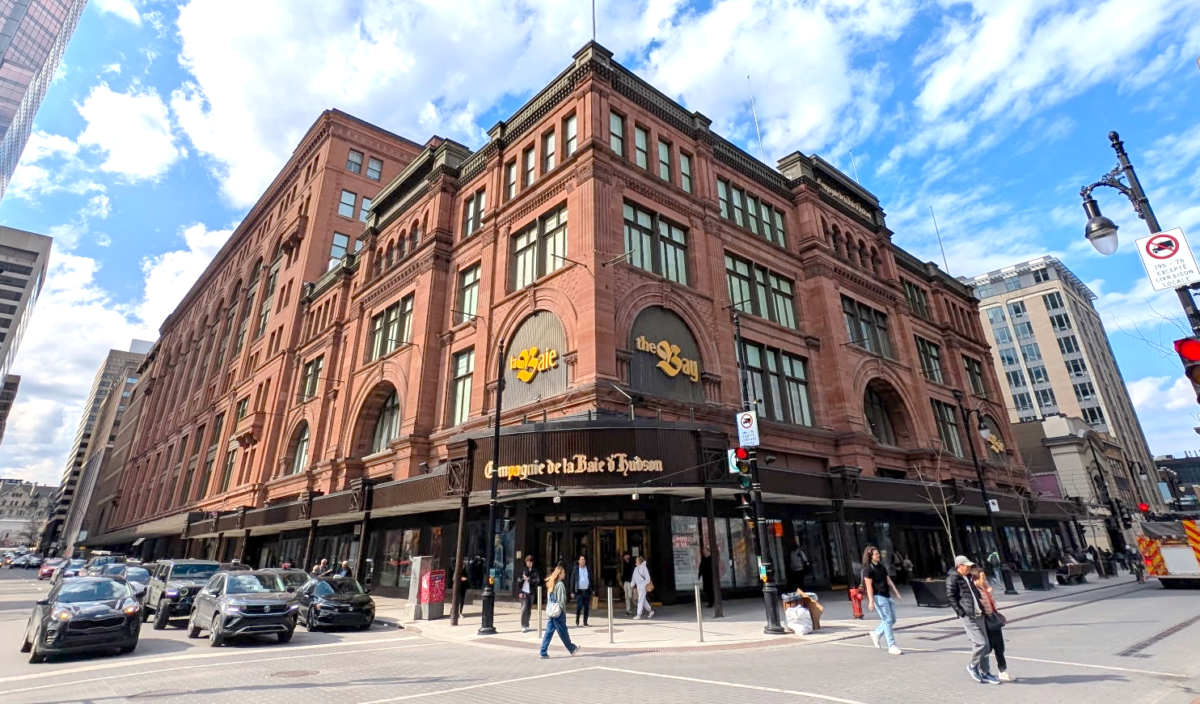
The six stores previously excluded from liquidation included two high-profile flagships: the Queen Street store in downtown Toronto, connected to Saks Fifth Avenue, and the historic downtown Montreal location on Sainte-Catherine Street. Also included were the Yorkdale Shopping Centre store in Toronto, the Hillcrest Mall location in Richmond Hill, and two suburban Montreal locations: CF Carrefour Laval and CF Fairview Pointe-Claire.
Their exclusion was initially interpreted as a sign of hope for a leaner, more modern Hudson’s Bay retail footprint. However, in an April 23 court filing, Hudson’s Bay stated that no viable buyers or restructuring plans had emerged. Liquidating the final six locations was necessary to ensure the maximization of value for creditors amid the ongoing Companies’ Creditors Arrangement Act (CCAA) proceedings.
A Farewell Visit to the Queen Street Flagship
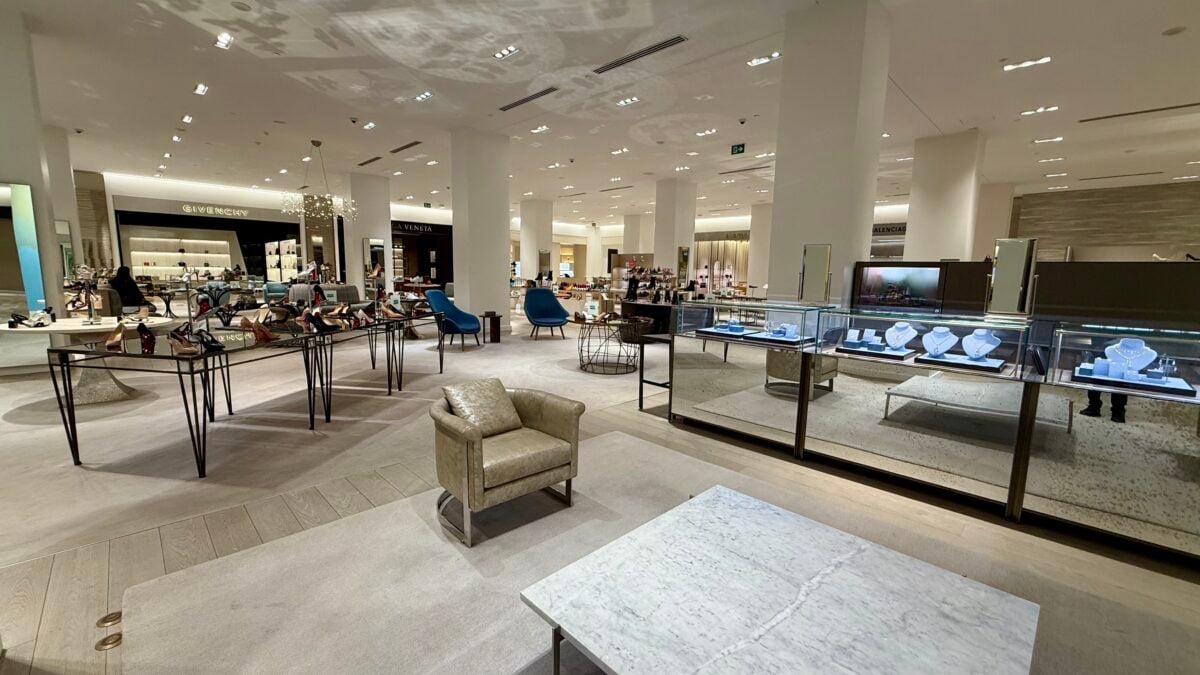
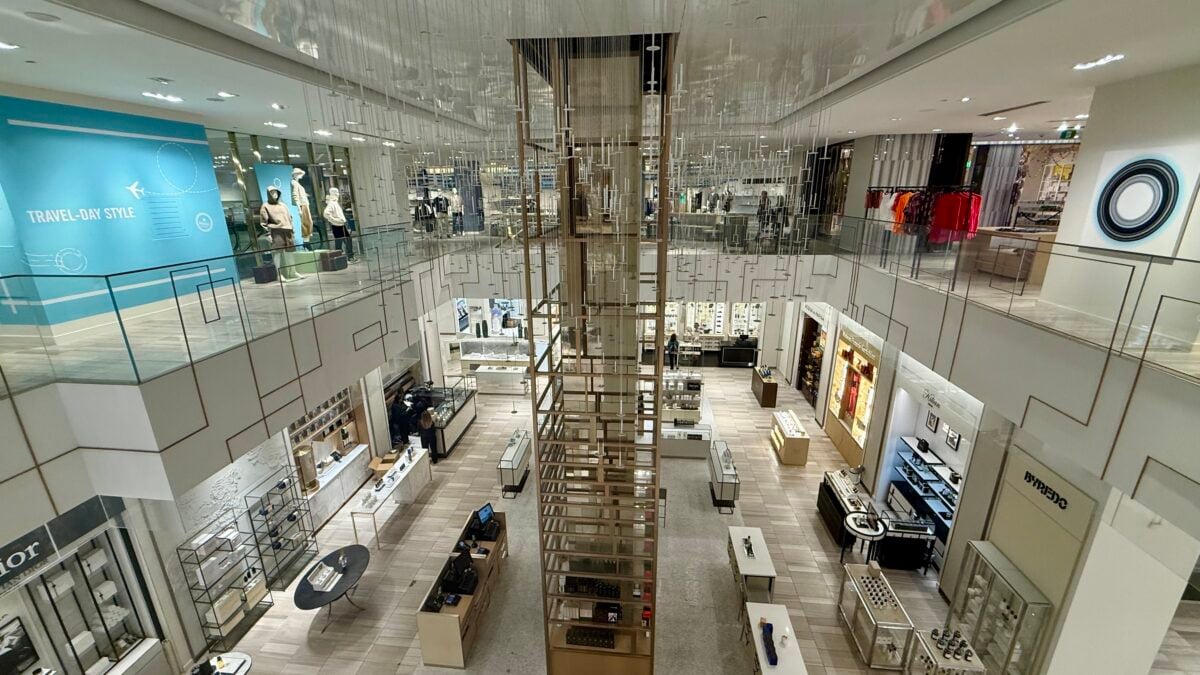
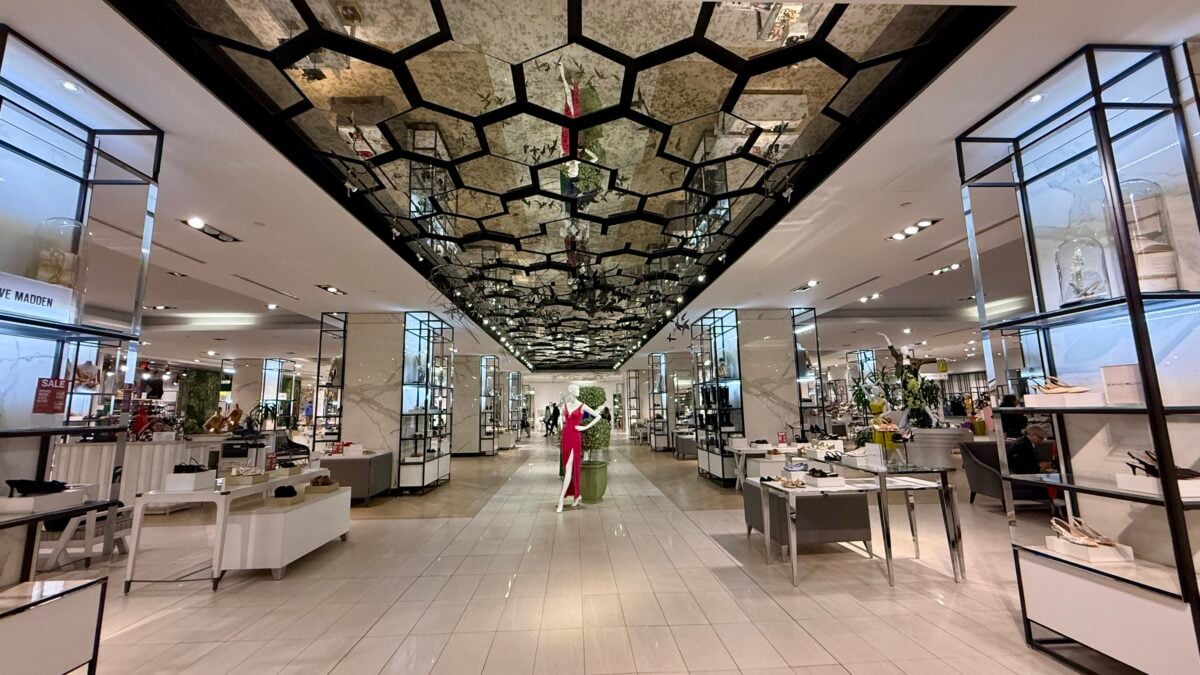
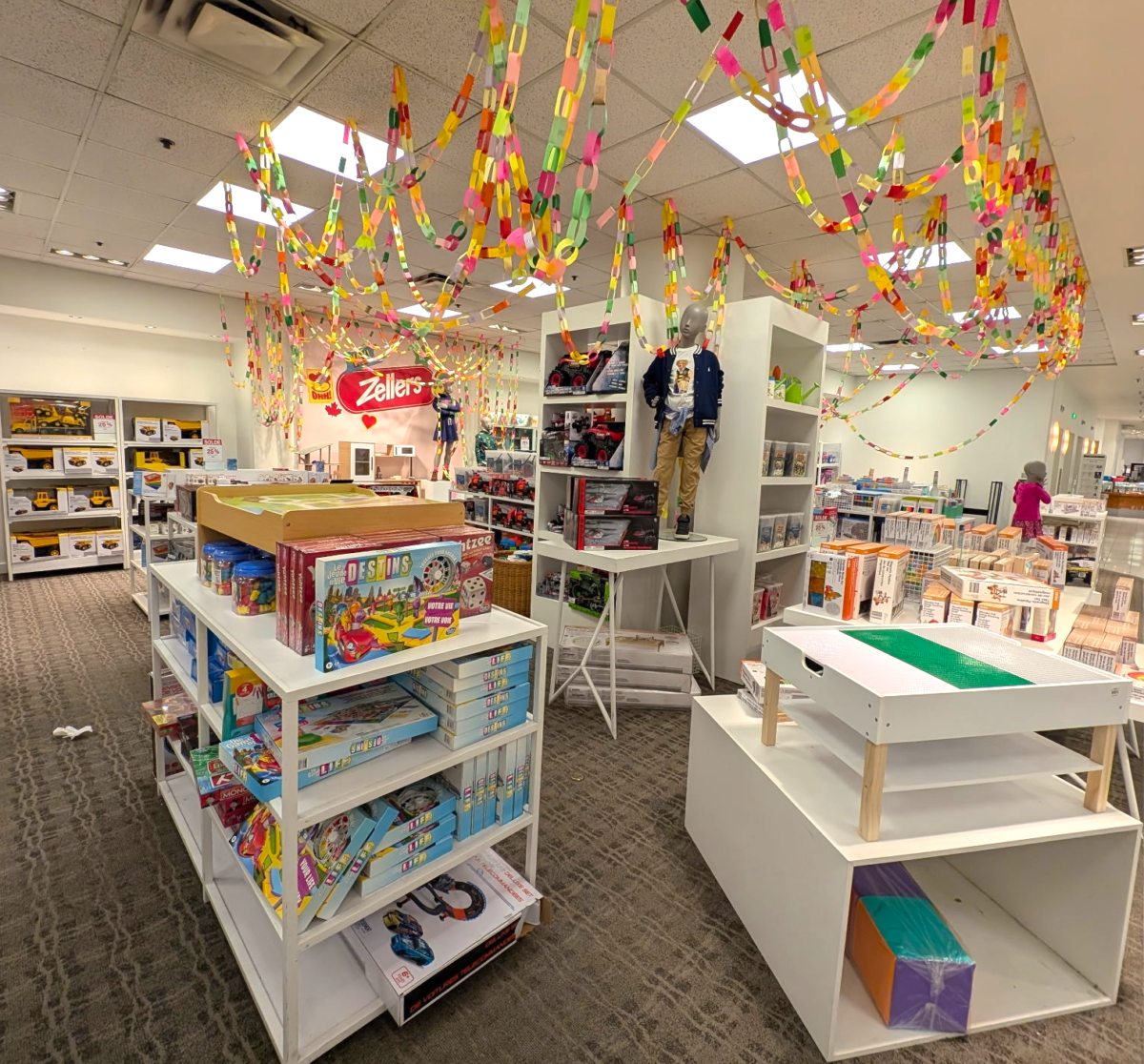
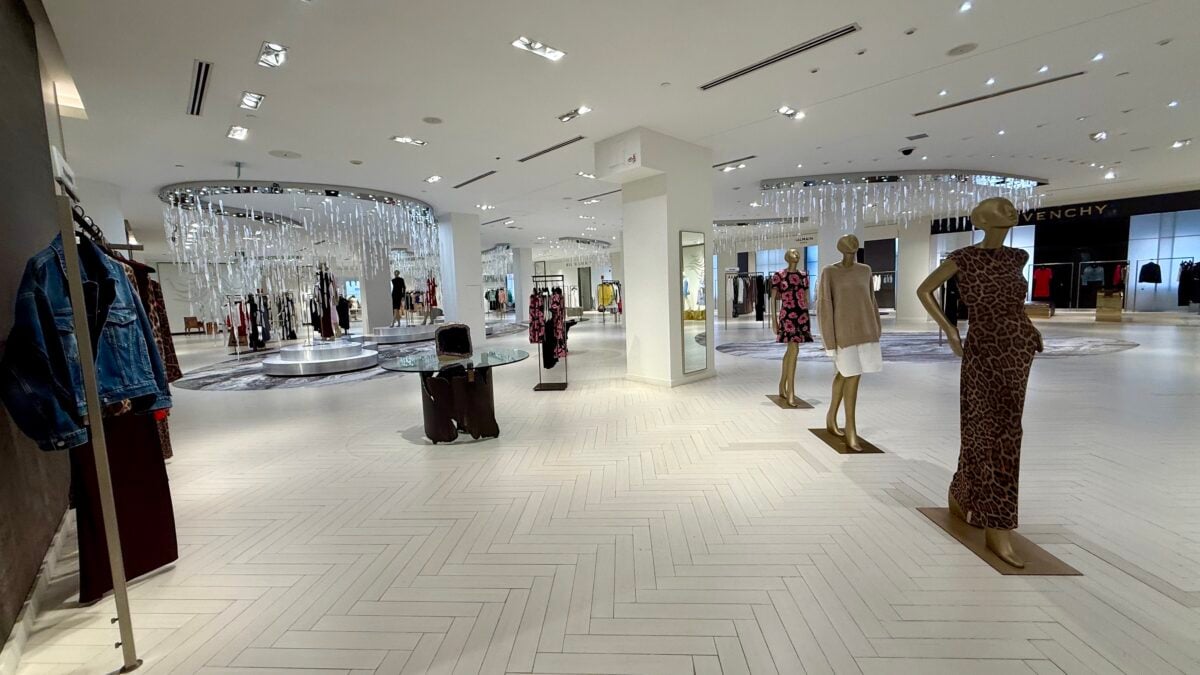
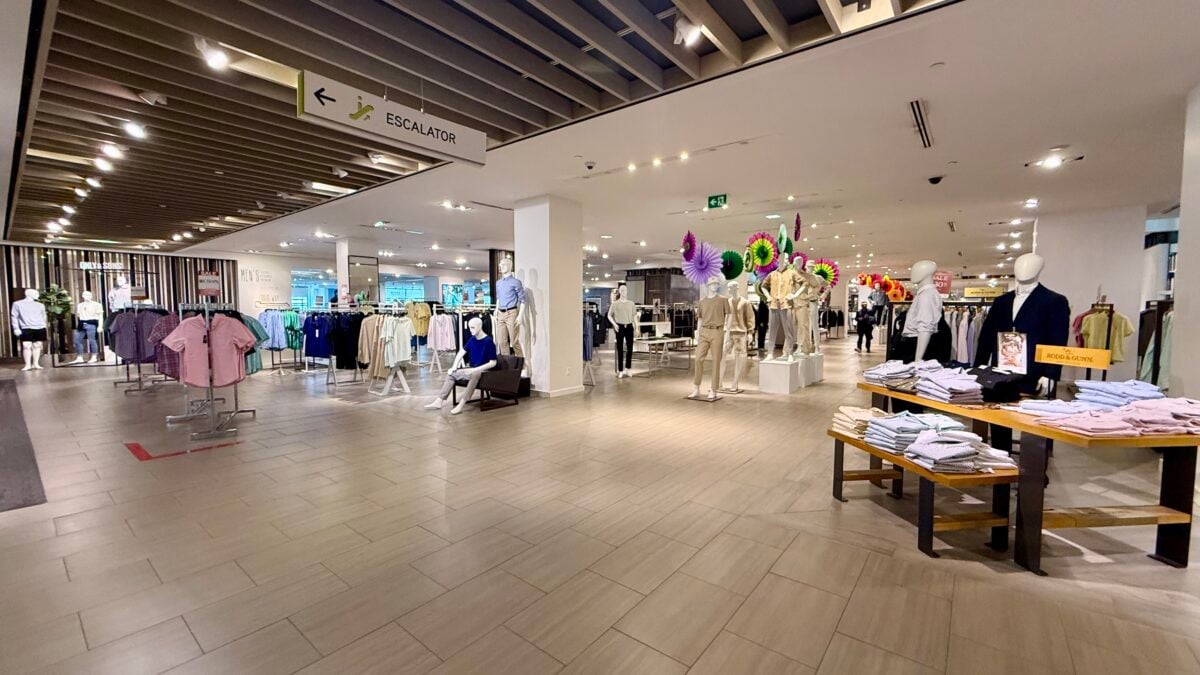
Retail Insider visited the Queen Street flagship store in Toronto on its final day operating outside of liquidation. The mood inside was subdued. Shoppers milled about the seven-level, nearly 700,000-square-foot complex that has served as Hudson’s Bay’s flagship since 1991. Many were unaware that it was the last day of full operations.
Adjacent to the main Hudson’s Bay store is a 150,000-square-foot Saks Fifth Avenue store, which opened on February 18, 2016. The Saks Food Hall in the basement—once a beacon of luxury grocery—had already closed in 2024 following the bankruptcy of Pusateri’s.
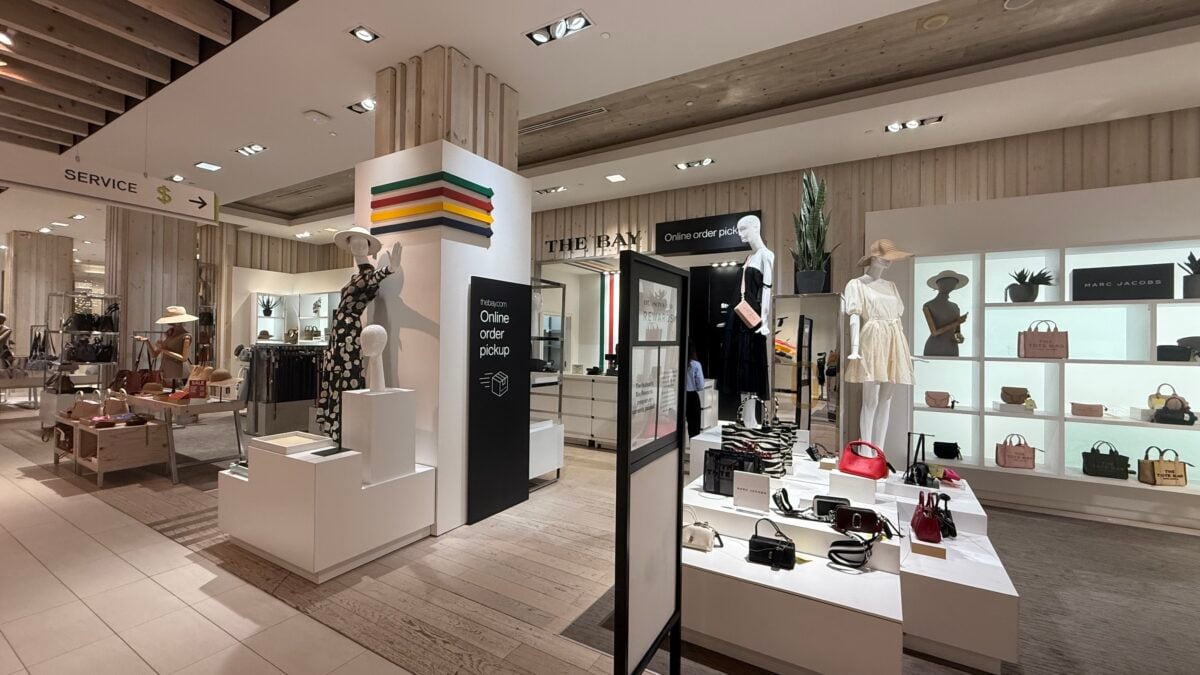
The Queen Street building is a living monument to Canada’s department store era. Originally opened as a Simpsons department store in 1896, the structure has undergone numerous expansions, architectural transformations, and brand transitions. It was rebranded as Hudson’s Bay in 2013, following decades as The Bay and, prior to 1991, as Simpsons.
Beyond its architectural grandeur and retail significance, the Queen Street store holds a special place in Canadian pop culture as the backdrop for the beloved children’s television series Today’s Special. Airing from 1981 to 1987 on TVOntario and later on Nickelodeon in the United States, the show was set in the Simpsons department store where, after hours, a mannequin named Jeff comes to life. While many interior scenes were filmed on constructed sets, several exterior and select interior scenes were shot on location at the Simpsons department store at Queen and Yonge Streets.
Above: In a 1983 episode of the children’s TV show Today’s Special, the character Muffy the Mouse discovers a historic plaque inscribed with “Robert Simpson, Merchant, 1896.” The discovery of this artifact plays a pivotal role in the storyline, ultimately saving the department store from demolition.

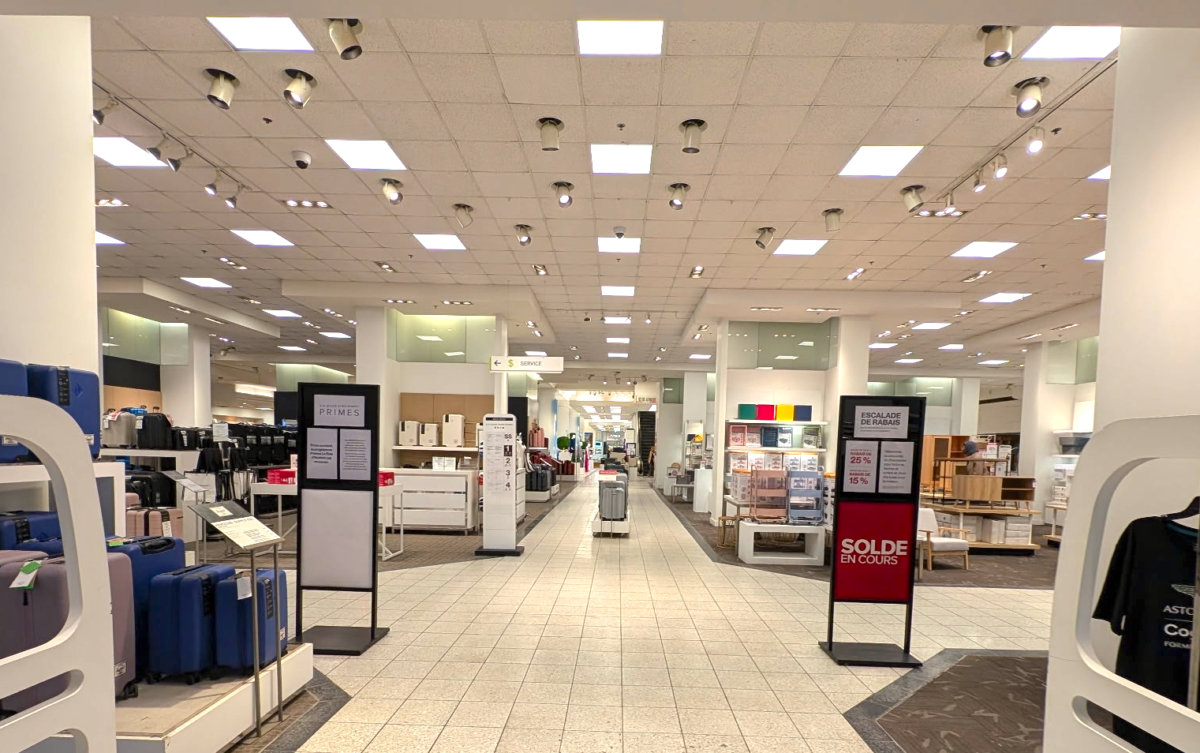
The End of Grand Flagships Across Canada
Hudson’s Bay’s departure from the traditional department store model means not only the loss of a retailer but also the cultural void left by its iconic buildings.
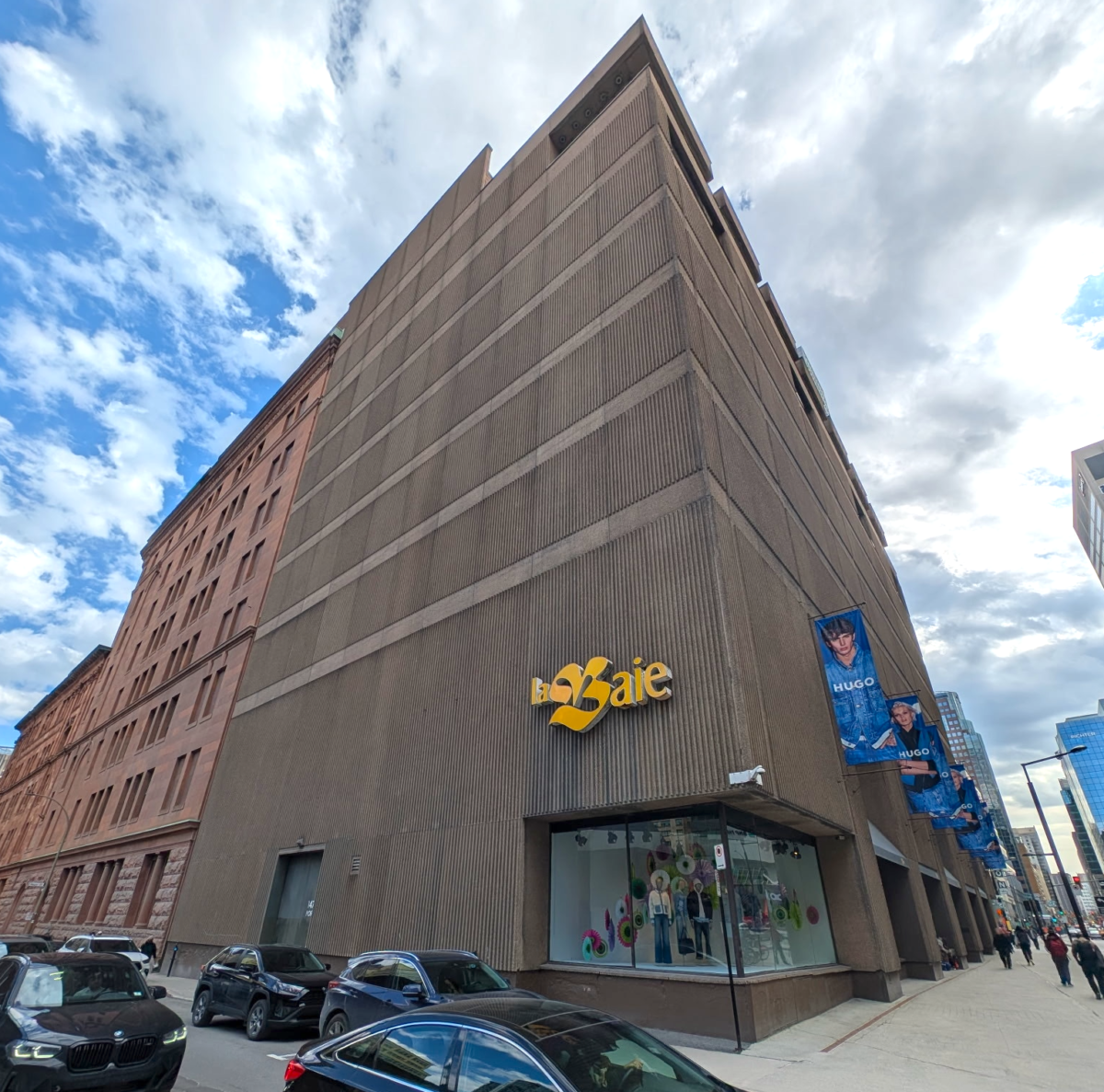
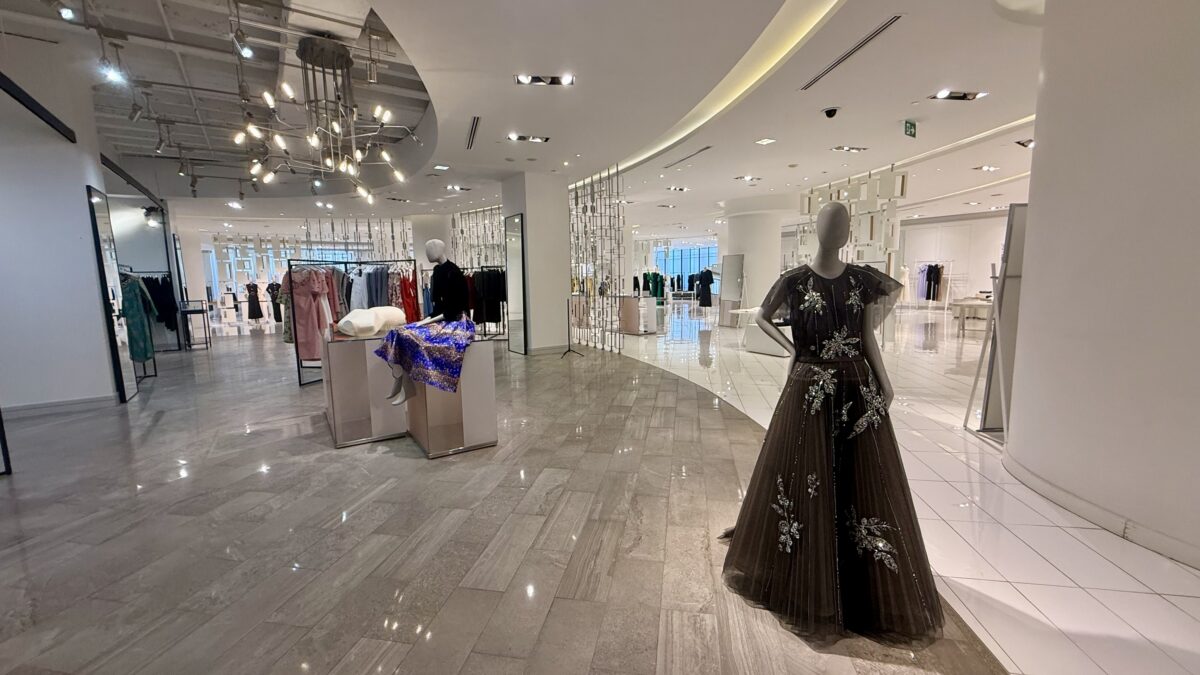
The Montreal flagship on Sainte-Catherine Street, first opened by Henry Morgan & Company in 1891, was also photographed by retail expert Carl Boutet on April 24. Less modernized than its Toronto counterpart, the building nonetheless holds deep architectural and commercial heritage. It has served generations of Montrealers under the Morgan’s and later Hudson’s Bay names, evolving with the city’s retail landscape.
Other prominent Hudson’s Bay flagship stores already in liquidation include locations in downtown Vancouver, Calgary, and Ottawa—further driving home the demise of the once-dominant urban department store format in Canada.
A Deep Historical Legacy
The Hudson’s Bay Company, founded in 1670, is the oldest incorporated company in North America. It once managed a sprawling network of fur trade outposts before evolving into a retail powerhouse by the 20th century.
The Queen Street store in Toronto is particularly rich in history. After the Hudson’s Bay Company acquired Simpsons in 1978, the building at Queen and Yonge eventually became the company’s flagship in 1991. In 1978, annual sales at the Queen Street store were estimated at $180 million—equivalent to roughly $900 million today when adjusted for inflation. Sales today in the building, in today’s dollars, are less than the 1978 sales number.
In 2014, HBC sold the Queen Street property to Cadillac Fairview in a sale-leaseback deal, formally integrating the store into the CF Toronto Eaton Centre complex. That move, while financially strategic, signaled a shift away from long-term property ownership toward more flexible, asset-light operations for Hudson’s Bay.
The Montreal flagship, originally Morgan’s, underwent similar transitions. Rebranded in 1972 and now spanning over 655,000 square feet, the building was included in a 2021 redevelopment proposal that may still proceed under a new landlord or ownership group. A 2017 plan to add Saks at the back of the downtown Montreal Hudson’s Bay was put on ice a couple of years later.
Why the End Came
Hudson’s Bay’s CCAA filing on March 7, 2025, cited numerous challenges: declining store traffic, rising e-commerce competition, high operational costs, and broader macroeconomic pressures including trade disruptions and inflation. Observers also blame a lack of investment and mismanagement for the retailer’s struggles. Despite exploring restructuring options, no sustainable financial path emerged.
A Sale and Investment Solicitation Process (SISP) launched shortly after the filing generated interest in some leases, but none led to the preservation of the Hudson’s Bay brand as a department store.
Though all Hudson’s Bay stores are now being liquidated, there remains a chance that certain leases or locations could be repurposed under a new format or brand. Some experts believe there’s potential for the Hudson’s Bay name to survive in another form—perhaps as an online-only retailer, a specialty store concept, or a series of pop-ups.
What Comes Next
As of Friday, April 25, liquidation signs will be placed in every Hudson’s Bay store in Canada. The company is expected to complete all store closures and asset sales by mid-June 2025.
A final report to creditors is anticipated shortly thereafter, along with a proposed distribution of proceeds. However, concerns persist regarding whether unsecured creditors, including pensioners and suppliers, will see any meaningful return after senior lenders are repaid.
A Moment of Reflection
The closure of Hudson’s Bay as a traditional department store is a profound moment not only for retail, but for Canada’s urban identity. These stores were not just shopping destinations—they were landmarks, community anchors, and symbols of Canadian commercial evolution.
“It’s emotional,” said one shopper named Jennifer in the Queen Street store Thursday evening. “My grandmother took me here every Christmas to see the windows. I brought my kids here too. It’s hard to believe this is it.”
With the sun setting on Hudson’s Bay’s flagship locations in Toronto, Montreal, and beyond, Canadians bid farewell to a legacy institution that helped shape the nation’s downtowns and department store culture for over a century.














Excellent report, great detail as always. The massive Toronto Queen Street store will make a fabulous homeless shelter.
Thank you for the photos and the report. The Today’s Special reference was an awesome memory from my childhood!
Hudson’s Bay store downtown Montreal, on Ste-catherine street West was the main reason why I went to downtown shopping area (although I live downtown more west.
I miss the store very very much.
It left a huge emptiness downtown Montreal. For me and probably for many more people.
I don’t understand how Ogilvy’s could survive all crisis, but not The Bay.
Is it because they have less numerous locations?
Or because they are not a department store?