If you’re a matcha drinker, brace yourself—prices are likely heading up, and TikTok may be to blame.
What began as a traditional Japanese tea used in ceremonial settings has rapidly become a global wellness staple. Canada is no exception. Fueled by social media and a surge in health-conscious consumer habits, matcha has gone mainstream. The Canadian market alone was valued at about $300 million in 2024, projected to reach $375 million by 2025 and nearly double to $700 million by 2035, according to Market Research Future. That represents a compound annual growth rate of approximately 7% over the next decade.
Today, matcha is found not only in lattes but in smoothies, baked goods, energy bars, and even cosmetics. Its rise reflects a broader trend in Canadian food culture: the growing appeal of global ingredients that promise both functionality and indulgence.
But matcha comes with a key economic constraint—supply. The production process is uniquely labour-intensive and deeply artisanal. Shade-grown, hand-picked, steamed, and stone-ground, authentic matcha—particularly from Japan’s Uji region or parts of China—is difficult to industrialize. Canada, due to climate, cannot grow matcha domestically, meaning demand must be met through imports. The market’s tightness leaves it exposed to price volatility as interest surges.
Already, we’re seeing the effects. Ceremonial-grade matcha that sells for roughly $28 per 100 grams in Japan can retail for as much as $120 in Canada—a markup exceeding 300%. Even culinary-grade matcha, which typically costs $5 to $14 in Japan, often doubles in price on Canadian shelves. As demand continues to grow, especially for premium varieties, prices could climb by another 30–40% in the coming years.
There’s also concern over authenticity. As matcha’s profile rises, so too does the presence of lower-quality substitutes—powders that resemble matcha in colour but lack its nutritional properties and distinctive taste profile. Consumers may not always know the difference until they’ve overpaid.
Cafés and restaurants are already reporting supply challenges, and many are struggling to keep pace with customer expectations. This isn’t a passing inconvenience—it’s an early sign of a demand-driven imbalance that may persist.
Unlike fleeting trends like celery juice or butter boards, matcha’s growth is supported by habit formation. Its caffeine content, antioxidant profile, and calming effects appeal especially to Millennials and Gen Z consumers looking for a healthier, more stable alternative to coffee. The fact that the industry—not just consumers—is embracing matcha also signals staying power. In many ways, matcha is positioned similarly to pumpkin spice two decades ago—only this time, with the added push of social media.
For traditional coffee drinkers, there may be a silver lining. As matcha draws more market share, coffee demand may stabilize. That’s welcome news after a year in which retail coffee prices rose 25%, according to Statistics Canada.
In short, matcha is no longer niche. It’s a case study in how consumer health trends, social media, and global trade dynamics can converge to reshape what—and how—we drink. If you’re a coffee drinker, you might want to start promoting matcha yourself. Your wallet could thank you.
Real gross domestic product (GDP) edged down 0.1% in April, following a 0.2% increase in March.
The goods-producing industries were down 0.6% in April, with the manufacturing sector accounting for nearly all the decline.
The services-producing industries edged up 0.1% in April. Public administration, finance and insurance, and the arts, entertainment and recreation sectors contributed the most to the increase, while the wholesale trade sector was the largest detractor to growth. Overall, 10 of 20 industrial sectors expanded in April, said Statistics Canada.
The number of employees receiving pay and benefits from their employer—measured as “payroll employment” in the Survey of Employment, Payrolls and Hours—was little changed in April (-6,200), following two consecutive declines in February and March. On a year-over-year basis, payroll employment was up 30,400 (+0.2%) in April.
In April, monthly payroll employment declines were recorded in 9 of 20 sectors, including manufacturing (-7,300; -0.5%), accommodation and food services (-5,800; -0.4%), retail trade (-5,000; -0.3%), and administrative and support, waste management and remediation services (-4,700; -0.6%). These declines were partially offset by gains in health care and social assistance (+10,800; +0.4%), public administration (+6,200; +0.5%) and educational services (+5,200; +0.4%). The remaining eight sectors were little changed.
Meanwhile, job vacancies decreased by 16,800 (-3.2%) to 501,300 in April, following nine consecutive months of little change. On a year-over-year basis, job vacancies were down by 91,400 (-15.4%), reported Statistics Canada.
Tourism spending was virtually unchanged in the first quarter of 2025 after increasing 1.5% in the fourth quarter of 2024. Domestic tourism spending increased 0.8% in the first quarter of 2025 as Canadians pulled back from international travel to the United States. Gains in tourism spending by Canadians at home were offset by lower tourism exports (-2.6%), which refer to non-resident spending in Canada.
Tourism gross domestic product (GDP) grew 0.5% in the first quarter of 2025, compared to growth of 1.3% in the fourth quarter of 2024. By comparison, economy-wide GDP by industry was up 0.4% in the first quarter of 2025.
Growth in tourism GDP in the first quarter was driven by accommodation services (+2.0%), followed by food and beverage services (+1.0%). These gains were partially offset by declines in other tourism industries (-1.2%) and transportation (-0.3%) during the quarter.
On a nominal basis, tourism’s share of GDP was 1.74% in the first quarter, down from 1.79% recorded in the previous quarter.
The number of jobs attributable to tourism edged up 0.1% in the first quarter of 2025, following a 0.8% increase in the fourth quarter of 2024. The gains in food and beverages services (+0.6%) and accommodation services (+0.4%) were largely offset by declines in recreation and entertainment (-1.0%) and travel services (-1.6%). The total number of tourism jobs in Canada reached 707,400 in the first quarter, up slightly from 706,500 in the fourth quarter. Tourism’s share of total jobs was 3.30% in the first quarter, noted Statistics Canada.
In March, the business opening rate was 4.8% for a third straight month. The closure rate edged up 0.1 percentage points to 4.8%, following two consecutive monthly declines of 0.2 percentage points. In March, the business opening rate was 0.1 percentage point above its 2015-to-2019 historical average while the closure rate was 0.2 percentage points higher than its historical average.
The number of active businesses showed no growth over the first quarter of 2025. In March, the number of active businesses dropped by 0.1% (-722 businesses) as the number of business closures was higher than that of openings. In the same month, payroll employment dropped by 0.3%, real gross domestic product edged up 0.1% and business insolvency filings were relatively unchanged from February (448) to March (444).
Business openings held relatively steady in most sectors in March. The construction (+409 business openings compared with February) sector recorded the largest variation in business openings, followed by the accommodation and food services (-194) and other services (except public administration) (-89) sectors, shared Statistics Canada.
In March, business closures changed little in most sectors. The finance and insurance, and management of companies and enterprises (+104 business closures compared with February) and health care and social assistance (+90) sectors posted the largest increases in business closures. These increases were partially offset by the decline in closures in the retail trade (-110) sector.
The number of active businesses dropped or was relatively unchanged in all sectors in March. The decline in the overall number of active businesses was mainly driven by the transportation and warehousing (37.7% contribution to the decline in active businesses), professional, scientific and technical services (24.3% contribution) and accommodation and food services (8.0% contribution) sectors.
The number of employees receiving pay and benefits from their employer—measured as “payroll employment” in the Survey of Employment, Payrolls and Hours—was little changed in April (-6,200), following two consecutive declines in February and March. On a year-over-year basis, payroll employment was up 30,400 (+0.2%) in April.
In April, monthly payroll employment declines were recorded in 9 of 20 sectors, including manufacturing (-7,300; -0.5%), accommodation and food services (-5,800; -0.4%), retail trade (-5,000; -0.3%), and administrative and support, waste management and remediation services (-4,700; -0.6%). These declines were partially offset by gains in health care and social assistance (+10,800; +0.4%), public administration (+6,200; +0.5%) and educational services (+5,200; +0.4%). The remaining eight sectors were little changed.
Meanwhile, job vacancies decreased by 16,800 (-3.2%) to 501,300 in April, following nine consecutive months of little change. On a year-over-year basis, job vacancies were down by 91,400 (-15.4%), reported Statistics Canada.
A grocery store in Alberta. Photo: Craig Patterson
New findings from PwC Canada’s 2025 Voice of the Consumer report reveal a widening gap between Canadians’ aspirations and actions when it comes to buying food. While most consumers express strong support for locally sourced products, affordability remains the deciding factor at checkout. This growing tension underscores the challenges retailers and brands face in aligning economic realities with consumer values.
According to the report, 76% of Canadians are concerned about food costs, well above the global average of 59%. At the same time, 75% say they’re willing to pay a premium for local food, driven by a desire to support the economy and access higher-quality products. Yet, when push comes to shove, 62% still choose lower-priced imported products over Canadian alternatives.
“This disconnect reflects the tension between Canadians’ desire to shop local and the reality of their purchasing decisions at checkout,” said Elisa Swern, National Retail and Consumer Leader at PwC Canada. “Canadians value local products and want to support homegrown businesses, but price remains a powerful influence, especially in today’s economic climate.”
Elisa Swern, National Retail and Consumer Leader at PwC Canada
Swern said the issue is not necessarily that local products are more expensive—it’s that consumers perceive them as being more costly, which drives them toward lower-priced options even when they would prefer to buy local.
Value Beyond Price: A Story Yet to Be Told
Swern emphasized that brands must do more to communicate the total value of local products, not just in terms of price but also in terms of provenance, sustainability, and community impact.
“Value perception is something that needs to be worked on,” she explained. “Even if there’s a small price differential, if consumers understand that something was grown in their backyard or that it supports a local family business, it can touch them more deeply from a value perspective.”
She added that manufacturers and retailers need to collaborate to tell that story in-store and online, helping consumers understand where their food comes from and why it matters.
Domestic Sourcing Ranks High in Sustainability Priorities
Another major insight from the PwC report is that 46% of Canadian consumers now cite domestic sourcing as their top sustainability consideration, above the global average of 40%. That reflects a shift in how consumers define “sustainable”—focusing more on economic resilience and local ecosystems than just carbon emissions or packaging.
Yet this support is often undercut by perceived price premiums, even when those premiums don’t actually exist. Swern said this creates a critical opportunity for education.
“‘Made in Canada’ labels alone aren’t enough to sway Canadian consumers,” she noted. “Retailers and food manufacturers need to look at new ways of partnering—technologically, operationally, even with government—to bring sustainable products to market without passing heavy price increases on to the consumer.”
Collaboration and Efficiency: Keys to the Future
The path forward, according to the report, lies in creating more efficient and interconnected supply chains. Swern believes that if producers, retailers, and technology companies work more closely, they can reduce food waste, streamline logistics, and manage input costs—all of which help lower prices without compromising quality.
“Some companies are already experimenting with vertical growing in stores, QR code storytelling, and smarter packaging,” Swern said. “There’s huge opportunity to scale these innovations.”
She cited international examples, such as a Middle Eastern grocer working directly with farmers not only to improve wages and reduce food waste, but to also bring them into the supply chain as strategic partners rather than just suppliers.
“We need more of that kind of thinking in Canada,” she said. “Retailers should be asking: how do we give smaller producers a chance to compete, even if they can’t afford premium shelf space? What kind of story can we tell that connects consumers emotionally to these products?”
A grocery store in Alberta. Photo: Craig Patterson
Healthier Eating: A Generational Shift
The PwC report also tracked emerging health-conscious trends, particularly among younger consumers. While only 45% of Canadians plan to increase their fresh produce intake in the next six months (compared to 56% globally), Gen Z consumers are much more likely to push for healthier food choices and expect companies to lead the charge.
“They’re more attuned to what’s in their food and where it comes from,” Swern explained. “They’re also more vocal about wanting clean, recognizable ingredients.”
Swern said food companies must adapt, not just by adjusting formulations but by clearly communicating what goes into their products.
“This is where technology can help,” she noted. “New 2D barcodes can offer more information than traditional labels, linking to a brand’s website or farm origin stories. Consumers want to know their peaches came from John Smith’s orchard in Ontario—that kind of storytelling builds trust.”
Making Healthier Options Affordable
While the desire for healthier food is rising, affordability is again the barrier. The report found that nearly two-thirds of Canadians would pay more for additive-free or nutritionally enhanced foods, but many still can’t justify the higher price.
Swern said that to bridge this gap, operational efficiency must be part of the solution.
“Retailers are starting to look at how to eliminate waste throughout a product’s life cycle—from farm to shelf,” she said. “Take potatoes, for instance. How do we use the entire crop, reduce spoilage, and make the most out of every unit produced? If you reduce waste, you reduce costs.”
She also sees promise in technology-driven solutions like dynamic pricing, spoilage sensors, and smarter demand forecasting.
“Imagine if a grocer knows it’ll sell 2,300 cases of strawberries in week 23. That kind of precision, combined with dynamic pricing as a product nears end of life, could cut waste and deliver fresher food at better prices.”
Strategic Partnerships Will Shape What’s Next
Swern believes that the future of Canadian food retail depends on deeper collaboration—not only across the supply chain, but also with external partners in technology, agriculture, and government.
“There’s a lot of talk about retail media, about tech solutions, but at the end of the day it’s about partnerships,” she said. “The future belongs to companies that can align with producers, deliver on transparency, and speak to the consumer in a way that’s both emotionally compelling and economically viable.”
Even seemingly small gestures—like making QR codes easier to scan or helping smaller brands tell their stories—can build consumer loyalty.
“It’s about building trust,” Swern concluded. “Canadians want to support local. They want to eat well. It’s up to the industry to make those choices easier, more accessible, and more affordable.”
For more findings from PwC Canada’s Voice of the Consumer 2025 report, including insights on brand loyalty, health trends, and the evolving role of sustainability in food retail, visit pwc.com/ca/voice-of-the-consumer.
Two of Canada’s most beloved cultural exports—Shania Twain and Clearly Canadian—are teaming up in a major new advertising campaign that marks the beverage brand’s first national promotion since 1991.
Clearly Canadian, the once-ubiquitous flavoured sparkling water brand founded in British Columbia in 1987, has released a high-energy new commercial starring the country-pop legend in an action-packed, tongue-in-cheek “treasure hunt.” The commercial sees Twain racing through the Canadian wilderness in pursuit of her prize: a bottle of Clearly Canadian. The brand, often described as Canada’s original ‘new age soda,’ is aiming to reassert itself in the modern beverage landscape with a message steeped in national pride and nostalgia.
“I have very clear memories of Clearly Canadian growing up here,” said Twain. “When the team reached out, I was so flattered and the idea was awesome!”
A Return to Advertising, Three Decades Later
The new campaign, developed in partnership with Ryan Reynolds’ creative agency Maximum Effort, was filmed on location in Canada with a natural backdrop of waterfalls and forests. The brand is emphasizing not just celebrity endorsement, but a reconnection with its roots: Canadian water, Canadian scenery, and Canadian stars.
“Getting to shoot this in the Canadian outdoors, fighting to do my own stunts (I think I can still tumble!), and sampling all the new flavours hardly felt like work,” said Twain. “Getting to be in my own adventure movie for the day was pretty great.”
The ad also features a new jingle and unmistakable Canadian humour, a hallmark of the Maximum Effort creative style. It’s a strategic move for a brand that, while dormant for several years, remains firmly embedded in the cultural memory of Canadian and American consumers who came of age in the 1990s.
A Brand Revived by Loyal Fans
Clearly Canadian’s resurgence is a direct result of fan demand. In 2013, a crowdfunding campaign helped raise enough support to pre-sell over 40,000 cases of the product. The outpouring of enthusiasm led to Clearly Canadian’s return to store shelves in 2017, with retail expansion following in both Canada and the U.S.
Since that time, the company has reported “market-leading” growth. Distribution has steadily expanded, and the brand is now once again a regular sight in major grocery and specialty retail chains across North America.
Yet despite broader availability, consumer demand frequently outpaces supply. One of the most common comments on Clearly Canadian’s social media posts remains: “Where can I find it?!”
Clearly Canadian Expands Product Line to Meet Demand
To meet evolving consumer preferences, Clearly Canadian has introduced new product formats and flavour options while staying true to its original formulation of pure Canadian spring water and natural ingredients.
The flagship Clearly Canadian Originals line—offered in nostalgic flavours like Wild Cherry, Mountain Blackberry, Orchard Peach, Summer Strawberry, and Country Raspberry—continues to be packaged in the brand’s signature recyclable glass bottles.
The brand has also diversified its offerings with Clearly Canadian Zero Sugar, sweetened with a Stevia blend, and Clearly Canadian Essence, an unsweetened sparkling water featuring light vegan flavour profiles.
In 2024, the company introduced recyclable aluminum cans, further extending its reach into grab-and-go and convenience formats. The move balances the brand’s sustainability commitments with retail growth, as both glass and aluminum packaging are made from 100% recycled materials.
From 90s Nostalgia to Modern Pop Culture Relevance
The Clearly Canadian brand was once a staple of 1990s pop culture, appearing in everything from corner stores to TV shows. It stood out not just for its vivid fruit flavours and colourful branding, but for offering a perceived “healthier” alternative to traditional sodas.
Today, that original identity resonates even more with millennial and Gen Z consumers who prioritize natural ingredients, clean labels, and sustainability. The company is leaning into that positioning while embracing a more contemporary marketing approach.
Twain’s participation in the campaign plays an important role in that strategy. With over 100 million records sold and multiple Grammy Awards, the Timmins, Ontario-born singer continues to captivate fans globally. Her own comeback, following a long hiatus due to illness, mirrors the revival story of Clearly Canadian itself—a beloved Canadian original, returning stronger than ever.
Photo: Clearly Canadian
Maximum Effort, Maximum Impact
Partnering with Ryan Reynolds’ Maximum Effort was a deliberate choice for Clearly Canadian. The agency, known for its irreverent and distinctly Canadian storytelling, brought a level of creative flair and cultural resonance to the campaign that aligns with the brand’s ambitions.
The ad’s tone—a blend of humour, action, and nostalgia—positions Clearly Canadian as both a legacy product and a lifestyle choice. With a soundtrack designed to stick and visuals that pay homage to Canadian wilderness, the campaign brings the brand’s story full circle.
Canadian-Made, Globally Loved
Though the company’s roots are firmly planted in British Columbia, Clearly Canadian’s appeal is decidedly international. At its peak in the 1990s, the brand was exported across Europe and Japan. Its return has reignited cross-border interest, particularly in the United States where Canadians living abroad and retro beverage fans have eagerly welcomed it back.
Today, Clearly Canadian positions itself as more than a drink—it’s a cultural product, emblematic of Canadian purity, quality, and global relevance. With a product made from spring water sourced across Canada and packaged in environmentally responsible materials, the brand is speaking directly to a new generation of values-driven consumers.
Looking Ahead
Clearly Canadian’s return to the spotlight isn’t a one-off. The company has signalled that this campaign marks the beginning of a broader push, with new innovations and marketing initiatives planned in the months ahead.
“We’re proud to be back on shelves and grateful to the fans who never stopped asking for it,” the company said in a statement. “Clearly Canadian is more than just a beverage—it’s a piece of Canadian cultural heritage.”
For Shania Twain, the partnership represents a chance to champion something close to home. For Clearly Canadian, it’s a bold step forward—and proof that even after three decades, the brand is still the one.
The art of the quick room refresh—decorative wallpaper, murals, and wall stickers— let’s peel back the layers and see why these clever touches are so beloved, and how you can use them to bring instant joy to your space.
Modern life is busy, budgets are tight, and sometimes the idea of full-on renovations feels as exhausting as reading all of Hugo’s footnotes. People crave transformation without the mess, commitment, or cost of tearing out old walls and waiting for paint to dry. We want that “wow!” moment with Wallmur—fast.
It’s a bit like putting on a fabulous scarf or a striking brooch. You’re not changing your whole outfit, just adding a touch that says: “This is me, today.”
Enter: Wallpaper Elements and Stickers
These are the secret weapons for anyone who wants their space to feel new without needing a full construction crew (or a loan).
Affordable (you can overhaul a whole wall for the price of a fancy dinner),
Quick to apply (less chaos, less dust, more instant gratification),
Removable (so you can change your mind as often as your hairstyle).
What Types of Modern Wall Decoration Should You Consider?
Removable/Peel-and-Stick Wallpapers
The MVP of easy upgrades. Available in every pattern under the sun—florals, geometrics, faux brick, watercolor washes. Great for renters, commitment-phobes, or serial redecorators.
What to Watch Out For
Not all peel-and-stick is created equal. Quality matters here like a lot. Here’s how to spot the good stuff:
Touch and Feel—If you can, feel a sample. It should be reasonably thick—thin, plasticky stuff often tears or bubbles.
Adhesive—Quality wallpaper peels away cleanly but sticks firmly—think Post-it, not duct tape!
Print Clarity—Colors should be vivid, lines sharp. Fuzzy printing is a red flag.
Reviews—Check online feedback. Real people will tell you if it’s easy to work with or a wrinkle-fest.
Brand Reputation—Established brands often have higher quality control and clearer instructions.
Labels—“Removable” and “repositionable” are good signs. If it says “permanent” or “requires paste,” walk away unless you’re ready for a project.
Labels are helpful, but manufacturers can stretch the truth. Your best bet? Look for photos and reviews from real users—especially if they show the wallpaper in action after removal.
Wall Decals / Stickers
Think of these as the emojis of home decor—fun, expressive, and easy to swap out.
Botanical leaves and vines for a calming vibe
Abstract shapes for a modern, artsy look
Inspirational quotes for a daily dose of motivation
Children’s themes (dinosaurs, rainbows, rockets) to turn a kid’s room into an adventure zone
Freedom to Play
Decals are like stickers for grown-ups (and kids!). They’re individual elements you can mix, match, and move around:
Go wild with a gallery wall of shapes, stars, or botanicals.
Create a pattern or scatter randomly for organic, artsy vibes.
Layer different decals—think a moon above a mountain, or birds perched on a tree.
No rules, just your vision.
Mural Panels
Big, bold, and dramatic. One mural panel can turn a plain wall into a forest, cityscape, or abstract artwork. Choose peel-and-stick versions for less hassle.
Main Rules
Always plan your canvas!
Measure Twice—Know your wall’s height and width. Order a little extra in case you need to trim.
Start at the Center—This keeps the focal image balanced, especially with large or bold graphics. It works for murals
Work Outward—Apply panels from the center out, smoothing as you go.
Line Up Patterns—For repeating designs, double-check alignment before pressing down fully.
Resist the urge to wallpaper every wall—unless that’s your jam. A single feature wall packs punch and keeps things fresh. If you go all-in, stick to subtle patterns or muted tones for harmony.
Borders and Trim Stickers
These are the understated heroes—add a little stripe or motif around the ceiling or doorframes for that “finished” look, without overpowering the space.
Framing Doors or Windows—Adds crispness and visual interest.
Chair Rails—Place a border horizontally at chair height for a traditional or playful look.
Accent Zones—Use borders to frame a reading nook, a bed, or a workspace—like a picture frame for your life.
Trompe l’oeil Stickers
French for “fool the eye,” these create illusions—think fake windows, bookshelves, or architectural moldings. Adds a playful, slightly mischievous touch.
For example, a panoramic mural is a classic trompe l’oeil. These create the illusion of space, depth, or even another world.
Best Placement?
Focal Wall—The one that greets your eye first—often opposite the doorway—is ideal.
Don’t Hide the View—Avoid placing it where furniture will block the effect.
Keep It Uncluttered—Let that mural be the star; too many competing elements dilute the magic.
A mural of a forest, cityscape, or open sea can instantly make a room feel bigger, lighter, and more inspiring. It’s like opening a window to somewhere new—no passport needed.
Wall Safety: How to Avoid Damage
Prep Like a Pro
Clean First—Dust, grease, or old paint flakes will sabotage your stick. Wipe the wall down with a mild soap and let it dry.
Test Patch—Try a small piece on a hidden corner. Wait a day, then peel it off—if it leaves residue, steer clear.
Paint Type—Stickers and wallpaper adhere best to eggshell, satin, or semi-gloss paints. Flat/matte surfaces or freshly painted walls (less than 3 weeks old) might not play nice.
Gentle Removal
Peel slowly, pulling the wallpaper back on itself rather than straight out from the wall.
If it resists, a little heat from a hair dryer can soften the adhesive.
Any leftover residue? A damp cloth with mild soap does wonders.
Decor is self-expression, and with today’s wallpapers and decals, you get all the fun and freshness with little risk. Start small, play with light and borders, and don’t be afraid to “fool the eye” a bit. Your walls are your canvas—make them sing your song!
Top Tips for Picking the Right Style
A quick decor update is an act of self-care—a way to claim your space, create a mood, and remind yourself that change is possible, even with small steps. In uncertain times, having control over your environment (even just one wall of it) is grounding and joyful. Plus, every time you look at that fresh wall, there’s a little dopamine hit: “Hey, I did that. I made this space mine.”
Match Your Mood, Not Just Your Furniture
Want calm? Go with soft pastels or watercolors. Need energy? Bold colors or geometric patterns are your friends.
Pro tip: Small spaces love bright, airy patterns; big walls can handle deeper colors or dramatic prints.
Less is More
An accent wall, or even just a section, can make a bigger impact than wallpapering every square inch. It draws the eye, but doesn’t overwhelm.
Think About Light
Glittery or metallic highlights bounce the sun around on those days when it appears; matte finishes make things feel cozy.
Let There Be Light
Reflective Patterns—Glossy or pearlescent inks bounce light and add softness.
Strategic Placement—Put lighter, brighter wallpaper on the wall that gets the most sun to amplify daylight.
Dark Patterns—Use these on walls opposite windows; they absorb light, making the space feel cozy and dramatic.
Borders with Contrast—A lighter border on a dark wall (or vice versa) draws the eye and frames the space.
Easy on, Easy Off
Always check that you’re buying “removable” or “peel-and-stick”—unless you fancy scraping off wallpaper with a spatula in two years.
Decorating with minimum effort and maximum joy is a small act of rebellion against life’s heaviness. Like slipping a flower into your buttonhole or leaving a cheerful sticker in a friend’s notebook, it’s proof that beauty doesn’t have to be complicated—or expensive.
Montreal furniture brand Cozey is hitting the road this week with a playful new campaign designed to ease the stress of the city’s famously chaotic Moving Day. From June 26 to July 5, 2025, Montrealers may spot a curious sight weaving through neighbourhood streets: a branded Cozey vehicle with a dusty old sofa strapped to its roof.
Timed to coincide with Quebec’s July 1 Moving Day—a uniquely Montreal tradition where thousands of residents relocate on the same day—the campaign aims to draw attention to a better, more practical way to move furniture. With modular sofas designed for fast delivery, easy assembly, and apartment-friendly dimensions, Cozey is delivering both humour and a helpful reminder to the city’s movers.
Free Pizza and a Chance to Win a Cozey Sofa
The Cozey Car will visit several of the city’s busiest neighbourhoods, including the Plateau, Rosemont, Villeray, Verdun, Hochelaga, and Griffintown. The campaign hits its high point on July 1, when Cozey will distribute free pizza and cold drinks to weary movers working through the holiday.
In addition to the giveaway, residents can participate in a social media contest. Those who spot the Cozey Car and post a photo or video to Instagram, tagging @cozey and using the hashtag #choisiscozey, will be entered for a chance to win a new Cozey sofa delivered to their door.
The whimsical campaign captures the spirit of Moving Day, known for its traffic jams, packed stairwells, and worn-out furniture. Cozey is using the moment to highlight its core mission: providing furniture that is easy to move, easy to live with, and well-suited to urban life.
A Canadian Brand Rooted in Simplicity and Flexibility
Founded in Montreal in 2020 by Frédéric Aubé, Cozey has quickly gained national recognition as a disruptor in the Canadian furniture industry. Born during the early months of the COVID-19 pandemic, the company was created in response to consumer frustration with traditional furniture shopping—especially the challenges of moving bulky pieces into apartments and navigating long delivery wait times.
Cozey’s sofas are fully modular, allowing users to customize, expand, or reconfigure their setup as needs change. Each unit ships in compact, courier-sized boxes and can be assembled tool-free within minutes. The approach resonates strongly with young professionals and apartment dwellers looking for versatility without sacrificing comfort or aesthetics.
Direct-to-Consumer Approach with National Reach
Unlike traditional furniture retailers, Cozey operates primarily through a direct-to-consumer model. This strategy allows the company to keep prices competitive and maintain control over the entire customer experience. Cozey offers fast, free shipping across Canada and provides a risk-free trial period, which has contributed to a loyal and growing customer base.
Positive word-of-mouth and strong online reviews have helped fuel Cozey’s expansion, with customers often highlighting the brand’s durability, ease of assembly, and pet-friendly materials. The option to buy individual modules over time has also been praised by those seeking a long-term, adaptable investment in home furnishings.
Cozey at 1026 Queen St W in Toronto(Image: Cozey)
Retail Expansion and Community Impact
What began as a purely online venture has now expanded into brick-and-mortar showrooms and pop-up locations in major Canadian cities, including Toronto, Montreal, Vancouver and Ottawa. These physical spaces offer customers the chance to see and test Cozey’s products firsthand, enhancing the overall buying experience. The company has a permanent storefront in Toronto with plans for permanent Vancouver and Calgary showrooms as well.
The company also takes a thoughtful approach to sustainability and social responsibility. Returned sofas in good condition are refurbished and resold at discounted prices, while others are donated to shelters and charities. Cozey has also supported LGBTQIA+ initiatives and community-focused campaigns as part of its broader mission.
Celebrating Moving Day with Purpose and Humour
Montreal’s Moving Day is often a source of stress for residents, but Cozey’s 2025 campaign injects humour and generosity into the experience. By drawing attention to the physical and logistical challenges of relocating bulky furniture, the company makes a compelling case for its modular solutions—and does so in a way that entertains and engages.
Through a combination of real-world visibility, digital engagement, and thoughtful giveaways, Cozey reinforces its position not just as a furniture brand, but as a Montreal-based company that understands—and shares—the lived experiences of its community.
Whether spotted cruising past in Griffintown or handing out pizza on a Hochelaga corner, the Cozey Car offers a reminder that there’s a smarter, simpler way to furnish a home in the city. And for one lucky Montrealer, it could mean a free upgrade to a modular setup that’s built to move, grow, and adapt—no stairwell strain required.
High quality shopping bags from Gather Packaging/Luv2Pak
For Canadian retailers, packaging has quietly become a high-stakes problem. Global freight delays, inconsistent quality, sustainability mandates, and rising tariffs are squeezing margins and putting the customer experience at risk. It’s no longer just about what’s inside the bag — it’s about the bag itself.
Progress Luv2Pak, a century-old Canadian packaging company, has stepped up with a bold new solution: local, premium bag manufacturing through a major investment in a new brand, Gather Packaging. Designed for retailers seeking control, speed, quality, and sustainability, Gather aims to de-risk the supply chain and elevate packaging into a strategic brand asset.
“Retailers told us they needed faster response times, more consistent quality, and better alignment with their brand,” said Ben Hertzman, President of Progress Luv2Pak and Gather Packaging. “So we built it — right here in Canada.”
Ben Hertzman, President of Progress Luv2Pak and Gather Packaging
A Family Legacy of Packaging Excellence
The roots of Progress Luv2Pak go back to 1917, when an immigrant named Morris Lukofsky fled war-torn Russia and arrived in Canada. He found work in a hat factory and noticed that every hat was placed in a beautiful box. That insight sparked a business idea: he opened a hat box factory to build a future for his family.
By mid-century, the company was supplying packaging to nearly every major Canadian retailer: Holt Renfrew, Hudson’s Bay, Eaton’s, Simpsons, and others. In 1981, Ben Hertzman’s father acquired the business. “My dad wanted to run something of his own,” said Hertzman. “He bought a factory where everything we sold was produced in-house, from gift boxes to board game packaging. We even made boxes for Trivial Pursuit in the early ’80s.”
Over the following decades, Luv2Pak evolved into a design-led, globally sourced supplier of coordinated packaging programs, including shopping bags, tissue, ribbon, and seasonal items. “Most people have one of our products in their homes, even if they don’t know it,” said Hertzman.
The Lukofsky brothers at a trade show in the 1960’s showcasing Progress Luv2Pak’s historical products
Supply Chain Breakdown Sparks a New Vision
But when COVID hit, the model buckled. “Shipping a container from Asia used to cost us $4,000. Suddenly it was $20,000,” said Hertzman. “Goods were stuck off the coast, rail strikes disrupted delivery, and we couldn’t get product to customers on time. It was a wake-up call.”
The solution? Bring manufacturing back home.
In response, Luv2Pak launched Gather Packaging: a state-of-the-art, Toronto-based facility focused on premium paper shopping bags. The goal was clear: create a local option for retailers seeking quality, reliability, and sustainability without the risks of offshore sourcing.
Gather Packaging facility in Toronto. Image: Gather Packaging
Built for Retailers: Speed, Control, Sustainability
“We designed the factory from scratch with the needs of retailers in mind,” said Hertzman. “We’re not 11 time zones away. We answer the phone. We walk the floor. We deliver what we promised, when we promised it.”
Today, the facility has eight automated lines running daily. It uses FSC-certified paper, with every bag made to be 100% recyclable. The factory is pristine, built for flow, with full quality control and advanced colour consistency testing.
“Our customers care deeply about their brand. That means the logo must be the right colour every time, the handles can’t fall off, and the bag can’t tear. We built Gather Packaging to meet and exceed that standard,” said Hertzman.
Retailers across categories — from apparel and grocery to telecom and health — are already placing their trust in Gather Packaging. “One major retailer told us they had been burned by a missed shipment from overseas,” said Hertzman. “We turned around a critical order in just a couple weeks to keep them in stock. That’s the difference local makes.”
Branded packaging from Progress Luv2Pak
Your Most Overlooked Branding Tool? The Shopping Bag
“Packaging is a walking billboard,” said Hertzman. “You wouldn’t spend millions on stores and let a customer walk out with a flimsy bag that doesn’t reflect your brand. And yet, that’s what too many retailers are doing today.”
He emphasized that great packaging extends the retail experience beyond the store. “When your customer walks through a mall with your bag in hand, everyone sees it. At home, it continues to shape how they perceive your brand. That’s powerful.”
Even in e-commerce, he noted, packaging matters. “When you sell online, you only have two critical times to provide a customer experience. First, and most evident is when the customer visits your website. The second, and just as important, is when the product arrives at their home. Don’t let it come in a generic brown box. Make it feel special.”
Why Luv2Pak and Gather Packaging are Different
Progress Luv2Pak and Gather Packaging don’t just supply packaging — they protect brands at scale.
“We have an in-house design team, custom inventory programs, and proactive quality control. We’re deeply involved from concept to delivery,” said Hertzman.
Take the company’s 70-year relationship with Harry Rosen. “They’ve trusted us from a single store on Parliament Street to today’s national footprint. Every piece of packaging they use — from boxes to tissue to bags — is made by us, and it’s all coordinated, recyclable, and perfectly matched to their iconic green.”
This consistency, sustainability, and attention to detail is what top retailers are seeking as they rethink packaging.
Progress Luv2pak/Gather Packaging headquarters in Toronto
A Smarter Supply Chain for a New Retail Era
Hertzman believes Canadian retail is at a turning point.
“Margins are tight. Expectations are high. Tariffs are uncertain. But consumers still expect excellence — and fast,” he said. “The smartest retailers are investing in brand and supply chain resilience.”
Progress Luv2Pak is ready. Its initial investment in domestic manufacturing with Gather Packaging is just the beginning. The company is expanding and continuously innovating to support retailers of all sizes.
“We’ve made countless products over all the years we have been in business. We know what can go wrong, so we’ve built the systems to get it right,” said Hertzman. “Some of our employees have been with us longer than I’ve been alive. That’s the kind of consistency we deliver.”
Final Word: Rethink the Bag
For retailers still importing their packaging, Hertzman has a clear message: rethink it.
“If you’re still sourcing bags from overseas, now’s the time to bring it home. Packaging is too visible, too important, and too strategic to leave in someone else’s hands,” he said.
With history, innovation, and a brand-first mindset, Progress Luv2Pak and Gather Packaging are making the case for a new era of Canadian-made packaging: fast, sustainable, beautiful, and fully under your control.
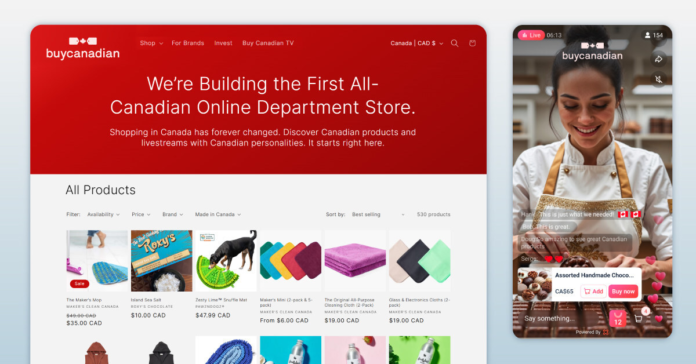
A new Canadian online department store is making it easier than ever for consumers to support local businesses while shopping from the comfort of home. BuyCanadianGroup.ca, officially launched this month, has positioned itself as Canada’s first online department store dedicated exclusively to Canadian-owned brands. The platform offers shoppers a one-click, multi-brand checkout experience that aims to keep consumer dollars circulating within the Canadian economy.
Unlike typical directories or product catalogues that simply link out to brand websites, BuyCanadianGroup.ca creates a cohesive, centralized shopping destination where customers can browse and purchase items from multiple Canadian businesses in a single transaction.
“Eighty-five percent of Canadians are actively looking for Canadian alternatives. Catalogues and directories aren’t enough. Canada needs a new department store—one that features all Canadian brands,” said Dave Lazar, Founder of Buy Canadian Group. “We give shoppers an easy way to fill their cart and know they’re buying Canadian.”
Momentum Grows as Brands and Shoppers Sign On
Since the soft launch, the response has been robust. Thousands of Canadian shoppers have already pre-registered, and the platform is seeing strong interest from domestic investors. According to the company, new brands are joining every day.
Some early participants include well-known names like Pluck Tea, Maker’s Clean—the cleaning line developed by YouTube expert Melissa Maker—and Indigenous-owned Cheekbone Beauty, a brand that has built a strong reputation for ethical and sustainable cosmetics.
The platform’s inclusive model allows brands of all sizes to apply, offering one-click onboarding for the more than 110,000 Canadian merchants currently operating through Shopify. This approach dramatically reduces the barriers for small businesses to gain national exposure while simplifying logistics for consumers.
Shopping Meets Streaming: Enter Buy Canadian TV
Adding a dynamic media component to the retail experience, Buy Canadian Group is also launching Buy Canadian TV, a shoppable video channel that blends entertainment with commerce. The service will feature livestreams and video replays where Canadian creators present and demo Canadian-made products—allowing viewers to shop directly from the screen.
This initiative is powered by Stage TEN, a Canadian live shopping and video commerce platform, and will include appearances by major digital personalities. Launch hosts include Melissa Maker of Clean My Space (with 2.1 million YouTube subscribers) and Harley Morenstein of Epic Meal Time (6.7 million subscribers), both bringing significant online audiences to the platform.
In addition, partnerships with Digital First Canada and Andromedia Distribution will soon make over 8,000 hours of Canadian video content fully shoppable with embedded links to Canadian products—further blending content and commerce for a more engaging retail experience.
An Ambitious Vision for the Future of Canadian Retail
BuyCanadianGroup.ca’s model marks a significant evolution in Canadian e-commerce, especially at a time when consumers are showing growing interest in domestic sourcing, sustainability, and economic nationalism. By consolidating local brands under one digital roof, the platform is attempting to recreate the magic of the classic department store—but adapted for a digital-first generation.
The initiative arrives at a time when Canadians are becoming increasingly conscious of the impact of their spending choices. Recent consumer sentiment surveys have shown that a large majority of shoppers would prefer to support Canadian businesses if given an easy and reliable way to do so—something this new platform directly addresses.
With seed funding already in place, a rapidly expanding roster of Canadian brands, and a shoppable media ecosystem gaining traction, Buy Canadian Group is aiming to become a central player in the Canadian e-commerce space.
Buy Canadian Group is building the first all-Canadian online department store to make it easy for Canadians to discover and buy Canadian goods in a single checkout experience. The platform is currently accepting applications from Canadian-owned brands of all sizes and is compatible with over 110,000 Shopify merchants.
Future Luca Faloni storefront at 130 Bloor Street West in Toronto. Photo: Craig Patterson
Luxury Italian menswear label Luca Faloni will open its first Canadian storefront later this year in downtown Toronto. The boutique will be located at 130 Bloor Street West, occupying a prime street-level space between Gucci and Lafayette 148 in the heart of the city’s luxury retail corridor.
This marks a significant step in the brand’s international expansion, as the Toronto opening will be Luca Faloni’s third standalone store in North America following locations in New York and Miami. The Bloor Street space, formerly occupied by American fashion house St. John Knits, spans approximately 2,500 square feet on a single level.
The lease transaction was facilitated by Casdin Parr of JLL, who has brokered several deals in the area. Kingsett Capital owns the 130 Bloor property.
Luca Faloni
Bloor Street Continues to Attract Global Flagships
Toronto’s Bloor-Yorkville district has seen a resurgence in high-end retail leasing since the pandemic, with several global luxury brands establishing or expanding their footprint. The stretch of Bloor Street between Bellair Street and Avenue Road has become particularly active, with numerous flagship openings over the past few years.
Luca Faloni’s arrival adds to a growing list of luxury retailers that have targeted this prestigious shopping corridor, reinforcing the area’s status as one of Canada’s leading destinations for high-end fashion. The addition of a high-quality Italian menswear brand further diversifies the mix, which increasingly includes both heritage luxury houses and modern direct-to-consumer players.
About the Brand: A Commitment to Italian Craftsmanship
Founded in 2014 by Turin-born entrepreneur Luca Faloni, the eponymous brand is rooted in the principles of traditional Italian craftsmanship, timeless style, and sustainable production. Faloni created the brand after recognizing a lack of access to high-quality, Italian-made menswear outside of Italy. His goal was to combine the legacy of Italian artisanship with a modern direct-to-consumer retail model.
The company sells exclusively through its own stores and website, bypassing third-party retailers to maintain tight control over quality and customer experience. The majority of its sales are generated online, with physical stores playing an increasingly important role in its global expansion strategy.
The brand is celebrated for using premium materials sourced from some of Italy’s most renowned textile mills. These include pure cashmere, silk-cashmere blends, brushed cotton, full-grain leather, and breathable linen. Every product is proudly made in Italy by family-run workshops and refined through years of development.
Signature Collections and Timeless Appeal
Luca Faloni has built a loyal customer base through a refined product line that prioritizes longevity over seasonal trends. The Portofino shirt—a soft, casual style made from brushed cotton—remains a flagship piece, while other bestsellers include silk-cashmere polos, Italian denim shirts, cashmere-cotton knits, and pleated wool trousers.
The brand has also introduced outerwear options, such as suede bomber and racer jackets, and is gradually expanding into tailored clothing and innovative fabric blends, including cashmere-denim jeans. Every piece adheres to the brand’s “slow fashion” philosophy, emphasizing enduring design, superior fit, and artisanal finishing.
Luca Faloni store. Photo: Luca Faloni
Strategic Store Expansion: From London to Toronto
The opening in Toronto follows a period of steady international growth for Luca Faloni. While e-commerce remains the core of its business, the brand has made deliberate moves into key luxury markets with flagship boutiques designed to provide a deeper customer experience.
Milestones include a flagship on King’s Road in London’s Chelsea neighbourhood, which opened in Autumn 2023, and a two-storey location in Zurich’s historic Storchen Quartier, which launched in early 2024. Other locations include Milan, Munich, and Miami’s Brickell City Centre, alongside a standalone shop in New York City at 386 West Broadway in SoHo.
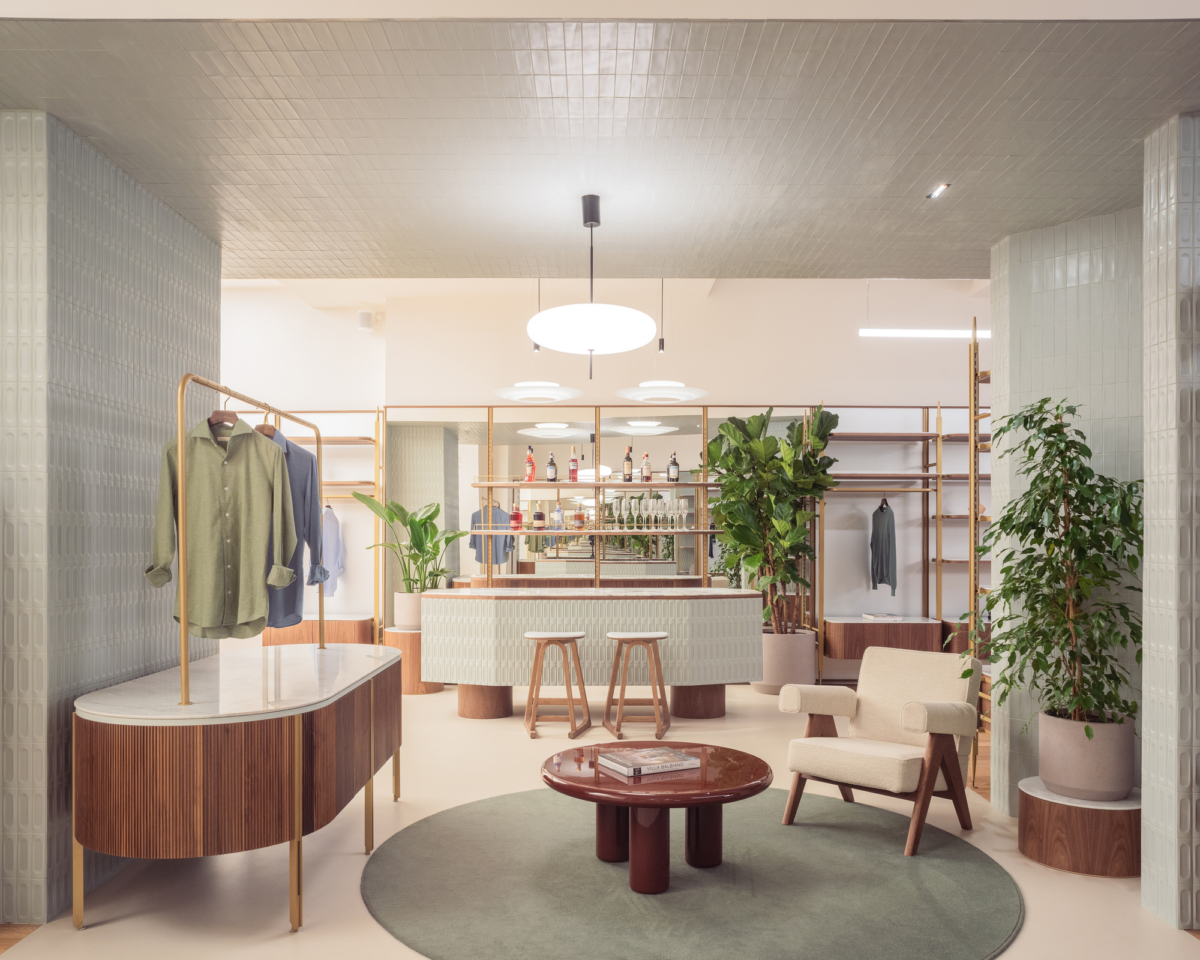
Each new store is uniquely tailored to its locale, while maintaining the brand’s signature architectural elements—many of which are designed by Italian architects Davide Barreri and PlaC Studio. The boutiques often include lifestyle elements such as aperitivo bars and lounge areas to create a warm, welcoming atmosphere that reflects the Italian concept of la dolce vita.
Experiential Retail with a Local Touch
As part of its omnichannel retail approach, Luca Faloni views brick-and-mortar stores as an essential brand-building tool. The in-store experience is designed not only to showcase products but to build community and offer hospitality in keeping with Italian traditions. Boutiques are intended to feel more like homes than stores, with soft lighting, artisanal furnishings, and a curated sense of place.
Design elements are also adapted to each market. For instance, the Munich location incorporates copper accents reflecting the city’s architectural heritage, while the Miami boutique embraces a more colourful palette suited to South Florida’s tropical vibrancy. It remains to be seen what aesthetic the Toronto store will adopt, though it is expected to honour both the city’s cosmopolitan edge and Luca Faloni’s Italian heritage.
Luca Faloni’s decision to enter the Canadian market aligns with its broader strategy of establishing a curated presence in select global cities. The Toronto opening reflects confidence in the Canadian luxury market, especially within a neighbourhood that continues to attract a mix of legacy luxury and innovative premium brands.
“Kick off Canada Day celebrations supporting your local, independent businesses. We’ve seen a very strong “Buy Canada” sentiment during the first half of the year. With continuing tariff threats, supply chain challenges and cost uncertainty, we want to make sure that momentum carries through the second half of the year. There’s no better way to support Canadian than to shop at your local Canadian-owned small businesses,” said Ryan Mallough, CFIB’s vice-president of legislative affairs.
Ryan Mallough
New CFIB data shows that since the start of the trade war, nearly four in ten (39%) small businesses have seen increased sales of Canadian/locally made products – especially in the retail (44%), hospitality (43%) and wholesale (41%) sectors. Businesses that actively promote these products were more than twice as likely to see growth in sales of Canadian/locally made products (55% vs 23%).
The CFIB is Canada’s largest association of small and medium-sized businesses with 100,000 members across every industry and region.
Each week, one supporter and the business they thanked will be drawn as winners. The supporter will receive a $1,000 cash prize to spend locally, and a Big Thank You gift box filled with products from small businesses across Canada and the contest’s sponsors. The business will receive $3,000, a gift box, and a free one-year CFIB membership. An additional $3,000 bonus prize will go to the business with the most nominations at the end of the contest.
Photo: cottonbro studio
“Small businesses support a whole local ecosystem. They employ local residents, support local causes and source their goods and services from other local businesses,” added Mallough. “Sixty-six cents of every dollar spent local, stays local. Every time Canadians choose to shop at a small business, they strengthen their communities.”
To help businesses get involved, CFIB has created free digital toolkits, with printable posters and customizable social images to promote the contest and shopping local. For more information on how to support small businesses, check out SmallBusinessEveryDay.ca.