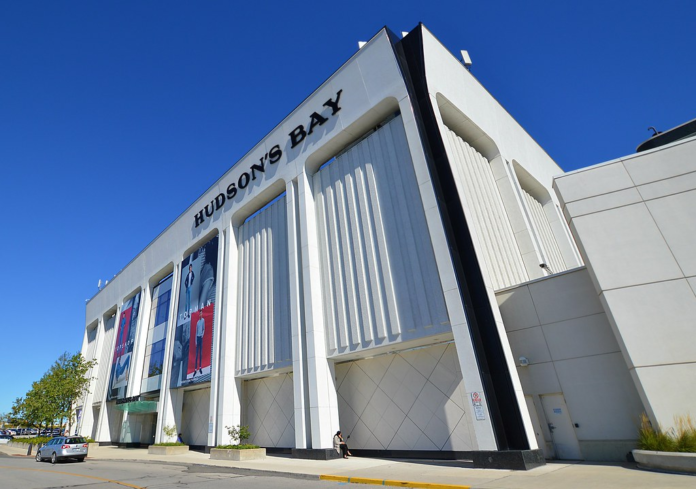
Hudson's Bay store at CF Carrefour Laval in Montreal, part of the RioCan JV. Image: Apple Maps
Toronto-based RioCan Real Estate Investment Trust has released an official statement following the March 2025 decision by the Hudson’s Bay Company (HBC) to file for creditor protection under the Companies’ Creditors Arrangement Act (CCAA). The filing affects several joint venture properties shared between the two firms and has prompted RioCan to outline both the financial implications and the company’s proactive strategy to manage the fallout.
RioCan confirmed that its exposure to the Hudson’s Bay situation remains limited in the context of its broader portfolio. As of December 31, 2024, the carrying value of the RioCan-HBC joint venture (JV) amounted to $249.0 million, or approximately 3.3% of RioCan’s total equity.
The joint venture contributed $23.7 million in net operating income (NOI) and $13.6 million in funds from operations (FFO) to RioCan in 2024 on a proportionate share basis. While significant, these figures represent a relatively small slice of RioCan’s diversified real estate operations.
Credit Support and Security Interests
RioCan noted that it had provided a total of $88.7 million in credit support to HBC through the JV. This included a $55.0 million guarantee on a loan and $33.7 million in mezzanine financing. In return, the REIT secured multiple safeguards: it holds a security interest in various joint venture properties and received financial benefits including $6.6 million in fees related to the guarantee and loan arrangements, and $3.3 million in interest income during 2024.
According to the company, these protections place RioCan in a better position to recover value if HBC’s restructuring results in changes to ownership or occupancy of any affected JV properties.
Impacted Real Estate: Prime Canadian Properties at Stake
The RioCan-HBC joint venture portfolio comprises 13 retail locations in key Canadian markets, many of which are considered flagship properties for both companies. These include:
Downtown properties in Montreal, Vancouver, Calgary, and Ottawa.
Suburban assets located in leading shopping centres such as: Yorkdale Shopping Centre (Toronto), Scarborough Town Centre (Toronto), Square One Shopping Centre (Mississauga), CF Carrefour Laval (Quebec), Promenades St-Bruno (Quebec), Devonshire Mall (Windsor).
These properties are considered highly desirable, offering strong foot traffic, urban density, and long-term redevelopment potential, said RioCan.
Downtown Montreal flagship Hudson’s Bay store on April 24, 2025. The building started as a location for the Henry Morgan department store chain, which in decades past operated as an upscale business. Photo: Carl Boutet
Strategic Outlook: Redevelopment and Recovery Plans
RioCan expressed confidence in its ability to manage the evolving situation. In the statement, the REIT acknowledged its disappointment with the CCAA filing but underscored its focus on leveraging internal capabilities to protect and grow asset value. “We will pursue all available business and legal avenues to protect the interests of our unitholders and stakeholders,” the company said.
RioCan emphasized its extensive experience in managing vacant spaces and transforming retail properties for alternative or mixed-use applications. With a well-documented track record of redevelopment, the company suggested that the impacted sites may offer new opportunities, depending on how HBC’s restructuring unfolds.
Strength of the Core Business
Despite the uncertainty surrounding the HBC joint venture, RioCan reassured investors that its core operations remain robust. The company highlighted its “strong core business, solid balance sheet, and experienced management team” as critical assets that will help it weather any near-term turbulence associated with HBC’s insolvency proceedings.
The message to stakeholders was clear: while RioCan is exposed to the situation, its diversified portfolio and strategic foresight position it well to absorb and adapt to the impact.
“Grocery anchored real estate has proven its resiliency through various economic cycles, and we continue to have great conviction in the ability of this asset class to perform in today’s economic environment,” said Blair Welch, Chief Executive Officer of Slate Grocery REIT.
“Our portfolio continues to deliver healthy growth in same-property net operating income, driven by consistently strong leasing activity at double-digit spreads. Our team achieved record high renewal spreads in the first quarter, underscoring the growth embedded in our portfolio of below market rents. With new supply in the grocery-anchored sector expected to remain constrained in the near to medium term, we believe our portfolio is well positioned to drive stable growth and long-term value creation.”
The CEO’s letter to unitholders for the quarter can be found here.
Slate’s Q1 Highlights
Same-property Net Operating Income (“NOI”) increased by 4.3% or $6.8 million on a trailing twelve-month basis, adjusting for completed redevelopments, driven by several consecutive quarters of strong leasing volumes at attractive spreads
The REIT completed 222,886 square feet of total leasing in the quarter; renewal spreads reached a record high at 17.1% above expiring rents, and new deals were completed at 22.2% above comparable average in-place rent
Portfolio occupancy remained stable at 94.4%, as at March 31, 2025
The REIT’s average in-place rent of $12.72 per square foot remains well below the market average of $23.85, providing significant runway for continued rent increases
The REIT has only $179.4 million of debt maturing in 2025, which represents 12.9% of the REIT’s total debt
The REIT financed $17.4 million of debt subsequent to quarter end, with productive discussions underway to refinance additional upcoming maturities
The REIT’s current portfolio valuation continues to provide significant positive leverage and embedded NOI growth
The REIT’s units continue to trade at a discount to net asset value, presenting a compelling investment opportunity for unitholders looking for an attractive total return
Slate Grocery REIT is an owner and operator of U.S. grocery-anchored real estate. The REIT owns and operates approximately $2.4 billion of critical real estate infrastructure across major U.S. metro markets.
“Hudson’s Bay Company ULC (HBC), the primary tenant of the RC-HBC JV, filed for creditor protection on March 7, 2025 under the Companies’ Creditors Arrangement Act (CCAA). Through its investment in the RC-HBC JV, RioCan indirectly holds a 22% interest in ten locations where HBC is the sole tenant, and an 11% interest in two multi-tenanted locations (the RC-HBC JV owns 50% of these two multi-tenanted locations and RioCan owns 50% directly). Please refer to RioCan’s Press Release dated March 18, 2025,RioCan Real Estate Investment Trust Provides Update on Hudson’s Bay Company’s CCAA Filing, which provides details of RioCan’s balance sheet and FFO exposure.
“A court order dated March 21, 2025 requires HBC to pay $7.0 million of the approximate $10.0 million (at 100%) of monthly occupancy rent due to the RC-HBC JV. This payment provides sufficient cash flow to cover expenses, debt service obligations and fees, including fees and debt service that is payable to RioCan. The remaining amount will be accrued with a charge against the HBC estate, ranking ahead of the pre-filing creditors. RioCan has recorded a provision of approximately $1.0 million (at RioCan’s share) for the uncollected portion.
“RioCan also evaluated the carrying value of its net investment in the RC-HBC JV and recognized $208.8 million of Total RC-HBC JV Valuation Losses for the three months ended March 31, 2025. These valuation losses were based on management’s best estimate using the information available to the Trust and include the assumption of re-leasing the investment properties to new tenants at market rents below existing rents at sole tenant locations.”
RioCan is one of Canada’s largest real estate investment trusts. It owns, manages and develops retail-focused, mixed-use properties located in prime, high-density transit-oriented areas where Canadians want to shop, live and work. As at March 31, 2025, its portfolio is comprised of 177 properties with an aggregate net leasable area of approximately 32 million square feet (at RioCan’s interest).
As for its Q1 financial results, RioCan noted these highlights:
Strong leasing demand generated new leasing spreads of 18.3%; blended leasing spreads of 17.5%
Commercial Same Property NOI increased to 3.6%
96% completion of expected First Quarter condominium interim closings to date; cumulative 97% success rate since Q4 2024
RioCan Living asset monetization strategy proceeding with deals for the sale of four additional assets
Jonathan Gitlin
“RioCan’s major-market, necessity-based portfolio delivered strong operational and financial results in the first quarter of 2025, despite significant global economic volatility and short-term challenges presented by HBC’s CCAA filing. We continue to successfully deliver on our strategy to monetize our RioCan Living portfolio and met our interim condominium closing targets for Q1”, said Jonathan Gitlin, President and CEO of RioCan.
“We remain focused on executing our strategy to drive growth and responsibly managing capital to maximize long-term value for our Unitholders. With a proven track record and experienced team, we are well positioned to successfully navigate any economic environment. With respect to HBC, we will be disciplined in our approach, and we are committed to protecting the interests of our Unitholders.”
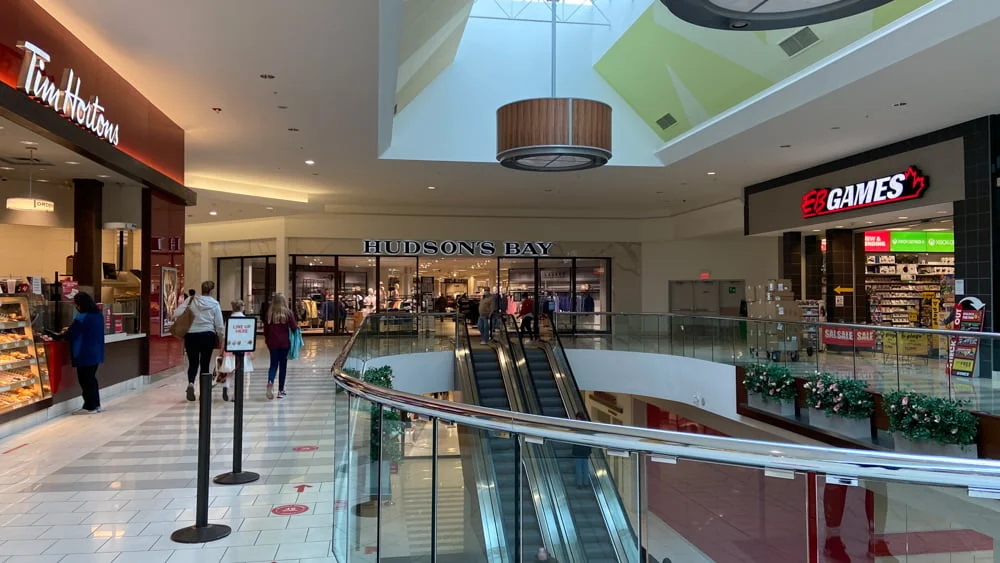
Former EB Games at Yorkdale in Toronto, September 2021. Photo: Dustin Fuhs
A familiar name in Canadian gaming is making a comeback. GameStop Canada, previously known as Electronics Boutique (EB Games), is being revived under its original branding following a major acquisition. Stephan Tetrault, a well-known French-Canadian entrepreneur with deep roots in the collectibles and entertainment sectors, has officially acquired Electronics Boutique Canada Inc. from GameStop Global Holdings S.A.R.L.
With the acquisition, the retailer will now relaunch under the name EB Games Canada, a brand many Canadians still associate with their formative gaming years.
The change marks a significant pivot for the retailer and signals a broader revitalization of gaming retail in Canada. The transition, already underway, includes a full brand refresh, with updated store signage, a redesigned website, and new digital assets being rolled out nationwide in the coming months.
“This isn’t just a business decision—it’s about bringing something back that Canadians truly loved,” said Stephan Tetrault, Owner and CEO of the newly rebranded EB Games Canada. “We’re going to build something special here, with community, nostalgia, and innovation at its heart.”
Tetrault brings with him years of experience in the entertainment and collectibles space and is aiming to restore a stronger connection between Canadian consumers and the retail gaming environment. The move is also seen as a strategic effort to create a more tailored and localized approach compared to the company’s U.S. counterpart.
A Focus on Canadian Gamers
The original EB Games branding had been replaced in 2021 when GameStop began standardizing its global operations. However, the shift never fully resonated with Canadian consumers, many of whom continued to refer to the stores as EB Games long after the name change. The new ownership is seizing this opportunity to re-establish a brand identity rooted in familiarity and local loyalty.
“We want EB Games Canada to be more than a store—we want it to be the hub for gaming and fandom culture across Canada,” said Jim Tyo, President of GameStop Canada. “This is about passion, and that’s what’s going to drive every decision we make.”
According to the company, Canadians can expect a stronger focus on community-based retail moving forward. Plans for the rebooted EB Games include expanded product offerings, deeper integration with pop culture properties, and in-store events designed to appeal to collectors and long-time gaming fans.
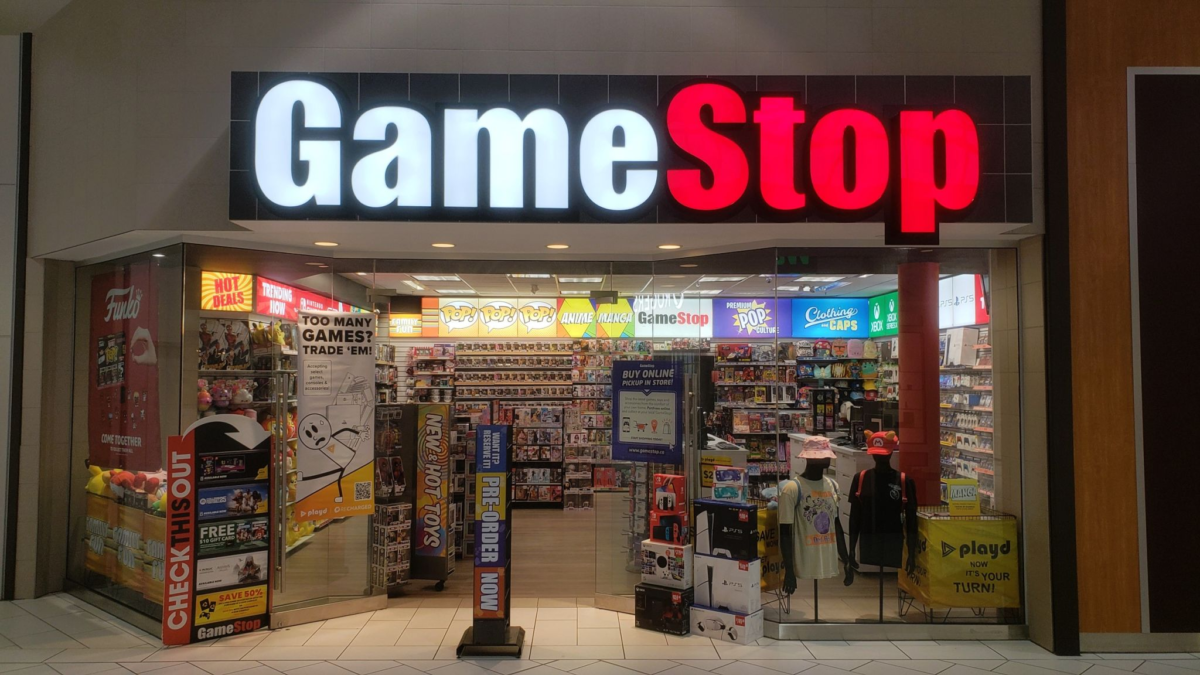
GameStop store at Mayfair Shopping Centre in Victoria BC. Photo: GameStop Canada/LinkedIn
A Retail Landscape in Flux
The relaunch of EB Games Canada comes at a time of significant transition for its former parent company, GameStop Corp. The U.S.-based retailer, headquartered in Grapevine, Texas, has faced several years of declining revenue and store closures as the industry increasingly shifts toward digital game distribution.
Founded in 1984, GameStop experienced a meteoric rise in the 2000s, reaching a peak in 2015 with more than 6,000 locations globally and annual revenue exceeding $9 billion. However, competition from digital platforms such as Xbox Live, PlayStation Network, Nintendo eShop, and Steam diminished the demand for physical game purchases.
GameStop attempted to diversify its business by venturing into collectibles and digital assets, including a short-lived NFT marketplace, which shut down in February 2024 amid regulatory uncertainty and operational difficulties.
The company also became a household name in early 2021 when it was caught in a stock market frenzy spurred by Reddit users on the forum r/wallstreetbets. This resulted in massive volatility in GameStop’s share price and drew global media attention.
More recently, GameStop closed nearly 600 stores across the United States in 2024 and is planning additional closures. The company has also explored ventures such as cryptocurrency investment as it looks to redefine its position in the evolving gaming ecosystem.
GameStop store at Mayfair Shopping Centre in Victoria BC. Photo: GameStop Canada/LinkedIn
New Leadership, New Strategy
The acquisition by Stephan Tetrault introduces new leadership and a new direction for the Canadian division. By separating from the broader operational and financial challenges facing GameStop Corp., EB Games Canada is positioning itself to serve a specific and loyal customer base with targeted initiatives.
Tetrault was supported in the acquisition process by HNA, which acted as mergers and acquisitions and financial advisors.
Former EB Games store at SouthCentre Mall in Calgary in 2021. Photo: Jessica Finch
Continued Presence Across Canada
With more than 185 locations across the country, EB Games Canada remains one of the largest gaming and collectibles retailers in the market. The company is headquartered in Brampton, Ontario, and has built its reputation as a “community specialist,” offering a mix of gaming software, hardware, accessories, and a growing selection of pop culture-related merchandise.
As the rebranding takes hold, the company will maintain its national footprint while refreshing stores with new branding and customer engagement strategies.
According to the company, the rebrand is more than symbolic. It reflects a commitment to investing in the customer experience, leveraging EB Games’ legacy while embracing current trends in fandom and gaming culture.
In the ever-evolving world of retail, entrepreneurs are constantly seeking innovative ways to diversify their income streams. One platform that has garnered attention for its structured approach to merchant services is CashSwipe. Founded by Paul Alex Espinoza, CashSwipe offers a comprehensive solution for individuals looking to establish their own credit card processing businesses.
A Vision Rooted in Real-World Experience
Paul Alex Espinoza’s journey from law enforcement to entrepreneurship is a testament to his resilience and vision. Working over 80 hours a week as a detective in Oakland, California, Paul realized that his demanding job left little time for family and personal pursuits. This realization prompted him to explore side ventures that could provide more flexibility and financial stability.
His foray into the Automated Teller Machine (ATM) industry marked the beginning of his entrepreneurial path. Within 18 months, he had successfully established a profitable ATM business, which led to the creation of ATMTogether.com—a platform designed to assist others in launching their own ATM ventures.
Building on this success, Paul expanded his focus to the broader merchant services sector, leading to the inception of CashSwipe. The platform aims to simplify the process of starting a credit card processing business by providing a “done-for-you” model that includes verified merchant locations, credit card terminals, and comprehensive support.
A Structured Approach to Merchant Services
CashSwipe’s business model is designed to cater to individuals at various stages of their entrepreneurial journey. The platform offers tiered business packages—Merchant Rookie, Hero, Elite, and Legend—each tailored to meet different experience levels and financial goals.
Clients receive access to a range of resources, including branded pitch kits, ongoing mentorship, and full customer support. The CashSwipe team handles critical aspects such as merchant onboarding, terminal setup, and technical support, allowing clients to focus on building relationships and expanding their businesses.
This structured approach has proven effective, with over 5,000 small businesses currently utilizing terminals placed by CashSwipe clients across the U.S. and Canada. The platform’s emphasis on hands-on support and real-world application sets it apart from other programs in the industry.
Mentorship: The Cornerstone of Success
One of the standout features of CashSwipe is its mentorship community. Clients are not left to navigate the complexities of the merchant services industry alone. Instead, they are paired with experienced mentors who provide guidance and support throughout their entrepreneurial journey.
Many of CashSwipe’s top mentors are former clients who have successfully built their own businesses using the platform’s model. Their firsthand experience and insights offer invaluable support to newcomers, fostering a sense of community and shared purpose.
Weekly training calls, private masterminds, and a growing online community keep CashSwipe clients engaged and motivated. This emphasis on mentorship and continuous learning ensures that clients are well-equipped to navigate the challenges of building a business in the merchant services sector.
Expanding Horizons
Since its inception, CashSwipe has experienced significant growth. The platform has expanded its reach beyond the U.S. and Canada, with plans to enter new markets, including Puerto Rico and Latin America. This expansion reflects the increasing demand for accessible and structured entrepreneurial opportunities in the merchant services industry.
Paul Alex’s commitment to empowering others extends beyond business. He is developing a Legacy Scholarship Fund aimed at providing entrepreneurship training and seed capital to the children of single parents and first responders. This initiative underscores his dedication to creating lasting impact and fostering the next generation of entrepreneurs.
CashSwipe‘s approach to merchant services offers a structured and supportive pathway for individuals seeking to establish their own businesses. By combining a proven business model with comprehensive mentorship and real-world application, CashSwipe is empowering a new generation of retail entrepreneurs to take control of their financial futures.
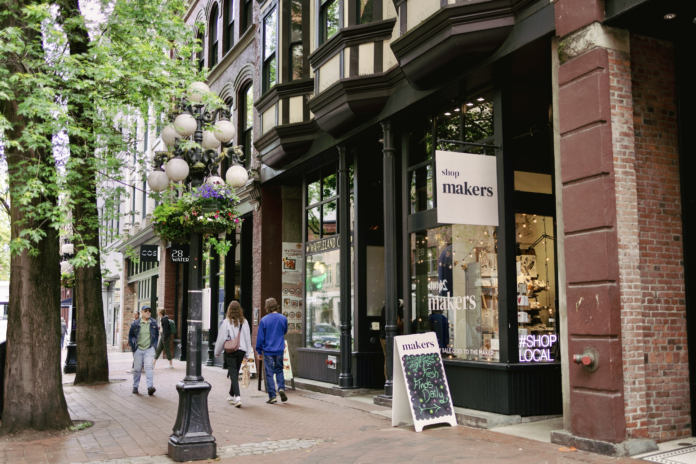
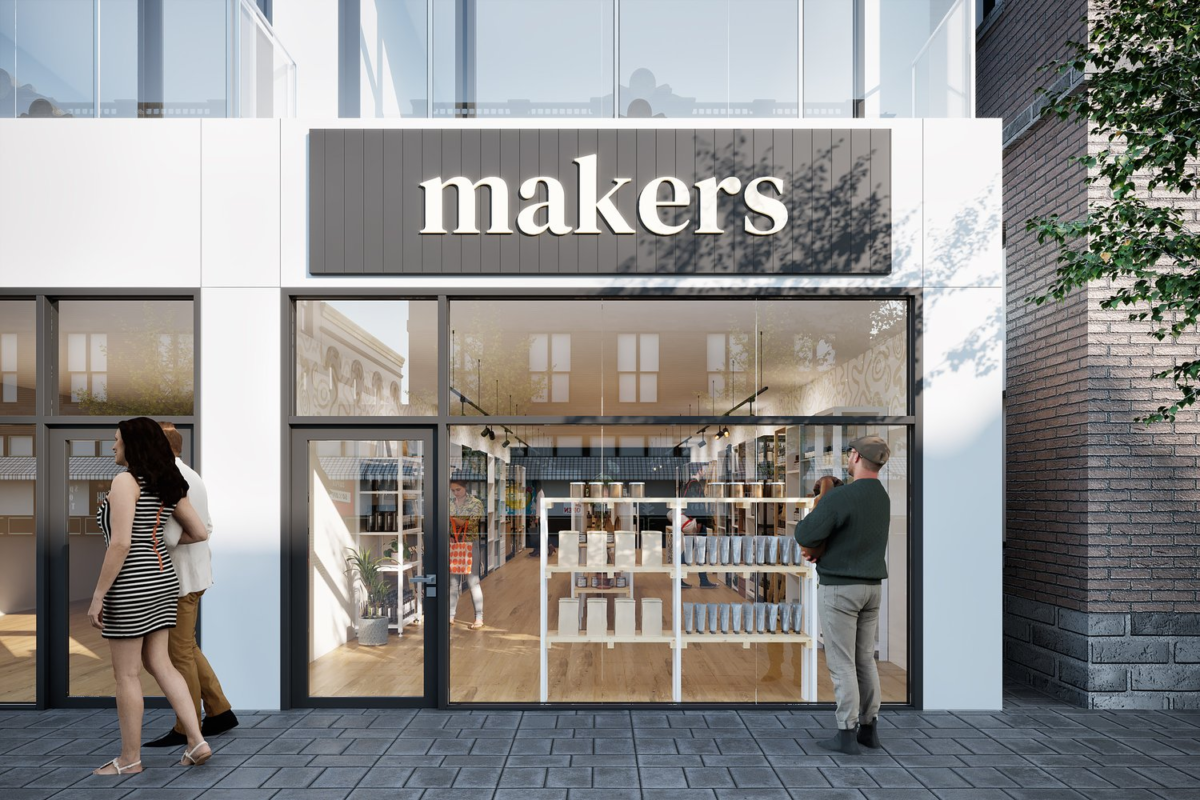
Makers on Water Street in Gastown, Vancouver. Photo: Makers
Canadian retailer Shop Makers is marking a milestone in its rapid expansion across the country. The company recently opened its 19th location at Orchard Park Shopping Centre in Kelowna, British Columbia, strengthening its mission to support Canadian artisans and connect communities with locally crafted goods.
Co-founders Adam Sharanewych and Veronica Kos said the Kelowna launch was a success despite the usual last-minute preparations.
“Like all of our store openings, a little bit of a mad dash and scramble, but we were able to get open, said Sharanewych. The response was really strong. The Kelowna community was really excited to see a Makers store open up, and the feedback was amazing.”
The Kelowna opening underscores a growing appetite among Canadians for shopping locally and supporting small businesses — a movement that Shop Makers has been at the heart of since its founding in 2020.
Co-founders Adam Sharanewych and Veronica Kos
Born from the Pandemic: Shop Makers’ Origin Story
Shop Makers was created at the height of the pandemic when retail shutdowns devastated the artisan community. Sharanewych, who had been building a Canadian alternative to Etsy, saw an urgent need for artisans to find physical retail spaces when craft fairs and markets were canceled.
At the same time, Kos, who was working in the travel industry, found herself with more availability as global travel ground to a halt.
“We said, ‘Let’s just try a brick-and-mortar pop-up,” said Sharanewych. “Covid made it difficult to shop in person, but it also amplified the importance of shopping local.”
Their first store opened in November 2020 in Vancouver’s Gastown as a two-month pop-up — and it quickly turned into a permanent business.
“Despite all the awkwardness of shopping during Covid, people were really happy to actually have something real-world they could go out and enjoy,” said Sharanewych.
Kos added, “There was actually an influx of people who started a side business or a craft of some kind during Covid. We had more vendors but fewer places to sell, so it was a really unique time.”
Makers location. Photo: Makers
A Unique Retail Model That Empowers Artisans
What sets Shop Makers apart is its innovative business model. Artisans rent shelf or display space for a flat fee — and keep 100% of their sales. “The artisans set their prices. It’s not like traditional retail where there’s a huge markup,” said Kos. “If someone thinks a price is high, it’s because that’s what the artisan needs to survive — to pay rent, buy materials, and make a living.”
Each Makers location is carefully curated by local store managers who recruit artisans based on community demand.
“Our model empowers store managers to really understand their neighborhood demographics,” said Sharanewych. “If customers keep asking for incense, and we don’t have it, the manager knows to find an artisan who can fill that gap.”
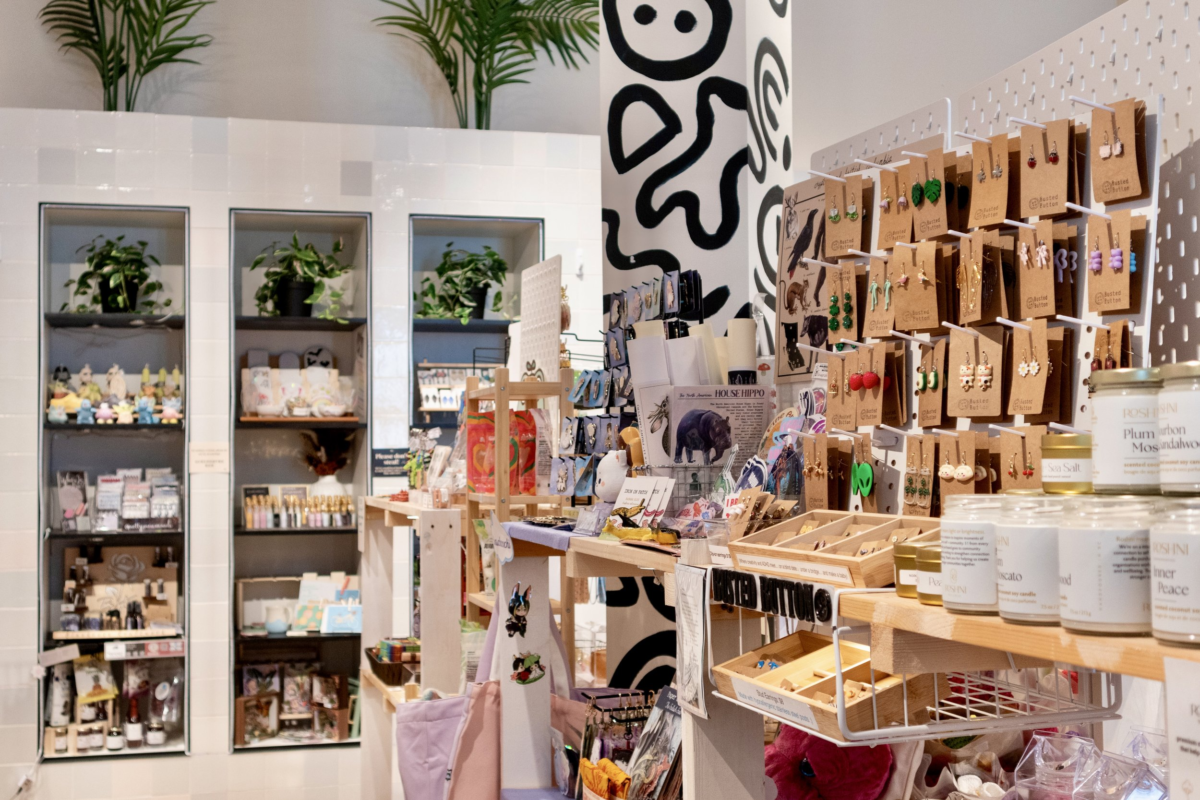
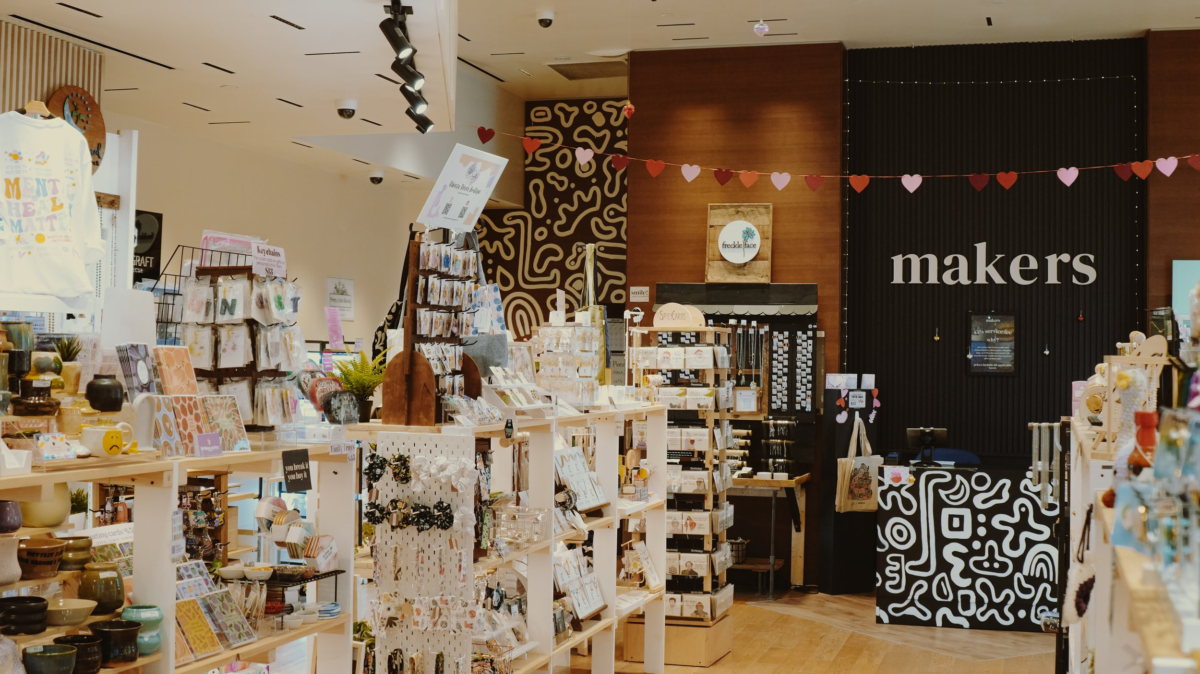
The stores themselves are small, typically between 1,000 and 1,800 square feet, but packed with an array of handmade goods: jewelry, home décor, stationery, prints, ceramics, candles, clothing, local foods, and more.
“Walking into a Makers store is like walking into a hyper-condensed craft fair,” said Sharanewych. “The scent when you walk in — a mix of candles and soaps — is unforgettable.”
Supporting Canadian-Made Products — and Canadian Communities
With growing conversations around tariffs and global supply chain disruptions, the appeal of supporting Canadian-made goods is stronger than ever.
“People are conscious now,” said Sharanewych. “They want their dollars to stay in Canada. Even if a Canadian product is a little more expensive than something from overseas, people are willing to make that choice.”
about 85% to 95% of the products sold at each Shop Makers store are from artisans within driving distance of that location. Some products come from across provinces to ensure diverse offerings, but the focus remains overwhelmingly local.
“Money that leaves Canada doesn’t always come back,” Sharanewych emphasized. “Supporting local is supporting the economy directly.”
Makers location. Photo: Makers
Expansion Across Provinces: Alberta, Ontario, and Beyond
Initially focused on British Columbia, Shop Makers expanded into Alberta in late 2023, opening locations in Edmonton, Calgary, and elsewhere. In 2024, the retailer accelerated its growth, launching four new stores in Ontario alongside additional Alberta openings.
“We’ve been really happy with the response,” said Sharanewych. “Sales have been strong, and the quality of artisans we’ve been able to bring in is incredible.”
Looking ahead, Shop Makers is eyeing expansion into Quebec — though the founders acknowledge the additional complexity of entering that market due to language laws and regulatory requirements.
“Quebec would be huge for us,” said Sharanewych. “There’s so much talent and culture there. We’d love to be part of that.”
Other future targets include Winnipeg’s CF Polo Park, Halifax, and other vibrant urban centres across Canada.
“Once we open in Halifax, we’ll really feel like we’ve covered coast-to-coast,” Kos added.
Makers location in the Beaches, Toronto. Photo: Makers
Streetfront vs. Shopping Centre Locations
Shop Makers’ store locations reflect a strategic mix of streetfront and shopping centre sites.
“Shopping centres offer high foot traffic, but street locations give us a community feel,” said Sharanewych.
“Being on streets like Robson in Vancouver or Queen Street in the Beaches in Toronto helps build our brand coolness.”
Choosing the right space is critical. Shop Makers looks for units where the floor space is maximized for product displays, minimizing the need for back rooms.
“We need all our square footage on the floor,” explained Sharanewych. “That way, artisans can get the best visibility for the lowest possible rent.”
Building a Sustainable, Slow Retail Future
The Shop Makers model fits into broader sustainability trends, promoting slower, more thoughtful consumerism.
“A lot of our vendors care deeply about sustainability — in the materials they use and their production methods,” said Kos.
The founders often educate shoppers about the real cost of handmade goods.
“If you can get a mug for $3 somewhere, somebody’s being cut out of that process,” Kos said. “When you buy from an artisan, you’re paying for the craft, the materials, and the time that someone put into creating it by hand.”
Sharanewych added, “This isn’t about bulk discount markups. It’s about helping artisans survive and thrive.”
Makers location. Photo: Makers
E-Commerce Takes a Back Seat to In-Person Shopping
Interestingly, despite its roots in e-commerce, Shop Makers has intentionally stayed focused on physical retail.
“We’ve almost reached the peak of e-commerce for convenience items,” said Sharanewych. “But for handmade products, people want to touch, feel, and smell them.”
He added, “Managing an e-commerce platform with 1,000 different artisans would be a logistical nightmare. In-person retail just makes more sense for what we offer.”
Future Plans: Growing Thoughtfully
While Shop Makers is ambitious, its founders are committed to thoughtful, sustainable growth.
“Our goal is about 30 stores across Canada,” said Sharanewych. “After that, who knows? Maybe North America.”
For now, the focus remains firmly on Canada — supporting artisans, connecting communities, and fostering a more conscious way of shopping.
“We want to be that bridge between makers and the community,” said Kos. “Every sale helps someone’s small business survive — and that’s something really powerful.”
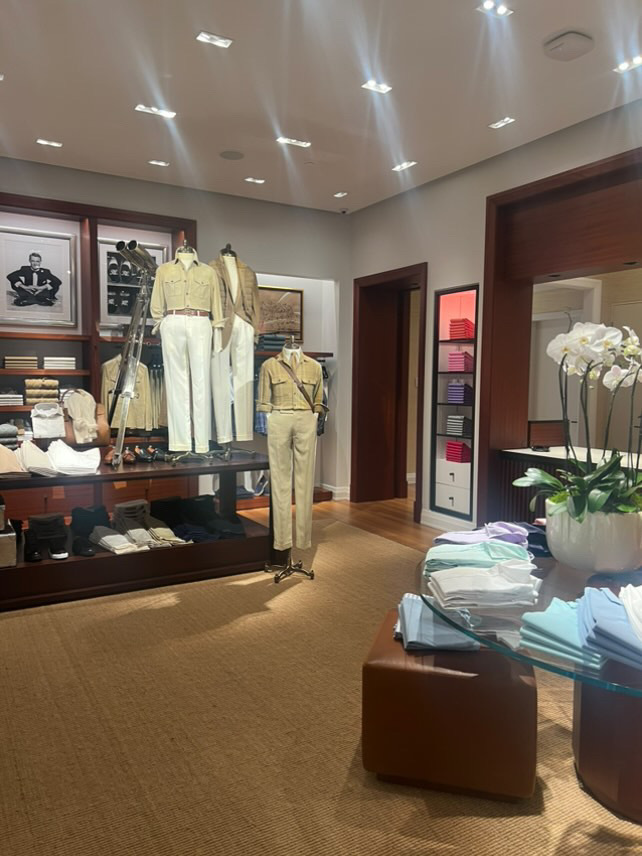
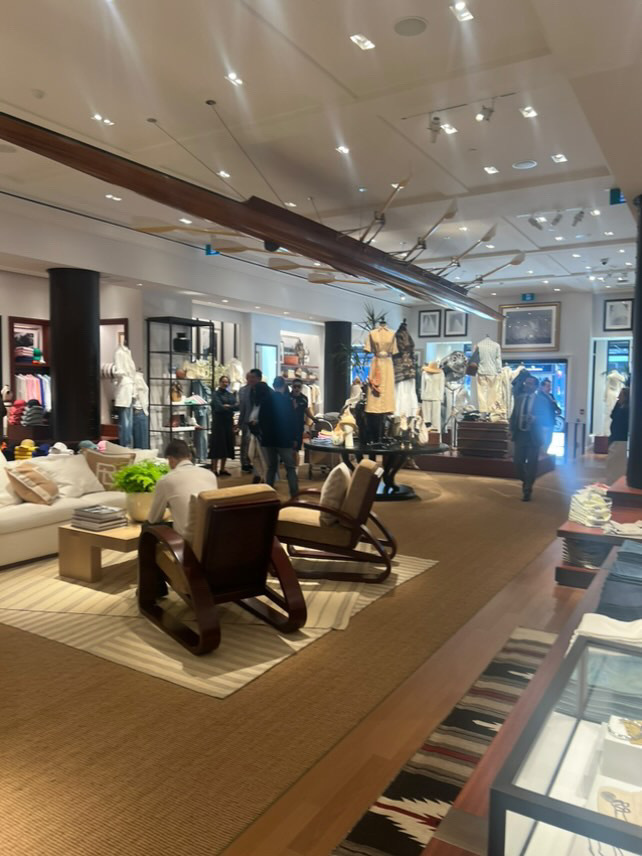
Ralph Lauren at 1024 Alberni Street in Vancouver. Photo: Martin Moriarty
New York-based fashion and lifestyle brand Ralph Lauren has opened its second full-priced store in Canada, marking a milestone in the brand’s Canadian expansion strategy. The new boutique, which opened last week, is located at 1024 Alberni Street in downtown Vancouver.
Spanning approximately 5,500 square feet, the newly launched store occupies part of the main floor of a space that had previously housed a Brooks Brothers location. The Vancouver flagship mirrors the scale of Ralph Lauren’s first full-priced Canadian store, which opened in September 2023 at Toronto’s Yorkdale Shopping Centre.
A Strategic Move on Vancouver’s Luxury Corridor
The new Ralph Lauren store is situated in what many now refer to as Vancouver’s ‘Luxury Zone’—a retail corridor that has seen a dramatic transformation over the past decade. Alberni Street is lined with some of the world’s most prestigious fashion and jewellery brands, including Prada, Jimmy Choo, Panerai, Van Cleef & Arpels, and Rolex. Adjacent streets add further cachet with names such as Louis Vuitton, Hermès, Dior, and Cartier.
The Alberni Street lease deal was brokered by Casin Parr and Trevor Thomas of JLL on behalf of Ralph Lauren. Mario Negris and Martin Moriarty of Marcus & Millichap Canada represented the landlord.
This latest addition to Alberni Street’s high-end retail lineup comes as competition intensifies from Oakridge Park, a luxury retail and mixed-use development on Vancouver’s west side. Oakridge Park is expected to open in the fall of this year and will feature a broad cluster of luxury tenants poised to compete directly with downtown Vancouver for consumer dollars.
Ralph Lauren at 1024 Alberni Street in Vancouver. Photo: Martin Moriarty
Part of a Broader Retail Expansion Strategy
Ralph Lauren’s Canadian expansion is part of the company’s global growth strategy known as “Next Great Chapter: Accelerate.” The plan aims to drive long-term, sustainable growth and revitalize the brand’s positioning in key international markets, including North America, Europe, and Asia.
In line with this strategy, Ralph Lauren has been opening flagship and boutique stores while also investing in e-commerce and wholesale partnerships. In October 2023, the company launched RalphLauren.ca, giving Canadian consumers access to its full portfolio of brands including Purple Label, Ralph Lauren Collection, Polo Ralph Lauren, Double RL, and Lauren by Ralph Lauren. The site also features apparel, footwear, accessories, and home goods for men, women, and children.
Wholesale Partnerships and the Hudson’s Bay Closure Impact
In addition to full-price boutiques and e-commerce, Ralph Lauren maintains a strong presence in Canada through its 12 outlet stores and various wholesale partnerships. The brand’s products are carried at major retailers such as Hudson’s Bay, Sporting Life, and Harry Rosen.
However, the pending closure of Hudson’s Bay stores will represent a significant loss of distribution for Ralph Lauren in Canada. Hudson’s Bay has long served as a key wholesale partner, offering in-store Polo Ralph Lauren shops and a variety of Ralph Lauren sub-brands. With the department store’s wind-down, Ralph Lauren may look to accelerate its direct-to-consumer footprint in Canada.
Ralph Lauren at 1026 Alberni Street in Vancouver. Photo: Martin Moriarty
A Rich Canadian Retail History
Ralph Lauren’s recent store openings in Canada mark a return to its roots in the country. The brand once had a widespread presence across Canadian cities under its Polo Ralph Lauren banner. Store openings began in the early 1980s and expanded into numerous urban centres.
In Montreal, Ralph Lauren stores once operated at Westmount Square and along Sherbrooke Street West. Ottawa had locations at the ByWard Market and Bayshore Centre. Toronto featured stores at Hazelton Lanes and Sherway Gardens. In Western Canada, Ralph Lauren locations included Jasper Avenue and later West Edmonton Mall in Edmonton, Banker’s Hall and Mount Royal Village in Calgary, and high-traffic tourist destinations in Banff and Whistler. Victoria, BC also hosted a store on Government Street.
Downtown Vancouver was a focal point for the brand during the late 1980s and early 1990s. A store on Robson Street and a prominent location at 375 Water Street in Gastown helped define Ralph Lauren’s early footprint in the city. In 1989, the Gastown space was converted into the first ‘Polo Country Store’—a concept that did not ultimately succeed but remains a notable chapter in the brand’s experimentation with retail formats.
While the GST/HST holiday prevented foodservice bankruptcies and boosted sales and employment in the first two months of 2025, the tariff war has thrown the industry into uncharted waters, according to Restaurants Canada’s latest Quarterly Report released on Monday.
Restaurants Canada’s updated 2025 commercial foodservice sales forecast is now in negative territory.
Kelly Higginson
“We now have definite proof that the GST/HST holiday boosted sales and created jobs in the foodservice sector, while preventing bankruptcies,” said Kelly Higginson, President and CEO of Restaurants Canada. “The new federal government can protect Canadian jobs and businesses in every community across the country and help Canadians with affordability by removing sales tax from all food permanently. Taxing a necessity like food is simply a bad approach to taxation.”
In addition to making all food and alcohol sold at restaurants tax-free, Restaurants Canada is advising the new federal government to strengthen the sector by reducing interprovincial trade barriers, reducing EI payroll taxes, and exempting food and food-safe packaging from retaliatory tariffs.
“We face significant challenges, both as an industry and as a country, so government needs to use all the tools at its disposal, including tax policy. We’re eager to work with Prime Minister Mark Carney and his new government on policies that enable the foodservice industry to grow its economic impact, create stable and rewarding jobs for Canadians and feed communities across the country,” added Higginson.
Quarterly Report at a glance:
Restaurants Canada expects annual commercial foodservice sales to contract between 0.4% and 1.5% in 2025 and between 0.6% and 1.4% in 2026, depending on how the tariff dispute with the U.S. evolves. Pre-trade war, the forecast for the foodservice industry was a 0.8% growth rate for 2025 and 1% growth in 2026.
Commercial foodservice sales are expected to reach between $98 billion and $99 billion in 2025, down from the pre-trade war forecast of $100 billion.
If the trade war lasts a year or longer, 71% of restaurant chains say they would eliminate non-essential spending, 63% would increase menu prices, and 50% would delay renovations or capital investments, actions which will have a significant negative spinoff effect on the economy.
The GST/HST holiday provided a strong boost to the industry: based on data from Statistics Canada, commercial foodservice sales rose by a robust 7.5% in January. Even after adjusting for menu inflation, real sales rose by 4.3%, the highest real growth since April 2023.
In the first two months of 2025, there were 121 restaurant (and accommodation) bankruptcies in Canada compared to 239 in the first two months of 2024. While this is higher than pre-pandemic levels, it represents a 50% year-over-year decline.
Employment in the restaurant industry rose to 1,180,000 jobs in February, the highest level since the start of the pandemic. Overall, employment in the restaurant industry grew by 5.6% in the first quarter of 2025 compared to the first quarter of 2024, despite that being historically the slowest time of the year for the industry.
Historically low consumer confidence, rising unemployment and stagnant population growth as a result of Canada’s shifting immigration policies are all factors that will hinder foodservice sales in the coming years.
Restaurants Canada is a national, not-for-profit association advancing Canada’s diverse and dynamic foodservice industry. Restaurants are a $120 billion industry employing nearly 1.2 million Canadians and is the number one source of first-time jobs in Canada.
As U.S. trade tensions mount and tariffs weigh heavy on cross-border business, Canadian natural skincare brand Three Ships is turning pressure into opportunity—with homegrown support fueling explosive growth.
Co-founded by Connie Lo and Laura Thompson, the Toronto-based company is finding success not just through innovation, but by leaning into its Canadian identity at a pivotal moment.
“Three Ships is a line of natural skincare products,” said Thompson. “Connie and I originally founded the brand when we were fresh out of school. I graduated with a degree in chemical engineering and Connie was a business commerce grad from Queen’s.”
Laura Thompson (L) and Connie Lo
The pair launched the brand in 2017 under the name Niu Body, with just $4,000—$2,000 each—hand-making products in a condo kitchen and shipping orders from a small apartment. “It was very humble. Bootstrap beginnings,” said Thompson. The company rebranded to Three Ships in 2020.
The mission? Offer high-quality, high-performance skincare made from natural ingredients—at an accessible price.
“We both loved natural skincare products but found that we struggled to find products that were actually natural—so truly from plants and minerals,” Thompson explained. “We realized that there was a gap in the market of products that were high quality, high performance, natural and didn’t break the bank.”
While the company initially operated solely online, it has since expanded to more than 550 retail locations across North America, including all Whole Foods stores in Canada and the U.S., Credo Beauty, The Detox Market, and Amazon, said Lo.
But rising tariffs under U.S. trade policy have created new challenges.
“It’s been a little chaotic—not going to lie,” said Thompson. “We actually started planning for this since back in November. As soon as Trump started talking about tariffs and threatening to levy them against Canada, we took it very seriously.”
To mitigate the impact, the company proactively sent three months’ worth of inventory to its U.S. warehouse in Chicago before the January inauguration.
“That really helped us to not be as impacted as other brands have been because we kind of could see this coming,” said Thompson. “We also made plans to do a price increase if the trade war or tariffs did start being a thing.”
Despite turbulence, a silver lining emerged: a surge in Canadian support.
“We’ve seen a groundswell of support from our Canadian customers and Canadians more broadly. The Made in Canada movement is truly game changing for us,” said Thompson. “Canada’s now just absolutely rocket ship type growth.”
The brand is embracing that momentum.
“One other thing that we’re doing to support our local audience is in Canada we’re actually keeping our prices the same,” Lo added. “We just know that it’s a really challenging time for everyone right now.”
Thompson emphasized how rare that decision is in the beauty industry:
“Most retailers will mandate that you have to increase the price in both markets. Luckily for us, all of our retailers are great and none of the ones that we’re in right now require that.”
Connie Lo (L) and Laura Thompson
Instead of passing on costs to Canadian consumers, the founders are doubling down on local marketing efforts.
“We proactively decided to take some of the budget from the U.S. for some events that we were going to do in L.A. later this summer, and we actually reallocated that to Toronto, Calgary, and Vancouver,” said Lo.
The company is also working with its retail partners to highlight Canadian-made products more prominently.
“Reaching out to all of our buyers and letting them know you should be putting out signage of Made in Canada. You should be having a separate page on your website for Canadian brands,” said Lo. “And not only are they really grateful but who do you think is going to be top of the page when they create that page? It’s Three Ships.”
While some brands are struggling to navigate current uncertainty, Lo and Thompson see the moment as an opportunity.
“There’s been a lot of negativity,” said Lo. “But the way that Laura and I and our team choose to see this is like, how do you make lemonade out of lemons?”
“Our Canadian sales have grown so much… and we can really establish ourselves as the Canadian skincare brand.”
As for the idea of opening a flagship retail store?
“Probably not,” Lo said. “There’s a lot of overhead involved… maybe in 10 years or something. But for now, we love partnering with our retail partners. But not going to lie, Laura and I love going into stores like some of our retail partners and helping to sell once in a while. Being able to talk face to face with a customer, there’s nothing better.”
With tariffs, currency shifts, and retail disruptions in the headlines, Three Ships is focused on what’s next—and staying nimble.
Pita Pit founders John and Nelson in front of the first ever Pita Pit location in Kingston, Ontario, in 1995. Pita Pit celebrates its 30th anniversary this year.
Pita Pit, the Canadian brand known for fresh, customizable pitas and a commitment to healthier eating, is celebrating 30 years of serving Canadians.
Founded on July 21, 1995, in Kingston, Ontario, Pita Pit has grown from a single storefront into a global franchise with 242 Canadian locations and a presence in international markets.
The 30th anniversary celebration includes a variety of special promotions and initiatives to thank loyal guests and franchise partners, including the brand’s annual Peel & Win contest, which runs from April 15 to May 14 and offers guests a chance to win over $100,000 in prizes.
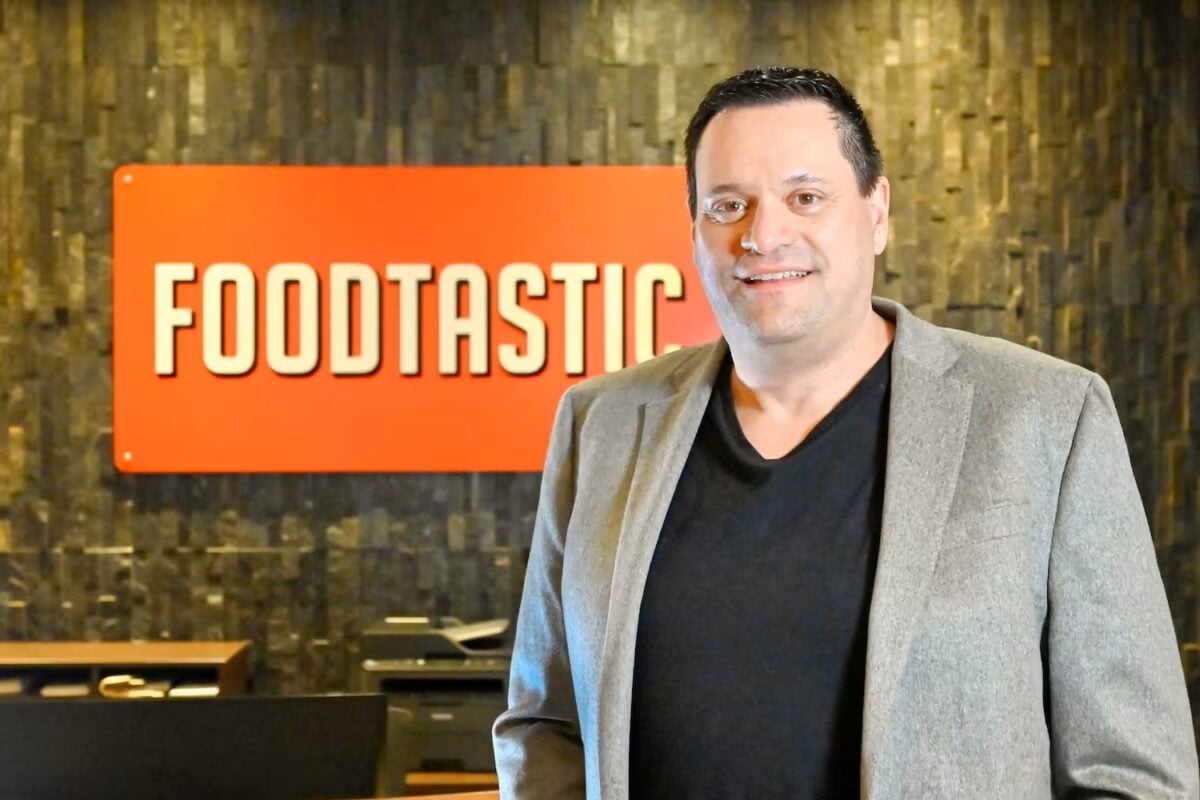
Peter Mammas, CEO of Foodtastic
“Pita Pit is a resilient and innovative Canadian brand that has stood the test of time thanks to the passion of our franchisees, the loyalty of our guests, and the strength of our community partnerships,” said Peter Mammas, President and CEO of Foodtastic, Pita Pit’s parent company. “We’re incredibly proud of everything this brand and its franchisees have accomplished over the last 30 years and even more excited about what’s to come.”
Foodtastic is one of Canada’s largest restaurant franchisors, operating more than 1,200 locations across the country. Its diverse portfolio includes Freshii, Quesada, Pita Pit, Second Cup, Milestones, and over 22 other banners.
“We just hired new designers and a brand team to refresh the branding. We feel like the operations are already quite good—the food is great. What’s really needed is a store refresh to make the brand more relevant. So, we’re starting a major renovation program throughout the system,” explained Mammas.
“We’ve slowed down growth a bit until the new branding package rolls out. Once that’s in place, we’re targeting about 15 new locations annually.
Over the last three decades, Pita Pit has evolved its menu far beyond the original pita sandwich. Today, customers can enjoy a wide variety of options including salads, rice bowls, smoothies, snacks, catering services, and gluten-free choices—ensuring the brand stays on top of evolving dietary preferences and lifestyle trends. The “build-your-own pita” experience continues to be a fan-favourite and remains the cornerstone of Pita Pit’s offering, the company said.
Pita Pit founders John and Nelson received keys to a Pita Pit location in 1995. Pita Pit celebrates its 30th anniversary this year.
“As we enter this next chapter, I can assure you we’ve got even more exciting and fresh innovations to come, always focused on serving fast, flavourful meals that Canadians can feel good about,” said Mammas.
With legacy partners like Sysco, Coca-Cola, and Unilever standing by its side since day one, Pita Pit said it has built a community of support that reflects the brand’s core mission to impact people and communities positively so that together, they can change lives on both sides of the counter.
“As a proudly Canadian brand, we’re grateful for the people who’ve made this journey possible—our franchisees, our teams, and most importantly, our customers,” said Chris Cann, Brand Leader at Pita Pit.
“We’ve always believed in doing more than just serving great food. Whether supporting local initiatives or giving back through national programs, our goal has always been to make a real difference in the communities we call home.”