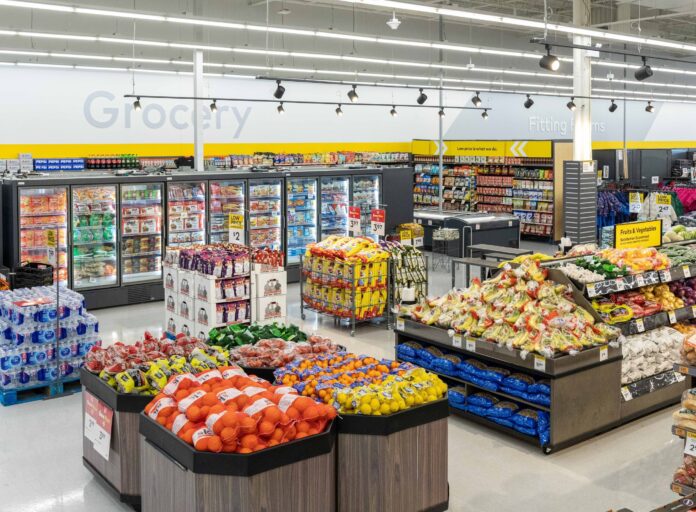
Giant Tiger Stores Limited is making shopping even more convenient with the launch of on-demand delivery available through new national partnerships with DoorDash and Uber Eats. Delivery of Giant Tiger’s full assortment is now available from more than 200 Giant Tiger stores. (CNW Group/Giant Tiger Stores Limited)
Now available at more than 200 stores across Canada, customers can shop the retailer’s full assortment including family fashion, grocery, health and beauty products, and household essentials, all at Giant Tiger’s low prices, said the company.
Giant Tiger said it is expanding its reach with DoorDash and Uber Eats to make shopping even more convenient for customers by delivering low prices right to their door in as fast as an hour. By expanding its availability to additional easy-to-use platforms, Giant Tiger added it is evolving to meet market dynamics and customer demand for faster, more convenient shopping options, while delivering on the promise to provide Canadians with low prices, always.
“At Giant Tiger, we’re committed to helping Canadians save both time and money. By offering same-day delivery at in-store pricing, we’re making our wide selection of everyday essentials, including our exclusive private label brands and Made in Canada products, more accessible than ever. Building on our successful partnership with Instacart, DoorDash and Uber Eats allow us to bring even more convenience to our customers in the communities we proudly serve, while staying true to our promise of delivering unbeatable value as Canada’s place to save.”
Lewis Matthews
“Giant Tiger is a neighbourhood favourite within hundreds of communities across our country. This new partnership connects customers with an extensive, affordable range of products at in-store prices – when and where they wish,” said Lewis Matthews, Head of Grocery and Retail Partnerships at DoorDash Canada. “Giant Tiger and DoorDash share a commitment to evolving alongside customer preferences, whether that’s increasing convenience through local commerce or investing within communities to create meaningful connections. We’re looking forward to providing seamless experiences time and time again, no matter how you choose to shop.”
Klaas Knieriem
“We’re proud to welcome Giant Tiger to the Uber Eats platform, giving Canadians even more affordable options for groceries and household essentials,” said Klaas Knieriem, Head of Grocery and Retail for Uber Eats in Canada. “With over 200 stores across the country, Giant Tiger is a trusted name in value and convenience–and now, shoppers can get their favourite items delivered straight to their door in as little as an hour through Uber Eats. This partnership is part of our commitment to expand our in-app selection and make everyday essentials more accessible through the Uber Eats app Canadians already know and rely on.”
To begin shopping, customers simply download DoorDash or Uber Eats, search for Giant Tiger, and add their favourite everyday essentials to their order for fast on-demand delivery. Giant Tiger is now available on both platforms with locations in Alberta, Manitoba, New Brunswick, Nova Scotia, Ontario, Prince Edward Island, Quebec, and Saskatchewan.
Maple syrup in a store. Photo: Not Without My Passport
A new report from data and analytics firm NielsenIQ (NIQ) is raising concerns for Canadian manufacturers and exporters tied to the U.S. market. The April 9, 2025 edition of Tariffs Perspectives by Category reveals that more than $27 billion in Canadian exports are potentially exposed to U.S. trade tariffs, including a wide array of goods in food, health and beauty (HBA), and household care categories. Although tariffs between the U.S., Canada, and Mexico are currently paused, the report underscores the fluidity of the trade environment and suggests brands must prepare for disruption.
Canadian Food Exports to the U.S. Face Significant Tariff Risk
In terms of volume and value, Canadian food exports represent the largest category of concern. NIQ estimates that approximately $15.2 billion in food and produce is imported into the United States from Canada annually, with the Eastern U.S. accounting for 63 percent of these import sales. Several everyday grocery items dominate the list, including confectionery at $647 million, cookies at $563 million, chocolate at $471 million, and muffins and cakes together exceeding $600 million. Granola bars, crackers, and cucumbers are also notable contributors to the trade flow. These figures signal the high degree of integration between Canadian food production and U.S. consumer demand.
Chris Costagli, Vice President of Food Insights at NIQ, noted that tariffs could have a significant effect on grocery and produce departments in the U.S., particularly for weather-sensitive categories such as fruit and vegetables. He said manufacturers must focus on strategic sourcing and leverage regional distribution strengths to maintain availability and meet consumer demand in the event of renewed tariffs. The implication for Canadian exporters is clear: disruption in even one of these categories could have cascading effects on pricing and shelf presence in a key international market.
Health and Beauty Products from Canada at Risk of Supply Chain Disruption
The health and beauty sector is also highly exposed. According to the report, $1.9 billion in HBA products are imported into the United States from Canada. Key product types include facial skin care, accounting for $482 million in U.S. sales, followed by deodorant at $361 million, hair care at $339 million, and hand and body lotion at $220 million. These figures point to the essential role Canadian manufacturers play in supplying personal care items to U.S. retailers. The Southern U.S. was identified as the leading region for Canadian HBA imports, accounting for 42 percent of related dollar sales.
Jo-Anne Lynch, Vice President of Beauty Vertical Insights at NIQ, warned that tariffs could raise production costs and disrupt supply chains, which may in turn lead to higher prices for consumers and weakened demand. She added that while large multinational beauty brands may find ways to shift sourcing, smaller and emerging players could struggle to adapt. Lynch also emphasized that current “deconsumption” trends in beauty — where consumers reduce product usage or simplify routines — could intensify if prices rise, further threatening volume sales.
Household Care Imports from Canada Show Signs of Decline
Though smaller in dollar value compared to food and beauty, Canadian household care exports also carry exposure. The report places the annual total for these products at approximately $30.6 million. Leading items include cleaning implements, which make up the bulk of Canadian-origin household care imports, along with fabric treatments and laundry detergent. While this segment is not as large as that of Canadian competitors in Mexico, the report indicates that imports from Canada have declined both in dollar sales and in-store distribution. Many of these products are now primarily sold in legacy retail channels and through Amazon, which has become an important growth outlet for the category.
Jake Del Valle, Vice President of CPG Insights at NIQ, highlighted that manufacturers must be mindful of potential peripheral impacts tied to fluctuations in oil and gas prices, particularly given Canada’s role as a supplier. He said changes in transportation and packaging costs could further destabilize Canadian-origin household products sold into the U.S. market.
Temporary Suspension of Tariffs Offers Only Short-Term Relief
Although the current trade environment includes a temporary suspension of tariffs between the U.S., Canada, and Mexico, the NIQ report makes it clear that this pause is not a long-term guarantee. Maria Maysonet, Insights Director at NIQ, stated that manufacturers must prepare for possible shifts in policy and emphasized the urgency of stabilizing operations. She pointed to more than $26 billion worth of food imports alone as being directly exposed to potential price increases. Categories such as cookies, chocolate, and crackers were singled out as especially vulnerable, with consumers in those aisles already facing inflationary pressure and reducing purchases. Households with children are among the most impacted, changing snacking habits in response to rising costs.
U.S. Shopper Trends May Influence Future Demand for Canadian Goods
The report also provides useful insights into U.S. consumer attitudes toward tariffs and pricing. According to a January 2025 NIQ survey of 1,001 shoppers, 34 percent of respondents said they would prioritize U.S.-made products to avoid tariff-driven price hikes. However, more than half indicated that their decisions would continue to be based on price differences and perceived quality. The survey revealed that 80 percent of shoppers want transparency from brands if tariffs lead to price increases, with younger and higher-income consumers the most likely to check sourcing information and respond to origin labeling.
These shifts in consumer behaviour offer both challenges and opportunities for Canadian companies. While some shoppers may opt for domestic alternatives, others remain loyal if Canadian products can compete on value and quality. In particular, Millennials and households earning over $100,000 annually were identified as high-value import buyers, and they are most engaged with Canadian-made products. This suggests that exporters who can reinforce quality messaging and align with transparency expectations may be better positioned to weather any trade turbulence.
Canadian Manufacturers Must Prepare for Trade Volatility
The report’s overarching message is one of preparation. For Canadian exporters embedded in the U.S. retail ecosystem, especially in high-volume categories like food, HBA, and cleaning products, the risks associated with tariff reinstatement are substantial. While the political environment remains in flux, and while tariffs are on hold for now, NIQ’s research makes it clear that the situation could change quickly — particularly as the U.S. enters an election cycle.
Canadian manufacturers and retailers are encouraged to assess their supply chain vulnerabilities, evaluate pricing strategies with elasticity in mind, and prepare regionally targeted responses for the U.S. market. With over $27 billion in exports at stake, the ability to adapt quickly and transparently could be the difference between resilience and market erosion.
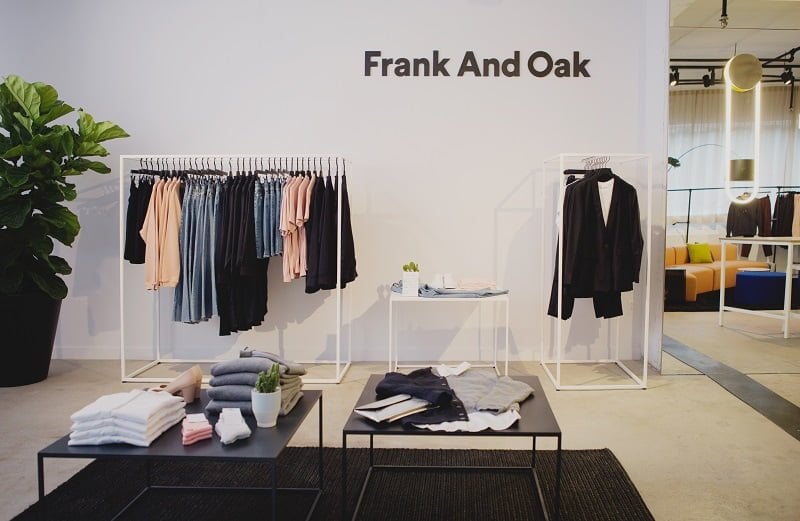
Frank and Oak at CF Toronto Eaton Centre - Photo by Dustin Fuhs
Montreal-based retailer Frank And Oak has confirmed it will shutter the majority of its Canadian stores by May 7, 2025, as the company continues its court-supervised restructuring process. The announcement comes as Frank And Oak and its parent company, Unified Commerce Group (UCG), seek a buyer for the once high-flying fashion brand.
A total of 10 stores are expected to close, including prominent locations at CF Carrefour Laval, Place Ste-Foy, CF Rideau Centre in Ottawa, and two shops in Vancouver. Stores in Montreal’s Stanley Street and St-Viateur, once seen as flagship concepts, will also shut down. The company has confirmed that its e-commerce platform will continue to operate, and stores in the Greater Toronto Area will remain open for now.
Retail Expert: “They Surfed a Wave — Then It Crashed”
Frank And Oak was once seen as a model for modern, sustainable fashion. Founded in 2012 by Ethan Song and Hicham Ratnani, the brand gained national attention for its minimalist aesthetic and eco-conscious values. But its fast rise may have masked deeper issues.
Carl Boutet
“They caught an amazing wave,” said retail expert Carl Boutet. “They were part of that hipster Brooklyn aesthetic, and they had incredible branding. But they took on way too much venture capital and tried to scale too fast.”
Boutet added that the problem wasn’t just the rapid expansion — it was how that growth was financed. “They were losing money and kept expanding. Venture capitalists were okay with it at first. The thinking was: ‘Get the market share now and figure out profit later.’ But profit never came.”
Digital marketing costs were another culprit. “The cost of customer acquisition skyrocketed on platforms like Instagram and Facebook,” said Boutet. “They were expecting scale efficiencies that never materialized.”
Millions in Debt and a Second Restructuring
Frank And Oak filed for creditor protection under the Bankruptcy and Insolvency Act in December 2024, citing $71 million in debt. Secured creditors, including UCG and Desjardins, are owed $55.5 million, while unsecured creditors are owed $14.6 million.
Among the major unsecured claims:
$3.5 million to the Canada Border Services Agency (CBSA)
$1.7 million to the Canada Revenue Agency (CRA)
$529,000 to Shopify
$504,000 in prepaid customer cards
Dustin Jones, CEO of UCG, acknowledged in a December letter to creditors that the brand never fully recovered from the impacts of the pandemic. “Despite significant growth over the past few years, the company has struggled to recover from losses incurred as a result of the COVID-19 pandemic,” wrote Jones.
Signs of Interest from Bidders — But No Clear Path Yet
Court filings indicate that Frank And Oak has received “robust” interest from prospective buyers. However, no names have been disclosed, and there are no guarantees a sale will be completed.
Boutet noted that the company’s leases in areas like Stanley Street in Montreal might attract other retailers. “I’ve told my friends in vintage retail to take a look at those spaces. The foot traffic is already there, and it’s the right customer demographic,” he said.
For now, Frank And Oak has announced that liquidation sales are underway, and all sales will be final once those begin. The company has not indicated how many of its approximately 150 employees across headquarters and retail locations could be impacted.
Frank and Oak Montreal (Image: Frank and Oak
Sustainability Efforts and a B Corp Pivot
After being acquired by UCG in 2020, Frank And Oak pivoted to a stronger emphasis on sustainability and received B Corporation certification. But the effort failed to win back enough market share.
“They tried to do the B Corp thing, which is great,” Boutet commented. “But beyond the badge and the clothing, it didn’t really come through in the experience. They weren’t Patagonia.”
Even as a sustainability-focused brand, Frank And Oak struggled in a market flooded with inexpensive options from global e-commerce players.
The Rise and Fall of a Canadian Fashion Darling
Frank And Oak’s origin story began with optimism. Launching as a direct-to-consumer online retailer, it quickly expanded into brick-and-mortar locations and built a reputation for modern, ethically made fashion. Its experiential stores and sleek marketing struck a chord with millennial consumers.
But the very model that fueled its early success became a liability. “They opened too many stores, moved too fast, and didn’t build a stable financial base,” said Boutet. “They were just one of many digital-native vertical brands that struggled with scale.”
By 2020, facing $19 million in debt, the company filed for creditor protection for the first time. UCG, a New York-based firm specializing in distressed retail turnarounds, acquired Frank And Oak later that year, attempting to salvage the brand.
What’s Next for Frank And Oak?
The immediate future involves winding down most store operations while attempting to restructure under court supervision. UCG has signaled a desire to continue the e-commerce side of the business and maintain a reduced store footprint.
But the viability of Frank And Oak as a retail brand hinges on attracting a strategic buyer — someone willing to invest not just in the name, but in its sustainability promise and design ethos.
“Frank And Oak could still have a future,” said Boutet, “but it needs a clearer identity and a realistic financial model. The hype isn’t enough anymore.”
AI and retail supply chains. Image: BeyondSupplyChain
As retailers continue to navigate a fast-changing and often unpredictable global environment, artificial intelligence (AI) is emerging as a critical tool for supply chain optimization. From predicting inventory demand to simulating the impact of geopolitical disruption, AI’s role is growing rapidly—particularly in distribution centres (DCs).
Retail Insider spoke with Kim Baudry, Market Development Director at Dematic, to better understand how AI is influencing retail supply chains and what the future may hold.
The Omnichannel Shift and the Rise of AI
According to Baudry, AI’s emergence in retail supply chain operations is being driven in large part by the ongoing evolution of omnichannel retailing.
Kim Baudry, Market Development Director at Dematic
“We’re really just at the tip of the iceberg,” she said. “Retailers are trying to offer a seamless experience whether it’s in-store, online, or click-and-collect. That puts pressure on the supply chain to be flexible and responsive.”
With more retailers filling orders from stores, distribution centres, and even direct-to-consumer shipments from the same facility, AI is increasingly being tapped to improve inventory visibility and planning.
“AI can help make predictions and recommendations for where inventory should be placed,” explained Baudry. “It can support planning for seasonal changes or unexpected surges in demand.”
AI’s Expanding Role in Inventory and Demand Forecasting
While Dematic’s primary focus is on automation within distribution centres, Baudry noted that AI is quickly proving useful in forecasting and demand planning—especially given the uncertainty introduced by events like the COVID-19 pandemic and geopolitical tensions.
“Retailers used to keep leaner inventories,” she said. “But now, due to supply chain disruptions and geopolitical volatility, they’re storing more inventory both in their DCs and stores. That has changed the kind of automation solutions we’re selling—more storage-focused, compact systems that don’t require building new facilities.”
AI helps retailers make data-informed decisions on where to position inventory and how much to store. “It’s not just about cost—it’s also about agility and resilience,” she said. “AI can simulate supply chain scenarios and help retailers determine the best course of action if, say, tariffs are imposed on goods from a specific region.”
Navigating Geopolitical Uncertainty with Predictive Tools
Baudry recalled a recent industry conference attended by both American and Canadian retailers. The original agenda focused on tariff planning related to China, but post-election discussions shifted toward potential tariffs on Canada and Mexico.
“When your supply chain strategy has to pivot that quickly, predictive AI tools become essential,” she explained. “If you need to shift sourcing from China to Vietnam, for instance, AI can help assess the cost, the delay in supply, and the knock-on effects on your entire operation.”
From Machine Learning to AI-Powered Automation
Although the industry isn’t fully immersed in AI-powered robotics yet, Baudry said the groundwork is being laid through machine learning applications.
“We’re still in the machine learning phase more than true AI, especially when it comes to robotics,” she said. “But that’s the building block. Right now, predictive maintenance is one of the key use cases.”
Baudry explained that software connected to equipment, like conveyors or diverts, can already detect irregularities and alert operators to possible failures before they occur.
“In the future, we’ll see AI used not just for predictive insights, but for decision support,” she said. “It will help determine the right type of automation for a facility, how workflows should be adjusted, and how to optimize performance in real-time.”
AI-Driven Efficiencies in the Warehouse
Even without full AI integration, warehouse systems today already create significant operational efficiencies. Baudry gave an example of a distribution centre where the system detects that a worker has too much on their plate.
“The software can reallocate tasks to balance the workload,” she said. “As we introduce more machine learning and AI, these adjustments will become even smarter and more proactive.”
Ultimately, this helps workers perform better while improving overall output, without requiring major infrastructure changes.
AI for Customer-Facing Retail Applications
AI’s influence is not limited to the back-end. Baudry said she’s seeing growing interest in consumer-facing AI tools as well.
“For example, grocery apps are starting to use AI to anticipate customer needs,” she said. “If the system sees you buy two gallons of milk every two weeks, it could prompt you to reorder before you even realize you’re out.”
This type of personalization deepens customer loyalty—but it also increases pressure on supply chain accuracy. “If a retailer promises the milk will be there and it’s not, that’s a problem,” Baudry added. “AI helps tighten that entire value chain.”
Tariffs, Transportation, and the Role of AI in Planning
Another area where AI is gaining ground is in transportation optimization.
“Whether it’s planning for port disruptions or rerouting trucks more sustainably, AI can help retailers respond faster,” said Baudry. “It’s about reducing fuel costs, improving delivery speed, and lowering carbon emissions.”
She also emphasized the importance of supplier-retailer communication. “AI is going to give suppliers more visibility into what retailers need and when they need it,” she said. “That transparency benefits everyone.”
A Future of Continuous Disruption
Baudry concluded with a sobering yet realistic view of the retail landscape: constant change is the new norm.
“In the past, change happened every ten years or so. Now, we’re looking at disruption every three years—if not sooner,” she said. “Between customer behaviour, e-commerce, and global instability, retailers need to be more agile than ever.”
That means investing in flexible, scalable solutions, including robotics, machine learning, and AI-powered systems. “We can’t plan 10 years out anymore,” she noted. “But we can build systems that help us adapt quickly, and that’s where AI really shines.”
Key Takeaways:
AI is reshaping retail supply chains by improving forecasting, inventory placement, and demand planning.
Geopolitical disruption, including tariffs, is forcing retailers to adopt predictive tools and re-evaluate sourcing strategies.
While true AI-powered robotics is still evolving, machine learning is already improving warehouse operations.
Customer expectations for speed and accuracy are driving the need for better inventory visibility across all fulfillment channels.
Retailers can’t afford long-term rigidity—the focus now is on building agile, data-driven infrastructure for future adaptability.
As Baudry put it, “AI isn’t just about replacing humans or automating tasks—it’s about creating a supply chain that can keep up with the world we live in today.”
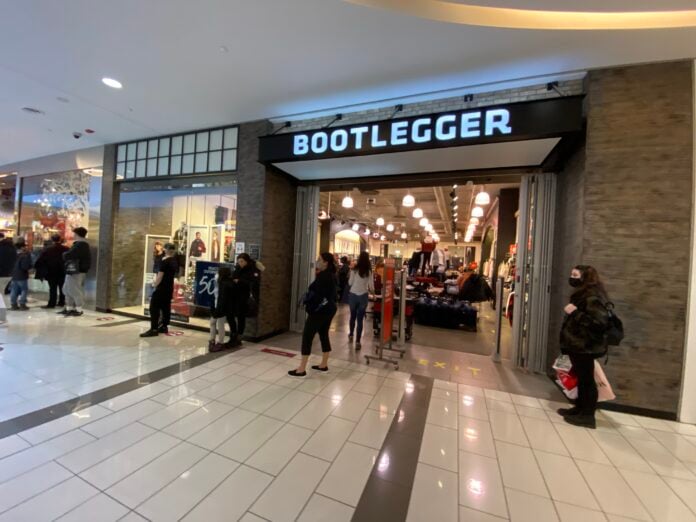
Bootlegger at Guildford from Lower Level - Photo by Lee Rivett
Canadian apparel retailer Bootlegger is set to continue operations following a major development in the restructuring of its parent company. On April 12, 2025, the Ontario Superior Court approved the sale of Bootlegger to a subsidiary of Comark Holdings Inc., allowing the retailer to be operated through Warehouse One Clothing Ltd., an affiliate of the parent company.
The decision comes as part of Comark’s broader creditor protection proceedings under the Companies’ Creditors Arrangement Act (CCAA). Justice Peter Cavanagh approved the transaction, which aims to preserve a portion of Bootlegger’s store footprint and secure employment for some of its staff following a period of financial uncertainty.
A Legacy Brand with Deep Canadian Roots
Bootlegger was founded in 1971 and became well known for its denim and casual apparel offerings. At the time of the CCAA filing, the retailer operated 53 standalone locations and shared another 19 locations with sister brands Ricki’s and Cleo.
However, as part of Comark’s restructuring plan, Ricki’s and Cleo were sold in March 2025 to Putman Investments—owner of Toys “R” Us Canada—for $14.4 million. That transaction marked a significant step in Comark’s effort to slim down its operations and focus on Bootlegger, its remaining apparel banner.
No Outside Bidders for Bootlegger
Despite interest from multiple parties, court filings indicate that no external bidders ultimately came forward with an offer to acquire Bootlegger. This paved the way for the retailer to remain within the Comark family, with operations transitioning to its affiliate Warehouse One.
The sale includes agreements with landlords to retain 45 retail leases. Some of these stores will be converted to Warehouse One locations, while others will continue to operate under the Bootlegger brand. The deal is expected to close later this month.
Within two days of the closing, staff at the retained stores will be issued termination notices—followed by employment offers from Warehouse One, ensuring some continuity in staffing.
Restructuring Driven by Mounting Financial Pressures
Comark’s move to seek creditor protection in January 2025 was the result of prolonged financial challenges. The company cited several factors contributing to its financial difficulties:
COVID-19 Pandemic: Lockdowns and a major shift to online shopping negatively impacted foot traffic and in-store sales.
Cybersecurity Breach: A ransomware attack in 2021 caused a major operational disruption, resulting in an $8.2 million revenue loss during a key sales period.
Supply Chain Disruptions: Delays in receiving seasonal products led to missed revenue opportunities and aggressive markdowns that cut into margins.
Increased Competition: The rise of low-cost fast fashion competitors drew value-focused consumers away from legacy mid-market retailers like Bootlegger.
These cumulative pressures led to a 19% drop in sales for Comark and a $21 million operating loss during the first nine months of 2024.
Mounting Debt Prompted Court Protection
By late 2024, Comark Holdings Inc. was under considerable financial strain, with liabilities exceeding $60 million. The bulk of this debt stemmed from overdue payments to suppliers, with approximately $44 million owed to merchandise vendors alone. The company also faced $5 million in unpaid rent to landlords across its retail portfolio. Compounding the situation, Comark’s senior secured lender, CIBC, demanded repayment of more than $32 million in loans.
These mounting obligations left the company with few options, ultimately leading it to seek protection under the Companies’ Creditors Arrangement Act (CCAA) in January 2025. The court filing enabled Comark to pause creditor actions and initiate a structured process to stabilize its business, sell off assets, and attempt to preserve elements of its operations—most notably the Bootlegger brand.
A New Chapter Under Warehouse One
Warehouse One, which operates its own national chain of value-oriented casualwear stores, will now oversee the Bootlegger brand through a related corporate structure. While some Bootlegger locations will be converted to Warehouse One stores, others will retain the Bootlegger branding—preserving a legacy that spans over five decades.
Retail Insider is streamlining its Canadian retail news from around the web to include a handful of top news stories that can be viewed quickly during the day. Here are the top stories from the past three days.
At a time when Canada imports the majority of its fresh produce, particularly during the colder months, a new player is reshaping how leafy greens are grown and distributed—entirely from within our borders. Haven Greens, a high-tech agricultural venture in King City, Ontario, has opened the country’s first fully automated baby lettuce greenhouse, aiming to transform how Canadians source their food.
“You can’t grow lettuce in a snowbank,” joked Jay Willmot, Founder, President, and Lead Apiarist of Haven Greens, during an interview. “So, we had to come up with something that works year-round in our climate.”
From Thoroughbreds to Technology: The Evolution of a Family Farm
Jay Willmot
Haven Greens is an extension of Kinghaven Farms, a family-owned business originally founded in 1967 and once known for thoroughbred horse racing. After decades of success in the equine industry, the farm faced dwindling returns by the early 2000s, prompting the Willmot family to rethink their long-term strategy.
“We were good at horse racing, but that kind of business is hard to sustain without a big corporate backer,” said Willmot. “I’d just graduated and was looking at our business model thinking, ‘This isn’t going to work anymore.’ That’s when we started experimenting with sustainability, renewables, and eventually vertical farming.”
Willmot brings a unique mix of credentials to the venture—he holds a Master’s in Environmental Studies, has a legal background in renewable energy infrastructure, and is an experienced beekeeper. Each of these experiences fed directly into the creation of Haven Greens.
“This didn’t happen overnight,” he noted. “It’s been a 15-year journey of step-by-step development.”
Image: Haven Greens
Inside Canada’s First Fully Automated Leafy Greens Facility
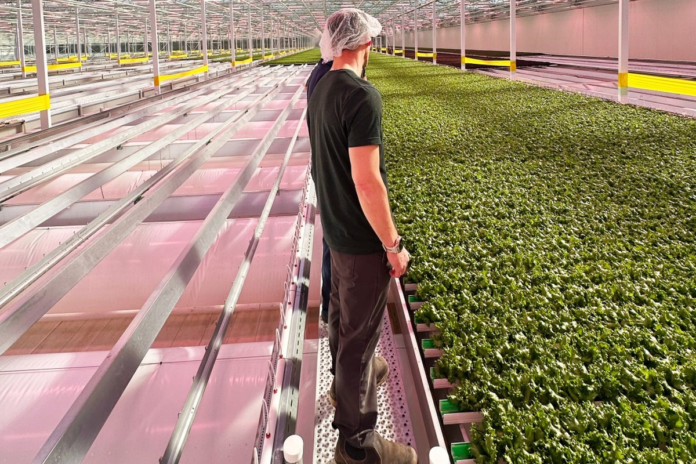
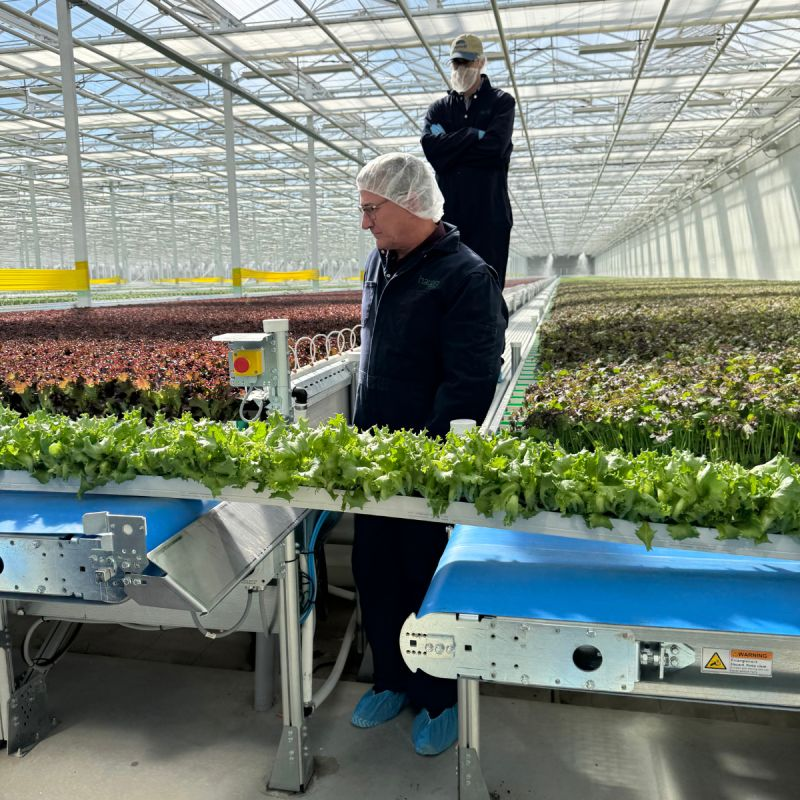
The 10-acre greenhouse, located on elevated terrain in King City, is truly one-of-a-kind. Unlike other greenhouses that automate some aspects of production, Haven Greens is entirely touchless from seeding to packaging.
“There’s no human contact with the product until it’s sealed in trays or bags and placed into boxes,” said Willmot. “That’s what makes us different—it’s fully automated, and that improves both safety and shelf life.”
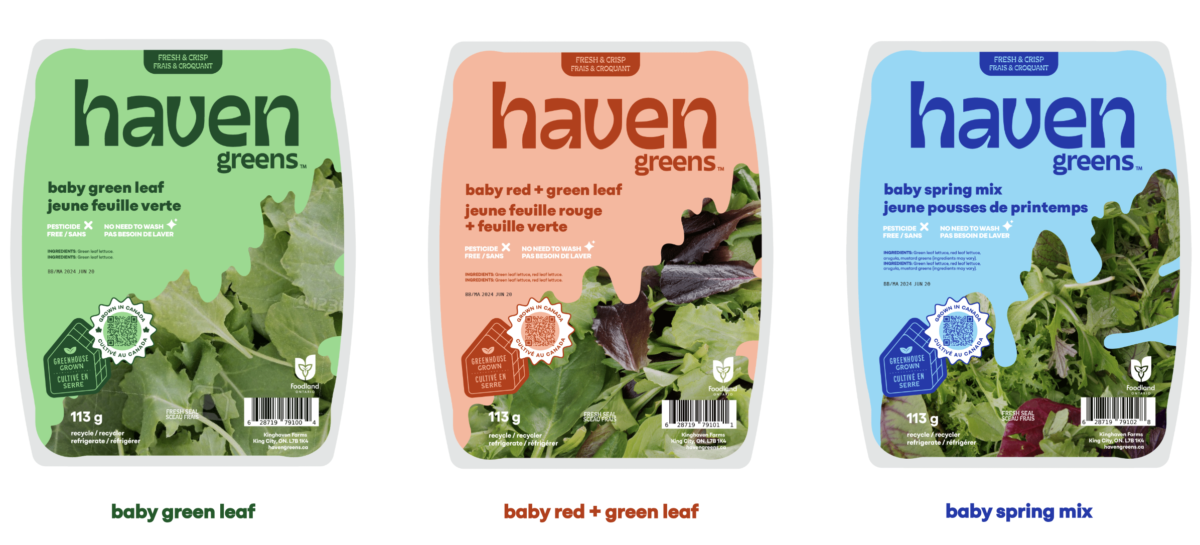
The company produces three main ready-to-eat varieties: Baby Green Leaf, Baby Red and Green Leaf Mix, and Baby Spring Mix. Unlike conventional outdoor-grown lettuce, Haven Greens’ produce is unwashed, pesticide-free, and fresher than most imports.
“We’re not organic-certified because we grow in peat moss, not soil,” Willmot explained. “But we call ourselves better than organic—no pesticides, herbicides, or GMOs. Just fresh, nutrient-rich greens.”
Image: Haven Greens
Technology Meets Sustainability
Haven Greens’ facility includes some of the most advanced sustainable systems seen in Canadian agriculture to date. The greenhouse captures rainwater, which is treated and recycled multiple times, and aims for a 99% water reuse rate.
“We also have a bioswale system and aquifer under construction to purify grey water and reintroduce it into our irrigation system,” Willmot explained. “And our goal is to achieve net-zero operations by 2027.”
Energy is another key focus. The company is installing a 3-megawatt solar PV array next to the greenhouse, which will not only decarbonize operations but also enhance energy security.
“Controlled environment agriculture needs consistent, affordable energy,” Willmot emphasized. “We’re addressing that head-on with on-site generation.”
Even emissions from generators are not wasted. “We’re capturing and using CO₂ in the greenhouse for crop development. Nothing is lost,” he said.
Pollinators, Biodiversity, and Beekeeping
Willmot, who also manages a honey business, sees Haven Greens as part of a wider ecological vision. Pollinator-friendly crops will be planted beneath the solar panels to support local bee populations and divert pests away from the greenhouse.
“It creates a beautiful harmony. The bees thrive, biodiversity improves, and even the greenhouse benefits by seeing fewer pest issues,” he said.
Image: Haven Greens
Scaling Local Production to National Impact
Haven Greens currently produces over 5,000 pounds of leafy greens per day from a partially planted greenhouse. That figure is expected to double in the coming months as the facility reaches full capacity.
“We’ve been operational for only a few weeks, and already we’re hitting our output targets,” said Willmot. “Our goal is over 8 million pounds per year from this one site.”
Canada consumes roughly 280 million pounds of leafy greens annually. Haven Greens’ facility alone could soon account for over 1% of that figure.
“If we had one of these in every province, we could make a real dent in the import dependency,” Willmot suggested.
Image: Haven Greens
Early Retail Footprint and Distribution Strategy
On the distribution side, Haven Greens is already reaching consumers through a growing number of channels.
“We launched into Summerhill Market’s seven Toronto locations this week,” Willmot said. “And we’re promoing at $3.49, which is an unbeatable price for fresh, local greens.”
Independent grocers in King Township have also embraced the product, alongside foodservice partners supplied through distributors like Bondi Produce and JE Russell. Talks are underway with major national and U.S. retailers.
“We’re still early, but interest is strong,” Willmot confirmed.
Addressing Food Security and Tariff Risk
Given recent global instability and supply chain fragility, food sovereignty is becoming a pressing issue. Willmot sees Haven Greens as part of the solution.
“We’re a local-for-local company. If supply chains are disrupted or tariffs are imposed, we’re here, growing high-quality food year-round,” he said.
That said, Canada’s domestic agricultural inputs still face limitations. “Packaging is a huge challenge,” he noted. “We try to source locally, but the trays we use for retail aren’t made in Canada.”
Although Haven Greens has not yet been affected by tariffs, Willmot acknowledged the risk. “Anything can change with this White House administration. We have contingency plans either way.”
Meanwhile, the company is exporting to the Northeastern U.S. foodservice market, where demand for high-quality greenhouse produce is already established.
“We’re not first in the world with this model, but we are first in Canada,” Willmot said. “That gives us a huge opportunity.”
Image: Haven Greens
A Highly Skilled Team Behind the Mission
Much of Haven Greens’ success thus far can be attributed to its experienced leadership team. Chief Agricultural Officer Eric Highfield brings over 25 years of expertise in controlled environment agriculture. He moved from Santa Fe, New Mexico, to oversee the greenhouse’s operations.
“Having someone like Eric helped us hit the ground running,” said Willmot. “We got to commercial production faster than expected.”
The director of cultivation and other key team members hail from top greenhouse operations in the U.S., bringing valuable experience. Front office leadership includes seasoned professionals from consumer packaged goods (CPG), such as a former Procter & Gamble executive and a CPG entrepreneur.
“It’s a blend of agriculture, operations, and business acumen,” Willmot said. “We also have local talent from Guelph and U of T on our cultivation team, which is important for community engagement.”
Looking Ahead: National Expansion and Market Education
Willmot has plans for Haven Greens’ future, including expanding beyond Ontario.
“Ontario probably needs one or two more of these facilities. But long term, we want to be national,” he said.
Consumer education will be critical, especially as the company helps Canadians understand the value and freshness of its unwashed, chemical-free greens.
“People ask, ‘What’s the catch?’ But there isn’t one. It’s just fresh,” Willmot explained. “Our goal is to become the go-to choice—something people grab without thinking.”
Final Thoughts
In an era defined by climate concerns, food insecurity, and import dependence, Haven Greens offers a compelling vision for the future of Canadian agriculture. With its fully automated, sustainable facility, the company is redefining what’s possible for local food production in Canada.
“This is just the beginning,” said Willmot. “We’re building something that can change how we grow and eat in this country.”
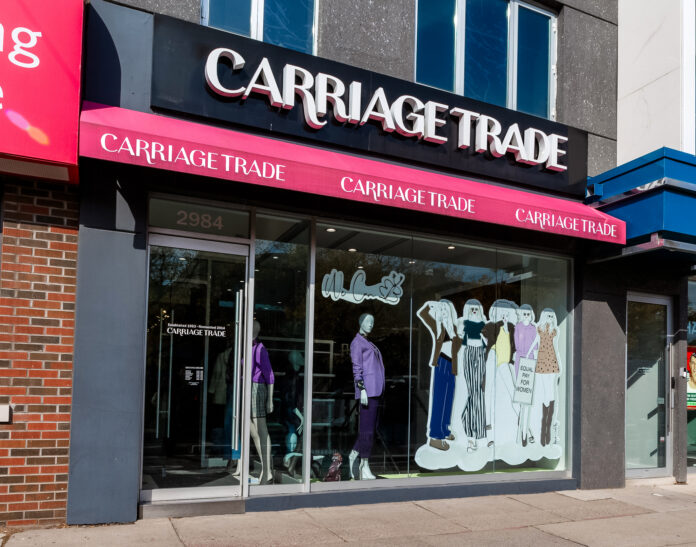
Carriage Trade on Bloor St. W. in Toronto. Image: Carriage Trade
A long-standing staple in Toronto’s high-end fashion scene is getting a significant upgrade. Carriage Trade, an upscale women’s fashion boutique at 2984 Bloor Street West in the city’s affluent Kingsway neighbourhood, is doubling its footprint as it redefines the modern boutique experience.
Founded in 1963—the very day U.S. President John F. Kennedy was assassinated, as owner Nori Mirza points out—the boutique has stood the test of time. “It started in the Kingsway and it’s always been there,” says Mirza. “Same location, for 62 years now.”
Nori Mirza
Carriage Trade boutique, once associated with mature clientele, has undergone a revitalization under Mirza’s leadership. Now, the retailer is preparing for its next phase: expanding to 6,000 square feet across two levels while amplifying customer service, style, and personalization.
Doubling in Size, Doubling Down on Service
“We’re basically doubling in size,” says Mirza. “We’ll have a main floor and a downstairs level, a coffee bar, a VIP room, and new programs for stylists and loyalty customers.”
The store’s current footprint will expand into the adjacent space, with construction carefully staged so the store doesn’t close during renovations. “We’re flipping everything to the new side first. Once that’s done, we’ll renovate the original side,” she explains. “We’re aiming for a full grand reopening by May 3rd.”
The boutique’s growth reflects not just a desire for more square footage but a vision for deeper customer engagement. Mirza emphasizes a “slow fashion” philosophy with curated wardrobes and styling consultations rather than transactional selling.
“We’re not commission-based. We’re very much community driven,” she says. “Women can shop anywhere—nobody needs anything. They come to us because of our service.”
Warm Design, Not Intimidation
The new space has been designed to be as welcoming as the staff. “We didn’t want that cold, black-and-white marble look,” says Mirza. “It’s warm, it’s feminine, it’s inviting.”
Fixtures will feature gold finishes and walnut shelving, complemented by design elements in dusty rose and emerald green velvet drapery. One of the standout features will be a custom-designed mural turned into wallpaper, greeting guests with a symbolic image of a woman with a horse and carriage.
“Our brand story is important,” Mirza notes. “The name Carriage Trade comes from an old English adjective describing a refined, first-class clientele. When I took over, some people thought the store was for their grandmother. But you can’t buy that kind of legacy.”
To reclaim and modernize that heritage, the boutique has brought back the horse-and-carriage logo, now embroidered on chairs and integrated throughout the refreshed space.
Rendering of the interior of the renovated/expanded Carriage Trade storefront in Toronto. Image supplied
Supporting Canadian Designers and Facing Tariffs
While Carriage Trade has long featured high-end imports, Mirza is placing increasing emphasis on Canadian talent.
“We’ve always had a lot of imports, but we’re trying to support more Canadian designers,” she says.
Still, challenges remain. Denim, for example, remains mostly American-made due to a lack of Canadian options. “We’re looking for Canadian denim lines, but a lot still comes out of L.A. And with tariffs, some brands absorb the cost—for us, it’s hard to pass on those increases to customers.”
Online and Offline: Meeting Customers Where They Are
Despite doubling down on brick-and-mortar, Mirza has no immediate plans to open additional physical locations. Instead, she sees growth in expanding how customers shop, not where.
“A lot of people ask about other locations,” she says, “but I think our focus is digital. We’re seeing great traction online.”
Carriage Trade now offers curated deliveries, FaceTime styling appointments, and even car service to and from the boutique for VIP customers. “We’ll send a car, bring you in, and you’ll have a stylist waiting for you in the VIP room,” says Mirza.
The store’s online reach grew out of necessity during COVID-19. “We were forced to grow an online business,” she recalls. “Now we’re doing weekly live shopping events every Thursday at 6 p.m.”
Rendering of the interior of the renovated/expanded Carriage Trade storefront in Toronto. Image supplied
Live Shopping Creates Real-Time Engagement
Carriage Trade boutique is one of the few Canadian independent retailers pioneering live shopping events.
“Every week we show vacation edits, seasonal wardrobes, or try-ons,” says Mirza. “We take requests for what people want to see. We have three to nine outfits per session, and they can ask questions in real time.”
This authentic connection has made a big impact. “People say, ‘I feel like I already know you!’ before they’ve even stepped in,” says Mirza. “We’re hugging by the time they leave.”
It’s a grassroots, tech-forward approach to customer service—without sacrificing the boutique’s personal touch. “It’s about showing them who we are,” she says. “Online can feel cold, but we work hard to make it warm.”
A New Chapter for a Toronto Institution
With the expansion nearing completion, Carriage Trade is not just enlarging its footprint—it’s enriching its legacy. Combining warmth, style, and a commitment to evolving retail, Mirza and her team are redefining what a boutique can be in 2025.
“There’s a shift happening,” she says. “People don’t want sterile, editorial campaigns. They want connection. They want personality.”
To further level the playing field for entrepreneurs and support the growth of their businesses, DoorDash Canada is debuting the Festival Activation Fund: a new program designed to help Entrepreneurship and Access merchants on DoorDash share their love for food at summer festivals this year.
Equal access to opportunities for restaurant owners and operators is key to creating vibrant, flourishing communities, said the company in a news release.
The company said the Festival Activation Fund will provide 15 restaurants with up to 50% off a restaurant’s summer festival fee (up to $3,000 CAD) that occurs in any Canadian city – no matter how big or how small the community is – from June 1, 2025 to September 30, 2025.
Heather Cameron
“Summer food festivals bring neighbourhoods together, boost local economies, and provide a welcoming space to celebrate the diverse, vibrant cultures that make each of our communities unique,” said Heather Cameron, Head of Brand and Creative at DoorDash Canada. “We’re proud to support restaurants in sharing their love for food with even more diners by helping to remove some barriers for entrepreneurs to succeed.”
Applications are now open and will be accepted until May 16, with successful recipients notified by June. Among other eligibility criteria, restaurants, gastropubs or bakeries must be an active partner on DoorDash, have between one and three physical locations in Canada with less than 20 employees per location and have a valid Canadian Revenue Agency (CRA) business number.
The Festival Activation Fund builds on DoorDash Canada’s existing Entrepreneurship and Access programs which have provided dozens of grants to underrepresented entrepreneurs through #BlackFoodEnergy, Made By Women, and Kitchens Without Borders. Entrepreneurship and Access partners on DoorDash can also enjoy increased in-app searchability and other resources to help grow their businesses, said the company.
Sustainable fashion brand Reformationis opening its first store in Vancouver in the city’s trendy Kitsilano neighbourhood, marking the brand’s third location in the country and first in Western Canada.
This retail space follows in the footsteps of Reformation’s first two Canadian locations, both located in Toronto. Situated at 2262 W 4th Ave, Vancouver, and spanning over 1,300 square feet, Reformation’s newest location brings its coveted styles across all product categories to Vancouver shoppers, 98% of which are made with recycled, regenerative, or renewable materials, in line with the brand’s commitment to being circular by 2030.
The Vancouver store marks the brand’s 53rd store globally and third overall in Canada, a global region of emphasis for the brand.
As with all of their retail locations, Reformation Vancouver was designed with sustainability in mind. Reformation invests in green building infrastructure in its facilities to minimize its waste, water, and energy footprints and leverages Green Business Certification standards across its global retail fleet. In addition to offsetting 100% of the store’s electricity usage with renewable energy, this location features vintage furnishings, hangers made with FSC-certified wood and reusable deadstock totes, said the company.
Customers can also recycle their well-loved Reformation pieces at any store through RefRecycling. To participate, customers can drop off their items at Ref Vancouver and receive credit towards future purchases, explained the retailer.
“We’ve been a champion for sustainable fashion and climate action since day one, and that’s something that really differentiates us from the broader marketplace. From a product standpoint, we launch new styles in small quantities twice a week online and once a week in store,” she said.
“Once we understand what resonates with our customers, we produce more of it, which helps us mitigate literal and financial waste. Aesthetically, we’re famous for our vintage-inspired apparel that marries the best of timeless and trend-driven style. We really believe in a zero trade off value proposition: beautiful, flattering pieces that make you feel confident and are also better for the planet.
“Our first two Canadian stores are both in Toronto, so we’re excited to finally have a location on the other side of the country. It feels like a natural next step both in terms of reaching a broader audience across the country and a nod to our own roots as a West Coast-based brand.”
Photo by Austin Leis for Reformation.
Hooe said Kitsilano has three major characteristics that made it ideal for the retailer’s first Vancouver store: 1) alignment with its target demographic 2) a well-developed shopping area with a strong sense of community and 3) proximity to downtown and ease of access via public transportation.
“The store itself is about 1,300 square feet total. What makes it so special is our unique tech-enabled format, which brings the best of online shopping to our physical locations. We have screens throughout the store that you can use to select items for your dressing room just like you would build a cart online. You can also work with one of our amazing store associates to do this, if you prefer,” she explained.
“Our team fulfills the dressing room from our back of house, which functions like a mini distribution centre, so your items are waiting for you when you enter the dressing room and customers don’t have to dig around for their size or carry armfuls of clothing around as they shop. We also have screens in our dressing rooms, which allow customers to request new sizes, colours or different styles altogether as they try items on and figure out what they do and don’t like.”
Photo by Austin Leis for Reformation.
“Selfishly, as someone born and raised in Canada, it’s really fun to lead the process of growing the brand across the country. Canada represents a significant customer acquisition opportunity as we focus on international expansion holistically as a brand. We see an opportunity in the marketplace for beautiful, sustainable apparel – particularly for work and dressier occasions – at our price point that we believe we have a unique opportunity to meet,” added Hooe.
Photo by Austin Leis for Reformation.
Will there be future Canadian stores?
“There’s nothing concrete to share right now, but the short answer is that we envision opening many more stores across the country. Right now, we’re focused on getting to know our customers in Vancouver in a deeper way and making sure we’re delivering the best possible in-store experience for them,” added Hooe.
“We also just formally launched the brand at Holt Renfrew, our exclusive wholesale partner in Canada, which brings Reformation to all of their doors in several major Canadian cities. It’s a huge opportunity to drive brand awareness and learn more about consumer preferences across the country, which we’ll use to inform both our retail and merchandising strategies.”