Retail Insider is streamlining its Canadian retail news from around the web to include a handful of top news stories that can be viewed quickly during the day. Here are the top stories from the past 24 hours.
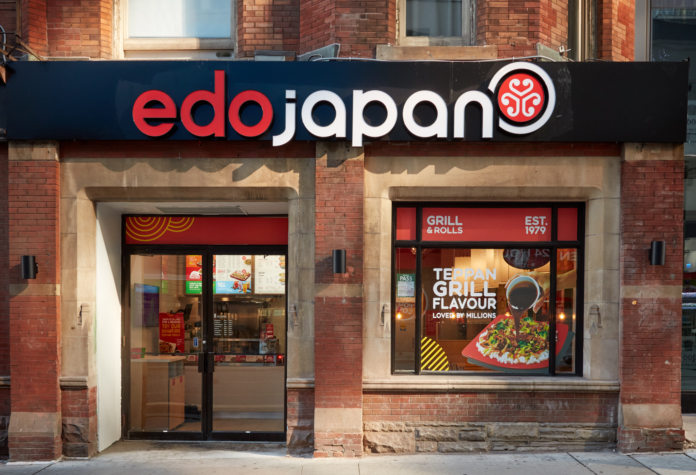
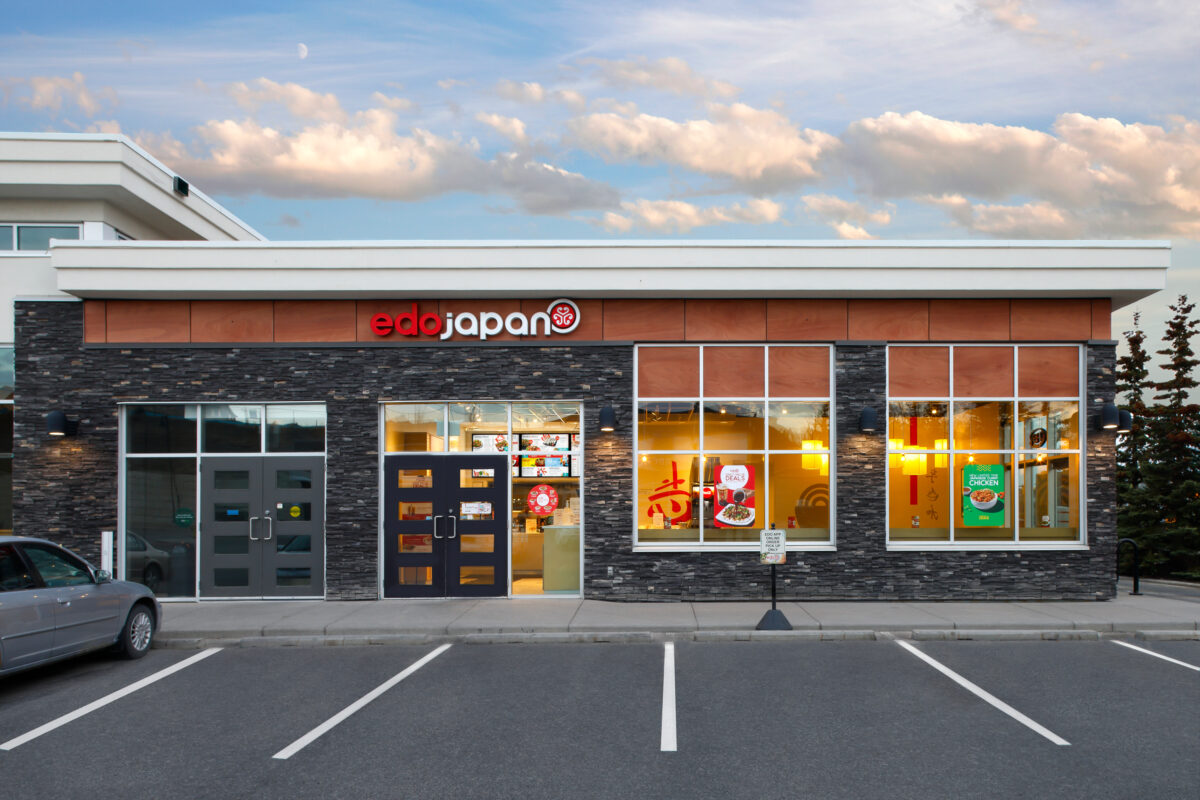
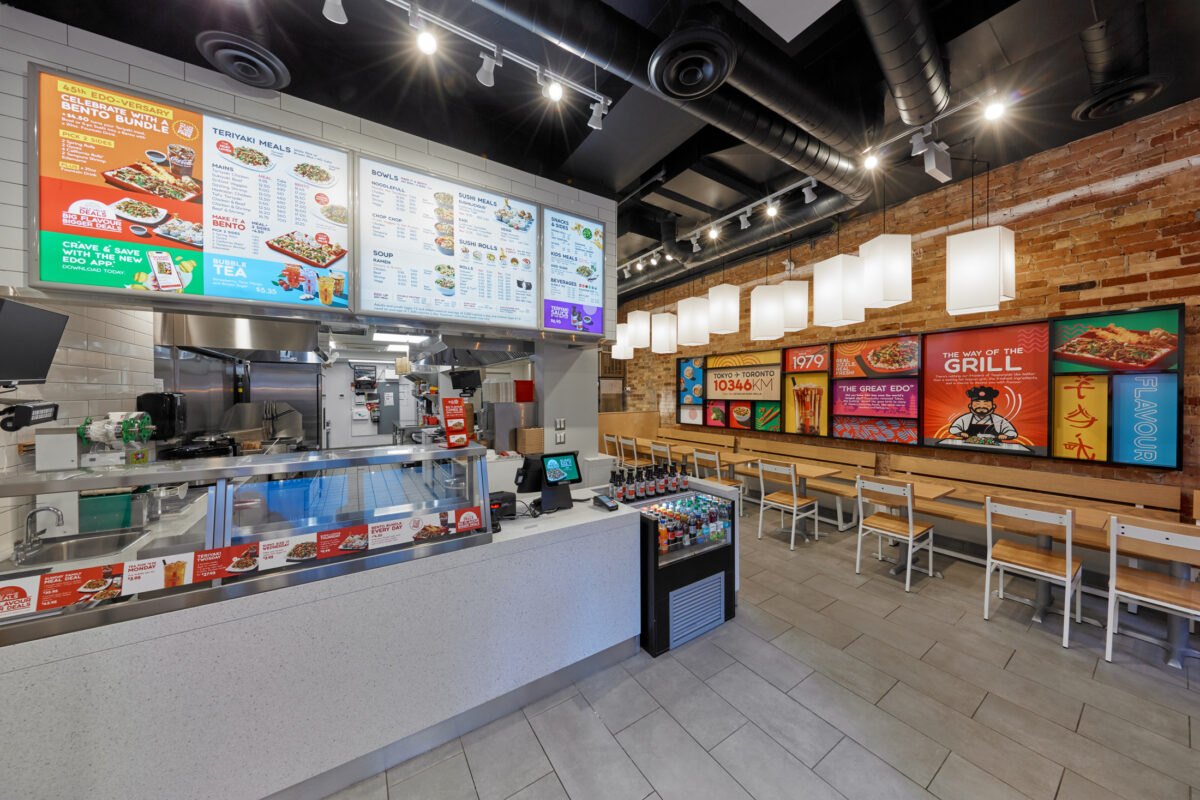
Edo Japan location on College Street in Toronto. Photo supplied
In a landscape filled with fast food options, one proudly Canadian brand has not only endured but grown by staying true to its roots. Edo Japan, the Japanese-inspired quick-service restaurant chain founded in Calgary in 1979, is quietly transforming the Canadian QSR industry with a mix of tradition, innovation, and values rooted in its Alberta origins.
“We’ve held on to the original foundation since day one,” says Dave Minnett, President and CEO of Edo Japan. “The same cooking style, the same teriyaki sauce recipe—it’s all still there.”
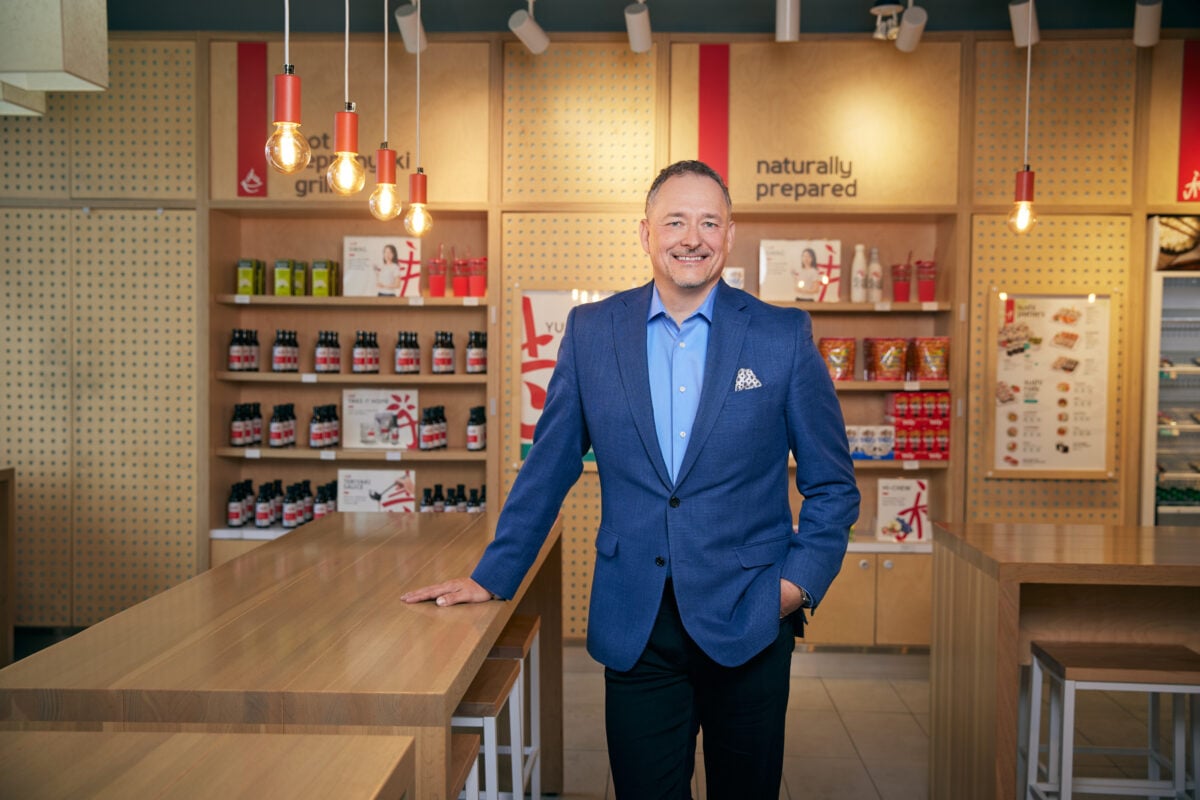
Dave Minnett
The chain’s origin story is deeply Canadian. The founder, Reverend Susumu Ikuta, a Japanese Buddhist minister, set out to bring Japanese cuisine to Canadians, launching the first Edo Japan in Calgary’s Southcentre Mall.
More than four decades later, that original location still operates, anchoring a network of more than 200 locations nationwide.
From the beginning, the model was designed not only to offer fresh Teppan-style meals but also to provide business opportunities through franchising, something the brand continues to champion.
“We’re largely a franchise model,” Minnett explains. “Only six of our stores are corporate-owned. The rest are owned and operated by families and entrepreneurs across the country. That entrepreneurial spirit is something we’ve carried forward from our Calgary roots.”
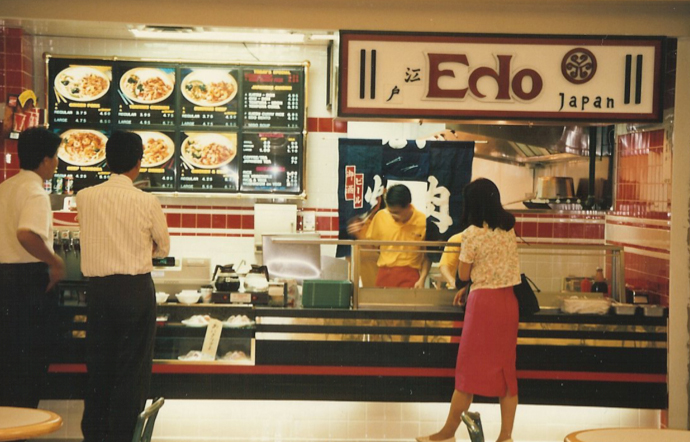
First Edo Japan location at Southcentre Mall in Calgary. Image: Edo Japan
Calgary’s Enduring Influence
Although the brand now operates coast to coast, it has never lost its Calgary identity. Edo Japan’s head office remains in Calgary, as does its executive and corporate team.
“You can’t help but be influenced by Calgary and Southern Alberta in your daily life,” Minnett reflects. “We test and learn in Calgary first before rolling out anything nationally. The customer base here is one of our largest, with 27 stores in the greater Calgary area alone. This city has helped shape our company.”
Minnett, who moved to Calgary from Ontario nine years ago, says he has fallen in love with the city. “There’s a warmth and hospitality in Calgary that I haven’t experienced elsewhere. That kind of attitude fits perfectly with our service-focused industry. It influences our team culture and customer experience every day.”
Proudly Canadian and Quietly Ambitious
Despite its growing national footprint, many Canadians are still surprised to learn that Edo Japan is a homegrown success story.
“It’s not always obvious that we’re a Canadian company,” says Minnett. “But when people find out, they’re pleasantly surprised. Canadians are proud to support Canadian brands.”
That pride extends beyond branding, as it’s embedded in Edo Japan’s corporate DNA. From Canadian-sourced ingredients to longstanding vendor relationships, the brand puts local partnerships at the forefront.
“We’ve built a supply chain that’s intentionally local. Our chicken is sourced from Maple Leaf Foods, our beef is Canadian, and even our signature teriyaki sauce is produced here at home. Supporting Canadian partners isn’t just a value—it’s a strategic choice that ensures quality, consistency, and trust in every meal we serve.”
Minnett describes the company’s culture as a reflection of Canadian values, inclusive, humble, community-minded, and quietly ambitious.
“Our partners, franchisees, and vendors all share similar values. We build long-term relationships, not just transactional ones,” he adds.
Image: Edo Japan
Canadian Vendors: Strategic and Ethical Choice
Edo Japan’s decision to prioritize Canadian suppliers is more than just patriotic. It’s also a strategic business move.
“Having vendors close promotes collaboration and quality control,” says Minnett. “It allows us to work hand-in-hand on continuous improvement, especially on things like menu innovation and logistics.”
He points to the brand’s long-standing partnership with Maple Leaf Foods as an example. “We’ve worked with their culinary team to explore new menu items. That level of collaboration is possible because they’re here in Canada.”
Minnett says the COVID-19 pandemic reinforced the value of Canadian partnerships. “During COVID, having local supply chain partners made a big difference. Everyone came together to solve problems and keep things moving.”
Expansion Momentum: Ontario, Maritimes, and Beyond
With its solid foundation in Alberta, Edo Japan has turned its attention to national and now international expansion. In 2024, the brand surpassed 200 locations, with ambitions to reach 275 by spring 2028.
“Our 200th store opened on Yonge Street in Toronto,” Minnett says proudly. “That was a milestone for us, not just for the number, but because it was our first major downtown urban location.”
The downtown Toronto location, near Yonge and College, acts as a brand flagship. “We’re using it to build more awareness and test how we operate in dense urban markets,” Minnett explains. “It’s opened our eyes to opportunities in other cities like Vancouver.”
The company recently opened its first Maritime location in Fredericton and is ramping up expansion across Ontario with plans for 15 more stores in the province over the next 15 months.
Minnett confirms Quebec is also on the horizon. “There’s a clear appetite for Japanese cuisine in Quebec, and our research shows strong interest. That will be a major focus moving forward.”
Image: Edo Japan
South of the Border: A U.S. Pilot
Edo Japan also quietly entered the U.S. market with a pilot location in Chandler, Arizona, earlier this year. It marks the brand’s first foray outside Canada.
“We partnered with a Canadian family living in Gilbert, Arizona, who had experience in the restaurant space,” Minnett says. “We’re treating it as a joint venture, a way to test the model in a new environment.”
Two more U.S. locations are already planned, one in Scottsdale Fashion Square and another in Gilbert, Arizona, in spring 2026.
“We’re tweaking portions and presentation to better fit American expectations, but the fundamentals remain the same,” Minnett notes. “We’re cautiously optimistic and very excited about our potential here.”
Adapting to Modern Tastes and Channels
As the foodservice landscape evolves, so too has Edo Japan’s approach to menu development and technology.
“Our digital ordering channel now accounts for 30 percent of total revenue,” says Minnett. “We’ve invested heavily in our app, which allows for pre-ordering, loyalty points, and family meal bundles. It’s a game changer, especially for time-pressed customers.”
The company also recently introduced poke bowls, a move that exceeded expectations and has secured the dish a permanent place on the menu. “It speaks to the younger demographic and broadens our appeal,” Minnett adds.
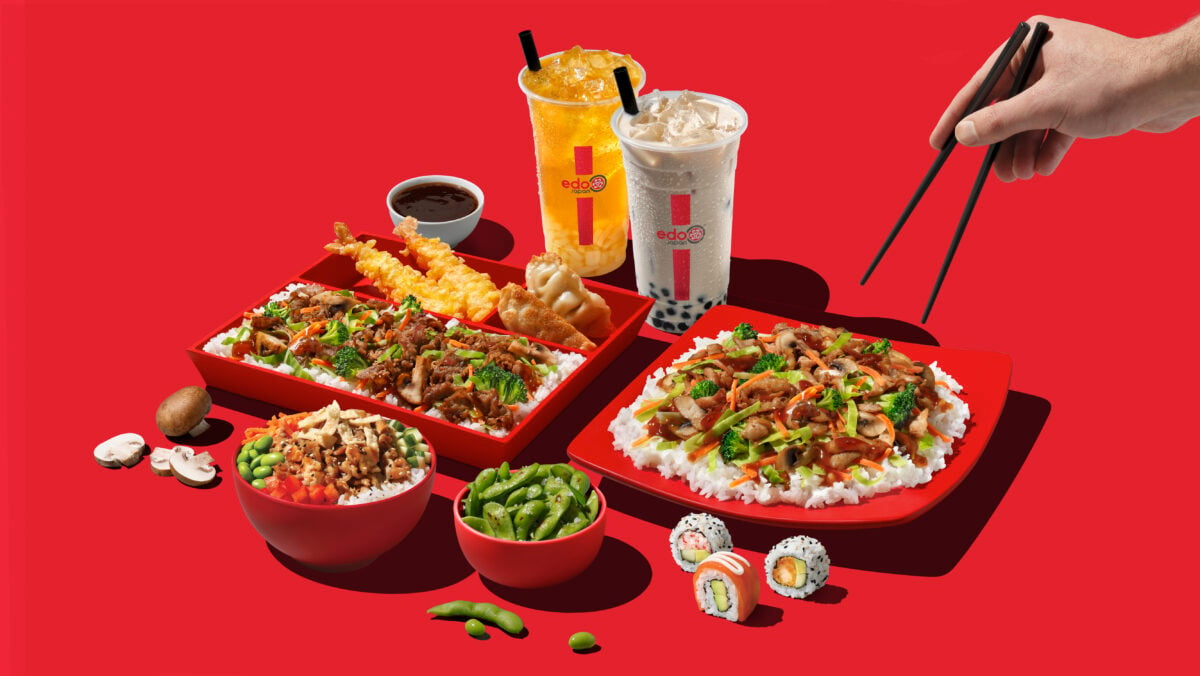
Bubble tea, introduced two years ago, is another growing category. This summer, Edo Japan is running a national campaign promoting $3 bubble teas to capture younger consumers.
“We’ve been fairly quiet about it until now, but the response has been exceptional. With that kind of guest enthusiasm, it’s time to amplify the message and let more people know what we’re offering.”
Image: Edo Japan
Designing for the Future
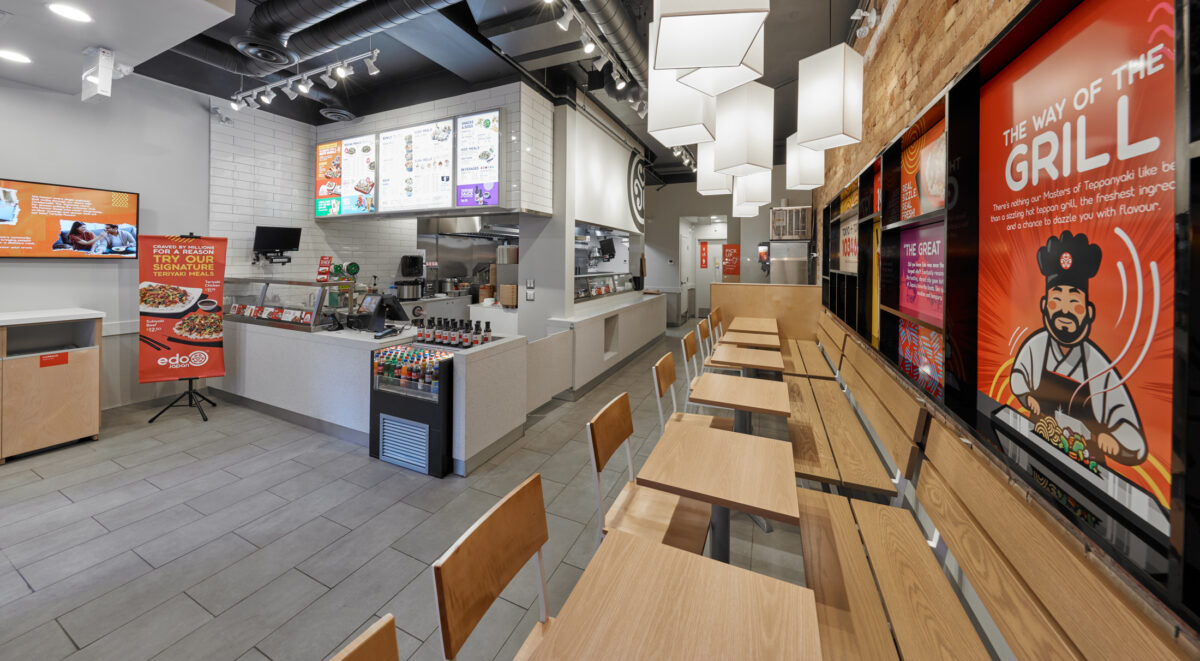
In addition to menu innovation, Edo Japan is modernizing its physical spaces. The brand’s new “Fresh Take” design, originally launched in 2017, is getting an upgrade. The first prototypes of the new format will debut in Ontario this summer, starting with Oakville and Burlington, followed by a mall location in West Vancouver.
“These next-generation stores will be our new standard,” Minnett says. “We’ll begin rolling them out across all new builds and renovations in 2026.”
Consistency in the Face of Growth
With more stores and greater geographic reach comes the challenge of maintaining consistent customer experiences. For Edo Japan, it starts with franchisee selection.
“Cultural fit is critical,” says Minnett. “We make sure potential franchisees understand the day-to-day reality, sometimes that means shadowing existing operators before committing.”
Each new franchisee undergoes rigorous training at one of the company’s six corporate training hubs across Canada. On-the-ground support is equally important.
“In Ontario, for instance, we already have four corporate operations managers for just 22 stores,” Minnett explains. “We believe in having strong leadership close to the communities we serve.”
Image: Edo Japan
Looking Ahead
As Edo Japan eyes the future, its goals are ambitious but grounded. The company is aiming for 20 to 25 new stores annually, focused on thoughtful growth and franchisee profitability.
“Our approach is grounded in the Kaizen philosophy of continuous improvement. We’re always evolving but no matter how we grow, staying true to our Canadian roots will always be non-negotiable.”
That identity, shaped in Calgary and celebrated across Canada, continues to be Edo Japan’s most enduring ingredient. Whether it’s a new poke bowl, a store opening in Toronto, or a bubble tea deal, the brand’s expansion story remains unmistakably Canadian.
“We’re Canada proud,” Minnett says simply. “And we always will be.”
For those seeking franchise and real estate opportunites with Edo Japan, please visit: franchising.edojapan.com or connect with Jeff Parkinson, Vice President of Real Estate and Construction on LinkedIn.
When Shakir Al-Qanbar arrived in Canada just over a decade ago, he quickly noticed a gap in how Middle Eastern cuisine was represented. While shawarma and falafel dominated menus, the modern, evolving flavours he had grown up with in the Middle East were underrepresented. Out of this observation came East Tea Can, a Mississauga-based restaurant concept that opened its first location in 2016 and has since built a reputation for authentic cuisine served in an immersive setting.
“I felt that the restaurants here were serving great food, but not necessarily reflecting where food trends were heading in the Middle East,” explained Al-Qanbar, CEO and co-owner of East Tea Can. “We wanted to create a modern take on Middle Eastern cuisine, with a menu built around mezze, shared plates, and a vibrant dining experience.”
Image: East Tea Can
Creating an Immersive Dining Experience
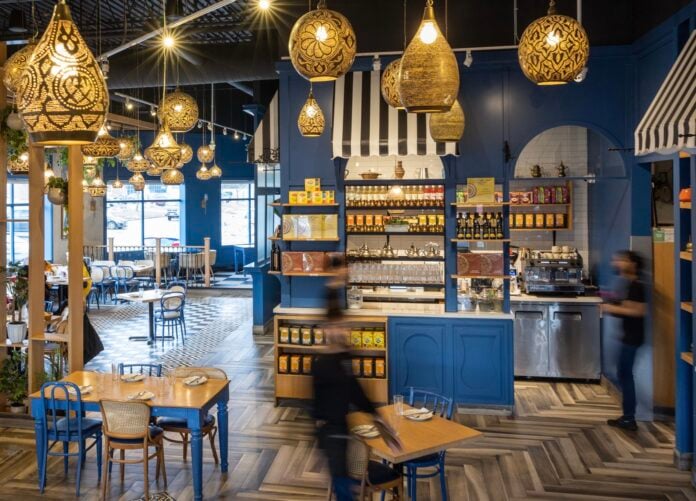
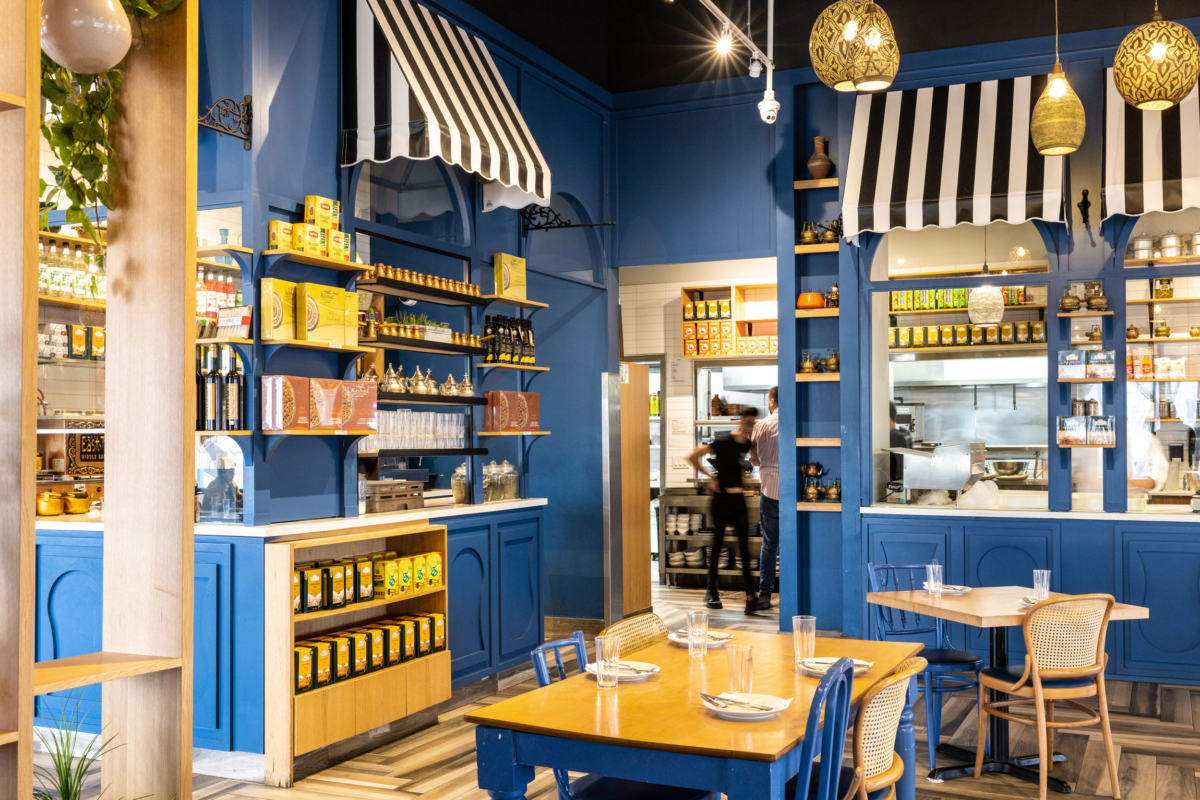
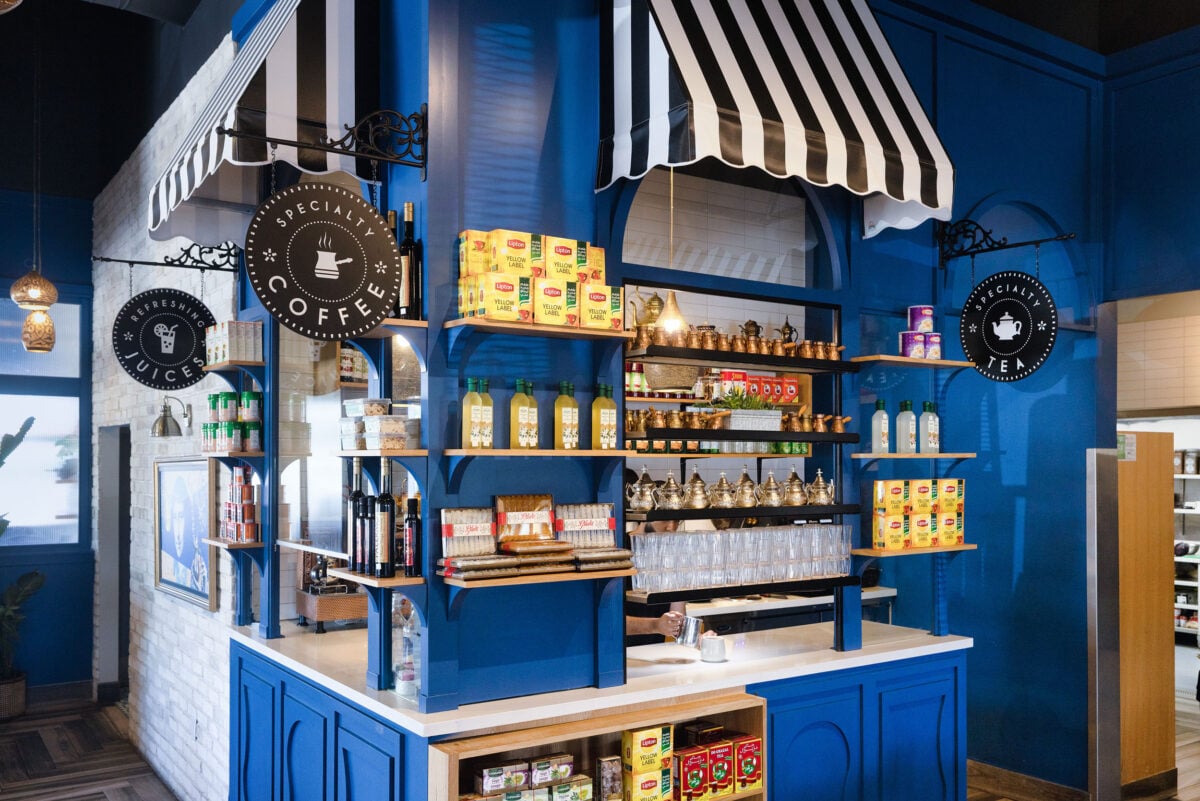
From the outset, East Tea Can was designed to be more than a place to eat. The brand reimagined its interiors during the pandemic, transforming its dining rooms into spaces inspired by a Middle Eastern souq, or marketplace. Freshly baked bread emerges from ovens placed within view of diners, filling the restaurant with enticing aromas. Each table is greeted with warm bread as a gesture of hospitality, regardless of what is ordered.
“In many ways, East Tea Can is about transporting our guests,” said Al-Qanbar. “From the service to the menu selection to the atmosphere, we want people to feel immersed in the Middle East while they are with us.”
The menu reflects that philosophy. While shawarma is still present, the real focus is on hot and cold mezze, dips, grilled plates, and signature dishes such as saffron chicken skewers served tableside on hanging stands. A curated tea program adds another dimension, with servers suggesting pairings to complement the food. “We serve around six to seven teas, plus iced teas in summer,” said Al-Qanbar. “It’s not common in restaurants here, but pairing tea with food is something that sets us apart.”
Expansion to Downtown Toronto
East Tea Can’s first expansion came last year with a second location at The Well in downtown Toronto. The massive mixed-use development offered the restaurant an opportunity to introduce its brand to a new audience.
“That was our first expansion,” Al-Qanbar noted. “The Well felt like the right fit for us, because the scale and ambition of the project aligned with our own standards.”
The downtown location has required adjustments to the menu and service. “It’s very different from Mississauga,” he said. “At The Well, we do a lot of corporate lunches and catering for the surrounding offices. We had to adapt, but it has been amazing for us to experience a different type of customer base.”
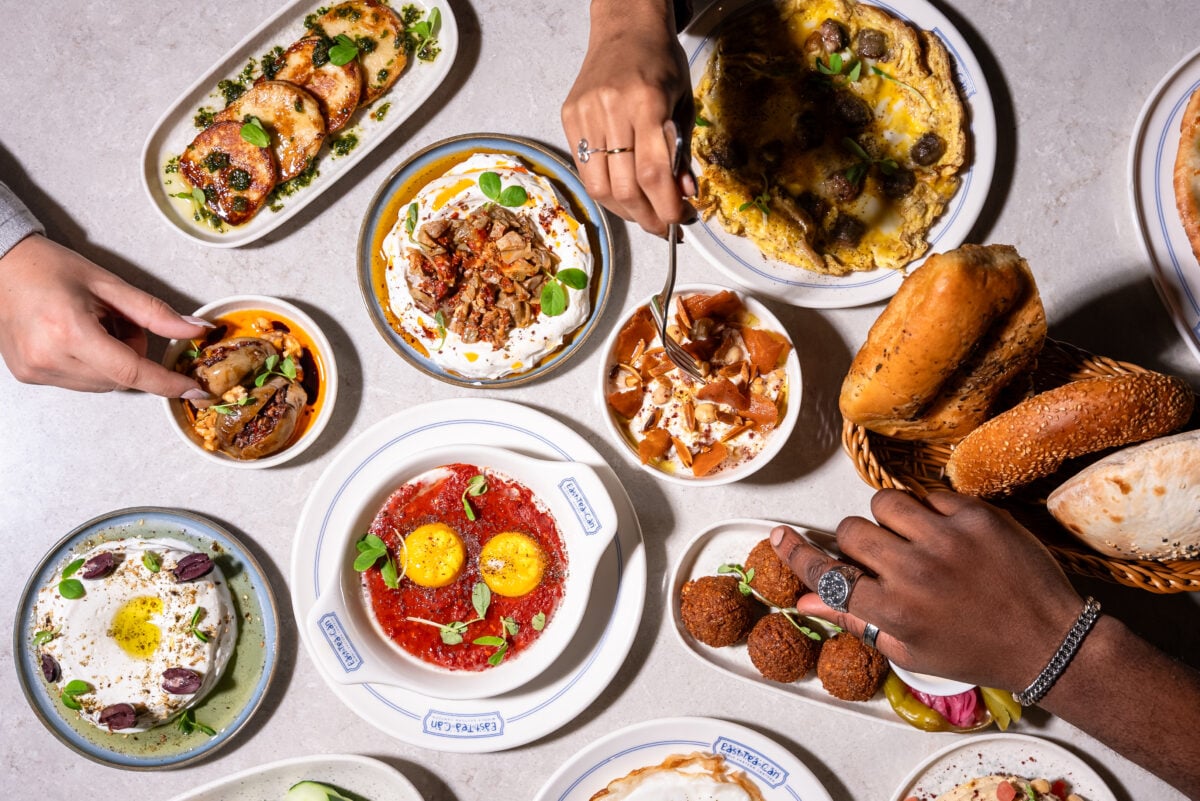
East Tea Can brunch assortment. Image: East Tea Can
Introducing a new Burger Concept
While East Tea Can continues to grow, Al-Qanbar and his team are preparing to launch a new concept this fall. Located beside the Mississauga restaurant, the smash burger concept will introduce a focused menu built around premium beef.
“It’s going to be small, unique, and very focused,” explained Al-Qanbar. “We’ll serve only two or three burgers, but we want them to be the best. We’re planning to use 100 percent Canadian beef, sourcing a single cut per batch rather than mixing wholesale cuts. It’s all about quality and simplicity.”
The 1,400-square-foot space is scheduled to open the fall, offering a fast-casual experience distinct from East Tea Can’s full-service model. “I wanted something that was easy to order, accessible, and quick,” Al-Qanbar said. “When I was in California, I was inspired by the popularity of In-N-Out. There isn’t really a similar concept here that combines that simplicity with premium quality.”
East Tea Can in Mississauga. Image supplied
A Concept Designed for Growth
Although the smash burger concept is only opening its first location this fall, Al-Qanbar has an ambitious vision for the brand’s future. “Because it’s a small concept with a streamlined menu, we see a lot of opportunity for growth,” he said. “Once we launch and verify the demand, we expect to open another two or three locations next year.”
The Mississauga launch will serve as a testing ground, with lessons learned informing future openings across the Greater Toronto Area and potentially beyond.
Building on a Strong Foundation
Part of what makes expansion possible is East Tea Can’s existing operational structure. The Mississauga location spans 4,200 square feet, with a central kitchen that supports both restaurants in the plaza. “Because we have centralized production, we can control costs and maintain quality,” said Al-Qanbar. “That allows us to offer a premium product while keeping prices close to market levels.”
Weekends remain the busiest time, with the Mississauga restaurant baking up to 1,000 pieces of bread a day. Despite the volume, Al-Qanbar remains closely connected to the kitchen and to the guest experience. “I’m in the restaurant almost every day,” he said. “My personal favourite dish is the saffron chicken skewer, but I also enjoy our dips—especially the hummus.”
Image: East Tea Can
A Distinctive Role in Canadian Dining
With two East Tea Can locations and the upcoming launch of of the smash burger concept, Al-Qanbar is building a portfolio of concepts that reflect both his heritage and his entrepreneurial spirit. At its core, East Tea Can is about hospitality and cultural connection. “It’s more than food,” he said. “It’s about sharing our culture and creating moments for people.”
As Toronto and Mississauga continue to diversify their dining landscapes, East Tea Can and the smash burger concept represent how independent restaurateurs can carve out distinct spaces. By blending authenticity with innovation, Al-Qanbar has created one concept that transports guests to the Middle East and another that aims to elevate the humble burger.
Looking ahead, East Tea Can remains focused on deepening its reputation, while the smash burger concept is poised to become the brand’s fast-expanding counterpart. “We want to grow carefully, but we’re excited for what’s ahead,” said Al-Qanbar.
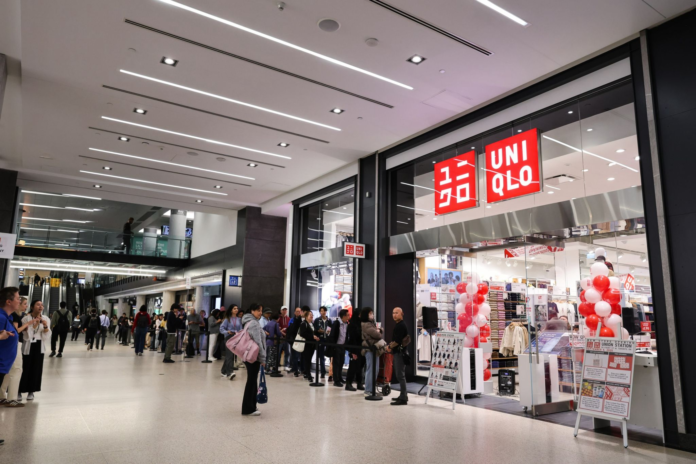
Opening day at Uniqlo Union Station. Image: Joel John
Japanese apparel retailer Uniqlo has opened its first Canadian store inside a major transportation hub, unveiling a new 3,500-square-foot location at Toronto’s Union Station on Friday morning. The store signals a strategic pivot for the brand as it targets commuter-heavy environments across Canada.
The opening was met with considerable excitement, with long queues wrapping around the corner during the morning rush. With Union Station serving an estimated 250,000 passengers daily, the new store is poised to capture a steady stream of commuters, travellers, and downtown workers seeking quick, convenient access to the retailer’s popular basics.
The decision to open at Union Station aligns with Uniqlo’s global strategy of situating stores in major transportation hubs. Similar models have been rolled out across Asia and Europe, where rail and subway stations often double as high-traffic retail corridors.
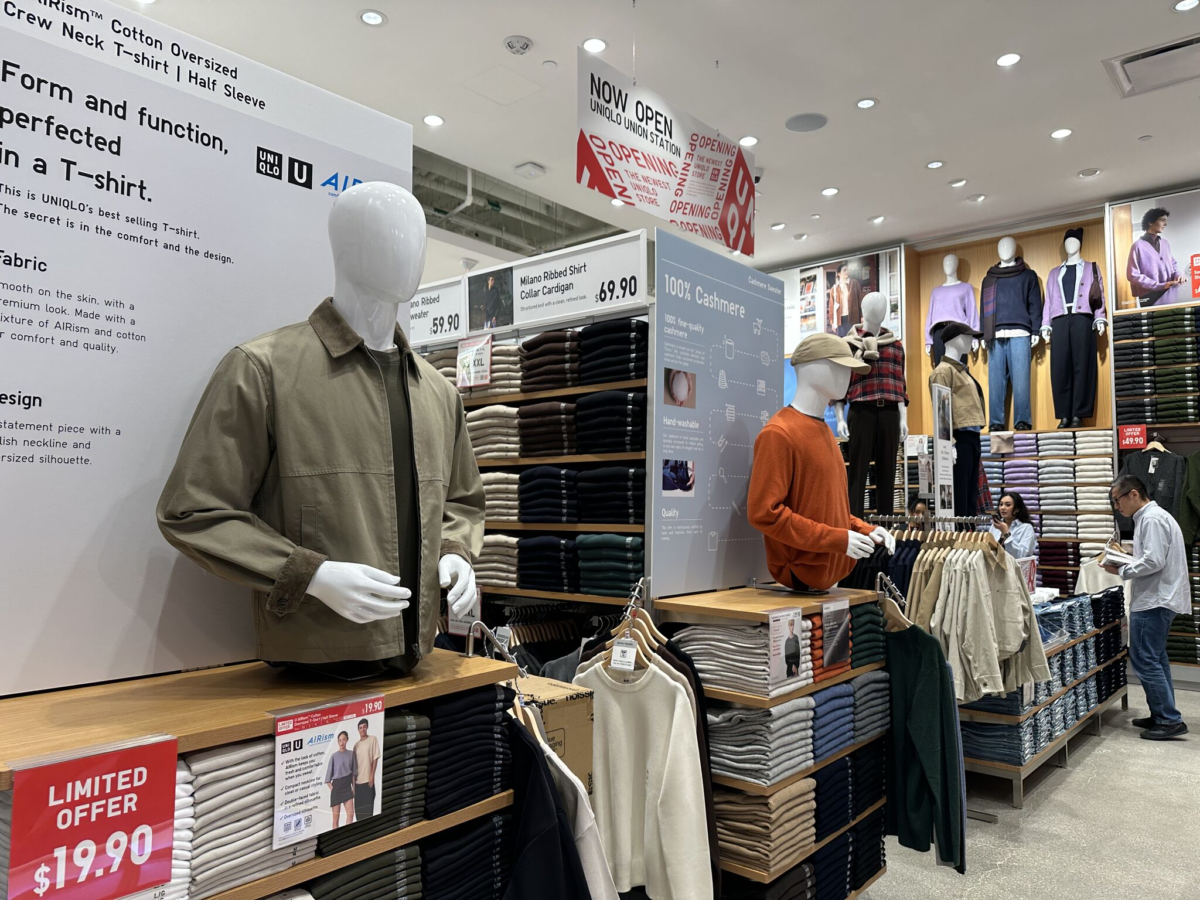
Unlike larger suburban mall stores, the Union Station unit is more compact, designed for quick shopping trips rather than extended browsing. The curated 3,500-square-foot footprint represents Uniqlo’s smallest store in Canada to date.
The retailer replaces French sporting goods chain Decathlon, which shuttered its Union Station location after just three years of operation. Decathlon has been scaling back its Ontario presence, with multiple closures announced in recent months.
Product Offering for Commuters as Part of a Larger Canadian Expansion
Despite its smaller size, the Union Station store offers Uniqlo’s complete LifeWear collection for men, women, and children. The assortment includes core items such as Ultra-Light Down jackets, fleece, denim, and the company’s proprietary HEATTECH and AIRism technologies tailored to Canada’s climate.
The Union Station store represents only one piece of Uniqlo’s broader Canadian growth strategy. The brand currently operates 34 stores nationwide and plans to reach 37 by year’s end, expanding its footprint across British Columbia, Alberta, Quebec, and Ontario.
This summer, Uniqlo debuted at Place Ste-Foy in Quebec City and Galeries d’Anjou in Montreal, both of which drew strong crowds. By fall 2025, new stores will open at Mayfair Shopping Centre in Victoria, South Edmonton Common, CrossIron Mills near Calgary, and Galeries de la Capitale in Quebec City.
Uniqlo’s Canadian expansion is managed by Jeff Berkowitz Aurora Realty Consultants, which oversees site selection and negotiations. The retailer’s strategy has been described as measured but steady, focusing on long-term growth in markets where its value proposition resonates with a broad consumer base.
Uniqlo at Union Station. Image: Joel John
Union Station’s Retail Transformation
Uniqlo’s opening is also part of Union Station’s retail reinvention. Over the past decade, the station has undergone a multi-billion-dollar revitalization that has introduced approximately 160,000 square feet of retail space alongside food courts, concourses, and expanded PATH connections.
The retail plan is managed through a partnership between Osmington Inc., which holds a 75-year lease with the City of Toronto, and Beauleigh Retail Consultants, which has curated the tenant mix. The vision is to make Union Station a dual-purpose space: both a commuter hub and a shopping destination.
Recent retail additions include Miniso, HARVEST Clean Eats, and French bakery Nord Lyon, all of which have contributed to a diversified offering. Union Station’s tenant mix now reflects an emphasis on convenience retail, fast-casual dining, and lifestyle concepts designed to meet the needs of travellers and downtown residents alike.
A Global Retail Powerhouse
Founded in 1949 in Ube, Yamaguchi, Japan, Uniqlo began as a small menswear shop before transforming into a global apparel powerhouse under parent company Fast Retailing Co., Ltd.. Its rise accelerated in the 1990s during Japan’s economic slowdown, when affordable, high-quality basics gained mass appeal.
Uniqlo distinguishes itself from traditional fast-fashion brands by focusing on essentials and fabric innovation rather than fleeting trends. Its philosophy, “Made for All,” emphasizes universal design and functional clothing accessible across age, gender, and lifestyle.
The brand is best known for innovations such as HEATTECH, AIRism, and Ultra-Light Down, a fabric technologies that enhance comfort and performance. Founder and chairman Tadashi Yanai has compared Uniqlo’s approach to that of Apple, prioritizing product innovation over seasonal fads.
Today, Uniqlo operates thousands of stores across Asia, North America, and Europe, competing with rivals like Zara and H&M but with a more technology-driven, essentials-focused strategy.
Market Position in Canada
Since entering the Canadian market in 2016 with flagship stores at CF Toronto Eaton Centre and Yorkdale Shopping Centre, Uniqlo has pursued a strategy of nationwide expansion. Its approach blends flagship stores in major malls with mid-sized stores in suburban centres and, now, smaller commuter-focused concepts like Union Station.
By the end of 2025, the company’s 37-store footprint will position it as one of Canada’s fastest-growing international apparel chains. Its appeal lies in offering affordable basics that bridge the gap between fast fashion and premium brands, filling a niche for consumers seeking both value and quality.
Industry observers note that Uniqlo’s ongoing expansion, particularly in secondary markets such as Victoria and Quebec City, underscores its confidence in long-term Canadian demand. With Canadian consumers increasingly value-conscious, Uniqlo’s essentials-based model continues to resonate.
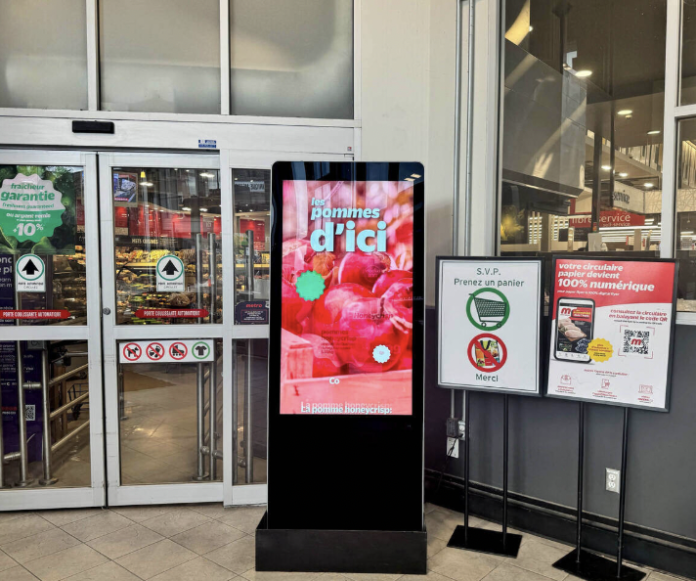
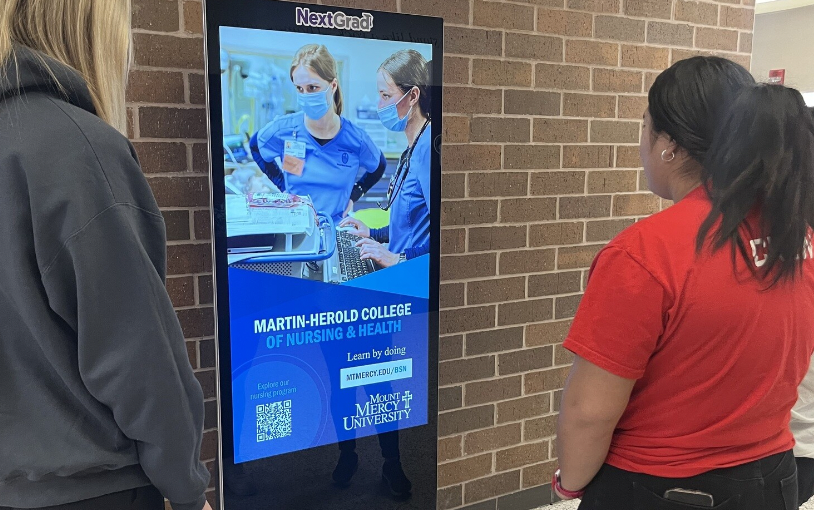
As retailers across the globe ramp up investment in retail media, Canadian grocers and merchants are moving quickly to close the gap, particularly when it comes to integrating in-store digital solutions. That’s according to Sean Cheyney, Head of Retail Media at Vistar Media, a global leader in digital out-of-home (DOOOH) technology.
Vistar Media recently launcheda new studyexploring the trends shaping the future of in-store retail media, and the consumer sentiment towards it.
Key figures include:
In the US, 96 per cent of consumers have a positive or neutral view of retail media (or in-store DOOH).
23 per cent said the ads made them think about brands or products they wouldn’t have considered.
50 per cent of consumers felt DOOH improved their shopping experience and found the ads appealing—highlighting the importance of high-quality, eye-catching creative.
Storefront Ads are the strongest drivers of purchase with 58% of viewers buying an advertised product.
Sean Cheyney
“Vistar is the world leader when it comes to providing solutions for digital out-of-home,” said Cheyney. “We power a vast majority of all digital screens across the globe, roughly 1.2 million screens, with a variety of products.”
These solutions range from ad servers and player software to programmatic offerings like mediation layers, SSPs, and a buying platform (DSP) for digital out-of-home media.
When it comes to retail media adoption, Cheyney said most retailers are already engaged to some degree. “I’d say the majority of retailers are doing something as it relates to retail media at this point. It’s pretty unusual to find a retailer who’s not participating in any way,” he said.
However, there’s a clear split between online and in-store strategies.
“In Canada, there’s more of a ‘dipping your toe in the water.’ More is happening on the digital side of retail media than the in-store side right now,” said Cheyney. “That said, a lot of retailers are starting to play around and take steps to integrate the in-store piece into the rest of their retail media business.”
Retailers are realizing that while digital ads have limits, their brick-and-mortar spaces offer untapped potential.
“You can only add so many ads on your website before it starts to become a bad customer experience,” Cheyney explained. “So they’re looking for new, high-quality ad inventory that brand suppliers are going to be interested in that doesn’t negatively impact the customer experience, but instead helps people along their shopper journey.”
Cheyney said the push toward in-store retail media is both “an offensive and a defensive move.”
From an offensive perspective, he said grocers are competing for limited supplier trade dollars. “Let’s say you’re Loblaw. Your suppliers are also being sold at Sobeys, at Metro, at Save-On-Foods. They’re looking where to invest trade dollars,” he said. “If a brand has a certain amount of trade dollars allocated, they’re probably going to shift a little bit more from competitive sets into somebody who makes this inventory available first.”
On the defensive side, inaction could cost retailers valuable media dollars. “If your competitors are starting to run pilots for their in-store, and you don’t do something, you’re at risk of losing out not only on trade dollars but also media dollars that are coming from the agencies,” he said.
So where does Canada stand compared to other global markets?
“In comparison to the U.S. and even the U.K., I’d say Canada is behind, both on the digital and the in-store side,” said Cheyney. “Even retailers in Germany, France, and other European markets are ahead, though they’re catching up at a faster pace.”
He noted that U.S. retailers like Walmart have had retail media programs for over two decades, while Canadian companies such as Loblaw only began to seriously scale their efforts in the past few years. But that’s changing fast.
“Canada was late to the game, but it’s catching up quickly,” Cheyney said.
Photo: Vistar Media
One area still lagging is data and identity. “Being able to track people from a targeting and measurement perspective is not at the same level as other global markets,” he said. “But that’s also catching up rapidly.”
Cheyney believes Canada’s in-store retail media segment is poised for rapid growth. “The in-store component is also closing the gap and will likely catch up very quickly within the next 12 to 18 months,” he said, adding that Canada will likely follow the U.S. path in combining digital with in-store strategies.
Retailers here, he added, have a valuable opportunity to avoid some of the missteps seen in more mature markets.
“One thing I’ll say, and this is where Canadian retailers can really benefit, is by learning from mistakes made in other markets, especially the U.S.,” said Cheyney. “When people go too fast without thinking about their objectives and strategies, they often make decisions they later regret.”
He described common pitfalls, including assuming screen installations lead directly to proportional revenue. “They’ve said, ‘Oh, if we have two screens, we’ll make X amount. So, four screens means double, and eight means quadruple.’ But that’s not how it works.”
“Adding more screens doesn’t change the number of people walking into your store,” he added. “And plastering your store with screens just creates a bad customer experience.”
Cheyney said Vistar encourages a more thoughtful, measured approach. “We advise retailers all over the world to be very intentional with what they’re doing.”
The good news? Canadian retailers seem to be doing just that.
“What I’ve found is that Canadian retailers are already thinking that way. They don’t need coaching to start thinking strategically, they already are,” he said. “They’re watching the pitfalls others have encountered and saying, ‘Let’s start with a firmly entrenched strategy and be intentional with everything we do.’”
In response to the Leader of the Official Opposition’s calls recently to scrap the Temporary Foreign Worker program, Restaurants Canada says that without enough staff for key roles, restaurants in rural and remote communities risk reduced hours, closures, and lost local jobs.
Temporary Foreign Workers (TFWs), while making up only 3% of the foodservice workforce, play a vital role in sustaining operations in underserved areas. These workers: predominantly skilled chefs and cooks are often the cornerstone of a restaurant’s ability to operate and maintain operations. The realities of the aging labour market in many of these areas, means chefs and cooks are simply not available, said the national organization.
Kelly Higginson
“Our ask is simple,” said Kelly Higginson, President and CEO of Restaurants Canada. “Let’s work together to ensure rural and remote communities have a supply of key labour positions to protect the small businesses, support communities, and ensure Canadians can continue to enjoy the food, hospitality, and culture our restaurants bring to the table. Restaurants are looking for permanent solutions, not temporary ones.”
Temporary Foreign Workers are not a low-cost option for labour, but a last resort for restaurants in many areas. The costs of bringing in TFWs can be as high as $8,600 per worker. The preference has always been to hire locals, explained the organization.
“Forty percent of the restaurant industry’s workforce is currently youth, and the industry has long been the #1 source of first-time jobs for youth for decades,” it said.
Restaurants Canada is a national, not-for-profit association advancing Canada’s foodservice industry. Restaurants are a $120 billion industry employing nearly 1.2 million Canadians and the number one source of first-time jobs in Canada, it says.
After a tumultuous first quarter, the outlook for the foodservice industry has moderated thanks to a cooling of tariff war rhetoric and a slight uptick in consumer confidence, but operators remain cautious, according to the organization’s Q2 Quarterly Report.
Restaurants Canada said it expects real commercial foodservice sales to experience -0.5% to 0.5% growth in 2025 and a 0.1% to 0.6% decline in 2026.
In the first four months of 2025, commercial foodservice sales grew by a solid 6.6%, supported in part by the GST/HST holiday in January, explained the national organization. With headwinds picking up speed again and a majority of restaurants having to increase prices, it is urging the federal government to permanently exempt all food, including restaurant meals, from GST/HST.
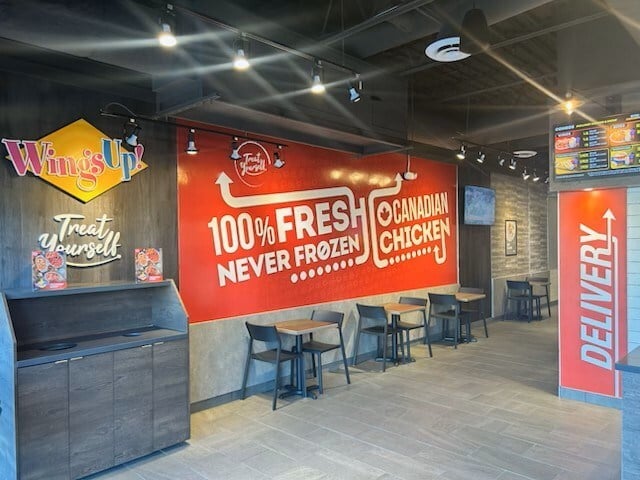
WingsUp! Restaurants, a fast-growing takeout and delivery brand specializing in fresh chicken wings, is ramping up its national and international expansion plans with new locations opening in Vancouver and Surrey, and ambitious targets across Canada and the United States.
The brand, which started in Milton, Ontario in 1988, has a loyal customer base thanks to its focus on fresh, never frozen wings and gourmet sauces. “For the longest time it was just one store. It built the following in the community. People really love the fresh never frozen chicken wings and the gourmet sauces and things like that,” said Czarnogorski.
Darren Czarnogorski
The second WingsUp! location opened in Burlington, Ontario in 1995, and growth has steadily followed, including recent expansions westward.
The brand is actively looking to expand further in northwest Calgary. “Finding locations is a little bit tough just because it’s a very, very tight market when it comes to real estate it seems like,” said Czarnogorski.
In British Columbia, WingsUp! is beginning construction in Surrey and a recent opening on Kingsway in Vancouver.
Looking ahead, Czarnogorski has clear expansion goals: “For the Alberta market, we’re targeting about 30 restaurants between Edmonton, Red Deer, and Calgary. We think that’s kind of a reasonable amount of restaurants given the population and the growth that’s happening in Alberta.”
He added: “In the B.C. market, I would say it’s about similar, 30 to 40 restaurants. There’s the Lower Mainland, which can have quite a few restaurants as well. Surrey as well as Vancouver Island. So, there’s a lot of growth there for sure.”
While WingsUp! is focused on Ontario, Alberta, and B.C., Czarnogorski said they’ve had requests from other provinces. “We get requests sometimes from the East Coast, Newfoundland and Nova Scotia, and those are great markets. We’re just not 100% ready to jump into those.”
The brand is also setting its sights on the U.S., where it recently cleared a key hurdle. “We just got our FDD (Franchise Disclosure Document) about six months ago,” he said. “The U.S. states that we’ve kind of identified are Texas and Florida. And now recently we kind of identified Georgia as another potential nice spot to open with a lot of potential.”
When it comes to footprint, the brand is a takeout and delivery model, not a full dine-in restaurant. “In Canada, we target anywhere from like 1,200 to 1,600 square feet. In the U.S. it’ll be closer to about 1,500 to 2,000 square feet.”
“We’re not big on seating, maybe at a maximum 20 seats. We really focus on delivering to people’s homes and people coming in for takeout,” he explained.
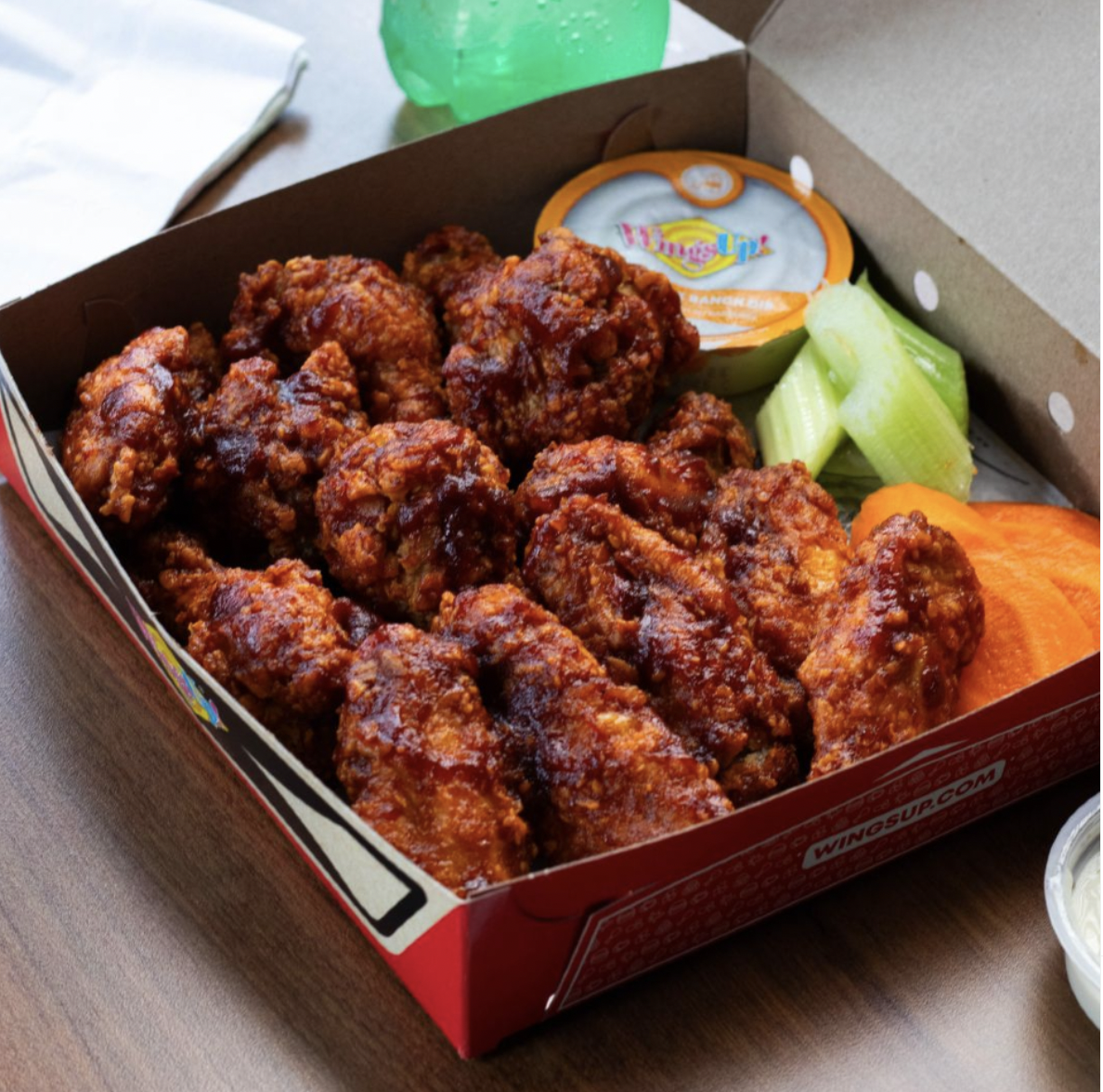
Photo:WingsUp! Instagram
So, what separates WingsUp! from competitors in an increasingly crowded space?
“I would say first and foremost we focus on quality. A lot of places will have wings as an afterthought. We don’t really get into beer that much. Like we have a few restaurants that are licensed, but we’re not focused on alcohol sales,” said Czarnogorski.
“We focus on our fresh, never frozen chicken wings, focused on our gourmet sauces and making sure we deliver on a nice experience. And I would say that’s the biggest differentiator.”
As for site selection, Czarnogorski is clear about what makes a great location: visibility, accessibility, and proximity to residential areas. “We like parking, especially in suburban areas. We want convenience so people can come and go and pick up their products,” he said.
“We always want to be in the centre of good urban density because we do a lot of evening and late-night deliveries, people sitting, watching Netflix, ordering Amazon and they want to order food. So we fill that void and we want to be close to their homes, be able to deliver quickly within 20–30 minutes. And that’s our focal point.”
WingsUp! continues to serve up a strong growth trajectory while staying close to its original formula—delivering quality wings with speed and consistency to hungry customers across Canada.
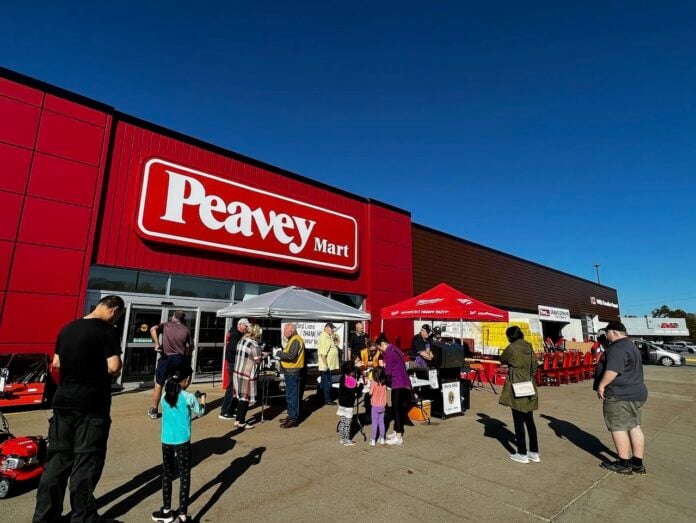
Peavey Mart, Canada’s largest farm and ranch retail chain, which officially announced the closure of all its 90 stores nationwide earlier this year, has now announced it is coming back this Fall.
The company said many customers learned recently that Peavey Mart is planning to reopen in select locations in Alberta.
“This announcement was made public and shared prematurely, and while this leak was unintentional, we are excited to share that Peavey Mart is coming back to Spruce Grove, Westlock, Camrose and Lacombe this fall, and will include many of your favourite brands back on store shelves. Peavey Mart stores will reflect the needs of customers by providing reliable and relevant products, focusing on high quality, unique, and locally sourced items that highlight the Canadian entrepreneurial spirit,” it said on its website.
“The revival will bring back the Peavey Mart that people know and love – a Peavey Mart focused on the needs of the farmer, rancher, acreage owner, and homesteader with a strong emphasis on providing value for dollars spent in our stores.
“More information will be released in the coming weeks, and we invite you to celebrate with us as we look forward to providing the service and selection of hardware and a whole lot more that customers have relied on for decades.”
The brand’s closure earlier in the year marked the end of a nearly six-decade-long legacy for the Alberta-based retailer, which has been a staple in Canada’s rural and suburban retail market.
The decision followed the company’s filing for creditor protection under the Companies’ Creditors Arrangement Act (CCAA), granted by the Court of King’s Bench Alberta and the closures affected 90 Peavey Mart stores and six MainStreet Hardware locations.
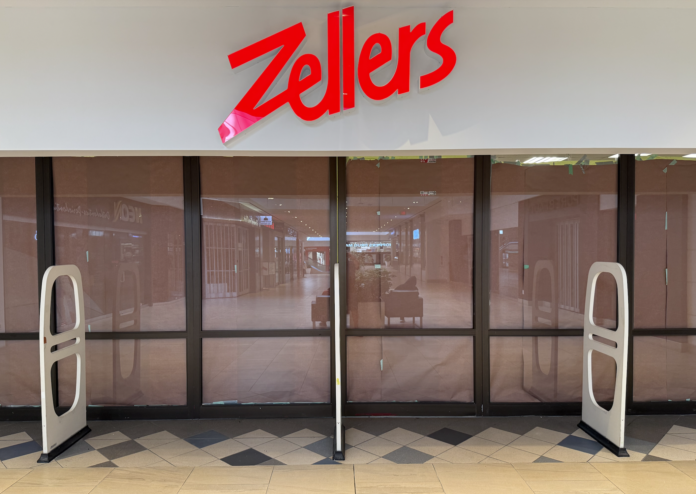
News that Zellers, the once-dominant Canadian discount retailer that disappeared from the national retail landscape more than a decade ago, is making another comeback has been met with great anticipation and hype but retail experts and consumers are still wondering when the brand will actually re-launch in Edmonton.
The first new store, spanning 60,000 square feet, to open at Londonderry Mallin Edmonton, confirmed by landlord Leyad, which owns the shopping centre, was expected to open August 29 in the former Hudson’s Bay location, making this the first announcement of a tenant filling a former Hudson’s Bay space since the department store chain’s collapse earlier this year.
Then it was going to open September 1 and people lined up for that, but the store didn’t open.
According to a media report: “In an email to CTV News Edmonton on Friday, mall management said the store would open in October, but did not provide a date.”
Londonderry Mall. Photo: Mario Toneguzzi
Bruce Winder, a retail analyst and author, said: “It is unfortunate that the opening of new Zellers store in Edmonton has been so significantly pushed forward to next month.
“Obviously, the company running the new launch should have ensured they were almost 100% a go before notifying the media and getting customers excited. But stuff happens in the world of retail.
Bruce Winder
“Now the re-launch of the Zellers brand could be somewhat tainted in the eyes of Canadians. ‘Here we go again’. However, customers will forget about the tardiness of the launch over time if the store exceeds expectations once open.”
“We are thrilled to bring back a beloved Canadian brand that stirs up nostalgic memories for many of our shoppers, while providing an opportunity to introduce Zellers to a new generation,” said Henry Zavriyev, CEO of Leyad, on August 28 when the company made the announcement. “This announcement represents a bold step forward in reimagining retail space and responding to community demand with purpose and vision.”
The transformation of the former Hudson’s Bay store—closed in June 2025—into a vibrant new Zellers location was completed in under two months, showcasing Leyad’s commitment to swift, strategic redevelopment, said the company.
Londonderry Mall. Photo: Mario Toneguzzi
Michael Kehoe, Broker of Record, Fairfield Commercial Real Estate, said: “The return of Zellers to the Canadian retail scene with the debut of a store at Londonderry Mall in Edmonton was highly anticipated in recent days. Prototype retail projects of this scale are complex endeavors and dependent on a multitude of things aligning on schedule to ensure they open on time.
Michael Kehoe
“If any one or two factors fail to come together in an orderly way it can throw the entire project off schedule and delay a store opening. You only get one chance to make a good impression with shoppers, and I hope things can get back on track for a successful Canadian solution for this key anchor position at Londonderry with a 60,000 square foot store. I am sure this will continue to be a national good news Canadian retail story.”
The newly reimagined Zellers will offer a wide range of stylish clothing lines for women, men, and youth, alongside contemporary home décor—blending the brand’s rich heritage with modern design and value-driven offerings, explained Leyad
“This launch at Londonderry Mall is not just the return of a brand—it’s the beginning of a new chapter for a retailer woven into Canada’s cultural fabric,” it said.
Londonderry Mall. Photo: Mario Toneguzzi
Perhaps the most intriguing element of Zellers’ return is the question of who now owns and operates the brand.
A previous Retail Insider story noted: “The Hudson’s Bay Company (HBC) previously held Zellers’ intellectual property, having run the chain for decades before selling most of its store leases to Target in 2011. While Canadian Tire purchased HBC’s intellectual property portfolio during its bankruptcy earlier this year, it did not acquire the Zellers name. This leaves uncertainty around how the brand has re-emerged in Edmonton.
“When asked directly, Zavriyev declined to identify the new operator. “It’s a Canadian group that operates a number of other brands,” he said, adding only that “they know what they’re doing.”
“Retail Insider reached out to industry sources, one of whom strongly speculated that the owner may be INC Group, parent company of Fairweather, International Clothiers and Randy River. The company has experience in discount and value-focused retail, and was recently working on a ‘big project’ in Edmonton.”
Retail Insider is streamlining its Canadian retail news from around the web to include a handful of top news stories that can be viewed quickly during the day. Here are the top stories from the past several days.