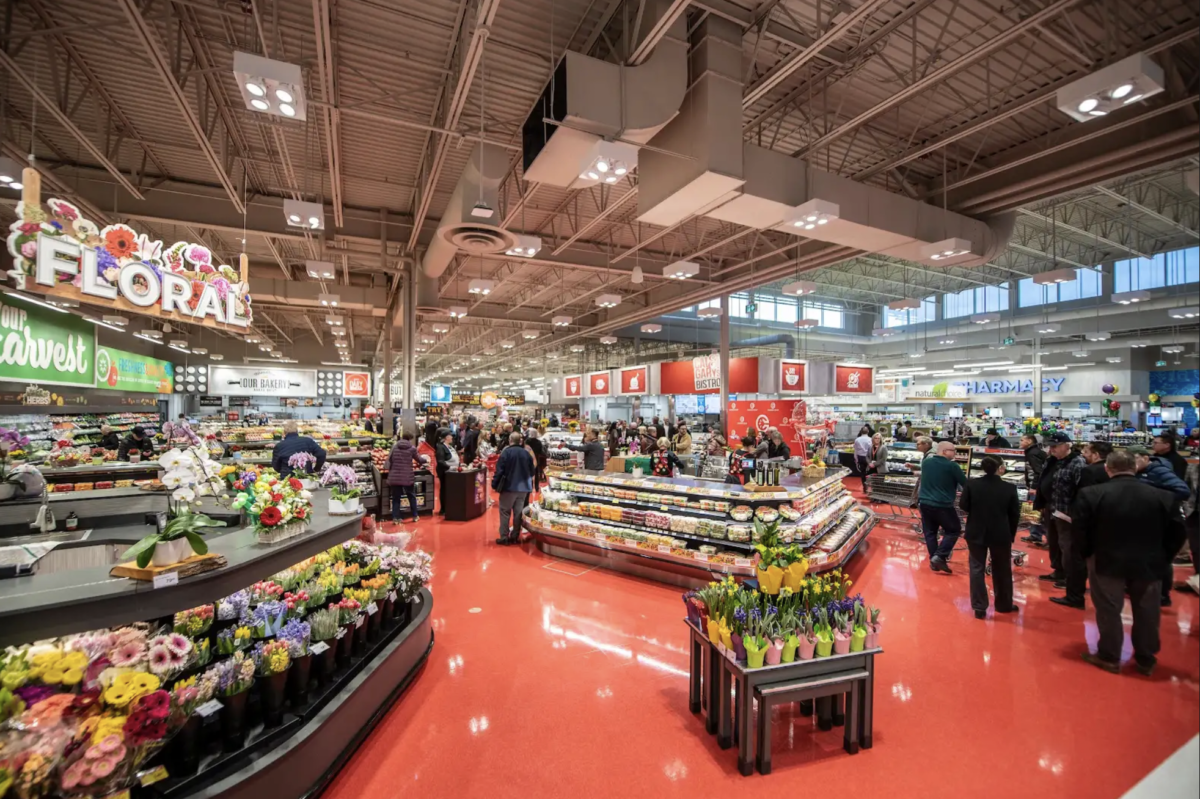
Damon Tanzola, Shane Kostryba, Mark Luthin, Jeff Ambrose and Ward 11 City Councillor, Kourtney Penner, celebrating the official ribbon cutting of Calgary Co-op’s new Oakridge location.
Calgary Co-operative Association Limited (Calgary Co-op) has officially opened its newly-built Calgary Co-op food store in the SW neighbourhood of Oakridge. Spanning 53,000 square feet, the new space includes a 48,000 square foot food store and an additional 5,000 square feet of retail space for new tenants, which will be announced later this year.
“This new food store is a significant milestone in Calgary Co-op’s ongoing commitment to providing our members with a convenient and innovative shopping experience. This grand opening is just the beginning, marking the completion of Phase 2 in what will be a transformative redevelopment in Oakridge”, said Damon Tanzola, Senior Vice President, Real Estate and Health & Wellness for Calgary Co-op.
Damon Tanzola
Co-op said future plans to the area include modern commercial, office, residential and community spaces, with the entire development projected to be completed by the end of 2026. Currently, Calgary Co-op operates its Wine, Spirits and Beer, Gas Bar and Cannabis on-site, as well as manages the leasing to a diverse mix of existing tenants.
“The new store features advanced design and technology, including CO2 based refrigeration units, for high efficiency, and low carbon emissions, and energy efficient LED lighting throughout. It offers the same popular features as other Calgary Co-op locations, including an expanded meat section, dry-aged beef, an oyster bar, a stand-alone floral and produce counter, a deli ready-to-eat meals, a health and wellness section, and a community room,” said the grocery chain.
Source: Calgary Co-op
“A standout addition is the Pharmacy Walk-In Clinic, offering comprehensive health services. Customers can book online for consultations, vaccinations and injections, prescription renewals and new prescriptions for minor ailments. The clinic includes three private consultation rooms, one equipped for families.
“Additional services include travel health advice, strep throat testing, diabetes management, chronic disease management, lab requisitions, and access to your prescription profile via advanced technology.”
The company said the store features a drive through pick up lane for a seamless online shopping experience- ideal for parents or those with mobility issues.
The project was developed by Elan Construction Limited (Elan Construction), who has partnered with Calgary Co-op on numerous projects in the past.
“We’re excited to once again collaborate with Calgary Co-op on this project. The Oakridge development stands as a testament to our shared dedication to creating sustainable, community-centered spaces. By incorporating eco-friendly technology and innovative design, this food centre is set to be a dynamic, lasting hub that serves and inspires the community for years to come,” said Todd Poulsen, President of Elan Construction
Source: Calgary Co-op
Originally established by local farmers and ranchers, Calgary Co-op opened its first store in 1956 and has been serving the community of Oakridge since 1976.
Locations in Calgary, Airdrie, Cochrane, High River, Okotoks, and Strathmore include food centres, pharmacies, gas stations, car washes, Home Health Care centres, Wine, Spirits, and Beer locations and cannabis. In addition, Calgary Co-op owns and operates Community Natural Foods, Beacon Pharmacies, and Willow Park Wines & Spirits and is the majority shareholder of Care Pharmacies.
It has over 400,000 members, 3,500 employees, assets of $700 million and annual sales of $1.4 billion.
Food Processing Skills Canada (FPSC) has launched three new programs in support of Canadian food and beverage businesses and their employees. These programs will make it easier for businesses to recruit, train and retain people to ensure that the Canadian production of food and beverage remains strong and resilient, despite threats to Canada’s sovereignty and economy.
Jennefer Griffith
“With the political threats and rapidly changing expectations from our US trading partner, it has been a challenging time for businesses and Canadians at large, but it’s also a time of potential for the food and beverage manufacturing industry – a time to invest in the people of this industry and build prosperity for the future,” said Jennefer Griffith, Executive Director, Food Processing Skills Canada.
The following three programs are immediately available to Canadian, in addition to the suite of resources offered by FPSC.
In support of the highest safety standards in Canada’s industry, FPSC said it has developed a new initiative, Investing in Food Safety, offering up to 70% reimbursement for employee training costs. The new training bundles provide an exceptional opportunity for businesses to elevate food safety and quality assurance skills for frontline workers and supervisors. Dedicated e-learning curricula for food safety basics and quality assurance principles, and Chromebooks for easy access to the training materials, make learning accessible.
To facilitate connections between post-secondary students and Canadian employers, FPSC has secured renewed funding for the Student Work Placement Program, it said. Food and beverage businesses can access up to $7,000 per student, per term for a co-op placement this summer, fall and winter. Students value industry jobs as a way to bridge academic learning with real-world application and an opportunity to apply fresh ideas and innovative new skills. For businesses, research has shown that work placements provide a positive shared experience for employers and students that often lead to full time engagement post-graduation.
To build on the successful pilot of Refine Yourself —Leading with Emotional Intelligence, FPSC said it is launching a new cohort for 50 manager-level individuals at no cost for participation. This four month program is designed to build leadership skills and support professional development for managers through a practical approach to developing emotional intelligence skills. The program utilizes a blended learning approach with the Acahkos Plus Challenge, live webinars, and e-learning modules on self-leadership, team management, and organizational impact.
Mike Timani
“As an organization, we are responding to the current trade environment by increasing our program offerings to ensure Canadian operations continue to run smoothly and workforces continue to provide the very best Canadian food and beverage products for consumers,” Mike Timani, Chair, Food Processing Skills Canada.
Funding for Refine Yourself is provided by the Government of Canada’s Future Skills Program. Funding for student work placements is provided by the Government of Canada’s Student Work Placement Program. Funding for Investing in Food Safety is provided through a partnership with the Social Research and Demonstration Corporation.
Food Processing Skills Canada is the food and beverage manufacturing industry’s skills training and workforce development organization. As a non-profit located in Ottawa with representatives across Canada, the organization supports food and beverage manufacturing businesses in developing skilled and professional employees and workplace environments. The work of Food Processing Skills Canada directly and positively impacts industry talent attraction, workforce retention, and employment culture. Through partnerships with industry, associations, educators and all levels of government in Canada, the organization has developed valuable resources for the sector including FoodAbility, Food Skills Library, Canadian Food Processors Institute, FoodCert, and the Labour Market Initiative.
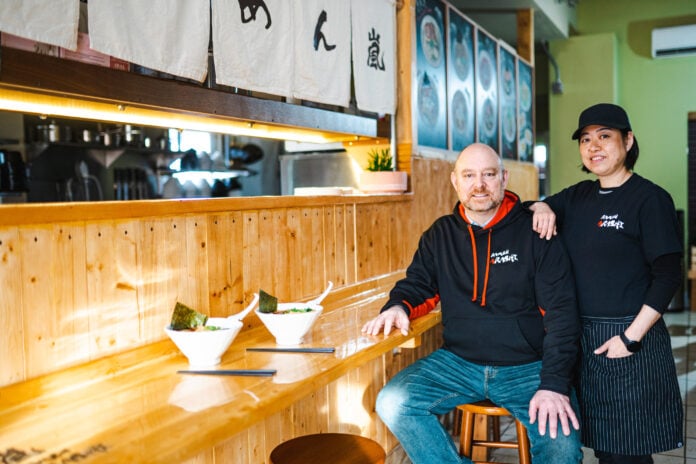
Yuko Takemoto and Al (CNW Group/Arashi Dining Group Ltd.)
Ramen Arashi, the beloved ramen shop that has taken Victoria by storm, is expanding to Langford, offering authentic, soul-warming Japanese ramen to the West Shore. As the first and only dedicated ramen shop in the area, Ramen Arashi Langford promises to become a go-to destination for ramen lovers, athletes, families, and food enthusiasts alike.
The move to Langford is in response to growing demand from the community. “For years, we’ve welcomed guests from Langford at our Victoria location. Again and again, they told us the same thing: ‘We need a Ramen Arashi in the West Shore.’ We listened,” said Allan Nichols, co-owner of Ramen Arashi. “With Langford’s incredible growth and the city’s vibrant community, opening our next location here was an obvious choice.”
Allan Nichols
This is the sixth location in the expanding family, joining existing sites in Banff and Victoria. The new location will feature the same menu as the Victoria store, but with a larger, enhanced dining space to accommodate more guests. The restaurant will nearly double the size of the Victoria location, offering more seating and a more comfortable dining experience while staying true to the brand’s roots.
True Japanese Ramen with a Focus on Community
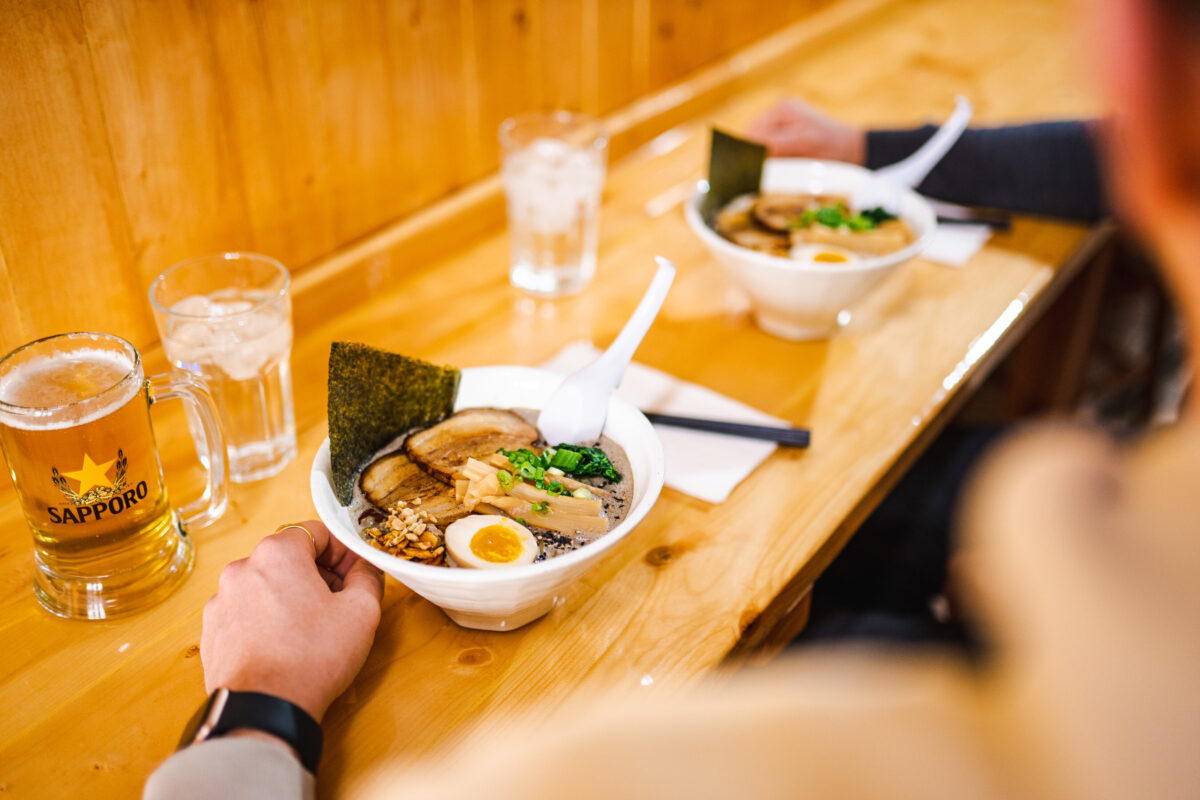
The restaurant distinguishes itself by staying true to the origins of ramen as a quick, satisfying, and comforting meal for everyday people. While many North American ramen spots cater to trendy crowds, it focuses on offering a true Japanese experience—ramen that is affordable and accessible for everyone. “In Japan, ramen is a staple for families, workers, and students—a comforting and accessible dish for people of all ages. That same philosophy is at the heart of Ramen Arashi’s expansion to Langford,” said Yuko Takemoto, co-owner.
Hot bowls of (CNW Group/Arashi Dining Group Ltd.)
The Langford location, strategically located near community hubs like the YMCA, BoulderHouse climbing gym, and rugby pitches, is perfectly situated to serve active families and athletes. “With the YMCA next door, a mountain bike course just minutes away, and rugby pitches, Pacific FC’s home stadium, an ice rink, and a bowling alley all nearby, Ramen Arashi Langford is perfectly positioned to fuel hungry athletes, spectators, and active families,” Yuko added.
Expanding the Ramen Arashi Brand
The company journey began eight years ago in Banff, when founders Kentaro and Yuji, two Japanese chefs, decided to share their passion for the authentic cuisine with Canada. Allan Nichols, who had worked with Kentaro and Yuji over 30 years ago, helped bring the brand to Victoria. The overwhelming success of the Victoria location, often with wait times exceeding an hour, made it clear that expansion was needed.
“Guests from further north on Vancouver Island and even from mainland communities have told us they would love to see Ramen Arashi in their cities,” said Allan. “While there are no immediate expansion plans, we are always looking for the right opportunities.”
A hot bowl f (CNW Group/Arashi Dining Group Ltd.)
Creating Jobs & Bringing Warmth to Langford
The Langford location will create over 40 new jobs in the community, hiring both part-time and full-time staff, including managers, servers, and kitchen staff. The restaurant seeks individuals who thrive in a fast-paced environment and share a love for ramen and Japanese hospitality. Staff training includes not only food preparation but also language skills to enhance the authentic experience.
Designed to offer a cozy, welcoming atmosphere, the Langford location will mirror the aesthetic of the Victoria store, featuring warm wood, family-style bench seating, and an expanded bar area. With its larger space, the restaurant aims to reduce wait times and accommodate more guests eager to enjoy its signature bowls.
Ramen Arashi (CNW Group/Arashi Dining Group Ltd.)
Grand Opening and Updates
While the official opening date for Ramen Arashi Langford is still to be announced, guests can stay up to date on the latest news by following @ramenarashivictoria on Instagram. Although delivery services will not be available initially, guests are encouraged to dine in and experience the full atmosphere of Japan’s cherished comfort food.
As the Ramen Arashi family continues to grow, Langford is set to become the newest hotspot for those craving an authentic taste of Japan’s beloved ramen.
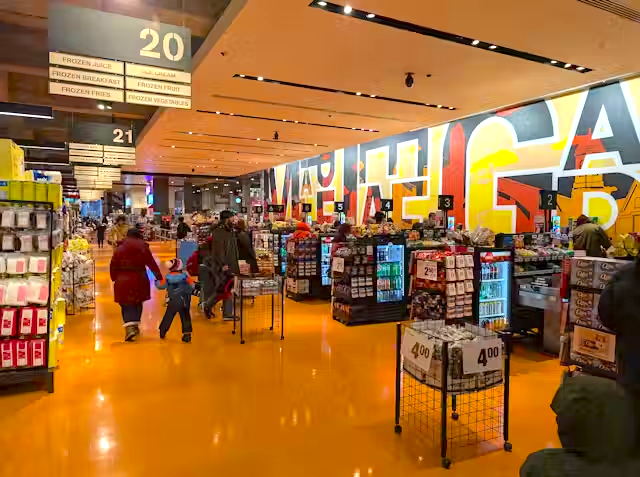
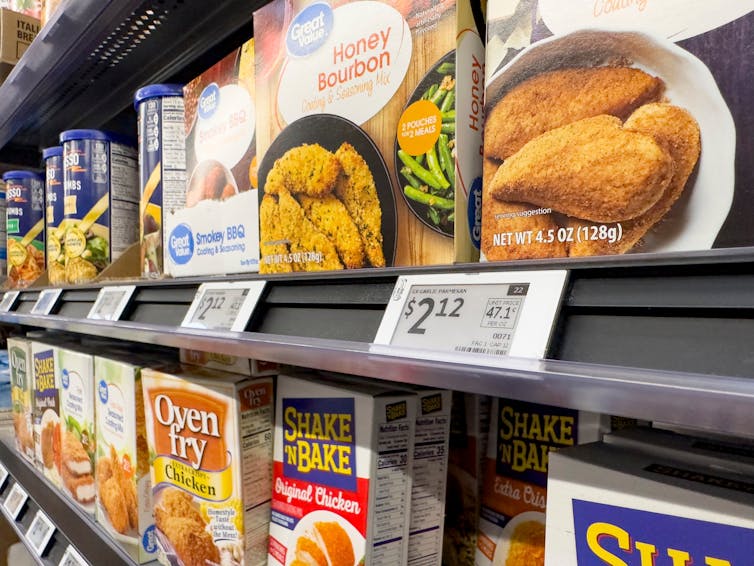
The conduct of large Canadian grocery chains such as Loblaws, whose flagship Maple Leaf Gardens location is pictured in this January 2025 snapshot, has come under fire as Canadians face rising grocery costs. (Author provided)
The first months of Donald Trump’s presidency have been defined by a single word: tariffs. He has framed tariffs as a panacea to the woes of the American economy, promising they will restore the country’s manufacturing sector and reduce the national deficit.
Soaring grocery bills have been a major concern for Canadians long before Donald Trump’s presidency. Customers shop in a No Frills grocery store in Toronto in May 2024. THE CANADIAN PRESS/Chris Young
In response to the mounting concerns, the federal government met with the heads of Loblaw, Sobeys, Metro, Costco and Walmart in 2023 to discuss stabilizing grocery prices in Canada. Former Prime Minister Justin Trudeau would threaten and later implement amendments to the Competition Act through Bill C-56, although these reforms were focused less on immediately lowering grocery bills and more on giving new tools to Canada’s competition watchdog.
Investing in the future
Another area of concern is the initiatives supermarket chains such as Loblaw and Metro have been investing their profits in.
There is little reason to believe Canada’s grocery industry will reform itself. Many of the pro-consumer and pro-worker initiatives put forth by these chains have amounted to little more than public relations moves.
Loblaw’s widely publicized price freeze on No Name products was similarly criticised for its short duration and for merely repackaging seasonal price freezes as a pro-consumer initiative.When Loblaw froze prices on No Name products in 2022, its competitor Metro quickly pointed out that seasonal price freezes are in fact a standard industry practice. (CBC News)
The question remains: what concrete measures can be implemented to safeguard Canadian grocery bills as our country navigates this next crisis?
Lowering grocery bills for Canadians
A report from the Broadbent Institute suggests the idea of a windfall profit tax, which would incentivize grocery companies to invest excess profits into price reductions or higher wages.
A more durable reform would involve creating a central bank-style regulatory entity to oversee the grocery industry, instead of relying on industry-born measures such as Canada’s recently introduced grocery code of conduct.
Federal or provincial legislation could be also passed that places guardrails on dynamic pricing in the grocery aisle, if not banning the controversial practice altogether. Government grants and tax incentive programs could be withheld from companies that invest heavily into automating workforces so the government isn’t inadvertently subsidizing job losses.
The Competition Bureau’s 2023 report highlights another key issue: there is a need for all levels of government to shift from subsidizing large chains and encourage the growth of independent grocers in the Canadian market, driving down prices for consumers through meaningful, local competition.
Trump’s trade war has filled Canadians with a newfound pride and motivation to buy local to support the economy. Perhaps it’s time our grocery chains showed the same commitment to the people they serve.
About the Author:
Mathew Iantorno is a Doctoral Candidate, Faculty of Information, at the University of Toronto.
Retail Insider is streamlining its Canadian retail news from around the web to include a handful of top news stories that can be viewed quickly during the day. Here are the top stories from the past three days.
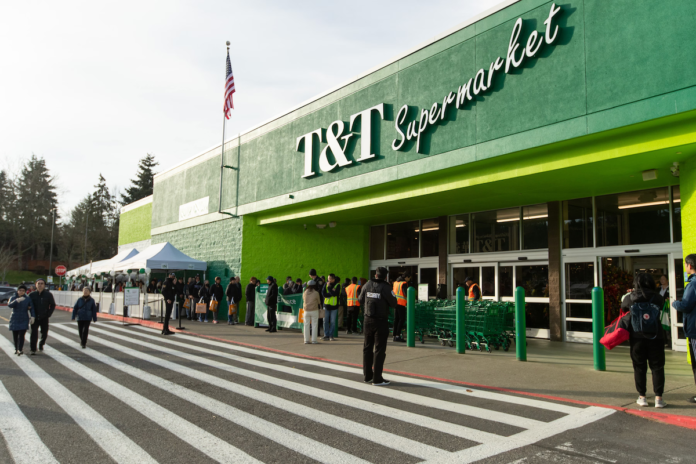
T&T Supermarket in Bellevue, Washington. Photo: T&T Supermarket
T&T Supermarket, Canada’s largest Asian grocery retailer, will expand its U.S. footprint with a new store in San Francisco, marking its fourth confirmed American location. Set to open in Winter 2026, the new store will be located at San Francisco City Center at 2675 Geary Boulevard, strategically positioned at the intersection of Geary Boulevard and Masonic Avenue.
This announcement follows the successful launch of T&T’s first U.S. store in Bellevue, Washington, and recent plans for new stores in Lynnwood, Washington, and San Jose, California.
Serving Affluent Neighbourhoods in the City by the Bay
The San Francisco store places T&T in a prime position to serve some of the city’s most affluent and culturally diverse neighbourhoods. The City Center site will allow the retailer to reach customers from Pacific Heights, Presidio Heights, the Richmond District, and other surrounding communities.
Tina Lee
“San Francisco offers a unique and eclectic food scene, and the neighbourhood we’ve chosen is a vibrant retail hub,” said Tina Lee, CEO of T&T Supermarkets. “We’re looking forward to serving food-loving San Franciscans with our fresh foods, delicious meals, and baked goods. I think our neighbours at the Kaiser Permanente Medical Center and the University of San Francisco are going to discover this is a great spot for lunch or for bringing something tasty home after work. San Francisco is on the rise, and we’re excited to be part of its next chapter.”
Kenneth Bernstein, CEO of Acadia Realty Trust, landlord of San Francisco City Center, added, “We are thrilled to welcome T&T Supermarkets to San Francisco as part of our ongoing commitment to bringing diverse, high-quality retail to the heart of this vibrant city. We look forward to T&T becoming an integral part of the community for many years to come.”
Unique Offerings Set T&T Apart from Traditional Supermarkets
T&T Supermarket will introduce San Francisco shoppers to a range of specialty items and services that differentiate it from conventional grocers. Over 200 T&T private-label products will be available, including bestsellers such as pork soup dumplings (Xiao Long Bao), green onion pancakes, Korean kalbi marinade, and popular seaweed snacks.
The store will feature a fast-casual restaurant format offering authentic Asian dishes such as Peking Duck, BBQ selections, Crispy Papa Chicken, and a sushi counter.
The in-store bakery will serve more than 150 freshly baked breads and over 50 desserts, including viral favourites like Mango Pomelo Swiss Rolls, Lava Mochi Puffs, and Napoleon Portuguese Egg Tarts.
For beverage enthusiasts, the store will also offer a wide selection of wines and spirits with a notable emphasis on Korean soju and Japanese sake, catering to a growing interest in East Asian alcoholic beverages.
T&T’s Growing U.S. Presence
The San Francisco location continues T&T’s aggressive push into the U.S. market, with a clear strategy to serve diverse and urban centres with strong demand for authentic Asian cuisine.
T&T opened its first U.S. store in December 2024 in Bellevue, Washington. At 76,000 square feet, it is considered the largest grocery store in Washington State. The Lynnwood location, just north of Seattle, is expected to open in the summer of 2025.
In California, T&T announced a 55,000-square-foot store in San Jose’s Westgate Center, scheduled to open in fall 2025. That store will feature a barbecue counter, dim sum and street food offerings, and a made-to-order Chinese crepe station.
Each store reflects T&T’s efforts to tailor its offering to the local market while maintaining the brand’s identity built on quality, variety, and innovation.
Canadian Roots, Global Vision
Founded in Burnaby, British Columbia in 1993 by Taiwanese-Canadian entrepreneur Cindy Lee, T&T Supermarket has grown to become a cornerstone of Asian grocery retail in Canada. The brand operates more than 38 stores across British Columbia, Alberta, Ontario, Quebec, and now Washington State.
In 2009, the chain was acquired by Loblaw Companies Limited for $225 million. Under the leadership of CEO Tina Lee, daughter of founder Cindy Lee, the company has expanded its retail footprint and launched an e-commerce platform to serve online customers nationwide in Canada.
Headquartered in Richmond, British Columbia, T&T continues to prioritize authenticity, freshness, and innovation while building a loyal customer base at home and abroad.
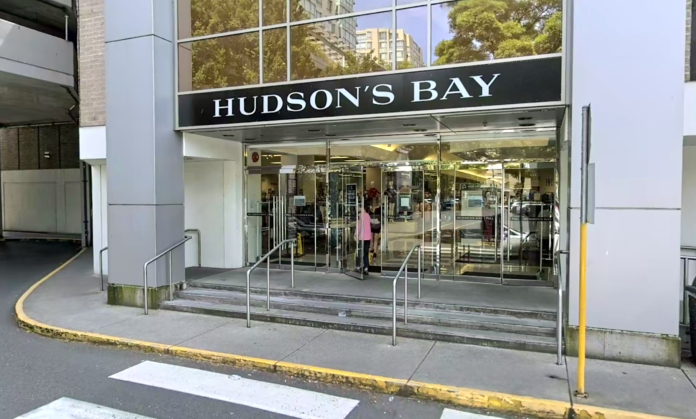
An entrance to the former Hudson's Bay store at CF Richmond Centre in Richmond, BC. Photo: Apple Maps
A proposed restructuring agreement that would have handed the Hudson’s Bay Company’s senior lenders increased control over its restructuring process has been rejected by an Ontario court, marking a pivotal and potentially perilous turn in the future of Canada’s oldest retailer.
Justice Peter J. Osborne of the Ontario Superior Court ruled Saturday that the agreement, negotiated between Hudson’s Bay and lenders Bank of America N.A., Pathlight Capital LP, and Restore Capital LLC, was “neither necessary nor appropriate.” His decision raises the real possibility that lenders could now push Hudson’s Bay into receivership, a process in which control of the company’s assets is handed to a third party to repay debts.
Carl Boutet
“The court ruling speaks volumes. It’s unusual to see a Saturday decision, but this case is moving at an extraordinary pace,” said retail strategist Carl Boutet in an interview. “It shows just how high the stakes are right now.”
Agreement Would Have Handed Power to Lenders
The rejected “restructuring support agreement” would have required Hudson’s Bay to operate under a strict weekly budget during its ongoing liquidation sales and to seek lender approval for any transaction involving the sale of parts of its business. These provisions, the lenders argued, were necessary to protect their financial interests, given that the Bay is liquidating inventory over which the lenders hold security.
“We are not looking to pick fights,” said Linc Rogers, counsel for Restore Capital, during court proceedings last week. “We are looking to resolve issues.”
However, landlords and other stakeholders strongly opposed the agreement, arguing it gave lenders disproportionate power over the future of the company, especially in decisions related to potential buyers or restructuring.
“They aren’t incentivized to restructure. They are incentivized to liquidate,” argued David Bish, lawyer for landlord Cadillac Fairview, which owns 16 Bay properties.
Justice Osborne ultimately sided with those concerns, ruling that the agreement would have granted lenders rights “to the exclusion of other stakeholders,” while also lacking sufficient transparency and oversight from the court.
Judge Places Faith in the CCAA Process
Hudson’s Bay filed for creditor protection under the Companies’ Creditors Arrangement Act (CCAA) on March 7. Under this legal framework, the company received court approval to liquidate the majority of its stores — including 74 Hudson’s Bay locations, two Saks Fifth Avenue, and 13 Saks Off Fifth stores. Just six Bay stores remain temporarily spared from closure as the company explores potential restructuring or sale options.
In his ruling, Justice Osborne emphasized that the CCAA process already includes court oversight and the role of an independent monitor, which collectively serve to balance lender rights with those of landlords, suppliers, employees, and other stakeholders.
“The monitor is there to ensure that assets are used appropriately, and that should give comfort to the lenders,” Osborne wrote in his decision.
Carl Boutet echoed this assessment. “The judge is putting a lot of faith in the monitor to ensure the process is equitable,” he said. “That monitor is the referee here. And the court made it clear they believe that’s enough — for now.”
Hudson’s Bay at CF Market Mall in Calgary. Photo: Mario Toneguzzi
Risk of Receivership Now Looms
The rejection of the agreement significantly raises the possibility that Hudson’s Bay’s senior lenders may now seek to place the company into receivership — a more aggressive step that would transfer full operational control to a third party and likely accelerate liquidation of all remaining assets, including the six stores currently excluded.
“It’s a high-stakes standoff,” Boutet explained. “If lenders decide they’re uncomfortable with the current setup, they can pull the trigger on receivership at any time. The judge acknowledged that risk but said, essentially, ‘We’ll cross that bridge when we get there.’”
The coming days are seen as critical. April 7 looms as a deadline to determine the fate of the six remaining Hudson’s Bay locations. Without a buyer or investor stepping forward, they too may be folded into the liquidation process.
“We’re ending this week with more uncertainty than ever,” Boutet said. “The court might have tried to buy more time, but ironically, this decision could end up shortening the timeline if the lenders lose patience.”
Employees and Suppliers in Limbo
While courtroom debate has largely focused on lenders and landlords, little has been said about the fate of the retailer’s thousands of employees and suppliers. The CCAA filing affects more than 9,300 workers, many of whom are now in the process of being let go as store closures begin.
On Friday, Hudson’s Bay terminated nearly 200 corporate employees — the first wave of cuts since the creditor protection process began. But clarity remains elusive on the status of in-store employees at liquidating locations.
“We still don’t know how many of those 9,400 retail employees have been re-hired by liquidators or let go,” said Boutet. “It’s a massive question mark — and a painful one for those affected.”
Suppliers, too, remain in the dark. Many are owed money from the Bay and face the likelihood of steep losses in the restructuring or liquidation process.
“There’s very little talk about suppliers or employees. The focus is on assets, debts, and control,” Boutet noted. “But these are people’s livelihoods we’re talking about.”
Will Hudson’s Bay Survive?
The fate of Hudson’s Bay as a retail chain hangs in the balance. While the court has allowed the retailer more breathing room by rejecting the restructuring agreement, industry observers are skeptical that this will lead to a viable turnaround.
“I don’t have renewed hope for a future Hudson’s Bay chain,” Boutet said. “Even if you carve out the six remaining stores, there’s too much debt and the store formats are too large for what’s needed today.”
Boutet pointed to the lack of successful private equity rescues of struggling retailers in recent years.
“The market for distressed retailers is saturated,” he said. “Unless a real estate play is involved, it’s hard to see a buyer stepping up.”
A Shifting Power Struggle
The court’s decision has further complicated an already tangled web of interests. Lenders, landlords, employees, and suppliers are all vying to influence the outcome, while Hudson’s Bay itself remains caught in the middle.
“We’re seeing this constant shift in the balance of power,” Boutet said. “And each shift seems to make the retailer’s future more precarious.”
He also noted a surprising twist: landlords, some of whom were previously frustrated with the Bay, have now emerged as defenders of its ability to control its own fate — or at least avoid lender domination.
“It’s a bizarre alliance,” he said. “But perhaps it’s also pragmatic. Landlords are trying to preserve value and avoid complete liquidation.”
What Happens Next?
With the court having declined to approve the restructuring deal, all eyes are now on Hudson’s Bay’s lenders. They could move as early as this week to request receivership — a move the court has said it will consider if and when it happens.
Alternatively, lenders may choose to wait until April 7, at which point the remaining six stores could be included in the liquidation process.
“That’s the sword hanging over everyone’s head right now,” said Boutet. “Will lenders make a move, or will they wait to see how this plays out?”
For now, Hudson’s Bay is continuing liquidation sales, with steep discounts in stores that have become busy, if somber, destinations for bargain hunters. But the deeper issues — the future of the brand, the fate of its workers, and the impact on Canadian retail — remain unresolved.
“It’s a tragic endgame for an iconic retailer,” Boutet said. “And the next chapter will be written very soon.”
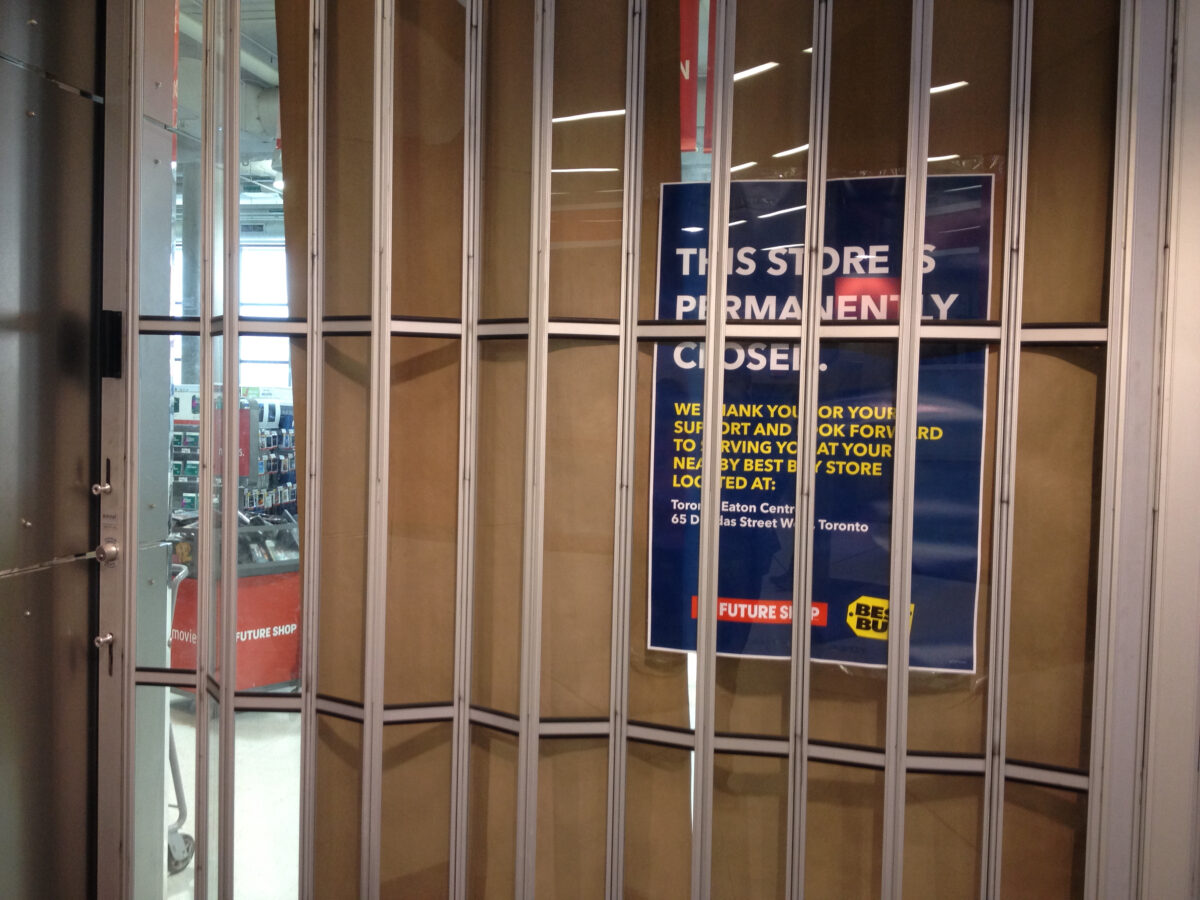
Ten years ago this week, the Canadian retail landscape was rocked by the sudden and dramatic closure of Future Shop, once the country’s largest and most prominent consumer electronics retailer. The announcement on March 28, 2015, that the brand would cease to exist—effective immediately—came as a shock to customers and employees alike, abruptly ending a legacy that spanned over three decades.
This retrospective marks the tenth anniversary of that pivotal moment in Canadian retail, exploring Future Shop’s meteoric rise, its acquisition by Best Buy, and the factors that led to its eventual demise.
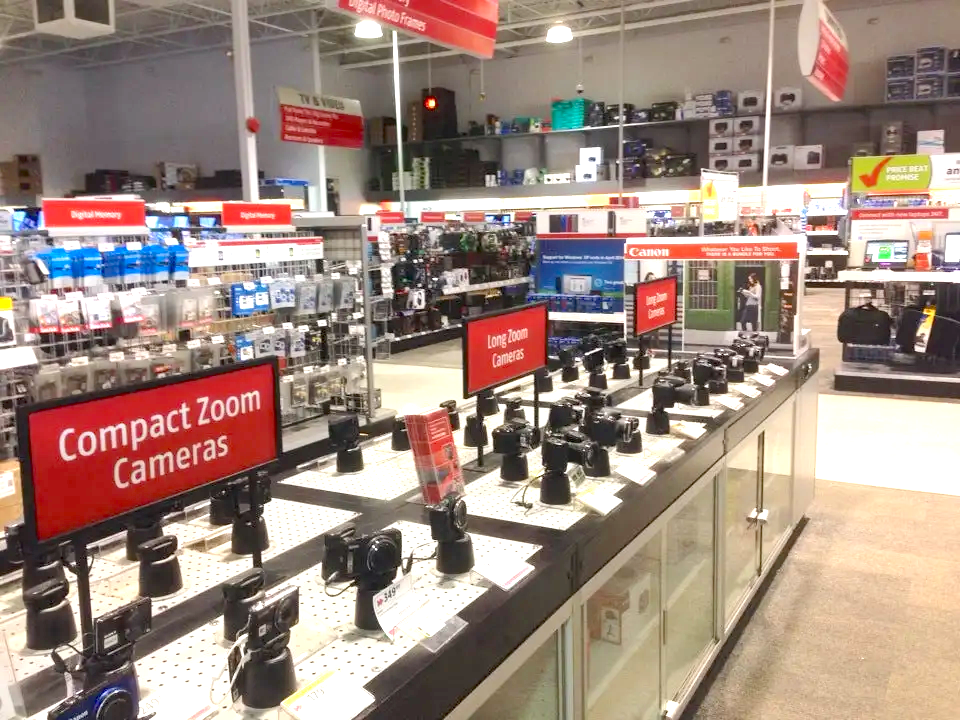
Inside a former Future Shop in Thunder Bay, ON. Photo: MapQuest
A Vancouver Start-Up That Changed Canadian Retail
Future Shop was founded in 1982 in Vancouver, BC, by Iranian-Canadian entrepreneur Hassan Khosrowshahi. The company began as a single store, but thanks to Khosrowshahi’s ambitious growth strategy and a favourable consumer appetite for electronics, the chain quickly expanded. By 1990, Future Shop had become the largest retailer of computers and consumer electronics in Canada.
Future Shop became a household name by offering an expansive selection of products at competitive prices, bolstered by a commissioned sales model that rewarded staff based on performance. This strategy helped the company build a reputation for product expertise and high-touch service, distinguishing itself in a rapidly evolving retail sector.
In 1993, Future Shop went public, trading on the Toronto and Vancouver stock exchanges. The company operated 36 stores at the time, with plans to open 16 more by year-end. It was also expanding into the United States, seeing the potential for growth south of the border.
Expansion Stumbles in the U.S. Market
While Future Shop was flourishing in Canada, its American ambitions proved more challenging. After opening 23 stores in the U.S., the company faced mounting losses in a highly competitive market. In 1999, Future Shop made the decision to pull out of the United States entirely, refocusing its efforts on its Canadian operations where it remained dominant.
Inside a Future Shop concept store in North Vancouver in 2012. Image provided by the retailer at the time. Former Future Shop location at 10 Dundas St. E. in Toronto in 2015. Photo: Dustin Fuhs
A Major Acquisition: Best Buy Enters the Canadian Market
In a pivotal moment in 2001, U.S.-based Best Buy Co. acquired Future Shop for CAD $580 million. Rather than phasing out the Canadian brand, Best Buy decided to run both banners concurrently. New Best Buy stores were introduced to Canada, positioned as an alternative to the more commission-driven Future Shop model. At the time, it was seen as a dual-pronged strategy to capture a broader market.
Throughout the early 2000s, Best Buy and Future Shop stores could often be found within close proximity to one another. While both carried many of the same products, Best Buy operated with a non-commissioned sales force and a different store layout, while Future Shop retained its original formula.
Changing Market Forces and Strategic Shifts
As consumer preferences changed and e-commerce gained ground, the consumer electronics retail category began to shift dramatically. Best Buy faced mounting pressure from online competitors, especially Amazon, and began streamlining operations.
By the early 2010s, cracks in the dual-banner strategy were becoming evident. In 2013, Best Buy began closing some Future Shop locations and consolidating others. Retail analysts speculated that a full integration was inevitable, though few expected it to occur as suddenly and dramatically as it did.
March 28, 2015: The End of Future Shop
On the morning of Saturday, March 28, 2015, employees at Future Shop stores across Canada arrived at work only to be informed that the stores would not be opening. Some were told their locations would be shuttered permanently, while others learned their stores would reopen as Best Buy locations within days.
In total, 66 Future Shop stores were permanently closed, and 65 were earmarked for conversion into Best Buy. Approximately 500 full-time and 1,000 part-time employees were laid off. Best Buy Canada moved swiftly to assure customers that product orders, warranties, gift cards, and service appointments would be honoured. Affected employees were offered severance packages and outplacement support.
Ron Wilson, then President and COO of Best Buy Canada, said in a statement at the time, “We recognize the impact of this decision on our employees and customers, and we will work to support them through this change.”
A Post-Future Shop Retail Strategy
Following the closures, Best Buy Canada announced a $200 million investment over two years to enhance the customer experience. This included introducing major appliances to all stores, expanding vendor-branded areas, increasing staffing, and improving the online shopping experience. The company also invested in in-store pickup, ship-from-store services, and digital platforms to better compete in the omnichannel environment.
The abrupt closure of Future Shop served as a wake-up call to the Canadian retail industry, highlighting the speed at which consumer behaviours and market conditions can shift. It also underscored the risks of maintaining two brands with overlapping footprints in a market increasingly dominated by digital innovation.
A Legacy That Endures
Even a decade later, Future Shop remains a nostalgic brand for many Canadians. Its distinctive red signage, commissioned sales force, and boxed DVD walls left a lasting impression on generations of consumers. For former employees and loyal customers, the brand’s closure marked the end of an era—one that reflected both the promise and perils of Canadian retailing in the modern age.
As the Canadian retail industry continues to evolve in the face of economic uncertainty and digital disruption, the story of Future Shop serves as a compelling case study in rapid growth, strategic missteps, and the relentless pace of change.
Hudson's Bay store in downtown Toronto (176 Yonge Street/CF Toronto Eaton Centre) on March 27, 2025. Photo: Craig Patterson
As The Hudson’s Bay Company continues its attempt to restructure under creditor protection, new survey data from Leger reveals that most Canadians are aware of the company’s financial troubles—and their reactions paint a complex picture of a once-revered retail icon now struggling to maintain relevance.
According to the Leger OMNIBUS study conducted March 21–24, 2025, 83% of Canadians said they were aware of Hudson’s Bay’s filing for bankruptcy protection. Among Canadians aged 55 and older, that awareness jumped to 94%, reflecting the generation that perhaps remembers Hudson’s Bay as a cultural cornerstone of Canadian retail.
Despite this high awareness, the study reveals a surprising emotional gap: indifference was the most common reaction to the bankruptcy news, selected by 30% of respondents. This was especially true among adults aged 18 to 54, a demographic that might not share the same emotional connection to the brand. Meanwhile, 25% expressed sadness, and 19% reported disappointment. Feelings of shock and concern were significantly lower at 7% and 6% respectively.
“Hudson’s Bay’s bankruptcy filing struck a national chord—83% of Canadians are aware, but emotional reactions are deeply mixed, ranging from indifference to sadness, disappointment and even shock,” said the report.
Display on the main floor of Hudson’s Bay, Queen Street in downtown Toronto, March 27, 2025. Photo: Craig Patterson
A Legacy in Crisis
Founded in 1670, Hudson’s Bay is Canada’s oldest retailer and a brand deeply entwined with national identity. However, the data suggests the brand’s legacy alone is no longer enough to carry it through an evolving retail landscape. Respondents were asked what they believe caused the company’s financial struggles. The top reason, cited by 25% of Canadians, was high prices, particularly among women and those aged 35–54—the demographic often considered to be in their prime consumer years.
The second most cited reason was Hudson’s Bay’s slow shift to online shopping, with 19% of respondents pointing to this as a key failure. This was particularly evident among older Canadians, who are typically more loyal to traditional retail brands. Poor management came in third (15%), cited most by respondents aged 55 and up, who may have followed the company’s ups and downs more closely over the years.
Other issues raised included competition (10%), outdated stores (10%), and poor in-store experience (3%). Only 1% cited American ownership, suggesting that concerns over national identity were less about who owns the company and more about how it operates in the Canadian market.
Canadian Identity Still Matters
Interestingly, the majority of Canadians—90%—believe it’s important that retailers in Canada maintain a distinctly Canadian identity. This includes reflecting local culture and values, and supporting domestic businesses. This sentiment was particularly strong among those aged 55 and older (95%) and Quebecers (94%).
“Nine in ten Canadians say it’s important that retailers reflect a distinctly Canadian identity. Hudson’s Bay, despite its heritage, may be losing touch with that core value,” the study noted.
This suggests that while Hudson’s Bay has historically leaned on its heritage as a Canadian institution, many consumers feel the brand is no longer delivering on that expectation.
Women’s footwear on 2 at Hudson’s Bay, Queen Street in downtown Toronto, March 27, 2025. Photo: Craig Patterson
Can The Bay Bounce Back?
The nation appears divided when it comes to belief in Hudson’s Bay’s future. Only 25% of Canadians believe the company will successfully restructure and continue operating, while 38% said they do not believe it will recover, and another 38% were not sure.
Notably, younger Canadians aged 18–34 were the most optimistic, with 32% expressing belief in the brand’s ability to bounce back. By contrast, men were the most skeptical—42% of male respondents said they did not believe Hudson’s Bay can recover. This split suggests that any comeback strategy will need to not only modernize the shopping experience but also rebuild trust across multiple demographics.
“What was once a national icon now faces doubt—only 1 in 4 Canadians believe Hudson’s Bay will successfully restructure and continue operating,” reads the report.
Women’s fashions on 3 at Hudson’s Bay, Queen Street in downtown Toronto, March 27, 2025. Photo: Craig Patterson
From Flagship to Footnote?
Hudson’s Bay is not just a department store—it’s a brand that has witnessed the country’s evolution for centuries. Yet, its current crisis raises concerns about whether it can still play a relevant role in Canadian retail.
Its struggle reflects broader trends: traditional department stores around the world face immense pressure from e-commerce, discount retailers, and nimble direct-to-consumer brands.
“Even among older, traditionally brand-loyal Canadians, faith is faltering—20% of those 55+ say poor management led to Hudson’s Bay’s downfall,” the study said.
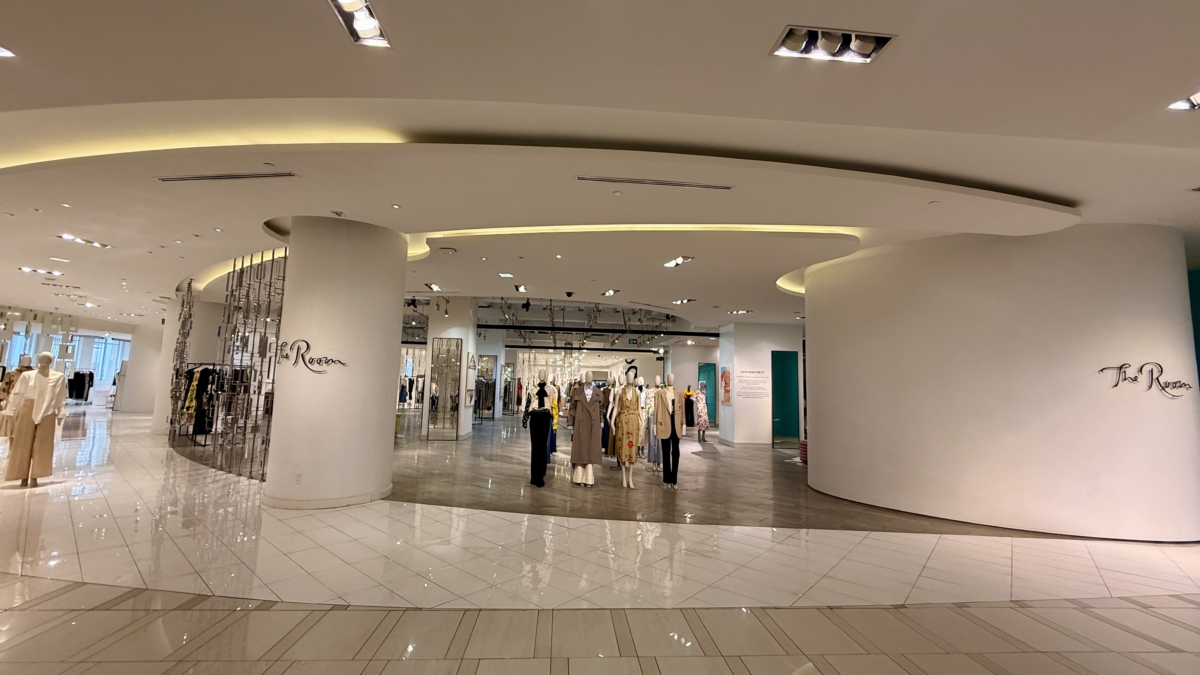
The Room women’s luxury fashion department on the third floor of Hudson’s Bay. The Room’s founding traces back to 1937 when the building was a Simpson’s store. Over the decades, the St. Regis Room dressed Toronto’s high society. Its loss is the end of a fashion era. Last year, Nicholas Mellamphy was brought back to revive The Room, and did a tremendous job. Photo: Craig Patterson
The findings paint a portrait of a company at a crossroads. While younger consumers may still see a glimmer of hope, the brand’s core audience appears disillusioned. Hudson’s Bay will need to redefine what it means to be a Canadian retailer in 2025 and beyond—both in experience and in value.
The Hudson’s Bay situation also speaks to a broader realignment in Canadian retail. As consumers demand better online experiences, pricing transparency, and authenticity, legacy retailers that fail to adapt face existential risk. The fact that indifference was the leading emotional response may be the most telling—and the most alarming.
Methodology Note: The data is based on a national online survey of 1,605 Canadians aged 18 and older, conducted by Leger between March 21–24, 2025. Results reflect a cross-section of regions, incomes, and age groups, with statistically significant differences noted across demographic segments.
Retail trade was the largest detractor to real domestic product (GDP) growth in January, after being the largest contributor to growth in December, contracting 0.9% in January as activity in six of 12 subsectors decreased, reported Statistics Canada on Friday.
“Motor vehicle and parts dealers (-3.2%), which was one of the largest drivers of growth in December, contributed the most to the sector’s decline in January. It was the subsector’s first decline in four months with lower activity at new car dealers and automotive parts, accessories and tire stores,” said the federal agency.
“Food and beverage stores declined 2.6% in January, reflecting lower activity in supermarkets and other grocery retailers (except convenience retailers) and beer, wine and liquor stores. Sporting goods, hobby, book and music stores (-9.6%) further contributed to the decline, offsetting part of the increase recorded in the previous month. Increases in health and personal care stores (+1.3%) and building material and garden equipment and supplies dealers (+1.6%) tempered the decline in the sector in January.”
Wholesale trade increased 0.7% in January, as most subsectors grew. Motor vehicle and parts wholesaler-distributors (+4.5%) was the main contributor to growth in the sector, reaching its highest level since February 2020, mainly attributable to higher activity in motor vehicles and new motor vehicle parts coinciding with a strong increase in exports of passenger cars and light trucks, added Statistics Canada.
Building material and supplies wholesaler-distributors (+1.8%) further contributed to growth in January, in large part driven by a rebound of activity in the lumber, millwork, hardware and other building supplies industry group, it said.
The federal agency said GDP grew 0.4% in January, following a 0.3% increase in December. Both goods-producing and services-producing industries were up, with 13 of 20 sectors rising in January.
“Goods-producing industries contributed the most to the increase, rising 1.1% in January, the largest increase since October 2021, as all industrial sectors in the aggregate expanded in January 2025. The mining, quarrying, and oil and gas extraction and manufacturing sectors were the largest contributors to growth. Services-producing industries edged up 0.1%,” it said.
Advance information indicates that real GDP by industry was essentially unchanged in February. Increases in the manufacturing and finance and insurance sectors were offset by decreases in the real estate and rental and leasing sector, the oil and gas extraction subsector and the retail trade sector, added StatsCan.