Pickleplex Social Club, a premier destination for social and competitive pickleball, has announced its expansion into British Columbia through a newly signed Master Franchise Agreement. Industry veterans Andrew Edwards and Deanna Gestrin will lead the charge as Master Franchisees, bringing 10 new locations to the province, said the company.
“Pickleplex Social Club is revolutionizing the way people experience pickleball, blending sport, social interaction, and community engagement in purpose-built indoor facilities. With the rapid growth of pickleball across North America, the demand for dedicated venues where players of all skill levels can enjoy the game in a welcoming environment has never been higher,” it said.
The company said Andrew Edwards brings over 25 years of entrepreneurial and franchising expertise to Pickleplex Social Club. A former junior provincial tennis player, Andrew has always had a deep passion for racket sports and is thrilled to be part of pickleball’s explosive growth. With nearly two decades dedicated to the franchise industry, Andrew has successfully built and led multiple businesses, mentoring new franchisees and helping them navigate the journey of business ownership. His leadership will be instrumental in establishing and growing Pickleplex locations across British Columbia.
The company said Deanna Gestrin is an inspiring leader and advocate for wellness, bringing a wealth of experience in education, counselling, and community development. As a post-secondary educator at Simon Fraser University and a registered clinical counsellor, Deanna fosters growth and resilience through strong communication, strategic thinking, and innovation. Her passion for family, fitness, and community aligns perfectly with Pickleplex Social Club’s mission to create spaces where individuals and families can engage in fun, active experiences together.
“We are incredibly excited to bring Pickleplex Social Club to British Columbia,” said Andrew and Deanna. “Pickleball is more than just a sport; it’s a movement that brings people together. Our goal is to create a thriving network of locations where communities can connect, play, and grow.”
Steven Fry
“Pickleplex started as a vision just over a year ago and in that time we’ve taken it from a concept to reality with multiple locations already serving the pickleball community in Ontario. Now with Deanna and Andrew engaged to deliver our vision in BC we’re another step closer to becoming Canada’s national pickleball destination,” said Steven Fry, Co-founder and CEO.
The first Pickleplex Social Club locations in British Columbia are set to open in the coming months, with plans for additional expansion in the works.
Tourism spending in Canada increased 1.5% in the fourth quarter of 2024, following a 0.4% decline in the third quarter. Annually, tourism spending rose 3.6% in 2024, following a 15.3% increase in 2023. Tourism gross domestic product (GDProse 1.6% in the fourth quarter of 2024 and was up 3.8% annually. Tourism jobs increased 0.8% in the fourth quarter and rose 1.8% annually in 2024, reported Statistics Canada.
Passenger air transport (+2.8%) and accommodation services (+2.6%) were the main contributors to growth in tourism spending in the fourth quarter. Annually, passenger air transport spending (+7.4%) contributed the most to overall growth in 2024, said the federal agency.
It said tourism GDP rose 1.6% in the fourth quarter, following a 0.7% decrease in the third quarter. Accommodation services (+2.8%) and transportation (+1.6%) were the main contributors to overall growth. Economy-wide real GDP by industry rose 0.4% in the fourth quarter, and tourism’s share of GDP increased to 1.78% on a nominal basis. Annually, tourism GDP rose 3.8% in 2024, compared with the economy-wide real GDP by industry growth of 1.6%.
“The number of tourism jobs increased 0.8% in the fourth quarter, following flat growth in the third quarter. Tourism job growth in accommodation (+1.5%) and food and beverage (+0.9%) services was partially offset by a decline in travel services (-1.5%) in the fourth quarter. The total number of jobs in Canada rose 0.5% in the fourth quarter, while tourism’s share of jobs rose to 3.35%,” said Statistics Canada.
The report said spending by international visitors in Canada rose 2.2% in the fourth quarter, following a decline of 2.4% in the third quarter. Accommodation (+3.2%) and food and beverage (+3.0%) services were the main contributors to growth in the fourth quarter. Annually, spending by international visitors increased 8.0% in 2024, reaching 92.3% of the level observed in 2019, prior to the COVID-19 pandemic.
“Tourism spending in Canada by Canadians was up 1.3% in the fourth quarter, after a 0.2% increase in the third quarter. Domestic tourism spending on passenger air transportation (+3.3%), accommodation (+2.3%) and recreation and entertainment (+2.4%) were the main contributors to the rise in the fourth quarter. Notable events during the quarter included the Taylor Swift Eras tour performances in Toronto and Vancouver, as well as the world junior hockey championship hosted in Ottawa,” explained Statistics Canada.
Canadian travellers returning from the United States by automobile declined year-over-year in both January and February 2025 based on leading indicators. Total trips to Canada (both Canadian-resident return trips and non-resident trips) by air in February also posted a decline, it said.
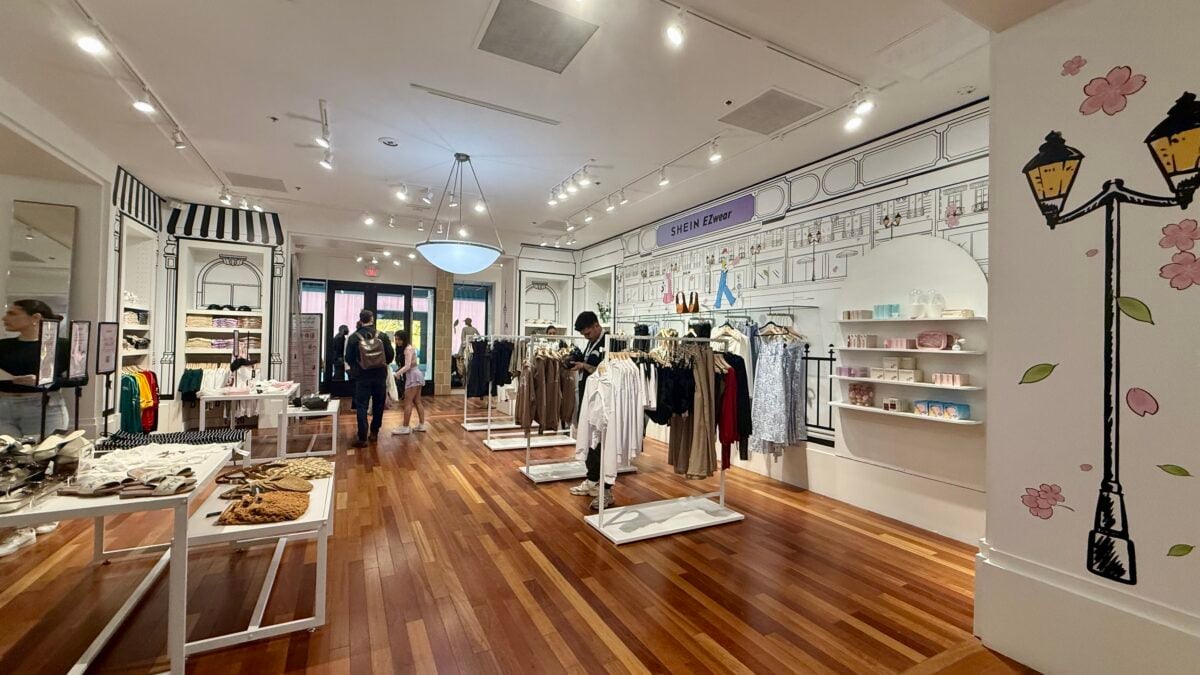
SHEIN pop-up at CF Toronto Eaton Centre in Toronto, during a preview on March 27, 2025. Photo: Craig Patterson
Global fashion and lifestyle e-commerce powerhouse SHEIN has officially opened its latest pop-up in Toronto, transforming a 7,000-square-foot space at CF Toronto Eaton Centre into an immersive, multi-category retail experience. Retail Insider was invited to a preview on March 27 ahead of the public opening, which runs from March 28 to April 6, 2025.
This marks SHEIN’s second time at the downtown Toronto shopping centre, and this time, the brand has elevated its presentation with a boutique-style concept that blends style, function, and a bit of local artistry.
A Monochrome Entrance to a Colourful Spring
Located in the former Banana Republic men’s store—which was recently consolidated into a single upstairs unit—the SHEIN pop-up features a striking design. Guests enter a monochrome space inspired by designer sketches and the quiet tones of winter. As visitors journey through the store, SHEIN’s colourful spring collections gradually bring the space to life, symbolizing the seasonal shift from muted cold to vibrant warmth.
“This pop-up is very different from any we’ve done in the past,” said Anastasia Semionov, Marketing Manager for SHEIN Canada. “This time, we’re showcasing the full breadth of our multi-category platform—from fashion to home, beauty, accessories, kids, and even pet items.”
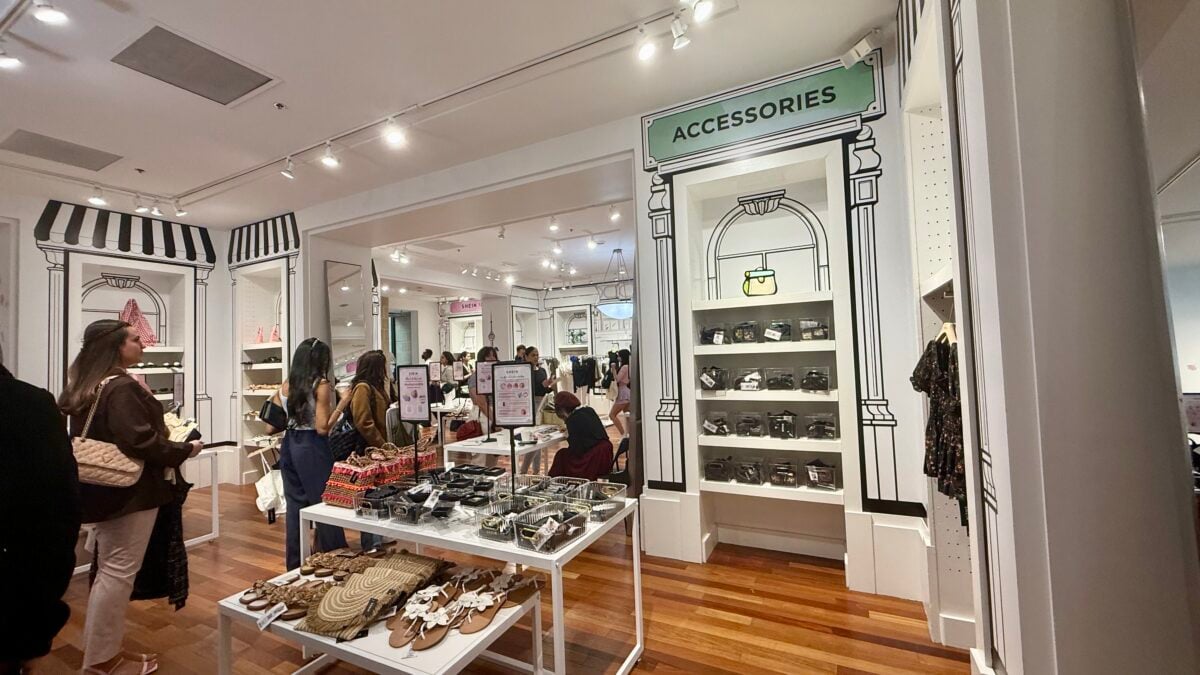
SHEIN pop-up at CF Toronto Eaton Centre in Toronto, during a preview on March 27, 2025. Photo: Craig Patterson
Highlighting Inclusivity and On-Trend Collections
The store layout is organized into curated zones featuring some of SHEIN Canada’s most popular collections. Among them are:
DAZY, with a romantic flair and floral-heavy styles
SHEIN MOD and MOTF, offering elevated looks for a more mature demographic
Maijia and Easywear, targeting younger audiences with streetwear staples
SHEGLAM, the brand’s fast-growing global makeup line
Curve, SHEIN’s inclusive sizing line catering to plus-size customers
“Our Curve collection continues to be one of our top performers,” Semionov noted. “A lot of other e-commerce platforms don’t offer extended sizing in a fashionable way. Customers come to us looking for trend-forward styles that make them feel confident—regardless of size.”
SHEIN pop-up at CF Toronto Eaton Centre in Toronto, during a preview on March 27, 2025. Photo: Craig Patterson
More Than Fashion: SHEIN’s Lifestyle Push
Beyond fashion, the pop-up introduces visitors to SHEIN’s home, sleepwear, and vacation collections, the latter being especially popular among Canadian shoppers. “People love shopping for vacation wear with us. Our price point makes it easy to refresh your wardrobe before a trip,” said Semionov.
Accessories, including bags, belts, shoes, hats, and jewellery, are prominently featured. There’s even a dedicated pet collection, and SHEIN’s home living section includes a range of trendy yet affordable household items.
“We’re really trying to demonstrate that we’re more than just an online fashion brand,” added Semionov. “This is about showing the depth of our offering in a fun, accessible way.”
SHEIN pop-up at CF Toronto Eaton Centre in Toronto, during a preview on March 27, 2025. Photo: Craig Patterson
A Local Touch: Art, Engagement, and Toronto Flair
As part of its effort to connect with local communities, SHEIN collaborated with a Toronto-based illustrator to create custom black-and-white murals for the space. The artist’s work—depicting scenes like jogging families, streetcars, and the CN Tower—offers a distinctly Toronto vibe that reinforces the brand’s local connection.
“We always try to localize our pop-ups,” said Semionov. “This is our way of saying we’re not just here to sell—we’re here to be part of the culture.”
Visitors can also enjoy a free photo booth, share their experience online, and receive exclusive perks. The first 100 people each day who post publicly from the event on Instagram or TikTok receive a limited-edition Toronto tote bag, adding an element of excitement and collectibility.
SHEIN pop-up at CF Toronto Eaton Centre in Toronto, during a preview on March 27, 2025. Photo: Craig Patterson
Incentives and Exclusives for In-Person Shoppers
In keeping with its online promotional strategy, SHEIN’s Toronto pop-up offers tiered discounts of up to 30% off, exclusive gifts with purchase, and the first-ever availability of discounted gift cards. Each day, 50 $50 and 50 $100 SHEIN gift cards will be sold at a 10% discount—only available in-store.
“Customers love the surprise-and-delight factor,” said Semionov. “We’ve made the store shoppable but also playful. People can earn up to six free gifts, find sub-brands they love, and even discover what colours suit them best in our seasonal styling section.”
SHEIN pop-up at CF Toronto Eaton Centre in Toronto, during a preview on March 27, 2025. Photo: Craig Patterson
A Partnership with Purpose: Soles4Souls Canada
SHEIN has also partnered with Soles4Souls Canada, a non-profit that provides relief and empowers individuals in poverty through clothing and footwear. Shoppers who bring gently used clothing to donate will receive a $2 discount on their purchase. All donated items will go toward global communities in need.
“We’re grateful to be able to give back while engaging directly with our customers,” said Semionov. “The pop-up isn’t just about fashion—it’s about making meaningful connections.”
SHEIN pop-up at CF Toronto Eaton Centre in Toronto, during a preview on March 27, 2025. Photo: Craig Patterson
Rotating Inventory and Scarcity Strategy
In an effort to keep the experience fresh, inventory at the pop-up is constantly rotating. “If you come on one day, and then return a few days later, you’ll see different items,” Semionov explained. “Once something is sold, it’s gone, and we replenish with new pieces. It encourages discovery and adds a bit of urgency.”
This approach echoes SHEIN’s unique on-demand production model, where new items are initially produced in batches of just 200. Additional quantities are only made if items sell well, reducing waste and aligning with the brand’s push for more sustainable practices.
“We don’t see ourselves as fast fashion,” said Semionov. “We’re on-demand fashion. We test demand first, then scale. It’s a model that works for both the consumer and the planet.”
SHEIN pop-up at CF Toronto Eaton Centre in Toronto, during a preview on March 27, 2025. Photo: Craig Patterson
Final Thoughts
Running through April 6, the Toronto SHEIN pop-up offers a tactile, interactive version of the brand’s online identity—complete with curated fashion zones, exclusive discounts, local art, and a strong message of accessibility and inclusivity.
“We like to say we’re your online bestie that you finally get to meet in person,” said Semionov. “And with this space, we’re bringing that bestie energy to life—right in the heart of Toronto.”
Shoppers Drug Mart has announced the grand opening of the first pharmacy care clinic in Surrey, British Columbia – with six more to come by the end of the year.
At a time of rapid growth in the region, the clinics will provide the community with more ways to access primary care services, said the company in a news release.
“Thoughtfully designed to improve the overall patient experience, the clinics offer unique features such as child-friendly exam rooms, accessible waiting areas, and an onsite “care concierge” dedicated to providing personalized support and ensuring a smooth visit for every patient. These clinics will provide patients access to a range of pharmacy healthcare services, including the assessment and treatment of injuries and common conditions such as urinary tract infections and pink eye – free of charge with a valid British Columbia health card,” said Shoppers.
“Pharmacists are able to relieve pressure on frontline healthcare services and service providers by managing basic primary care conditions within their scope and triaging more serious cases to higher levels of care when needed.”
Jeff Leger
“As highly trained medical professionals, pharmacists are uniquely positioned to step up and meet some of the challenges facing public health systems across the country,” said Jeff Leger, President of Shoppers Drug Mart. “Shoppers Drug Mart is proud to invest in healthcare infrastructure and open seven Pharmacy Care Clinics to serve the growing needs of Surrey residents because we know that an investment in improving access to care is an investment in healthier communities.”
Shoppers Drug Mart Inc. is the licensor of full-service retail drug stores operating under the name Shoppers Drug Mart® (Pharmaprix® in Québec). With more than 1,350 Shoppers Drug Mart® and Pharmaprix® stores operating in prime locations in each province and two territories, the company is one of the most convenient retailers in Canada. The company also licenses or owns more than 150 medical clinic pharmacies operating under the name Shoppers Simply Pharmacy® (Pharmaprix Simplement Santé® in Québec). In addition to its retail store network, the company owns Shoppers Drug Mart Specialty Health Network Inc., a provider of specialty drug distribution, pharmacy and comprehensive patient support services, MediSystem Inc., a provider of pharmaceutical products and services to long-term care facilities and Lifemark Health Group, Canada’s leading provider of outpatient physiotherapy, massage therapy, occupational therapy, chiropractic, mental health, and other ancillary rehabilitation services. Shoppers Drug Mart® is an independent operating division of Loblaw Companies Limited.
Brenda Locke
“Today’s opening of the first pharmacy care clinic by Shoppers Drug Mart in Surrey marks an important milestone for our community,” said Surrey Mayor Brenda Locke. “I want to thank Shoppers Drug Mart for this important investment in our community, and I look forward to the positive impact these clinics will have on our residents. As we continue to grow and become the first city to reach one million people in British Columbia, health care needs are a priority.”
Jessie Sunner
“The opening of Surrey’s first pharmacy care clinic is a pivotal moment in our community’s healthcare journey,” said Jessie Sunner, MLA for Surrey-Newton. “This clinic will provide essential services and increase access to care, making healthcare more accessible and convenient for our community. It’s always great to see Surrey take steps forward in innovative healthcare solutions.”
For more information on available services or to book an appointment, visit the ‘Pharmacy Services in B.C.’ website or visit the store. Hours of operation are 8:00 am to 10:00 pm, Monday to Sunday.
“I’m deeply honoured and carry a profound sense of responsibility in stepping into the role of Chair of Restaurants Canada’s Board of Directors,” said Filiatrault.
Nicolas Filiatrault
“While facing significant trade challenges, I’m confident our industry’s resilience, creativity, and collective determination will allow us to adapt and innovate. Having witnessed major transformations over my near-decade involvement with Restaurants Canada, I’ve seen our sector’s ability to overcome adversity. By working together, sharing insights, and supporting one another, we can overcome adversity and continue to serve Canadians with passion and excellence.”
Filiatrault has been the CEO of Quebec’s largest family-owned rotisserie chain, Benny&Co., since November 2023. From his arrival at the company nearly 15 years ago, he has worked closely with Jean Benny, President of Benny&Co., to carry out the ambitious vision of the eight founding brothers of the family business established in 1960. As Director of Finance, and then Vice President of Finance and Administration, he implemented the family franchise system and created the company’s administrative, accounting, and financial teams.
As Chair, Restaurants Canada said Filiatrault will lead the Board, provide strong leadership to the Directors, and support the CEO while ensuring governance best practices and executing the Board’s directives. He will collaborate with President and CEO Kelly Higginson to strengthen the organization’s advocacy for the foodservice industry as she and the team execute the strategic goals of the organization.
In addition to Filiatrault’s new role, Restaurants Canada said it is appointing eight new members to its board: Sarah Chown, Metropolitain Brasserie, Ontario; Meeru Dhalwala, Lilia Restaurant, British Columbia; Musette Fowke, Integrated Food Systems Inc, Manitoba; Vanessa Fracheboud, Mandy’s, Quebec; Phoebe Fung, Vin Room, Alberta; Ben Osmow, Osmow’s Inc, Ontario; Cara Piggot, Boston Pizza; and Claudia Vorlaufer, Earl’s Restaurants, British Columbia.
Kelly Higginson
Filiatrault succeeds Jeremy Bonia, an accomplished Newfoundland & Labrador-based restaurateur and sommelier, who was elected as Chair in April 2023. Bonia played an integral role in supporting Higginson as she stepped into the President and CEO role and leading the organization through its post-pandemic period of shifting policy priorities, added the national organization.
“I am immensely grateful to Jeremy for his years of service on Restaurants Canada’s board and for his support to me personally. His contributions have left a lasting mark on the organization and helped us become stronger than ever,” said Higginson. “In his new role, Nicolas will build on Jeremy’s foundation, leading the board by uniting Directors, fostering board development, showing strong leadership, and supporting me and the Restaurants Canada team.”
Restaurants Canada is a national, not-for-profit association advancing Canada’s diverse and dynamic foodservice industry. Restaurants are a $120 billion industry employing nearly 1.2 million Canadians and is the number one source of first-time jobs in Canada.
Canadian Tire Corporation has announced that Matt Moore will join the company as Executive Vice President and Chief Commercial Officer (CCO), effective April 21.
“Mr. Moore brings extensive experience, most recently as Chief Operating Officer of Tim Hortons, where he spearheaded significant improvements in financial performance, products and operations, guest satisfaction, and franchise relationships. He also led the company’s digital and loyalty strategy, establishing the Tims Rewards program and app. Previously, he served as Chief Customer Officer for Yum! Brands in Europe, overseeing Pizza Hut across 25 countries and driving e-Commerce and mobile innovations that enhanced the customer experience and fueled growth. Earlier in his career, he was a consultant at Boston Consulting Group and an engineer at General Electric,” said Canadian Tire in a news release.
Matt Moore
In his capacity as CCO, Canadian Tire said Moore will be responsible for integrating merchandising, marketing, and loyalty strategies to create seamless, personalized experiences across all CTC customer touchpoints. This will include growing the Triangle Rewards loyalty program, deepening customer insights and improving core retail processes that enable horizontal, data-driven strategies critical to the success of CTC’s recently announced True North strategy.
Greg Hicks
“As we work to bring True North to life, Matt will play a pivotal role in strengthening our brand and putting our customers at the core of everything we do by transforming how we use data and insights to drive our merchandising, marketing, and loyalty strategies,” said Greg Hicks, President and CEO, Canadian Tire Corporation. “In addition to his strong commercial acumen and executive management experience, Matt understands the deep connection Canadians have with CTC – which will serve him well as we work to transform how we engage and serve our customers even better.”
“I am honoured to join a talented team at CTC as the company embarks on an exciting transformation,” said Moore. “I look forward to contributing to the continued success and growth of an iconic Canadian brand, creating even more meaningful connections with our customers.”
Canadian Tire Corporation, Limited has been a Canadian business since 1922. Its banners include Party City and PartSource; Mark’s; SportChek, Hockey Experts, Sports Experts and Atmosphere; and Pro Hockey Life. It has nearly 1,700 retail and gasoline outlets.
Good Earth Coffeehouse at Foothills Hospital, Calgary, AB. (CNW Group/Good Earth Coffeehouse)
Good Earth Coffeehouse is continuing to expand the brand of cafes into university campuses and healthcare facilities across Canada.
As part of their ongoing growth strategy, Good Earth Coffeehouse said it is opening new coffeehouses that bring the company’s commitment to sustainability, social good, and healthful food into two critical sectors: education and healthcare.
“These additional institutional locations reflect Good Earth Coffeehouse’s mission to provide exceptional, ethically sourced coffee and fresh, wholesome food options to communities across Canada. By establishing partnerships with universities and healthcare facilities, Good Earth Coffeehouse is making its café experience more accessible while contributing positively to the environments it serves. This expansion will see the opening of several new locations, bringing the company’s total to 15 healthcare and 7 university coffeehouses,” said the company.
Good Earth Coffeehouse at Yonge and Wellesley (Image: Good Earth)
The new locations include:
University of Calgary – three locations: Cumming School of Medicine HRIC Atrium at Foothills Hospital; Education Tower, main campus; Kinesiology Building, main campus (opening Fall 2025)
Grand Prairie Regional Hospital (opening Spring 2025)
University of Alberta Hospital, Walter Mackenzie Centre, Edmonton (opening Summer 2025)
Royal University Hospital, Saskatoon (opening Fall 2025)
SickKids Hospital, Toronto (second location opening Spring 2025)
Gerry Docherty
“We are thrilled to continue expanding into these important institutional spaces,” said Gerry Docherty, President and COO of Good Earth Coffeehouse. “Our mission has always been to provide high-quality, sustainable coffee and fresh food options to our communities. Our values of sustainability and social responsibility resonate strongly with education and healthcare institutions. Through these partnerships we can meet the unique needs of students, faculty, patients, and healthcare workers, providing them a welcoming space that offers a much-needed pause.”
Good Earth is a network of authentic coffeehouses with 60 locations across Canada from Vancouver Island to the Maritimes. It was founded in 1991.
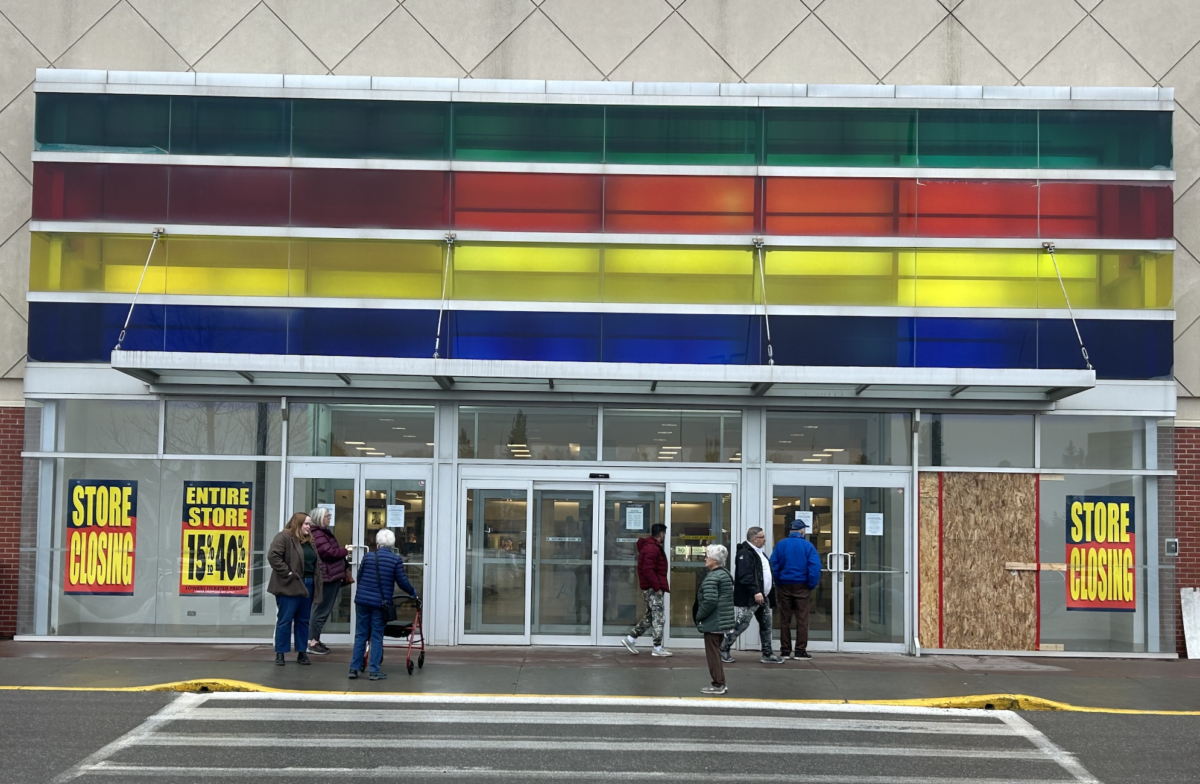
Hudson's Bay flagship store in downtown Vancouver. Liquidation sales began on March 25. Photo: Lee Rivett
The Hudson’s Bay Company’s attempt to salvage part of its struggling retail empire has sparked fierce legal opposition, with major landlords accusing the company’s proposed restructuring support agreement (RSA) of dooming any chance of saving the iconic retailer.
“What you have before you offers no benefit at all to HBC,” said David Bish, a lawyer with Torys LLP representing Cadillac Fairview, during a Thursday hearing in Ontario Superior Court. “It’s a Trojan horse.”
The RSA, struck between Hudson’s Bay and its senior lenders—Bank of America N.A., Pathlight Capital LP, and Restore Capital LLC—would restrict the retailer’s operations while requiring weekly budgets and progress reports. If a credible restructuring plan isn’t presented by April 7, six remaining stores spared from liquidation would be forced to begin clearance sales on April 8.
Six Stores Remain in Limbo
Currently, just six Hudson’s Bay stores—three in the Greater Toronto Area and three in the Montreal region, including one in downtown Toronto housing a Saks Fifth Avenue—have been left out of the liquidation process. These locations were meant to act as a platform for a potential buyer or business plan.
Carl Boutet
“The only thing left to sell is those six stores,” said Carl Boutet, a Montreal-based retail strategist. “If you pull them into the liquidation, you’re not saving anything.”
Court filings reveal a tight sales timeline: Hudson’s Bay aims to evaluate bids by the end of April. However, the RSA’s April 7 deadline could preclude meaningful negotiations.
Lenders Want Control, Landlords Push Back
Lenders argue they need control to protect their investment, claiming inventory in stores technically belongs to them. They warn that without an RSA, they would seek receivership.
But Boutet emphasized that even if lenders pushed for it, the court could intervene.
“Yes, they can request receivership,” he said. “But the judge can say no. The court has discretion to allow those six stores to continue operating independently.”
Landlords—including Cadillac Fairview, RioCan REIT, Oxford Properties, KingSett Capital, Morguard, and others—argued that the RSA hands too much control to lenders and risks cutting off a possible path forward.
A Battle Over Budgets and Sales Performance
Boutet noted that the lenders are willing to let the six stores remain open until the end of April—but only under strict oversight.
“They want weekly budgets and assurances that the stores are cash-flow positive,” he said. “It’s about control. They don’t want to bleed more money on unprofitable stores.”
That stance reflects the broader concern from first-ranking lenders: with cash dwindling and sales underperforming, the longer the process drags on, the smaller the recovery.
“We’re not even sure these stores are bringing in enough to cover rent and payroll,” Boutet said.
Store Traffic and Conditions Raise Concerns
Since liquidation began on March 18, traffic at most locations has reportedly been underwhelming.
“We’ve seen posts on social media showing quiet stores,” said Boutet. “Some shoppers are complaining about broken escalators and poor air circulation. That doesn’t exactly inspire confidence.”
Boutet described the first weekend of liquidation as a classic “dead cat bounce.”
“People rushed in out of curiosity. But the sales weren’t deep enough to move inventory. Most Bay shoppers wait for 30–40% discounts before buying. Right now, it’s just not compelling.”
Hudson’s Bay at CF Market Mall in Calgary. Photo: Mario Toneguzzi
Bonus Plan Sparks Controversy
Court documents reveal that while rank-and-file employees face layoffs without severance or disability benefits, a proposed bonus pool of up to $3 million has been set aside for 121 managers and executives.
The breakdown, according to filings, includes:
Up to $3 million in total (though only $2.7 million is currently allocated)
$1.1 million for 94 store managers
$550,000 for 17 non-store staff
$1,087,750 for 10 senior non-store leadership staff
“The rationale is simple,” said Boutet. “They need someone to keep the lights on during liquidation. But for employees and unions, it’s a slap in the face.”
He added, “You’ve got thousands of frontline staff losing their jobs with no compensation, while executives collect bonuses. It’s not a good look.”
Suppliers Left in the Dark
While landlords and lenders battle in court, another group is quietly suffering: small suppliers.
“There are over 2,000 suppliers,” said Boutet. “Many are small, family-run businesses. Some are owed $50,000 or $150,000. For them, that’s life-changing money.”
Boutet described a friend whose brand was a supplier to HBC and has since written off the debt.
“She’s now focused on salvaging inventory,” he said. “No one’s talking about these small brands. They paid upfront for their merchandise. There’s no insurance, no recovery. It’s devastating.”
Hudson’s Bay at CF Market Mall in Calgary. Photo: Mario Toneguzzi
Who Controls the Remaining Stores?
The battle over the six remaining stores comes down to control. Landlords believe letting Hudson’s Bay run them freely until April 30 could maximize value. Lenders argue that oversight is needed to ensure financial discipline.
“HBC lawyers think they can sell better than anyone,” said Boutet. “Meanwhile, Hilco—the liquidator—may prefer to take over, because they earn more if they control the process.”
Boutet believes the court may side with landlords and allow the six stores to continue operating outside the RSA—under tight scrutiny.
“The judge might carve out the six stores from the agreement, letting them operate on a short leash,” he said. “The goal is to preserve value without losing control.”
Countdown to Collapse?
As Hudson’s Bay races against multiple deadlines, the question remains whether any part of the business can be saved.
“It’s not even six weeks—it’s more like six days,” said Boutet. “Everything is moving incredibly fast. But even if a buyer steps in, what’s really left?”
Unless consumer traffic spikes or a buyer emerges soon, even the six preserved stores may not survive.
“This could be the final chapter,” said Boutet. “Unless someone shows up with a serious offer—and fast.”
A sign encouraging shoppers to buy Canadian products at a liquor store in Vancouver on Feb. 2, 2025. Shoppers have been caught up in the buy Canadian fervour since U.S. President Donald Trump began threatening to apply tariffs on imports from Canada. THE CANADIAN PRESS/Ethan Cairns
A new national study conducted by Lightspeed Commerce Inc., the one-stop commerce platform empowering merchants to provide the best omnichannel experiences, reveals through a recent study that Canadian consumers are not only rallying behind local products in response to new U.S. tariffs but are reshaping long-term shopping behaviours around supporting homegrown businesses.
The survey, conducted from March 12 to 14, 2025, among 1,000 Canadian adults, found that 91% of Canadians are either currently focused on buying Canadian products or planning to do so. Notably, 71% are already making intentional purchasing decisions to support Canadian goods, underscoring a powerful shift toward local pride and consumer consciousness.
“I think that 91% of Canadians prioritizing Canadian products in response to tariffs shows a real unity between the Canadian consumer and the Canadian citizen. My consumer behaviour and my citizen behaviour are overlapping, and there’s a real patriotism for Canadian-made products, local retailers.
“We saw a little bit of that patronage to local retailers during the pandemic, but this is a bit more of a nationalistic angle to it and I think it’s going to be a lasting phenomenon. This is pretty new territory for us in the context of how we think of ourselves in North America and our friends and allies. It’s exciting that there’s going to be a lot of support for Canadian products and for Canadian retailers, and probably a moment where that kind of support can help these businesses grow, scale, and be more material contributing to the overall Canadian economy and GDP.”
Dasilva said it could be a permanent shift in consumer behaviour. There’s been a buy local movement in all Western countries. This is about supporting businesses that keep money in our communities and questioning the role of big chains like Amazon that aren’t supporting Canadian workers. I think this unifies those conversations and benefits local businesses. Given the amount of research people are doing and the thoughts people are putting into these decisions, he doesn’t think this is just a passing trend—it could be a new permanent lens for consumer decisions.
Dasilva said he finds it interesting that Canadians are willing to pay more to support local products, even though there are financial challenges. Athe end of the day, people need to make consumer decisions. They’re not going to stop buying altogether, but there will be more intentionality behind their spending. Consumers are now making decisions with more thought—what’s the source of the product, where is it made, and what kind of retailer am I supporting? It’s an added layer to purchasing decisions. Even if people are financially strapped, this new layer of intentionality could shape how they prioritize their money.
“It’s interesting that there’s also little bit of an element of boycott for some really big US names. More than 70% saying actively boycotting US retailers like Walmart, Amazon, McDonald’s. These are staples that are a big part of most Canadians lives,” he said.
The Lightspeed report said Canadians aren’t just making impulse purchases — they’re reading labels, researching brands, and having conversations about where to shop:
65% are reading labels and tags to ensure they’re buying Canadian
46% are actively researching trusted Canadian brands and retailers
44% are becoming more aware of what products they want to avoid
41% are discussing where to shop with friends and family
The study found that 71% of Canadians are willing to pay more for Canadian-made products, with 76% of respondents stating they’d pay 5–10% more. This willingness suggests growing trust in the quality and value of Canadian goods and services.
When asked what “Buy Canadian” means to them, the top response (72%) was buying goods made in Canada from a Canadian retailer. However, the definition is evolving, with:
47% associating it with products that embody Canadian identity (like Tim Hortons or Roots)
43% indicating they’d buy Canadian-made goods from any retailer, including large e-commerce platforms like Amazon
“While most Canadians support buying local, they are also realistic. 59% said they would not stop shopping at Canadian retailers that carry a mix of U.S. and international goods, showing pragmatism in their buying habits. At the same time, 74% support Canadian retailers removing U.S. goods from shelves, revealing strong backing for local-first retail strategies,” added Lightspeed.
“The study also highlights a growing appetite to support Canadian alternatives over U.S. giants: 73% of Canadians are either currently avoiding or planning to avoid major U.S. retailers like Walmart, Amazon, and McDonald’s.”
The study found that 29% of Canadians believe companies are mislabelling products as “Canadian”.
However, nearly half (49%) suspect deceptive practices exist but believe most companies are being honest.
“Perhaps most significantly, 74% of Canadians said they are likely to continue buying Canadian products even if U.S. tariffs are removed. The trend points to a larger behavioural shift — one where Canadians are choosing to invest in their economy, support Canadian businesses, and prioritize quality and authenticity,” said Lightspeed.
Whether you’re still a startup or already faring the fast lane – running a retail business isn’t just about selling stuff. Behind the scenes, what really keeps it alive is handling money the right way. If you can’t stay on top of your finances, it doesn’t matter how great your products are – things fall apart fast.
Figuring out where your business stands financially starts with one thing – tracking the money. When you understand how funds move in and out, it’s easier to make choices that won’t trip you up later.
That’s what keeps things steady and sturdy in the long run. Mistakes happen, sure, but when the numbers are clear, you’ve got something solid to rely on.
Money Matters: Why Responsibility Pays Off
Retail’s tough – you’ve got to keep an eye on the money if you want to make it work. It’s not just about balancing the books; knowing what’s coming in and what’s going out helps with real-world stuff – like figuring out when to restock or if you can afford to expand.
When a store handles its money well, people pick up on that – whether it’s customers or investors, folks notice when things are run right. Whether it’s the people working there, customers shopping, or investors watching from the sidelines – folks tend to trust a business that proves it knows how to handle money.
When It Goes Wrong: A Lesson from Macy’s
Big brands mess up, too. Macy’s ran into a tight fix when it came out that delivery expenses – and we’re talking over $150 million – hadn’t been properly reported (by an employee) for years. That kind of thing doesn’t stay quiet for long. Once the news broke, profits dipped, investors got spooked, and the company had to clean up fast.
News like these are grand reminders that no matter how big your company may become, things like these can slip through if someone at the helm forgot to keep tabs on your finances.
Accountants: The Unsung Heroes of Retail
Behind the scenes, accountants keep everything running smoothly. In retail, a lot depends on how well the financial side is handled – and that’s where accountants come in.
They deal with the day-to-day stuff like budgeting and making sure tax requirements are met, but their job doesn’t stop there. These folks also help spot areas where money is being wasted or where things could run more efficiently.
When businesses face big moves – maybe opening another location or deciding whether to scale back – financial insight is what helps those choices make sense. That’s why having someone, an expert like your accountant, who knows the numbers inside and out is a serious advantage.
Getting certified as a CPA takes serious work – tests, training, all of it. But the difference shows. CPAs aren’t just doing the usual accounting stuff; they know how to deal with financial rules, spot risks, and keep everything above board.
Want more details? Check out the latest info on CPA compensation trends. That kind of skill doesn’t come cheap. On average, CPAs make around 57% more than those without the certification – salaries hit roughly $122K. It’s not just about a title either; companies pay more because CPAs help avoid expensive slip-ups.
Tech That Keeps the Numbers Tight
Retail’s gone way beyond paper records and clunky registers. These days, most businesses are using digital tools – stuff like cloud accounting platforms, point-of-sale systems, and inventory software – to stay on top of the money as it moves.
These systems help spot mistakes faster, make reporting easier, and take some of the hassle out of audits. It also makes it easier for folks like you running the business to spot patterns – like where things might be costing more than expected or areas that need you to take a closer look before small issues become big ones.
Customers Watch, Too
Let’s not forget the customer side. People notice when a store is run well – stocked shelves, fair prices, and solid service all come from a business that’s financially healthy. When retailers manage their money right, they can reinvest in better products, staff, and customer experience.
When the money side’s not managed well, things tend to slip – products go out of stock, service gets worse, and customers start looking elsewhere. But mind you, if your firm stays on top of your finances you’re likely to keep folks coming back.
Building a Financially Accountable Culture
Retail success isn’t just about one accountant doing a good job. It’s about a culture that values transparency, honesty, and financial awareness. What does that look like?
● Clear Expectations
Everyone from cashiers to managers understands the financial basics.
● Training
Staff know how to track, report, and question when something feels off.
● Controls
Systems are in place to catch mistakes early.
● Ongoing Reviews
Regular check-ins to stay on course and fix what’s not working.
When everyone’s on the same page, financial accountability becomes part of the brand’s DNA.
Final Take
Retail success isn’t luck – it’s the result of careful money management and solid accountability. With skilled accountants in your favor, smart tech, and a commitment to doing things right, retailers like you remain able to compete and grow.
In a fast-moving market, financial accountability isn’t optional – it’s survival.