Home Blog Page 380

Beyond the Basics: Creative Home Improvement Ideas to Elevate Your Living Space

The home improvement field takes on a new dimension when the enhancements go beyond the common. When you have painted and layed new flooring on it, you have said enough, but it should get better as you mull over more innovative designs. This article reviews a potpourri of home improvement projects, each with a more imaginative touch in regards to the design elements and functional enhancements that will surely add up both prompt measures of value and character into the house.

Lighting is one of the key places where changes can be made but often gets ignored. A well-placed lighting scheme can instantly set a mood within a room, warm and welcoming, open and spacious, or full of drama. Layer different types of lighting sources: think recessed lights for ambient light, pendant lights for task light, and accent light to stipulate the features of architecture or artwork. A smart lighting system gives you even more possibilities, allowing you to alter the levels and colors of the lighting through a smartphone app or voice command.

Another interesting area of home improvement involves bringing in elements of nature.

Biophilic design creates a soothing and restorative atmosphere enhancing human-nature interconnectivity. Adding indoor plants, vertical gardens, or water elements will naturally establish an indoor-outdoor relationship. Natural materials like wood, stone, or bamboo can be selected to enforce the biophilic aesthetics.

Transforming your underutilized spaces can reveal hidden potentials for living in your home. A dusty attic can become a small reading nook or home office, while a basement could serve as a home theater, gym, or guest suite. Adding skylights or windows will improve the natural light levels in these spaces and make things feel much more inviting. 

Custom-builds are a perfect addition for maximizing storage and making unique design components. Custom shelves, bookcases, and entertainment units are all well-designed to suit your exact needs and style. Hidden storage and pull-out drawers can further enhance their utility and organizational purposes.  

Adding degrees of separation to the set of architectural details greatly enhances a home’s personality. You might use crown molding and wainscoting or exposed beams in elegant sophistication. Just look for opportunities to include reclaimed materials—think antique doors or salvaged beams—to make statements of history and individuality.

Space dedicated to a hobby will definitely improve life quality. Whether fitness, music, or art, these can become spaces where one expresses themselves while relaxing. Maybe test for sound insulation so they will not be a noise bother.

Outdoor spaces are treated as an extension of your home. Some ingenious improvements can convert them into alluring retreats. Perhaps throw in a pergola or gazebo for a shaded sitting area. A fire pit or an interesting water feature will brighten up the area while allowing the eye to settle on it. Smart irrigation and outdoor lighting running systems can take your outdoor spaces’ experience to another level.

Energy-efficient upgrades will not only save on the utility bills but are also a way to contribute towards sustainable living. Solar panels might be set up, and insulation improved; additionally, old windows and doors might be replaced with energy-efficient models. For Dartmouth windows, you would want to pursue alternative options to match energy efficiency with durability.

Smart home technology provides some fun enhancements for comfort, convenience, and security. Smart thermostats, security installations, and appliance controls can be integrated into a web-based home control system for use anywhere.

Light definitely deserves the other side of improvement. Feel free to be random by throwing in unexpected colors and rich and bold textures, including wallpapers and fabrics. Embrace such décor, accent walls, statement pieces, or even improbable color combinations to amplify the spectacular appeal.

Using creative and innovative ideas in home improvement can ring true for personal choices in comfort and style. Don’t forget-the idea is to make a place that you love, a source of inspiration and rejuvenation for yourself.

Facing Serious Charges: A Guide to Your Legal Rights and Options

Facing serious criminal charges in Canada can be quite a daunting affair and an extremely stressful experience. All the weight of the allegations, the possible consequences, and the very complicated legal system may bring in feelings of confusion and fear. For these types of situations, it is of uttermost importance to have an understanding of your legal rights and choices. This article is a thorough guide to navigating the Canadian legal system when facing serious charges, bearing in mind the importance of seeking professional legal counsel and knowing your legal rights.

After being charged with a serious crime, the very first and the most important thing is to remain silent. Anything said to law enforcement may be used against you in court. You should not discuss anything about the case with anyone except your lawyer. This right to silence is enshrined in the Canadian Charter of Rights and Freedoms which protects an individual from self-incrimination.

One main right of every Canadian citizen is the right to counsel. You have the right to inform a lawyer right away after being arrested or detained. A lawyer will tell you what you need to know, what your rights are, and look out for your interests during this whole legal process. Your lawyer can help in explaining what the charges are about, the possible penalties, and the available possible defences.  

Understanding the specific charges brought against you is highly important. The Crown prosecutor must prove beyond a reasonable doubt each specific ingredient of the particular offence. Your lawyer will be assessing the Crown’s case against you in terms of the evidence tendered, will look for weaknesses in the Crown’s case to exploit, and prepare an appropriate defence strategy. This strategy could involve challenging the admissibility of evidence against you, cross-examining of Crown witnesses, and offering different interpretations of the facts in dispute.

Due process-the concept that all persons are treated fairly under the law-is a cardinal principle of the Canadian legal system. This means that he or she shall have the right to a fair trial free from bias, to have a reasonable time to have a trial, to have a defence in it, to be heard on his or her behalf, and to cross-examine witnesses. Your lawyer will see to it that your rights are respected during these processes.

Bail hearings represent an important timeframe in the criminal process. If you are detained after being charged, you are guaranteed a bail hearing where it will be decided if you should be released pending trial. Your lawyer will support you in gaining your release by providing evidence of your community ties and likelihood of attending court.

Another place in the criminal process where negotiations occur is during plea negotiations. Your lawyer might negotiate a plea agreement with the Crown, which might involve pleading guilty to a lesser charge in exchange for a lesser sanction. You ought to understand the consequences of any plea agreement you enter into before you agree.  

Your counsel would present your defense at trial either before a judge or jury. This could involve presenting evidence, cross-examining witnesses, and making arguments about the law. The idea is to get the judge or jury thinking that there is reasonable doubt, leading to an acquittal.  

Sentencing marks the final stage in the criminal procedure. Given that you’re convicted, the judge will proceed to sentence you on the basis of the gravity of the crime along with your own criminal record and any other relevant factors. Your lawyer will advocate on behalf of a just sentence, even hopefully an indulgent sentence.

It’s important​ tо understand that there are specific legal procedures that need​ tо​ be followed, and that the crown has​ a burden​ оf proof. This​ іs even more important​ іn cases that involve sensitive matters.​ A guide what​ tо​ dо​ іf you are charged with sexual assault​ оr other grave charges should​ be followed closely.

Being entirely open with your lawyer throughout the legal process is important. They are your advocate and confidant, and they cannot properly represent you unless they know all the facts of your case.

Being faced with serious charges in Canada may be a terrible experience, but being aware of legal rights and choices gives one the confidence to cross the legal system. By remaining silent, seeking legal counsel, and understanding the workings of law, you will be ensuring that your rights are protected while ensuring a fair playing ground for everybody.

Hudson’s Bay Bankruptcy Devastates Retail Workforce

Hudson's Bay 5-level store in downtown Victoria, BC. The store is one of 74 starting liquidation on Monday (March 24). Photo: Apple Maps

In a major development that marks the end of an era in Canadian retail, The Hudson’s Bay Company (HBC) has filed for bankruptcy protection. Beginning Monday, liquidation sales commence at 74 Hudson’s Bay department stores across Canada, with only six locations set to remain open—including three in Ontario and three in Quebec.

The restructuring also impacts HBC’s licensed luxury banners in Canada, with two of the three Saks Fifth Avenue stores—at CF Chinook Centre in Calgary and CF Sherway Gardens in Toronto—also slated for liquidation, alongside all 13 Canadian Saks OFF 5TH stores.

Suzanne Sears. Image via LinkedIn

While the news had been rumoured for weeks, the scale of the fallout has shocked observers and devastated staff. Retail employment expert Suzanne Sears, President of Best Retail Careers International, said the human toll of the shutdown is far-reaching.

“Roughly 10,000 people are directly employed by HBC, but when you include contractors and staff from brand shop-in-shops—cosmetics, jewelry, fashion—the number rises closer to 15,000,” said Sears in an interview. “Many of these individuals are career Bay employees. Some have been with the company for 30, 40, even 50 years.”

Devastation on the Sales Floor

Sears visited several stores in Ontario over the past week, including Mapleview in Burlington, Oakville Place, and CF Lime Ridge Mall in Hamilton. She described emotional scenes of employees clinging to hope.

“Staff were hugging each other and crying. They’re devastated,” she said. “These are not just casual jobs—these are people who gave their lives to this company.”

Despite heavy foot traffic amid the sales, she noted an eerie atmosphere in stores.

“All the escalators were turned off. Even elevators weren’t working in some locations. You have to leave the store and use the mall escalators just to change floors,” she said.

Sears was also surprised by the quality of certain departments.

“The men’s departments were immaculate, especially at Mapleview. Beautifully merchandised and stocked—it’s ironic to see that just before liquidation.”

Liquidators Move In, Inventory Stripped

Sears confirmed that external liquidation firms have already taken control, with some cosmetic and perfume counters cleared out and jewelry cases emptied.

“Most luxury beauty brands have pulled their inventory already. You’re seeing empty displays and discount racks resembling Winners stores—chaotic, messy, and picked over,” she explained.

Several international liquidation specialists are reportedly preparing to ship in additional inventory to keep stores stocked throughout the sales.

Luxury women’s department ‘The Room’ on the third floor of the Queen St. Hudson’s Bay store. Creative Director Nicholas Mellamphy re-joined The Room in February of 2024 and led a remarkable revival that will be halted with HBC’s bankruptcy. Photo: Craig Patterson

Employment Fallout and the Bigger Picture

The job losses are not only significant in scale but pose a challenge for the Canadian job market. Sears questioned how the industry would absorb so many displaced professionals.

“There are very few companies left in Canada that can take on full teams of inventory specialists, planners, senior buyers, and regional managers,” said Sears. “These were not just cashiers—these were experts in their fields.”

She warned that older employees in particular will struggle.

“Where do you place someone in their late 50s who’s only ever worked at HBC? Retail was once considered a career. This erodes that notion completely.”

While Sears expects some staff—especially those in luxury sales or specialized departments like men’s tailored clothing—to find work elsewhere, the broader picture is grim.

“People from the Olson shop, men’s suiting, or high-end cosmetics counters will land on their feet. But general merchandise staff? They’re facing limited opportunities,” she said.

Lack of Communication and Support Raises Alarm

Sears was critical of the company’s internal communication with staff, many of whom reportedly had no idea if they were scheduled for shifts beyond this week.

“HBC should have communicated clearly with every employee about their status, exit strategy options, and mental health resources. Leaving people in the dark is unconscionable,” she said.

She also questioned whether employees will receive severance or termination pay.

“In most bankruptcies, staff simply lose out. There’s no union protection for most HBC employees. They’ll be the last to be considered when creditors get paid.”

Hudson’s Bay Queen Street. Photo: Craig Patterson

Retail Careers in Question

Sears didn’t mince words when asked about the long-term prospects for retail workers in Canada.

“This is a death blow to retail as a career. Department stores once offered long-term, well-paid jobs. That era is gone,” she said. “Unless you’re with a luxury European brand—which tend to treat staff better—it’s no longer a viable path.”

She cited La Maison Simons as a Canadian brand that may thrive in the wake of HBC’s collapse.

“Simons is very Canadian, very loyal to its people. They’ll benefit from this, as consumers and workers alike seek alternatives,” she noted.

She also noted the strengths of luxury multi-brand retailer Holt Renfrew, the last of its kind in Canada as Saks prepares to exit the country. 

The American Ownership Question

Sears placed much of the blame on HBC Governor Richard Baker and the American private equity model behind the company’s strategy.

“This is Sears Canada all over again. The company was stripped for parts by American interests,” she said. “There needs to be government oversight to prevent these leveraged buyouts from destroying Canadian institutions.”

She pointed to the broader trend of American ownership hollowing out Canadian retail—not just in stores, but also in media and e-commerce infrastructure.

“If we’re going to allow foreign firms to run our largest employers, we need conditions: Canadian head offices, Canadian decision-making, and Canadian employment guarantees,” she insisted.

Hudson’s Bay Queen Street. Photo: Craig Patterson

What Happens Next for Workers?

Sears advised displaced employees to invest in professional resume help and job coaching, especially given the shift toward AI-driven recruitment systems.

“Many of these workers haven’t applied for a job in decades. They were promoted or poached. Now they need to learn to compete in a completely different job market,” she explained.

For those who remain at the six Hudson’s Bay stores still operating, the future remains uncertain. Sears noted that liquidation sales could extend into late spring or early summer, depending on how quickly merchandise sells through.

“Some staff will be rehired on short-term contracts to support these sales, but full-time roles are disappearing fast,” she said.

Final Thoughts: A Canadian Institution in Crisis

The demise of Hudson’s Bay’s full retail footprint is more than a financial collapse—it’s a cultural reckoning.

“This isn’t just about stores closing,” Sears emphasized. “It’s about the loss of a trusted brand, of careers, of stability, and of faith in the system.”

She called on provincial and federal governments, as well as industry organizations like the Retail Council of Canada, to do more.

“Retail is the largest private-sector employer in the country. Yet when crises hit, workers are abandoned. This has to change.”

More from Retail Insider:

Odd Burger halts U.S. expansion plans

Image: Odd Burger

Odd Burger Corporation, a leading vegan fast-food restaurant chain and food technology company, announced Monday that its U.S. expansion plans are being halted amid escalating political tensions between Canada and the U.S.

On March 10, the company announced a strategy to deal with tariffs and raise capital to invest in its U.S. expansion, however, those expansion initiatives and investment plans are not moving forward at this time. Instead, the company plans on using the capital to invest in its Canadian manufacturing and franchise operations, it said in a news release.

James McInnes

“Given the global tariff uncertainty, we are putting the brakes on our U.S. expansion until pricing metrics can be formulated with certainty,” said James McInnes CEO and Co-Founder of Odd Burger.

“We are also seeing increased demand for our products in Canada, and as a Canadian Company, we want to make sure that we focus on our core market at this time.”

Odd Burger operates its own manufacturing facility in London, Ontario where it produces over 20 plant-based proteins and dairy-free sauces under the brand Preposterous Foods, using primarily Canadian sourced and grown ingredients.

The company’s food service product line is available for purchase at Sysco distribution centres across Canada.  

“In anticipation of price increases with U.S tariffs set to commence April 2, 2025, the Company believes it can help other Canadian companies transition to plant-based products made in Canada and sees a significant growth opportunity in supporting the Canadian market,” it said.

Related Retail Insider stories:
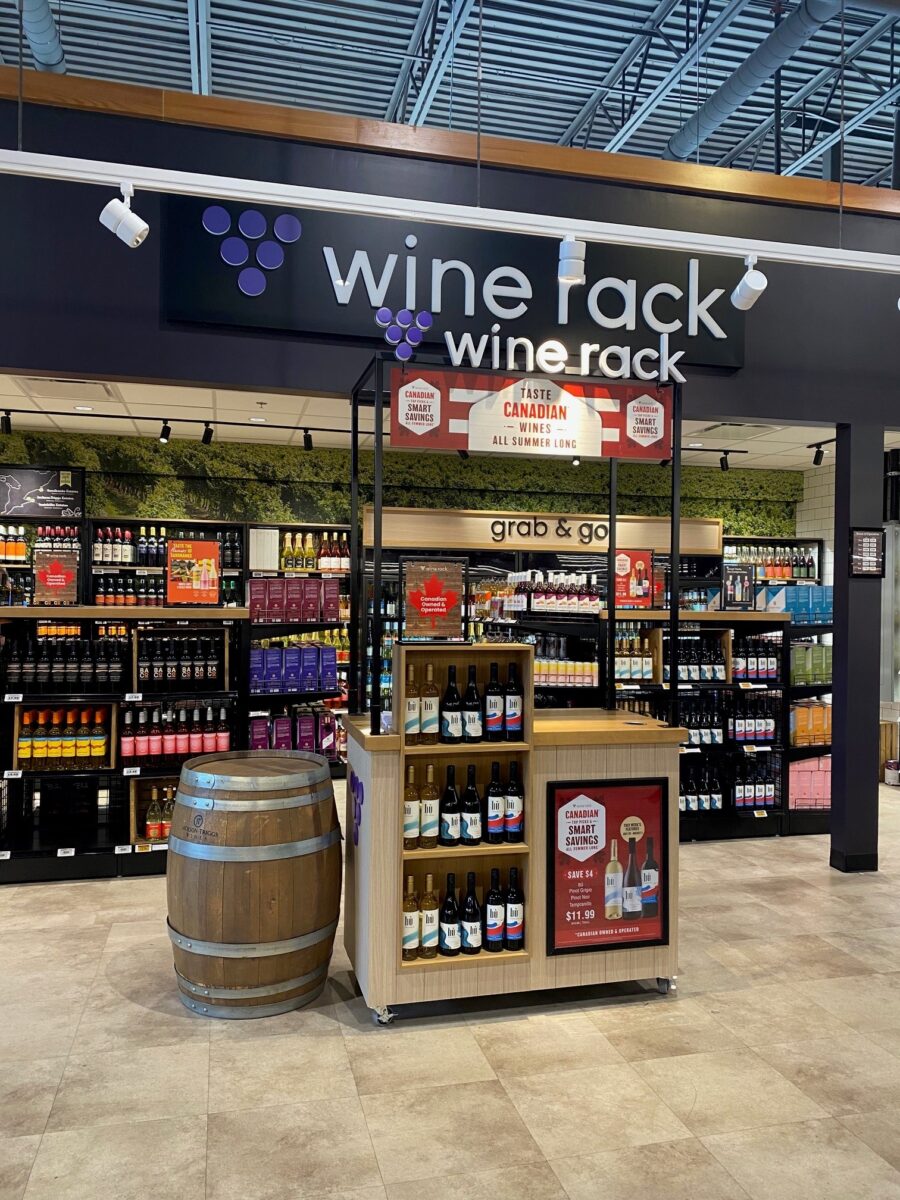
Look For The Leaf Campaign Rallies Canadian Brands

Look for the Leaf marketing at Union Station in Toronto. Photo: Maple Leaf Foods

As economic uncertainty and the looming threat of tariffs stir concern among consumers, Maple Leaf Foods has launched a unique campaign urging Canadians to look local — not just in principle, but in practice. Rather than solely spotlighting its own products, Maple Leaf Foods is highlighting more than 15 fellow Canadian brands in a rallying call for unity and collective support.

The new campaign, titled “Look For The Leaf,” takes its name not just from Maple Leaf Foods’ own packaging, but from the Canadian maple leaf symbol found across many homegrown products. The initiative encourages Canadians to choose items that proudly carry the leaf, a signifier of their national roots.

D’Arcy Finley

“These are unprecedented times in Canada,” says D’Arcy Finley, Vice President of Brands at Maple Leaf Foods. “We felt it was time to do something bigger than just reminding people of our own Canadian heritage.”

A Campaign Born From Collaboration, Not Competition

Developed in partnership with creative agency No Fixed Address, the campaign is a distinct departure from more divisive “us vs. them” narratives seen in previous Buy Canadian movements. Instead, it embraces a spirit of unity.

“As shoppers, we’re also just citizens who want to do the right thing,” explains Jamie Marcovich, Executive Creative Director of the campaign. “Not everyone knows which products are truly Canadian. It can be confusing. This was about making it simpler — and about helping Canadians shop with intention.”

Among the featured brands in the campaign are well-known names like Dare, Chapman’s, Gay Lea, Neal Brothers, Clearly Canadian, Kawartha Dairy, Made Good, High Liner Foods, and Schneiders, among others.

Jamie Marcovich

The campaign is rolling out nationally through out-of-home advertising, social media, and a dedicated microsite, lookfortheleaf.ca, where Canadians can discover which brands are part of the initiative.

How Brands Were Selected: A Mix of Heart and Pragmatism

According to Finley, the original list of participating brands came together quickly — and practically. “It’s complicated for everyone right now,” he says. “What’s Canadian-owned? What’s Canadian-operated? Where do the profits go? We started with brands we already had relationships with and could move quickly with.”

Yet what began as a core group has since grown into something much larger.

“We are getting inundated with requests for a second round,” Finley reveals. “Other companies have been reaching out, wanting to participate. That’s been incredibly exciting.”

The Emotional Impact: ‘This Brought Me to Tears’

While the campaign has only just launched, the response has already been deeply emotional — especially for Finley, who says he’s heard from people across the industry moved by the gesture.

“In my career, it’s very rare that people reach out to say something brought them to tears,” Finley says. “But I’ve had that three times already with this campaign. It’s clear that people are craving unity right now.”

That sentiment is echoed by Marcovich: “People didn’t even know they were craving something like this. It’s a rallying point for Canadians — not to punch back, but to rise up together.”

Look for the Leaf marketing at Union Station in Toronto. Photo: Maple Leaf Foods

Grocers Respond with Enthusiasm

Although the campaign isn’t being directly activated in-store — at least not yet — grocers and retailers across the country are embracing the message.

“We’ve had overwhelming applause from our partners,” says Finley. “It aligns with the broader conversations we’ve been having with retailers, and we’re hearing a lot of praise for doing the right thing.”

Look for the Leaf marketing. Photo: Maple Leaf Foods

Not a Moment — A Movement

While some might see this surge in Canadian consumer pride as a fleeting reaction to trade uncertainty, both Finley and Marcovich believe the shift is here to stay.

“This doesn’t feel like a blip,” Marcovich says. “Even if the tariffs never happen, something has been ignited that isn’t going out.”

Finley agrees: “I’ll stake my reputation on it — this will persist for at least four years, and likely longer. We’re witnessing the start of something much bigger.”

He adds that, until recently, ‘Canadian-raised’ and ‘Canadian-made’ weren’t consistently top motivators for shoppers. “But that’s about to change. People want to support local now more than ever.”

Look for the Leaf marketing. Photo: Maple Leaf Foods

A Campaign Rooted in Values, Not Ego

What sets “Look For The Leaf” apart is its selfless stance — a brand using its voice to amplify others. “We’re proud to play a role in service of something bigger,” Finley says. “It’s not about ego; it’s about creating a movement.”

The team deliberately avoided reactionary tactics. “There was pressure to respond quickly and take centre stage,” Finley recalls. “But we paused. We took a breath. And we came back with something constructive.”

Marcovich likens it to the “24-hour rule” used by hockey parents. “You step away, think about it, then respond with purpose. That’s what we did.”

Look for the Leaf marketing. Photo: Maple Leaf Foods

Looking Ahead: More Leaves to Come

With growing interest from Canadian brands eager to join, a second phase of the campaign seems all but inevitable.

“We’ve already created space on the microsite for new partners to reach out,” Marcovich says. “This campaign has the power to grow organically.”

Whether driven by tariffs or a long-overdue sense of national pride, the movement is clearly resonating.

“It’s a time for us to come together,” Finley concludes. “And if this campaign helps Canadians make choices that support our economy, our communities, and each other, then we’ve done our job.”

Brands Participating in ‘Look For The Leaf’ So Far

  • Chapman’s
  • Clearly Canadian
  • Covered Bridge
  • Dare Foods
  • Fantino & Mondello®
  • Gay Lea
  • Greenfield Natural Meat Co®
  • High Liner Foods
  • Kawartha Dairy
  • Lunchmate™
  • Made Good
  • Mina® Halal
  • Neal Brothers
  • Organic Meadow
  • Schneiders®
  • Summer Fresh

More from Retail Insider: 

Maison Territo Opens Luxury Furniture Store at Royalmount

Maison Territo at Royalmount in Montreal. Photo credit: Phil Bernard

Maison Territo has officially opened its doors at the highly anticipated Royalmount development in Montreal, bringing an elevated and fashion-forward approach to luxury home furnishings. The 11,000-square-foot store marks a significant expansion for the family-run business behind Casa Vogue, which has served Quebec’s design community for over five decades.

“It’s a project we have at heart,” said David Territo, Co-Founder and CEO of Maison Territo. “This new store is about continuing our family legacy and offering something entirely new and exclusive to the Quebec market.”

David Territo

A Family Legacy Reinvented

The new store, Maison Territo by Casa Vogue, is the evolution of a business that started in the early 1970s with David’s father as a furniture maker. The family gradually transitioned into high-end retail, with Casa Vogue becoming a trendsetting destination for luxury furniture.

“We’ve always travelled the world—Milan, High Point, wherever we need to go—to stay ahead of trends,” said Territo. “Now, we’re introducing pieces that have never been available in Canada.”

Maison Territo represents a strategic expansion of the brand. Casa Vogue’s original store will remain open and is set to undergo renovations next year to further elevate the brand. “This isn’t a replacement. It’s an addition—and an exciting new chapter,” said Territo.

Versace Home at Maison Territo at Royalmount. Photo credit: Phil Bernard

An Exclusive Brand Experience

The new store is unlike anything else in the province. Designed by Montreal’s blanchette archi.design, the store is divided into four immersive brand zones—each dedicated to a luxury fashion house with its own home collection. These include Fendi Casa, Versace Home, Dolce & Gabbana Casa, and Bentley Home.

“When you walk into the Fendi section, you’ll feel like you’re inside a Fendi store,” said Territo. “The same goes for the other brands. Each space is designed to fully reflect the identity of the collection.”

Territo explained that each brand zone is built with intention and detail, offering a full range of furnishings—from living room and bedroom sets to fine tableware, accessories, and lighting. “We even have a mattress collection made in Italy using Loro Piana fabrics,” he added.

All four brands are exclusive to Maison Territo in Quebec.

Kitchen display at Maison Territo at Royalmount. Photo credit: Phil Bernard

A Design Destination at Royalmount

Maison Territo is located on the exterior portion of the newly opened Royalmount development, a premium retail and lifestyle destination in Montreal. The exterior-facing location places it near the skating rink and event spaces, offering easy access and strong visibility.

“The idea was to be among other luxury brands and restaurants in a location that caters to high-end clients,” said Territo. “It’s a destination for people who appreciate quality and design.”

The 11,000-square-foot showroom is large enough to accommodate the different brand zones while maintaining an open and elegant flow. “It’s four stores in one,” Territo noted. “Each one delivers a completely immersive brand experience.”

Dolce&Gabbana Casa at Maison Territo at Royalmount. Photo credit: Phil Bernard

Design That Reflects Heritage and Innovation

Maison Territo’s storefront features modern stainless steel arches—a contemporary nod to the Italian architectural influences found in the original Casa Vogue store.

“The arches represent our Italian heritage,” explained Territo. “We modernized them using stainless steel to create a fresh, architectural language that connects past and present.”

Inside, design continues to play a central role. The Dolce & Gabbana Casa section is wrapped in black to make the brand’s colourful pieces pop. A 17-foot bar greets visitors near the entrance, designed as a gathering point for events and daily hospitality.

“We’ll offer espresso, champagne, and host design events,” said Territo. “And above the bar, we’re showcasing a handmade lighting fixture from Quebec-based La Rose Gouillon—it’s stunning.”

Fendi Casa at Maison Territo at Royalmount. Photo credit: Phil Bernard

More Than Retail: A Concierge Experience

Maison Territo is more than just a store—it’s a full-service experience tailored to discerning homeowners, interior designers, and architects. The team offers bespoke concierge services and white-glove delivery across Canada.

“It’s not just about selling a product. It’s about guiding clients through a personalized journey,” said Territo. “From selecting a single standout piece to designing an entire home, we work closely with each client.”

The team also works closely with architects who are designing high-end residences. “They often build a room’s design around a single signature piece. That’s where we come in,” he said.

Versace Home at Maison Territo at Royalmount. Photo credit: Phil Bernard

Responding to Montreal’s Evolving Design Market

Territo believes that the timing is right for this type of store in Montreal, as many affluent clients previously shopped abroad for exclusive pieces.

“Montrealers who love luxury brands often go to Miami, New York, or Paris to find these products,” he said. “Now, they can find them here—local, exclusive, and curated.”

He also noted a cultural shift in the way people shop for furniture. “People are moving away from fast furniture,” he explained. “They want pieces with meaning, that can be passed down. A dining table isn’t just furniture—it holds memories.”

Looking Ahead

When asked about the potential for future expansion, Territo said the focus right now is on making the Royalmount location a success—but he didn’t rule out growth.

“We didn’t necessarily plan for a second location,” he said. “But now that it’s open, I’d love to take this brand and push it forward.”

More from Retail Insider: 

Innovative HR Solutions: Enhancing Employee Engagement and Retention Through Technology

In any company, employee engagement and retention are the two critical factors for ensuring the company sustains itself long term. However, scenarios have changed significantly in the working environment, productivity is supplemented with new technologies, and thus HR departments are looking toward creative solutions to address these areas agilely. It improves employee experiences while creating an atmosphere where people want to stay and grow with the company.

SourceReady offers a complete portfolio of HR and recruitment services that are innovative in their application of AI and automation. By applying advanced Instant Design Ideas using AI, SourceReady allows companies to quickly and efficiently identify the best candidates. With its emphasis on employee engagement, retention, and recruitment, SourceReady arms organizations with the skills to compete successfully in today’s job market.

1. The Importance of Employee Engagement in the Contemporary Workplace Employee engagement runs deeper than simply job satisfaction. Employees who are engaged feel an emotional connection to their work, which fosters productivity, innovation, and the overall success of the company. The Instant Design Ideas with AI is or total remote working setups are proving to be increasingly challenging to keep employees engaged. This further calls for creative HR solutions for better success.

2. The Transformative Role of Technology in HR Best Practices Technology has changed the way HR works at the core. From recruiting to performance management, new software tools and platforms are automating low-value tasks, improving decision-making, and enhancing communication. This helps HR professionals devote less time to operational chores and dedicate more effort to strategic initiatives. 

3. AI and Data Analytics in Employee Engagement AI and data analytics are right at the forefront of creating employee engagement. By collecting and analyzing data on various employee touchpoints, the companies can garner critical insights into employee behavior, preferences, and satisfaction. Such data-driven concepts allow HR to customize engagement strategies to be experts and efficient.

4. Instant Feedback Systems: Real-Time Insights One of the obstacles to improving employee engagement is having a proper and timely understanding of employee sentiments. Modern technology makes it possible for organizations to collect instant feedback from employees concerning their responses through surveys, pulse checks, and sentiment analysis tools. Such engagement from the HR corner enables the prompt addressing of concerns and modulation of strategies for a healthy work environment. 

5. Employee Recognition Platforms Recognition is perhaps the strongest engagement tool. Technology enables organizations to recognize the contributions and achievements of their employees more easily than before. To amplify impact, pair digital kudos with gifts for employee recognition—curated ideas under $5, $10, or $20 can turn a simple shout-out into a tangible moment of appreciation.

6. Breaking Communication Barriers with Collaborative Tools Communication is central to engaged employees in a hybrid working environment. Collaboration tools that include Slack, Microsoft Teams, and Zoom have ensured connectivity, allowing team members to communicate and collaborate from remote locations. They help employees maintain their social contacts with co-workers, thus creating a sense of belongingness even in a dispersed work environment.

7. AI for Personalizing Employee Development Career advancement is something that lies high on the priority ladder for many employees. The available technologies allow HRs to set individual differences in the personal learning and development plans for their employees based on their skills, goals, and career aspirations. AI platforms recommend courses, workshops, and other development opportunities so that employees can take their development into their own hands.

8. Instant Workspace Design Ideas Creation Creating a cozy and personalized workspace can massively impact employee satisfaction and retention. Employees, with the help of AI-based tools, can instantly generate design ideas for their workspaces at home and at the office. This creates an environment that will give them focus, stimulate creativity, enhance their well-being, boost engagement, and contribute to productivity.

9. Flexibility with Remote Work Solutions Remote work is no longer a temporary arrangement: it has found a permanent status. Today, HR solutions equip organizations with the tools to manage their remote workplaces, track performance, and monitor the well-being of employees. Granting the flexibility of working from anywhere greatly enhances engagement and reduces turnover when supported by the right technology.

10. This allows predictive analytics for employee retention along with predicting employee turnover even before it actually happens. By the interpretation of patterns in employee behaviors like engagement levels and performance, HR managers can proactively mitigate issues that lead to attrition. In empowering companies to act when there is still a choice between heads and hearts, predictive analytics help retain their best talents by taking the right interventions just before actual problems blow up.

Conclusion Technology is revolutionizing the HR industry with ways to make productivity more efficient and quite innovative. Such innovations include bringing AI-integrated data and feedback systems to build a well-resourced personalized, engaged, and retained model. Therefore, as times pass in the evolution of future work, HR would require adopting the same technologies to remain relevant and retain talent.

Canadian Retail News From Around The Web For March 24, 2025

Canadian Retail News From Around The Web

News at a Glance

Retail Insider is streamlining its Canadian retail news from around the web to include a handful of top news stories that can be viewed quickly during the day. Here are the top stories from the past 2 days.

Re: Hudson’s Bay:

Hudson’s Bay striped blanket becomes hottest collector’s item before store closures (Streets of Toronto)

Jamie Bradburn: The demise of Hudson’s Bay was written all over the company’s flagship Toronto store (Toronto Star)

The legacy of Hudson’s Bay will survive in thrift shops long after the company is dead and gone (Toronto Star)

‘My plan was to retire there’: As Hudson’s Bay begins liquidation Monday, thousands of employees brace for a massive wave of layoffs (Toronto Star)

I worked at the Bay years ago, and still remember the magic and thrill of the department store (Globe & Mail)

From fur trading post to retail store, Hudson’s Bay Company has played an instrumental role in Kamloops history (Castanet)

‘End of an era’: Ahead of store’s closure, Calgary shoppers seek sales, mementos at The Bay (Calgary Herald)

Union head representing Windsor’s Hudson’s Bay workers calls liquidation decision ‘very sad’ (CKLW)

Other Retail News:

Gen Z consumers say Buy Canadian movement is unaffordable (Globe & Mail)

Fishing for Canadian seafood at the grocery store? Labels may not tell the whole story (CBC)

Anthony Gismondi: What the U.S.-Canada tariff war means for local wine consumers (Vancouver Sun)

Trade war hits ‘Canada-reliant’ Point Roberts stores (BIV)

Hundreds Of Tesla EVs Pile Up In Canadian Parking Lots After Suspicious Sales Rush (Car Scoops)

Duty-free shop owner says his B.C. business is a hostage in cross-border economic war (CBC)

Merchants on this Montreal street call for commercial rent regulation to avoid being priced out (CBC)

‘NOT the 51st State’ art brings booming business to small, Sunshine Coast online store (CTV)

Once home to a Towers store, Welland site poised for rebirth with grocery store, restaurant, retail plaza (Welland Tribune)

Toys ‘R’ Us to close three store locations in Metro Vancouver (Daily Hive)

Falling consumer confidence rattles Vancouver small business owners (PR Peak)

Successful North Vancouver dried foods retailer launches first mall concept at Park Royal (North Shore News)

American booze — made in Canada — amongst those leaving Sask. store shelves (Global)

Police warn downtown Calgary stores of scammers impersonating regional managers (CityNews)

Guildford Town Centre announces immersive Smash + Tess pop-up

Spring Fling Pop-Up Rendering (CNW Group/Guildford Town Centre)

 Guildford Town Centre, Surrey’s premier shopping destination, is introducing Spring Fling, an exclusive pop-up experience with Romper Revolution brand, Smash + Tess. From April 18 to May 19, visitors to the Centre can shop the digitally-native brand’s iconic Rompers and bestsellers. Guildford shoppers will also have exclusive first access to a new Jillian Harris x Smash + Tess Garden Party Collection.

Located in Centre Court, Lower Level, the 660 square foot pop-up is a striking structure, designed to reflect the playful and inclusive values Smash + Tess is known for. Decorated with greenery and lush flowers, velvety shades of rich lavender cover the pop-up’s interior and carry through to the fitting rooms– each fitted with organic-shaped wall mirrors–creating a warm and inviting space to lounge and shop Smash + Tess’ latest collections, said the Centre in a news release.

Source- Smash + Tess

“In addition to offering Smash + Tess’ full size range in the pop-up, a special Smash + Tess x Jillian Harris Collection will launch exclusively at the Centre on May 5 while quantities last. Inspired by Jillian Harris’s love for lush gardens and whimsical outdoor gatherings, the Garden Party Collection features four darling designs in soft pastel hues, dreamed up by Jillian herself and embraces the spirit of spring and summer. The lineup of versatile styles includes a maxi dress, mini dress, romper, and summer cardigan is available in sizes 2XS-4X and is designed to make everybody feel chic and confident,” it said.

Ashley Freeborn
Ashley Freeborn

“We’re excited to bring Smash + Tess and the Jillian Harris x Smash + Tess Garden Party Collection to life at Guildford Town Centre,” said Ashley Freeborn, Co-founder of Smash + Tess.

“As a Vancouver-based online brand, we love any opportunity to connect with our community in a physical space, where fans can try on our signature pieces and experience the collection up close.”

To celebrate the Garden Party Collection launch, Guildford Town Centre will host an exclusive meet-and-greet event with Jillian Harris on May 4 from 7 p.m. to 9 p.m. 

Jillian Harris. Source- Jillian Harris website

The Centre said the ticketed event will give attendees the first opportunity to shop the collection, with bubbly, lite bites, and a chance to snap photos with Jillian. Tickets for this are $10 and redeemable with any Smash + Tess purchase that night (in Centre purchase only). Tickets for purchase will be available at guildfordtowncentre.com at 10 am on April 28. Following the event, the Jillian Harris x Smash + Tess Garden Party Collection will be available to the general public at the Guildford Town Centre pop-up from May 5-6, while quantities last. For those unable to attend, the collection will officially launch online at smashtess.com on May 7.

Guildford Town Centre, a shopping mall situated in Surrey, British Columbia, has been catering to shoppers since its establishment on November 8, 1966. With hundreds of stores and restaurants, including popular brands like Hudson’s Bay, Walmart, Apple, and The LEGO Store, it’s a go-to destination for shopping and dining. Notably, it holds the title of the largest mall in the Lower Mainland south of the Fraser River and ranks as the third-largest in British Columbia.

Smash + Tess is a woman-owned and Canadian designed brand created by mother-daughter duo Ashley and Teresa Freeborn.

“Ushering in a new wave of everywear that is effortlessly chic and ethically produced, Smash + Tess has created a coveted clothing line that celebrates simplicity, style and comfort. Smash + Tess is made for every body, celebrating inclusivity and connecting people of all shapes and sizes. The Smash + Tess “Romper Revolution” also promotes a do-good, feel-good approach, through their fundraising efforts that have benefited organizations such as Rainbow Railroad, the Marsha P. Johnson Institute, Girl Up, BC Women’s Hospital, Mamas for Mamas and more,” says the company.

Related Retail Insider stories:

Source- Smash + Tess

How Trump’s Trade Agenda Threatens Canada’s Food Security

US President Donald Trump. Photo: AP

What if the dismantling of the global economy isn’t a side effect—but the very point of Donald Trump’s agenda?

By undermining multilateral trade frameworks, imposing aggressive tariffs, and sowing uncertainty across global supply chains, Trump is deliberately attempting to rewire the global economy around the United States. It’s a high-risk strategy, but one that could prove devastatingly effective at reasserting American economic dominance—while letting the rest of the world grapple with the fallout, including skyrocketing food prices and disrupted agricultural markets.

While many in the West view his actions as reckless, even irrational, there’s reason to believe that there’s a deliberate playbook behind this chaos.

Trump has long criticized trade liberalization and globalization. His views on tariffs aren’t new—they date back over three decades. And unlike many presidents who’ve built wealth via globally integrated industries, Trump cut his teeth in real estate and media—sectors largely insulated from international competition. That perspective shapes his disdain for multilateralism and his preference for bilateral economic muscle.

Investor Reactions and Food Sector Strain

Markets have responded accordingly. Since his inauguration, U.S. indices like the S&P 500 and Nasdaq have posted notable corrections—driven by growing investor concern over persistent inflation, economic slowdowns, and the erratic direction of tariff policy. For the food sector, where margins are thin and supply chains complex, this environment has already increased input costs and weakened trade fluidity.

But beyond the noise, Trump appears to be pursuing a form of neo-mercantilism. His economic worldview echoes a pre-WWI model, where tariffs—not income tax—funded governments. He rejects the post-war consensus: a multilateral order shaped by institutions like the WTO, IMF, and World Bank, designed to foster global economic interdependence and stabilize food flows and commodity markets.

Instead, he envisions a new economic order centered solely on American leverage. His nostalgic vision of an “American Golden Age” involves reduced reliance on trade, reindustrialization, and a consumer-driven economy detached from international obligations.

In this light, what appears like a self-sabotaging trade strategy could in fact be designed to compress global demand, suppress U.S. interest rates, and re-ignite American middle-class consumption—exporting inflation and volatility abroad, particularly into emerging markets and food-importing nations.

How Trump’s Trade Policy Affects Canada Food Security

The implications are profound. If global agri-food flows are destabilized in favour of U.S. self-sufficiency, nations like Canada—highly integrated into American supply chains—become uniquely vulnerable. A weakened Canadian dollar might soften some food prices at home, but the overall macroeconomic shock would be severe.

In such a scenario, Canada’s agri-food sector would need to pivot fast: dismantle protectionist barriers, pursue new trade partnerships, and invest heavily in domestic food resilience and value-added processing. But more fundamentally, Canada would need to recalibrate its agri-food geopolitical posture.

Ottawa’s recent hesitations—such as protecting an underdeveloped battery sector at the cost of agricultural diplomacy—signal a worrying misalignment. While others assess Trump’s return pragmatically, Canada risks being caught flat-footed, trapped in ideological bias rather than strategic foresight.

Canada Food Security Complicated by U.S.-China Tensions

Trump’s antagonism toward China only complicates things further. His narrative frames the pandemic not as a global tragedy, but as a geopolitical affront from a communist regime to capitalist hegemony. In that sense, his economic retaliation—through tariffs, reshoring, and deglobalization—may be viewed as a reassertion of U.S. supremacy.

If true, the consequences are not abstract. They will be felt at ports, in grain terminals, and in grocery aisles.

And as Canada heads into a federal election, the ballot-box question won’t be how to deal with Donald Trump. It will be how to respond to an evolving global food order—one increasingly shaped by two superpowers: the United States and China. This new agri-food world is not only real, it’s shifting by the day. And those who fail to adapt may find themselves not just behind—but left out entirely.

Let’s hope that recognition comes soon.

More from Retail Insider: