Over the past five years, M&M Food Market has raised more than $450,000 to support BGC Canada (formerly Boys and Girls Clubs of Canada), funding essential programs for children and youth. What began as a pandemic initiative has evolved into a national partnership, with franchisees contributing locally through food and gift card donations, as well as event sponsorship.

“We had been looking for a partner that we could get involved in with, a charitable partner, a cause we could get behind. One that fit well with who we are as a brand and what we want to support,” said Allan Lindsay, President of M&M Food Market. “We were looking at and eventually ended up landing on Boys and Girls Clubs of Canada.”
The fit made sense for the food retailer. “We are very involved in our communities, and youth and children, and food security for them, is an important play for us as well.”
M&M began the partnership by donating gift cards and other essentials to clubs during the early days of the pandemic. “We got involved in the early parts of the pandemic actually. What we were able to offer them were gift cards and other things for our stores so that they could secure food for the clubs.”
The relationship has since grown into a deeper commitment. “Now we support them in a multitude of ways. We support them still with some donations from head office, whether it be gift cards or other, we raise money in our stores, with a particular focus on their Club Day.”
Every year, the company runs a customer donation campaign from May through June. “We proactively collect donations, engage our customers at store level.”
Beyond corporate initiatives, many franchisees also build personal ties with local clubs. “They engage with local clubs and do separate events through the year. So they’ll have a partnership with a club to provide food, or our franchise partner will put on a barbecue to raise money or to support an event.”
“It’s really been a really positive relationship and one we’re proud of,” said Lindsay.
Lindsay has visited several clubs himself and is also a member of the BGC Foundation Board.
“The work they do is really amazing. It’s a place for kids to go whether it’s before or after school or during the day. Yes, it provides some food and nutrition for those kids that we can help to support. But also they help with homework, some of them have computer labs, gymnasiums. They’ll do music lessons, depending on the capabilities and skills of the people working in the club or the other club members.”
“Every time I’ve gone to one, it’s amazing to see how plugged into it the kids are, to see how much they offer. You hear stories, there are so many people, whether they’re adults now or teens, that have come up through a club, and the difference it’s made in their life, and how impressive these youth are. It’s very inspiring.”
“All of those things together just make us feel really good about being able to, in a small way, support it.”
Lindsay has been with the company for over a decade, playing a key role in its evolution as a leading frozen food retailer in Canada.
The company is based in Mississauga, Ontario, which also serves as its headquarters. The first store opened in the Kitchener area in 1980.
M&M Food Market currently operates in over 300 traditional locations across Canada. “Traditional stores like a traditional M&M, we’re about 315,” said Lindsay. “And in our Express format where we might have a couple of doors in a Rexall or something like that we’re over 2,000.”
Store expansion continues, albeit modestly. “It depends on the year, but probably five to 10 kind of thing,” Lindsay explained. “That would be slight growth because there’s always kind of a refreshing of the network. To really kind of accelerate growth, it’d probably have to be 10 plus, but we’re in kind of a five to 10 mode right now.”
M&M’s niche lies in offering convenient, high-quality meals designed for modern families.
“I think a lot of it stems from how we try and position ourself and our brand promise, which is helping make real food for real life,” said Lindsay. “A lot of times we truncate it and we just say ‘real food for real life,’ and that references more like our real food promise, which is no artificial flavours, colours, sweeteners in anything that has the M&M brand on it.”
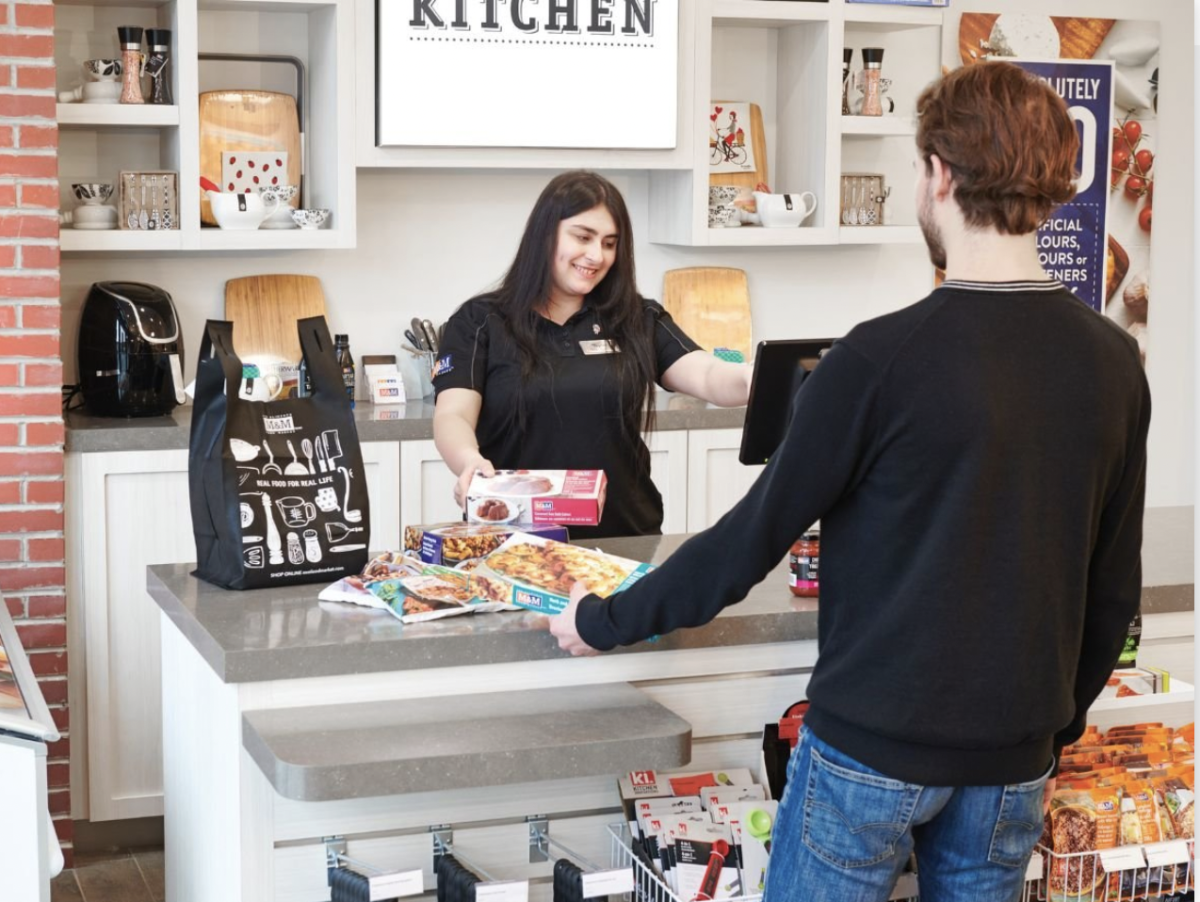
Their service model, which includes in-store meal advisors, helps differentiate the brand. “Our place is in helping busy families put meals on the table. It stems all the way from our service model in store, our meal advisors that give personalized experience and guidance to customers, all the way to having convenient, good-for-you meals and appetizers at home that are easy to make.”
“We’re a frozen food specialty retailer, I guess, if you wanted to get technical,” added Lindsay. “But I talk about us more as a food retailer that’s helping busy families and just busy people in general.”
Franchising is a key part of M&M’s business model, with the majority of stores operated by franchisees. “We’re about, say, 70% franchised,” said Lindsay. “The number kind of moves around a little bit.”
Related Retail Insider stories: