Retail Insider is streamlining its Canadian retail news from around the web to include a handful of top news stories that can be viewed quickly during the day. Here are the top stories from the past 48 hours.
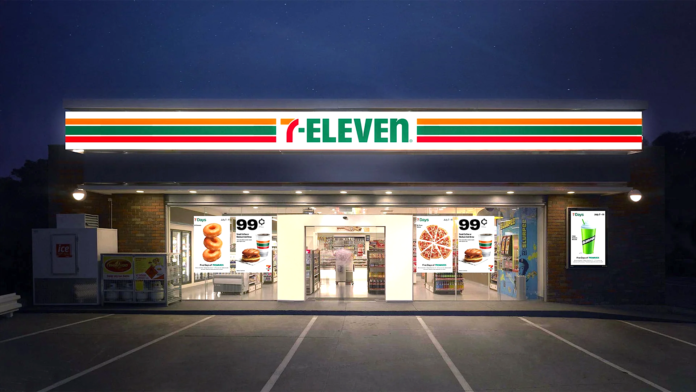
Alimentation Couche-Tard Inc. remains steadfast in its pursuit of acquiring Seven & i Holdings, the Japanese operator of the 7-Eleven convenience store chain, despite recent resistance from the company’s leadership.
Alex Miller, CEO of the Quebec-based convenience store giant, reaffirmed the company’s commitment to the deal on Wednesday, stating that Couche-Tard sees a “unique strategic fit” in merging with the Tokyo-headquartered firm. His comments came after Seven & i publicly disclosed a letter sent to Couche-Tard in September, outlining reasons for rejecting the proposal.
In a letter signed by then-chair Stephen Dacus, who has since taken over as CEO, Seven & i firmly stated that the offer was “not in the best interest of Seven & i shareholders and other stakeholders.” The company cited concerns over corporate value enhancement and potential antitrust challenges in the United States.
However, Seven & i also left the door open for negotiations, with Dacus indicating that the company was open to discussions if Couche-Tard made an offer that “fully recognizes our stand-alone intrinsic value.”
Couche-Tard Remains Committed to Pursuing the Deal
Speaking on a conference call regarding Couche-Tard’s third-quarter financial results, Miller stated that the company remains “friendly and persistent” in advancing the acquisition.
“We have reiterated several times over the past few months that we intend to be friendly and persistent in pursuing a transaction which we believe is in the best interest of all stakeholders,” Miller said. “We look forward to fulsome engagement with Seven & i, so that we can reach definitive terms and move forward.”
Reports suggest that Couche-Tard’s latest non-binding offer in October was valued at approximately US$47 billion—roughly 22 per cent higher than the previous bid submitted in August.
Addressing Antitrust Concerns
A key issue surrounding the deal is antitrust scrutiny in the U.S., given the extensive footprint of both companies in the North American convenience retail sector. A special committee formed by Seven & i recently confirmed that both parties are exploring potential divestitures to satisfy regulatory authorities.
Miller noted that Couche-Tard and Seven & i are identifying what a “divestment would look like in the United States,” with potential buyers having already signed non-disclosure agreements. These sales could allow the companies to secure regulatory approval while preserving the core benefits of the merger.
Engagement Continues as Annual Meeting Approaches
Couche-Tard’s leadership has maintained active dialogue with Seven & i executives, including a recent visit to Japan to continue negotiations. Miller stressed that combining the two businesses would create significant synergies and bolster the global presence of the 7-Eleven brand.
“We can achieve significantly more together than each of our companies can achieve individually, including accelerating the global growth of the iconic 7-Eleven brand,” Miller emphasized.
Couche-Tard will likely continue its engagement efforts in the weeks leading up to Seven & i’s annual general meeting on May 27. The meeting could be a turning point in negotiations, potentially influencing Couche-Tard’s approach to the acquisition.
As Couche-Tard works through its acquisition strategy, the company reported strong financial performance in its latest quarterly results. For the third quarter ending February 2, the retailer posted net earnings of US$645 million, up from US$624.4 million a year earlier.
Total revenue reached US$20.9 billion, reflecting a 6.5 per cent increase from the previous year, driven by acquisitions and higher wholesale fuel revenues. Earnings per diluted share rose to 68 cents US, in line with analysts’ expectations.
Consumer Spending and Trade Uncertainty Remain Key Factors
Miller acknowledged ongoing economic headwinds, noting that consumer spending remains cautious. He expressed confidence in the resilience of Couche-Tard’s business model but highlighted concerns about inflation and the potential impact of trade tensions between Canada and the U.S.
“The larger impact is what it means for inflation and what it means for consumers that are already stretched and really struggling with disposable income,” Miller said. “That’s kind of the big unknown that we’ll be watching very closely.”
Despite these macroeconomic concerns, Couche-Tard remains focused on its expansion plans, with the potential acquisition of Seven & i representing a transformative opportunity for the company.
Outlook: Will Couche-Tard Secure the Deal?
The coming weeks will be crucial in determining the future of Couche-Tard’s bid for Seven & i. While the Japanese firm has resisted the Canadian company’s advances so far, ongoing discussions and potential regulatory accommodations could pave the way for a successful transaction.
Should the deal materialize, it would mark a significant milestone in Couche-Tard’s global expansion strategy, further strengthening its position as a leader in the convenience retail industry. However, with continued antitrust scrutiny and resistance from Seven & i leadership, Couche-Tard faces an uphill battle to close the deal on its own terms.
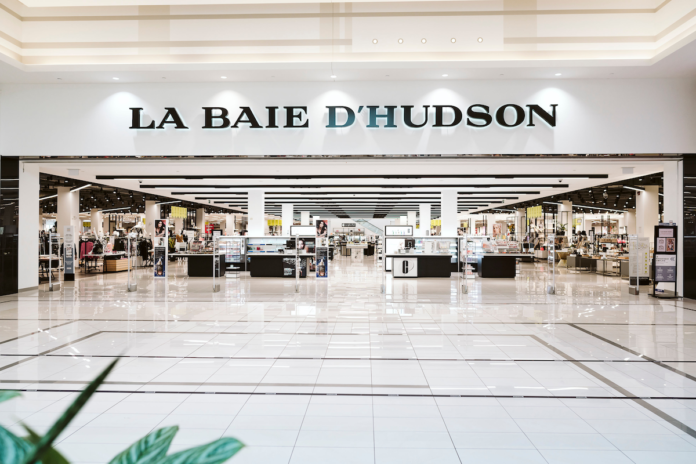
Hudson's Bay store at Mail Champlain in Brossard, Quebec. Photo: Mail Champlain
Liquidation sales remain on hold at Hudson’s Bay as it continues discussions with landlords and lenders to determine the company’s next steps. The 355-year-old retailer was granted protection under the Companies’ Creditors Arrangement Act (CCAA) on March 7 while seeking financing to stay afloat. Initially, the company aimed to keep nearly half of its 80 department stores open. However, after failing to secure the necessary funds, it now faces the full liquidation of its stores, along with three Saks Fifth Avenue and 13 Saks Off 5th locations in Canada.
The development has put over 9,300 employees at risk. Earlier this week, the company requested court approval to begin liquidation sales at its stores and distribution centres, while simultaneously exploring potential buyers who could salvage part or all of the business. Lawyers for Hudson’s Bay stated that if a buyer emerged, some stores could be removed from liquidation. However, liquidation sales cannot begin until the court grants approval, which could happen in the coming days.
Legal Challenges and Landlord Disputes Delay Liquidation Approval
At Monday’s court hearing, multiple parties objected to aspects of Hudson’s Bay’s restructuring process, including landlords such as RioCan REIT, one of the company’s joint venture partners, and other creditors. Ontario Superior Court Justice Peter J. Osborne urged all stakeholders to temper their disagreements and negotiate a temporary resolution.
On Wednesday, Ashley Taylor, a lawyer with Stikeman Elliott LLP representing Hudson’s Bay, told the court that negotiations were ongoing and that all parties were “acting in good faith.” The company was granted an extension until Friday to continue discussions. However, Hudson’s Bay is expected to reapply for liquidation and sale approval at that time or even earlier, depending on negotiations.
Customers Rushing to Redeem Gift Cards as Sales Remain on Hold
Shoppers have already increased foot traffic at Hudson’s Bay locations, hoping to find early discounts. While deep clearance sales have yet to begin, customers are using their gift cards amid concerns they may become invalid. The company announced that approximately $24.1 million worth of gift cards remain outstanding, with an expiry deadline set for April 6.
In addition to gift card redemptions, signature Bay items such as the iconic striped wool blankets have been selling out, and in some locations, even display merchandise like hanging canoes have been sold off. Meanwhile, the e-commerce site TheBay.com will continue operations for a limited time to help clear inventory.
Industry Experts Weigh In on Hudson’s Bay’s Future
Retail analyst Carl Boutet suggests that the court is proceeding cautiously, ensuring that all stakeholders have time to explore alternative solutions. “Once liquidation starts, there’s no turning back,” he noted. “Creditors and landlords are hoping for a last-minute solution, but those options remain extremely limited.”
Carl Boutet
Boutet also highlighted the interest in Hudson’s Bay’s intellectual property (IP), but not necessarily its department store operations. “There may be value in the brand name, but reviving the store model under its current structure is highly unlikely,” he said.
He further emphasized that Hudson’s Bay’s extensive real estate holdings could present an opportunity for investors, but the challenge lies in repurposing the retail spaces. “These are large, multi-level stores in prime locations, but their utility as traditional department stores has diminished. The question is whether landlords will repurpose them for mixed-use developments, luxury retail, or other commercial ventures.”
Boutet also noted that a failure to secure an investor could set a precedent for other struggling Canadian retailers. “The demise of Hudson’s Bay would signal the challenges of legacy department stores in a changing market. Other retailers facing similar struggles will be watching closely to see how this unfolds.”
Why Did Hudson’s Bay Collapse?
Hudson’s Bay’s financial struggles stem from multiple factors, including e-commerce, growing competition from discount retailers, and economic pressures such as inflation and high interest rates. The COVID-19 pandemic also impacted brick-and-mortar retail, leading to months-long store lockdown closures and lasting damage to consumer spending habits.
However, the company also faced internal challenges. Its acquisition of Saks Fifth Avenue required significant investment, drawing resources away from its Canadian operations. Cost-cutting measures led to deteriorating store conditions, including non-functioning escalators and elevators, HVAC issues, a lack of in-store music and reduced staffing. Additionally, a failed attempt to spin off its e-commerce business created operational inefficiencies.
Last year, Hudson’s Bay was formally separated from Saks Global when parent company HBC purchased Neiman Marcus, transferring valuable U.S. assets out of the Canadian business. Left as a standalone entity, Hudson’s Bay was burdened with $1.1 billion in debt and struggled to secure financing.
Can Hudson’s Bay Survive What’s Next?
The retailer hopes a buyer will emerge who can rescue part or all of the business. Any potential investor would need to settle Hudson’s Bay’s debts, including over $400 million owed to secured creditors, and commit to revitalizing the chain. However, time is running out. If a sale does not materialize soon, liquidation will proceed, and the company’s historic legacy may come to an end.
Hudson’s Bay is expected to return to court on Friday, at which point a final decision on liquidation sales may be made. While companies like Hilco Global are reportedly ready to manage the liquidation process, stakeholders are hoping for a last-minute investor to step in. If liquidation is approved, clearance sales could last up to 12 weeks.
Digital listing networks have changed how buyers, sellers, and agents engage with real estate listings in the technologically driven world of today. These internet sites offer rapid access to large databases of properties, therefore substituting for conventional approaches of house searching. Digital listing systems have made the process more rapid, open, and easy whether someone is attempting to sell a house fast or is looking for their ideal home.
How Digital Listing Networks Benefit Buyers
Digital listing networks give homebuyers unmatched accessibility and ease. Buyers may now search thousands of homes from the comfort of their homes rather than physically visiting several real estate agencies or depending just on word-of-mouth referrals. These sites assist consumers make wise judgments by offering comprehensive information like high-quality photos, virtual tours, pricing histories, neighborhood insights, and a high degree of detail.
Filters let consumers further their search depending on price, location, house size, and particular characteristics as pools, garages, or smart home technologies. This guarantees that purchasers just visit residences that really fit their demands, therefore saving time and work. Many digital listing systems also provide real-time updates on property availability, therefore guaranteeing that purchasers have the most recent information right at hand.
How Sellers Benefit from Digital Listing Networks
Digital listing systems greatly raise the exposure to sellers’ properties. Rather of depending on neighborhood newspaper ads or real estate fliers, sellers may present their property to a far bigger audience—including possible purchasers from other cities or even beyond. Professional photos, 3D virtual tours, and thorough property descriptions appeal to serious purchasers and increase interest.
Monitoring listing performance gives sellers still another great advantage. Many sites offer information on the number of visitors to the property, which they saved to their favorites, or on additional information requests. This information lets sellers and their representatives change marketing plans, pricing, or presentation to increase the competitiveness of the listing in the market.
The Role of Real Estate Agents in Digital Listings
Real estate agents remain quite important in the process even if computerized listing systems have made property purchasing and selling more possible. Agents sell houses, schedule showings, and link buyers with appropriate homes using these sites. Their professional knowledge in contracts, negotiating, and closing processes also guarantees that transactions happen without a hitch.
Many digital listing sites now include tools for agents including data analytics, automated marketing, and customer relationship management (CRM) systems. This facilitates agents’ streamlining of their process and improved client service.
Impact on the Housing Market
The general housing market has been much changed by the emergence of computerized listing systems. More transparent policies help buyers and sellers to more readily compare homes, hence fostering more competitive pricing. These sites have also accelerated the purchase process, therefore saving the time homes spend on the market.
Furthermore, digital listings have given investors and remote buyers—who might not be physically there to tour homes opportunities based on Internet data for making decisions about purchases. This has helped to produce a housing market growing in dynamism and globalization.
The way individuals interact with real estate listings has been transformed by digital listing networks, therefore improving the efficiency, openness, and accessibility of the house buying and selling processes. While sellers get more exposure and insightful analysis of market patterns, buyers have quick access to a large spectrum of homes. Digital listing systems will only get more sophisticated as technology develops, therefore influencing the course of the house market.
Lightspeed Commerce Inc., the Montréal-based commerce platform known for empowering merchants with omnichannel retail solutions, has introduced a groundbreaking AI-driven website-building tool. This innovative technology enables retailers to create professional, fully integrated online stores simply by using a screen capture.
This advancement eliminates the need for manual coding or third-party developers, allowing merchants to build and customize their websites with ease. By leveraging AI to analyze real-world examples, Lightspeed’s Website Builder generates production-ready code in minutes, helping businesses reduce complexity, save time, and maintain a strong brand presence online.
Bringing Website Development to the Masses
Traditionally, designing an online store in-house has been a challenge for many retailers, requiring a mix of technical expertise, design knowledge, and patience. Many small-to-medium-sized businesses (SMBs) struggle to create high-quality web pages that align with their brand without hiring costly external developers.
Lightspeed’s new AI-driven tool aims to bridge this gap by offering a streamlined, intuitive solution. Merchants can now describe their desired web elements or provide a simple screen capture, and the tool will generate a polished, functional website that integrates seamlessly with Lightspeed’s commerce platform.
Empowering Merchants with Cutting-Edge Technology
“Designing a website in-house can be time-consuming, frustrating, and complex for many merchants. Without design expertise or coding skills, they often spend significant time experimenting with layouts, adjusting branding elements, and troubleshooting issues,” said Dax Dasilva, Founder and CEO at Lightspeed. “Our goal is to remove the friction from website design and give merchants the power to iterate at the speed of commerce. This AI-driven technology is a leap forward in e-commerce efficiency, which can help businesses of all sizes create compelling digital experiences effortlessly.”
Dax Dasilva
Retailers who have tested the AI-powered tool in its beta phase have reported significant improvements in efficiency and ease of use.
“As a self-taught entrepreneur, I built my web store from the ground up but would often hit roadblocks due to my skills and available tools. With this new solution, I’ve been able to create custom sections that perfectly match my vision—without needing external help,” said Ryan Pratt, owner of Colorado-based shoe retailer Treadz. “AI can be a game-changer for my online business, and I’m excited to see how Lightspeed is bringing these innovations into their platform.”
Beta Testing and Future Rollout
The AI-powered website builder is currently available in beta for select Lightspeed merchants. The company has announced plans for a wider rollout later this year, ensuring more businesses can take advantage of the tool’s capabilities.
Lightspeed’s commitment to innovation continues to position it as a leader in the retail technology space, serving thousands of merchants worldwide. The company’s Retail platform is currently available in Canada, the United States, the United Kingdom, Belgium, the Netherlands, Australia, and New Zealand, providing businesses with scalable, cloud-based solutions for both physical and online operations.
Lightspeed’s Role in the Future of Retail
As a dual-listed company on the New York Stock Exchange and the Toronto Stock Exchange (NYSE: LSPD, TSX: LSPD), Lightspeed has been at the forefront of digital transformation for retailers since its founding in 2005. With a global presence across North America, Europe, and Asia-Pacific, the company continues to provide essential tools for retail, hospitality, and golf businesses in over 100 countries.
By integrating AI-driven tools like its new Website Builder, Lightspeed is reinforcing its commitment to innovation and merchant empowerment. This latest launch represents a significant step forward in simplifying digital commerce, giving retailers the agility to build and maintain their online presence efficiently and effectively.
“With Skybird, the father-and-son team has a clear goal: “Revolutionizing fast-casual dining with its fresh and vibrant Asian-inspired menu, crafting signature meals that invigorate energy and a sense of adventure in every bite”,” says Think Retail in a blog post.
“Indeed, Skybird is the first chain in North America to specialize in the Banh Mi and Bowls scene, offering a unique twist where customers can build their own bowls or sandwiches from an array of premium ingredients that include fresh vegetables oven-grilled proteins and signature sauces. In an era where customers seek personalization, Skybird is well positioned, offering endless possibilities and flavour combinations.”
Source: Think Retail
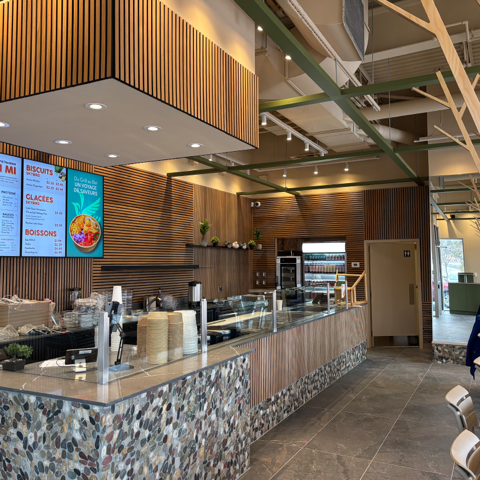
This unique new concept debuted earlier this year at 248 Jean-Talon West in Montreal’s Mile End and is already earning rave reviews for a menu that blends Asian-inspired flavours with health-conscious ingredients in a fast-casual setting, said Think Retail.
Rio Infantino
With more than 50 years combined experience in the restaurant and franchising industry, the Infantinos know what they are doing. They have deep experience launching strong brands that innovate to capitalize on market shifts.
Rio Infantino got his start at McDonald’s then spent more than 20 years as a celebrated Subway franchisee. With Andrew, he launched the ground-breaking concept, Copper Branch, North America and Europe’s largest chain of 100% plant-based fast-casual restaurants.
Source: Think Retail
“With Skybird, they are once again positioned for incredible growth: Sales of Asian-inspired dishes in North America have surged by 20% in the last five years, while at the same time there’s a focus on better-for-you food options that are fast, fun and nourishing,” said Think Retail.
“The Infantinos worked with an incredible team of culinary professionals to develop the menu, which also includes popular house-baked matcha cookies, craft sodas, Boba tea and Vietnamese cold-brew coffee.
“With the two restaurants open and the concept taking flight, they are aggressively seeking to open several more locations in Quebec in 2025.
Think Retail is working with Skybird to secure 1,000- to 1,500-square-foot locations on high-traffic streets and in open-air centres, as well as sites of 400 to 500 square feet in super regional malls. Tony Flanz of Think Retail handles leasing for Skybird in malls across Canada and street locations in Ontario. Dan Knafo of Dan Knafo Real Estate Services negotiated the lease deal for the tenant at the Pierrefonds location.
Vancouver-based travel and lifestyle brand Monos has unveiled its first Aluminum Collection, marking a significant expansion into the high-end luggage market. Known for its sleek, minimalist designs and commitment to sustainability, Monos aims to redefine luxury travel gear with an aluminum shell that blends durability with timeless elegance.
To celebrate the launch, Monos embarked on a visually striking campaign set in Tangier, Morocco, featuring Academy Award-winning actor Adrien Brody. Captured by Mexico City-based filmmaker and photographer Alexis Gomez, the campaign explores themes of solitude, connection, and the transformative power of travel.
A Journey Through Morocco with Adrien Brody
The campaign follows Brody as he navigates Tangier’s historic streets, interacting with locals and embracing spontaneous moments. With Monos’ Aluminum Collection by his side, the actor’s journey is depicted as an artistic narrative, capturing the serendipitous nature of travel.
“Growing up in New York City, a place full of unexpected encounters, ignited my thirst for adventure,” said Adrien Brody. “Traveling reminds me that borders are irrelevant; no matter how different cultures or people may seem, we’re all just people living our unique stories.”
Monos co-founder Victor Tam emphasized the brand’s alignment with Brody’s ethos. “Adrien perfectly embodies the values we uphold—authenticity, timeless style, and a deep connection to the journey itself. His influence will elevate our collection and create a lasting impact on our community.”
The Aluminum Collection: A Fusion of Durability and Design
Crafted from premium anodized aluminum, the Monos Aluminum Collection offers a sophisticated alternative to polycarbonate luggage. The collection includes four meticulously designed models:
Carry-On Plus ($665)
Check-In Medium ($725)
Check-In Large ($755)
Trunk ($775)
Each piece is available in three elevated colourways: Caviar Black, Champagne Gold, and Aspen Silver. Designed with both function and aesthetics in mind, the suitcases feature:
Riveted aluminum corner guards for enhanced durability
TSA-accepted combination latch locks for security
Telescopic trolley handles for smooth maneuverability
Soft-release side handles for ease of use
Ergonomic bottom grab handles for effortless lifting
360-degree spinning wheels for seamless movement
Quilted taffeta lining embossed with Monos’ signature dot pattern
Compression layers to keep belongings secure
“Every detail in this collection, from the soft-release side handle to the etched detailing on the hinges and latches, was meticulously designed to elevate the travel experience,” said Monos co-founder Hubert Chan. “Aluminum develops a unique patina over time, making each suitcase distinct. It’s a reflection of the traveler’s journey, with every mark telling a story.”
Image: Monos
Sustainability and Monos’ Growth Trajectory
Monos has seen impressive expansion since its 2018 inception, averaging 300% year-over-year (YOY) growth from 2019 to 2024 and surpassing $100 million in sales in 2023. As part of its global expansion plan, the brand aims to open 40 retail locations worldwide by 2030.
The company’s B Corp certification underscores its commitment to sustainability. Monos prioritizes ethical production practices, opting for vegan alternatives to traditional animal-derived materials in luggage detailing, bags, and accessories.
“As a brand, we believe that thoughtful design should align with positive social and environmental impact,” said Chan. “Our products are crafted with care for both people and the planet.”
Monos’ Retail Expansion and Market Positioning
Initially a direct-to-consumer brand, Monos made its first foray into physical retail with a Vancouver store in 2023, followed by a Toronto flagship at 111 Ossington Avenue in 2024. Inspired by the Japanese concept of ‘mono no aware’, the store’s design emphasizes the beauty in fleeting moments, merging minimalism with cultural appreciation.
Looking ahead, Monos is set to expand into the U.S. market, with eight stores opening in 2025, including locations in New York City and Chicago.
Often compared to industry giants like Away, Monos differentiates itself through superior materials and a focus on sustainability. Its products have been featured in top-tier publications, reinforcing its reputation as a leader in premium travel accessories.
Image: Monos
Availability and Global Campaign Reach
The Monos Aluminum Collection launched on March 17, 2025, available exclusively on monos.com and at Monos’ Canadian retail locations in Vancouver and Toronto.
The Adrien Brody campaign will be showcased across Monos’ social media channels, digital marketing, and global out-of-home (OOH) advertising, marking the brand’s most ambitious campaign to date.
Mat, a familiar face within the company, steps into this role after an impressive 11-year journey with the retailer, said the company.
Prior to President, he held several roles in the company, most recently as Senior Vice President of Best Buy Retail, Geek Squad Services and Best Buy Business, where he and his team were responsible for hundreds of stores, thousands of Blue Shirts and Agents and millions of customers, said the retailer.
Best Buy Canada announces Mat Povse as new president (CNW Group/Best Buy Canada Ltd.)
In his time, his teams spearheaded transformative initiatives such as the introduction of small format stores and the launch of its Canada’s membership and Monthly Subscription programs, significantly boosting customer and employee engagement. His teams also grew Wireless, Home Theatre, and led the national expansion of Major Appliances, added the company.
“Mat’s passion for connecting with people, solving problems, and continuous improvement shines both at work and at home. He believes in creating a workplace that everyone loves, valuing time, and having fun along the way.”
“It’s really simple. It’s up to all of us to create a place we love, to spend others’ time well, and to have fun while we’re at it – it’s amazing to work for a company whose values are ones not just to work by, but to live by,” said Povse.
The selection followed a rigorous process involving input and voting by the company’s Board of Directors, CEO, and US Executive team. He succeeds Ron Wilson, who recently retired after an incredible 34-year career with the company.
The company operates the Best Buy, Best Buy Mobile, Best Buy Express and Geek Squad (www.geeksquad.ca) brands. There are over 320 stores across Canada.
Joseph Chung, Vice-President, Account Management of Call2Recycle Canada
Staples Professional, a leading supplier of business solutions in Canada, has partnered with Call2Recycle, the country’s premier battery collection and recycling organization, to extend the Recycle Your Batteries, Canada! program to business customers nationwide. This initiative will provide companies of all sizes with access to safe and responsible battery recycling, reinforcing Staples’ commitment to environmental stewardship.
Through this expanded collaboration, Canadian businesses will now have a streamlined process to recycle used batteries, ensuring these materials are handled in accordance with the highest industry standards. Once collected, the batteries will be processed to extract valuable components that can be reused in manufacturing, promoting a circular economy and reducing environmental impact.
“Staples Professional is committed to delivering products, services, and solutions that not only meet the diverse needs of our customers but also protect our natural resources and our planet,” said Chris Saniga, Chief B2B Officer at Staples Professional. “We are proud to extend that commitment by supporting our customers’ environmental initiatives through Call2Recycle’s Recycle Your Batteries, Canada! program.”
Staples’ Broader Commitment to Sustainability
This initiative aligns with Staples Canada’s Staples for Community platform, which focuses on environmental responsibility, educational support, and equity promotion. In addition to battery recycling, Staples Professional also facilitates the recycling of old electronics such as computers, cell phones, keyboards, telecom equipment, and printers, making it easier for businesses to dispose of electronic waste responsibly.
Over the past two decades, Call2Recycle and Staples have played a key role in encouraging Canadian businesses and consumers to adopt battery recycling as a sustainable practice. Since 2004, their partnership has led to the recycling of nearly two million kilograms of used batteries in Canada—a number that is expected to rise significantly with this latest expansion.
Strengthening a 20-Year Partnership
Joe Zenobio, President of Call2Recycle Canada, emphasized the impact of the long-standing collaboration with Staples Canada.
“We have made great strides with our partner Staples Canada over the past 20 years, helping Canadian consumers become increasingly aware of the importance of recycling batteries,” Zenobio said. “We are thrilled to expand these efforts to Staples Professional, making it even easier for Canadian businesses to recycle their batteries and contribute to a more sustainable future.”
Call2Recycle works with a wide network of retailers, battery manufacturers, provincial governments, and municipalities to increase battery recycling rates across the country. Through this initiative, businesses can participate in the Recycle Your Batteries, Canada! program by dropping off used batteries at their nearest Staples Canada location or by visiting www.recycleyourbatteries.ca to find additional collection points.
Call2Recycle’s Leadership in Battery Recycling
As Canada’s leading battery recycling organization, Call2Recycle fulfills stewardship obligations on behalf of over 400 members, including producers of both single-use and rechargeable batteries. The organization operates provincially approved programs in British Columbia, Saskatchewan, Manitoba, Quebec, Prince Edward Island, and Nova Scotia. It also serves as a registered Producer Responsibility Organization (PRO) in Ontario under the Ontario Batteries Regulation.
Call2Recycle’s services extend to a broad range of battery types, including household batteries (weighing up to five kilograms) and e-transport batteries used in e-bikes, e-scooters, e-skateboards, hoverboards, and even electric vehicles (EVs). Since its inception in 1997, Call2Recycle has successfully diverted over 50 million kilograms of batteries from Canadian landfills, earning recognition for its rigorous recycling standards.
The organization maintains certifications in internationally recognized standards such as R2v3, ISO 14001, ISO 45001, and ISO 9001. Additionally, it exclusively contracts with an ISO 27001-certified supplier for IT infrastructure management, ensuring best-in-class operational security and efficiency.
Staples Canada’s Role in Business Solutions and Environmental Responsibility
Staples Canada operates as The Working and Learning Company, with a network of 298 stores across the country and a robust e-commerce platform at Staples.ca. In addition to its traditional retail presence, Staples serves business clients through dedicated B2B brands, including Staples Preferred, Staples Professional, Supreme Office Supplies and Furniture, Denis Office Supplies, Monarch Office Supply Inc., and Beatties.
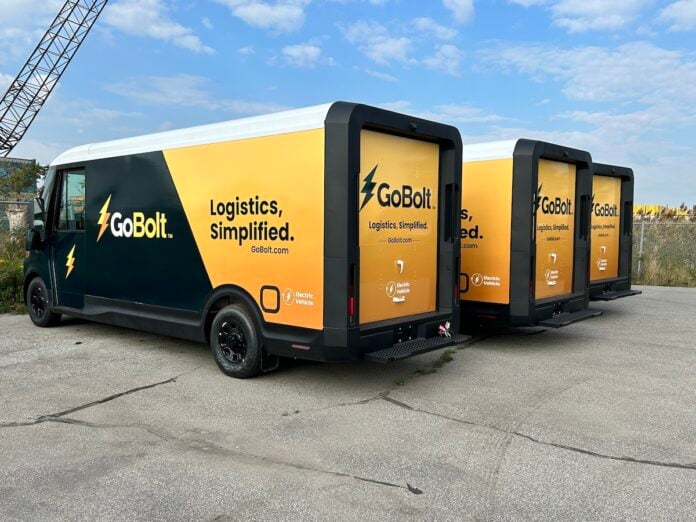
GoBolt, a Canadian leader in eco-friendly logistics, has significantly expanded its operations through a strategic partnership with Google Cloud. Since joining forces in 2020, GoBolt has experienced exponential growth, increasing its delivery volume by an astonishing 7,600%. In 2024, the company reported over 50,000 last-mile appointments per day, with more than 40% of those deliveries completed using electric vehicles (EVs). This partnership underscores GoBolt’s commitment to sustainability and operational efficiency through cutting-edge technology.
Leveraging Google Cloud’s Advanced Technologies
GoBolt has integrated several Google Cloud solutions to optimize its logistics operations, enhancing delivery efficiency, improving sustainability efforts, and providing seamless customer experiences.
One of the key tools used by GoBolt is Looker, a data visualization and analytics platform that helps democratize data across the organization. By building operational dashboards and tracking delivery performance, GoBolt can identify growth opportunities and generate Scope 3 emissions reports for customers, supporting their sustainability initiatives.
To ensure the security and scalability of customer data management, GoBolt relies on Google Cloud’s secure infrastructure. This platform enables the company to handle vast amounts of customer data while maintaining high availability, allowing for seamless operations and an improved customer experience.
GoBolt’s driver app, a critical component of its logistics network, is managed using Google Play Console. Through this tool, the company can efficiently publish and update the Android version of its driver app, ensuring real-time delivery instructions, route optimization, and improved app performance. This results in enhanced operational excellence and greater customer satisfaction.
A major factor in GoBolt’s sustainability efforts is Google’s Geocoding API, which enables precise route optimization using latitude and longitude data. By leveraging this technology, GoBolt has been able to maximize package deliveries while minimizing the distance traveled. This has led to a nearly 20% reduction in delivery emissions, reinforcing GoBolt’s commitment to reducing its environmental footprint.
To manage its large-scale infrastructure, GoBolt utilizes Google Kubernetes Engine (GKE), which orchestrates containerized applications across multiple regions. This platform allows for flexible deployment, efficient scaling, and streamlined maintenance of fleet management, mapping, and operational software. As a result, GoBolt has been able to expand rapidly across three business lines and 10+ North American regions while maintaining high efficiency.
For data-driven decision-making, GoBolt employs BigQuery, an AI-ready data analytics platform that processes large datasets and extracts valuable insights. By leveraging BigQuery, GoBolt can make informed strategic decisions that further optimize its logistics network, improving efficiency and sustainability.
Additionally, Gemini for Google Workspace enhances collaboration across GoBolt’s workforce. The AI-powered tool streamlines report and presentation preparation, accelerates deliverables, and reduces administrative overhead, leading to increased productivity across the company.
By leveraging these advanced Google Cloud technologies, GoBolt continues to refine its logistics network, improve sustainability practices, and scale its operations effectively.
Commitment to Environmental Responsibility
A core part of GoBolt’s mission is to integrate sustainability into its logistics model. The company has significantly expanded its fleet of EVs, completing over 350,000 deliveries using electric vehicles in the first half of 2024 alone—a 497% increase compared to 2023. Through this shift, GoBolt is actively reducing its carbon footprint while providing reliable logistics solutions.
Mark Ang, co-founder of GoBolt
Mark Ang, CEO and Co-Founder of GoBolt, emphasized the importance of technology in achieving the company’s goals:
“Our collaboration with Google Cloud is a crucial step in our mission to build the largest sustainable supply chain network. The innovative tools and infrastructure provided by Google Cloud empower us to enhance operations, provide more value to merchants, and significantly reduce our environmental impact.”
Expanding Logistics Capabilities Across North America
GoBolt’s rapid growth has positioned the company as a leader in sustainable third-party logistics (3PL). The company provides warehousing, fulfillment, shipping, and last-mile delivery services across Canada and the U.S. Its strategic partnerships—such as the recent collaboration with WARP—have enabled the expansion of its electric last-mile delivery services in key markets.
The use of AI-powered route optimization and predictive analytics has allowed GoBolt to maintain over 90% uptime for its EV fleet. By implementing Google’s advanced technologies, the company ensures high operational efficiency while reducing environmental impact.
Industry Recognition and Future Growth
GoBolt’s efforts have not gone unnoticed, with industry leaders recognizing the company’s innovations in sustainable logistics. Looking forward, GoBolt aims to further expand its EV fleet and continue integrating AI and cloud-based solutions to optimize operations.
Farsad Nasseri, Country Manager of Google Cloud Canada, highlighted the significance of this partnership:
“We’re excited to continue our partnership with GoBolt as they leverage Google Cloud to drive efficiency and sustainability in the logistics space. By using our cutting-edge technologies, GoBolt can optimize operations while making a substantial impact in reducing its carbon footprint.”
As GoBolt continues to scale, its partnership with Google Cloud remains a cornerstone of its strategy—one that not only enhances business growth but also sets new benchmarks for sustainability in logistics.