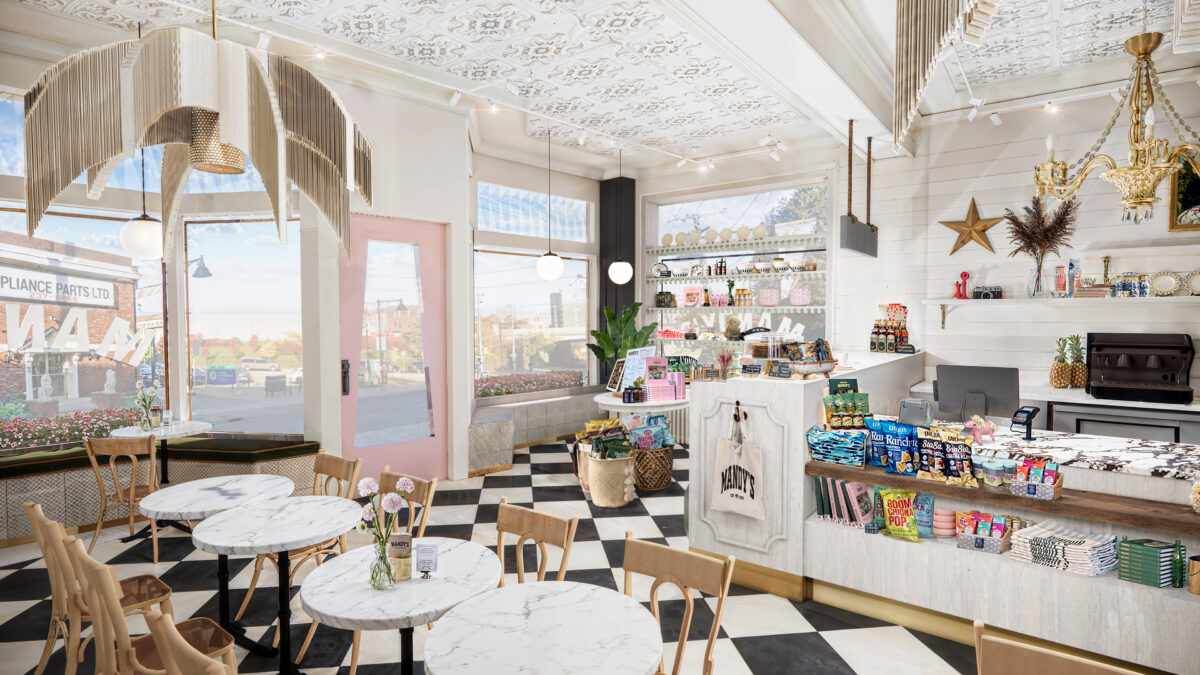
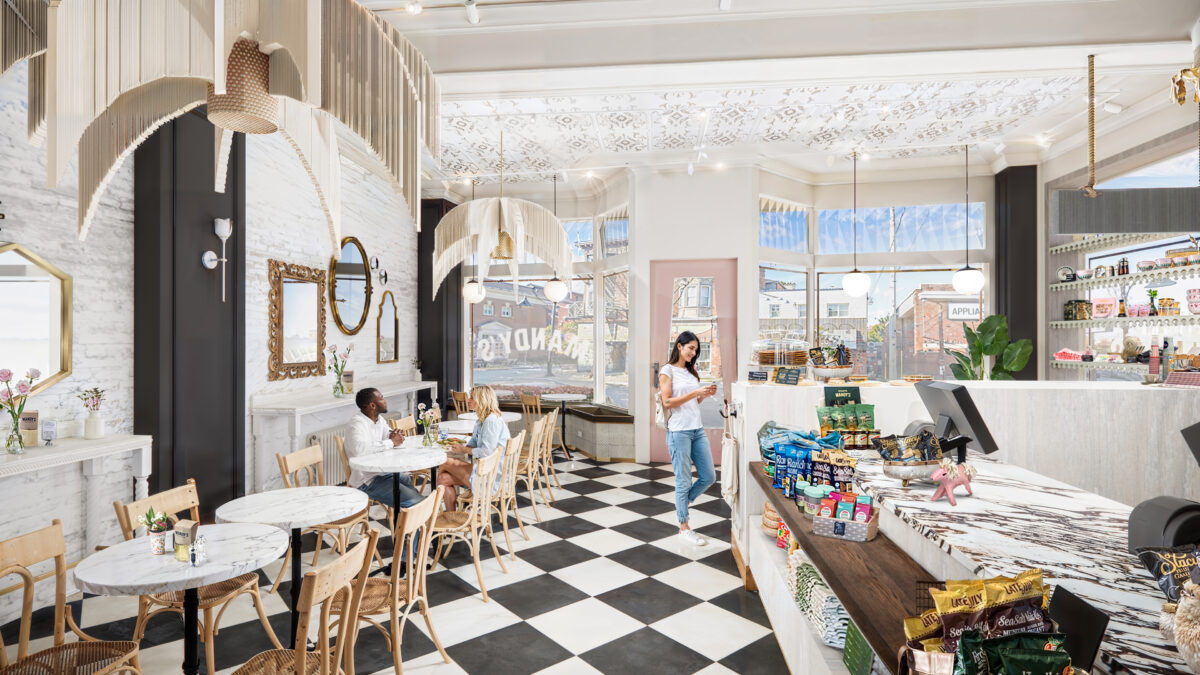
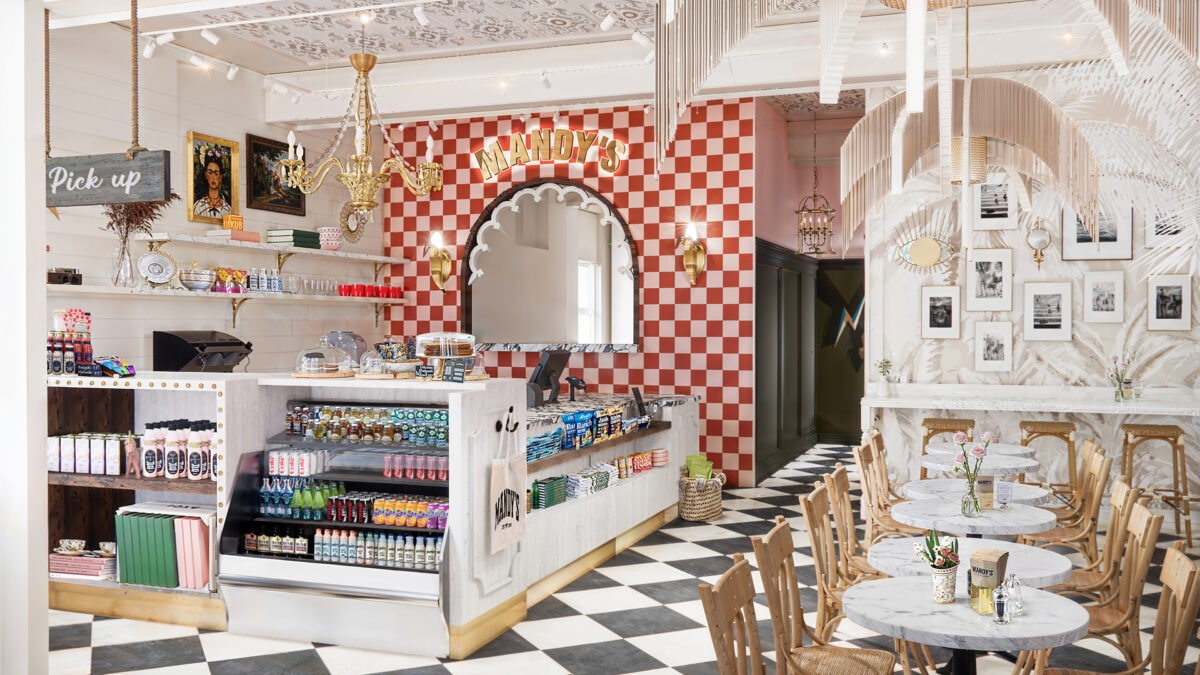
Mandy’s Salads, the renowned gourmet salad restaurant founded by sisters Mandy and Rebecca Wolfe, is opening its first location in Ottawa on August 15, with a grand opening.
Located at 581 Bank St, this 2000 square-foot space marks its 16th restaurant in Canada and its debut in the nation’s capital.
The company said the opening is an important step in its expansion plan as the brand brings its fresh, feel-good food and distinctive style to a vibrant new community.
Vanessa Fracheboud
“We couldn’t be prouder to bring Mandy’s here, in Ottawa. We created a space where people will feel inspired, connected, and nourished with the best Gourmet Salads. Every opening is a chance to build community through food, and we can’t wait to do that in Ottawa,” said Vanessa Fracheboud, President of Mandy’s Salads.
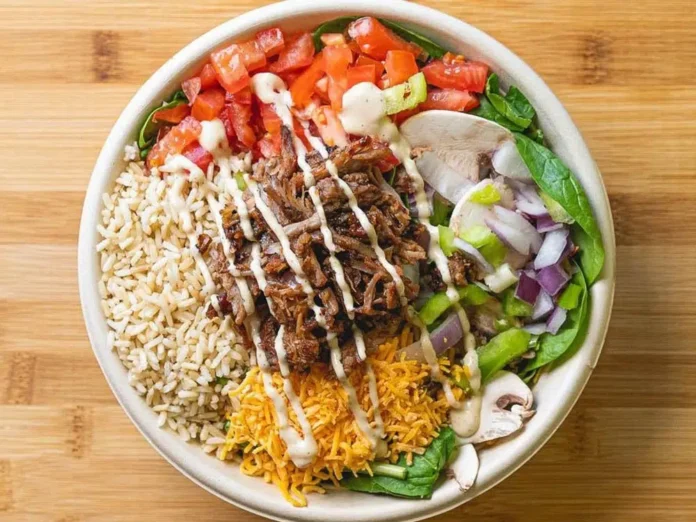
The company said fans of the brand can expect the same signature salads that have made Mandy’s a favourite. The menu will also feature hearty grain bowls, smoothies and seasonal specials like soups and limited-time salads.
“We’re so excited to finally open our doors in Ottawa, just in time to share our newest culinary offerings with a whole new neighborhood.” said Mandy Wolfe, Co-Founder of Mandy’s Salads. “As we grow, so does our menu: we’re now serving up wholesome, delicious meals from morning to night, starting with breakfast at 8 a.m., seven days a week.”
Mandy Wolfe
The aesthetic vision and unique items were all handpicked by sister and co-founder, Rebecca Wolfe.
Rebecca Wolfe
“This new location features Mandy’s signature decor style – from rich porcelain details and tropical touches to vintage accents and the sisters’ beloved family photo wall. Guests will find inspiration drawn from Paris, New England, and the Bahamas, brought together to create a warm, unforgettable dining atmosphere,” said the company.
“This opening marks an exciting milestone in Mandy’s story – one that celebrates over 20 years of growth from a single salad counter in Montreal to a Canadian brand with a growing national footprint. Ottawa is the latest chapter as they continue to bring fresh food and beautifully designed spaces to new guests across the country – and beyond.”
The brand was founded in Montreal in 2004 by sisters, Mandy and Rebecca Wolfe. Today, Mandy’s has eight locations in Montreal, six in Toronto, two best-selling cookbooks, dressings in grocery stores across Canada and more restaurants on the way – locally and internationally.
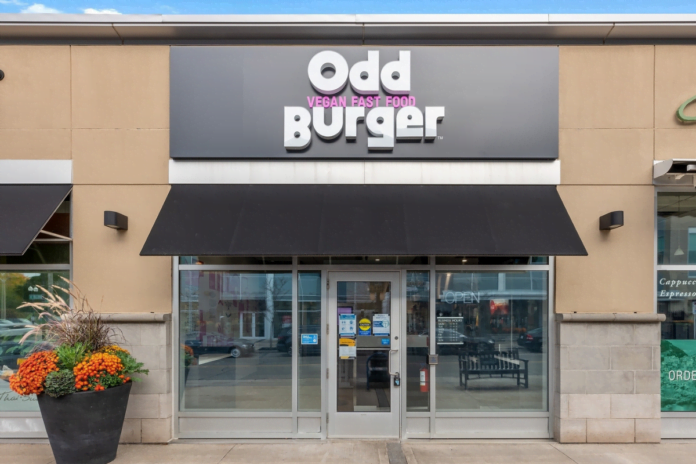
Odd Burger Corporation, one of the world’s first vegan fast-food chains and a pioneer in plant-based quick service, announced Friday that its financial results for its third quarter, ended June 30, indicates its highest quarterly revenue in the company’s history and a positive EBITDA, a key indicator that Odd Burger’s core operations are profitable.
Financial Highlights – Q3 2025 (unaudited)
Revenue: $1,044,646 — a record high for the Company, representing a 42.8% increase over Q2 2025 and an 18.8% increase over Q3 2024.
EBITDA: $40,407 — a improvement of $282,426 from negative EBITDA of $(242,019) in Q2 2025, marking a key milestone for the Company’s profitability.
Gross Margin: $443,575 (42.5%) — up from 34.0% in Q2 2025, driven by increased franchise revenue and improved pricing in retail sales channels.
Net Loss: $(147,905) — a 60% improvement over Q2 2025 net loss of $(372,300).
Salaries & Wages: $126,658 — reduced by 57% compared to Q3 2024 due to leaner staffing strategies.
SG&A Expenses: $222,912 — down $130,569 from Q2 2025.
James McInnes
“Achieving positive EBITDA this quarter marks a critical milestone for Odd Burger,” said James McInnes, CEO and Co-Founder of Odd Burger. “It validates the strength of our business model and demonstrates that we can scale efficiently while maintaining operational discipline. Surpassing $1 million in quarterly revenue for the first time—paired with strong gross margins—highlights both the growing demand for our offering and the exceptional execution by our team.”
SUMMARY OF QUARTERLY RESULTS
The following sets forth unaudited financial information for each of the last eight quarters and subsequent abbreviated analysis from the company’s MD&A.
Quarter Ended
June 30, 2025
Mar 31, 2025
Dec 31, 2024
Sept 30, 2024
Revenue
$1,044,646
$731,337
$727,294
$685,124
Net Loss and Comprehensive Loss
$(147,905)
$(372,300)
$ (272,476)
$(1,347,896)
Net Loss Per Share
$(0.002)
$(0.004)
$(0.003)
$(0.015)
Quarter Ended
June 30, 2024
Mar 31, 2024
Dec 31, 2023
Sept 30, 2023
Revenue
$879,367
$800,481
$734,373
$883,596
Net and Comprehensive Loss
$(120,467)
$(383,829)
$(275,808)
$(1,529,492)
Net Loss Per Share
$(0.001)
$(0.004)
$(0.003)
$(0.020)
Odd Burger Corporation is a franchised vegan fast-food restaurant chain and food technology company that manufactures a proprietary line of plant-based protein and dairy alternatives. Its manufactured products are distributed to Odd Burger restaurant locations through its foodservice line and also sold at grocery retailers through its consumer-packaged goods (CPG) line.
As Dairy Queen Canada marks 85 years in business, the brand continues to grow while maintaining a deep-rooted connection with Canadian communities.
Candida Ness, Vice President, Marketing for DQ Canada, said with just over 700 locations across the country, Dairy Queen remains a familiar name in Canadian communities coast to coast. “Typically, we target between 18 and 20,” Ness said of new store openings annually. “I think year to date we’ve got three new locations opened so far this year.”
Candida Ness
That kind of longevity — and continued expansion — is rare in the quick service restaurant (QSR) industry. As Ness puts it, “What we’ve seen with the Dairy Queen brand is that there is a true consumer love for it. That comes from a lot of nostalgia and the role it has played in people’s lives — as a family brand, a place to come together with friends, with kids, grandparents.”
“There’s been a really strong consumer connection and love for the brand, which has been critical to its longevity,” she added. “Now, nostalgia is great, but we also need to keep the brand modernized. So it’s about embracing our past while looking toward the future.”
When asked about the broader QSR space in Canada and what’s fueling continued growth, Ness offered a marketing perspective. “Consumers are leading very busy lives, and the QSR space really helps them manage that. It’s also an affordable option — especially now, as the cost of groceries and other essentials continue to rise. So affordability, speed, and convenience are key drivers of growth in the QSR segment, in my opinion.”
Alongside expansion, Dairy Queen is marking more than four decades of charitable partnership with Children’s Miracle Network (CMN). “We’re now into our 41st year. Last year was our 40th anniversary with Children’s Miracle Network,” said Ness. “It’s been an amazing partnership and aligns closely with our brand strategy and positioning.”
The impact has been significant. “Over those years, we’ve raised over $55 million for local children’s hospitals,” she said. “What we love about our partnership with Children’s Miracle Network and the 13 hospitals they work with is that all the funds raised stay local. It’s that local connection that really matters — and I think it contributes to the longevity of the partnership. We continue to grow every year in our fundraising, which is great.”
That alignment runs deep. “Our brand mission is to bring joy and happiness to consumers, and that aligns with CMN’s mission — to bring joy to kids and help them get back to being kids through best-in-class hospital care,” Ness explained. “Both brands focus on supporting community, giving back, and helping families and children in need.”
One of Dairy Queen’s most prominent fundraising initiatives is Miracle Treat Day, set for Thursday, August 14 this year. “It’s a big day for us and for the children’s hospitals,” Ness emphasized.
The company’s corporate office is based in Burlington, Ontario, and while the marketing team keeps an eye on the future, the brand’s local, community-first approach remains its cornerstone.
Chloe Mueller
About Miracle Treat Day for Dairy Queen Canada
On Thursday, August 14, Dairy Queen Canada’s Miracle Treat Day is returning in support of children receiving care at local hospitals across Canada – helping make miracles happen, one Blizzard® Treat at a time.
For the 23rd year, net proceeds from every Blizzard Treat sold at participating DQ restaurants in Canada on Miracle Treat Day will be donated to local children’s hospital foundations across Canada.
Since partnering with Children’s Miracle Network® in 1984, Dairy Queen Canada has become a top contributor, raising over $55 million through Miracle Treat Day in Canada and year-round fundraising initiatives to support children’s hospitals across the country.
Every Blizzard Treat sold helps fuel groundbreaking research and discovery, life-changing innovations and healing environments that make the hospital experience less overwhelming for families, ultimately, helping kids get back to being kids.
Children’s Miracle Network raises funds for 170 children’s hospitals across North America, 13 of which are in Canada. Today, our more than 660 Canadian restaurants will be raising funds to support the 13 Canadian hospital foundations.
In 2024 alone, Canadian children’s hospitals recorded more than 3 million visits to support children and their families, DQ franchise owners in Canada, staff and volunteers come together to help raise funds for Miracle Treat Day.
What’s raised local stays local. Every dollar donated from DQ restaurants goes directly to each community’s local children’s hospital foundation.
This year, fans are encouraged to support Miracle Treat Day by taking a photo with their Blizzard® Treat on the day and sharing it with the hashtag #MiracleTreatDay.
About DQ Patient Ambassador
This year, Dairy Queen Canada’s national Patient Ambassador is 17-year-old Chloe Mueller. Chloe is a former Alberta Children’s Hospital patient and the daughter of longtime Calgary DQ franchise owners.
After undergoing two emergency neurosurgeries for bacterial meningitis in 2023, Chloe now is fully recovered and training to become a DQ franchise owner. As part of her ambassador role, she’s sharing her story to spotlight the impact of community support and initiatives like Miracle Treat Day across Canada.
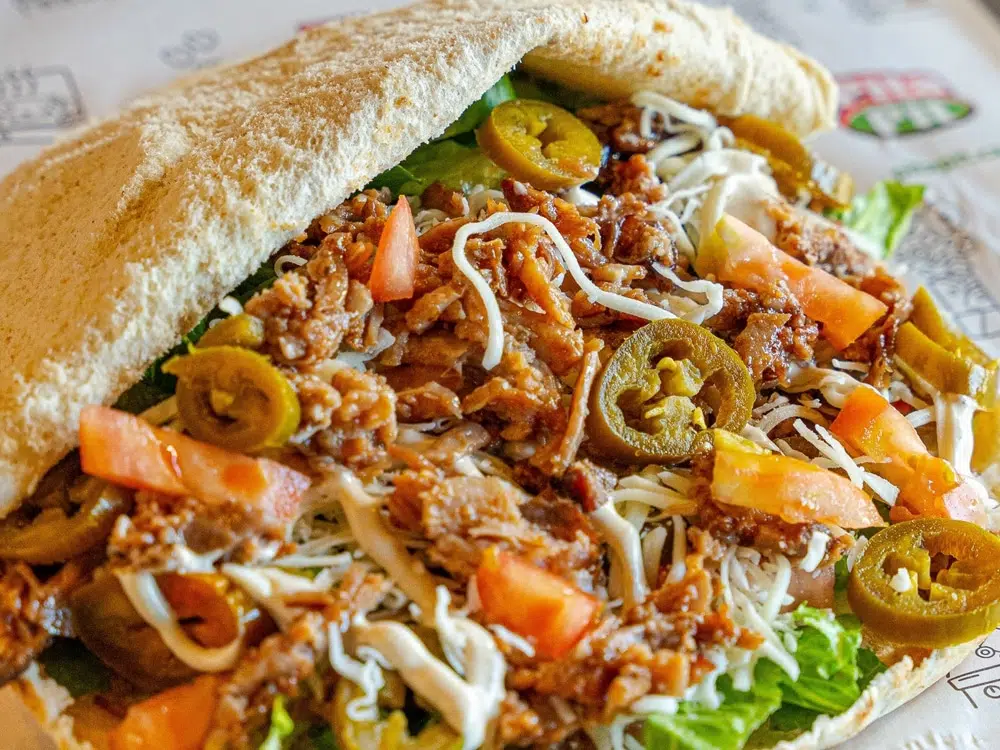
Pita Pit, the Canadian-born sandwich brand known for its customizable healthy offerings, is charting an ambitious growth path, focusing on innovation and deepening community ties.
While Pita Pit has a presence south of the border, Cann notes those U.S. stores are under different ownership and not monitored by the Canadian team.
Cann explained the distinction between traditional and non-traditional units, “A traditional site would be your brick and mortar, where it’s like in a parking lot or in a shopping plaza. A non-traditional unit would be like a university food court or a hospital. The product is basically the same, but the process and the way it’s done is a little bit different, but same product at the end of the day.”
Looking ahead, the brand anticipates opening between 12 and 15 new locations this fiscal year.
Pita Pit’s growth target is more ambitious over the longer term. “We’re targeting about 20 per year. If we stay at that pace, by 2030, we should be well above 300 locations.”
The brand is also exploring ways to adapt to high-rent urban locations with smaller footprints, using digital tools to boost franchisee profitability. “We’re looking on how we make it make sense for our franchisees to be in some high rent areas with smaller footprints, leveraging more digital things like that.”
Cann emphasized Pita Pit’s appeal to consumers stems from its customizable and healthy offerings. “Pita Pit is known for and still known as a place that you can get a wholesome healthy meal. But it also can be indulgent for those that want it to be.”
He highlighted the brand’s unique selling proposition. “Pita Pit is what sandwich you make is made by you when you’re there. We do have recipe items on our menu that are preset toppings, but the bulk of our business is done by guests who come in and choose their toppings.”
That freedom resonates with customers. “It resonates because I get what I want to get, right? I can be as healthy as I want. I can be healthy on my terms is the tagline that we use. It’s healthy on your terms so you can choose what your healthy is.”
The menu caters to a broad range of dietary needs. “If you’re celiac, we have gluten-free bread, or you can have a salad or a rice bowl. If you’re halal, we do have a few meats that are certified halal on our menu.”
Cann admitted the halal option is limited due to operational challenges but remains a key focus. “We don’t advertise it very much because it’s very hard to deliver a halal experience the way we do business, but we do our best.”
The brand’s origins in the university market have helped build a loyal multi-generational customer base. “We started in 1995 and we were mainly a university, that group of people leaving late night activity and coming in for a quick bite before you go home. Those folks are now moms and dads and have kids of their own and still hold those habits.”
Community involvement, Cann says, is a critical part of Pita Pit’s success. “Franchisees who are engaged in their business and their communities, I think have been the secret to success here. We couldn’t have done it without those people who committed their funds to open a Pita Pit and work damn hard every day.”
On the brand’s community philosophy, Cann said, “Try to leave the community better than you found it, if that makes sense.” Franchisees often see giving back as a natural part of their business. “They come to you, they buy your food, they support your business, and it’s important to give back. Most franchisees would feel like that and look for the opportunity of where they can do something special in their communities.”
Photo: Pita Pit
Pita Pit’s key charitable partnership is with the Make-A-Wish Foundation, which Cann describes as “one of our key ones in the year.” Participating stores donate a dollar from every pita or smoothie sold during the campaign month.
“Over the years, we’ve had busier and less busy years, but overall, it’s somewhere around $230,000 that we’ve managed to help raise either through franchise, guest donations, as well as franchisees donating a portion of their money toward the charity.”
Seeing the impact firsthand is powerful. “When you have a group of franchisees who’ve worked hard to do that and they see the child or the family get their wish granted, that’s very powerful to see.”
Pita Pit also supports Motion Ball, a charity raising funds for Special Olympics athletes. “Franchisees have contributed via their food, donating PTAs for participants and volunteers at events across Canada.”
New this year is a partnership with Wings for Life, a charity run sponsored by Red Bull. “We donated product for their events so they don’t have to spend their fundraising money on food. We’re giving them food and they don’t have to spend their money on that expense.”
Cann points to franchisees as the real heroes of Pita Pit’s community impact. “Without being prompted or pushed, franchisees do amazing things in their communities.”
For example, a franchisee in Brampton volunteers as a firefighter and supports first responders through sponsorships. Another in St. John’s donated food for a youth church conference without any direction from head office.
During major wildfires in British Columbia, one franchisee gave away approximately $50,000 worth of free food to affected residents, with no expectation of reimbursement.
“That kind of generosity just really shows what our franchisees believe in and their commitment to their communities.”
Cann concludes, “It’s important for business and your success too.”
Aptos, a leader in unified commerce solutions, announced that Tommy Bahama has selected Aptos ONE, a mobile-first point of sale (POS) application built on a cloud-native platform.
This strategic investment will allow Tommy Bahama to enhance its already stellar guest experience, optimize store operations and support its multichannel growth strategy, including pop-up retail events, said the company.
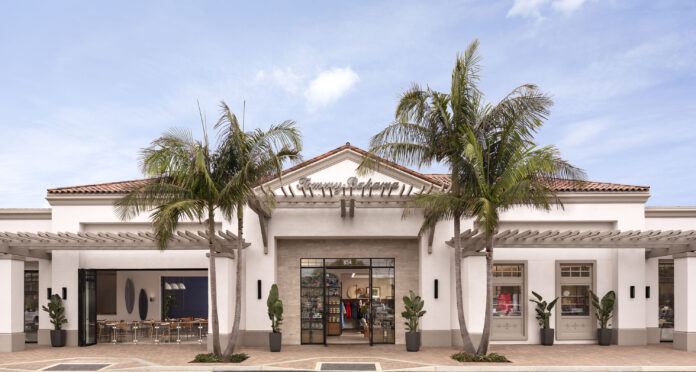
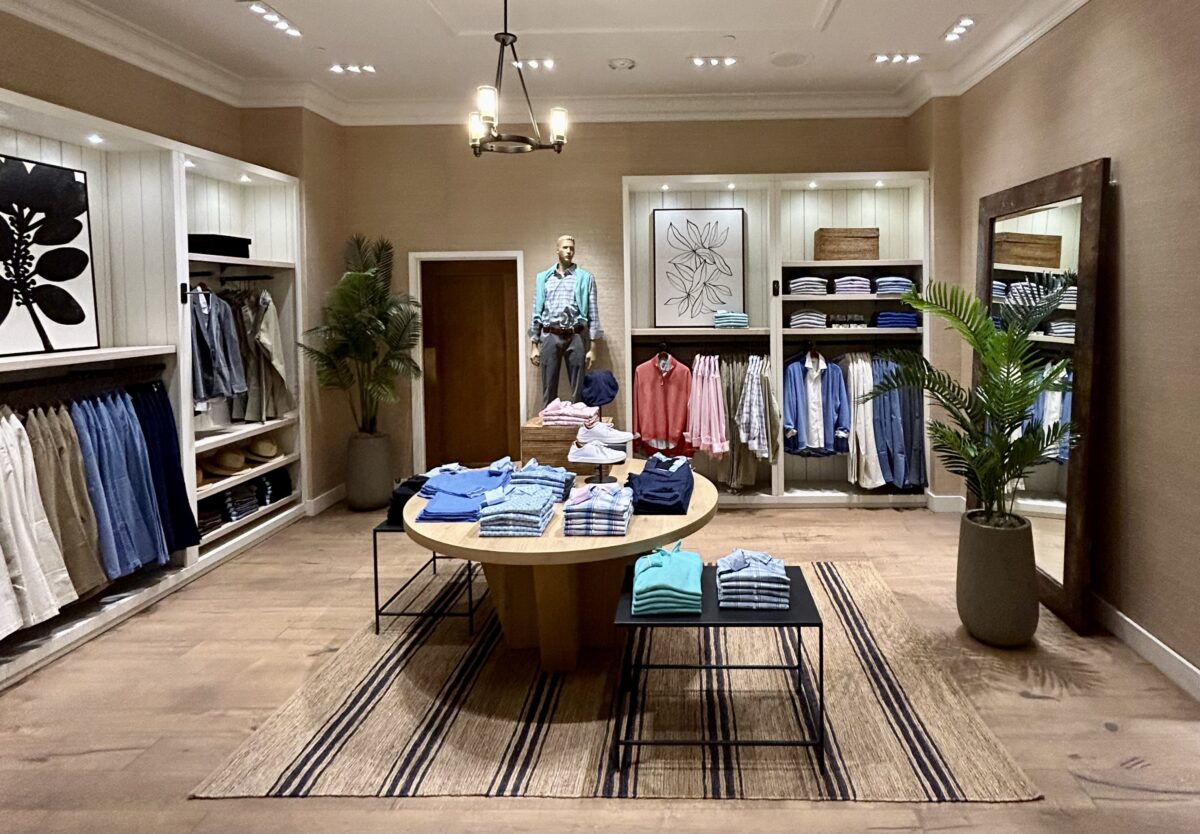
Based in Seattle, Tommy Bahama is part of Tommy Bahama Group, Inc., a wholly owned subsidiary of Oxford Industries, Inc. Tommy Bahama is the iconic island lifestyle brand that defines relaxed, sophisticated style in men’s and women’s sportswear, swimwear, accessories, and a complete home furnishings collection. The company owns and operates over 160 Tommy Bahama retail locations, 26 of which offer a Tommy Bahama restaurant and bar. The Tommy Bahama collection is also available on TommyBahama.com and at the finest U.S. retailers.
There are six regular stores in Canada and two outlet stores.
Dave Boland
“In today’s retail landscape, technology is absolutely foundational to engaging our guests,” said David Boland, the retailer’s executive vice president of technology. “In our stores, the experience is largely delivered through our store associates. Aptos ONE will enable our associates to provide highly personalized and frictionless service. The platform’s flexibility will also unlock new opportunities as we continue to evolve our offerings.
“One example is increased mobility. With Aptos ONE, our associates can serve guests right in the aisle while they’re still evaluating purchase decisions, rather than waiting until the guest has already made a decision and walked to the cash wrap.
“Another advantage of Aptos ONE is its speed. This POS solution is quick and intuitive, enabling more convenient and streamlined transactions. Plus, with Aptos ONE’s highly composable architecture, we’ll be able to add capabilities much faster than before, ensuring our retail experience remains fresh, differentiated and highly aligned with our guests’ needs.”
With Aptos ONE, Tommy Bahama said its store associates will have at their fingertips everything they need to effectively and efficiently serve customers, including real-time inventory information, advanced omnichannel selling and fulfillment options, and guest insights. With the ability to unite transactions across channels, Aptos ONE helps retailers optimize every customer interaction.
Source: Tommy Bahama
Aptos ONE’s impact on IT and business operations
Beyond the benefits Aptos ONE will bring to guest and associate interactions, Tommy Bahama’s decision to implement Aptos ONE was driven by several IT and operational considerations, it said:
Simplified configuration management: With more than 1,000 out-of-the-box configuration settings, Aptos ONE simplifies configuration management, allowing for rapid deployment of changes and the ability to meet retailers’ unique operational requirements.
Seamless integration: Aptos ONE’s integration with the broader Aptos suite deployed at Tommy Bahama (including customer relationship management, order management, merchandising and sales audit solutions) was a critical factor, ensuring a unified commerce approach and a single version of the truth for customer, order, inventory and transaction data. Integration with third-party solutions is also made easier with Aptos ONE’s flexible integration options.
Sophisticated pop-ups: For Tommy Bahama, the opportunities for pop-up shops are endless, such as at resorts, beaches, golf tournaments and corporate outings.While Tommy Bahama is already adept at pop-up retailing, Liu believes Aptos ONE will bring a new level of operational sophistication to these events.
Future innovation: “Aptos is investing heavily in Aptos ONE, so it is in our best interest to leverage innovations that our technology partner is bringing to market,” Boland said. Underscoring Boland’s point, Aptos has committed to its largest R&D spend in company history in 2025, with that investment funding major new Aptos ONE features, faster release cycles and a transition to a unified data model.
Jeremy Grunzweig
“Tommy Bahama understands that a powerful brand experience extends to every customer interaction, in stores and beyond,” said Aptos General Manager Jeremy Grunzweig. “With upscale, high-quality products; impeccable service; and a ‘paradise-found’ mindset, Tommy Bahama is a lifestyle retail icon. We’re looking forward to our next chapter of growth and innovation with Tommy Bahama as they deploy Aptos ONE.”
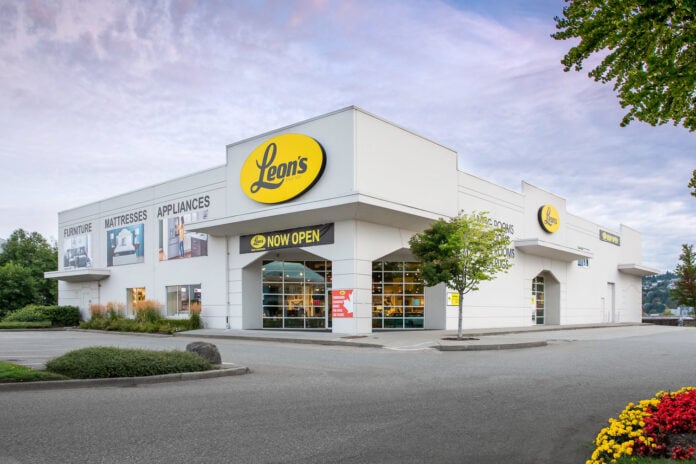
Leon’s Furniture Limited (TSX: LNF) has reported a strong second quarter for fiscal 2025, with earnings, sales, and margins all beating expectations, according to an August 7 report from Stifel Nicolaus Canada Inc. authored by Managing Director Martin Landry. The company’s results stand out in a Canadian retail market that continues to navigate inflation, cautious consumer spending, and evolving competitive dynamics.
Adjusted earnings per share for the quarter reached $0.57, up 29.5% year-over-year and well above Stifel’s estimate of $0.48 and the consensus of $0.46. Revenues climbed 4.3% to $644.1 million, ahead of forecasts, with same-store sales also up 4.3%. That’s more than double what analysts had anticipated and the fastest growth rate for the retailer in the past year.
Furniture sales rose 6.5% year-over-year, and the commercial appliance business posted a 10.5% increase, offsetting low single-digit declines in mattresses and electronics. Stifel’s analysis credits a favourable sales mix weighted toward higher-margin furniture, sourcing enhancements, and a tighter assortment strategy for the gains.
This performance comes as many Canadian retailers grapple with subdued discretionary spending. While home improvement and furniture categories saw a surge during the pandemic, the sector has since faced demand moderation. Leon’s results suggest the company is benefiting from operational refinements and category mix, even as competitors navigate softer traffic in big-ticket retail.
Margin Gains Show Efficiency Investments Paying Off
Gross margins rose to 44.8%, up 92 basis points from last year and surpassing Stifel’s 44.1% estimate. The lift came from higher-margin product sales and cost-side benefits from sourcing changes.
SG&A expenses dropped to 36.4% of sales, down 55 basis points year-over-year, reflecting cost-control measures implemented over the past year. The combination drove adjusted EBITDA margins up 140 basis points to 12.7%, the best in six quarters. Adjusted EBITDA reached $81.8 million, up 17% from the prior year.
For context, many Canadian mid- to large-scale retailers have struggled to maintain margins in recent quarters as promotional activity picked up to stimulate sales. Leon’s ability to expand profitability suggests it has retained pricing discipline while optimizing costs — an approach that could be a key differentiator if competitive discounting intensifies later in the year.
Dividend Hike and Store Expansion Signal Confidence
On the strength of these results, Leon’s Board approved a 20% increase in its quarterly dividend to $0.24 per share, payable October 7, 2025. The company ended the quarter with a $40 million net cash position, excluding lease liabilities, marking its strongest balance sheet in three years.
Leon’s store network reached 300 locations nationwide after the quarter saw the opening of a new Appliance Canada store and a franchised The Brick location. While some Canadian retailers have slowed expansion to focus on digital growth, Leon’s continues to pursue select physical openings, a strategy supported by its vertically integrated delivery and service infrastructure.
Broader Market Positioning
Leon’s operates across three primary banners — Leon’s, The Brick, and Appliance Canada — giving it reach in both value-oriented and more premium segments. The retailer competes directly with large chains like IKEA, Sleep Country Canada, and in certain categories, Canadian Tire, as well as regional independent operators.
The Canadian furniture market has faced shifts in recent years as consumers embrace omnichannel shopping for big-ticket purchases. While online penetration for furniture remains lower than in categories like apparel or electronics, it has grown steadily. Stifel’s report notes the risk of increased online competition for smaller-ticket home products, which could put margin pressure on Leon’s over time.
Forecast Upgrades and Target Price Increase
Stifel raised its 2025 same-store sales growth assumption for the second half of the year by 100 basis points to 3% and trimmed its SG&A expense expectations, lifting its 2025 EPS forecast by 7% to $2.35. The 2026 EPS forecast also rose to $2.55.
The firm increased its target price from $27 to $30, using the average of three valuation methods: applying a 7x multiple to 2026 adjusted EBITDA (up from 6.5x previously), a 12x multiple to 2026 EPS, and a discounted cash flow analysis with a 7.8% discount rate.
Real Estate Unlock Remains a Potential Catalyst
Leon’s owns a significant real estate portfolio, which Stifel estimates could be worth around $1 billion, or $13–$15 per share. Under a favourable scenario, a sum-of-the-parts valuation combining a retail business valued at 6–7x trailing EBITDA with a real estate investment trust (REIT) holding the property portfolio could yield a share value of $38–$40.
However, there are uncertainties around timing, valuation, and investor appetite, as well as the strategic use of any proceeds. The market has already priced in some expectations of a REIT spin-off, meaning that if management opts not to proceed, shares could face pressure.
Risks in a Competitive Market
Beyond REIT-related uncertainty, Stifel flags risks including heightened industry competition, the health of franchisees and commercial customers (to whom Leon’s extends credit), exposure from its self-insured extended warranty programs, and the ongoing shift to online purchasing for certain home goods.
With strong Q2 results, expanded margins, and a dividend increase, Leon’s is entering the second half of 2025 from a position of strength. Its performance underscores the potential for traditional Canadian furniture retailers to compete effectively by leveraging product mix, operational efficiency, and selective physical expansion.
At the same time, the company faces the same structural challenges as its peers — balancing brick-and-mortar investments with digital transformation, managing margin pressures from evolving consumer behaviour, and navigating a competitive landscape where global and domestic players continue to seek market share.
Retail Insider is streamlining its Canadian retail news from around the web to include a handful of top news stories that can be viewed quickly during the day. Here are the top stories from the past 48 hours.
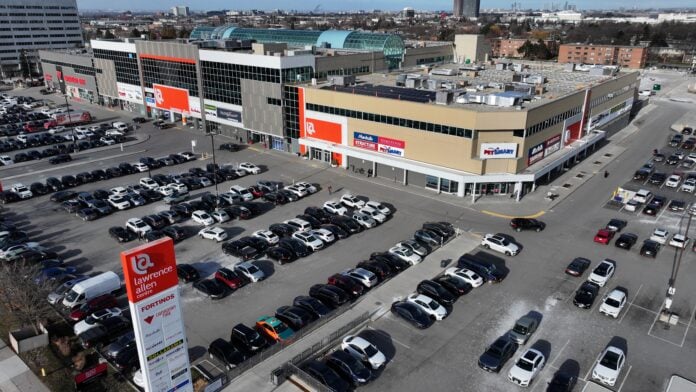
“Building on Q1, we are pleased to report continued momentum in leasing demand and operational performance in Q2,” said Mitchell Goldhar, CEO of SmartCentres.
“Occupancy has improved to 98.6% with approximately 148,000 square feet leased up during the quarter and rent growth of 8.5% (excluding Anchors). Same Properties NOI increased by 4.8% (7.7% excluding Anchors) showcasing improving customer traffic and a strengthened tenant base. Pacific Fresh and Costco both took possession of large spaces during the quarter and are expected to open later this year. Our development pipeline continues to add to the bottom-line with the completion this quarter of three self-storage projects and the closing of nine townhomes at our Vaughan NW project.”
Mitchell Goldhar
2025 Second Quarter Highlights
Retail Operations
Improving customer traffic and a strengthened tenant base delivered strong Same Properties NOI for the three months ended June 30, 2025 which increased by 4.8% (7.7% excluding Anchors) compared to the same period in 2024.
147,818 square feet leased during the quarter, resulting in an in-place and committed occupancy rate of 98.6% as of June 30, 2025. In addition, growing demand for new-build retail continues with approximately 38,740 square feet executed during the quarter.
Extended or finalized 82.1% of all leases maturing in 2025, with strong rent growth of 8.5%, excluding Anchors.
In April 2025, Pacific Fresh took possession of 136,703 square feet in Vaughan, previously occupied by Lowe’s, and Costco took possession of 125,040 square feet at Winston Churchill and highway 401. Both tenants plan to open later in the year.
Development
Significant development pipeline is expected to provide long-term portfolio expansion and profitable growth from the approximately 58.9 million square feet (at the Trust’s share) of zoned development permissions of various forms, including 0.8 million square feet currently under construction.
Construction of self-storage facilities in Toronto (Gilbert Ave.), Toronto (Jane St.), and Dorval (St-Regis Blvd.) is substantially complete, with all three facilities opened during the quarter. Construction is underway at Montreal (Notre Dame St. W), and Laval E, Quebec, with facilities expected to open in 2026. Site preparation and demolition works were completed at Burnaby, British Columbia, with building construction commencing shortly and expected to open in 2027.
Construction of Phase I of the Vaughan NW townhomes is mostly completed, with nine units closed in Q2 2025. As at June 30, 2025, a total of 98 out of the 120 units in Phase I have closed.
Financial
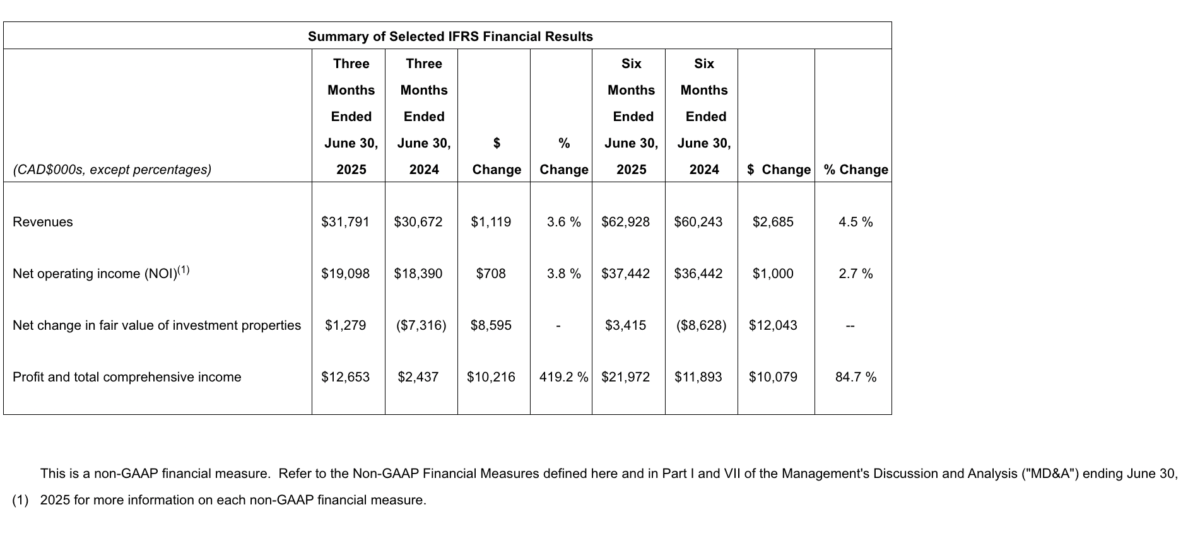
Net rental income and other for the three months ended June 30, 2025 was $141.3 million representing an increase of $8.1 million or 6.1% compared to the same period in 2024. This increase was primarily due to lease-up and renewal activities mainly from retail properties.
FFO per Unit for the three months ended June 30, 2025, was $0.58 compared to $0.50 for the same period in 2024. This increase was primarily due to an increase in NOI mainly due to lease-up activities and changes in fair value adjustment on the TRS resulting from fluctuations in the Trust’s Unit price, partially offset by a decrease in interest income as a result of the repayment of mortgage receivables and lower loan interest rates compared to the prior year period. FFO with adjustments per Unit for the three months ended June 30, 2025, was $0.55 compared to $0.51 for the same period in 2024, an increase of 7.8%.
Net income and comprehensive income for the three months ended June 30, 2025, decreased by $19.7 million compared to the same period in 2024. This decrease was mainly driven by a $27.7 million reduction in fair value gain on investment properties, partially offset by a $10.2 million increase in NOI primarily due to lease-up activities for retail and mixed-use properties.
SmartCentres is one of Canada’s largest fully integrated REITs, with a best-in-class and growing mixed-use portfolio featuring 197 strategically located properties in communities across the country. SmartCentres has approximately $12.0 billion in assets and owns 35.6 million square feet of income producing value-oriented retail and first-class office properties with 98.6% in place and committed occupancy, on 3,500 acres of owned land across Canada.
“RioCan delivered another quarter of strong results and sustained leasing momentum, highlighted by exceptional leasing spreads and a high retention rate. The continued demand from high-quality retailers underscores the strength of the RioCan portfolio and reinforces our position as the landlord of choice. We continue to simplify our business, progress our capital recycling initiatives, and successfully execute our de-leveraging plan. These initiatives sharpen the operational focus of the Trust and enhance our financial flexibility to drive sustained growth,” said Jonathan Gitlin, President and CEO of RioCan.
Jonathan Gitlin
RioCan said it meets the everyday shopping needs of Canadians through the ownership, management and development of necessity-based and mixed-use properties in densely populated communities. As at June 30, its portfolio is comprised of 178 properties with an aggregate net leasable area of approximately 32 million square feet (at RioCan’s interest).
Highlights:
FFO per unit increased to $0.47, up $0.04 or 9.3% from the same period last year. This growth was driven by strong operating performance, reduced G&A expenses, accretion from unit buybacks in the current year and higher residential inventory gains. Higher interest expense partially offset these increases in FFO.
Net income per unit of $0.49 was $0.08 per unit higher than the same period last year, reflecting greater fair value gains of $15.9 million on investment properties, compared to $5.9 million in the prior year quarter, in addition to the items noted for FFO above.
Adjusted Debt to Adjusted EBITDA improved to 8.88x, ratio of unsecured to secured debt reached 61% to 39% and the FFO Payout Ratio was 60.5%. RioCan’s strong balance sheet, reinforced by $1.3 billion of Liquidity and $9.0 billion in Unencumbered Assets, enables flexibility and optimization of capital allocation.
Leasing Progress: 1.3 million square feet were leased in the Second Quarter, including 1.2 million square feet of renewals.
Leasing Spreads: In the Second Quarter, RioCan achieved a blended leasing spread of 20.6% with a new leasing spread of 51.5% and a renewal leasing spread of 17.4%, marking three consecutive quarters of leasing spreads at least in the high-teens. RioCan continued to capitalize on mark-to-market opportunities, achieving an average blended leasing spread of 23.5% on market deals. 72% of renewals were at market rates, while retaining high-quality essential retailers, including the renewal of eight grocery anchors in the quarter. The retention ratio of 91.6% reflects an effective balance between upgrading tenant quality and preserving strong tenancies, with elevated leasing spreads confirming the success of this strategy.
Same Property NOI: Commercial Same Property NOI growth was 2.0% in the Second Quarter. Excluding the impact of higher legal and CAM/property tax settlements and a provision reversal in the prior year, Commercial Same Property NOI growth is 4.0%. Full year guidance for SPNOI is unchanged at ~3.5%.
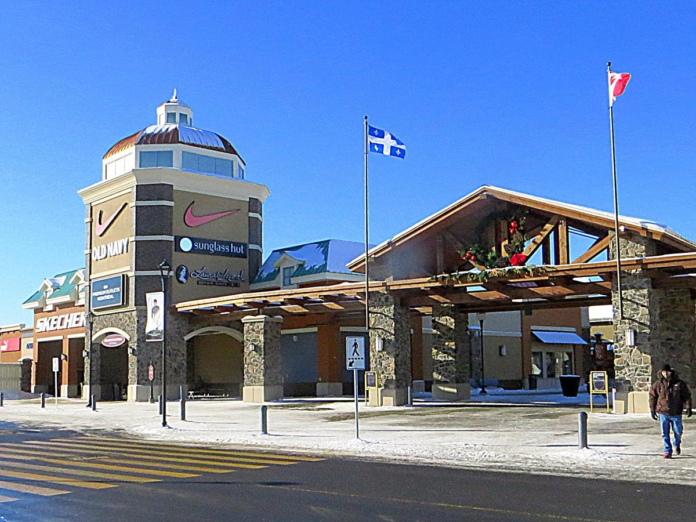
Occupancy: RioCan’s committed occupancy and retail committed occupancy were strong at 97.5% and 98.2%. Committed occupancy benefited from strong, more resilient retailers replacing transitional tenants who were paying under-market rents and offset the impact of recently vacated HBC units at Georgian Mall, Oakville Place and Tanger Ottawa. Our leasing team is actively working toward backfilling these units.
Market Demographics: Average population and household income within a five-kilometre radius of RioCan’s portfolio increased by 1% and 5% to 277,000 and $155,000, respectively from the previous year.
RioCan Living – Residential Rental: Residential rental operations generated $9.0 million of NOI, an increase of $1.8 million or 25.0% over the same period last year. As of June 30, 2025, there are 14 buildings in operation with a total fair value of $1.1 billion. RioCan continues to execute on its strategy of unlocking the value in its residential portfolio.
RioCan Living – Residential Condominium: The construction loan for U.C. Tower 2 & 3 was fully repaid in the Second Quarter. The outstanding balance on the 11YV construction loan was reduced to $3.6 million reflecting payments made through to August 7, 2025. As a result, as of August 7, 2025, RioCan’s debt decreased by $124.2 million, and its outstanding guarantees related to 11YV declined by $298.0 million compared to Q1 2025. Full repayment of the remaining 11YV construction loan balance is expected in Q3 2025. Interim closings have commenced at Queen & Ashbridge and U.C. Tower 3.
“The first half of 2025 has demonstrated how our operating performance remains resilient. We are executing grocery anchored optimizations and intensifications, while consolidating ownership positions to drive accretive embedded growth within the existing portfolio,” said Jason Parravano, President & CEO.
Jason Parravano
“We began some exciting projects this quarter. We are in the process of converting roughly 30,000 square feet of space at the Village Shopping Center in St John’s, Newfoundland to a No Frills. This will convert the center to a grocery anchored property, which will enhance value and liquidity for the asset. In addition, we have begun the construction of a 28,000 square foot No Frills store at one of our existing plazas in Brockville Ontario. We will also soon be converting 30,000 square feet of space for another dominant retailer at the same property. We made progress on another No Frills conversion at Spring Park Plaza in Charlottetown, PEI, converting a 10,000 square foot space to a small format No Frills. We also have a number of other property enhancements underway throughout our portfolio.”
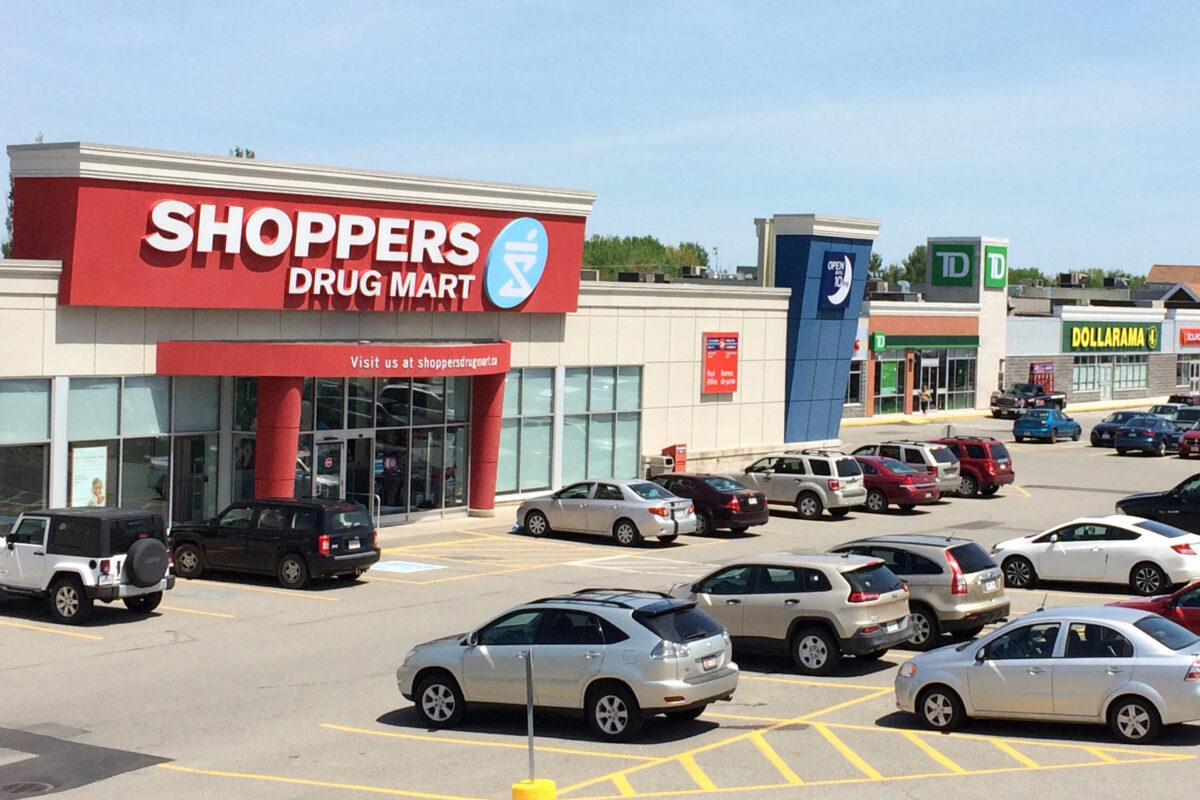
“Through disciplined execution, we also increased our ownership in 3 Ontario Shoppers Drug Mart properties from 25% to 100% at the beginning of June. During the quarter, we were able to achieve a 5.3% increase in per unit FFO, drive same-property NOI growth of 1.5%, achieved blended leasing spreads of 14.8% year-to-date, and increased our committed occupancy to 98%. Our negotiated weighted average renewal rates over the term for our open-air centres was 23.8% and our occupancy rate for the same category was just shy of 99%. I am extremely proud of the progress we have made so far this year.”
Photo: Plaza Retail REIT
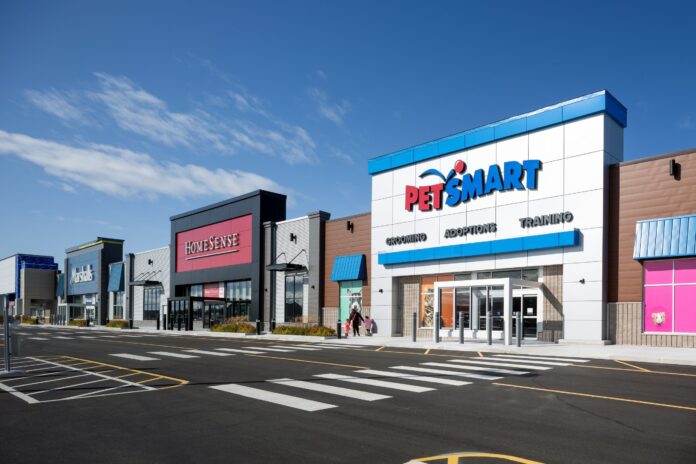
Plaza is an open-ended real estate investment trust and is a leading retail property owner and developer, focused on Ontario, Quebec and Atlantic Canada. Plaza’s portfolio at March 31, 2025 includes interests in 211 properties totaling approximately 8.9 million square feet across Canada and additional lands held for development. Plaza’s portfolio largely consists of open-air centres and stand-alone small box retail outlets and is predominantly occupied by national tenants with a focus on the essential needs, value and convenience market segments.