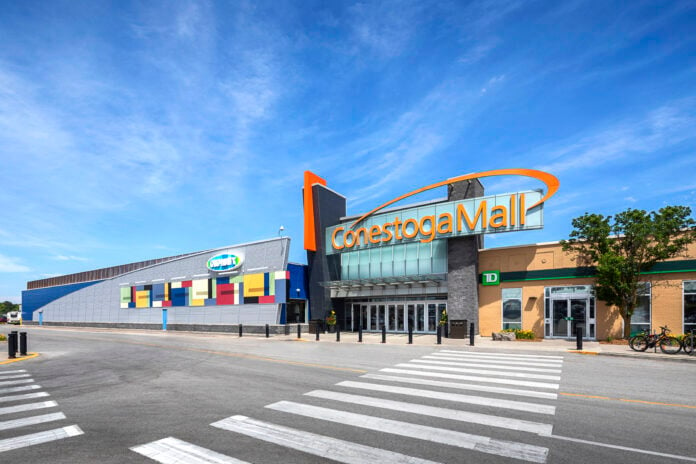
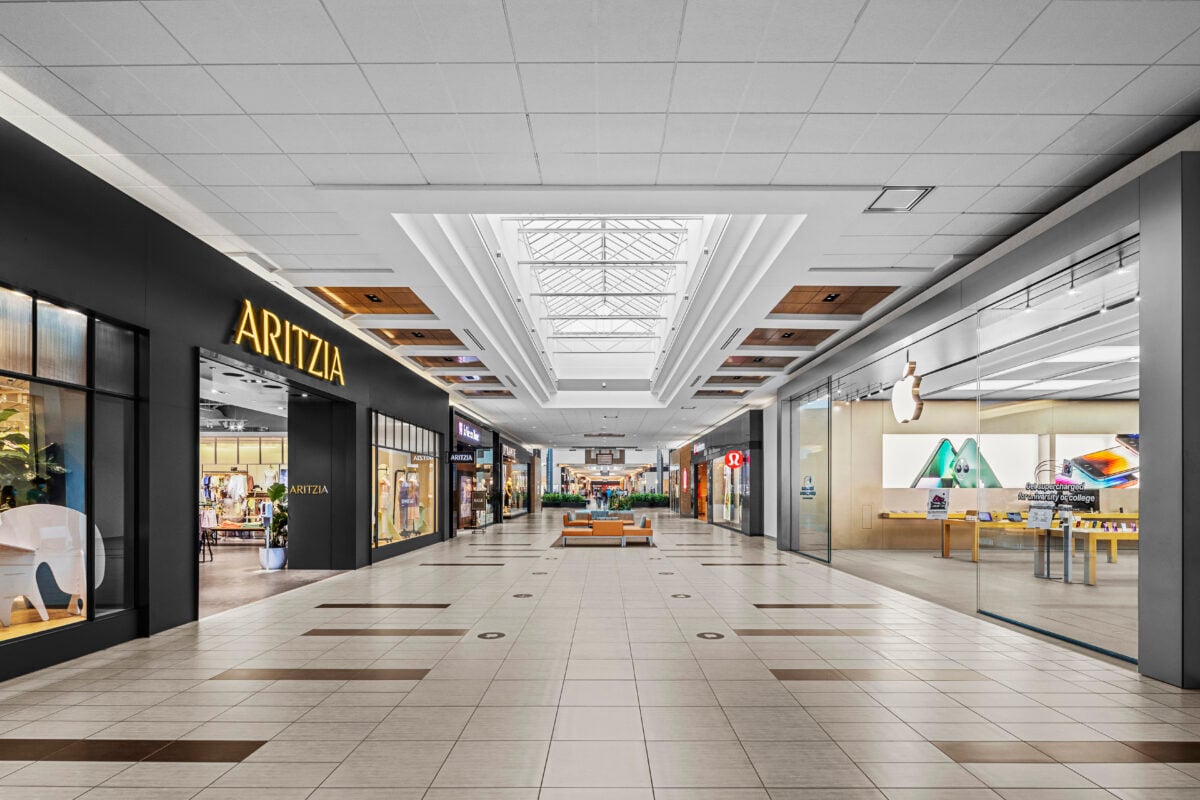
Conestoga Mall is sharing some exciting news for the Waterloo region – three new retailers have opened in the shopping centre, Swatch, Kiokii and Levi’s.
The Swatch and Kiokii stores are the first for the brands in the Waterloo Region.
Swatch and Kiokii open their first Waterloo Region locations
As part of its continued evolution, Conestoga Mall said it is expanding its retail lineup with exciting new fashion and beauty destinations.
The arrival of Swatch and Kiokii — each opening their first location in the Waterloo Region exclusively at Conestoga Mall — along with Levi’s, a leader in denim wear, adds to the vibrant mix that makes the centre a must-visit destination for sought-after brands, it said.
New retailers include:
Swatch – The iconic Swiss watchmaker debuts a 1,200-square-foot store featuring innovative and standout design elements
Kiokii – Canada’s go-to for Asian beauty and skincare opens a 3,000-square-foot location
Levi’s – A global leader in denim is now open with its most-loved fits and essentials in a new 2,900-square-foot location
Conestoga Mall, located in Waterloo, ON, offers its 7.4 million annual visitors a range of experiences all under one roof whether its shopping at 130+ stores and services including the trade area’s only Apple, lululemon, Browns Shoes, Build-A-Bear and Nespresso, dining in a landmark Food Court, entertainment at Galaxy Cinema, or exploring history at the City of Waterloo Heritage Museum.
Source: Conestoga Mall
The shopping centre has announced a two-day Back-to-School Block Party, featuring LEGO®-powered immersive and hands-on experiences with over 12,000 blocks for kids to build, create, and play.
The Back-to-School Block Party takes place on August 16 and 17 from 11 a.m. to 4 p.m. in Winners Court. Families can enjoy hands-on fun with STEM and robotics workshops, LEGO® Inspiration Tables, and interactive game lounges. Daily Robotics Workshops run at 12 p.m. and 2 p.m. and LEGO® Building Workshops at 1 p.m. and 3 p.m. each day, giving kids the opportunity to build, code, and create. Guests can also capture share-worthy photo moments at the Giant Throne, play in the Block House or recharge in the Relaxation Lounge. There’s also a daily giveaway for a chance to win a LEGO® backpack from Journeys, said the shopping centre.
Source: Conestoga Mall
Patrick Fleurantin
“Back-to-school is a big moment for families, and we hope our fall programming at Conestoga Mall gives the community a fun and memorable way to make the season feel special.” said Patrick Fleurantin, Marketing Manager, Conestoga Mall. “Alongside the Back-to-School Block Party, our new retail openings arrive at the perfect time, enhancing the fall shopping season and reinforcing the centre’s position as a go-to destination in the region.”
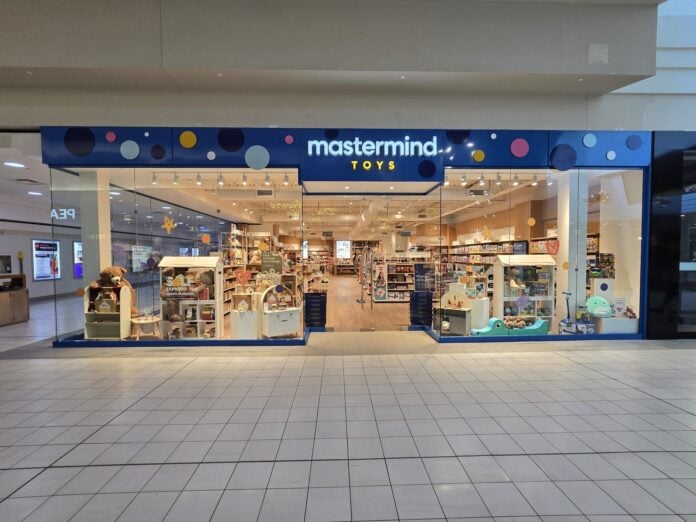
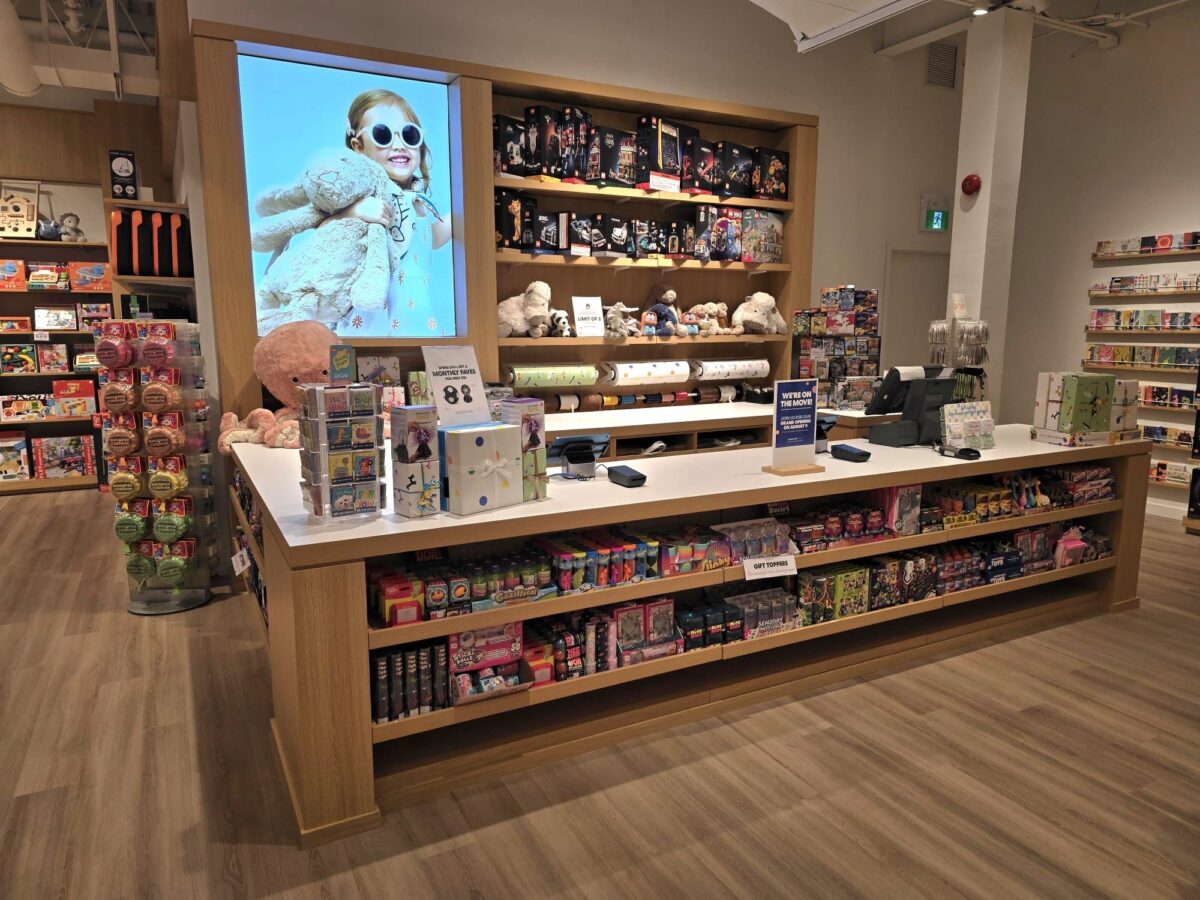
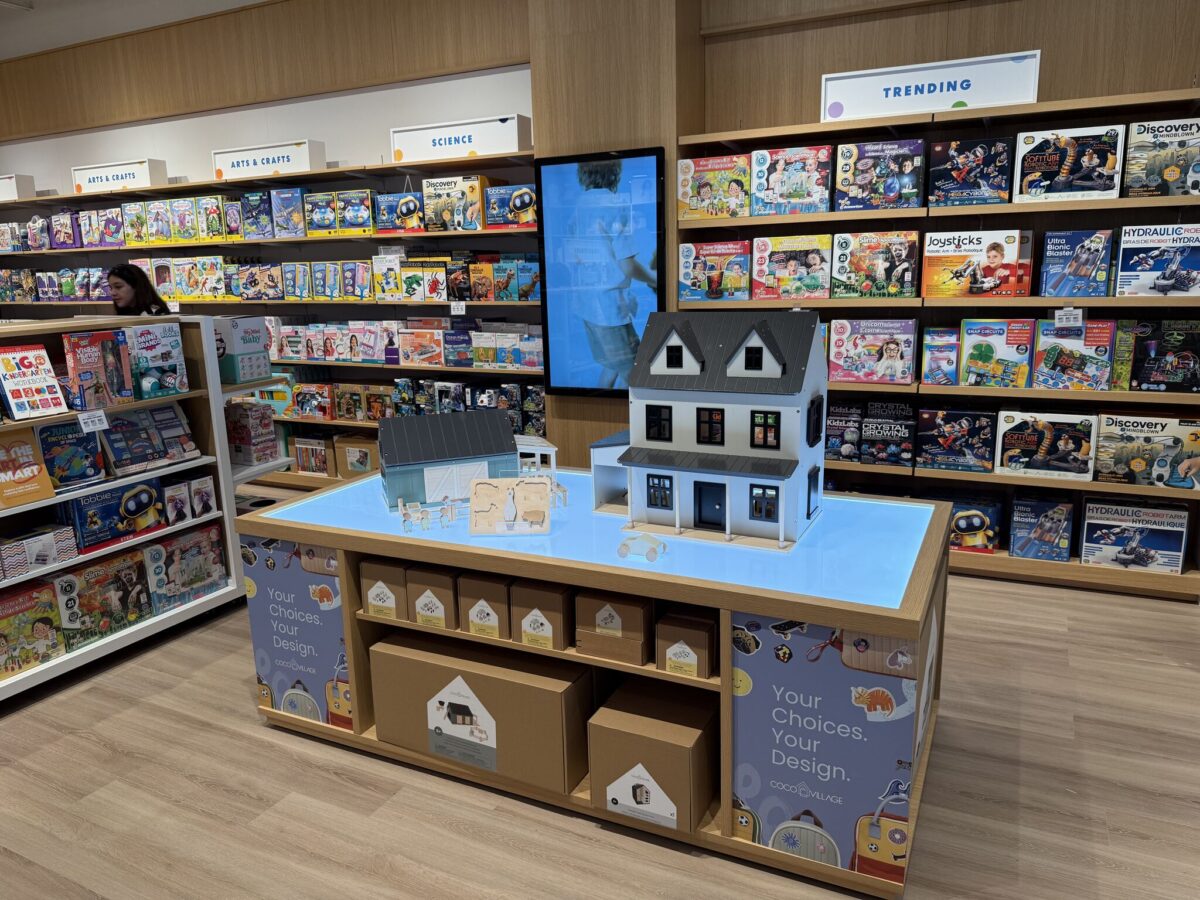
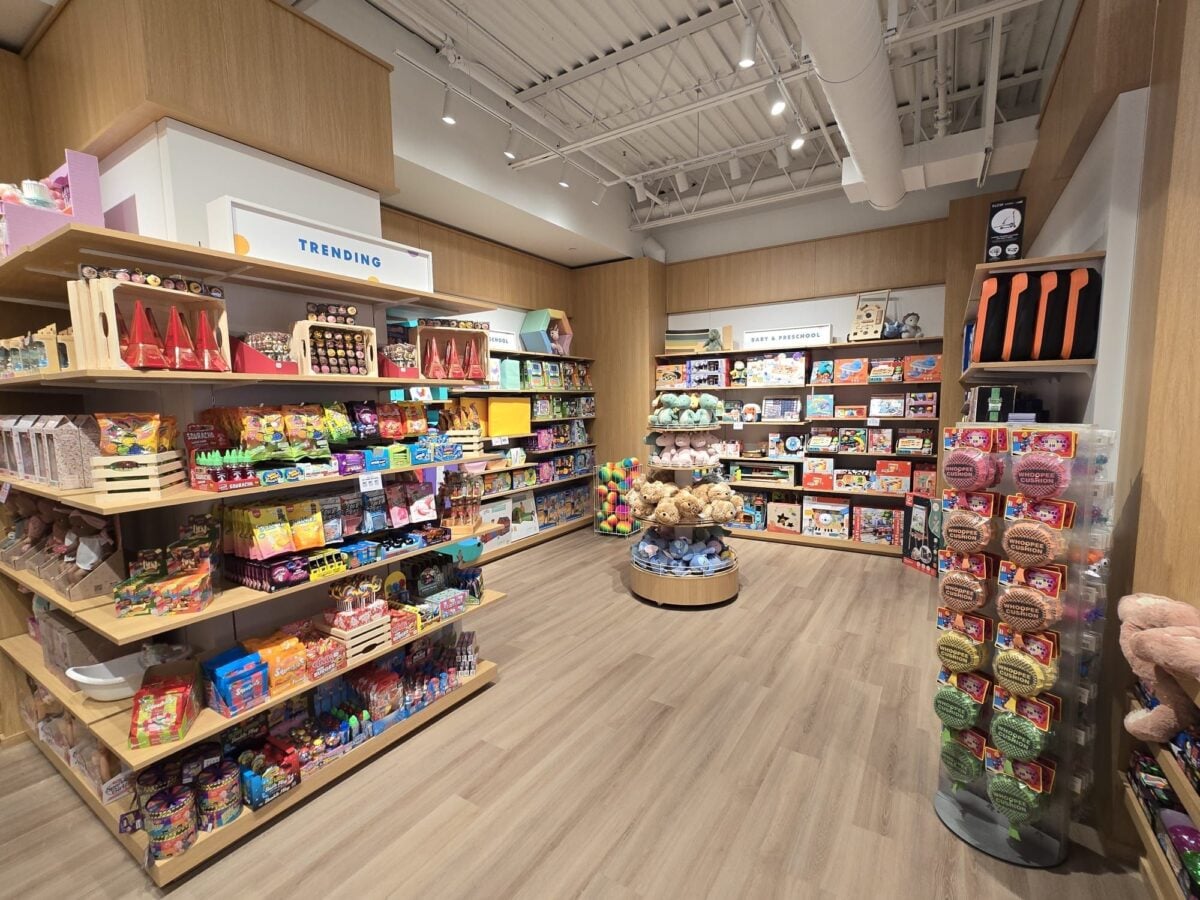
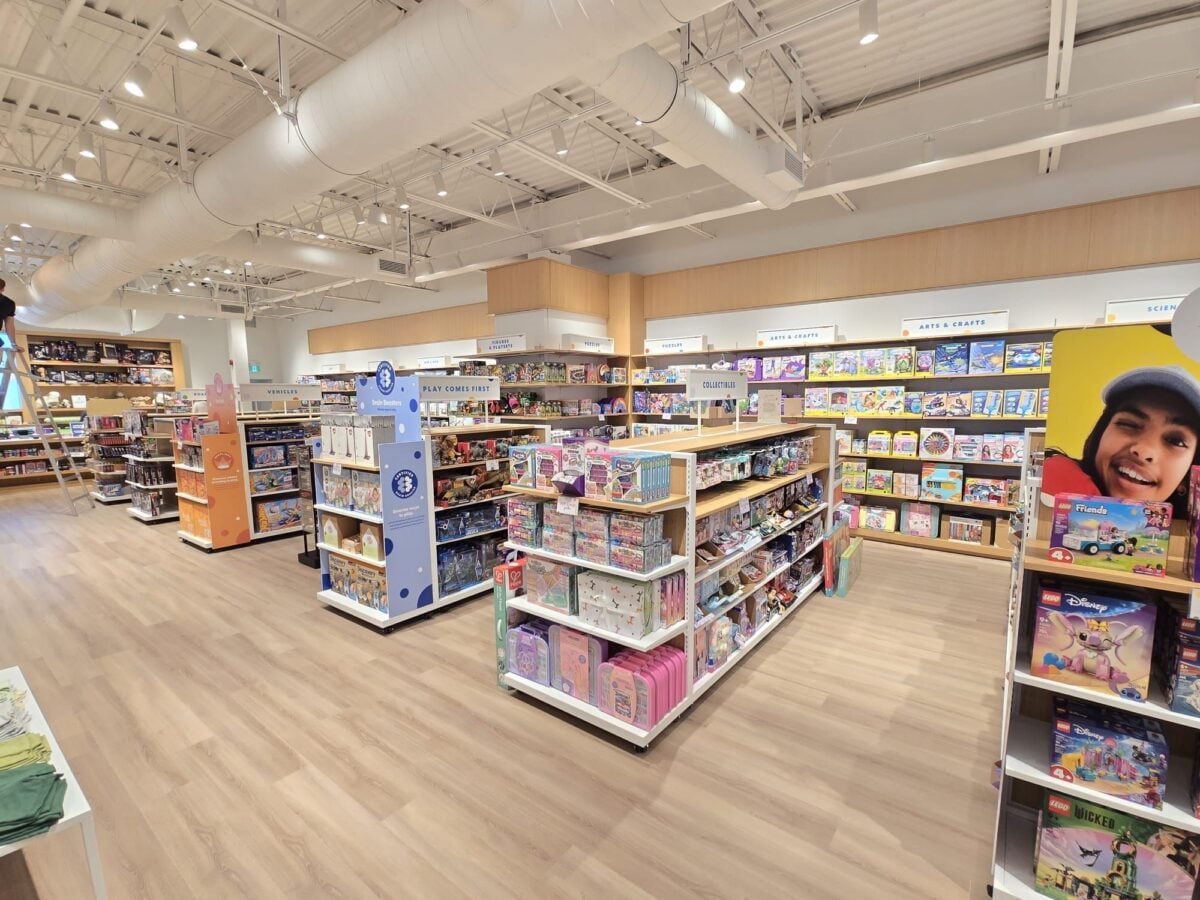
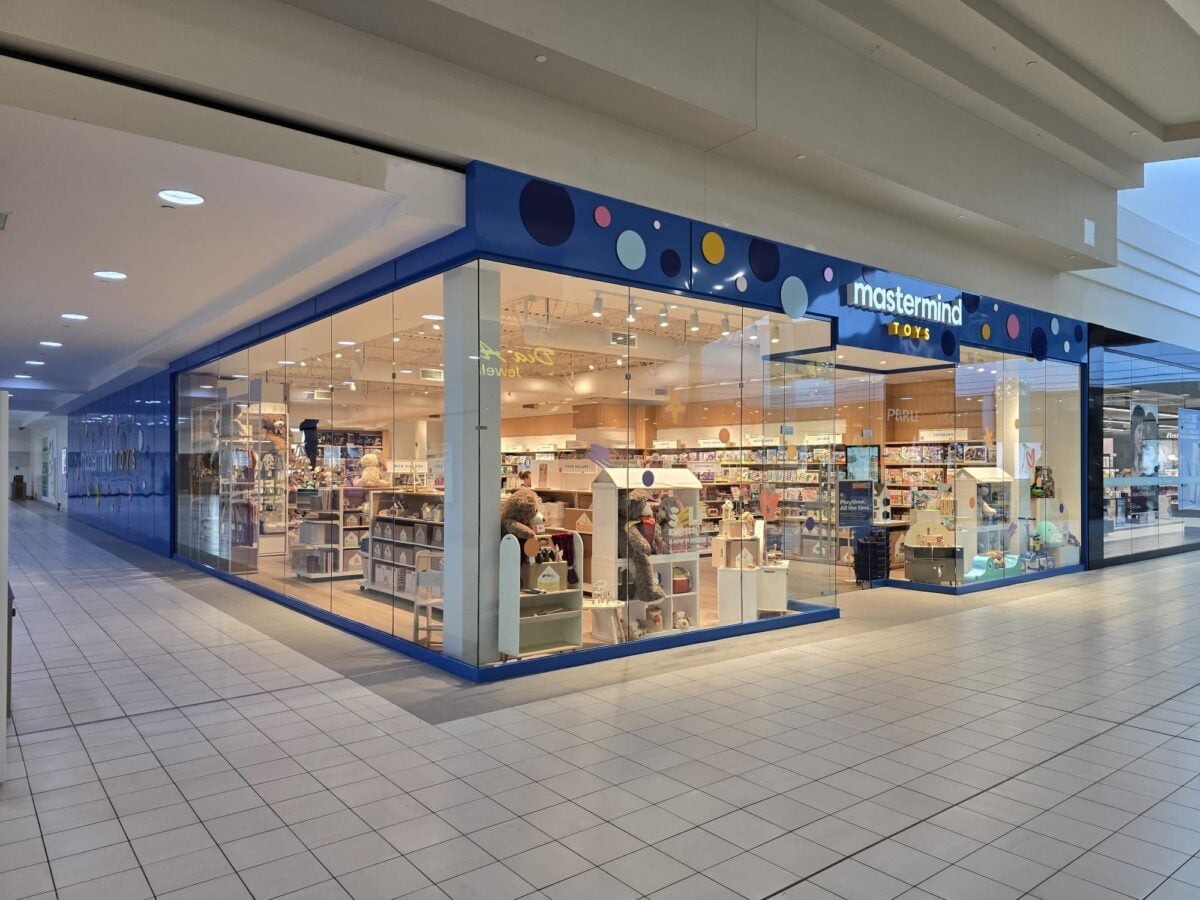
“Thoughtfully designed with a shopping-friendly layout, interactive play stations, and fresh finds from the beloved brands you know and love, this new store is an inspiring step forward in how we engage with children, parents, and communities,” said John Bayliss, CEO of Mastermind Toys.
John Bayliss
“This flagship represents more than just a retail space, it’s a celebration of creativity, discovery, and imagination.”
Bayliss, formerly a senior executive with Walmart Canada, has been in his current role since mid-May.
“It’s been a phenomenal experience. Mastermind is an exceptional brand with very passionate store managers and play experts. We raised our kids with weekend visits to Mastermind, so it’s an exciting role with lots of opportunity to bring a great Canadian icon back to the forefront,” said Bayliss, of the brand which faced financial difficulties just a few years ago.
In December 2023, Mastermind Toys, the largest independent specialty toy and children’s book retailer in Canada, announced that it had entered into an asset purchase agreement with Unity Acquisitions Inc., a company owned by Canadian retail pioneers Joe Mimran, Frank Rocchetti and David Lui.
Under the terms of the transaction, Unity purchased the majority of Mastermind Toys store locations..“Mastermind Toys is a beloved Canadian retailer with a loyal customer base driven by quality, curiosity and play,” said Joe Mimran, at the time. ”The acquisition aligns with Unity’s strategy to enhance and grow extraordinary Canadian brands. We are thrilled to have the opportunity to work with the team at Mastermind Toys and take the brand and the business to the next level.”
Today, there are 47 locations operating coast to coast across the country.
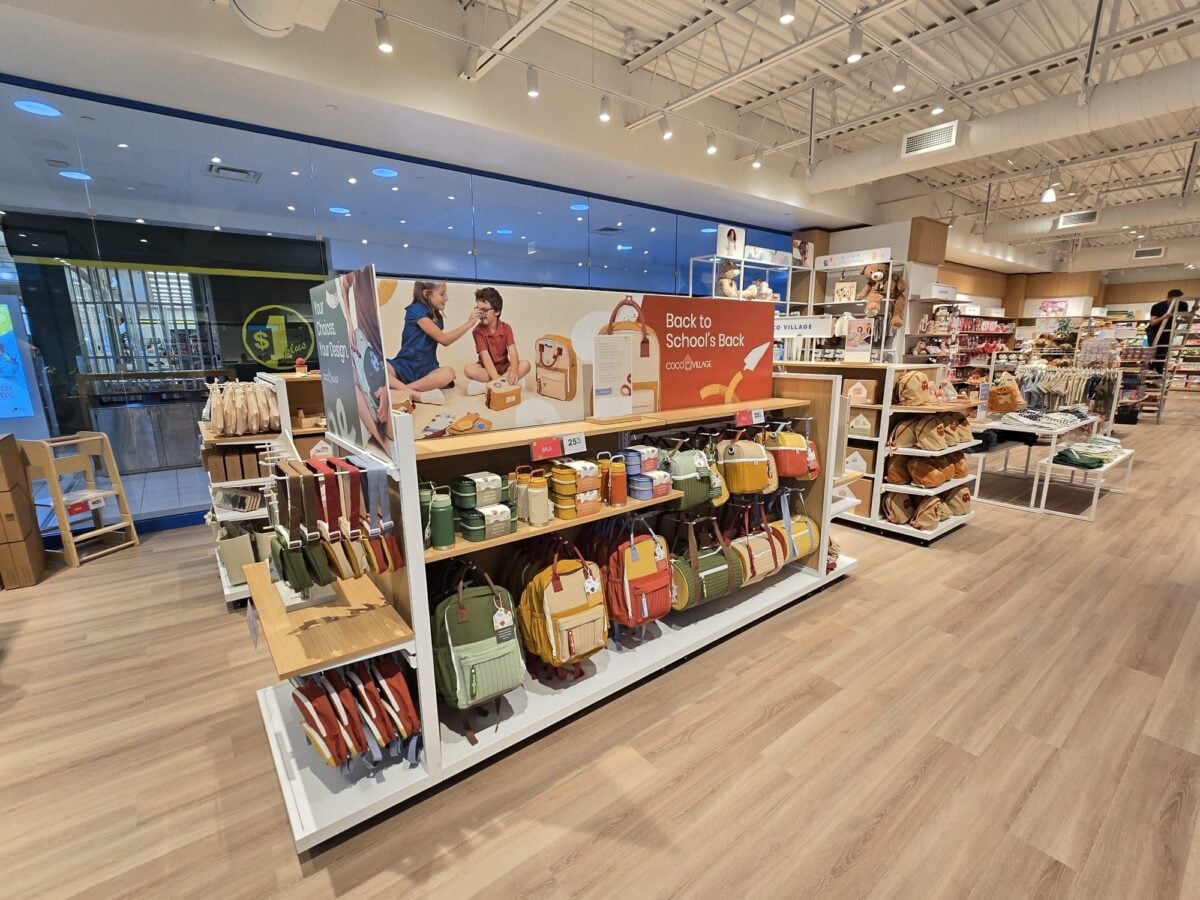
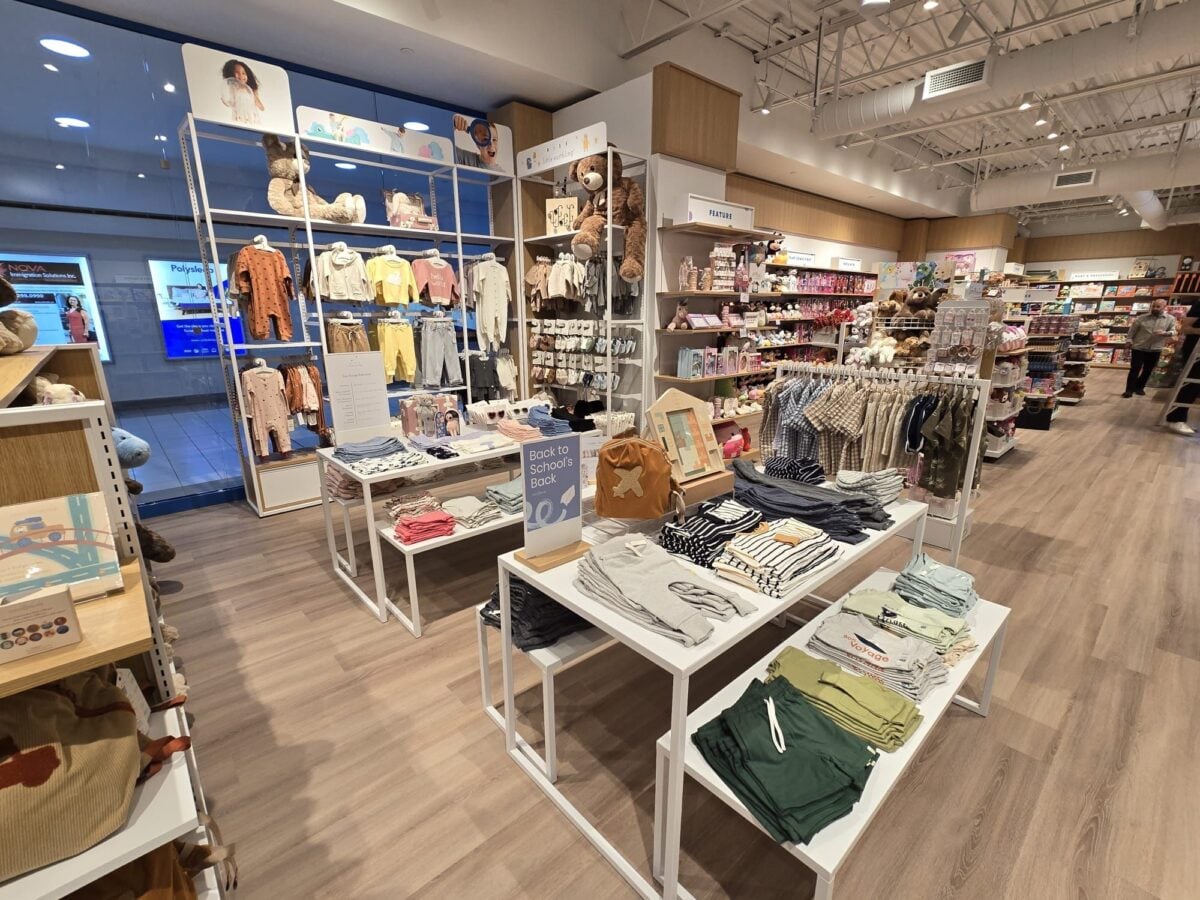
“We’re in every province except Quebec. That said, we do have a business called Coco Village, a digitally native brand headquartered in Quebec. Joe and Frank and Unity acquired it about a year ago and folded it into Mastermind. They specialize in product design and offer an exceptional range of products that we sell at Mastermind, but they also sell to other retailers and direct to consumers around the world,” explained Bayliss.
Source: Mastermind Toys
“We’ve been in Pickering for a while. It’s a grand reopening. The mall has been undergoing redevelopment, and we had the opportunity to reimagine our store in a refreshed space. That end of the mall has been rejuvenated with new stores like Sephora, JD Sports, and lululemon.
“We moved into a smaller footprint, about 3,000 square feet, down from 5,000, which gave us the chance to redesign the store in line with our mission: to inspire kids to play, learn, and grow. The new layout is more engaging for kids to explore and interact, while also creating a great shopping experience for parents and grandparents.”
Bayliss said the brand hasn’t opened any new stores yet this year, but it does have plans in the works for a series of pop-ups, which it hopes to announce in the next few weeks for the holiday season.
“Right now, we’re reviewing the right formats and communities for future growth because we believe there are still many opportunities for Mastermind,” he said.
A brand like Mastermind has several benefits of being part of a larger group like Unity.
“With Frank and Joe at the helm, we benefit from their incredible product and design expertise. Their strengths in visual merchandising and design are evident across the portfolio . . . We’re also fortunate to have onboarded a new investor, Stéphane Tétrault. He owns Import Dragons, McFarlane Toys, and recently acquired EB Games Canada (formerly GameStop Canada). He brings deep knowledge of the toy industry and the specialty/collector side of the business, which is incredibly valuable. This year has really been about injecting that expertise and thinking into the business so we can better deliver value to Canadian families heading into peak season.”
Bayliss said the Pickering store also represents the brand returning to its heritage, focusing on strong curation, innovation, quality, creativity, and developmental value.
Source: Mastermind Toys
“When you walk into a Mastermind, you’ll see great STEM kits, classic wooden toys, and something for every curious child’s mind. We’re also featuring more Canadian brands and unique items that you won’t find elsewhere,” he noted.
“Design-wise, this is part of a broader effort to rejuvenate our retail footprint. Last year, we renovated the store in Mount Pleasant, the first step in rethinking our design and layout. We’re continuing that work at our stores on Yonge Street, Etobicoke, The Beaches (currently under renovation), and Bayview Village. We’ll start applying this new blueprint to key locations across the country.
“So, really, this is about building back a great Canadian brand and delivering a great experience in every community we serve.”
When Denise Dow founded Strong & Free Emblem Inc. in 2007, she was inspired by a vision that began decades earlier. Growing up in New Brunswick, Dow often wondered why Canada lacked a unifying symbol similar to the American eagle. Her father, a proud member of the Canadian Coast Guard, instilled in her a deep appreciation for national identity.
“I used to visit my cousins in Massachusetts and see American eagles on buildings,” said Dow. “I thought, why doesn’t Canada have something like that?”
Denise Dow
The answer came to her in high school in the 1970s. Dow began sketching maple leaves from her backyard and pairing them with the phrase “Strong and Free,” drawn from the Canadian national anthem. It wasn’t until her own children reached high school that she finally acted on the idea.
“That was the push,” she explained. “I wanted my kids to be part of something meaningful, and I wanted to create a business I could pass on to them.”
In 2007, Dow trademarked the Strong & Free phrase and emblem, establishing a foundation for what would become a distinctive Canadian brand.
From Backyard Sketch to National Symbol
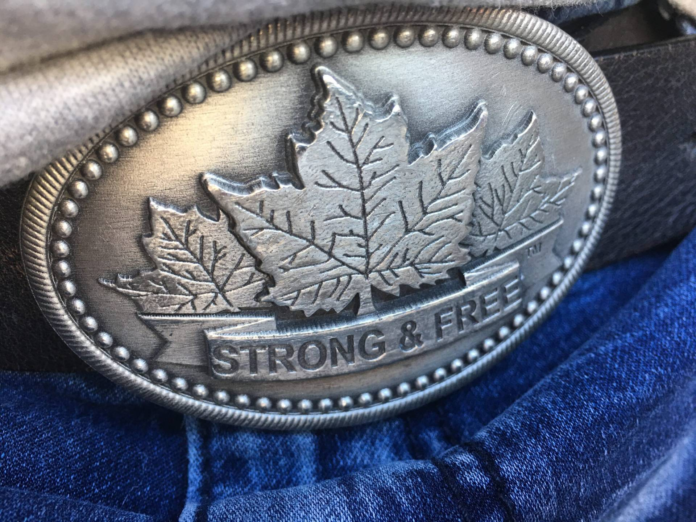
The first Strong & Free products were plaques featuring the emblem, sold through Canadian Tire and later adopted by Bradford Exchange and specialty retailers. Over time, the brand expanded into apparel and accessories, building a reputation for quality Canadian-made products.
“I kept the model simple,” said Dow. “We started with plastic plaques, then aluminum plaques made from Canadian aluminum, supporting local resources. From there, we added apparel and hard goods.”
Today, Strong & Free products include hoodies, t-shirts, hats, crests, pins, decals, and more. The company has also created custom items such as hockey sticks and leather portfolios through partnerships with Canadian manufacturers.
“Our hoodies were originally made in Nova Scotia using the same machines that Roots started with,” Dow noted proudly.
Image: Strong & Free
A Business Built on Partnerships and Licensing
Strong & Free operates on a licensing and trademark model, allowing Canadian manufacturers and artisans to produce goods under its brand. This approach enables the company to maintain a lean structure while scaling its reach.
“My goal was to build something that could sustain my family,” Dow explained. “Licensing just made sense—it allowed us to grow without losing control of quality or identity.”
This strategy has led to partnerships with companies such as Stanfields for apparel and various artisans for hard goods. The brand’s presence spans airports, duty-free shops, and military-run CANEX stores, making it a staple in Canadian tourism and patriotism markets.
“Duty-free was a perfect fit,” Dow said. “The red, white, and black colourways really stand out, and travelers love bringing home something that represents Canada.”
At its peak, Strong & Free was in nearly 90 percent of duty-free locations across Canada, including major airports and land borders. The pandemic disrupted that momentum, but Dow pivoted to online sales and has since regained traction.
Image: Strong & Free
Made in Canada, Staying in Canada
In an era when many brands outsource manufacturing, Strong & Free remains committed to Canadian production. Products are crafted from Canadian aluminum, pewter, and fabrics, reinforcing the brand’s patriotic roots.
“This isn’t just about business, it’s about supporting Canadian jobs and resources,” said Dow. “From Sherbrooke to Ontario to Nova Scotia, we’ve built a network of local partners who share our values.”
That commitment resonates with consumers who value authenticity. “When customers tell me what Strong and Free means to them, their family and their military service, it keeps the fire burning,” Dow said.
Image: Strong & Free
Tackling Trademark Challenges
Owning a powerful phrase like “Strong and Free” comes with its challenges. Dow frequently encounters unauthorized use of the trademark, often from businesses unaware of the infringement.
“I always reach out personally,” she said. “Most people don’t realize, and 95 percent of the time we resolve things amicably.”
Recent political and cultural movements have amplified the phrase’s visibility. In early 2025, a viral campaign featuring “Canada’s Not For Sale” merchandise included hats labeled Strong and Free, sparking a surge in interest for Dow’s brand.
“Strong and Free will always be relevant,” she emphasized. “It’s unique—there’s nothing else like it that represents Canada the same way.”
Recent Collaborations and New Horizons
In January 2025, Strong & Free entered a licensing partnership with Jackpine Dynamic Branding Inc., a Canadian collective focused on patriotic messaging. The collaboration aims to expand distribution and create co-branded initiatives that connect with Canadians nationwide.
The brand has also partnered with Canadian music legend Alan Frew, lead singer of Glass Tiger. Frew recently recorded a song inspired by Strong and Free, which he performs at concerts across Canada.
“It feels like a Canadian anthem,” said Dow. “It captures the spirit of who we are as a nation.”
Additional initiatives include a free downloadable colouring book for children, featuring Canadian symbols, provincial tartans, and the national anthem in English and French. “It’s about educating kids in a fun way and building pride in our country,” Dow explained.
Image: Strong & Free
Looking Ahead: Passing the Torch
After nearly two decades at the helm, Dow is considering the future of the brand. “I’ll be 70 in a few years,” she said. “Eventually, the right person or organization will come along to take Strong & Free to the next level.”
For now, she remains committed to growing the company and expanding partnerships. “I love what I do, and when you love what you do, it’s not work—it’s a passion,” she said.
Grocery store shopping cart. Image: Pixabay/Pixels
When Canadians think of food price hikes, they tend to picture meat, coffee, produce, or even chocolate. Rice rarely comes to mind. Yet in 2025, rice has quietly become the single fastest-rising food product in Canadian grocery stores—up 48.9% since January, according to Statistics Canada. That’s not a rounding error. A standard two-kilogram bag of white rice now sits close to $10, a hefty increase for one of the most affordable global staples.
The reasons are layered. While Statistics Canada’s price index paints a broad picture of “white rice,” much of the pressure comes from specific market dynamics. For several months, Canadian tariffs on U.S. rice imports squeezed processor margins. Dainty—the 143-year-old Montreal-based company that remains Canada’s only rice milling facility—imports rice from multiple countries, cleans, mills, and packages it domestically. Since no rice is commercially grown here, all Canadian supply chains are exposed to global shocks.
Basmati rice, Canada’s top-selling variety by volume, is a key driver. Pre-packaged imports from India are highly sensitive to international commodity swings, and India’s temporary export restrictions last year sent global prices upward. By March, the average retail price of a two-kilogram bag in Canada had pushed well past $10 under tariff pressure, marking a peak in the white rice category. Since tariffs were lifted, prices have eased slightly, but not enough to offset the year’s cumulative rise—and it remains unclear whether they will drop further in the months ahead.
Rice is not a marginal food in this country. Roughly one in ten Canadian adults—about 2.2 million people—consume rice as their primary grain, driven largely by cultural and dietary traditions. The market’s scale depends on how it’s measured: Bonafide Research estimates more than $600 million in annual retail sales, while broader industry figures that include food service, processing, and imports put the figure above $16 billion. The gap highlights an important point for policymakers—rice may seem like a niche product in household terms, but economically, it carries weight.
Immigration and shifting consumption patterns will likely push demand higher in coming years. Nutritionally, however, the picture is mixed. White rice—by far the dominant variety on Canadian shelves—is primarily a carbohydrate source and, unless enriched, offers little in the way of fiber or micronutrients. Brown, red, and black rice varieties, which retain their bran and germ, deliver higher fiber, B-vitamins, and antioxidants. Wild rice, while not botanically rice, offers even greater protein density. Rice is naturally gluten-free and, when paired with legumes, forms a complete protein, but over-reliance on unenriched white rice can displace more nutrient-dense grains from the diet. For Canadian consumers, the takeaway is clear: variety matters—for both nutrition and long-term health outcomes.
Could Canada ever grow its own rice? While far from becoming a rice powerhouse, niche production is not inconceivable. Controlled-environment agriculture and greenhouse production could make small-scale cultivation possible in water-abundant regions such as British Columbia or southern Ontario. Still, the economics are challenging: Canada would be competing against low-cost giants like the U.S., India, and Vietnam, and rice is notoriously water-intensive. Climate change may eventually reshape growing seasons, and technology could lower barriers, enabling boutique production for specialty markets—much as Canada has done with wine grapes, wasabi, and even bananas.
The real question for Canada is not whether rice can be grown domestically, but whether doing so would make economic and environmental sense. Until then, rice will remain a barometer of global trade shifts, climate shocks, and policy decisions—reminding us that even an overlooked staple can tell a big story about our food economy.
For over three decades, Spirit of Math has carved out a unique niche in Canadian education. Based in Toronto, the company has become a national leader in after-school math enrichment for high-performing students, and now it’s gearing up for global expansion.
“We’ve been incorporated for 30 years, actually working for about 32 years,” said Kim Langen, CEO and founder of Spirit of Math. “It started as a system of after-school schools for high performing students in mathematics. Basically, we take kids from the top of the class to the top of the nation.”
Kim Langen
Langen is clear that Spirit of Math isn’t a tutoring service. “We actually have classes that kids attend, so they come for an hour and a half class once a week, and we teach them mathematics at a higher level,” she said. “They do need to be highly motivated or high performing – not necessarily gifted. A lot of people think, ‘Oh, this is a gifted program.’ No, it’s not necessarily a gifted program. It is for kids who actually are looking for more.”
The program currently serves just under 12,000 students through 27 campuses – 26 brick-and-mortar locations and one virtual. “Our after-school classes are in campuses, so centres. We have 26 centres throughout Canada, and one virtual so 27 in total,” Langen explained. Spirit of Math also runs math contests across 15 countries and offers a drill app and technology stream.
The origin story of Spirit of Math traces back to Langen’s father. “He did this program, first of all, in the North York School Board,” she recalled. “His kids were scoring much higher on all the testing, in the school board and also in the contests and really, what they found was that when the kids left his program, they were thinking very differently than others, and they were far ahead.”
Recognizing the potential, Langen took the reins. “I was a high school teacher at this point and I thought this would be really fascinating to work as a business, and to start in the basement of my home, because we couldn’t let this idea disappear.”
Source: Spirit of Math
From those humble beginnings with 35 students, Spirit of Math grew rapidly. “Grew it to over 80 in their first year,” she said. “The parents kept asking for it in different areas. So I said, ‘Okay, let’s franchise.’”
That franchising model has been in place now for two decades. “Right now we have 12 different franchise locations, the rest are corporately owned, to make it a total of 26,” Langen confirmed. With growth on the horizon, the company has now chosen to “start scaling the franchising, rather than corporate, as we go global.”
But franchising with Spirit of Math isn’t for everyone.
“We have very high skill set requirements just to even enter into this,” she said. “People have to have a degree to work with us. They have to have an understanding not just any teachers. A lot of our teachers just don’t even pass to get into our stream.”
Langen emphasized that growth must come with purpose. “To expand quickly isn’t necessarily what we would call success, each of our franchise centres is very successful in terms of the number of students and in terms of their profitability.”
Source: Spirit of Math
Currently, many campuses are in the Greater Toronto Area, with others in Ottawa, Alberta, Winnipeg, and British Columbia. Expansion within Canada continues, but global efforts are ramping up, particularly through Spirit of Math’s international contest partners.
“We did have some campuses in Pakistan, but COVID kind of really squashed that,” said Langen. “We’re actually doing a new expansion model once we get to know (our global partners), then we’re going to be offering it globally.”
A key component to Spirit of Math’s franchise success has been its relationship with the Canadian Franchise Association (CFA).
“They provide the proper context on what franchising is to begin with, they give the expertise, and they have the people who can provide you with the expertise to know what to look for,” said Langen. “Franchising people don’t necessarily understand the implications. It’s not just the legal implications, but it’s even the operational implications and how to set up your business properly so that you can do an expansion properly.”
Langen said CFA membership is a signal to potential franchisees that “there’s a standard, and we’re not just out there, just doing anything we want.”
So, is franchising the best route for business growth?
“Yes, not always. It’s a great way,” she said. “It depends on your business but it’s very good for scale.”
Crock A Doodle, Canada’s premier pottery painting studio, is steadily expanding its footprint across the country with more growth planned.
“We have 40 in Canada, one in the U.S.,” said Annette Brennan, CEO of Crock A Doodle. The U.S. location is in Bentonville, Arkansas – “home of Walmart,” Brennan noted.
Annette Brennan
Founded in 2002 at Blue Mountain, Ontario, Crock A Doodle’s concept is simple yet powerful. There are locations in Alberta and Manitoba but the bulk are in Ontario.
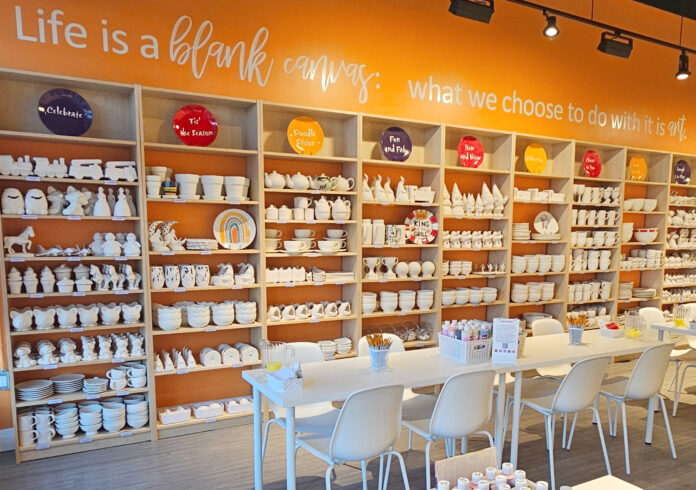
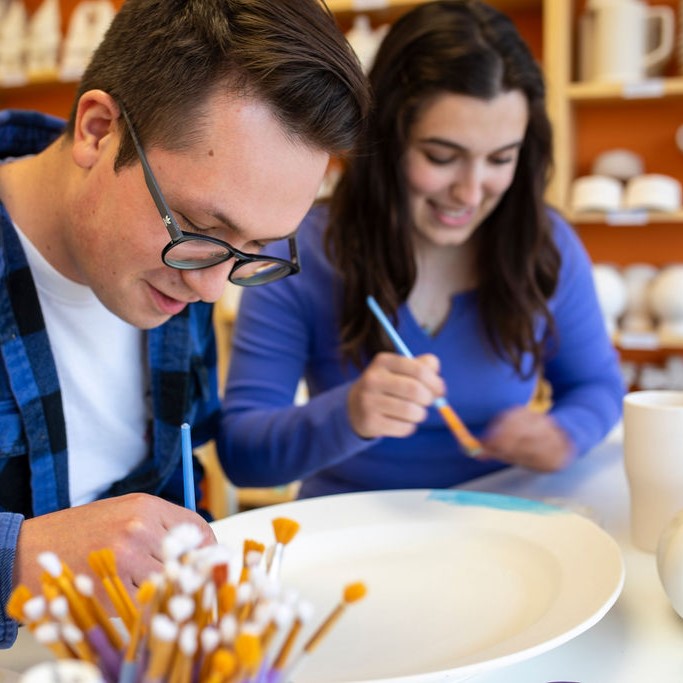
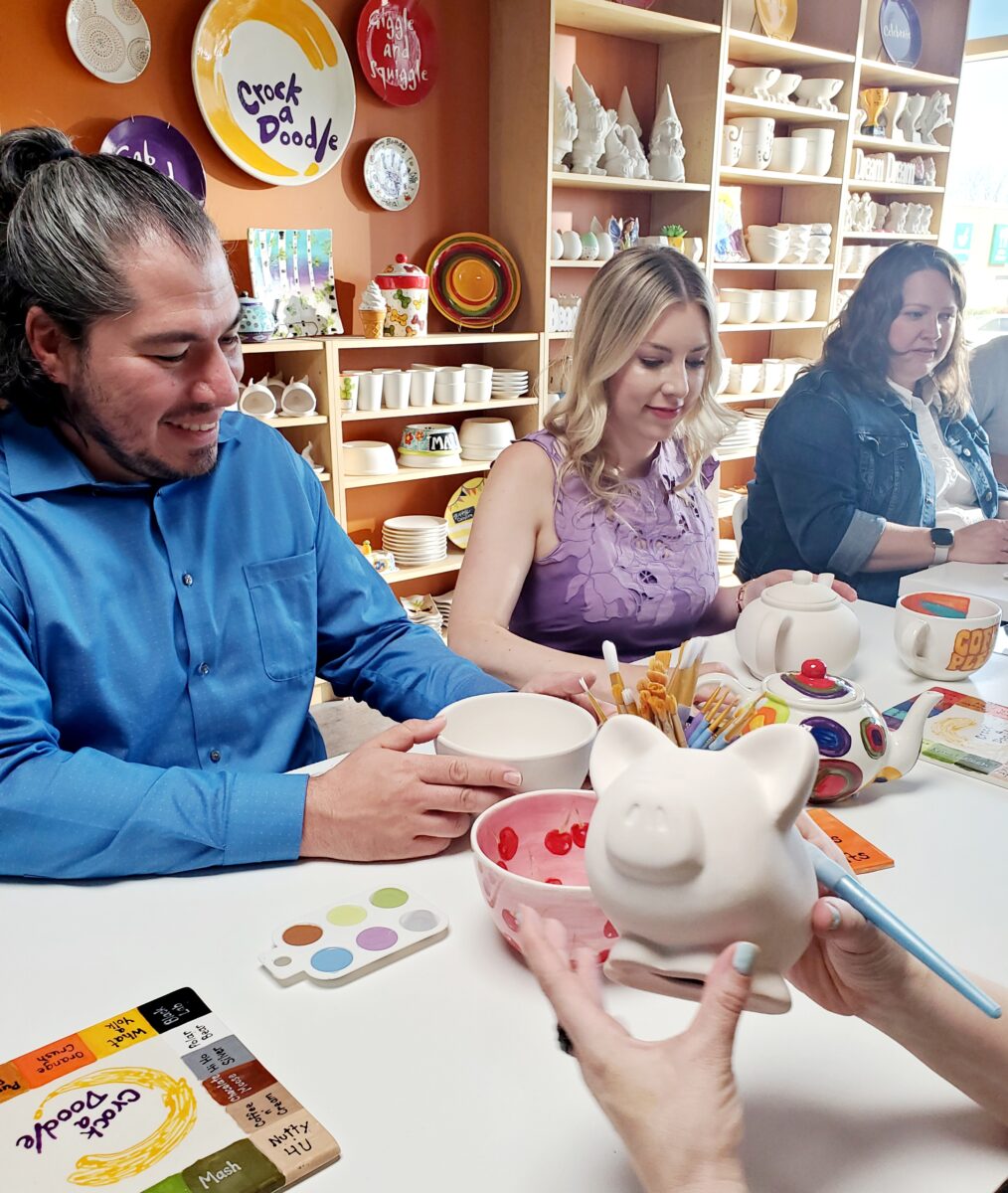
“We’re a pottery painting studio,” Brennan explained. Customers of all ages choose from a variety of pottery pieces – “mugs and plates and piggy banks and bowls” – then paint them with the support of the studio staff. The pieces are then glazed, fired, and finished into bright, shiny, food-safe, and functional keepsakes.
But Crock A Doodle is much more than a pottery studio.
“We want to wrap this experience in a big hug and make people feel welcome and like they belong,” Brennan said. “Everyone says, ‘I’m not creative,’ but you are. We cultivate a sense of community where everyone belongs, and a comfort and confidence in just playing with colour.”
This joyful, accessible experience is designed for “every age, every ability.”
The average Crock A Doodle location is roughly 1,200 square feet with an open studio layout. Many studios feature dedicated party rooms or areas to accommodate the brand’s popular birthday parties and corporate events. “We get a lot of group bookings,” Brennan confirmed.
Source: Crock A Doodle
Growth through franchising has been a core strategy.
“Franchising has been a really good model for growth for us,” Brennan said. “There was certainly a lot of work to set it up right and understand that not everyone should be a franchisee. It’s about having a really strong partnership between franchisor and franchisee in terms of commitment and mutual obligation.”
After some COVID-related slowdowns, Crock A Doodle is now back on track with plans to open eight locations this year and cross the 50-location mark next year.
Looking ahead, Brennan outlined the company’s expansion plans: “We want to complete Ontario, focus on markets where we know there’s demand, then go east, then go west.”
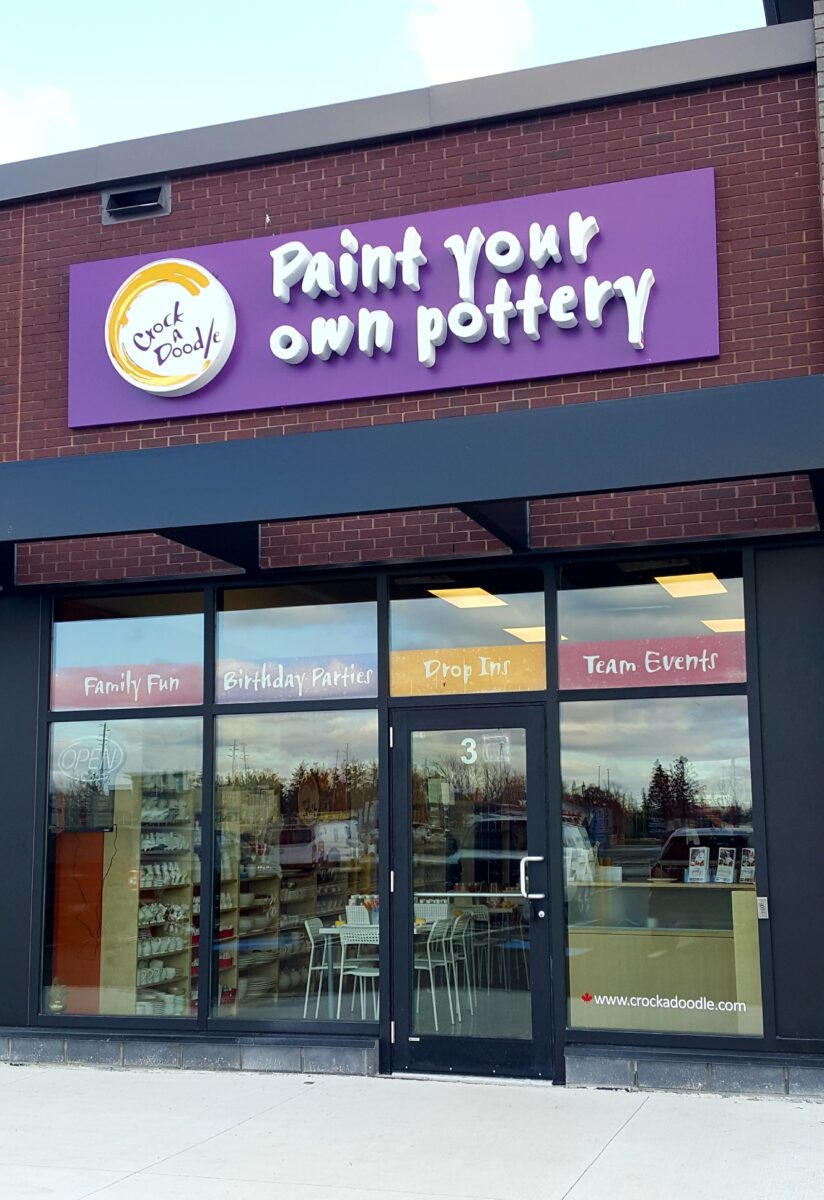
When scouting locations, Crock A Doodle targets neighbourhood shopping plazas with grocery anchors and family amenities.
“We want to be part of a family destination in the shopping centre,” Brennan said. The brand also strategically targets resort communities such as Blue Mountain, Unionville, Canmore, and Niagara Falls to tap into the tourist market hungry for experiential activities. “People are hungry for activities, and we’re an experience,” Brennan noted.
Their Canmore location, part of a newly built shopping centre called The Shops of Canmore, is currently just outside downtown, but a downtown relocation is planned to be “where the action is.”
Source: Crock A Doodle
Crock A Doodle currently operates 40 franchises, with two corporate locations in Cambridge and Woodstock, Ontario. The Woodstock studio will be franchised once established.
With its unique blend of creativity, community, and strategic franchising, Crock A Doodle is poised for continued growth as Canada’s go-to destination for pottery painting experiences.
Vancouver-based Stripped Wax Co is celebrating its 15th anniversary this year, marking a significant milestone for the female-founded brand that has grown from a single Yaletown location in 2010 to seven studios across British Columbia’s Lower Mainland.
Founded by Susan Vu, the company has become one of BC’s most recognized names in personal care and professional waxing. What began as a small boutique concept has evolved into a trusted brand with a reputation for expertise, inclusivity, and exceptional client care.
Susan Vu
“This feels like such an amazing milestone for us,” Vu told Retail Insider in an interview. “When we turned 10, it was during COVID, so we couldn’t really celebrate. Now the world feels lighter, and we can finally take a moment to appreciate how far we’ve come.”
From Yaletown Boutique to Beauty Pioneer
Vu’s entrepreneurial journey began not in beauty but in fashion. In 2010, as the Vancouver Winter Olympics energized the city, she operated a small clothing boutique in Yaletown. While running the shop, she observed an emerging trend in specialized beauty services such as blow-dry bars and lash lounges.
“I knew I wanted to be part of that movement,” Vu explained. “It was such an exciting time. These niche service concepts were opening everywhere, and I felt strongly that the next big opportunity would be waxing.”
With no prior experience in the beauty industry, Vu began researching the market. A serendipitous opportunity presented itself when the chiropractor next to her boutique announced he was closing his practice. The space, already divided into treatment rooms, was ideal for a waxing studio.
“It just made sense,” Vu said. “We renovated, hired our first waxer, and launched the concept. The wax bar took off immediately. Within months, I knew this was where I needed to focus.”
Image: Stripped Wax Co
Rapid Growth and a Strong Team Culture
Stripped Wax Co’s first five years were marked by steady expansion. After the original Yaletown studio, the company opened locations in Kitsilano, Lonsdale, Port Moody, and Burnaby, adding a new site almost every year.
By 2016, Vu had built a five-location network across the Lower Mainland.
“Our initial goal was to get to five locations in five years,” she said. “Once we achieved that, we took a break to stabilize operations.”
That pause lasted several years and included a major global disruption: the COVID-19 pandemic. But in 2023, the company returned to growth, adding two suburban studios in Langley and Surrey.
Today, Stripped Wax Co operates seven locations, including a larger flagship in Yaletown with six treatment rooms. While the brand explored franchising, Vu ultimately decided to maintain corporate ownership to ensure service consistency and team culture.
“Franchising didn’t feel right for us,” she noted. “We value being hands-on and growing in a way that aligns with our standards and values.”
Yaletown location in Vancouver. Image: Stripped Wax Co
Navigating the Pandemic and Industry Change
The pandemic presented unprecedented challenges for the personal care industry, forcing salons to close temporarily and rewrite operating protocols. For Vu, it was a turning point.
“COVID was difficult, but it also forced us to raise the bar on safety and hygiene,” she said. “Those protocols are now deeply ingrained in our operations, and clients appreciate that commitment.”
While the company survived the shutdowns, the economic ripple effects remain. Rising wages, new provincial regulations, and cost-of-living pressures have reshaped the business environment for salons.
“The service industry has faced a lot of change post-COVID,” Vu acknowledged. “Wages, sick-day regulations, and health taxes have all had an impact. But we’ve adapted and stayed strong.”
Expanding into At-Home Care
As part of its growth strategy, Stripped Wax Co has developed a proprietary line of professional-grade waxing and aftercare products, available both in salons and for at-home use.
“We launched our wax kits during COVID because clients couldn’t come in,” Vu explained. “They became so popular that we decided to keep them as part of our offering.”
The kits include microwave-safe wax containers, strips, applicators, and post-care products designed for easy use. Later this year, the company plans to expand the line with new scents and formulations, catering to customers who enjoy DIY beauty.
“We’re having fun with it,” Vu said. “Our clients might still visit us for Brazilians, but they can do quick touch-ups at home.”
The product line also includes feminine hygiene and post-wax care items, such as exfoliating treatments and pH-balanced washes.
An Inclusive Approach to Personal Care
Image: Stripped Wax Co
From the outset, Stripped Wax Co set out to create a space that welcomed all genders, a concept that was uncommon when the brand launched.
“When we opened, most salons catered almost exclusively to women,” Vu said. “We wanted men to feel comfortable too, so we designed our spaces to be modern and gender-neutral.”
Today, male clients account for roughly 20% of the company’s business, up from just 5% in its early years.
Specialized services for men, including Brazilian waxing, are available across all locations, supported by a rigorous training program for staff.
Looking Ahead: Measured Growth, Strong Values
As Stripped Wax Co enters its 15th year, Vu remains committed to sustainable growth rather than aggressive expansion.
“We’re happy with where we are,” she said. “There might be room for one or two more locations in BC if the opportunity is right, but we’re not chasing numbers. For us, it’s about quality, team culture, and enjoying the life we’ve built.”
While national expansion is off the table for now, the company’s evolving product line and established reputation position it well for continued success in a competitive market.
“Our focus has always been on creating an approachable, professional experience,” Vu said. “Fifteen years later, that vision hasn’t changed.”
Retail Insider is streamlining its Canadian retail news from around the web to include a handful of top news stories that can be viewed quickly during the day. Here are the top stories from the past several days.
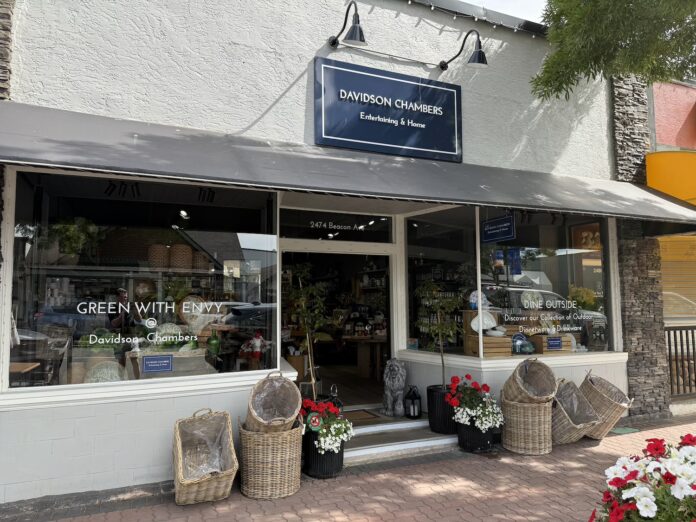
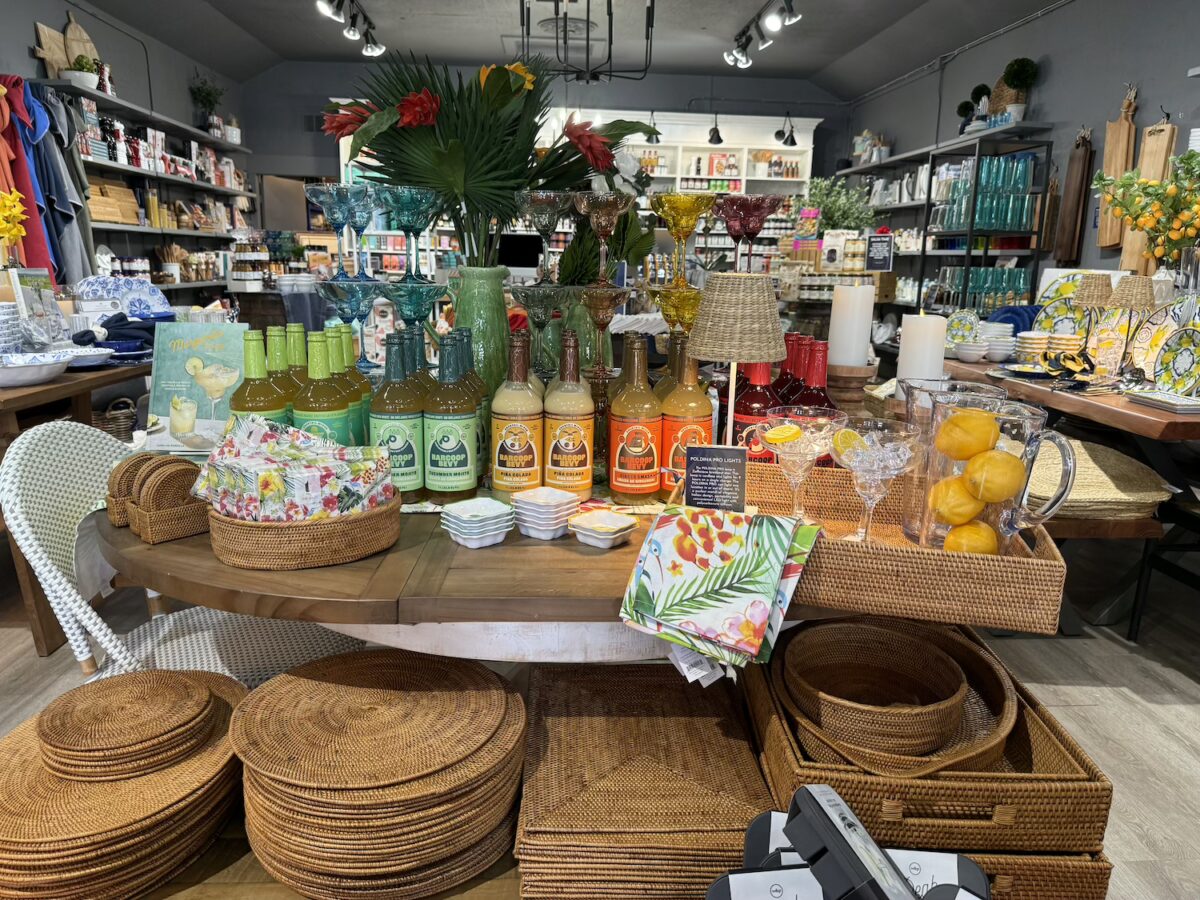
Davidson Chambers, a refined home entertaining and gourmet retailer located on Beacon Avenue in Sidney, British Columbia, is fast becoming a destination for design-savvy locals and visitors alike. Founded by industry veteran Paul Chambers in 2023, the boutique has emerged as a curated alternative to big-box stores, blending heritage, quality, and hospitality in a retail environment that evokes a sense of discovery and warmth.
In an interview with Retail Insider, Chambers explained that his extensive corporate retail background, combined with a passion for bringing joy back to the shopping experience, inspired him to launch this independent venture.
From Corporate to Community: A Retail Reinvention
After two decades in leadership roles with Pottery Barn, Williams-Sonoma, and most recently Crate & Barrel, Chambers left the corporate retail world disillusioned by what he described as its increasing focus on profit over people. “I realized after the pandemic that I was done,” he said. “I couldn’t do it anymore. It had become nasty. The customer mindset had changed, and corporate leadership was shifting.”
Paul Chambers
A brief sabbatical gave him the clarity he needed. Inspired by American boutique Hudson Grace, which emphasizes upscale entertaining and giftware, Chambers decided to strike out on his own. He settled in Sidney, a town he describes as “a little gem,” rich in culture and wealth, and fiercely supportive of independent retailers. “The city doesn’t allow chains to open on the main street. It’s one of the most loyal communities I’ve ever seen,” he noted.
Building a Brand with Heart
Davidson Chambers is named after Chambers’ middle and last names — a personal choice that also resonated with focus groups for its classic, upscale feel. Even the brand’s visual identity pays tribute to Chambers’ early retail career: “The blue in our branding is a nod to Gap. I grew up with Gap in the ‘90s. That’s where I learned what retail could be.”
The store spans 1,500 square feet in a perfectly rectangular former WWII barracks, offering a thoughtfully merchandised selection of dinnerware, barware, glassware, faux candles, gourmet foods, home décor, and seasonal gifts. Everything in the store is meant to support the theme of “entertaining at home”—though that tagline has now been retired as the brand matures.
“Our first weekend was insane,” said Chambers. “It proved there was a real appetite for what we were doing.”
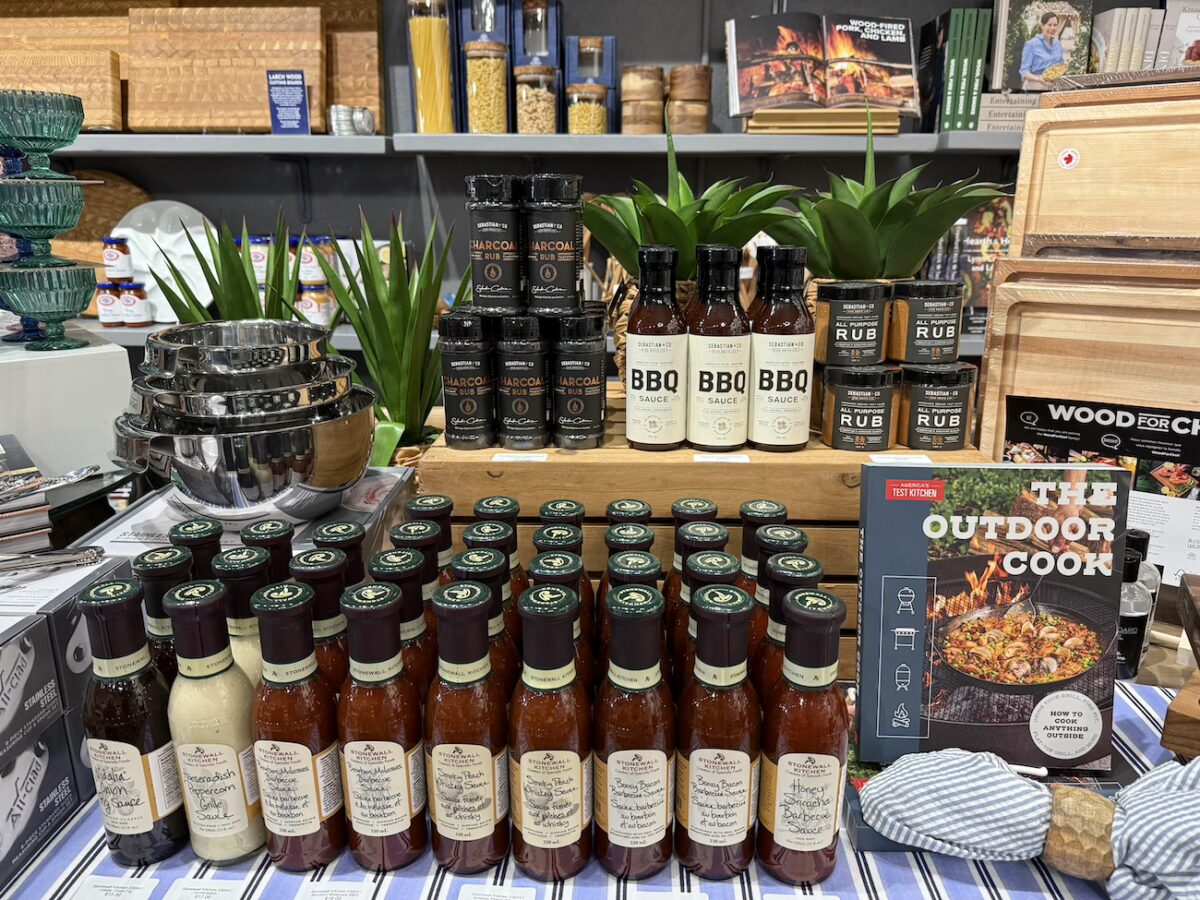
One of the unexpected successes has been the store’s gourmet food assortment. Initially envisioned as a minor add-on, food now occupies an entire wall. “We thought customers would come in for a beautiful charcuterie board and maybe add on some crackers. But people started returning weekly for their favourite foods,” Chambers said.
Brands like Jacek Chocolate Couture from Edmonton and Umami Bomb, produced locally in Sidney, have become bestsellers. A $30 bottle of white balsamic vinegar, previously stagnant, began flying off shelves after in-store sampling. “We’ve now sold 40 cases of that one item in just a few months,” said Chambers. “Sampling is everything.”
The team even maintains a food sampling bar to encourage product discovery, especially for less familiar items like grapefruit marmalade with smoked sea salt or a shiitake mushroom flavour enhancer. “It’s not a buffet,” he joked, “but it’s the number one driver of return business.”
High-Touch Retail with Personality
What truly distinguishes Davidson Chambers is its commitment to service. Drawing inspiration from the department stores of the past, Chambers trains his five-person team to provide exceptional, knowledgeable service. “We greet everyone, offer product stories, and make the experience memorable. It’s about respect for the customer,” he explained.
This level of care extends to merchandising and packaging. Seasonal themes like “Salads of Summer” or “Barbecue Nights” guide product curation and displays. “Retail should be inspiring,” he said. “That’s missing from so many stores today.”
This approach has paid off. “People tell me it’s their favourite store. Others say it’s elevated the whole shopping experience on the island,” Chambers added. “One customer even told me the Davidson Chambers bag has become a status symbol.”
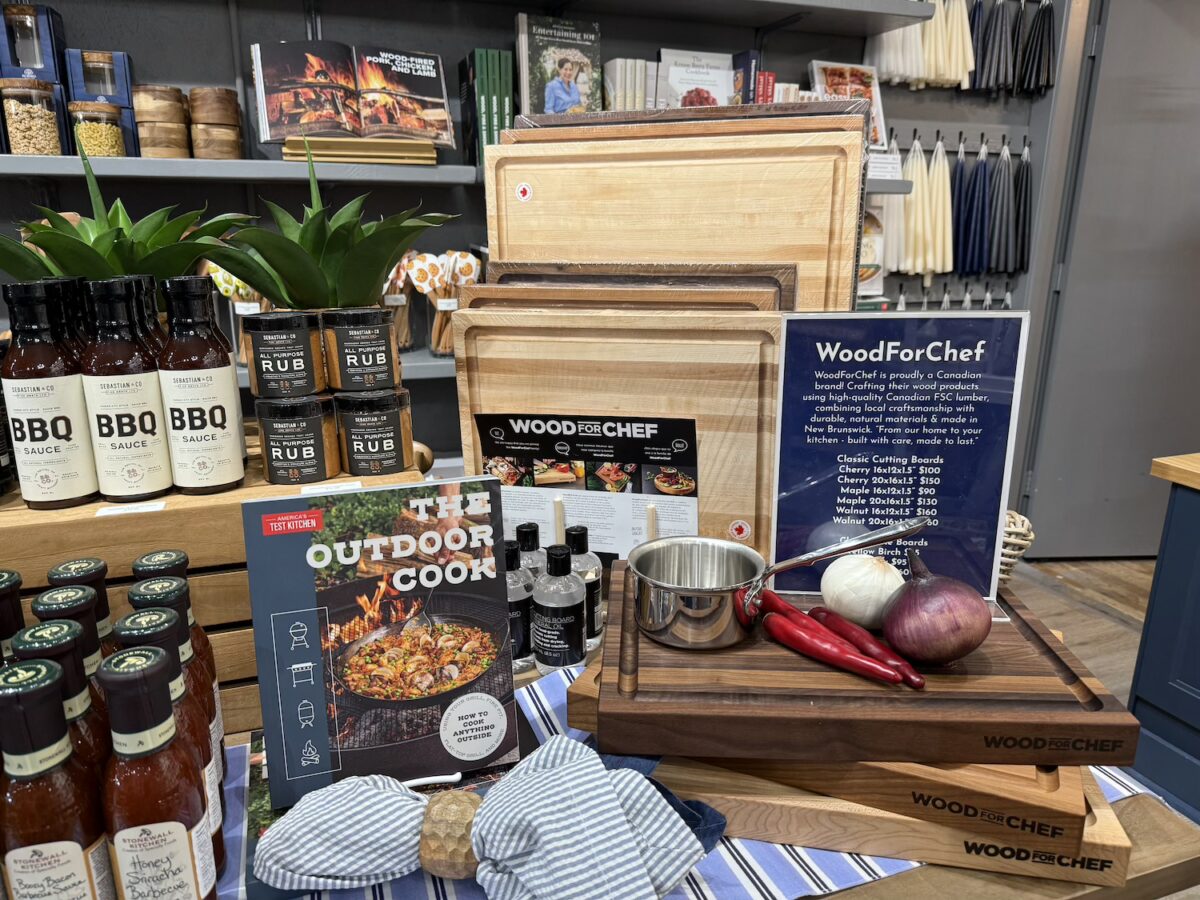
Chef Boards, image: Davidson Chambers
Margin Meets Mission
While Davidson Chambers stocks premium items, it also prioritizes value and margin strategy. The store offers its own line of private-label goods, including Davidson Glassware, Davidson Napkins, and Davidson Flatware, which are often restaurant-grade but sold at accessible prices. “We’re getting better quality and better margins,” Chambers said.
Table linens, glassware, and faux candles have been standout categories. The store’s line of Luminaire candles, imported from the U.S. via China, routinely sells hundreds of units monthly, especially during the holidays. “Those candles alone can cover our rent in November and December,” he noted.
Even cookware, a future expansion category, is on hold due to tariffs on U.S.-made goods. But when it arrives, it will be consistent with the brand’s core: quality, aesthetic cohesion, and functionality.
Embracing Canadian and Global Sourcing
Davidson Chambers places a strong emphasis on Canadian-made products where possible. This includes candles from Manitoba, wood boards from the East Coast, and specialty jams from Vancouver. However, sourcing is global. “We don’t want to stock what everyone else has,” Chambers said. “So we go to Atlanta instead of Las Vegas, and we’re planning Europe next year.”
When asked about this approach, he explained, “In small towns like Sidney, it’s easy to walk down the street and see the same product in four stores. We avoid that by digging deeper.”
Sauces and other products, image: Davidson Chambers
The Online Dilemma
Despite the store’s success, Davidson Chambers has not yet launched an e-commerce site. The delay is intentional. “We want it to feel just like the store,” Chambers said. “That means more than uploading a catalog. It’s about storytelling and experience. We only get one shot.”
The goal is to launch online once the kitchen category is fully rolled out, likely by the end of the year. The store uses Lightspeed for its POS, so much of the infrastructure is ready, but Chambers wants to ensure the execution matches the in-store magic.
Looking Ahead: Expansion with Purpose
Rather than opening multiple locations, Chambers envisions a larger flagship concept in Sidney that could include a test kitchen, cooking classes, and potentially even a bakery. Inspired by the “Silos” of Joanna and Chip Gaines in Waco, Texas, he hopes to create a destination retail experience that serves as a community hub.
“I already have my eyes on a building,” he said. “But we need to make more money first.”
For now, Davidson Chambers continues to impress with its thoughtful curation, passion for service, and commitment to making everyday moments beautiful. In a retail landscape often dominated by sameness, this independent shop is a compelling case for the value of doing things differently.
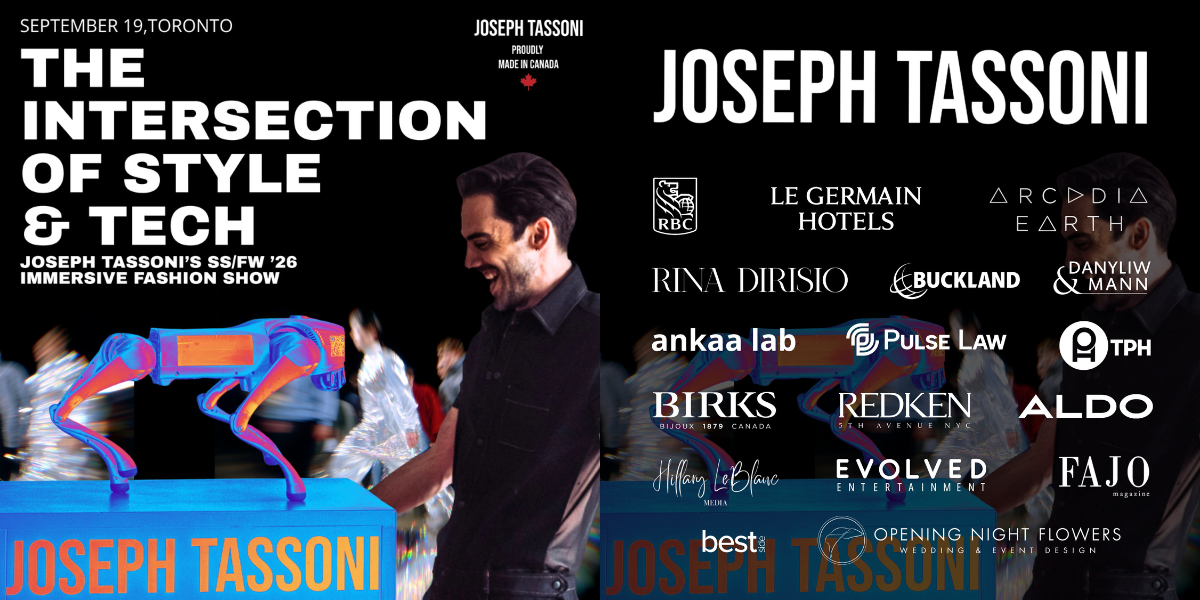
Canadian fashion designer Joseph Tassoni is redefining the runway experience with an upcoming show that promises to blend style, technology, and sustainability in ways Toronto has never seen before. On Friday, September 19, the Burlington-based designer will unveil his Spring/Summer and Fall/Winter 2026 collection at Arcadia Earth, located at The Well in downtown Toronto. The event will be followed by a VIP after-party at Le Germain Hotel on Mercer Street, emphasizing Tassoni’s signature approach of pairing design innovation with community engagement.
“This year’s experience will be unlike anything we’ve done before,” Tassoni said in an interview with Retail Insider. “It’s not just a fashion show. It’s a storytelling experience with immersive technology, sustainability at its core, and a conversation about where the world is heading.”
A Vision Beyond Fashion Week
Since launching his eponymous label in 2017, Tassoni has built a reputation for craftsmanship, inclusivity, and advocacy for Canadian-made fashion. His Burlington studio operates as both a boutique and a production hub, ensuring every garment is designed and manufactured domestically.
While Toronto Fashion Week shuttered several years ago, Tassoni has continued to stage high-profile independent runway presentations. His 2025 showcase at OneEleven, a tech accelerator in Toronto, featured over 140 looks across multiple categories, highlighting his versatility in outerwear, suiting, dresses, swimwear, and custom pieces.
“This season, we’re presenting around 60 looks,” Tassoni explained. “It’s still substantial, but the focus is on versatility and functionality in a world that’s changing economically, environmentally, and technologically.”
A Climate-Conscious Collection
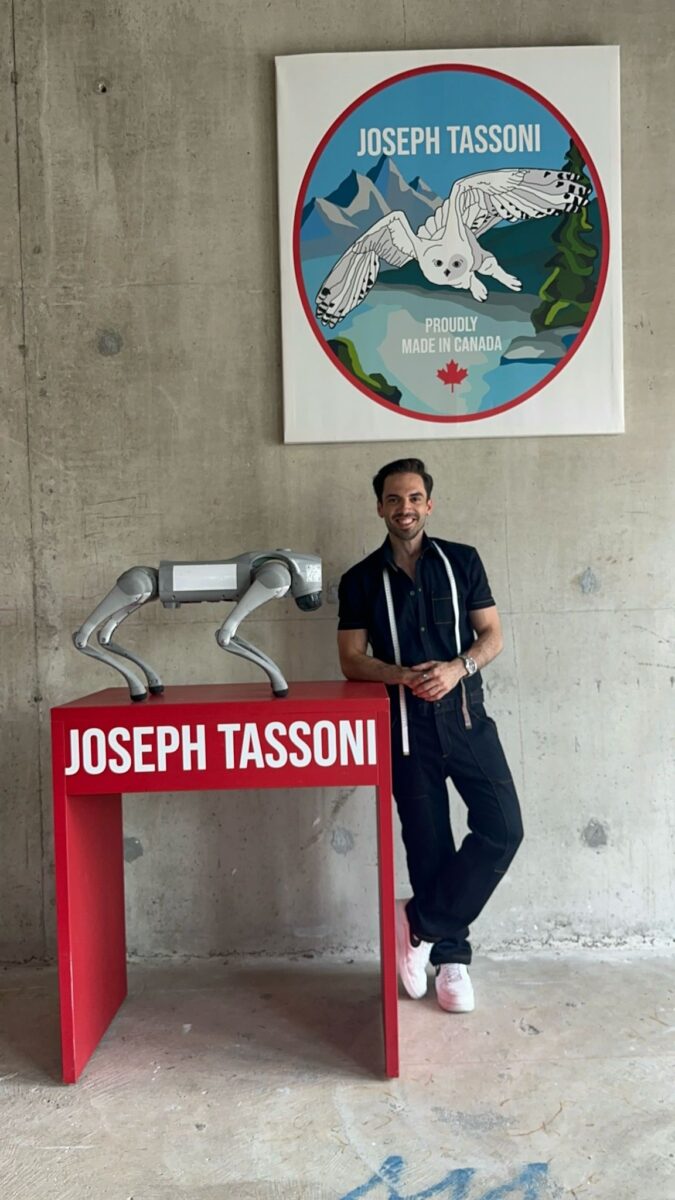
“Bolt,” a robotic canine originally designed for disaster response, will make its debut at Joseph Tassoni’s show in September. Image supplied
The SS/FW ’26 collection reflects Tassoni’s deepening commitment to climate-conscious design. Pieces incorporate natural, biodegradable fibers like linen, chosen for their adaptability in rising temperatures and their reduced environmental impact.
“I wanted fabrics that make sense for today’s climate,” Tassoni said. “Linen is a pure, sustainable fiber. It’s timeless, breathable, and versatile, whether you’re in 40-degree heat or traveling somewhere tropical.”
The designer emphasized that sustainability is more than a trend. “Every year, we feel the world getting warmer. What we wore 15 years ago doesn’t suit today’s reality. For me, it’s about creating garments that minimize synthetic use and return to the earth at the end of their lifecycle.”
The Intersection of Fashion and Technology
This year’s show, titled “The Intersection of Style & Tech,” will feature cutting-edge elements, including artificial intelligence, robotics, and immersive projection mapping. These innovations underscore Tassoni’s vision of fashion as a conversation starter on technology’s role in our daily lives.
“Technology is advancing so quickly. Whatever I knew yesterday, tomorrow it’s obsolete,” he noted. “With this show, I want to bridge two worlds—fashion and tech—and humanize the conversation around AI and robotics.”
Among the most talked-about features will be a robotic presence on the runway, a first for any Canadian fashion presentation. Tassoni confirmed that “Bolt,” a robotic canine originally designed for disaster response, will make its debut, symbolizing both the potential and the responsibility that comes with technological progress.
“These machines aren’t just novelties,” he explained. “They’re built to save lives during fires, floods, and earthquakes. By including Bolt, I’m showing how innovation can serve humanity, even in the most challenging circumstances.”
Photo: Arcadia Earth
Immersive Storytelling at Arcadia Earth
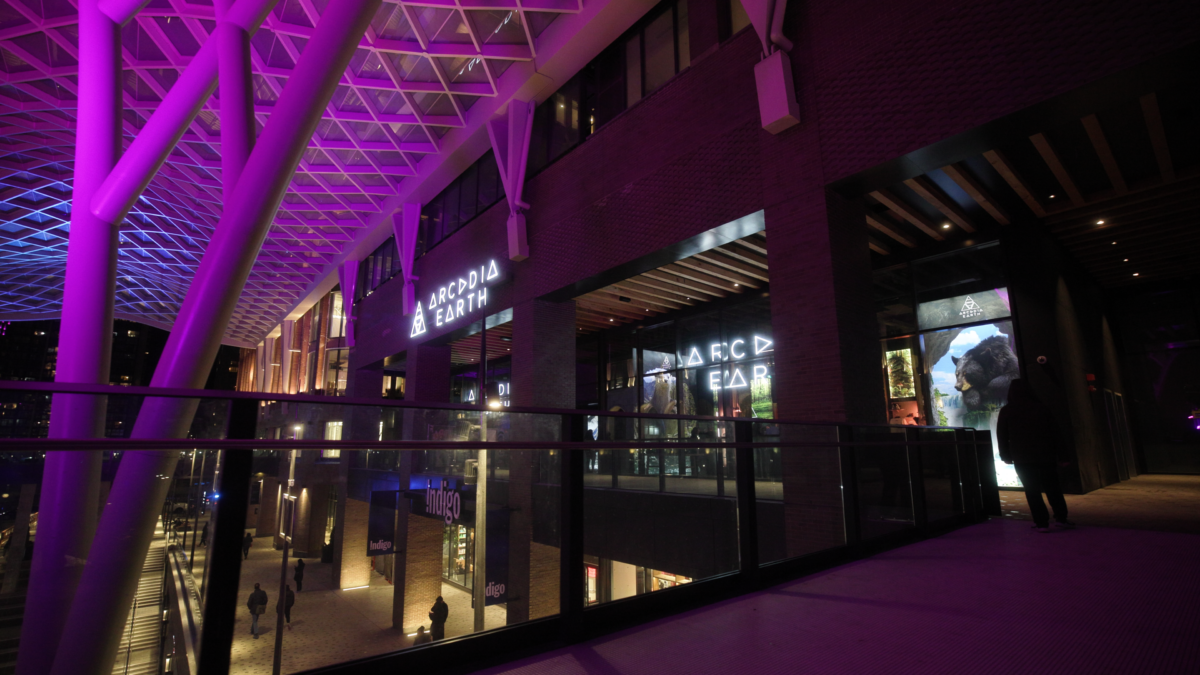
Arcadia Earth, located at The Well on Front Street West, provides the perfect backdrop for Tassoni’s vision. Known for its multi-sensory exhibits combining technology and environmental education, the venue will allow guests to experience an event that is both artistic and impactful.
“We’re doing custom projection mapping throughout the space,” Tassoni shared. “When the show begins, the audience will be transported into another world. The music, visuals, and fashion will all work together to create an emotional, immersive journey.”
Sound design will play a key role, curated in partnership with Toronto-based Evolved Entertainment. “We’ve built an entire purposeful beat infused with disco,” Tassoni said. “It’s positive, energetic, and reflective of my brand’s happy DNA.”
Photo: Arcadia Earth
Engaging the Community
Beyond fashion and technology, community connection remains central to Tassoni’s brand ethos. The event will feature locally sourced beverages and tastings, showcasing Canadian makers and restaurateurs. “Often these events can feel transactional,” Tassoni said. “I want people to meet the owners, discover new places, and leave feeling part of a bigger conversation.”
The show will once again highlight Tassoni’s philanthropic initiatives. For the third consecutive year, he is funding the purchase of inclusive inpatient gown covers from FX Made in Canada by George Brown College’s Fashion Exchange. These organic bamboo gowns are thoughtfully designed to provide both comfort and dignity for inpatients in mental health wards. Many patients undergoing treatment experience skin sensitivities caused by medications; the organic fiber’s breathability reduces irritation and supports their healing journey.
“It’s about creating small, meaningful changes,” he said. “Fashion has the power to impact lives beyond aesthetics.”
A Designer Committed to Change
Tassoni’s career reflects an ongoing dialogue between tradition and innovation. His early collections emphasized outerwear as a symbol of Canadian identity, while his recent shows have embraced inclusivity, sustainability, and now, the integration of AI.
“Canada is a leader in AI and technology, but we’re humble about it,” Tassoni remarked. “This show is about putting that innovation on display in a way that respects our values including craftsmanship, sustainability, and community.”
Event Details
Date: Friday, September 19, 2025
Venue: Arcadia Earth, The Well, 486 Front Street West, Toronto
Time: 6:00 PM – 9:30 PM, followed by an after-party at Le Germain Hotel, Mercer Street
Theme: The Intersection of Style & Tech – Titans of Today
Features: AI integration, robotics, immersive projection mapping, sustainability-focused designs, and live entertainment