S&S Activewear, a leading technology-enabled distributor of apparel and accessories in North America, is expanding its product availability across Canada, with a particular focus on strengthening inventory depth at its Vancouver distribution centre.
The initiative ensures cross-country Canadian customers maintain consistent access to their preferred styles and brands with faster delivery times and reduced freight costs, explained the company.
“Our customers depend on us for consistent product availability and this enhanced inventory strategy in Vancouver demonstrates our commitment to meeting that expectation,” said Craig Ryan, VP of commercial Canada at S&S Activewear. “We’re providing the reliability and faster shipping that decorators and promotional product distributors need to serve their own customers effectively.
“When our customers need it, we have it locally. That’s the S&S advantage in action.”
Source: S&S Activewear
S&S Activewear’s Vancouver facility serves as a critical distribution hub for western Canada, complementing the company’s Toronto operations to provide comprehensive coverage across the Canadian market. The facility will now stock popular owned brands and various private label collections favored by promotional product decorators and screen printers—including Team 365, CORE365, Harriton, Devon & Jones and North End—with delivery times dropping dramatically to western Canadian customers, said the company.
“The announcement comes as part of S&S Activewear’s broader commitment to adding more brands and inventory to its western distribution centers in 2025. The company’s proactive inventory management approach includes strategic transfers between distribution centers and careful demand forecasting to minimize disruptions, reduce delivery times and decrease freight costs,” it said.
Founded in 1988 and headquartered in Bolingbrook, Illinois, S&S Activewear is a leading technology-enabled distributor of apparel and accessories in the United States and Canada. S&S offers more than 100 brands, including basic garments to fashion-forward styles, with over 6 million square feet of warehouse space across North America. S&S services a broad range of customers through its nationwide network, including retail brands, e-commerce companies, garment decorators, promotional products distributors, entertainment merchandisers, lifestyle brands and web-based platforms for apparel customization.
Customer service is the backbone of any successful business – after all, a happy customer is a loyal customer. Yet many companies are falling short of expectations. Rather than support and resolutions, dealing with support can feel like more hassle than it’s worth – long wait times, a lack of care, and no guarantee of a resolution.
Gradient Labs conducted a customer support survey to evaluate consumer sentiment towards customer service processes, the issues they commonly face, and how they deal with them – with the results showing that customer satisfaction is far from guaranteed.
In a survey of 1,500 adults, conducted by Gradient Labs, consumers were asked to share sentiment towards customer service processes, the issues they commonly face, and how they deal with them.
Key research insights:
Some 75% of consumers rank long waiting times as a major customer service frustration, with 52% believing companies intentionally complicate the process.
Only 11% of consumers say all of their customer service inquiries are resolved, while 13% report that their problems are rarely or never addressed effectively.
Frustrated by a lack of resolution, 51% of consumers say they have taken their complaints further, with 19% visiting a company’s physical location, 17% threatening legal action, and 13% filing a government complaint.
After wasting time on inefficient and ineffective support processes, 71% of consumers believe businesses should financially reimburse customers for poor customer service interactions.
“Despite all the new-age customer service touchpoints available, most consumers still prefer to do it the old-fashioned way. Promising immediate support, 78% prefer to pick up the phone rather than wait for a reply to their email, tweet, or message,” said the report.
“But even a phone call doesn’t guarantee a quick resolution. Too often, a simple query or concern can turn into hours spent on hold and days of back and forth with no answer or resolution in sight. Just 11% of consumers say their issues are always resolved by customer support agents, while 13% insist their problems are rarely or never adequately addressed.
“Seeking help can be frustrating, but few experiences are as exasperating as reaching out to customer support only to be told to “Google it” – a scenario encountered by 10% of consumers – as if you hadn’t already tried before wasting your time on hold.”
TG Appliance Group, owner of two of Ontario’s premier high-end appliance destinations, Tasco and Goemans, has chosen LEAFIO Shelf Efficiency to modernize its approach to showroom merchandising and floor planning across its 13-store network.
With a legacy spanning over 70 years, TG said it is now setting a new standard in how large-format retail spaces are managed.
“While most retailers rely on traditional shelf space to drive sales, TG’s showrooms present a unique visual merchandising challenge. The company specializes in showcasing large appliances—refrigerators, washers, dryers, and ranges—on open floors rather than on shelves. While there are shelving units along the store perimeters for accessories, the primary revenue drivers occupy the middle of the store, where visual impact and layout play a crucial role in the customer journey,” it said.
“Until recently, TG’s merchandising and floor plan management were handled manually—a process that was time-consuming, labour-intensive, and challenging to scale. With no software in place, teams across various departments collaborated to maintain showroom layouts.
“Our stores operate more like experience centers than conventional retail outlets,” said Jenea Dent-Ali, the project’s lead stakeholder. “We needed a solution that could help us manage and analyze the effectiveness of our showroom layouts without relying on manual updates and guesswork. LEAFIO Shelf Efficiency checked every box.”
The implementation will provide TG Appliance Group with the tools to: ● Digitally create and adjust showroom floor plans ● Centralize merchandising operations for better team collaboration ● Track and analyze product positioning and its influence on sales ● Reduce the manual effort and time required to execute layout changes
Andrew Max
“We’re thrilled to partner with TG Appliance Group, not just because they’re a well- respected brand in Canada, but because this collaboration expands the scope of what’s possible with our solution,” said Andrew Max, CCO of LEAFIO AI.
“Their floor-plan-driven model is the perfect canvas for data-driven merchandising.”
While many retailers invest in planogram automation for shelves, TG’s use case is unique—placing a powerful analytical tool at the heart of floor-based merchandising. The implementation represents a new frontier for LEAFIO Shelf Efficiency, showcasing its flexibility beyond traditional fast-moving consumer goods (FMCG) or grocery environments, said officials.
LEAFIO AI is a retail technology company that develops innovative solutions to optimize key retail processes such as inventory management, shelf space planning, assortment performance, and promotion execution. With over 15 years of experience in retail optimization and a presence in more than 20 countries, LEAFIO AI empowers retailers around the world to improve operational efficiency, increase shelf productivity, and drive sustainable growth across thousands of store locations.
TG Appliance Group was founded when Tasco Appliances and Goemans Appliances merged more than 10 years ago. Tasco was founded in 1954 and Goemans in 1978. There are 13 locations in Ontario.
A crisis is unfolding behind closed doors across Canada. It is marked by financial secrecy, emotional strain, and a lack of accessible support. Increasing personal debt.
A new survey conducted by Harris & Partners highlights just how widespread this issue has become.
Among 1,332 Canadian adults surveyed in February, 56.6% admitted to hiding their financial struggles from a partner, friend, or family member.
“There is still an enormous stigma around money problems,” said Harris. “People fear judgment, conflict, or simply being seen as a failure, so they say nothing, even as their situation worsens.”
The survey also found that:
52.6% of Canadians have less than $200 left each month after covering bills and debt payments;
45.1% have taken on additional work, such as side jobs or overtime, just to meet regular expenses.
Harris said the emotional impact of financial secrecy can be profound, contributing to anxiety, depression, and isolation.
“We tend to focus on dollars and cents, but the psychological weight of debt is just as damaging,” he said. “It erodes relationships, undermines self-worth, and prevents people from taking the steps they need to move forward.”
He believes these findings point to a broader issue. Conversations about debt, whether at the kitchen table or the policy level, remain taboo.
“Until we break that silence, many Canadians will continue to suffer needlessly,” said Harris.
“Financial instability isn’t just a problem for developing nations. Millions of Canadians are living paycheque to paycheque, taking on hidden debt to stay afloat. That’s a national issue, and one that deserves just as much urgency.”
“There’s no shame in struggling. What matters is taking action, even if it’s one small step at a time.”
Licensed Insolvency Trustees, he notes, are not just for those at the brink of bankruptcy. They can also offer guidance on budgeting, debt management, and long-term recovery plans.
“The earlier someone reaches out, the more options they have,” said Harris. “And the more hopeful the outcome tends to be.”
Harris & Partners Inc. is a bankruptcy trustee firm with roots in Southern Ontario dating back to 1964.
Harris & Partners Inc. has offices in 9 of the 10 provinces.
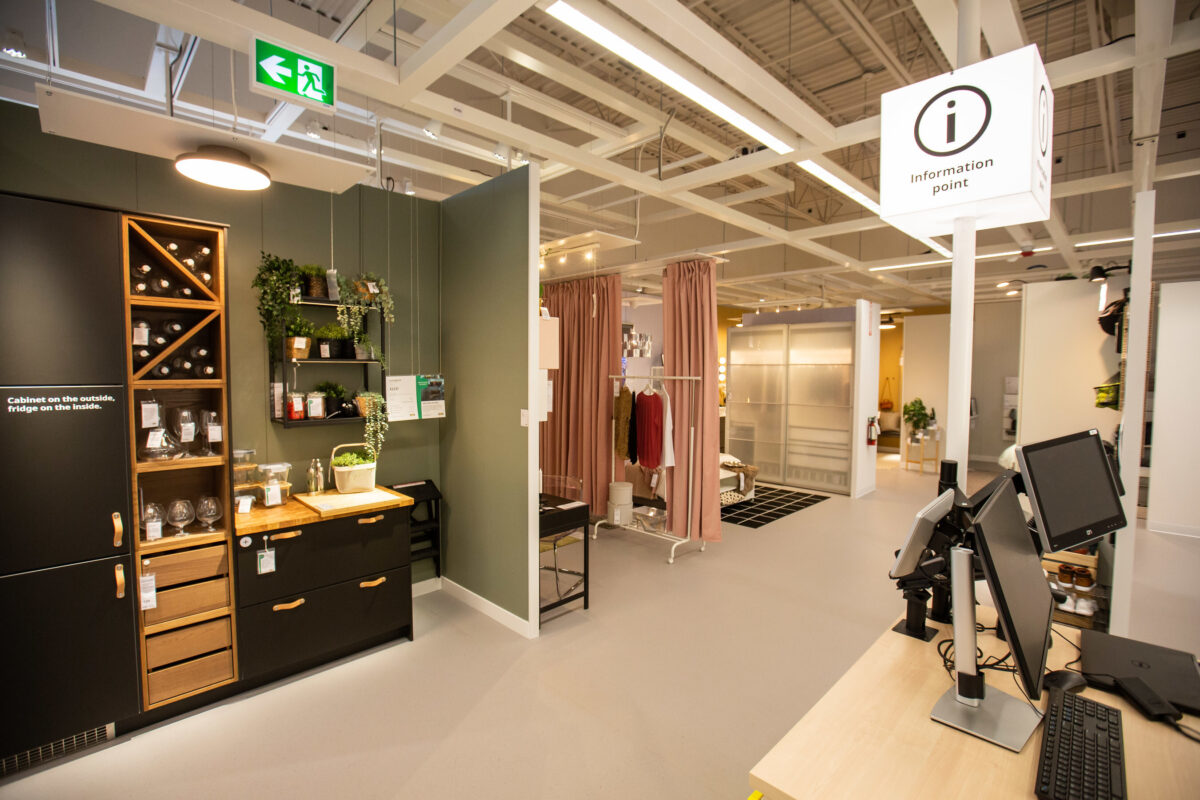
Plan and order points are one of the many ways IKEA Canada has been transforming its business to deliver a seamless retail experience wherever, whenever, and however customers choose to shop with the renowned home furnishing retailer. Outside the IKEA Kitchener Plan and order point (CNW Group/IKEA Canada Limited Partnership)
IKEA Canada has announced a new Plan and order point in Abbotsford, BC – the first such location in the province and the 11th in Canada.
“Plan and order points offer customers one-on-one planning services with IKEA experts to design and purchase home furnishing solutions for any room in the home such as kitchen renovations or bedroom storage systems. Once orders have been placed, they can be delivered to their homes or collected from the pick-up location at the Plan and order point,” said the company.
“For those looking to instantly refresh their spaces, visitors to the Abbotsford Plan and order point will be able to shop up to 100 products from the IKEA range (excluding food – sorry, no meatballs) for immediate purchase and takeaway.”
Located in the West Oaks Mall at 32700 South Fraser Way, Unit 80, the Abbotsford Plan and order point is expected to open in late Fall 2025, adding to a growing network of Plan and order points across Canada, said the retailer.
Plan and order points are one of the many ways the retailer has been transforming its business to deliver a seamless retail experience wherever, whenever, and however customers choose to shop with the renowned home furnishing retailer. Insights show that Plan and order points help to reduce the distances that customers must travel to visit a store, which has affordability, accessibility, and sustainability benefits, said the company.
Plan and order points offer customers one-on-one planning services with IKEA experts to design and purchase home furnishing solutions for any room in the home such as kitchen renovations or bedroom storage systems. (CNW Group/IKEA Canada Limited Partnership)
IKEA has been present in the BC market for nearly 50 years when the first Canadian store opened in Richmond in 1976. Today, there are 2 IKEA stores, 6 pick-up locations, and one customer distribution centre.
Janet McGowan
“We’re extremely proud of our history and connections with the BC community, and continued growth in Western Canada is an important focus for IKEA Canada,” said Janet McGowan, Market Area Manager, West Market.
“We’re thrilled to bring this unique IKEA format to BC and support the many Fraser Valley residents in creating a better everyday life at home through beautiful, functional, and sustainable home furnishings that fit their budget.”
IKEA, a leading home furnishing retailer, offering a wide range of well-designed, functional home furnishing products, was founded in 1943 in Sweden. IKEA Canada is part of Ingka Group which operates 574 IKEA stores, shops and planning studios in 31 countries, including 16 in Canada. Last year, IKEA Canada welcomed 32.6 million visitors to its stores and 162.6 million visitors to IKEA.ca.
Plan and order points offer high-quality design services, bringing affordable, inspiring home furnishing solutions closer to home for local residents. Inside the IKEA Kitchener Plan and order point (CNW Group/IKEA Canada Limited Partnership)
For the quarter, the company recorded net earnings of $173 million ($0.74 per share) compared to $149 million ($0.61 per share) last year. For the quarter, the company recorded adjusted net earnings of $173 million ($0.74 per share) compared to $154 million ($0.63 per share) last year, an increase of 12.3% (or 17.5% per share).
Empire is a Canadian company headquartered in Stellarton, Nova Scotia. Empire’s key businesses are food retailing, through wholly-owned subsidiary Sobeys Inc., and related real estate. With approximately $31 billion in annual sales and $17 billion in assets, Empire and its subsidiaries, franchisees and affiliates employ approximately 129,000 people.
Michael Medline, president and CEO, Empire Company Limited (CNW Group/Empire Company Limited)
“This was a very strong quarter for Empire and I am pleased with the way our team finished the year, delivering positive results across all major financial measures,” said Michael Medline, President & CEO, Empire.
“Our momentum continued to build throughout fiscal 2025 resulting in fourth quarter market share gains and our adjusted EPS growth of 8.8% was within our financial framework.”
The Company declared a quarterly dividend of $0.22 per share on both Non-Voting Class A shares and Class B common shares, that will be payable on July 31, 2025 to shareholders of record on July 15, 2025.
“This reflects an increase in the annualized dividend rate of 10.0%. These dividends are eligible dividends as defined for the purposes of the Income Tax Act (Canada) and applicable provincial legislation,” said Empire.
Key financial results
Earnings per share (“EPS”) and adjusted EPSof $0.74
Prior year EPS and adjusted EPS of $0.61 and $0.63, respectively
Delivered adjusted EPS growth of 8.8% in fiscal 2025; within the financial framework
Sales of $7,637 million, an increase of 3.0%
Same-store sales – food increased by 3.8%
Repurchased $400 million of shares in fiscal 2025
Capital allocation outlook for fiscal 2026:
Declared a dividend increase of 10.0%; 30th consecutive year of dividend increase
Renewed NCIB with the intention to repurchase up to $400 million of shares
Capital investment program expected to be approximately $850 million
“Over recent years, the Company has accelerated investments in renovations, conversions, and new stores along with store processes, communications, training, technology and tools. Investing in the store network will remain a priority, demonstrated by a sustained emphasis on renovations and continued new store expansion. The Own Brands program enhancement will remain a priority through increased distribution, product innovation and supporting Canadian suppliers,” explained Empire.
“The Company intends to invest capital in its store network and is on track with its plan to renovate approximately 20% to 25% of the network between fiscal 2024 and fiscal 2026. This capital investment includes important sustainability initiatives such as refrigeration system upgrades and other energy efficiency initiatives.”
“This is my third book, and the other two were on the same topic,” Ryski said in an interview. “I wrote the first one, When Retail Customers Count, in 2005, and at that time it was the first book ever written on the subject.
Mark Ryski
The second one, Conversion: The Last Great Retail Metric, followed in 2011. But retail changed a lot during and after the pandemic. I felt it was time to update these ideas for a new era.”
A Post-Pandemic Wake-Up Call
In the aftermath of COVID-19, retailers were hyper-focused on traffic. “Every retailer was obsessed with traffic during the pandemic,” Ryski said. “But now, five years later, we’ve drifted. There’s this idea that if you just drive more traffic into stores, things will improve—but it’s not that simple. Traffic is a gift. You need to know how to use it.”
Ryski’s central thesis is that store traffic, when accurately measured and analyzed, can illuminate virtually every operational decision a retailer makes. “Whether it’s staff planning, marketing ROI, or testing a new sales approach—everything shows up in the traffic and conversion metrics,” he explained.
Unlocking the Secrets of Super Converting Stores
One of the book’s standout ideas is the concept of “super converting stores”—locations in a retail chain that consistently convert foot traffic into sales at above-average rates. “Retailers might not even realize they have them,” said Ryski. “These stores can hold the key to unlocking conversion potential across the entire chain.”
But identifying them requires more than intuition. “You need to map where all your stores sit in terms of traffic and conversion. Only then can you isolate the outliers and start teasing out why some perform better,” he added. Sometimes it’s inherent—like being the only office supply store in Fort McMurray, Alberta. But often, the answer is replicable, especially when it comes to staffing and operational strategy.
Labor Misallocation and the Vicious Cycle of Decline
Ryski is adamant that many retailers are failing at one of their most basic tasks: allocating labour effectively. “This is the bane of my existence,” he said with a laugh. “Retailers still allocate labour based on sales. But if a store gets lots of traffic and doesn’t have the staff to convert it, sales look weak. That store gets even less labour next time, and eventually that traffic gives up.”
To break the cycle, he argues for a radical shift: compensating store teams based on sales per visitor, not total sales volume. “It’s a fairer and more precise measure of performance. Store teams can’t control how many people walk in, but they can control what happens once someone’s there.”
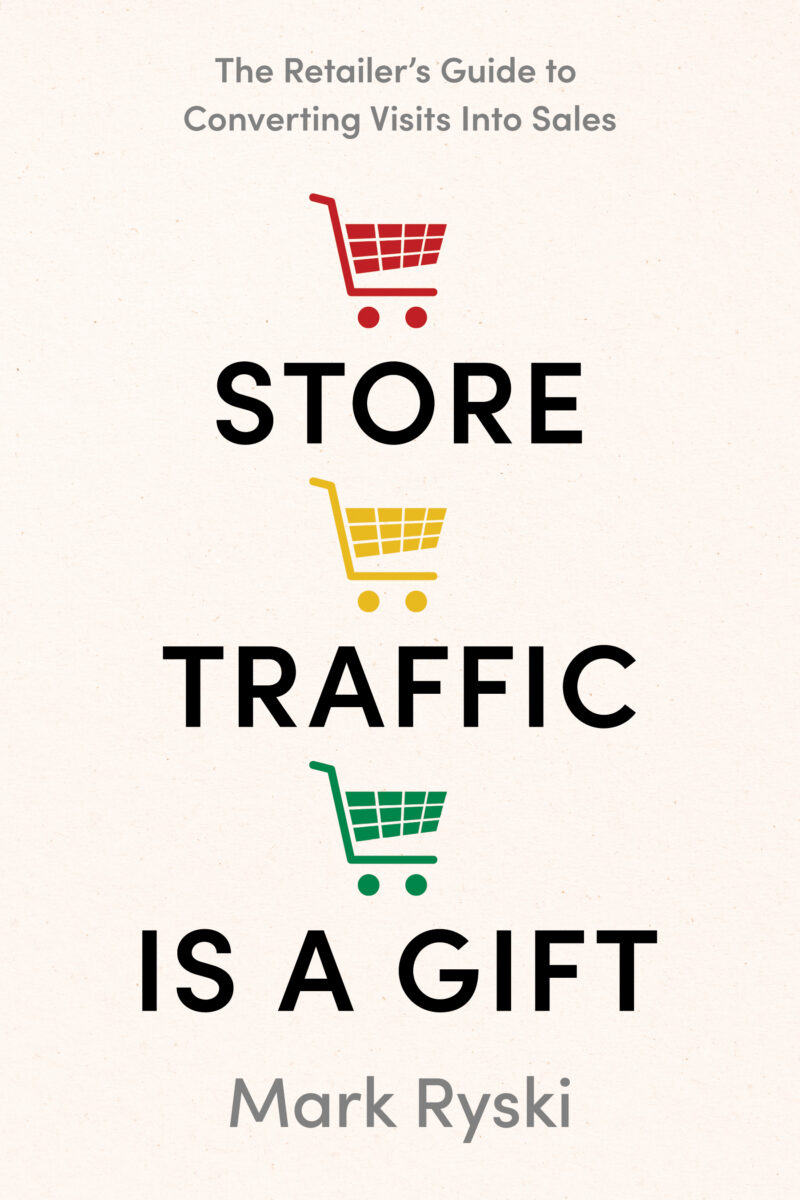
Book cover, image supplied
Making Store-Level Data Actionable
If there’s one refrain throughout the book, it’s that data is only useful if it’s understood and applied. “You’ll never convert a shopper from head office,” Ryski said. “The magic happens in the store. That’s why store managers and frontline teams need access to traffic insights they can actually use.”
Ryski describes a scenario where retailers invest in training or merchandising changes and then assess effectiveness solely through sales numbers. “But what if traffic was down that month?” he asked. “If conversion and ticket values went up, it may have been a success—even if sales didn’t. You’ll never know unless you’re measuring traffic.”
From Two Stores to Twenty Thousand
Despite his deep experience working with major retail chains, Ryski insists his message is just as important for small businesses. “Data and analytics aren’t just for big companies,” he said. “I discovered this stuff while working at a single-location computer store. It made a huge difference.”
One of the book’s most eye-opening chapters tackles the widely accepted—yet potentially misleading—“busyness charts” from Google. “I wrote a chapter called How Does Google Know My Store Traffic?,” Ryski explained. “What I found is that while geolocation data from companies like Placer.ai and others can be accurate at a national level, it breaks down fast when you zoom in.”
In one example, a provider’s state-level data was off by as much as 50% compared to actual store data. “It’s not operationally useful,” he said. “It might tell you that noon is a busy time in a general sense, but you can’t staff or plan around that.”
Shopping Centres: The Original Traffic Business
Ryski also speaks directly to shopping mall operators, calling them “in the traffic business.” He was candid: “I get dismayed when I walk into a mall and don’t see traffic counters. It’s like selling electricity without a meter.”
While some landlords have dabbled in trying to impact in-store conversion, Ryski believes malls need to go back to basics. “They should be tracking and sharing traffic data regularly with their tenants. That’s part of the value proposition.”
Retail Marketing Reboot
Marketers are another audience Ryski hopes to reach with Store Traffic is a Gift. “If you can precision target digital ads to drive store visits, why wouldn’t you focus on the stores with the best conversion rates?” he asked. “Instead of just driving traffic, drive traffic to where it counts the most.”
He sees an opportunity for marketers to measure their efforts more effectively by looking at traffic and conversion together. “If you’re investing in a local campaign, use that traffic data to assess ROI—not just sales numbers.”
Conversion Rate Optimization for the Physical World
While conversion rate optimization is a well-known concept in e-commerce, Ryski devotes an entire chapter to applying the concept in physical stores. “It’s harder, because every store is different. You’ve got 20 stores? That’s like optimizing 20 different websites,” he said.
But with a process of benchmarking, identifying high-performing locations, and replicating best practices, he says the potential gains are significant. “In one chain of 800 stores I studied, conversion rates ranged from 30% to 75%. That’s a massive gap. And it’s not random—it’s actionable.”
A Wake-Up Call to the C-Suite
Perhaps the most startling anecdote in the book involves a data science executive at a major U.S. retailer who told Ryski that store traffic and conversion data was “not on the radar” at the C-suite level. “They had counters in every store,” Ryski recalled. “But no one at the top cared. That’s a missed opportunity.”
This disconnect is precisely why Ryski wrote Store Traffic is a Gift. “I want to help retailers—from store managers to CEOs—see that this is foundational data. You wouldn’t run a website without analytics. Why would you run a store without knowing how many people come in?”
Practical and Accessible
Ryski made a point of writing the book in accessible language. “It’s not for data scientists,” he said. “A store associate could pick this up and understand it. That was by design. Frontline workers are still the heroes of retail, and they deserve tools that make sense.”
With 288 pages of insight and clear examples, Store Traffic is a Gift is positioned as both a guidebook and a call to action. It’s available for pre-order now through Amazon, Barnes & Noble, Porchlight, and other major retailers. Distribution will expand further upon its September 30 release via Greenleaf Book Group Press.
The Bottom Line: Start Measuring
Ryski’s parting advice to retailers is simple: just start. “If you’re not collecting store traffic data, you’re operating blind. This isn’t a luxury—it’s a necessity,” he said. “And if you are collecting it, but not using it to drive better outcomes, then it’s time to ask why.”
As the book’s title makes clear, store traffic isn’t just a metric—it’s a gift. But only if you know how to unwrap it.
After nearly a quarter century of transformative leadership, Briar de Lange will retire as Executive Director of the Bloor-Yorkville Business Improvement Area (BIA) on June 25. Her departure marks the end of an era for the BIA, which itself celebrates its 40th anniversary in July. Under de Lange’s stewardship, Bloor-Yorkville evolved into one of Canada’s most vibrant and sophisticated urban neighbourhoods.
De Lange joined the Bloor-Yorkville BIA in the early 2000s following more than 13 years in retail leasing and property management. She brought with her an in-depth knowledge of the area and the retail community that shaped it.
“For almost 25 years, Briar de Lange has been the Executive Director of the Bloor-Yorkville BIA,” reads an official message from the BIA. “She joined with over 13 years of experience in retail leasing and property management and brought with her a sound knowledge of the Bloor-Yorkville area and the people who make it such a vibrant community.”
Her leadership encompassed milestone projects like the Bloor Street Transformation, the redesign of Yorkville Avenue, and the implementation of beautification initiatives that helped elevate the public realm, including crown lighting on trees, the urban campfire benches, and enhancements to the Village of Yorkville Park.
Briar de Lange, photo: Bloor-Yorkville BIA
Reflections from Briar de Lange
In a farewell letter shared with the community, de Lange offered reflections on her time in the district and the journey that led to her role at the BIA. She recalled starting her first “real job” in 1990 as part of the management team at 2 Bloor Street West and Cumberland Terrace.
“Being in my mid-20s, a few favourite after-work haunts were Noodles Wine Bar/Acrobat (currently Planta), the Bellair Café (currently Sassafraz), Hemingway’s and The Pilot – both of which still remain to this day,” she wrote.
She recounted how Cumberland Terrace was slated for redevelopment as early as 1993—a plan that, as of 2025, has still not come to fruition. “Our ongoing commentary amongst BIA committee members is what will come first? – the Eglinton LRT, the redevelopment of Cumberland Terrace or the Leafs winning the Stanley Cup! (credit Alex Stuart),” she quipped.
De Lange’s letter expresses deep gratitude for the community and collaborators she worked alongside, noting that “this community has meant so much to me during the course of my career.” She thanked staff, volunteers, and business members for their commitment, describing the BIA’s accomplishments as “a great ride.”
Leadership Through Stability and Change
One of the notable strengths of de Lange’s leadership has been the stability of the BIA’s core team. The current staff has a combined tenure of 67 years—a testament to the collaborative and inclusive environment she fostered.
“We’ll miss her leadership, her vast knowledge of the Bloor-Yorkville area and its history, and the sense of humour she brought to the team,” the BIA said in its tribute.
De Lange also credited her career evolution to early volunteer involvement in the organization’s predecessor, the Yonge Bloor Bay Association (YBB). “The goal of creating an attractive and inviting community was a definite draw for me,” she wrote, explaining how her initial volunteer work sparked a lasting connection to the district.
Bloor-Yorkville BIA Turns 40
The timing of de Lange’s retirement aligns with a significant milestone for the Bloor-Yorkville BIA. Established on July 22, 1985, the BIA was created to promote and maintain one of Toronto’s most prominent commercial districts. Today, the organization includes nearly 1,400 member businesses and continues to spearhead events, infrastructure improvements, and marketing initiatives that shape the identity of the neighbourhood.
Yorkville, the heart of the BIA, has undergone multiple transformations—from its 19th-century roots as a village of Victorian homes and brickmakers, to the counterculture hub of the 1960s, and ultimately into a premier destination for luxury shopping, fine dining, and cultural events.
The district’s success can be attributed in no small part to the BIA’s active engagement with the city, local businesses, and the community. Under de Lange’s leadership, the BIA implemented impactful beautification projects, improved traffic flow, created marketing campaigns, and championed events such as Icefest and Holiday Magic that have drawn thousands to the area year after year.
Operations and Governance
The Bloor-Yorkville BIA is overseen by a voluntary Board of Directors, supported by staff and committees focused on marketing, urban design, mobility, and safety. The Executive Director, as the organization’s Chief Operating Officer, manages day-to-day operations and liaises with city departments and member businesses to ensure the BIA’s goals are achieved.
Much of the funding for the BIA’s initiatives comes from a special levy collected from member businesses. This financial model allows for substantial reinvestment into the neighbourhood through programming, beautification, maintenance, and public art.
A District Shaped by Collaboration
Over the years, the Bloor-Yorkville BIA has worked in partnership with city staff, developers, cultural institutions, and business owners to foster a unique balance between historic charm and modern sophistication.
Projects such as the transformation of Yorkville Avenue—with granite sidewalks, planters, and benches—have reshaped the pedestrian experience. Seasonal gardens, crown lighting, and well-maintained street furnishings help create an atmosphere that is both welcoming and upscale.
In her letter, de Lange expressed pride in these accomplishments: “From completing major milestone projects… to the amazing crown lights on the Bloor Street trees… each accomplishment brings a sense of pride and gratitude for all that this BIA has accomplished with its staff and volunteers.”
Looking Ahead
As the BIA prepares to celebrate its 40th anniversary, the organization faces a new chapter—one that will be defined by both opportunity and transition. While no successor to de Lange has been formally announced as of publication, the organization is expected to build on the strong foundation she helped establish.
Bloor-Yorkville continues to evolve with new developments, retail expansions, and an ongoing commitment to maintaining its position as Toronto’s most distinguished commercial district. De Lange’s departure will be felt across the business and civic community, but her legacy will remain visible in the streetscapes, events, and spirit of the neighbourhood.
“I will be watching, as a piece of my heart will be left here,” she wrote in closing. “Because this community has meant so much to me, during the course of my career.”
The long-term optimism index gained 7.1 points, reaching 47.3 in June. While it’s been steadily increasing for the past three months, it remains below the breakeven point of 50, it said.
Average price plans remained unchanged at 2.9%, and similarly wage plans were almost the same at 2.2%. Weak consumer demand, while easing, remains the top limitation for over half (51%) of small firms, added the CFIB.
Simon Gaudreault
“Early signs point to small businesses getting used to tariffs and finding alternatives, but many are not out of the woods just yet. While most indicators stayed the same or slightly improved, businesses are still feeling the impacts of the lingering inflation, tariffs, counter-tariffs and overall economic uncertainty,” said Simon Gaudreault, CFIB’s chief economist and vice-president of research.
Summer season off to a bumpy start for tourism firms
CFIB said its special release on tourism shows that long-term optimism among tourism businesses sits at pandemic-era levels (40.8 index points),which is among the lowest levels recorded in the last 16 years. Although summer is tourism’s busiest season, only 14% of businesses in the industry are planning to hire in the next few months, while record-low consumer demand continues plaguing 57% of tourism firms.
Andreea Bourgeois
“Recent trade tensions, uncertainty and lack of consumer demand are hitting the tourism sector hard. It’s also concerning that in the past 11 months their hiring plans have been in the red,” said Andreea Bourgeois, CFIB director of economics. “We urgently need governments to reduce taxes, promote buying local, and ease the costs of doing business if we want to improve Canada’s economic state and help businesses make the most out of this critical time of year.”
After a lengthy period of redevelopment, Eau Claire in downtown Calgary is finally showing signs of life again — and the first to emerge from behind the hoarding is something new, yet familiar.
Set to open this month in the heart of the neighbourhood, the Eau Claire Athletic Club (ECAC) will mark the first major project to come to life since the district’s ambitious redevelopment began. The Club is set within the former Eau Claire YMCA — a landmark that holds personal significance for many Calgarians, from early morning swimmers to pick-up basketball regulars. In its new form, it promises to offer something rare in the downtown core: a members-only club that blends fitness, wellness, and social connection under one roof, said the Club.
Alix Williams
“There’s a certain nostalgia woven into this building and its location,” said Alix Williams, Chief Operating Officer of ECAC. “With ECAC, we’re honouring that legacy while ushering in a bold new chapter—one defined by purpose, care, and an unparalleled range of fitness, wellbeing, and social club amenities unlike anything Calgary has seen before.”
“Projects like the ECAC raise the bar for recreation, wellness, and lifestyle in downtown Calgary. It’s the kind of space that inspires pride — not just from its members, but from the entire downtown community as a new hub of urban vitality in Calgary. It also demonstrates the confidence in the future of downtown Calgary and the investments being made to make to core a great place to live, work, play, learn and shop,” said Mark Garner, Executive Director, Calgary Downtown Association.
Peg Oneil
“Eau Claire residents are excited to have the Eau Claire Athletic Club opening soon. As part of the broader re-opening of the Plaza, the Promenade and the Jaipur Bridge, the ECAC is going to be part of a revitalized Eau Claire, ready to welcome everyone to our great neighbourhood,” said Peg Oneil, President of the Eau Claire Community Association.
The new venture is on property owned by Telsec Property Corporation, a Calgary-based real estate development and property management company.
Kris Van Grieken
“The Eau Claire Athletic Club marks a thoughtful new chapter for downtown Calgary—not just by creating a social and athletic club, but by preserving a meaningful piece of the city’s history. Rather than tearing the building down, we chose to breathe new life into it—transforming it into a welcoming destination where wellness, community, and good design feel both aspirational and attainable,” said Kris Van Grieken, Founder ECAC, and President of Telsec Property Corporation.
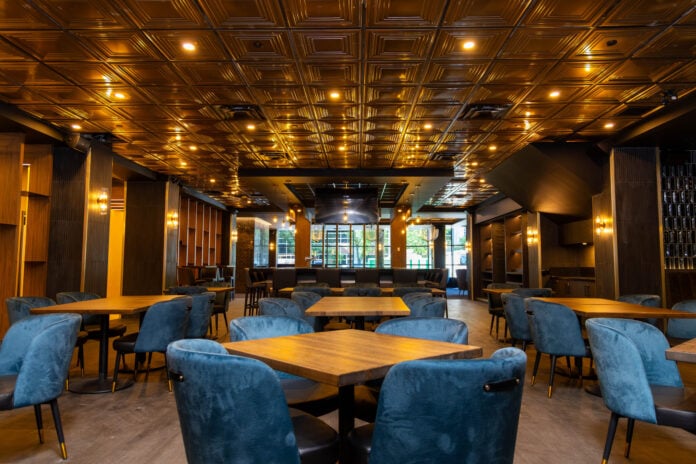
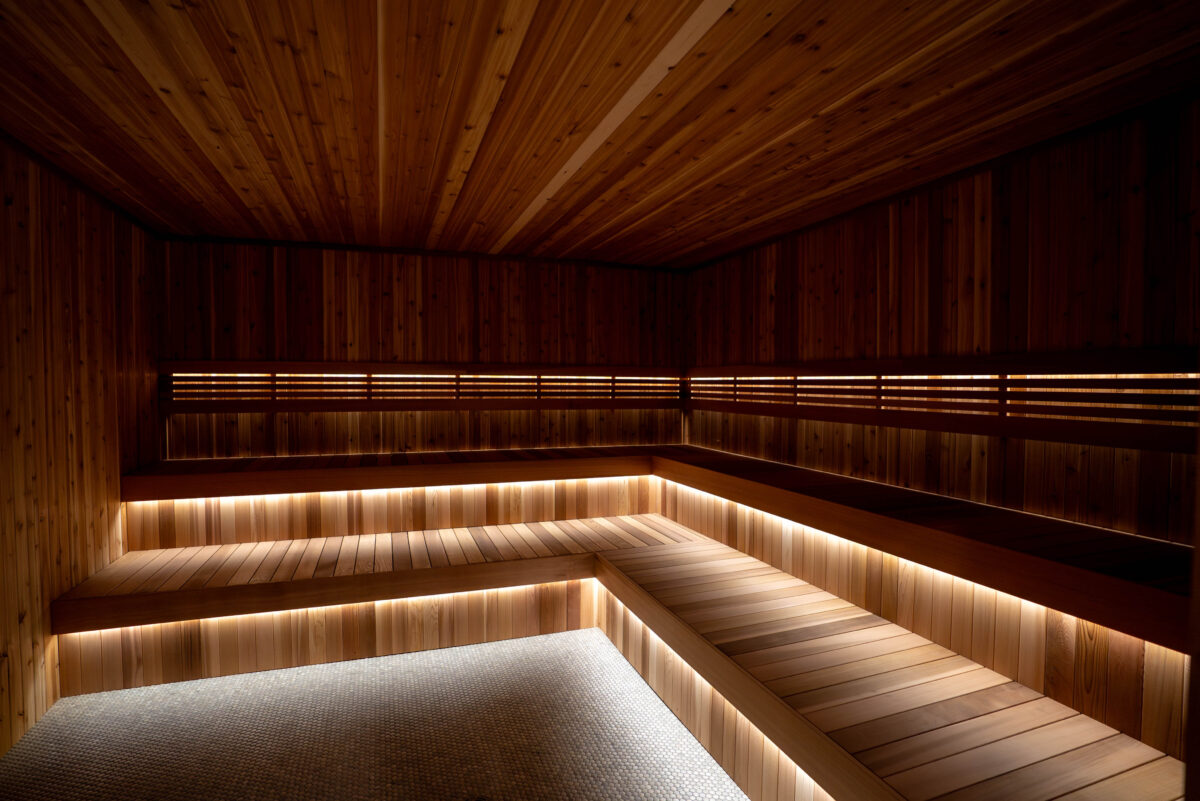
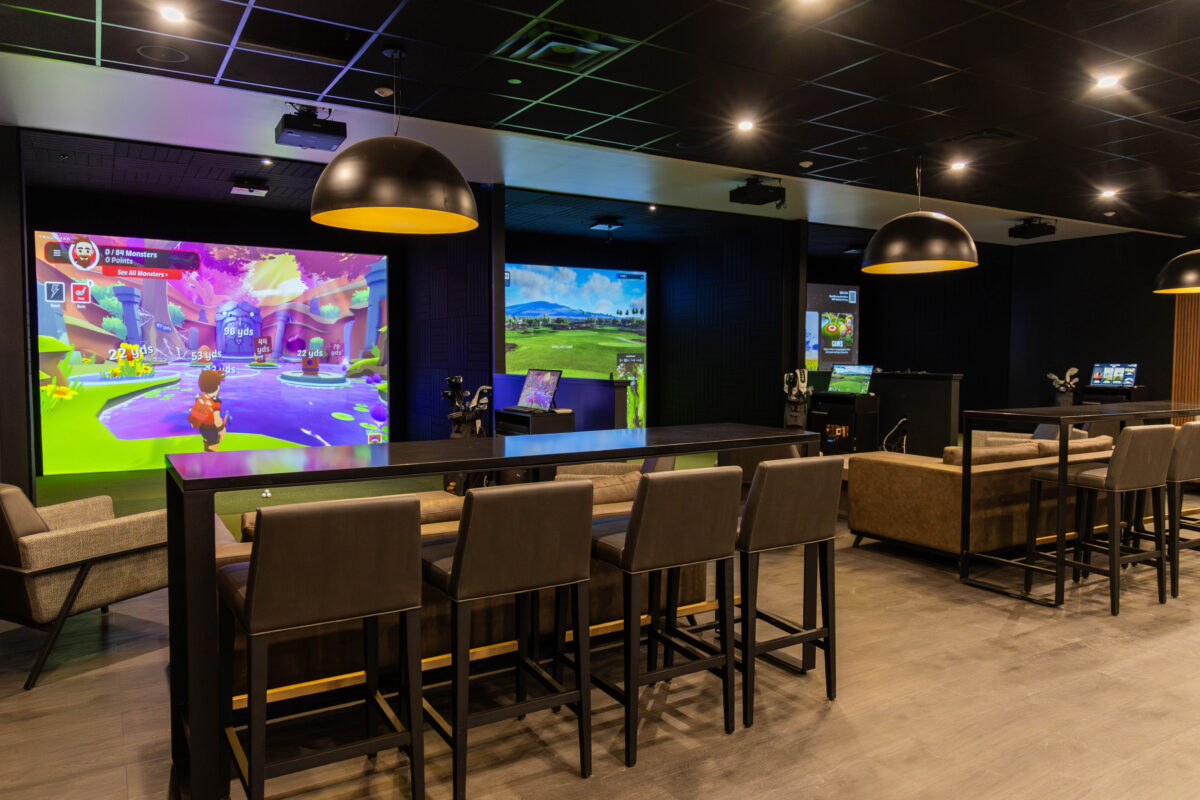
The Club said the original building has been thoughtfully transformed, preserving beloved features like the lap pool, squash courts, and running track, while introducing reimagined spaces that elevate both design and experience. Dynamic new additions include four golf simulators (with golf club storage), two high-performance racing simulators, and a variety of adult arcade activities for year-round enjoyment. The expansive Nordic Spa offers a serene retreat with saunas, hot and cold pools, light therapy, and a dry float experience for total relaxation. Fitness facilities have been expanded to include a state-of-the-art spin studio, dedicated yoga, Pilates, and reformer studios, indoor pickleball courts with daily access, and a full schedule of drop-in fitness programming, alongside optional specialty classes and daily children’s programming and childminding services.
Photo: Eau Claire Athletic Club
“We wanted to create a place where wellness isn’t just about working out — it’s about how people connect, recharge, and feel at home in the city,” said Williams. “It’s not a gym. It’s a club, and there’s a difference.
“Though still early in our journey, the Club has already attracted a vibrant and growing membership united by a shared ethos—one that values community, well-being, and a balanced, active lifestyle. From urban professionals to young families, our members are seeking more than amenities; they’re looking for meaningful spaces to connect, recharge, and thrive.”
To ensure the long-term vitality of ECAC, the Club said it has adopted a tiered membership model that includes both Non-Equity and Equity memberships, both of which have an initiation component. The initiation fee serves as a foundational investment—one that allows the Club to maintain excellence today and expand its impact for years to come. Equity members are not just participants; they are owners who play a direct role in shaping the Club’s future. The long-term commitment to sustainability and shared stewardship also enables strategic reinvestment in facilities and programs. Non-equity membership provides a streamlined way to enjoy ECAC’s exceptional amenities and dynamic culture, with the option to grow into ownership. Unsurprisingly, early interest has been strong in a city where demand for premium lifestyle and recreation facilities continues to exceed supply.
ECAC said it will feature a diverse portfolio of member-led social clubs—offering something for everyone, from book discussions to running groups to dog-walking meetups. It also offers an elevated social dining experience with two unique dining venues: Brooklynn’s Café, a casual café focused on nourishing, seasonal fare; and The Exchange, a vibrant, casual dining and bar experience designed for socializing and unwinding. Menus will feature a thoughtful mix of creative, seasonal dishes and elevated club staples—think inventive takes on classic favourites, fresh local ingredients, and a few unexpected twists that spark conversation. Whether you’re grabbing a quick bite or settling in for a long lunch, the menu is designed to surprise, satisfy, and evolve with member tastes. At the helm of the Club’s culinary program are Food and Beverage Manager Robert Jewell and Executive Chef Eric Um, whose impressive résumé spans over a decade at some of Calgary’s most celebrated restaurants, including River Café, Foreign Concept, and Primary Colours.