

Innovation is happening all around the Canadian retail industry. Retailers like London Drugs and their new LDExpress stores, La Maison Simons’ synchronizing supply chain and even small retailers like Edmonton-based Poppy Barley are getting in on the innovation act. The David Sobey Centre for Innovation in Retailing and Services and their newly launched Innovation, Strategy and Excellence program is a testament to how important innovation is to Canadian retailers Retail Innovation: Must-Attend Executive Development Program.
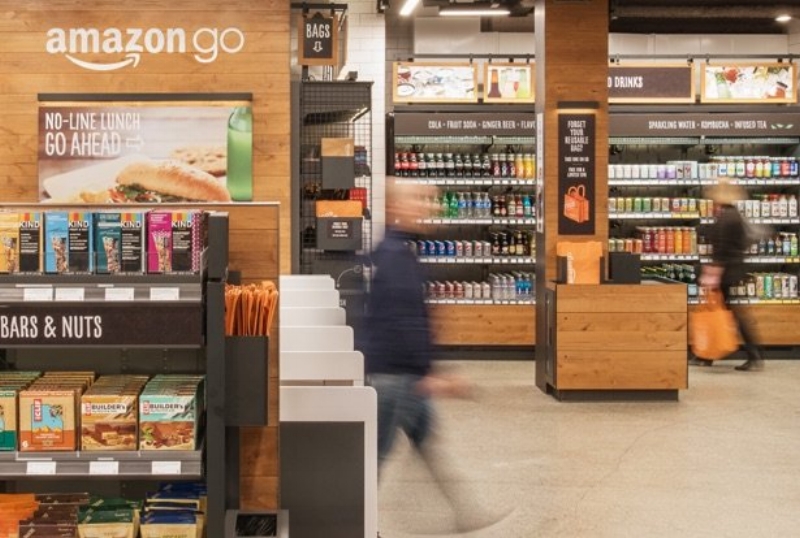
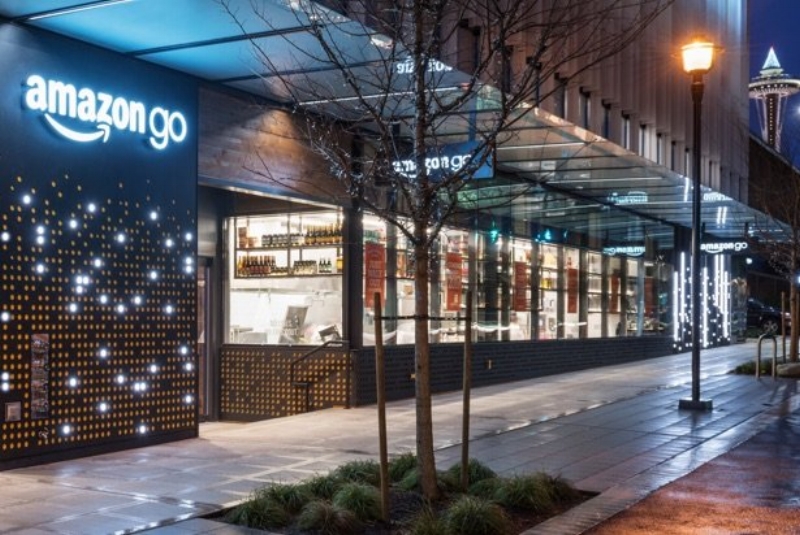
Beyond the great work being done in Canada, it behooves Canadian retailers to also look south of the 49th parallel for inspiration and one story that seems to be consuming much of the innovation oxygen lately is the newly opened Amazon Go store in Seattle.
As Nick Wingfield, technology correspondent for New York Times described in his vivid, first-hand account of shopping at the Amazon Go store Inside Amazon Go, a Store of the Future, it’s hard not to get excited about the future of retailing.
And while the retail industry can use all the good press it can get, I’m not sure this is it.
It was a strange juxtaposition to see giddy customers line up for hours for the privilege to ‘grab and dash’ a box of granola bars and a vanilla soda only to avoid a check-out line in the store – an ironic twist that was amusingly lampooned on a recent episode of The Daily Show with Trevor Noah.
As much as check-out lines are the bane of retailing – a legitimate friction point that causes some shoppers to switch from bricks to clicks and buy online – cashier-less checkout is not a panacea for the challenges brick-and-mortar retailers are facing.
Cashiers aren’t the problem – a lack of cashiers is
While some retailers are quick to blame diminishing mall traffic or confounding Millennials’ and their erratic buying behavior for their same-store sales woes, they need look no further than their own stores. It’s obnoxious to make customers wait an inordinate amount of time to hand-over their hard-earned money, but that’s exactly what happens in retail stores every hour of every day.
The ‘check-out problem’ so many retailers seem to have is largely self-inflicted. Retailers, it seems, are genetically conditioned to cut expenses, and as every retailer knows, store labor (including cashiers) is the largest expense. It is utterly blasphemous for a well-intentioned store manager to ask for additional labor hours, even when she witnesses disgruntled shoppers storming out of the store in disgust, leaving abandoned shopping carts in their wake.
Part of the problem is that many retail executives today believe that they can algorithm their way to success – if AI and Machine Learning can help cure cancer then surely it can solve the comparatively trivial issue of improving the shopper experience in retail stores. But it’s as close to reality as humans living on Mars – with all due respect to Elon Musk – it’s theoretically possible, but mind-bogglingly impractical.
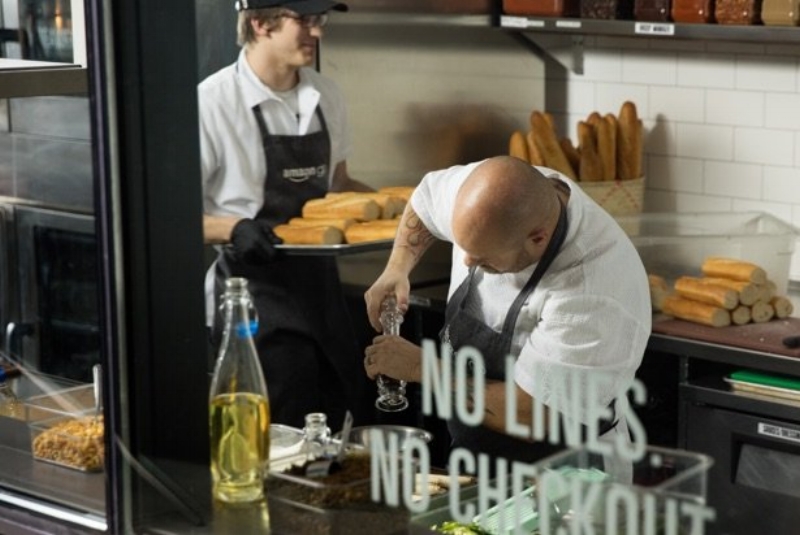
Sensors versus people
The 1,800-square foot Amazon Go store is chock full of hundreds of sensors, cameras and scanners, according to Devin Coldewey a writer for TechCrunch Inside Amazon’s surveillance-powered, no check-out convenience store. While the details of exactly how all this technology works and what it cost was not disclosed, it’s hard to image that it was nothing short of a small fortune. And, the ongoing expense of maintaining this super-computer disguised as a convenience store would likely consume a substantial portion of a sizable retail chain’s entire annual IT budget.
While the technology overhead alone would exclude virtually every brick-and-mortar retailer from an Amazon Go-esque deployment at scale, there’s another issue that would be troubling to most retailers – theft. According to TechCrunch’s Coldewey, “a certain amount of ‘lossage’ is anticipated [by Amazon]…and if you manage to get out without paying for something, the company doesn’t officially care.” Well most retailers do care about theft and the impact it has on their bottom line. Bill Turner of Loss Prevention Magazine raises some interesting questions in, Now Amazon Doesn’t Care If You “Accidentally” Shoplift.
There’s no doubt that the ‘cool-factor’ and publicity Amazon receives makes the return on investment more than acceptable. However, when you consider that a typical 1,800-square foot convenience store might have two cashiers being paid $12 per hour (if they’re lucky), it would be impossible for even the largest, most successful retailers to make a rational financial case for this – at least not using the current technology available.
Frankly, I doubt that Amazon will expand their Go concept any time soon or very far. Furthermore, I’d bet my RRSP that there’s close to a zero-percent chance that they will roll-out the ‘Go-platform’ to their 474 Whole Foods stores, which average 39,000-square feet in size. Simple math says these stores would require five or six thousand sensors – each. Even the mighty Amazon, awash in cash from their wildly successful web services business, would have a hard time making the numbers make sense.
Retailers High Jump and Amazon Pole Vaults
Amazon’s relentless pursuit of innovation is truly impressive and even inspiring, but they are playing an entirely different game than most every other retailer. Brick-and-mortar retailers that try to chase Amazon are destined to fail – they can’t possibly sustain the retail moon-shots Amazon seems to make every other quarter.
And yet, the retail industry is undergoing cataclysmic change. Business results are challenged and stores are being shuttered. Traditional approaches and strategies that have worked reliably in the past do not today. As one retail executive confided, “nothing seems to be working…we’re questioning everything.”
The allure of technology as the panacea for all that ails brick-and-mortar retailing, like the type epitomized by Amazon Go, is compelling. But technology is hardly a panacea. And for some retailers, too many misplaced technology bets could exacerbate an already precarious financial situation and waste precious time as the next earnings call approaches.
My advice to retailers is to simply install a single sensor at the entrance of their stores so they can know exactly how many shoppers are visiting and when. Then, they should hire enough store staff to serve the shoppers in a way that delights them and causes them to happily make a purchase and return again and again in the future.
Retailers – Canadian and American – don’t need Amazon Go to be successful or innovative. Frankly, it’s a no-go for most of them anyway, maybe even Amazon too.

Mark Ryski is author of Conversion: The Last Great Retail Metric and When Retail Customers Count and CEO and founder of HeadCount Corporation (www.headcount.com). Follow him on Twitter at @markryski.








Amazon revolutionized the internet with Amazon Web Services. They know how to do things at scale and rapidly iterate. You make many assumptions that feels like an attempt to be a cheerleader for an existing industry. Retailers ignore Amazon Go technology at their peril.