Canadians can now have beauty, wellness and everyday essentials from Shoppers Drug Mart delivered directly to their doors, thanks to a new national partnership with Skip.
The agreement between Skip, a Canadian delivery platform, and Shoppers Drug Mart was announced on Wednesday. The service will be available through 650 Shoppers Drug Mart stores across nine provinces, including British Columbia, Alberta, Saskatchewan, Manitoba, Ontario, New Brunswick, Nova Scotia, Prince Edward Island, and Newfoundland and Labrador.
According to the companies, the collaboration marks a significant expansion of Skip’s retail offerings, enabling customers to order products ranging from pharmacy essentials to beauty and skincare items.
“This partnership allows us to extend our reach even further and extend our ‘need-it-now’ experience to ensure that Canadians can access beauty, wellness, and everyday essentials from Shoppers Drug Mart with speed and ease, right to their door,” said Sarah Draper, vice-president of e-commerce at Shoppers Drug Mart.
Sarah Draper
To promote the launch, Skip is offering a limited-time promotion of $20 off orders of $35 or more, using the code SHOPPERS20, valid through Oct. 6.
The partnership also includes a promotional event, the “Grab N’ Glow” pop-up, taking place in downtown Toronto on Sept. 27 and 28 at STACKT Market (28 Bathurst Street). The event will feature professional makeup touch-ups, customized cosmetic bags, vouchers, and product giveaways from brands such as Clarins, e.l.f. Cosmetics, and L’Oréal. The event will be: Saturday, Sept. 27: 12 PM – 8 PM; Sunday, Sept. 28: 12 PM – 7 PM.
Skip began as a Prairie-based start-up in 2012 and has grown into a national delivery network operating in over 450 cities and towns across Canada. Shoppers Drug Mart, a division of Loblaw Companies Ltd., operates more than 1,350 locations across the country.
Credit: Jacob Bixenman, shot at Electric Lady Studios, NYC
Maybelline New York has announced pop star Miley Cyrus as its newest global spokesperson, unveiling a campaign that reimagines the brand’s iconic “Maybe it’s Maybelline” jingle.
The makeup brand, which says it is the number one in the world, revealed the collaboration Wednesday as part of a long-term partnership that includes global marketing campaigns and new product launches.
Maybelline New York, the number one makeup brand in the world, welcomes multi-platinum recording artist and international music icon Miley Cyrus as its newest global spokesperson.
Credit: Jacob Bixenman, shot at Electric Lady Studios, NYC
“I remember singing the Maybelline jingle as a kid and imagining it was me on the screen. Now, it is. To take something so iconic and make it mine — it’s powerful and personal,” said Cyrus in a statement.
“This partnership brings together two core parts of me. You can’t erase makeup from music. Within music, there’s performance and honesty — makeup enhances both. It’s how I tell my truth without saying a word,” she said. “Maybelline shares my belief that makeup should be expressive, ever-evolving. Partnering with Maybelline, a brand that celebrates meaningful values, self-expression and play, felt like the most natural fit in this stage of my life.”
The campaign will launch across television, digital, social media and in-store displays starting September 2025, and features Cyrus’s rendition of the familiar jingle. It will also promote upcoming launches, including a new colour line and Maybelline’s viral Sky High mascara.
Credit: Jacob Bixenman, shot at Electric Lady Studios, NYC
Sandrine Jolly
“She brings a deeply personal lens to beauty that is expressive and emotional. With her unmistakable voice and vision, she turns our iconic jingle into something raw, intimate, and powerfully reflective of this Maybelline era,” Jolly said.
Cyrus, a Grammy-winning artist known for her evolving music and advocacy work, emphasized the broader message behind the campaign.
“I think this campaign shows that beauty is fluid, that confidence can look a million different ways, and that you were born with it all along,” she said.
Maybelline said the campaign bridges “nostalgia and reinvention” while encouraging creativity and self-expression.
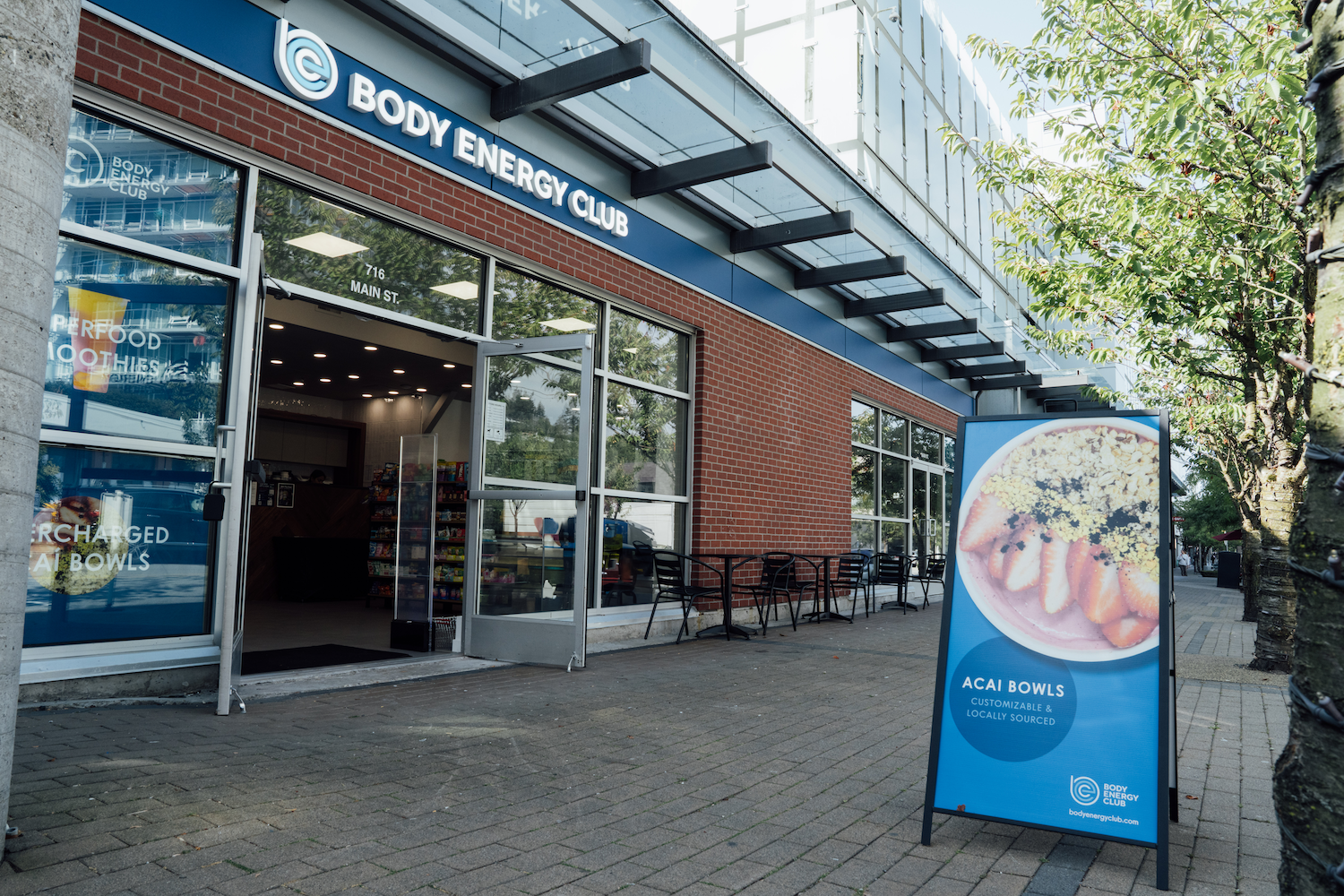
Body Energy Club at Park Royal in West Vancouver. Photo: Body Energy Club
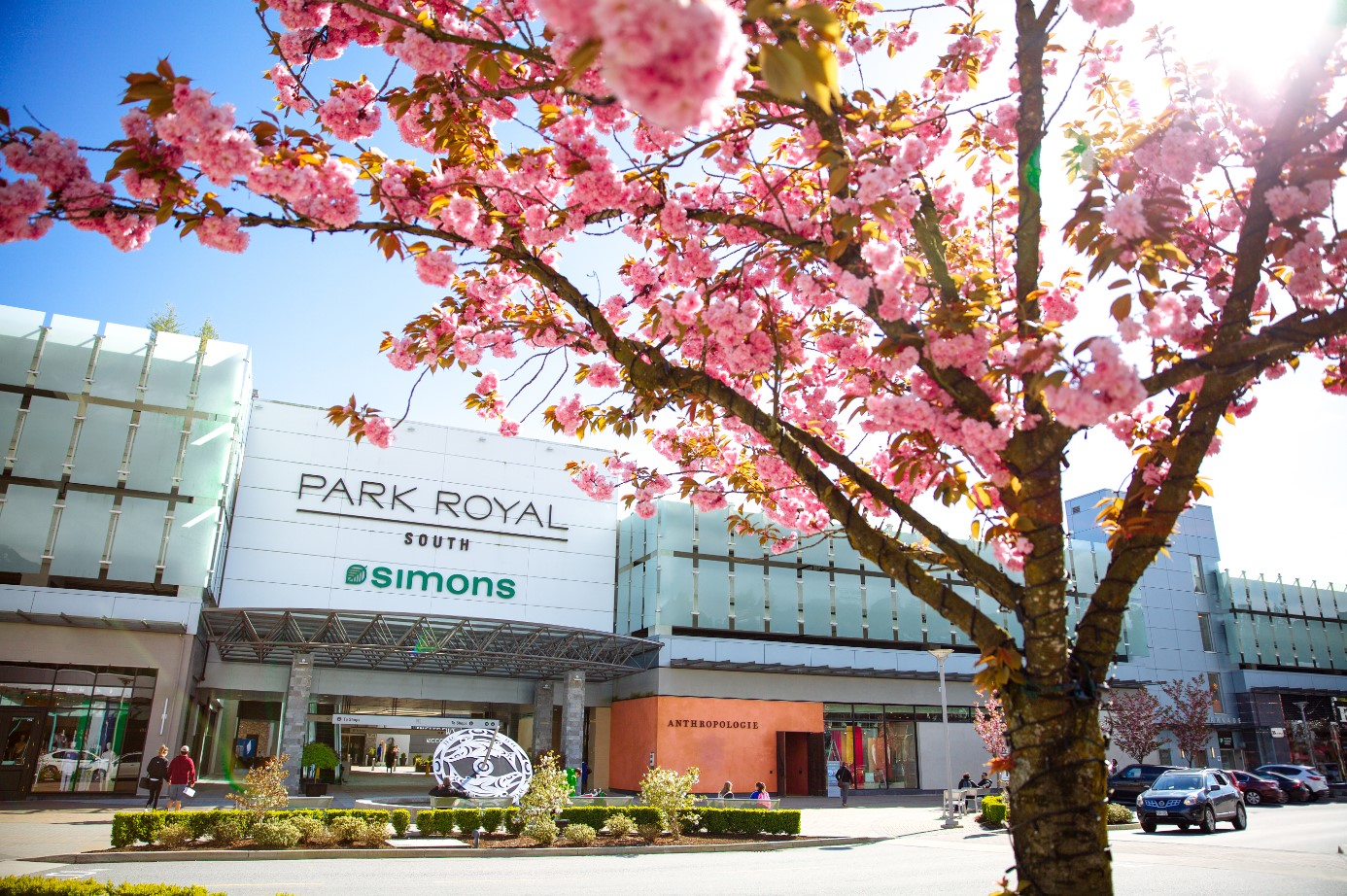
Body Energy Club, a Vancouver-based health and wellness retailer known for smoothies, supplements and grab-and-go meals, has opened its latest location at Park Royal South. The store, at 716 Main Street, introduces West Vancouver residents to the brand’s blend of nutrient-dense offerings and accessible nutrition, deepening its foothold in British Columbia while signaling broader ambitions across North America.
The launch represents another milestone for the company, which has quietly grown from a single 500-square-foot shop in downtown Vancouver into a chain with nearly 20 stores across Canada and the United States.
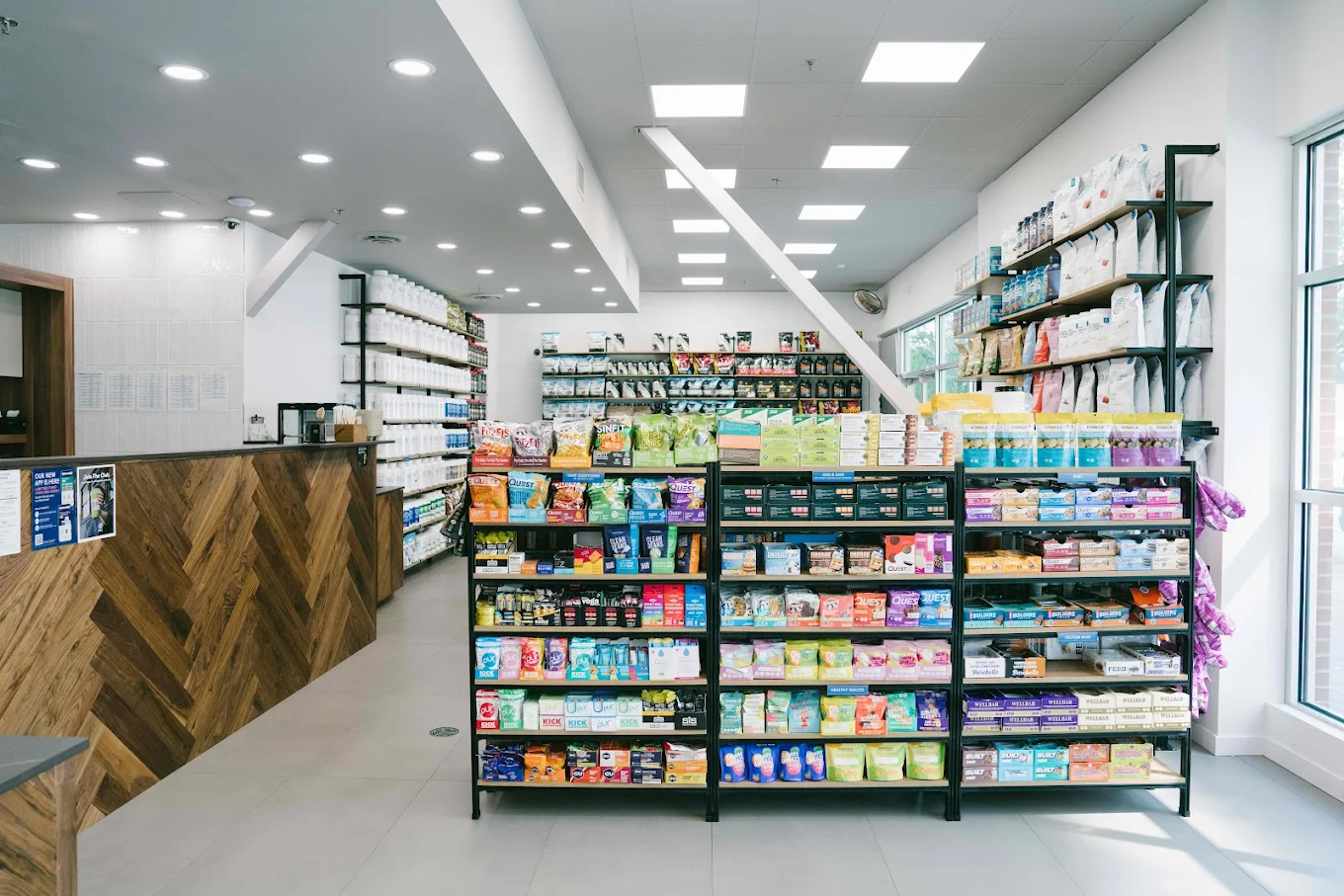
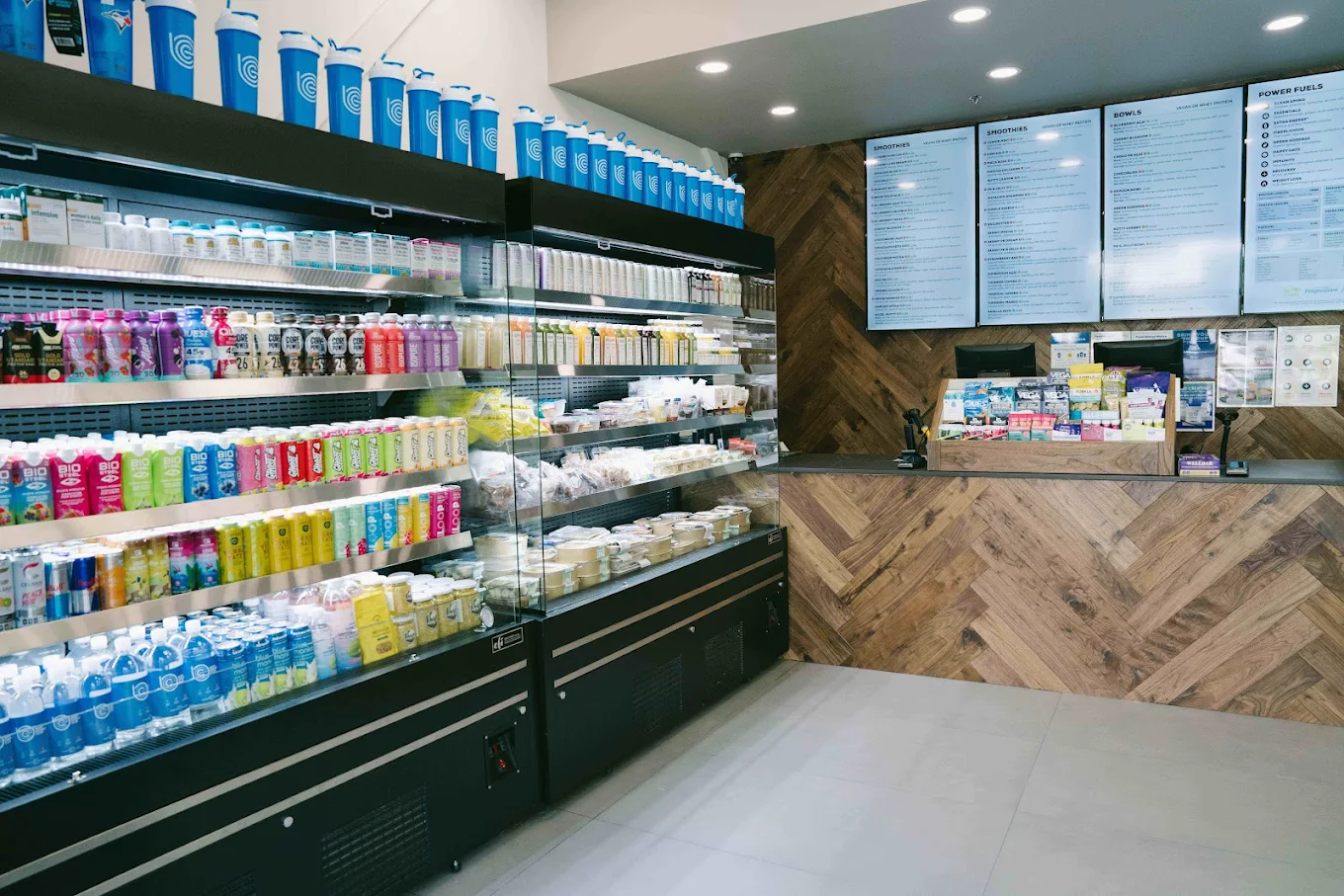
At the Park Royal South store, visitors will find a mix of smoothies, acai bowls, cold-pressed juices, supplements, and healthy prepared meals. The store also houses a full-service supplement section and a smoothie bar, designed to cater to the active lifestyle associated with West Vancouver.
“We’re thrilled to join the West Vancouver community with our Park Royal Mall South location,” said Dominick Tousignant, Body Energy Club’s founder and owner, in announcing the opening. “This area is known for its active, health-conscious residents, and we’re excited to offer them our signature products and welcoming space to support their wellness goals.”
The store will be open seven days a week, positioning itself as a convenient option for families, athletes, and busy professionals alike.
Body Energy Club at Park Royal in West Vancouver. Photo: Body Energy Club
From Davie Street to a Continental Presence
Founded in 2002 by Tousignant, who moved to Vancouver from Shawinigan, Quebec, Body Energy Club began as a small storefront on Davie Street. What started as a local resource for nutritional supplements and smoothies has since evolved into a full-fledged wellness brand with locations across the Vancouver area, as well as in Los Angeles and Chicago.
Over the years, the brand has steadily expanded throughout Vancouver and its suburbs, including Burnaby and Coquitlam. Its entry into the U.S. market in 2015, with stores in Hollywood and West Hollywood, marked the company’s first steps toward international recognition. More recently, Body Energy Club opened sites in Chicago, with prime addresses on Michigan Avenue and Lincoln Avenue.
By 2025, the retailer claimed up to 19 locations across North America. The Park Royal opening signals its intention to maintain momentum, with at least three more stores planned before the end of the year.
Park Royal in West Vancouver. Image: Park Royal
The Body Energy Club Model
Central to Body Energy Club’s appeal is its hybrid model: part smoothie and juice bar, part supplement retailer, and part prepared-meal shop. Locations are compact, typically around 1,100 square feet, but designed for high volume.
The brand’s product mix spans more than 6,200 items, including supplements from over 300 brands, Body Energy Club’s own branded protein powders, vitamins, probiotics, and greens. It also carries kombucha, bottled juices, and ready-made meals.
The stores are built for convenience, with extended operating hours that often stretch from early morning to late evening. Their positioning near gyms, residential towers, and commercial hubs reinforces the retailer’s focus on accessibility.
Body Energy Club at Park Royal in West Vancouver. Photo: Body Energy Club
Online Reach and Warehouse Scale
While the physical stores remain central to Body Energy Club’s identity, the company has also invested heavily in e-commerce. Its online business is one of Canada’s largest vitamin and supplement retailers, supported by a centralized warehouse that manages more than $5 million in inventory.
The digital platform allows customers nationwide to order from the retailer’s extensive catalogue. This expansion into online sales has proven vital in balancing brick-and-mortar growth with a scalable distribution model.
Serving a Broad Community
Body Energy Club’s customer base reflects the broadening definition of wellness. Elite athletes stop in for protein-packed smoothies, while office workers pick up bottled juices or healthy meals to go. Families shop for vitamins and supplements, while younger demographics gravitate toward customizable smoothie options.
The company’s “health for everybody” ethos is rooted in Tousignant’s philosophy of affordability and inclusivity. By pricing supplements competitively and offering a wide range of dietary options, the brand has worked to avoid the exclusivity often associated with the wellness sector.
Today, the company serves upwards of 60,000 smoothies each month and employs more than 150 staff across its network. Despite this scale, it remains privately held and headquartered in Vancouver.
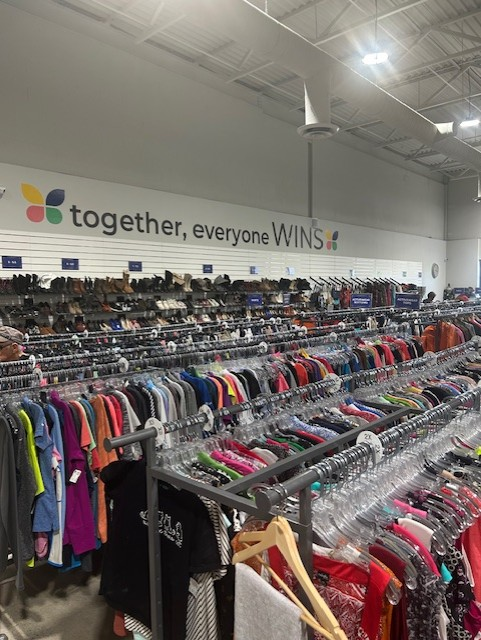
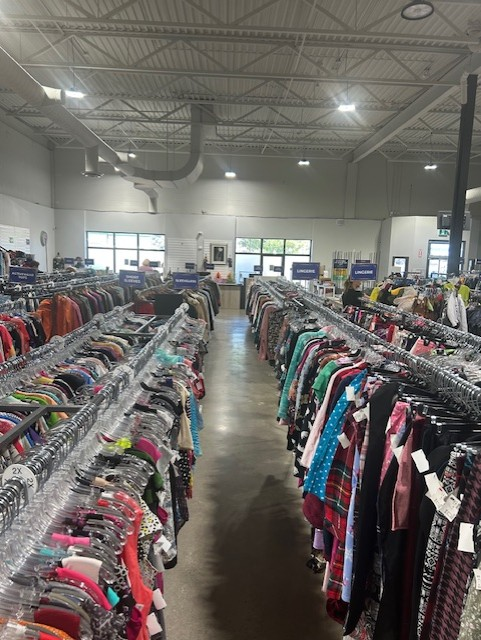
The president and CEO of Women In Need Society (WINS) says increasing demand for support services is driving the charity’s retail expansion in Calgary.
Karen Ramchuk said WINS currently operates seven traditional thrift stores and one additional “bulk” thrift outlet, located at its donation centre on 52nd Street across from the Soccer Centre.
Karen Ramchuk
“It’s kind of like a bulk thrift store and everything is sold by quantity,” said Ramchuk. “It’s a dollar or less depending on how many pieces you buy, but it’s not displayed like a regular retail store. It’s bins and you go through the bins.”
WINS opened two new retail locations in the past year — the first two planned under Ramchuk’s leadership. One store opened in July, and the other just over a year ago.
Ramchuk said store sizes vary from 4,500 to 22,000 square feet. The two smallest were in place before she joined the organization.
She added the charity plans to continue growing its retail footprint.
“Right now, most of our locations are through central Calgary from east to west,” she said. “We have nothing in the far south or far north. Our goal is to try to get into more quadrants of the city.”
Ramchuk said all proceeds from WINS retail operations are reinvested into community programs for women and families experiencing poverty or crisis.
“When WINS opens a location, it’s really not just opening a retail location,” she said. “It’s about generating revenue that we can turn into community programs.”
Photo: WINS
She credited Calgarians’ ongoing support for enabling the charity’s expansion.
“Everything we do is totally done through the generosity of Calgarians,” said Ramchuk. “If Calgarians didn’t donate product to us, if they didn’t donate money to our charity, we wouldn’t be able to do what we do.”
According to Ramchuk, WINS helped more than 27,000 Calgarians last year and processed over seven million pounds of donated goods — enough to fill the Scotiabank Saddledome seven times.
“Our small charity is going through that much product and turning that into those community programs for women,” she said. “The more Calgarians that hear about us, the more product they’ll donate, the more locations we can open, and in return, we help more and more community members that really need help and support.”
Ramchuk said the charitable impact behind the thrift stores distinguishes WINS from its competitors.
“We have competitors that are traded on the stock exchange. We have other competitors that do a little bit of social good. But our organization — we do a lot of social good,” she said.
“We help about 20 to 25 per cent of the people living in poverty in our city. And we couldn’t do it unless people donate their product and shop at our stores.”
She said awareness is a key factor in growing support.
Photo: WINS
“When people really hear and understand what we are, they start to advocate for us,” she said. “They say, ‘Don’t donate anywhere but WINS,’ and, ‘Shop WINS first.’”
Looking ahead, Ramchuk said she sees potential for 12 to 14 locations in Calgary alone.
“There’s no reason why WINS has to stay in Calgary either,” she added. “With time, with growth, or if we got investment into what we were doing, we could be hitting those bedroom communities. We could be hitting other cities and towns across the province. We could potentially grow this model across Canada and be a solution for poverty from one end of the country to the other.”
Part of WINS success is because of Ramchuk’s past retail career including 23 years at Loblaw Companies Limited.
“I worked for a long time in a major retail company and they taught me so very much. I have been able to take the knowledge from that and apply it at WINS and help to build and refine our model. Our financials are posted on our website, we have almost tripled our revenue in the past seven years even without opening new locations, we grew through efficiencies and smart retail practises.
“And now we will begin the true organic growth phase where we are always looking for space and opportunity.
“And if we can find investment (and remember we are a charity) for growth, we could grow much quicker and do even more for people and the environment.”
Rendering of the Tsawwassen Town Centre redevelopment from street view. (CNW Group/Century Group)
Century Group has unveiled a significantly revised proposal for the redevelopment of the Tsawwassen Town Centre, with a focus on health care space and reduced density in response to community feedback.
The updated plan includes a 25 per cent reduction in building heights and a 57 per cent decrease in the number of homes, scaling down from 1,433 to approximately 600. According to the developer, the proposal continues to align with the City of Delta’s Official Community Plan and provincial housing targets, while aiming to reflect the character of the surrounding community.
Sean Hodgins
Health care has been prioritized as a key amenity in the new plan. In the first phase, Century Group will dedicate space in perpetuity to the Delta Hospital and Community Health Foundation. The foundation has been working to address long-standing health care access issues in the area.
“We’ve heard the concerns about needing better health care delivery and made changes to address this,” said Sean Hodgins, president of Century Group. “This revised plan reduces scale while still delivering new homes, dedicated space for health care services, and retail that will strengthen our town centre.”
Rendering of a newly expanded Thrifty Foods with an added pharmacy component. (CNW Group/Century Group)
In addition to the health care space, the updated proposal includes:
An expanded Thrifty Foods with a pharmacy component
New housing options, including apartments and townhomes
The addition of 100 new market rental homes to Tsawwassen’s housing supply
“Projects like this will always involve tradeoffs,” said Hodgins. “But we must keep moving forward to tackle Delta’s and the region’s housing challenges.”
Rendering of the health care space dedicated in perpetuity to the Delta Hospital and Community Health Foundation. (CNW Group/Century Group)
The revised plan continues to focus on infill development, renewing an already urbanized area without expanding into greenfield or agricultural land. Century Group says the proposal reflects a balance between future growth and community priorities.
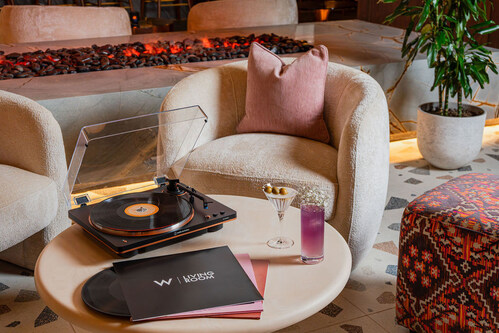
W Toronto has unveiled the first phase of its transformation with the launch of Volume II, a refreshed take on the hotel’s identity that begins with the reimagining of its lobby lounge, Living Room.
Located in the Yorkville neighbourhood, the newly redesigned Living Room blends the feel of a downtown lounge with all-day hospitality. The space now features a coffee bar that opens at 6:30 a.m. with specialty coffees and pastries, evolving into a cocktail lounge by night with live music and creative programming.
Photo: W Toronto
“Reimagining Living Room on the ground floor was about creating synergy between W and the city,” said Elie Sassine, General Manager of W Toronto. “Now, when you walk through our doors, you are immersed in the heart of the hotel, where Toronto’s originality and the true identity of the W Hotels brand come to life.”
The redesign was led by Toronto-based Chapi Chapo Design, who drew inspiration from Yorkville’s 1960s bohemian energy and the upscale character of nearby Mink Mile. The result includes intimate seating areas, a dedicated live music zone and communal spaces meant to foster creativity and connection.
Programming in the Living Room includes daily live performances, DJ sets, vinyl sessions, high tea service, and “Warm-Up Sessions” during happy hour. Locally inspired menu items such as gojuchang fried cauliflower and mushroom arancini complement signature cocktails and Perrier Jouët Champagnes.
Photo: W Toronto
The next phase of the hotel’s relaunch is scheduled for October with the debut of TONO by Akira Back, a rooftop restaurant featuring Nikkei cuisine—a blend of Japanese and Peruvian flavours. The restaurant will be led by Michelin-starred chef and restaurateur Akira Back.
Located at 90 Bloor St. E., W Toronto is part of the global W Hotels brand, which operates 70 properties worldwide and is currently undergoing a multi-year brand evolution. Living Room Coffee Bar is open daily from 6:30 a.m. to 2:00 p.m., while the Living Room Bar operates from 11:00 a.m. to midnight.
Kits Eyecare Ltd. says it has reached a major milestone, surpassing one million two-year active customers as of the third quarter of 2025.
The Vancouver-based company, which trades on the TSX under the symbol KITS, has doubled its active customer base since its IPO in early 2021. The total has grown from 500,000 in Q4 2020 to over one million in less than five years.
Roger Hardy
“Crossing the one-million-customer mark is more than just a number, it’s a testament to the trust we have built with our customers and the value our model delivers for both new and repeat buyers,” said Roger Hardy, co-founder and CEO of KITS, in a statement.
The company attributes its growth to a younger, digitally native audience. According to internal survey data, about 25 per cent of its customers are Gen Z, 50 per cent are Millennials, and the remainder are Gen X. More than 60 per cent of the company’s revenue continues to come from repeat buyers.
KITS uses a vertically integrated model to provide eyecare products directly to consumers. The platform includes an in-house frame design team, optical lab, proprietary digital fitting tools, and just-in-time manufacturing, all aimed at delivering made-to-order eyewear with speed and accuracy.
The company says it sees strong potential for future growth as Millennials and Gen Z increasingly drive demand in the digital vision care market.
Tim Hortons raises a cup to National Coffee Day with four vintage hot beverage cup designs available for a limited time! (CNW Group/Tim Hortons)
Tim Hortons is marking this year’s National Coffee Day on Sept. 29 with the release of four limited-edition vintage hot beverage cup designs.
The cups, which began rolling out at locations across Canada this week, feature retro artwork from the 1960s, 1980s and two styles from the 2010s. They will be available until supplies run out.
“We’re so excited to showcase some iconic designs from the past with our National Coffee Day cup collection.”
According to Bagozzi, each customer will be randomly served one of the four designs.
“It’ll be a trip down memory lane at Tims leading up to National Coffee Day and while guests will be randomly served one of the four vintage cup designs, we know some may want to try to collect them all,” she said.
In addition to the cup designs, Tim Hortons is offering a promotion through its loyalty program.
Starting Sept. 29 and running through Oct. 4, Tims Rewards members who scan their app during four separate brewed coffee purchases will receive 400 points, redeemable for a free coffee.
The offer is available through the Tims app, where terms and conditions can be found.
Retail Insider is streamlining its Canadian retail news from around the web to include a handful of top news stories that can be viewed quickly during the day. Here are the top stories from the past 24 hours.
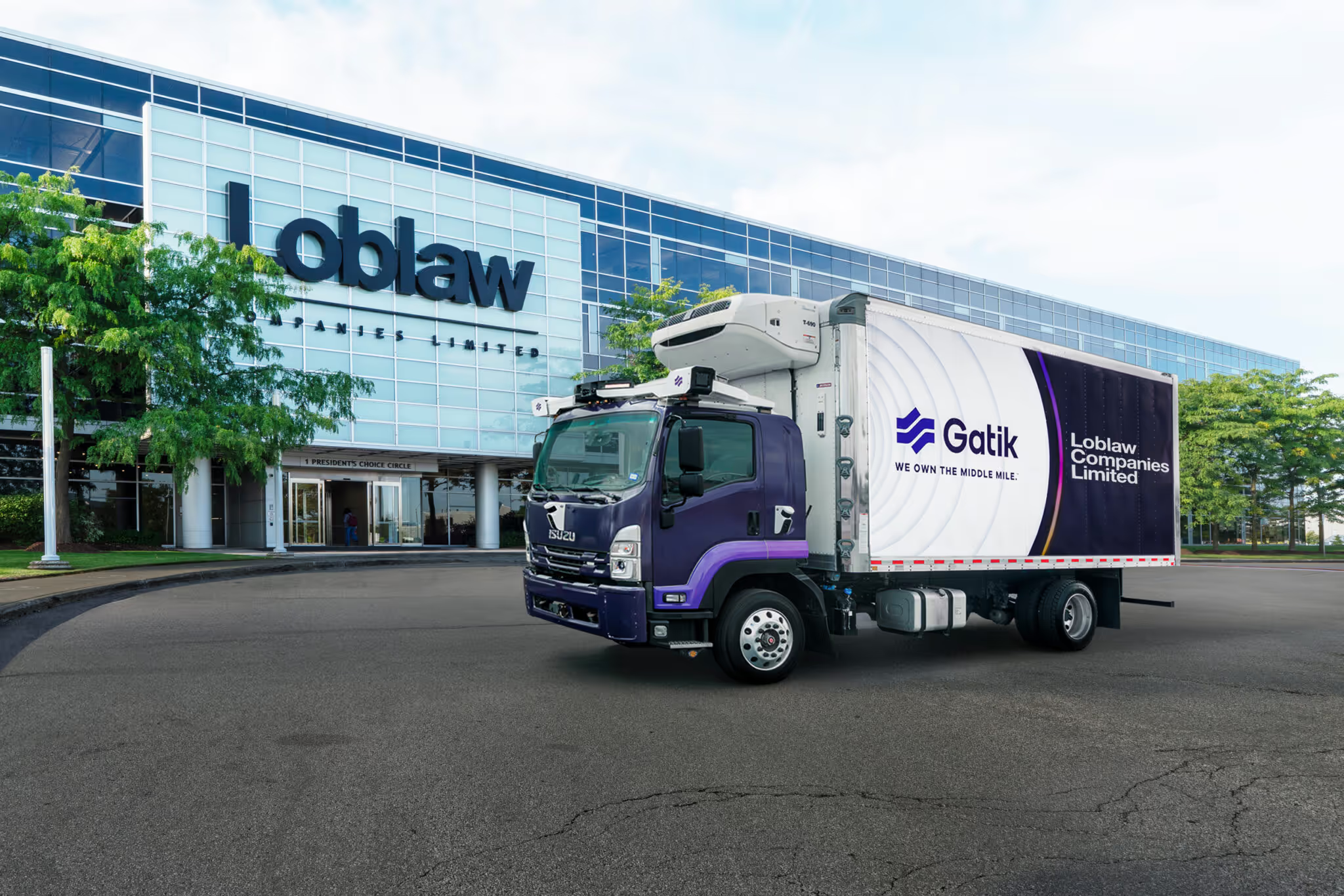
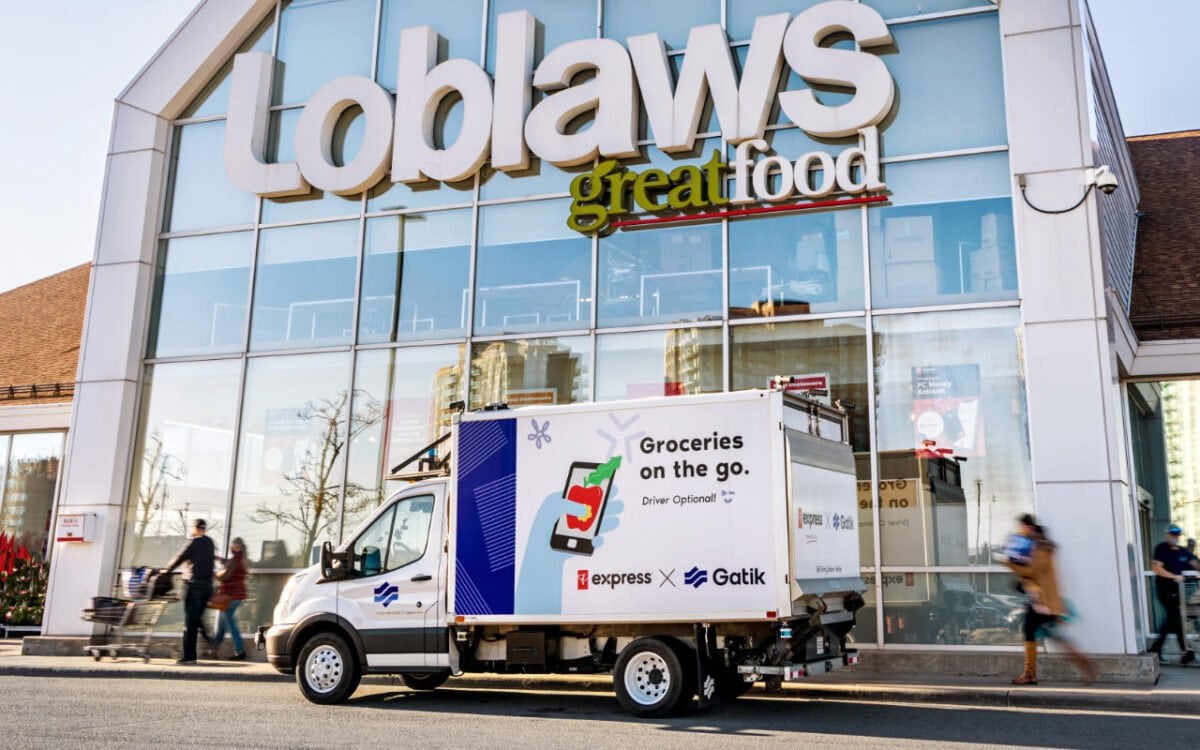
Gatik autonomous delivery truck in front of a Loblaws store. Image: Loblaw
Loblaw Companies Limited is making one of the boldest moves yet in Canadian retail logistics. The country’s largest grocer said this week that it will dramatically expand its partnership with Gatik AI Inc., a Silicon Valley and Toronto-based autonomous vehicle company, to introduce the largest commercial deployment of driverless trucks in North America.
The agreement calls for 50 autonomous trucks to be deployed across the Greater Toronto Area by the end of 2026, servicing more than 300 Loblaw-owned grocery stores. It is a leap from the modest pilot program of just six vehicles that began in 2022. For Loblaw, the expansion is framed as a way to modernize distribution while easing the pressures of a national driver shortage.
“This expanded partnership with and investment in Gatik represents a significant step forward in our commitment to innovation and supply chain sustainability,” said Rob Wiebe, Loblaw’s chief administrator, in a statement. “Autonomous logistics will enable us to move more orders more frequently for our customers.”
A Historic Step for Autonomous Freight
Executives at Gatik, which has been developing autonomous trucking platforms since 2017, say the rollout represents an industry first. “It’s the first time a major retailer has transitioned from pilot to commercial scale with autonomous trucks,” said Gautam Narang, Gatik’s co-founder and chief executive. “This is a transformational moment, not just for Gatik and Loblaw, but for the autonomous trucking sector globally.”
The company notes that the trucks, which are medium-duty vehicles designed for regional logistics, will initially operate with safety drivers before transitioning to fully driverless service. The Gatik Driver, an AI-powered operating system, has logged thousands of miles on public roads across North America. According to the company, its record of safety and reliability is a key factor in winning over regulators and retailers alike.
The Role of Regulation
The rapid expansion comes just weeks after Ontario introduced new rules governing autonomous trucking. The Automated Commercial Motor Vehicle Pilot Program, launched in August, allows medium-duty driverless vehicles to operate on all streets and highways in the province. Gatik worked with the Ministry of Transportation of Ontario to design the framework, which officials describe as both enabling innovation and ensuring public safety.
By embedding its technology within regulatory guardrails, Gatik aims to avoid the kind of scrutiny that has hindered other autonomous vehicle ventures. Unlike robotaxis, which must contend with unpredictable human passengers, Gatik’s model focuses narrowly on transporting goods within dense commercial corridors. That specialization, Narang has argued, makes the technology easier to scale.
For Loblaw, the expansion signals a larger shift in how retailers view logistics. With more than 2,800 locations across Canada and over 220,000 employees, the company operates one of the most complex distribution networks in the country. The addition of autonomous trucks promises to reduce bottlenecks, improve delivery frequency, and better handle temperature-sensitive goods such as produce and dairy.
The trucks are equipped for cold-chain logistics, ensuring groceries are delivered under tightly controlled conditions. Loblaw says customers should notice improvements in product freshness and availability, though it has not specified whether the cost savings from automation will eventually be passed on to consumers.
Investment and Strategic Stakes
Loblaw has made a strategic investment in Gatik, a move designed to deepen collaboration and accelerate the scaling of autonomous freight. Financial terms were not disclosed, but executives emphasized that the investment underlines the retailer’s long-term confidence in the technology.
For Gatik, which also operates in Texas, Arkansas, and Arizona, the deal represents a validation of its business model. Unlike many high-profile autonomous vehicle startups that have struggled to commercialize, Gatik’s business-to-business strategy focuses on repeatable, short-haul routes between warehouses and retail outlets.
That “middle mile” approach, analysts note, avoids the more complex challenges of long-haul trucking or passenger transport.
A Company Under Pressure
The announcement arrives at a delicate time for Loblaw. The company has faced intense criticism from consumers over rising grocery prices, with boycotts last year drawing national headlines. Expanding into autonomous freight may be presented as an effort to improve efficiency and lower costs, though skeptics may question whether savings will translate into relief at the checkout line.
The move also raises questions about employment. While Loblaw has not specified how many of its 220,000 employees are drivers, labour unions and critics are likely to scrutinize the impact of automation on jobs. Company officials have stressed that safety drivers will remain in place during the transition, but the long-term plan is to shift to driverless “freight-only” operations.
Gatik autonomous vehicle. Photo: Gatik
A Canadian First, a Global Signal
Autonomous trucking has been tested in markets around the world, but the scale of Loblaw’s rollout places Canada at the forefront of the industry. The expansion is being described as the largest planned deployment of driverless trucks in North America, a benchmark that could influence how other retailers and logistics firms approach automation.
The development also highlights how the retail sector, often slower to adopt emerging technology, is now investing heavily in automation under the pressures of rising costs, labour shortages, and consumer demand for convenience. For Loblaw, the deal may serve both as a competitive advantage and as a test of public trust in driverless logistics.
Loblaw Looking Ahead
Over the next year, 20 autonomous trucks will join Loblaw’s fleet, with 30 more scheduled to follow by the end of 2026. As the rollout progresses, the company says it expects a gradual shift from human-supervised to fully autonomous deliveries.
Whether the expansion succeeds will depend on more than technology. Regulators will monitor safety, customers will judge whether service improves, and labour advocates will watch closely for the impact on jobs. For now, however, Loblaw and Gatik are positioning the project as a milestone in Canadian retail, one that could set the standard for how groceries and goods are delivered in the years to come.