For decades, betting against McDonald’s has proven to be a losing strategy. The company has weathered every headwind imaginable: calls for healthier eating, tougher labour laws, the rise and fall of plant-based meat, and complex procurement challenges. Through it all, McDonald’s has remained remarkably resilient. But today, the fast-food giant may be facing its most formidable threat yet — and it has nothing to do with burgers or fries. It’s Ozempic.
This week, McDonald’s shares dipped following an analyst downgrade, triggered by concerns over the growing use of GLP-1 weight-loss drugs like Ozempic. Analysts estimate the company could lose up to 28 million customer visits in the U.S. alone. While the market reaction has been modest so far, the long-term implications are serious. By 2030, up to 30 million Americans — nearly 1 in 10 — may be using GLP-1 medications. In Canada, that number could reach between 1.5 and 3 million, equivalent to the entire population of the Island of Montreal.
These medications suppress appetite and, by extension, shift consumption patterns. Early data suggests that consumers on GLP-1s are eating less frequently and with greater intentionality. This poses a direct threat to brands built on impulse consumption — particularly those targeting value-conscious or lower-income demographics, a category into which McDonald’s firmly falls.
The food industry has faced disruption before. The rise of online grocery and food delivery services in the early 2000s challenged the sector’s reliance on impulse-based purchasing. Digital platforms forced companies to reimagine how they connect with consumers in a non-physical environment. The growing adoption of GLP-1s presents a similar disruption — but this time, the driver is physiological, not technological, and largely outside the industry’s control.
The downgrade of McDonald’s stock should not be dismissed lightly. In Canada, the company operates over 1,400 restaurants, employs approximately 90,000 people, and commands 18% to 20% of the quick-service market. It serves more than 2.5 million Canadians every day. McDonald’s is also the largest single buyer of Canadian beef and eggs in the foodservice industry — making it a crucial link in the domestic agri-food value chain.
Other signals point to broader structural shifts. WeightWatchers has filed for Chapter 11 bankruptcy protection in the U.S. Major snacking companies are also feeling the pressure. Year-over-year, PepsiCo’s stock is down nearly 21%, Nestlé is down 10%, and Mars has seen a 5% decline. Nestlé has even introduced a line of “Ozempic-friendly” products to cater to a new consumer reality: smaller appetites, higher sensitivity to side effects, and less frequent indulgence.
As was the case with the rise of plant-based diets, the food industry is once again being forced to adapt. The difference this time is that GLP-1 usage isn’t a lifestyle choice — it’s a medical intervention. Quick-service chains now recognize that if one member of a group can’t find a suitable menu option, the entire group may choose to dine elsewhere.
This is, quite simply, a turning point. It marks the first time in modern history that a pharmaceutical innovation is reshaping the global food landscape at scale. McDonald’s has proven its adaptability in the past and may do so again. But make no mistake: the GLP-1 revolution has the full attention of many executive in the food industry — and with good reason.
Supercar Parade in Niagara-on-the-Lake, 2024. Photo: Niagara 5000
The highly anticipated Niagara 5000 returns this August, and momentum is already building fast. Now in its second year, the Canadian supercar and private aviation showcase has gained national attention, with over 550,000 digital impressions and surging engagement ahead of its 2025 edition. Scheduled for August 7–9, the event is expected to attract more than 30,000 guests to a weekend that blends luxury, innovation, and philanthropy.
Among the most notable developments for 2025 is the confirmation of Grand Touring Automobiles as the event’s title sponsor. The dealership, which represents luxury marques including Rolls-Royce, Aston Martin, Bentley, Bugatti, and Lamborghini, will anchor a series of exclusive experiences, including the Supercar Cruise & Parade, the STK Kickoff Party, and the signature Hangar Experience at Niagara District Airport.
The presence of these ultra-luxury vehicles positions Niagara 5000 among the top-tier supercar showcases in North America.
Cirrus Showcases Private Aviation Excellence
Private aviation will also take centre stage with Cirrus Aircraft named as the Personal Aviation Sponsor. Cirrus will exhibit its Vision Jet at both the Falls and the Hangar Experience. The company’s innovative design and luxury aircraft offerings align with Niagara 5000’s mission to celebrate high performance across all categories.
This aviation presence complements the automotive component of the event, offering guests a rare opportunity to engage with leading-edge transport technology in both air and land formats.
Cirrus planes, image: Niagara 5000
Financial, Tech and Insurance Brands Fuel Growth
Several major names in finance, insurance, and cybersecurity are backing this year’s edition. Sponsors for the Hangar Experience include RBC PH&N Investment Counsel, SentinelOne, HUB International Insurance Brokers, and CHUBB Insurance, reinforcing the event’s connection to excellence in both performance and security.
This high-level support from professional service sectors illustrates the growing interest from industries outside traditional luxury and automotive spaces, attracted by the event’s affluent demographic and elevated brand positioning.
Hospitality and Lifestyle Partners Enrich the Guest Experience
Hospitality and design will play an increasingly important role at Niagara 5000 this year. Among the featured partners:
Reif Estate Winery, the Official Wine Sponsor, will launch a limited-edition Niagara 5000 x Reif wine label and host a Bentley Cruise stop.
Coventry Transportation will provide VIP guests with premium shuttle service throughout the event. Roadside Flower Market will craft bespoke floral installations for the Hangar Experience with help from local floral artists.
Goldies Museum, the Official Design Sponsor, is curating the event’s overall aesthetic and spatial design.
These additions will enhance the event’s atmosphere, creating a sensory-rich environment that blends hospitality with luxury branding.
Automotive and Lifestyle Showcase Expands Across Niagara Region
Dozens of other automotive brands and service providers have signed on to support this year’s edition. McLaren Toronto, Pfaff Auto Group, Policaro Group (Porsche), Performance Mercedes-Benz, Lucid Motors, and others will display their vehicles at various destinations across Niagara, including Stratus, Southbrook, Peninsula Lakes Golf Course, and Ravine Vineyards.
Additional partners include UPS Niagara Falls (Print/Signage Sponsor), Zippy Golf Carts (Official Golf Cart Partner), Auto Business School of Canada (Education Partner), Engel & Völkers Niagara (Real Estate Sponsor), and Holt Renfrew (Gift Bag Sponsor). K1 Speed is featured as the Official Go Karting sponsor, while Atelier Munro will bring a made-to-measure menswear presence to The Hangar.
Notably, Oro Station, an emerging Canadian hub for motorsport innovation, will be offering an off-road driving experience with professional race car drivers during The Hangar Experience.
Hagerty, the premier insurer for collector and classic cars in Canada, will serve as this year’s Supercar Parade Sponsor. Their involvement adds credibility and a preservation-minded angle to the festivities, appealing to collectors and connoisseurs alike.
Supercar Cruise to local Niagara winery. Photo: Niagara 5000
Tourism and Government Support Reinforces Regional Focus
Backing from Tourism Niagara-on-the-Lake, Niagara Falls Tourism, Experience Ontario, and the Niagara Parks Commission further strengthens the event’s roots in the region. The support highlights the increasing importance of luxury tourism and special events in driving economic development across Ontario.
With the Niagara 5000 shining a spotlight on the area’s world-class vineyards, hospitality venues, and scenic backdrops, local tourism agencies are seeing the event as a vehicle for sustained regional growth.
A Platform for Purpose: Supporting McMaster Children’s Hospital
Niagara 5000 isn’t just about prestige — it’s also designed to make a meaningful impact. This year’s charitable partners include McMaster Children’s Hospital and Cassie + Friends, both of which will be featured in fundraising and awareness campaigns throughout the weekend.
One of the highlights will be the Kids Festival, which is supported by TNG Capital and raises funds for MacKids.
“Supporting McMaster Children’s Hospital through the Kids Festival is a meaningful way to ensure this extraordinary gathering also delivers real impact,” said Angelo Paletta, Founder of TNG Exotics. “Niagara 5000 represents the highest standard of excellence from the vehicles to the values behind them, and I’m proud to help shape an experience that celebrates generosity, innovation, and community at every turn.”
Niagara 5000 Positioned for National Status
With a growing roster of luxury sponsors and surging demand for attendance, Niagara 5000 is solidifying its position as Canada’s most exclusive summer weekend for high-performance culture and luxury lifestyle. Founded by Alana Hurov in 2023, the event is already evolving into a high-impact annual tradition that blends elite car culture with philanthropic values and local economic uplift.
“We’re so grateful to our sponsors for helping bring this vision of creating a truly world-class event to life,” said Hurov. “Every detail of Niagara 5000 is designed to reflect excellence — from the partners and programming to the causes we support.”
About Niagara 5000
Founded in 2023 by entrepreneur Alana Hurov, Niagara 5000 is a three-day luxury event held each August that transforms Ontario’s Niagara Region into a destination for elite automotive culture, private aviation, and bespoke hospitality. The showcase includes a curated lineup of supercars, jets, private parties, vineyard tours, and charitable activations.
More than an event, Niagara 5000 is a platform for connection, innovation, and impact — drawing collectors, entrepreneurs, and families into a shared celebration of performance and purpose.
For more information, including ticketing and event schedule, visit niagara5000.com.
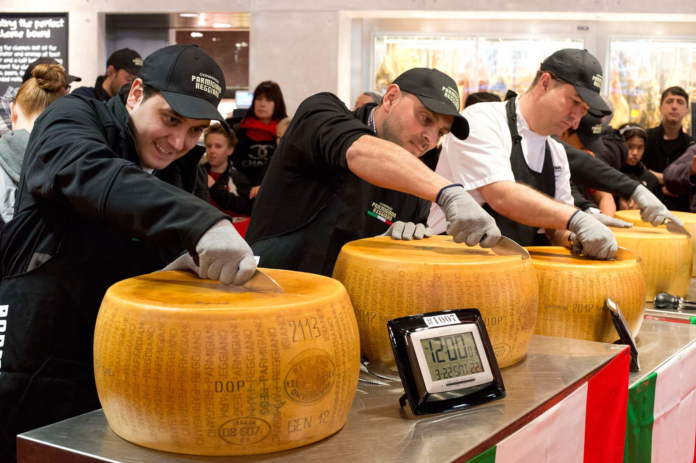
Loblaw cracks its way into Guinness World Records in 2014 - world record for the most Parmigiano Reggiano cheese wheels cracked simultaneously. Photo: Loblaws
In a celebration of culinary tradition and Italian heritage, Loblaw Companies Ltd. and Parmigiano Reggiano will attempt to break the Guinness World Records title for the Most Parmigiano Reggiano wheels cracked simultaneously (multiple venues) on Saturday, June 14, 2025, at 12:00 PM EST.
The massive cheese-centric event will unfold in more than 450 Loblaw-affiliated stores across Canada, marking one of the most expansive retail food activations of the year and spotlighting the rich cultural legacy of Italy’s famed “King of Cheese.”
Timed to coincide with Italian Heritage Month, the record attempt not only honours a centuries-old food tradition but also brings together communities nationwide. Participants will witness the skilled and theatrical process of opening massive Parmigiano Reggiano wheels using traditional cracking tools—an art that dates back nearly a millennium.
The current record, set by Parmigiano Reggiano and Loblaw in 2014, saw over 1,000 wheels cracked in unison. The 2025 event is expected to exceed that benchmark, creating a new moment of international recognition for the PDO-certified cheese and its Canadian retail partner.
Toronto’s Loblaws at Maple Leaf Gardens as Hero Location
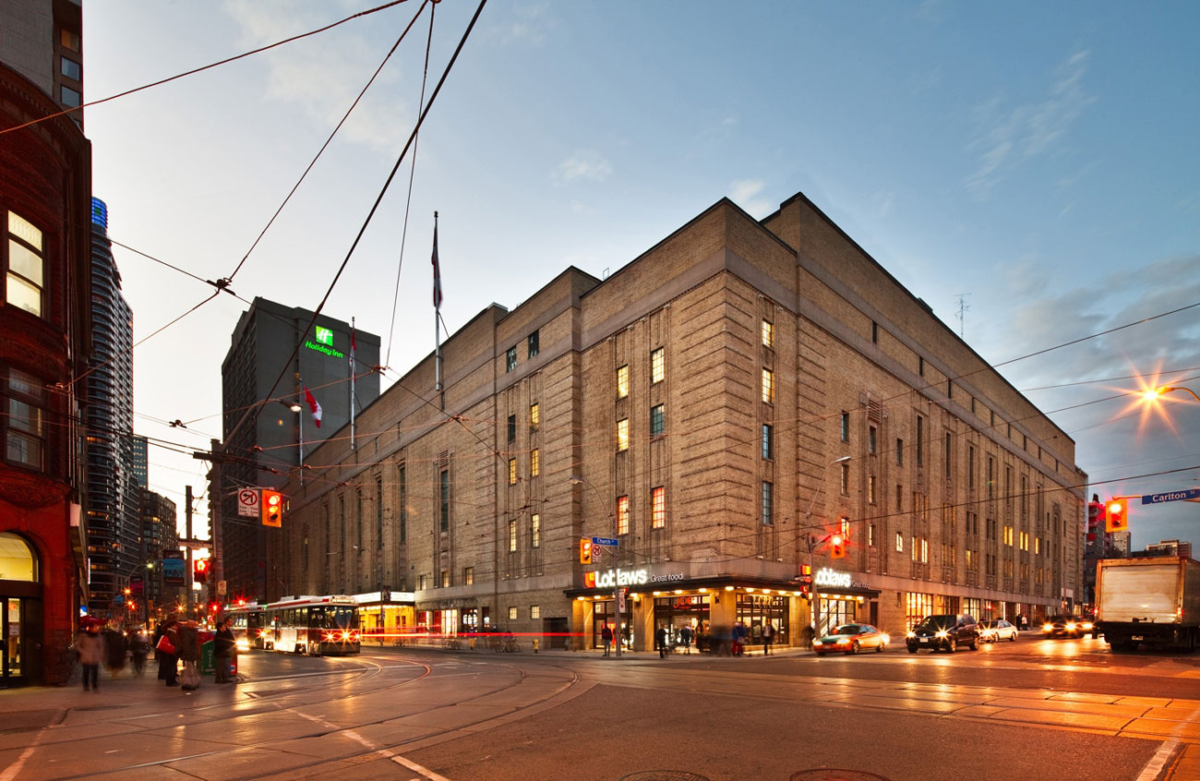
The hero venue for the event will be the Loblaws flagship store at Maple Leaf Gardens, located at 60 Carlton Street in downtown Toronto. Between 12:00 PM and 2:00 PM, 20 wheels of Parmigiano Reggiano will be cracked live on site. The event will feature appearances from representatives of The Consortium of Parmigiano Reggiano, Loblaw Companies Ltd., and celebrity chef David Rocco, who will act as brand ambassador for the cheese.
Beyond the record-setting spectacle, shoppers will be invited to sample freshly cracked Parmigiano Reggiano and learn more about what makes the cheese unique. As a Protected Designation of Origin (PDO) product, genuine Parmigiano Reggiano can only be produced in select Italian provinces—Parma, Reggio Emilia, Modena, Bologna (to the west of the Reno River), and Mantua (to the south of the Po River).
Store visitors can expect cheese tastings, photo opportunities, and, at select locations, appearances by local chefs and influencers. The event aims to both educate and entertain, providing insight into one of the world’s oldest and most revered cheeses.
Loblaws at Maple Leaf Gardens in Toronto. Photo: Loblaws
About Parmigiano Reggiano and Its Consortium
The Consortium of Parmigiano Reggiano, founded in 1934, is the governing body that represents all Parmigiano Reggiano producers. The group safeguards the cheese’s authenticity, ensures quality control, and promotes global awareness of its PDO designation.
Parmigiano Reggiano is still made the same way it was nine centuries ago, using just three ingredients—milk, salt, and rennet—with no additives. The cheese is aged for a minimum of 12 months, and only those wheels that pass rigorous inspection are stamped with the official selection mark.
Each wheel carries a distinctive mark of origin—the dotted Parmigiano Reggiano name embedded into the rind—and from 2002 onward, a casein plate for traceability. These features assure consumers of the cheese’s heritage, quality, and adherence to EU standards.
Loblaw’s National Activation Strategy
As Canada’s largest retailer, Loblaw Companies Ltd. operates over 2,500 locations across the country, ranging from discount grocers to premium banners. The June 14 event will see coordinated activity across a wide swath of these stores, uniting customers coast to coast in a shared culinary experience.
“Our longstanding relationship with Parmigiano Reggiano reflects our commitment to bringing quality, authentic foods to Canadians,” Loblaw stated in its announcement of the event. “By participating in this world record attempt, we’re also supporting cultural appreciation and culinary excellence during Italian Heritage Month.”
The initiative falls under Loblaw’s broader purpose to Live Life Well, which includes efforts to create meaningful in-store experiences, promote health and wellness, and support community engagement through food.
A Multi-City Cheese Moment
While Toronto’s Maple Leaf Gardens location will serve as the visual epicentre of the activation, shoppers across Canada will have the opportunity to witness the event in their local stores. Every wheel cracked in-store will count toward the official Guinness World Records tally, with a formal adjudication process in place to certify the attempt.
Representatives from Guinness World Records will oversee the count and ensure that all participating locations adhere to the established guidelines for a simultaneous, multi-venue record.
Star Power and Culinary Influencers
To enhance public visibility and amplify the event across social platforms, Loblaw and Parmigiano Reggiano have enlisted celebrity chef David Rocco as an ambassador. Rocco is well known in Canada and Italy for his work showcasing Italian cuisine and culture, and his involvement adds prestige to the event.
Local culinary influencers are also expected to attend select locations to create real-time content and amplify consumer engagement.
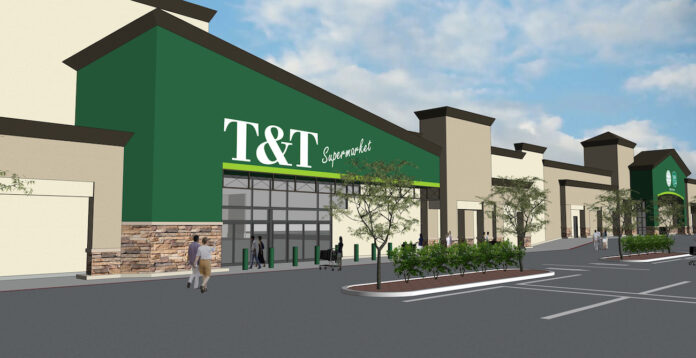
T&T Supermarket to open the largest California store in Chino Hills. (CNW Group/T&T Supermarkets)
T&T Supermarket, Canada’s largest Asian grocery retailer, is continuing its rapid U.S. expansion with the announcement of a major new store in Chino Hills, California. The new 61,000-square-foot location, set to open in Fall 2026 at Crossroads Marketplace, will be the company’s sixth planned U.S. location and its second in Southern California.
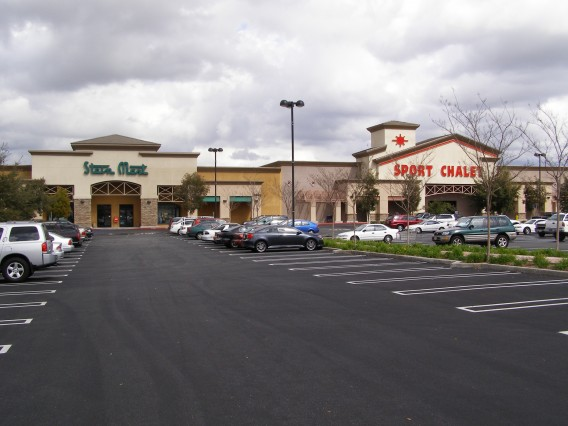
Located at 13017–13021 Peyton Drive in Chino Hills, the upcoming store will occupy two former retail spaces—a Best Buy and a Bed Bath & Beyond—transformed into one unified supermarket space. T&T will join a prominent retail lineup at Crossroads Marketplace that includes Costco and PetSmart, further strengthening the centre’s regional draw.
“We’re so excited to continue our expansion in California,” said Tina Lee, CEO of T&T Supermarkets, in a release. “Chino Hills is a wonderful community to live, and we can’t wait to add to the local food scene. We’re transforming two vacant retail spaces… into one big food destination spanning 61,000 square feet. Get ready for the full T&T experience!”
Full-Service Grocery and Food Destination
The Chino Hills location will bring the full breadth of T&T’s signature offerings to Southern California, combining specialty Asian grocery products with an extensive prepared food program. The store will feature a sushi counter, as well as T&T’s well-known stations for Peking Duck and Roasted Papa Chicken. A self-serve hot food bar will provide restaurant-quality meals at supermarket prices, further enhancing the in-store experience.
T&T’s bakery will be a major highlight, with more than 150 types of breads and over 50 desserts available daily. Popular items include the chain’s viral Mango Pomelo Swiss Rolls, Napoleon Egg Tarts, and Lava Mochi Puffs, which have attracted considerable attention on social media and among food enthusiasts. The store’s product mix will also include a wide variety of Asian snacks, sauces, frozen goods, and pantry staples.
Shoppers will be able to explore a curated selection of Asian wines and spirits, with a particular emphasis on Japanese sake and Korean soju. Additionally, the location will carry more than 200 of T&T’s private-label items, such as juicy pork soup dumplings (Xiao Long Bao), green onion pancakes, Korean kalbi marinade, and a range of seaweed-based snacks. The combination of ready-to-eat food, hard-to-find ingredients, and cultural authenticity is designed to position the new Chino Hills store as a destination for both everyday shopping and culinary exploration.
Job Creation and E-Commerce Presence
The new location is expected to generate approximately 350 jobs in the local community. Hiring is already underway through the company’s U.S. recruitment site.
Crossroads Marketplace. Photo: Tait associates
While the Chino Hills store won’t open until 2026, California customers can currently shop online through the T&T app or website. The digital storefront includes dried goods, snacks, and Asian beauty products. Customers can also sign up for the T&T Rewards Program to access discounts and free shipping options.
T&T’s U.S. Growth Trajectory
T&T’s U.S. expansion began in December 2024 with the opening of a 76,000-square-foot flagship store in Bellevue, Washington—the largest grocery store in that state. That location marked a turning point in the retailer’s growth strategy, building on decades of success across Canada.
In the months following Bellevue’s launch, the company announced additional U.S. locations in Lynnwood, WA; San Jose, CA; San Francisco, CA; and Irvine, CA. Each new store is strategically placed in high-density areas with strong demand for authentic Asian food experiences.
The Chino Hills store, which will be the largest in California to date, represents a continued push into the Southern California market, following the previously announced 34,000-square-foot location in Irvine’s Great Park neighbourhood.
Canadian Retail Legacy
Founded in Vancouver in 1993 by Cindy Lee, T&T Supermarkets has grown from a single store in Burnaby’s Metrotown to over 38 locations across British Columbia, Alberta, Ontario, Quebec, and now the United States. The name “T&T” is a nod to Lee’s daughters, Tina and Tiffany.
In 2009, the chain was acquired by Loblaw Companies Limited for $225 million, a move that accelerated T&T’s national expansion and modernization. Under the leadership of CEO Tina Lee since 2014, the brand has continued to evolve with a focus on experiential retail, private label innovation, and digital transformation.
T&T is widely regarded as a pioneer in the Asian grocery category, with its immersive shopping environments that include live seafood tanks, in-store dim sum stations, and hot food counters, helping to set a new standard in ethnic and specialty retailing.
A Strategic Move into Southern California
Chino Hills, located in the Inland Empire region of Southern California, has become a popular suburban destination known for its quality of life, strong schools, and growing population. The area is home to a large and diverse Asian-American community—making it an ideal location for T&T’s latest expansion.
The Crossroads Marketplace store will allow T&T to build brand equity in the Los Angeles metropolitan area while catering to suburban shoppers who may have previously travelled long distances to access specialty Asian food retailers.
Looking Ahead
As it approaches the opening of multiple stores across California and Washington, T&T is positioning itself as a major player in the evolving U.S. grocery landscape. The brand’s mix of cultural authenticity, modern in-store experiences, and omni-channel convenience appeals to both first-generation immigrants and a growing base of North American customers interested in Asian cuisine and lifestyle.
The Chino Hills store is set to open in Fall 2026, bringing with it not only a broad assortment of food and household items, but also a community-focused destination for food lovers and families alike.
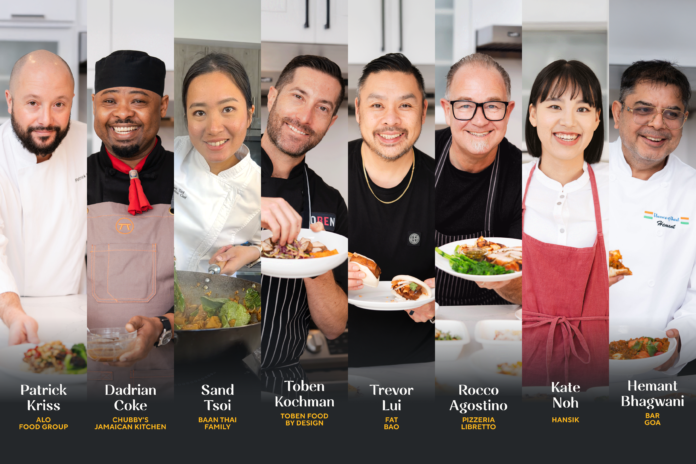
CookUnity announced Thursday the Canadian launch of its 100% chef-led premium meal delivery. The first-of-its-kind service delivers restaurant-calibre meals by A-List chefs, including Toronto Chefs Patrick Kriss and Hemant Bhagwani, directly to Canadians’ doorsteps.
Unlike other meal delivery platforms, CookUnity offers Canadians unparalleled access to an incredible roster of renowned and emerging Canadian and international chefs with over 100 menu items to nourish diverse palates. Customers can mix and match meals from different chefs, with fresh, never frozen, meals across the chef-crafted menu each week to satisfy dietary goals and cravings with no preparation and at accessible price points, said the company.
“For the first time, Canadians will have direct access to an ever-evolving menu of extraordinary meals crafted by top independent chefs, no restaurant reservation required. We’re reimagining how people experience chef-made food at home, and we’re just getting started. Ontario is step one, with investment plans to bring CookUnity to every major market across Canada by early 2026.”
CookUnity said its launch menu will feature standout dishes from top-tier Canadian chefs including “Grilled Chicken & Pine Nut–Chili Salsa” created by Michelin-starred Chef Patrick Kriss of Alo Food Group, “Pad Ka Praow Beef with Thai Holy Basil” by Canadian Chef Sand Tsoi, a graduate from Cookin and one of the hand-picked chefs to launch Toronto’s inaugural Smorgasburg market, “Jamaican Pepper Shrimp” by Chef Dadrian Coke, the chef de cuisine of Michelin-recommended Chubby’s Jamaican Kitchen and “Mongolian Beef & Fried Egg Noodles” by award-winning Chef Trevor Lui of Highbell Hospitality Group. As well as dishes from prominent international chefs, including “Cod in Spicy Moroccan Tomato Sauce” by James Beard Award-semifinalist and Chopped winner Chef Einat Admony, and “Mission-Style Carnitas” by James Beard Award-winner Chef Jose Garces. Each chef brings their signature techniques and distinctive cultural influences to CookUnity’s diverse and dynamic menu.
Michael Baruch
“CookUnity meals are freshly prepared, never frozen, and delivered within 24 hours to maintain the integrity of each chef’s culinary vision,” said Michael Baruch, co-head of CookUnity Canada. “Our approach gives chefs the freedom to concentrate on what they do best: creating flavour-forward meals, without having to worry about expenses like rent or the complexities of sourcing ingredients and managing logistics.”
In line with its mission to redefine the future of food, CookUnity said its production model is convenient and sustainable, too. Meals are delivered in recyclable cooler bags that are picked up with the next delivery. And, with its weekly subscription model, chefs only prepare what has already been sold in local kitchens using locally-sourced ingredients to stop food waste before it begins and to reduce their kitchen’s overall carbon footprint.
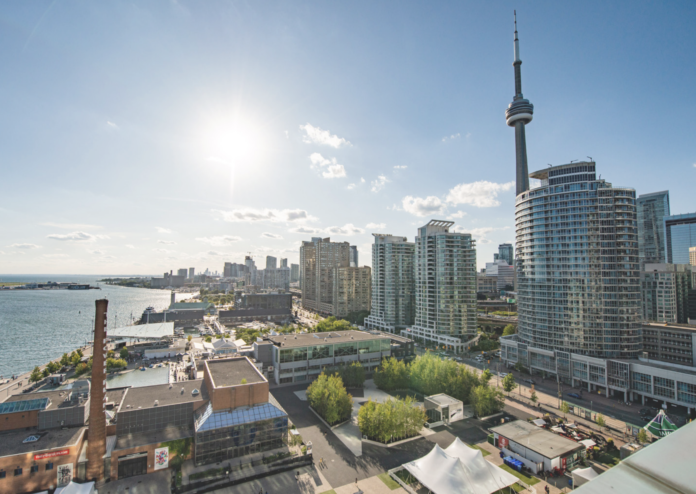
The Toronto Waterfront is rapidly transforming into one of the city’s most dynamic growth corridors, presenting substantial new opportunities for retailers, restaurateurs, and service businesses. With an expanding residential population, major new developments, and targeted initiatives by a number of waterfront stakeholders, the district is positioning itself as an increasingly attractive commercial destination.
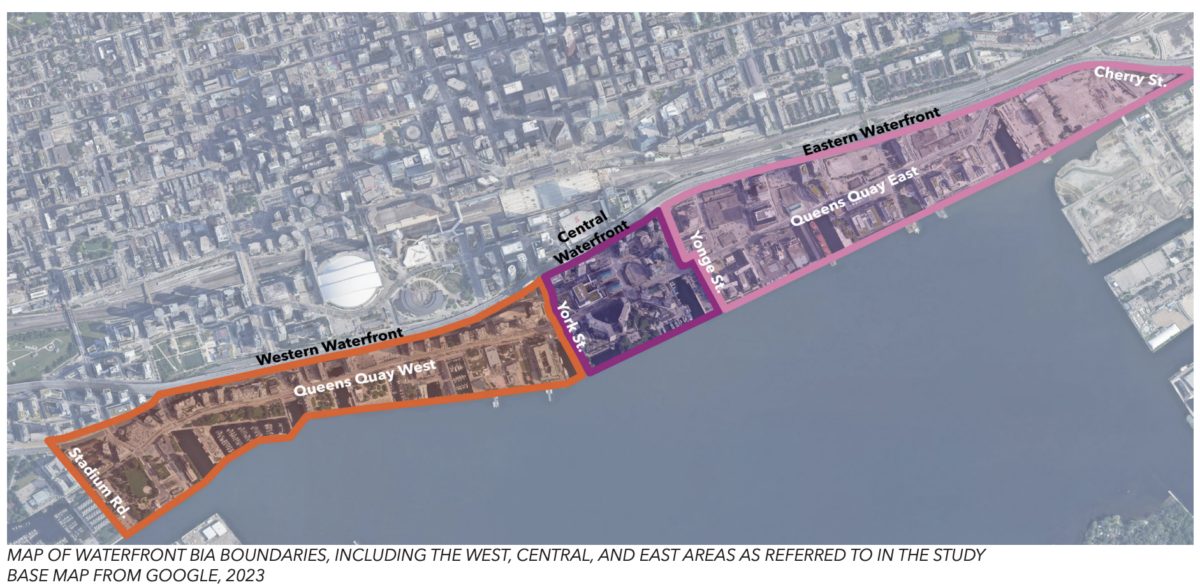
“Since 2010, the population along Queens Quay has grown from roughly 10,000 residents to over 30,000,” explained Tim Kocur, Executive Director of the Toronto Waterfront BIA. “During that same period, we’ve seen job locations along Queens Quay expand from about 10,000 to approximately 30,000 positions.”
This surge in both residents and office workers has created a significantly larger customer base for businesses in the area. As new residential towers continue to rise, particularly in the eastern waterfront districts, the commercial viability of the area grows stronger.
Vacancy Rates Falling Despite New Supply
According to the BIA’s most recent Broker Package for June 2025, the waterfront saw 25 new businesses open in the past year, with the total number of commercial units increasing by 21. While some churn occurred, vacancy rates have actually decreased year-over-year despite the arrival of newly constructed but as-yet unleased spaces in the eastern waterfront.
“A significant portion of the remaining vacancy is concentrated in new developments in the eastern waterfront, which aren’t fully built out yet,” said Kocur. “Some landlords are intentionally holding back space until the local customer base has matured and premium tenants can be secured.”
Wave of New Openings Expanding Retail Mix
Several new tenants have already chosen the waterfront as home. Queens Harbour Restaurant is scheduled to open on July 11, directly beside the successful Amsterdam Brew Pub, adding 600 indoor seats and an additional 160 patio seats. “It’s going to significantly increase the premium dining capacity right on the water,” Kocur noted.
Other recent or upcoming additions include the Ethos Climbing Gym, the new Farm Boy grocery store (which replaced Sobeys about three years ago), and a Shoppers Drug Mart location in the eastern waterfront. “These kinds of tenants are signs that a critical residential population has already moved in,” Kocur explained, adding that many more residents are still expected.
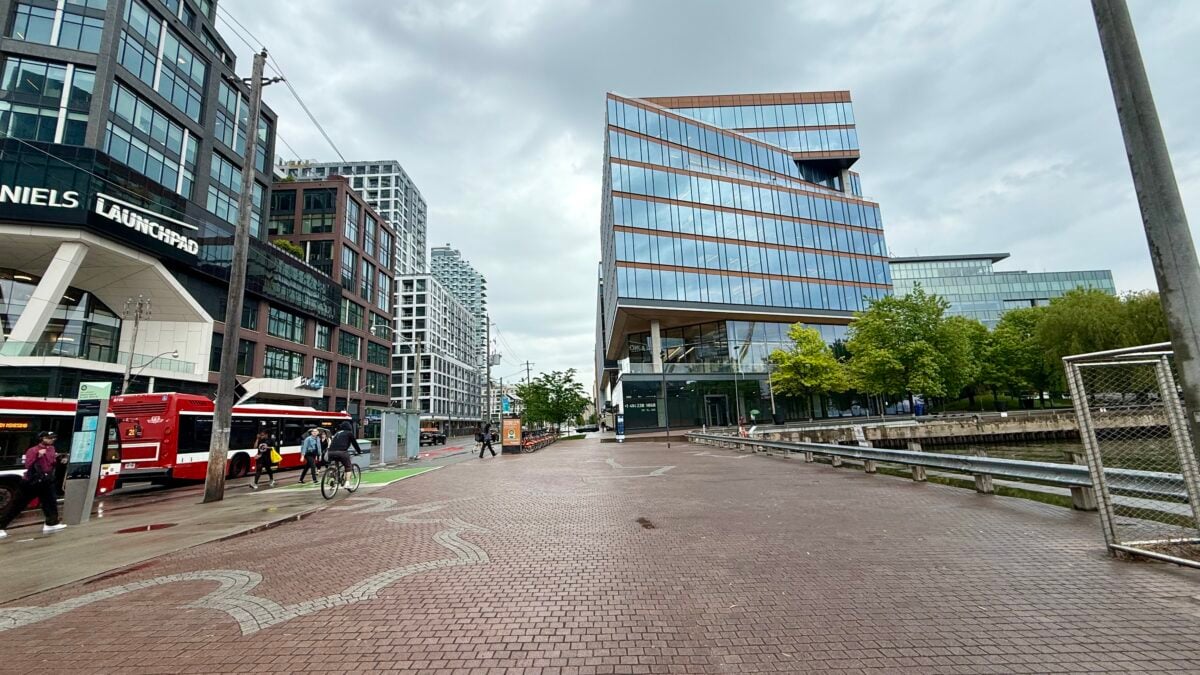
New mixed-use developments with commercial space on the East Waterfront. Photo: Craig Patterson
Wayfinding, Events, and Beautification Initiatives
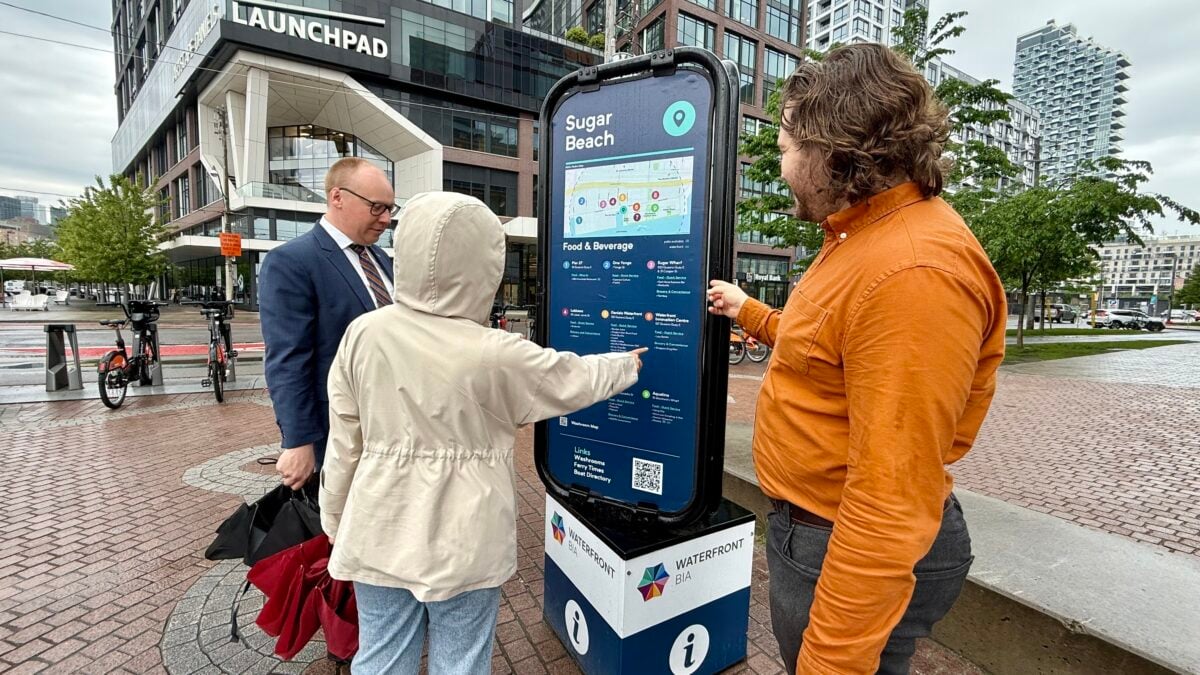
The BIA has taken proactive steps to address longstanding challenges around navigation and visibility. “One issue we’ve consistently heard from businesses is that even visitors only a block away from major destinations like the ferry terminal were asking for directions,” said Kocur.
To combat this, the BIA installed its own network of wayfinding signage throughout the area, with permission from the City. The signs not only provide navigational support but also feature restaurant maps and monthly event calendars. “We’re highlighting where people can eat within 500 metres, and letting them know what’s happening next so they return to the neighbourhood,” Kocur added.
Complementary to the signage efforts, the BIA has partnered with The Bentway, CityPlace-Fort York BIA and the City of Toronto to pilot an enhanced lighting and public safety at the Dan Leckie underpass under the Gardiner Expressway, aiming to make pedestrian connections between downtown and the waterfront more inviting. “The system will be able to be temporarily removed during maintenance work, allowing for both flexibility and consistent safety,” Kocur explained.
New wayfinding signage on the Eastern Waterfront. Photo: Craig Patterson
Eastern Waterfront: A Development Powerhouse in Progress
The eastern waterfront continues to experience significant transformation, with much of its commercial inventory still in early stages.
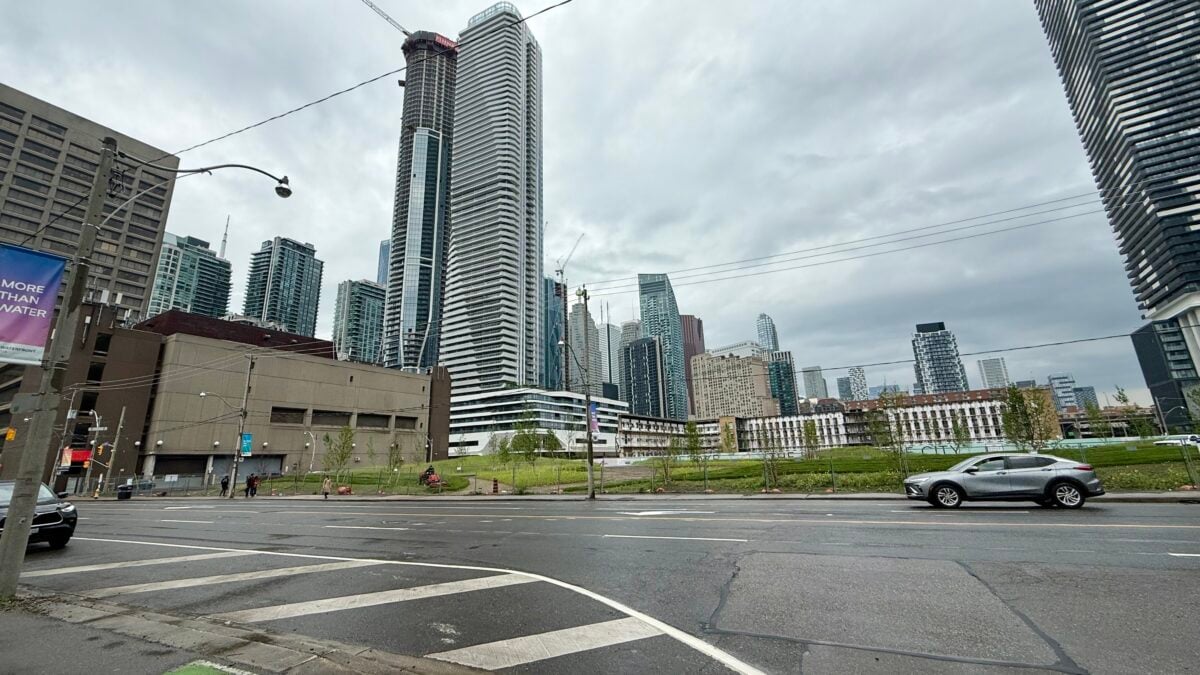
“The density on the eastern waterfront will be significantly higher than on the western side,” noted Kocur. “There are effectively two full blocks of development between Queens Quay and Harbour Street, compared to only one on the west.”
Major projects include the Quayside development, where Dream CA —already the developer behind the Distillery District—is spearheading new retail and residential growth. “Dream’s adjacent properties and their expertise with the Distillery District give us confidence this will become another major waterfront destination,” Kocur said.
The area also benefits from emerging institutional partnerships. George Brown College now owns substantial property in the eastern waterfront, opening possibilities for collaborations with parks, cultural spaces, and foodservice providers. One early focus is activating the long-unused Sherbourne Pavilion, originally designed for foodservice but long repurposed for parks storage. “We’re now seeing opportunities for seasonal activations there—skate giveaways, hot chocolate stands—which hint at the longer-term potential,” said Kocur.
New skyscrapers and commercial space under development on the Eastern Waterfront. Photo: Craig Patterson
Major Long-Term Opportunities Identified as Part of the 2024 Waterfront Retail Review
Redpath Sugar Refinery: “This 300-metre industrial frontage could host retail or museum spaces highlighting Toronto’s food and industrial heritage when the office portions of the building are re-developed,” said Kocur.
Rees Street Parking Lot Redevelopment: Positioned just south of the Rogers Centre, this site offers what Kocur called “an incredible opportunity” for sports-themed activations, including potential partnerships with sports teams for game-day viewing and foodservice tie-ins.
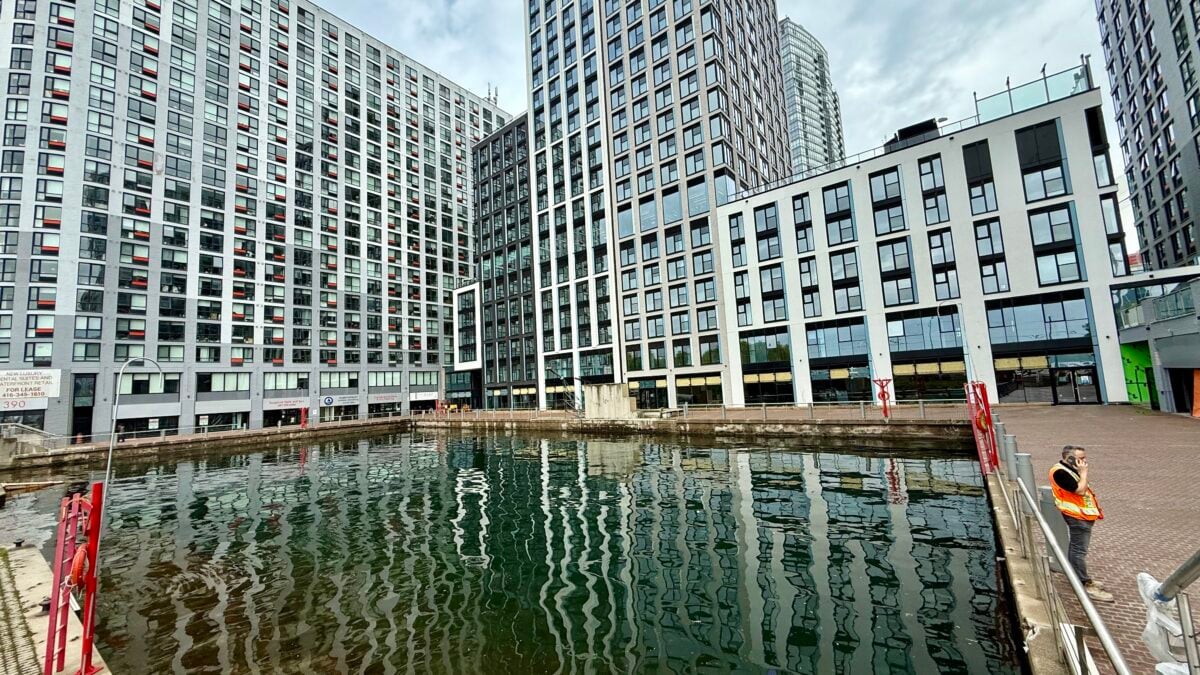
Peter Street Basin: With hotel developments already planned, Kocur noted that the city and developer need to collaborate on activating this underutilized basin area, potentially expanding parkland or patio spaces for waterfront restaurants.
Peter Street basin, a target for suggested redevelopment that could include covering the water feature. Photo: Craig Patterson
Focused Vision for Rees Street Park and Peter Street Basin
As part of the ongoing planning for the western waterfront, the Waterfront BIA has placed particular emphasis on the future of Rees Street Park and Peter Street Basin.
“The Rees Street parking lot, located directly south of Rogers Centre, represents one of the best opportunities we have to create a vibrant public park with commercial activation,” said Kocur. The BIA advocates for a balanced design that incorporates playgrounds, dog parks, quiet areas, and highly valuable commercial uses, such as outdoor dining and sports event viewing zones. “We believe that including features like a large screen for sports games could offer 180 days of seasonal programming and draw significant foot traffic to local businesses.”
For the nearby Peter Street Basin, which sits adjacent to the future hotel development at 350-396 Queens Quay West, the BIA has formally submitted its position to the City of Toronto. In an April 29, 2025 letter to City Planning, the BIA emphasized that the basin is currently in disrepair, with deteriorating dock walls and no clear maintenance responsibility between municipal departments and PortsToronto. “Without substantial improvement plans, we recommend that the basin water lot be filled in or covered as part of the redevelopment,” the BIA stated. Such improvements would create new public space and better integrate the site with new retail and hospitality uses planned for the adjacent hotel development.
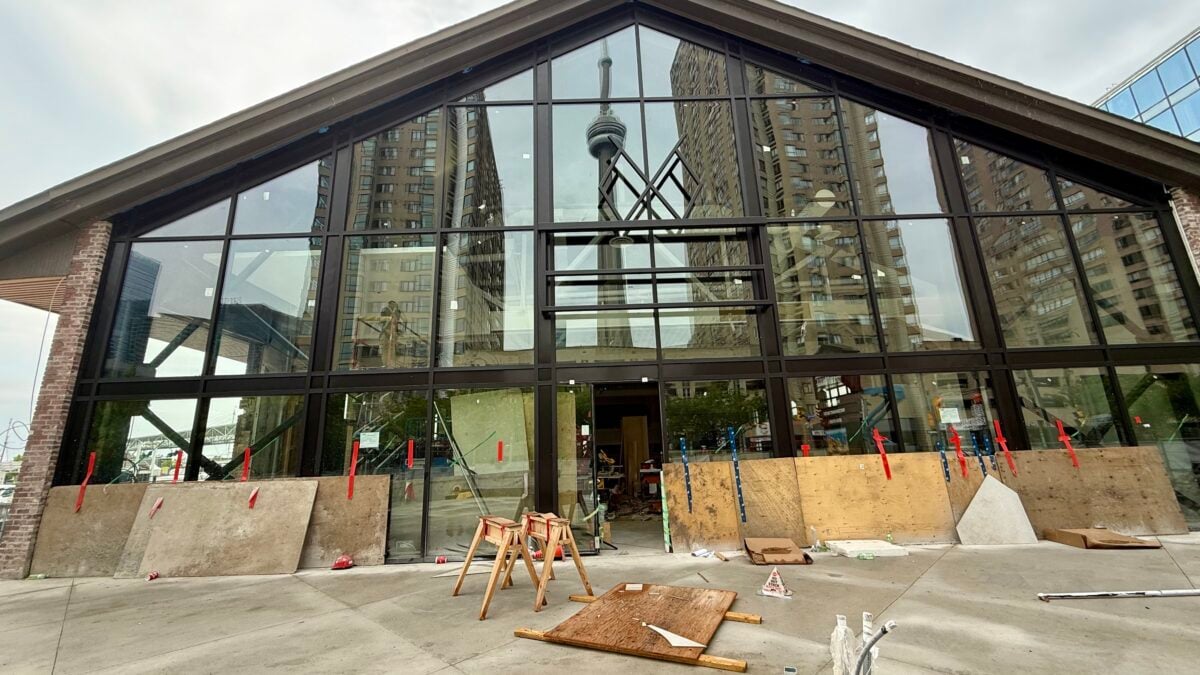
Queens Harbour, under construction. Photo: Craig Patterson
Western Waterfront Remains Stable with Targeted Growth Areas
While the western waterfront has fewer large-scale development parcels remaining, some important nodes of potential remain. The Bathurst Quay area near Billy Bishop Airport will likely see interest in a new hotel development and further activation around the historic Malting Silos.
The western waterfront has also been the focus of ongoing pedestrian enhancements, with colourful underpass murals and improved lighting aimed at increasing visitor comfort. “We’re trying to make it safer and more welcoming to cross under the highway and shop at our waterfront businesses,” Kocur explained.
Photo: Harbourfront Toronto
Tourism, Attractions, and Cultural Anchors Increasing
The waterfront is also strengthening its appeal as a tourist and cultural destination. “Harbourfront Centre has three important attractions this summer: a temporary Ontario Science Centre exhibit, a Museum of Toronto basketball history exhibit, and the long-standing Power Plant Gallery—and two of those are free,” said Kocur.
Further east, future attractions like the Parliament Slip redevelopment promise floating restaurants, boat tours, and more immersive water-based experiences.
Connectivity Improvements On the Horizon
The BIA is also preparing for major connectivity enhancements, including a pedestrian bridge opening in 2027 that will link the eastern waterfront directly to the new parks of the Port Lands. “That’s going to create a whole new zone of pedestrian activity and extend the reach of the waterfront experience,” said Kocur.
PATH network expansions are also under discussion, particularly in the eastern waterfront, to ensure year-round pedestrian access and support for indoor retail spaces.
This month, the TTC introduced dedicated rapid bus lanes along Queens Quay East, where the Waterfront East LRT — which will eventually connect Union Station to the new Port Lands development — is planned for future construction.
Connecting downtown to the Port Lands with an active transportation bridge. Image: Waterfront Toronto
An Ecosystem Approach to Future Retail Growth
For Kocur, the ultimate goal is to create a vibrant retail ecosystem that benefits from both residential density and tourism magnetism. “We want more condos, more hotels, more attractions—but it’s equally about making sure we have the right supporting retail, foodservice, and entertainment offerings that will allow people to spend full days here,” he emphasized.
As the Toronto waterfront continues to evolve, the BIA’s approach of marrying short-term leasing opportunities with long-term destination-building appears poised to unlock the area’s full potential. “We want people to explore the entire neighbourhood,” Kocur said. “That means filling in the retail gaps, telling the story of success, and making sure the waterfront becomes one of Toronto’s most vibrant districts for years to come.”
For more information on retail opportunities on Toronto’s Waterfront, the Waterfront BIA has prepared a broker package.
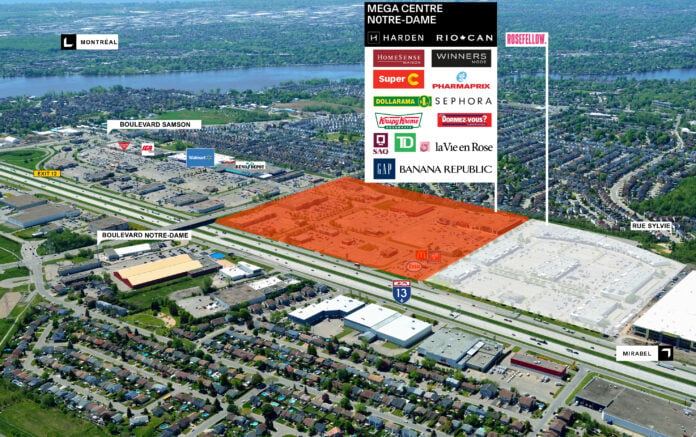
Harden has announced the strategic sale of a 27-acre portion of Méga Centre Notre-Dame in Laval to Rosefellow, a leading Montreal-based industrial real estate developer for a purchase price of $75 million.
This transaction marks a key milestone in the site’s transformation, supporting broader redevelopment efforts and reinforcing a long-term commitment to enhancing Laval’s economic and commercial vitality. Harden co-owns the property with RioCan in a 50% partnership which is dedicated to the site’s evolution and its strategic importance to the region, said the company in a news release.
“As part of a shared vision to unlock the full potential of this highly visible and accessible site along Highway 13, the Harden-RioCan partnership is reinvesting in the retail component of the property following the sale. The portion sold to Rosefellow was a less productive area of the site. This strategic disposition enables targeted reinvestment into the retail core of Méga Centre Notre-Dame, accelerating its transformation into a productive, dynamic destination for residents, workers, and visitors alike,” it said.
“This sale supports a broader redevelopment vision that brings new energy and economic growth to the area. With new retailers like Sephora already open, Krispy Kreme on the way, and major expansions by iconic brands such as Winners/HomeSense, Gap, Banana Republic, La Vie En Rose, Dollarama and Poulet Rouge, Méga Centre Notre-Dame is entering a new chapter that reflects our dedication to creating lasting value for residents and businesses alike.”
The company said the transformation includes the expansion of Winners/HomeSense into one of the largest stores of its kind in Quebec, with a footprint of approximately 70,000 square feet, and a significant expansion by Dollarama. These enhancements, coupled with the arrival of high-profile brands like Sephora, reinforce the centre’s appeal and solidify its role as a commercial anchor in Laval.
“This transaction highlights the strength of our retail portfolio and our ability to strategically unlock value from well-located assets,” said Jonathan Gitlin, President and CEO, RioCan Real Estate Investment Trust. “By monetizing a less productive portion of the site at an 80% premium to IFRS value and reinvesting in its high-performing core, we have strengthened the long-term viability of Méga Centre Notre-Dame and delivered meaningful value for our unitholders.”
Harden said Rosefellow’s planned $200 million redevelopment will introduce three state-of-the-art industrial buildings, meeting the growing regional demand for high-performance logistics and light industrial space. This development will complement the centre’s retail operations, creating a mixed-use hub that draws value from both sectors while serving the evolving needs of the community.
“A dynamic tenant reconfiguration is already underway, with established retailers like GAP, Banana Republic, La Vie En Rose, Carter’s OshKosh, Dormez-Vous, Dollarama, Sushi Shop, Thai Express, Service Canada, and SQDC relocating within the site to optimize layout and enhance the shopping experience. This reimagining also makes room for innovative new concepts, including Mondou’s next-generation store and a refreshed Second Cup café, adding renewed energy and tenant mix to the centre,” said Harden.
“Harden, in partnership with RioCan, continues to actively manage and enhance the remaining portions of Méga Centre Notre-Dame. A portion of these improvements is already complete, reflecting the partners’ ongoing commitment to improve the site’s layout, aesthetics, and visitor experience. This sustained effort underscores their dedication to shaping vibrant, welcoming spaces that support the community and long-term commercial vitality.”
Established in 1985, Harden is a second generation, family-owned real estate company whose primary focus is owning and operating commercial, residential, and industrial properties in many communities throughout the provinces of Quebec and Ontario. Vertically integrated, Harden specializes in all facets of the real estate development process, including, development, construction, leasing, and asset management.
Starting June 30, Executive Members in the US and Canada will receive a $10 monthly credit toward sameday.costco.com, sameday.costco.ca, or Costco via Instacart available on an order of $150 or more, said the company.
The company said it enables delivery of Costco’s warehouse items to members’ doorsteps in as fast as an hour, combining a flexible delivery experience with the value of Costco’s quality offerings. The monthly credit is automatically applied to a qualifying Costco order placed through sameday.costco.com, sameday.costco.ca, or Instacart and is available exclusively to Executive Members.
“Our new monthly credit makes it easier than ever for members across North America to get Costco’s warehouse items with the convenience of fast and reliable delivery through Instacart.”
Costco first partnered with the company for same-day delivery in 2017 and later expanded the partnership to include Costco’s same-day delivery website.
Instacart, the leading grocery technology company in North America, works with grocers and retailers to transform how people shop. The company partners with more than 1,800 national, regional, and local retail banners to facilitate online shopping, delivery and pickup services from more than 100,000 stores across North America on its Marketplace.
“Instacart makes it possible for millions of people to get the groceries they need from the retailers they love, and for approximately 600,000 Instacart shoppers to earn by picking, packing and delivering orders on their own flexible schedule. The Instacart Platform offers retailers a suite of enterprise-grade technology products and services to power their e-commerce experiences, fulfill orders, digitize brick-and-mortar stores, provide advertising services, and glean insights,” it said.
“With Instacart Ads, thousands of CPG brands – from category leaders to emerging brands – partner with the company to connect directly with consumers online, right at the point of purchase. With Instacart Health, the company is providing tools to increase nutrition security, make healthy choices easier for consumers, and expand the role that food can play in improving health outcomes.”
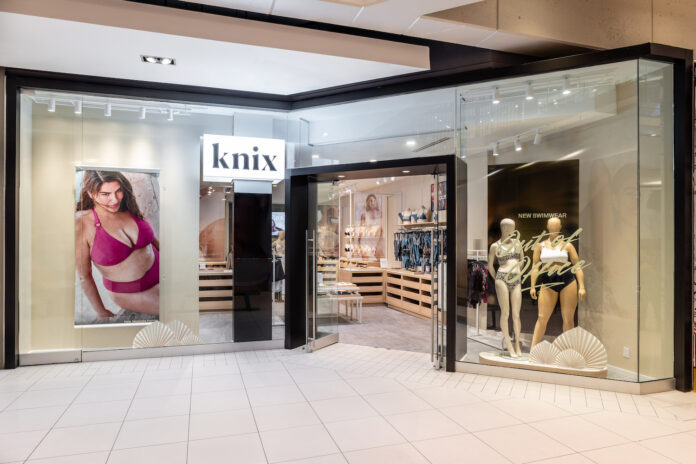
Knix at CF Rideau Centre in Ottawa. Photo supplied
Canadian intimate apparel brand Knix has officially re-opened its Ottawa store at CF Rideau Centre. The store, located at 50 Rideau Street in downtown Ottawa, re-opened to the public last week, introducing customers to a refreshed design and an updated shopping experience.
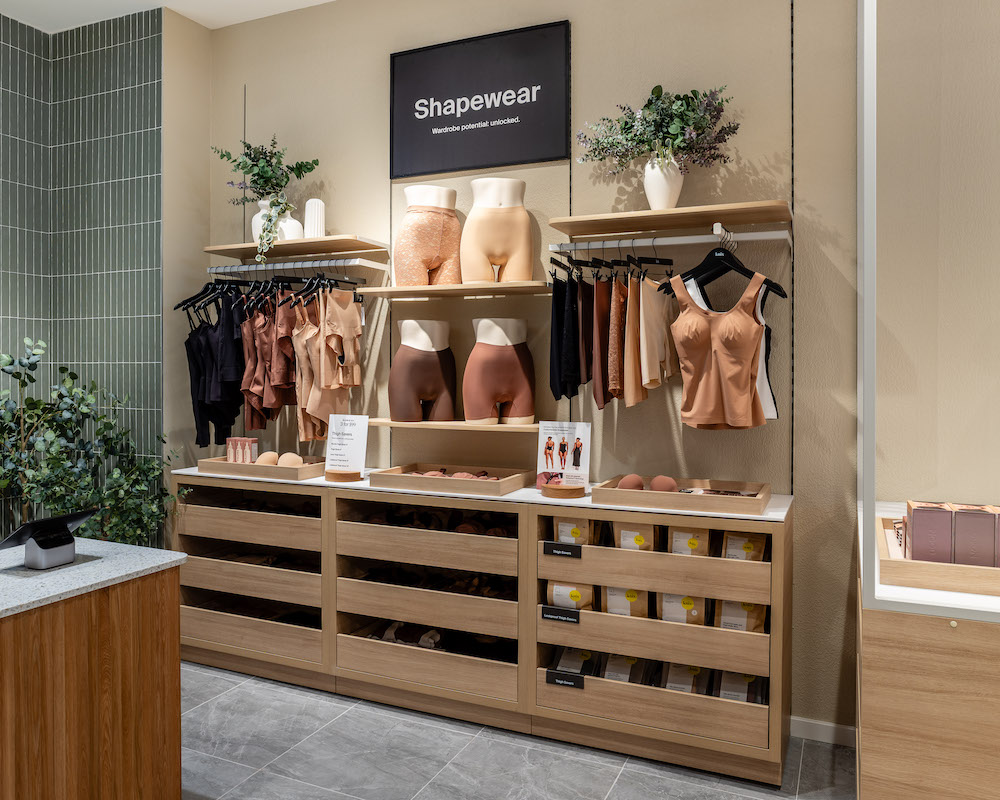
The CF Rideau Centre store reflects the design model recently implemented at Knix’s flagship store on Queen Street West in Toronto. This updated prototype combines an elevated store aesthetic with a new self-service retail model that changes how customers engage with Knix’s product offerings.
Self-Service Model Introduced
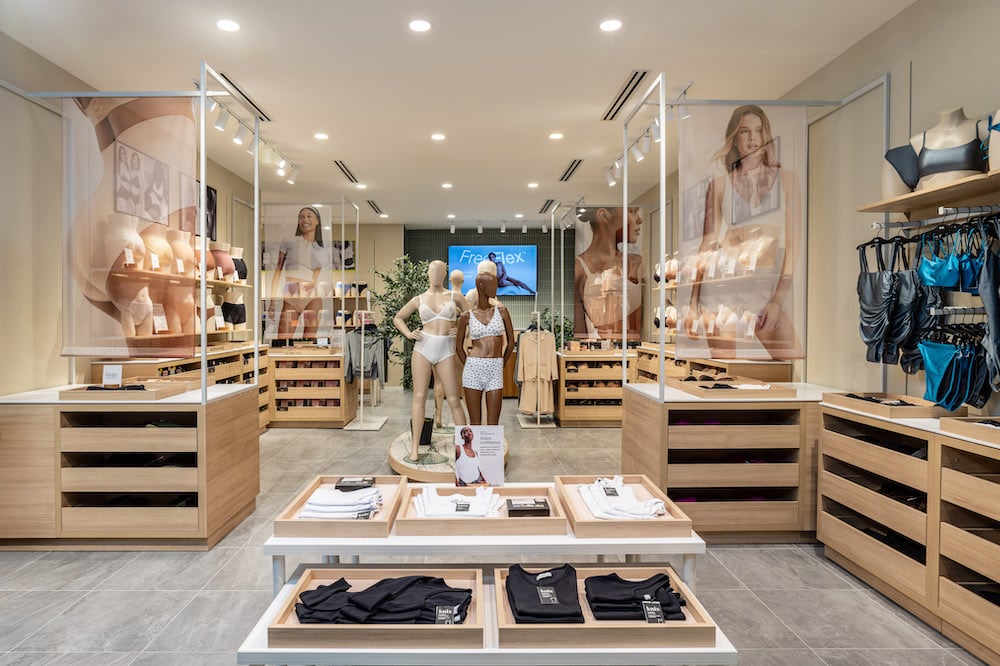
A major feature of the new Ottawa store is the adoption of a self-service shopping format. In this system, customers are able to browse merchandise on the sales floor, select items, and proceed to the fitting rooms independently. Store staff remain available for assistance but are not required to retrieve sizes or manage fitting room access.
The self-service model is designed to offer customers greater control over their shopping experience, allowing them to interact with products at their own pace. The model emphasizes convenience and autonomy, aligning with Knix’s broader brand positioning around empowerment and comfort.
Knix at CF Rideau Centre in Ottawa. Photo supplied
Operational Changes Supporting the Model
The self-service approach also offers operational benefits. By enabling customers to select items directly, the store can serve more shoppers at one time, potentially improving sales floor efficiency and reducing wait times. The format simplifies inventory management and restocking processes, while optimizing staffing needs during operating hours.
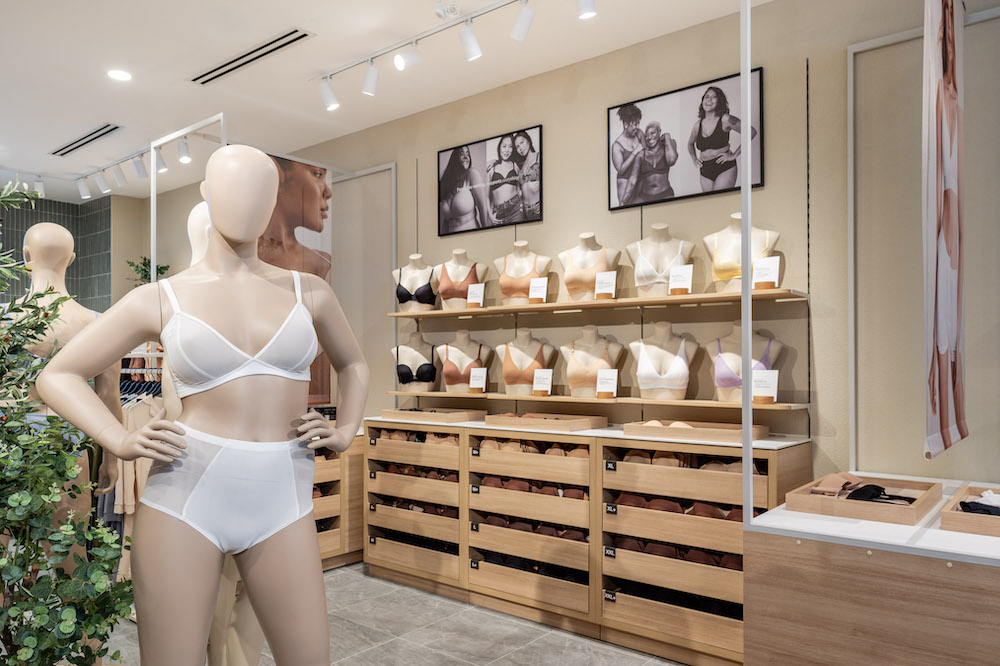
The store layout features dedicated areas for core product categories, including specific display bars for bras, underwear, and activewear, as well as a designated section for the Kt by Knix line, which is focused on period underwear for teens.
Elevated Design Reflects Brand Maturation
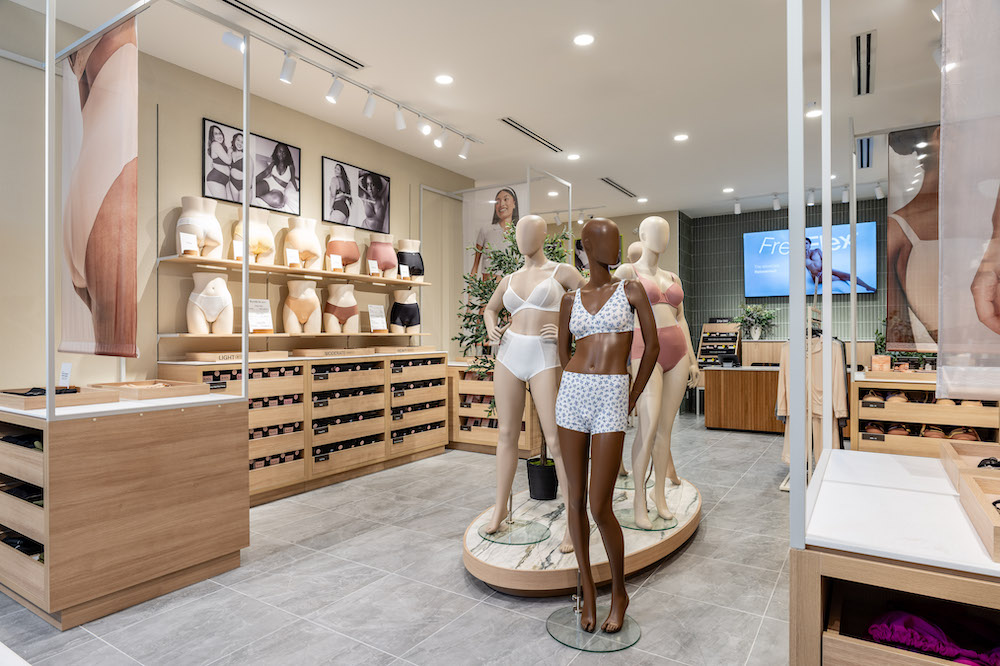
The new store design introduces a more refined visual aesthetic compared to earlier store models. The updated interior features a warmer and more polished appearance, replacing some of the utilitarian design elements used in Knix’s earlier retail locations.
The Ottawa store also reflects Knix’s continued focus on inclusivity. Mannequins are displayed in a variety of body shapes and skin tones, consistent with the brand’s emphasis on body positivity and customer representation.
Knix at CF Rideau Centre in Ottawa. Photo supplied
Part of Broader Retail Expansion
The CF Rideau Centre re-opening is part of Knix’s ongoing retail expansion. The company operates additional Canadian locations in the Greater Toronto Area, Vancouver, Calgary, Edmonton and Winnipeg.
The Queen Street West location in Toronto, which reopened last month with this updated format, has served as a test site for the brand’s revised store concept. Knix has indicated that this store serves as a prototype for future locations, informing decisions about store design and customer experience across the brand’s network.
Knix Brand Overview
Knix was founded in 2013 by Joanna Griffiths. The company originally focused on creating leakproof underwear, a category that helped establish Knix as a major player in the intimate apparel market.
Since its founding, Knix has expanded its product line to include wireless bras, swimwear, maternity wear, shapewear, sleepwear, loungewear, and activewear. Knix also introduced Kt by Knix, a sub-brand developed specifically for teens and tweens.
The company is known for marketing that features women of different ages, sizes, and backgrounds, supporting Knix’s ongoing focus on body positivity and representation.
Knix at CF Rideau Centre in Ottawa. Photo supplied
Business Growth and Ownership
Knix began as a wholesale business, including partnerships with Hudson’s Bay. In 2016, the company shifted to a direct-to-consumer model, allowing greater control over its brand narrative and customer engagement.
In 2022, Knix entered into a majority acquisition agreement with Essity, a global health and hygiene company headquartered in Sweden. Essity acquired an 80% stake in Knix for US$320 million. Joanna Griffiths retained a minority ownership position following the transaction.
Knix has been recognized for its rapid growth. In 2020, Strategy magazine named Knix “Brand of the Year.” The company has also received industry recognition for innovation and leadership in women’s empowerment and sustainability.
Knix at CF Rideau Centre in Ottawa. Photo supplied
CF Rideau Centre: A Key Location
CF Rideau Centre is a significant retail property in Knix’s national store network. The centre sits in the heart of Ottawa’s downtown core, close to Parliament Hill, the Rideau Canal, and the ByWard Market.
CF Rideau Centre is owned and operated by Cadillac Fairview. Following a major renovation and expansion completed in 2016, the centre offers approximately 180 stores and services, including retailers such as Simons, Harry Rosen, Anthropologie, Kate Spade New York, Tiffany & Co., and Zara.
The expansion added 550,000 square feet of retail space and incorporated design updates such as a four-level atrium, a central skylight, new quartz flooring, glass guardrails, and integration with Ottawa’s Light Rail Transit (LRT) system. The centre draws nearly 20 million visitors annually, making it the largest shopping mall in the National Capital Region as well as the busiest.
Rooted in the warmth and conviviality of Italian dining culture, Florin is a new restaurant experience in Toronto that offers exceptional quality in drinks, wine, food, and ambiance.
“Inspired by a family vacation to Florence that celebrated the city’s rich history and vibrant culinary scene, Florin is the latest concept from Turner Hospitality Group—the family-run team behind Mother Tongue, Liquid Courage, Twist, and Magnones. Paying homage to the best trattorias in Florence, Florin brings a refined yet approachable dining experience to Toronto’s Financial District,” said the company in a news release.
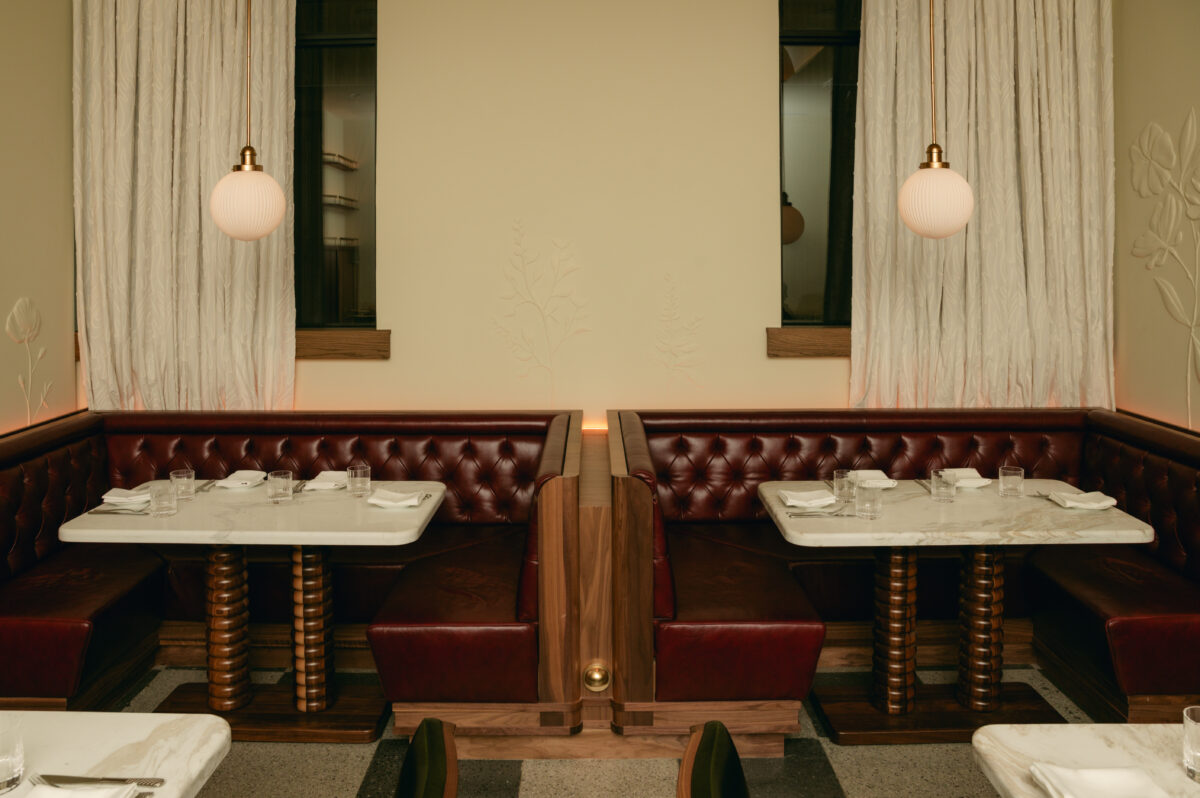
Photo: Florin
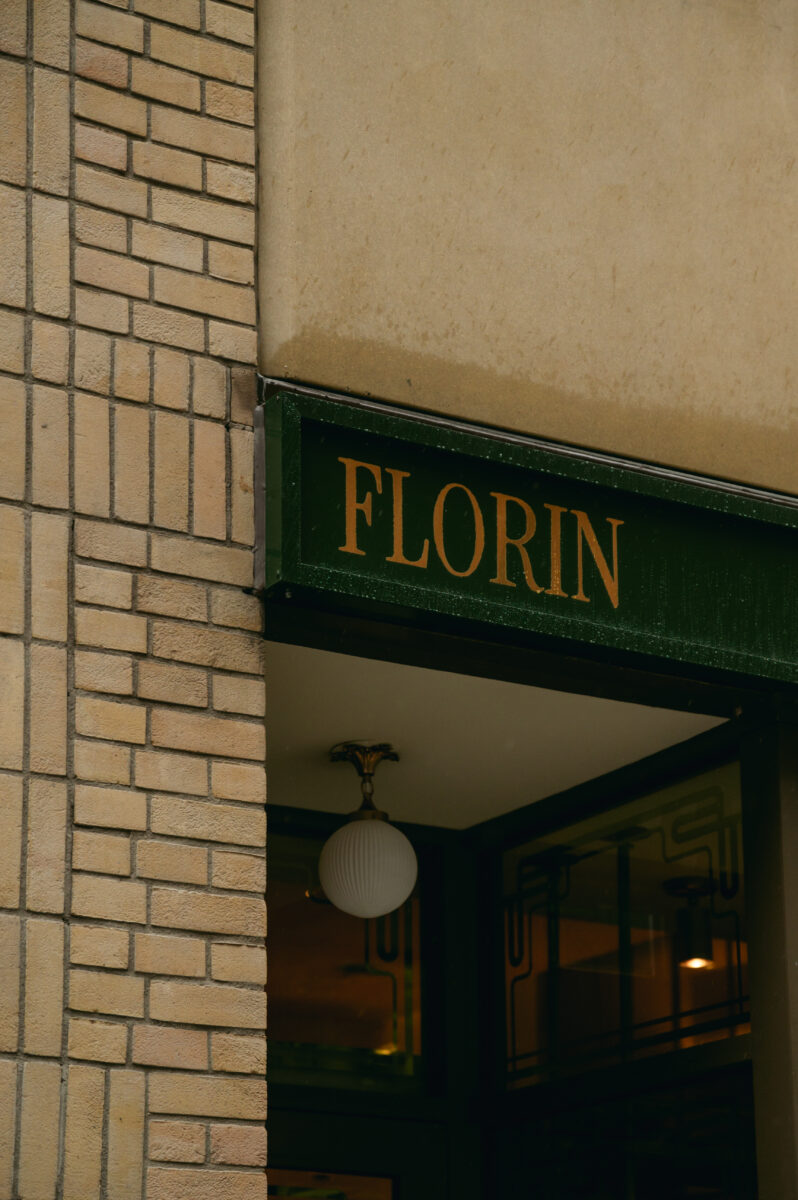
“Named after the Florentine coin, the Florin, Turner Hospitality Group thoughtfully blends history and modernity at this contemporary trattoria. Inspired by Florence, the name pays tribute to the city’s heritage and the building’s 1920s roots in Toronto’s Financial District.
“Helmed by Chef de Cuisine Brian Kang (DaNico, Don Alfonso), and Executive Chef de Cuisine Francis Bermejo (Mother Tongue, Bar Buca), the menu features Bistecca alla Fiorentina, a thick-cut T-bone steak, Gnudi – a Tuscan ‘nude ravioli’ stuffed with ricotta and spinach, specially crafted in-house pasta, and luxurious items like the L’Astice; Nova Scotia lobster, cannellini bean stew, maitake mushroom, escarole involtini and topped with trout roe and lobster jus. Florin distinguishes itself from its Italian neighbours in the city by transforming traditional iconic dishes into local creations that draw in food lovers looking for a sense of discovery and distinction.”
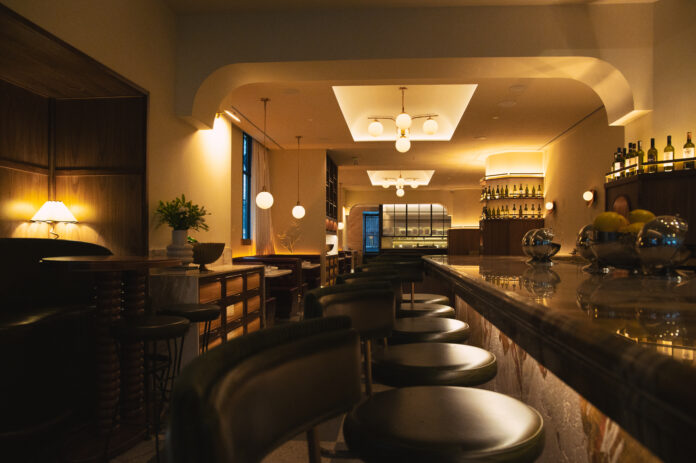
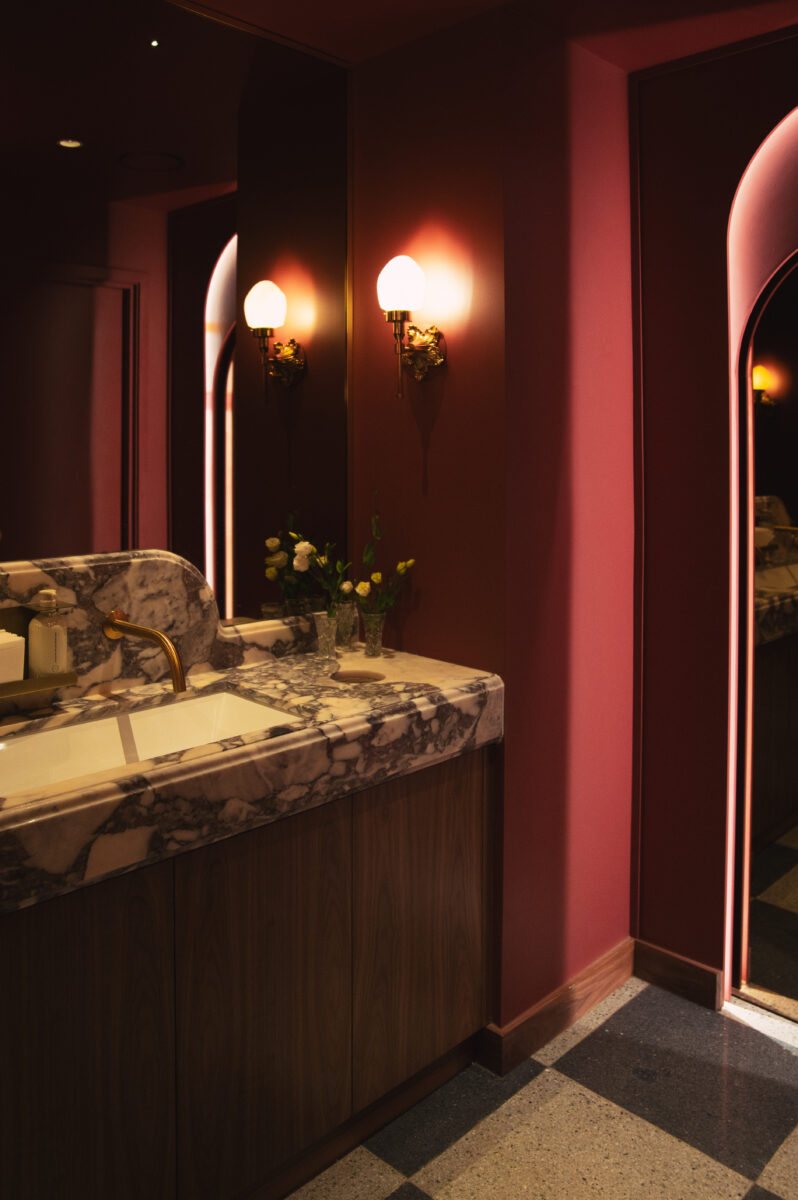
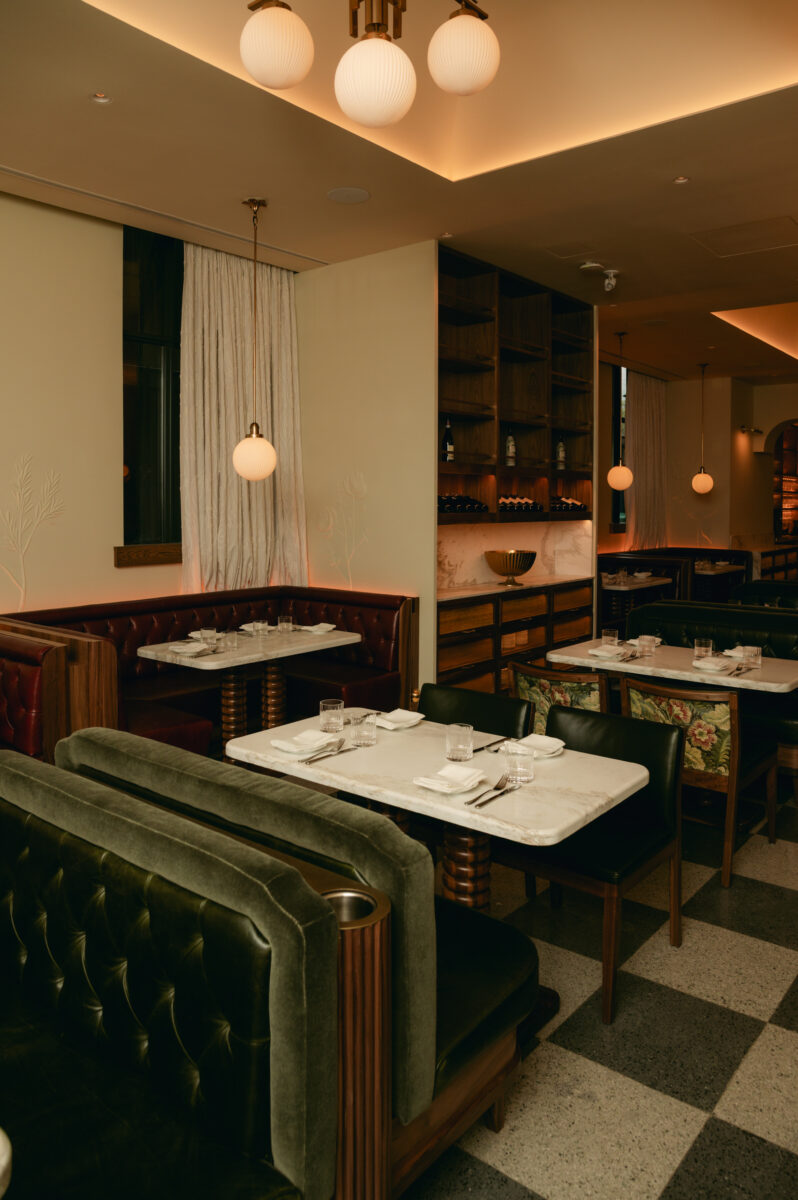
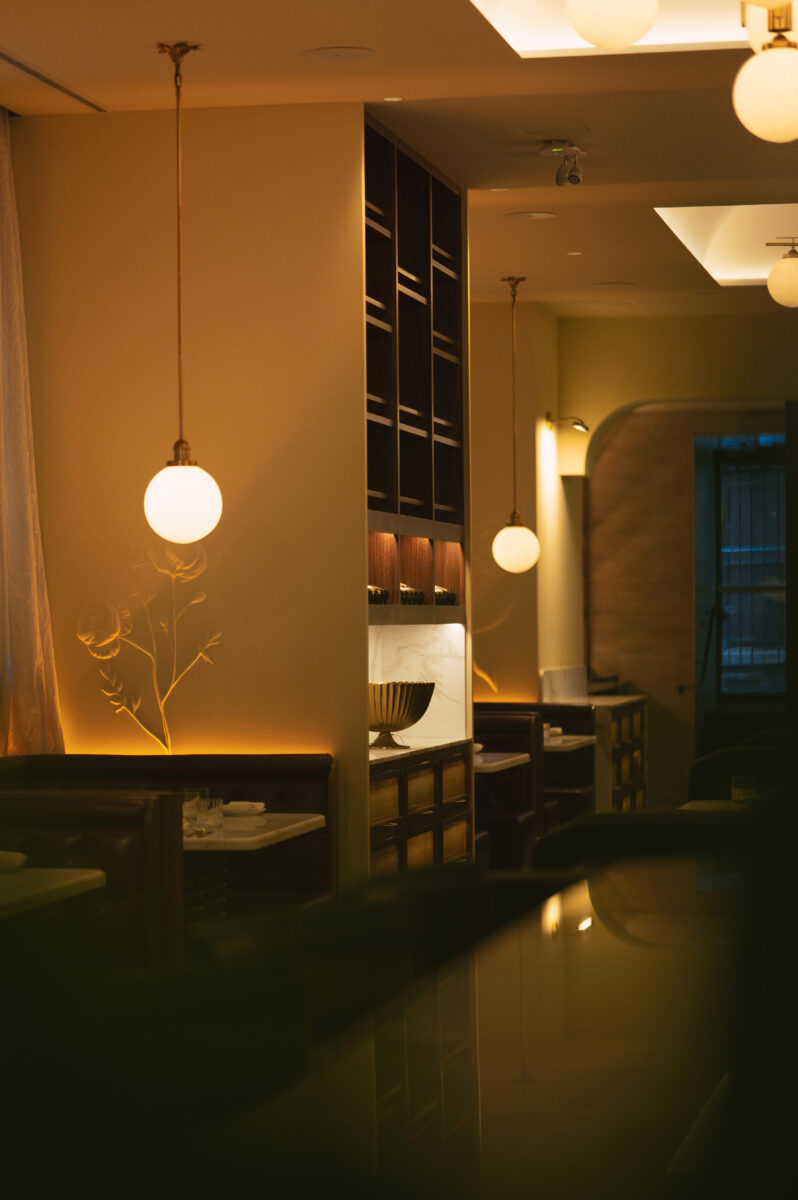
With design elements reflecting Florence’s artistic charm, including wine displayed in windows, this space adds a unique nod to the iconic cobblestone streets and Tuscan cellars. The space seamlessly merges old-world tradition with refined, contemporary flair, feeling revamped yet familiar, said the restaurant.
“Florin brings dining back to its roots: a place to gather, reconnect with old friends, make new ones, and build relationships over great food and drink. Filling the gap in Toronto’s dining landscape, Florin brings a European-inspired culinary experience to the Financial District, where exceptional food, wine, and service are delivered with sophistication. It’s world-class hospitality in a refined, friendly setting sets a new standard in Toronto for Italian-style dining. Florin blends authentic culinary traditions with a lively, modern Toronto spirit- creating a space where dining feels exceptional, warm and inviting,” it said.