Home Blog Page 446

Canadian Shoppers Prioritize Value and Caution This Holiday

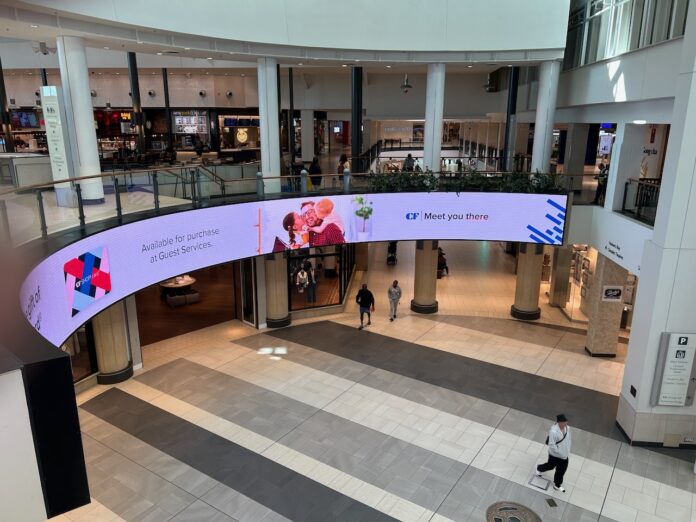
Holiday shopping at CF Toronto Eaton Centre. Image: Dustin Fuhs

Canadian consumers are increasingly frugal as economic uncertainty looms, with Black Friday and Holiday spending reflecting careful decision-making, according to recent surveys conducted by DIG360 in partnership with the Angus Reid Group.

“This year, we observed that frugality isn’t just a trend but a dominant force,” said David Ian Gray, founder and strategist at DIG360. “Shoppers are prioritizing needs over wants, hunting for deals out of necessity, not excitement.”

David Ian Gray

The surveys, which took place immediately after Cyber Monday and the first week of December, paint a picture of cautious spending and growing cynicism about holiday promotions.

Black Friday Participation Holds Steady, but Cynicism Grows

Approximately 70% of Canadians engaged in Black Friday promotions this year, consistent with 2023 but markedly higher than pre-pandemic levels of around 50%. Despite this, Gray highlighted an underlying dissatisfaction among consumers: “Most shoppers rated the deals as poor, which aligns with retailers attempting to protect margins.”

In fact, 49% of those who made purchases reported encountering misleading advertisements or what they considered “fake discounts”. Gray noted this growing cynicism could present long-term risks for retailers: “The more consumers distrust the deals, the less effective these promotions will become.”

A notable shift in 2024 was the concentration of purchasing in the final week of November, which Gray attributes to last-minute decision-making. “More units likely moved, but they came at lower price points, benefiting value-focused retailers the most,” he explained.

Black Friday Promotions Overwhelm Many Consumers

The survey uncovered a notable consumer sentiment: promotional fatigue. Over half (56%) of Canadians reported feeling overwhelmed by the sheer volume of Black Friday advertising.

“This is a signal for the industry to re-evaluate its reliance on daily promotions,” said Gray. “The constant push of discounts – may deliver short-term gains, but it erodes brand loyalty and consumer trust over time.”

Postal Strike Impacts Online Shopping

With the Canada Post strike beginning mid-November, 64% of online Black Friday shoppers reported shipping delays. This figure was up slightly from 56% in 2023, signaling mild but notable disruptions.

Looking ahead, concerns about delivery timelines remain high: 71% of online Black Friday buyers expressed apprehension about receiving their holiday purchases on time. This uncertainty has made brick-and-mortar stores an attractive fallback.

“Physical stores are becoming more critical as we approach Christmas,” Gray observed. “When shoppers want certainty, they’re more likely to rely on in-store shopping.”

Holiday Gift Spending Down Amid Economic Constraints

As December began, 87% of Canadians planned to purchase gifts for the holiday season. However, the surveys revealed a significant divide along income lines:

  • 21% of households earning under $50,000 reported they would not buy gifts.
  • In comparison, just 7% of households earning over $100,000 planned to skip gifting entirely.

Self-reporting spending is down for Holidays in every category, including travel, Holiday events, and dining out. Gray pointed to this as evidence of economic strain. “We’re expecting fewer gifts per household and smaller ticket items prioritized. It’s not that people are skipping gifting altogether, but they are being selective, postponing expensive items until the price is right.”  The only constant reported was spending time with family and friends – just not at a cost.

Amazon Dominates, but Physical Stores Play Key Role

When asked where shoppers sought inspiration for holiday gift ideas, Amazon dominated the results:

  • 63% of respondents turned to Amazon for ideas.
  • TEMU and Shein registered minimal influence, at 7% and 3% respectively.
  • Despite media attention, only 3% of shoppers reported using AI tools like ChatGPT for inspiration.

The physical store resurgence also stood out, with 49% of respondents identifying stores as a key source of inspiration, second only to Amazon. “The store remains omni-relevant, and 60% view it as the key channel in the final two weeks before Christmas,” said Gray. “Shoppers want certainty, and physical retail delivers that when online reliability falters.”

Notably, 41% of online shoppers had already experienced delayed, lost, or incorrect orders this season, further emphasizing the dependability of in-store shopping.

Boxing Day Outlook: Fewer Expectations for Deals

Looking ahead, 36% of holiday gift shoppers plan to shop on Boxing Day, a figure below the 50% participation seen on Black Friday this year. However, the surveys revealed deep skepticism: 72% of Canadians believe Boxing Day sales will offer no better deals than those seen on Black Friday.

“The consumer cynicism is clear,” Gray noted. “Shoppers are fatigued, and many simply don’t trust these promotions anymore.”

For retailers, this fatigue may signal a need to rethink their strategies. Rather than prioritizing deep discounts to drive unit sales, Gray suggests focusing on margins and overall brand value.

Second-Hand Gifting on the Rise

Another emerging trend is the mainstreaming of second-hand and vintage gifting. Approximately 31% of Canadian gift-buyers reported incorporating resale, thrift, or vintage products into their holiday shopping.

“The stigma around second-hand gifting appears to be diminishing,” Gray observed. “This reflects both a shift in consumer mindset and the ongoing focus on affordability.”

Performance Marketing and the Long-Term Risks for Retailers

One of the most significant concerns raised in the surveys is the impact of performance marketing at the expense of brand marketing on retail strategies. Gray emphasized that while constant discount-driven messaging can generate short-term sales, it comes at a long-term cost.

“Over-reliance on promotions trains consumers to expect deals, undermines brand equity, and cuts into margins,” he said. “Retailers need to strike a balance between driving immediate sales and building sustainable customer relationships.”

Conclusion: A Cautious, Cynical Consumer Base

The findings from DIG360 and Angus Reid Group highlight a Canadian consumer base that is increasingly cautious, frugal, and cynical about holiday promotions. While Black Friday participation remains high, satisfaction with deals is low, and shoppers are carefully monitoring their budgets.

Physical stores remain a vital player in the retail landscape, particularly as delivery challenges persist. Meanwhile, Boxing Day faces declining consumer enthusiasm as shoppers express doubts about the value of post-Christmas promotions.

“Retailers face a challenging end to 2024,” Gray concluded. “Those who prioritize transparency, value, and reliability will fare best in the face of economic uncertainty. Will this foreshadow more restructurings in 2025? Time will tell.”


More from Retail Insider:

METRO presents its corporate responsibility achievements for 2024

Photo: Metro

METRO published on Thursday its Corporate Responsibility (CR) Report, covering its food and pharmacy activities for the 2024 fiscal year.

Responsible procurement and the fight against climate change remain at the heart of its priorities, said the company in a news release.

“METRO notably disclosed for the first time its results against its five near-term science-based greenhouse gas emission reduction targets set in 2023. The company also continued its partnership with Sphera, formerly SupplyShift, to assess the practices of its suppliers and thus improve transparency within its supply chain. In terms of community investment, METRO continued to roll out its strategy and increased its corporate donations compared with 2023. Finally, the company maintained its efforts to promote a diverse and inclusive organizational culture, making progress towards its equity, diversity and inclusion objectives, it said.

“As we are halfway through implementing our Corporate Responsibility Plan for 2022–2026, our rigorous approach in this regard, anchored in our business practices, continues to create long-term value for the company and our stakeholders. Once again this year, the work of our teams enabled us to make progress on our priorities, and we are on track to achieve most of our objectives within the next two years, ” said Eric La Flèche, President and CEO of METRO.

Eric La Flèche
Eric La Flèche


2024 Highlights

Responsible procurement

  • Continuing partnership with Sphera, formerly SupplyShift, to assess the performance of its suppliers against the principles of its Supplier Code of Conduct for responsible procurement:
    • 19% of its active suppliers assessed, representing 60% of its purchases, i.e. twice as many as in 2023;
    • 91% of these purchases made from suppliers who meet METRO’s expectations.
  • Publication of its first Report Under the Fighting Against Forced Labour and Child Labour in Supply Chains Act, which sets out the measures taken by METRO to prevent and mitigate the risk of forced labour or child labour in its operations.

Environment

  • First disclosure of its results against its five near-term science-based greenhouse gas emission reduction targets set in 2023;
  • Significant improvement in waste diversion rate compared to 2023:
    • Stores: 72%, an increase of 6%
    • Distribution centres: 82%, an increase of 11%.

Reduction of single-use plastic

  • Transition of all Metro Go ready-to-eat meals in Quebec to aluminum containers: 91 tonnes of plastic replaced by aluminum;
  • Participation in a groundbreaking pilot project for sharing reusable containers in Ontario.

Socioeconomic contribution

  • Increase in our financial contribution compared to the previous year, reaching a total of $8 million in 2024, an 8% increase compared to 2023;
  • Over 8.5 million kilograms of food recovered in its distribution centres and stores participating in its One More Bite program, the equivalent of more than 17 million meals redistributed in its communities;
  • Creation of the METRO Shared Kitchens community network: investment of $2 million for the first edition.

With annual sales of more than $21 billion, METRO Inc. is a food and pharmacy leader in Québec and Ontario, providing employment to more than 97,000 people. As a retailer, franchisor, distributor, manufacturer, and provider of eCommerce services, the company operates or services a network of 995 food stores under several banners including Metro, Metro Plus, Super C, Food Basics, Adonis and Première Moisson, and some 640 pharmacies primarily under the Jean Coutu, Brunet, Metro Pharmacy and Food Basics Pharmacy banners.

Related Retail Insider stories:

St. Louis Bar & Grill expands with 3 new locations across GTA

St. Louis Bar & Grill in Sherwood Park Alberta

Aegis Brands Inc. has announced the opening of three new St. Louis Bar & Grill locations in the Greater Toronto Area (GTA). 

The brand has opened four locations this year, bringing its total restaurant count to 82. The three newest stores are part of the company’s second-generation restaurant strategy. This strategy focusses on securing locations with lower build costs, resulting in more attractive returns on the franchisee’s investments, it said in a news release.

The new secondgeneration locations are: 

  • Promenade Mall, Thornhill (Opened September 2024): This location introduces a twist on the dining experience. Guests can now enjoy state-of-the-art golf simulators, marking a first-of-its-kind offering for the St. Louis brand.
  • Yonge & St. Clair, Toronto (Opened November 2024): Situated at one of Toronto’s busiest intersections, this prime location captures the vibrancy of midtown with a thriving after-work and dinner business.
  • Walker’s Line, Burlington (Opened November 2024): The newest St. Louis Bar & Grill is the brand’s second location in Burlington and is ideally situated in a neighbourhood with both a residential and commercial audience.
Steven Pelton
Steven Pelton

“In our continuous efforts to provide superior return on investment, St. Louis has adopted a second-generation restaurant strategy,” said Steven Pelton, President & CEO of Aegis Brands Inc. “Converting existing restaurants to St. Louis allows our franchisees to open much more quickly and with much less capital. This strategy creates a much better return on investment for our franchisees. This also allows for the opening of more restaurants in the near future.

“Additionally these new stores opened with our new menu which is designed to appeal to a broader audience. Wings are and have always been our hero product. However, the menu in these new stores provides expanded options for everyone.” 

The early results from the three new St. Louis Bar & Grill locations have been positive, with increasingly strong traffic and a different sales mix compared to the existing stores in the chain. These results suggest the top line growth is not only a result of the location but also the new, more broadly appealing menu offerings. The new menu will launch in the rest of the St. Louis restaurants in the spring of 2025, said the company.

Aegis currently owns and operates St. Louis Bar & Grill.

St. Louis Bar & Grill is a 100% Canadian-owned and operated casual dining restaurant with 82 locations across Canada. It opened its first location in 1992.

Related Retail Insider stories:

Walmart Canada partners with Salvation Army

Walmart Canada to match donations collected in Christmas pots placed in its stores up to $100,000 (CNW Group/The Salvation Army)

 In collaboration with Walmart Canada, the 15th annual “Fill the Kettle Day” by the Salvation Army will play an instrumental role in ensuring the immediate needs of struggling Canadians are met during the festive season.

During Fill the Kettle Day on Saturday, December 21, Walmart Canada will match donations made by individuals to Salvation Army Christmas kettles in participating Walmart Canada stores nationwide, up to a maximum of $100,000.

John Murray
John Murray

“Every day, more Canadians are struggling with tough decisions,” said Lieut.-Colonel John Murray, territorial secretary for communications. “A recent survey by The Salvation Army found that one in four parents ate less so their children or family members could eat. People across the country are facing impossible choices. With generous donors, supporters and partners such as Walmart Canada, The Salvation Army can be their answer and give hope to vulnerable people when it matters most.”

Since 2007, Walmart Canada and its customers have contributed over $44 million to The Salvation Army. This holiday season, Walmart Canada has already donated more than $55,000 to CTV Toy Mountain in Toronto, Ottawa and Winnipeg, assisting The Salvation Army in procuring new toys for distribution to children in need this Christmas, said the retailer.

Rob Nicol
Rob Nicol

“Walmart Canada takes great pride in helping people live better, which is why we’re very proud to support The Salvation Army every year,” said Rob Nicol, vice president communications and corporate affairs, Walmart Canada. “The Salvation Army does an incredible job bringing Christmas cheer and hope to Canadians in need. Fill the Kettle Day will get everyone in the giving spirit to help The Salvation Army hit their fundraising goal this holiday season.”

With a national fundraising goal of $22 million, the Christmas Kettle Campaign supports programs and services in 400 communities across the country. Last year, more than three million visits were made to The Salvation Army for assistance, said a news release.

When you donate to a Christmas kettle, funds raised stay in the local community to give help and hope at Christmastime and throughout the year. From substance-use recovery and housing supports to life-skills training and emergency disaster services, Canadians are breaking the cycle of poverty and looking to a future filled with peace and security, it said.

“Your generosity on Fill the Kettle Day will alleviate the daily burdens faced by those striving to make ends meet,” said Lieut.-Colonel Murray. “Together we can provide encouragement to those affected by poverty and help them overcome obstacles and achieve goals.”

The Salvation Army, an international Christian organization, started in Canada in 1882 and has since evolved into one of the country’s largest direct providers of social services. It operates in 400 communities across Canada and more than 130 countries worldwide,.

Related Retail Insider stories:

Bell Media and Shopsense AI bring curated shoppable TV to Canadian viewers

Photo by Shopsense
Photo by Shopsense

Bell Media, Canada’s leading media and entertainment company, has partnered with Shopsense AI, the leader in shoppable TV technology, to bring innovative second-screen shopping experiences to millions of Canadian viewers.

This collaboration marks Shopsense’s first expansion outside of the U.S. and the first integration of its powerful Commerce OS into Canadian entertainment programming. The partnership will debut on CTV’s popular daily shows The Good Stuff with Mary Berg and Etalk, said a news release.

Bell Media is now the fifth major media organization to partner with Shopsense since its launch in April, joining an impressive lineup that includes Paramount, Univision, Tastemade, and Nexstar Media Group (The CW), added the release.

Stewart Johnston
Stewart Johnston

“Bell Media is always looking for new and innovative ways to strengthen connections and create an interactive viewing experience for our large and loyal audience,” said Stewart Johnston, SVP, Content and Sales at Bell Media. “Our partnership with Shopsense provides our viewers with a next-level viewing experience, while giving our clients valuable integrated opportunities to engage with consumers.”

The Good Stuff with Mary Berg, a lifestyle series with a strong focus on food, will offer foodie-focused gift guides, host-inspired fashion, and affordable home décor, creating a trendy and hyper-curated marketplace to recreate what viewers are seeing on screen. Meanwhile, Etalk, Canada’s longest running entertainment news program, will introduce a shoppable experience featuring accessible fashion inspired by today’s biggest stars, giving audiences the opportunity to easily recreate their favorite celebrity styles, said the release.

Brands will soon be able to sponsor second-screen experiences during pivotal moments on The Good Stuff with Mary Berg and Etalk, and across both series impressive social media channels, which have a combined reach of over 1.5M followers. A recent eMarketer study found that TV viewers prefer mobile devices to shop for products seen on TV. Engaging living room audiences on the second-screen alongside TV activations offers brands the opportunity to gain incremental time and influence with customers, it said.

Glenn Fishback
Glenn Fishback

“Partnering with Bell Media and launching shoppable TV on CTV is a significant milestone for Shopsense,” said Glenn Fishback, CEO and Co-founder of Shopsense. “Canadians have trusted CTV as a leader in entertainment for years, and this collaboration allows us to enhance their viewing experience while providing innovative solutions for Bell Media’s advertisers.”

Shopsense AI’s Commerce OS offers a comprehensive suite of tools designed to enhance TV shoppability and activate consumers across multiple channels where they engage with content. The platform empowers broadcasters with innovative features like the Shopsense Lens, enabling viewers to use their smartphones to snap images of their screens and shop millions of products powered by proprietary AI. It also includes AI-curated Storefronts for fast online retail store deployment, SEO-optimized tools driving Organic Store Traffic, and Retail Media Ad Units that extend shoppable sponsorships across websites and apps. Additionally, its Shopper Intelligence provides detailed insights into consumer behavior, covering the entire purchase journey from consideration to conversion, explained the release.

“U.S. retailers such as Amazon, Walmart, and Best Buy represent a significant share of Canada’s e-commerce spending. Through the Shopsense AI partnership, Bell Media will gain access to these leading U.S. retailers, as well as prominent Canadian retailers such as Canada Goose, Roots, and SSENSE, expanding opportunities across both markets,” it said.

“Bell Media has plans to scale shoppability across its extensive content library, including award shows, scripted dramas, and unscripted programs, paving the way for immersive, interactive television experiences throughout their portfolio. Bespoke brand partnership opportunities for advertisers will be available through the Bell Media Brand Partnership team around brand inspired collections.”

Photo by Shopsense
Photo by Shopsense

Bell Media is Canada’s leading media and entertainment company with a portfolio of assets in premium video, audio, out-of-home advertising, and digital media. This includes Canada’s most-watched television network, CTV; the largest Canadian-owned video streamer, Crave, with a premium add-on to include STARZ; a powerful suite of specialty channels; the most-trusted news brand, CTV News; Canada’s cross-platform sports leaders, TSN and RDS; leading out-of-home advertising network, Astral; Québec’s fast-growing conventional French-language network, Noovo; the country’s leading radio and podcast app, iHeartRadio Canada; and a range of award-winning original productions, brands, and services.

As a content leader and partner in Sphere Media, Montréal’s Grande Studios, and Dome Productions, one of North America’s leading production facilities providers, Bell Media said it is committed to keeping Canadians entertained and informed.

Shopsense AI unlocks new revenues for media companies, like linear and streaming TV platforms, by making their original content instantly shoppable within their own e-commerce sites and mobile apps. The patent-pending, enterprise SaaS solution allows consumers to easily find and buy AI-curated collections of clothing, home goods, sports gear and other products inspired by what they see on their favorite shows, movies, sports events and livestream broadcasts. Offering a low-lift, no-SDK integration, the Shopsense platform allows publishers to quickly activate second-screen shopping experiences that keep viewers inside their content and commerce ecosystem, driving revenue, engagement, and loyalty.

Related Retail Insider stories:

Investment market activity in retail expected to heat up: Morguard

CF Chinook Centre (Image: Mario Toneguzzi)

Morguard has released its 2025 Canadian Economic Outlook and Market Fundamentals Report – a comprehensive analysis highlights trends and opportunities shaping the real estate market as Canada gears up for a rebound amid improving economic conditions.

“Retail leasing tightens as national and international brands expand their physical footprints, driving increased competition for high-quality spaces in top-performing shopping centres,” said the report.

“Demand for retail space in the country’s most productive shopping centres and community strip centres outpaced supply as national and international retailers continued to expand their brick-and-mortar presences. A range of new retail offerings, concepts, and formats have been introduced across the country. Looking ahead to 2025, investment market activity in the retail sector is expected to increase while the retail leasing market stabilizes, supported by a balanced demand-supply dynamic.”

Keith Reading
Keith Reading

Keith Reading, Senior Director of Research for Morguard, said leasing market tightened in 2024 as demand outpaced supply. Vacancy fell to 6.2% nationally at midway 2024 from 7.0% a year earlier.

“Construction activity continued to rest below the long-term average due to the high cost of financing and materials and labour shortages. Premium-quality available space became increasingly scarce, particularly in open-air centres.. Retailers continue to lease up space including on the main shopping streets of the country’s downtown areas,” he said.

“However, vacancy remained elevated in older covered malls and in the downtown areas of cities where foot traffic rested below the pre-pandemic peak levels. Stronger leasing fundamentals and rent growth supported healthier performance, investment returns averaged 4.2% for the year ending June 30, 2024, following a three-year period of weaker performance.

“Property values stabilized as occupancy levels increased along with rents. Retail property sales increased by 30% in the first half of 2024 from the same period a year ago, reflecting increased investor confidence levels. Private investment groups acquired retail property at an increased rate while institutional groups remained on the sidelines due to the high cost of capital. Retail owners and managers continue to look for opportunities to drive foot traffic and sales with new restaurant and entertainment offerings.”

Reading said investors have exhibited increased interest in acquiring retail property recently resulting in several significant sales – recent examples include the announced sales of: Galeries Laval a 591,00O regional shopping centre in Montreal, Kitchener Ontario’s 732,000 square foot Fairview Park Mall also a regional centre, and the 784,000 square foot Champlain Place Centre in Dieppe New Brunswick, which is the province’s largest mall.

“Investors continue to look for shopping centres with strong national tenants that generate strong sales results and that are market leaders,” he noted. “Private capital groups have been able to acquire high-quality assets in an environment where competition levels have been relatively low, as institutional buyers have adjusted their portfolio weightings and/or allocated funds to other property types such as industrial and multi-res apartments to offset weakness in the office sector.

“Investment performance has improved, and pricing has stabilized, which has also supported positive investor sentiment. Developers have been reluctant to build new speculative product per se. Development activity has been relatively brisk with owners of retail property looking to add density and/or alternative uses to existing shopping centres including residential. At the same time, investors and developers have acquired retail properties with a view to expansion through retail pads or other improvements. The development of retail space at the foot of newly constructed condominium and rental towers has also been a retail development market driver over the recent past.” 

Are grocery-anchored properties still the jewel of this sector?

“The short answer is yes, demand for this kind of product continues to outdistance supply,” explained Reading. “Buyers continue to recognize the benefits of grocery store anchors as a stable, large tenant that will generate foot traffic and benefit the rest of the tenants in the property.

“It will continue, as the grocery sector continues to expand its footprint with several expansions already announced for 2025 – Loblaw has announced its intention to open 50 new stores in 2025, Metro Inc is planning to open a dozen new discount stores in fiscal 2025. 

“Grocery anchored centres have outperformed over the past few years, a trend that will continue into 2025. Investors crave stable returns, which grocery anchored centres have provided in the past and have outperformed during periods of economic uncertainty. Quite simple, food is a necessity, and our growing population will require food and other necessities which bodes well for the grocery sector.”

What is the forecast for the retail sector in 2025?

Reading said the outlook for the retail sector is generally positive, despite increased headwinds.

“Retail spending is expected to increase at a modest pace, driven by population growth, positive wage growth trends, lower mortgage rates, modest economic expansion and job growth, and a pick up in housing market activity,” he said.

“As a result, retailer revenues will continue to rise in 2025, albeit at a slower pace than in 2024. Investors will continue to target retail assets that will provide attractive risk-adjusted returns and income growth. Discount, grocery, and other retailers selling necessities will continue to expand.

“Growth will also include niche retailers such as thrift stores and other recycled merchandise operators, services retail, and experiential retailers. International and national retailers will continue to expand in 2025 as well with several expansion announcements already being announced. The generally positive outlook is accompanied with a measure of risk including the negative impacts on the retail sector and spending patterns – these include higher inflation levels as a result of tariff wars, a slower than expected interest rate cutting cycle, weaker than anticipated economic and job market growth, and the negative impacts of geo-political events on business and consumer confidence.”

What is the impact of the low Canadian dollar on the retail sector?

Reading said prices for imported goods and services generally increase (particularly from the US), which reduced the spending power of Canadians. Canada imports close to half of its goods from the US. Prices for domestic goods increase. For example, gasoline is priced in US currency, therefore, gasoline prices will increase.

Food prices will also increase. Canadian consumer spending and balance sheets will suffer. However, wage growth and lower interest rates will offset the impact of a weak Loonie to some extent.

“The retail sector and Canadian consumer have exhibited a significant level of resilience over the recent past, despite several headwinds. I anticipate this will continue over the near term, especially given the comfort-level Canadian consumers have exhibited with record high levels of consumer debt,” added Reading.

Related Retail Insider stories:

Affordability the leading driver of purchasing decisions: Lightspeed

Photo by Andrea Piacquadio

A survey by Lightspeed Commerce captures unique insights into how Canadians are navigating economic pressures while continuing to spread holiday cheer.

The survey also sheds light on how generational differences influence shopping habits.

Some of the key findings:

  • Social Media Shopping Boom: Over one-third (35%) of Gen Z and young Millennial Canadian shoppers use TikTok as their top shopping resource, highlighting a major shift in retail engagement;
  • Instant Gratification over Costs: 55% of Gen Z and young Millennials are willing to pay above the sticker price to avoid waiting for restocks;
  • Retail Tipping Trends: 53% of Canadians are willing to tip retail staff for exceptional service, with this figure rising to 83% among Gen Z shoppers. This demonstrates a significant willingness to show appreciation, despite economic pressures;
  • Budget Considerations: Due to tighter budgets, 38% of Canadians have been more cautious with their spending ahead of the holidays, with 69% indicating that discounts are very or extremely important in their purchasing decisions;
  • Holiday Shopping Motivators: The motivators for Canadians to spend with retail brands are crystal clear: free shipping or delivery (51%) and enticing special offers or sales (57%).
John Shapiro
John Shapiro

John Shapiro, Chief Product and Technology Officer at Lightspeed Commerce, said consumer behaviour today is influenced by several overlapping factors.

“Brick-and-mortar stores remain central to shopping habits, with 64% of Canadian shoppers reporting that they do the majority of their shopping in-store. This preference cuts across age, gender, and income levels, demonstrating that in-person shopping provides experiences and immediacy that online channels cannot fully replicate.

“That said, the role of online shopping remains a critical factor for businesses. It’s where most shoppers discover brands and make their buying decisions, even prior to going in-store.

Younger demographics, especially Gen Z and Millennials (18-34), are shifting the landscape with their reliance on social platforms such as TikTok (37%) and Instagram (32%) to discover new brands and products.

“Affordability is the leading driver of purchasing decisions, with 72% of respondents saying it’s the most important factor in buying apparel, followed by quality (65%). Sustainability and local sourcing, while often mentioned, play a secondary role in most sectors. For instance, 74% of respondents value shopping local, but the primary categories they focus on are food and beverages (71%) and gifts (32%).”

Shapiro said holiday spending this year reflects a blend of caution and tradition. Many shoppers are looking for big savings for their holiday shopping this year, with 41% of respondents noting that Black Friday/Cyber Monday was either important or very important for their holiday needs.

“While in-store shopping remains the preferred method for day-to-day purchases, the convenience of online shopping dominated during BFCM. 55% of shoppers browse and buy online during this period to avoid crowds—a major source of stress for 40% of respondents,” he said.

“Retailers can anticipate a focus on value spending, where consumers feel they are getting a good deal on their purchases. We’re still in a period of economic uncertainty, so businesses offering promotions, discounts, and loyalty incentives will likely perform better as consumers look to stretch their budgets.”

Shapiro said consumers are more price-conscious than ever. In a tight economic environment, 69% of
shoppers say that discounts play an important role in their buying decisions, while 54% cite special offers and free shipping as key factors driving their spending.

“This trend is particularly evident in apparel, where affordability (72%) and quality (65%) far outweigh considerations like local sourcing (8%),” he explained.

“Discount stores and bargain shopping have seen a resurgence, with more shoppers actively seeking promotions and deals to save money. 28% of respondents say they are explicitly searching for discounts, and 36% report being more cautious with their spending in the past six months.

Photo by Tom Tillhub

“Retailers that strategically use discounts, loyalty programs, and promotions to highlight value
can capture the attention of budget-conscious consumers. This focus on affordability and savings is likely to remain a critical factor moving forward.”

Shapiro noted that economic pressures are affecting all demographics, but certain groups are feeling the strain more acutely. Younger shoppers (18-34) face unique challenges, such as managing rising debt and navigating a difficult housing market, while still valuing experiences and convenience.

“That being said, this group is also the most likely to engage in memberships like Amazon Prime
(77%) or seek VIP-style services (42% interested). Despite their financial constraints, they are
willing to pay more (55%) for out-of-stock items to get them immediately,” he said.

“The important thing for retailers to take note of is how their target demographic is spending, and
what they are prioritizing with their wallet. While the younger demographic may be willing to spend more money for the immediacy of certain items, older shoppers will wait for items to go on sale, or shop where there are better discounts.”

Shapiro said supply chain disruptions have been regularly impacting retailers for a few years, and it
continues to be a logistical challenge for many businesses.

“These disruptions have led to delayed deliveries, increased prices, and product shortages, especially during critical shopping seasons,” he explained.

“Many retailers plan well ahead of the holidays, stocking their inventory in the summer months in
preparation for the busy shopping season, but even then there were challenges in the summer
such as the eastern port strikes.

“To navigate these challenges, retailers are encouraged to diversify their supply chains and
clearly communicate inventory updates. Highlighting local products and ensuring consistent
stock can help mitigate consumer frustration and maintain loyalty in times of uncertainty.”

Related Retail Insider stories:

VIDEO: How AI can transform retail businesses

The challenges for business leaders today are complicated by a competitive, geopolitically, and technologically changing landscape. A survey conducted this summer with over 9,000 businesses showed under 15% saw the value of investment in artificial intelligence (AI).

In a similar but smaller survey conducted by Inception Retail Group Inc. surveying workers, 75% responded that their employers didn’t believe they needed AI to compete. The rise of business operators with sophisticated AI capabilities spells trouble ahead for many.

George Minakakis, a recognized business strategist and the CEO of Inception Retail Group, raises a critical question in his latest book, Predictive Leadership: How Humans and AI Will Transform Organizations, Innovation, and Competition.

How will organizations transform themselves in this new era of AI?

This technology has already begun to disrupt industries, roles, and how we compete. Minakakis said business leaders should be more concerned about their ability to remain relevant rather than worry about potential tariffs. Business leaders need to make the right strategic choices.

Predictive Leadership comes with historical context and forward-thinking strategies, equipping executives, board directors, and investors to prepare for the future. The book guides the reader on how the business landscape will likely evolve and how we may have to respond to it, says a news release.

“The greatest challenge of our time is not the technology itself—it’s the leadership to harness it effectively,” said Minakakis. “This book is a call to action for businesses to close the gap and lead with intelligence, strategy, and vision.”

Artificial Intelligence has already begun to transform people and organizations, he said.

“What is at stake is the future of competition, understanding how AI creates entirely new classes of competitors, therefore moving toward creating a responsive landscape that can create instant and personalized advertising. Shifts are being driven by consumers, one of which is moving from search engines to ask engines, looking for greater convenience and ease of shopping. This is developing into what Minakakis refers to as the next customer revolution, with the adoption of personal AI assistants. He believes this will be adopted as quickly as smartphones and social media have been,” said the release.

“A board director himself, Minakakis, says that we will see organizations change toward greater unified intelligence with fewer silos and fiefdoms, developing into responsive organizations acting on predictive insights and launching an era of accelerated innovations.”

The book is written in five parts, dealing with the shift toward AI and relating it to what has driven our human quest for intelligence and how machine, organizational, and competitive intelligence have evolved. Part five calls out the need for intelligent democracies to have guardrails and geopolitical awareness with the applications of AI.

Minakakis is a seasoned business executive with international experience who has led and operated organizations in Canada, the US, and China. Today, he advises leaders and corporations, is the author of four books, and is a speaker with over 30 years of real-world engagement, having worked with PepsiCo and Luxottica.

Related Retail Insider stories:

Brunello Cucinelli to Annex Former Versace Space in Yorkville

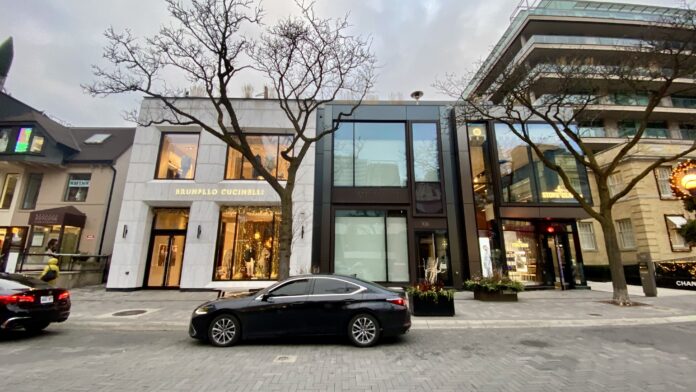
102-108 Yorkville Avenue, including Brunello Cucinelli and the former Versace space. Photo: Craig Patterson

Italian luxury brand Brunello Cucinelli is expanding its footprint in Toronto’s Yorkville area by annexing the former Versace flagship store at 106 Yorkville Avenue. The expanded Brunello Cucinelli store will be one of the largest in the world. 

A Major Expansion in Yorkville

Brunello Cucinelli is set to significantly grow its presence on Yorkville Avenue in Toronto by integrating the former 3,000 square foot Versace flagship space with its existing 8,500-square-foot boutique next door. The combined location will result in a significantly larger footprint at over 11,000 square feet, underscoring the brand’s commitment to the upscale Yorkville neighborhood. The deal to expand Brunello into Versace’s space was done prior to Versace exiting its storefront.

The Versace flagship’s closure, previously reported by Retail Insider, marked a notable shift in Toronto’s luxury retail scene. Versace’s departure from this high-profile location comes as brands continue to reassess their physical retail strategies amidst evolving market dynamics. Brunello Cucinelli’s move to occupy the premium space highlights Yorkville’s ongoing appeal to global luxury brands and reinforces its reputation as one of Canada’s preeminent luxury retail hubs.

Yorkville Avenue in Toronto. Photo: Craig Patterson

102-108 Yorkville Avenue: A Notable Project by First Capital REIT

The commercial building where Brunello Cucinelli is located was built several years ago by First Capital REIT. Other tenants include Stone Island, Majesty’s Pleasure, and the Aburi Hana restaurant. The landlord also owns other buildings nearby housing tenants Chanel and Balenciaga, as well as the Yorkville Village shopping centre that was formerly named Hazelton Lanes. 

Eric Sherman, Head of National Operations at First Capital REIT, said, “We are thrilled to be able to accommodate Brunello Cucinelli’s desire to expand its Canadian flagship in Yorkville. Brunello Cucinelli was an early believer in our vision for the neighborhood and this historic expansion is the ultimate validation.” Sherman went on to say, “We’d like to thank Massimo and the Brunello Cucinelli team for their partnership and wish them continued success as they grow in this market.”

Yorkville: A Hub for Global Luxury

Yorkville continues to attract the world’s most prestigious fashion houses, maintaining its position as an epicenter of luxury retail. Besides nearby brands Chanel and Balenciaga, other big names on Yorkville Avenue include Christian Louboutin, Kiton, Isaia, and Veronica Beard, while Bloor Street West remains home to a concentrated row of flagship stores for luxury stalwarts like Louis Vuitton, Gucci, and Tiffany & Co. Hazelton Avenue is seeing new luxury stores such as Derek Rose and Hastens, while Harry Rosen will open a 38,000 square foot flagship store on Cumberland Street in early 2026. 

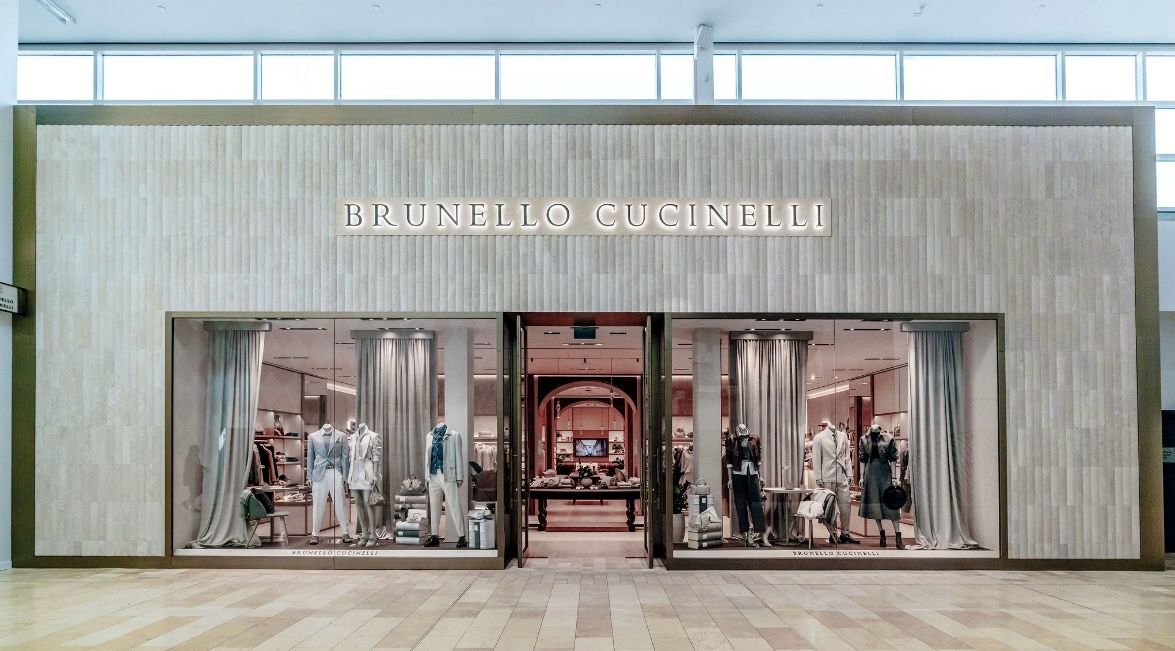
Brunello Cucinelli store Yorkdale. Photo: Brunello Cucinelli

Brunello Cucinelli’s Growing Canadian Portfolio

Brunello Cucinelli’s expansion in Toronto comes amid a broader Canadian growth strategy that has been ongoing for nearly a decade. The brand’s first Canadian standalone store opened in Vancouver at 745 Thurlow Street in the fall of 2015, spanning approximately 2,700 square feet. That location set the stage for further expansion, including the opening of the 8,500-square-foot flagship store at 102 Yorkville Avenue in early 2019.

Earlier this year, Brunello Cucinelli opened a standalone boutique at Toronto’s Yorkdale Shopping Centre. The 4,200-square-foot location is part of the mall’s luxury wing, reflecting Yorkdale’s position as a critical shopping destination for affluent Toronto consumers. Further west, Brunello Cucinelli announced plans for another standalone store in Vancouver’s Oakridge Centre, set to open in the fall of 2025. The Oakridge store was publicly confirmed in February 2024 and will join the brand’s downtown retail spaces in Vancouver.

DWSV Realty handles Brunello Cucinelli’s real estate negotiations across Canada.

Beyond its standalone locations, Brunello Cucinelli maintains a presence within high-end multi-brand retailers. The brand operates concession spaces in Holt Renfrew, with its Vancouver location on the third floor performing particularly well. Harry Rosen also carries Brunello Cucinelli’s collections, alongside select independent retailers such as Via Cavour in Toronto. The brand’s outlet store at Toronto Premium Outlets in Halton Hills further extends its accessibility to Canadian shoppers.

New Versace store at Toronto’s Yorkdale Shopping Centre. Photo: Craig Patterson

Versace’s Strategic Relocation

While Versace’s departure from Yorkville marks the end of its prominent flagship presence on Yorkville Avenue in Toronto, the Italian luxury brand is not retreating from the Toronto market. Versace recently unveiled its new store at Toronto’s Yorkdale Shopping Centre, located within the mall’s expanded luxury wing. The store relocated from another space in the mall, and is part of a bigger Canadian investment by parent company Capri Holdings.

Versace’s Canadian growth includes its first standalone store in Montreal, which is set to open at the prestigious Royalmount development. The Montreal store signals the brand’s commitment to strengthening its footprint in key Canadian markets. Further west, Versace will return to Vancouver with a boutique at Oakridge Park in 2025, cementing its renewed focus on the West Coast.

Versace’s previous presence in Vancouver included a standalone boutique on Thurlow Street, which operated from 2015 until its closure in 2020. That location is now occupied by Thom Browne. Additionally, Versace maintained a boutique within Vancouver’s luxury multi-brand retailer Leone from 1987 until its closure in 2020. Versace continues to operate outlet locations in Canada, including at Toronto Premium Outlets and McArthurGlen Designer Outlet near Vancouver.

More from Retail Insider:

Understance Opens Third Store in Calgary’s Inglewood

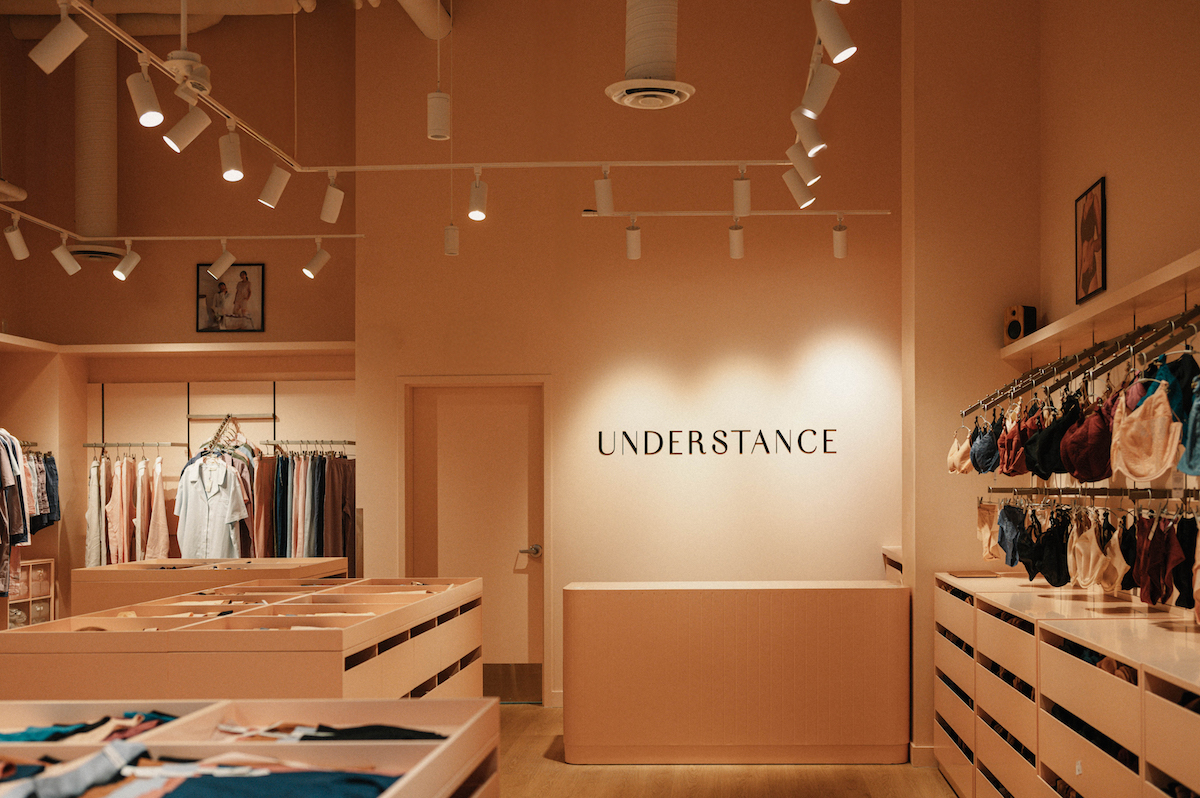
Understance store in Calgary. Photo: Understance

Vancouver-based lingerie brand Understance continues to grow with its newest retail location in Calgary, marking the third store for the solutions-focused company as it pursues plans for 30 stores across North America within the next five years.

Understance, known for its inclusive and solution-oriented lingerie, has chosen Calgary’s vibrant Inglewood neighbourhood as the home for its third storefront. Located at 1020 9 Ave SE in the AVLI Building, the new 1,788-square-foot store officially opened its doors on December 18.

“The opening of our Calgary store is an exciting milestone as we work towards our ambitious goal of establishing 30 retail locations across Canada and the United States over the next five years,” said Jiayi Lyu, Director of Understance. “Understance is thrilled to become part of Calgary’s vibrant retail landscape, and we look forward to building meaningful connections with the local community.”

Inside the Understance store in Calgary. Photo: Understance

Understance’s Growth Journey: From Vancouver to Toronto and Beyond

Understance launched in 2021 with a clear mission: to provide comfort, support, and inclusivity to bra-wearers, addressing a significant gap in the lingerie market. The brand’s first store opened in downtown Vancouver in February 2022, a pivotal moment that laid the foundation for its expanding retail footprint. Building on that success, Understance opened its second store in November 2024 at 2334 Bloor St. W. in Toronto’s Bloor West Village. The Toronto location, spanning approximately 1,400 square feet, introduced the brand’s complete range of bras, underwear, and sleepwear to the Ontario market.

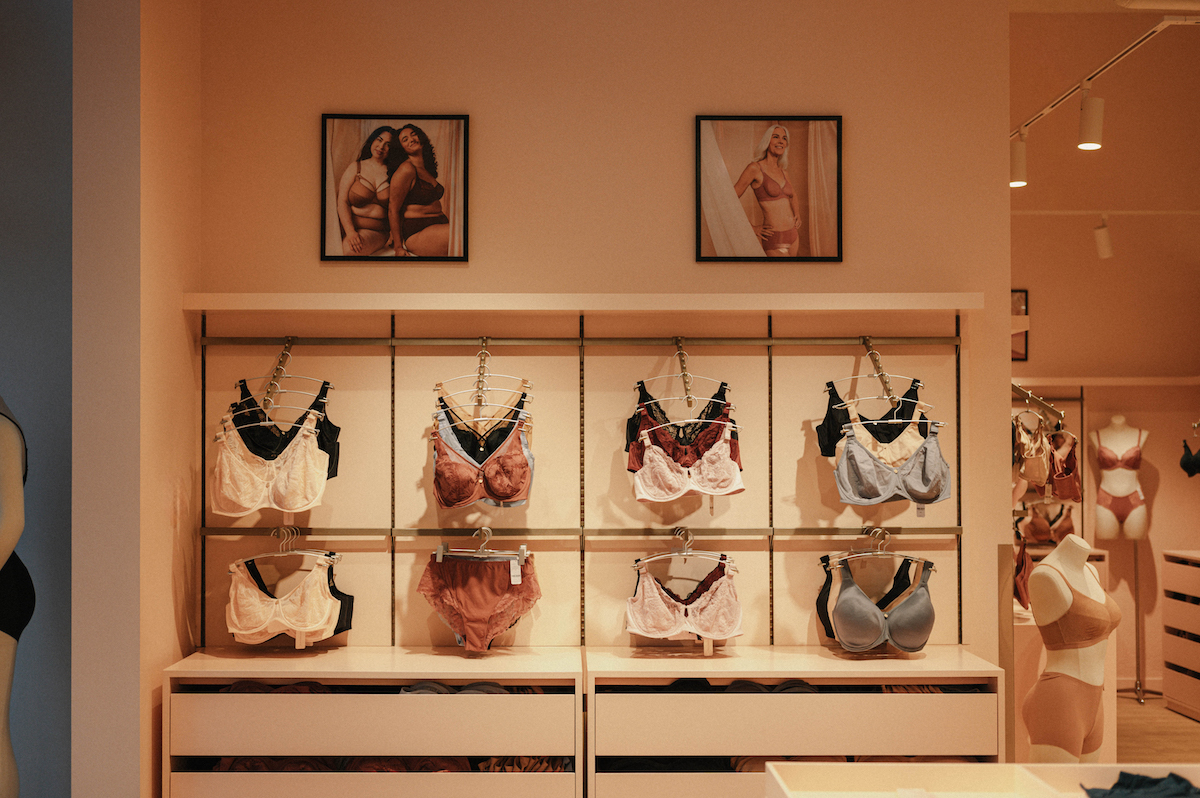
Understance’s rapid expansion is rooted in its unique approach to bra design and customer service. The brand offers one of the largest size ranges in North America, starting at a 28 band size and extending up to 48, with cup sizes available up to N. This extensive selection, paired with professional fitting services, caters to a diverse range of body types.

“Half of women are currently wearing the wrong bra size, and we aim to change that,” Lyu explained. “Our focus is on offering professional bra fittings, a wide range of sizes, and comfortable solutions that prioritize function and fit over trends.”

Inside the Understance store in Calgary. Photo: Understance

Calgary’s Inglewood: A Strategic Choice for Understance’s Third Store

Calgary’s Inglewood community is renowned for its eclectic mix of retailers, cafés, and historic charm. The area’s lively atmosphere and reputation as a destination for unique shopping experiences make it a natural fit for Understance’s growing presence.

The new Calgary store, nestled within the AVLI Building, has been thoughtfully designed to enhance the in-store experience. Shoppers will find convenient underground parking, modern interiors, and a welcoming environment that aligns with Understance’s customer-first philosophy.

“In-person shopping is a crucial part of our mission because it allows us to provide personalized fitting services,” added Lyu. “Our stores are designed to ensure customers feel comfortable and supported as they shop.”

At the Calgary location, customers can choose hands-on support from trained bra fitters or browse independently. The space reflects Understance’s commitment to delivering solutions that merge comfort, function, and style for everyday wear.

Understance store in Calgary. Photo: Understance

Next Stop: Metropolis at Metrotown in Burnaby

Understance has no plans to slow down. Following the Calgary opening, the brand has confirmed its next location at Metropolis at Metrotown in Burnaby, set to open in January 2025. The Burnaby store will bring Understance closer to its roots in Metro Vancouver while expanding its reach to a broader customer base.

“We got our start in 2021, so we are still a young company. Our primary focus is comfort and support. We are not a fashion-forward, glitz-and-glam kind of bra brand. We specialize in your everyday workhorse bras,” said Lyu. “Things have been going well for us, and we are excited about the next steps in our growth journey.”

The Understance Difference: Solution-Oriented Lingerie for All

Understance has quickly gained recognition for its solution-oriented approach to lingerie. Backed by Shenzhen Huijie Group Co., Ltd., a global leader in lingerie manufacturing with over 26 years of expertise, the brand combines industry-leading craftsmanship with customer-driven innovation.

The company’s design philosophy centres on everyday bras that work. By offering one of the largest size ranges in North America, Understance empowers customers to find their perfect fit—a mission reflected in its tagline, “Bras That Work.”

Since its launch, Understance has distinguished itself with products that prioritize comfort, fit, and durability. The brand’s collections include bras, underwear, and sleepwear that cater to diverse needs, emphasizing inclusivity and thoughtful design.

More from Retail Insider: