Calgary’s grocery store landscape is evolving as population growth continues to outpace the expansion of traditional grocery stores.
Hani Abdelkader
According to Hani Abdelkader, a local real estate expert, while Calgary’s population has surged by 48% since 2008—from 1.1 million to 1.68 million people—grocery store space hasn’t kept up with the demand.
Abdelkader, who is Principal at Avison Young Commercial Real Estate, highlights the trend toward smaller grocery store footprints, which has become more prevalent in recent years.
“In 2008, the average grocery store size was 62,000 square feet. Now, it’s around 42,000 square feet, and it’s continuing to decrease,” said Abdelkader. “This shift is due to a lack of available real estate for large-format stores and the growing trend toward mixed-use urban developments, where grocery stores need to fit into smaller spaces—often 20,000 square feet or even 10,000 square feet.”
The rise of smaller, neighbourhood-focused grocery stores is especially noticeable in areas in residential areas. “Smaller neighbourhood stores are becoming more common. A lot of that growth is due to the rise in alternative grocery channels, such as Walmarts and Shoppers Drug Mart,” noted Abdelkader.
He also pointed to the increase in ethnic grocery stores in Calgary, with both large players like T&T and smaller, independent stores like the Italian Centre stores making a significant impact.
The expert also noted the growing presence of national grocery banners adopting smaller footprints.
“We’re seeing national grocery banners like Loblaws and Sobeys getting into ethnic models, and discount models like Freshco and No Frills are also gaining traction with smaller footprints. These smaller stores are definitely active in the market,” said Abdelkader.
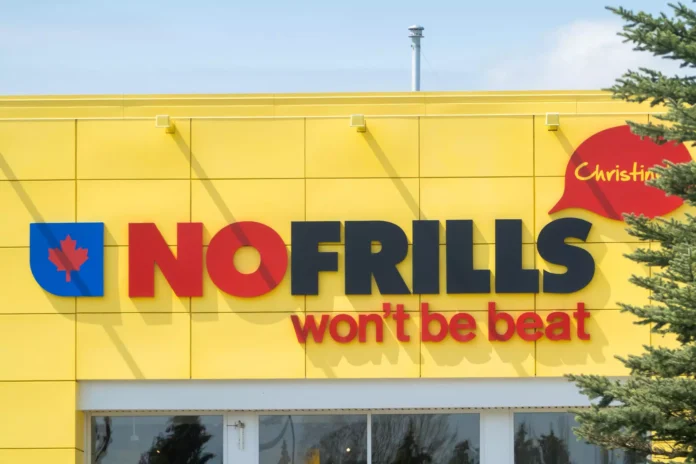
One notable example of this shift is No Frills, which has opened a 10,000-square-foot location at West Village Towers on 9th Avenue. This move is part of a broader trend of smaller format grocery stores in the area. Sobeys is also following suit, with plans for a 12,000-square-foot urban format store in the Beltline area, just outside downtown Calgary.
Looking to the west side of the city, Sobeys is also preparing to open a new location in West Springs, targeted for a September to November timeframe. This store will be part of the Truman development in the area, further solidifying the trend of smaller grocery formats adapting to the needs of urban populations.
As Calgary’s grocery market diversifies, the rise of smaller stores and ethnic models is reshaping the way residents shop for food. With growing demand for accessible, convenient shopping experiences, it’s clear that the grocery store landscape in the city is evolving to meet the needs of an increasingly diverse and urban population.
Since 2008, the amount of grocery store space available per individual in Calgary has decreased from 3.5 per capita to 2.5 per capita. This reduction reflects a shift in the retail landscape, driven by evolving market demands and urban development trends.
The average size of grocery stores peaked at 62,000 square feet in the 2000s but has since declined to 41,000 square feet for newly developed stores. This trend is influenced by the rise of high-density neighbourhoods and changing consumer preferences.
The expansion in population and density has outpaced the current availability of grocery stores, leading to a gap in meeting consumer demand. In response, companies have opted towards quickly developing more smaller, compact grocery stores to better accommodate this growing need.
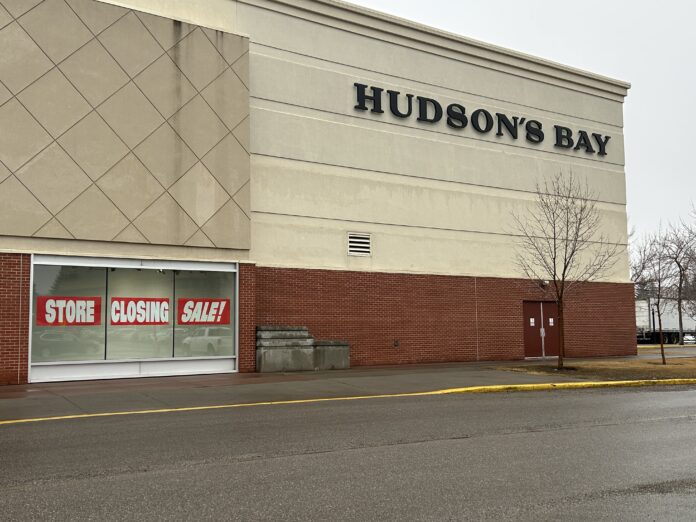
Hudson's Bay at the Melcor Centre in downtown Lethbridge, Alberta. Photo: Apple Maps
The financial decline of the Hudson’s Bay Company in the year leading up to its March 2025 bankruptcy filing has been laid bare in a confidential document obtained by The Globe and Mail. The internal memorandum reveals a steep year-over-year decline in sales, painting a dire picture of a company in freefall amid operational neglect, dwindling customer trust, and a collapse in leadership and investment.
The information memo, prepared in February 2025, shows that Hudson’s Bay’s total sales fell by nearly a third in fiscal 2024, dropping to $1.11 billion from approximately $1.65 billion the previous year. Even more staggering is the nearly 50% collapse in e-commerce sales, which dropped to $142 million from nearly $300 million in 2023.
“The compounding effect of store neglect, inventory challenges, and leadership turnover ultimately accelerated Hudson’s Bay’s downward spiral,” said retail expert Carl Boutet in an interview with Retail Insider. “It just kept getting worse.”
Carl Boutet
E-commerce Collapse Reflects Deeper Issues
The plunge in digital sales is emblematic of larger structural failures. Sources told Retail Insider that some online orders never arrived, communication with customer service was often inconsistent or nonexistent, and delivery timelines were missed. These issues drove even loyal customers away.
“We received numerous complaints from customers who had previously trusted The Bay’s online service,” said one source familiar with the retailer’s e-commerce operations. “They stopped shopping altogether after experiencing repeated delivery failures and silence from customer service.”
According to Boutet, there were likely severe disruptions in Hudson’s Bay’s logistics and third-party fulfilment networks.
“I suspect there were payment delays with 3PLs and other logistics partners,” he said. “If you’re not paying your shipping partners, they’re not going to prioritize your customers — or ship anything at all.”
Declining In-Store Experience Drove Away Shoppers
Issues were not limited to e-commerce. Many Hudson’s Bay stores had not seen renovations in years. Customers reported outdated interiors, broken escalators and elevators, inadequate air circulation, water damage, and — in some instances — stores closing due to overheated HVAC systems.
“Stores that had no music playing, had large sections closed off, and elevators out of service for months,” said one long-time customer who contacted Retail Insider. “It felt like they had just given up.”
These problems were compounded by a notable exodus of both senior managers and sales associates. The resulting lack of staff meant customer service suffered in stores just as it had online.
“It’s hard to sell when there’s no one on the floor,” said a former department manager who requested anonymity. “Customers would walk out because there was no one to help them.”
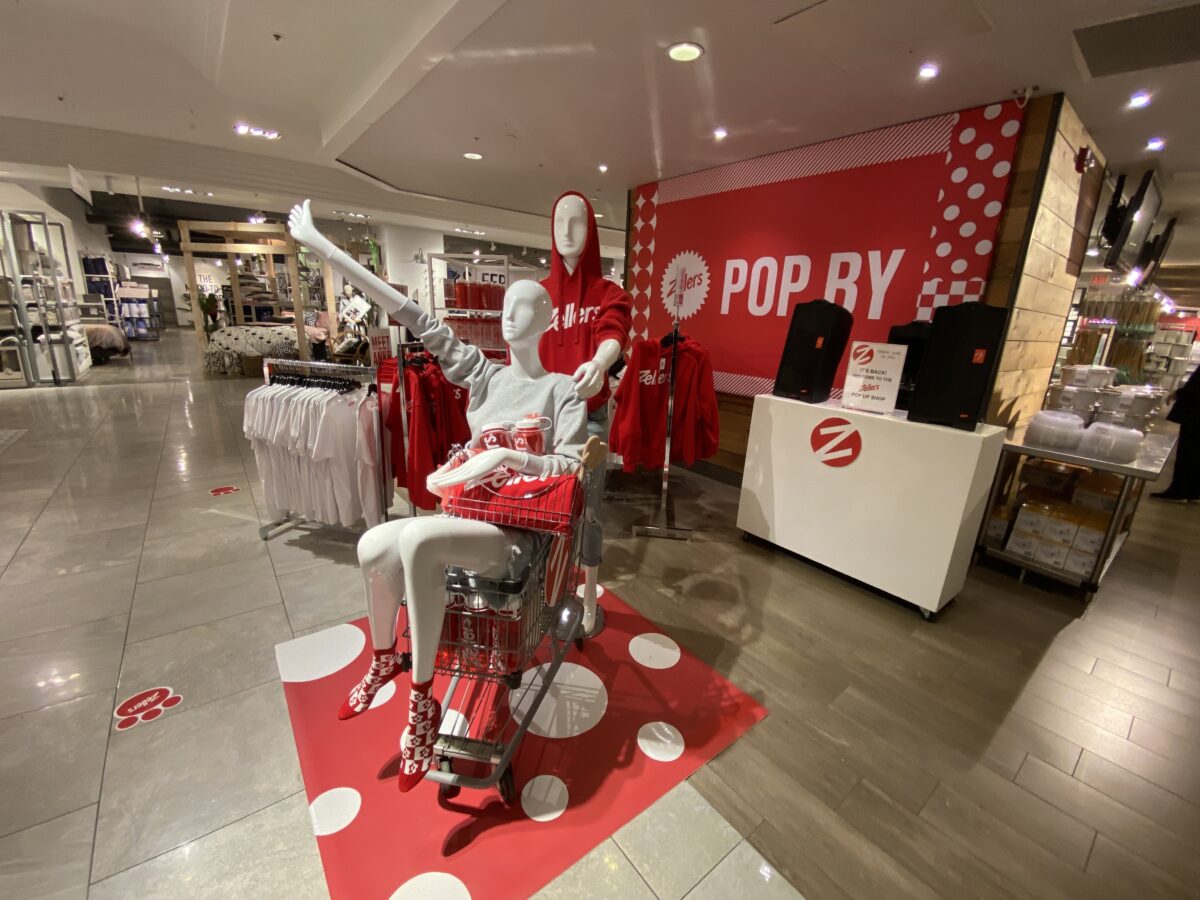
Zellers at Hudson’s Bay CF Toronto Eaton Centre in 2023 (Image: Dustin Fuhs)
Marketing Cuts and Zellers Reboot Fizzle Out
Adding to Hudson’s Bay’s troubles was a dramatic reduction in marketing efforts. Advertising budgets were slashed, including campaigns for Zellers, which had been relaunched as a pop-up concept within Bay stores starting in early 2023. While Zellers initially drew attention, its visibility faded throughout 2024.
“The Zellers concept had some initial traction,” noted Boutet. “But without marketing support or a compelling value proposition, it quickly became forgettable.”
Even signage and visual merchandising were inconsistent across stores. In some Zellers pop-ups, fixtures looked temporary and merchandise was sparse.
“It didn’t look like a serious retail initiative,” said one visual merchandising expert who toured multiple Zellers shop-in-shops. “It looked like a clearance section.”
Private Brands Offer Little Cushion
About 12% of Hudson’s Bay’s sales in 2024 came from its stable of private brands, which include Gluckstein Home, Distinctly Home, 1670, Black Brown 1826, and Zellers-branded goods. That’s a modest figure compared to rivals like La Maison Simons, whose private label offering makes up approximately 70% of its merchandise and contributes to better margins.
Boutet believes this underperformance signals a missed opportunity.
“Private label can be a huge strategic advantage, but it requires investment and merchandising depth,” he explained. “Hudson’s Bay didn’t have the resources or the focus to build strong in-house brands.”
A bright spot was the performance of the iconic Hudson’s Bay striped blanket, with sales reportedly surpassing $5.6 million this year so far. However, Boutet warned against overestimating its significance.
“It’s impressive, sure, but it’s not going to save a $1.1 billion business,” he said. “You’d have to sell a mountain of blankets to make a dent in that number.”
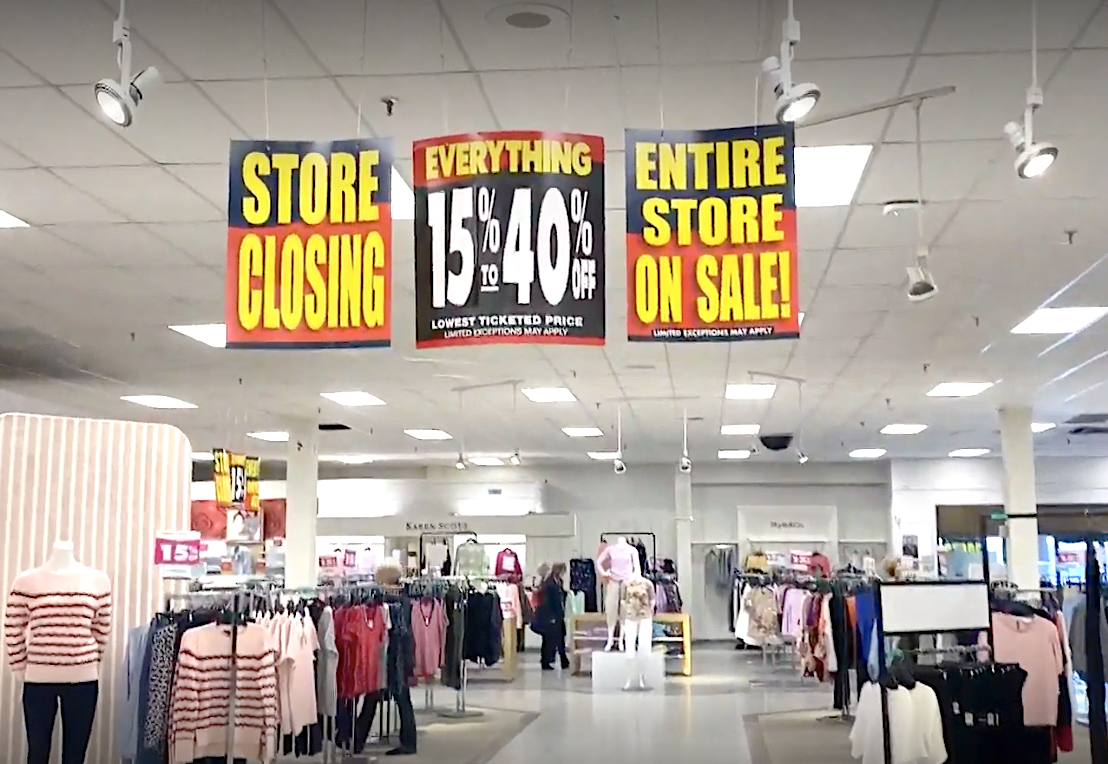
Store liquidation signage at Hudson’s Bay in the Mayflower Mall in Sydney, Nova Scotia. Photo: Andrew Barkhouse
Sales Lag Behind Smaller Retailers
Despite operating more than 80 stores in Canada, Hudson’s Bay’s total annual sales are now roughly on par with Holt Renfrew, which runs just six stores nationally. In fact, some individual Bay stores are said to underperform significantly when compared to smaller retail tenants in the same malls.
“We’ve seen Sephora stores and others outselling the entire Bay store in the same centre,” said one retail landlord source. “That’s telling.”
Other competitors have outpaced Hudson’s Bay with more focused strategies. La Maison Simons, for instance, has grown to 17 stores with annual brick-and-mortar sales of approximately $430 million — nearly 40% of Hudson’s Bay’s 2024 revenue — despite being a smaller player and only expanding outside Quebec in 2012.
Simons’ e-commerce operation now surpasses Hudson’s Bay’s as well, with annual digital sales estimated at $220 million — nearly 55% higher than Hudson’s Bay’s online business in 2024.
Flagships See Sharp Declines
The leaked memo underscores just how far Hudson’s Bay’s store sales have fallen since their peak. In 2016, the Queen Street flagship in Toronto is said to have brought in approximately $220 million annually. Yorkdale’s Bay store was said to generate roughly $120 million per year.
Today, those numbers are likely dramatically lower, given the overall sales slump across the chain.
“It’s safe to assume that Queen Street and Yorkdale saw tens of millions shaved off their sales,” said retail analyst Carl Boutet. “The loss in traffic, combined with empty shelves, broken elevators, and no marketing, made even flagship stores feel neglected.”
Internal Challenges and Vendor Distrust
Another major barrier to a potential revival is vendor confidence. Multiple sources told Retail Insider that Hudson’s Bay had made promises to pay outstanding invoices mere weeks before its bankruptcy filing — promises that went unfulfilled.
“Retailers don’t forget that kind of thing,” said one apparel vendor. “They left a lot of people hanging.”
Boutet agreed that rebuilding trust would be an uphill battle.
“If you’re 90 days past due and still asking for inventory, that’s not a partnership — that’s desperation,” he said.
Proposed Turnaround Plan Falls Short
According to the memo, Hudson’s Bay proposed keeping six stores operational, alongside a renewed e-commerce effort. The company estimated it would require an $82 million investment in the first year to sustain these operations.
The breakdown included:
$68 million in inventory
$12 million in capital improvements
$2 million in IT infrastructure
But Boutet questioned whether that amount would be sufficient, particularly given the condition of the three Quebec stores, none of which had been renovated in years.
“There’s no money in that plan for escalators, HVAC repairs, fixturing — let alone meaningful renovations,” he said. “And if they’re not investing in the store experience, why would anyone come back?”
The six stores reportedly lost $58 million in 2024. Even under the proposed turnaround, Hudson’s Bay projected a loss of $40 million in the first year.
“So really, the investment required is closer to $126 million,” Boutet pointed out. “That’s if you believe they can break even by year two — which is a big assumption.”
Real Estate May Be the Last Asset
As financial prospects fade, real estate remains the most valuable piece of the puzzle. Hudson’s Bay holds long-term leases — some as long as 118 years — at high-profile malls like Yorkdale in Toronto.
The memorandum floated the idea of monetizing these leaseholds, subject to landlord consent. But even that may prove challenging in a softening real estate market.
“Landlords are looking to densify,” said Boutet. “They may not be interested in propping up failing department stores — especially when they could build condos or bring in higher-performing tenants.”
Legacy and Unanswered Questions
As Hudson’s Bay seeks potential investors or buyers for all or parts of its assets, there remains lingering skepticism about its leadership. Some insiders have suggested that a different management team would be required for any viable future.
“You need a true leader to restore credibility,” one former VP said. “Someone like Bonnie Brooks, who had a vision and could execute it.”
With liquidation underway at most locations, questions still remain about the fate of the remaining stores and the brand itself. Some speculate that Hudson’s Bay could re-emerge as a smaller, more focused retailer or as a brand licensor leveraging its heritage.
Boutet is less optimistic.
“There’s nothing new in this latest reporting that gives me much hope,” he said. “Apart from the $5.6 million in blankets — and even that won’t come close to saving them.”
“The Americanization of Canadian retail has had limited success. There is generally high turnover, few opportunities for career growth, and most only operate satellite offices for operational support. It is not the same as it is in their country of origin. The Americanization of Canadian retail has disadvantaged large and small Canadian brands,” he said.
“My recent visit to (CF) Sherway Gardens (in Toronto) revealed three prominent locations that will need new tenants. Sports Chek, HBC, and SAKS are exiting. This is an opportunity for developers and independent retailers.
Many Canadian retailers will never have the opportunity to be in malls less of course, they are tertiary shopping centre. The reason even the most attractive and appealing independent retail brands fail comes down to one thing: they can’t get into high-traffic locations. Low traffic means low sales and potential failure. That’s the reality and story for many retailers, he said.
“However, if we were to look at this differently and want to add support in helping redirect and make Canada’s economy more independent and resilient, smaller retailers with attractive business and consumer models need to be allowed to grow,” added Minakakis.
“If they can, they will operate in Canada, and their growth will create organizations to support them from offices to distribution centres. Retail in Canada can’t attract and retain talent because there are not enough career growth opportunities.
“I am not suggesting stopping foreign investment. I am suggesting that developers start looking for Canadian retailers with growth potential. We need more Canada in Canadian retailing. And independent retailers may be more exciting as tenants than pickleball tenants.”
Bruce Winder
Bruce Winder, a retail analyst, said Minakakis’ argument is an interesting one and comes down to whether you believe in globalization or not.
“With globalization, borders are open and consumers are free to choose retailers as they wish. International retailers are free to expand with little in the way of economic barriers. The same goes for Canadian retailers who can open stores abroad. With a more protectionist view, local retailers have less competition but consumers have less choice. Which scenario is better? It depends on your perspective,” he said.
“I think Canada can be a hard market for all retailers. One just needs to look at our vast geography, high tax rate on individuals, higher regulations and relatively low population. We have seen independent as well as retail chain stores fail all too often based on our unforgiving national footprint and economic reality.
“We have seen some independents grow into global brands such as lululemon and Aritzia. It is not impossible but it is improbable. It takes time but with the right stewardship and patient capital, the world is our oyster. It all comes down to having an incredibly powerful brand and value proposition that can compete on a global scale.
“We have seen consolidation in the retail market over the last 30 years as large companies, including Canadian and American brands, acquire their way to scale economies to try and make Canada profitable. We have formidable national champions such as Canadian Tire, Loblaw, Dollarama and others. We have seen several American retailers enter Canada only to leave (Target, Lowes, Nordstrom, etc.) while others have thrived such as Walmart.”
Because Canada is a relatively small market, economically, we will almost always see American retailers operate with a skeleton crew, at least at first, added Winder.
“They are hesitant to invest in overhead when our market is much smaller than their home country. The exception has been retailers like The Home Depot, Amazon Canada, TJX and others that realize that they need sufficient infrastructure in Canada in order to reach their full potential,” he said.
“I think we produce world-class retail leaders right here at home. Career opportunities are available in Canada, especially if you work for a large Canadian retailer. If you work for an American retailer, you usually need to move to their US office to attain the most senior roles. It all depends on one’s individual ambitions and desired lifestyle.”
To assist devoted pet lovers who are committed to buying Canadian made products, Pet Valu, Canada’s leading specialty retailer of pet food and pet-related supplies, introduced on Thursday new lower prices across its lineup of premium quality, Made in Canada Performatrin Prime® dry dog and cat food.
With price reductions of up to 15%, pet parents can continue to provide the same great quality food to their pets at new lower prices, said the company in a news release.
Greg Ramier
“As Canada’s largest locally owned and operated pet specialty retailer, Pet Valu has a strong legacy serving devoted pet lovers and their pets’ needs across Canada for almost 50 years. Over this time, we have curated an extensive portfolio of Canadian brands and products, including local emerging and innovative brands, while supporting devoted pet lovers looking for Made in Canada products,” said Greg Ramier, President and Chief Operating Officer at Pet Valu.
“Today we’re taking our commitment to supporting Canadian brands a step further by introducing new lower prices on an excellent and popular Canadian brand, Performatrin Prime, positioning it as the best priced pet food in the scientific nutrition category within our stores and digital channel.”
Made exclusively in Canada, Performatrin Prime dry dog and cat food is a premium, science-backed nutrition tailored for each pet’s life stage and health needs. Other highlights include a protein-first ingredient deck, which excludes fillers like wheat, soy, animal by-products, artificial flavours, preservatives or colours. Most Performatrin Prime formulas also contain a bonus three-tier dental health system* to help reduce plaque and tartar build up as pets eat. Performatrin Prime dry dog and cat food is available in Adult, Puppy, Kitten, Senior, Small Breed, Medium Breed, Large Breed Size, Indoor cat, Healthy Weight, Hairball, Sensitive Skin & Stomach, Oral Care and Urinary Care, explained the company.
As the national feeding sponsor of Lions Foundation of Canada Dog Guides, Pet Valu provides Performatrin Prime and Performatrin Ultra® food and treats to all puppies and dogs in training, ensuring these hardworking puppies and dogs have the right nutrition to meet their daily energy and nutrient requirements, it added.
“We appreciate the intricacies of nutrition decisions and believe the premium quality and compelling value of Performatrin Prime, together with the support of our in-store Animal Care Experts, will help make the transition to a Made in Canada food even easier. Performatrin Prime is good for our pets, good for our community and good for Canada.”
The company said the announcement is part of a series of measures Pet Valu has introduced to make it easier to support Canadian brands and companies, including enhanced in-store signage, an online Made in Canada destination (www.petvalu.ca/Canada) and 360-degree marketing initiatives like emails, social posts and digital flyer pages.
Pet Valu is Canada’s leading retailer of pet food and pet-related supplies with over 800 corporate-owned or franchised locations across the country.
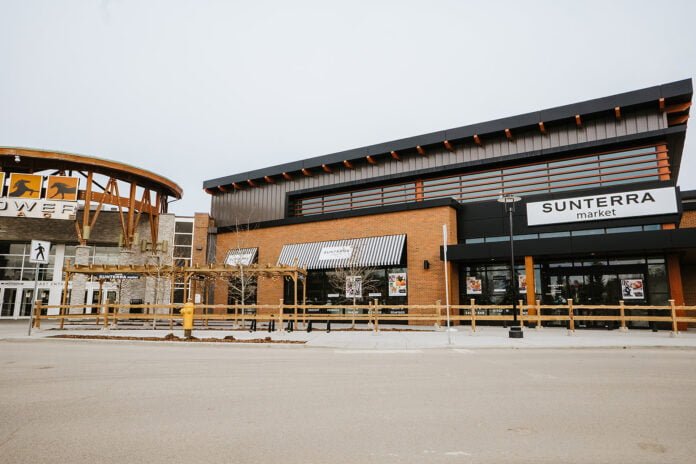
Exterior of the Sunterra Market at Bower Place in Red Deer, Alberta. Photo: Red Deer Branding Photography
Alberta-based Sunterra Quality Food Marketshas filed a Notice of Intention (NOI) to make a proposal under the Bankruptcy and Insolvency Act (BIA) and Harris & Partners has been appointed as Proposal Trustee.
Court documentsindicate the company has more than 200 creditors with liabilities of $18.9 million
“Please be advised that the Company is not bankrupt and has availed itself to a procedure whereby an insolvent person, with creditor and Court approval, restructures its financial affairs,” said court documents. “The role of the Proposal Trustee in this matter is to monitor the cash flow of the Company during the restructuring process, to assist with the development of the Proposal, and to liaise with creditors, who will ultimately make the decision regarding the Proposal.
“Pursuant to section 69(1) of the BIA, the effect of the NOI is an automatic stay of proceedings against all creditors from commencing any actions against the Company. The Company is required to file a Proposal within 30 days from the date of filing of the NOI unless the Company is granted an extension from the Court for a period not exceeding 45 days for any individual extension and not exceeding in the aggregate 5 months after the expiry of the initial 30-day period.
“The amounts indicated on the attached list of creditors were estimated by the Company as at the date of filing the NOI, and as such, may not be the correct amount of your claim. We advise that currently there is no requirement for any creditor to file a proof of claim with either the Company or the Proposal Trustee.”
On March 24, Sunterra Farms Ltd., Sunterra Food Corporation, Sunterra Quality Food Markets Inc., Sunwold Farms Limited and Trochu Meat Processors Ltd. each filed a Notice of Intention to Make a Proposal under section 50.4(1) of the Bankruptcy and Insolvency Act and Harris & Partners consented to act as the Proposal Trustee.
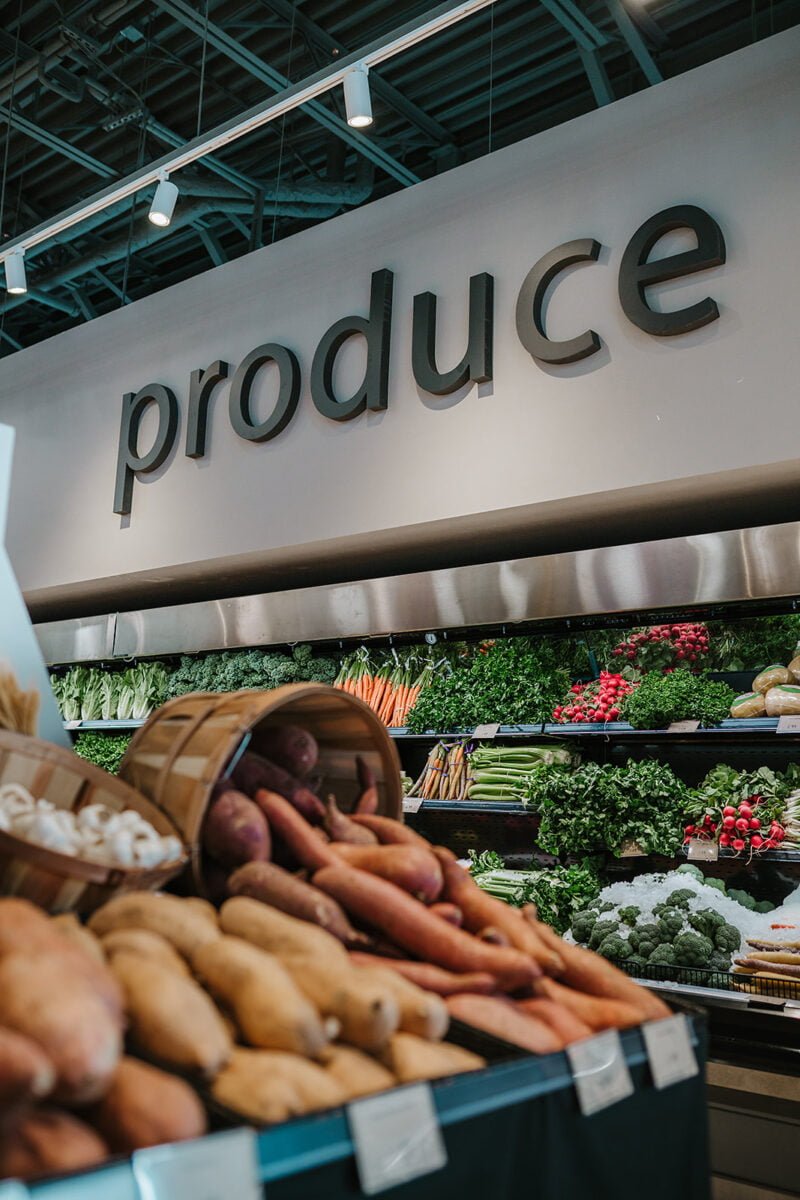
Interior of Red Deer Sunterra Market. Photo: Red Deer Branding Photography
According to the Sunterra Market website, the company has five market locations in Calgary, two market locations in Edmonton, and one location in Red Deer.
“With land that had been in their family for decades and a deep-rooted passion for excellence, Stan and Flo Price planted the seeds that would become Sunterra over 50 years ago,” says the company on its website. “What grew into a vertically integrated group of food companies started small on their family farm, raising superior hogs in Acme, Alberta. The Prices’ family values of land stewardship, humane animal treatment and community loyalty remain fundamental to the Sunterra brand today.
“This, paired with their passion for bringing a better, high quality food experience to all Albertans, ultimately allowed Sunterra Market to become what it is today. And the name? It was born from the very things that helped cultivate their business — the sun and the earth.
“Today, the Sunterra Group is run by the Price children, grandchildren and a family of 1,200+ team members who uphold their passion for innovation and legacy of quality. Modeled after European markets, Sunterra Market redefines grocery shopping by encouraging customers to shop fresh, local and often, all while enjoying our sampling stations and complimentary walkout service. We are farmers, butchers, chefs, bakers and so much more; but above all else, we are passionate food experts who take great pride in strengthening our community through fresh, delicious food. Our team wholeheartedly cares about quality, sustainability and supporting our local partners. After all, food brings people together, and we value being a part of those special moments.
“But our eight market locations across Alberta are only one chapter of the Sunterra story. With our distinctive vertical integration structure, we manage every aspect of what we do. All the pork you’ll find in our meat departments and chef prepared meals is from our very own Sunterra Farms. It is processed in Trochu, Alberta where the highest standard food safety and processing techniques are used to deliver meat of superior quality. The pork is then sold fresh in our markets or turned into delectable cooked and cured meat products at one of our other facilities; Soleterra d’Italia (meaning Sunterra in Italian) crafts Italian-style hams, salamis and cured meats while Sunterra Meats creates our signature Alberta-inspired smoked hams, sausages and bacon. We have also strengthened our roots in agriculture by growing fresh, ripe-picked produce at Sunterra Greenhouse.”
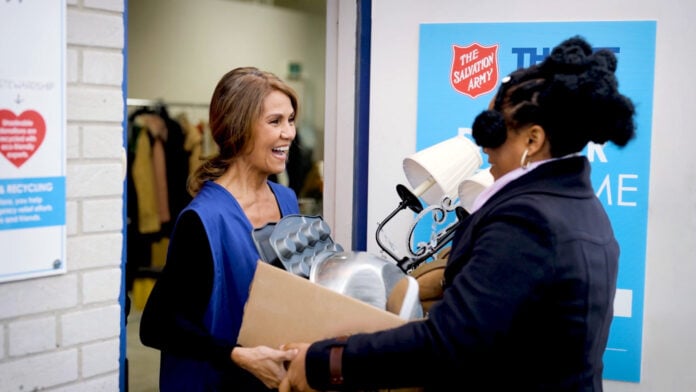
By donating to The Salvation Army Thrift Store, Canadians actively participate in extending the lifecycle of clothing and household items, reducing waste, and supporting a circular economy. (CNW Group/The Salvation Army Thrift Store – National Recycling Operations)
As environmental challenges continue to grow, the need for sustainable action has never been more urgent. In response to this growing issue and the increasing demand for affordable items, The Salvation Army Thrift Store is launching their #EarthLovesThrift campaign. This initiative encourages Canadians to embrace thrift as a lifestyle change—not just on Earth Day, but every day—to contribute to environmental conservation.
Ted Troughton
“Your unwanted clothing and household items have the potential to become someone else’s treasure,” said Ted Troughton, Managing Director at The Salvation Army Thrift Store. “By donating to The Salvation Army Thrift Store, you actively participate in extending the lifecycle of these goods, reducing waste, and supporting a circular economy.
“We hope that individuals will remember us and consider donating their gently used items, knowing that each contribution makes a significant difference in preserving our planet and caring for local communities.
“Our Thrift Stores are more than just retail spaces; they are an integral part of our mission to serve and uplift our communities across Canada.”
Last year alone, the Thrift Store said it diverted over 94 million pounds of clothing and household items from local landfills.
“In addition to environmental benefits, every donation and purchase at their Thrift Stores directly supports critical programs and services offered by The Salvation Army across Canada, including foodbanks, shelters, rehabilitation for those struggling with addictions, modern slavery and human trafficking prevention, emergency relief efforts, and more,” it said.
“As many Canadians embark on their spring cleaning journeys, now is the perfect time to make sustainable choices. To kick off the #EarthLovesThrift campaign, The Salvation Army Thrift Store is offering an exclusive incentive. Leading up to Earth Day on April 22, anyone who drops off a donation will receive a special #EarthLovesThrift offer of 25% off on all clothing. Additionally, donors will receive a Thank You coupon to enjoy savings on their next purchase.”
Donations can be made at any of the 113 Donor Welcome Centres across Canada.
The Salvation Army Thrift Store (National Recycling Operations) is a non-profit organization and the only national division of The Salvation Army. Through its 94 Thrift Stores across Canada, the organization offers savings on gently used clothing, textiles, and household items while generating funds to support local Salvation Army programs, services, and emergency relief efforts.
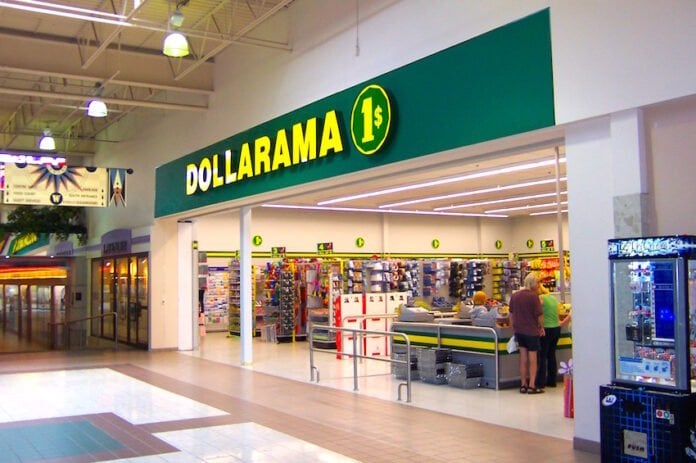
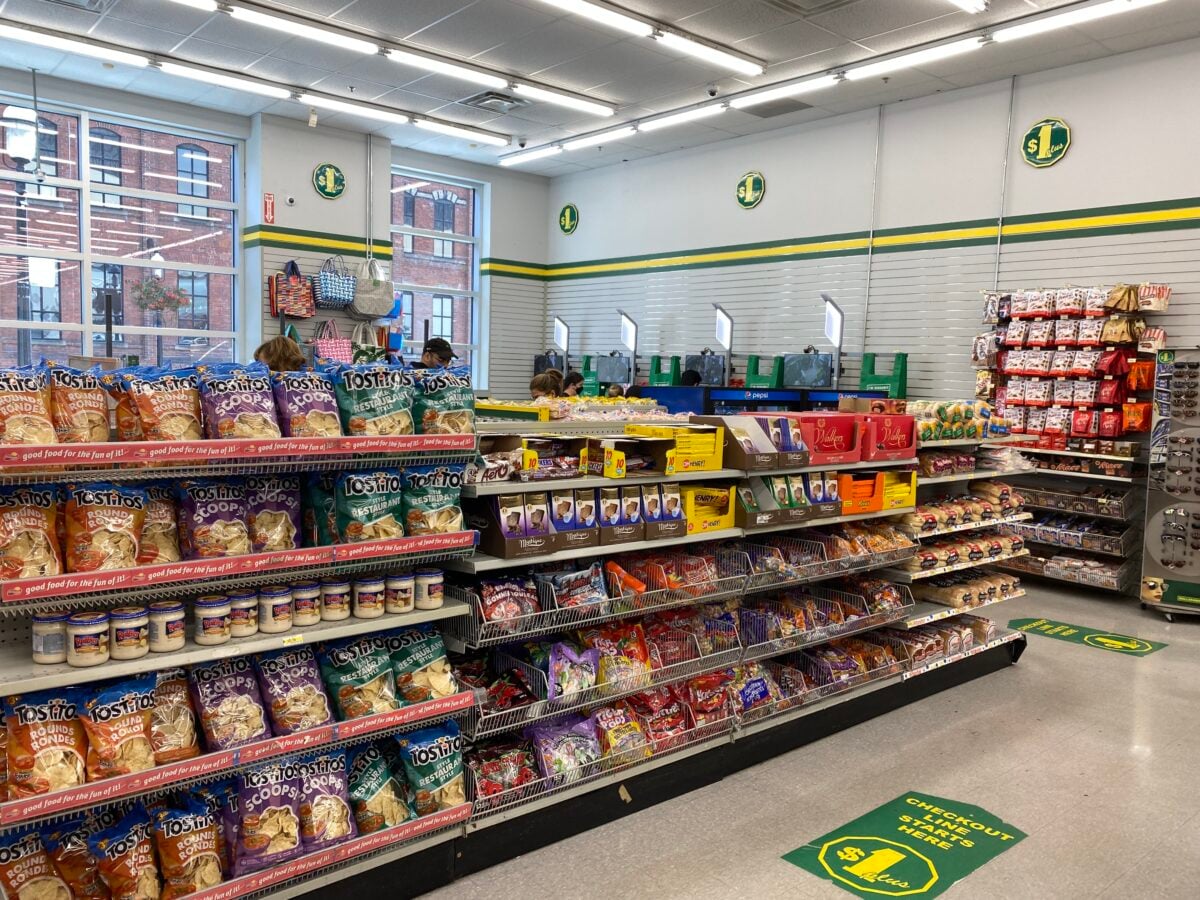
Dollarama Inc. reported Thursday its financial results for the fourth quarter and fiscal year ended February 2, 2025 showing a 9.3% increase in annual sales to $6.4 billion.
“Through Fiscal 2025 and in a weakening economic environment, Dollarama was there for Canadians by delivering compelling year-round value across our broad assortment of everyday goods and convenience through our growing national store network. This enabled us to meet or exceed our annual guidance on all metrics,” said Neil Rossy, President and CEO, in a news release.
“In the last year, we have made excellent progress advancing our growth prospects in Canada and in Latin America and furthering our international expansion with the proposed acquisition of The Reject Shop in Australia, reflecting our conviction in the relevance of our business model across demographics and geographies. As we enter Fiscal 2026, we are confident in our ability to execute on our growth plans, and to leverage our sourcing and merchandising strengths to deliver the best relative value for our customers while continuing to generate profitable growth for our shareholders.”
Sales increased by 14.8% to $1,881.3 million, compared to $1,639.2 million
Comparable store sales increased by 4.9%, over and above 8.7% growth in the corresponding period of the previous year
EBITDA increased by 19.9% to $670.1 million, representing an EBITDA margin of 35.6%, compared to 34.1%
Operating income increased by 20.1% to $558.3 million, representing an operating margin of 29.7%, compared to 28.3%
Diluted net earnings per common share increased by 21.7% to $1.40, compared to $1.15
15 net new stores opened, compared to 10 net new stores
3,373,479 common shares repurchased for cancellation for $473.3 million
Fiscal 2025 Highlights Compared to Fiscal 2024 Results
Sales increased by 9.3% to $6,413.1 million, compared to $5,867.3 million
Comparable store sales increased by 4.6%, over and above 12.8% growth in the corresponding period of the previous year
EBITDA increased by 14.0% to $2,121.8 million, representing an EBITDA margin of 33.1%, compared to 31.7%
Operating income increased by 14.4% to $1,710.7 million, representing an operating margin of 26.7%, compared to 25.5%
Diluted net earnings per common share increased by 16.9% to $4.16, compared to $3.56
65 net new stores opened, same as prior year, bringing total store count to 1,616
8,119,971 common shares repurchased for cancellation for $1,068.2 million
The company said sales growth in Q4 was driven by growth in the total number of stores over the past 12 months (from 1,551 on January 28, 2024 to 1,616 on February 2, 2025) and comparable store sales growth. Sales for the fourth quarter of Fiscal 2025 include the 53rd week.
“On December 18, 2024, the Corporation completed the previously announced acquisition of land in the Calgary, Alberta region for a total cash consideration of $46.7 million, which takes into account closing adjustments. The purchase price was paid with available cash on hand,” it said.
“As previously announced, the Corporation intends to build a logistics hub in the Calgary, Alberta region, to service stores in Western Canada, with an estimated total capital expenditure of approximately $450.0 million to be disbursed over a three-year period. Capital expenditures in respect of the Fiscal 2026 outlook currently excludes the portion that will be deployed in the year as the Corporation is in the process of completing its three-year plan and the timing of such expenditures.
Dollarama on Front Street in Toronto (Image: Dustin Fuhs)
Fiscal 2026 Outlook and Capital Allocation Strategy
While consumer behaviour and the path of the economy remain hard to predict, Dollarama said it believes that consumers will continue to respond positively to the affordability of its products, the convenience and proximity of its national store network, and its commitment to offering compelling value across its broad assortment of consumables, seasonal items and general merchandise.
“Given heightened uncertainty stemming from the current economic and trade environment, the 17.4% cumulative increase in comparable stores sales over the last two fiscal years, and assuming continued cautious discretionary spending by consumers, the Corporation anticipates generating comparable store sales growth of between 3.0% and 4.0% in Fiscal 2026, supported by its strong product sourcing and merchandising expertise and the regular refresh of its assortment. The Corporation improved its guidance range for gross margin as a percentage of sales compared to prior year, based on its ability to actively manage product margins, partially offset by higher inbound shipping costs. It also expects ongoing efficiency and labour productivity initiatives to offset the impact of higher store labour and operating costs, resulting in an improved guidance range in SG&A as a percentage of sales compared to the prior year,” it said.
“As a result of opportunities to take over leases from certain retailers exiting the market and its strong real estate pipeline, the Corporation may exceptionally open a higher number of net new stores during Fiscal 2026 compared to historical levels. As such, the Corporation has increased its net new store openings guidance range compared to the prior year.
“In addition to the logistics hub, the Corporation expects to allocate capital expenditures towards new store openings, maintenance and other transformational capital requirements, which are expected to be mainly funded with cash flow from operating activities and are not anticipated to impact the Corporation’s shareholder capital return strategy. In addition to its intent to maintain a dividend subject to quarterly approval, the Corporation anticipates to continue allocating the majority of excess cash toward the repurchase of shares through its normal course issuer bid.”
Founded in 1992 and headquartered in Montréal, Dollarama is a recognized Canadian value retailer offering a broad assortment of consumable products, general merchandise and seasonal items both in-store and online.
Dollarama also owns a 60.1% interest in Dollarcity, a growing Latin American value retailer. Dollarcity offers a broad assortment of consumable products, general merchandise and seasonal items at select, fixed price points up to US$4.00 (or the equivalent in local currency) in 632 conveniently located stores in Colombia, Guatemala, El Salvador and Peru.
Walid Laaraba, an experienced marketing and data-driven technology expert, shared insights into his dynamic career and the future of retail marketing in a recent interview. Laaraba, originally from Algeria, moved to Canada in 2005 and has since become a key player in shaping marketing strategies for prominent brands.
In his early years, Laaraba, who is President of Home Société Group, was drawn to two major influences: his mother, a psychologist, and his grandfather, a self-made entrepreneur. “My grandfather couldn’t read or write, but he built a successful business. I was fascinated by his ability to lead without traditional education,” Laaraba shared. “I was equally interested in psychology and wanted to understand human behaviour. But I also loved business. As I went through university, I realized marketing was the perfect blend of psychology and business.”
Laaraba’s academic journey took him to Sherbrooke, where he earned multiple degrees, including two bachelor’s degrees and a master’s. He initially considered staying in Sherbrooke forever, but a desire for new opportunities led him to make the move to larger cities. His career took off with an internship at Molson Coors, where he first encountered the growing role of technology in marketing.
Walid Laaraba
“After my first year in marketing, I did an internship at Molson Coors. That’s where I realized technology was crucial to the future of marketing, especially for customer acquisition, retention, and loyalty,” said Laaraba. This sparked his pursuit of a second bachelor’s degree in technology. During his time at Desjardins, he was introduced to data science, machine learning, and AI, which only deepened his understanding of how data could be leveraged to enhance customer experiences.
From there, Laaraba continued to hone his skills in leading marketing campaigns at major brands such as Reitmans, Ardene, Metro, and Telus. However, his entrepreneurial spirit eventually led him to explore opportunities with smaller companies.
“I was looking for a new challenge, and I felt an intuitive connection with a smaller company. I spoke with the founders for about five months before making the decision to join,” Laaraba explained. “The founders were incredibly nice, humble people, and the company was well-positioned. I was excited about the potential to innovate and make a difference in a smaller but successful organization.”
Laaraba’s career trajectory highlights his deep connection to the retail sector, which he finds both challenging and rewarding. “The competition is one of the things I enjoy most about retail. It’s a fast-paced environment, and I thrive on the challenge of customer acquisition and loyalty. I find it exciting to work in an industry where you can see clear winners and losers,” he said. “I love working with marketing calendars, launching campaigns, and building brands—it’s all about sustainable growth, and I find that really rewarding.”
He described himself as a brand builder.
Walid Laaraba
When asked about his leadership philosophy, Laaraba emphasized the importance of clarity, collaboration, and empowerment. “I believe in clarity, collaboration, and empowerment. I set a strong vision but trust my team to bring creativity and expertise. As a leader, my goal is to inspire and push people to reach their potential,” Laaraba explained. “Leadership is a huge responsibility—I’ve had great leaders in my life who mentored me, and I want to do the same for others.”
In addition to his professional insights, Laaraba shared his approach to work-life integration. “I don’t believe in the word ‘balance’ because it suggests that something is off. For me, I don’t feel the need to separate work and life. I enjoy my work and don’t see it as a burden. I also love spending time with my family, especially my son, Noah. When I’m with them, I’m fully present, but when it’s time to work, I’m fully focused on that.”
Laaraba’s perspective on personal growth is equally motivating. “You don’t need 40 years of experience to make an impact—you just need optimism, hard work, and the belief that you can do anything you set your mind to,” he said. “I’m proud of my journey, but I think it’s just the beginning. There’s still so much I want to learn and accomplish.”
Laaraba’s journey offers a glimpse into the future of retail marketing, where technology, data-driven decisions, and a customer-centric approach will continue to drive success. His passion for innovation and growth serves as a valuable inspiration for both emerging and established professionals in the retail industry.
Master Mechanic, a trusted leader in automotive repair and maintenance services, is accelerating its growth in Canada with plans to expand its footprint beyond Ontario.
The company, which started in Mississauga in 1982, now boasts 46 locations, with recent agreements to open in Edmonton and Prince Albert, marking the brand’s first steps into Alberta and Saskatchewan. Since being acquired by Omnigence, a Canadian equity firm, in 2019, the company has focused on expanding its franchise model, attracting multi-unit operators and strengthening its network of franchisees.
The Canadian automotive aftermarket is experiencing a surge in franchise opportunities, and Master Mechanic is capitalizing on this trend by offering franchisees a proven business model supported by training, brand recognition, and operational expertise.
Todd Wylie
Todd Wylie, a key figure behind the company’s expansion, explained how Master Mechanic provides franchisees the ability to run their own businesses with the backing of a trusted brand. The company’s strategic focus on providing value to customers, offering warranty-approved services for all vehicle types—including electric and hybrid engines—positions Master Mechanic as a strong alternative to traditional dealerships.
As the automotive repair market continues to grow, Master Mechanic’s franchise model is attracting entrepreneurs looking for a reliable, risk-mitigated business opportunity. With a current mix of corporate and franchise locations, the company has expanded its base of multi-unit operators from just one in 2019 to six today, signaling the brand’s increasing appeal. As the company looks to expand into new regions, its focus on real estate and finding the right locations for its franchisees remains central to its success.
Wylie, who is President, has been with the company since 2019.
“We have three corporate stores. The rest are owned by franchise partners, and six are multi-unit operators,” said Wylie. “When we took over in 2019 we had one multi-unit operator.
“The challenge is finding the right real estate. We have a lot of interest, but finding the right location is key.
“We provide professional automotive repair and maintenance services for all types of vehicles—cars, trucks, electric, hybrid, and internal combustion engines. We’re warranty-approved, offering value to customers who might otherwise only consider dealerships.
“Franchising allows you to be in business for yourself, but not by yourself. It offers brand awareness, systems, training, and support, which is hard to get when starting from scratch. It mitigates the risks of business ownership. It’s about the support and guidance you get. You don’t have to go through the school of hard knocks with your own money. Franchising helps you avoid that.”
When looking at franchises, it has to be the right fit for both the franchisor and franchisee, explained Wylie.
“It’s about the people. The success of the business depends on the strength of your team. Do your due diligence and make sure you align with the values of the business,” he said.
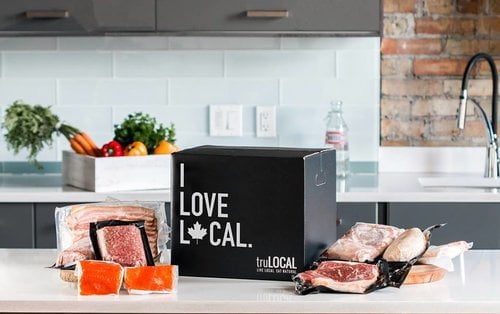
EMERGE Commerce Ltd., a Canadian e-commerce brand portfolio, says its truLOCAL banner, a premium meat and seafood subscription brand that connects local farmers with a health-conscious audience across Canada, is seeing a surge in growth.
truLOCAL, EMERGE’s largest brand by revenue, experienced a surge in new customer acquisitions in February 2025, following the growing “Support Local” movement sweeping the country, it said, adding that during February 2025 growth was 193% increase in net new subscriptions compared to February 2024.
Net new subscriptions is defined as new (paid) subscriptions initiated minus subscriptions cancelled in that same period.
Despite it being a shorter month, February 2025 was truLOCAL’s highest month of net new subscriptions since May 2020, during the height of the pandemic, said the company.
Contributing to these results, truLOCAL benefited from a reduced cost per customer acquisition of nearly 20% YoY in February 2025, implying increased brand resonance and product appeal with Canadian customers prioritizing local options, it said.
Ghassan Halazon
“We believe the Support LOCAL movement is here to stay and has the potential to be a defining moment for truLOCAL, and for ‘Made in Canada” businesses at large. We are thrilled to see this influx of new members joining our growing community and believe this is exactly the right time to double down on our truly, local brand and business model,” said Ghassan Halazon, EMERGE CEO and truLOCAL President.
He described it as an “explosive level of growth.”
In light of these positive trends and favourable unit economics, truLOCAL has been ramping up advertising to drive brand awareness and grow market share with a focus on high ROI opportunities.
As an example, the company launched its “truLOCAL Retaliates: 25% OFF Campaign Meat and Seafood” ad campaign on February 5 as a response to the escalating tariff situation with the U.S., added Halazon.
“truLOCAL is like a premium meat and seafood subscription business. It connects local farmers with Canadian customers across the country on things like organic chicken, grass-fed beef, wild-caught salmon, that sort of thing. And then it’s a sort of a monthly delivery box. We’ve started to see some really exciting signs,” he said.
Unlike the COVID lift driven by the circumstances of the pandemic with store closures and people cautious of going out, this trend truLOCAL is seeing is driven by sentiment. “And we believe it’s here to stay. These are choices they’re making and they really believe supporting local is a priority now.”
Just last week, EMERGE announced the signing of a definitive agreement to acquire all issued and outstanding shares of Tee 2 Green Ltd.
The company said T2G is a profitable, discount golf apparel and equipment business with a 38-year track recordof operations, focused on the Canadian market. T2G achieved revenue of $6.4M, Adjusted EBITDA of $1M and positive net income of $700K in 2024 (unaudited). T2G is based in Ontario and was founded in 1987 by Robert J. Fell, who will continue to support T2G under EMERGE in his capacity as a consultant. T2G has a diversified revenue stream comprising two retail stores, dozens of roadshows, an online store, and a private label golf apparel brand, NORTHERN SPIRIT, added the company.