Retail Insider is streamlining its Canadian retail news from around the web to include a handful of top news stories that can be viewed quickly during the day. Here are the top stories from the past 24 hours.
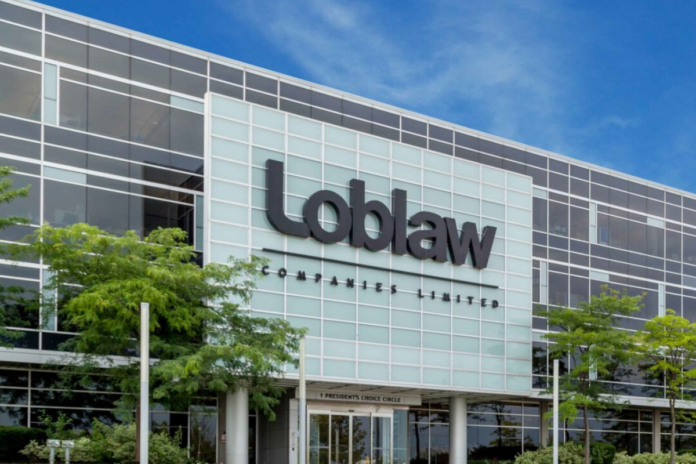
Loblaw Cos. Ltd. and its parent company George Weston Ltd. have reached a settlement in a pair of class-action lawsuits related to allegations of an industry-wide price-fixing conspiracy involving packaged bread in Canada.
The $500 million settlement was announced in 2024, and while it was officially executed on January 31, 2025, it is still subject to approval by courts in Ontario and Quebec. This settlement marks a significant step in resolving a major legal battle that has been ongoing for several years.
As part of the settlement, Loblaw and George Weston will contribute a combined total of $404 million in financial compensation. The remaining $96 million will come from Loblaw’s gift card program, which was introduced in 2017. The settlement funds will be distributed to class-action members, with 22% of the total allocated to eligible individuals in Quebec, and the remainder to those outside of Quebec.
This legal matter stems from allegations that Loblaw and other major companies were involved in a price-fixing scheme that inflated the cost of packaged bread in Canada for over a decade. The class-action lawsuits claim that the conspiracy resulted in at least $1.50 being added to the price of a loaf of bread between 2001 and 2021.
Remaining Defendants and Continuing Legal Actions
While Loblaw and George Weston have settled, several other defendants are still embroiled in the ongoing class-action litigation. These include Canada Bread, Sobeys, Metro, Walmart Canada, and Giant Tiger. The settlement agreement will also provide access to key information that may aid in continuing legal actions against these remaining companies.
Loblaw and George Weston were the first to admit their participation in the alleged price-fixing conspiracy, which they did as part of an investigation by the Competition Bureau of Canada. As a result of their cooperation, both companies were granted immunity from further penalties under the Bureau’s investigation. In contrast, Canada Bread has pleaded guilty to four counts of price-fixing, although it denies involvement in a broader conspiracy.
Accusations and Denials from Metro and Sobeys
In a twist to the ongoing saga, Metro and Sobeys have accused Loblaw and George Weston of conspiring to implicate them in the price-fixing scheme. These companies have vehemently denied the allegations, which has added another layer of complexity to the legal proceedings. The lawsuits, alongside the Competition Bureau’s investigation, continue to unfold, with more developments expected in the coming months.
The investigation by the Competition Bureau began in January 2016, when the Bureau first raised concerns about possible price-fixing among major bread manufacturers and retailers. According to the Bureau, a secret 14-year conspiracy led to inflated bread prices, affecting millions of Canadians.
The impact of the alleged price-fixing scheme was significant. The Competition Bureau claims that as a result of the conspiracy, Canadians paid over $1.50 more per loaf of bread than they would have in a competitive market. This increase in bread prices had a ripple effect, raising the cost of living for many households.
How the Settlement Affects Consumers
Canadians who purchased packaged bread between January 1, 2001, and December 31, 2021, are eligible to participate in the class-action settlement. Those who made bread purchases in Quebec will automatically be included in the Quebec class action, while individuals outside of Quebec will be included in the Ontario class action.
For eligible individuals, the funds from the settlement will be distributed based on a proportional formula, with 22% allocated to Quebec class members and the rest to those outside the province. The distribution process is expected to be completed once the court provides approval, which is expected later in 2025.
Class members in both Ontario and Quebec must be aware of the deadlines for opting out of the settlement. The deadline for opting out of the Quebec class-action settlement is May 30, 2025. Meanwhile, those in Ontario must submit their opt-out requests by April 25, 2025. Additionally, individuals wishing to object to or comment on the settlement must do so by May 30, 2025.
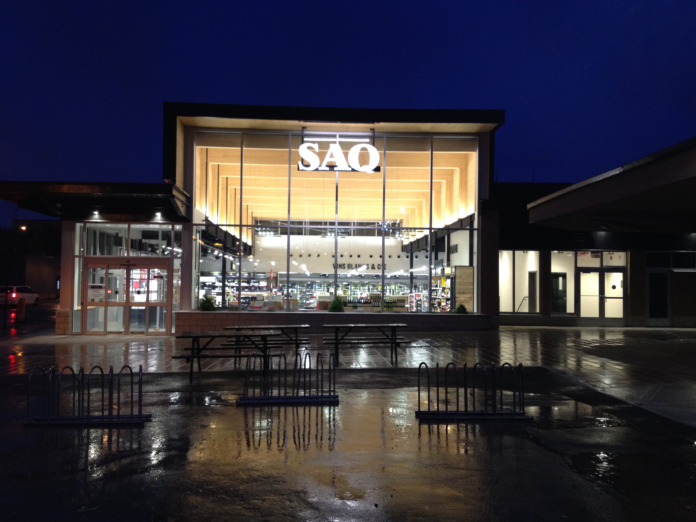
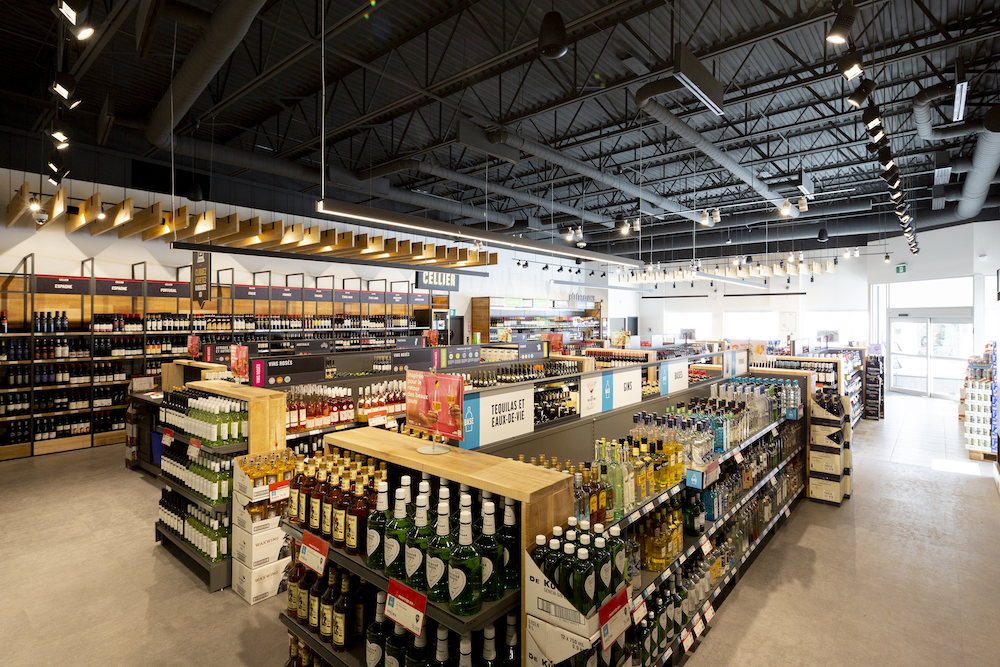
The Société des alcools du Québec (SAQ) is marking its 100th anniversary with a bold new retail strategy, reflecting shifts in consumer habits and demographic changes across Quebec. With Generation Z now outnumbering baby boomers and alcohol consumption trends evolving, the SAQ is implementing a series of initiatives aimed at improving accessibility and convenience while maintaining its core mission.
Quebecers are drinking less alcohol than in previous decades, with many opting for alternatives such as non-alcoholic beverages. This shift, combined with changing purchasing behaviours—where impulse buys now outweigh planned visits—has prompted the SAQ to rethink its business model.
“To maintain our long-term performance, we have to evolve how we do business, be more in sync with all our customers, those of tomorrow as well as today,” said Jacques Farcy, President and CEO of the SAQ. “It is crucial if we are to continue contributing to Quebec.”
Jacques Farcy, President and CEO of the SAQ
Introducing Micro SAQ Agency Stores
In response to consumer demand for greater accessibility, the SAQ will launch a pilot program in April to test six micro SAQ Agency stores in urban settings. These locations, positioned in neighbourhoods with limited SAQ coverage, will provide a curated selection of around 30 products, including spirits-based coolers, sparkling wines, still wines, and spirits.
The micro SAQ Agency stores will be integrated into existing businesses with liquor permits, such as grocery and convenience stores. This initiative aligns with the SAQ’s efforts to offer customers an alternative when traditional SAQ stores are closed. If the pilot proves successful, approximately 100 micro SAQ Agency stores could open across Quebec in the next year.
Importantly, the SAQ emphasizes that strict adherence to sales ethics and regulatory requirements will be a non-negotiable element of this initiative.
Expanding Convenient Delivery Options
Another key component of the SAQ’s modernization efforts is a pilot program for convenient delivery through third-party platforms. Beginning in June, this service will launch in Montreal, offering approximately 150 products for delivery. If successful, the program could expand across Quebec.
Following a model similar to what is already in place in Ontario, delivery personnel from partner platforms will purchase products from designated SAQ locations and deliver them to customers. The SAQ has underlined that maintaining strict age verification and compliance with alcohol sales regulations will be a priority. Additionally, the selection of delivery partners will take into account economic considerations, particularly in relation to current trade tensions with the U.S.
Strengthening Regional Accessibility with New SAQ Agency Stores
Expanding its reach beyond urban centers, the SAQ will open 34 new SAQ Agency stores in underserved areas, specifically in the Bas-Saint-Laurent, Gaspésie, and Chaudière-Appalaches regions. This expansion aims to ensure that Quebecers in rural and remote areas continue to have access to the SAQ’s product offerings.
Each year, the SAQ evaluates its store network to assess profitability and customer accessibility. The decision to introduce more agency stores follows this data-driven approach, ensuring optimal coverage throughout the province.
Photo: SAQ
Closing Underperforming SAQ Locations
While expanding in underserved regions, the SAQ will simultaneously close five underperforming stores that no longer align with customers’ shopping habits. The locations affected include:
Stanstead
Promenade du Portage (Gatineau)
Baie-D’Urfé
Campanile (Quebec City)
Ville-Émard
These closures are planned for fiscal 2025-2026, coinciding with lease expirations. The SAQ says it remains committed to serving customers efficiently and optimizing store locations based on evolving traffic patterns.
The SAQ’s Role in Quebec’s Economy
Founded in 1921, the SAQ is one of Quebec’s most significant government-owned enterprises, responsible for the importation, distribution, and sale of alcoholic beverages. The retailer operates 410 stores and 423 agency stores across the province, along with its e-commerce platform, SAQ.COM.
The SAQ plays a critical economic role in Quebec, having contributed over $2.2 billion to the provincial government in fiscal 2023-2024. Additionally, the organization supports approximately 250 community organizations and events while emphasizing environmental responsibility in its operations.
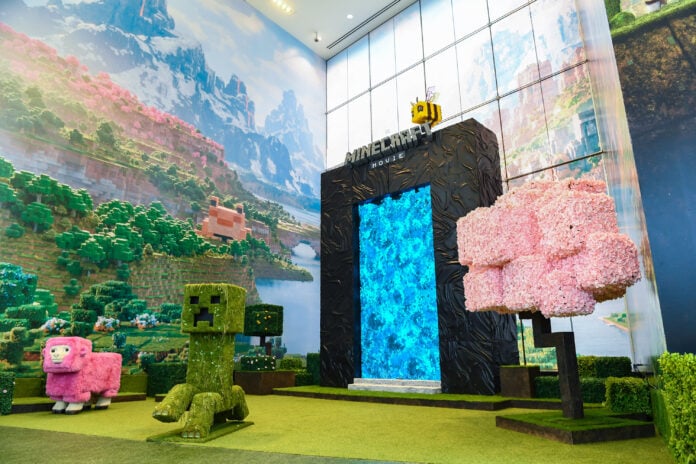
A Minecraft Movie experience at Yorkdale in Toronto. Image: Oxford Properties
Warner Bros. Pictures Canada is bringing a larger-than-life experience to Toronto’s Yorkdale Shopping Centre, celebrating the highly anticipated release of A Minecraft Movie. This immersive activation, designed to transport fans into the game’s signature pixelated universe, runs throughout March Break from March 8 to March 16, offering visitors an interactive, family-friendly event.
Located near the TTC entrance and Starbucks kiosk in Yorkdale, the free attraction invites fans of all ages to step inside a massive LED portal designed to replicate the game’s blocky aesthetic. Visitors will have the opportunity to snap photos with life-size replicas of iconic Minecraft creatures, including the Creeper, the Bee, and the Pink Sheep.
Fans can also enter a contest for a chance to win an exclusive trip to attend the movie’s world premiere in the U.K., adding an exciting incentive for visitors looking to engage with the event.
A Minecraft Movie experience at Yorkdale in Toronto. Image: Oxford Properties
Exclusive Giveaways and Advance Ticket Access
Cineplex has partnered with Warner Bros. Pictures Canada to enhance the experience by setting up a life-size popcorn bucket, where attendees can purchase advance tickets for A Minecraft Movie ahead of its April 4 release. Guests will also receive exclusive movie-themed giveaways, including posters, activity sheets, and LEGO® Minecraft® polybags, while supplies last.
A Minecraft Movie is a live-action adaptation of the world’s best-selling video game, starring Jason Momoa, Jack Black, Emma Myers, and Jennifer Coolidge. Directed by Jared Hess (Nacho Libre, Pokémon: Detective Pikachu), the film follows a group of misfits who are pulled through a portal into the Overworld, where they must adapt, survive, and master their new reality while battling classic Minecraft foes such as Piglins and Zombies.
With a creative team that includes Oscar-winning production designer Grant Major (The Lord of the Rings), VFX supervisor Dan Lemmon (The Jungle Book), and composer Mark Mothersbaugh (Thor: Ragnarok), the movie is set to bring Minecraft’s distinctive charm and adventure to the big screen.
A Minecraft Movie experience at Yorkdale in Toronto. Image: Oxford Properties
When and Where
The Yorkdale activation runs daily during mall hours from March 8 to March 16, making it a prime destination for families during March Break. The event is free to attend, ensuring accessibility for fans eager to engage with the Minecraft universe before the film’s theatrical debut.
A Minecraft Movie opens exclusively in theatres and IMAX in North America on April 4, 2025, with international releases beginning April 2. Advance tickets are now available for purchase online.
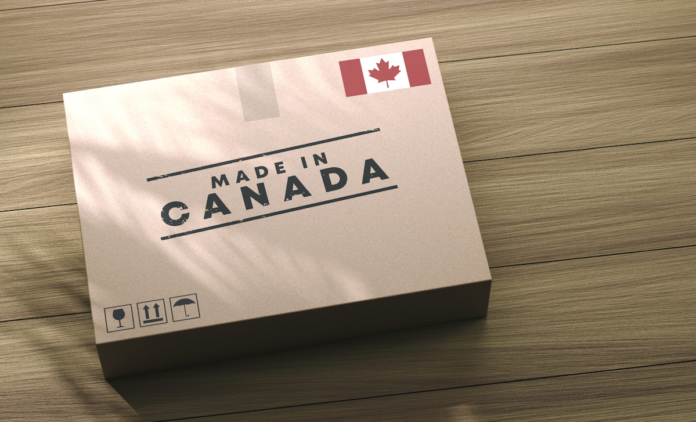
Made in Canada products. Image: Retail Council of Canada
In response to growing consumer demand for transparency and support for Canadian-made goods, retailers across the country are actively identifying products that are either partially or wholly produced in Canada. However, the process of making claims such as “Made in Canada” or “Product of Canada” involves strict guidelines enforced by the Canadian Food Inspection Agency (CFIA) and the Competition Bureau.
Understanding these regulations is crucial for retailers to maintain compliance and avoid misleading consumers. The following guide provides key insights into how businesses can accurately label their products, ensuring both legal adherence and clear communication with customers.
Food Products: Defining “Made in Canada” and “Product of Canada”
For food products, the CFIA oversees labeling regulations to prevent false or misleading claims under subsection 5(1) of the Food and Drugs Act and subsection 6(1) of the Safe Food for Canadians Act. The use of “Made in Canada” or “Product of Canada” claims is voluntary, but businesses choosing to use them must adhere to strict criteria.
“Made in Canada” Labeling: A food product can be labeled “Made in Canada” when its last substantial transformation occurred within the country. This means that significant processing has taken place to alter the product into a new form.
For example, if a pizza is produced in Canada using imported cheese, dough, and sauce, but the final product is assembled and baked domestically, it qualifies for a “Made in Canada” claim. However, a qualifying statement is required, such as:
“Made in Canada from imported ingredients”
“Made in Canada with domestic and imported ingredients”
This ensures that consumers understand the product’s actual origin and composition.
“Product of Canada” Labeling: A food product may be labeled as a “Product of Canada” when nearly all its major ingredients, processing, and labor originate from Canada. Specifically, all significant ingredients must be Canadian, and non-Canadian materials must be negligible (typically less than 2% of the total product content).
Exceptions to this rule include:
Trace amounts of ingredients not typically produced in Canada (e.g., spices, cane sugar, coffee, vitamins, and minerals)
Imported packaging materials, as the focus remains on the food product itself
Agricultural inputs such as seeds, fertilizers, and animal feed sourced from outside Canada
Local Food Labeling
The CFIA also provides guidelines for local food labeling. A product is considered “local” if it is:
Produced and sold within the same province or territory
Sold across provincial borders within a 50 km radius of its production location
While “local” claims are voluntary, businesses are encouraged to provide additional qualifiers such as the name of the city or region to better inform consumers.
Documentation and Compliance for Food Labels
Retailers and manufacturers are not required to submit formal documentation for “Made in Canada” or “Product of Canada” claims. However, businesses must be prepared to provide supporting evidence to substantiate their claims if challenged by regulators. Additional guidelines on country-of-origin claims for commodities like meat, seafood, and dairy are available through CFIA’s Origin Claims on Food Labels guidance.
Non-Food Products: Compliance with the Competition Bureau
For non-food products, country-of-origin labeling is governed by the Competition Bureau under several acts, including the Competition Act, the Consumer Packaging and Labelling Act, and the Textile Labelling Act. Similar to food products, businesses are not required to display country-of-origin information, but any claims made must be truthful and not misleading.
“Product of Canada” for Non-Food Items: A non-food product can be labeled “Product of Canada” if:
The last substantial transformation of the product occurred in Canada.
At least 98% of the total direct costs (e.g., labor, raw materials) were incurred in Canada.
“Made in Canada” for Non-Food Items: A non-food product can use the “Made in Canada” label if:
The last substantial transformation occurred in Canada.
At least 51% of the total direct costs were incurred in Canada.
The claim includes a qualifier, such as:
“Made in Canada with imported parts”
“Made in Canada with domestic and imported components”
This distinction ensures consumers are aware of the product’s actual domestic content.
Image: RCC
Use of the Maple Leaf Symbol
The iconic 11-point maple leaf, as seen on the Canadian flag, is a symbol of national pride but comes with specific usage restrictions. The Department of Canadian Heritage requires businesses to obtain permission to use this stylized maple leaf on their products.
However, general maple leaf designs (excluding the official 11-point symbol) can be used freely on food and non-food products. If a maple leaf symbol is included in a product’s packaging, businesses should ensure it does not imply a misleading “Made in Canada” or “Product of Canada” claim unless the product meets the relevant criteria. In such cases, an accompanying domestic content statement is recommended.
Key Takeaways for Retailers
“Made in Canada” claims require substantial transformation within Canada and must specify imported or domestic ingredients/components.
“Product of Canada” claims require nearly all content, processing, and labor to be Canadian.
The CFIA regulates food product labeling, while the Competition Bureau oversees non-food items.
Retailers must ensure labeling accuracy to avoid misleading consumers and regulatory penalties.
The use of maple leaf imagery should be carefully considered to align with labeling claims.
As Canadian consumers increasingly prioritize locally made and sourced goods, retailers must navigate these guidelines carefully to maintain compliance and consumer trust. Businesses should consult with legal advisors and regulatory bodies such as the CFIA and the Competition Bureau to ensure their labeling practices meet federal standards.
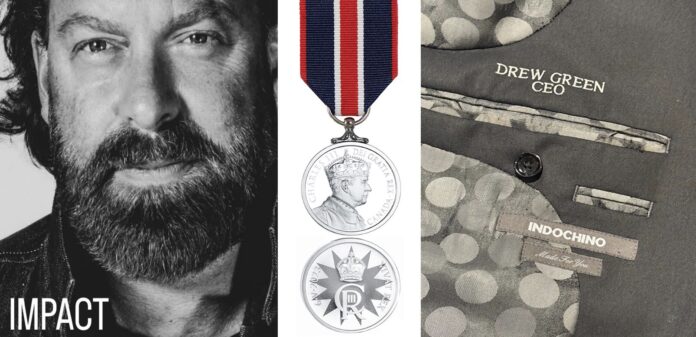
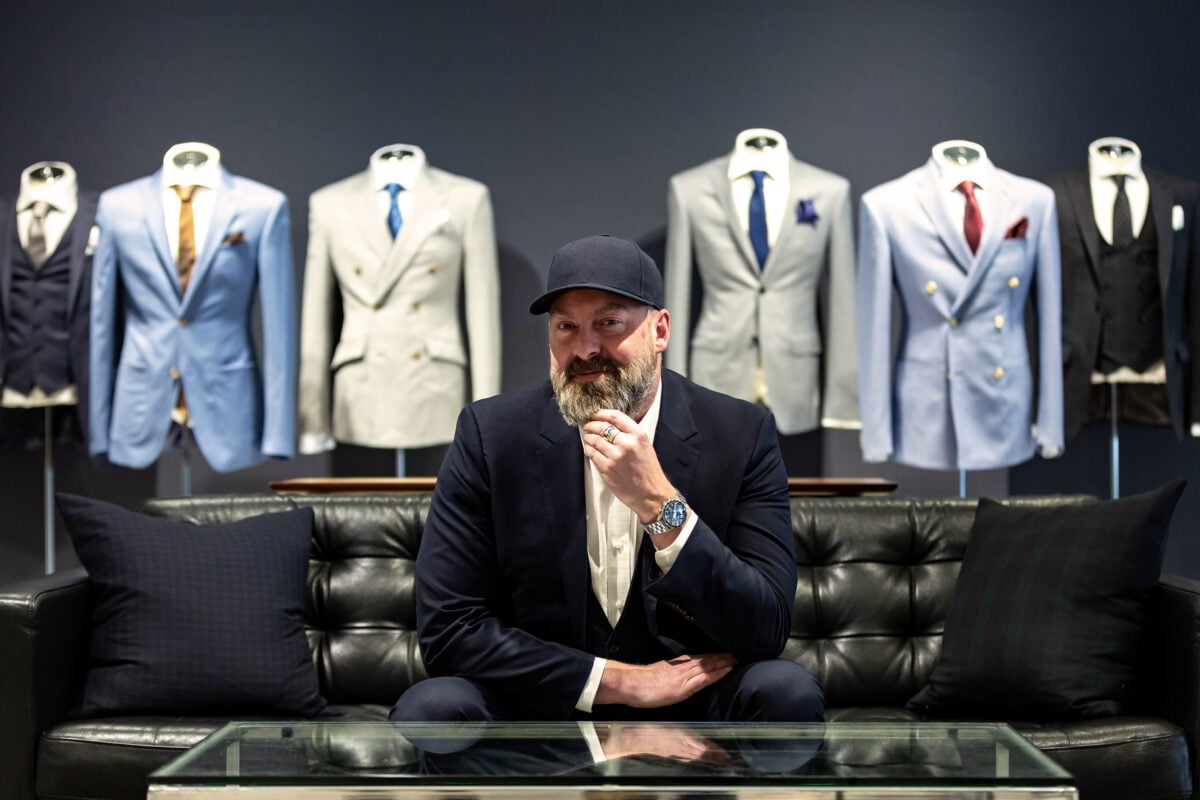
INDOCHINOannounced Tuesday that Drew Green, President and CEO, has been awarded the prestigious King Charles III’s Coronation Medal by the government of Canada, in recognition of his outstanding contributions to business across the country, and abroad.
Image: Drew Green, INDOCHINO CEO
Green is an experienced entrepreneur, award-winning CEO, and business leader with a strong focus on innovation and growth. Under his leadership, INDOCHINO has become one of the fastest-growing apparel brands of the past decade. Headquartered in Vancouver, the company serves a global community of men and women, redefining the modern retail experience.
“I am deeply honored to receive this medal, which represents not just my work, but the collective efforts of all the incredible people I have had the privilege to work alongside, along with everything we have accomplished together,” said Green. “This recognition fuels my commitment to continue making a difference and reminds me how proud I am to be Canadian.”
Recognized for his outstanding achievements, Green has received numerous prestigious accolades throughout his career. He was previously named among the Top 40 Under 40 and honoured as CEO of the Year. His accolades also include the Lifetime Innovation in Retail Award from academia, the Retailer of the Year award from Chain Store Age, and the esteemed Entrepreneur of the Year title from Ernst & Young.
“Throughout his career, he has built and led companies that drive meaningful change while inspiring teams and customers alike. Drew Green has founded 15 Canadian companies and maintains investments in more than 100 private businesses and real estate assets across Canada and the Pacific Northwest. He is the Chairman and co-owner of the Canadian Elite Basketball League and serves on the board of his alma mater, York University. Committed to supporting student-athletes, Drew established The Drew Green Award at both York University and the University of British Columbia, providing annual scholarships for the past decade,” said INDOCHINO in a news release.
“The medal was awarded as part of the celebrations marking the coronation of King Charles III, continuing the long-standing tradition of recognizing individuals who have made significant contributions to Canadian society.
INDOCHINO is a global leader in made-to-measure apparel and it was the first company to disrupt the retail sector by making perfect-fitting, personalized apparel on a mass scale.
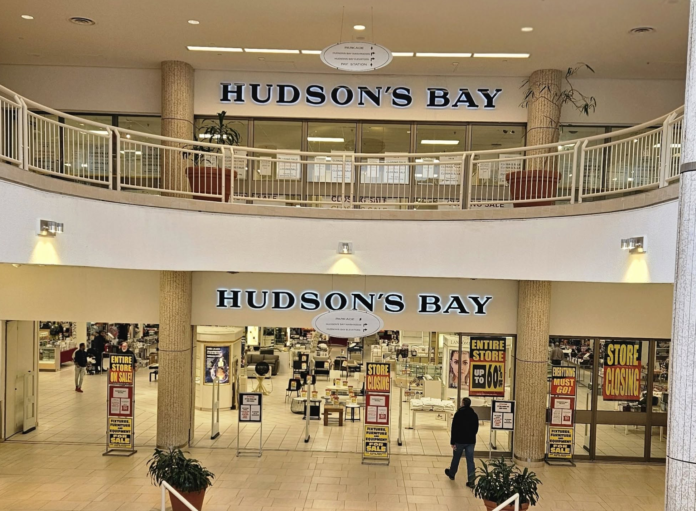
Preparing to close: Hudson's Bay in Regina. Last year the retailer announced that it would exit Regina in 2025 after 55 years. Hudson's Bay moved into downtown Regina's Cornwall Centre in the year 2000, following the bankruptcy of Eaton's. The store appears to be days from closure. Photo: Shar Lyn via the Nostalgic Regina Facebook Group
The Hudson’s Bay Company (HBC), Canada’s oldest retailer and a storied institution in the country’s retail landscape, is now at a crossroads. After years of financial turbulence, the company has filed for creditor protection under the Companies’ Creditors Arrangement Act (CCAA), marking a significant moment in its centuries-old history.
The restructuring, announced on March 7, 2025, aims to stabilize HBC’s operations while it grapples with mounting debts, declining sales, and changing consumer habits. The move raises urgent questions about the future of Canada’s last remaining traditional department store, particularly as industry experts and insiders express skepticism about its ability to survive in its current form.
Carl Boutet
Retail strategist Carl Boutet, who has closely followed HBC’s trajectory, is blunt in his assessment. “This is a textbook example of a retailer that has failed to evolve with the times. The model that worked 50 years ago isn’t sustainable today. The writing has been on the wall for some time.”
A Financially Precarious Situation
According to court filings, Hudson’s Bay has amassed more than $1.1 billion in debt while experiencing a 30% decline in sales over the past 12 months. The company’s cash flow issues have been exacerbated by a loss of access to credit facilities earlier this year, forcing it to rely solely on daily sales revenue to cover operational costs. Industry insiders suggest that HBC’s financial troubles have left it struggling to meet payroll obligations, a common tipping point in retail bankruptcies.
Boutet points out that HBC’s missteps, including its failed attempt to revive the Zellers brand, have only further weakened its position. “Zellers was a nostalgia play that lacked substance. It had no real differentiating factor, no value proposition. It’s hard to see why anyone thought that was going to work.”
Landlords and Suppliers Lose Confidence
As HBC’s financial situation deteriorated, landlords and suppliers began taking drastic steps to protect their own interests. A recent report revealed that Cadillac Fairview, one of Canada’s largest commercial landlords, sent representatives to reclaim merchandise from Hudson’s Bay’s CF Sherway Gardens location in Toronto. In another instance, HBC’s landlords in Sydney, Nova Scotia, changed the locks on the store’s doors, effectively shutting the retailer out.
“Landlords don’t make moves like this unless things have reached a critical point,” says Boutet. “For them to take back inventory or lock out a retailer means they’ve completely lost faith in the ability of that tenant to pay what’s owed.”
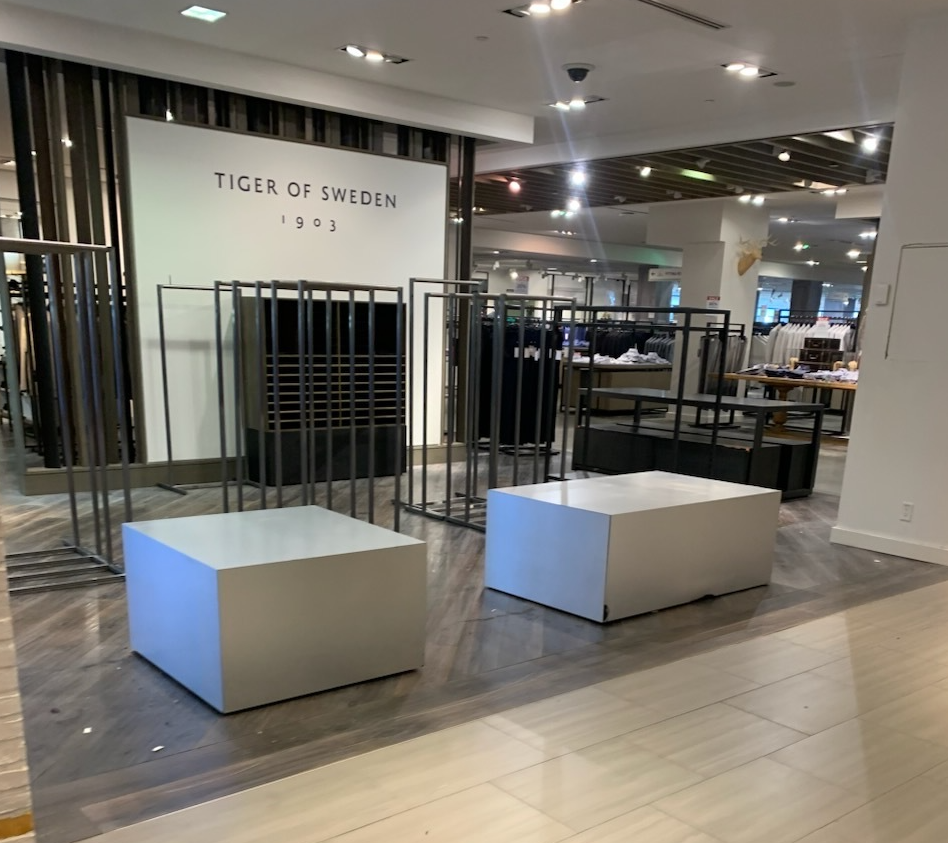
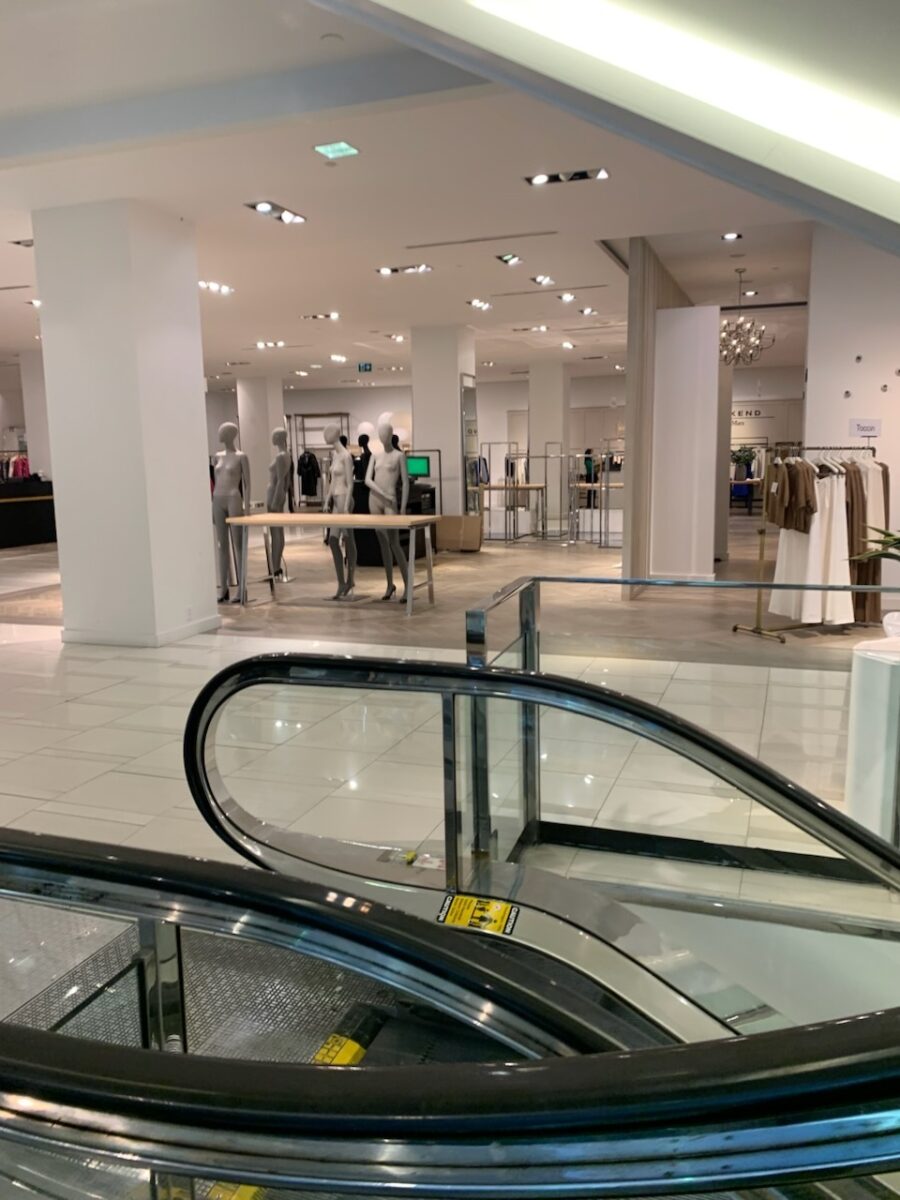
Suppliers have also pulled back, with brands like Tiger of Sweden removing inventory from Hudson’s Bay stores. Shoppers have posted images of near-empty racks at Bay locations, suggesting that many vendors had stopped replenishing stock due to non-payment.
“If suppliers aren’t getting paid, they aren’t going to keep shipping product. It’s that simple,” Boutet said. “This isn’t a new issue—it’s been building for years. The fact that we’re seeing major brands abandon ship now tells you just how dire the situation has become.”
Hudson’s Bay’s Future: A Niche Play or Total Collapse?
With the CCAA filing now in place, industry observers are speculating on what a restructured HBC might look like—if it manages to survive at all.
“The best-case scenario is that a dozen or so Bay stores remain open in key markets where landlords are willing to work with the company to keep them afloat,” says Boutet. “But beyond that, I don’t see much of a future in its current form.”
One potential strategy being floated is a reimagining of HBC as a niche Canadiana retailer, focusing on heritage-driven products in smaller-format stores.
“There’s still some equity in the brand,” says Boutet. “If someone steps in and carves out a new identity—think high-end Hudson’s Bay-branded stores in airports and tourist-heavy locations, selling blankets, outerwear, and premium Canadian-made goods—there could be something to work with. But the idea of HBC continuing as a full-line department store? That’s dead.”
Boutet also points to the shift in retail real estate trends. “The space that Hudson’s Bay occupies in these major malls is too large for what they’re offering. Mall owners will likely look to carve up those spaces and bring in a mix of smaller specialty retailers, entertainment uses, or even mixed-use developments. We’ve seen this play out already with Sears, Target, and most recently, Nordstrom.”
“Another weakness of their business model is its ability to generate enough revenue to cover even the most basic operational costs.”
A Restructuring or the End of an Era?
HBC’s restructuring is expected to involve significant store closures, likely cutting its footprint from its current 80 locations. The company also operates three Saks Fifth Avenue stores and 13 Saks Off 5th outlets in Canada under a licensing agreement, though it remains unclear how the bankruptcy will impact these operations.
Company president and CEO Liz Rodbell acknowledged the challenges ahead in a recent statement. “While very difficult, this is a necessary step to strengthen our foundation and ensure that we remain a significant part of Canada’s retail landscape,” she said. “The road ahead will not be easy, but we are committed to finding a viable path forward.”
The Canadian Retail Landscape Without Hudson’s Bay
The potential collapse of HBC would mark the end of an era for Canadian retail, following the demise of other once-iconic department stores such as Eaton’s, Simpsons, and Sears Canada. While some brands have successfully transitioned to new models—Simons, for example, has evolved into a thriving specialty retailer—HBC’s failure to adapt over the past decade has left it with few options.
“As much as we may feel nostalgic about the Bay,” says Boutet, “consumers shop differently now. Department stores were built on the idea that you could go to one place and find everything you need, but that’s what e-commerce is now. The world has changed, and Hudson’s Bay didn’t change with it.”
Final Thoughts
With a crucial court date set for March 17, the future of Hudson’s Bay remains uncertain. While there is still a slim possibility that restructuring efforts will preserve some portion of the business, the consensus among experts is that the company’s days as a national retail force are numbered.
“What we’re seeing now is the final chapter of a long decline,” says Boutet. “Whether Hudson’s Bay is able to salvage something from this or whether it simply becomes another footnote in retail history remains to be seen.”
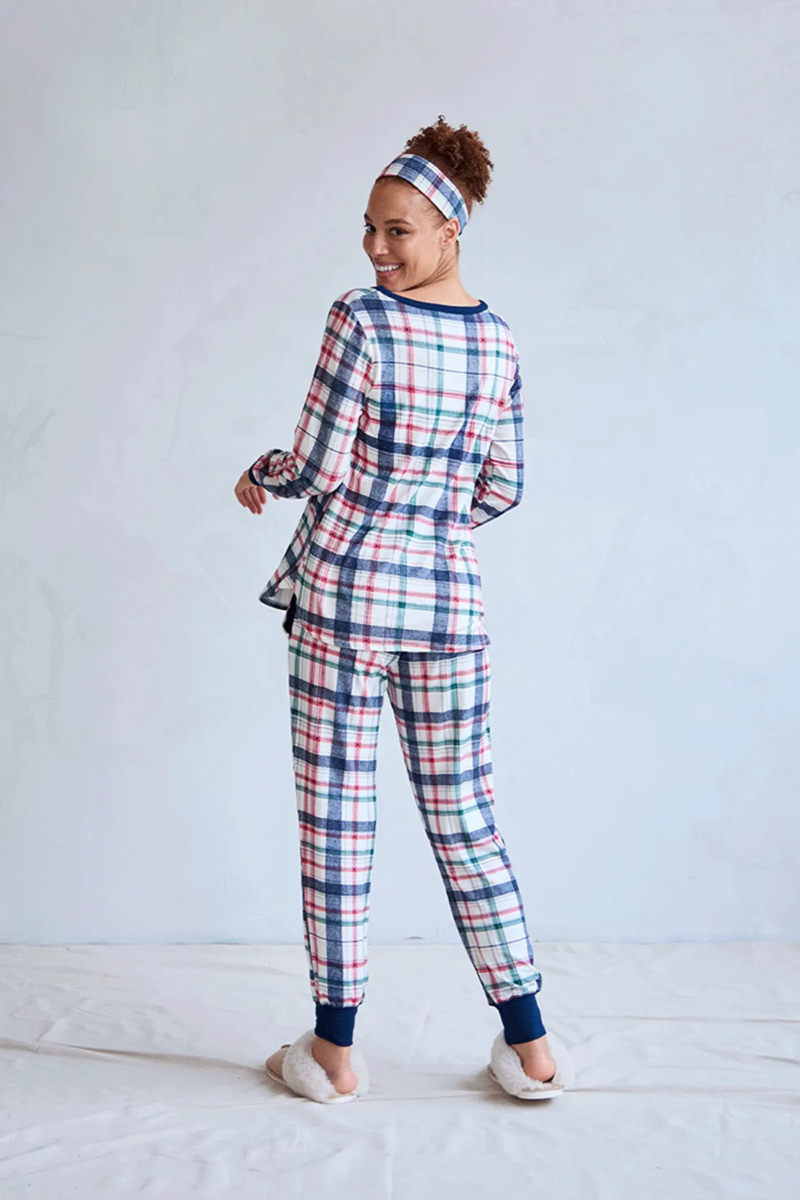
For over two decades, This Is J has been a proud example of Canadian entrepreneurship—small, independent, and entirely locally produced. Founded in 2003 by Jaimie Harris, the Toronto-based brand has evolved from a university side hustle into a well-loved sleepwear and loungewear company, renowned for its ultra-soft, Canadian-made Bamboo Jammers. But as the brand marks its 22th anniversary, a new challenge looms: the impact of proposed U.S. tariffs on Canadian goods.
With the growing complexity of global trade and rising production costs, Harris remains steadfast in her commitment to keeping This Is J’s production in Canada, despite the financial pressures.
Jaimie Harris
“I hope that we don’t get lost in the shuffle of this trade war,” says Harris. “Small businesses have been able to grow because of trade policies that have allowed us to thrive. To take that away is going to be a big setback.”
From Halifax to Toronto: The Birth of This Is J
Like many great entrepreneurial stories, This Is J started with a simple need. While studying in Halifax, Harris designed her own headbands to keep her hair out of her face. One day, while shopping, a store owner asked if she sold them. “I said yes,” Harris recalls with a laugh, “even though I didn’t at the time.” That moment sparked the beginning of a business that would later expand into loungewear and sleepwear, built around the idea of blending fashion with function.
“Back then, you either wore sweatpants or work clothes—there was no in-between,” says Harris. “I wanted something that felt like a second skin but still looked good.”
Photo: This is J
Commitment to Local Production
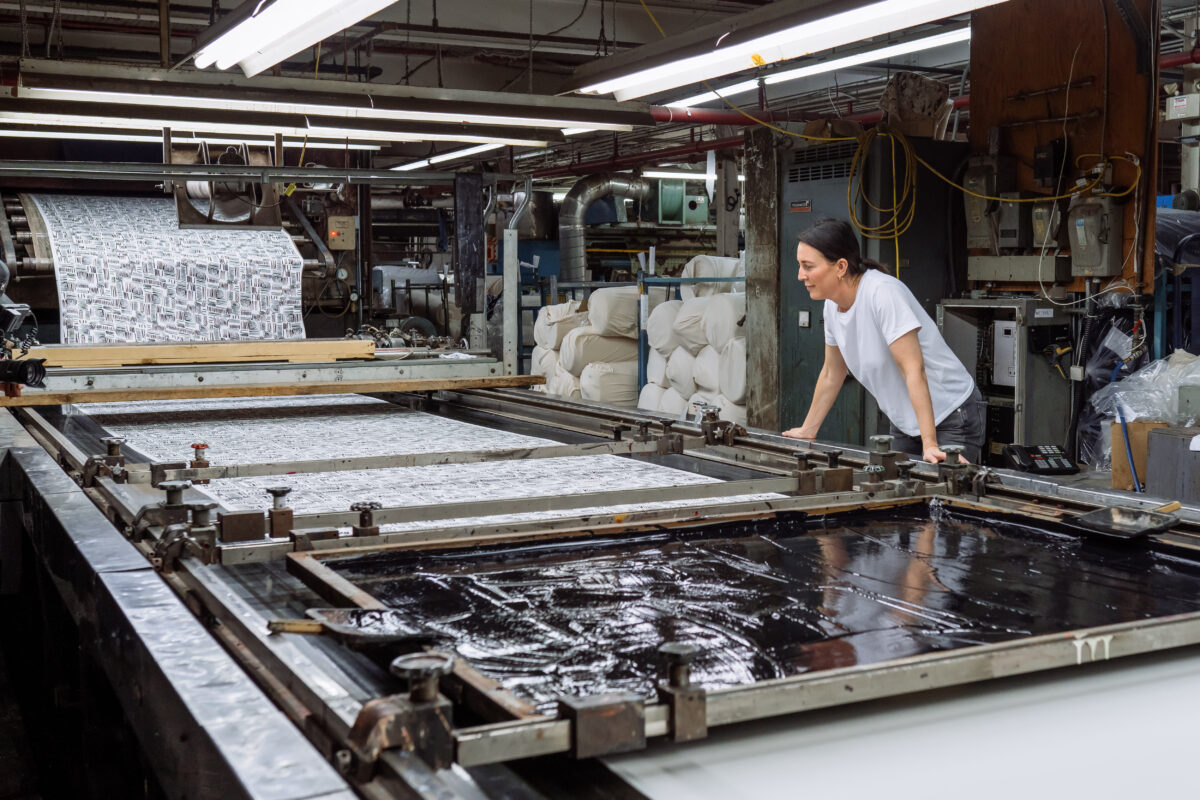
From the start, Harris was determined to manufacture in Canada, despite the challenges. She worked closely with mills in Montreal and Toronto to develop the ultra-soft fabric that would define Bamboo Jammers, a line that has now become a customer favourite.
“Our fabric is moisture-wicking, super soft, and can go straight into the washer and dryer,” says Harris. “It took years to develop something this high quality, and we’ve stuck with the same mill for a long time. They believed in our vision.”
Beyond textiles, Harris ensures that everything from the labels to the packaging is made in Canada. “Our entire supply chain is hyper-local,” she says. “It’s not always the easiest or the cheapest way, but it’s the right way for us.”
The COVID Shift: From Retail to E-Commerce
Before the pandemic, This Is J operated through a mix of e-commerce and retail partnerships, with wholesale orders making up a significant portion of business. But when COVID-19 hit, every single wholesale order was canceled within 48 hours.
“It was terrifying,” says Harris. “We went from holding a few hundred thousand dollars in deliverables to having zero dollars to collect.”
Rather than panic, Harris pivoted. The company launched an online sample sale—a biannual event that typically took place in person—to clear excess inventory. “We sold out in hours,” she says. “It was a lightbulb moment. People were craving comfort, and we provided that.”
Since then, 95% of This Is J’s business has shifted online, allowing the brand to scale in ways that wouldn’t have been possible in traditional retail. “We were already set up for e-commerce, so it was just a matter of changing how we sold,” Harris explains.
Photo: This is J
Navigating the Threat of Tariffs
With Donald Trump’s proposed 25% tariff on Canadian imports, This Is J now faces another major hurdle.
“Since 2015, the de minimis exemption allowed small parcels under $800 to pass into the U.S. without extra duties,” Harris explains. “That made it much easier for Canadian e-commerce businesses to grow. Now, with a 25% tariff, it could completely change our U.S. expansion plans.”
Though the U.S. makes up only 5-10% of This Is J’s orders, Harris knows that many Canadian brands rely on American consumers for survival. “Some brands do 85% of their business in the U.S. This could be devastating for them,” she says.
The uncertainty is the hardest part. “We don’t even know if there will be exemptions for small businesses,” she says. “We have to brace for every possibility.”
The Canadian Spirit: Support & Resilience
Despite these challenges, Harris remains optimistic. Following Trump’s tariff announcement, she sent a heartfelt email to her customers, expressing gratitude for their support:
“Your messages, social media tags, and shared love for what we do reminded us of something essential: resilience, kindness, and looking out for each other—that’s the Canadian way.”
The response was overwhelming. “People reached out saying, ‘We’ve got your back,’” Harris says. “It reminded me why we do this.”
Photo: This is J
Looking Ahead: The Future of Canadian Manufacturing
With manufacturing in Canada facing rising costs and external pressures, does Harris see a future for Canadian-made fashion?
“I think we’re at a turning point,” she says. “The cost gap between Canadian-made and overseas manufacturing is closing. Even fast-fashion prices are going up. That means the value of buying local is clearer than ever.”
She also believes consumer habits are shifting. “There’s a renewed sense of patriotism. Canadians want to support local brands, especially after seeing the political rhetoric from the U.S. It’s an opportunity for brands like ours to stand out.”
Ultimately, Harris’s commitment to quality, ethics, and sustainability keeps her focused. “We’re not the cheapest pajamas on the market, but we are one of the best,” she says. “And that’s why our customers keep coming back.”
As the future of U.S.-Canada trade remains uncertain, one thing is clear: This Is J isn’t backing down. “We’re proudly Canadian, and nothing will change that.”
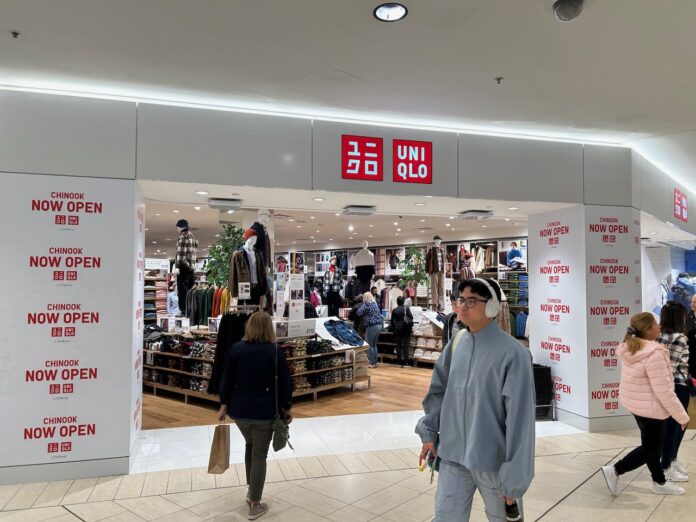
Uniqlo at CF Chinook Centre (Image: Mario Toneguzzi)
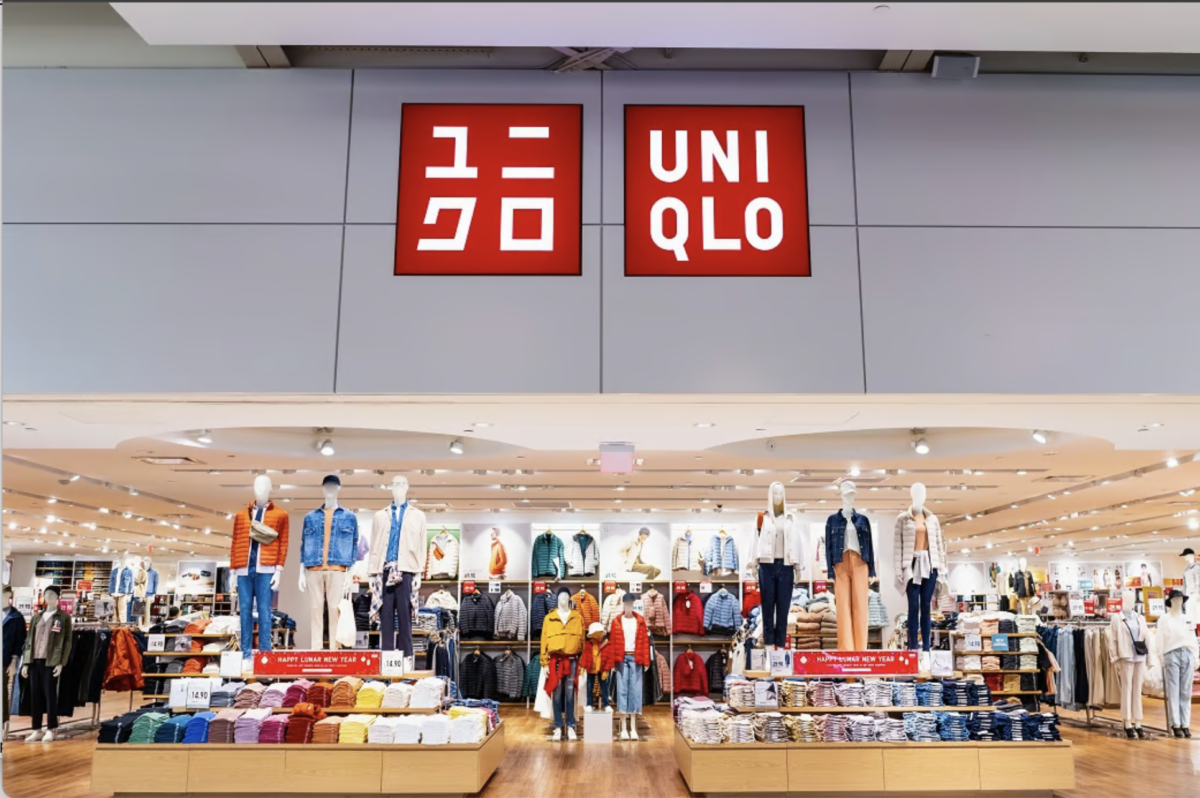
Japanese global apparel retailer UNIQLO is opening four new stores in the coming season in Canada, including the high profile Union Station in Toronto.
With growing customer affinity for LifeWear, the brand is well- positioned to enter Burlington, Toronto, Quebec City and Montreal before the fall 2025 season, making the brand accessible to even more Canadians, it announced on Tuesday.
Following this wave of new store openings, there will be 33 Canadian locations, it added.
This season, it is set to open its first store in Quebec City, bringing LifeWear to even more customers in Quebec.
Yuya Tanahashi, Chief Operating Officer of UNIQLO in Canada, credits the rapid growth of UNIQLO to its continued community focused approach.
“We are very grateful to our patrons in Canada and look forward to fostering more meaningful relationships with new customers. I am optimistic about our Canadian growth, and we look forward to bringing LifeWear to new markets.”
The new stores opening in Spring/Summer 2025 are as follows:
● Maple View Shopping Centre (Burlington, Ontario) ● Place Ste-Foy (Quebec City, Quebec) ● Galeries d’Anjou (Montréal, Québec) ● Union Station (Toronto, Ontario)
Jeff Berkowitz of Aurora Realty Consultants represents the brand as broker in Canada, and negotiated the lease deals on behalf of UNIQLO.
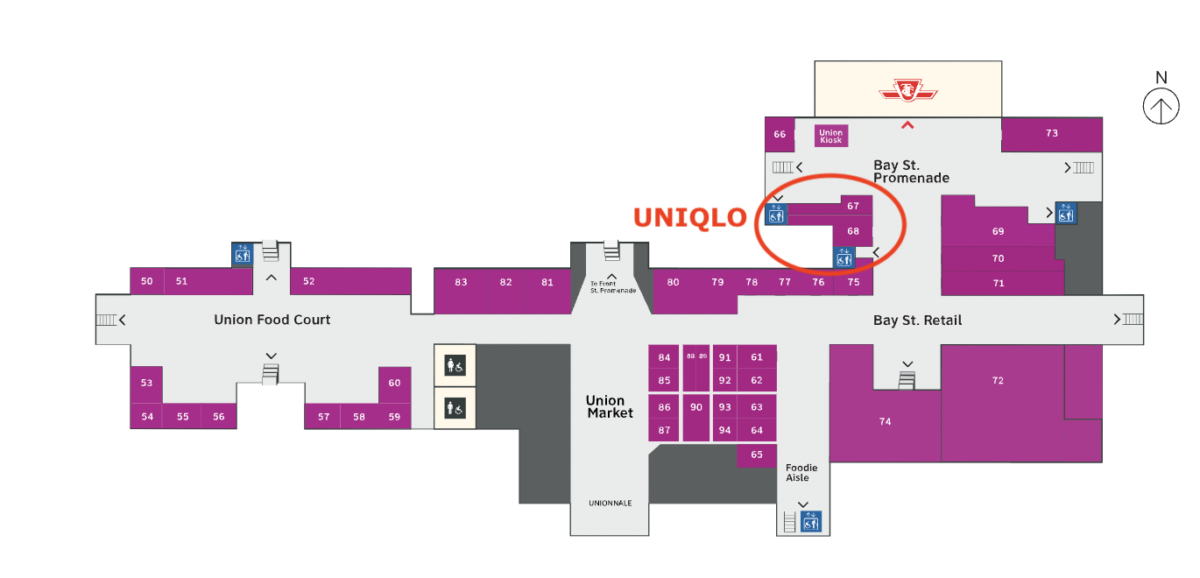
UNIQLO will replace Decathlon at Union Station. Floor Plan: Union StationPhoto: Uniqlo
“Since opening its first location in Toronto in 2016, the brand has offered a unique guest experience with its innovative lineup of LifeWear—simple, high-quality, everyday clothing thoughtfully crafted with life’s needs in mind and constantly evolving to modern life. Through the lens of innovation, LifeWear is designed to make everyone’s life better,” said the brand.
“The new UNIQLO stores will offer the current lineup of LifeWear apparel for men, women, kids, and babies, seasonal collaborations, and the UT (UNIQLO T-shirt) range of graphic T-shirts and other items. As with elsewhere in the world, the new stores are part of a UNIQLO global business model that seamlessly combines its retail stores’ world-class shopping and service experience with the complementary convenience of its uniqlo.com online store.
“With the success of UNIQLO’s viral products, designer collaborations, and their recent appointment of Clare Waight Keller as Creative Director, the brand has gained global popularity. UNIQLO continues to evolve its world-class retail experience as it opens in new markets and communities throughout Canada.”
UNIQLO has more than 2,500 stores worldwide, including 29 stores in Canada and online at UNIQLO.com. Since opening its first store in Hiroshima in 1984, UNIQLO said it has created apparel that comes from the Japanese values of simplicity, quality, and longevity, featuring universal designs, supreme fit and comfort to improve the daily lives of its customers.
“The brand looks to expand its hiring efforts in each new market by creating a welcoming and inclusive space for all. UNIQLO encourages ambitious leaders to apply for the many opportunities via their career page. Additionally, UNIQLO will be hosting a series of career fairs where individuals can meet support reps and better understand the different roles that make up the organization,” it said.
UNIQLO is a brand of Fast Retailing Co., Ltd., a leading Japanese retail holding company with global headquarters in Tokyo, Japan. UNIQLO is the largest of eight brands in the Fast Retailing Group, the others being GU, Theory, PLST, Comptoir des Cotonniers, Princesse tam.tam, J Brand and Helmut Lang. With global sales of approximately 3.1 trillion yen for the 2024 fiscal year ending August 31, 2024 (US $21.39 billion, calculated in yen using the end of August 2024 rate of $1 = 144.9 yen), Fast Retailing is one of the world’s largest apparel retail companies, and UNIQLO is Japan’s leading specialty retailer.
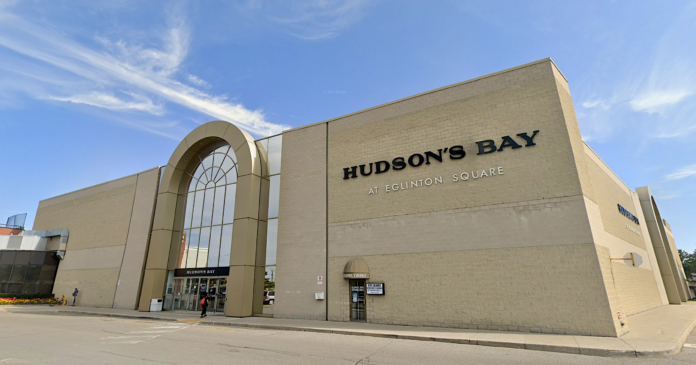
Hudson's Bay at Eglinton Square in Toronto, 2019. Photo via Google Street View
Hudson’s Bay, one of Canada’s oldest and most iconic department store chains, is at a crossroads as reports indicate that nearly half of its stores could be closing amid financial turmoil. In an interview, Liza Amlani, Principal and Co-Founder of Retail Strategy Group, shared her insights on the challenges facing the retailer and the broader implications for the Canadian retail landscape.
Founded in 1670, Hudson’s Bay has long been a staple in Canadian retail, but the shift toward e-commerce, changing consumer habits, and a lack of investment in store infrastructure have left the company struggling. According to sources within the commercial real estate sector, the company is considering closing as many as 50 locations, leaving uncertainty about the future of its remaining stores.
Liza Amlani
“It’s inevitable that stores will close,” Amlani said. “Whether a new buyer steps in remains to be seen, but if the bankruptcy process proceeds without one, we could see all of them shuttered.”
Real Estate Challenges and Investment Needs
The physical footprint of Hudson’s Bay presents a significant challenge. Many locations are in large, multi-floor buildings requiring substantial capital to maintain and modernize. “If The Bay can’t compete from an operational standpoint, how could they possibly succeed in today’s landscape?” Amlani questioned. “Stores need investment, not just to look nice but to function effectively.”
Amlani also noted that Hudson’s Bay’s current ownership structure, led by Richard Baker and his real estate-focused approach, has prioritized property value over retail reinvention. “The ideal scenario would be closing half the stores and reinvesting in the ones that remain. The Queen Street flagship, for example, does not need to be that big,” she added.
Store renovations could cost millions of dollars per location. Without major reinvestment, these large-format stores will continue to struggle against smaller, more modern retail footprints.
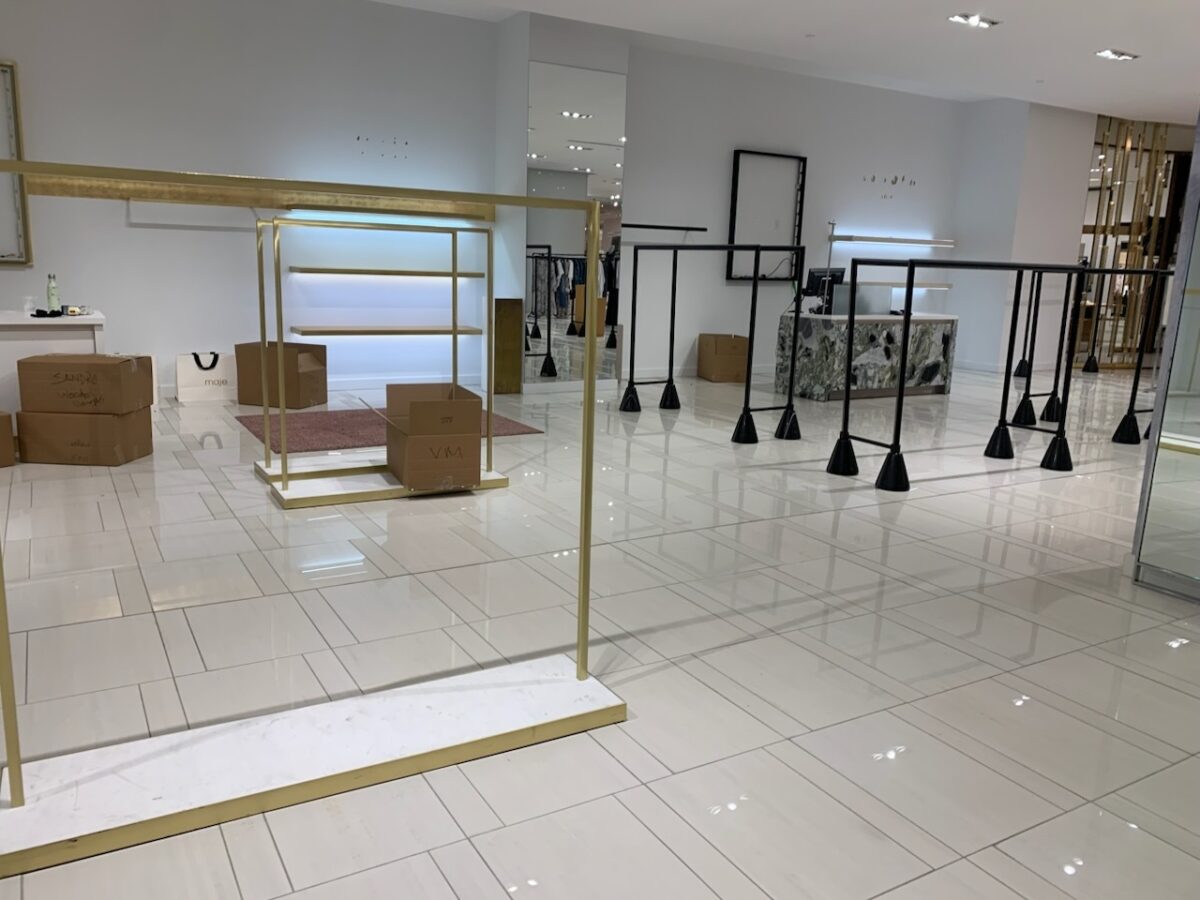
Maje and Sandro women’s fashion concessions were dismantled at Hudson’s Bay Queen Street, coinciding the HBC’s bankruptcy filing on Friday.
The Struggle with E-Commerce and Brand Perception
While some retail analysts suggest that Hudson’s Bay could survive as an online marketplace, Amlani remains skeptical. “E-commerce is important, but physical stores create customer engagement,” she said. “Look at successful department stores like Marks & Spencer in the UK—when you invest in stores, you naturally invest in other areas of the business.”
She also criticized Hudson’s Bay’s outdated website, which she described as “as flat and uninspiring as its stores.” “Compare it to any best-in-class department store, and you’ll see the difference,” Amlani said. “Even their category landing pages lack excitement.”
Visual Merchandising Failures: A Lost Shopping Experience
One of the major criticisms Amlani has is Hudson’s Bay’s lack of proper visual merchandising. “The in-store experience doesn’t excite customers,” she explained. “It doesn’t entice them to buy, and in some cases, it’s outright confusing.”
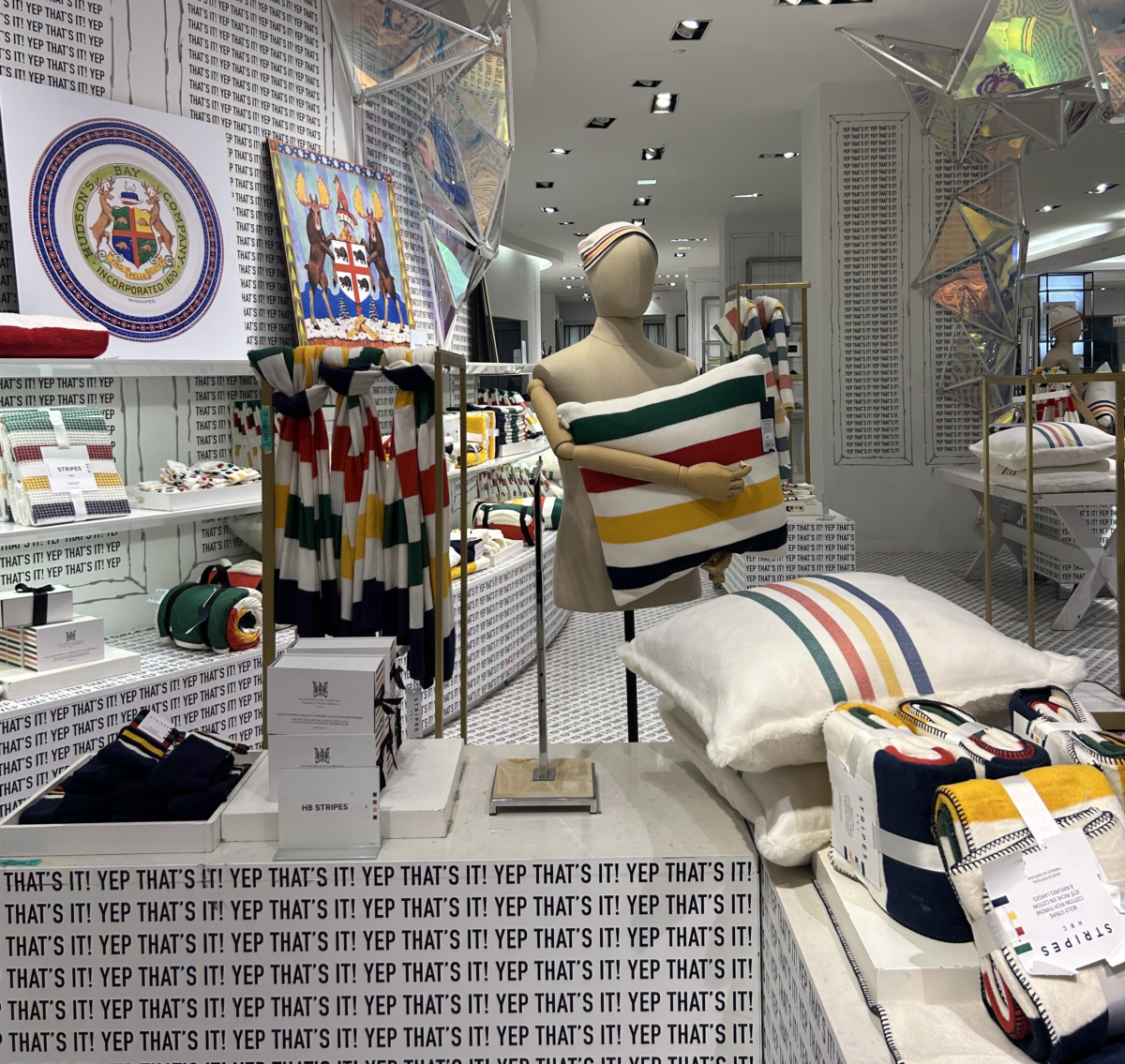
She pointed to specific in-store missteps, such as the “Yep, That’s It” branding on the walls and floors, which had no clear connection to Hudson’s Bay’s signature Stripes program. “What does that even mean? It’s a waste of prime retail space,” Amlani said.
Another glaring issue is the iridescent lanterns used as decorations in key sections. “They take up valuable floor space and don’t serve any merchandising purpose,” she noted.
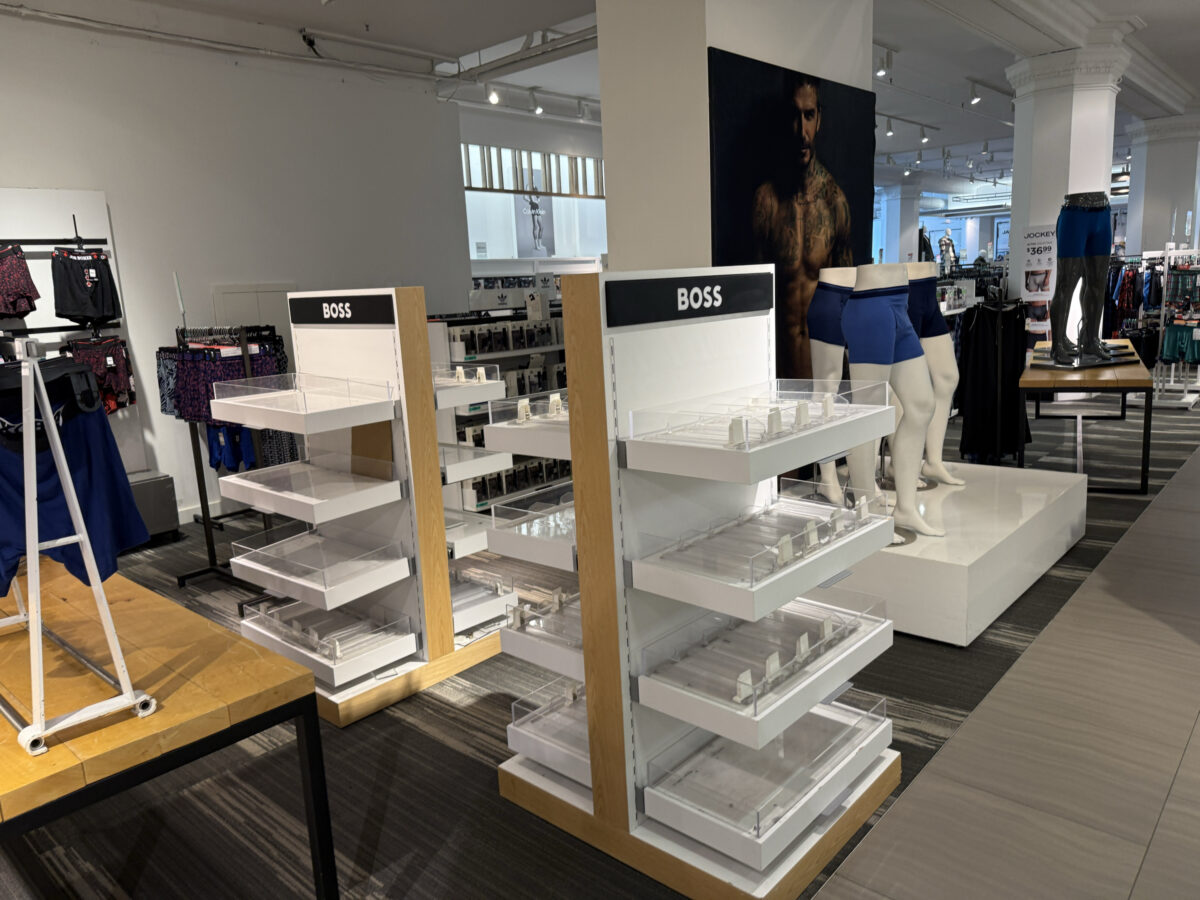
Displays on the second floor of Hudson’s Bay Queen Street on Sunday, March 9, 2025. Photo: Liza Amlani
Job Losses and Industry Impact
If half of Hudson’s Bay locations close, the impact will be severe. The company employs around 9,300 people, and thousands more work in roles supporting its operations, including supply chain, logistics, and brand concessions.
“This is going to affect a lot more people than we realize,” Amlani said. “Beauty and fragrance counters, logistics partners, even marketing and visual merchandising teams—so many jobs are tied to this business.”
Additionally, regional brand teams that work specifically with Hudson’s Bay could face layoffs. “Many global brands have set up Canadian offices to work with Hudson’s Bay. If the retailer goes under, those jobs disappear, too.”
Brands Pulling Out & Unpaid Vendors
A growing number of brands have already started pulling their products from Hudson’s Bay locations, concerned about unpaid invoices.
“Many vendors likely haven’t been paid, and we’re seeing brands opting to take back inventory rather than risk deeper markdowns,” Amlani explained. “The worst thing for a luxury or contemporary brand is to have its product discounted at 70% off. It destroys the brand’s value.”
For instance, she pointed out that Self-Portrait, a high-end fashion brand, was heavily marked down in Hudson’s Bay stores. “That’s the kind of thing that makes other brands wary of working with you,” she said.
Saks Fifth Avenue and The Room: Future Uncertain
With Hudson’s Bay’s restructuring, there are also questions about the fate of Saks Fifth Avenue in Canada, which operates under a licensing agreement. Amlani noted a lack of investment in Saks stores, with minimal staffing and dwindling customer traffic. “I saw one sales associate on an entire floor,” she revealed. “That’s not sustainable.”
Additionally, The Room, Hudson’s Bay’s luxury concept, appears to be on borrowed time. “The strategy never made sense,” Amlani remarked. “Luxury customers weren’t going to The Room when they had better options elsewhere. It was doomed from the start.”
The Future of Shopping Malls & Anchor Stores
Hudson’s Bay’s struggles also raise questions about the future of shopping malls in Canada, as department stores have traditionally served as anchor tenants.
“In the 20th century, malls were built around department stores,” Amlani explained. “But today, shoppers go to malls for specific brands—Apple, Lululemon, Sephora—not to browse a department store.”
Some malls, like CF Chinook Centre and The Well in Toronto, are adapting by focusing on experience-driven retail. “Malls need to innovate beyond traditional department stores,” Amlani said. “It’s no longer just about retail—it’s about services, dining, and community spaces.”
Final Thoughts: Is This the End for Hudson’s Bay?
Hudson’s Bay is set to face a key court hearing on March 17 that will determine store closures, vendor settlements, and the company’s overall restructuring plan. Amlani remains skeptical that a buyer will step in.
“If a buyer steps in, maybe they can salvage what remains,” she said. “But without a clear plan to modernize, it’s hard to see Hudson’s Bay surviving in its current form.”
Ultimately, the decline of Hudson’s Bay serves as a cautionary tale for Canadian retail. “The demand for great retail experiences is still here,” Amlani concluded. “But Hudson’s Bay lost its way. If this is truly the end, it’s an unfortunate but predictable outcome of years of mismanagement.”